Pain
 Call Kai
 Learn
Learn Practice Test
 Spaced Repetition
 Match
Match Flashcards
 Knowt Play
1/19

There's no tags or description
Looks like no tags are added yet.
Name | Mastery | Learn | Test | Matching | Spaced | Call with Kai |
|---|
No analytics yet
Send a link to your students to track their progress
20 Terms
Pain
An unpleasant sensory and emotional experience associated with, or resembling that associated with, actual or potential tissue damage. Subjective
Physiology of Pain
CNS & PNS process stimuli → Mobilizes the nociceptors (noxious stimuli) → Pathways are activated → Patient experiences a response (pain)
Biopsychosocial Model
Psychological, biological, and social factors interact to influence health and illness related to pain.
Acute Pain
Sudden or slow onset with predictable end, Lasts less than six months
Chronic Pain
Constant or recurring without predictable end, Lasts longer than six months
Nociceptive Pain
Pain felt in the tissue, an organ, damaged body part, or referred
• Can be visceral, somatic, or cutaneous
• Visceral = pain within organs
• Somatic = pain throughout skin, bones, joints, muscles
• Cutaneous = another name for somatic
Neuropathic Pain
Nerve pain, Described as intense, shooting, or burning
Cancer Pain
• Only recognized recently as a separate type
• Types include tumor pain, bone pain, and treatment-
associated.
• Should be treated with special considerations
What is PQRST?
• P = Precipitating cause
• Q = Quality
• R = Region
• S = Severity
• T = Timing
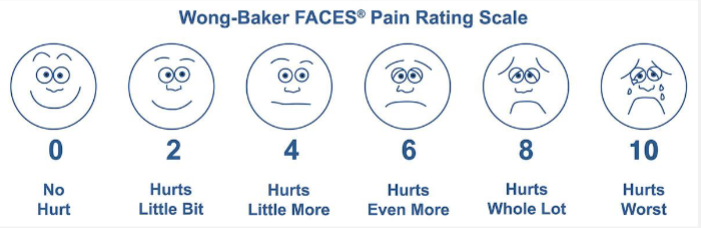
Wong-Baker FACES Pain Rating Scale
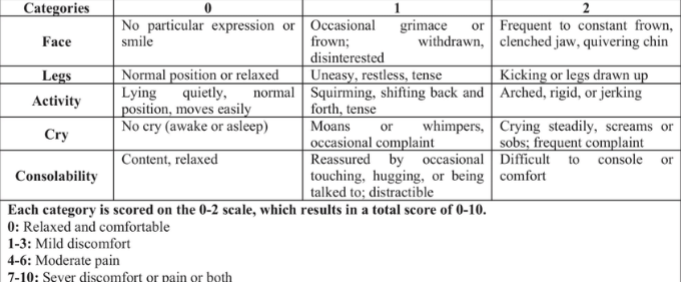
Face, Legs, Activity, Cry, Consolability Scale (FLACC)
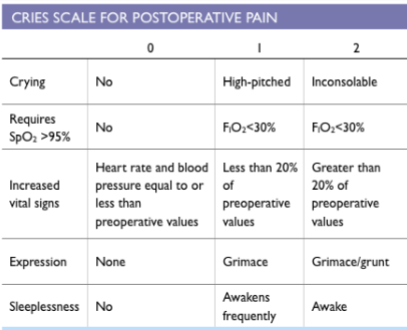
Crying, Requires Oxygen, Increased Vital Signs, Expression, Sleeplessness Scale (CRIES)
Nonpharmacological Pain Interventions
Positioning
• Off bony prominences
• Reposition every 2 hours
Cutaneous Stimulation
• Heat and cold therapy
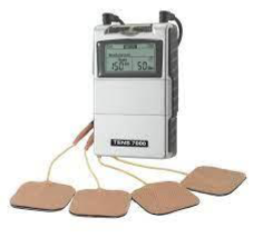
• Touch, massage, acupressure, transcutaneous electronic stimulation (TENS)
Cognitive Strategies
• Cognitive behavioral therapy to manage negative thoughts around pain
• Distraction, imagery, relaxation, music
Therapeutic Touch
• Improves mood and a better sense of well-being
Transcutaneous Electronic Stimulation (TENS)
Low voltage electrical impulses applied
over painful areas
• Deeper pain relief completed with
extracorporeal shock-wave lithotripsy
(ESWL)
Pharmacological Interventions
Opioids
• Activate opioid receptors in the nervous system
• Monitoring is required
Nonopioids
• Nonsteroidal anti-inflammatory drugs (NSAIDs)
• May enhance bleeding
• Acetaminophen
Adjuvant Analgesics
• Address underlying pain generators
• Used with opioids
• Corticosteroids, antidepressants, medical marijuana
Types of Opioids - Natural
• Come from opium poppy
• Codeine and morphine
Types of Opioids - Semisynthetic
Created from
naturally
occurring
opiates
• Heroin,
hydrocodone,
oxycodone,
hydromorphone
Types of Opioids - Synthetic
Manufactured
• Fentanyl,
tramadol
Patient-Controlled Analgesia (PCA)
Frequently used
postoperatively
• Allows patient control when
they receive small amounts of
pain medication
• Attached to a pump which
goes through IV
• May also be administered
through epidural
SBIRT
• S = Screening
• B = Brief intervention
• I = Intervention
• R = Referral
• T = Treatment