Physics IGCSE - Waves and Sound (continued)
 Call Kai
 Learn
Learn Practice Test
 Spaced Repetition
 Match
Match Flashcards
 Knowt Play
1/48

There's no tags or description
Looks like no tags are added yet.
Name | Mastery | Learn | Test | Matching | Spaced | Call with Kai |
|---|
No analytics yet
Send a link to your students to track their progress
49 Terms
Refraction
change in direction of a light ray passing from one medium to another
Angle of refraction
angle between the normal and the refracted ray
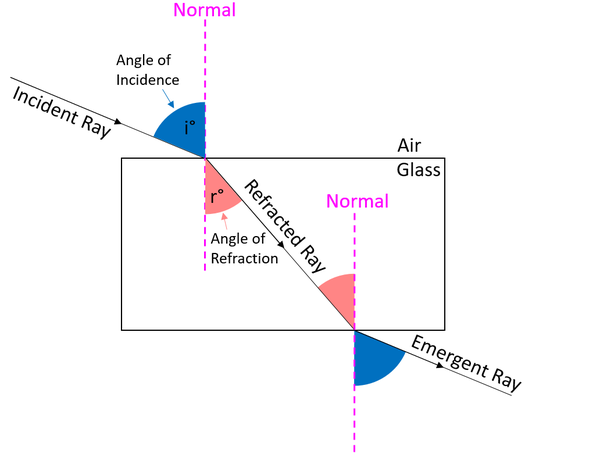
terms normal, angle of incidence and angle of refraction in a ray diagram
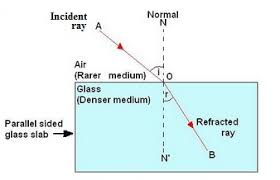
Describe the passage of light through a transparent material (boundaries between two media)
Light travels from a less dense material to a more dense material (e.g. from air to glass) → light ray bends towards the normal → angle of incidence > angle of refraction.
Light travels from a more dense material to a less dense material (e.g. from glass to water) → light ray bends away from the normal → angle of refraction > angle of incidence.
Refractive index
n → the ratio of the speeds of a wave in 2 different regions
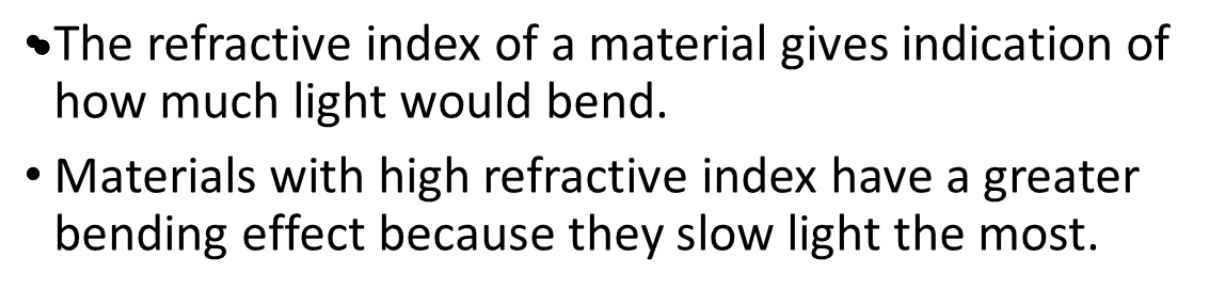
Refractive index formula
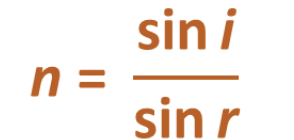
Refractive index formula #2
speed of light in a vacuum → 3 x 10⁸ m/s

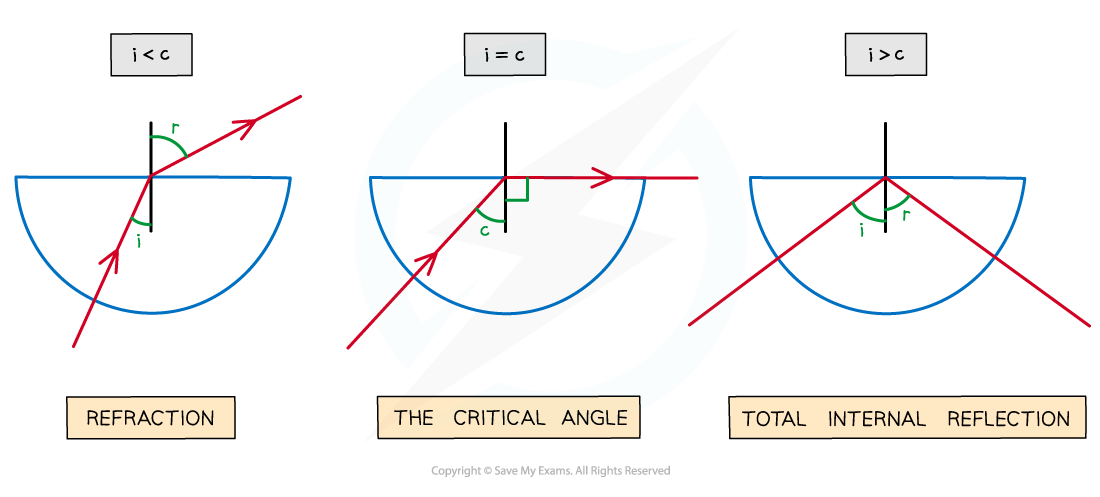
Total internal reflection
angle of incidence is greater than the critical angle → light reflects back into the medium
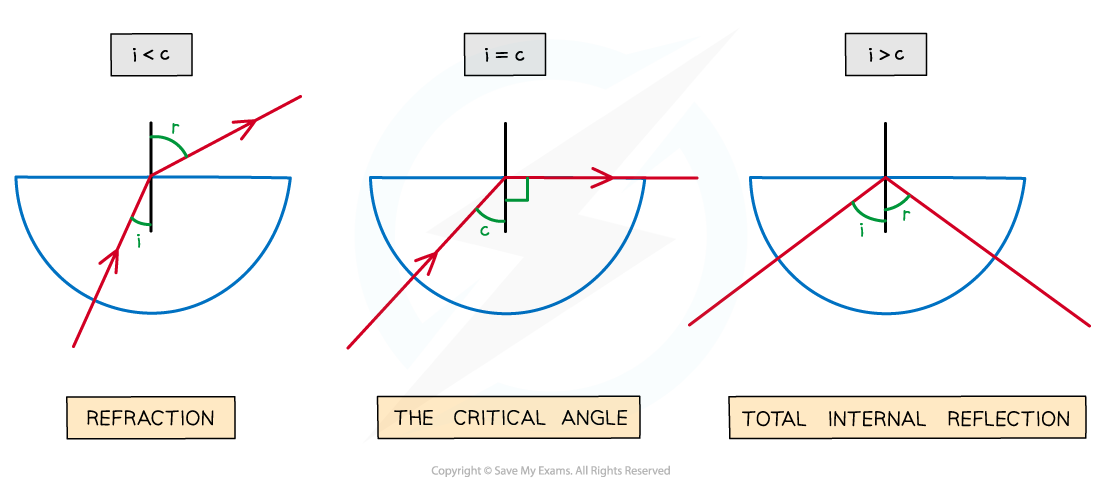
Critical angle
angle of incidence at which angle of refraction is 90° + above which all light is totally internally reflected
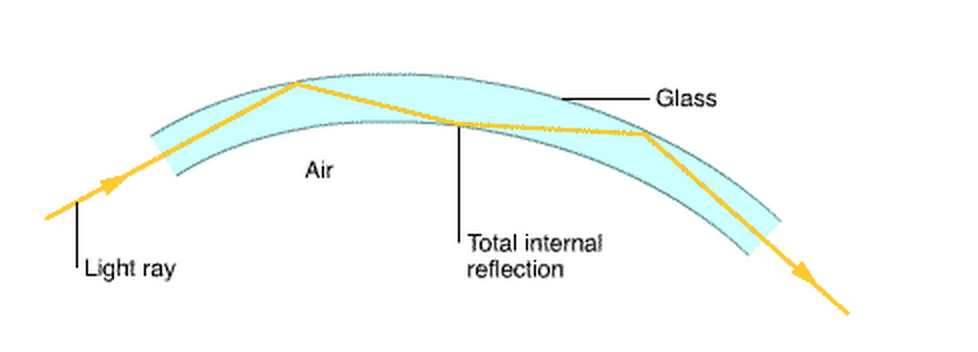
Describe total internal reflection in optical fibres
Light enters one end of optical fibre cable → undergoes total internal reflection until reaches end of cable → digital signals emitted as pulses of light → reflected along cable until reach destination
common applications of optical fibres
telecommunications
Broadcasting
Medical instruments
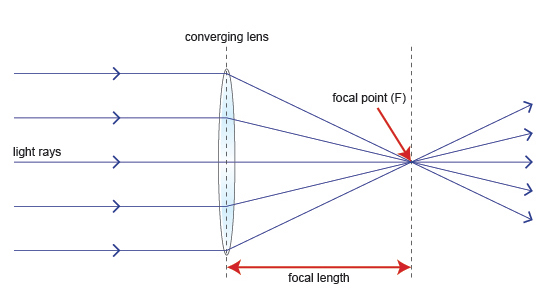
Describe the action of a thin converging lens on a parallel beam of light
converging lens causes light rays that are travelling parallel to its principal axis to refract → cross the principal axis at fixed point called the focal point.
rays of light distance
rays of light from an object at distance → parallel
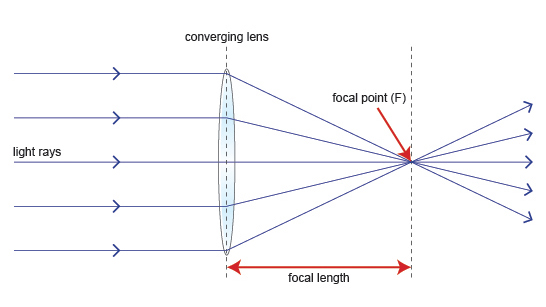
Principal axis
A line which pass through the centre of the lens
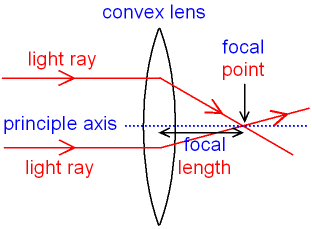
Principal focus
the point where rays of light travelling parallel to the principal axis intersect the principal axis → converge.
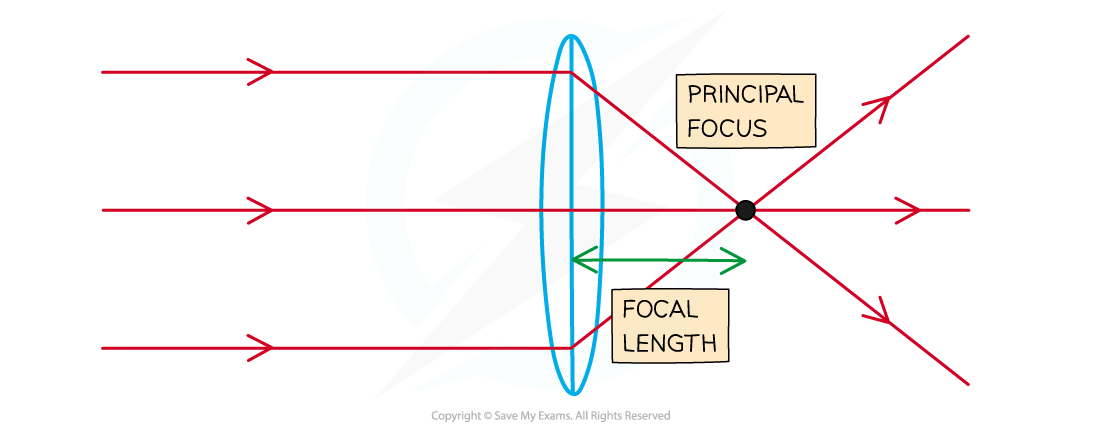
Focal length
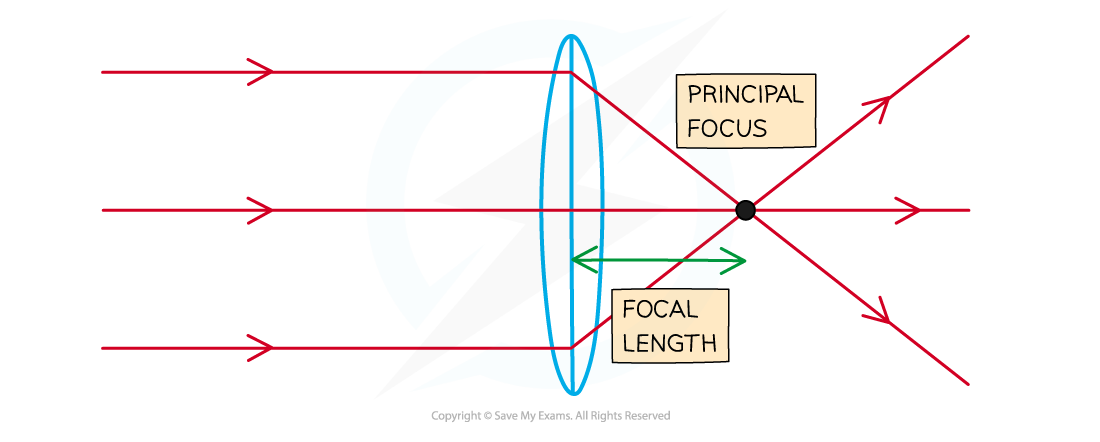
distance between the centre of lens + principal focus.
Ray diagrams for the formation of an image by a thin converging lens: real images
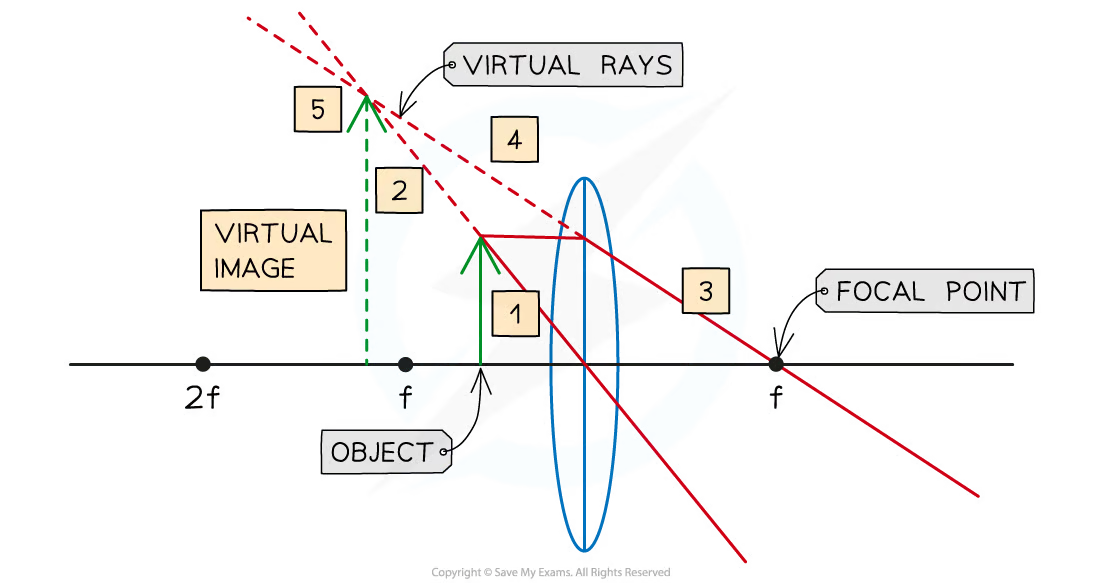
Ray diagrams for the formation of a virtual image by a thin converging lens
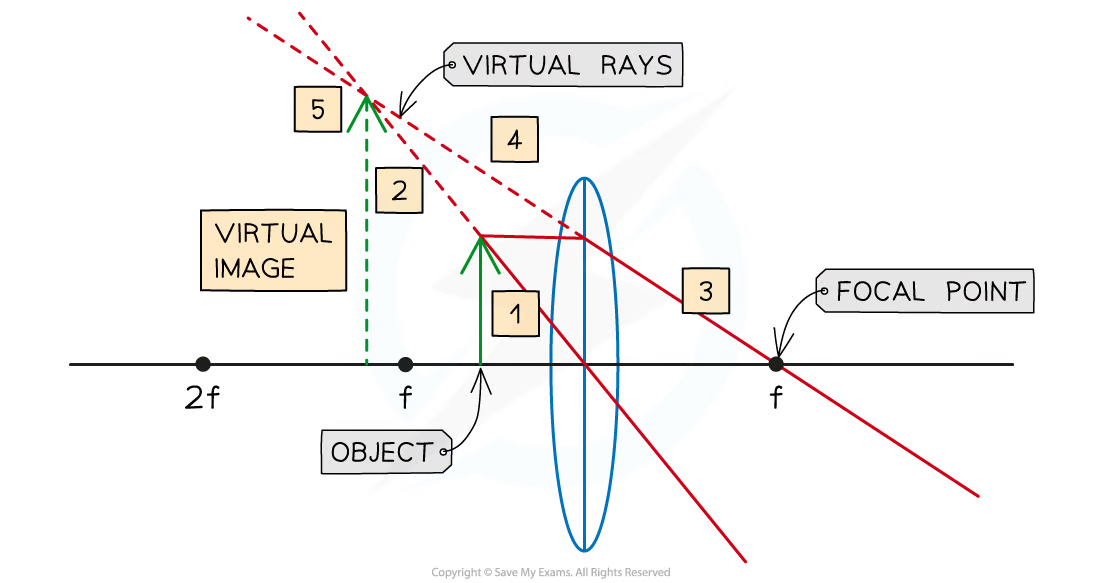
Describe an image using the terms:
enlarged / same size / diminished + upright / inverted + real / virtual
use of a single lens
as a magnifying glass
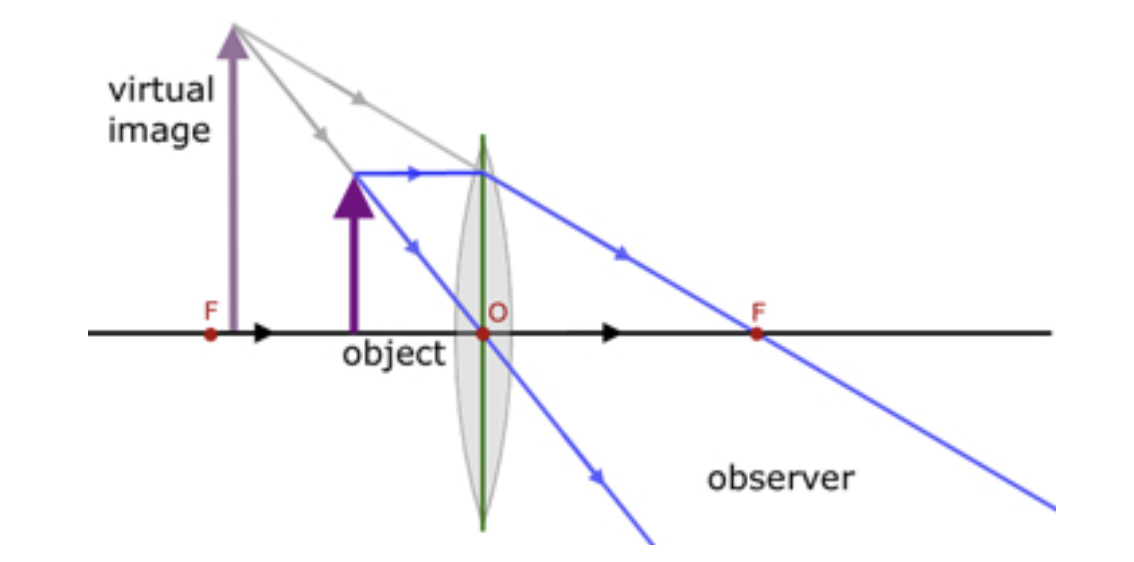
dispersion of light
the refraction of white light by a glass prism
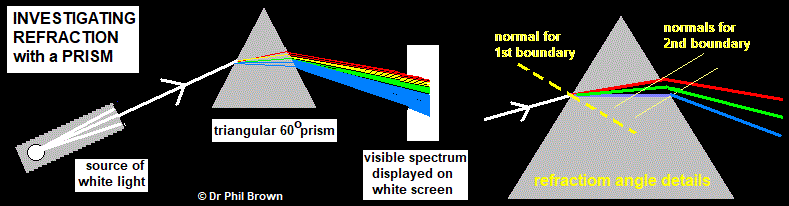
Order of the colours on the visible spectrum
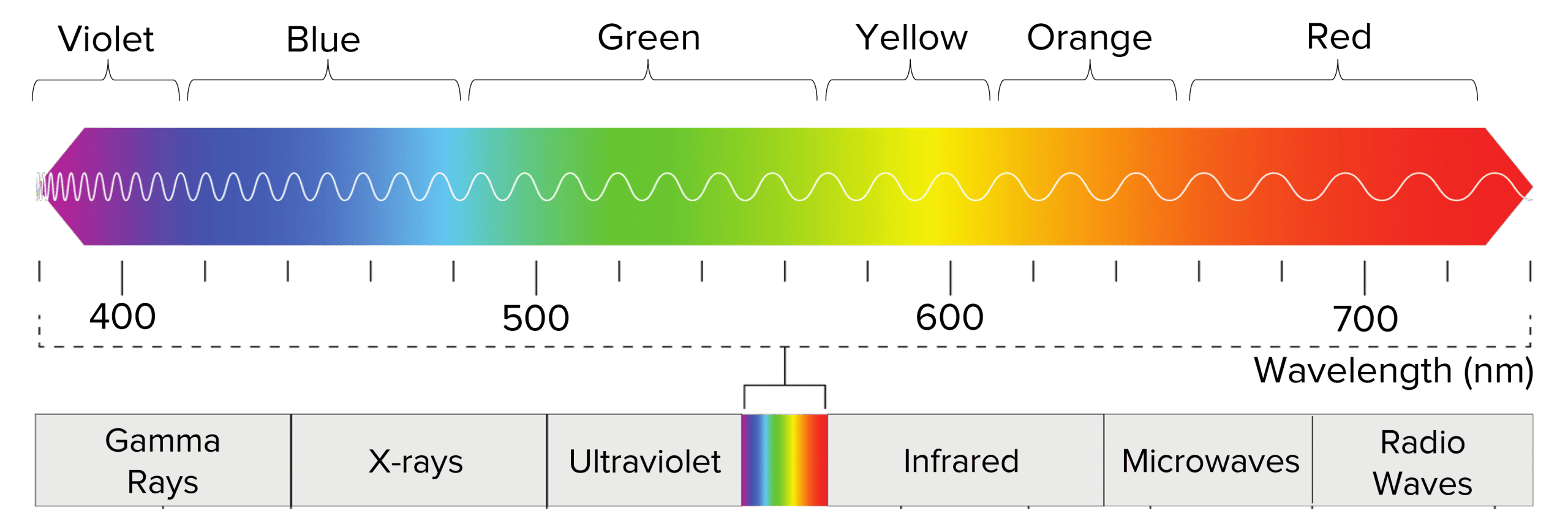
Which colour has the shortest wavelength and highest frequency
violet
Which colour has the longest wavelength and the lowest frequency
red
Electromagnetic spectrum
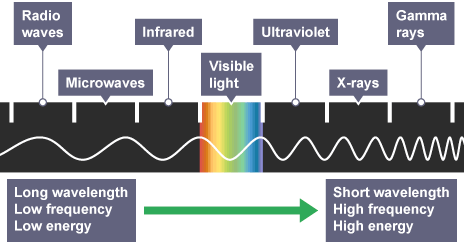
Which ems has the longest wavelength, least amount of energy and lowest frequency
Radiowaves
Which ems has the smallest wavelength, highest frequency and highest energy
gamma rays
Speed EMS travel
same speed in a vacuum → 3.0 × 10⁸ m/s → same in the air
Uses of radio waves
radio, television transmissions + radar
Uses of microwaves
satellite television, mobile phone + microwave ovens
Uses of infrared
remote controllers for televisions + thermal imaging
Uses of visible light
vision + photograph
Uses of ultraviolet
detecting fake bank notes
Uses of X-rays
medical scanning + security scanners
Uses of gamma rays
detection of cancer + treatment
Harmful effects of ultraviolet waves
damage to surface cells and eyes → leads to skin cancer + eye conditions
Harmful effects of X-rays and gamma rays
mutation or damage to cells in the body
production of sound
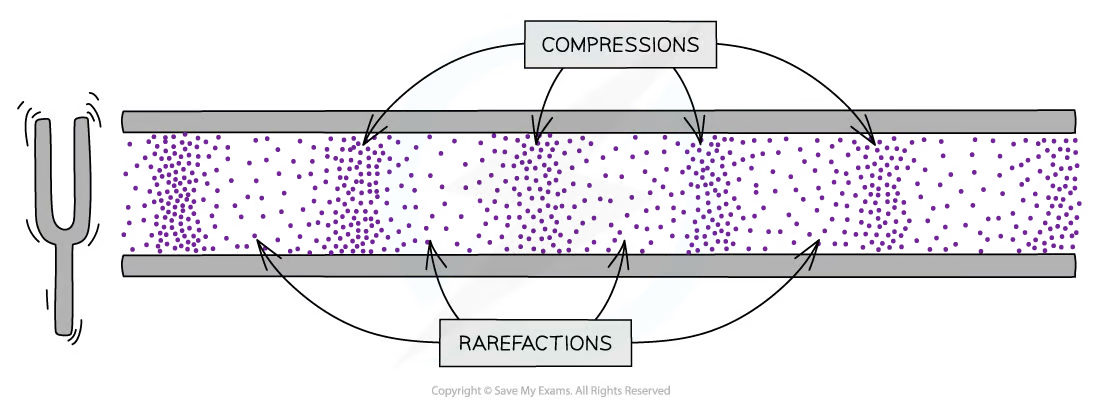
produced by vibrating sources
longitudinal nature of sound waves in air
a series of compressions and rarefactions
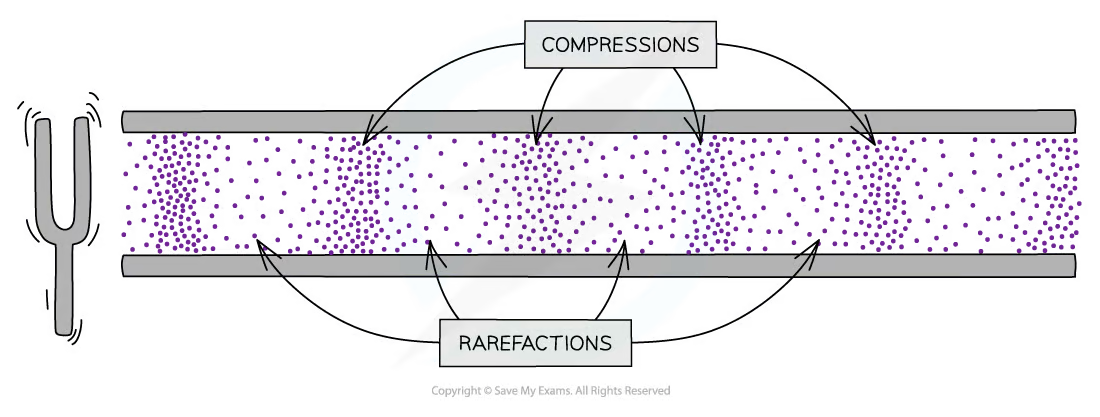
compressions
regions of higher pressure → particles being closer together
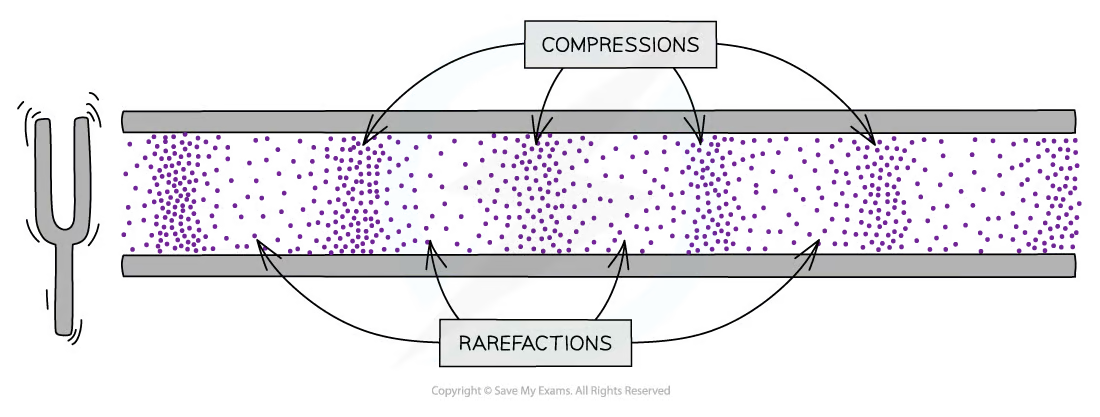
Rarefactions as regions of lower pressure due to particles being spread further apart
regions of lower pressure → particles being spread further apart
Range of audible frequencies for a healthy human ear
20Hz to 20000Hz
How to transmit sound waves
through a medium
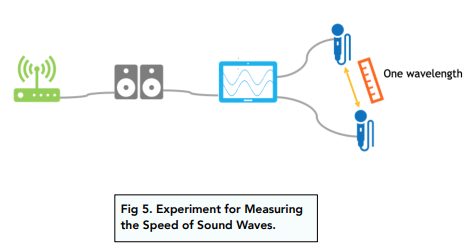
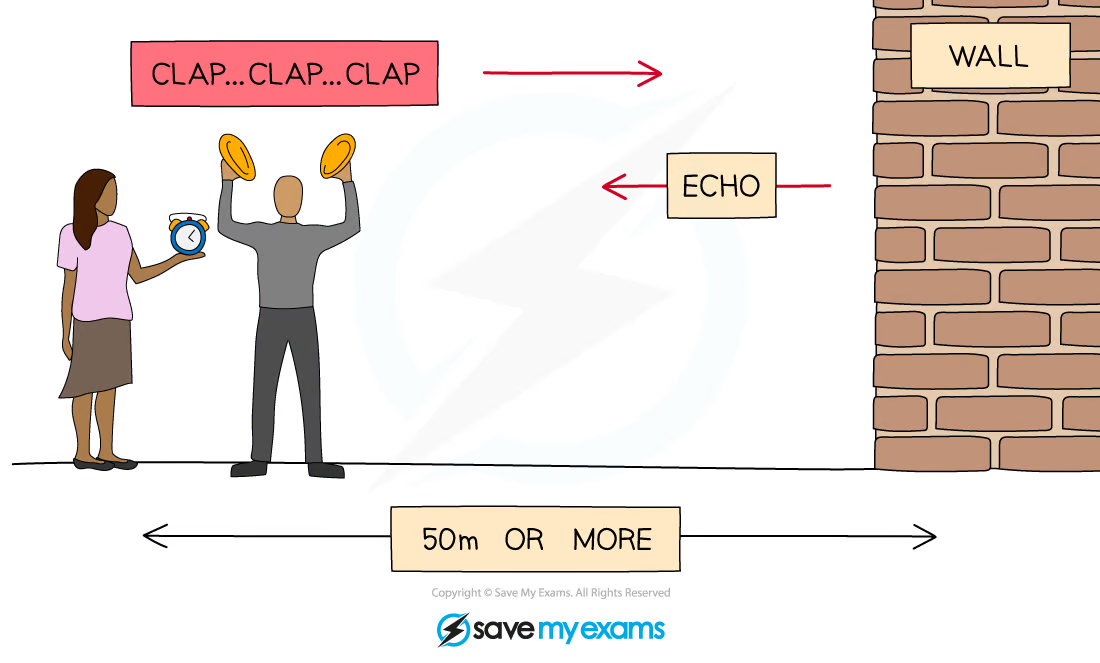
Determine the speed of sound in air
timing how long it takes for the sound waves to travel a known distance through a medium → stopwatch, ruler, or sonic ranger
how fast sound travels in different states of matter
faster in solids than in liquids
faster in liquids than in gases
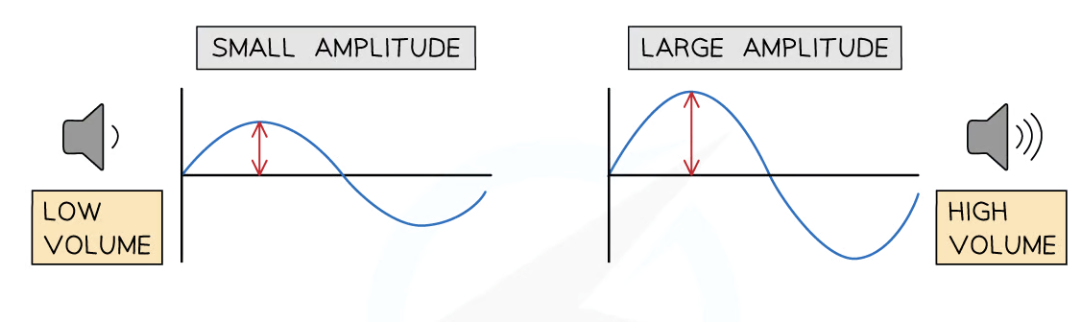
how changes in amplitude affect loudness of sound waves
larger the amplitude → louder the sound
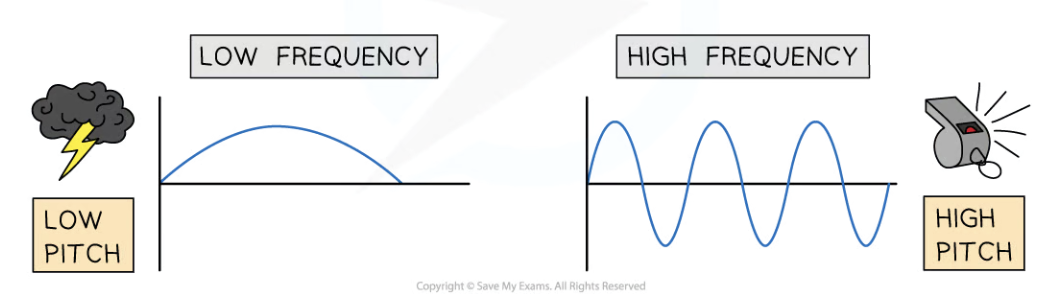
how changes in frequency affect the pitch of sound waves
higher the frequency → higher the pitch
Echo
reflection of a sound wave
Ultrasound range
frequency higher than 20 kHz