RAD 111 Bontrager 2 (CHEST)
 Call Kai
 Learn
Learn Practice Test
 Spaced Repetition
 Match
Match Flashcards
 Knowt Play
1/258

There's no tags or description
Looks like no tags are added yet.
Name | Mastery | Learn | Test | Matching | Spaced | Call with Kai |
|---|
No analytics yet
Send a link to your students to track their progress
259 Terms
The medical term for chest is?
Thorax
The radiographic anatomy of the chest is divided into what three sections?
Bony thorax, respiratory system proper, and mediastinum
What is the part of the the skeletal system that provides a protective framework for the parts of the chest involved with breathing and blood circulation?
Bony thorax
Thoracic viscera
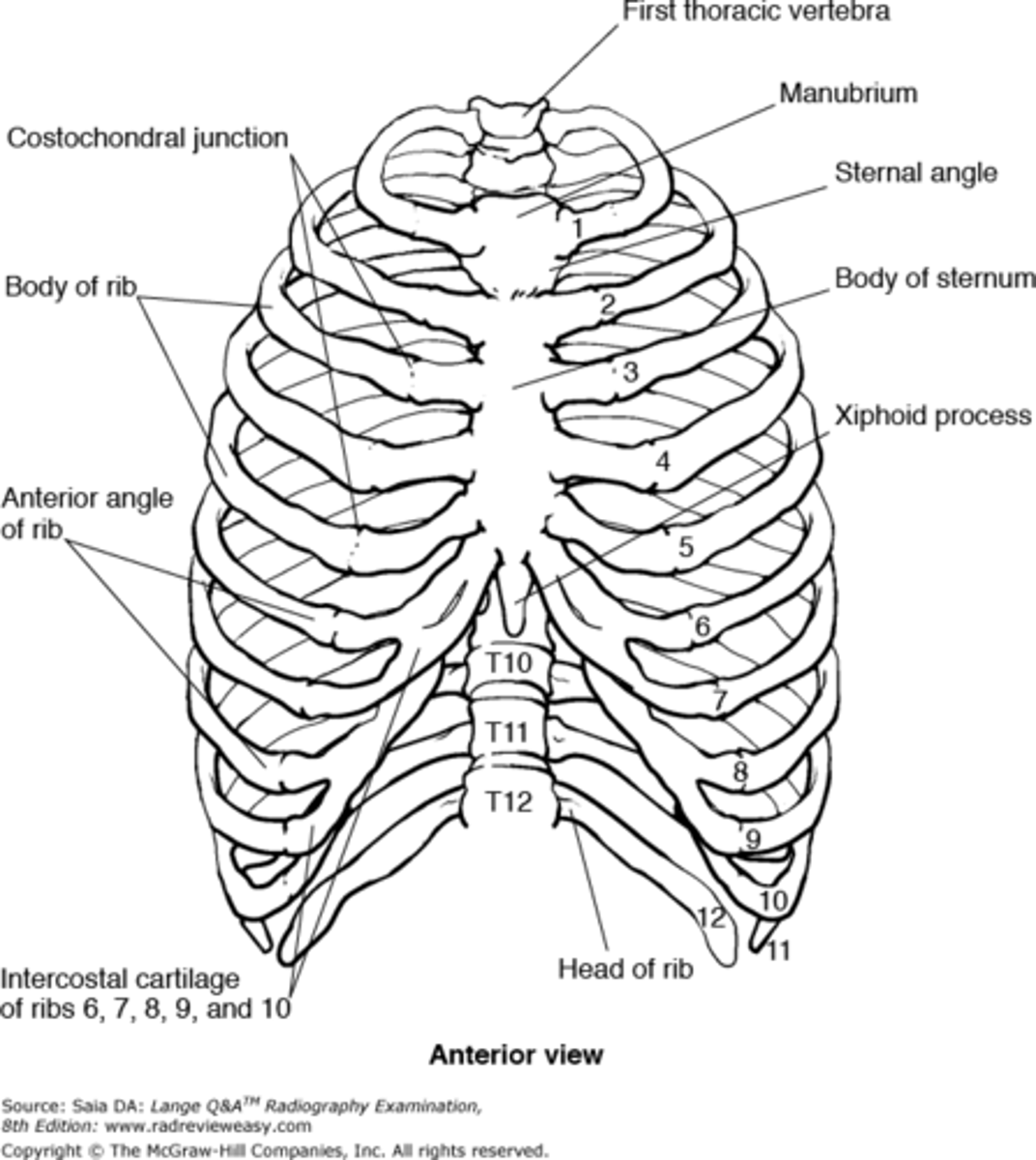
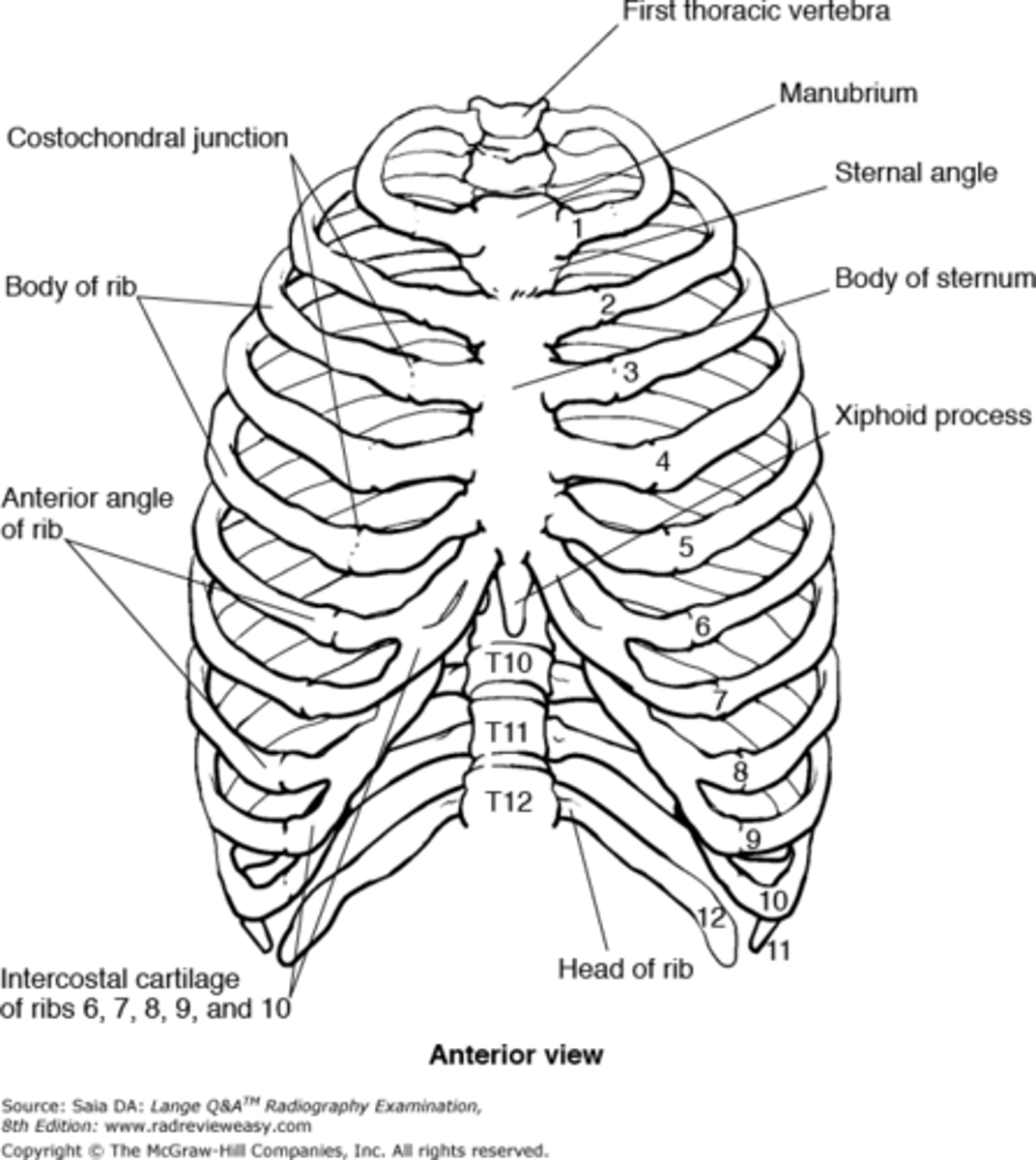
Anterioryly, What does the bony thorax consist of ____________.
The sternum
What is the lay term for sternum?
Breastbone
The sternum is divided into what three sections?
Manubrium, body, and xiphoid process
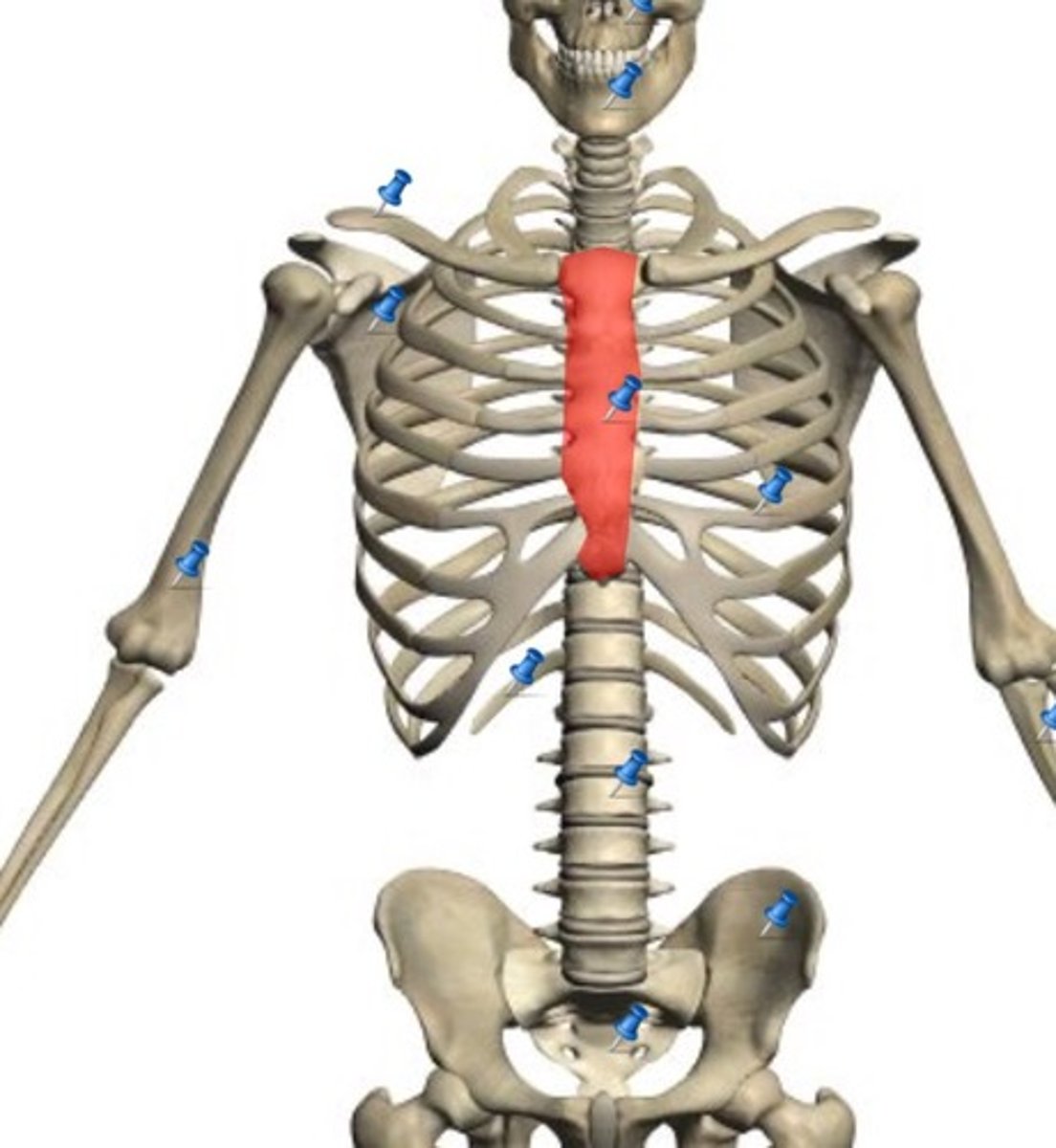
Manubrium
Superior portion of the sternum
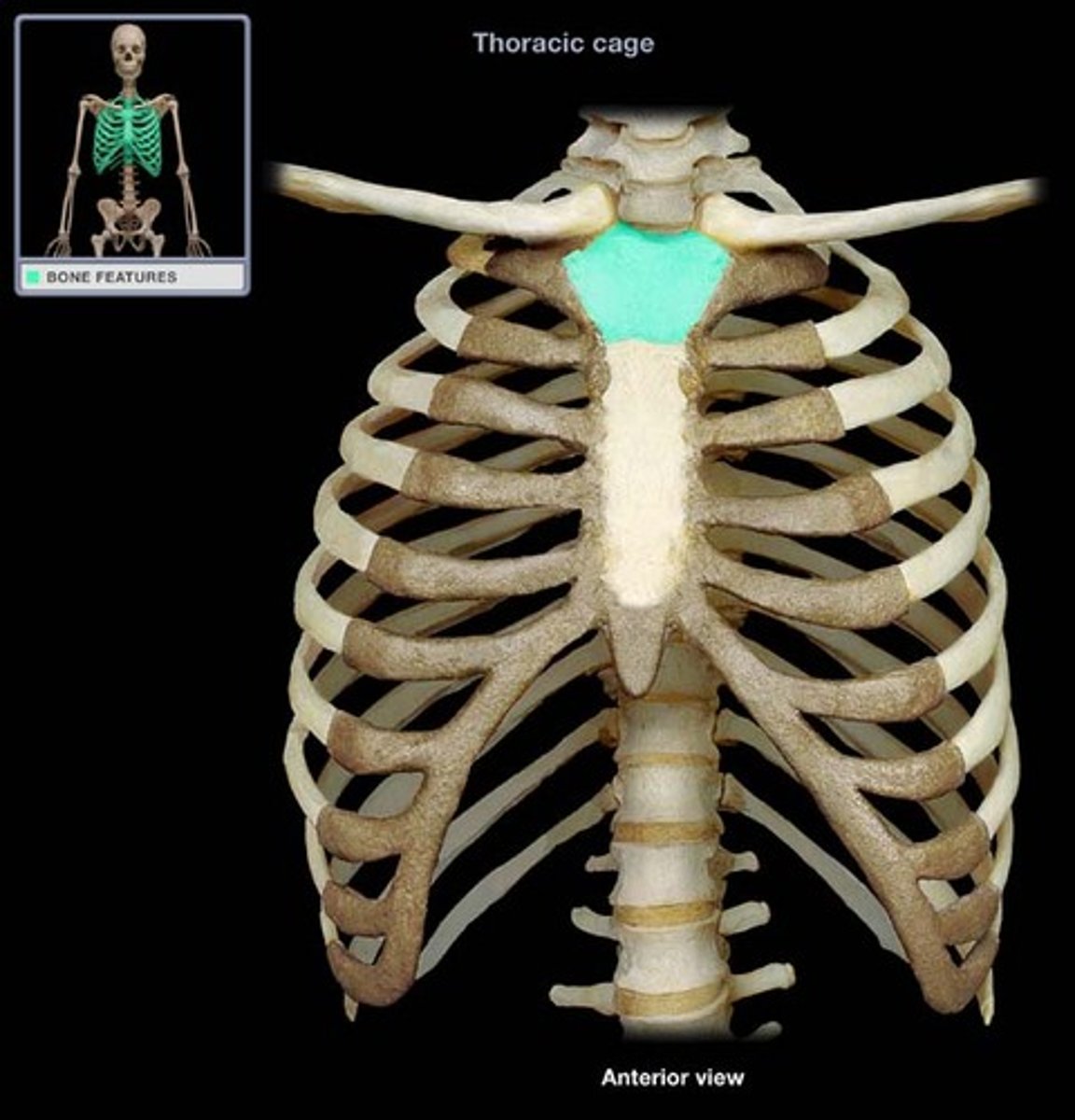
Body (sternum)
Large center portion of the sternum
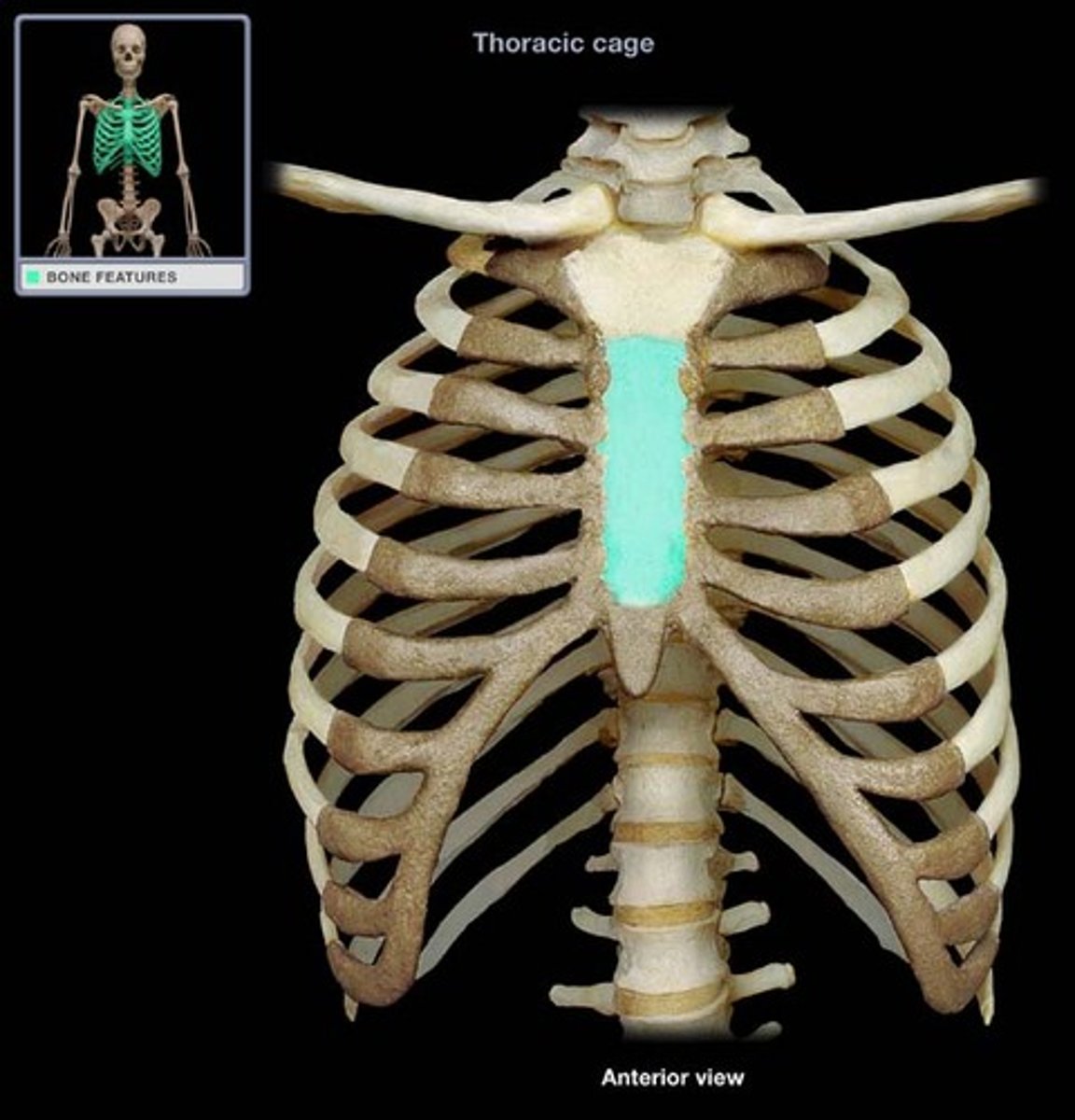
Xiphoid process
Inferior portion of the sternum
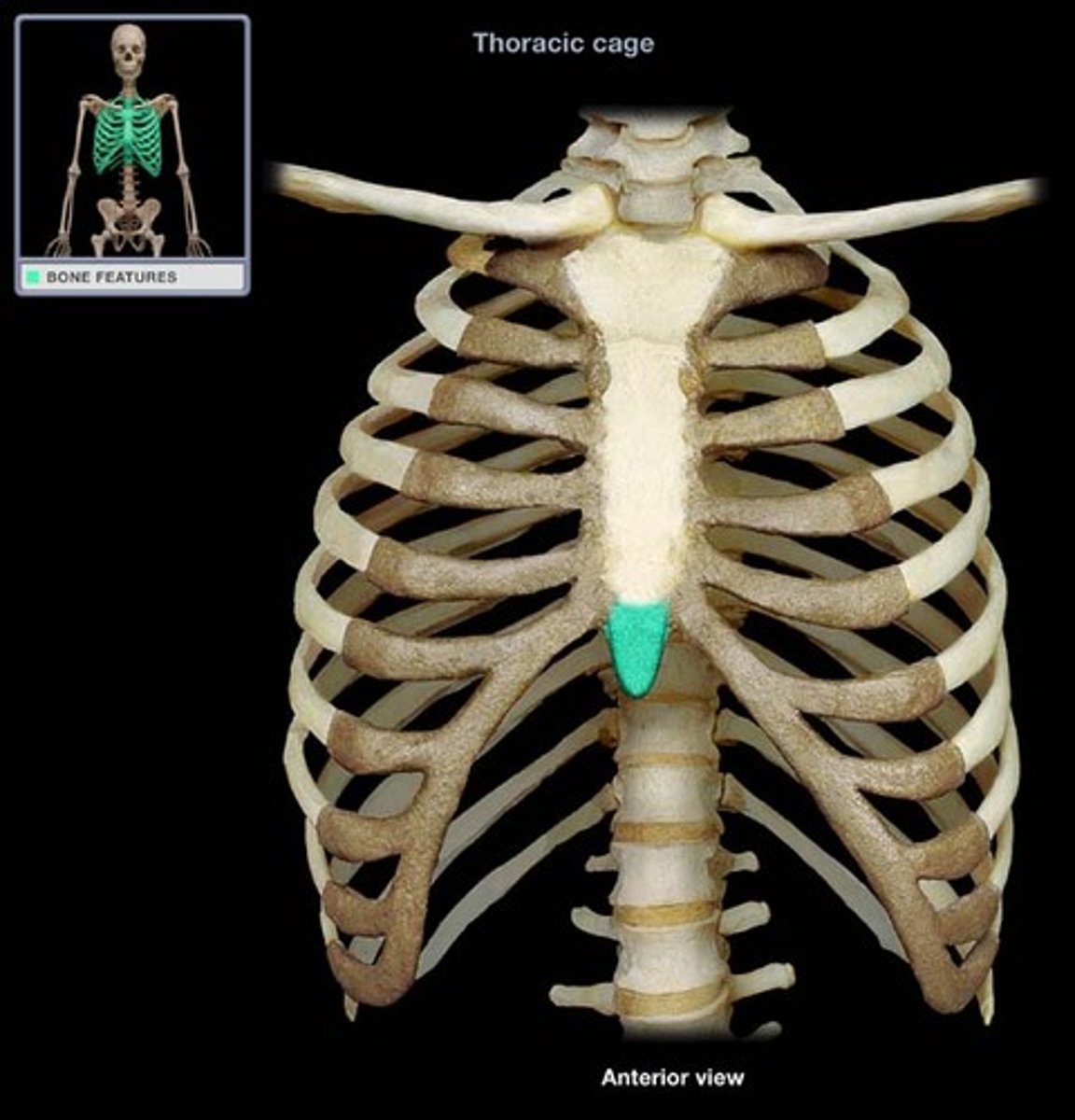
Superiorly, the bony thorax consist of?
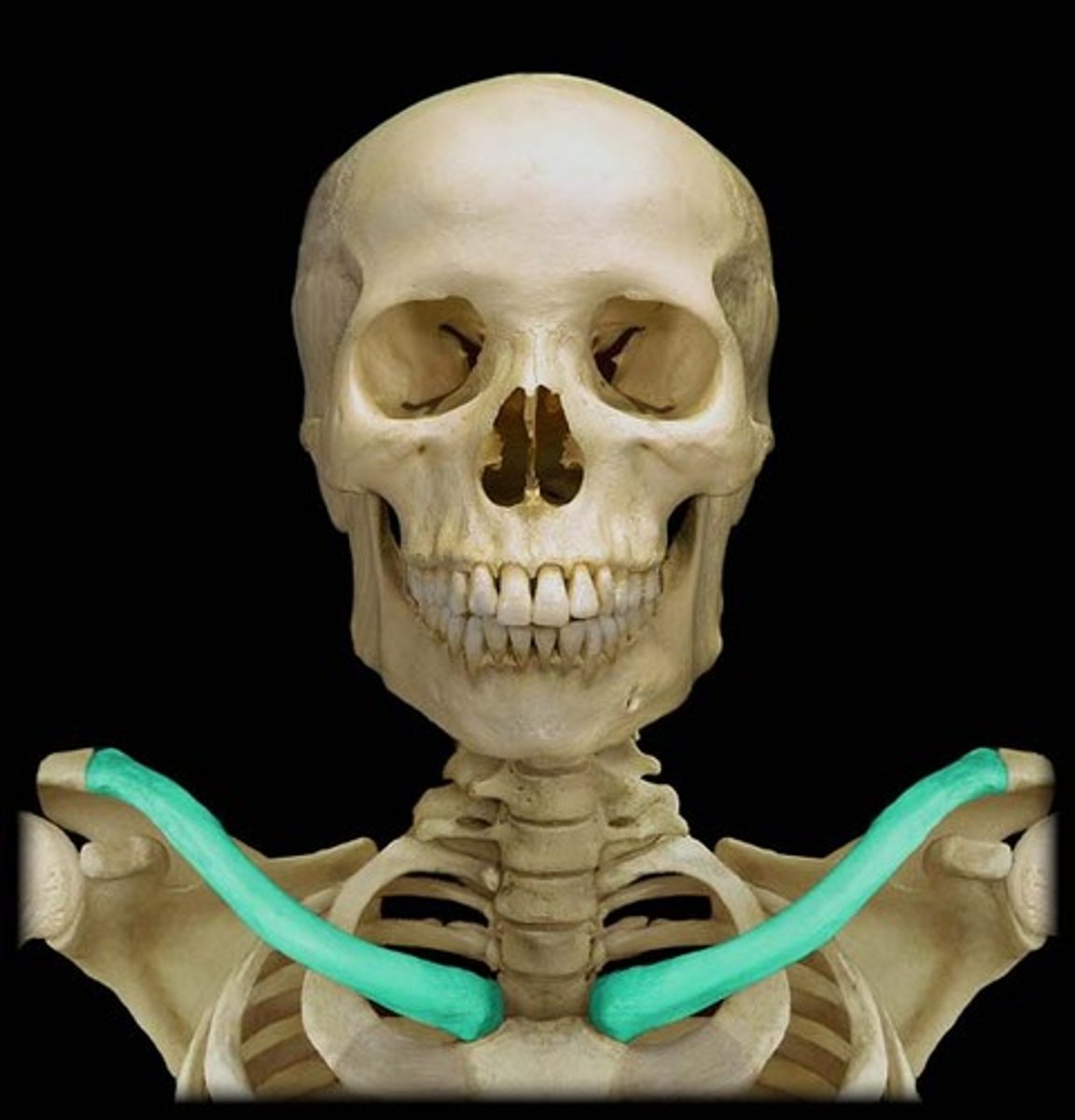
Two 2 clavicles, that connect the sternum to the 2 scapulae, and the 12 pairs of ribs that circle the thorax.
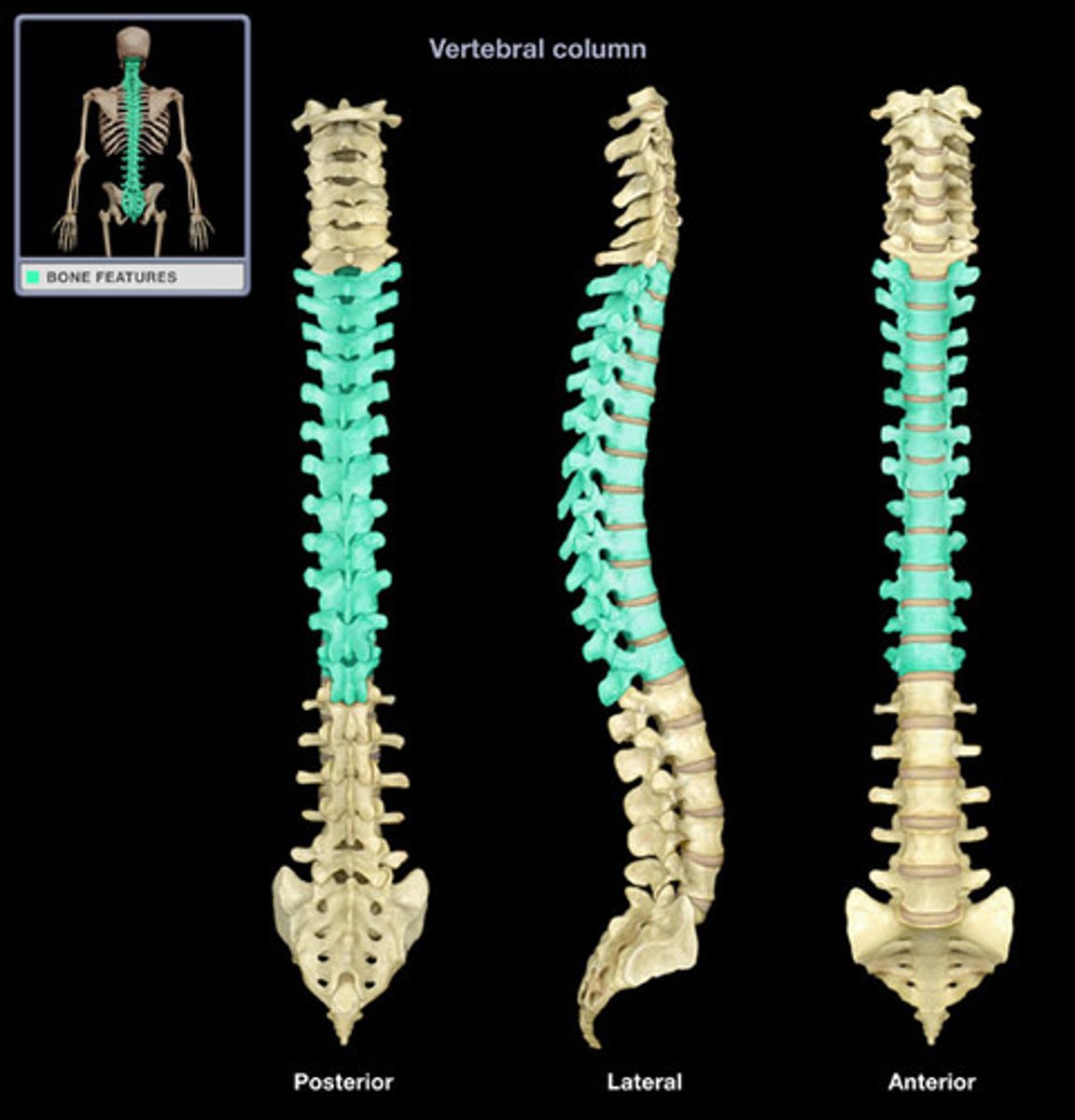
Posteriorly, the bony thorax consist of?
12 thoracic vertebrae
Thoracic vertebrae
Clavicle
Collar-bones
Scapulae
Shoulder blades
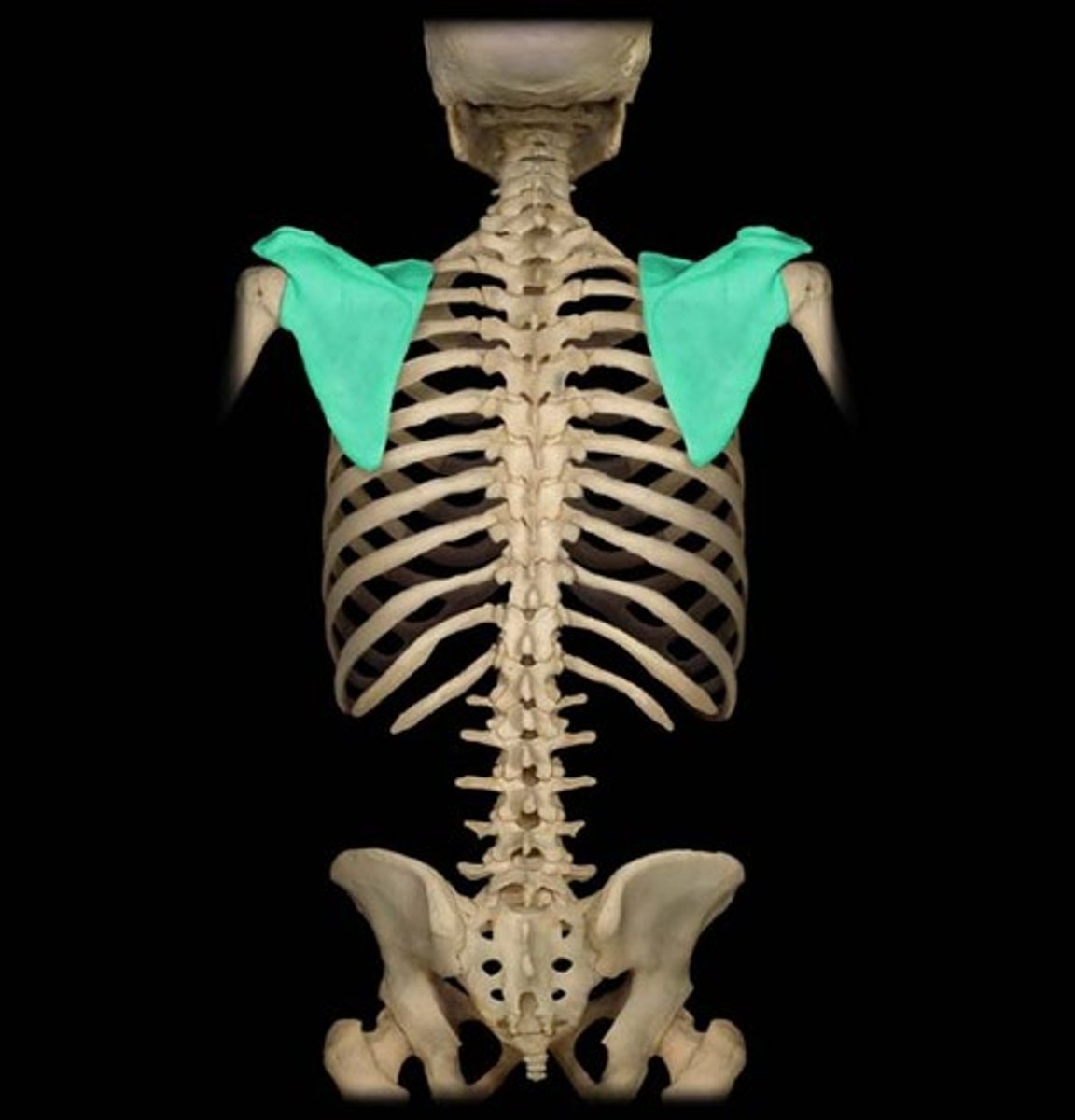
Topography
The arrangement of the natural and artificial physical features of an area
For chest positioning, what are two are two topographic positioning landmarks?
The vertebra prominens, and the jugular notch.
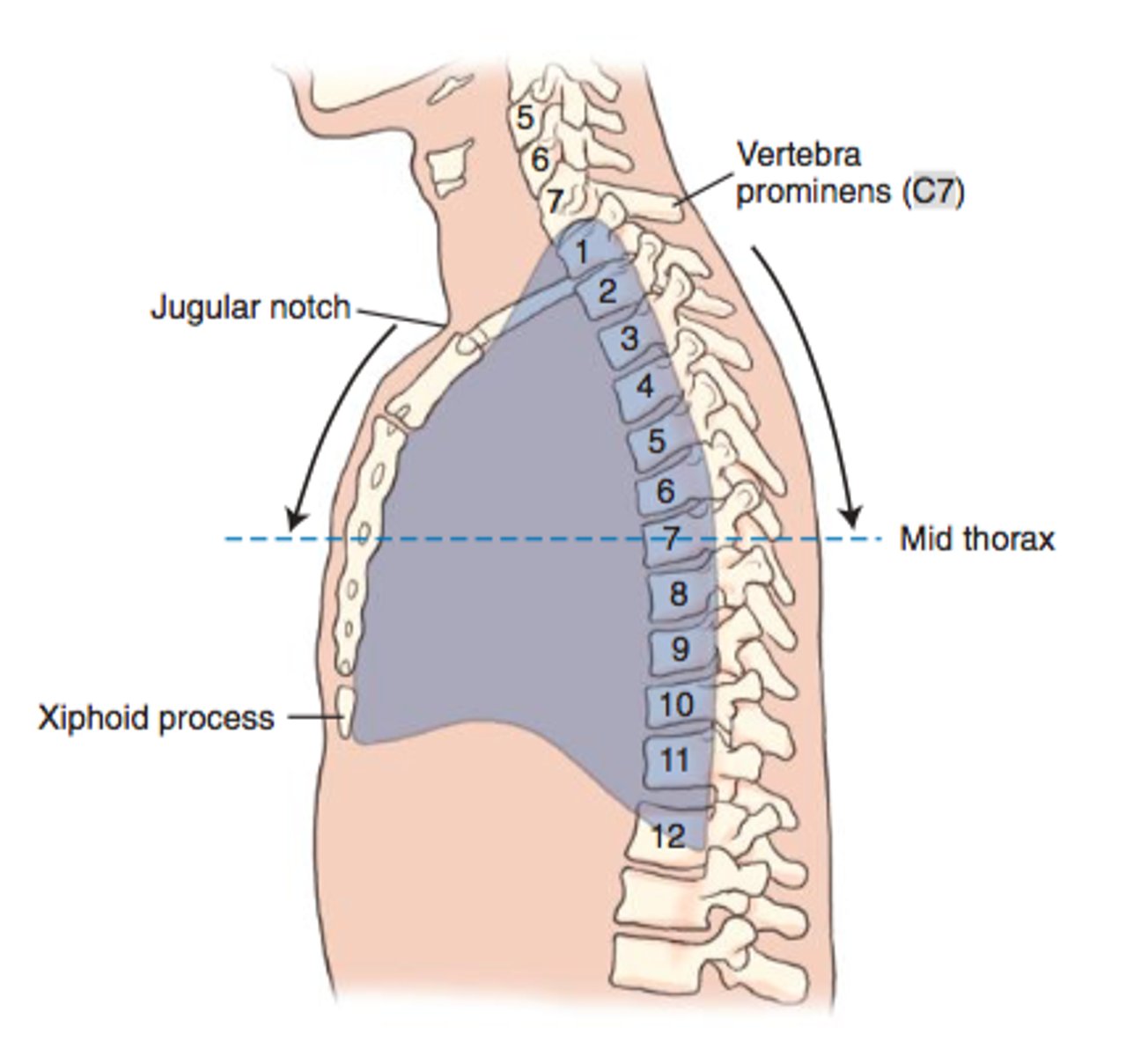
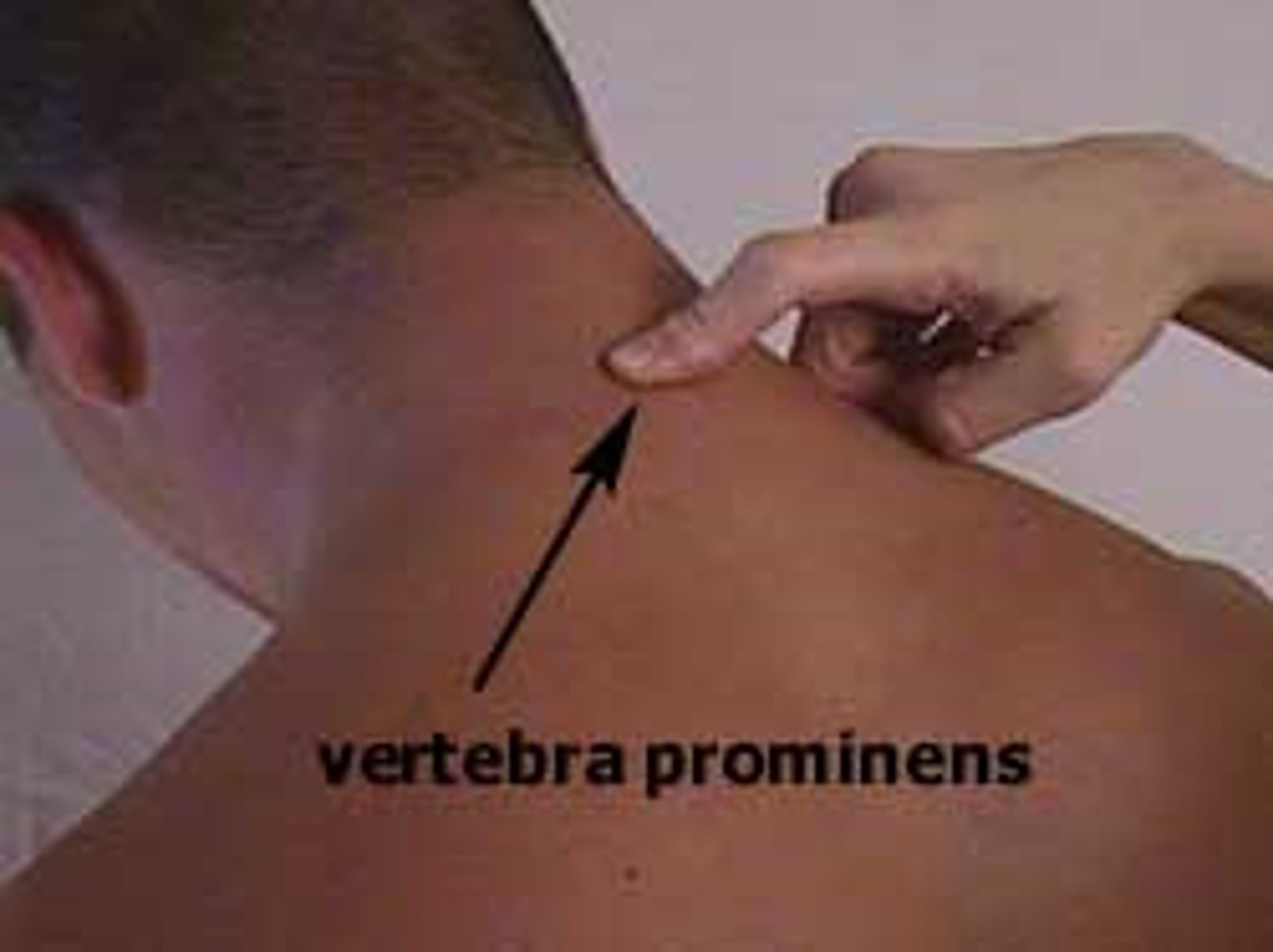
The vertebra prominens is a important landmark for for determining CR location on what type of chest projection?
A posteroanterior (PA) chest projection
Vertebra prominens
the seventh vertical vertebra
Jugular Notch
Manubrial or suprasternal notch
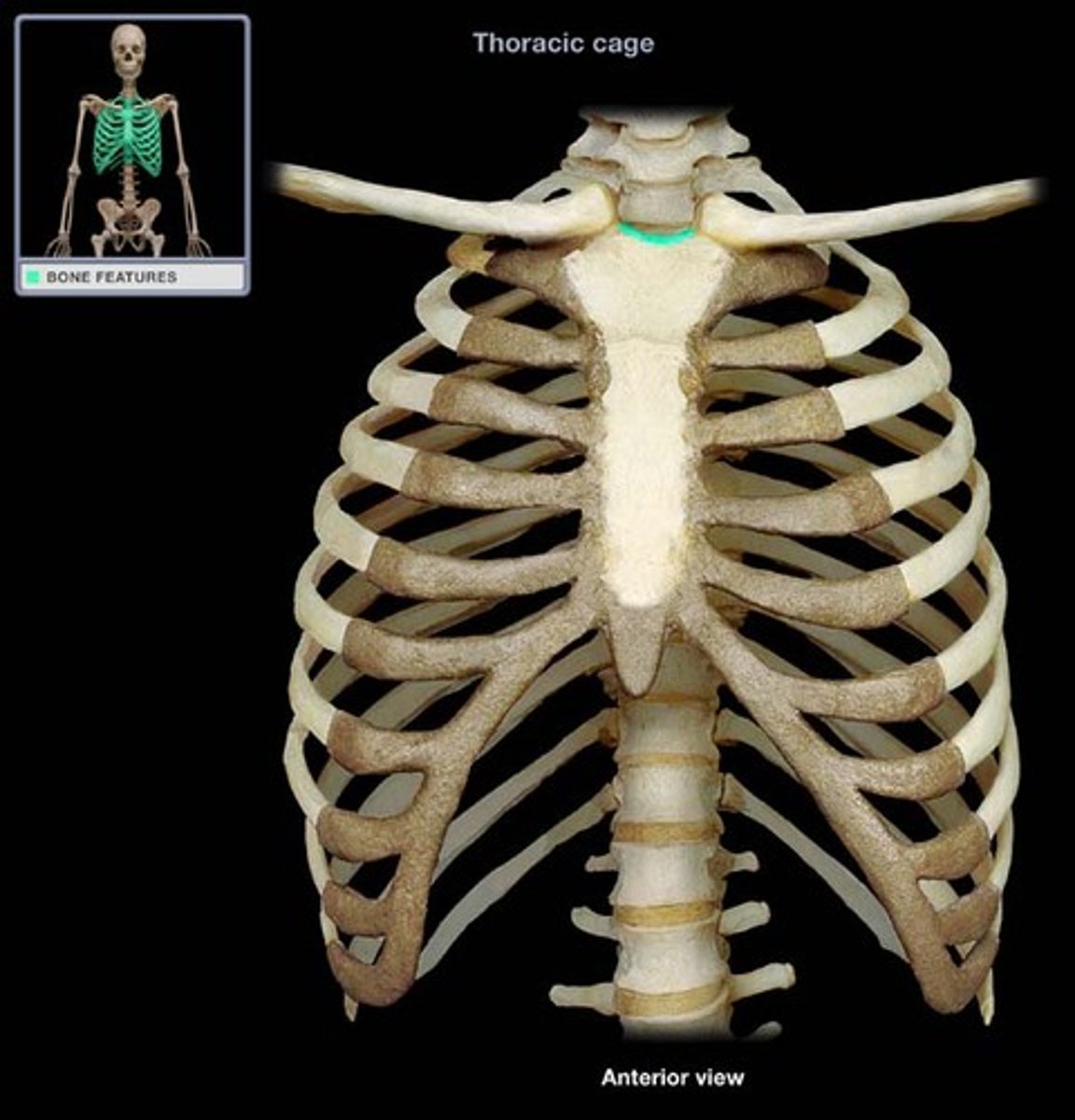
The jugular notch is an important landmark for determining CR location on what type of chest projection?
Anteroposterior (AP) chest projection
What are the four general divisions of the respiratory system from superior to inferior?
Pharynx, Trachea, Brochi, and Lungs
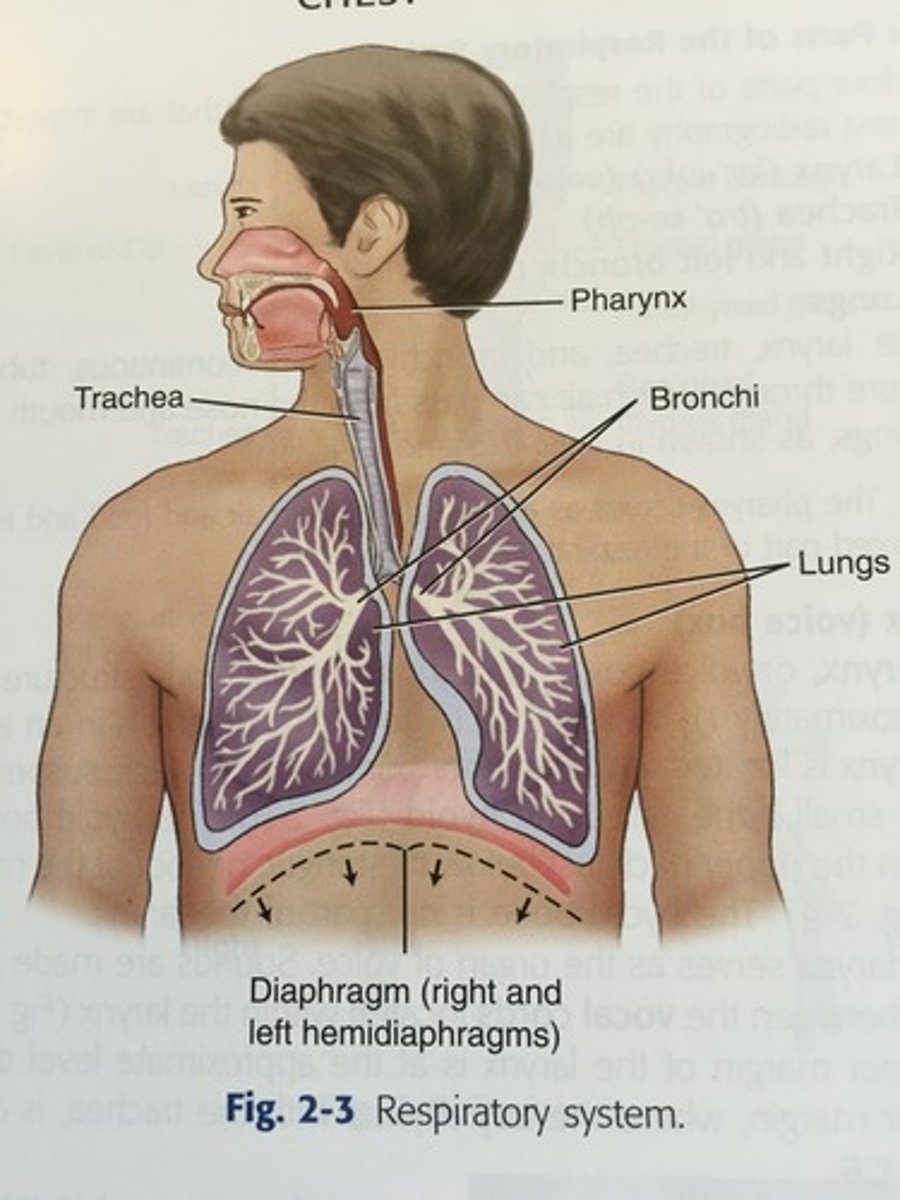
Diaphragm
An important structure of the respiratory system, which is the primary muscle of inspiration.
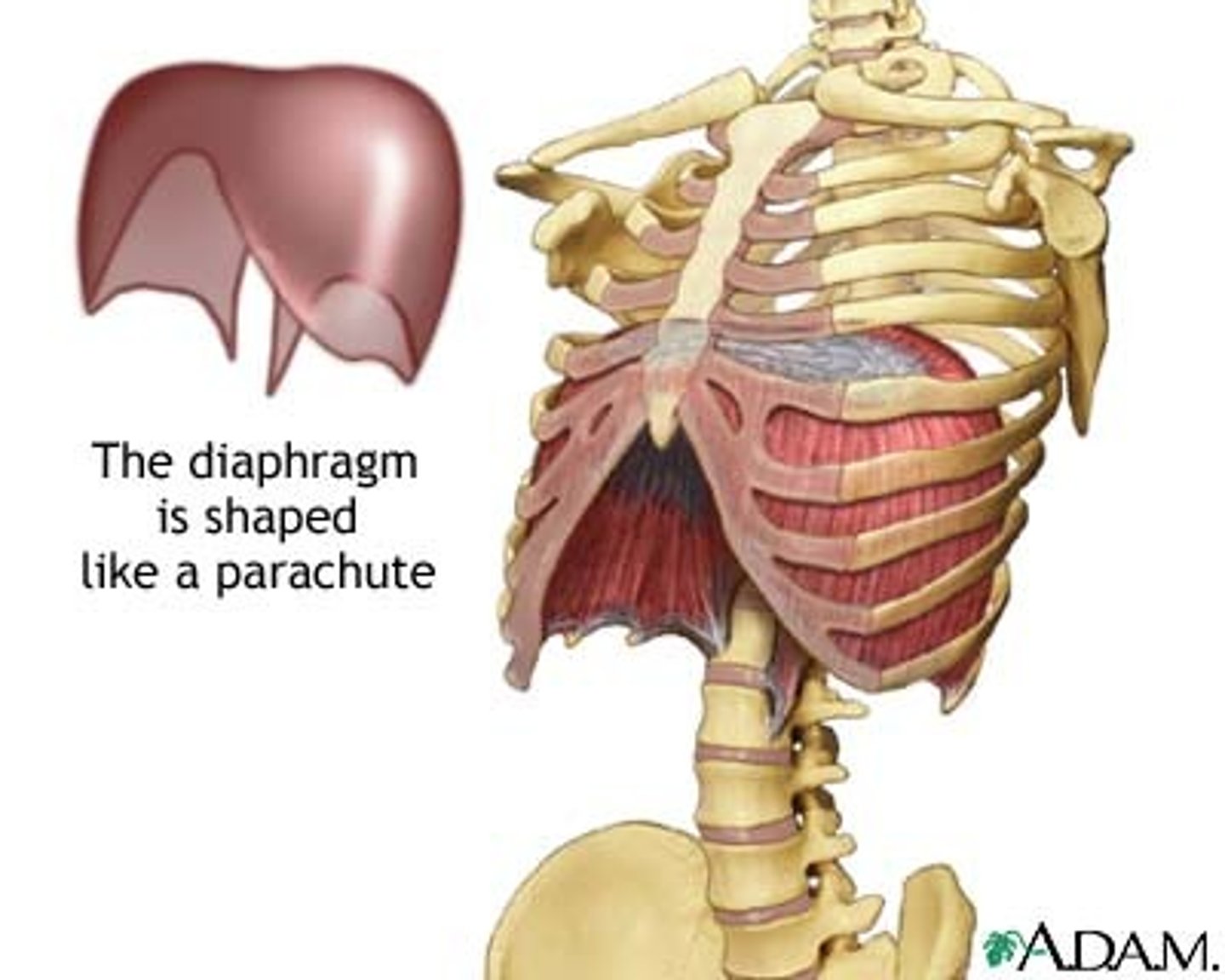
Each half of the diaphragm is called?
A hemidiaphragm
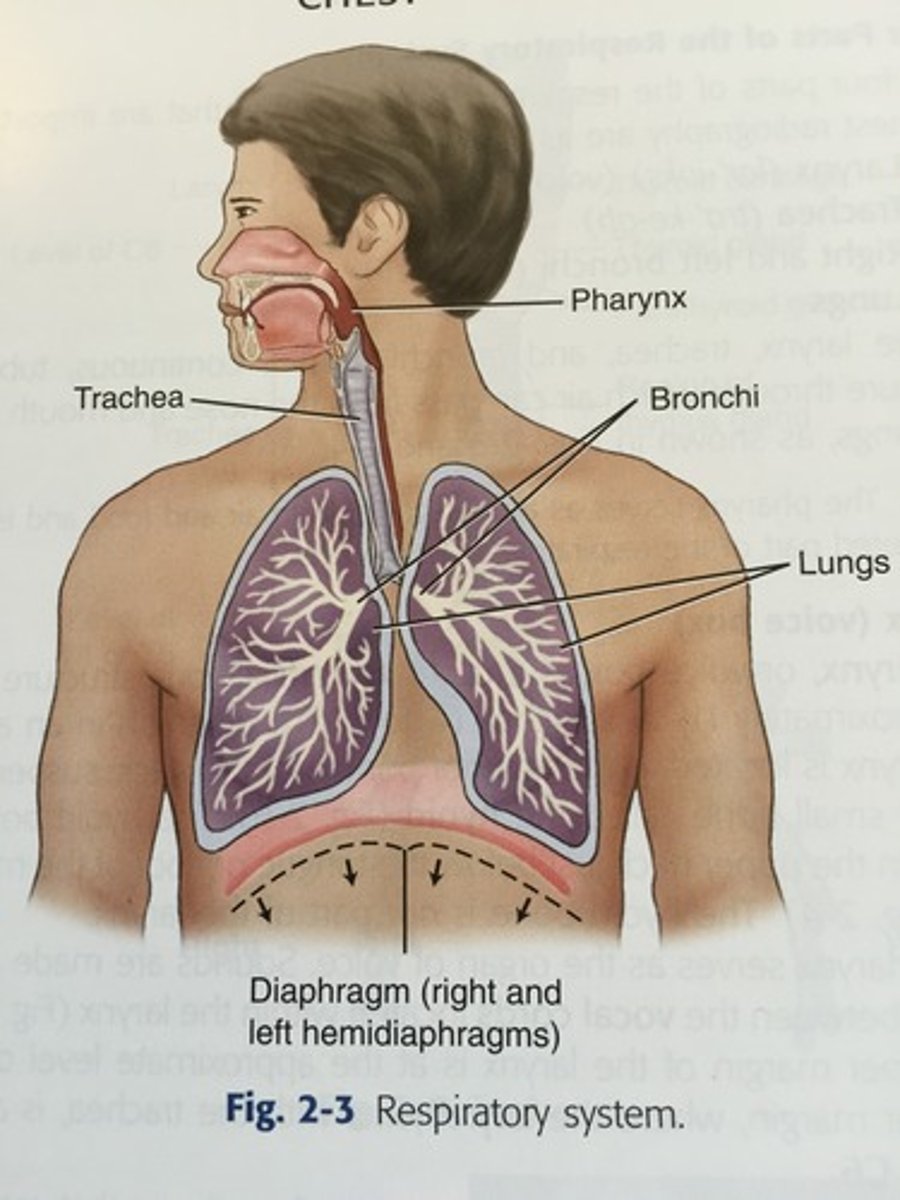
Pharnyx
Also referred to as the upper airway, or upper respiratory tract. Serves as a passageway for food fluids as well as air.
When the dome of the diaphragm move downward it _________ the volume of the thoracic cavity.
Increases
When the dome of the diaphragm moves upward it _____ the volume of the thoracic cavity.
Decreases
The pharnyx is or is not considered part of the respiratory system? Why?
It is not truly considered part of the respiratory system because it also serves as a passageway for food to the digestive system.
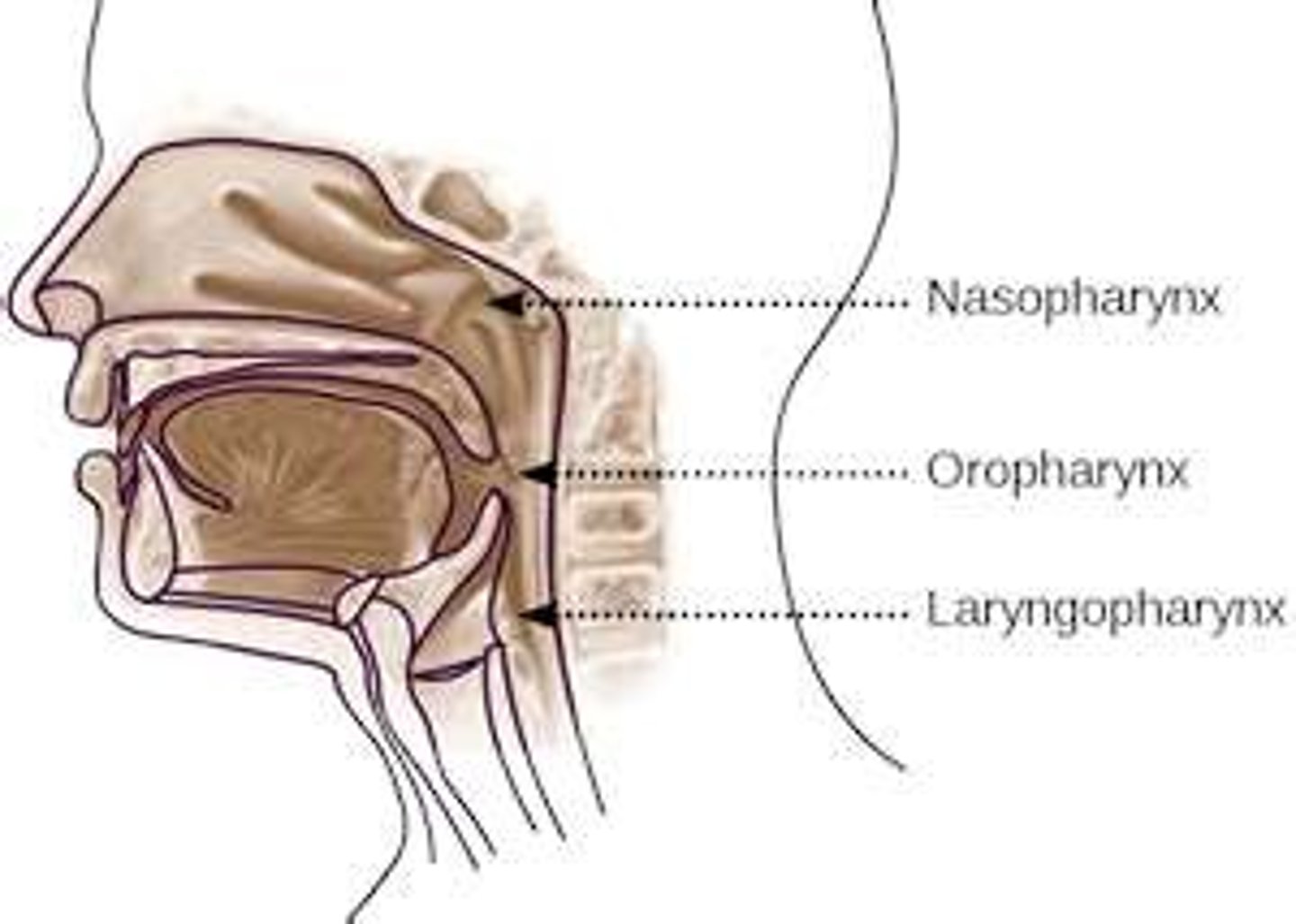
The pharnyx has three divisions, list these from superior to inferior.
The nasopharynx, oropharynx, and laryngopharynx
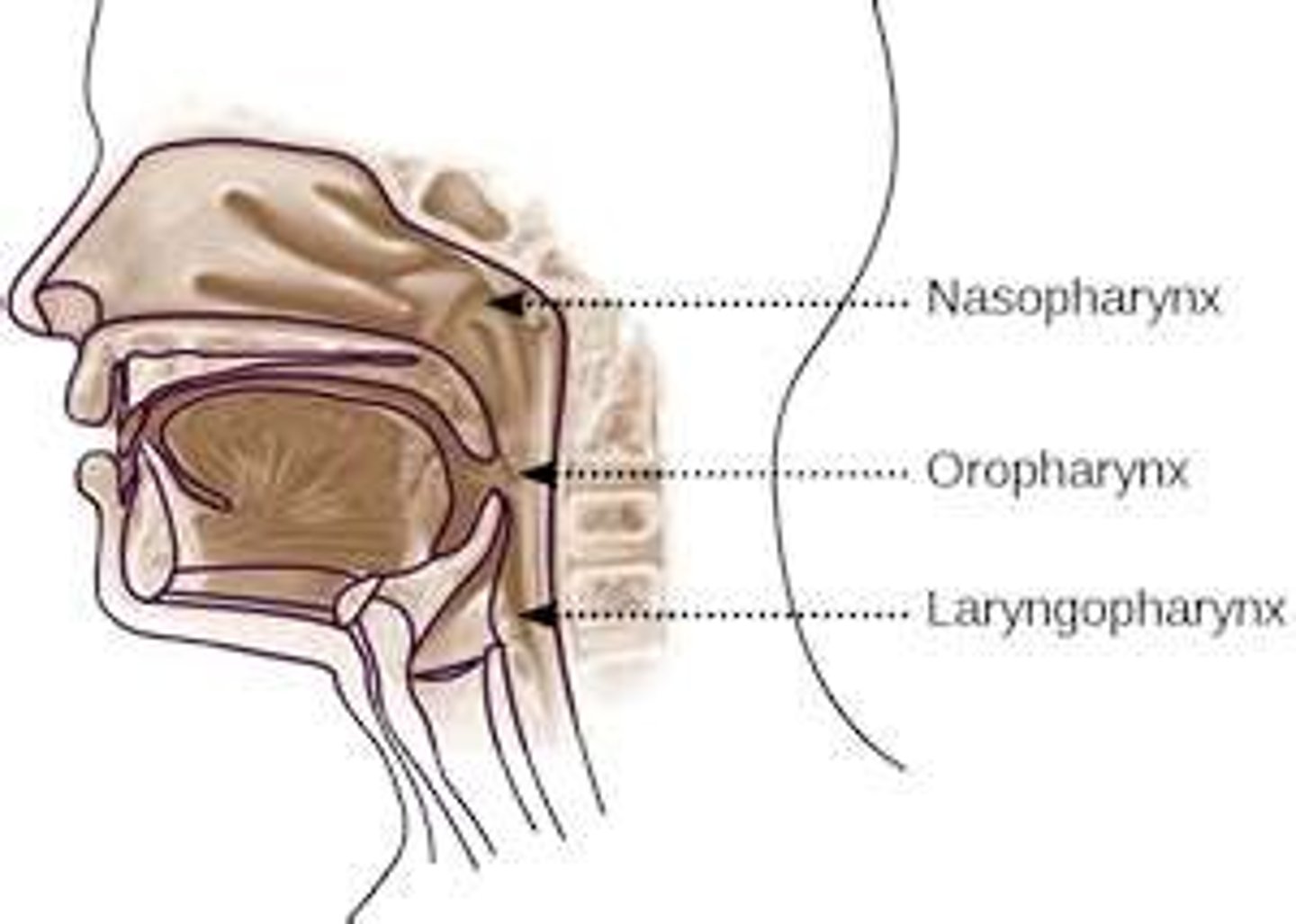
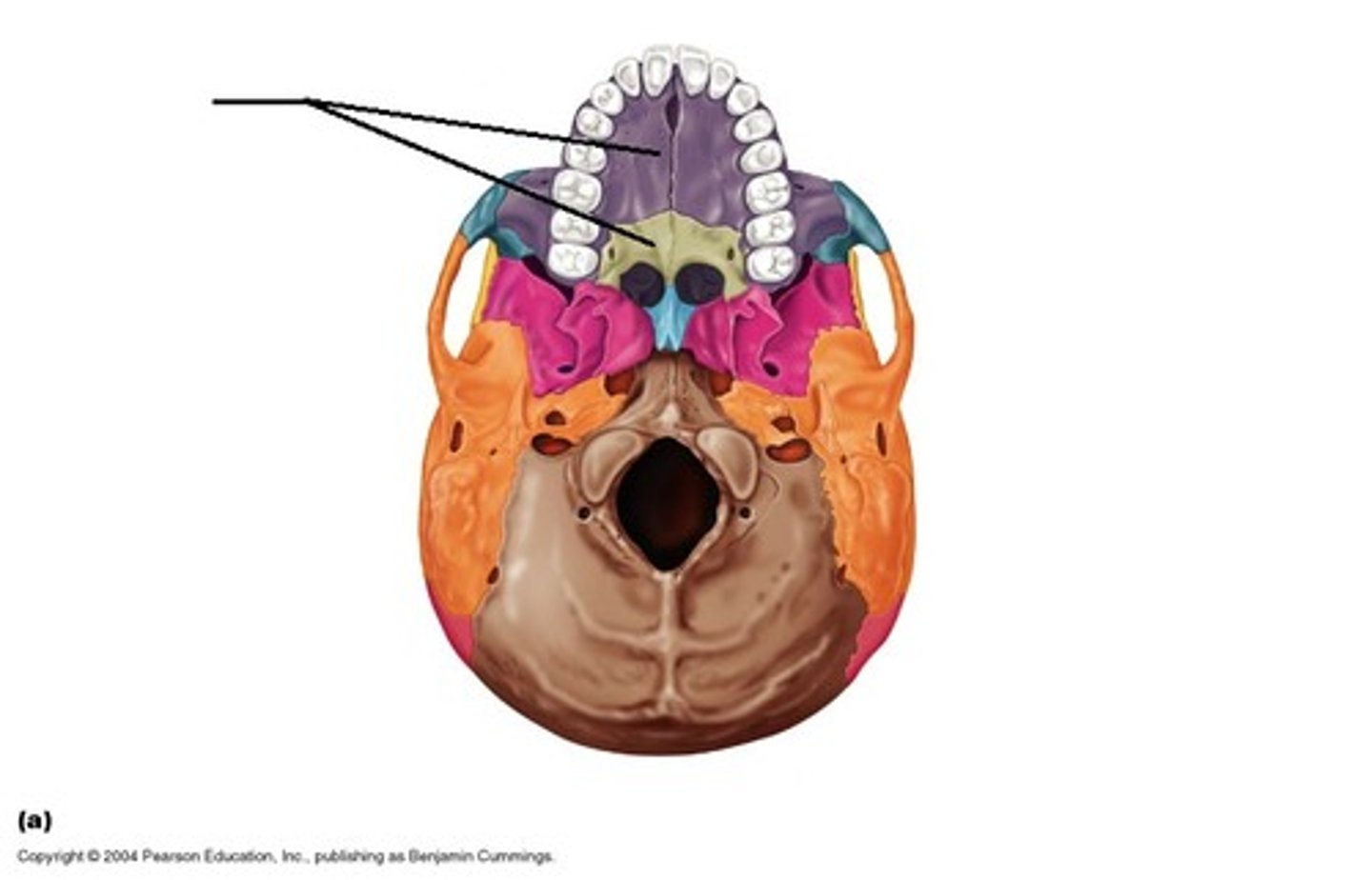
What makes up the roof of the oral cavity?
The lower posterior aspect of the soft palate is called the?
Uvula
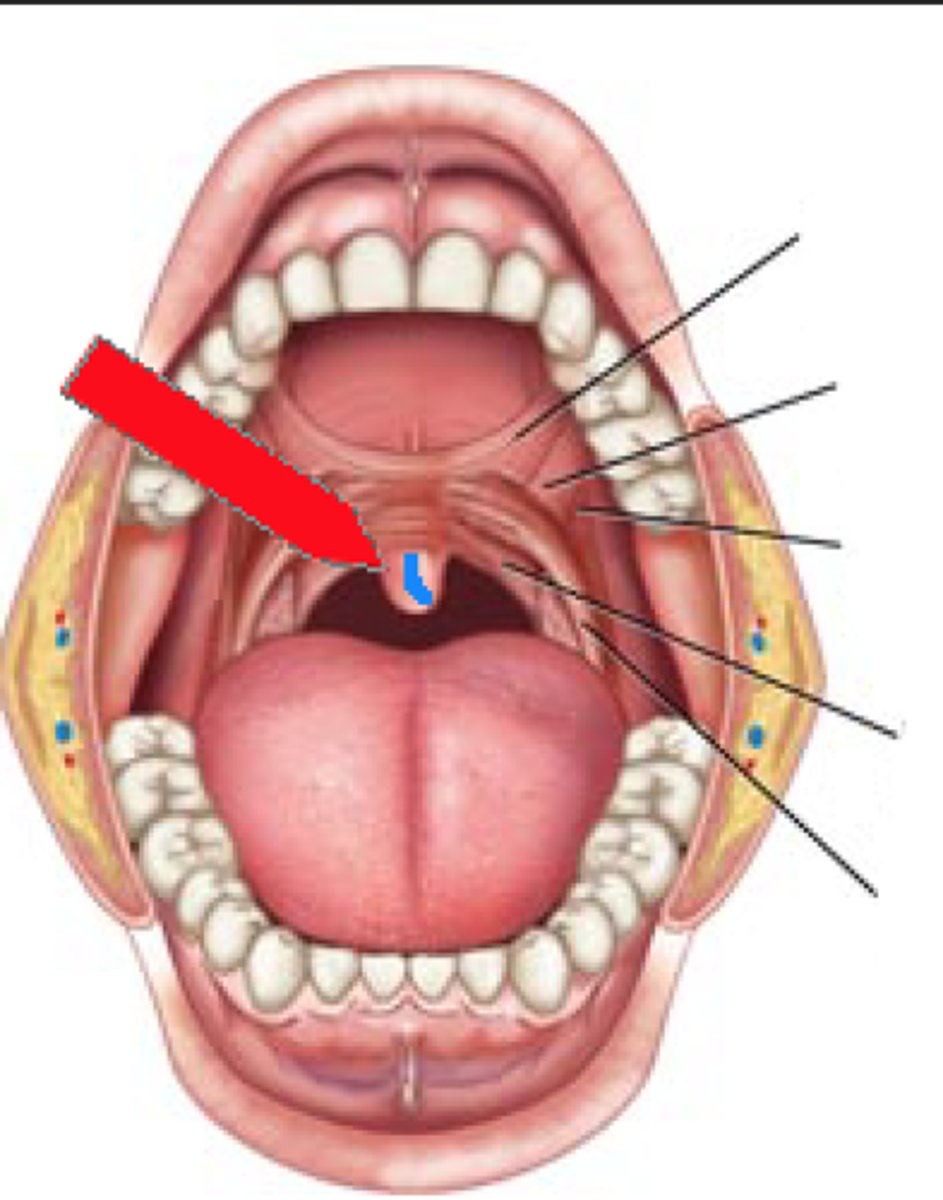
The uvula marks the boundary between which two parts of the pharnyx?
The nasopharynx and the oropharynx
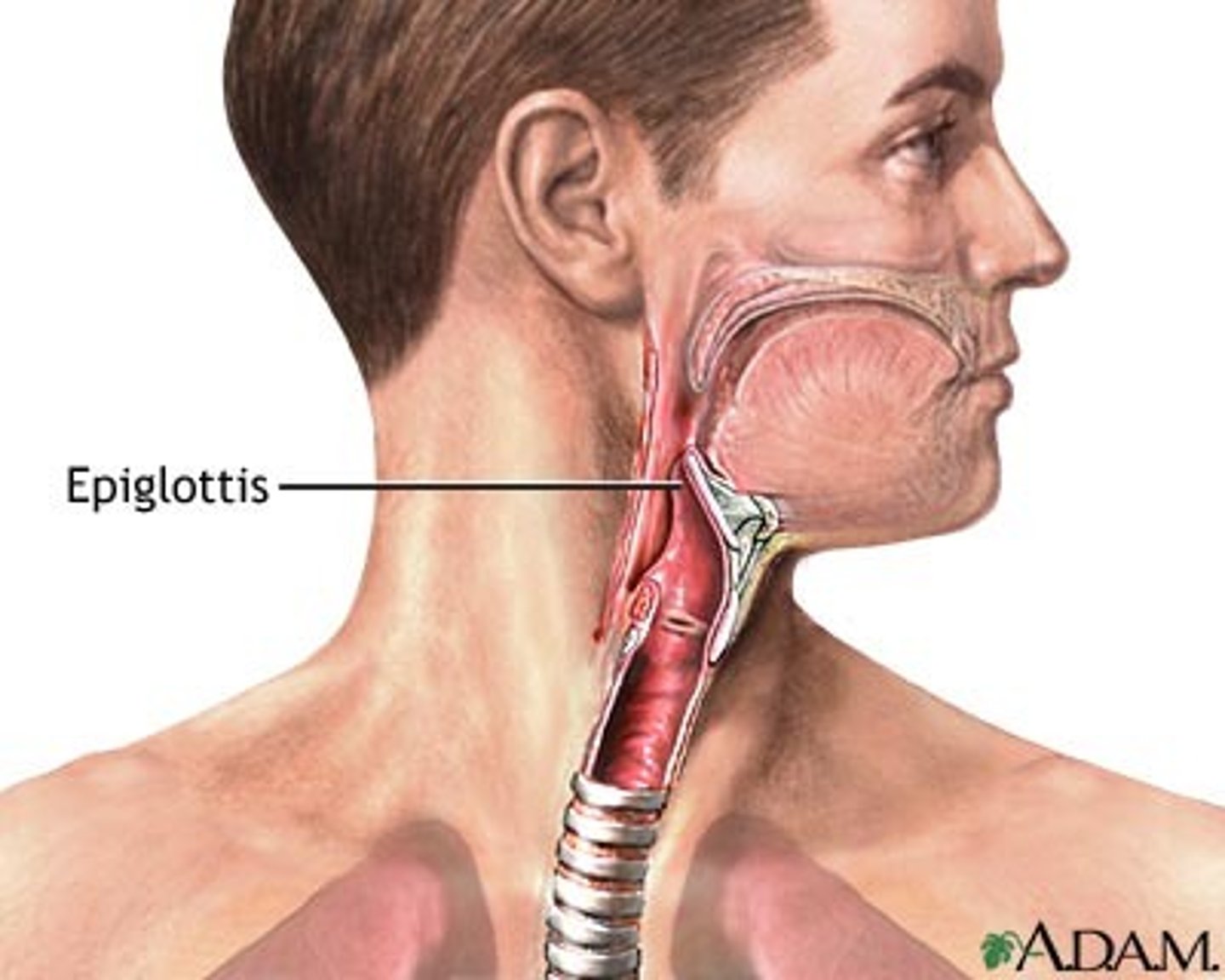
Epiglottis
During the act of swallowing the epiglottis flips down and covers the laryngeal opening, this prevents food and fluids from entering the larynx and bronchi.
Esophagus is part of what system?
The digestive system
The esophagus connects the _____ with the stomach.
Pharynx
What part of the pharynx is directly above the esophagus?
The laryngopharynx
The esophagus is located posterior or anterior to the larynx and trachea?
Posterior
What are the four parts of the respiratory system proper that are important in chest radiography?
Larynx, Trachea, Right and left bronchi, and lungs.
T or F. The pharynx is considered part of the respritory system proper?
False. Both air and food pass through the pharynx, so it is not considered part of the respiratory system.
Larynx
The larynx is the organ of voice(voice box). It is a cagelike, cartilaginous structure located in the anterior portion of the neck.
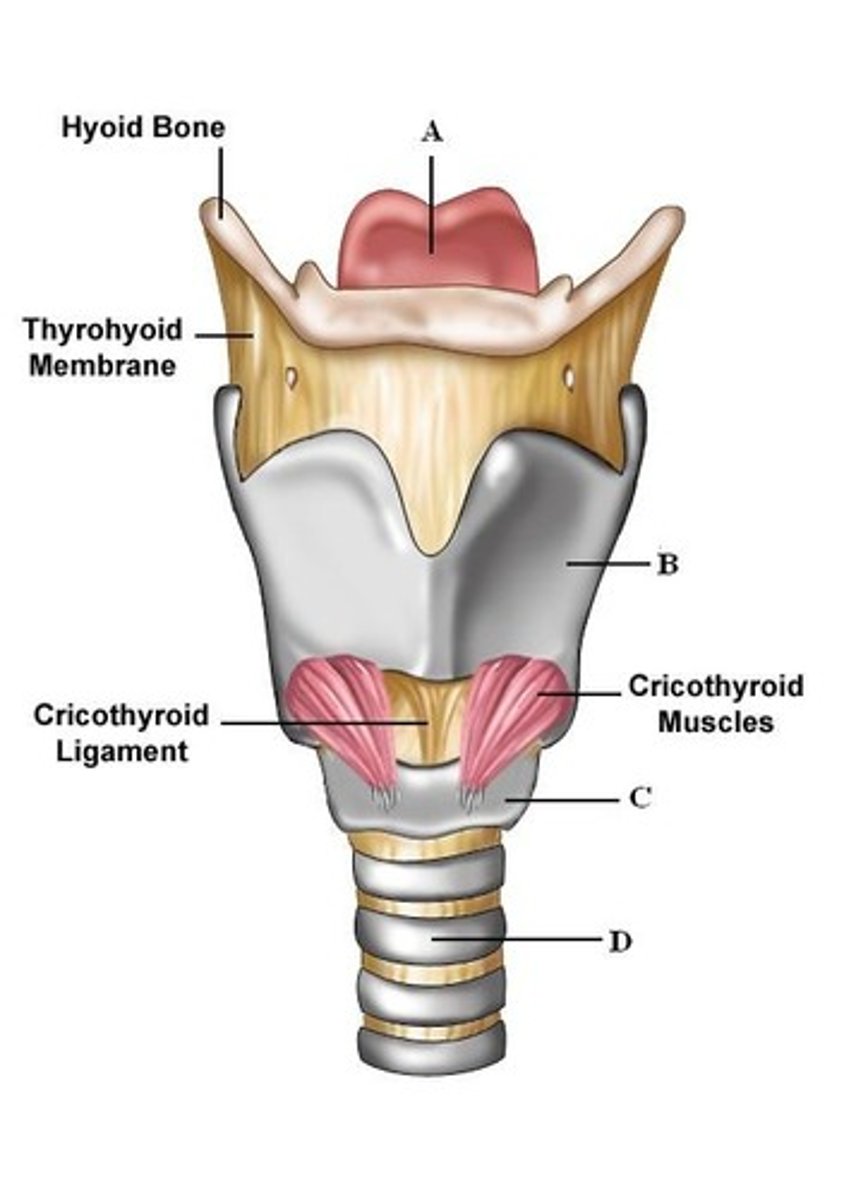
The larynx is located between which cervical vertebrae?
C3-C6
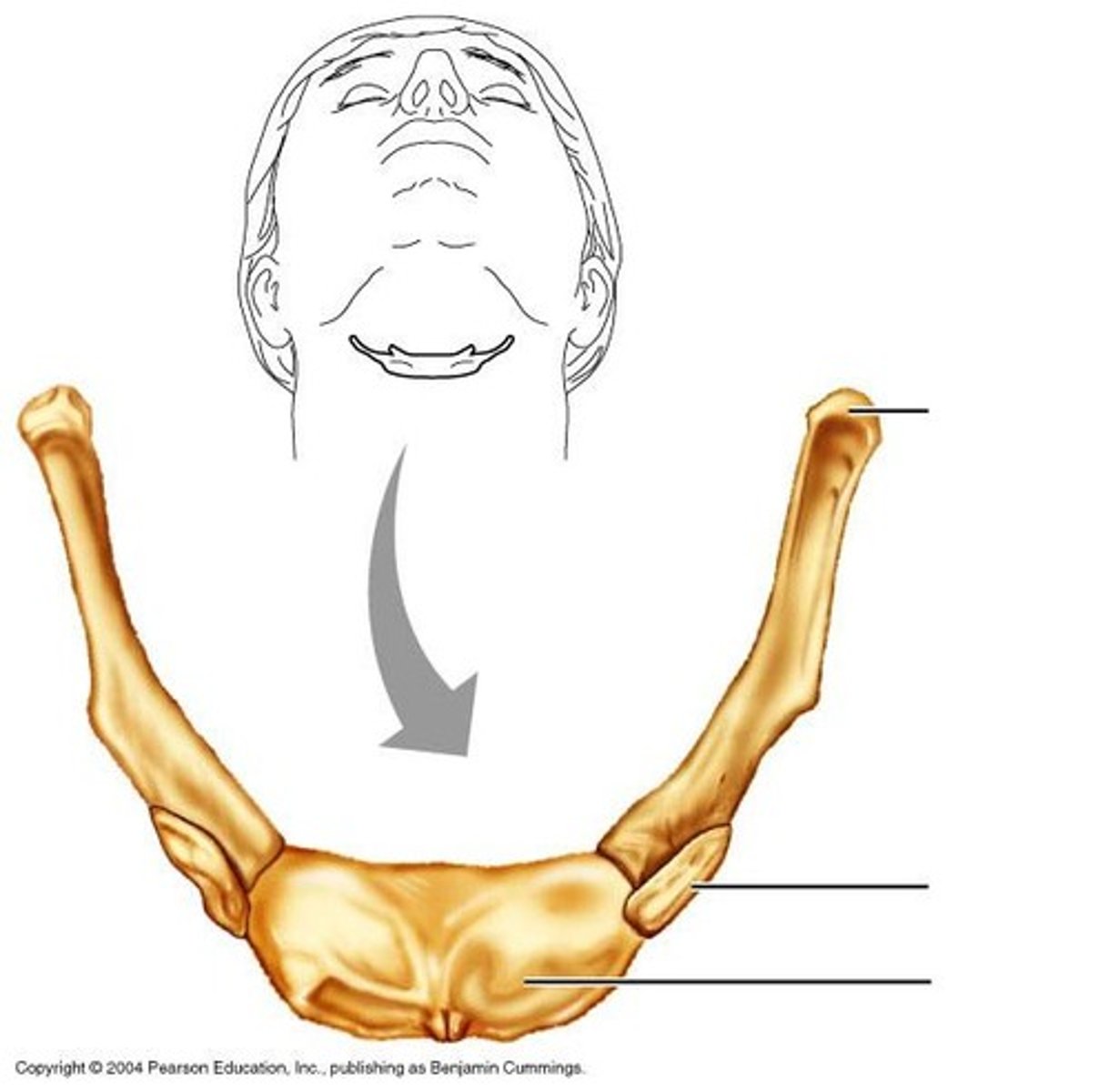
The larynx is suspended from a small bone called the?
Hyoid
Laryngeal prominence
Adam's apple.
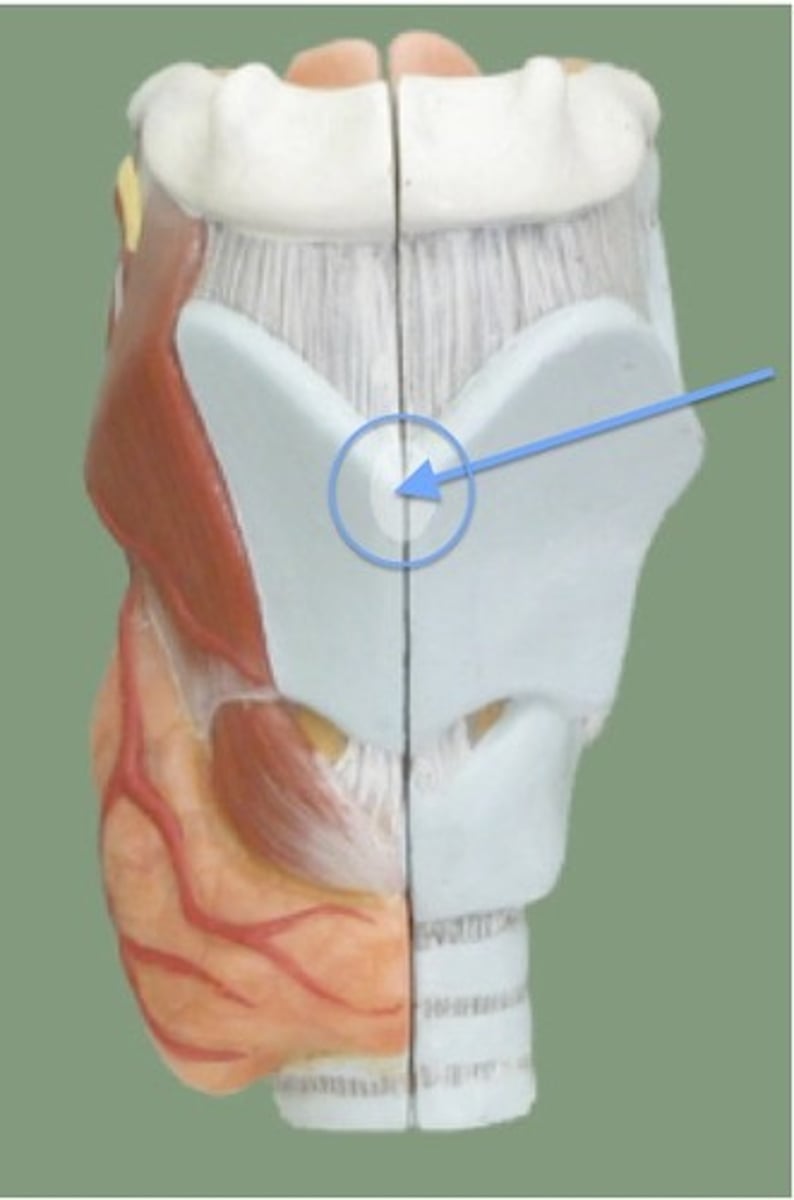
The laryngeal prominence is located at
C5
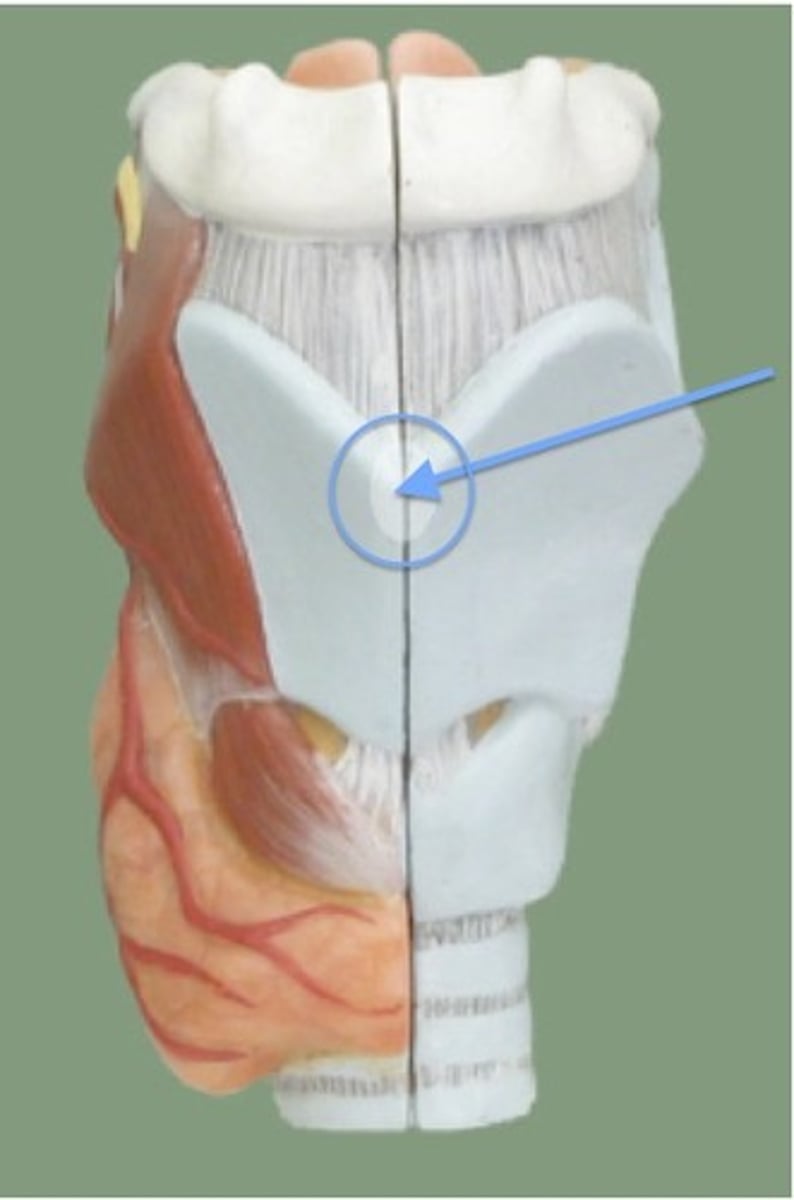
The largest and least moveable cartilage structure in the larynx is?
The thyroid cartilage, which consist of two fused platelike structures.
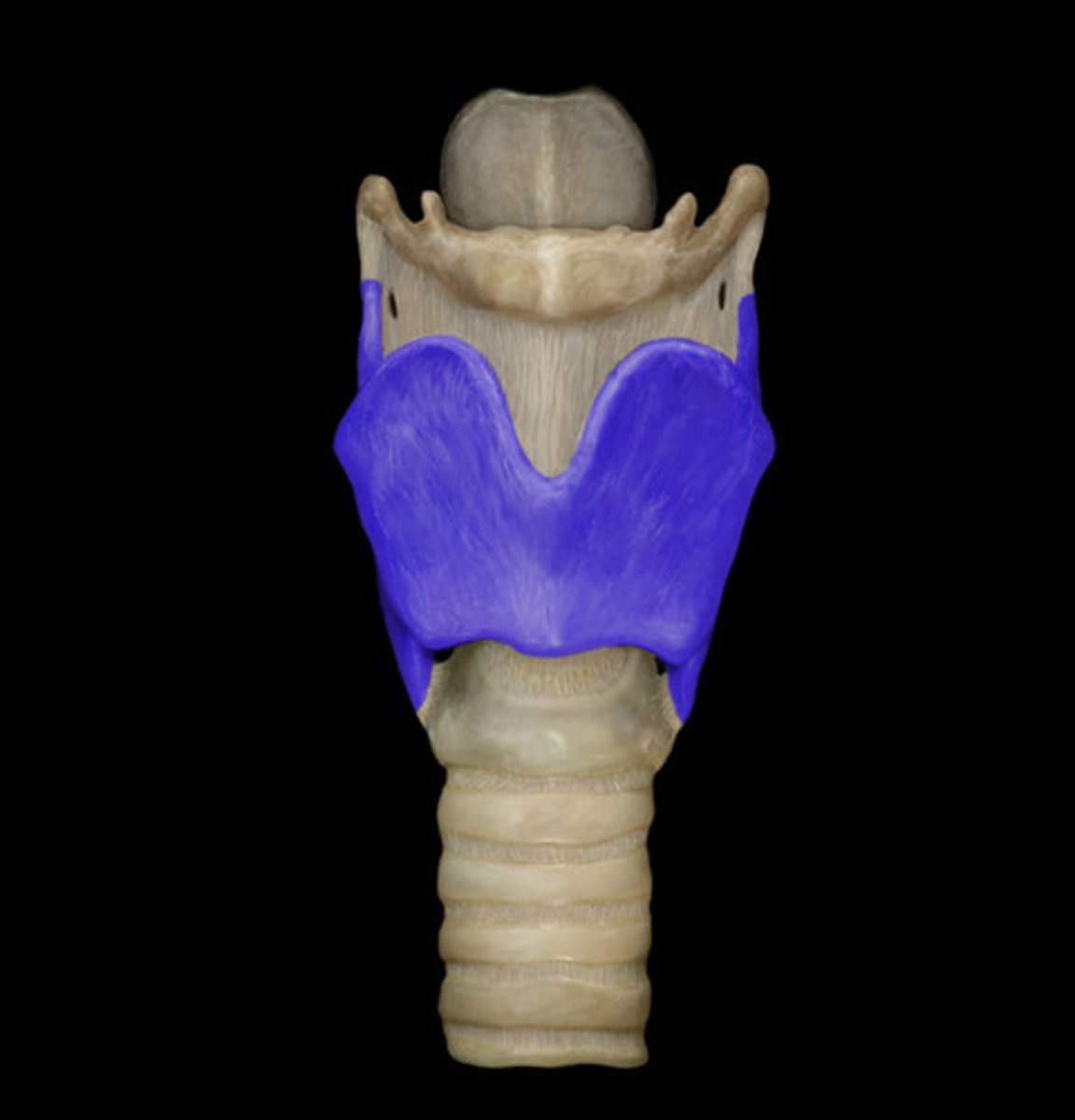
What part of cartilage in the larynx forms the posterior and anterior wall, and is attached to the first ring of cartilage of the trachea?
Cricoid cartilage
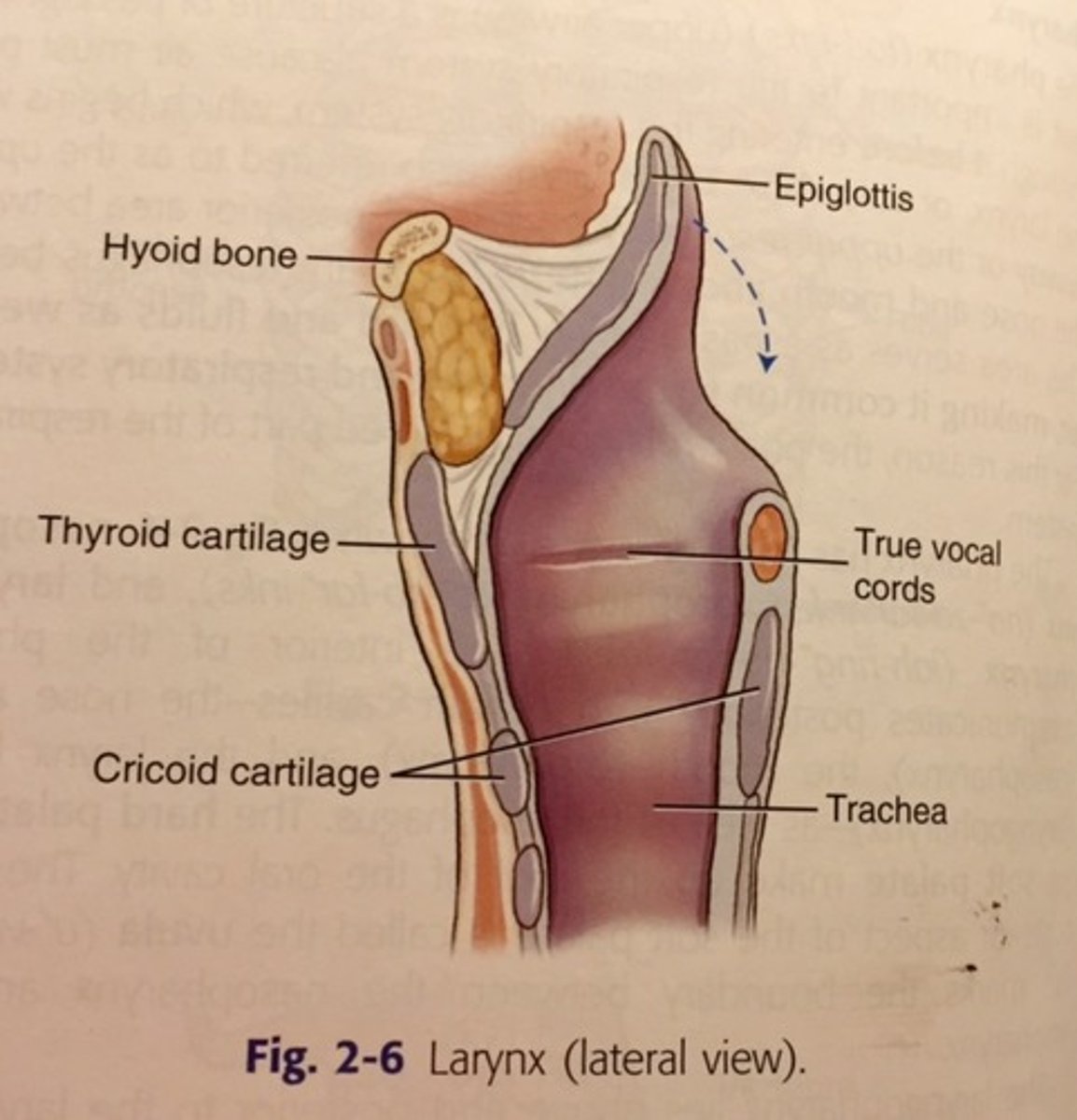
The epiglottis is a cartilaginous part of the larynx. T or False
True
Trachea
The windpipe
The trachea has approximately _____ to ___ C shaped cartilage rings.
16-20
The trachea is located where when referencing the vertebrae
C6( six cervical vertebra) Down to the level of T4 or T5(fourth or fifth thoracic vertebra)
In reference to the vertebre, where does the trachea branch off into left and right primary bronchi?
T4 or T5
Where is the thyroid gland located?
Anteriorly just below the larynx
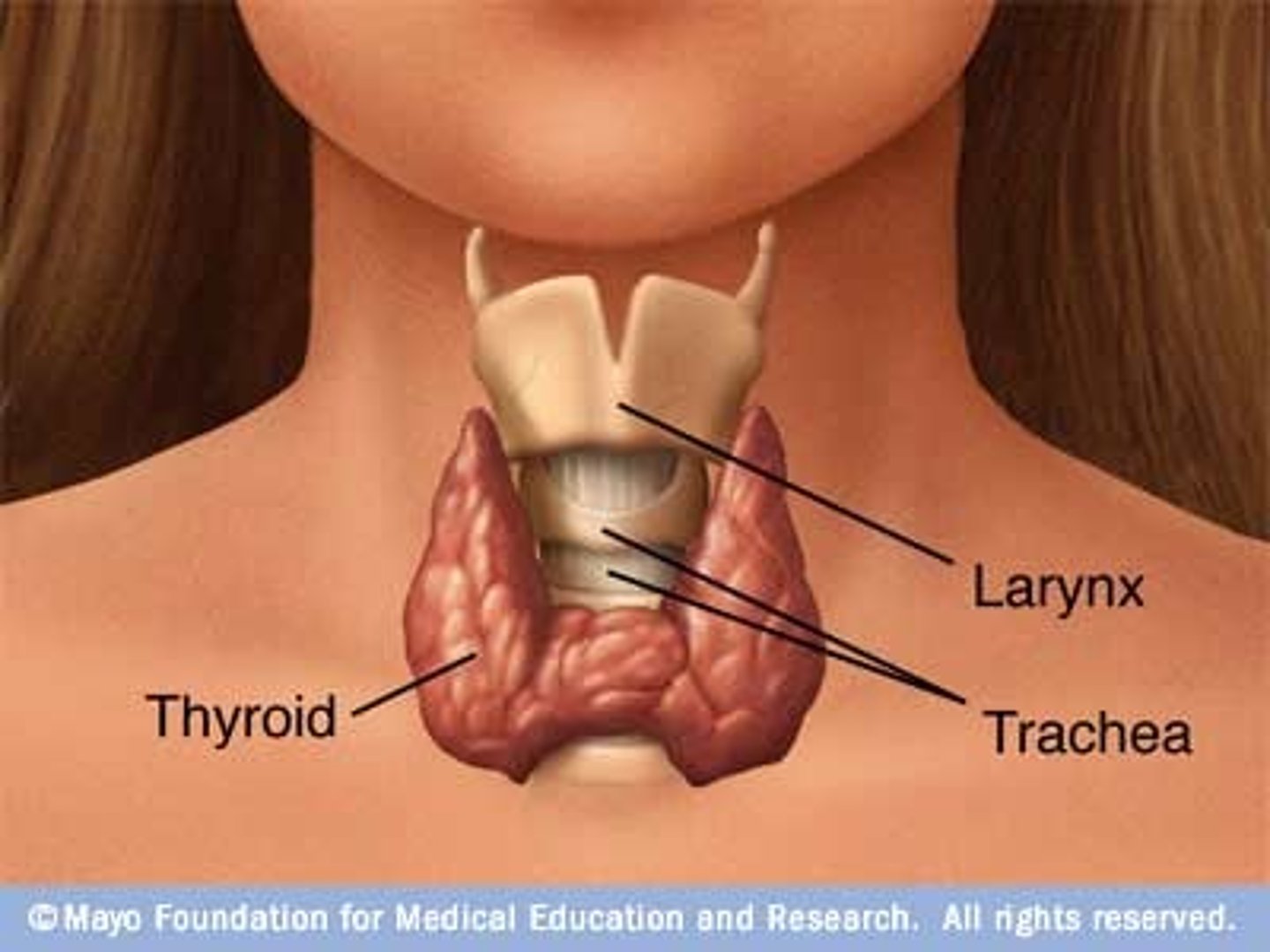
Why is it important to know where the thyroid gland is located?
Because it is more radiosensitive and needs proper shielding from the technologist.
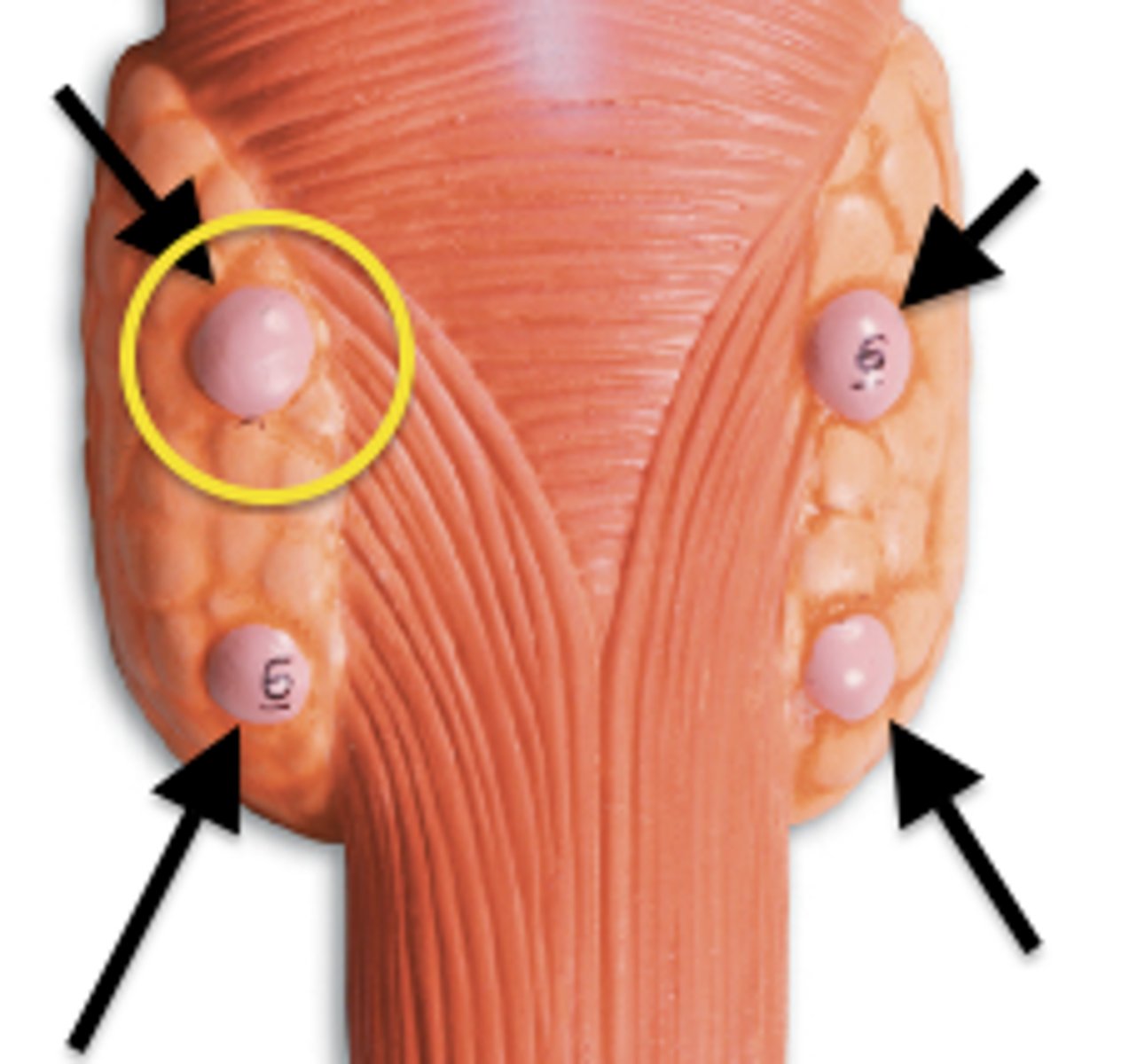
Parathyroid glands are located?
Embedded on the posterior of the thyroid gland. These are small round glands, usually two parathyroids are attached to each thyroid lobe(total of four).
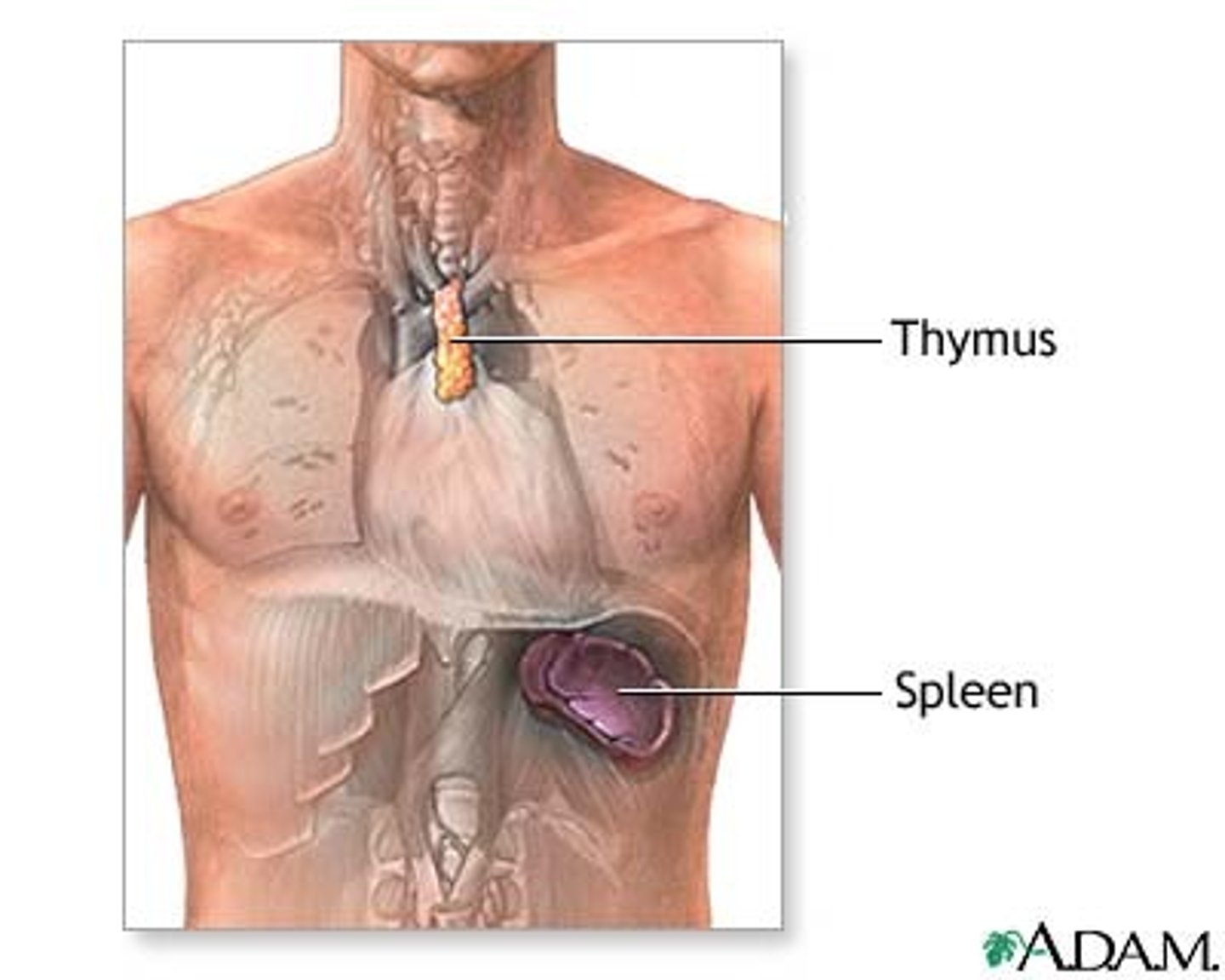
Thymus gland is located
Inferior to the thyroid gland
Branches of the aortic arch
Subdivisions of the bronchial tree
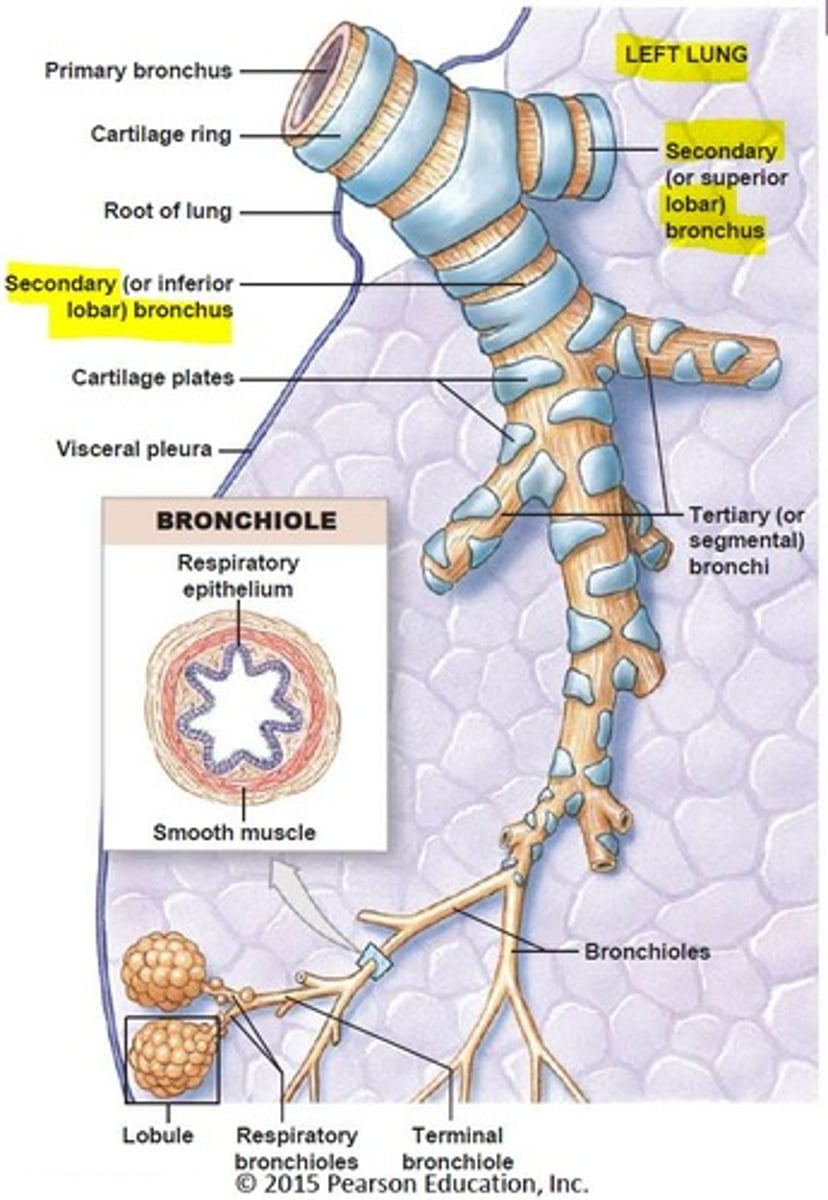
Primary, secondary, tertiary, bronchioles, terminal bronchioles
What do terminal bronchioles do?
Communicate with aveolar ducts.
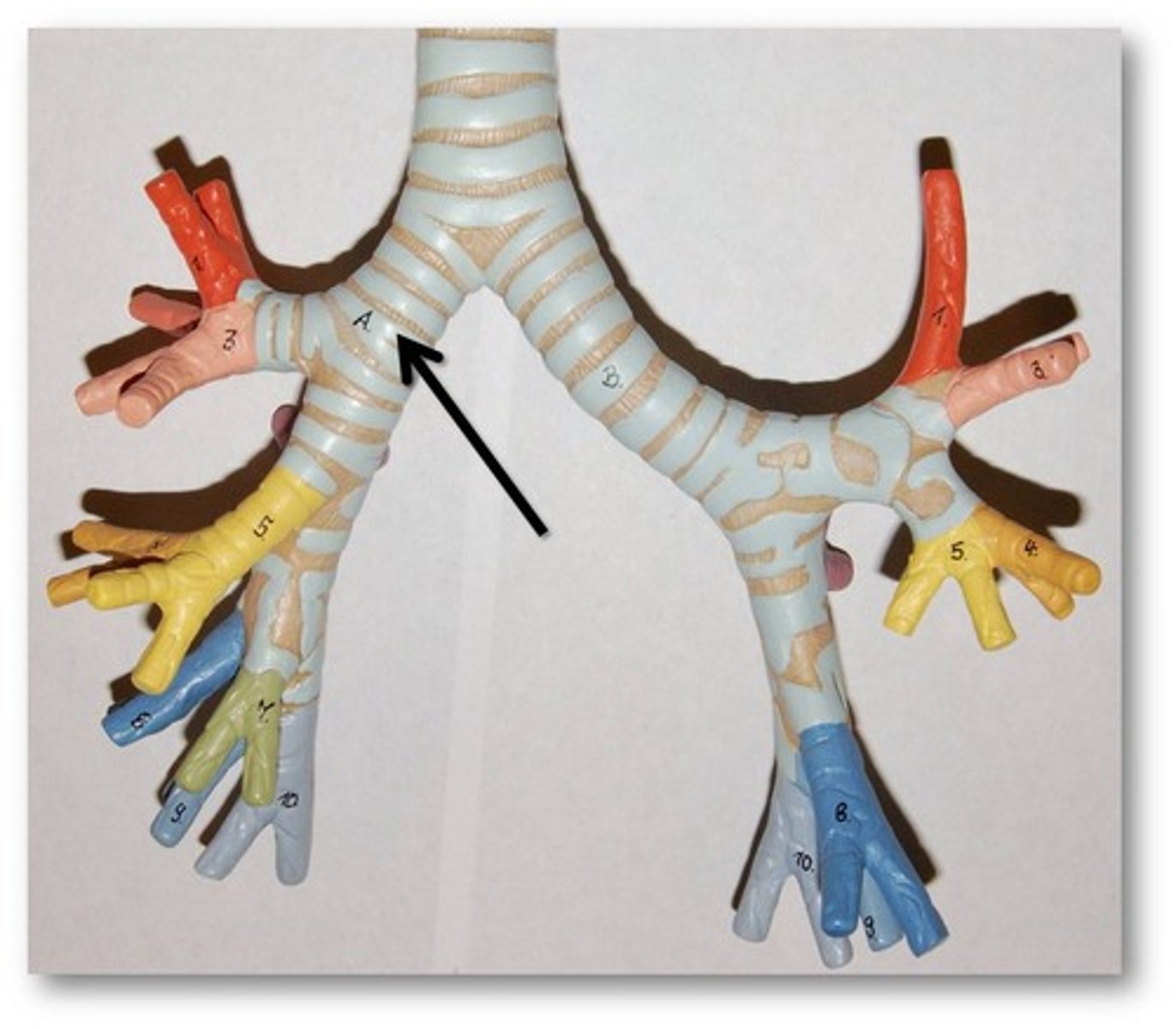
Describe the right primary bronchus in comparison to the left primary bronchus.
The right primary bronchi is shorter and wider, than the left. The right primary bronchi is also more vertical
Why is the difference is size and shape of the bronchi important?
Food particles and other foreign objects that enter the respiratory system are more likely to enter and lodge in the right bronchus.
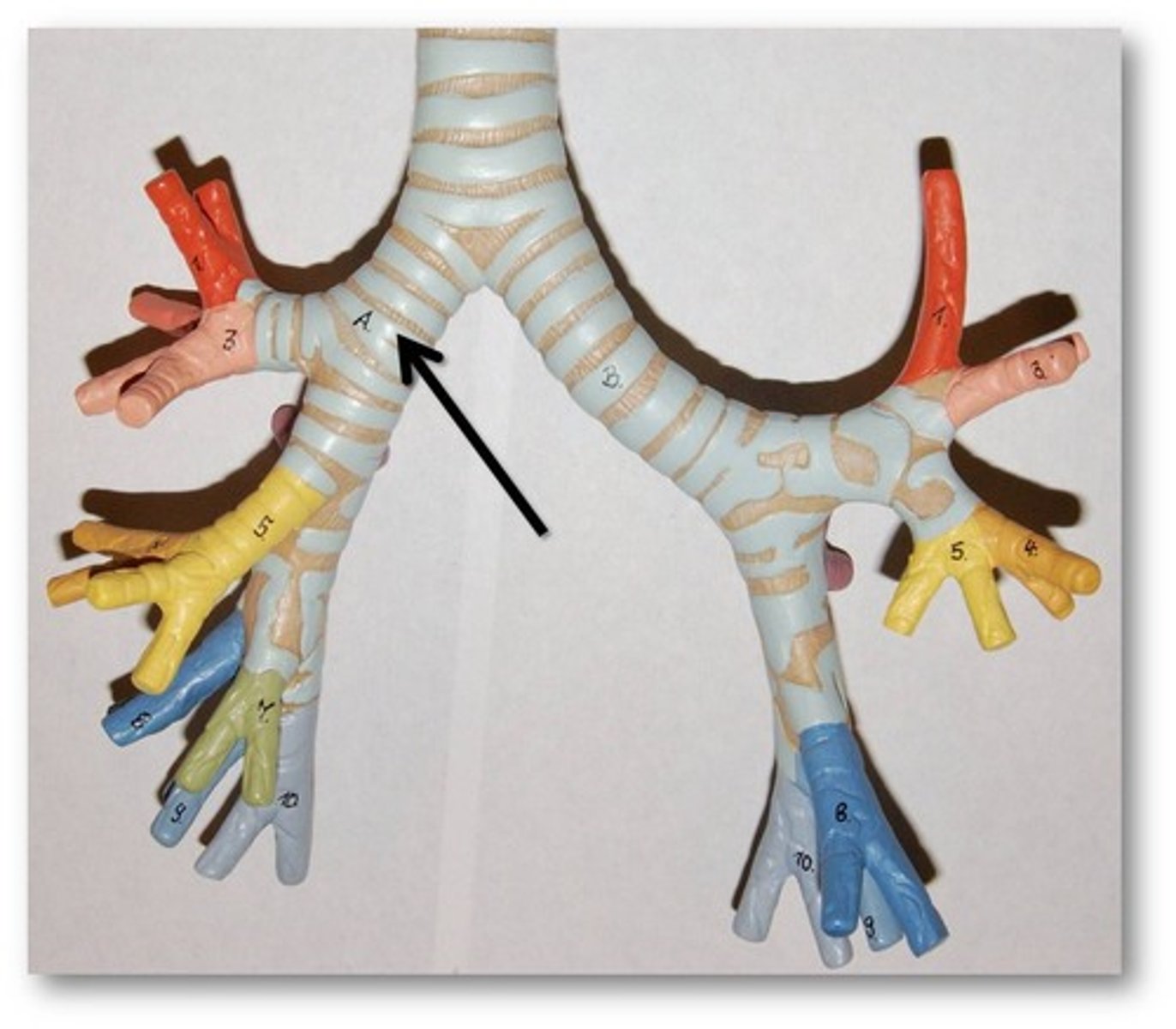
The left bronchus is how much longer than the right and angled in what direction?
About twice as long and more horizontal
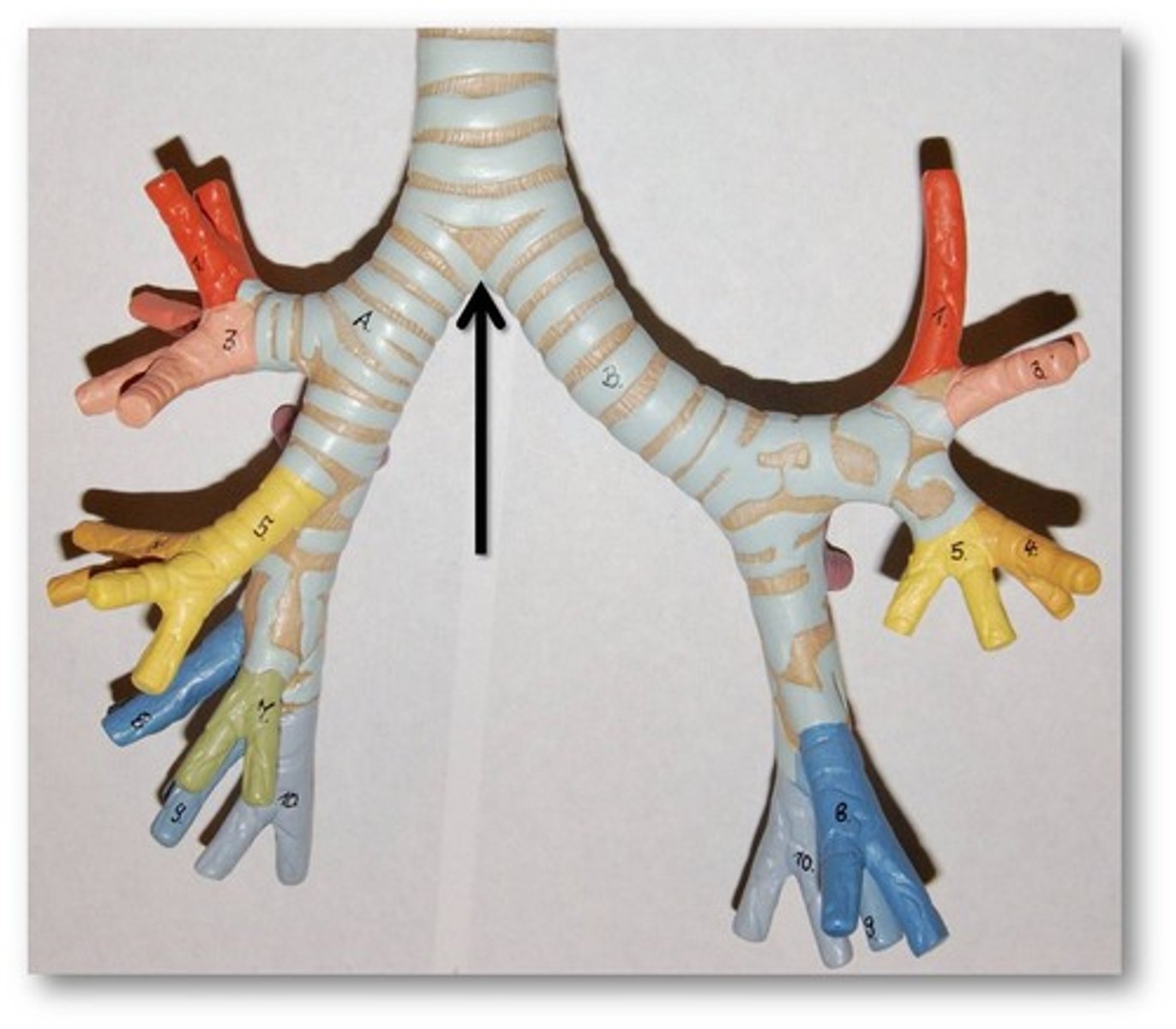
Carina
A specific prominence, or ridge, of the lowest tracheal cartilage
The right bronchus divides into _____ secondary bronchi
3
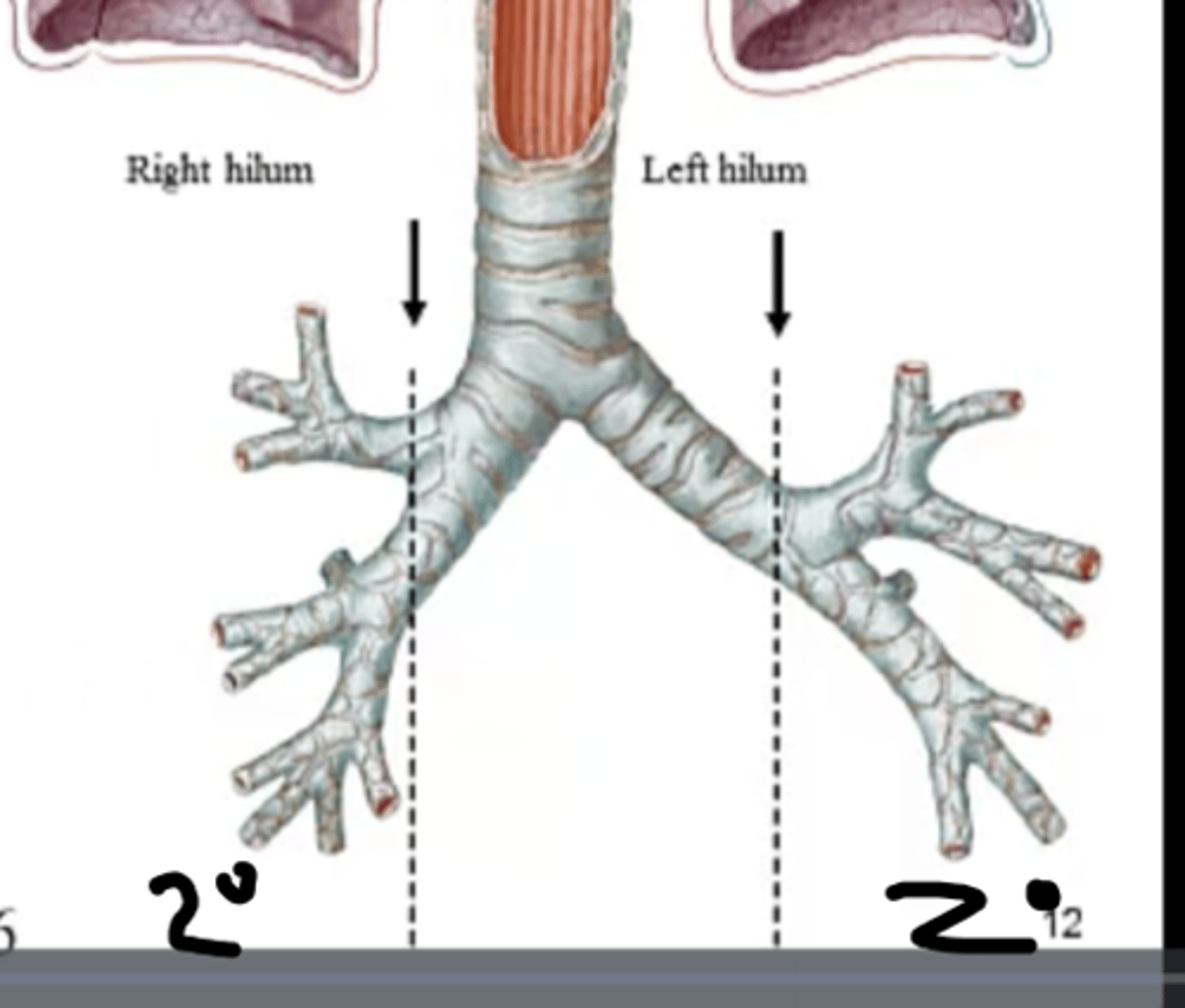
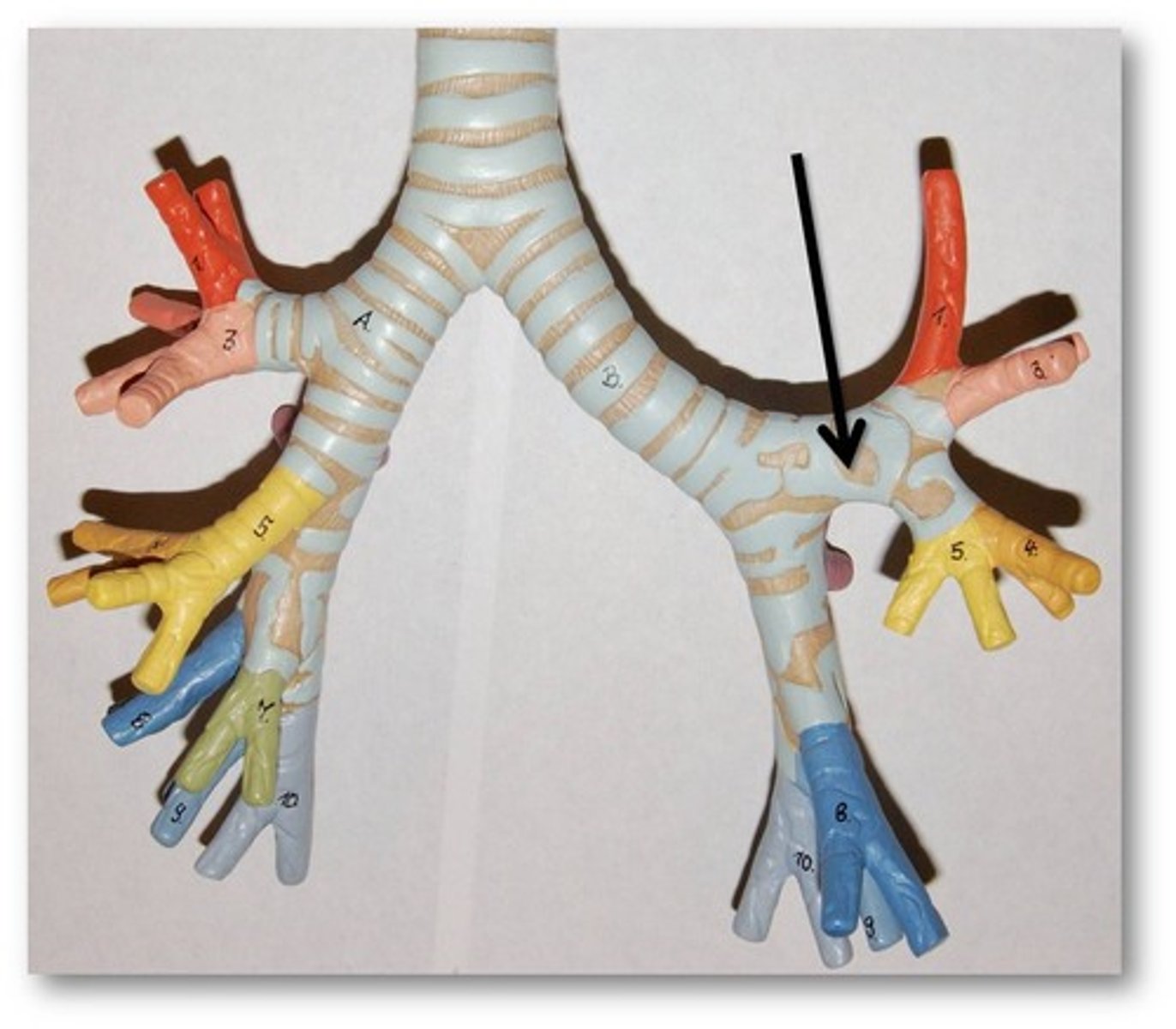
The left bronchus divides into ____ secondary bronchi
2
The left lung has ___ lobes and ___ segments
2,9
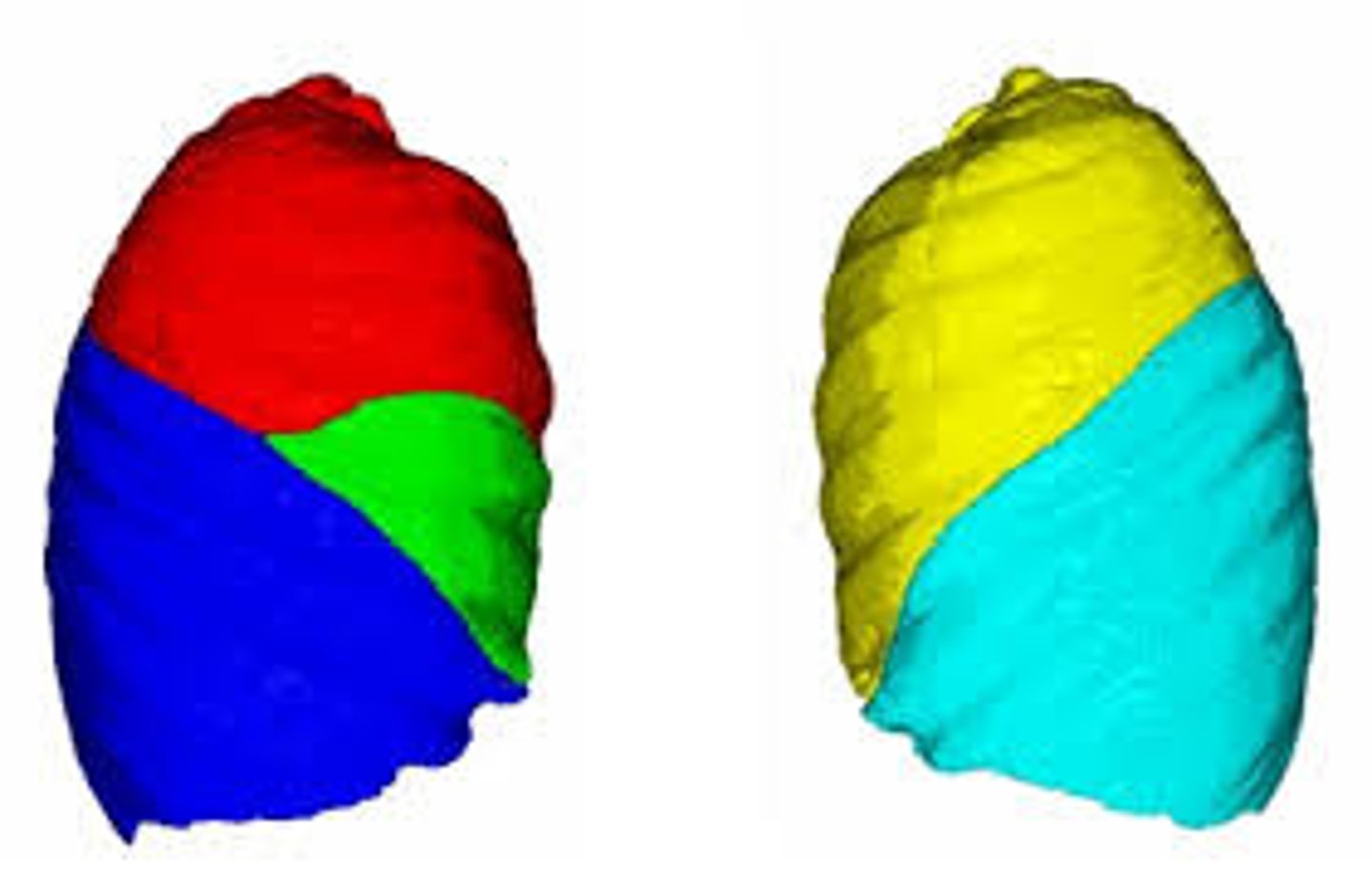
The right lung has ___ lobes and ___segments
3,10
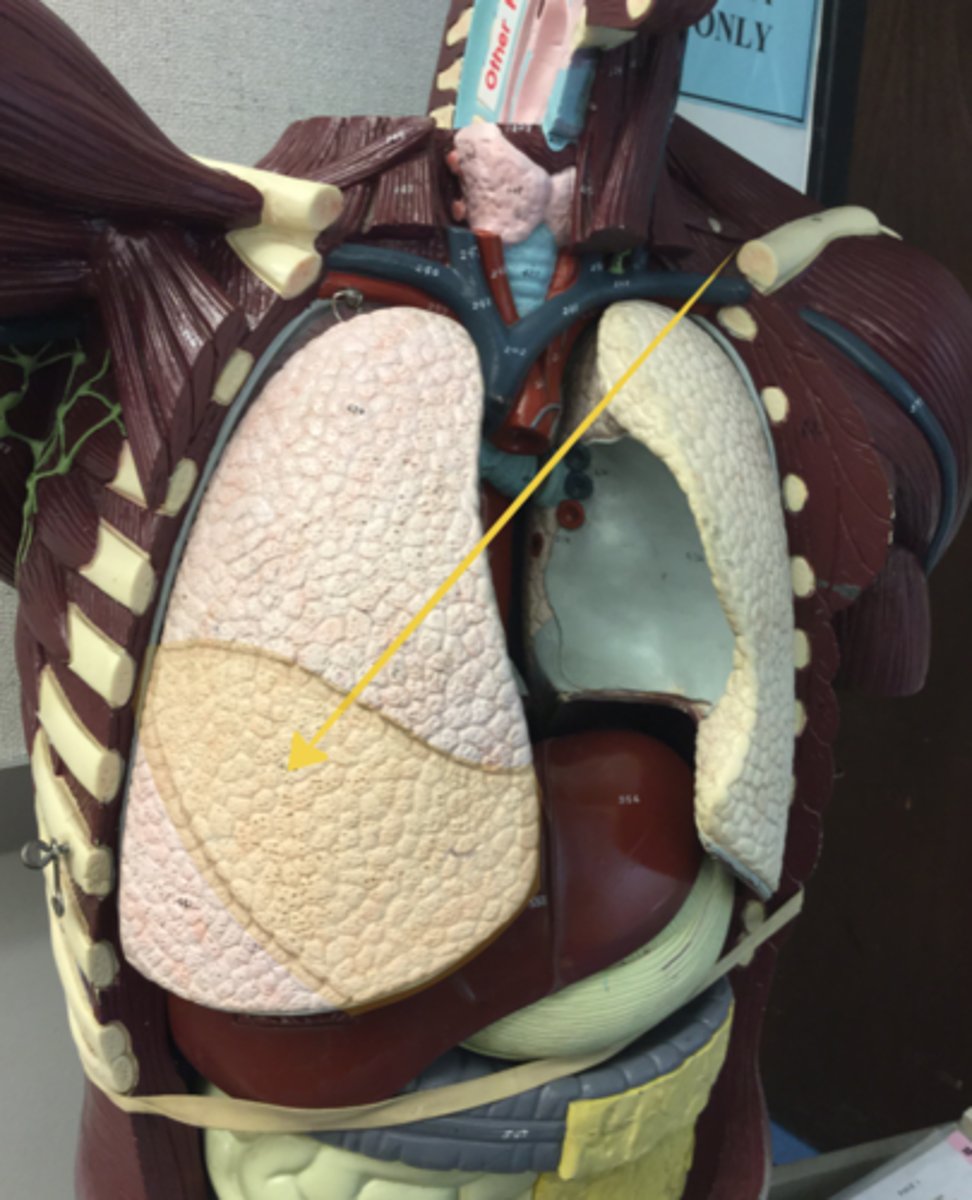
The secondary bronchi subdivide into smaller branches called?
Bronchioles
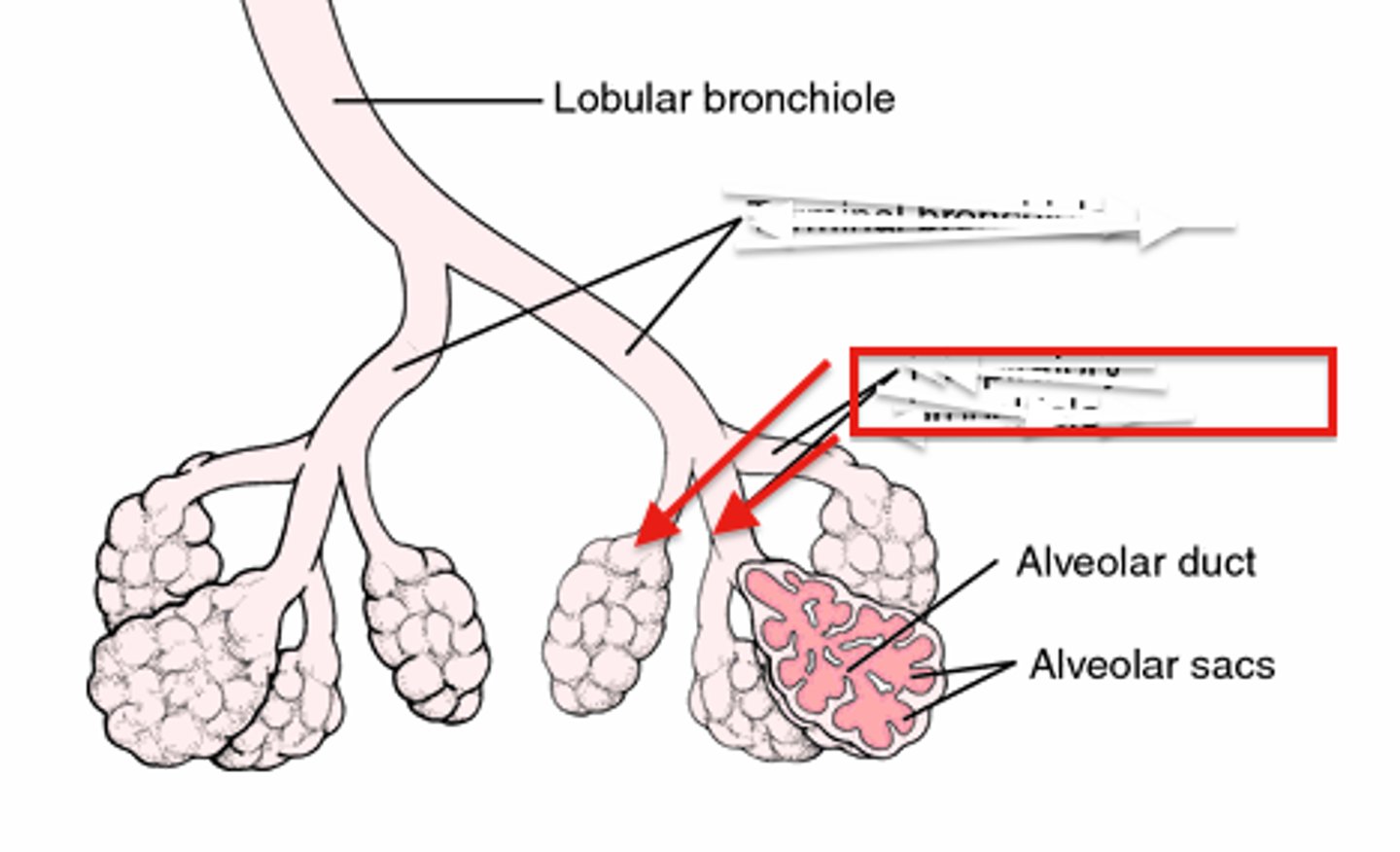
Each bronchioles terminates in _______
Alveoli
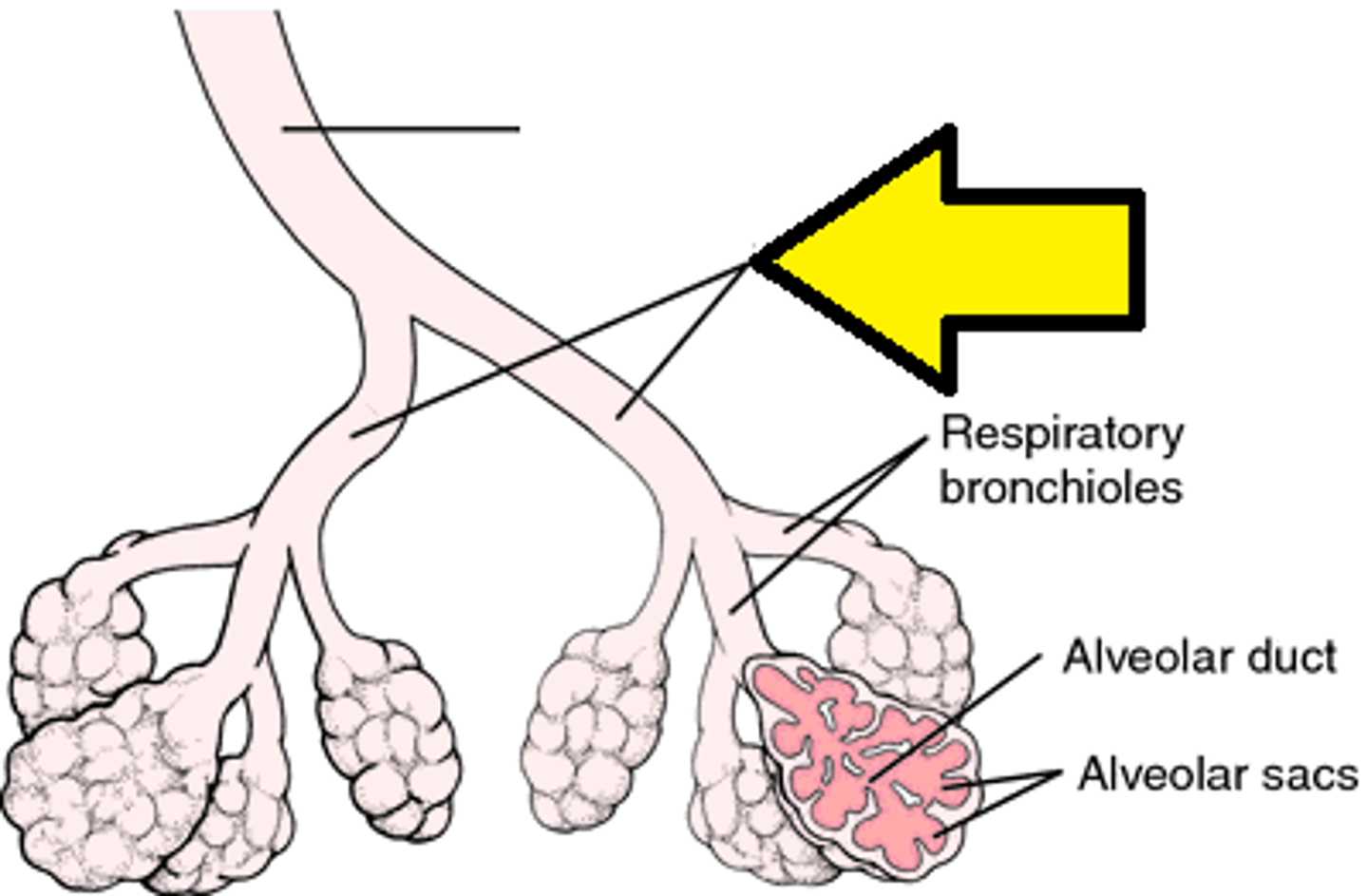
The three lobes of the right lung are separated by two?
Deep fissures
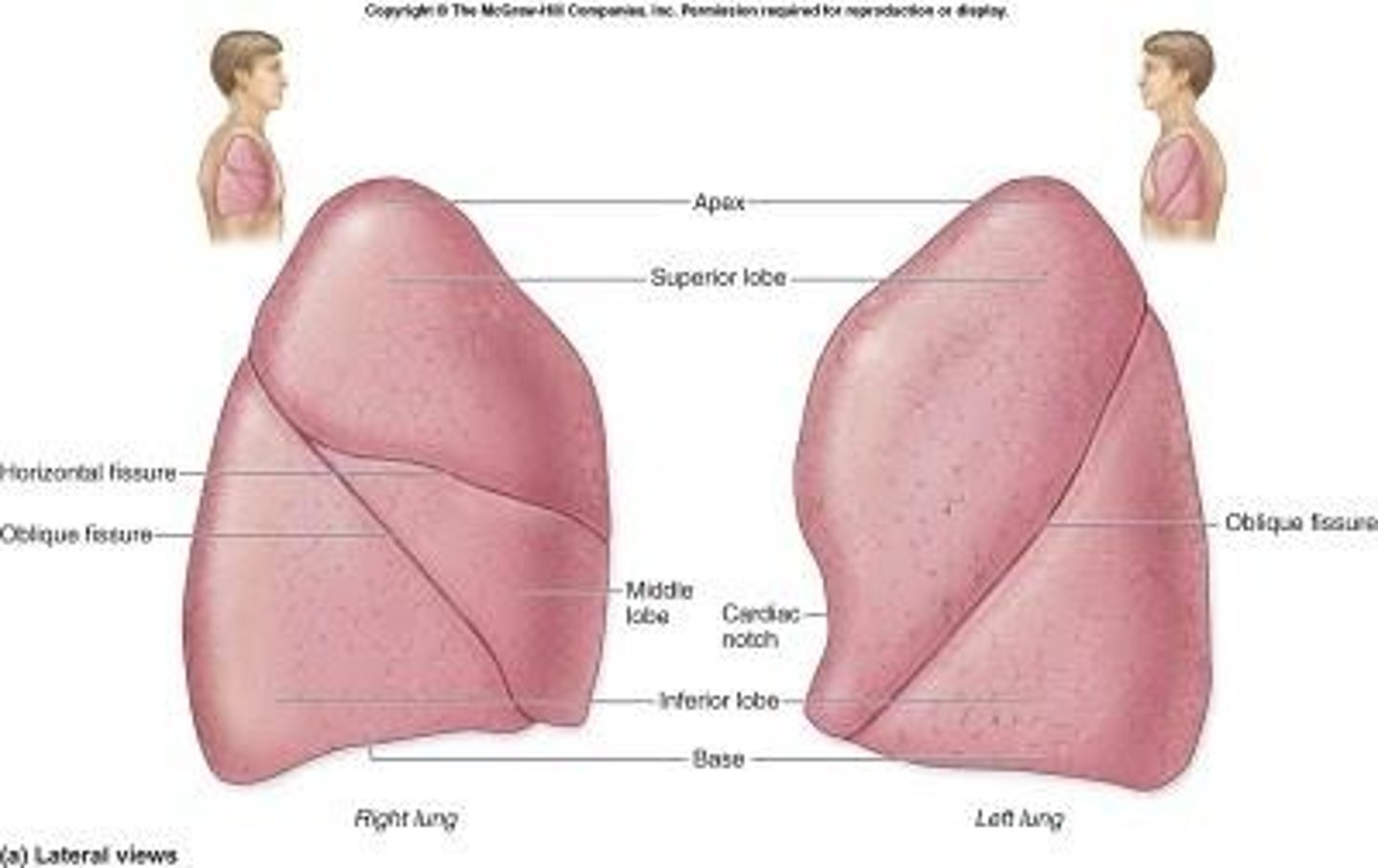
The inferior fissure that separates the inferior and middle lobes of the right lung is called?
Oblique fissure
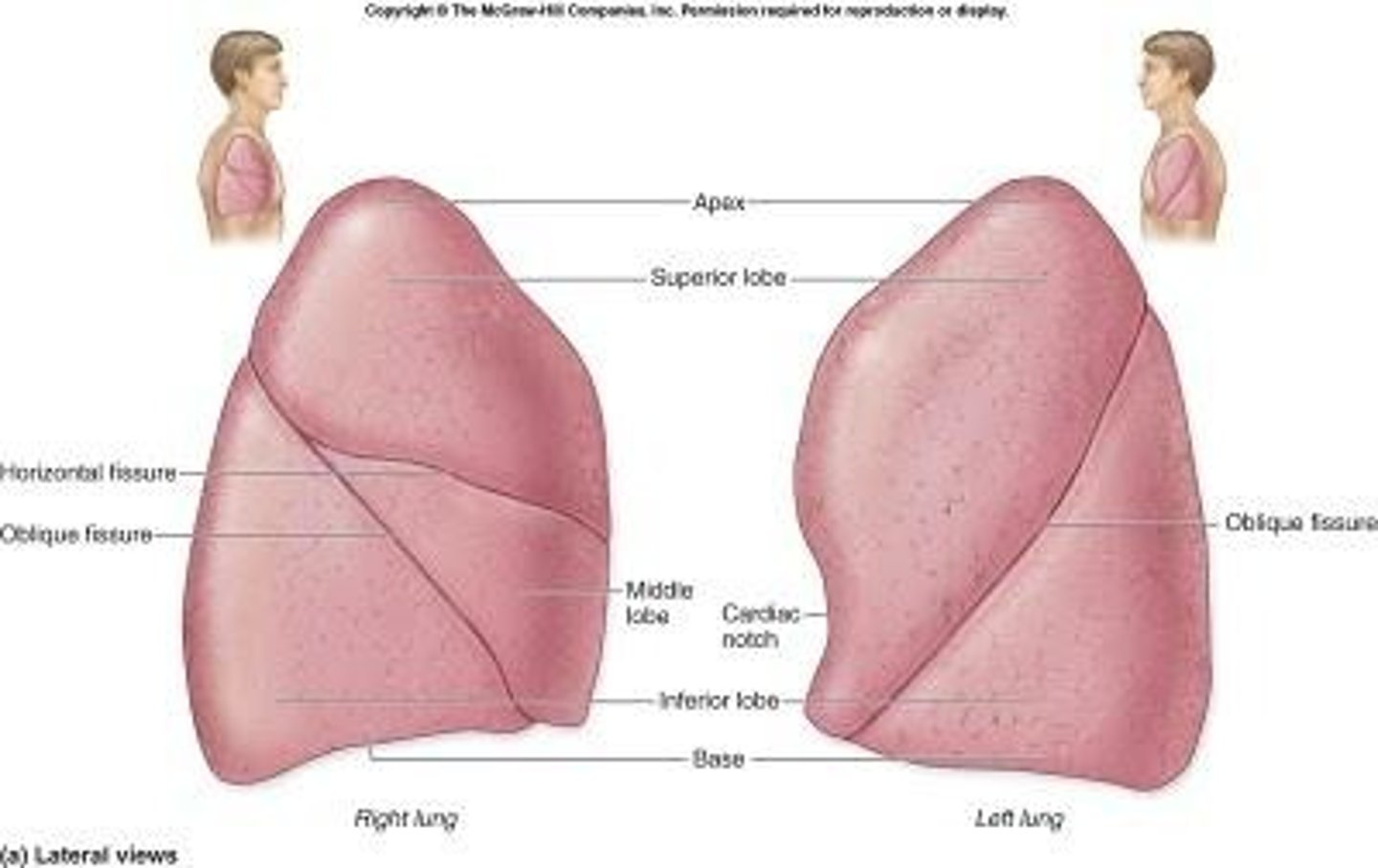
The fissure that separates the superior and middle lobes of the right lung is called?
Horizontal fissure
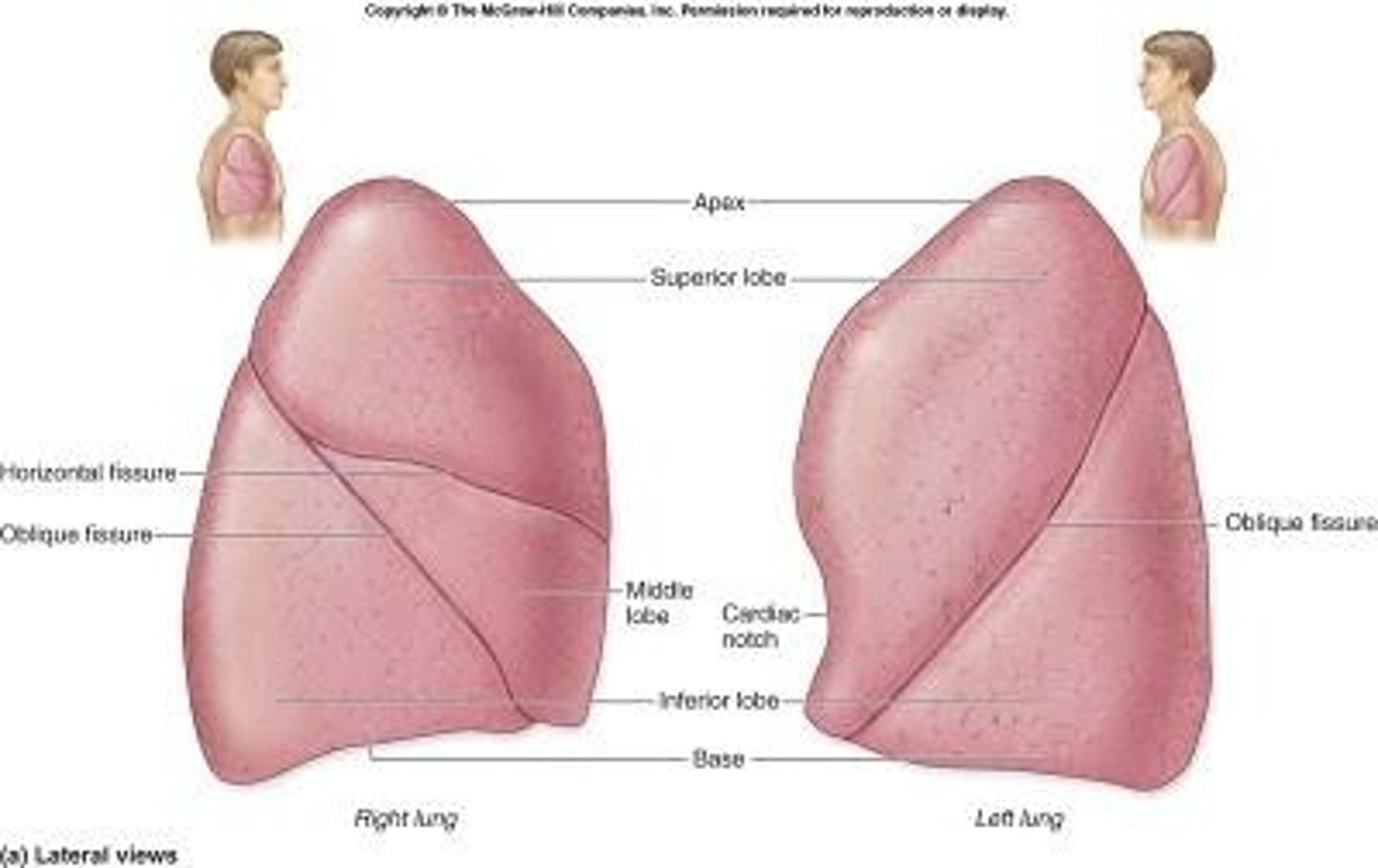
The left lung only has one _______ fissure separating the inferior and superior lobes.
Single deep oblique fissure
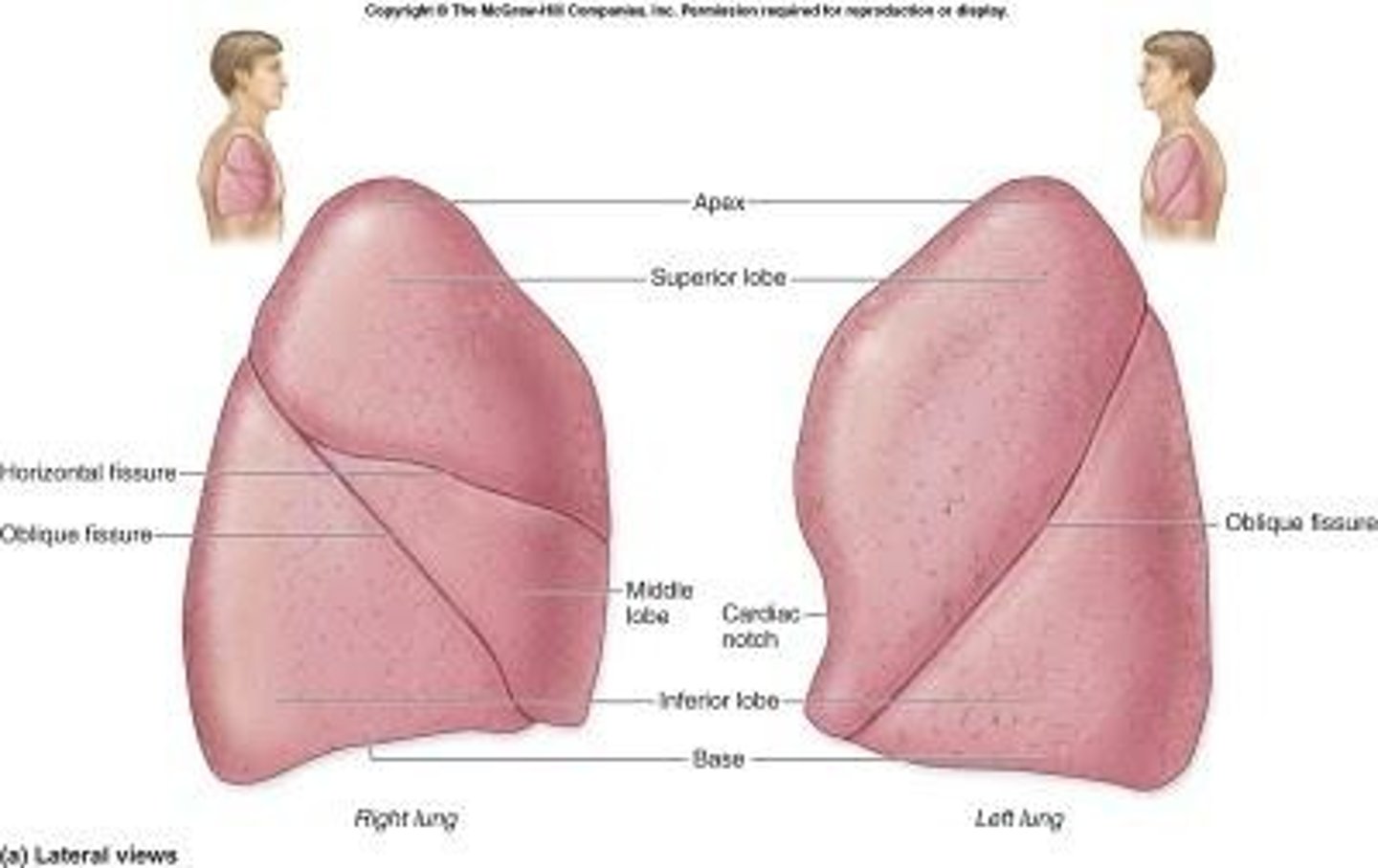
Pleura
Membrane around the lungs
The inner lining of the pleura that covers the surface of the lungs is called?
The pulmonary or visceral pleura
The outer layer of the pleura that lines the chest wall and diaphragm is called?
The parietal pleura
Apex
Top point of the lungs
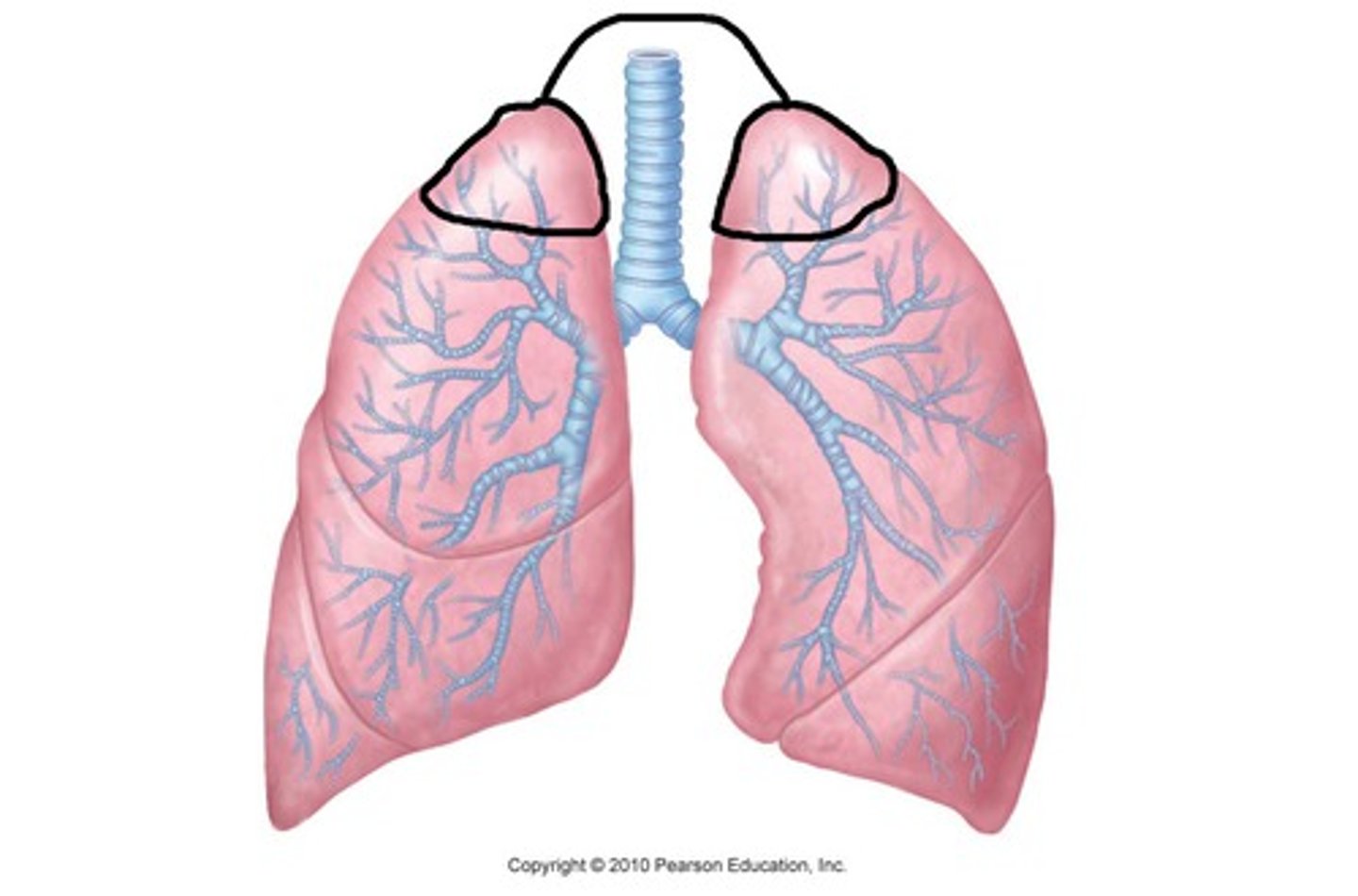
The apex extends above the level of the _________ into the lower neck area to the level of T _____
Clavicles, T1(first thoracici vertabra)
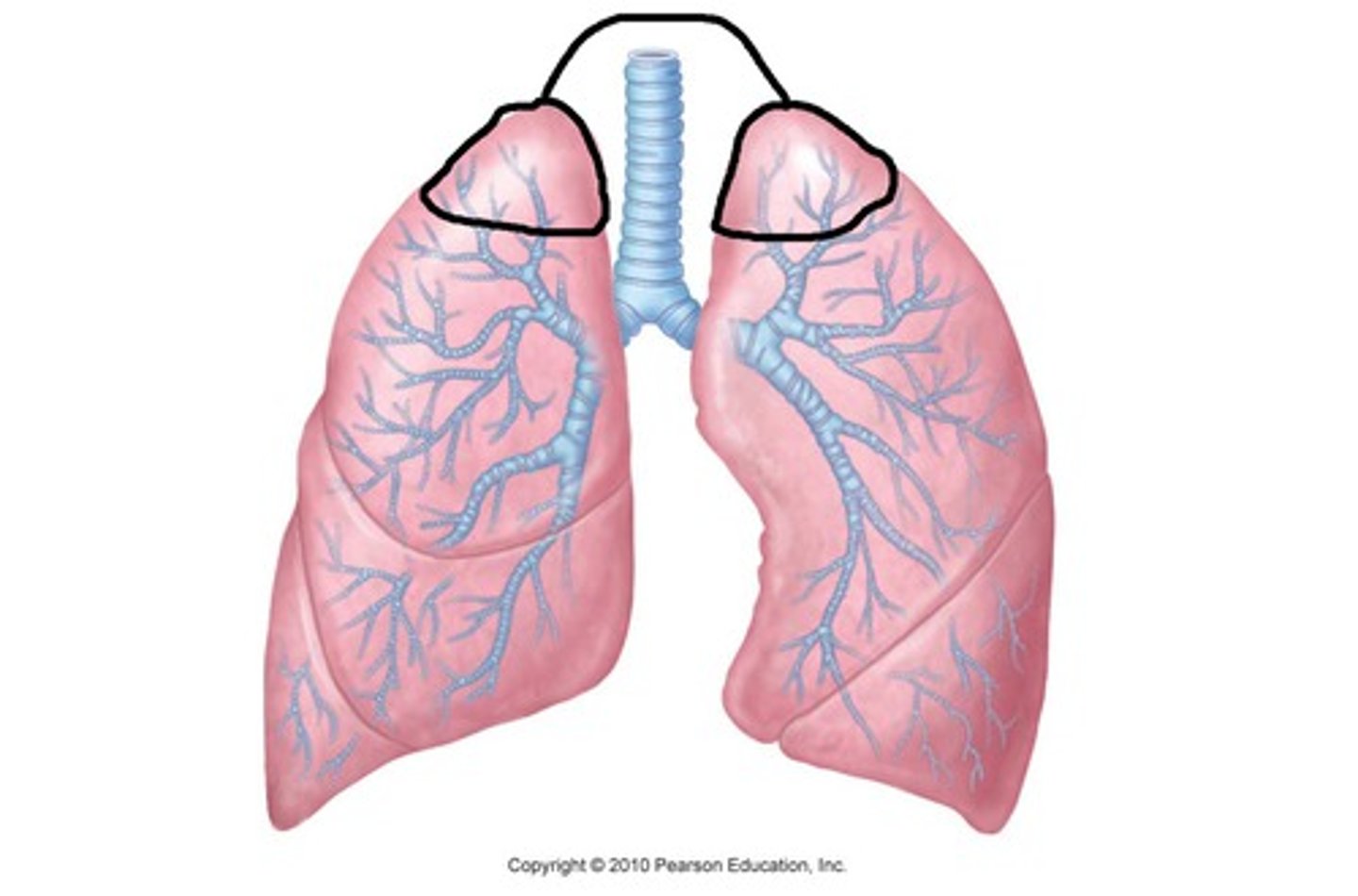
Carina
Point of bifurcation(division), lowest margin of separation of the trachea into right and left bronchi
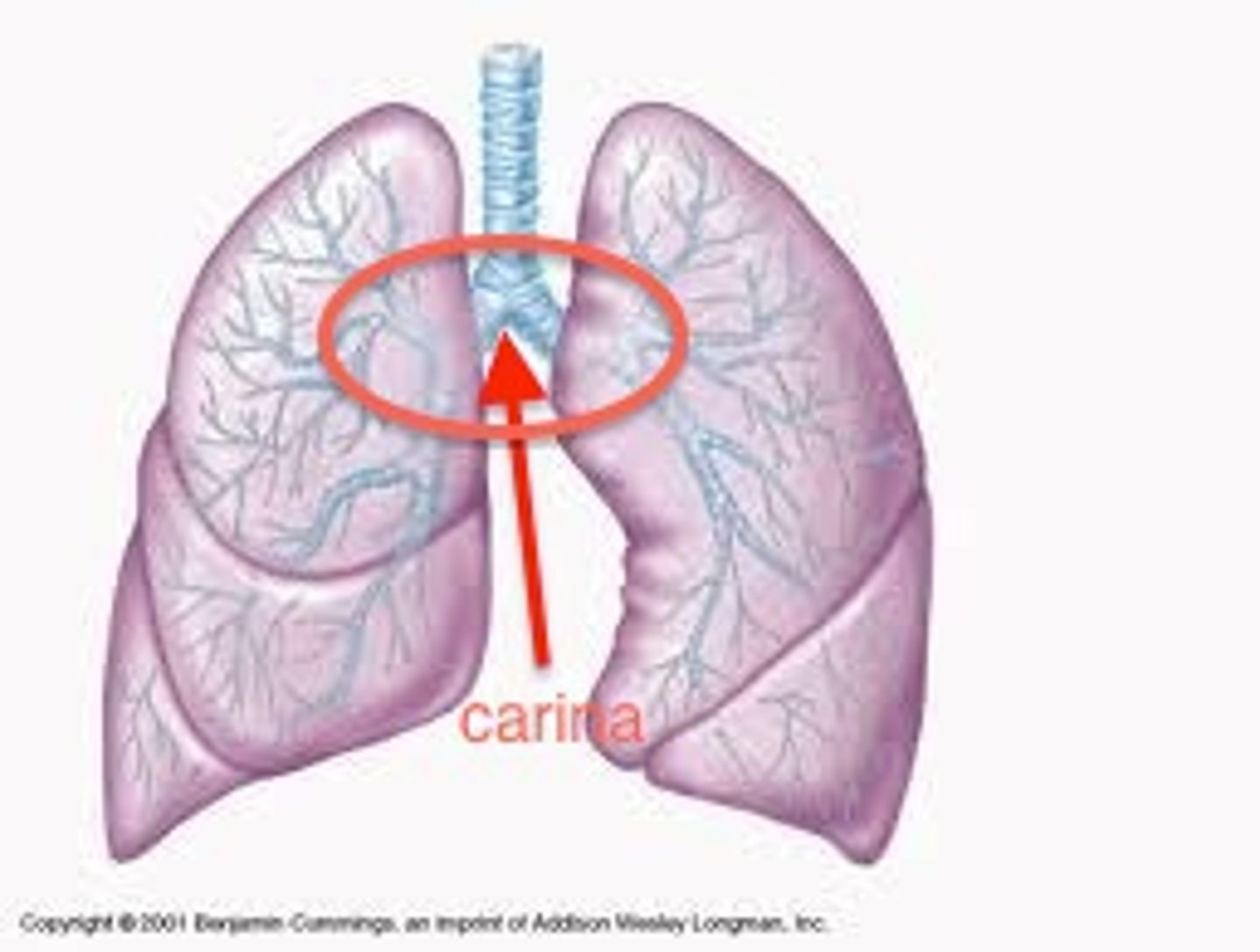
Base(lung)
Lower concave area of each lung that rest on the diaphragm
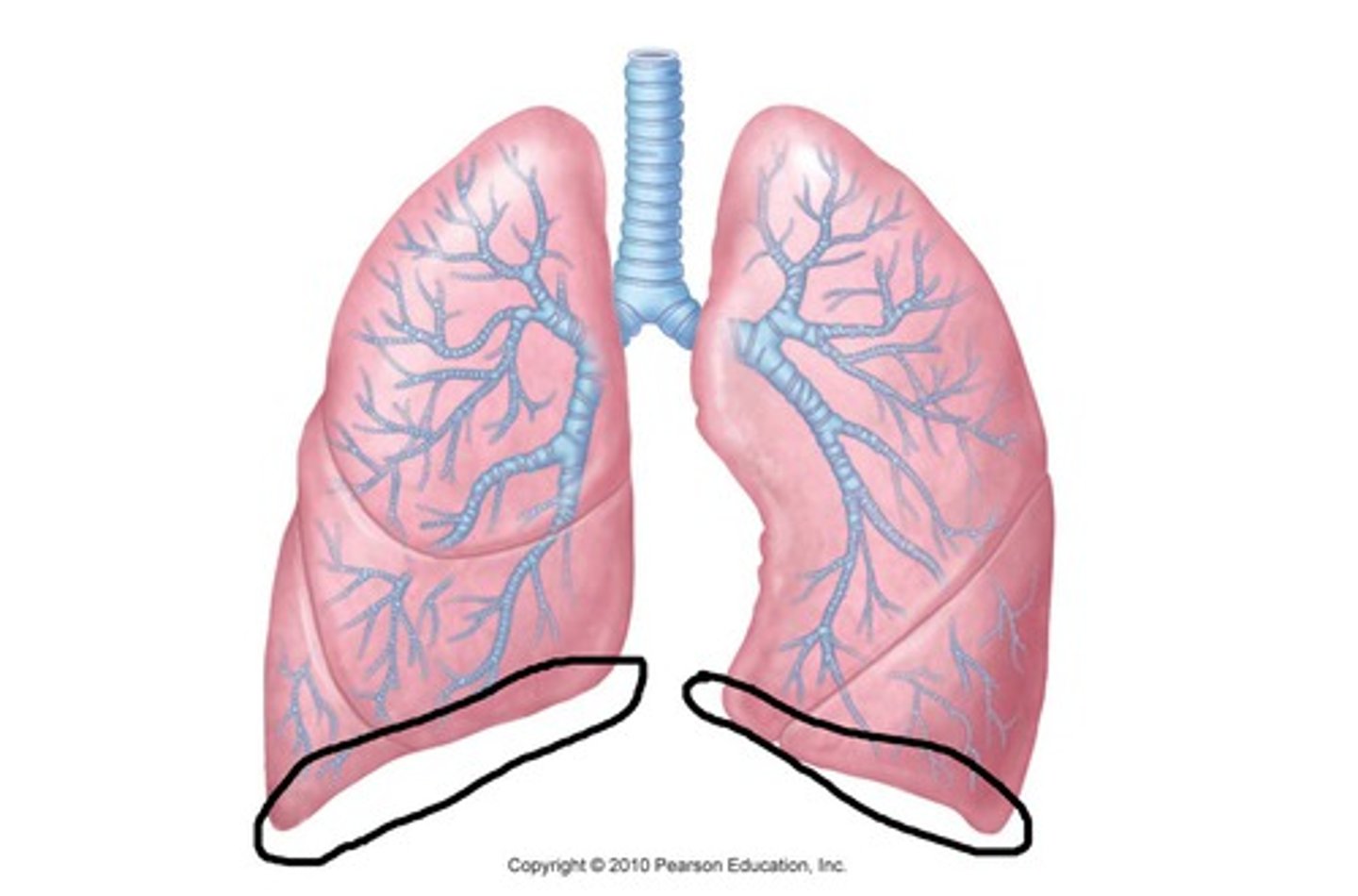
Diaphragm separates what cavities?
Thoracic and abdominal
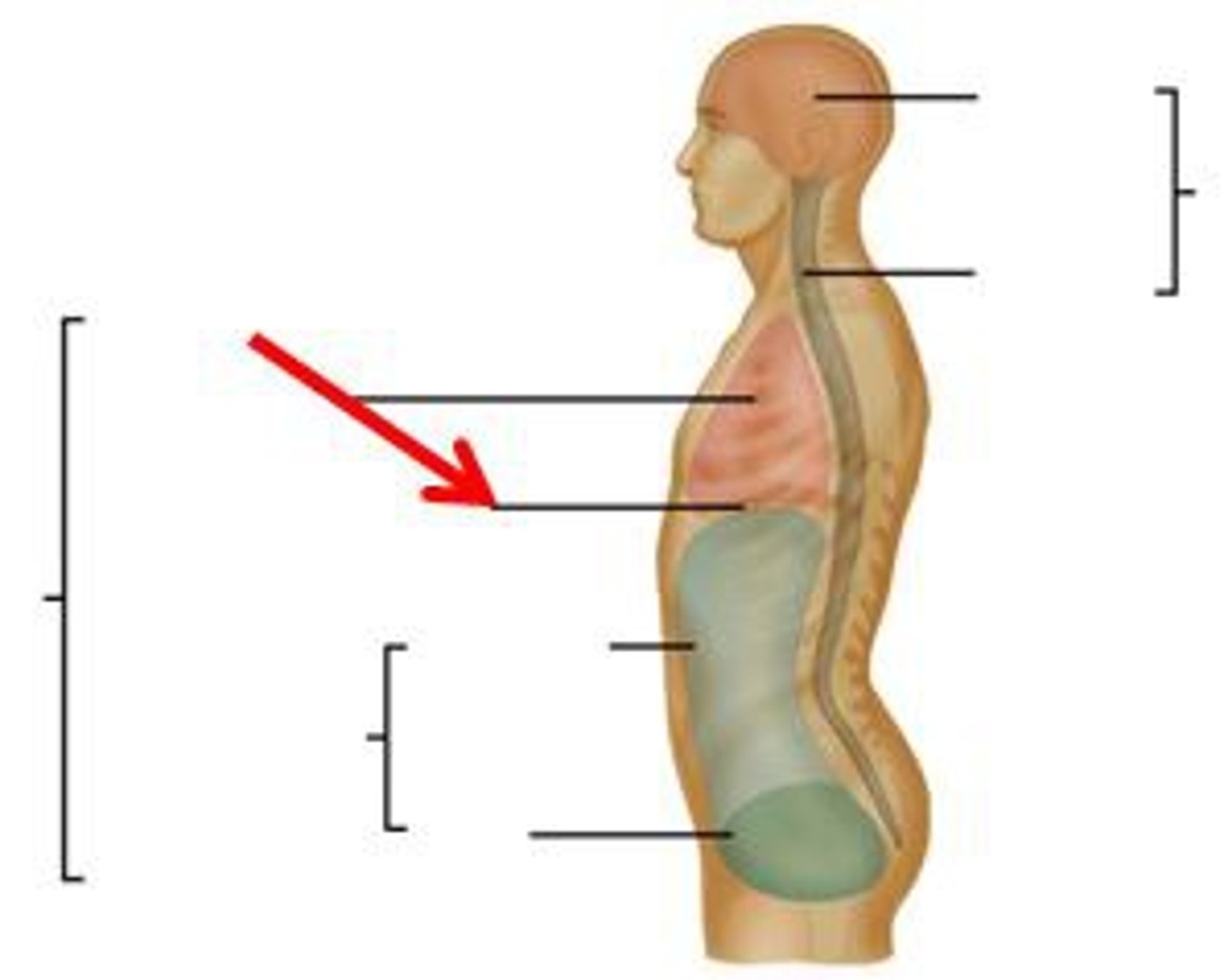
Costophrenic angle
Extreme outermost lower corner of each lung
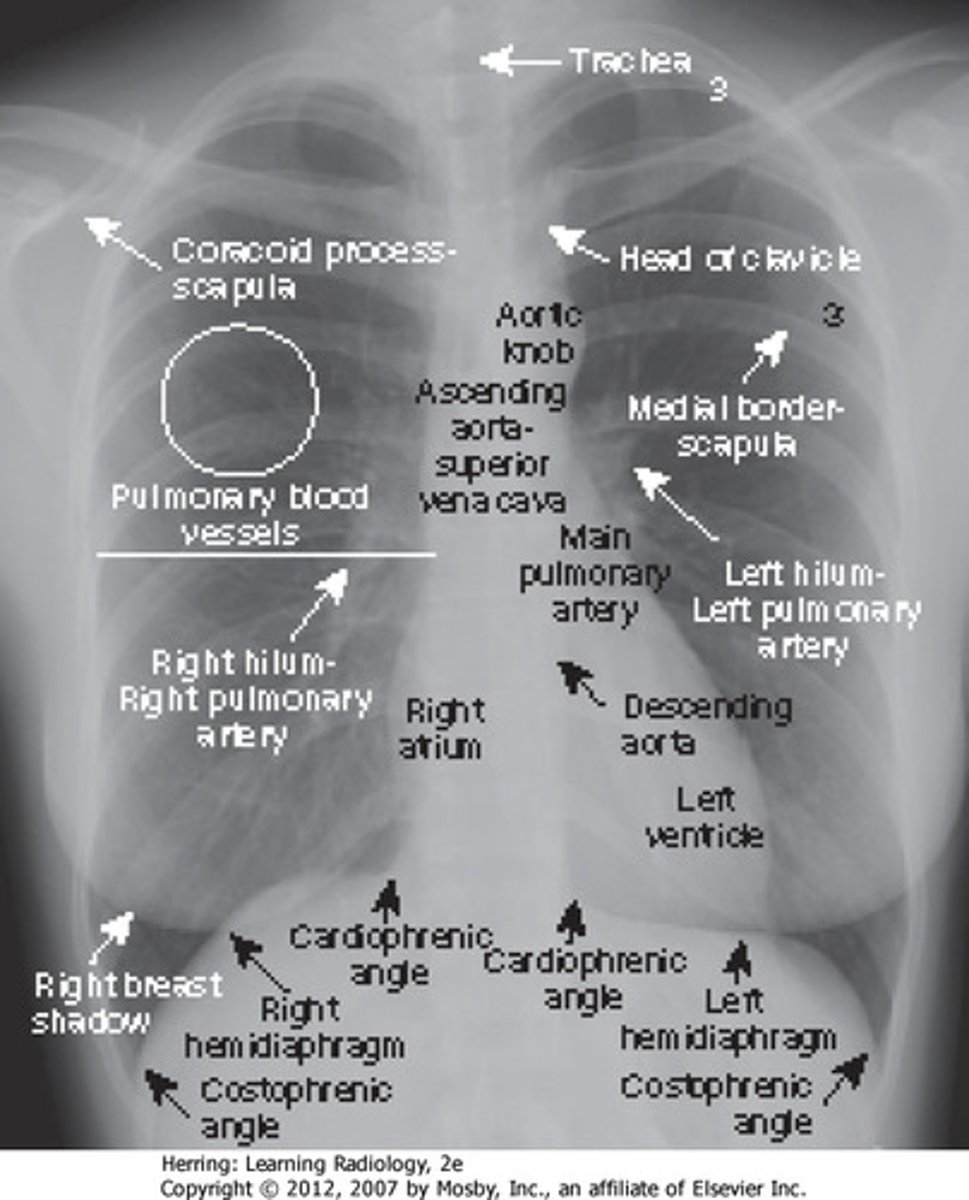
Hilum (hilus)
Also known as the root region, central area of each lung where bronchi, blood vessels, lymph vessels, and nerves enter and leave the lungs. Space where vessels enter and leave lungs
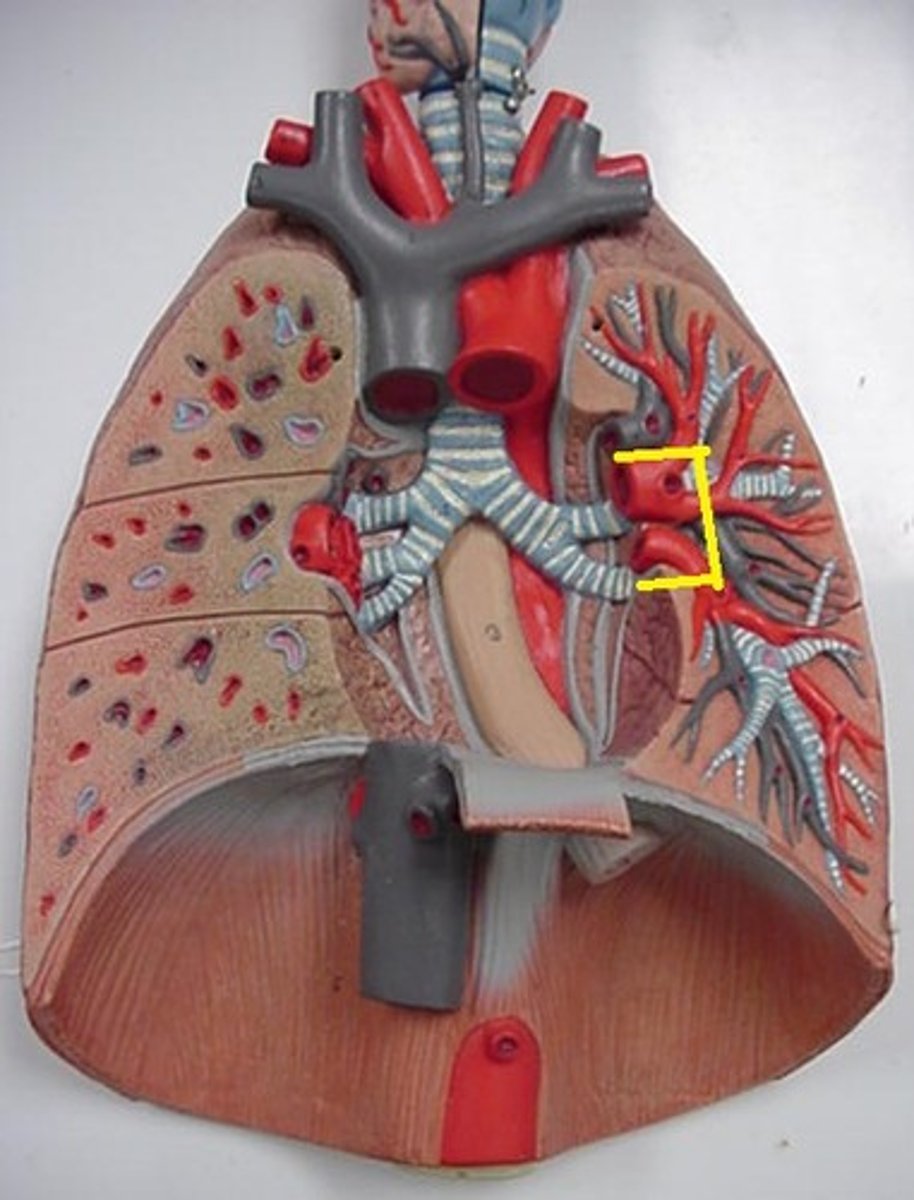
The right lung is usually 1 inch shorter that the left lung, why?
Because the large space occupied by the liver pushes up on the right hemidiaphragm.
Mediastinum
Medial portion of the thoracic cavity. Area between the lungs. Contains all thoracic structures except lungs and pleurae.
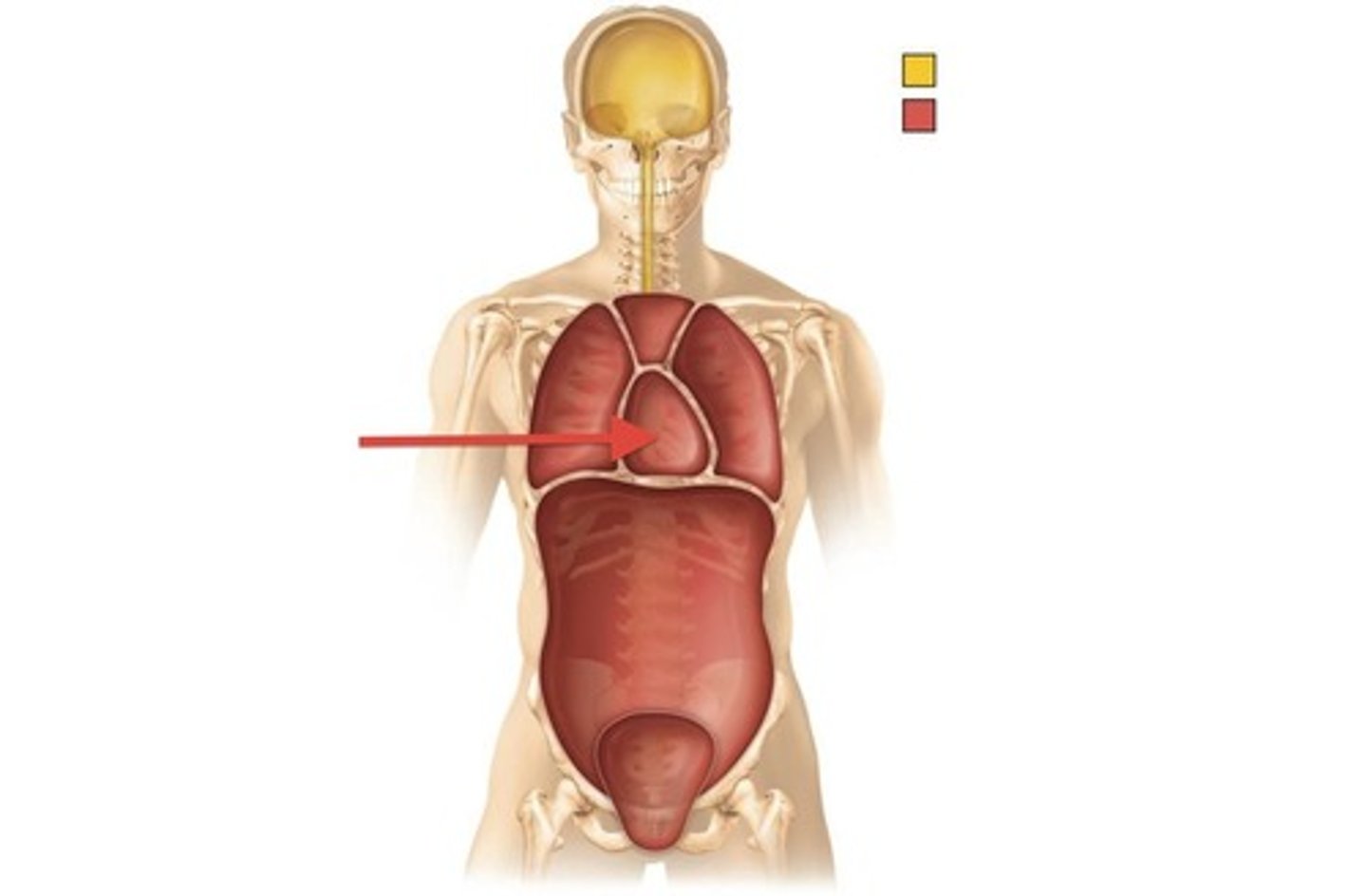
Four radiographically important structures located within the mediastinum are?
The thymus gland, heart and great vessels, trachea, and esophagus
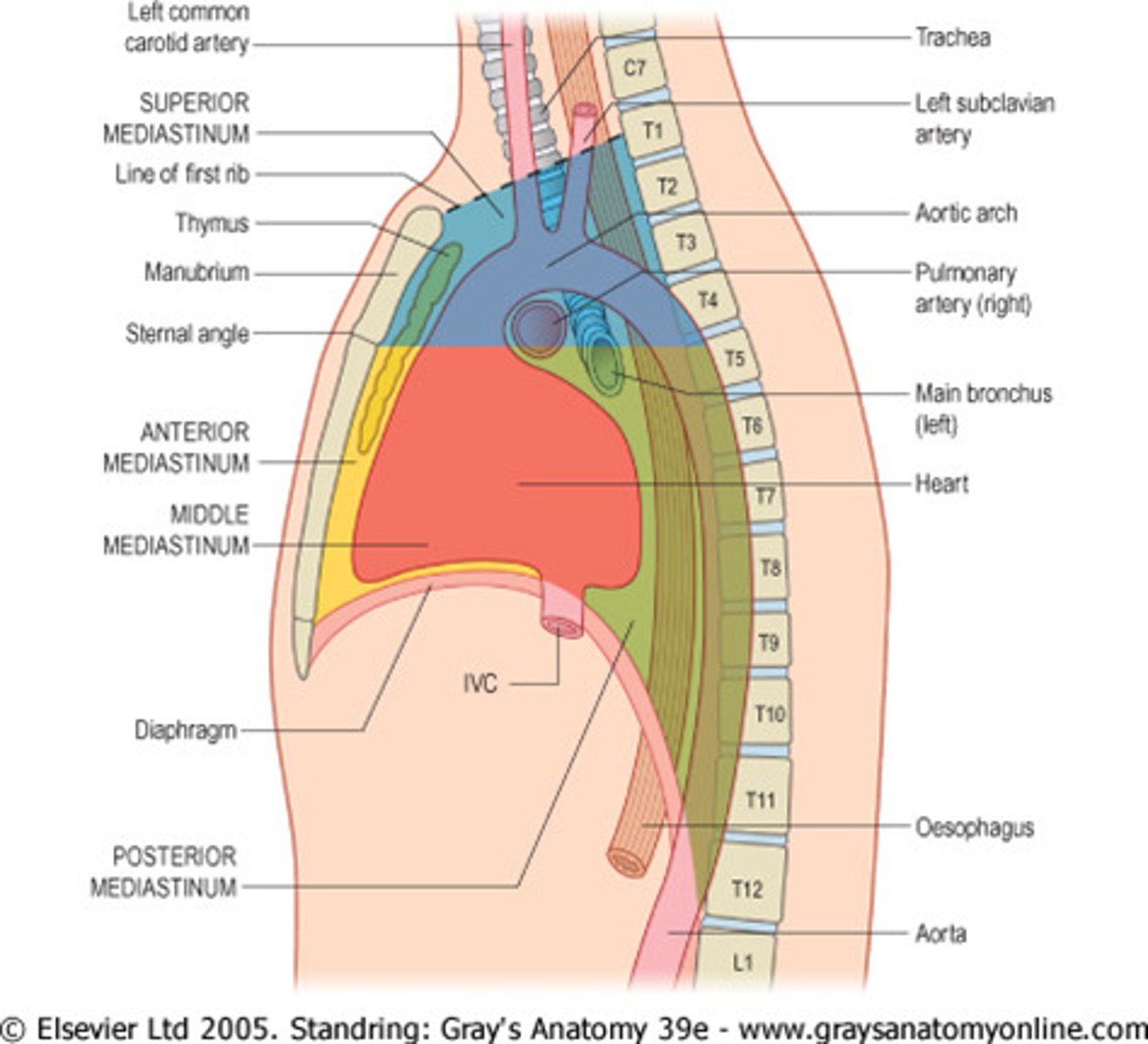
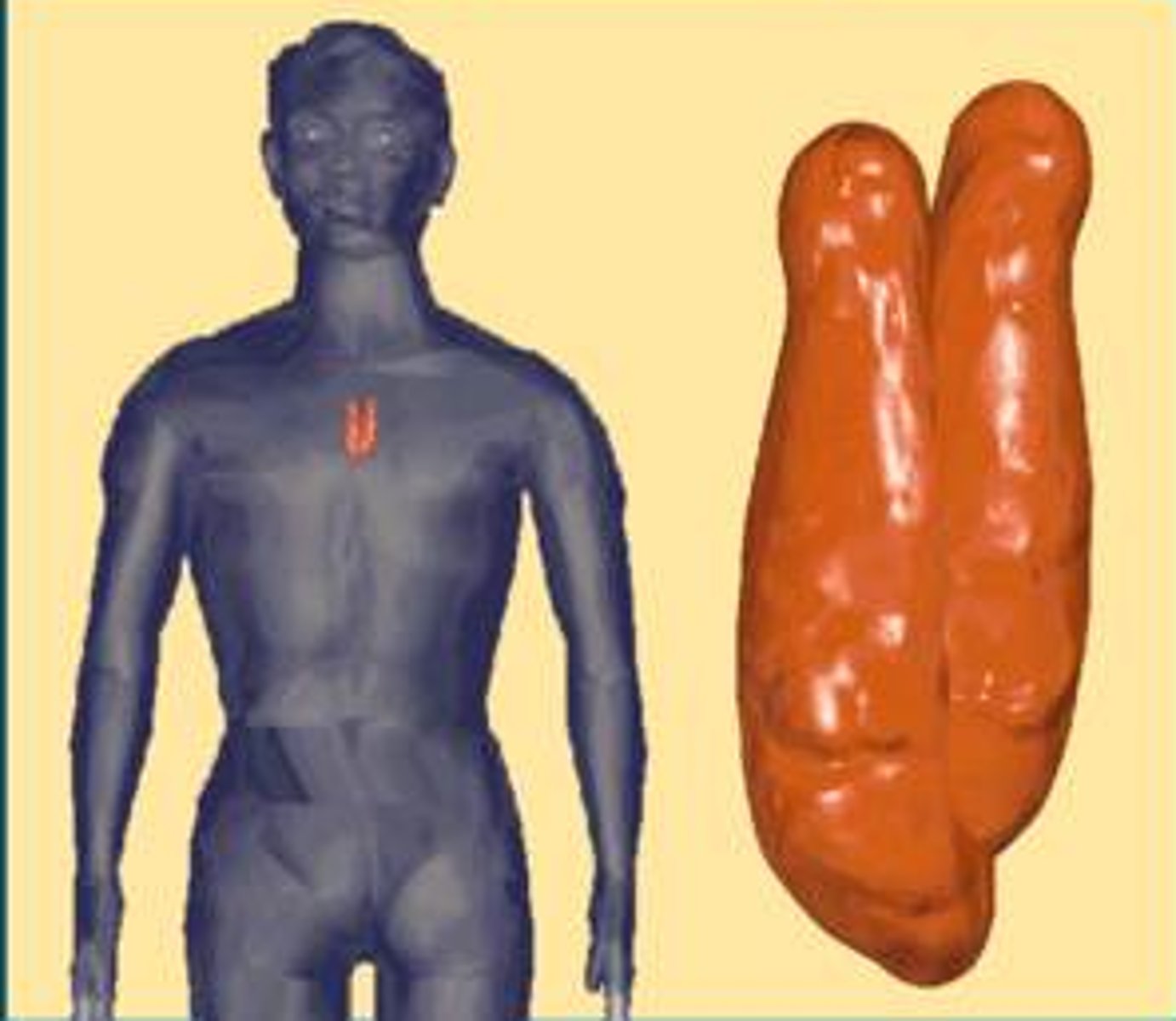
Thymus gland
The thymus functions primarily in childhood and puberty to aid with the functioning of certain body immune systems that help the body resist disease.
Why is the thymus gland said to be a temporary gland?
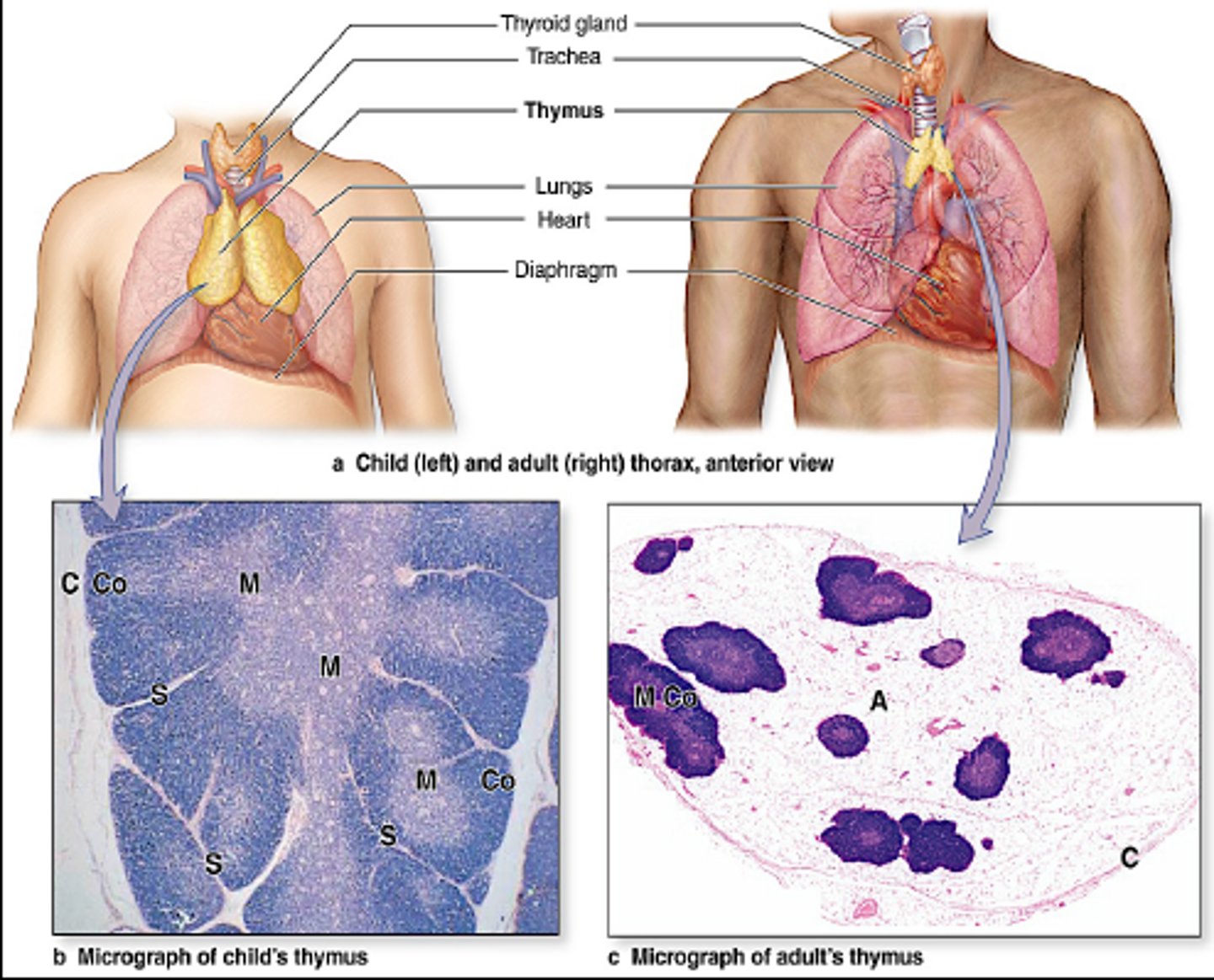
Because it is very prominent in infancy and reaches its maximum size at puberty, then gradually decreases in size until it almost disappears in adulthood.
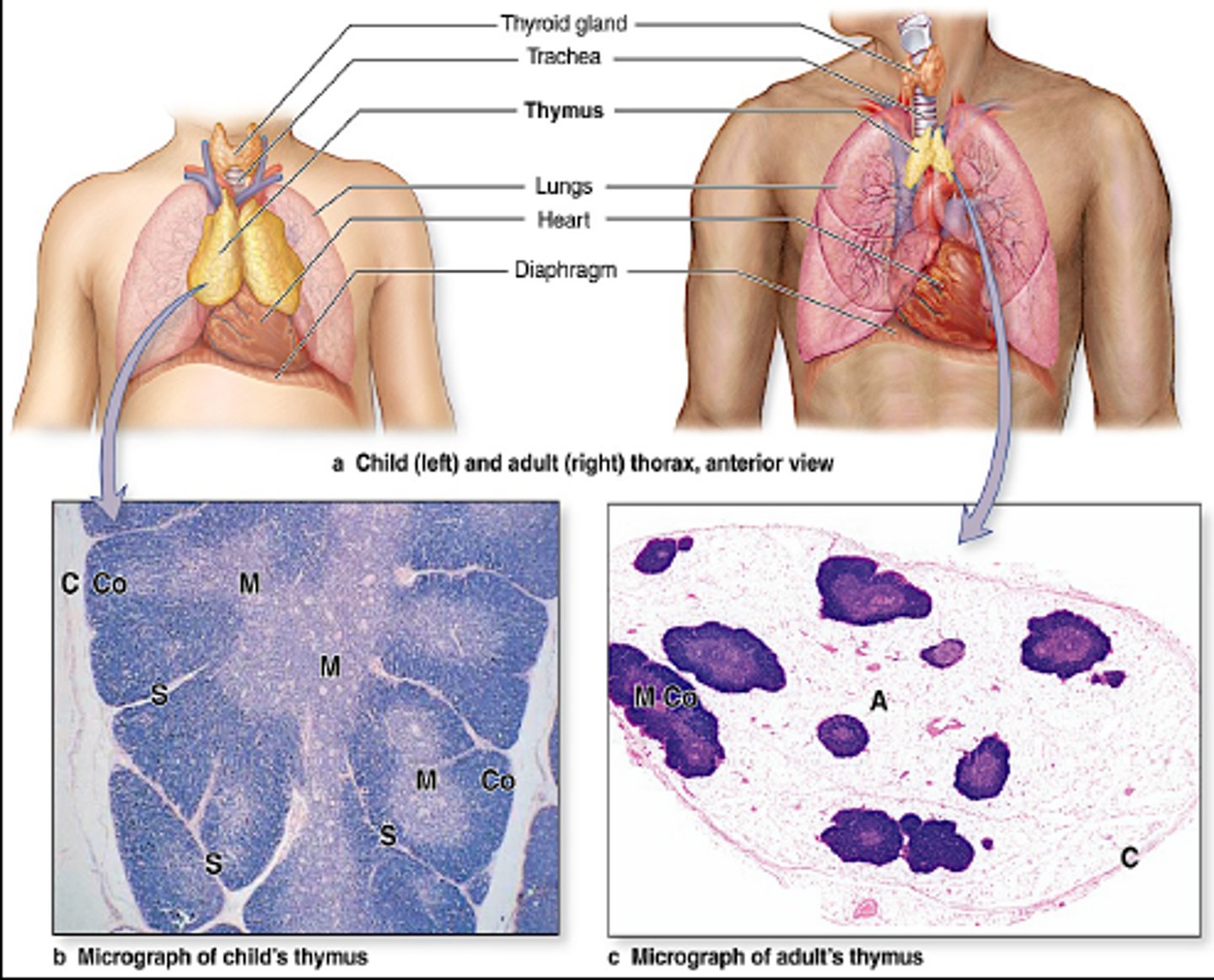
Would it be easier to see the thymus on an adult chest radiograph or a child's?
A child. It is generally not seen on an adult radiograph.
Where is the thymus located?
Above and anterior to the heart
What is the heart enclosed in?
Pericardial sac
Where is the heart located?
Behind the sternum and anterior to T5 to T8
Great vessels
Aorta, superior vena cava, inferior vena cava, pulmonary arteries, pulmonary veins
superior vena cava (upside down)
A large vein that returns blood to the heart from the upper half of the body
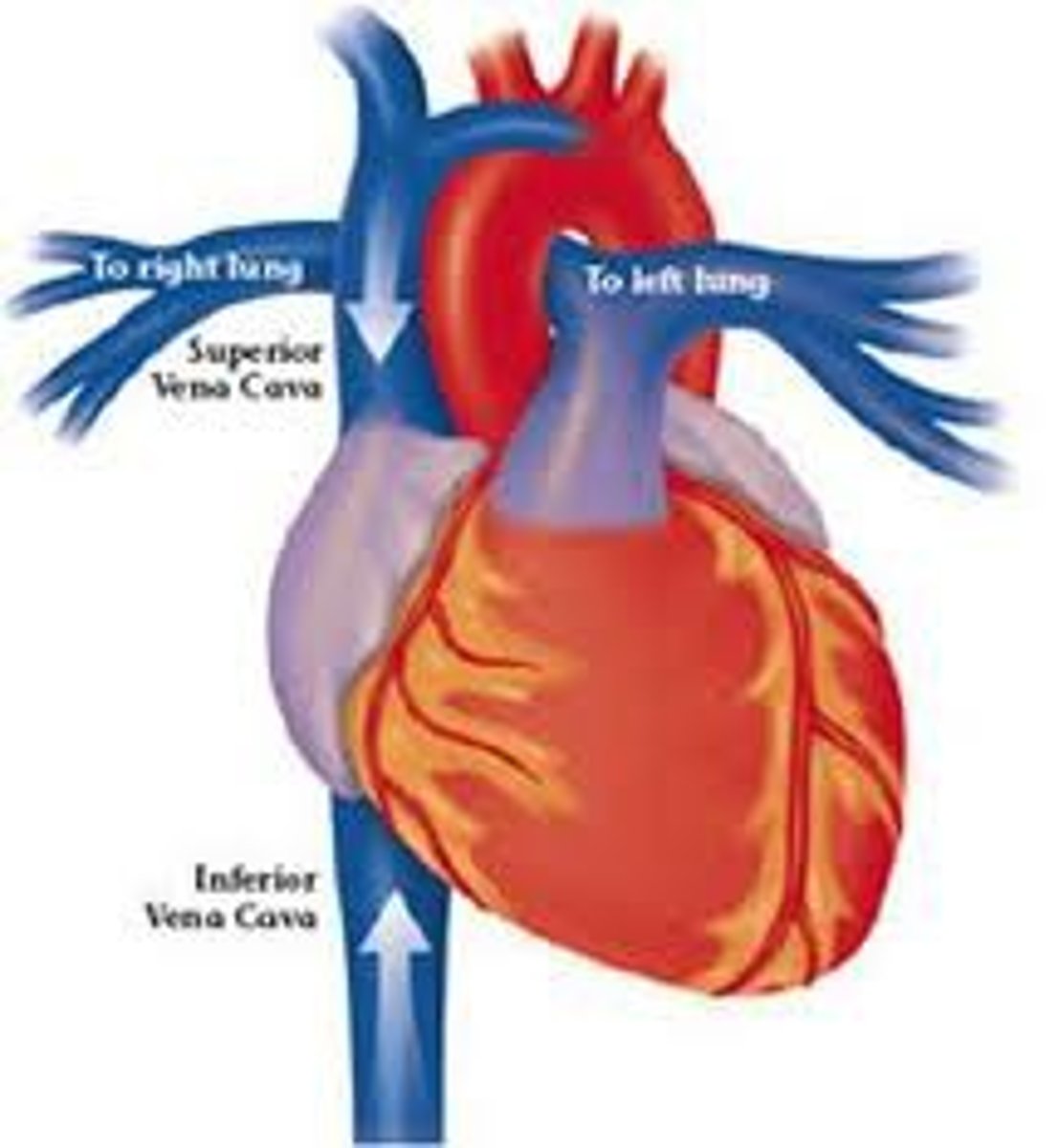
Inferior vena cava
Large vein that returns blood from the lower half of the body
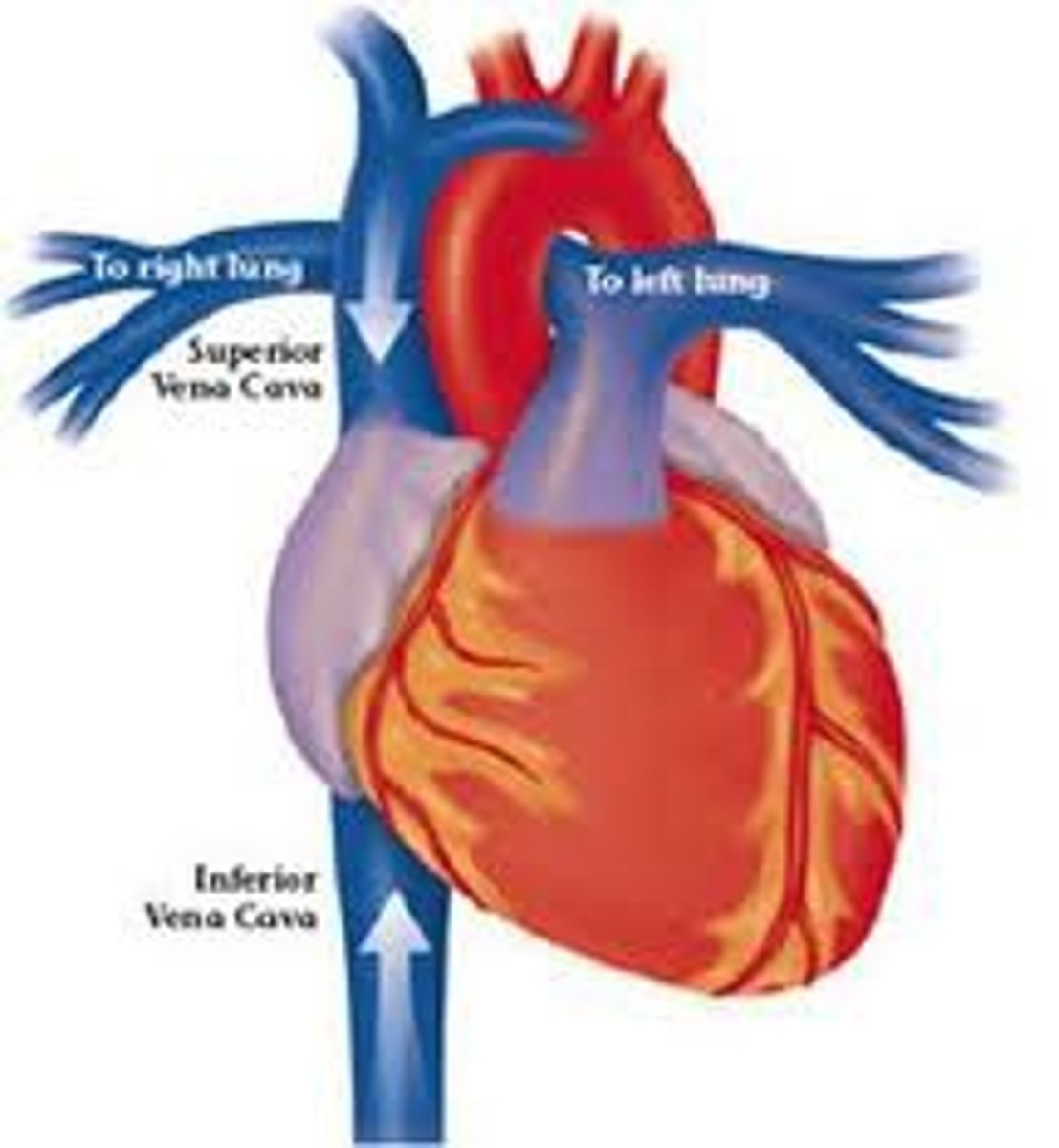
Aorta
The largest artery in the body. Carries blood to all parts of the body through its various branches
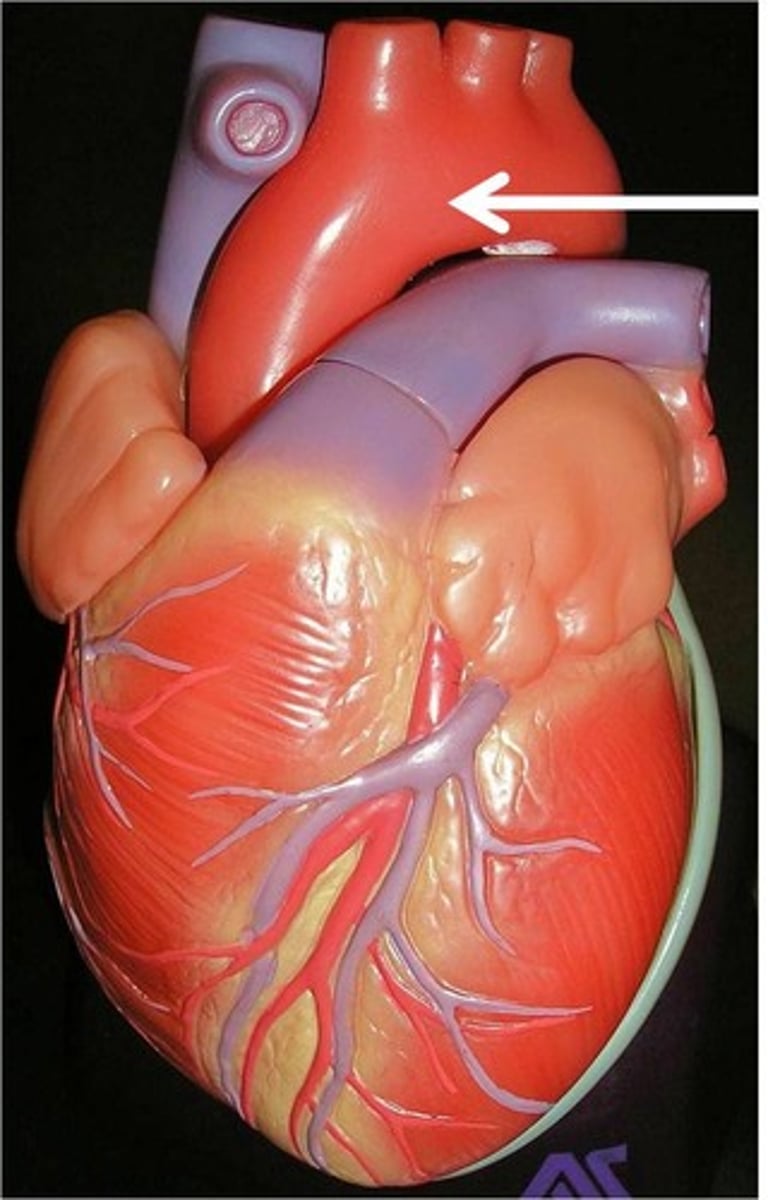
Ascending aorta
Coming up out of the heart
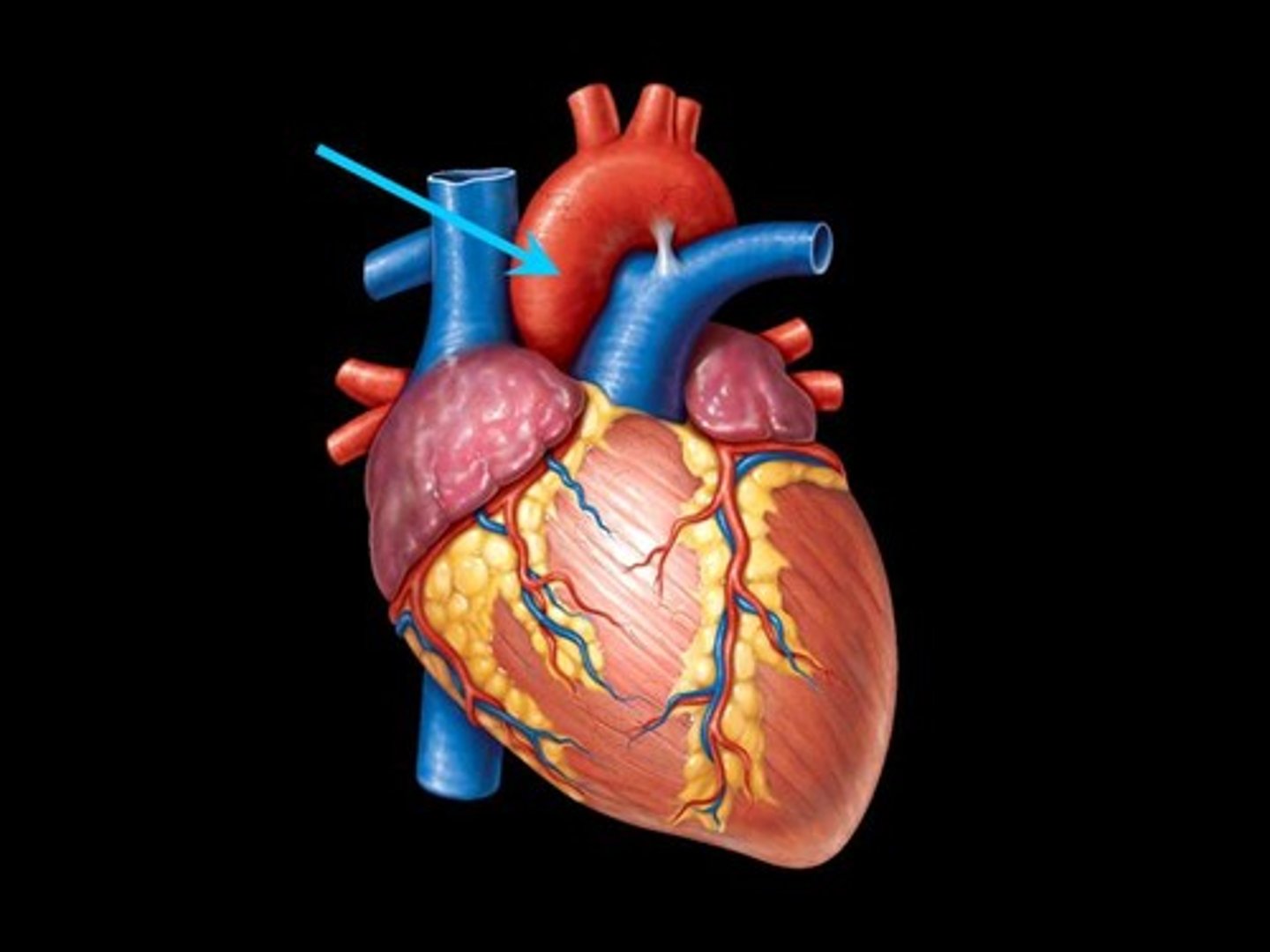
Arch of the aorta
Arch
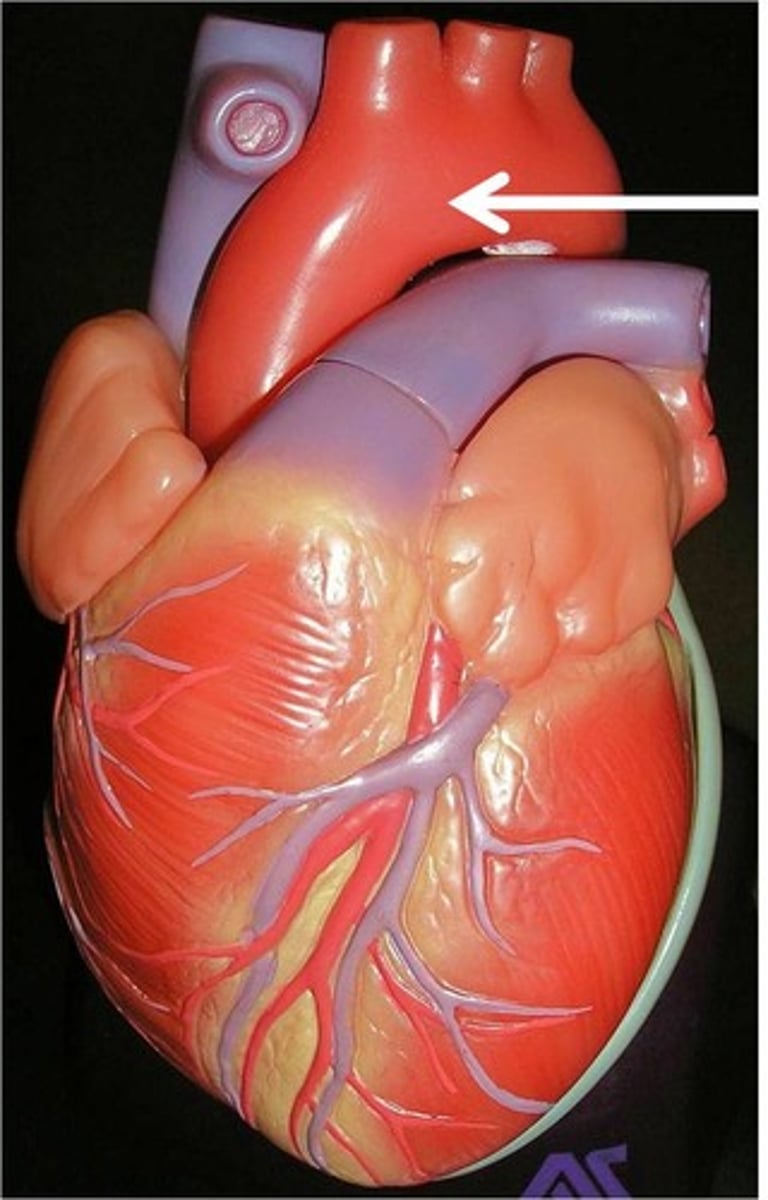
Descending aorta
Passed through the diaphragm into the abdomen
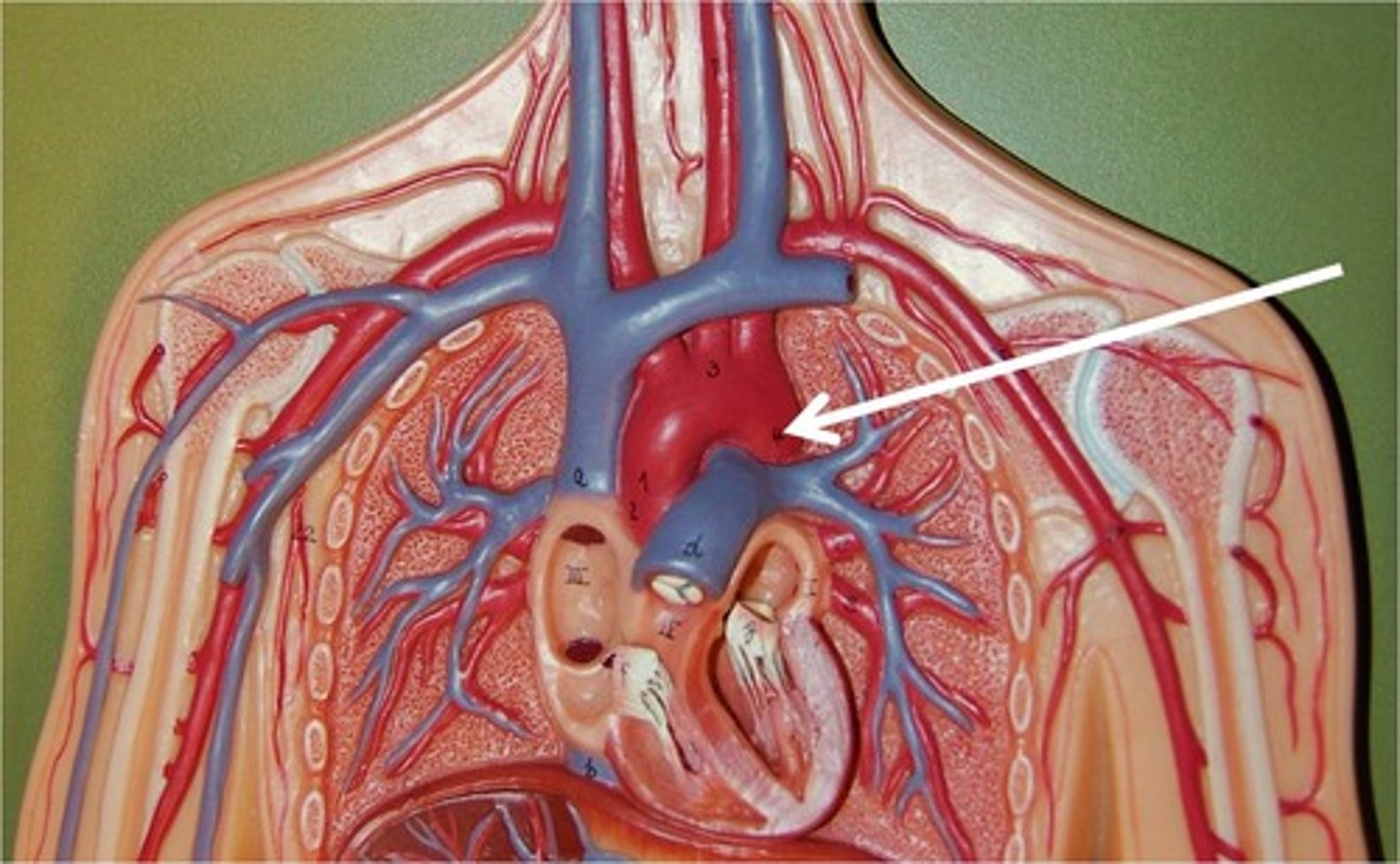
Pulmonary arteries and veins
Supply blood to and from all segments of the lungs
Body habitus
Physique or body build