DNA Replication Models, Processes, and Discoveries in Biology
 Call Kai
 Learn
Learn Practice Test
 Spaced Repetition
 Match
Match Flashcards
 Knowt Play
1/46

There's no tags or description
Looks like no tags are added yet.
Name | Mastery | Learn | Test | Matching | Spaced | Call with Kai |
|---|
No analytics yet
Send a link to your students to track their progress
47 Terms
During which phase of the cell cycle does DNA replication occur?
S phase
What are the three alternative models for DNA replication?
Conservative, Dispersive, Semi-Conservative
Describe the Conservative model of DNA replication.
The parental strands direct synthesis of an entirely new double-stranded molecule, fully conserving the parental strands.
What characterizes the Semi-Conservative model of DNA replication?
Each parental strand makes a copy of itself, resulting in daughter molecules with one parental and one new strand.
Explain the Dispersive model of DNA replication.
The material in the parental strands is dispersed randomly between the daughter molecules, resulting in a mix of parental and new DNA.
What experiment did Meselson and Stahl conduct to determine the correct model of DNA replication?
They cultured bacteria with a heavy isotope (15N) and then transferred them to a medium with a light isotope (14N) to analyze DNA after replication.
What did Meselson and Stahl's experiment conclude about DNA replication?
The experiment supported the Semi-Conservative model of DNA replication.
What initiates DNA replication at the origin of replication?
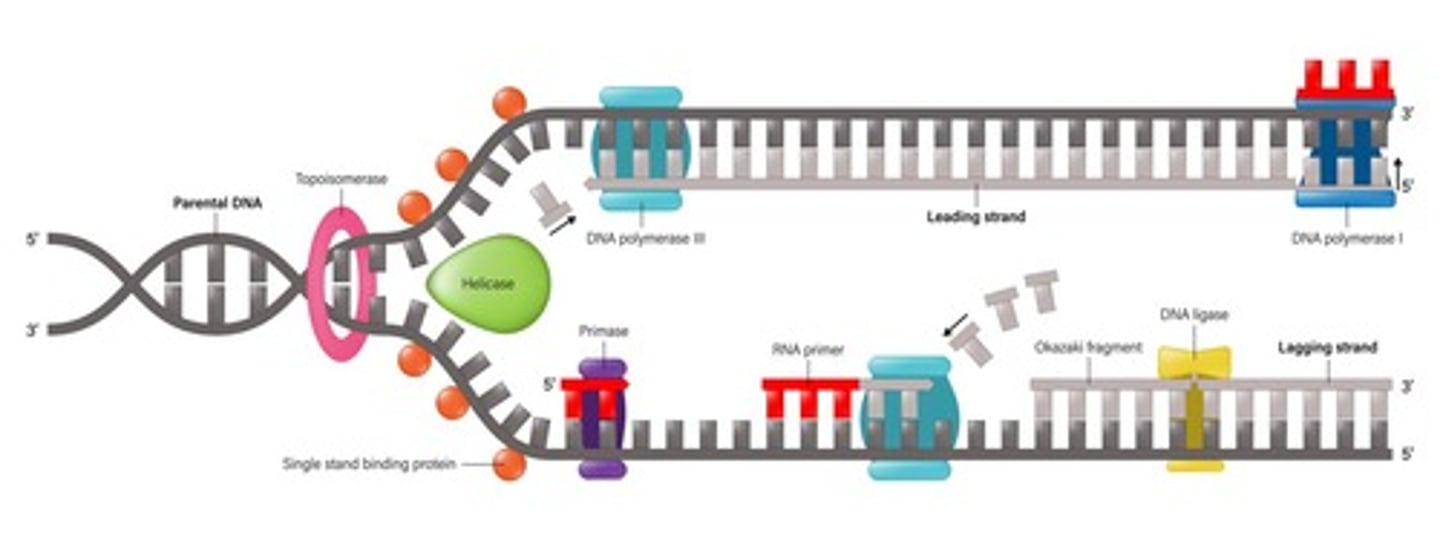
Various proteins attach to the origin and open the DNA to form a replication fork.
What role does helicase play in DNA replication?
Helicase unwinds the DNA strands at each replication fork.
What prevents DNA strands from re-bonding during replication?
Single strand binding proteins (SSBPs) bind to the DNA to keep it open.
What is the function of topoisomerase during DNA replication?
Topoisomerase helps prevent strain ahead of the replication fork by relaxing supercoiling.
What is the role of primase in DNA replication?
Primase adds short segments of RNA called primers to the parental DNA strand to initiate replication.
How does DNA Polymerase III synthesize new DNA strands?
It attaches to each primer on the template strand and adds nucleotides in the 5' to 3' direction.
What is the difference between the leading strand and the lagging strand during DNA replication?
The leading strand is synthesized continuously, while the lagging strand is synthesized discontinuously in short segments called Okazaki fragments.
What happens to RNA nucleotides in the lagging strand after Okazaki fragments are formed?
A different DNA polymerase (DNAP I) replaces RNA nucleotides with DNA nucleotides.
What enzyme joins Okazaki fragments to form a continuous DNA strand?
DNA ligase.
What problem do linear chromosomes present at the 5' end during replication?
DNA Polymerase can only add nucleotides to a 3' end, leaving the 5' end unreplicated, which could shorten DNA over many replications.
What are telomeres?
Repeating units of short nucleotide sequences that do not code for genes, forming a cap at the end of DNA to help postpone erosion.
What is the function of telomerase?
Telomerase adds telomeres to DNA, helping protect genes from erosion.
How does DNA Polymerase proofread newly added nucleotides?
It checks the bases added and can remove and replace incorrectly paired nucleotides.
What is mismatch repair in DNA replication?
Enzymes remove and replace incorrectly paired nucleotides after proofreading.
What is the role of nuclease in DNA repair?
Nuclease removes segments of damaged DNA, which are then replaced by DNA polymerase and ligase.
If a parental DNA strand reads 5'- ACGTAC- 3', what would the complementary strand read?
3'- TGCATG- 5'.
What direction does DNA Polymerase III move along the template strand?
It moves 3' to 5'.
Why do Okazaki fragments occur on the lagging strand?
They occur because DNA Polymerase III moves away from the replication fork, requiring replication in chunks.
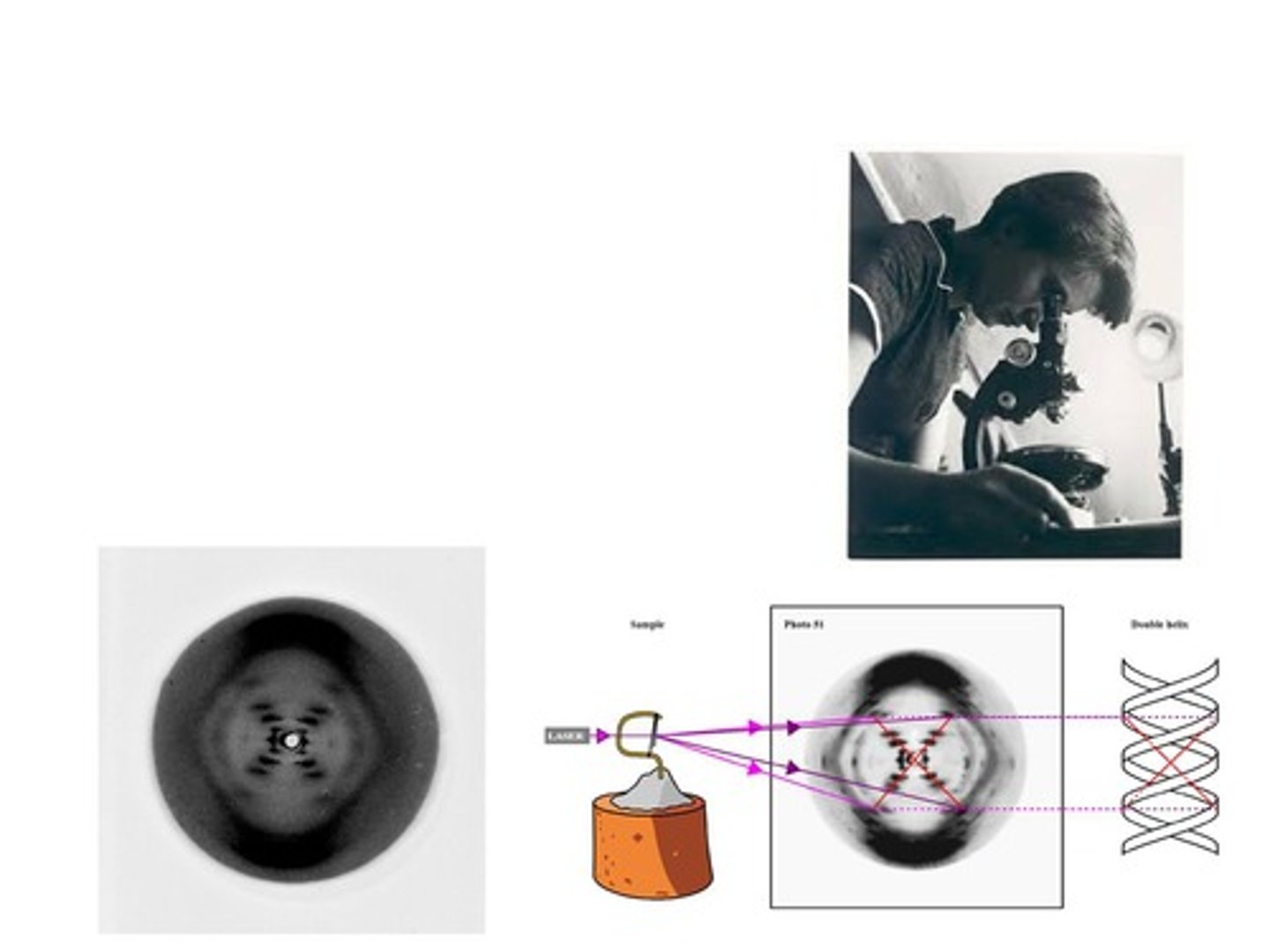
Who performed X-Ray Crystallography of DNA in the 1950s?
Rosalind Franklin
What rule did Edwin Chargaff discover regarding DNA composition?
The amount of adenine equals the amount of thymine, and the amount of cytosine equals the amount of guanine.
What are the two types of nitrogenous bases in nucleotides?
Purines (A, G) and Pyrimidines (C, U, T).
What type of bonds hold the base pairs of DNA together?
Hydrogen bonds.
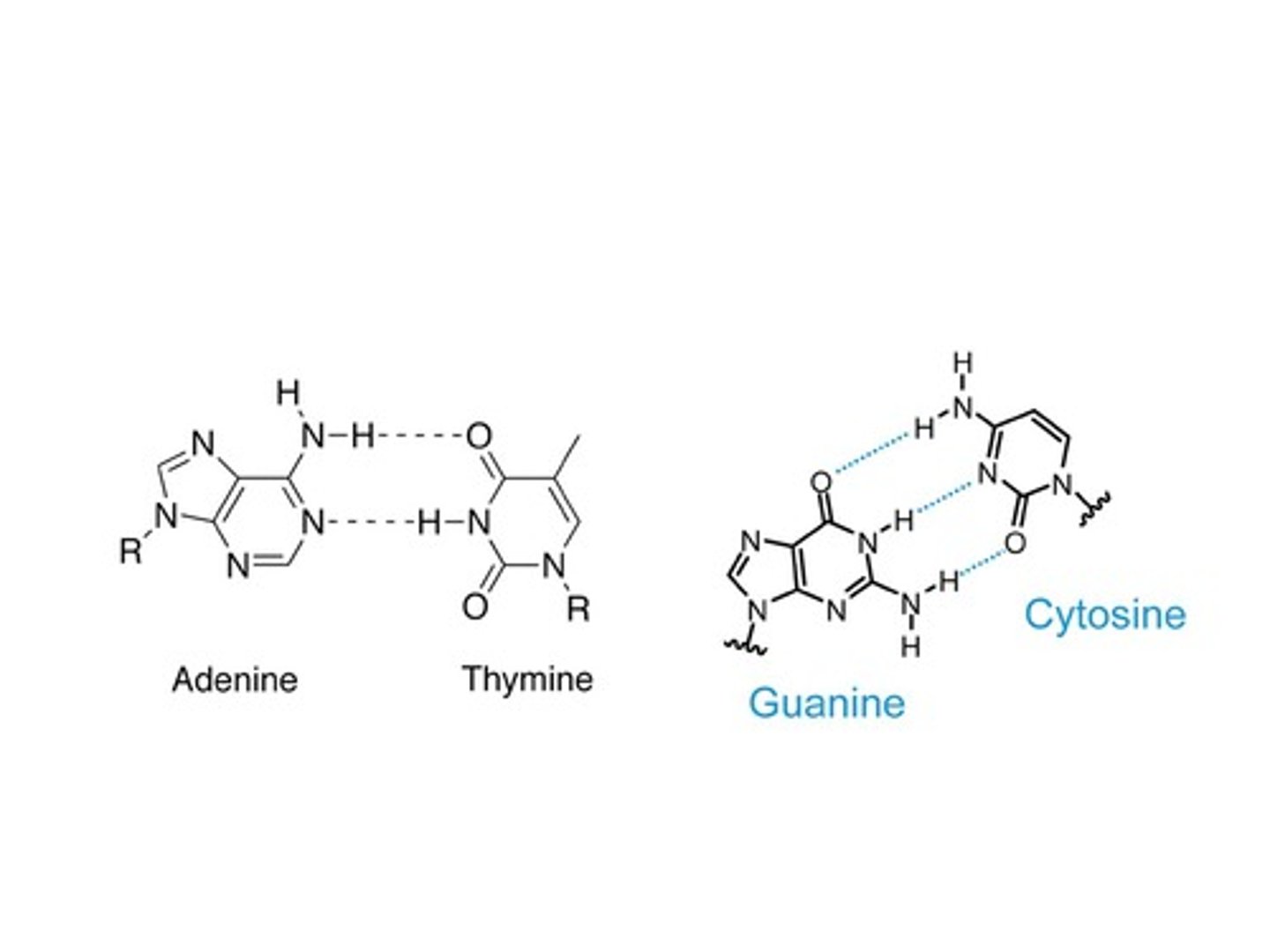
How many hydrogen bonds are formed between adenine and thymine?
Two hydrogen bonds.
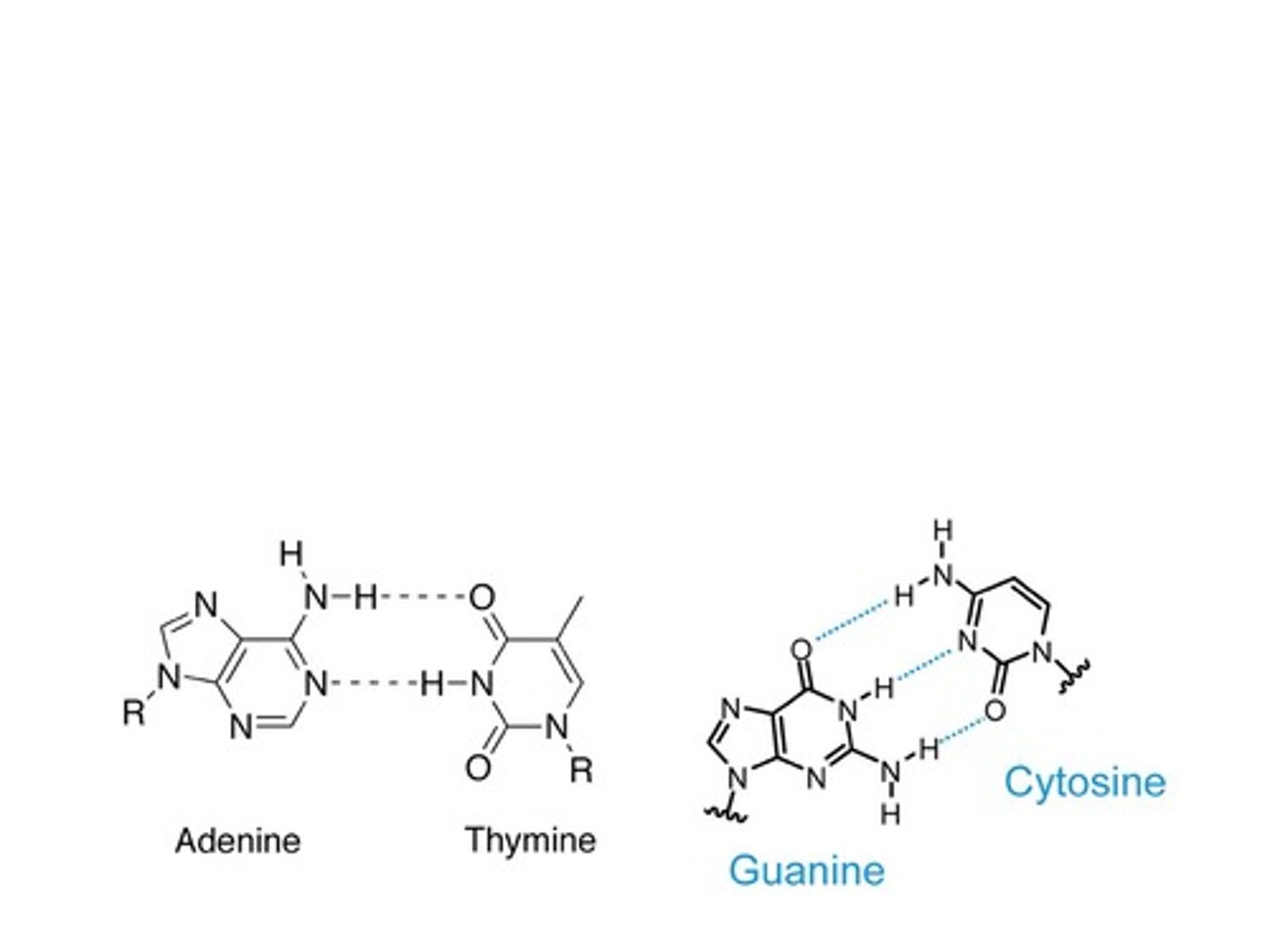
How many hydrogen bonds are formed between cytosine and guanine?
Three hydrogen bonds.
What is the structure of DNA?
DNA is a double-stranded helix with a sugar-phosphate backbone.
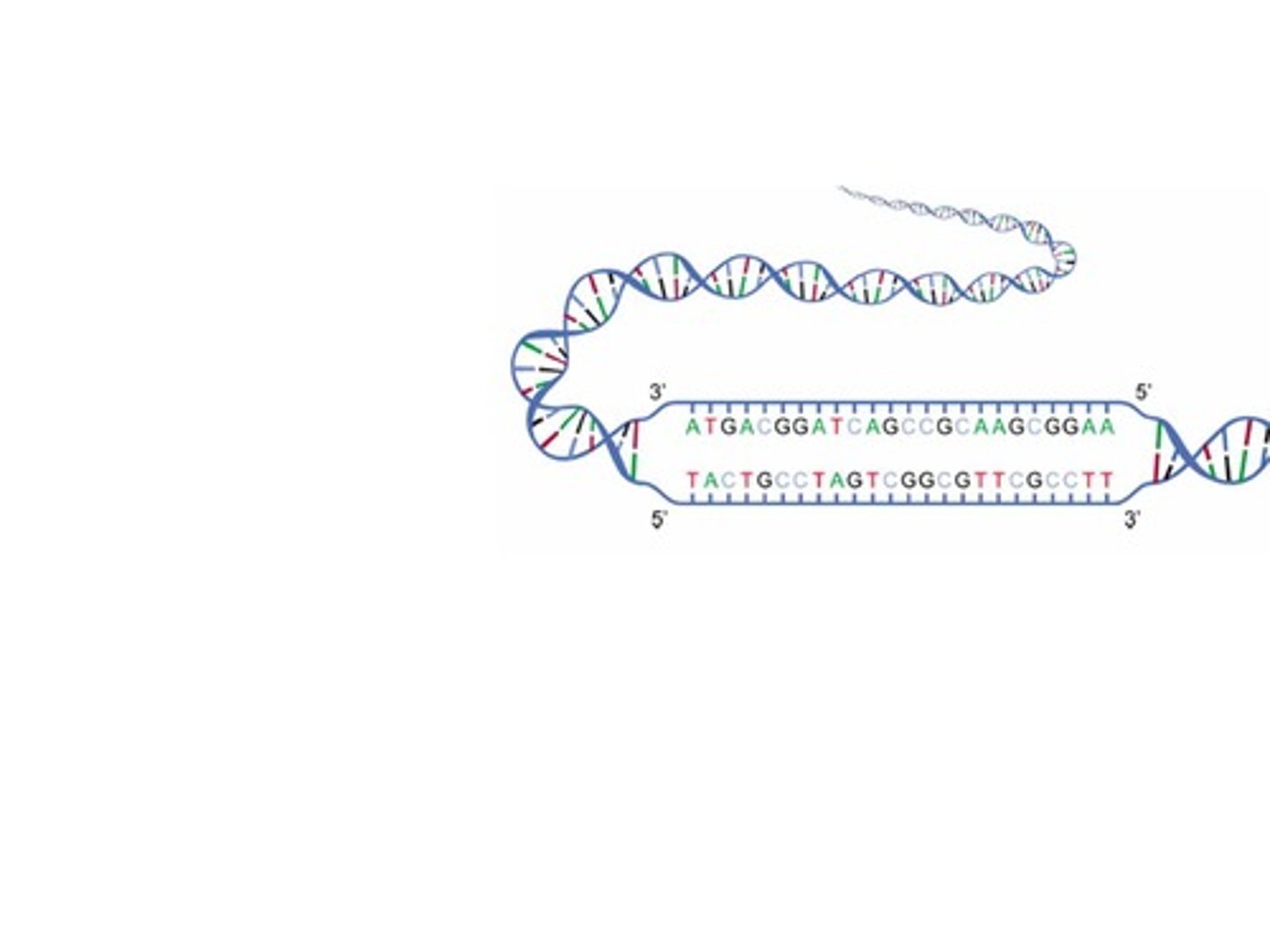
What direction do the two strands of DNA run?
Antiparallel; one strand runs 5' to 3' and the other runs 3' to 5'.
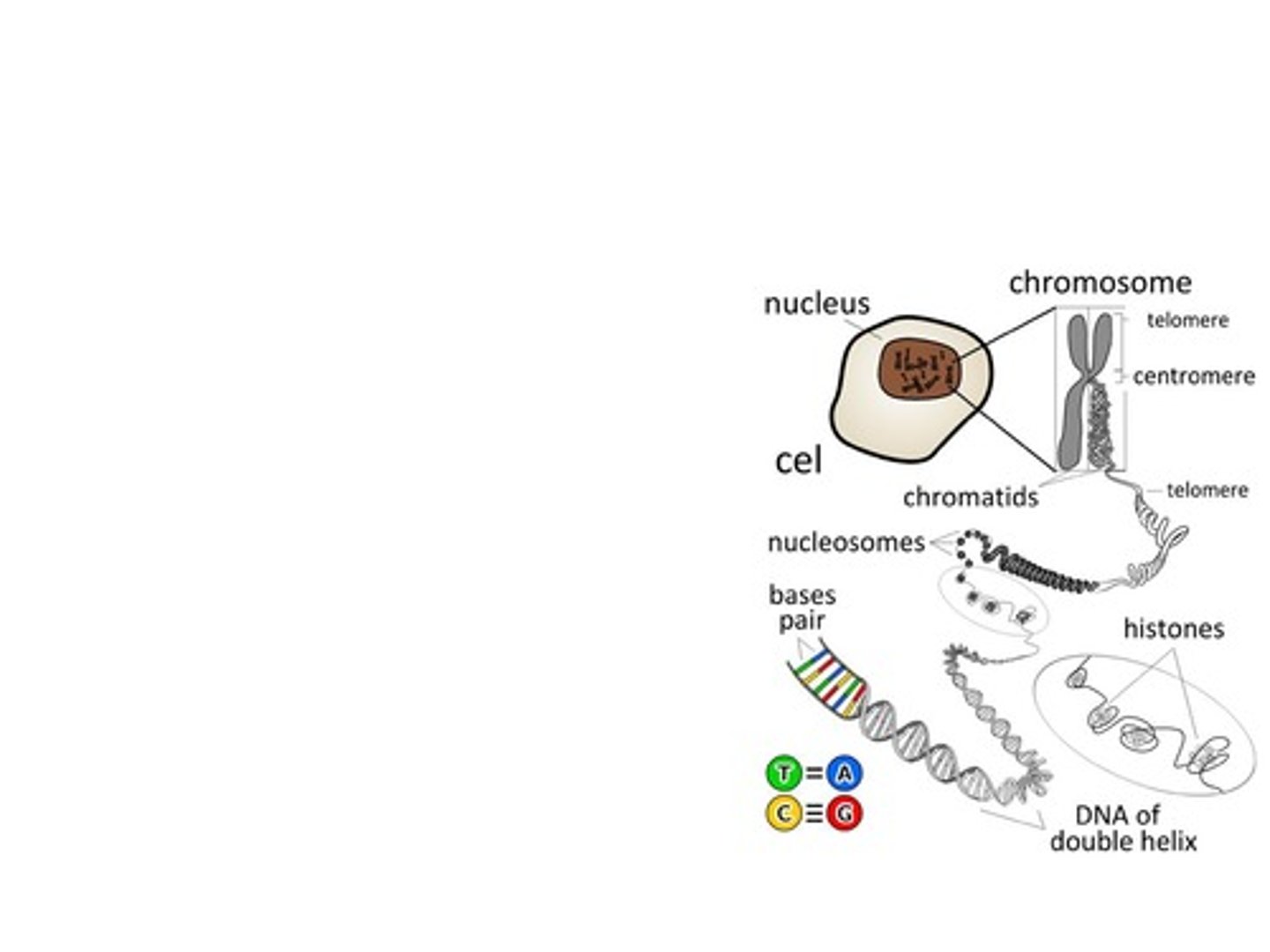
What is the primary function of DNA?
DNA is the primary source of heritable information, storing genetic information passed from one generation to the next.
Where is DNA located in eukaryotic cells?
In the nucleus.
Where is DNA located in prokaryotic cells?
In the nucleoid region.
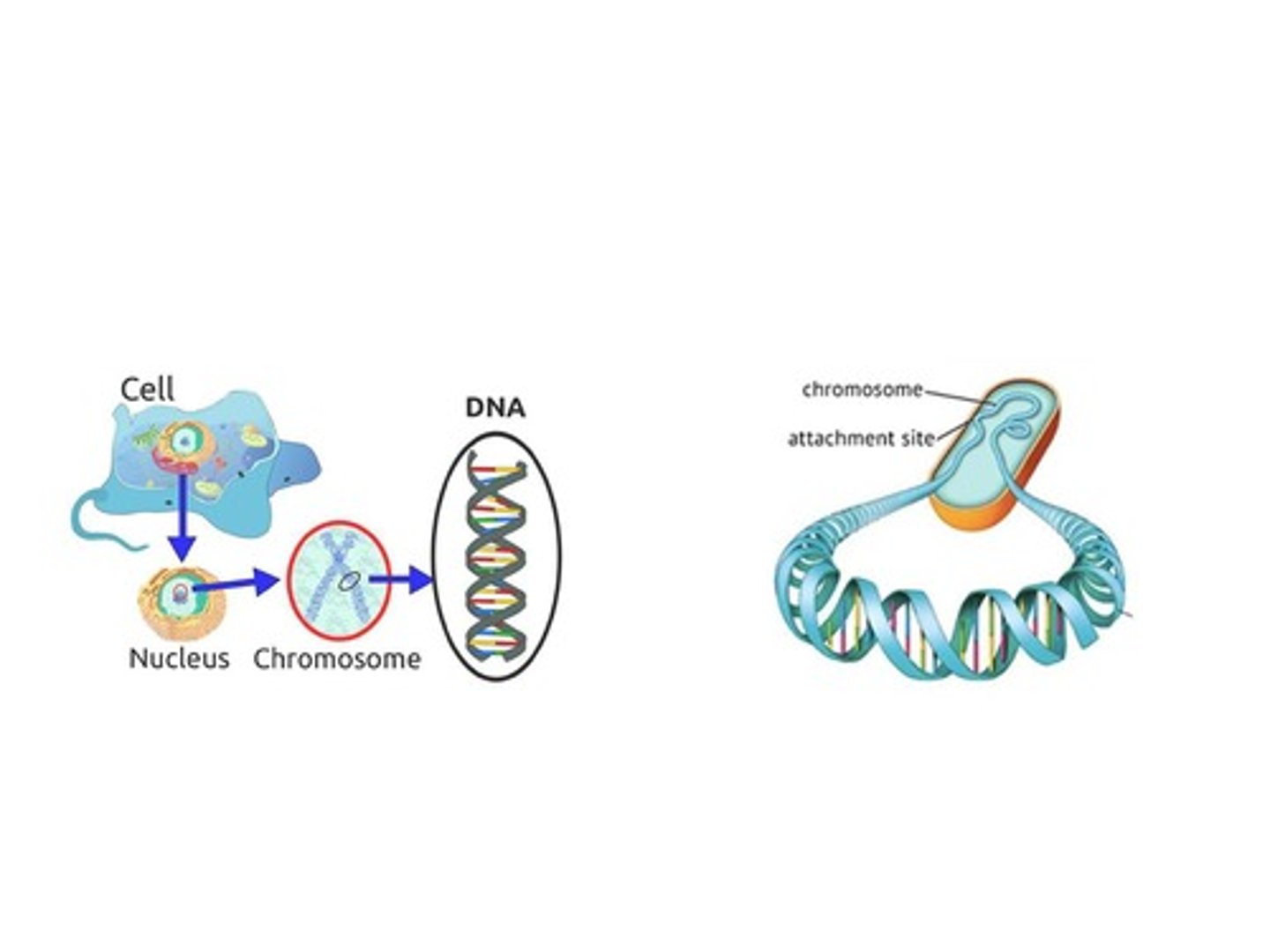
What are plasmids?
Small, circular DNA molecules that replicate independently from chromosomal DNA, primarily found in prokaryotes.
How can plasmids be manipulated in laboratories?
Plasmids can be removed from bacteria, a gene of interest can be inserted, and the recombinant plasmid can be reintroduced to express the gene.
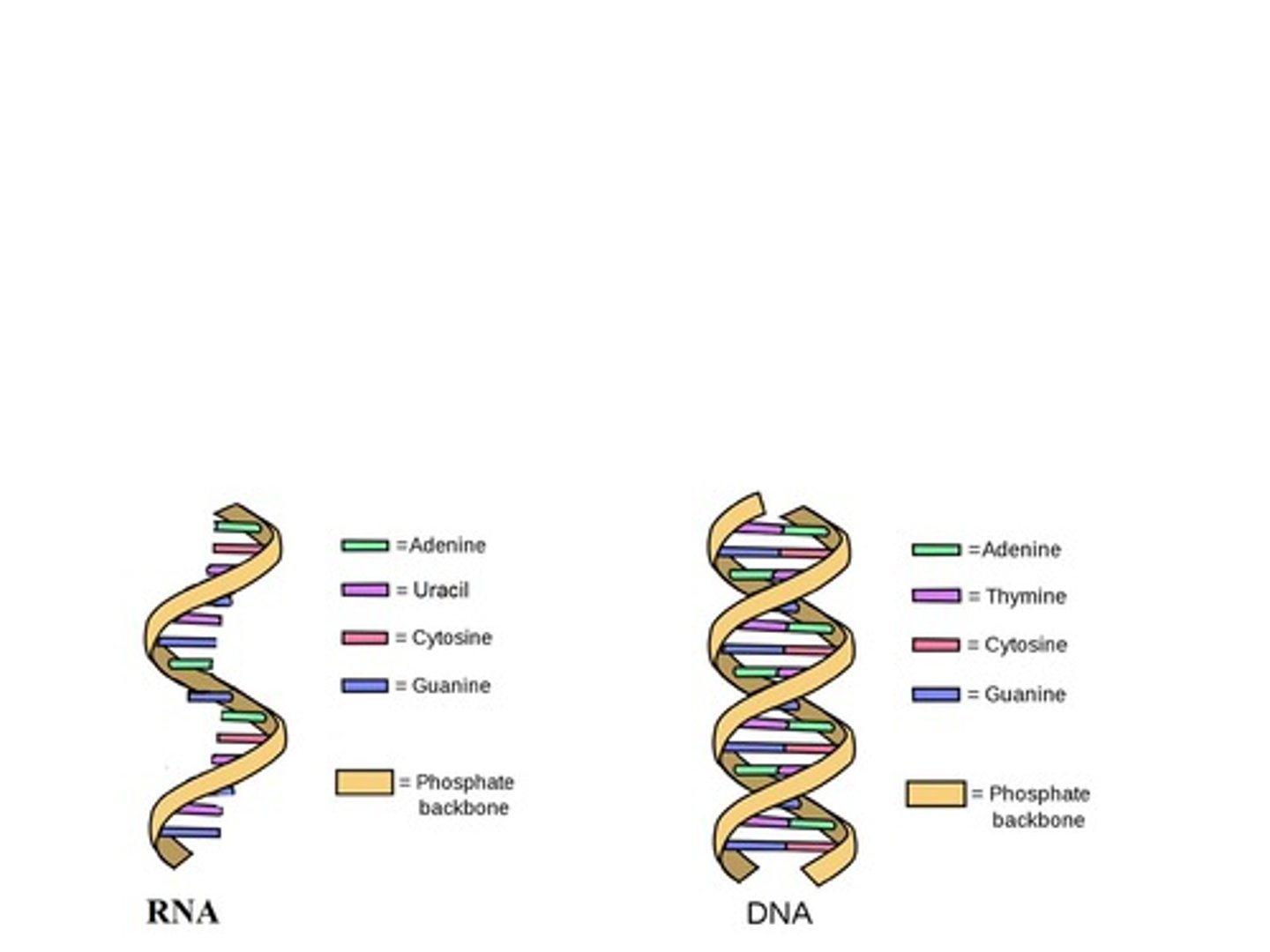
What is the difference between RNA and DNA?
RNA is single-stranded with uracil (U), while DNA is double-stranded with thymine (T).
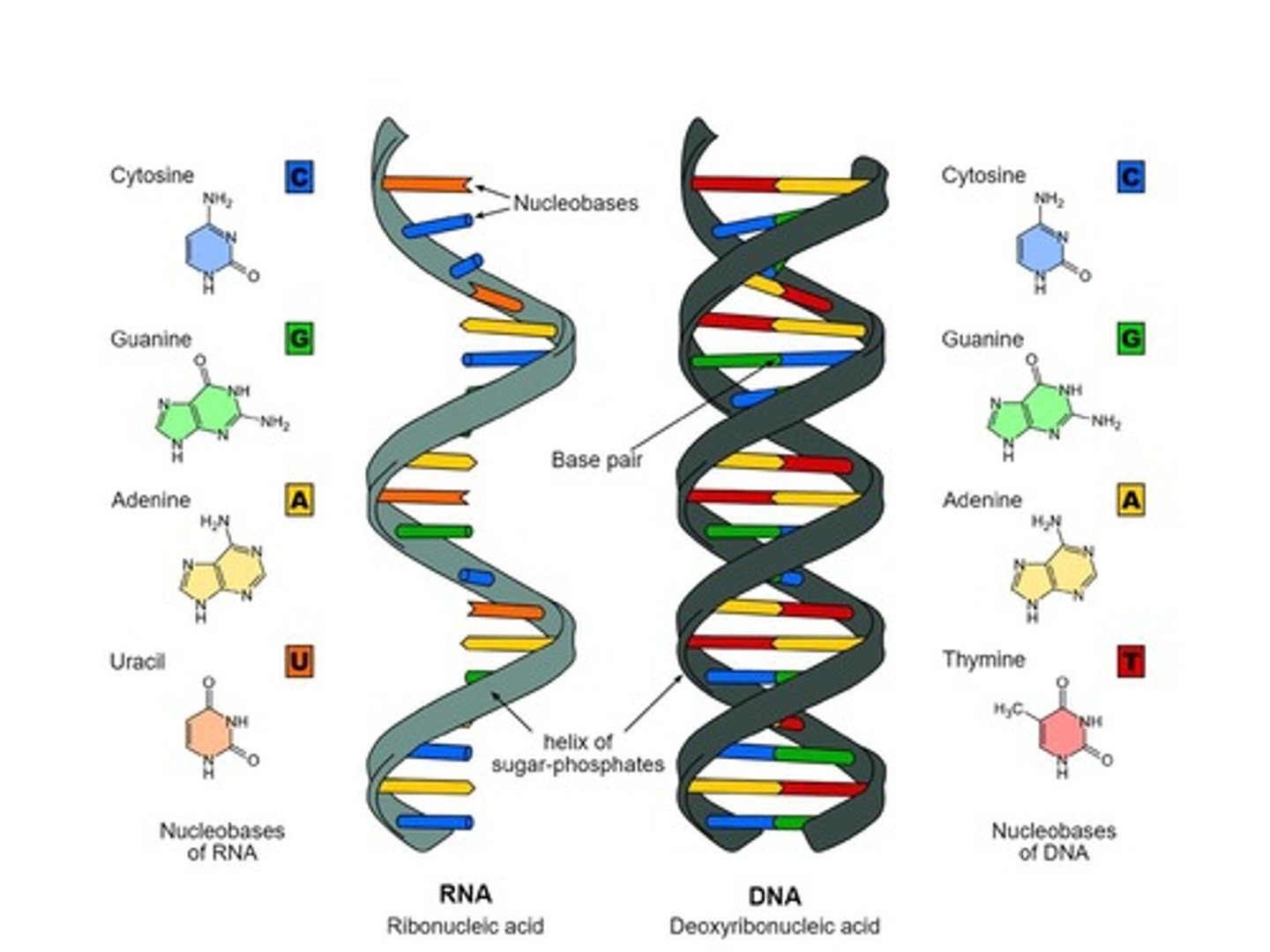
What comprises the backbone of DNA?
Sugar-phosphate groups.
What was Chargaff's rule?
In any species, the amount of adenine equals thymine (A=T) and the amount of cytosine equals guanine (C=G).
What are the scientific contributions of Watson and Crick?
They created the first 3D model of DNA, combining Franklin's helix shape and Chargaff's base pairing.
What happens to non-resistant bacteria when cultured with MRSA?
Non-resistant bacteria can acquire antibiotic resistance through gene transfer from MRSA.
What is the significance of hydrogen bonds in DNA replication?
Hydrogen bonds allow the DNA strands to be easily separated during the replication process.
What is the structure of purines?
Purines have a double ring structure.
What is the structure of pyrimidines?
Pyrimidines have a single ring structure.
What is the role of plasmids in bacterial survival?
Plasmids can contain genes that provide advantages in specific environments, aiding survival.