Vector Change Scene Timing
 Call Kai
 Learn
Learn Practice Test
 Spaced Repetition
 Match
Match Flashcards
 Knowt Play
1/16

Earn XP
Description and Tags
initial 12 minutes on scene
Name | Mastery | Learn | Test | Matching | Spaced | Call with Kai |
|---|
No analytics yet
Send a link to your students to track their progress
17 Terms
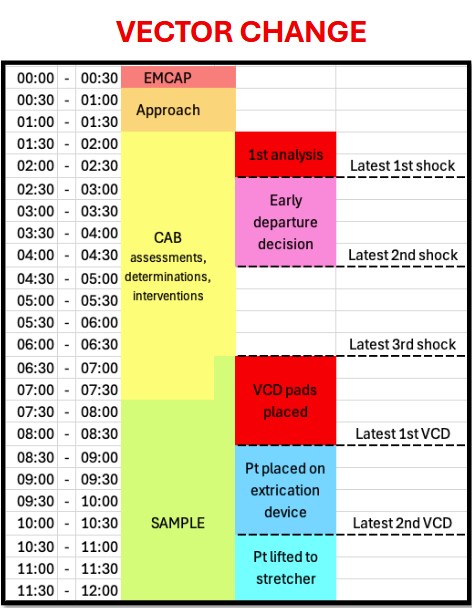
How long should be spent on the EMCAP?
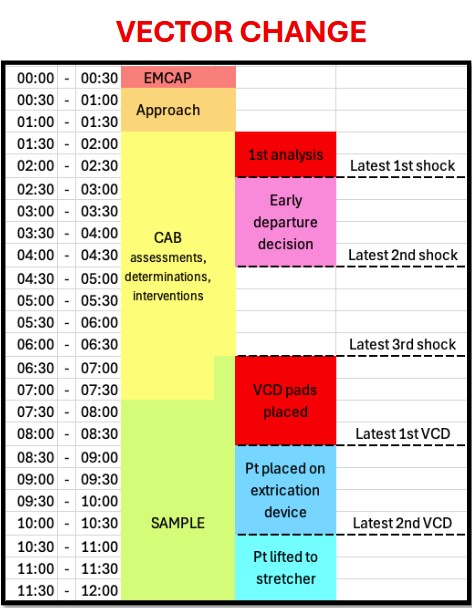
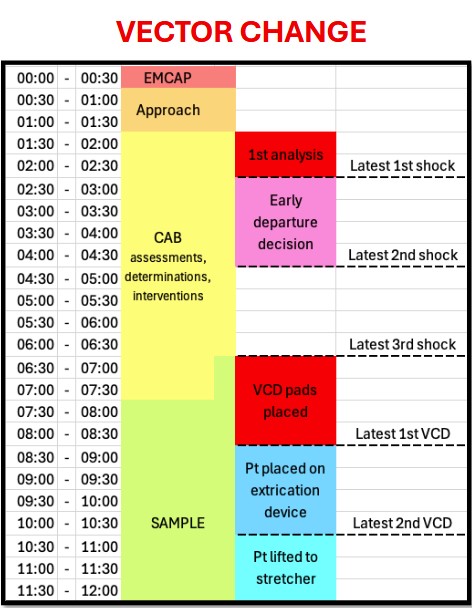
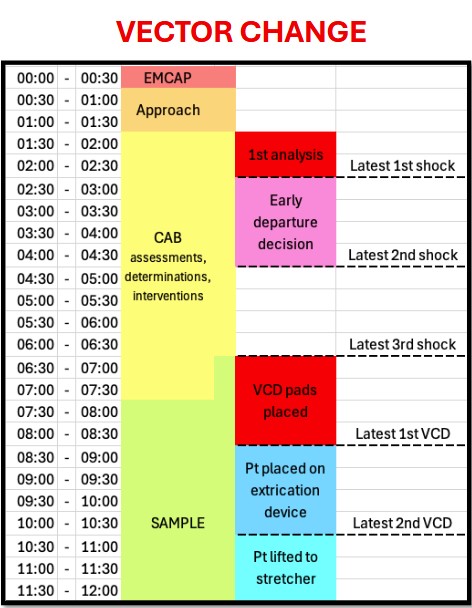
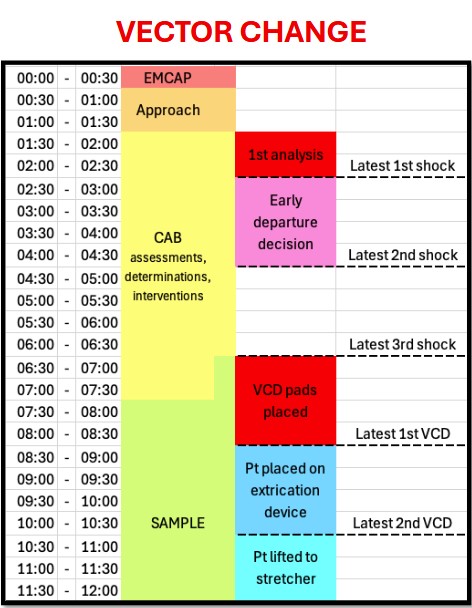
00:00-00:30 (30 seconds max.)
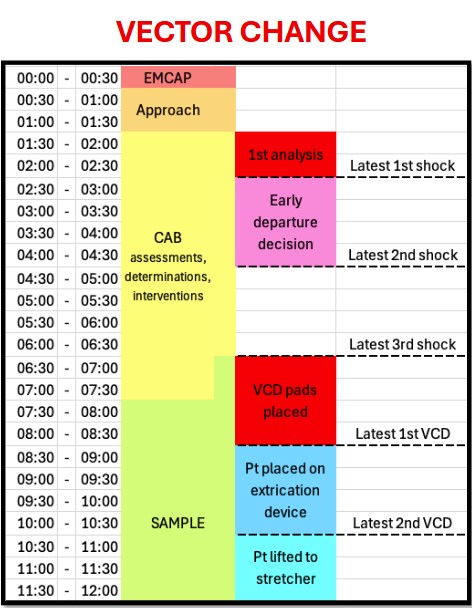
How long should be spent on the approach?
00:30-01:30 (1 minute max.)
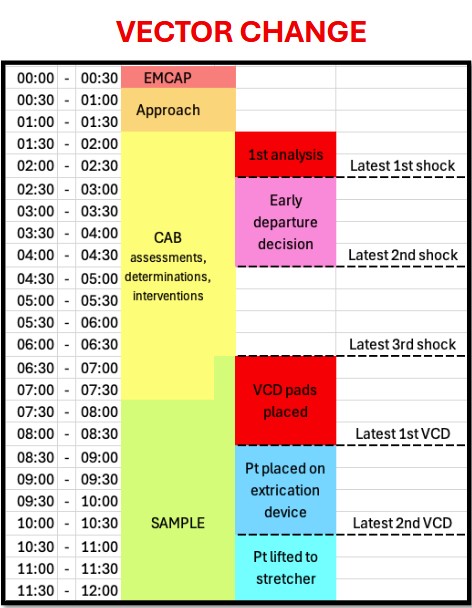
How long should be spent on CAB assessments, determinations, and interventions?
01:30-07:00 (5.5 minutes max.)
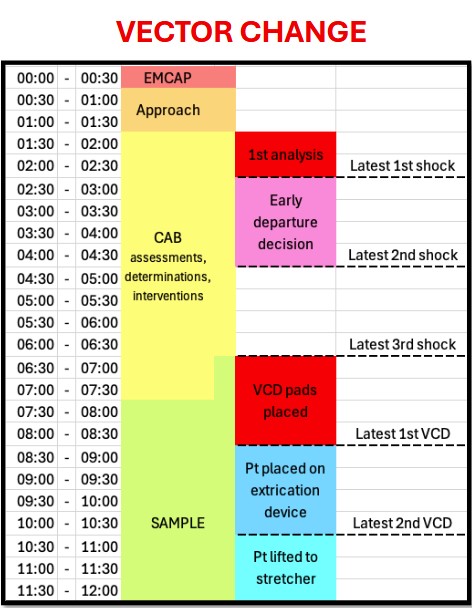
How long should be spent on SAMPLE?
07:00-12:00 (5 minutes max.)
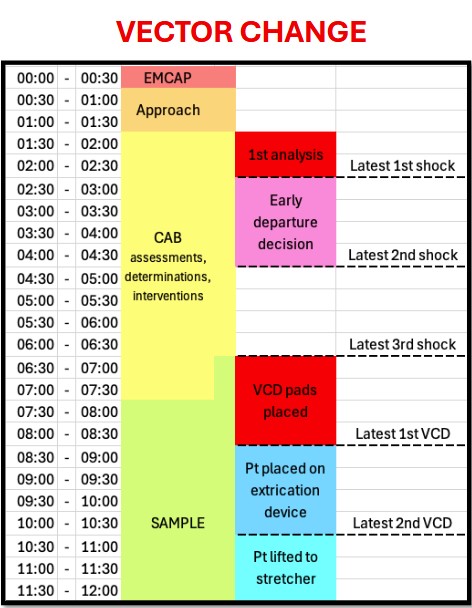
At what time is the 1st analysis completed?
between 01:30-02:00 (30 seconds max.)
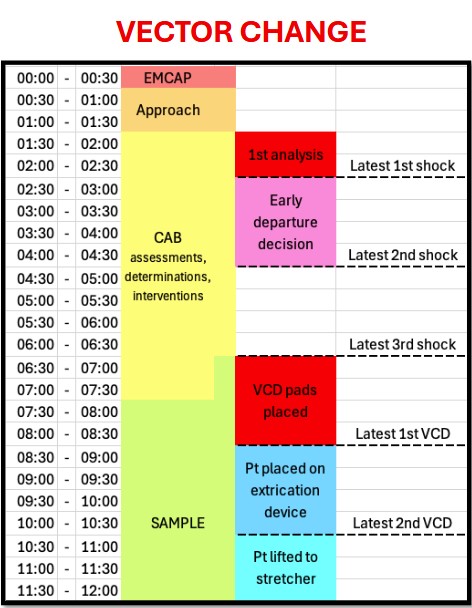
What is the latest (maximum) amount of time from on-scene to 1st shock?
02:30 (before 2 minutes, 30 seconds)
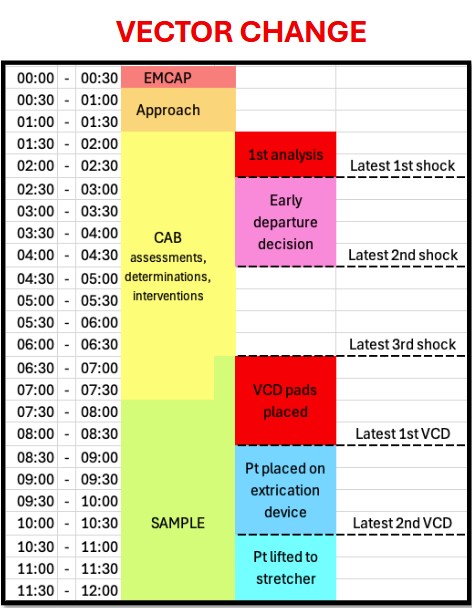
What is the time-frame for an early departure decision?
02:30-04:30 (2 minutes max.)
after the 1st analysis and the 1st shock
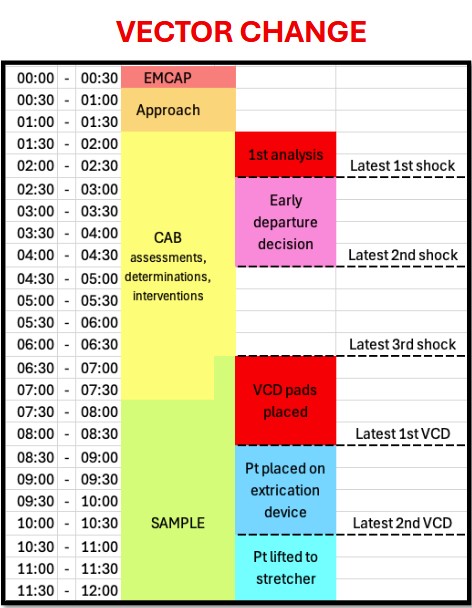
When is the latest timing for the 2nd shock?
04:30 (before 4 minutes, 30 seconds) → after the early departure decision is made
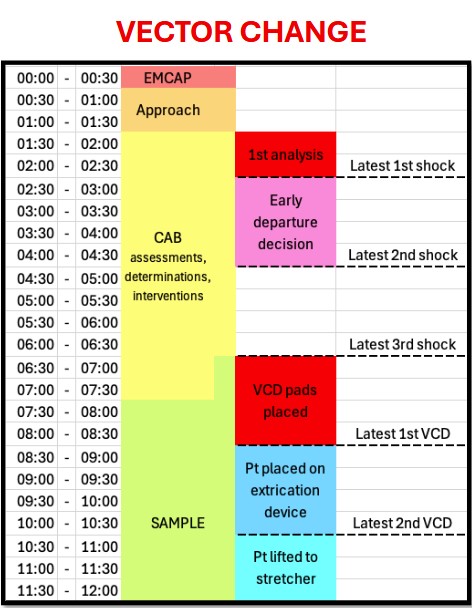
When is the latest timing for the 3rd shock?
06:30 (before 6 minutes, 30 seconds)
When should the VCD pads be placed?
06:30-08:30 (2 minutes max.)
What is the latest timing for the 1st VCD?
08:30 (before 8 minutes, 30 seconds)
When should the patient be placed on an extrication device?
08:30-10:30 (2 minutes max.)
What is the latest timing for the 2nd VCD?
10:30 (before 10 minutes, 30 seconds)
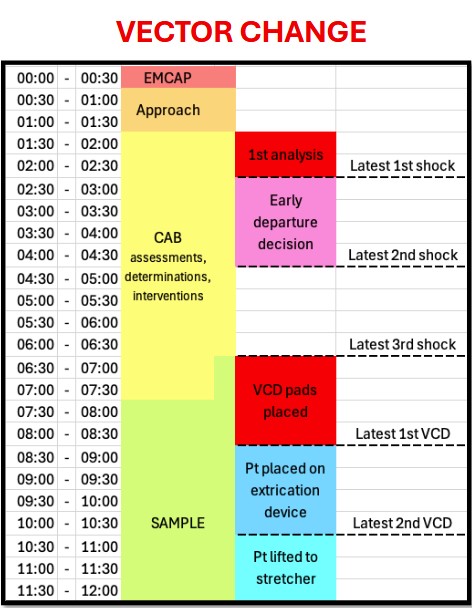
When should the patient be lifted to a stretcher?
10:30-12:00 (1.5 minutes max.)
What is vector change defibrillation?
changing the electrode pad positions from the standard antero-lateral (AL) to the anterior-posterior (AP) position
When is vector change defibrillation used?
when at least three consecutive, high-energy shocks using standard antero-lateral (AL) placement have failed to convert the rhythm
How does vector change defibrillation work?
the electrical pathway is changed to maximize the current passing through the heart (potentially accessing tissues not reached by the initial vector)