Ground 1 Exam N2K
 Call Kai
 Learn
Learn Practice Test
 Spaced Repetition
 Match
Match Flashcards
 Knowt Play
1/46

There's no tags or description
Looks like no tags are added yet.
Name | Mastery | Learn | Test | Matching | Spaced | Call with Kai | Chat |
|---|
No analytics yet
Send a link to your students to track their progress
47 Terms
1.21 What is ground effect?
A. The result of the interference of the surface of the Earth with the airflow patterns of the airplane.
1.26 What force makes an airplane turn?
A. The horizontal component of lift
1.27 What determines the longitudinal stability of an airplane?
A. The location of the CG with respect to the center of lift.
1.31 What causes an airplane (except a T-tail) to pitch nosedown when power is reduced and controls are not adjusted?
B. The downwash on the elevators from the propeller slipstream is reduced and elevator effectiveness is reduced.
1.32 What is the effect of advancing the throttle in flight?
A. Both aircraft groundspeed and angle of attack will increase
1.35 In what flight condition are torque effects more pronounced in a single-engine airplane?
A. Low airspeed, high power, high angle of attack
1.36 The left turning tendency of an airplane caused by P-factor is the result of the
B. propeller blade descending on the right, producing more thrust than the ascending blade on the left.
1.37 When does P-factor cause the airplane to yaw to the left?
B. When at high angles of attack
1.42 Which basic flight maneuver increases the load factor on an airplane as compared to straight-and-level flight
B. Turns
! 1.43 The amount of excess load that can be imposed on the wing of an airplane depends upon the
B. speed of the airplane
! 1.44 During an approach to a stall, an increased load factor will cause the aircraft to
A. stall at a higher airspeed
! 1.45 Structural damage or failure is more likely to occur in smooth air at speeds above
C. V NE
1.46 Limit load factor is the ratio of
C. maximum sustainable load to the gross weight of the airplane
! 2.5 In the Northern Hemisphere, if an aircraft is accelerated or decelerated, the magnetic compass will normally indicate
B. correctly when on a north or south heading
! 2.6 In the Northern Hemisphere, a magnetic compass will normally indicate initially a turn toward the west if
B. a right turn is entered from a north heading
! 2.8 What should the indication on the magnetic compass as the pilot rolls into a standard rate turn to the right from a south heading in the Northern Hemisphere?
B. The compass will indicate a turn to the right, but at a faster rate than is actually occuring.
2.14 What is an important airspeed limitation that is not color coded on airspeed indicators?
C. Maneuvering speed.
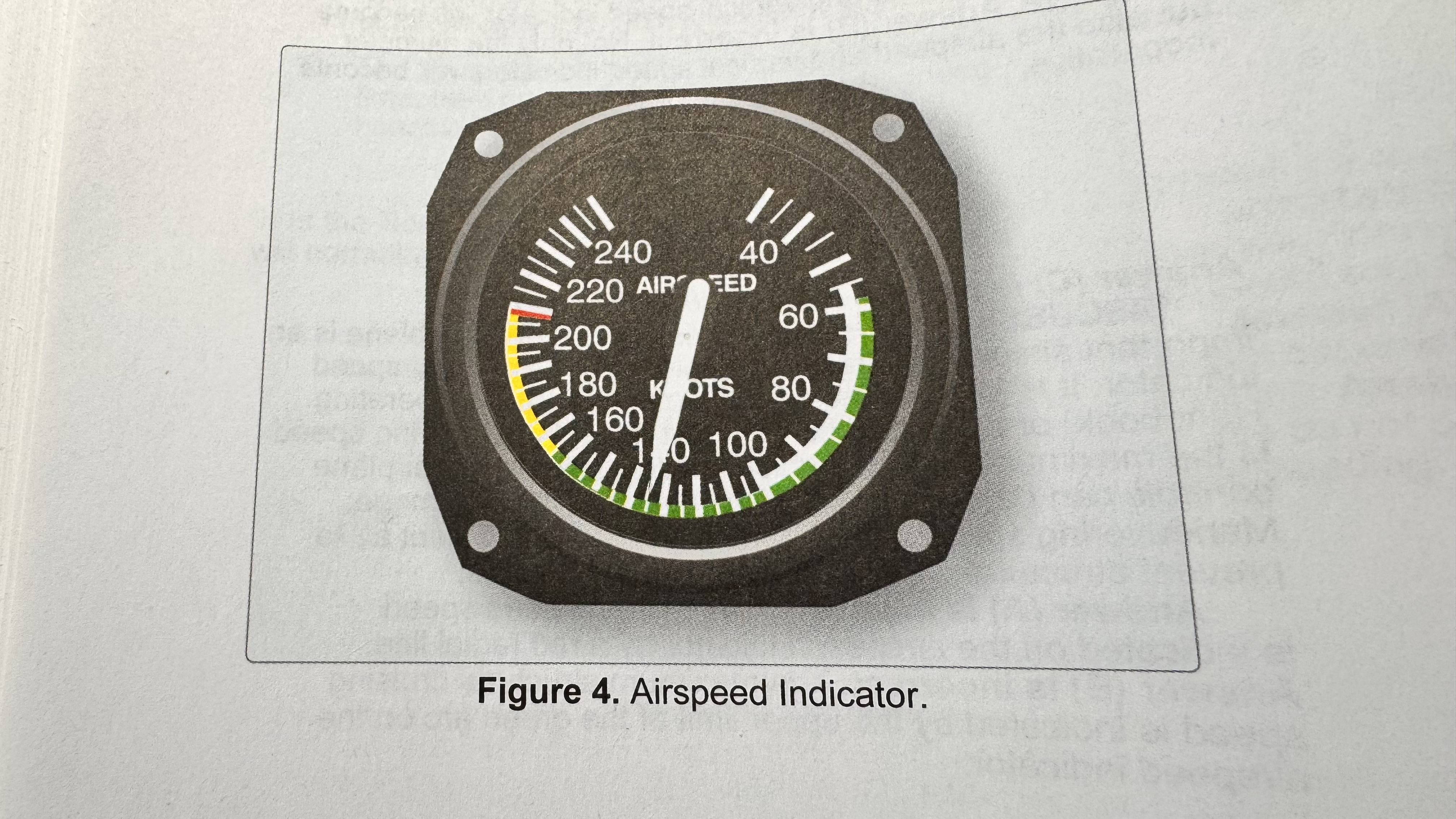
! 2.17 The maximum speed at which the airplane can be operated in smooth air is
C. 208 kts
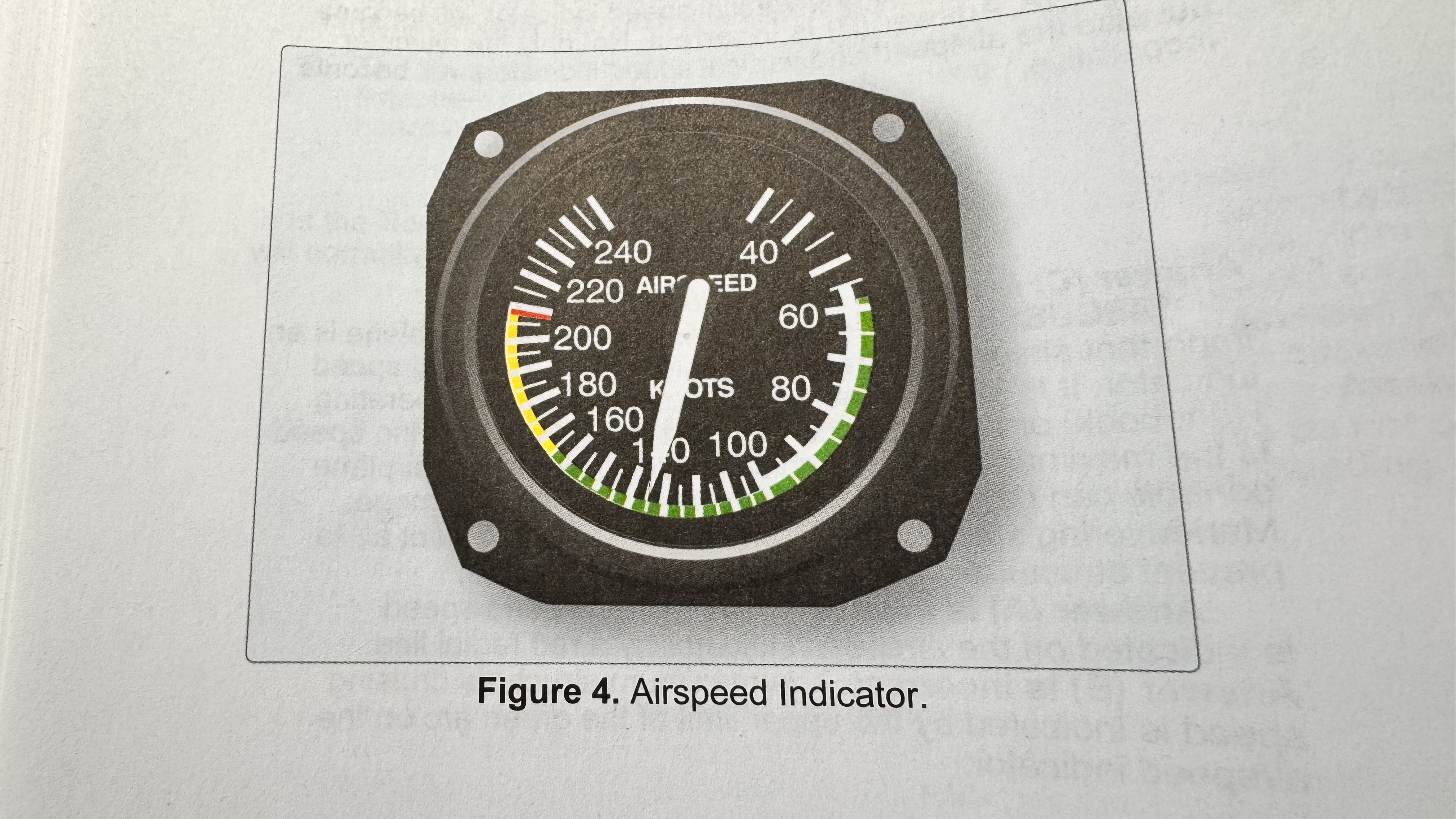
2.24 What is the maximum structural cruising speed?
B. 165 kts.
2.36 What is pressure altitude?
B. The altitude indicated when the barometric pressure scale is set to 29.92
2.40 Under which condition will pressure altitude be equal to true altitude?
B. When standard atmospheric conditions exist.
! 2.45 Which condition would cause the altimeter to indicate a lower altitude than true altitude?
C. Air temperature warmer than standard
2.46 Under what condition will true altitude be lower than indicated altitude?
A. In colder than standard air temperature.
2.47 How do variations in temperature affect the altimeter?
A. Pressure levels are raised on warm days and the indicated altitude is lower than true altitude.
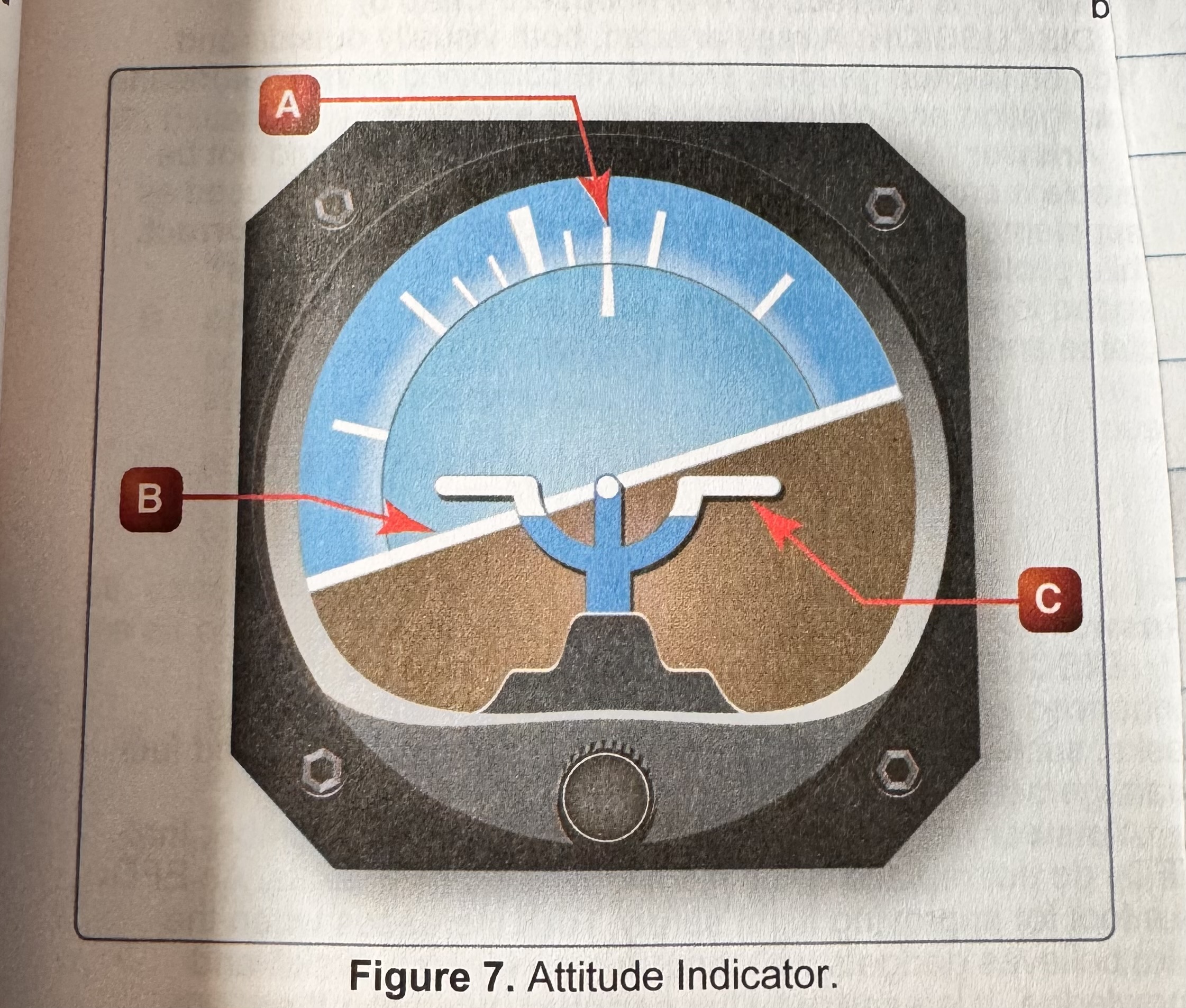
2.51 How should a pilot determine the direction of bank from an attitude indicator such as the one illustrated?
C. By the relationship of the miniature airplane (C) to the deflected horizon bar (B).
2.55 A pilot is flying an aircraft equipped with an electronic flight display and the air data computer fails. What instrument is affected?
B. Airspeed indicator
! 2.61 What action can a pilot take to aid in cooling an engine that is overheating during a climb?
A. Reduce rate of climb and increase airspeed.
2.63 How is engine operation controlled on an engine equipped with a constant-speed propeller?
A. The throttle controls power output as registered on the manifold pressure gauge and the propeller control regulates engine RPM.
2.65 What is an advantage of a constant-speed propeller?
B. Permits the pilot to select the blade angle for the most efficient performance.
! 2.74 The operating principle of float-type carburetors is based on the
B. difference in air pressure at the venturi throat and the air inlet
! 2.77 Carburetor icing can occur during any phase of flight but is particularly dangerous during which phase of flight?
C. Using reduced power such as during descent.
! 2.78 Applying carburetor heat will
B. enrich the fuel/air mixture
! 2.80 During the run-up at a high-elevation airport, a pilot notes a s light engine roughness that is not affected by the magneto check but grows worse during the carburetor heat check. Under these circumstances, what would be the most logical initial action?
A. Check the results obtained with a leaner setting of mixture.
! 2.81 The basic purpose of adjusting the fuel/air mixture at altitude is to
B. decrease the fuel flow in order to compensate for decreased air density.
! 2.86 If a pilot suspects that the engine (with a fixed-pitch propeller) is detonating during climb-out after takeoff, the initial corrective action to take would be to
B. lower the nose slightly to increase airspeed.
2.92 On aircraft equipped with fuel pumps, when is the auxiliary electric driven pump used?
B. In the event engine-driven fuel pump fails.
! 2.95 During preflight in cold weather, crankcase breather lines should receive special attention because they are susceptible to being clogged by
C. ice from crankcase vapors that have condensed and subsequently frozen.
2.98 To keep a battery charged, the alternator voltage output should be
C. higher than the battery voltage.
! 3.9 What is the purpose of the runway/runway hold position sign?
C. Denotes intersecting runways.
! 3.10 The yellow demarcation bar marking indicates
A. runway with a displaced threshold that precedes the runway.
3.50 Wingtip vortices are created only when an aircraft is
C. developing lift
3.54 The wind condition that requires maximum caution when avoiding wake turbulence on landing is a
B. light, quartering tailwind.
3.61 During a night flight, a pilot observes a steady red light and a flashing red light ahead and at the same altitude. What is the general direction of movement of the other aircraft?
A. The other aircraft is crossing to the left.
3.80 After landing at a tower-controlled airport, when should the pilot contact ground control?
A. When advised by the tower to do so.
3.83 Absence of the sky condition and visibility on an ATIS broadcast indicates that
C. The ceiling is at least 5000 feet and visibility is 5 miles or more.
3.168 What is the minimum visibility for a pilot to receive a land and hold short (LAHSO) clearance?
B. 3 statute miles
5.4 What effect does high density altitude, as compared to low density altitude, have on propeller efficiency and why?
B. Efficiency is reduced because the propeller exerts less force at high density altitudes than at low density altitudes.