mechanics of human movement exam 4
 Call Kai
 Learn
Learn Practice Test
 Spaced Repetition
 Match
Match Flashcards
 Knowt Play
1/91

There's no tags or description
Looks like no tags are added yet.
Name | Mastery | Learn | Test | Matching | Spaced | Call with Kai |
|---|
No analytics yet
Send a link to your students to track their progress
92 Terms
contact forces
forces resulting from physical contact between objects
ex: ground reaction force, friction, fluid resistance, buoyant force
non-contact forces
forces that do NOT result from direct physical contact
ex: gravity (weight), electromagnetism
external force
forces outside the system of interest
internal force
force applied within the tissues of the body (also called "loads")
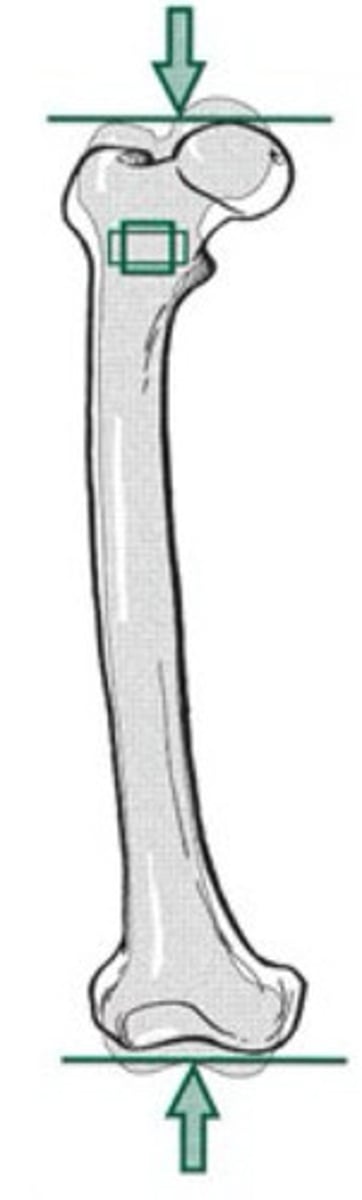
compression
pressing or squeezing force directed normal to a surface (normal = perpendicular to the longitudinal axis); causes widening and/or shortening
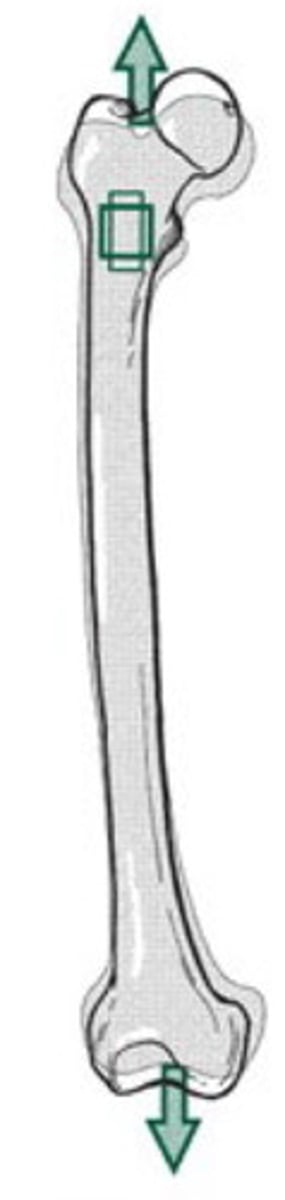
tension
pulling or stretching force directed normal to a surface (normal = perpendicular to the longitudinal axis); causes lengthening and/or narrowing
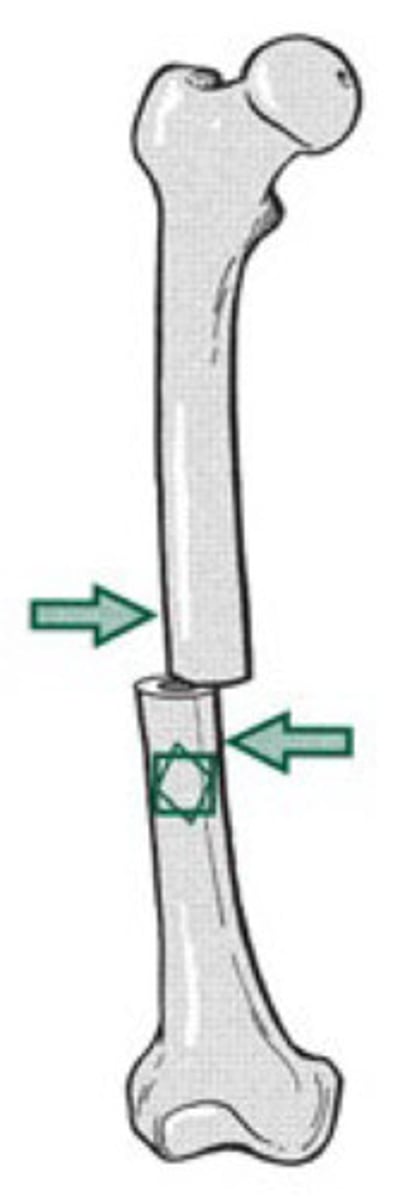
shear
sliding or tearing force directed parallel to the surface; internal deformation in angular direction
deformation
change in shape; result of stress
stress
distribution of a force on the body; the force divided by the area over which the force acts
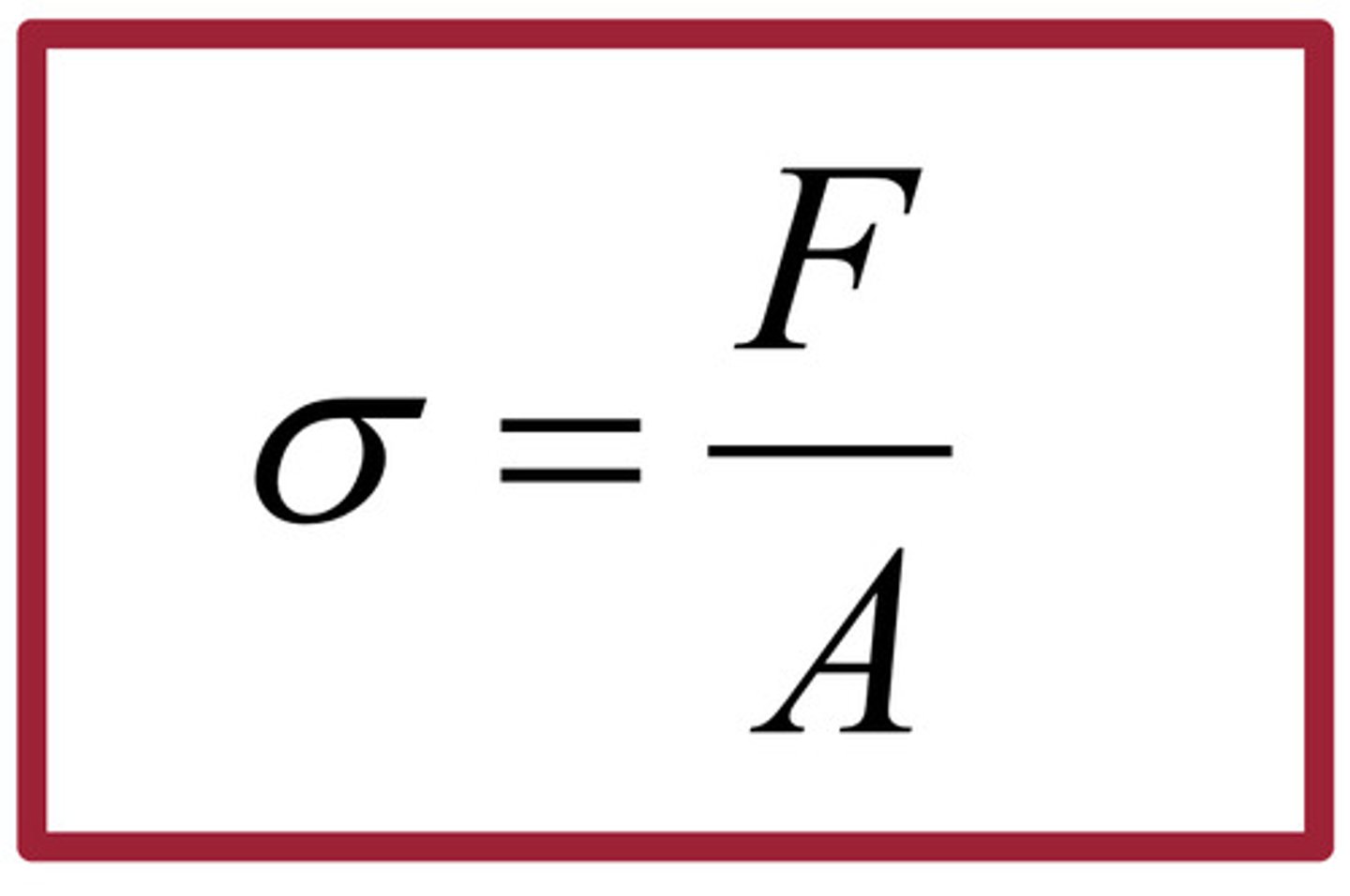
Pa (Pascal = 1 N/m^2)
unit for stress
pressure
stress due to a compressive force
unequal
equal tensile forces may result in ______________ (equal/unequal) displacements.
unequal
equal displacements may result in from _____________ (equal/unequal) forces.
complex loading
bending, torsion, and combination
bending
asymmetric loading that produces tension on one side of a body's longitudinal axis and compression on the other
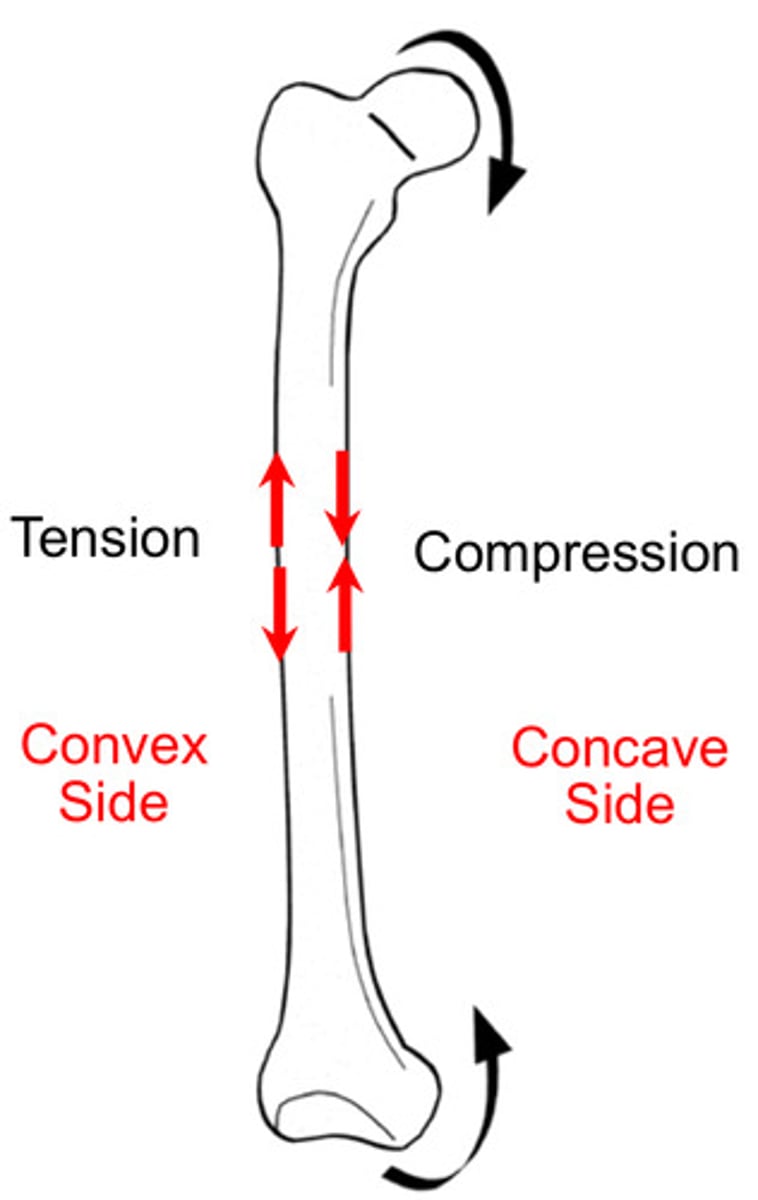
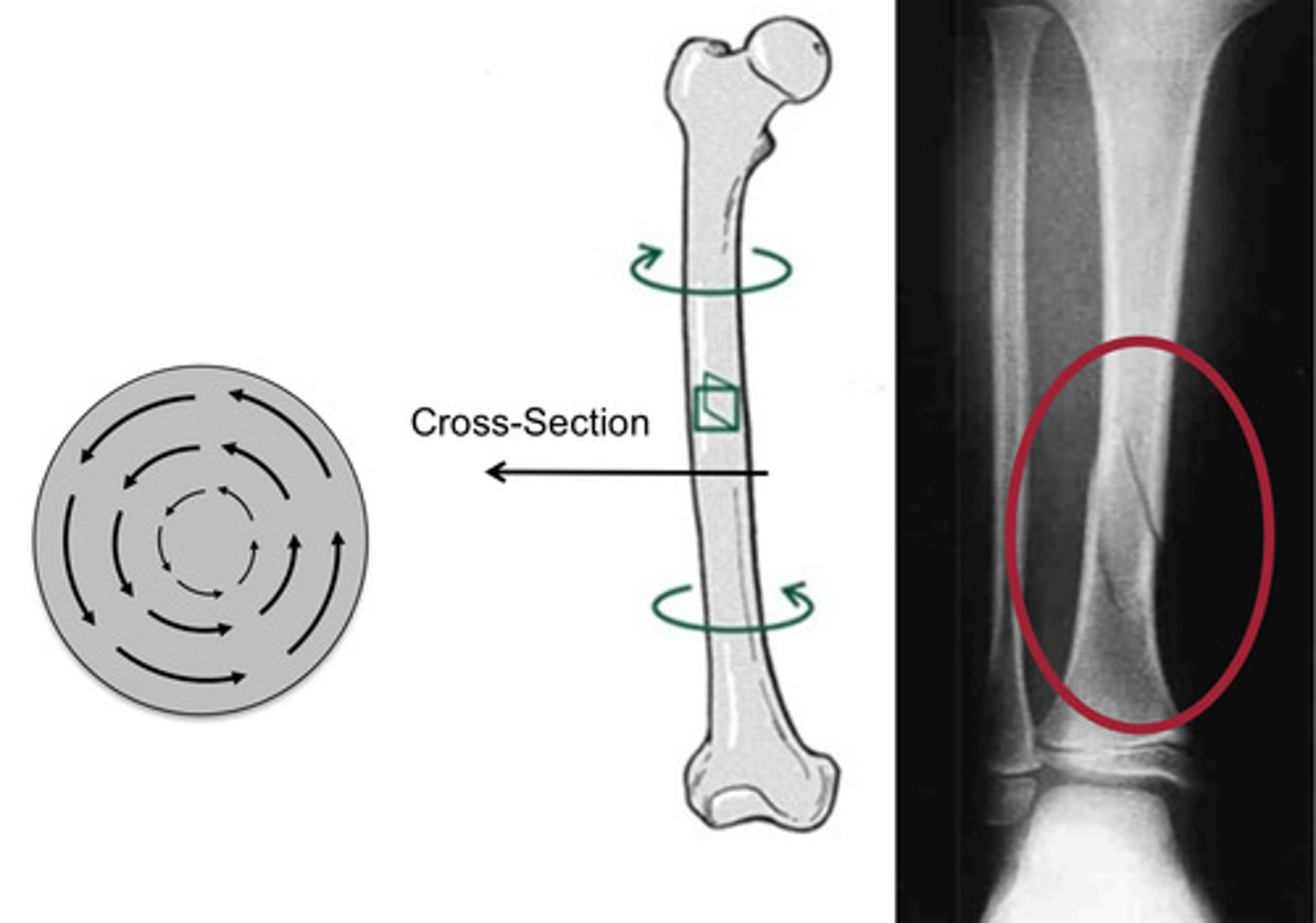
torsion
loading producing twisting of a body around the longitudinal axis; internal shear stress with maximal stress at the surface; beyond physiological limits - can lead to spiral fractures
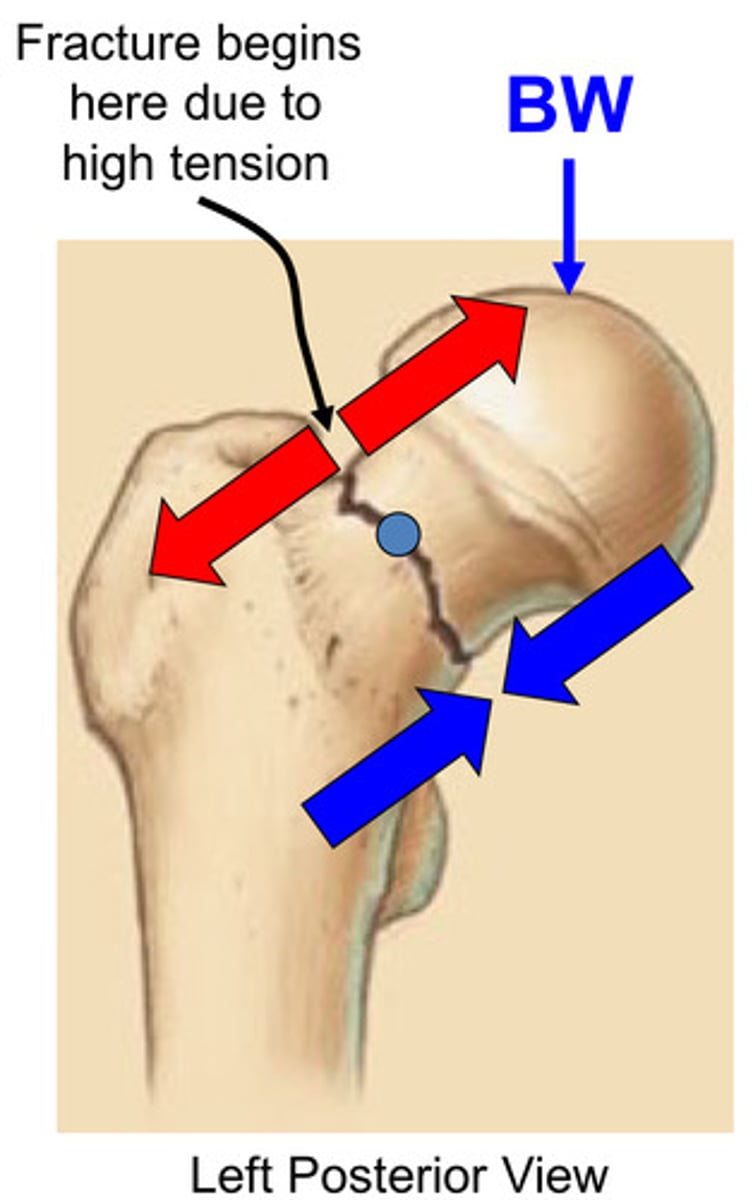
femoral neck fractures
result of bending loads in the body: common in the elderly due to decreased bone mineral density
common injury mechanism: unexpected load (e.g., stepping off a curb)
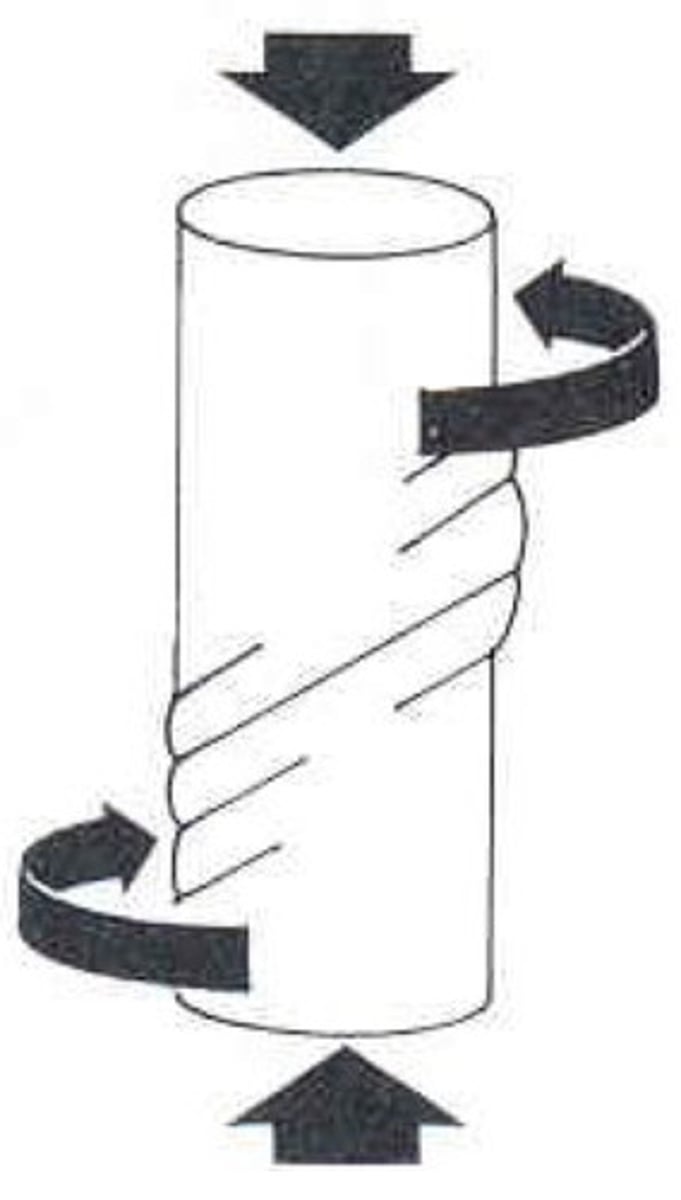
combination (complex loading)
one bone may experience: weight-bearing (compression/bending), twisting (torsion), and/or muscle action (tension)
fairly common, during walking both the femur and tibia experience complex loading
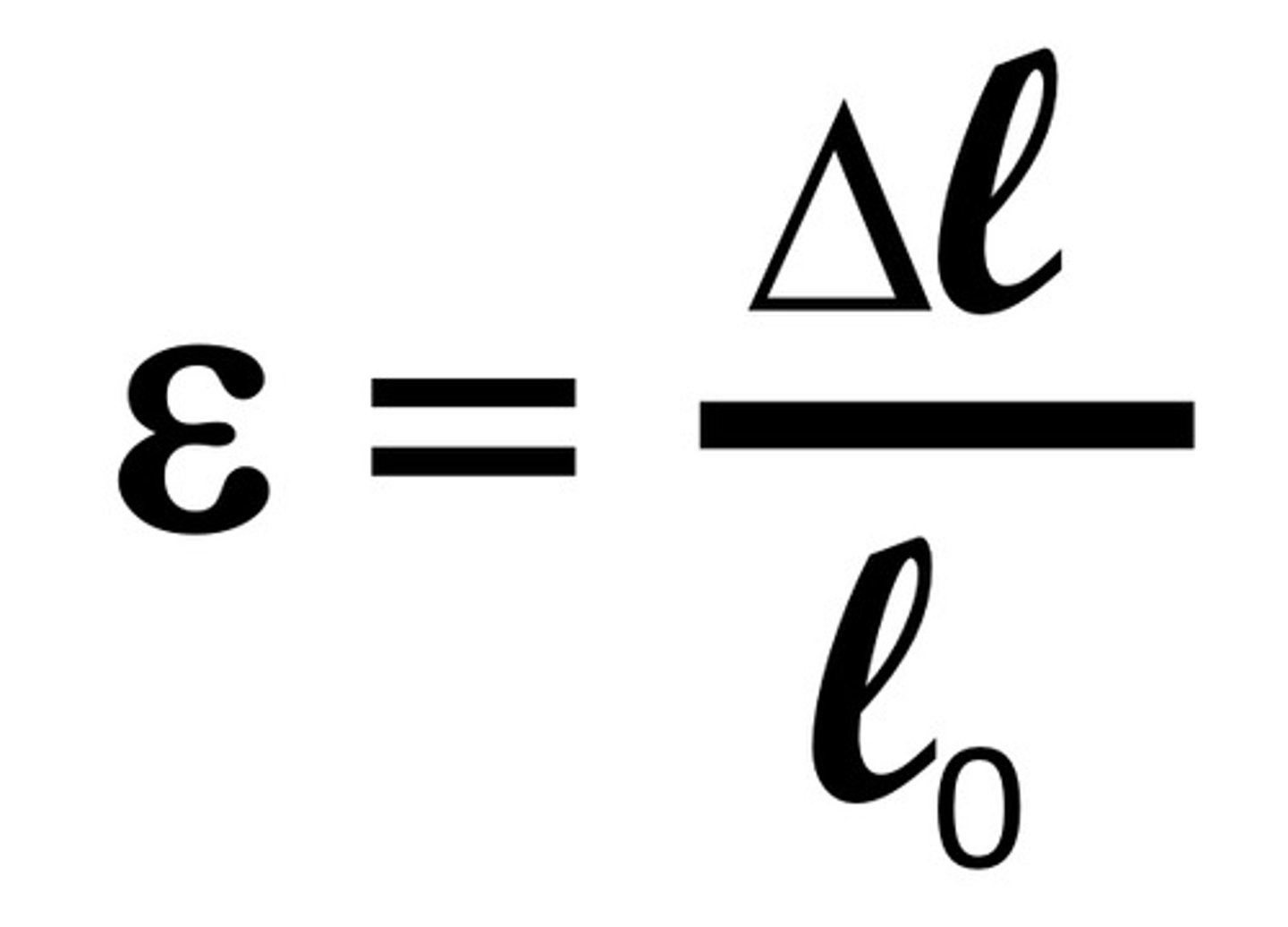
strain
the deformation a tissue undergoes scaled to its original length; a measure of deformation (ε)
ε = change in length (final - initial) / original length (initial)
UNITLESS
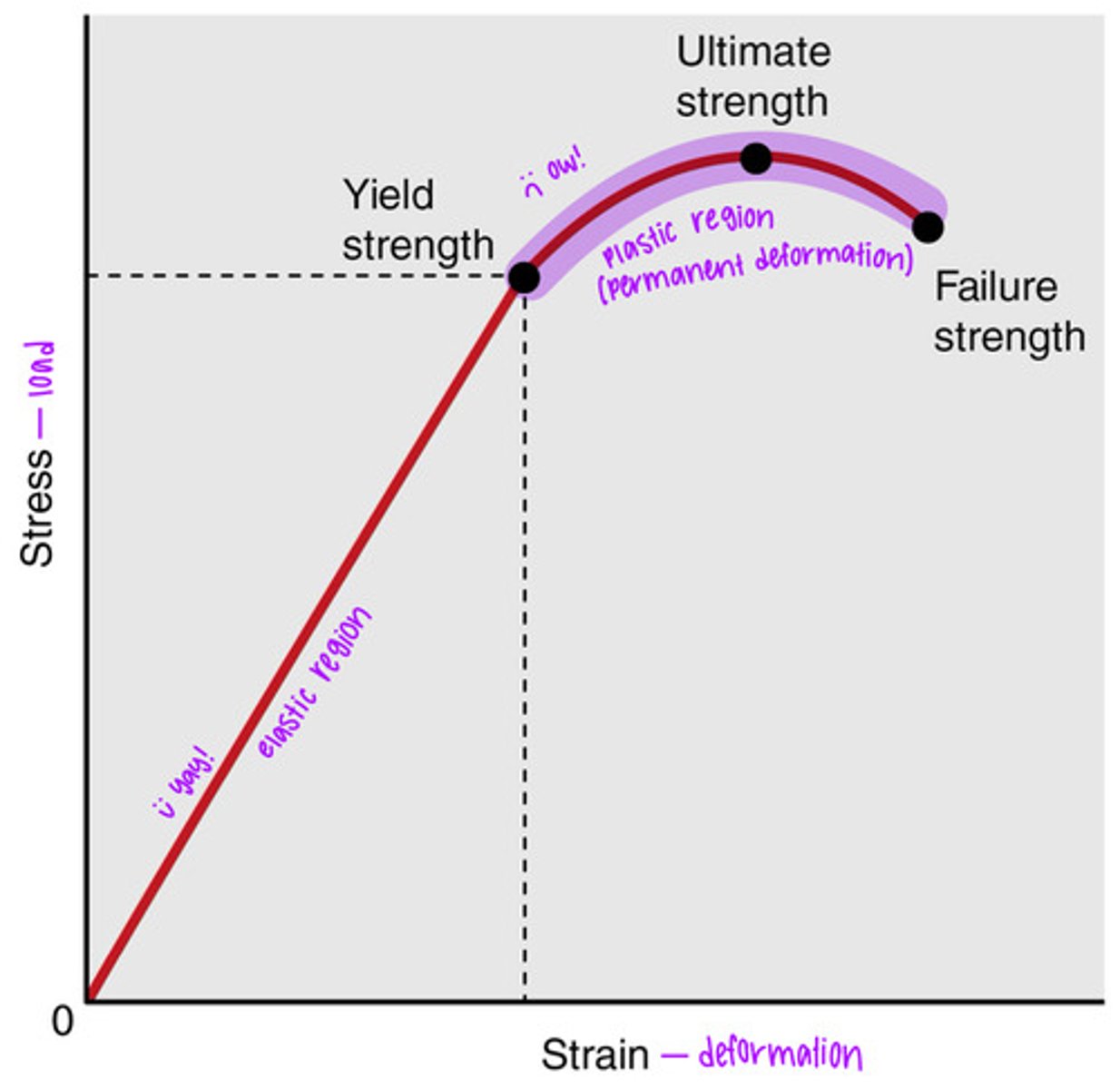
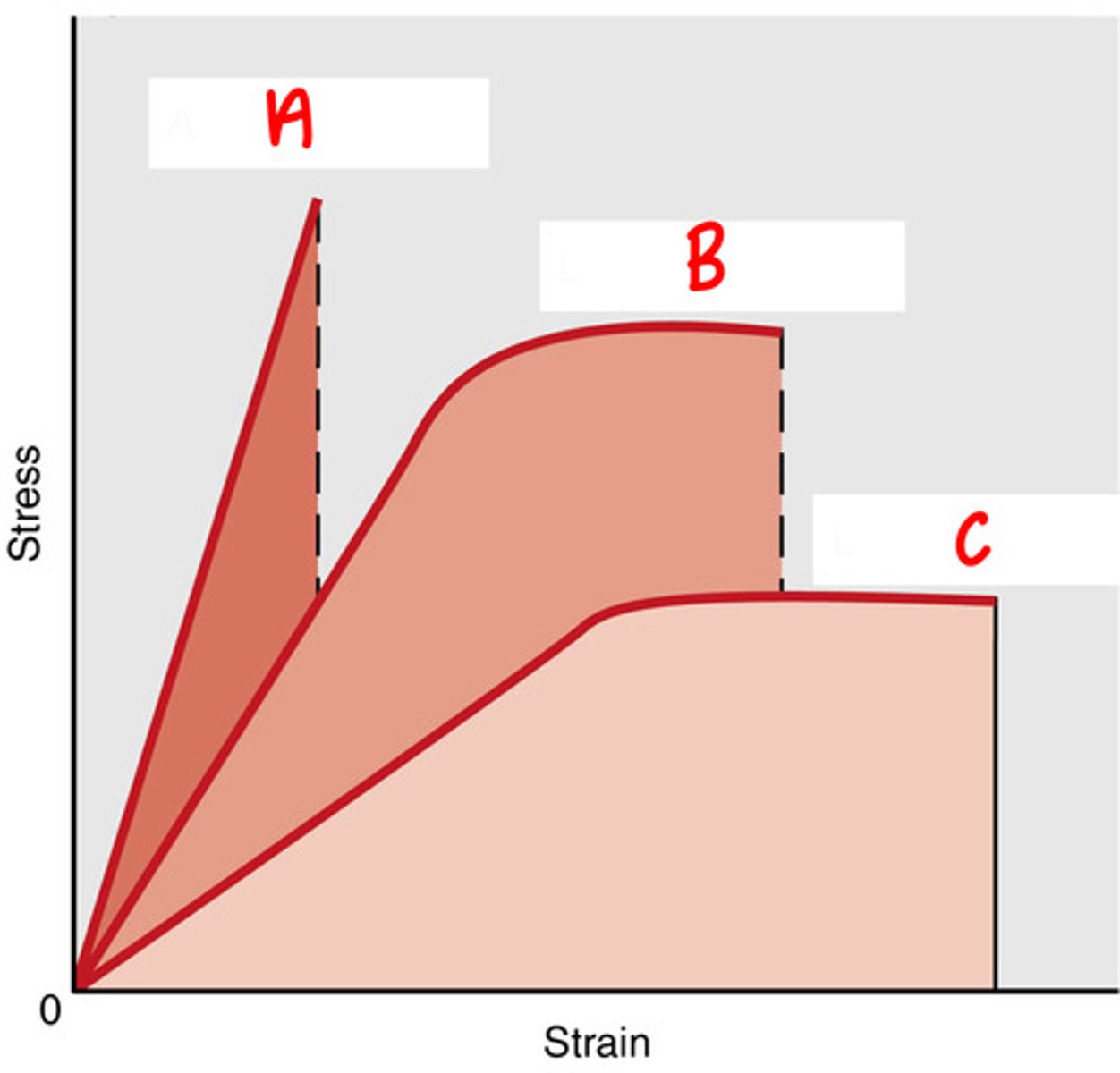
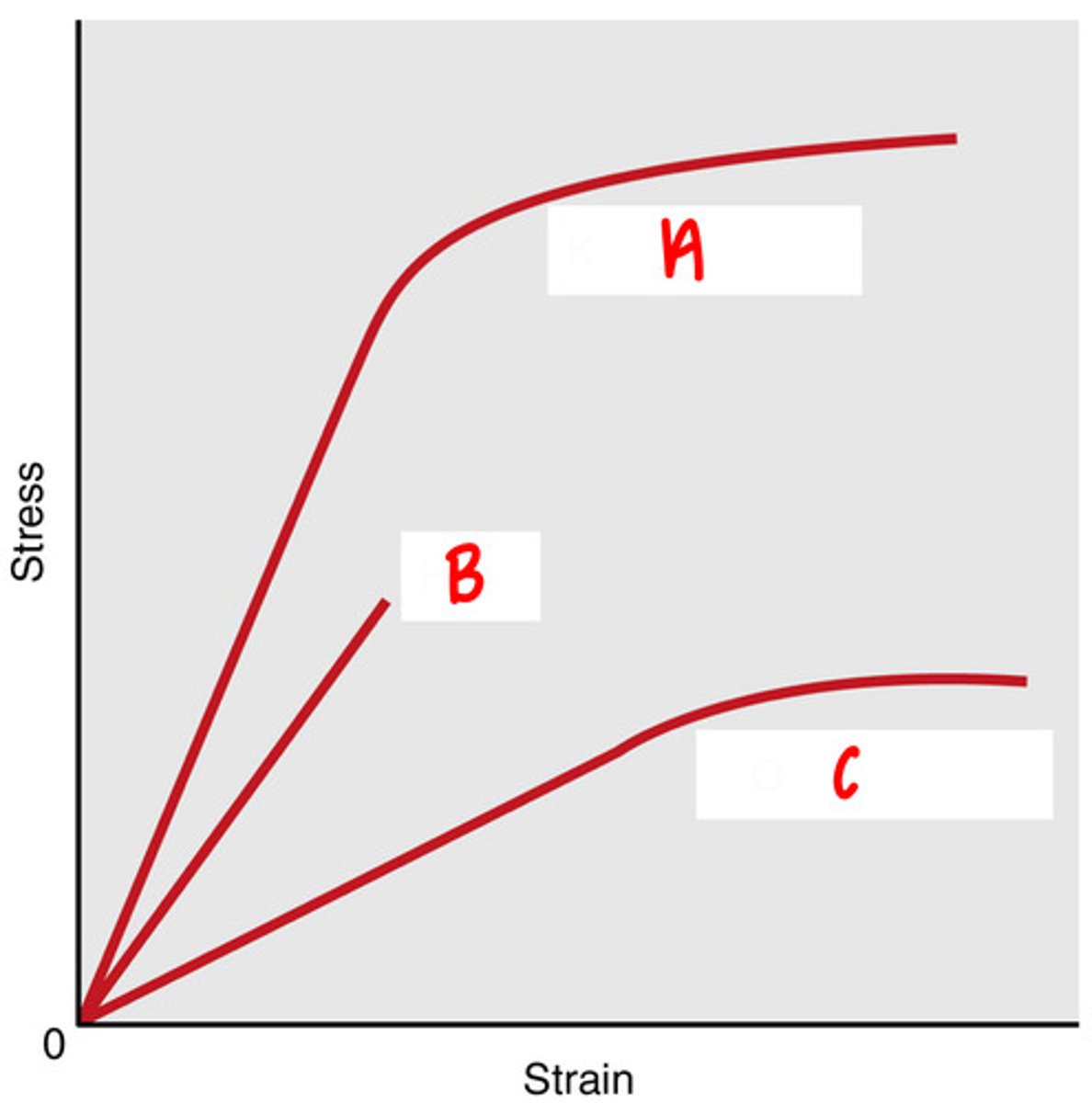
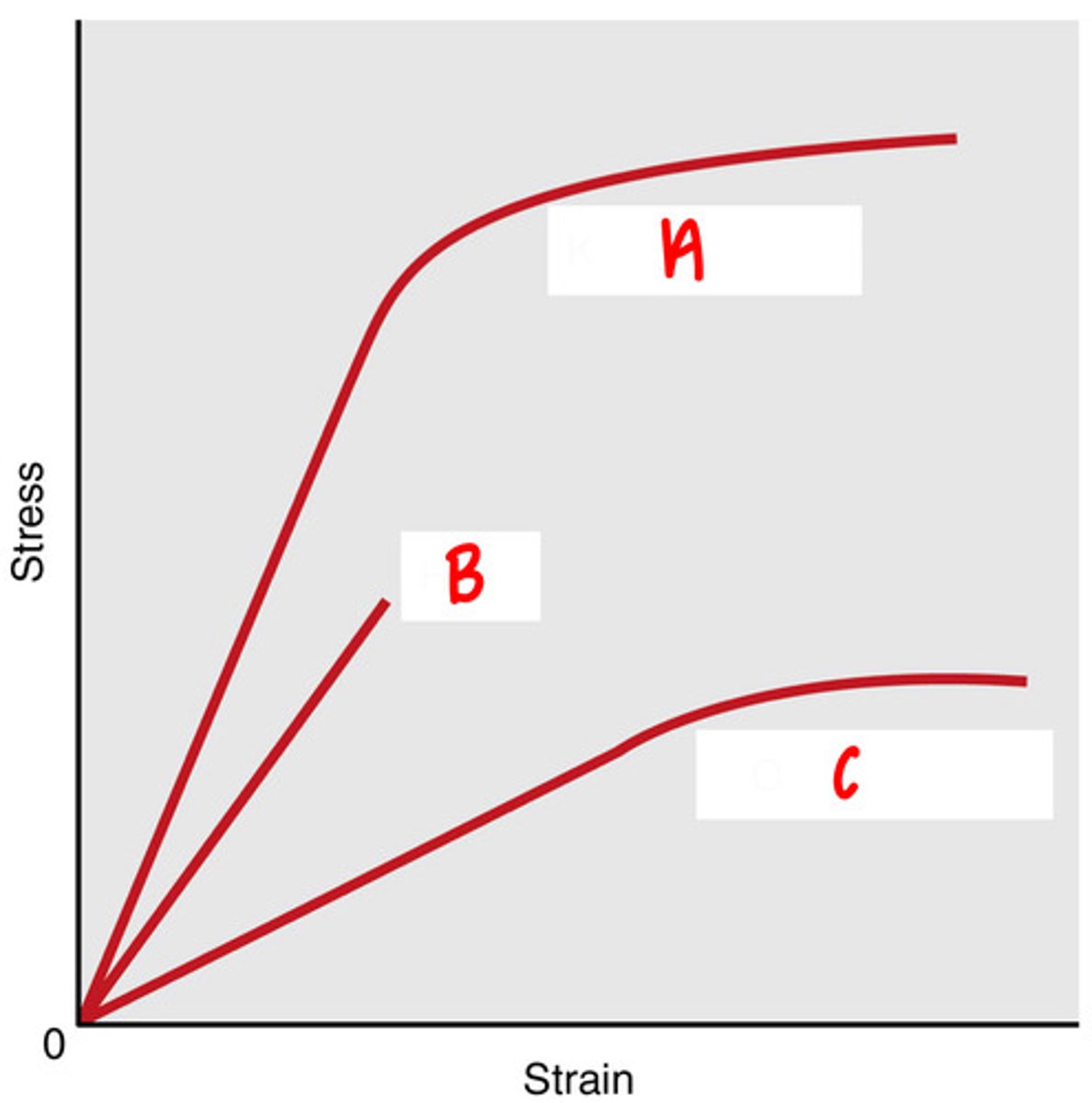
stress-strain curve
yield point = the most elastic point before injury
ultimate strength = highest stress point
failure strength = rupture/fracture
hard and brittle
what is letter A?
- ductile and soft
- hard and brittle
- ductile and tough
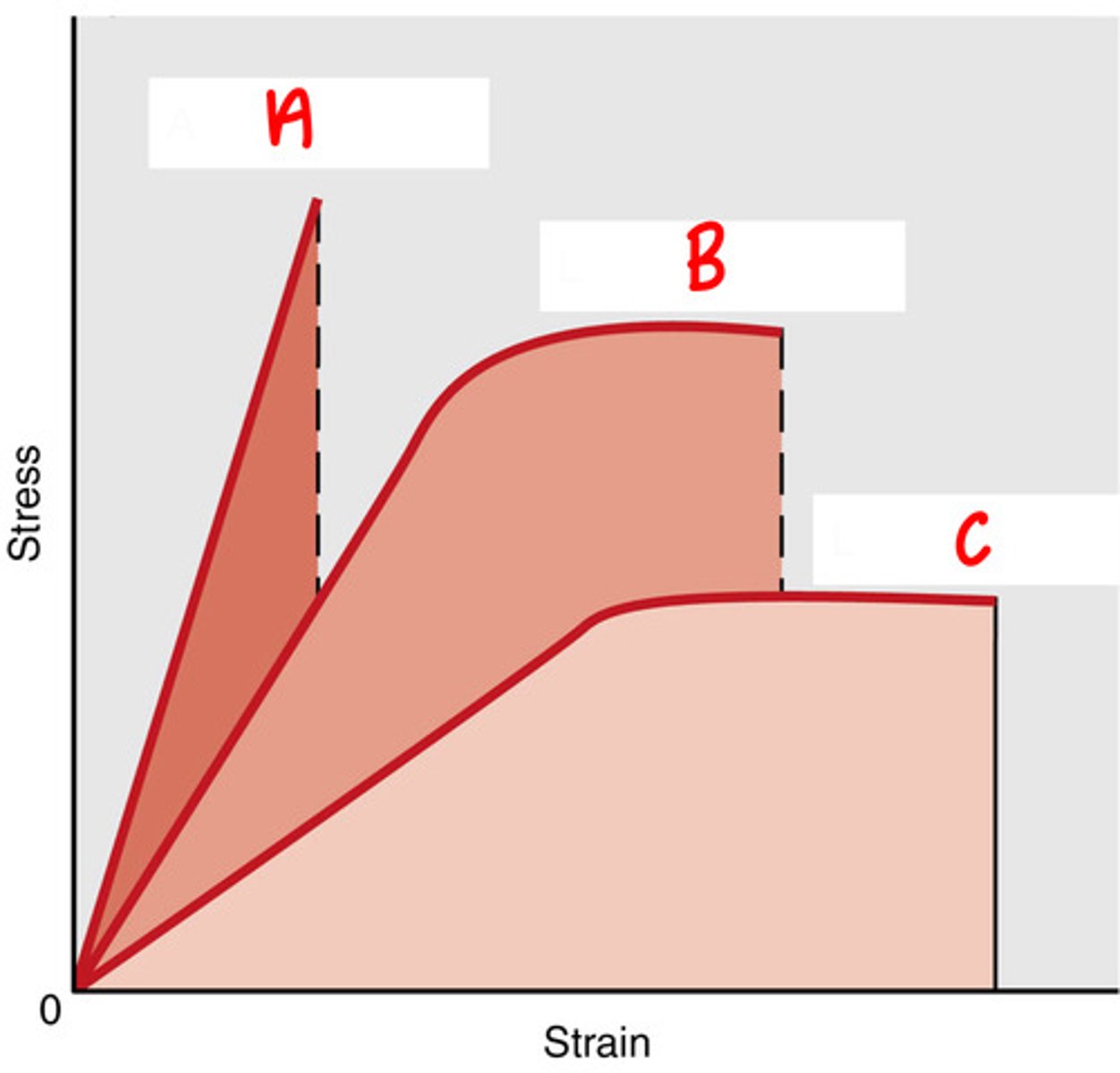
ductile and tough
what is letter B?
- ductile and soft
- hard and brittle
- ductile and tough
ductile and soft
what is letter C?
- ductile and soft
- hard and brittle
- ductile and tough
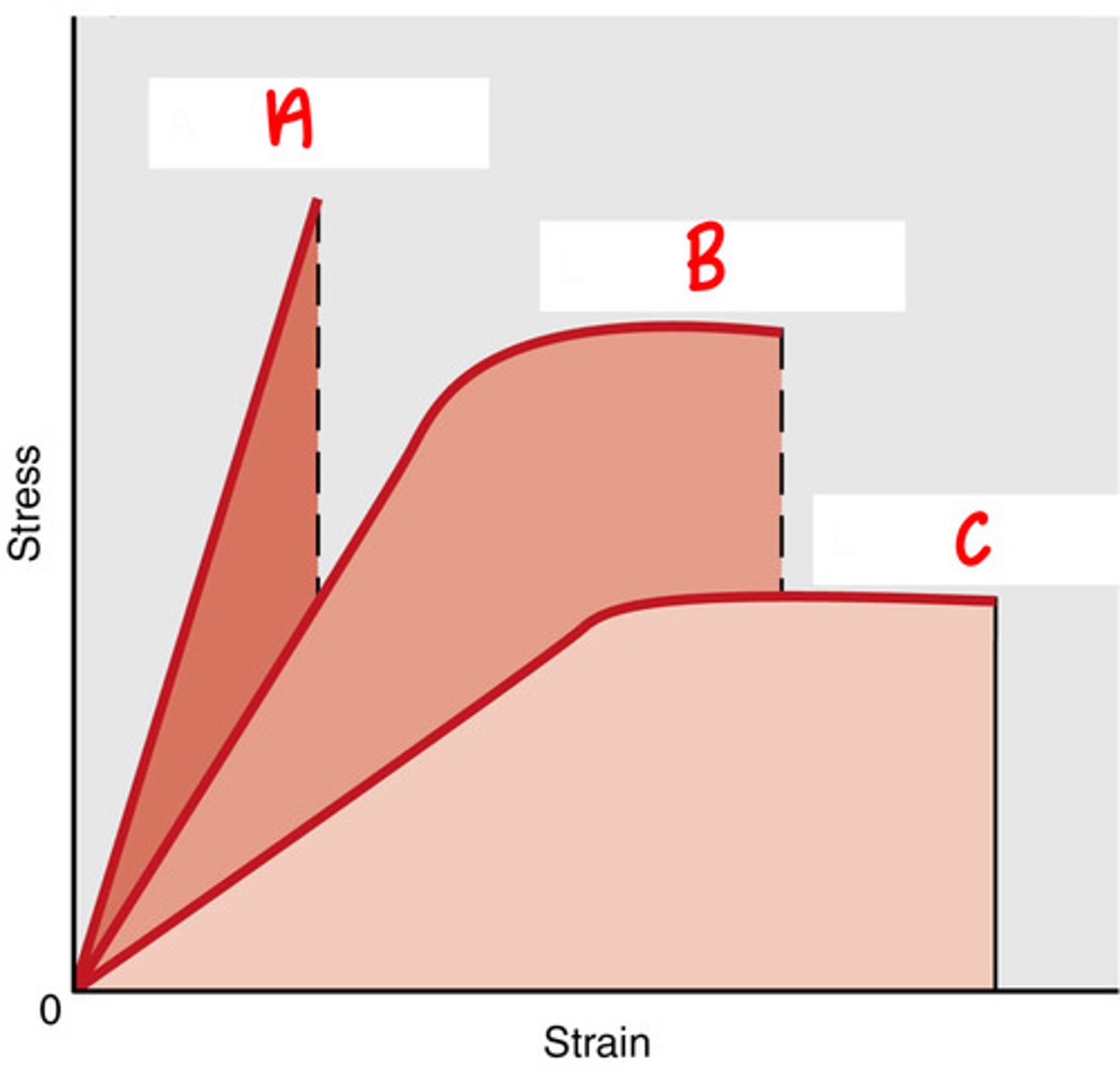
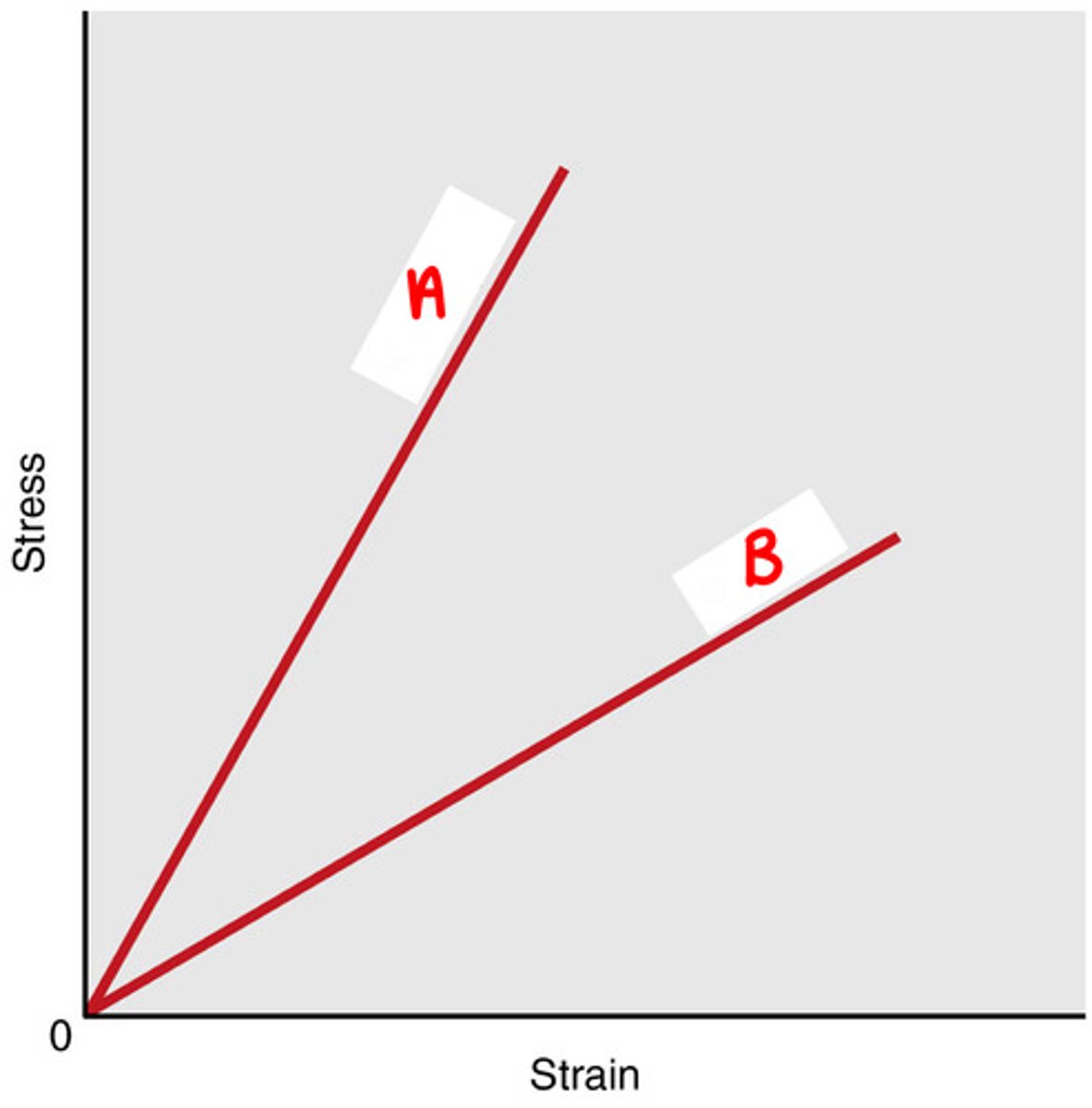
stiff
what is letter A?
- stiff
- pliant
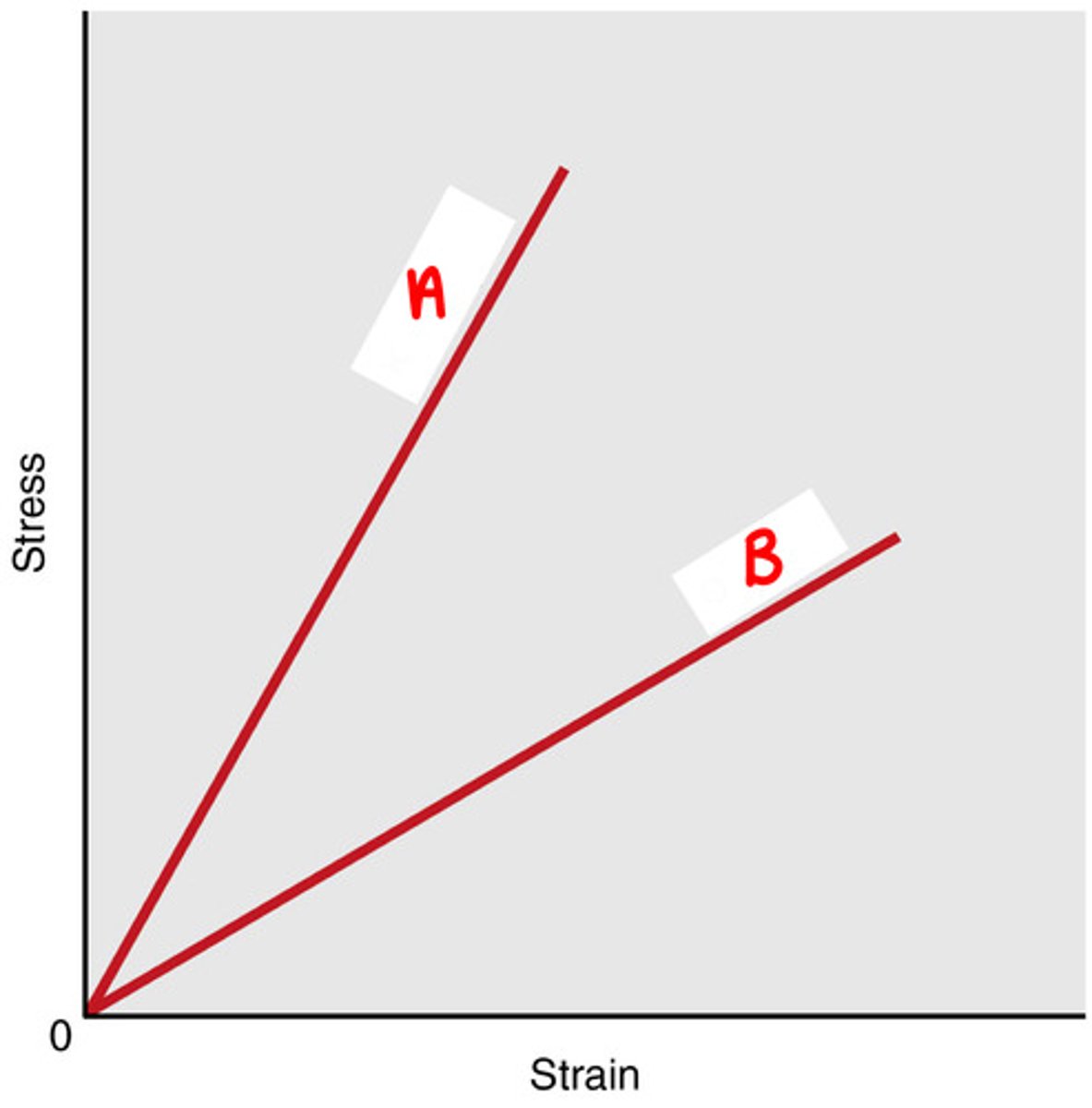
pliant
what is letter B?
- stiff
- pliant
stiff and ductile
what is letter A?
- brittle
- pliant and ductile
- stiff and ductile
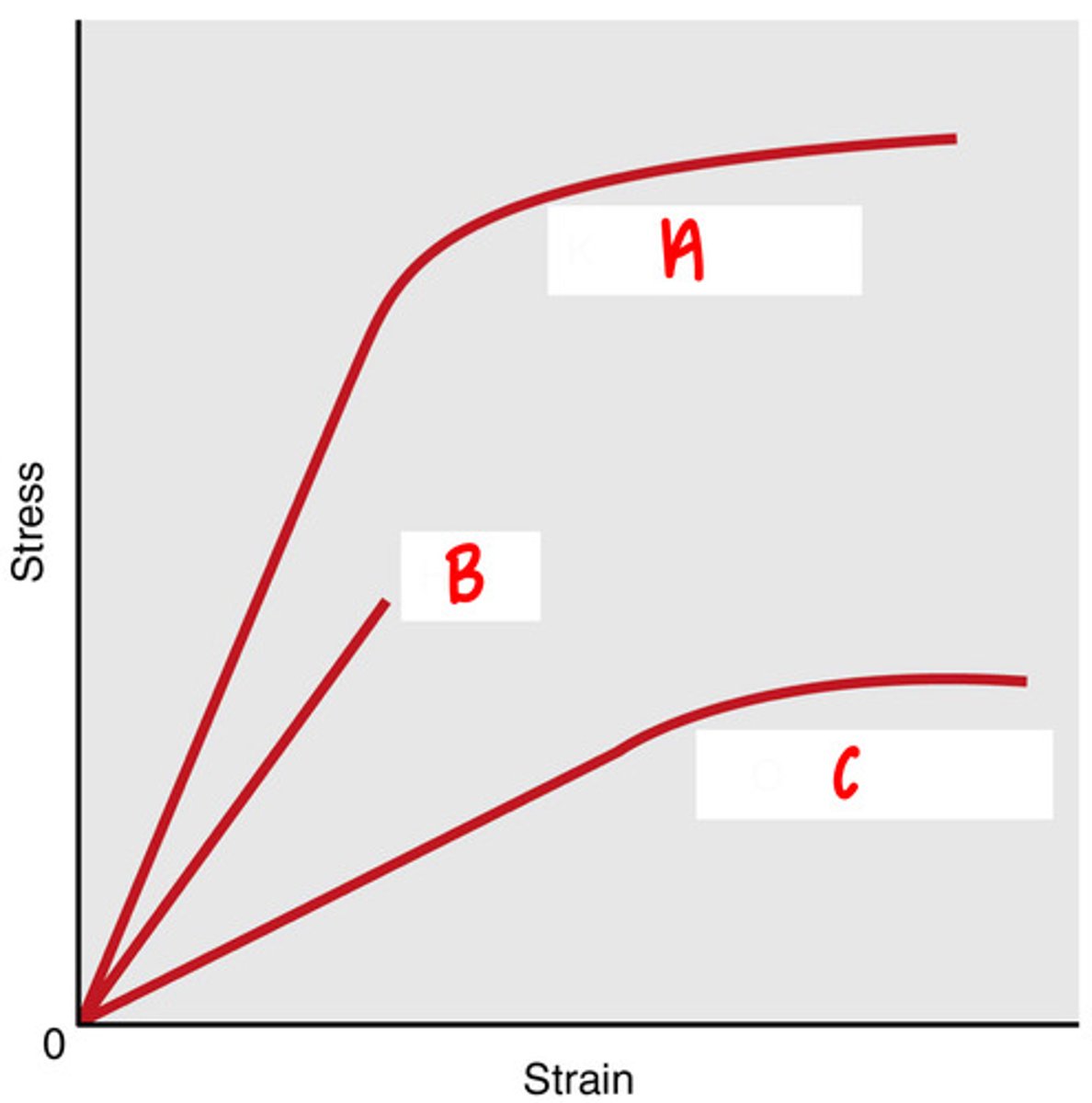
brittle
what is letter B?
- brittle
- pliant and ductile
- stiff and ductile
pliant and ductile
what is letter C?
- brittle
- pliant and ductile
- stiff and ductile
connective tissue
connects and protects; most abundant tissue; most common element is collagen
collagen and elastin
what are the fibrous proteins in connective tissues?
collagen
5 different types; like a rope - may stretch a little when you pull on it, and very good at resisting the pulling forces, but can't push
type I cartilage
thick, rugged fibers that stretch slightly when under tension (tendon, ligaments, bone)
type II cartilage
thinner fibers that provide framework and shape of structures (cartilage)
elastin
resists tension, allows tissue to return to original shape after deformation; similar to a rubber band - stretchy and usually returns to its original shape unless it's been damaged by stretching too much or too fast
ground substance of connective tissues
glycosaminoglycans, solutes, water; helps maintain the integrity of out tissues and helps transport nutrients and waste in and out of our tissues; vital to maintaining the water balance that our healthy tissues need to respond appropriately to loading
fibroblasts and chondrocytes
cells of connective tissues
ligament
dense, parallel collagen; responsible for guiding the motion at a joint and typically acts as "restraints" to prevent unwanted or excessive motion at a joint; bone to bone
tendon
dense, parallel collagen; transmit the tensile forces from the muscle to the bone to either cause movement or increase joint stability; muscle to bone
hysteresis
energy loss
viscoelastic
how tendons and ligaments respond to loading depends on how fast a load is applied; also very resilient with very little hysteresis - this is because they're about 25% collagen
tendon
has parallel bundles of collagen; can only resist loads longitudinally (or in series with the collagen fibers)
ligament
has both parallel and cross-catching bundles of collagen; can bare small tensile loads at oblique angles
passive tension
ligaments prevent excess motion by generating _________ _________.
crimp (slack)
the wavy organization of fibers in tendons and ligaments
cartilage
collagen fibers within jellylike substance; framework is resistant to damage (superficial side is parallel to surface, in the middle is randomly arranged, and deep surface is perpendicular to surface); 60-80% water
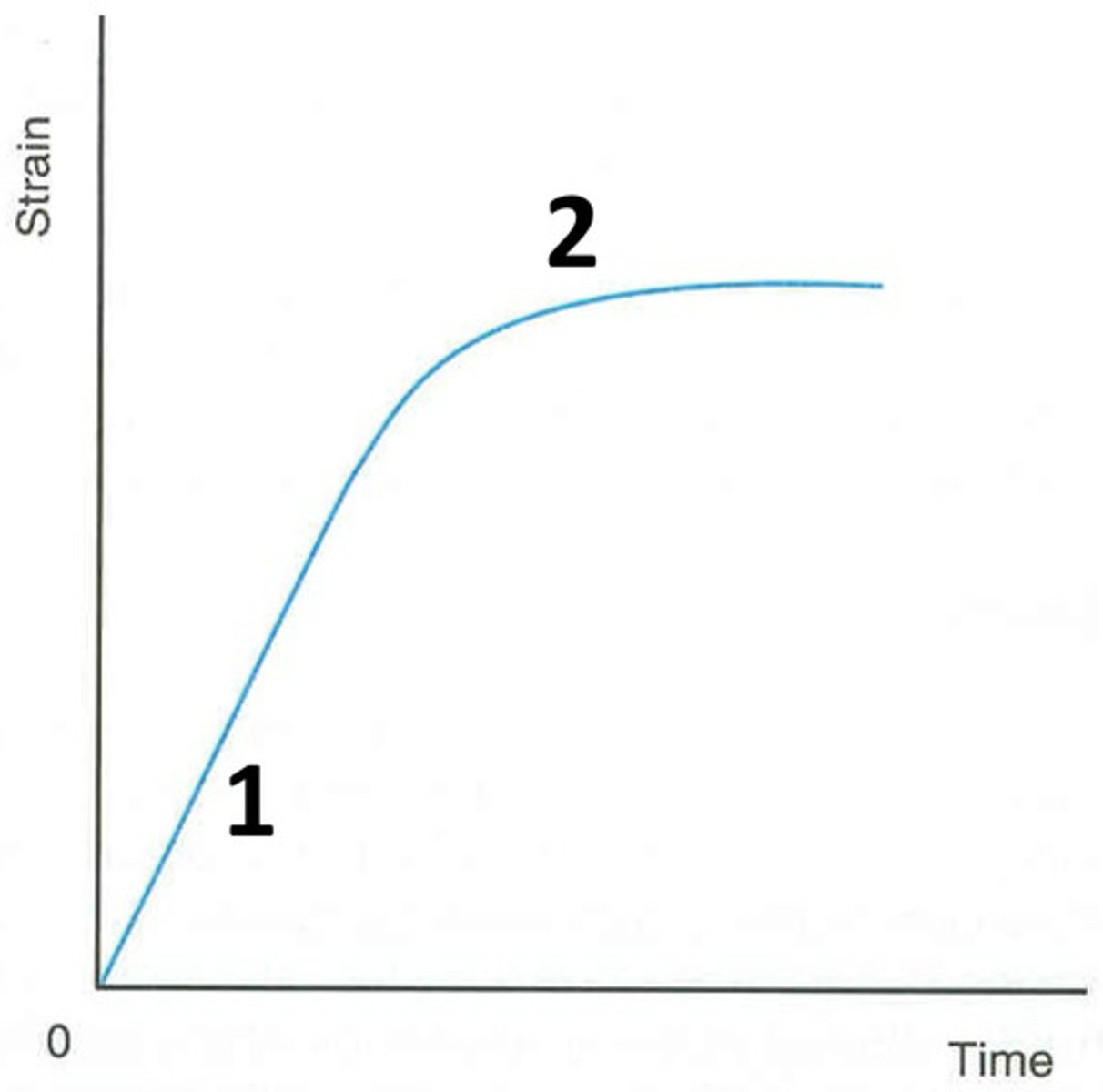
creep
constant compressive stress to cartilage results in:
- strain increases as water is squeezed out
- strain reaches a maximum
- strain stabilizes
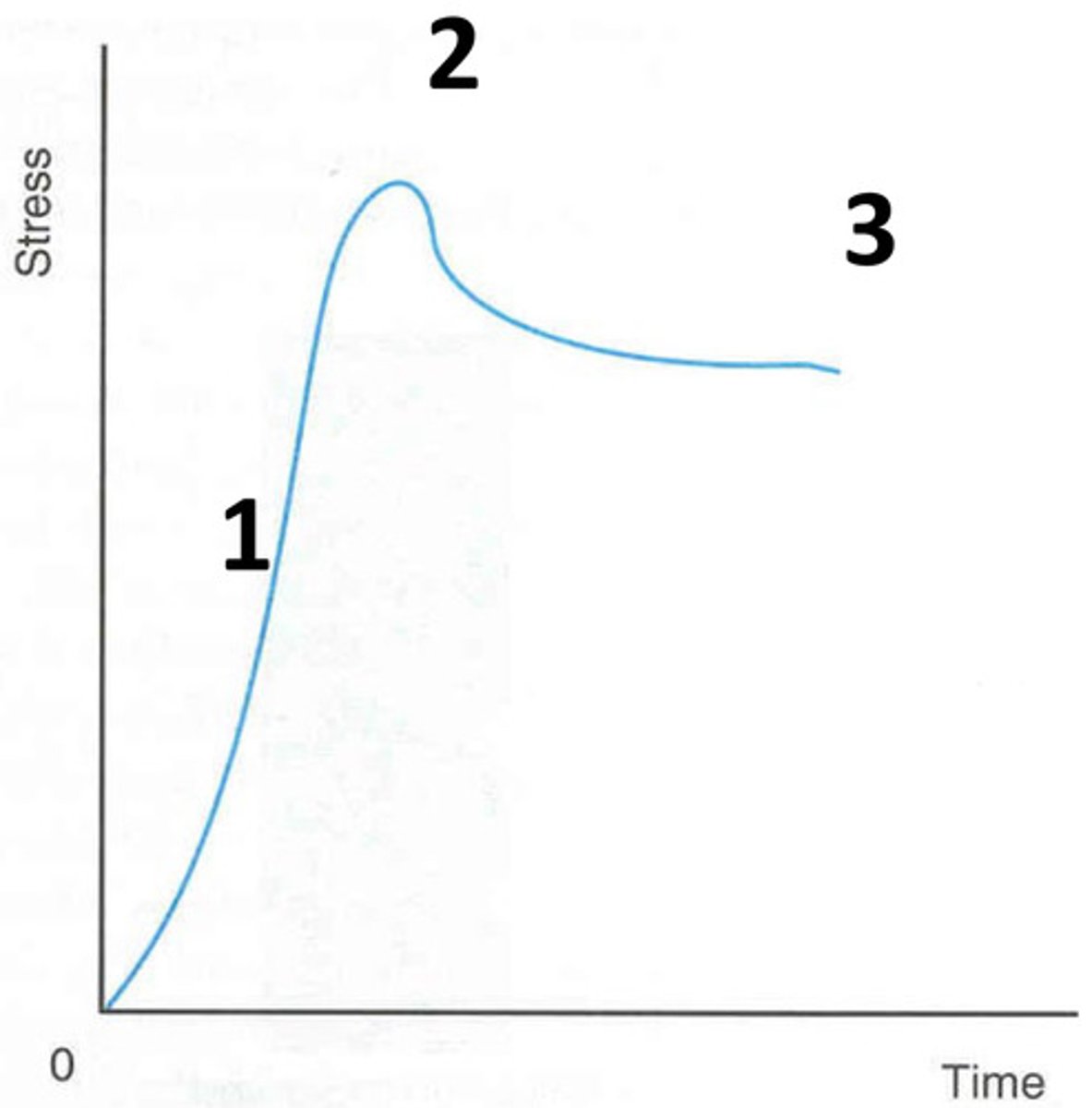
stress relaxation
constant compressive strain to cartilage results in:
- stress increases as water is squeezed out
- stress reaches a maximum
- stress decreases (relaxes) to a lower value
bone
hardest of the connective tissues; matrix contains calcium and phosphorous; functions - (mechanical) support, levers, protection and (physiological) mineral/energy storage, blood cell formation
minerals
bone composition:
provides compressive strength; ___________ deficiency = bendable bones (e.g., Rickets)
collagen
bone composition:
provides tensile strength; loss of ___________ causes bone to become brittle
cancellous bone
"spongy" bone; found in the ends of long bones, vertebrae; porous (not dense); contains trabeculae; offers structure without the weight - our bones would be too heavy without it
trabeculae
irregular latticework of collagen and inorganic material
cortical bone
"dense" bone; orderly arrangement in the shaft of long bones; very dense (few spaces without collagen and inorganic material); stronger than cancellous bone - resists bending
Wolff's Law
bone will be laid down where needed and reabsorbed where not needed
factors that effect bone remodeling
minerals, vitamins, sex hormones, and mechanical loading
osteoporosis
bone reabsorption outpaces growth
anisotropic
bone behavior varies with direction of loading
viscoelastic
bone behavior depends on the rate and duration of loading
anisotropic
connective tissues such as tendons and ligaments are ______________, meaning that they do not have the same mechanical properties in every direction.
false
true/false
bones without inorganic components (i.e., minerals) become brittle and shatter easily.
force per unit area
stress is defined as the:
a) mass per unit volume
b) force per unit time
c) force per unit area
d) displacement per unit time
e) force per unit mass
less compact than cortical bone, important for shock absorption, and more porous than cortical bones
cancellous bone is: (choose all that apply)
a) less compact than cortical bone
b) important for shock absorption
c) more porous than cortical bones
d) provides the outer shell of long bones
increasing the surface area over which a force is distributed decreases the amount of stress acting on the surface
which of the following is true?
a) increasing the surface area over which a force is distributed decreases the amount of stress acting on the surface
b) decreasing the surface area over which a force is distributed decreases the amount of stress acting on the surface
c) both a and b above are true
d) none of the above are true
shear stress perpendicular to the shaft of the bone
bone is weakest in resisting:
a) tensile stress
b) shear stress perpendicular to the shaft of the bone
c) compressive stress
d) bone is equally strong in resisting all types of stress
tensile
the organic components in bone (e.g., collagen) provide __________ strength.
creep
when articular cartilage is exposed to constant compressive stress, the strain in the cartilage will increase gradually with time, followed by a plateau in the strain. this pattern is called ________.
a) elasticity
b) creep
c) collagen
d) stress-strain curve
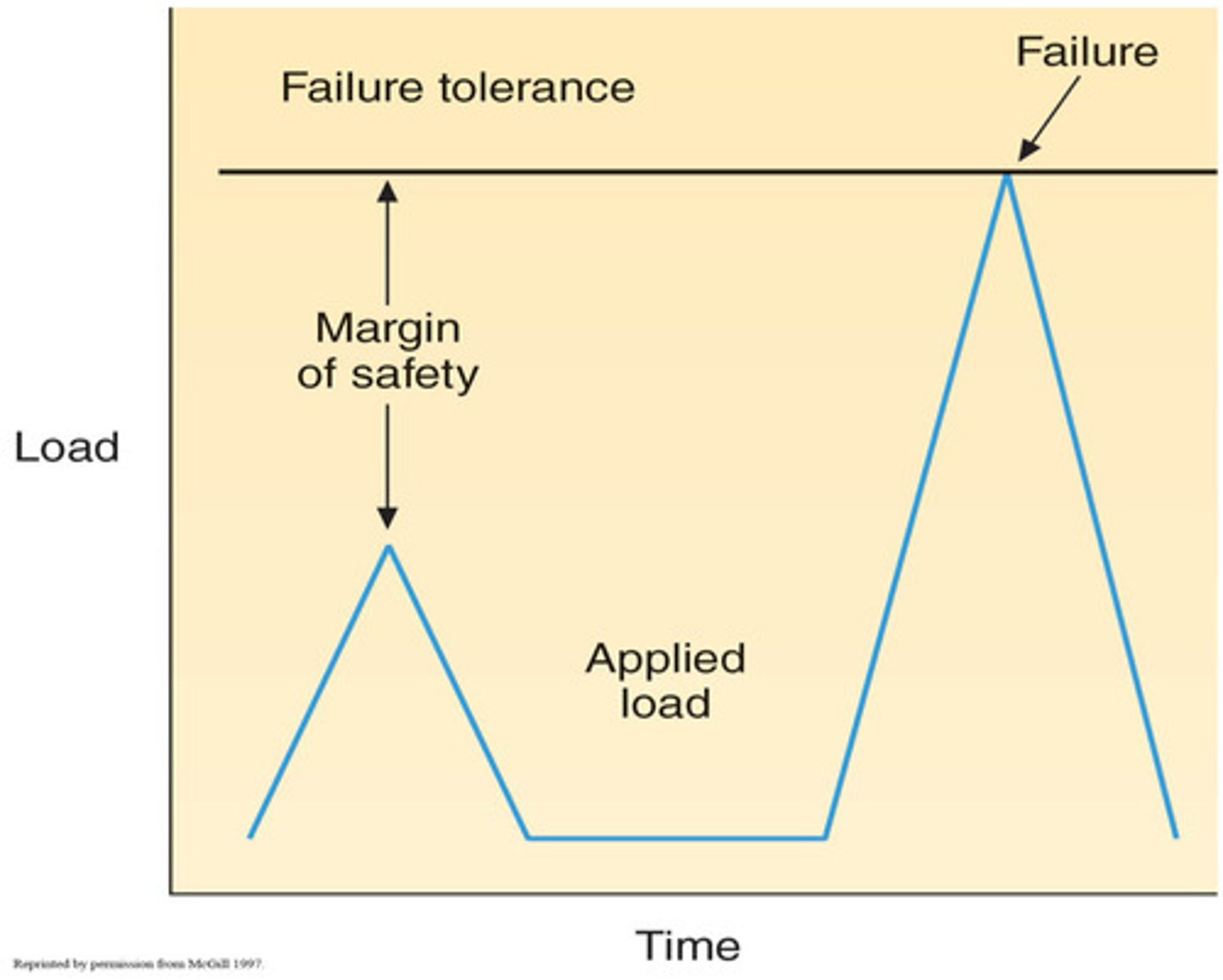
injury
loads applied exceed the tissue's strength
acute injury
only one load causing injury; ex: car accident causing a leg break
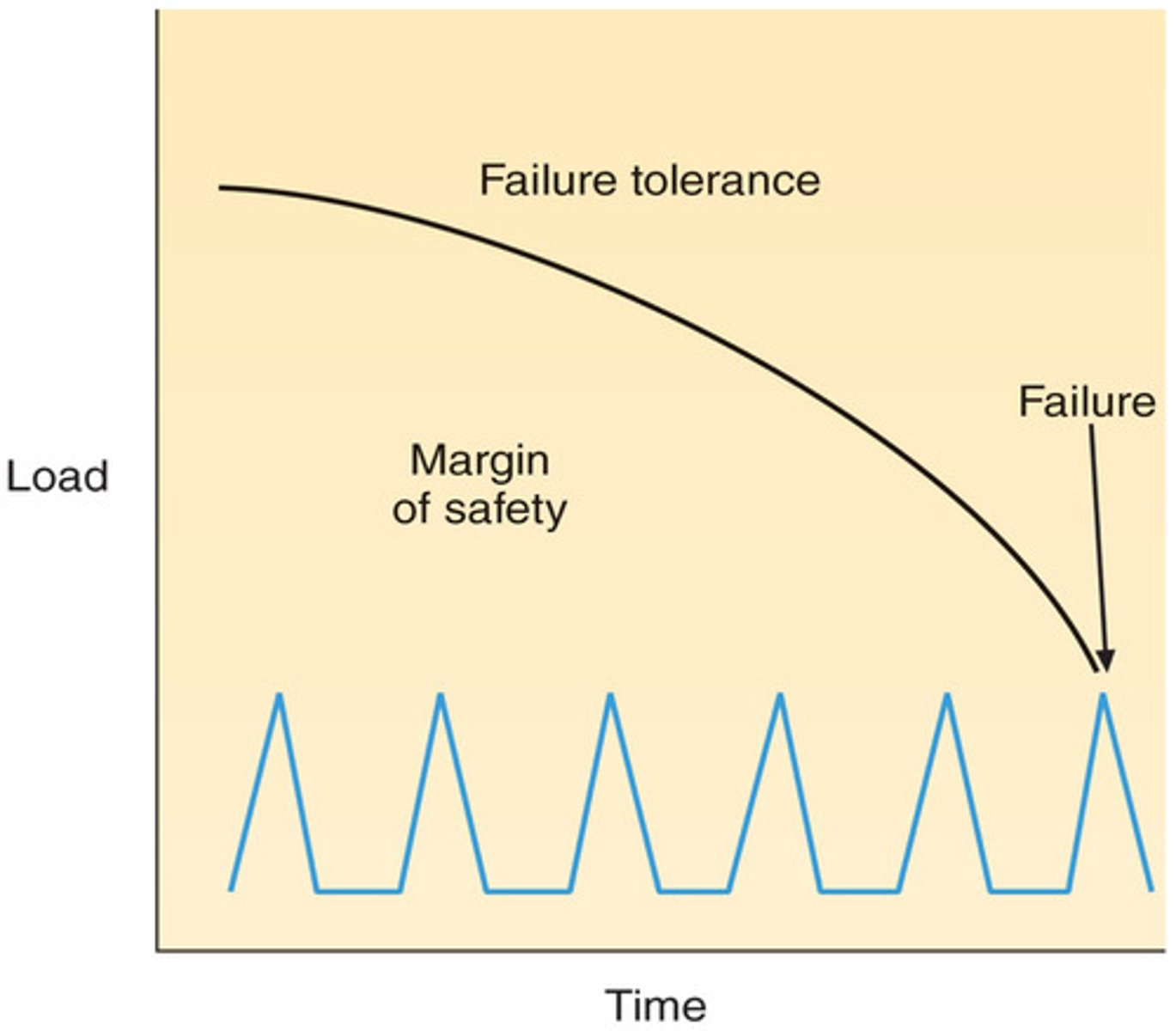
overuse (repetitive) injury
occurs when people perform the same task over and over again; ex: stress fractures
material and force
deformation is local shape changes due to applied loads defined by: __________________ (properties, size, shape) and ______________ (magnitude, direction, duration)
high
low physical activity results in (low/high) risk for injury.
pathologic underload zone
low stress; when you're injured you can't work out like how you used to
pathologic overload zone
high stress; overloading causes injury - shin splints
eustress
good stress - normal amount when working out
physiologic loading zone
stress level used to live our daily life
physiologic training zone
working out and training our tissues - normal amount of stress
force, repetition, posture
the three biomechanical forces related to injury
single point
the COM (center of mass) is a ___________ ___________ associated with a body where, if supported at that point, the object will remain balanced
limb
in the human body, the COM location is dependent on ___________ position
balance
a person's maintenance of the center of mass within their base of support
base of support
area beneath and between the points of contact a person has with the ground; area bound by the outermost region of the body and support surface or surfaces
stability
capacity of an object to return to its original position (equilibrium) after it has been displaced
stable
when new behavior = old; maintaining balance
unstable
when new behavior ≠ old; a perturbation causes you to not maintain balance
state
balance is the __________ (state/act) of keeping the center of mass within the base of support to maintain upright posture
act
stability is the _______ (state/act) of maintaining, achieving, or restoring a state of balance
mass, friction, height of the COM, and base of support
the four factors that affect stability
how can you increase stability?
increase the size of the base of support OR change the position of the COM near the edge of the base of support (either on the side or opposite of the external force)
walking
trading stability for mobility
true
true/false
when a person lifting weights picks up a weight, that object contributes to a combined center of mass that must be balanced over the person's base of support.
linear
if a force acts directly though an objects center of gravity, _____ acceleration will occur.
a) angular
b) linear
c) parabolic
no
yes/no
can humans maximize both stability and mobility at the same time?