Plant Morph Exam 2
 Call Kai
 Learn
Learn Practice Test
 Spaced Repetition
 Match
Match Flashcards
 Knowt Play
1/43

Earn XP
Description and Tags
botanical terms, major topics, and info on study guides and quizzes
Name | Mastery | Learn | Test | Matching | Spaced | Call with Kai |
|---|
No analytics yet
Send a link to your students to track their progress
44 Terms
Alternations of Generations
describes a life cycle in which an organism has both haploid and diploid multicellular stages (BOTH MULTICELLULAR LIFE STAGES!)
Diploid cells
cells that contain 2 sets of each chromosome (2N)
Haploid cells
cells which contain 1 set of each chromosome (N)
Sporophyte
multicellular diploid (2N) phase of a plant’s life cycle, the stage where spores are produced
-phyte suffix = plant
Spores
haploid cells (N) that will undergo mitosis to produce a gametophyte structure
Sporangium (plural = sporangia)
structure (enclosure) that houses diploid sporocytes, which undergo meiosis to produce haploid spores.
for example, the megasporangium is within the ovule. the microsporangium is in the anther sac
Sporocytes
diploid cells that undergo meiosis to produce haploid spores
also called mother cells
-cyte = cell
Meiosis
process of a diploid cell dividing, producing haploid cells
Mitosis
process of cell division ( chromosome #, or ploidy level stays the same)
Gametophyte
multicellular haploid (N) phase of a plant’s life cycle; stage where gametes are produced
Gametes
single-celled haploid sex cells (eggs and sperm)
Pollen
a microgametophyte structure (male gametetophyte that includes sperm)
Pollination
process of pollen from stamen anther sacs transferring to stigma of a pistil
self-pollinators or regular pollinators, who rely on many types of pollination (insect, wind, bird, bees, etc.)
Fertilization
process of the fusion of egg and sperm cells
Zygote
single-celled diploid cell that results from the fusion of egg and sperm gametes
Embryo
multicellular diploid organism in early stages of development
Endosperm
nutrient-rich tissue in angiosperm seeds that is a triploid (3N) product of double fertilization
Feeds the embryo
Double Fertilization
a process mostly unique to angiosperms where two haploid (N) sperm cells from pollen tube fertilize haploid (N) cells inside of the female gametophyte, resulting in s (2N) zygote (fusion of sperm with egg), and the triploid (3N) endosperm
Why do plants have a sporic life cycle?
product of meiosis in plant reproduction is spores, not gametes directly, extra step
Where does fertilization occur in a flower?
in the ovules (ovule sac) in the ovaries
What is a megaspore
female spore found in ovule sac, haploid (N).
went through meiosis
produces the megagametophyte
Pollen tube
emerges from pollen grain (goes thru mitosis and creates the pollen tube)
sperm contained and not free swimming in pollen tube before reaching ovule
generative nucleus produces sperm, tube cell nucleus produces pollen tube
When might self-pollination be advantageous for a plant?
When pollinators are limited
sparse or isolated plant populations (island plants)
guarantee fertilization
What is cleistogamy
plants produce flowers that are used for out-crossing (pollinators) and also produce small flowers that do not emerge or open for self pollination
not lots of energy put into the self fertilization flowers
What is a flower (biologically)
a whorl of modified leaves with distinct functions
can be clustered with multiple flowers as an inflorescence
is a determinate structure (ends branch growth)
an important adaptation to changed of life on land (dispersal of male gametes, specifically with pollinators)
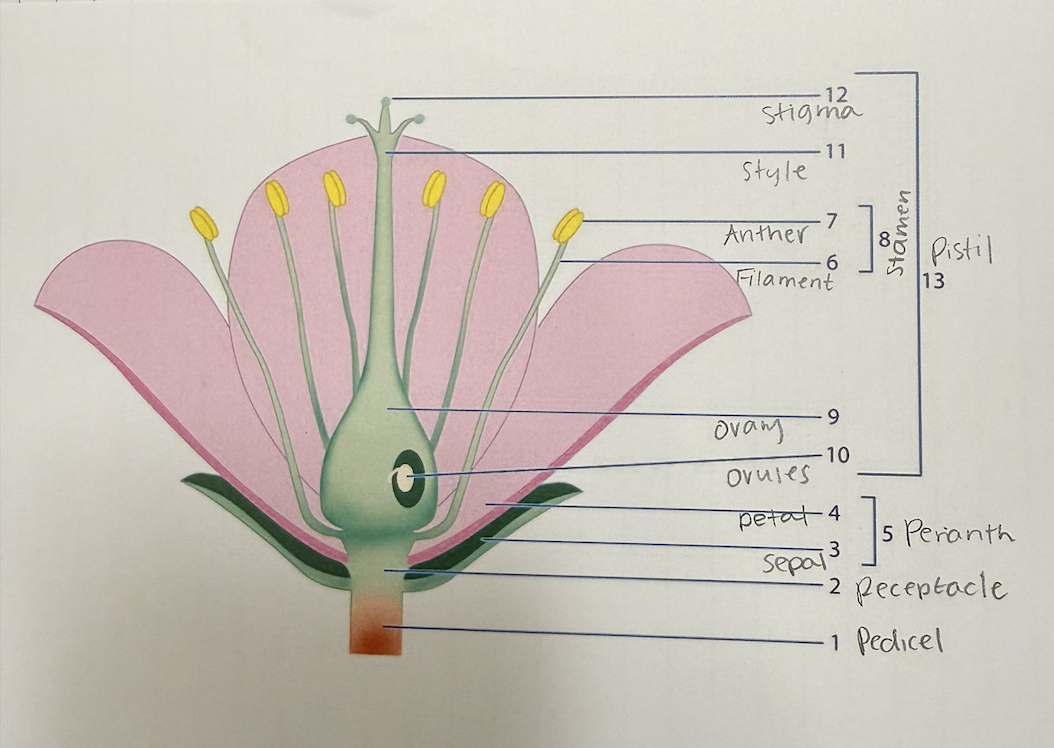
Flower parts and functions (13)
pedicel - floral stalk- stem supporting single flower
receptacle - modified floral stem, axis where floral organs attach
sepal - outer whorl of leaves, can be green or colored and protects inner whorls
petal - 2nd whorl of leaves, often brightly colored to attract pollinators
perianth - sepals+petals; when indistinguishable called tepals
filament - slender stalk of stamen supporting anther
anther - made of anther sacs, open to release pollen grains
stamen - male structure of flower; filament + anther
ovary - basal part of pistil that contains ovules, becomes fruit with seeds at maturity
ovules - fertile portions of pistil containing eggs, develops into seeds after fertilized
style - slender stalk of pistil above ovary that pollen tube passes through to reach eggs in ovules
stigma - part of the pistil; top of the style that receives and recognizes pollen
pistil - urn shaped, female structure with 3 main parts, contains one or more carpels (chambers)
What is a fruit (biologically)
mature ovary (+ sometimes accessory tissues) containing seeds
Fruit can be fleshy or dry
seeds are contained inside of the Pericarp (endocarp, mesocarp and exocarp)
Connation
fusion of floral parts from the same whorl
Adnation
fusion of floral parts from different whorls
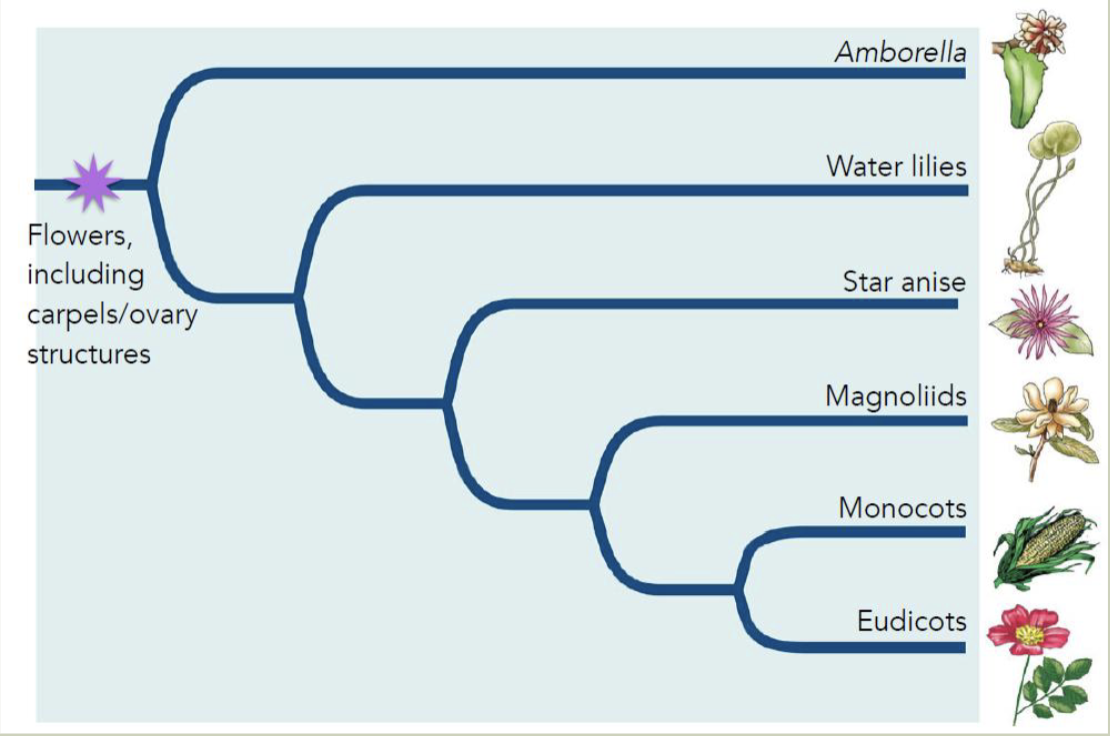
Major angiosperm lineages
amborella - most ancient angiosperm lineage (nonfunctional stamen, separate carpels)
water liles - early branching angiosperm (often many petals and stamen, spiraled parts)
star anise - early brancher (leaf like stamen, multiple pistils/carpels, vascular tissue more similar to gymnosperms
magnoliids - early brancher (most have broad leaves, large flowers, many spirally arranged perianths. cinnamon, avocado, nutmeg, etc)
all early angiosperm lineages often have carpels that split open as fruits to release seeds
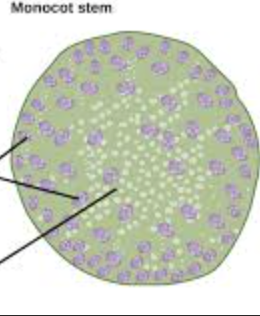
monocot
one seed leaf (cotyledon), parallel-veined leaves and flower parts in 3s
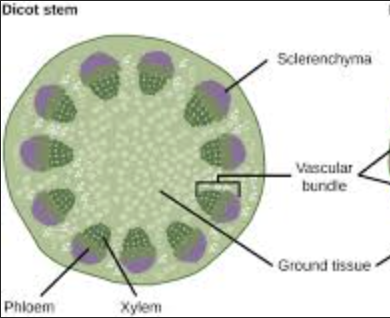
Eudicot
two seeded leaves, pinnate venation, and flower parts in 4 or 5s
Pollinator features (flowers)
wind - oaks, grasses, sedges; typically small, less showy flowers, lack perianth. not colorful, often feathery stigmas
birds - red and yellow flowers (birds prefer this), most common in tropics, long corolla tubes, lots of nectar
bees - food attraction is key, so lots of pollen, nectar and oils; many colors though rarely red. landing platforms common, pollen placement precise
moths - flowers often open at night/dusk, sweet smelling (lots of nectar), white, lighter, not super showy, long corolla tubes
butterflies - showy, colorful flowers (reds, oranges and pinks = best), filled with nectar, often have corolla tubes, flat perch for landing
What does ‘gymnosperm’ mean
naked seeds
no flowers, no fruits
seeds found in cones
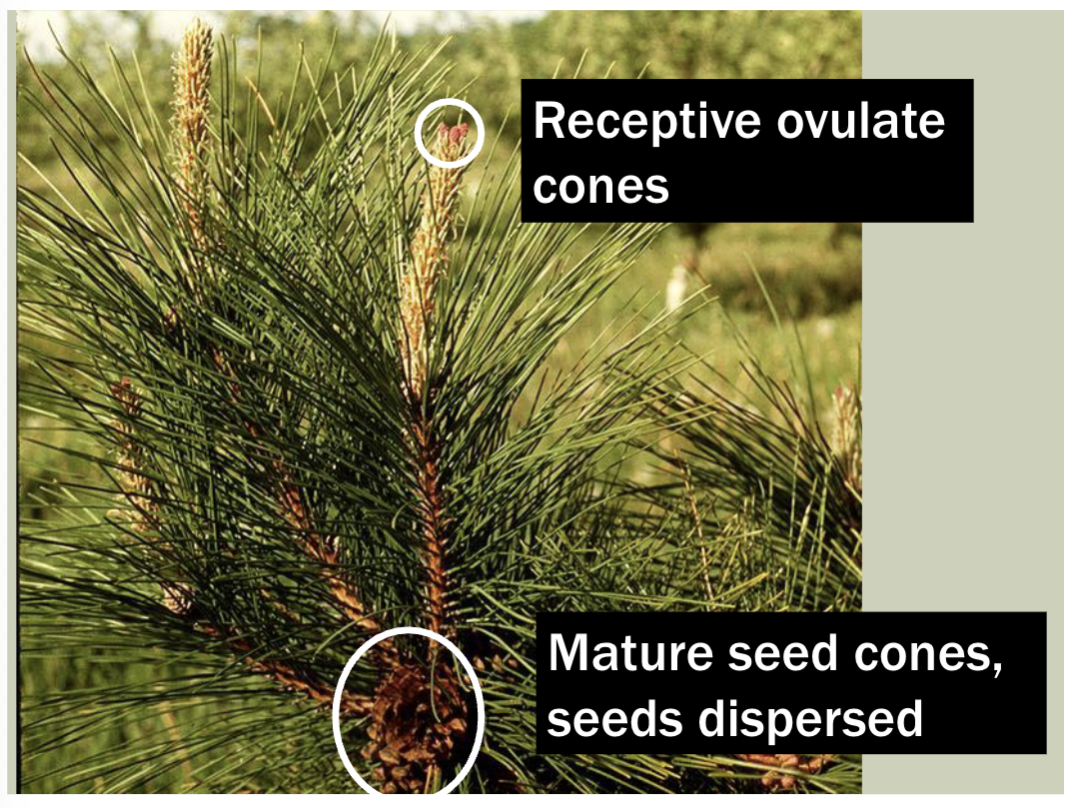
How are the majority of gymnosperms pollinated
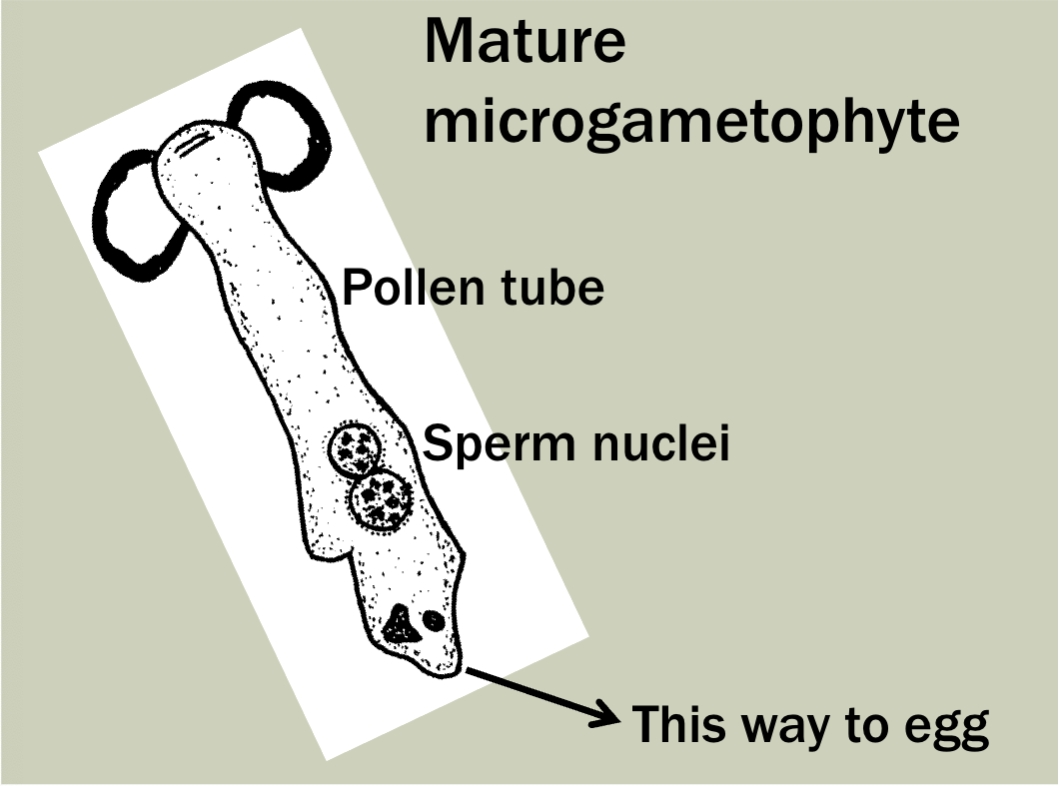
pollen transmit sperm without water, via a pollen cone (micro-sporangia 2N)
pollen grain = micro-gametophyte (N) which develops a generative cell and a tube cell where pollen will reach the ovules
pine cones = ovulate cones (mega-sporangia 2N)
some cones have dispersers (birds and mammals most common)
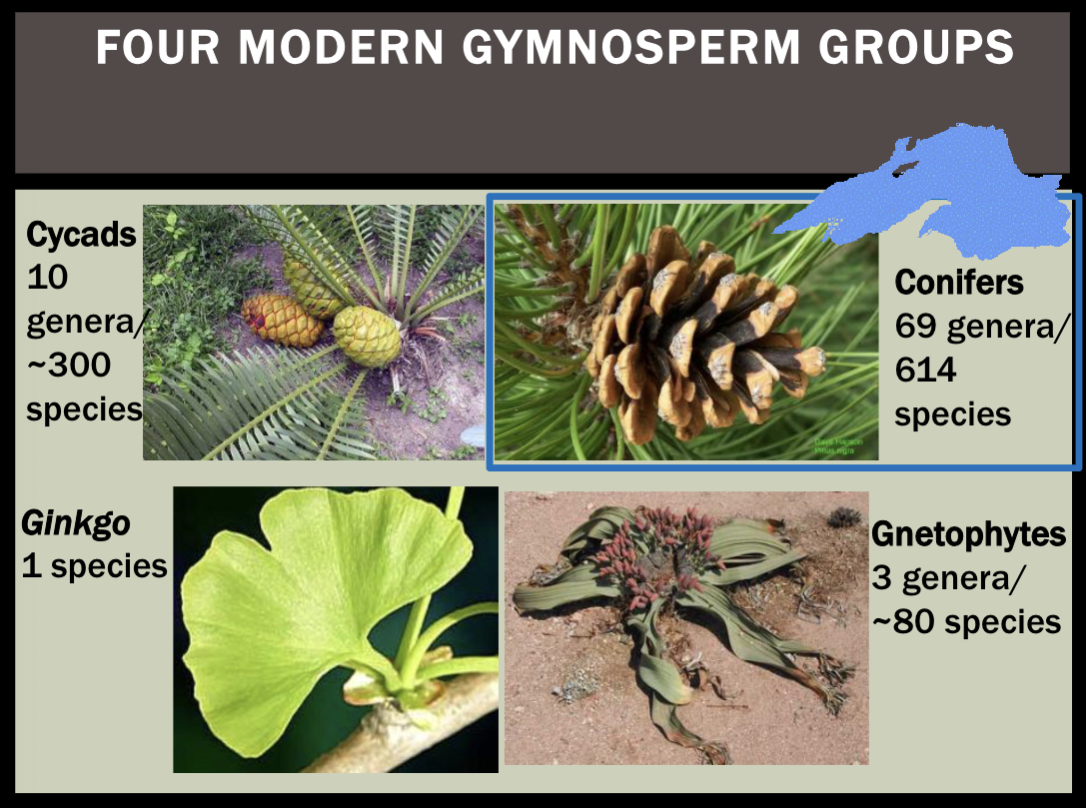
4 primary modern gymnosperm groups
cycads - pan-tropical, very endangered, white-haired cycad
ginkgo - one species, “living fossil”, fleshy seed coats
conifers - most species in this group, boreal dominance; pines, cypress, junipers etc.
gnetophytes - more similar to angiosperms than other gymnosperms; welwitschia, gnetum, lack archegonia
Which gymnosperm group is most closely related to angiosperms
gnetophytes, as they have vascular tissue including vessels, they lack archegonia, and have double fertilization (though no endosperm)
What feature of the cycads and Ginkgo is similar to older plant lineages?
dioecious (separate male/female plants)
Monilophytes
ferns, horsetails, whisk ferns
no flowers, fruits or pollen
megaphylls (large leaves with many veins)
Defining features (shared traits) of Euphyllophytes
collectively monilophytes and seed plants
euphyllophytes = vascular plants with megaphylls
multiflagellate sperm
lateral roots
overtopping growth (unequal branching of apical meristem)
Eusporangiate versus Leptosporangiate ferns
Based on sporangia
EUSPORANGIATE
sporangium wall several cell layers thick
sessile (not stalked)
no specialized opening for dispersal
large # of spores and simple dehiscence
LEPTOSPORANGIATE
thin cell walls
stalked
contain usually 64 spores
annulus (thick part of cell walls that aids to eject spores
What is a sporangium and spores?