BIOL121: Microbial Diversity Lab Terms
 Call Kai
 Learn
Learn Practice Test
 Spaced Repetition
 Match
Match Flashcards
 Knowt Play
1/16

There's no tags or description
Looks like no tags are added yet.
Name | Mastery | Learn | Test | Matching | Spaced | Call with Kai |
|---|
No analytics yet
Send a link to your students to track their progress
17 Terms
cocci
diplo = ?
strepto = ?
circle
two
many

tetrad
4 circles

staphlyococci
looks like a grape
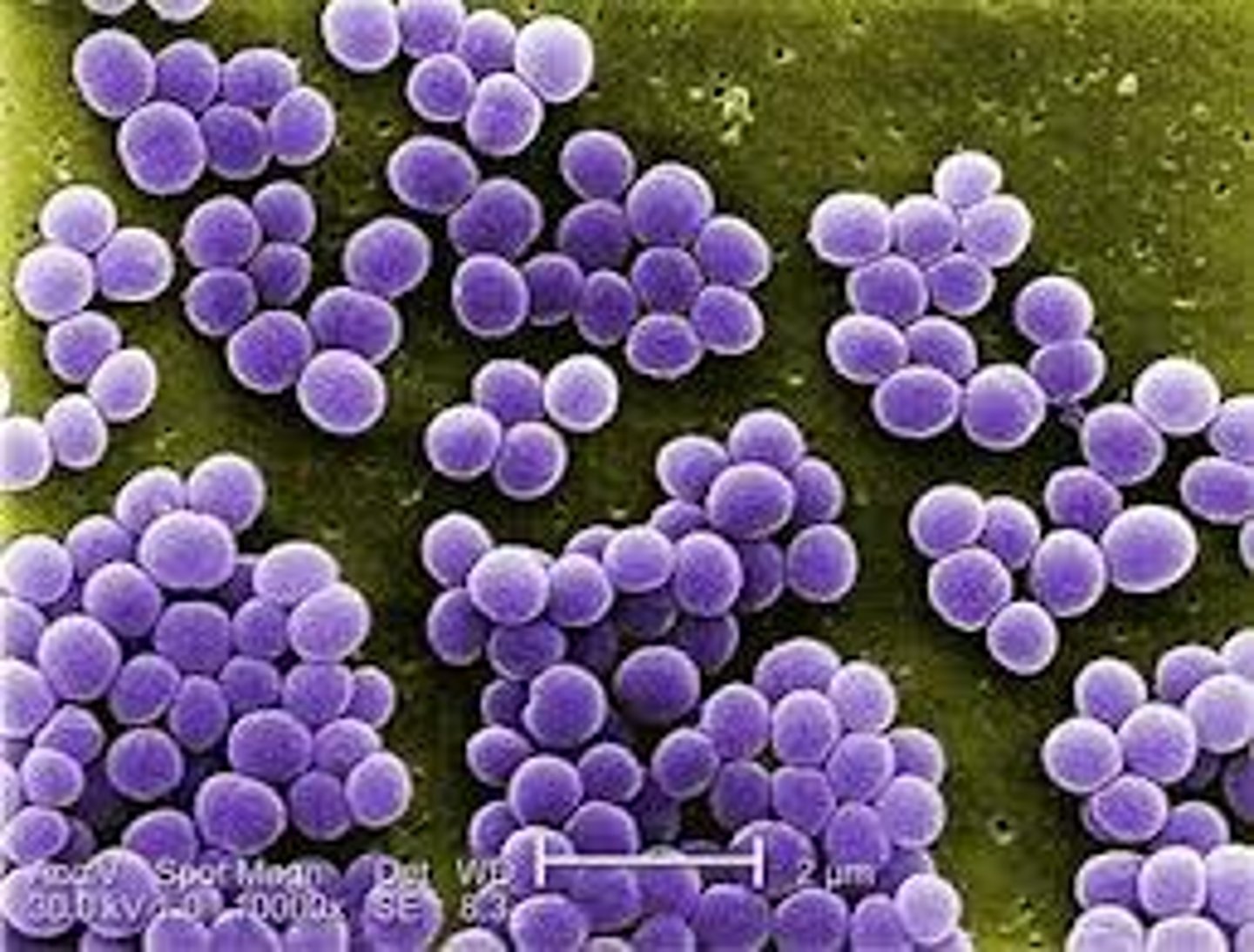
sarcinae
cubic configuration of 8 cocci

bacilli
diplo?
strepto?
rods
two
many
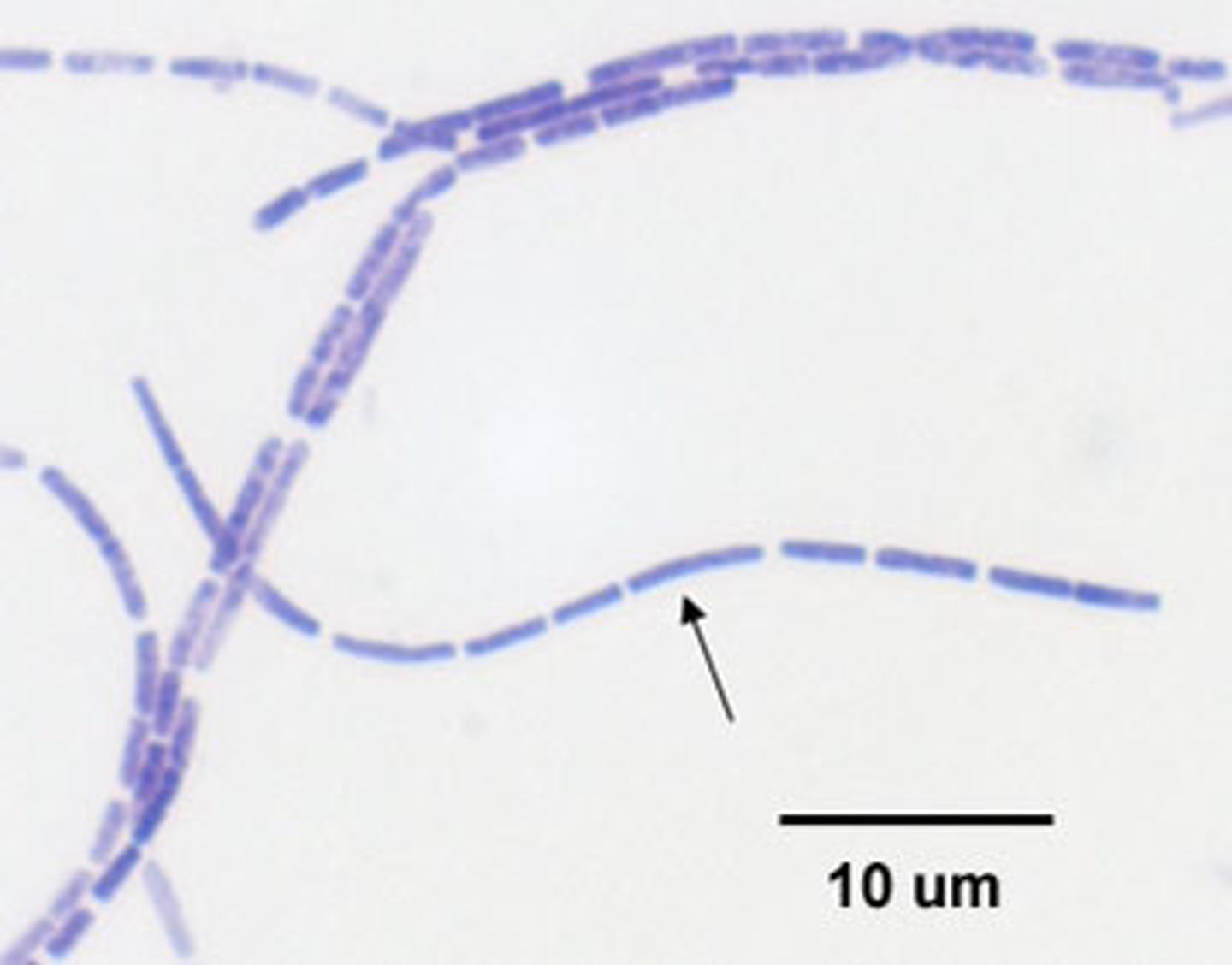
palisades
rods like a piclet-fence

vibrio
comma shaped bacteria

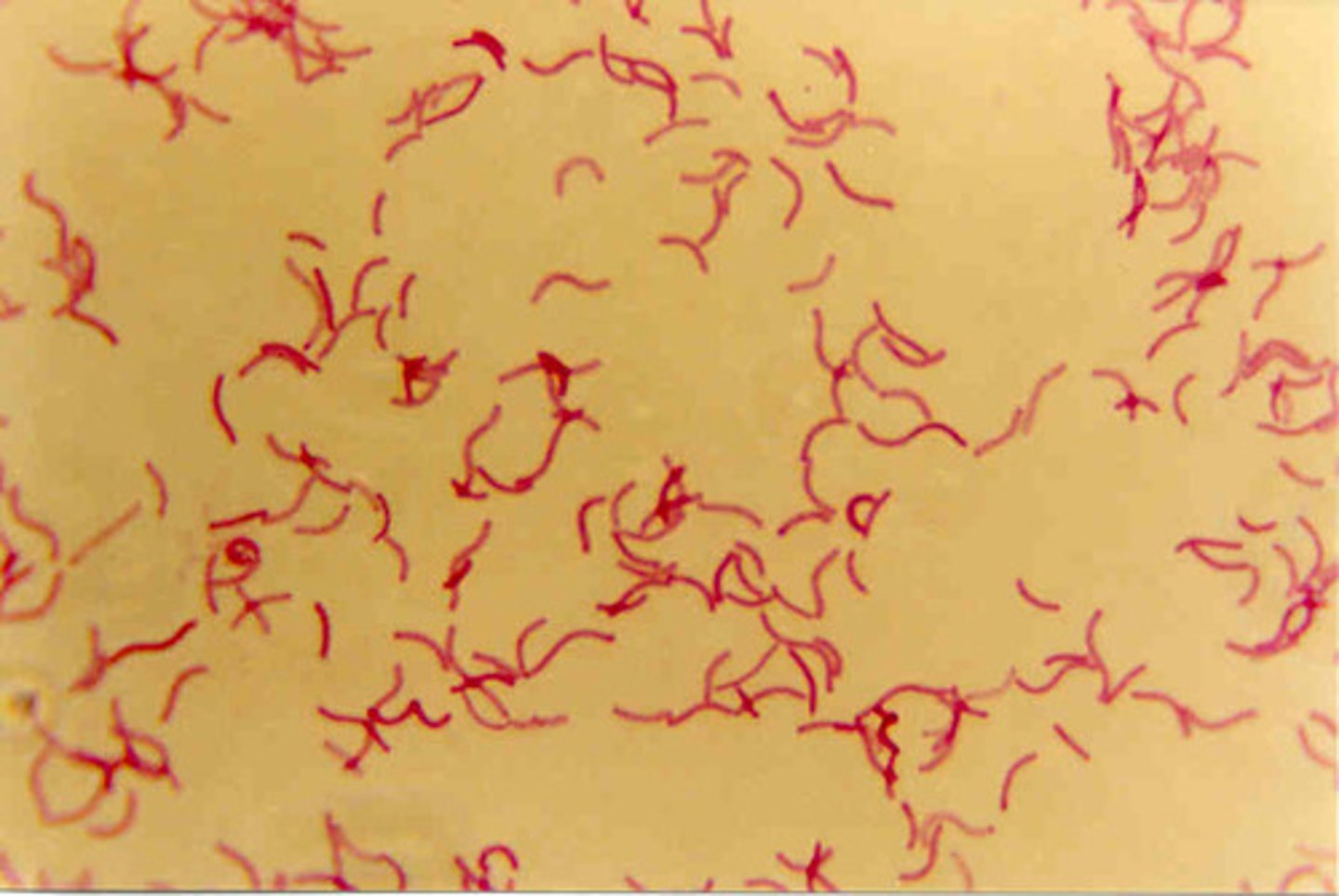
helical/spiral
spiral shaped bacteria
Gram Staining Procedure
1. Gram Crystal Violet: enters bacteria
2. Mordant Gram Iodine: forms complex w/ violet + keeps crystal violet in place in cell wall
3. Gram Decolorizer (alcohol/acetone): dehydrates cell wall causing pores to close (Gram +); OR washes away LPS + crystal violet-iodine complex washes away
4. Gram Safranin: pink counterstain to distinguish b/w Gram +/-
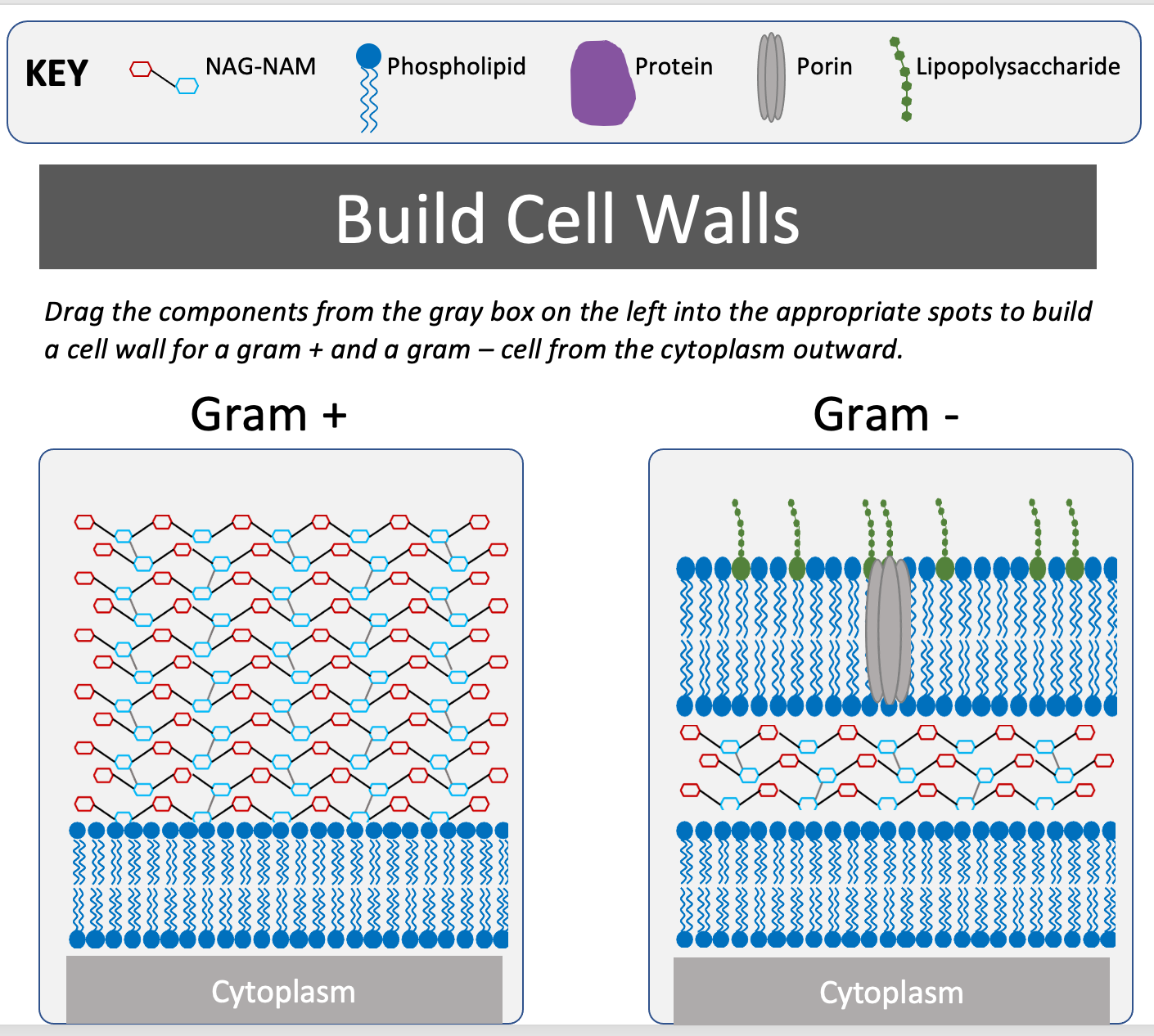
Gram + vs. Gram - Cell Wall
Gram +: plasma/inner membrane, peptidoglycan layer (= cell wall)
Gram -: plasma/inner membrane, thin peptidoglycan layer + outer membrane (= cell wall), LPS layer w/ porins; pink
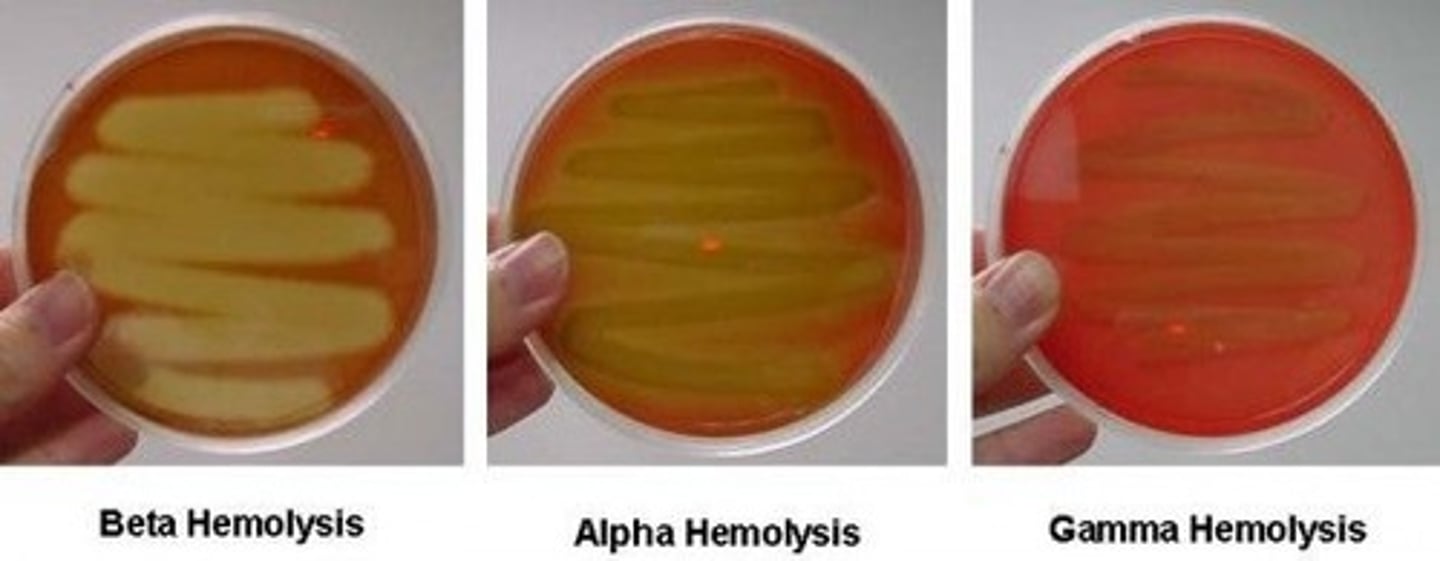
Hemolysis: α vs. β vs. γ
α = partial hemolysis = greenish color b/c H2O2 oxidizes hemoglobin to green methemoglobin
β = total hemolysis/breakdown of hemoglobin = transparent halo
γ = no hemolysis = no change in blood agar color
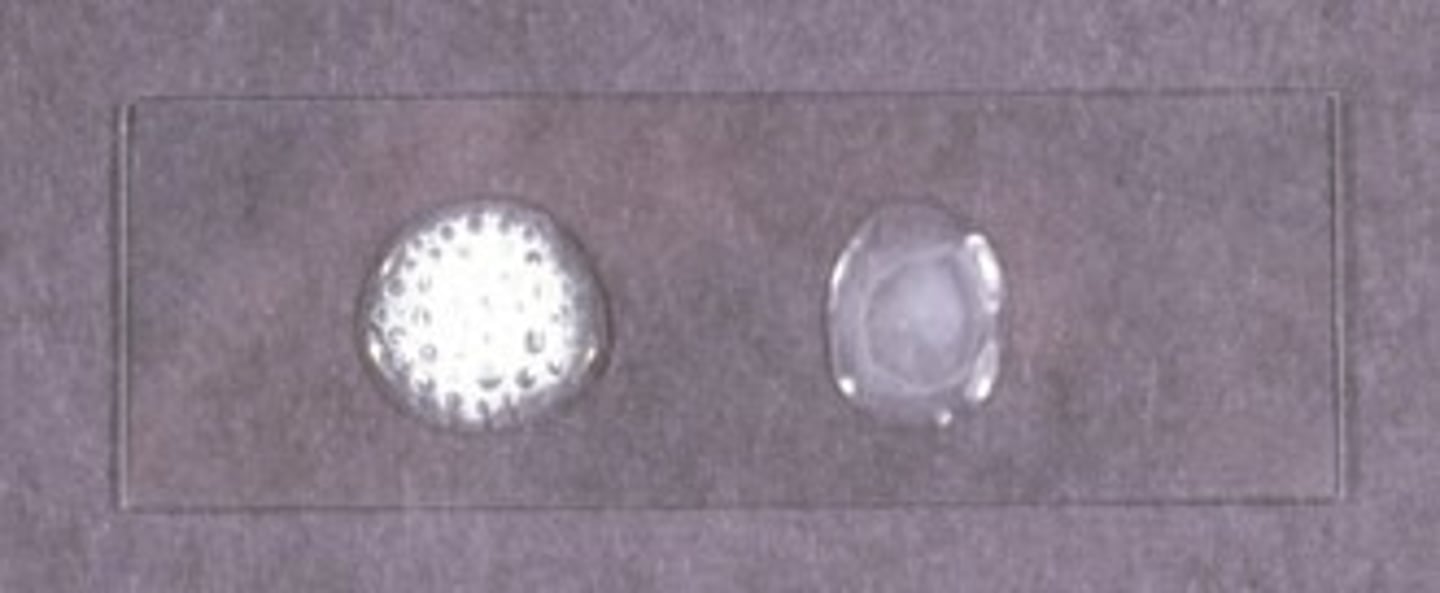
Catalase Test
Test that determines whether or not a bacteria has catalases to nuetralize H2O2 to water and oxygen gas to defend itself against oxidative damage and survive in the host
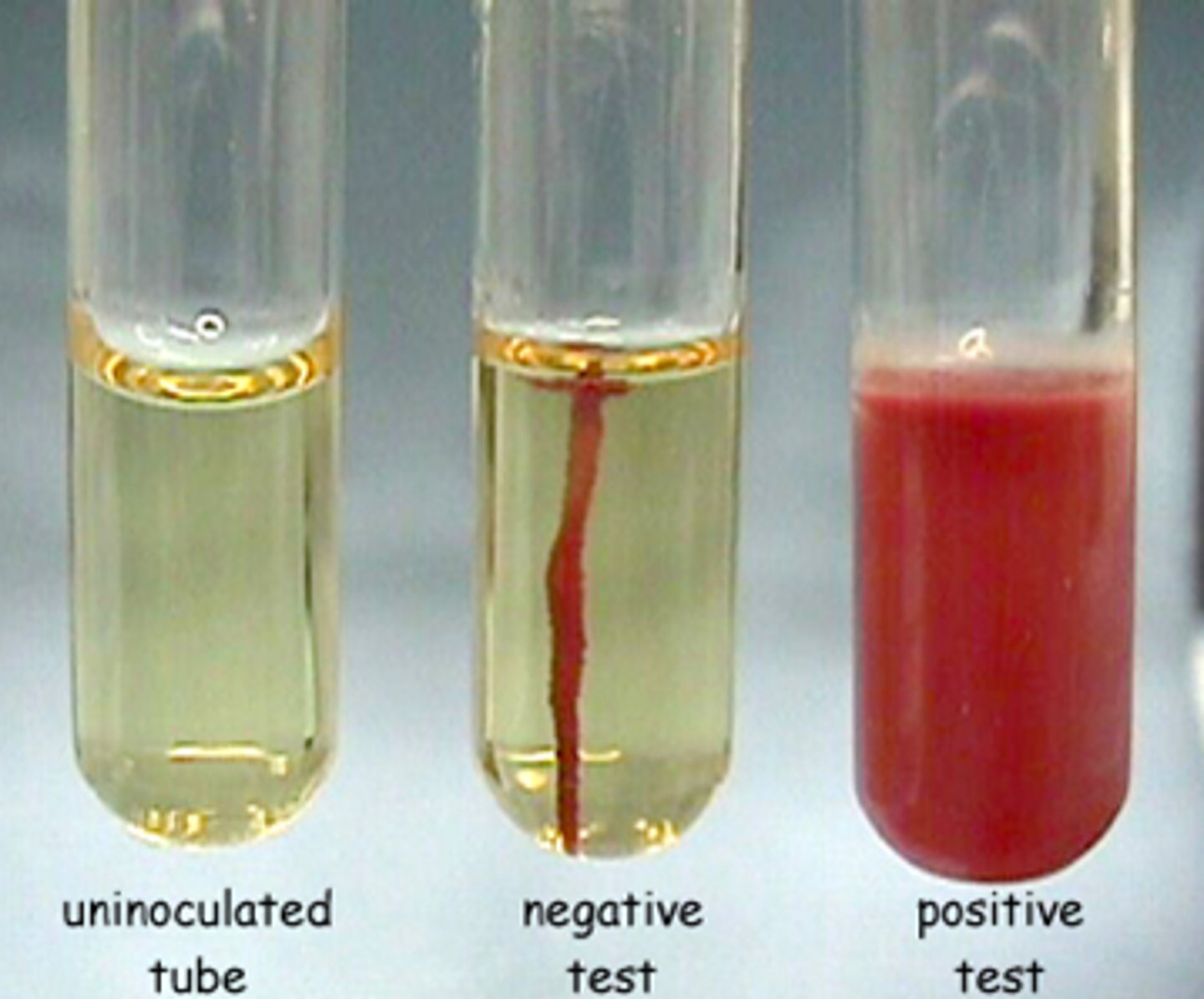
Motility Test
Test that determines whether or not a bacteria has flagella so that it can move in water-based environments
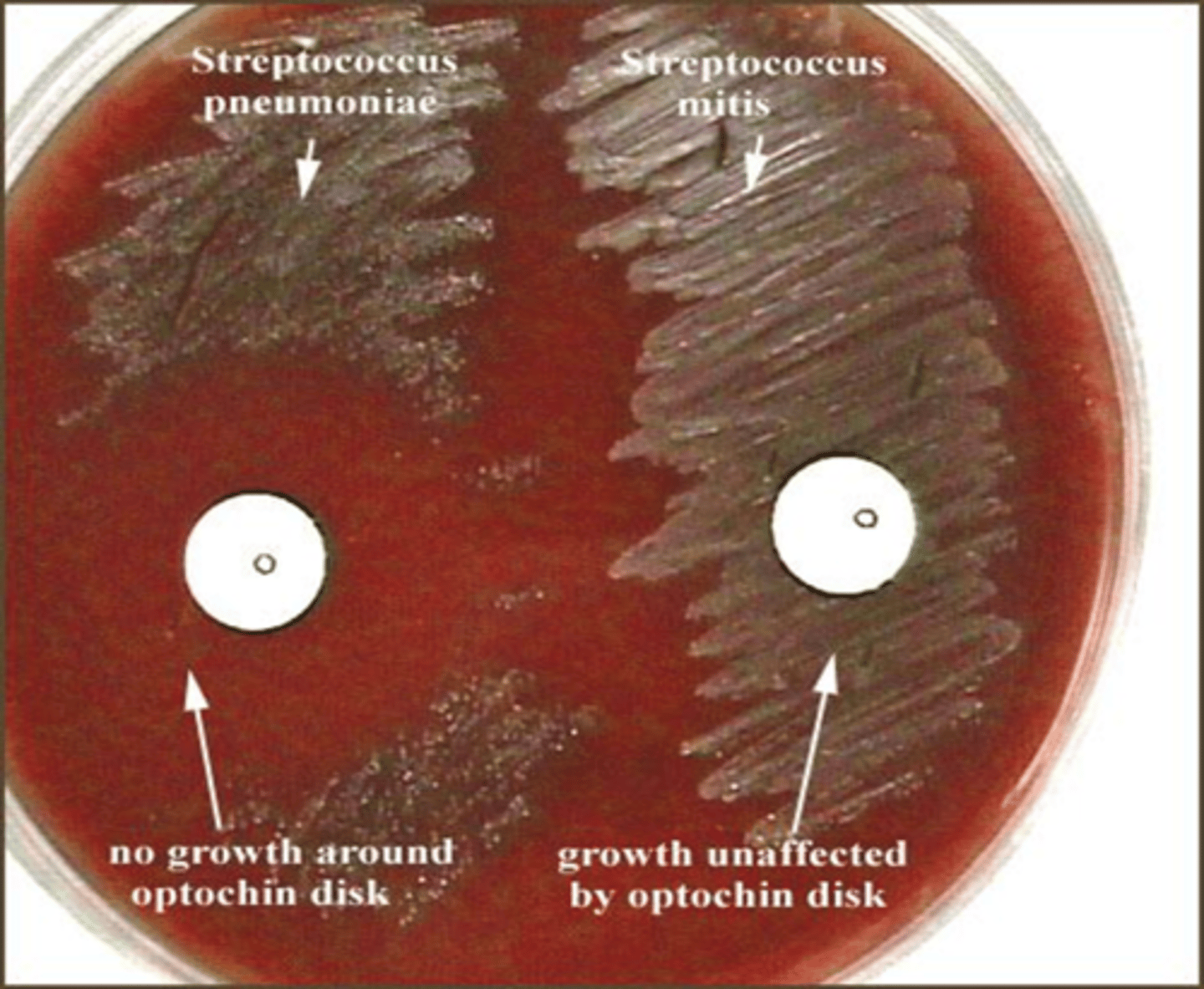
Antibiotic Sensitivity Test
Test that determines whether or not a bacteria is resistant to antibiotics. An antibiotic disk is placed, and if there's a clearing around the disk, the bacteria is more sensitive to the antibiotic and is therefore not resistant.
How does penicillin kill bacteria?
It mimics transpeptidase, the enzyme that builds the cell wall through irreversibly binding to transpeptidases substrate. The cell wall falls apart, and the bacteria bursts. (good against Gram +)
How does gentamicin kill bacteria?
It inhibits protein synthesis in the bacteria through two possible ways:
1. binds to small ribosomal unit 30S --> ribosome can no longer accept mRNA strands to make proteins
2. accepts more tRNAs that are near matches for the mRNA codon --> misreading of codons/protein synthesis stopped early
How can a bacteria be resistant to penicillin?
Some bacteria can cut the beta-lactam ring that penicillin contains with the β-lactamase enzyme. This ring is super important for its antibiotic activities, so when it's cut, the bacteria can't grow.