Nutrition Chapter 9 (Exam 3)
 Call Kai
 Learn
Learn Practice Test
 Spaced Repetition
 Match
Match Flashcards
 Knowt Play
1/53

There's no tags or description
Looks like no tags are added yet.
Name | Mastery | Learn | Test | Matching | Spaced | Call with Kai |
|---|
No analytics yet
Send a link to your students to track their progress
54 Terms
What are vitamins?
Tasteless, organic compounds
Required in small amounts
Functions:
-Regulate metabolism
-Help convert energy in fat, carbohydrate, and protein into A T P
-Preserve tissues
-Promote growth and reproduction
-Act as antioxidants
Deficiencies can result in potentially serious symptoms
Criteria for designating vitamins
1.Cannot be synthesized in ample amounts in the body, but essential to human health
2.Chronic deficiency is likely to cause physical symptoms
–Symptoms will disappear once the vitamin level in the body is restored unless the deficiency has caused permanent damage.
History of Vitamins (Discovered 100 years ago)
Diseases caused by vitamin deficiency and the foods that helped cure them were recognized long before the vitamin was discovered
In the eighteenth century, acid in citrus fruit was noted to cure the symptoms of scurvy (vitamin C deficiency) in British sailors
In the early 1900s, scientists discovered that thiamin cured beriberi and vitamin D cured rickets
Scientists have shifted their vitamin research focus from curing disease to prevention of disease
Vital + Amine = Vitamin
Each new vitamin was given a temporary name when it was discovered
The naming of vitamins follows the letters of the alphabet, starting with A; we are now at the letter K
A, B, C, D, E, and K
Vitamins F, G, and H were dropped
The nomenclature changed when vitamin B was found to have several functions
Subscripts were added for each new isolated role
Vitamin B Complex
Criteria for classifying vitamins
Vitamins are classified based on solubility
Nine water-soluble:
B vitamin complex
Vitamin C
Four fat-soluble:
Vitamin A
Vitamin D
Vitamin E
Vitamin K
Solubility influences a vitamin’s:
–Digestion
–Absorption
–Transportation
–Storage
-Excretion
All Vitamins are Organic, but Differ in Structure and Function
All vitamins contain carbon (organic), hydrogen, and oxygen
Some vitamins contain nitrogen, cobalt, or sulfur
The chemical structure of each vitamin is unique
There are no bonds for the body to hydrolyze during digestion
vitamins are absorbed into the enterocytes intact
Vitamins perform numerous essential functions
Some vitamins have more than one role in metabolism
Provitamins
Substances found in foods that are not directly usable by the body
Vitamin precursor converted to an active form once absorbed in the body
Example: beta-carotene (provitamin)→ vitamin A
(can be converted to active vitamins by the body)
Preformed vitamins
Vitamins found in foods in their active form
Do not need to be converted
Example: vitamin A
Vitamin toxicity (hypervitaminosis)
Rare
Results from ingesting excess vitamins, which leads to tissue saturation
Can damage cells, sometimes permanently
Results from supplementing with megadoses of vitamins; does not occur from eating foods
•Vitamin C and most other water-soluble vitamins do not cause toxicity because the excess is excreted in the urine
•Vitamin B6 is sometimes linked to toxicity, and the fat-soluble vitamins A, D, and E, which are stored in the body’s tissues, can be toxic in mega doses
•To prevent toxicity, the Dietary Reference Intakes (DRI) include a tolerable upper intake level (UL) for most vitamins
How Do Vitamins differ in their Absorption and Storage
Where does absorption take place in the body?
All absorption takes place in the small intestine
fat soluble and water soluble differ in
absorption
bioavailability
Vitamins differ in Bioavailability
Degree to which a nutrient is absorbed from foods and used in the body
____ varies based on:
-Amount in food
-Preparation
-Efficiency of digestion and absorption of food
-Individual nutritional status
-Natural or synthetic
Fat-soluble vitamins are generally less bioavailable than water-soluble vitamins
Vitamins from plant foods are generally less bioavailable than those in animal foods
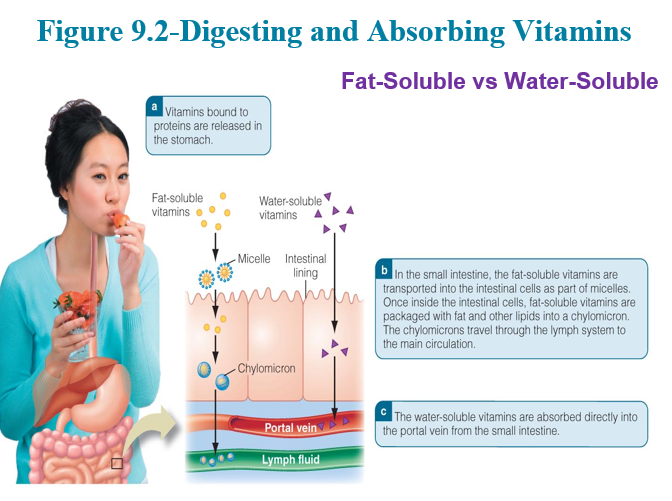
Fat-soluble Vitamins Absorption
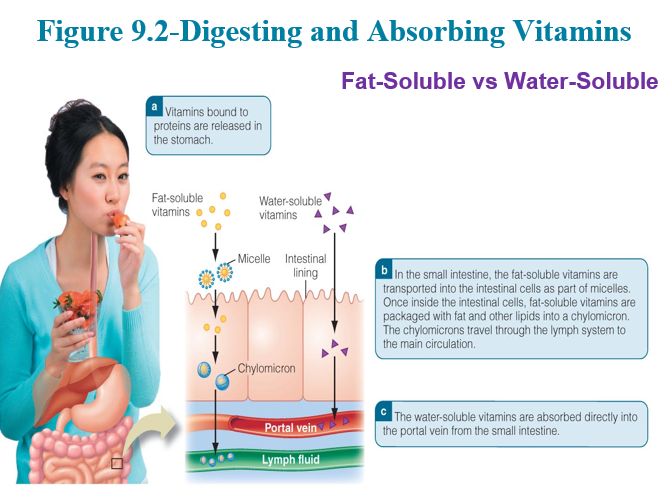
Attached to proteins in foods, released in the stomach with the help of pepsin and HCL
Are absorbed in the duodenum
Packaged in micelles that transport them close to the intestinal mucosa
Packaged in chylomicrons → lymph system → bloodstream
Lack of fatty acid and bile can lead to deficiency
Fat soluble Vitamin Storage
The liver is the main storage site for vitamin A; to a lesser extent for vitamins K and E
Vitamin D is mainly stored in the fat and muscle tissue
Can build up in the body to the point of toxicity, particularly vitamin A
___-soluble vitamins are stored after they are absorbed
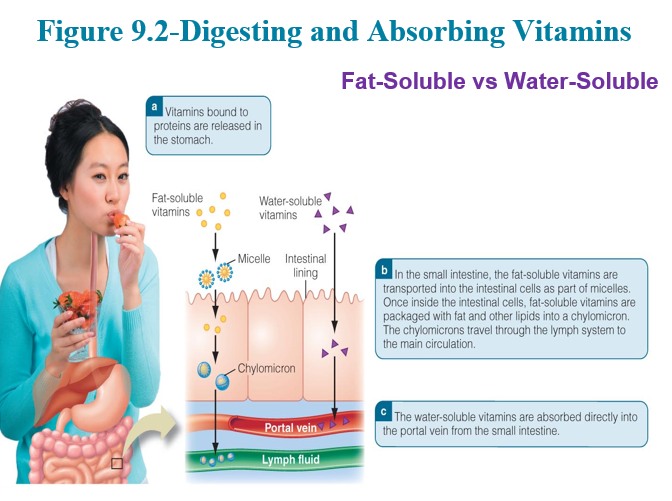
Water-soluble Vitamins Absorption
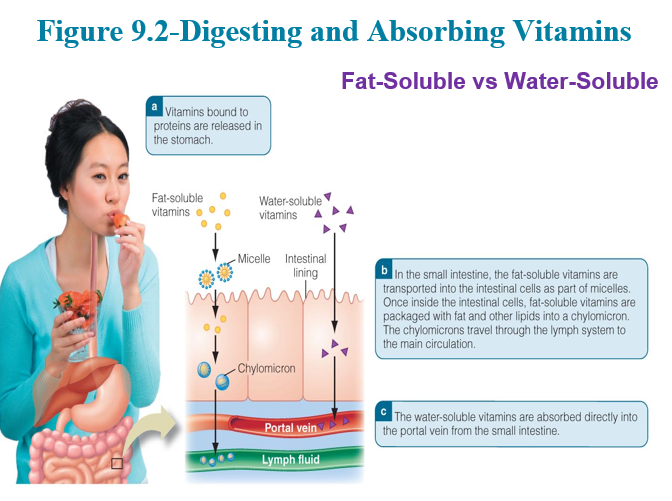
Absorbed with water and enter directly into the bloodstream
Most absorbed in the duodenum and jejunum, and B12 is absorbed in the ileum
Water-soluble Vitamins Excretion
Not stored in the body
Excess intake excreted through the urine
Important to consume adequate amounts daily
Dietary excesses (megadosing) can be harmful
___-soluble vitamins are not stored after absorption
What are Antioxidants?
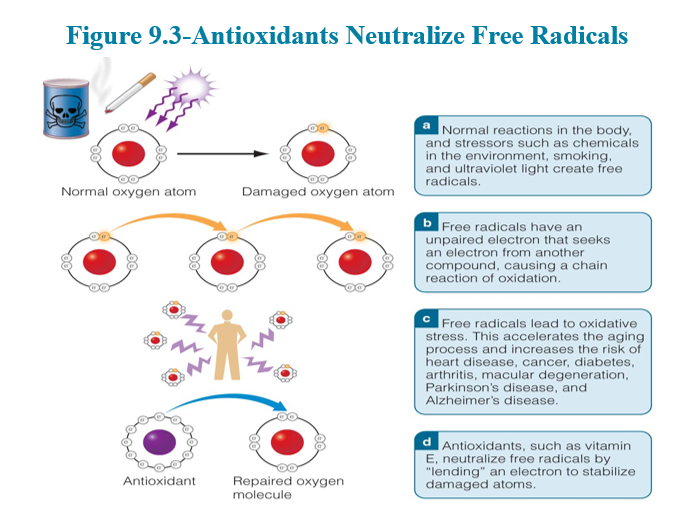
Group of compounds that neutralize free radicals, helping to counteract the oxidation that takes place in cells
Includes:
Vitamin E
Vitamin C
Selenium (mineral)
Flavonoids (phytochemical)
Carotenoids (phytochemical)
Free radicals
By-products of the body’s metabolic reactions
Molecules with an unpaired electron, which makes them unstable
Factors that increase free radical production include:
U V light
Exposure to toxins from smoking
Exposure to environmental pollutants
What are Antioxidants/Free radicals?
____are molecules with an unpaired electron
Oxidative stress occurs when free radicals accumulate faster than the body can metabolize them
Damages D N A and body proteins, and alters cell structure
Excess free radicals contribute to chronic diseases:
Heart disease
Cancer
Aging
Diabetes
Parkinson’s disease
Alzheimer’s disease
Phytochemicals
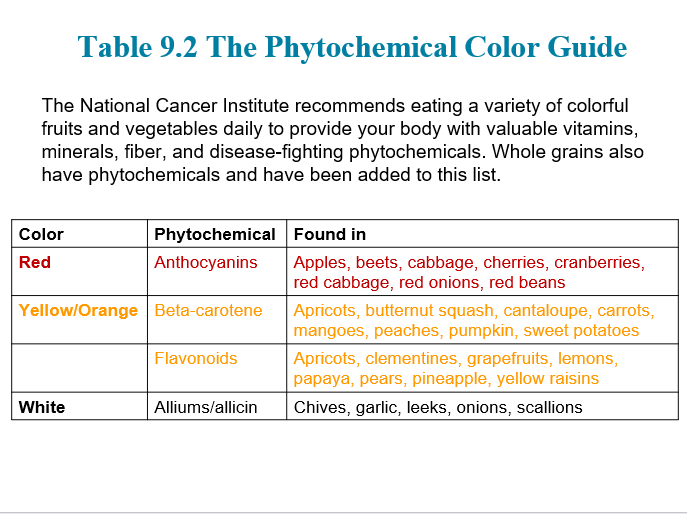
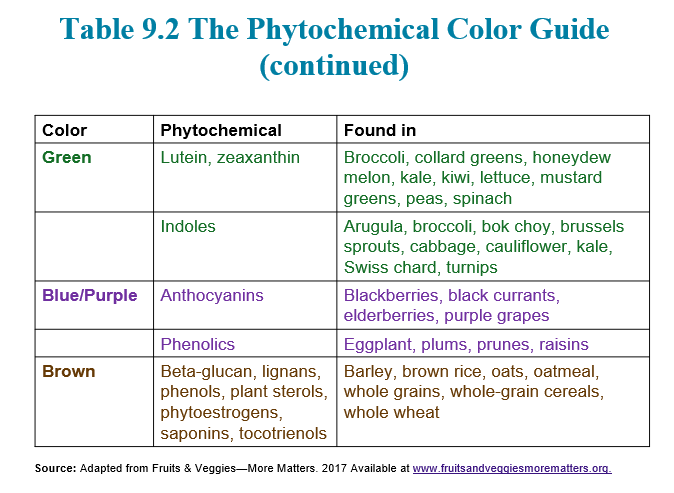
Antioxidant-rich foods also contain other protective compounds
____are naturally occurring plant compounds that give plant food their vibrant colors; also act as antioxidants.
Carotenoids
Flavonoids
Antioxidant Supplements
Studies are underway exploring the role of antioxidant supplements in fighting disease
Currently, supplements are not recommended; instead, phytochemical- and antioxidant-rich foods should be part of a balanced diet
What’s the Best Food Sources of Vitamins
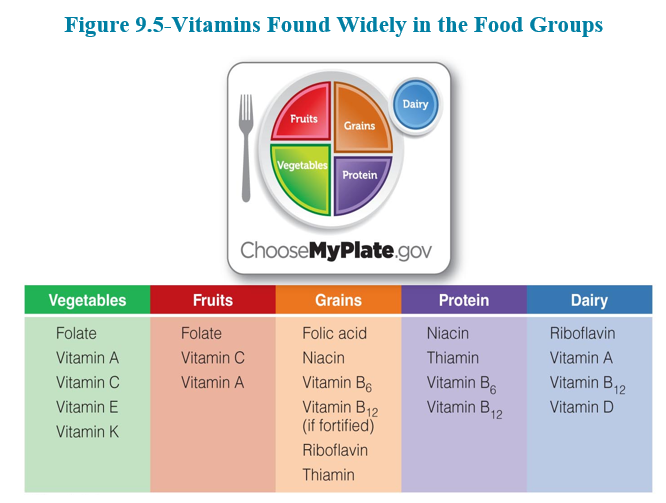
Whole foods
Fruits, vegetables, and whole grains
Rich in vitamins, phytochemicals, antioxidants, and fiber
Dietary Guidelines for Americans recommends:
Eat a wide variety of foods from each food group, with ample amounts of vitamin-rich fruits, vegetables, whole grains, and dairy foods.
Most people do not need supplements if they consume a balanced diet.
How can vitamins be destroyed?
Exposure to oxygen
Water-soluble vitamins
Vitamins A, E, and K
Exposure to ultraviolet light
Riboflavin
Beta-carotene and vitamin C
Water
Most water-soluble vitamins will leach out of foods when soaked or cooked in liquids, so cooking foods in as little water as possible is recommended to retain those vitamins
Adding vegetables to water that is already boiling can inactivate food enzymes that oxidize the vitamins
Changes in pH
Most vitamins are stable in acid, but adding ingredients such as baking soda to foods increases the pH and destroys certain vitamins
Thiamin and vitamin C
Heat
Especially prolonged heat from cooking, will also destroy water-soluble vitamins, especially vitamin C
Microwaving, steaming, or stir-frying are better than boiling
Refrigeration preserves vitamins in food
Vegetables and fruits begin to lose their vitamins almost immediately after being harvested, and some preparation and storage methods can accelerate vitamin loss
Fat-soluble vitamins tend to be more stable than water-soluble vitamins
____can be destroyed during cooking or storage
How you prepare and store fresh foods can affect their nutritional content
How to preserve your vitamins
Cook vegetables in a small amount of already boiling water—not cold water brought to a boil. Use any leftover cooking liquid as a soup or gravy base
Don’t rinse rice before cooking it or pasta after cooking it. You’ll wash away water-soluble vitamins. Boiling rice in excess water (6 parts water to 1 part rice) is more effective at reducing its arsenic content and will preserve more of the vitamins
Microwave or stir-fry vegetables instead of boiling or frying them. These methods reduce the amount of time vegetables are exposed to heat and therefore the loss of vitamins
Store produce in a refrigerator and eat it soon after purchasing
Cut vegetables and fruits in larger pieces to reduce the surface area exposed to oxygen. Prepare vegetables close to the time that they are going to be cooked and/or served
Fortified foods with vitamins
____-voluntary addition of nutrients by manufacturers to:
-Vitamins and minerals are the most commonly used nutrients, but fiber, amino acids, essential fatty acids, and other bioactive ingredients are also sometimes added
-Enhance the nutrient quality of food
-Prevent or correct dietary deficiencies
-Ensure adequate intake for some individuals
Enriched foods are a type of fortified food that have had nutrients added back to them to make up for nutrients that were lost during processing
Fortified foods can help those with deficient diets achieve adequate intake of nutrients
Fortification can contribute to health risks:
–Lead to vitamin excess
–Displace nutrient-rich foods
▪Such as an orange-flavored drink fortified with vitamin C displacing pure orange juice
What is Vitamin A?
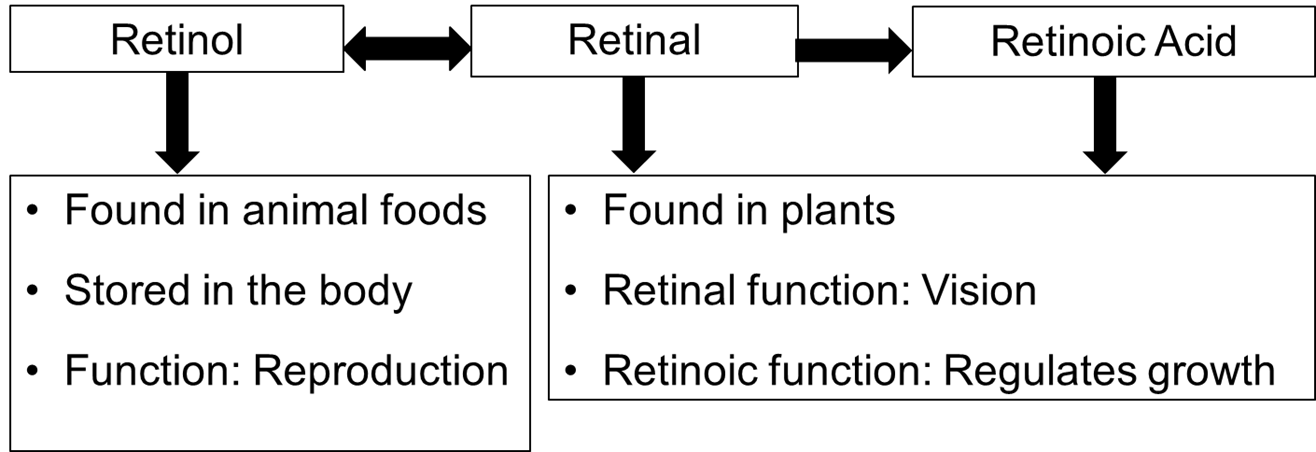
A family of fat-soluble retinoids (retinol, retinal, retinoic acid)
Retinol is the most usable to the body
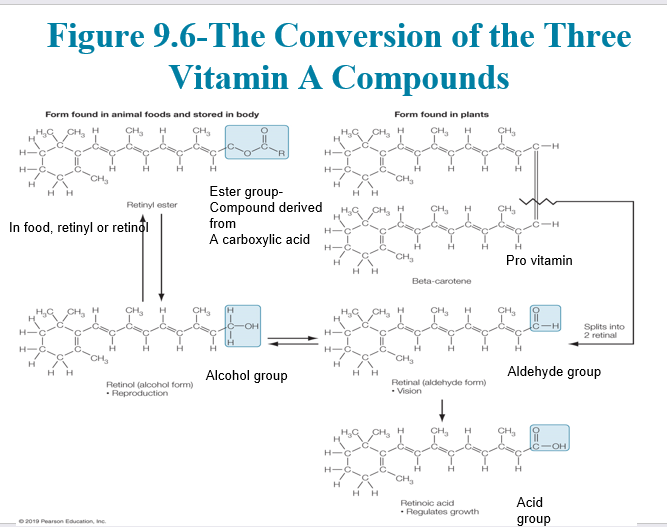
Preformed vitamin A (retinol or retinyl ester) is found primarily in animal foods.
Body stores vitamin A as a retinyl ester in the liver
Some plants contain provitamin A carotenoids, which are precursors to retinol in your body
Beta-carotene is split into two molecules of retinal
Carotenoids:
beta-carotene
beta-cryptoxanthin
alpha-carotene
Vitamin A Absorption and Transport
All forms of vitamin __ are absorbed by active transport in the small intestine with bile salts and micelles
Beta-carotene is absorbed by passive diffusion
Reduced with high fiber intake
Improved in cooked foods
Most forms of vitamin ___are packaged into chylomicrons and enter lymph
Retinoic acid is attached to albumin and transported to the liver via the portal vein
Vitamin __ is stored in the liver and difficult to excrete, leading to possibility of vitamin toxicity
Excretion through bile helps to prevent toxicity
Metabolic Functions of Vitamin A
Participates in:
Vision (figure 9.7—Retinal and its role in vision)
Epithelial tissue maintenance
Protein synthesis
Cell division and differentiation
Epithelial tissues line body cavities or cover body surfaces
Growth
Reproduction
A healthy immune system
Bone health
Too much vitamin __ can break down bone
May help fight cancer
Carotenoids are antioxidants
Lycopene, lutein, and zeaxanthin (nonprovitamin __ compounds)
Body does not convert them to vitamin __
Daily needs of Vitamin A
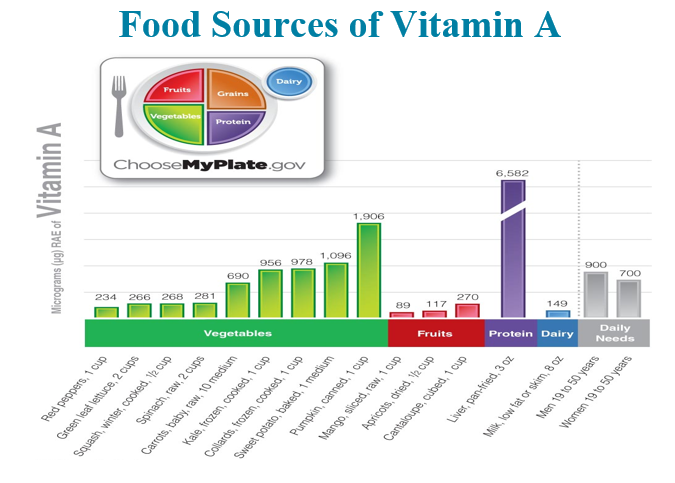
Vitamin needs for adults (RDA)
Males: 900 micrograms (μ g) retinol activity equivalents (R A E)
Females: 700 μ grams R A E
Upper limit: 3,000 μ g as performed vitamin A onlyramsas pas saaasp
Beta-carotene (no RDA): 3 to 6 milligrams daily
Strict vegans need to meet vitamin __ intake through carotenoids and beta-carotene–rich foods
Food sources:
Beef liver
Fortified dairy producs and cereal
Egg carrots, spinach, sweet potatoes
Vitamin A Toxicity
Excessive amounts of preformed vitamin __ can accumulate to toxic levels
Toxic levels occur by taking supplements, not with food intake
>15,000 μ grams can cause symptoms of toxicity
Hypervitaminosis __ can lead to liver damage and even death
Overconsumption:
During pregnancy can cause birth defects in the face, skull, and C N S of the child
Can potentially result in osteoporosis and bone fractures in adults
Carotenoids in foods are not toxic
Do not pose serious health problems
Excess carotenoids can cause carotenodermia
Overconsuming beta-carotene supplements
May increase a smoker’s lung cancer risk
Vitamin A Deficiency
Chronic vitamin __ deficiency causes night blindness.
Prolonged vitamin __ deficiency leads to xerophthalmia
Leading cause of preventable blindness in children, mostly in developing countries
Deficiency can lead to keratinization of epithelial tissues
Epithelial cells don’t secrete mucus
Cells are unable to function properly, promoting infection
What is Vitamin D
Called the “sunshine vitamin”
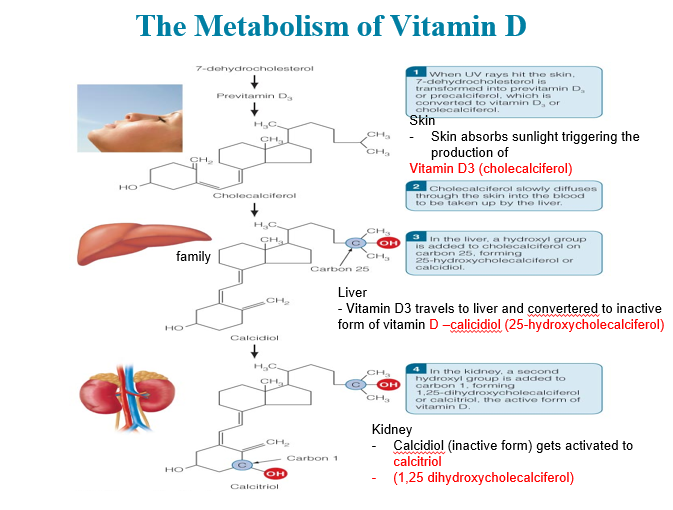
Derived from a reaction between ultraviolet rays and a form of cholesterol in the skin
Exposure to sunlight can synthesize all of the body’s vitamin __ needs.
Considered a conditionally essential nutrient
Considered a prohormone
Physically inactive precursor to a hormone
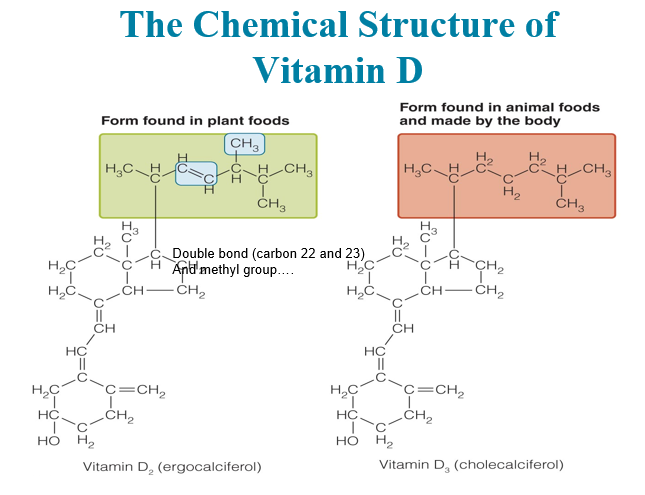
Found in two forms
Cholecalciferol (vitamin __ 3): Produced in the skin and found in animal foods
Ergocalciferol (vitamin __2): Found in plants and dietary supplements
Vitamin D3 or D2
Vitamin D3 may be more effective at increasing levels of vitamin D in the blood. Although, scientists debate vitamin D3 vs D2
Pick whichever form of D is easier to find, but be sure to get enough.
Absorption of Vitamin D2 or Vitamin D3
Vitamin D2 and Vitamin D3 consumed in the diet are absorbed into the small intestine as part of a micelle along with other dietary lipids
Repackaged into chylomicrons and circulates through the lymph system before arriving at the liver for storage
Metabolic functions of Vitamin D
Bone growth
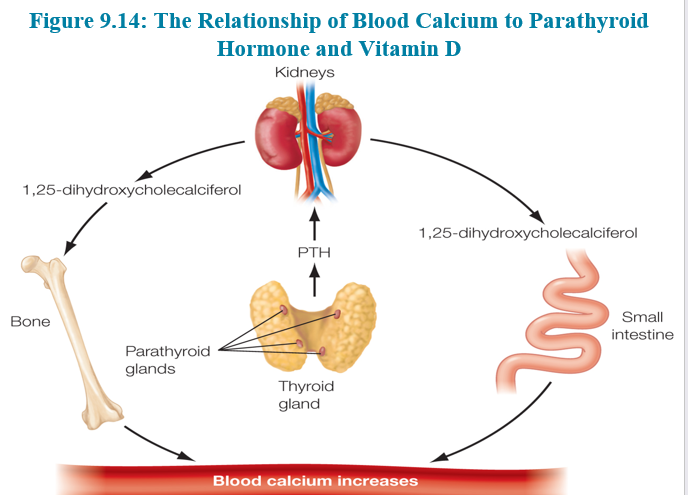
Calcitriol stimulates intestinal calcium and phosphorus absorption
Maintains healthy ratio of calcium and phosphorus in the blood
Controls interaction between osteoblasts (new bone formation) and osteoclasts (bone degradation)
May prevent some cancers
Incidence of breast, colon, and prostate cancer is higher in individuals living in sun-poor areas of the world.
How Calcium levels Decreases in the Blood
PTH stimulates the kidney to increase the amount of active vitamin D (calcitriol)
How does calcitriol increase calcium blood levels?
Increases calcium absorption from digested food in the small intestine
Stimulates the reabsorption of calcium through the kidneys
Releases calcium from the bone
Stimulates osteoclast and inhibits osteoblast
Metabolic Functions of Vitamin D
Potentially helps reduce risk of some autoimmune disorders
May prevent diabetes
May reduce type 1 diabetes risk by 50 percent in adults
Type 2 diabetes is associated with low blood vitamin D levels.
May regulate blood pressure
Daily needs of Vitamin D
Sun exposure cannot meet everyone’s vitamin __ needs
The skin pigment melanin and use of suncreens reduce vitamin __ production
Sunlight intensity during winter in some locations is not sufficient to make enough vitamin __
Vitamin __ needs based on dietary sources
Adults:
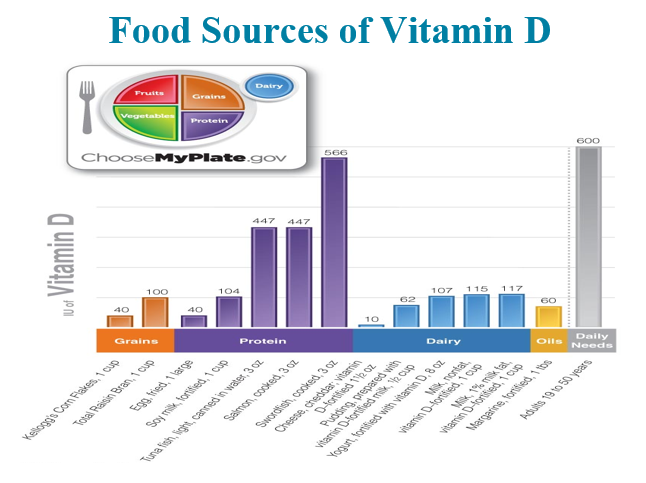
15 to 20 μ grams (600 to 800 I U) per day, depending on age
U L: 100 μ grams (4,000 I U)
Children:
15 μ grams per day
UL: 50 μgrams (2,000 IU)
Food sources:
Fatty fish such as salmon, tuna, sardines
Fortified foods such as dairy products, orange juice, cereals
Vitamin D Toxicity
A high intake can cause loss of appetite, nausea, vomiting, and constipation
Overuse of supplements may lead to hypervitaminosis __
Hypercalcemia
Can cause damaging calcium deposits in kidneys, lungs, blood vessels, and heart
Can affect the nervous system and cause severe depression
Too-high levels are rarely caused by food intake or overexposure to the sun
Vitamin D Deficiency
Rickets: Vitamin __ deficiency disease in children
Bones aren’t adequately mineralized with calcium and phosphorus, causing them to weaken, leading to bowed legs
On the rise in the United States due to decreased milk consumption, fear of skin cancer from sun exposure, and air pollution
Other vitamin __ deficiency disorders
Osteomalacia: Adult equivalent of rickets
Osteoporosis: Condition where bones don't mineralize properly
Muscle and bone weakness and pain
What is Vitamin E?
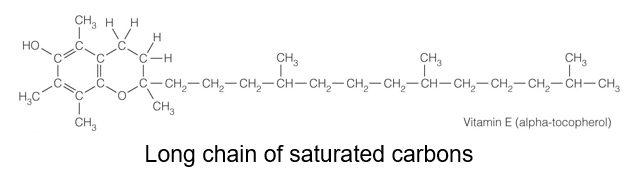
Alpha-tocopherol is the most active form in the body
The synthetic form in supplements is only half as active as the natural form
Vitamin E Absorption and Transport
Absorbed with bile salts and micelles into the enterocytes
Packaged in chylomicrons → lymph → circulation → liver
Ninety percent of vitamin __ is stored in adipose tissue
Excess vitamin __ is excreted through the bile, urine, feces, and the pores of the skin
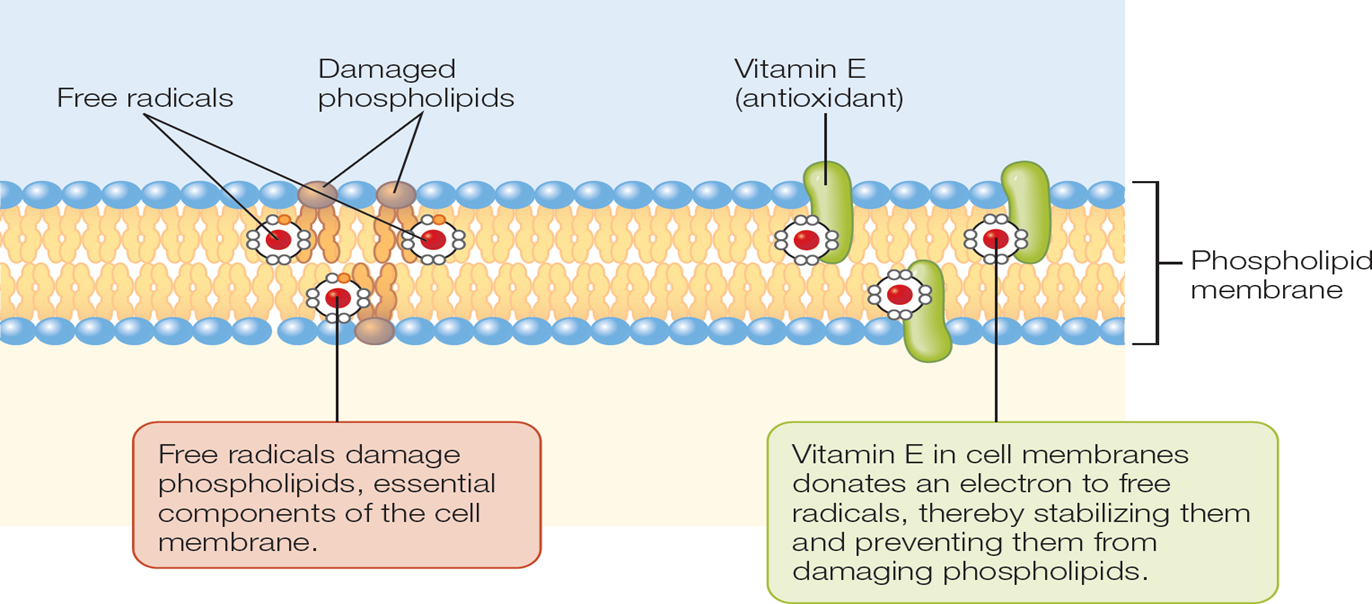
Metabolic Functions of Vitamin E
Acts as a powerful antioxidant
Protects cell membranes; prevents oxidation of L D L cholesterol
Acts as an anticoagulant, inhibiting formation of harmful clots inside bloodstream
No evidence supporting a role in prevention of cancer or other diseases has been conclusively identified
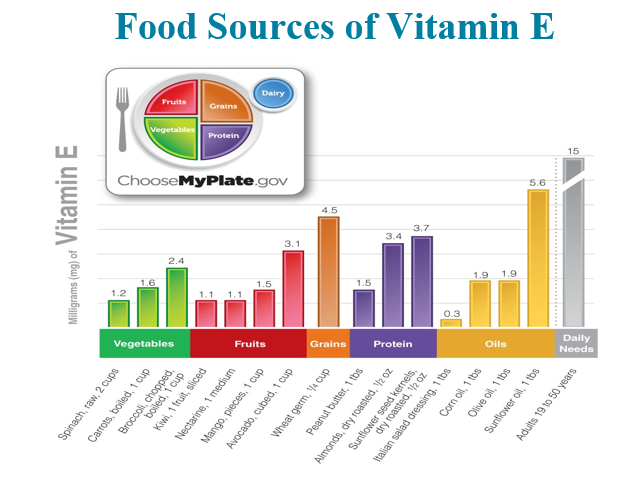
Daily Needs of Vitamin E
Adults need 15 milligrams of alpha-tocopherol equivalents.
UL is 1,000 milligrams/day
Current suspicion that the upper limit may be too high
Food sources:
•vegetable and seed oils
•Avocados
•Wheat germ
•Nuts and seeds
•Fortified cereals
•Green leafy vegetables
Vitamin E Toxicity
Toxicity
No known risk of consuming too much vitamin __ from natural food sources
Overconsumption of synthetic form in dietary supplements and fortified foods can increase risk of a hemorrhage
Vitamin E Deficiency
Deficiency
Rare
Chronic deficiency of vitamin __ can cause nerve problems, muscle weakness, and free radical damage to cell membranes
What is Vitamin K
Three forms of vitamin __
Phylloquinone is found in green plants (primary source in diet)
Menaquinone is synthesized by intestinal bacteria
Menadione is the synthetic form
Vitamin K Absorption and Transport
Most vitamin __ is absorbed in the jejunum
Ten percent of vitamin __ is produced by bacteria in the colon
Vitamin __ is incorporated into chylomicrons and transported to the liver where they are stored
When a diet is deficient in vitamin __:
Storage forms are transported by VLDL, LDL, and HDL
Excess vitamin __ is excreted, mostly bound to bile
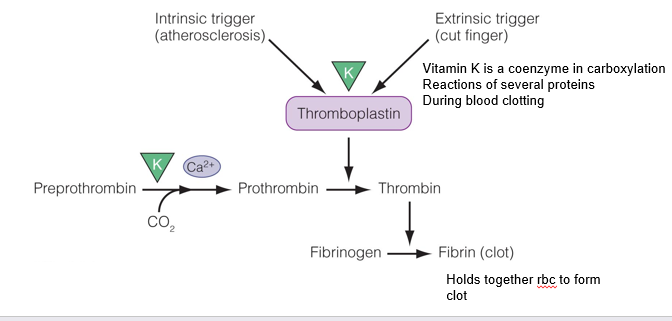
Role of Vitamin K in Blood Clotting
Regulates blood clotting via coagulation (process of blood clotting)
Involved in synthesizing four blood-clotting factors
II (prothrombin), VII, IX, X
Low Blood levels of Vitamin K
Anticoagulation medications such as coumadin or warfarin and severe liver disease can result in low blood-levels of vitamin __, increasing the risk of hemorrhage
Difficult for blood clots because there are low levels of vitamin __ in the blood
Anticoagulation- Inhibit clotting of the blood
Coumadin or Warfarin (Vitamin K)
Blood thinner prescription medication used to treat and prevent blood clots
Patients need to be consistent with their vitamin K intake
Sudden changes in vitamin __ in the diet:
Increase of vitamin
Vitamin overriding the effect of the drug; enabling the blood to clot too quickly
Decrease of vitamin
Vitamin can enhance the effectiveness of the drug and increase the risk of bleeding
Metabolic Functions of Vitamin K
Promotes strong bones
Assists with the carboxylation of other proteins
Interacts with proteins osteocalcin and matrix Gla protein, which is essential for the formation of a strong bone matrix
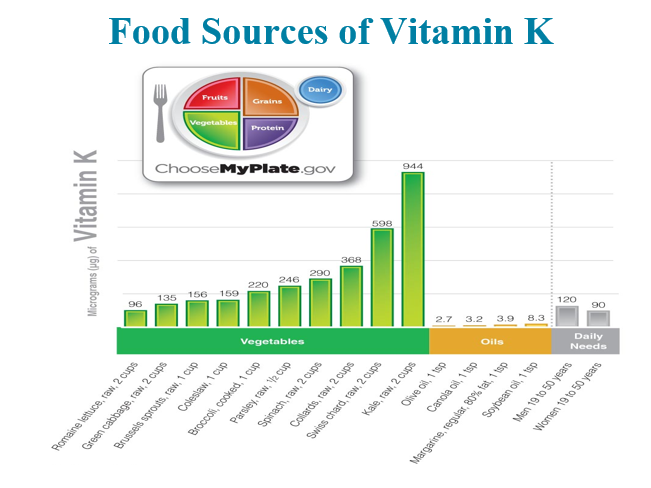
Daily needs of Vitamin K
Adults:
Men: 120 μ grams/day
Women: 90 μ grams/day
Recommendations are based on current consumption, as the amount contributed by intestinal synthesis is unknown.
Food sources:
Green leafy vegetables
Soybeans
Vegetable oil and margarine
Vitamin K Toxicity
Toxicity
No known adverse effects
Individuals taking anticoagulant medications should keep vitamin K intake consistent
Changes in intake can increase or decrease drug effectiveness
Vitamin K Deficiency
Deficiency
Infants are born with too little vitamin __
Deficiency severe enough to affect blood clotting is extremely rare
May cause hip fracture in older men and women
Are Vitamin Supplements necessary for Good Health?
No evidence supports the use of supplements and preventing chronic diseases or cognitive decline
Not a substitute for healthy eating
Can cause adverse side effects
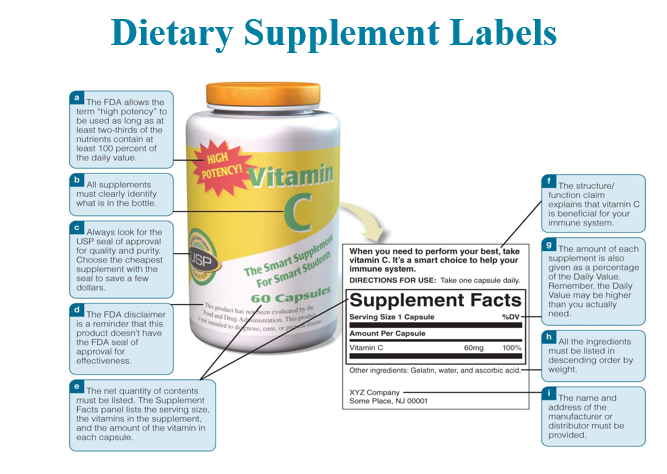
Are not regulated like drugs and do not require F D A approval to be put on the market
Supplements can’t be removed unless they have been shown to be unsafe or cause harm
How to choose a supplement
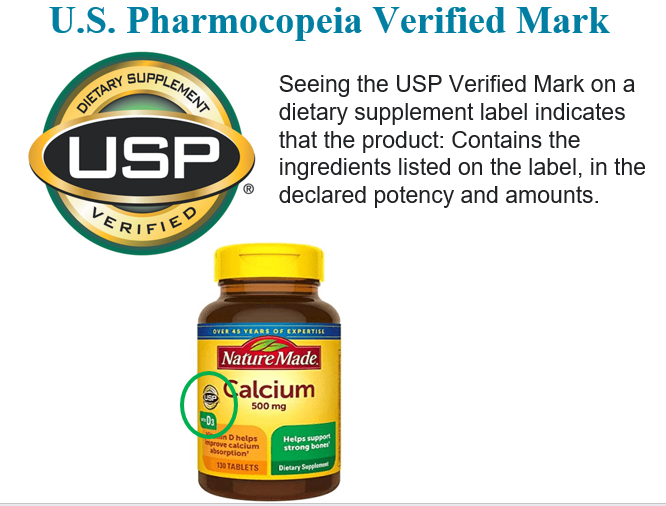
Choose supplements with the United States Pharmacopeial Convention seal (U S P)
Read the label carefully
Who might benefit from supplements?
May be helpful for some individuals
Pregnant and lactating women
Older individuals who need vitamin B12
Individuals who lack dietary vitamin D or sun exposure
Individuals on low-kilocalorie diets
Strict vegetarians
Individuals with food allergies or lactose intolerance
Individuals who abuse alcohol
Individuals who are food insecure
Breast-fed infants