CH 11: Root Morphology and Canal Anatomy in Dental Structures
 Call Kai
 Learn
Learn Practice Test
 Spaced Repetition
 Match
Match Flashcards
 Knowt Play
1/20

There's no tags or description
Looks like no tags are added yet.
Name | Mastery | Learn | Test | Matching | Spaced | Call with Kai |
|---|
No analytics yet
Send a link to your students to track their progress
21 Terms
What are the general functions of the roots of teeth?
Sensory system, nourishment, reparative methods, and support or anchorage for teeth.
What role does the pulp tissue play in the sensory function of roots?
It nourishes the tooth and contains nerves that emit pain responses when stimulated.
What common stimuli can cause pain in the roots?
Dehydration, rubbing with an instrument, friction, and abrasion.
How do tubules within dentin contribute to sensory function?
They carry stimuli to the nerve tissue within the root.
What can cause dentin and tubules to be exposed?
Periodontal disease, recession, and trauma.
What is the apical foramen?
The orifice in the apex of the root where vessels enter and exit.
What are odontoblasts responsible for?
Creating secondary and reparative dentin inside the tooth in response to trauma.
What happens if vessels in the root are restricted?
Nerves and other tissues can die.
What factors affect the amount of resistance a tooth can handle?
Width, shape, length, curvature, number of roots, concavity, and direction of periodontal fibers.
How does root length and width affect tooth support?
Longer and wider roots provide more support and are more firmly embedded in bone.
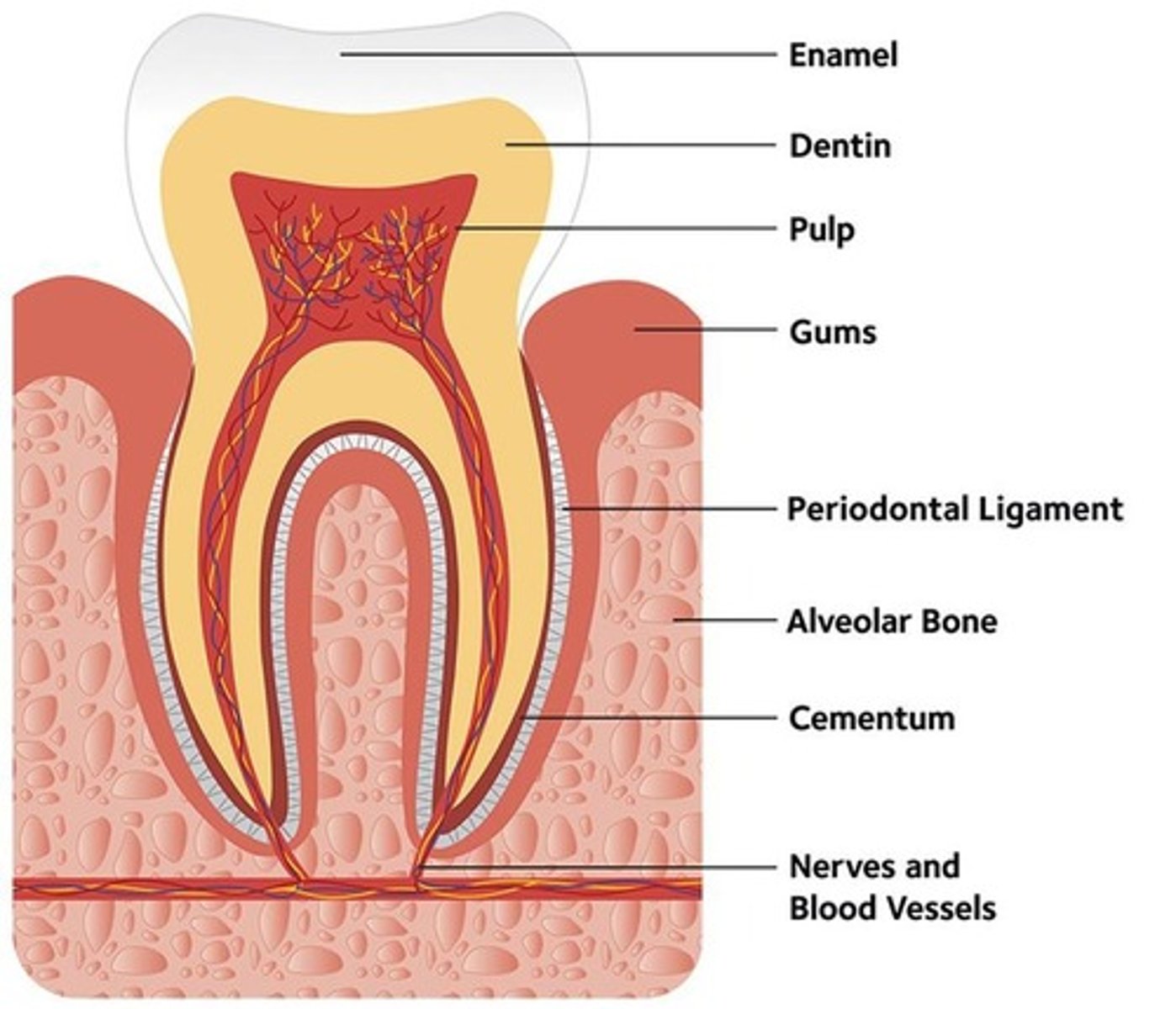
What is the role of the periodontal ligament (PDL) in tooth movement?
It allows slight tooth movement and remodels bone to accommodate new tooth positions.
What is a furcation in dental anatomy?
The point where multirooted teeth separate roots, often a source of periodontal problems.
What is the typical root canal structure of anterior teeth?
Usually one large root canal per tooth, except mandibular canines which may have two.
How many canals do maxillary premolars typically have?
Often have two canals.
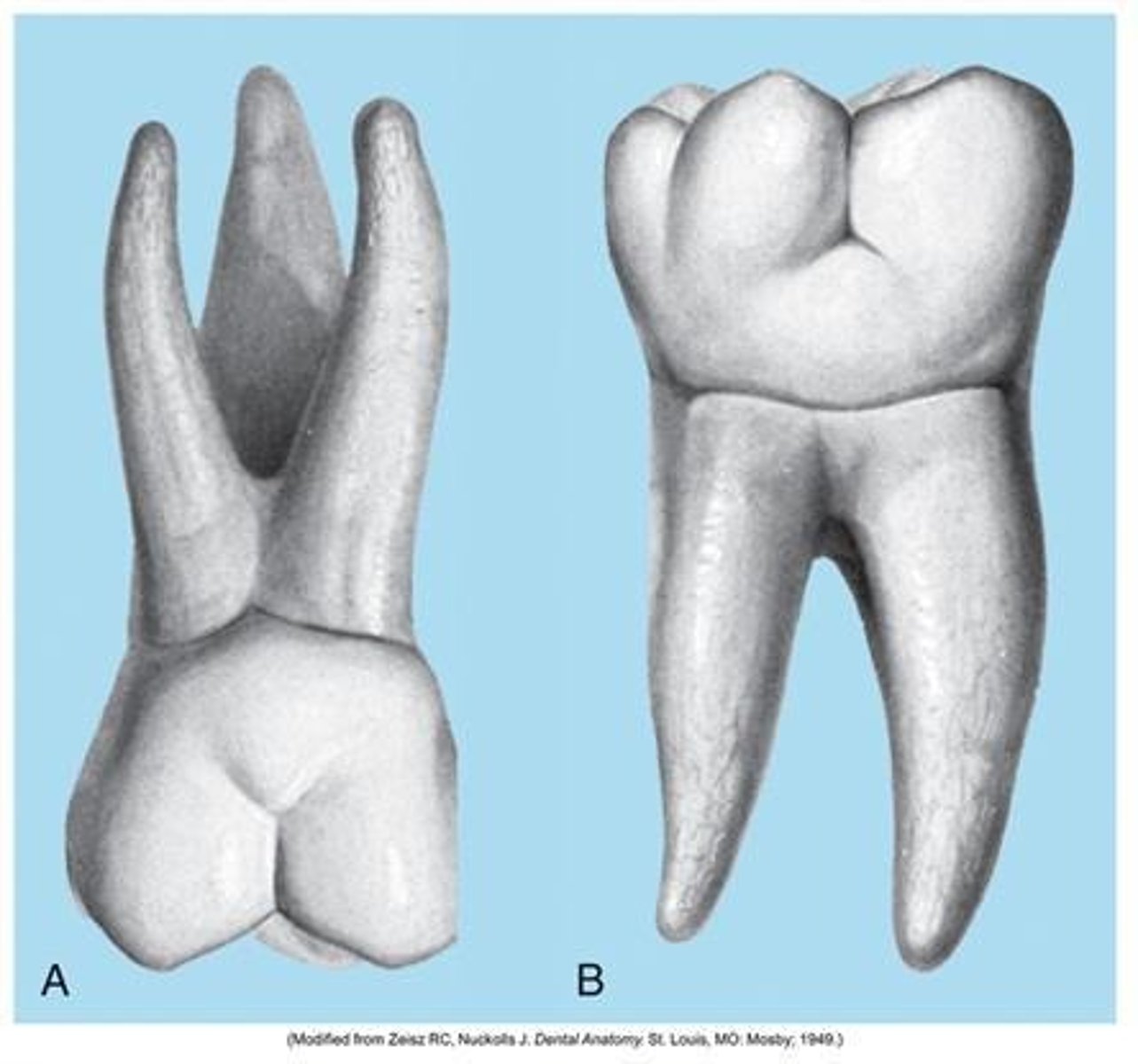
What is unique about the maxillary first molar's root canal structure?
It usually has three roots and three canals, with the mesiobuccal root often having two canals.
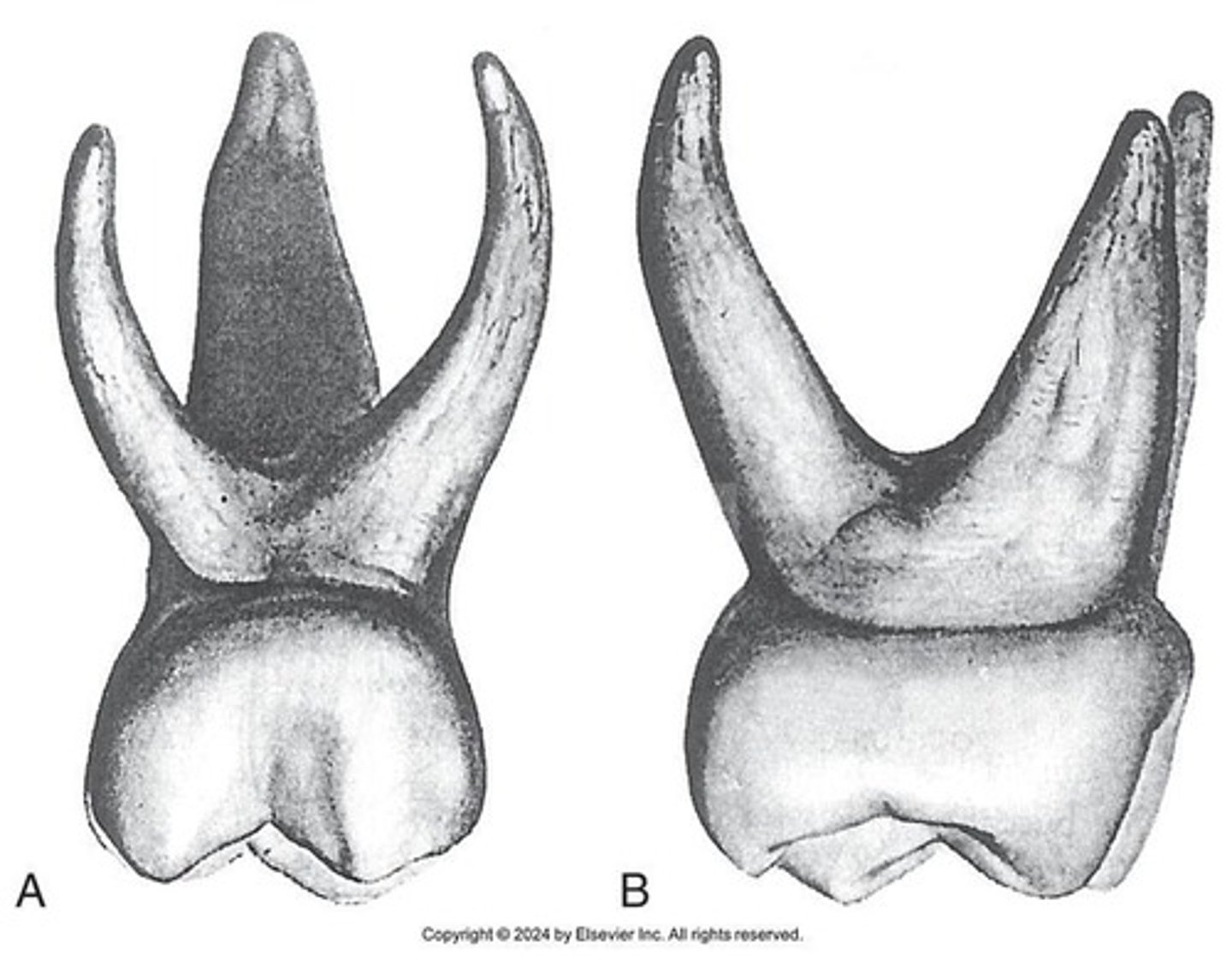
What variability exists in the root canal structure of mandibular third molars?
They can have one, two, three, or more root canals and tend to be curved and unpredictable.
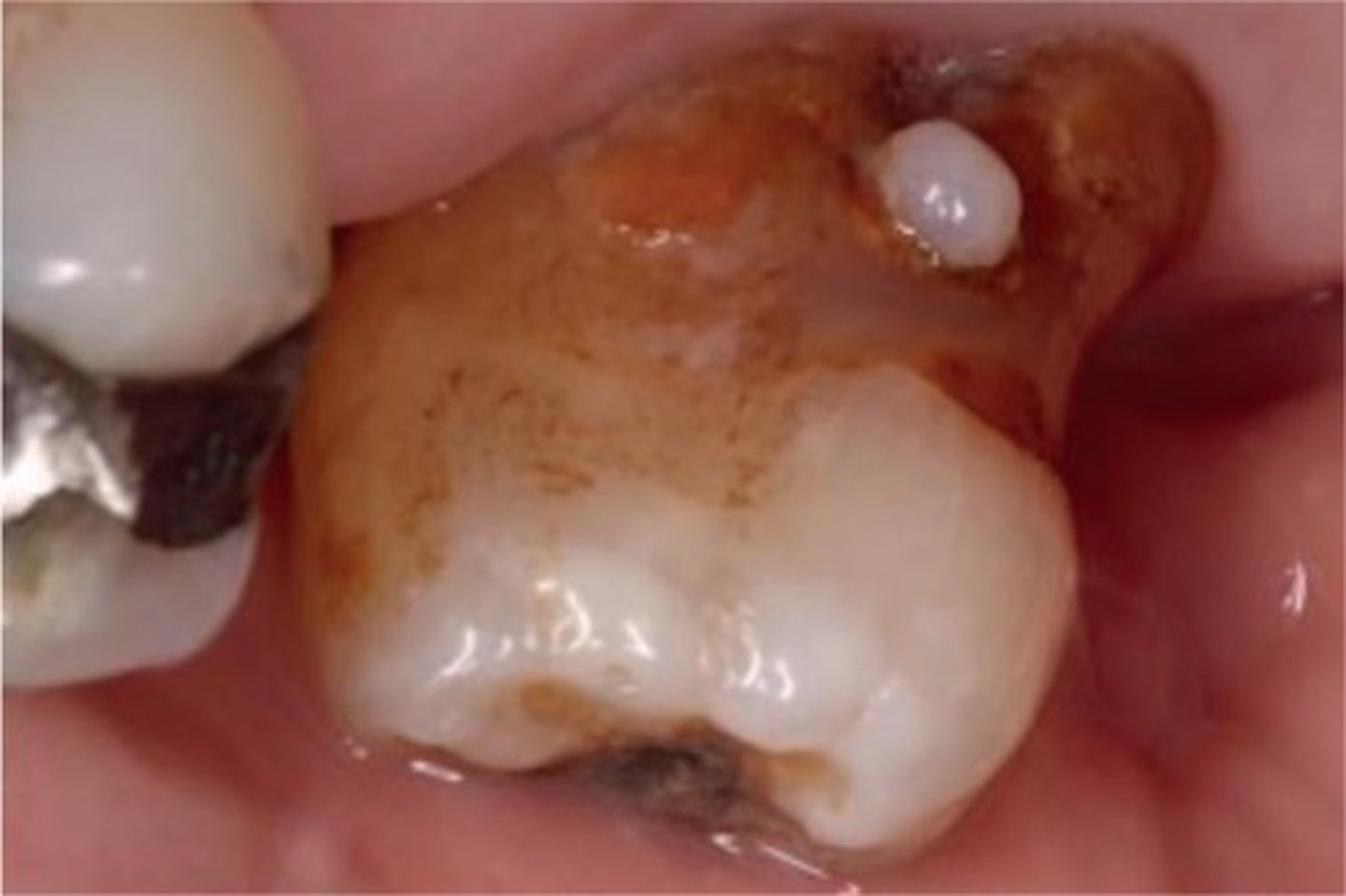
What are enamel pearls?
Small elevations of enamel on the root surface that make hygiene difficult, usually found in the furcation area.
What is hypercementosis?
An extreme formation of cementum on the outside of the root, often associated with bone destruction or trauma.
What are the hygiene considerations for molar roots?
Molar roots are harder to access and clean, making them more susceptible to disease.
What is the significance of multiple roots in tooth support?
They allow periodontal ligaments to disburse in more directions, increasing resistance to displacement.
What happens to the PDL during orthodontic treatment?
It must hold the tooth in its new position long enough for remodeling to occur.