Bio 153 final exam review
 Call Kai
 Learn
Learn Practice Test
 Spaced Repetition
 Match
Match Flashcards
 Knowt Play
1/78

Earn XP
Description and Tags
Missing chapter 26 to 28
Name | Mastery | Learn | Test | Matching | Spaced | Call with Kai |
|---|
No analytics yet
Send a link to your students to track their progress
79 Terms
What are 3 general traits the facilitated life on land for plants?
Reproductive structures
photosynthetic branches
structures that anchor plants to the soil
What is the algae that is closest to plants?
Charophytes
What are some traits that differentiate charophyte algae to plants?
Alternation of generations (haploid and diploid)
Walled spores produced in sporangia
Apical meristems (localized regions of cell division at the tips of roots and shoots)
Cuticle (not in all plants)
Stomata (not in all plants)
What are the 2 major groups of seedless vascular plants?
Lycophyta (lycophyte)
Monilphyta (monilophyte)
What are the 3 major groups of nonvascular plants (bryophytes)?
Phylum Hepatophyta (Liverworts)
Phylum Bryophyta (mosses)
Phylum Anthocerophyta (hornworts)
What is the life cycle of a moss?
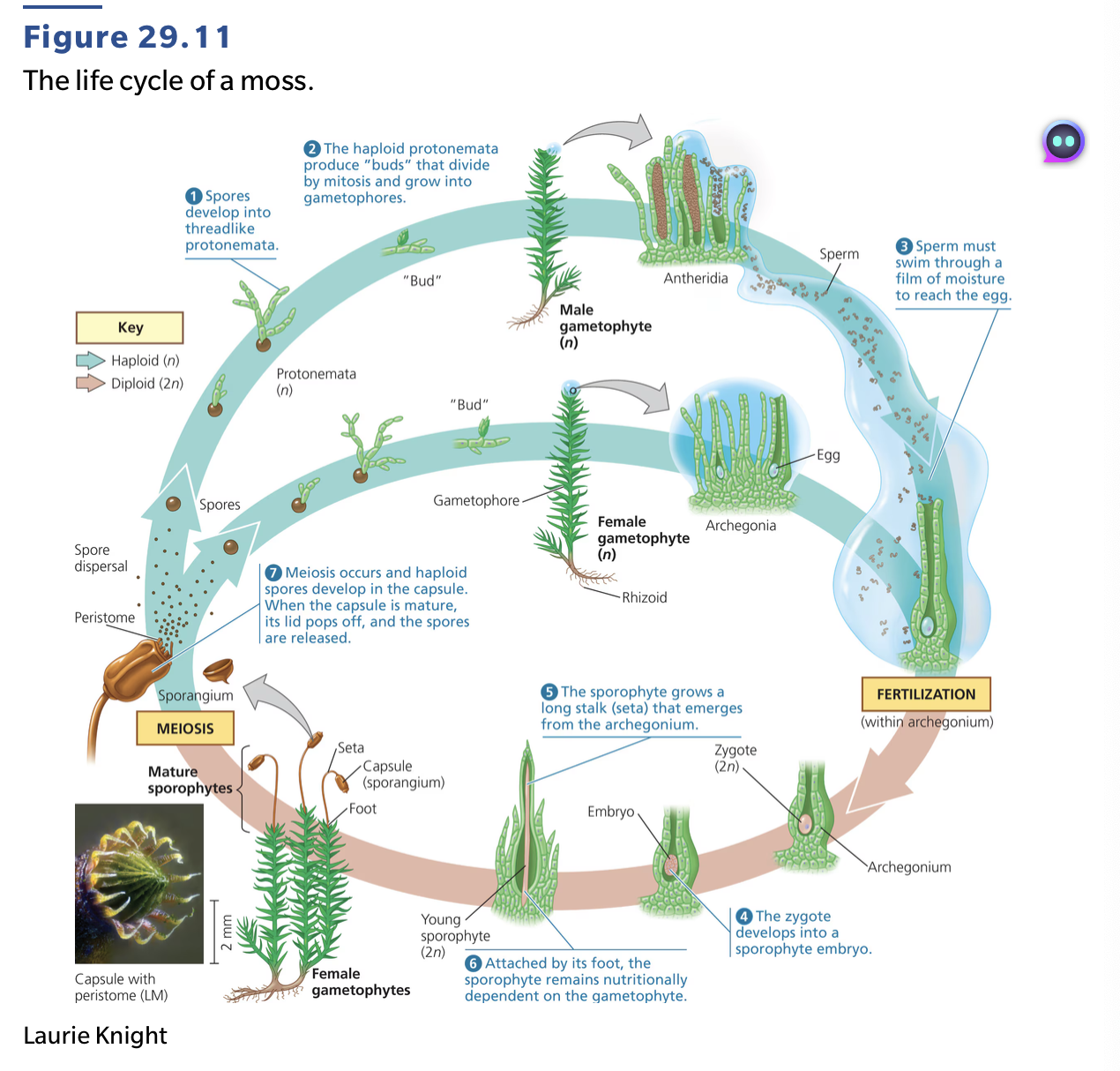
What are the “roots” of non-vascular plants called?
Rhizoids, which are long tubular single cells or filaments of cells
How do some mosses reproduce?
Asexually by forming brood bodies
Sporophytes vs gametophytes
Gametophytes are haploids and produce gametes via mitosis, which fuse to form a zygote
Sporophytes are diploids and produce haploid spores via meiosis
What are the main traits that characterize living vascular plants?
Xylem and phloem (Xylem moves water and are lignified at maturity; and phloem sugars and other nutrients)
True roots and leaves
Sporophyte dominant life-cycle
What is the life cycle of a fern?
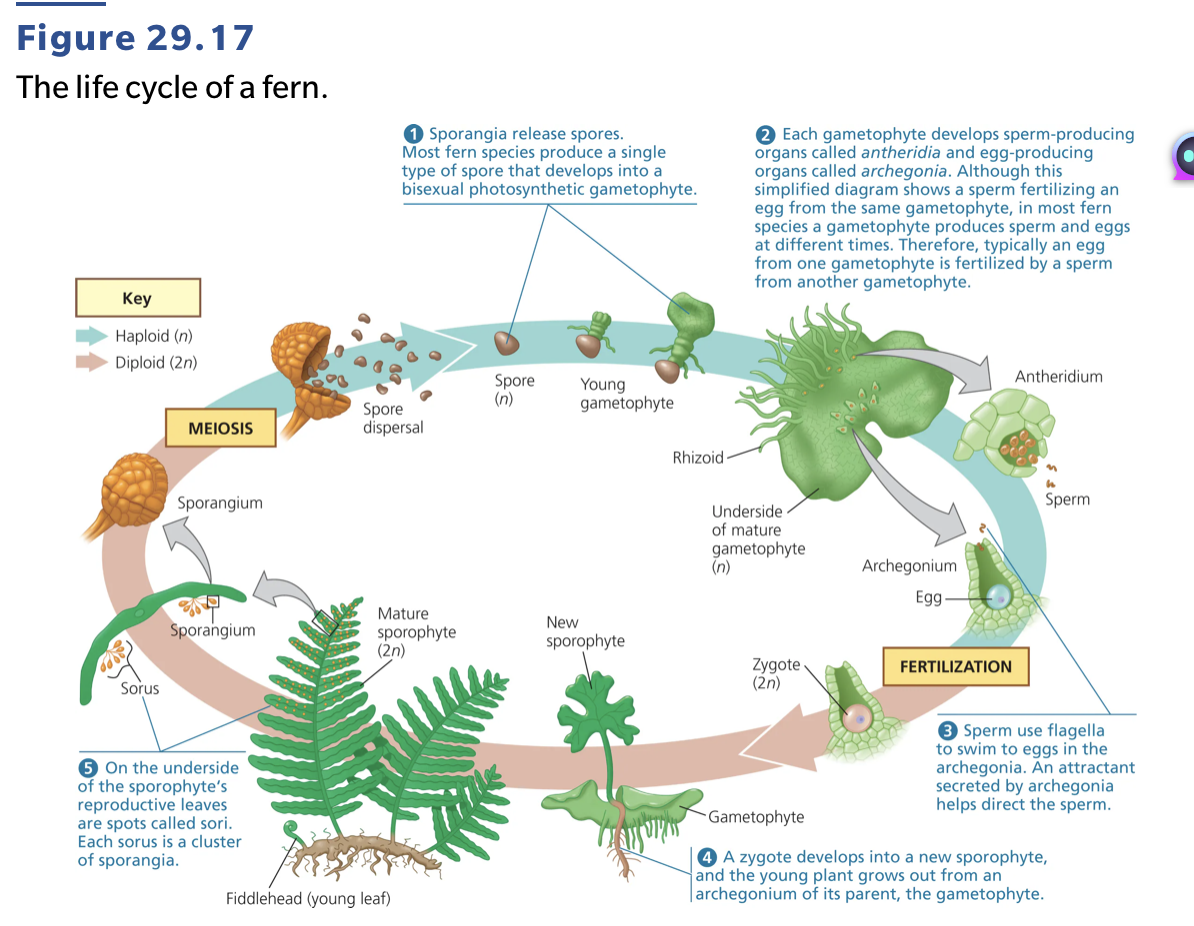
What are sporophylls and why are they important?
A modified leaf that bears sporangia and hence is specialized for reproduction
They are a milestone in the evolution of plants
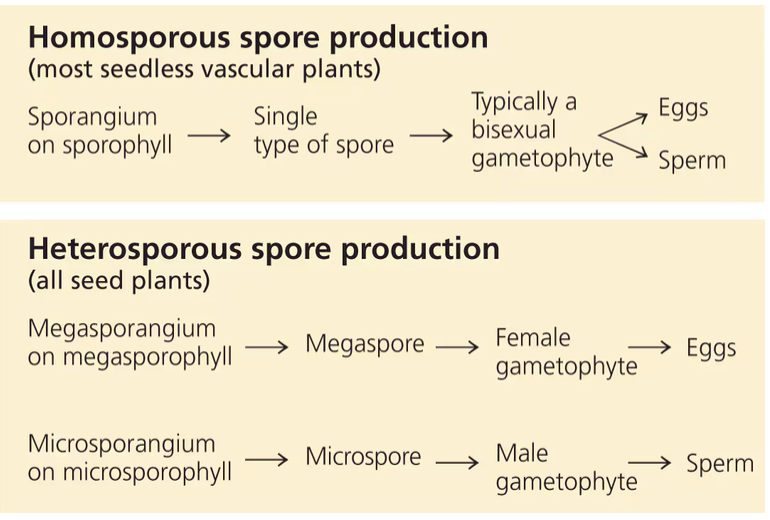
Homosporous vs heterosporous
How did the dramatic growth of seedless vascular plants affect Earth and its other life forms?
Major drop in CO2 levels during the Carboniferous
Became coal (removing even more CO2 from the atmosphere)
What is a seed and why is it so revolutionary?
An embryo packaged with a store of food within a protective coat
it provides protection from harsh conditions
it facilitates dispersal to new habitat
it can remain dormant for very long periods of time
it provides a food supply to the embryo
What are specific traits of seed plants?
Reduced gametophytes
heterospory
ovules
pollen
What is heterospory?
The production of two kinds of spores: megasporangia (produces 1 megaspore) that give rise to female gametophytes and microsporangia (multiple microspores) that give rise to male gametophytes
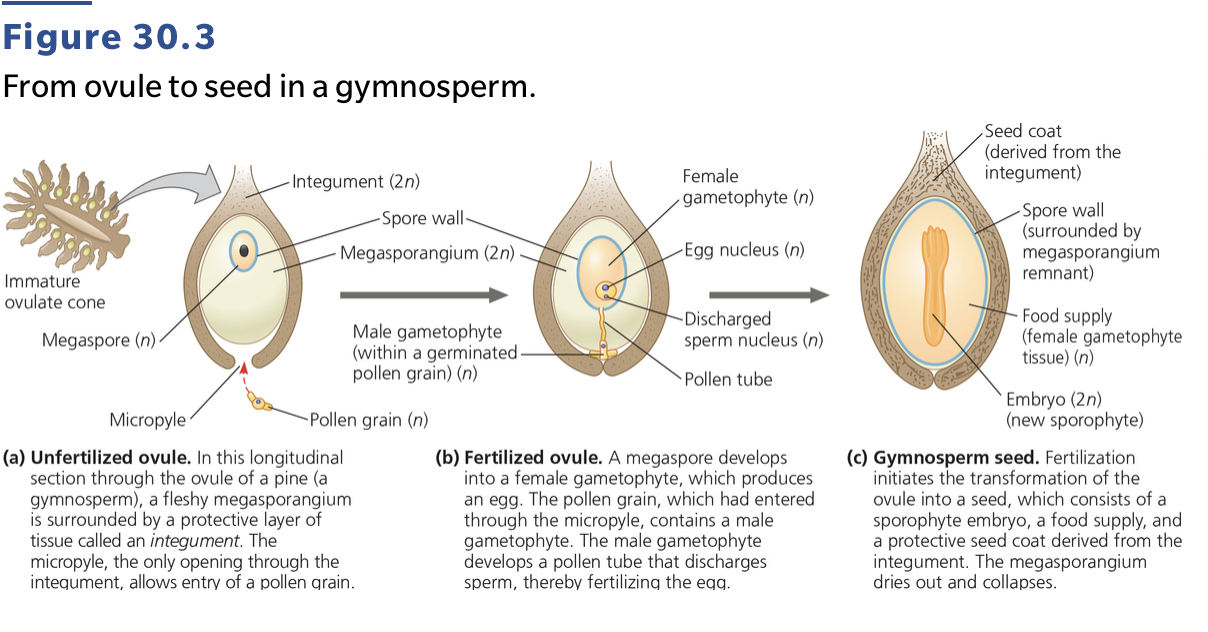
What is the process of the formation of an ovule to a seed in gymnosperms?
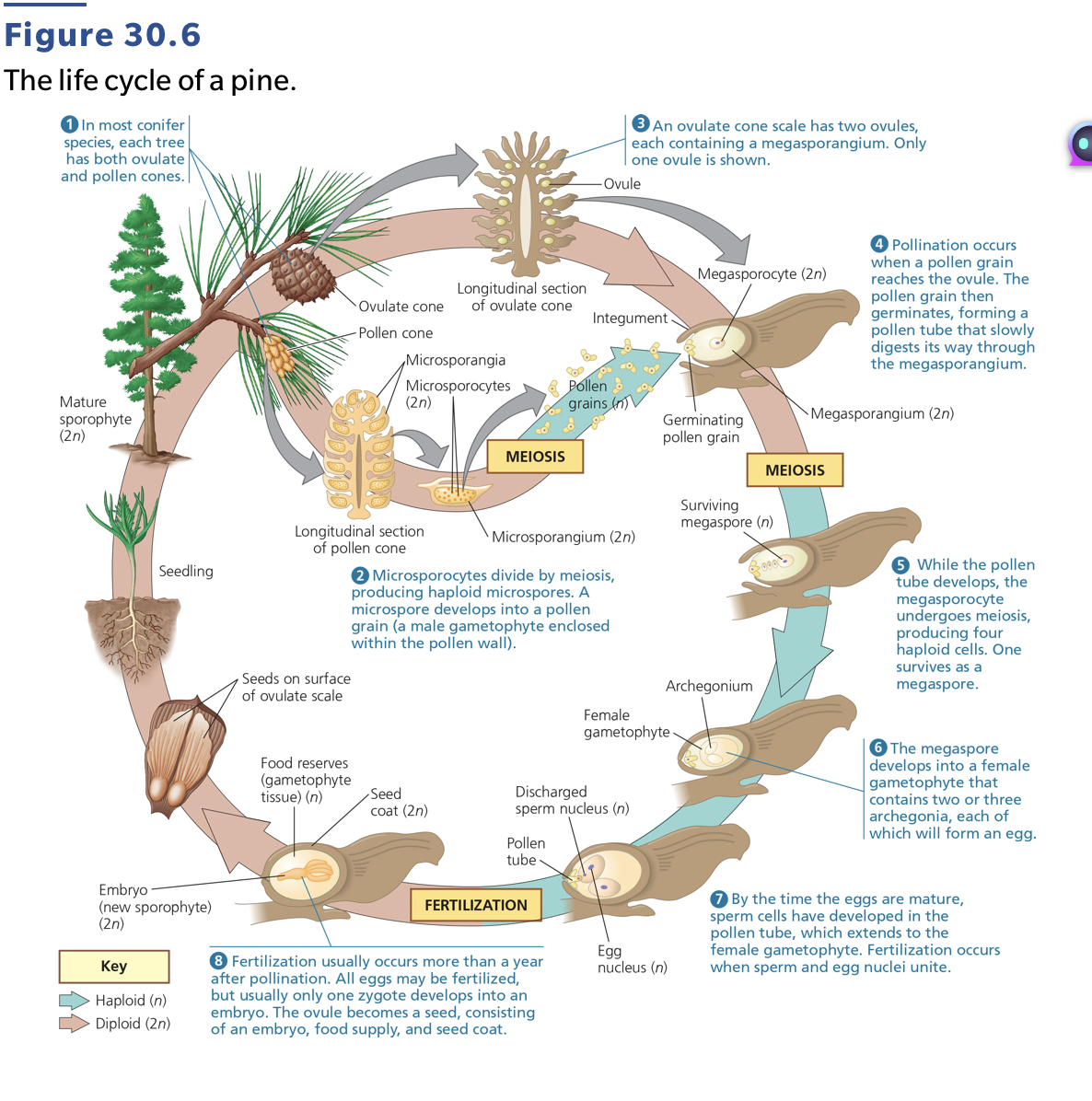
What is the life cycle of a pine (a gymnosperm)
Give an example of a gymnosperm and an angiosperm
Gymnosperm: pine tree
Angiosperm: roses
What are some specific characteristics of angiosperms?
Flowers: a specialized shoot with up to 4 sets of modified leaves, bearing structures for sexual reproduction
Fruits: a mature ovary of a flower. The fruit protects dormant seeds and often aids in their dispersal
What are the 4 floral organs?
Sepal: enclose the flower before it opens
Petals: aid in the attraction of pollinators
Stamens: mircrosporophylls made of a filament and the anther (where the pollen is produced)
Carpels/pistil: megasporophylls (container in which seeds are enclosed) made of a stigma (receives pollen), a style and the ovary
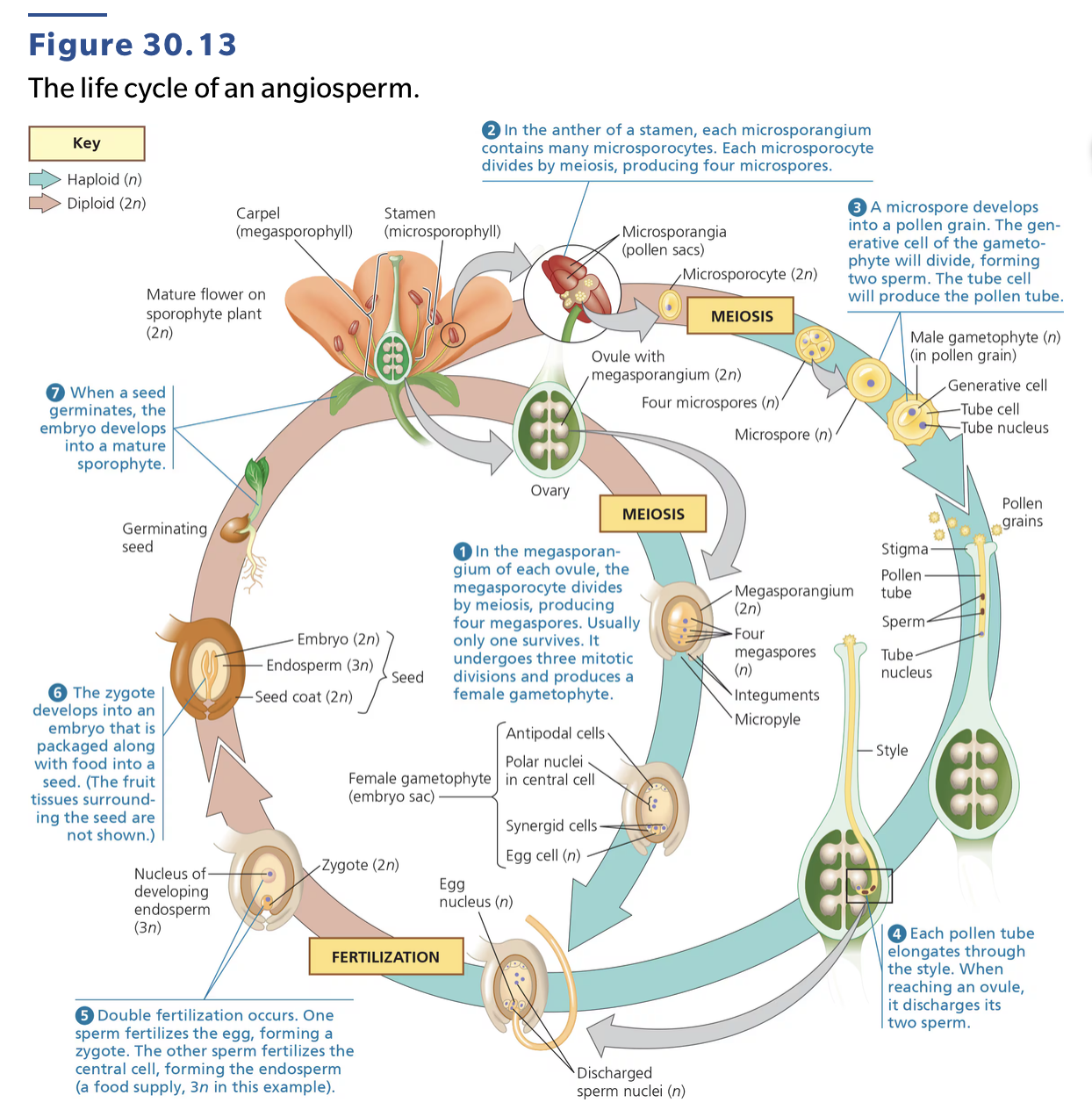
What is the life cycle of an angiosperm?
what is cross-pollination?
It is the transfer of pollen from an anther of a flower on one plant to the stigma of a flower on another plant of the same species.
It enhances genetic variability
What is double fertilization?
A mechanism of fertilization in angiosperms in which two sperm cells unite with two cells in the female gametophyte to form the zygote and endosperm
What is a cotyledon?
A seed leaf of an angiosperm embryo.
monocots
eudicots
Bilateral vs radial symmetry
Bilateral symmetry: divides organisms into left and right halves along one plane
radial symmetry: the body lacks a left side and a right side and can be divided into mirror-imaged halves by any plane through its central axis
How do angiosperms and gymnosperms help humans?
Source of food
source of wood (traditional biomass)
Medicine
how many integuments do angiosperm and gymnosperm have?
Angiosperms have 2
Gymnosperms have 1
How do fungi feed?
They are heterotrophs that feed by absorption of nutrients for the environment outside of their bodies
What are the key traits of all fungi?
Multicellular filaments (and single cells yeasts)
the way they derive nutrition
What are the 3 roles of fungi in ecological communities and how does it relate to the way they absorb nutrients?
Decomposers: break down and absorb nutrients from nonliving organic material and the wastes of organisms
Parasites: absorb nutrients from the cells of living hosts (some are pathogenic)
Mutualists: absorb nutrients from a host organism but reciprocate with actions that benefit the host
What is a hypha (plural, hyphae)?
One of many connected filaments that collectively make up the mycelium of a fungus with chitin rich walls that enhance feeding.
What is the mycelium?
A mass of hyphae
How do fungi absorb and digest their food?
Fungi must release digestive enzymes
The enzymes break down big molecules into smaller more easily absorbed monomers
They are absorbed into its cytoplasm where they are used to provide energy for the fungal cell
What is a septa?
One of the cross-walls that divide a fungal hypha into cells. Septa generally have pores large enough to allow ribosomes, mitochondria, and even nuclei to flow from cell to cell
What is mycorrhizae?
A mutualistic association of plant roots and fungus that is extremely important both in natural ecosystems and in agriculture.
How do multicellular fungi reproduce?
Tiny haploid cells called spores are produced inside the mushroom which are the reproductive structures of large underground mycelia.
Do fungi reproduce sexually or asexually?
They can do both
What is the general life cycle of fungi?
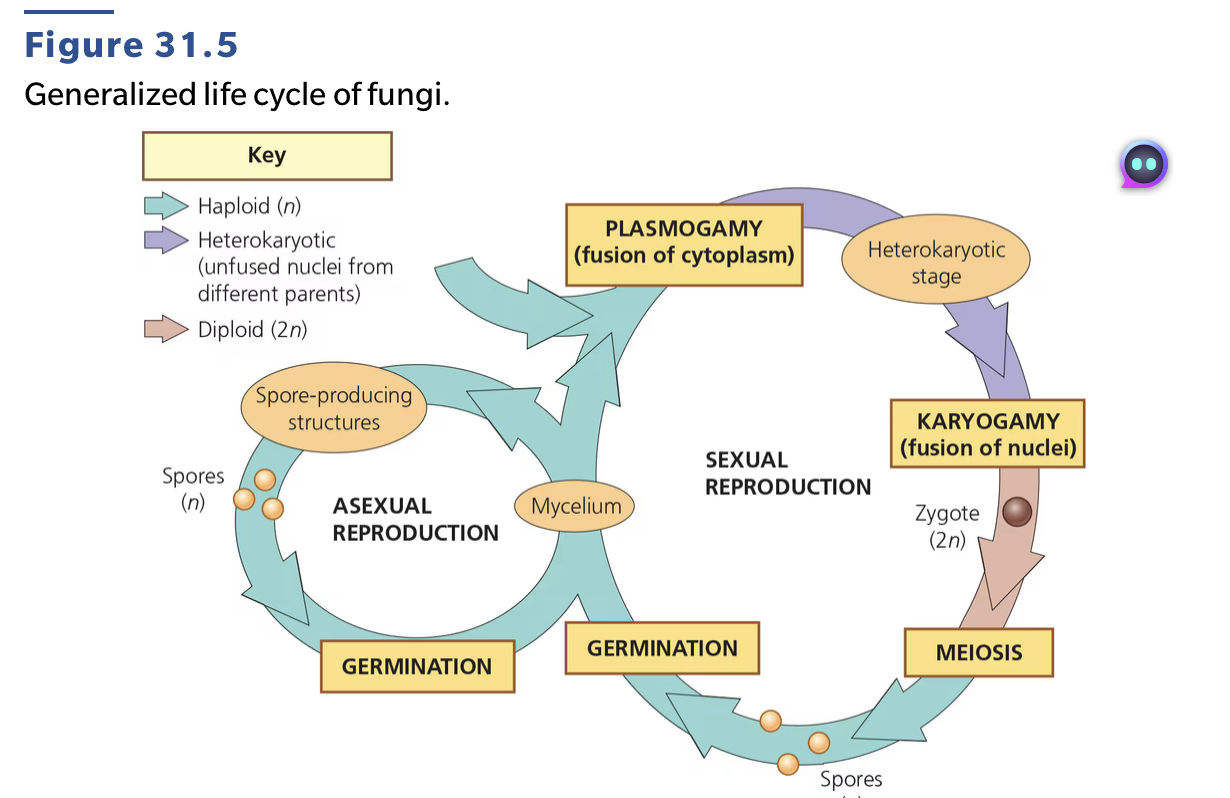
What is the process of sexual reproduction in fungi?
two mycelia release pheromones
The hyphae extend towards the source of the pheromones (if the mycelia are of different mating types)
The hyphae meet and fuse (plasmogamy)
The fusion of haploid nuclei contributed by the two parents happen (Karyogamy) producing diploid cells
Meiosis restores the haploid condition and create spores
how does asexual reproduction occur in yeasts?
by ordinary cell division
by the pinching of small “bud cells” of a parent cell
What is an endophyte?
A fungus that lives inside a leaf or other plant part without causing harm to the plant
What is the closest relative to fungi?
Nucleariids
What is a lichen?
The mutualistic association between a fungus and a photosynthetic alga or cyanobacterium
What are the 7 phylum of fungi?
Cryptomycota
Microsporidia
Chytridiomycota
Mucoromycota
Ascomycota
Basidiomycota
What are key characteristics of animals?
heterotrophs
tissues
digestive system
nerve and muscle cells
What are tissues?
Groups of similar cells that act as a functional unit
What is gastrula?
An embryonic stage in animal development encompassing the formation of three layers: ectoderm, mesoderm, and endoderm
What is a larva?
A sexually immature form of an animal that is morphologically distinct from the adult and eventually undergoes metamorphosis
What is a body plan?
A particular set of morphological and developmental traits that are integrated into a functional whole
What is a main group of animal that lacks tissues?
Sponges
What does it mean to be diploblastic?
Only having 2 germ layers: ectoderm and endoderm
hemocoel vs coelom
Coelom: fluid-filled body cavity completely lined with mesoderm, cushioning organs
Hemocoel: fluid-filled open circulatory system
What are the 2 development modes of animals?
protostome development: the development of the mouth from the blastopore
deuterostome development: development of the anus from the blastopore
What types of cleavage do animals with protostome development undergo?
spiral and determinate cleavage
What types of cleavage do animals with deuterostome development undergo?
radial and indeterminate cleavage
What is the archenteron?
the endoderm-lined cavity, formed during gastrulation, that develops into the digestive tract of an animal
What are Hox genes?
Master regulator genes that determine the body plan
What are suspension feeders?
An aquatic animal, ushc as a sponge, clam, or baleen whale, that feeds by shifting small organisms or food particles from the water
What are hermaphrodites?
An individual that functions as both male and female and female in sexual reproduction by producing both sperm and eggs
What is the basic body plan of a cnidarian?
the gastrovascular cavity: a central cavity with a single opening in the body that functions in both the digestion and distribution of nutrients
Polyp vs medusa
Polyp: the sessile variant of the cnidarian body plan
Medusa: the floating, flattened, mouth-down version of the cnidarian body plan
Cnidarians have no brains. What do they have instead?
A non centralized nerve net that is associated with sensory structures that are distributed around the body.
What are cnidocytes?
A specialized cell unique to Cnidaria that contains a capsule-like organelle housing a coiled thread that when discharged explodes outward and functions in prey capture or defence
What are 2 cnidaria clades?
Medusozoans and anthozoans
What are the 3 major clades of bilaterally symmetrical animals?
Lophotrochozoa
Ecdysozoa
Deuterostomia
What are 5 lophotrochozoan phyla and their main characteristic?
Platyhelminthes: no body cavity
Syndermata: Hemocoel
Lophophorates: coelom
Mollusca: Hemocoel and reduced coelom
Annelida: Coelom; body wall and internal organs
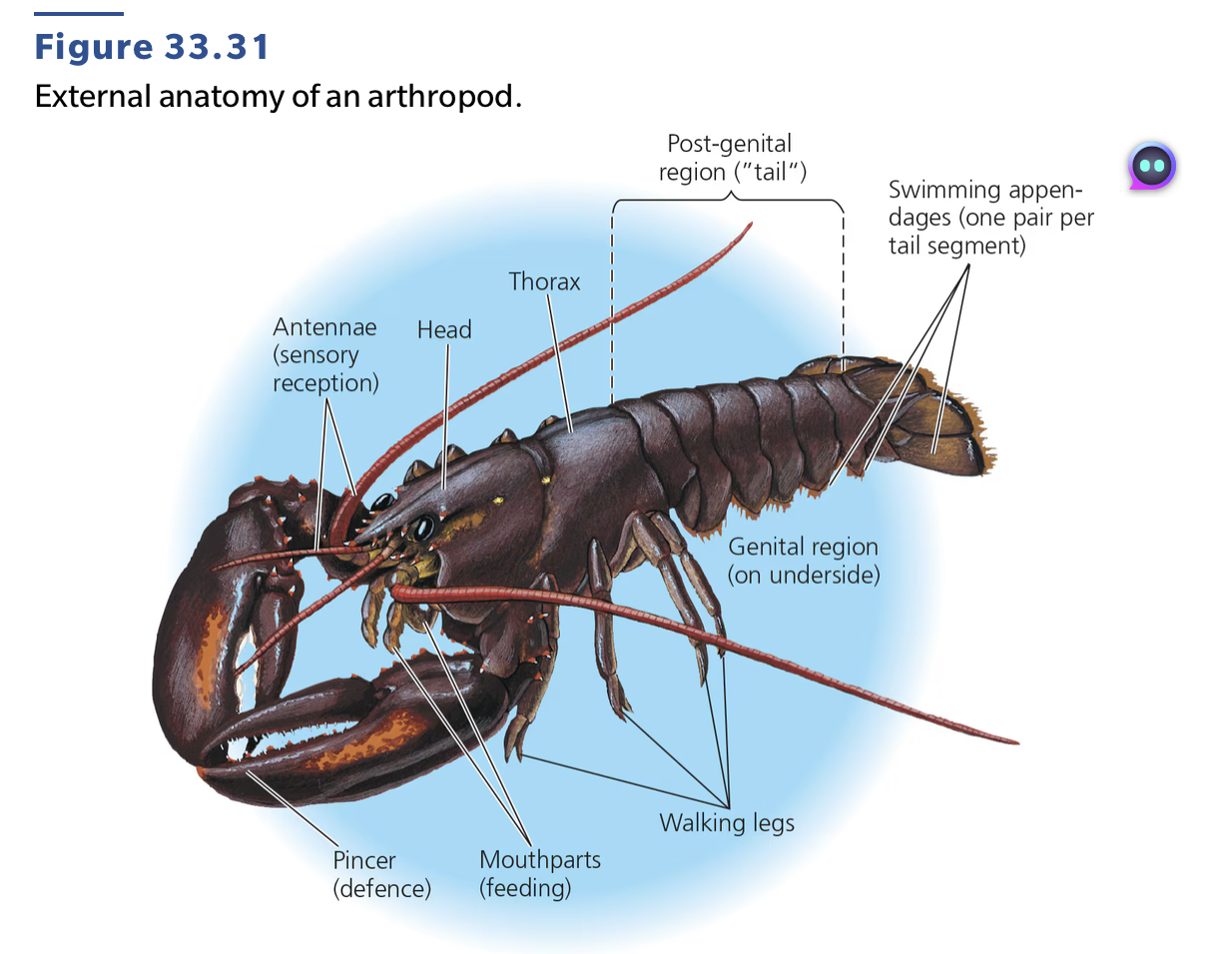
What are arthropods?
A segmented ecdysozoan with a hard exoskeleton and jointed appendages.
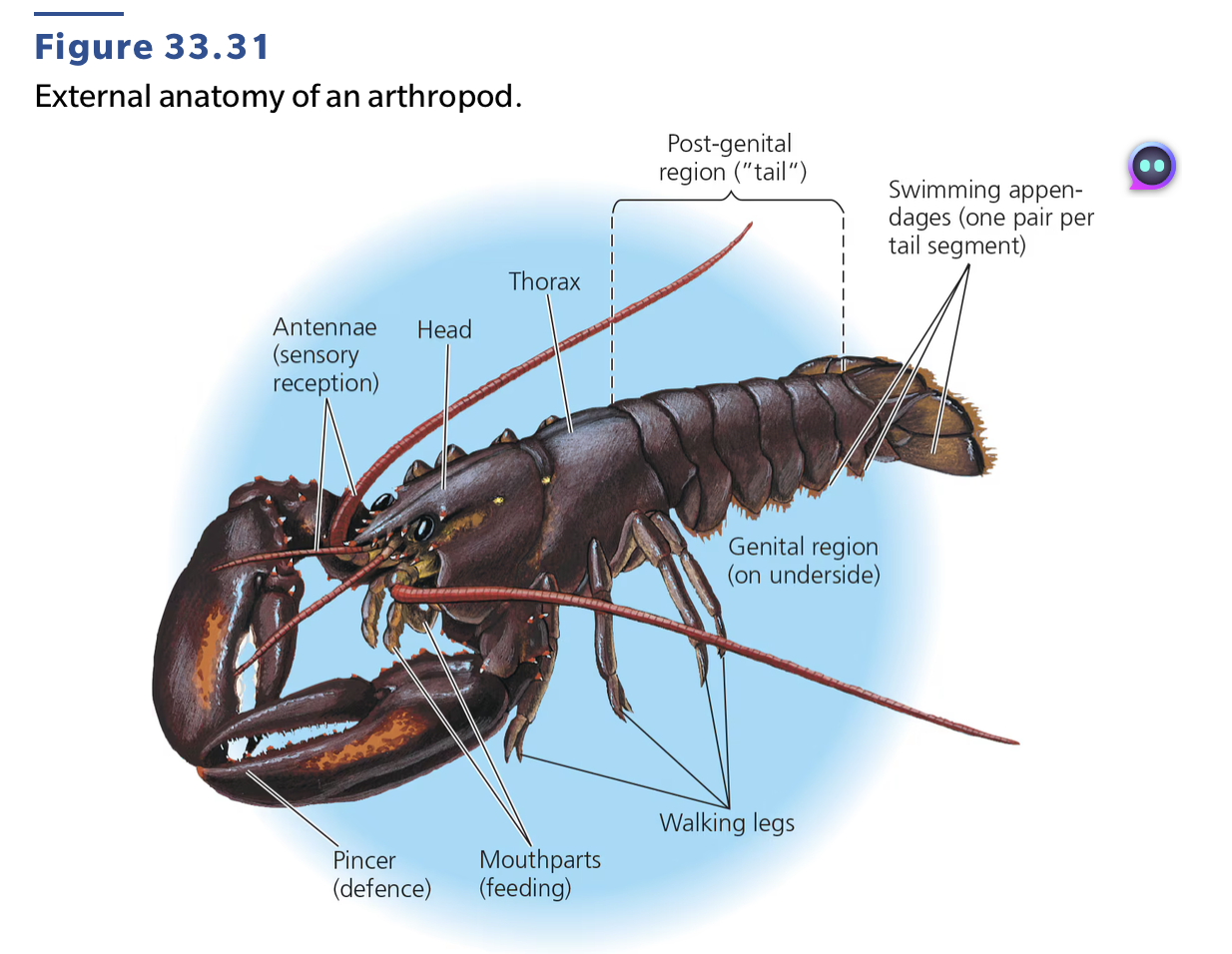
What is the external anatomy of an arthropod?
What is the phylogenetic position of the insects?
What are 2 main characteristics of Porifera (sponges, like glass sponges)
Lack true tissues
have choanocytes
What are 4 characteristics of Cnidaria (hydras, jellies, sea anemones, corals)?
stinging structures
diploblastic
radically symmetrical
gastrovascular cavity
What’s an example of Ecdysozoa?
roundworms, spiders, centipedes, crustaceans, insects
What are some key characteristics that have appeared during vertebrate evolution?
skull and back bone
jaws and mineralized skeleton
Lobed fins
Limbs with digits
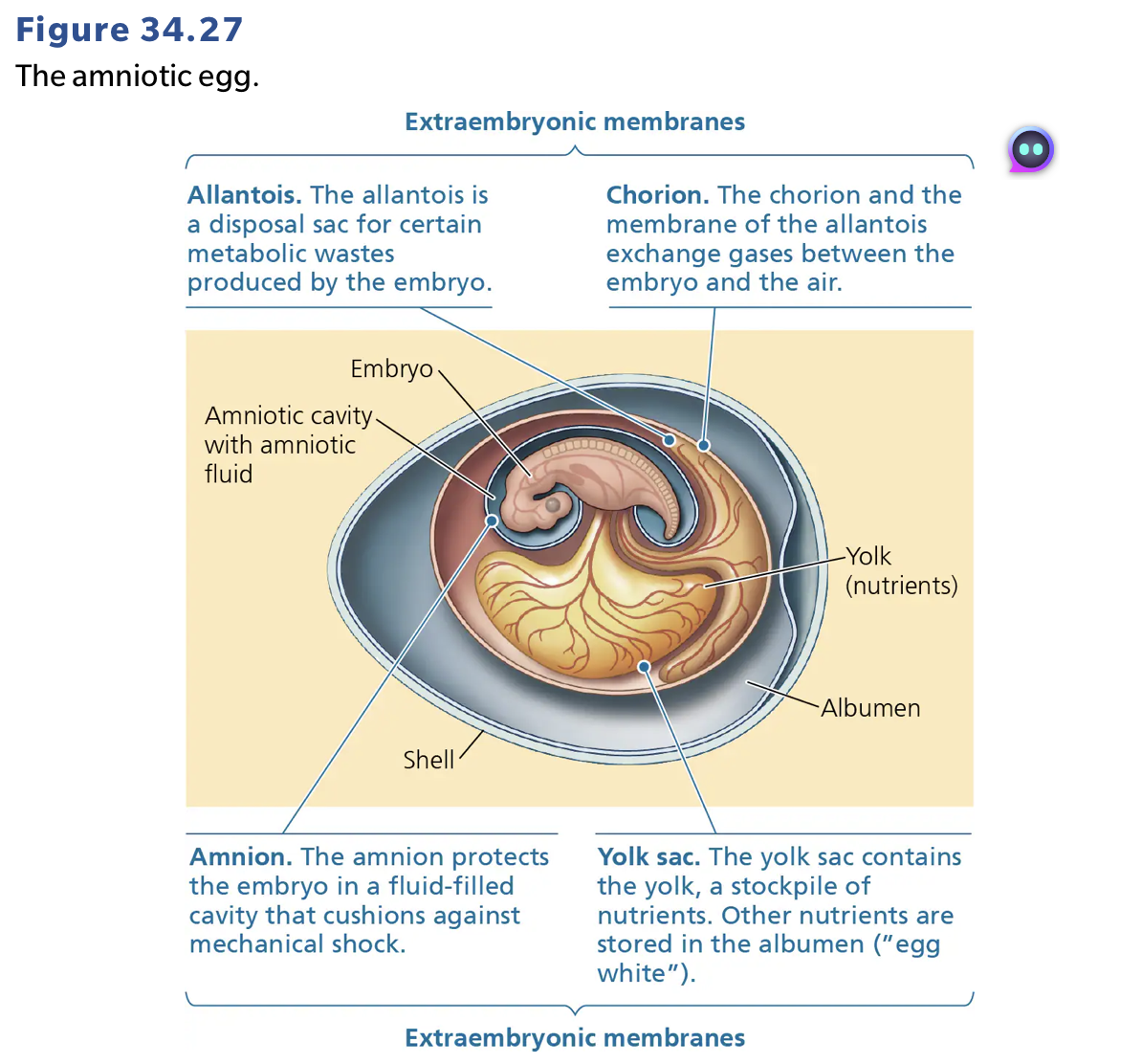
Amniotic egg
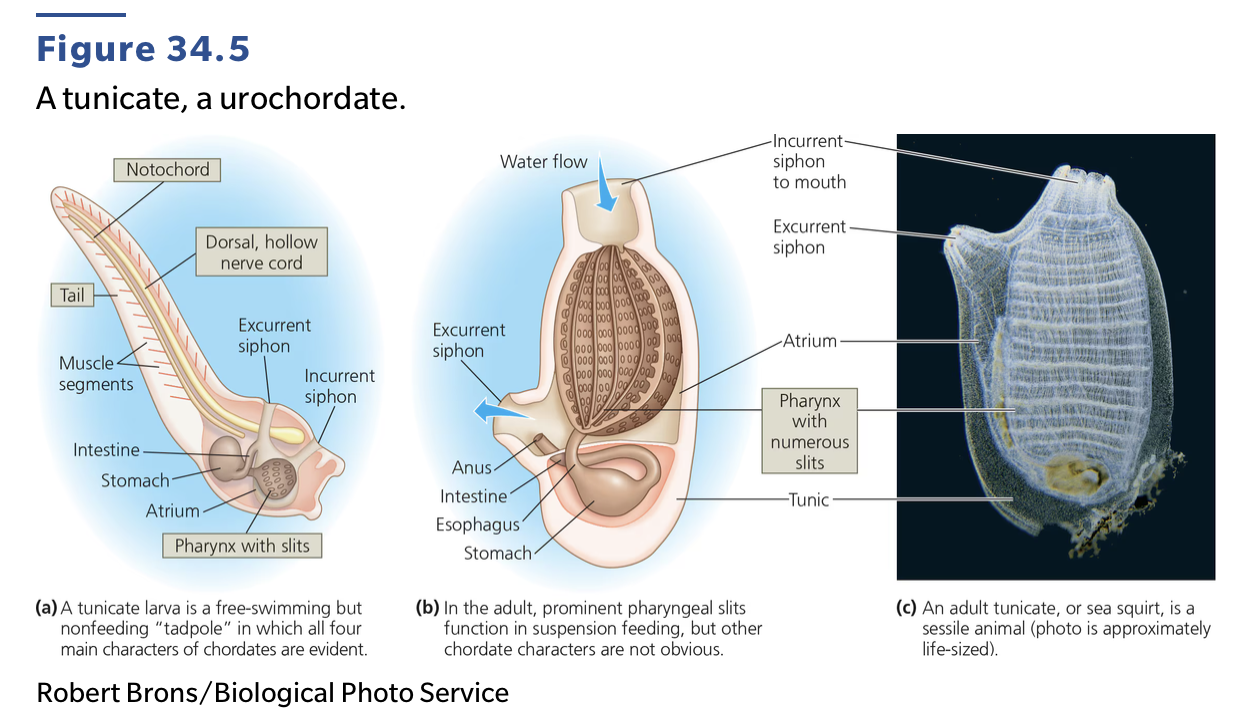
What are the characteristics of chordates?
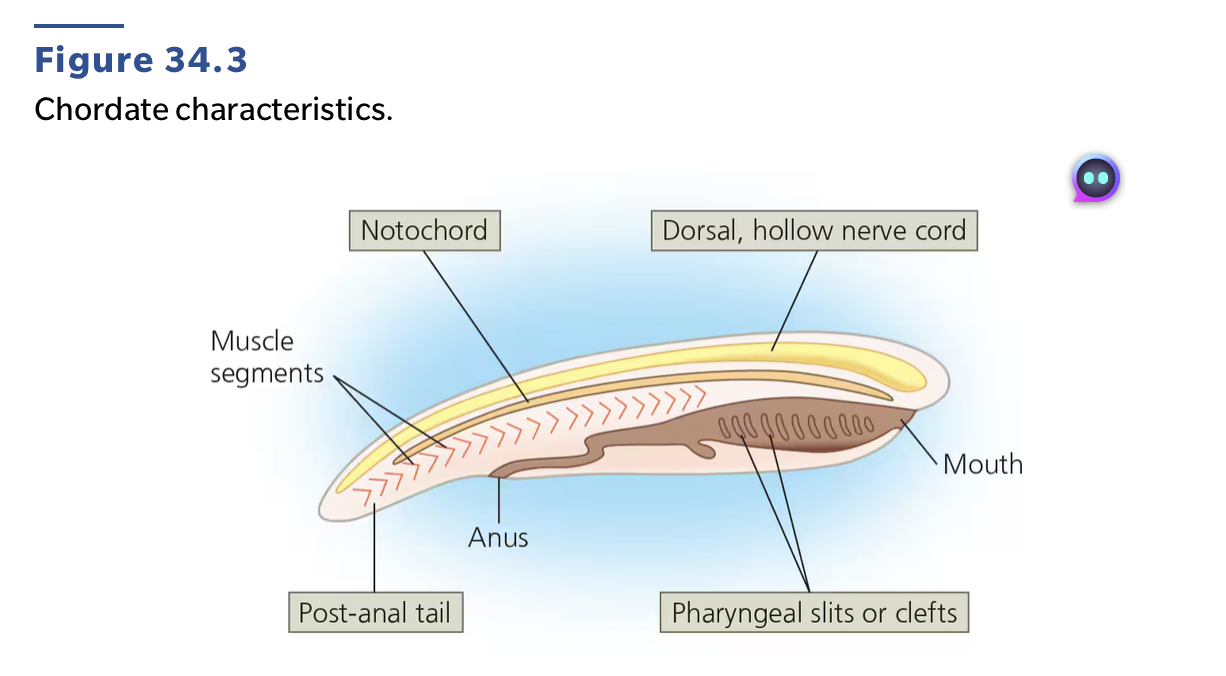
Cephalochordate characteristics?
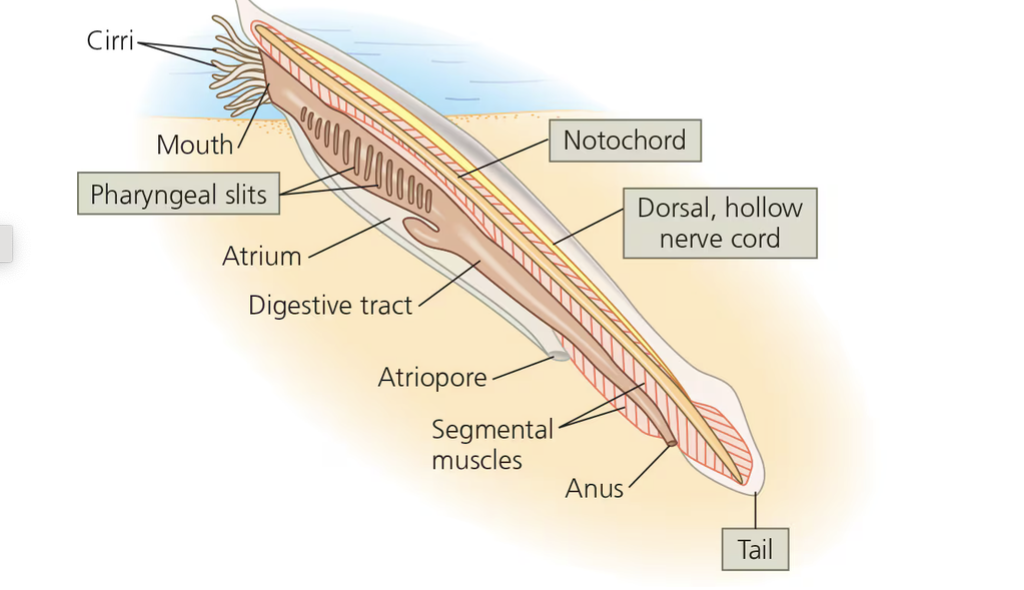
Urochordata characteristics?
Describe the structure of the amniotic egg