Lower Limb I: Hip & Gluteal Region
 Call Kai
 Learn
Learn Practice Test
 Spaced Repetition
 Match
Match Flashcards
 Knowt Play
1/27

There's no tags or description
Looks like no tags are added yet.
Name | Mastery | Learn | Test | Matching | Spaced | Call with Kai |
|---|
No analytics yet
Send a link to your students to track their progress
28 Terms
what ligament forms the greater sciatic foramen?
sacrospinous ligament (spans between sacrum and ischial spine)
what forms the lesser sciatic notch?
sacrotuberous ligament (spans between sacrum and ischial tuberosity)
structures that pass the greater sciatic foramen are coming from where and going where?
from abdomen into gluteal region
structures that pass the lesser sciatic foramen are coming from where and going where?
from abdomen into perineum
structures from the abdomen that pass between the superior pubic ramus and the inguinal ligament goes where?
anterior compartment of the thigh
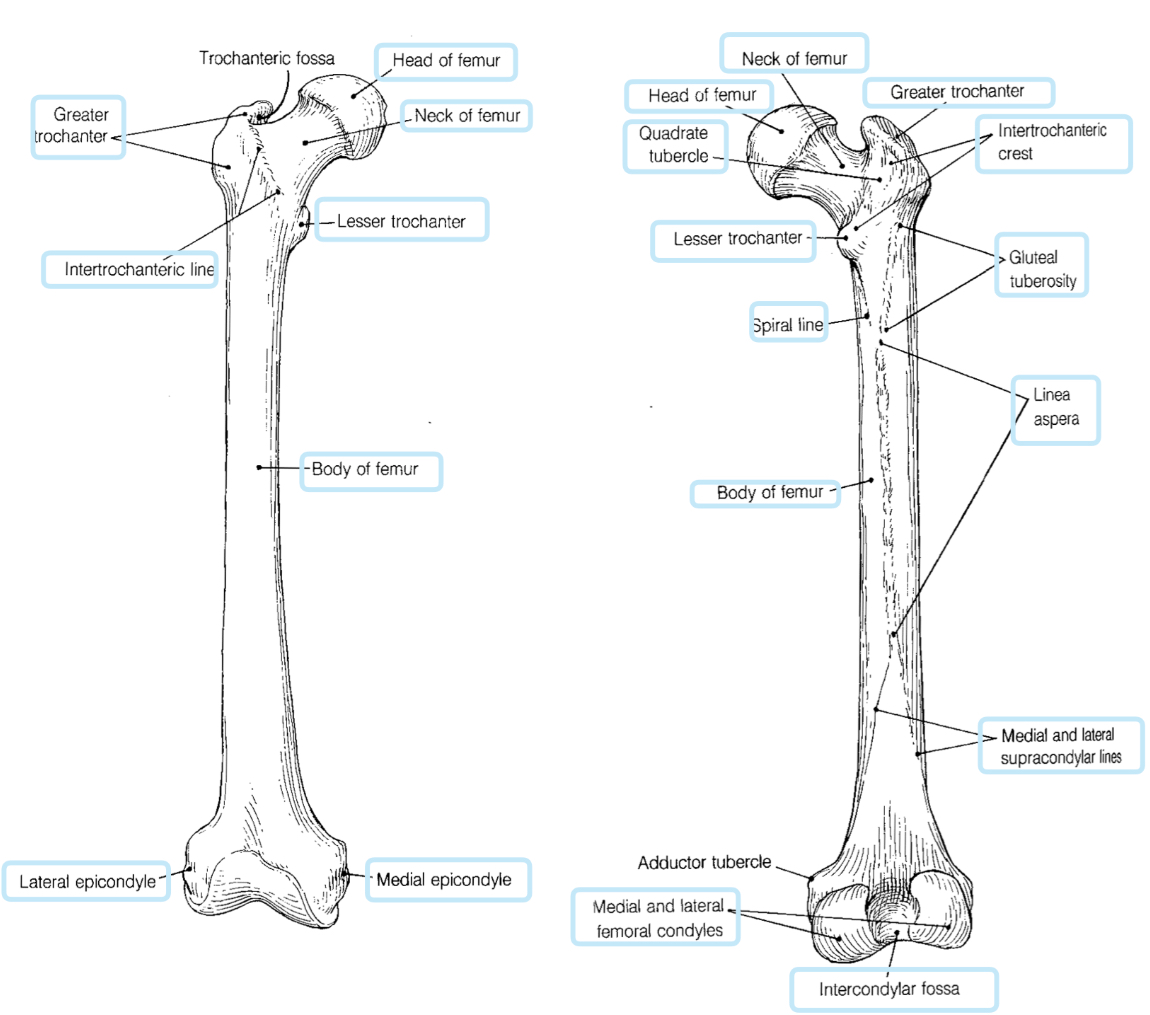
what does a broken hip refer to?
a fracture in the neck of the femur between the head and the greater trochanter
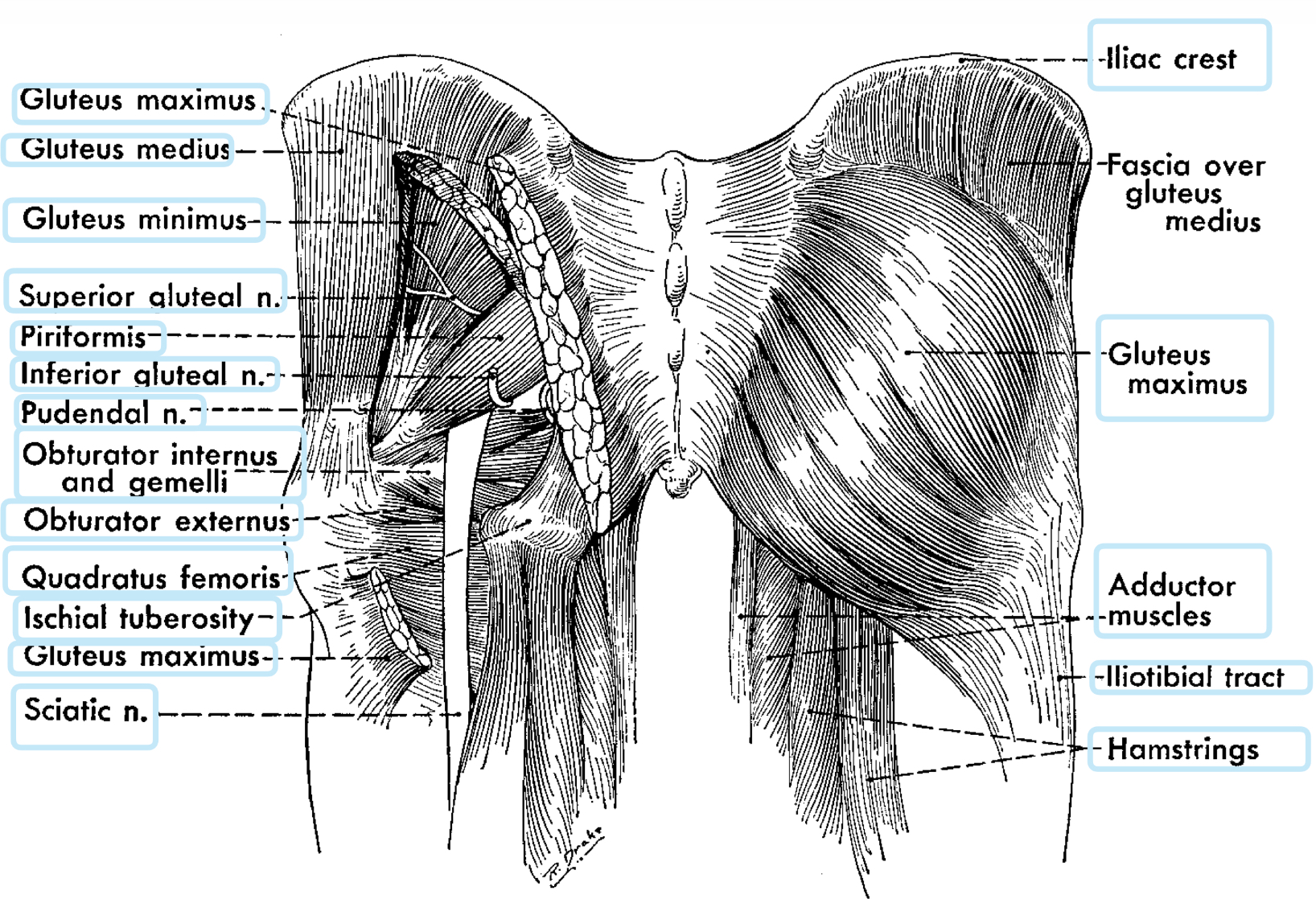
principle extensor of the thigh
gluteus maximus
gluteus maximus: origin and insertion
originates from ilium, sacrum, and sacrotuberous ligament; inserts on IT tract and posterior femur
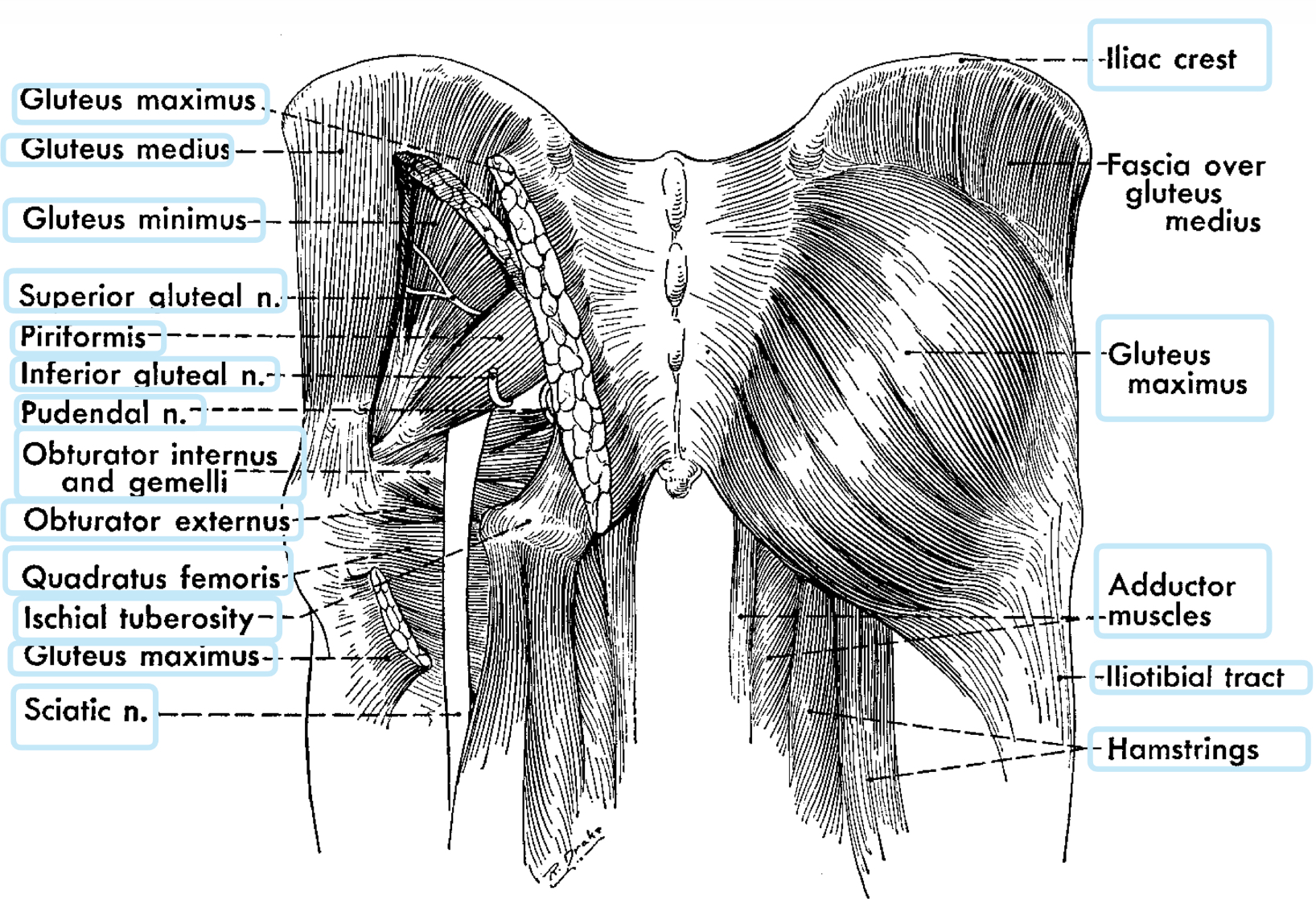
gluteus medius muscle: origin and insertion
originates from external surface of ilium; inserts on the greater trochanter of femur
what muscle is the main ABductor of the hip and stabilizer of the pelvis?
gluteus medius muscle
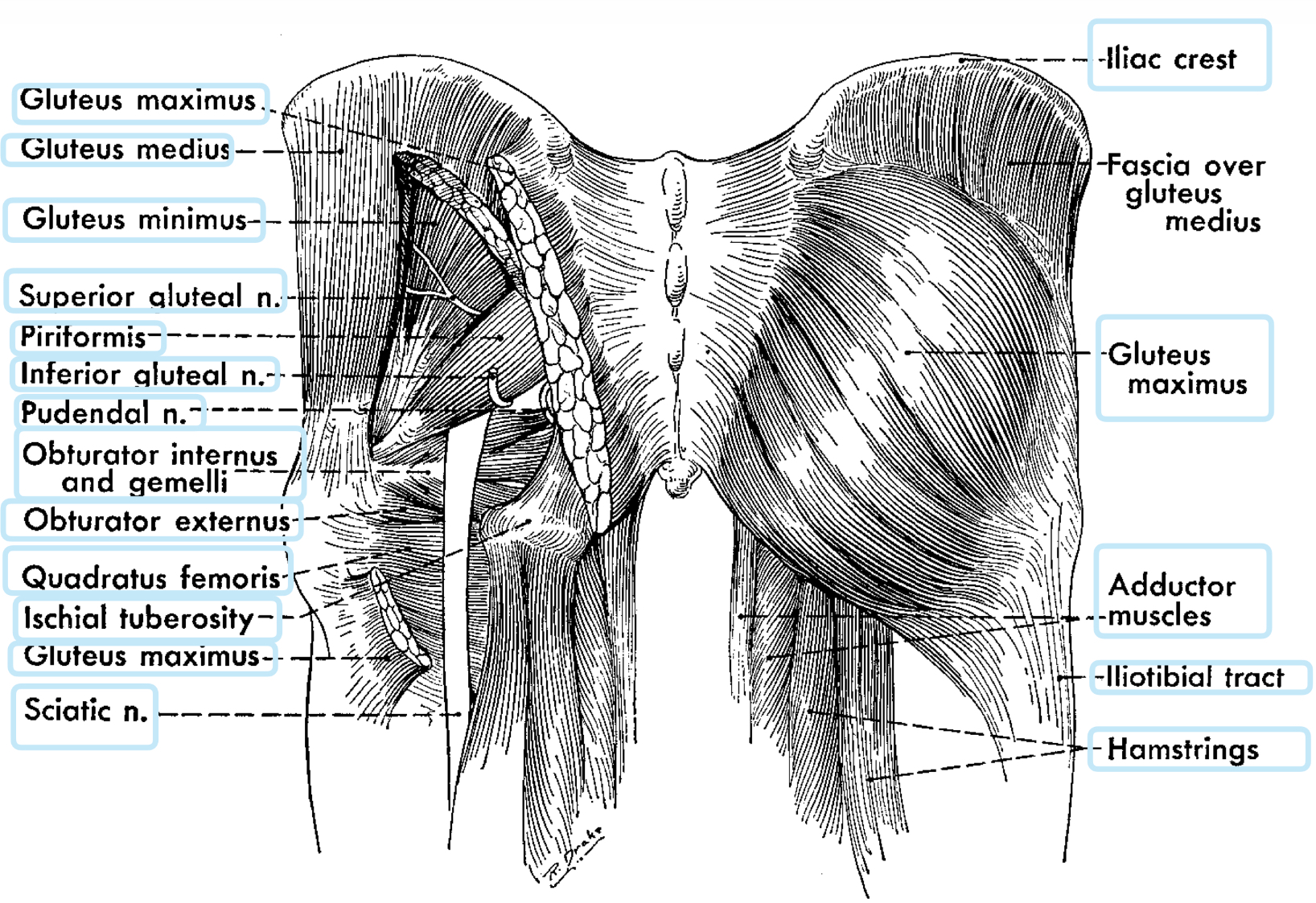
what muscle is often the site of intramuscular injections?
gluteus medius muscle
when a patient lifts their right foot off the ground, their right hip drops. what does this indicate?
damage to the left superior gluteal nerv
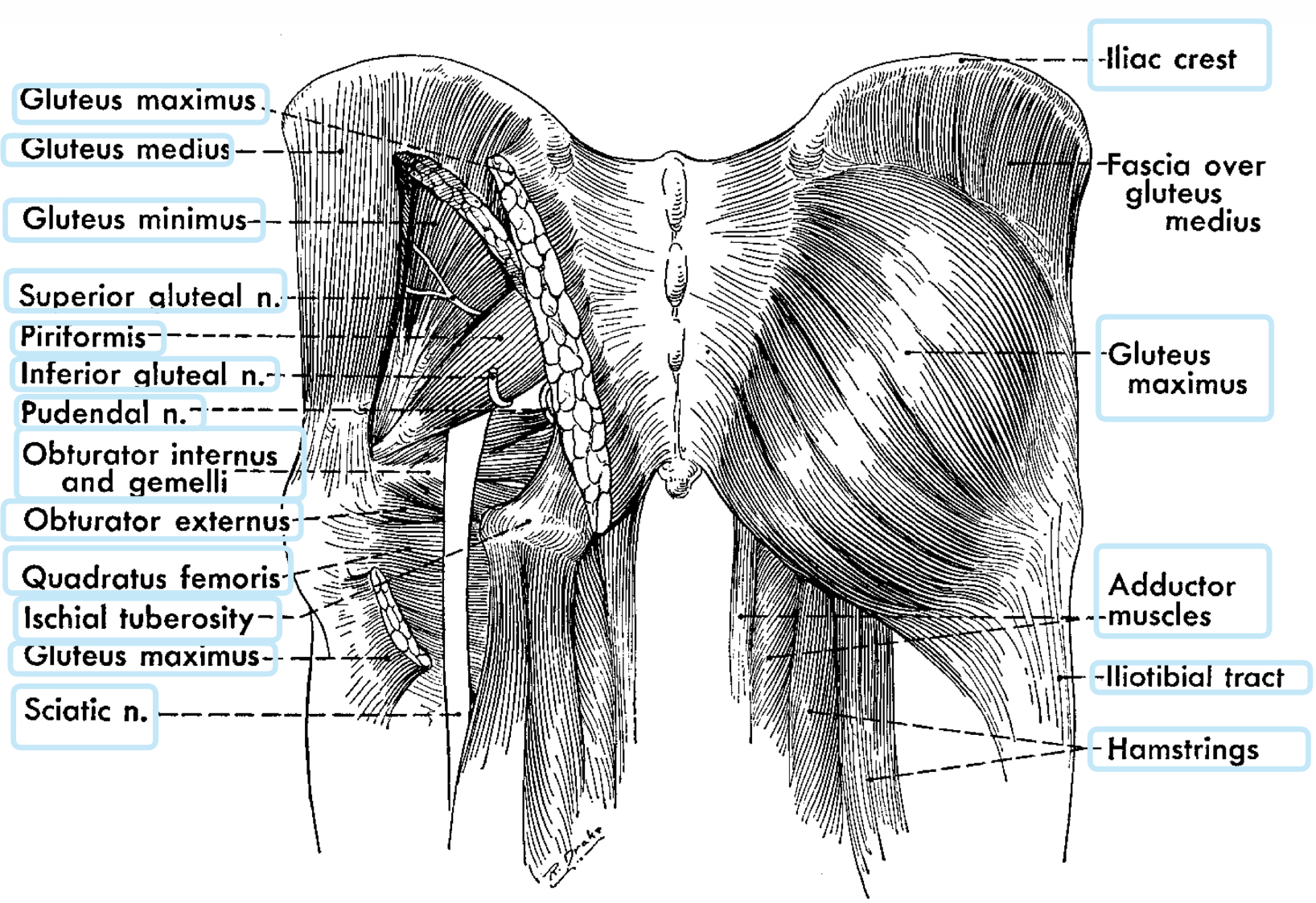
what muscle originates from the greater sciatic foramen and inserts on the greater trochanter of the femur?
piriformis muscle
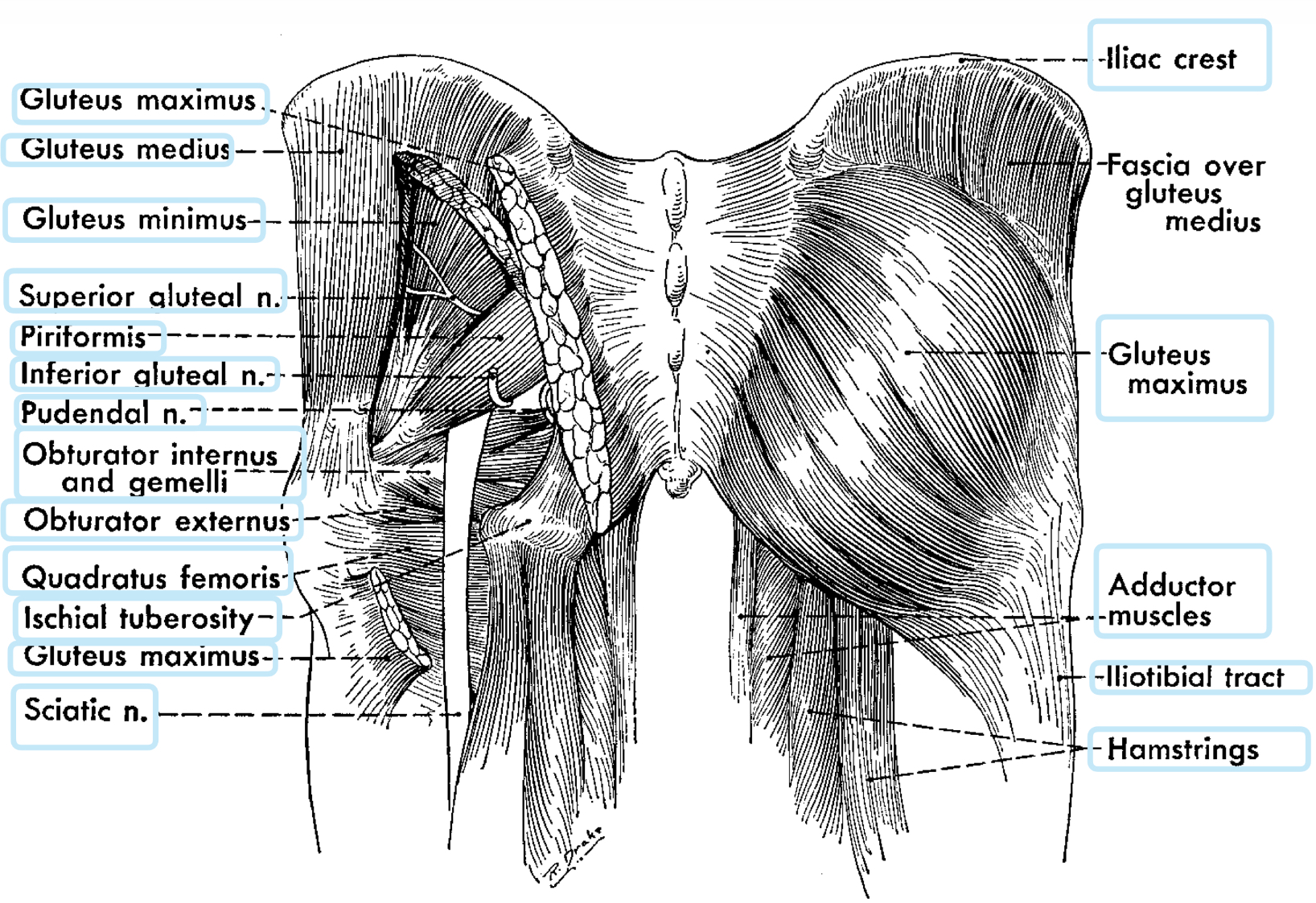
this muscle enters the gluteal region via the lesser sciatic foramen and inserts on the greater trochanter of the femur
obturator internus muscle
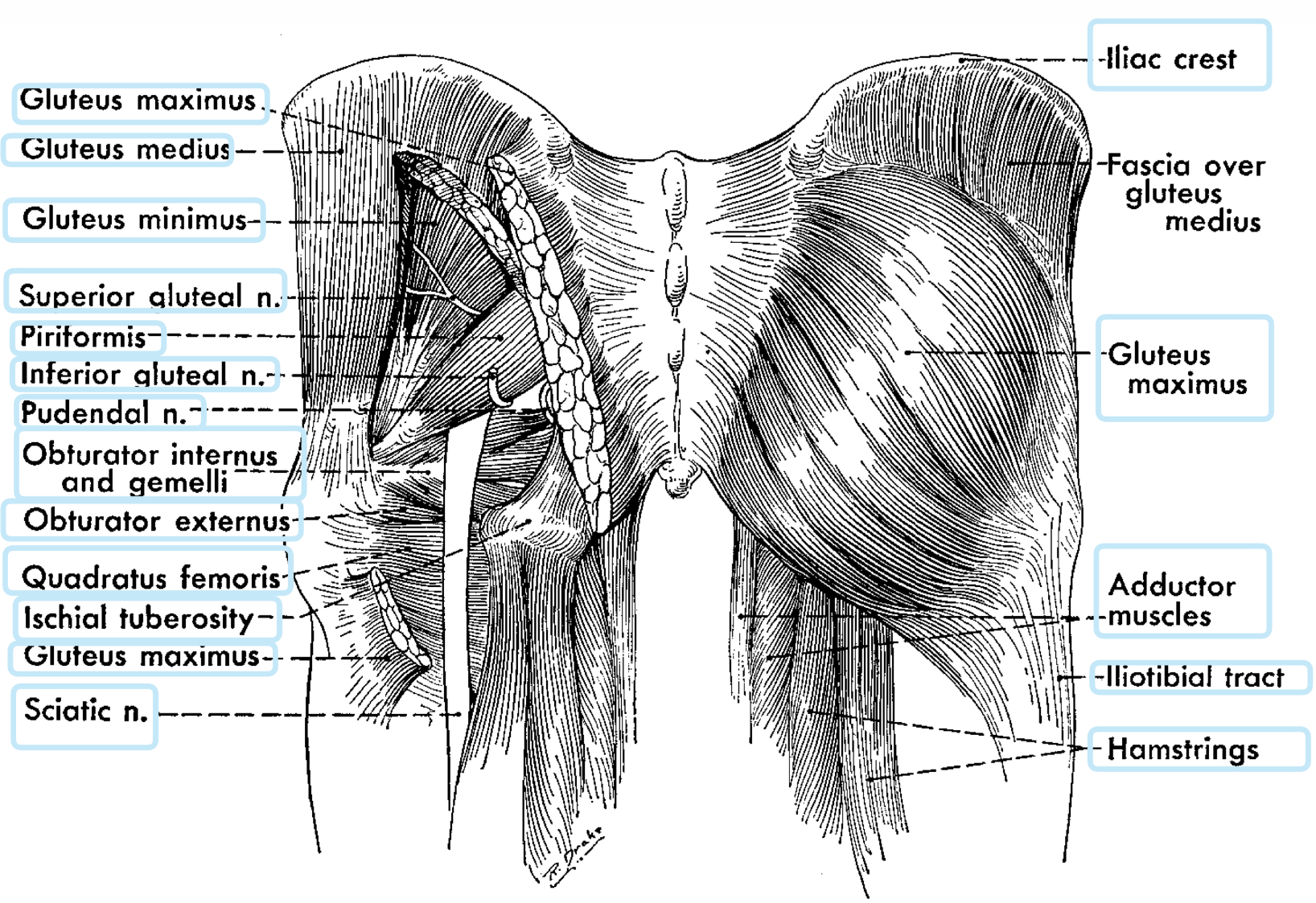
these two small muscles take origin from the margins of the lesser sciatic foramen and insert on the tendon of the obturator internus muscle
superior and inferior gemellus muscle
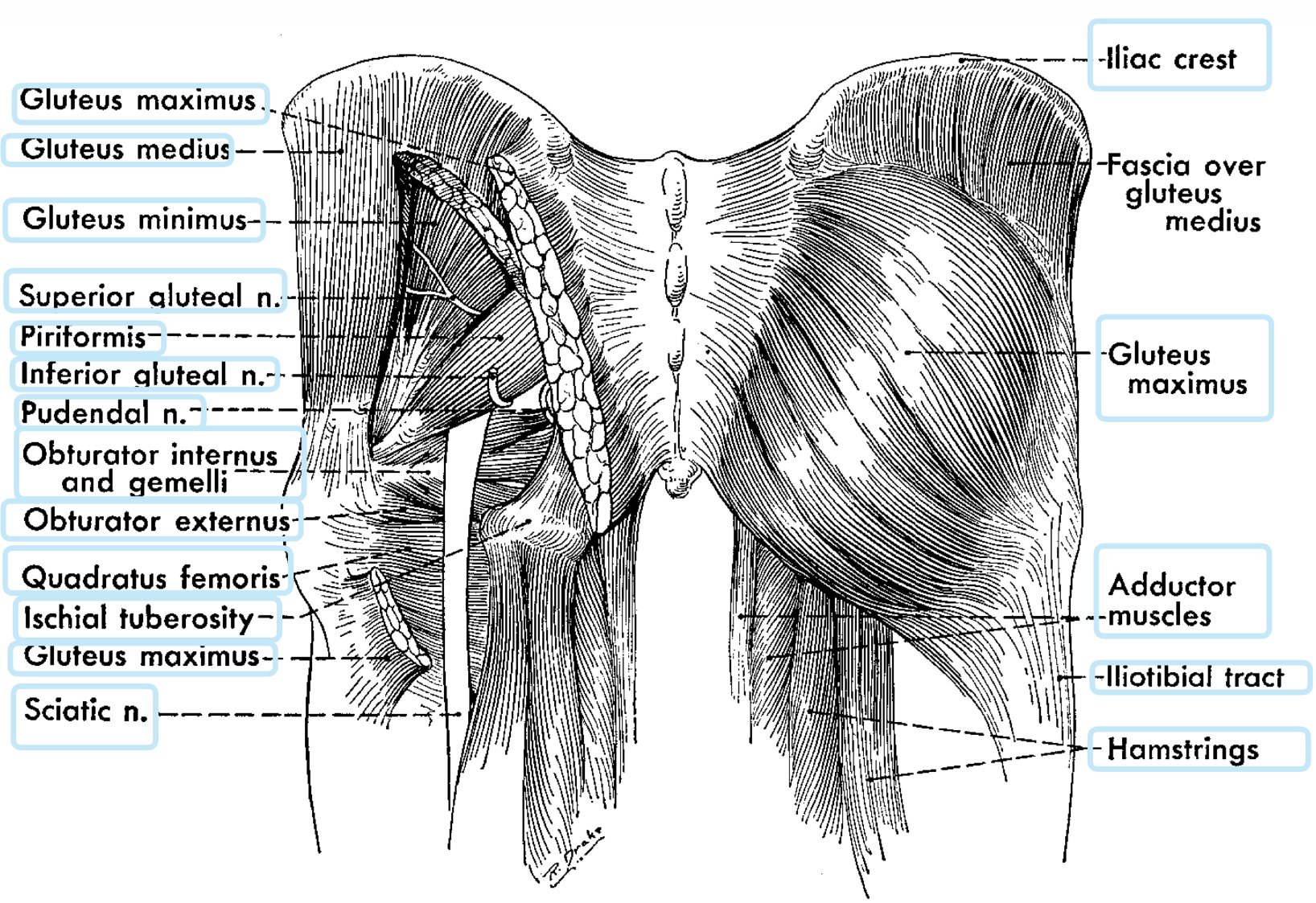
this muscle spans the hip joint from the ischial tuberosity to the intertrochanteric crest of the femur
quadratus femoris muscle
what are the actions of the following muscles: piriformis, obtrurator internus, gemellus, quadratus femoris
lateral rotation (and stabilize the head of the femur in acetabulum)
the sciatic nerve is really 2 nerves. what nerves?
tibial nerve and common fibular nerve
the muscles of the posterior thigh, leg, and foot are innervated by what main nerve?
sciatic nerve
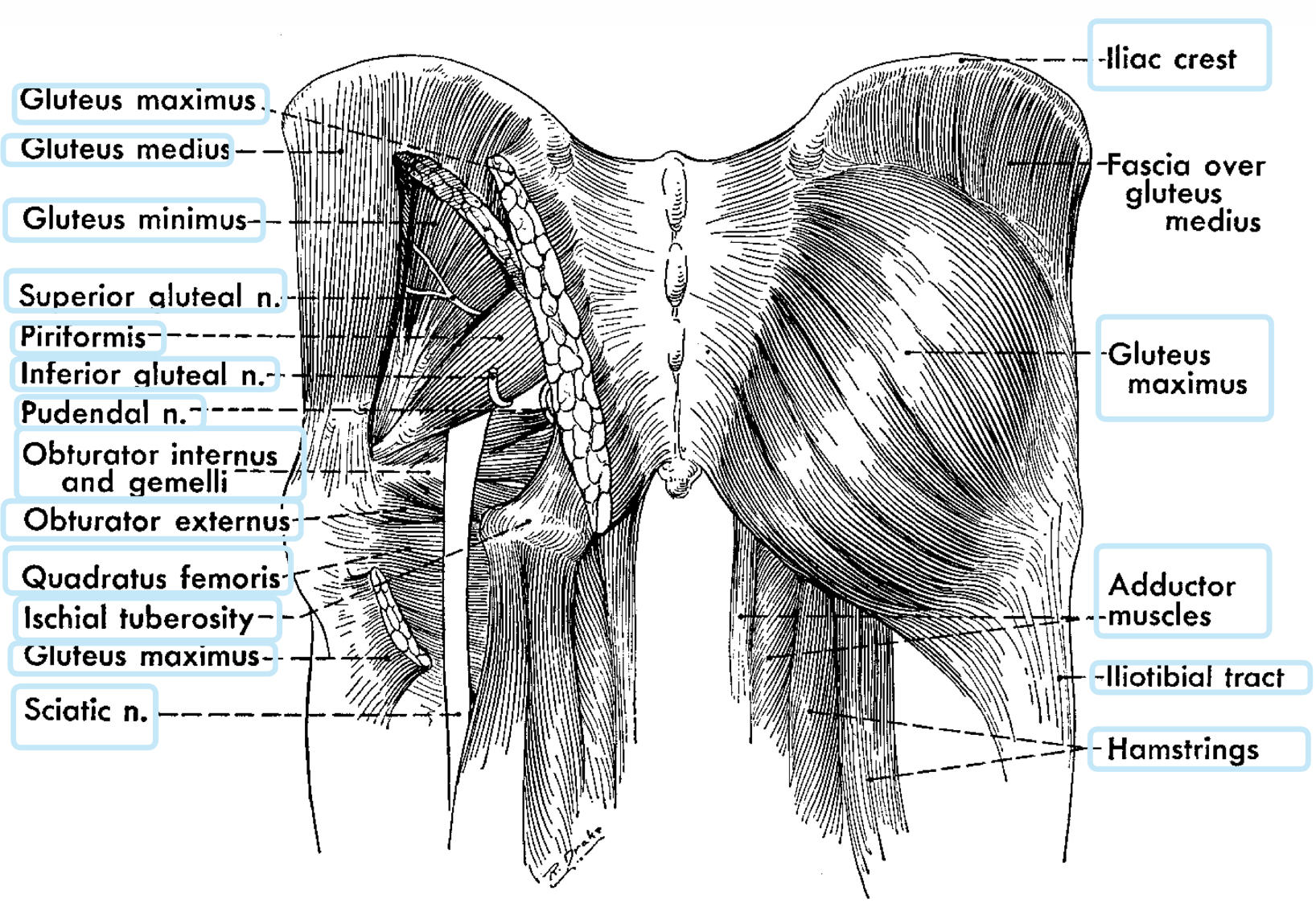
ITB snaps over the greater trochanter. what condition occurs:
trochanteric bursitis
iliotibial band syndrome
piriformis syndrome
trochanteric bursitis
inflammation of the ITB as it slides over the lateral epicondyle. what condition occurs:
trochanteric bursitis
iliotibial band syndrome
piriformis syndrome
iliotibial band syndrome
piriformis muscle presses on the sciatic nerve. what condition occurs:
trochanteric bursitis
iliotibial band syndrome
piriformis syndrome
symptoms are felt where?
piriformis syndrome; symptoms are felt in the buttocks and down the back of the leg
this ligament is found on the anterior part of the hip joint
iliofemoral ligament
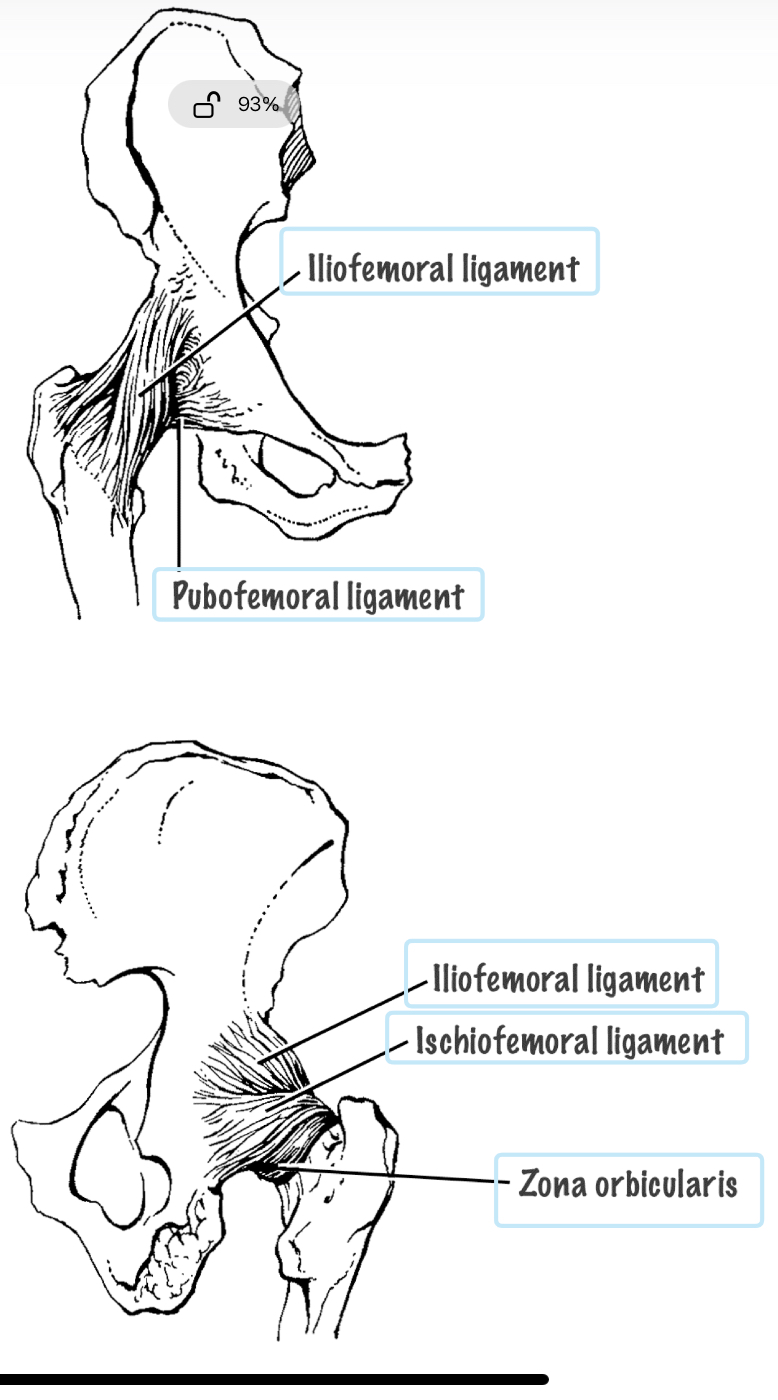
this hip ligament prevents overextension and helps maintain erect posture by resisting the hip extension caused by bearing weight:
iliofemoral ligament
ischiofemoral ligament
pubofemoral ligament
iliofemoral ligament
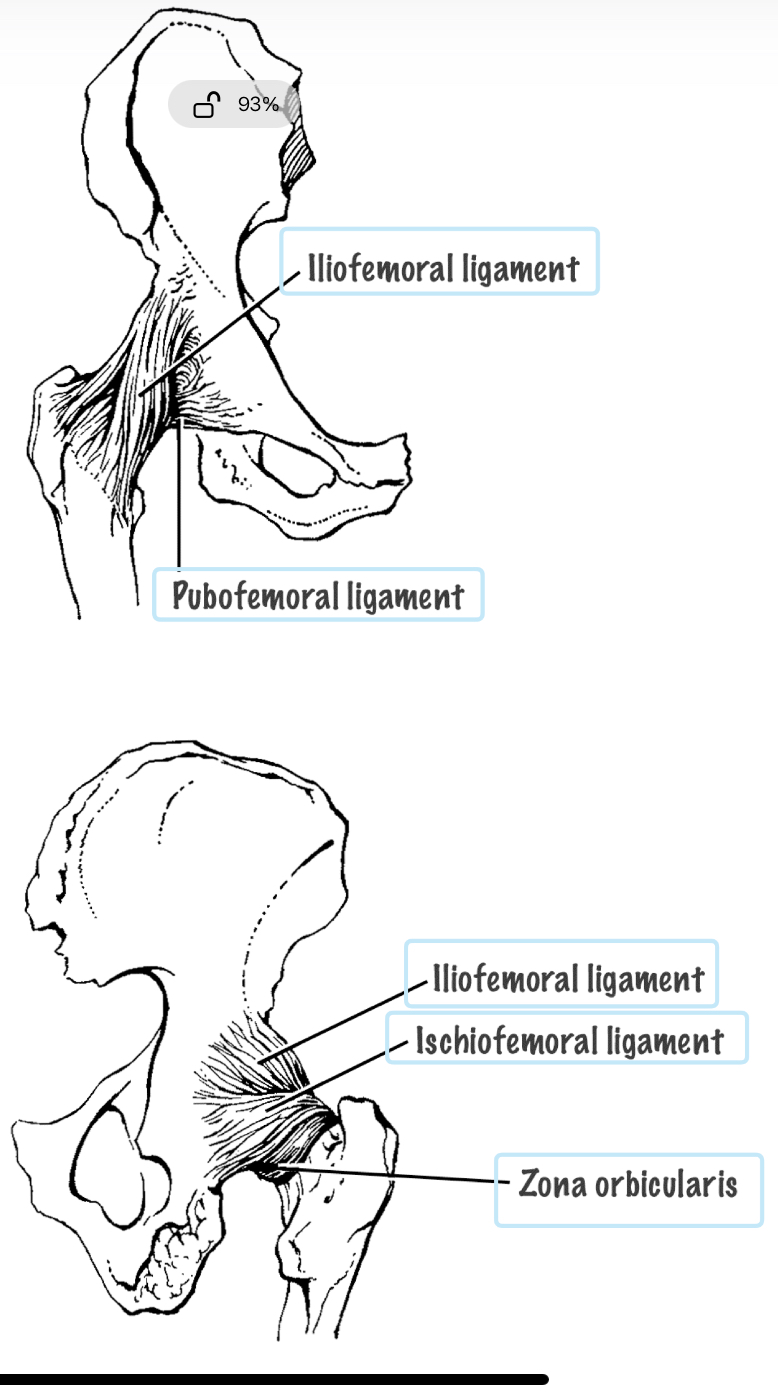
this hip ligament limits extension
iliofemoral ligament
ischiofemoral ligament
pubofemoral ligament
ischiofemoral ligament
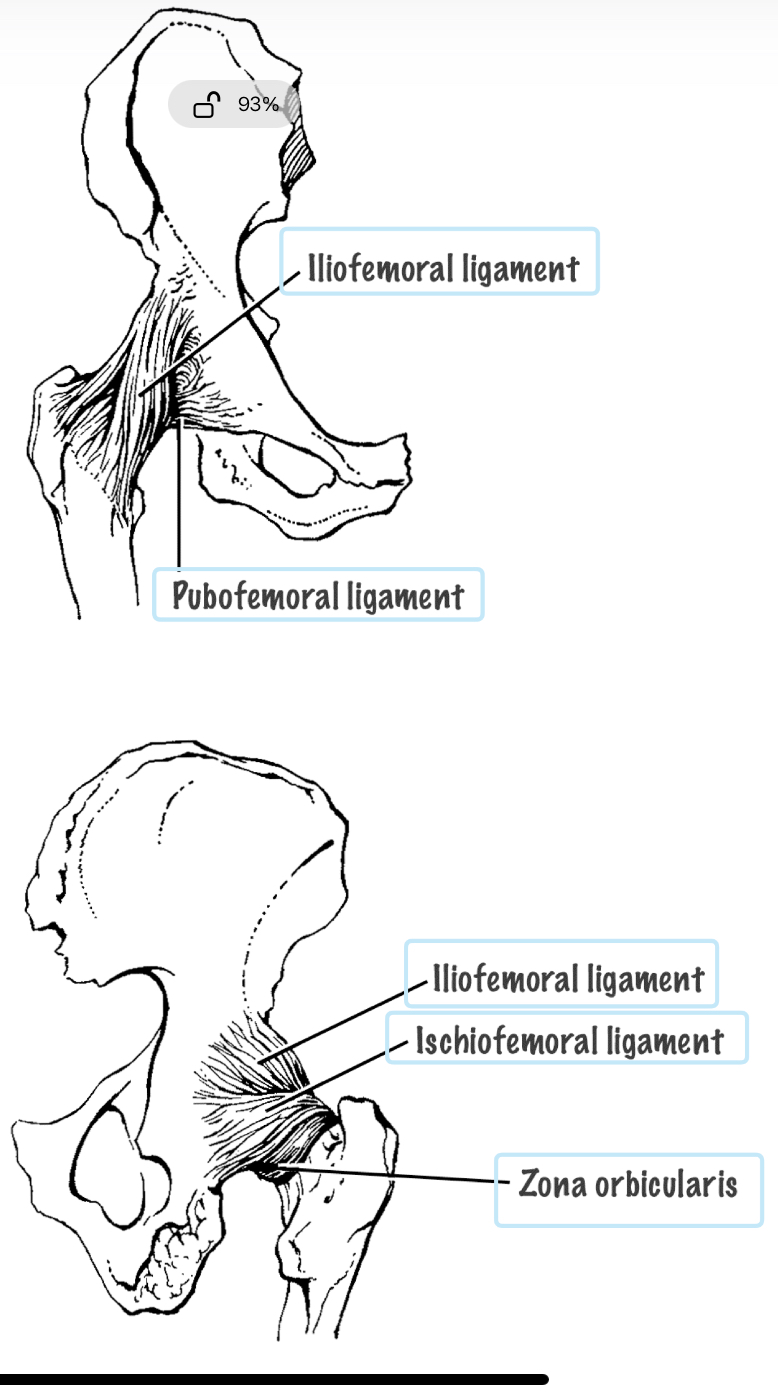
this hip ligament prevents excessive abduction
iliofemoral ligament
ischiofemoral ligament
pubofemoral ligament
pubofemoral ligament
what artery supplies majority of the head of the femur?
branches of the deep femoral artery
what condition can occur when the neck of the femur is fractured?
aseptic necrosis
osteoarthritis
trochanteric bursitis
Trendelenburg sign
aseptic necrosis