Case 3: David Beatty - Muscular Dystrophy
 Call Kai
 Learn
Learn Practice Test
 Spaced Repetition
 Match
Match Flashcards
 Knowt Play
1/56

There's no tags or description
Looks like no tags are added yet.
Name | Mastery | Learn | Test | Matching | Spaced | Call with Kai |
|---|
No analytics yet
Send a link to your students to track their progress
57 Terms
Gross Motor Development Milestones: ≤ 1 Year
2 months:
Raise head
4 months:
Head control
Prop up on forearms
6 months:
Rolling
Prop up on hands
9 months:
Sit independently
12 months:
Stand
Cruising
Gross Motor Development Milestones: > 1 Year
18 months:
Unassisted walking
2 years:
Running
Walk up stairs
2.5 years:
Jumping
3 years:
Dress independently
4 years:
Catch big ball
5 years:
Hop on 1 foot
Skeletal Muscle Cell
Elongated + multiple nuclei
Parts:
Sarcolemma
Sarcoplasm
Sarcoplasmic reticulum (SR)
Skeletal Muscle Cell: Sarcolemma
Cell membrane
Invaginations = Transverse (T)-tubules
Transmit action potential (AP) to SR = Quick Ca2+ release = Muscle contraction
Skeletal Muscle Cell: Sarcoplasm
Cytoplasm
Skeletal Muscle Cell: Sarcoplasmic Reticulum (SR)
Store Ca2+
L-tubule network
Terminal Cisternae: L-tubule ends
2 terminal cisternae on 1 T-tubule = Quick Ca2+ release
Skeletal Muscle: Myofilaments
Protein fibres in muscles
Contain:
Actin
Myosin
Skeletal Muscle: Actin Myofilament
Thin filaments
Regulatory Proteins:
Tropomyosin: Block myosin-binding sites
Troponin: Interact with Ca2+
Function: Foundation for myosin sliding during contraction
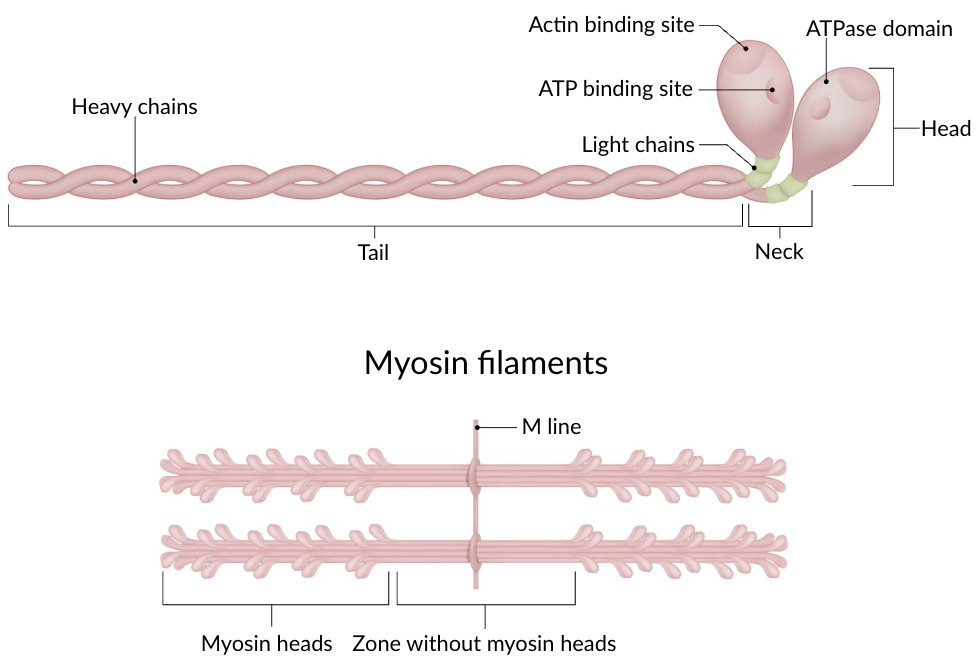
Skeletal Muscle: Myosin Myofilament
Thick filaments
2 heavy + 2 light protein chains
Domains:
Head: Actin + ATP binding sites
ATPase activity
Neck: 2 light chains attached to heavy chain
Regulate head
Tail: Heavy chains coil together
Heads on both sides
Function: Slide along actin filaments
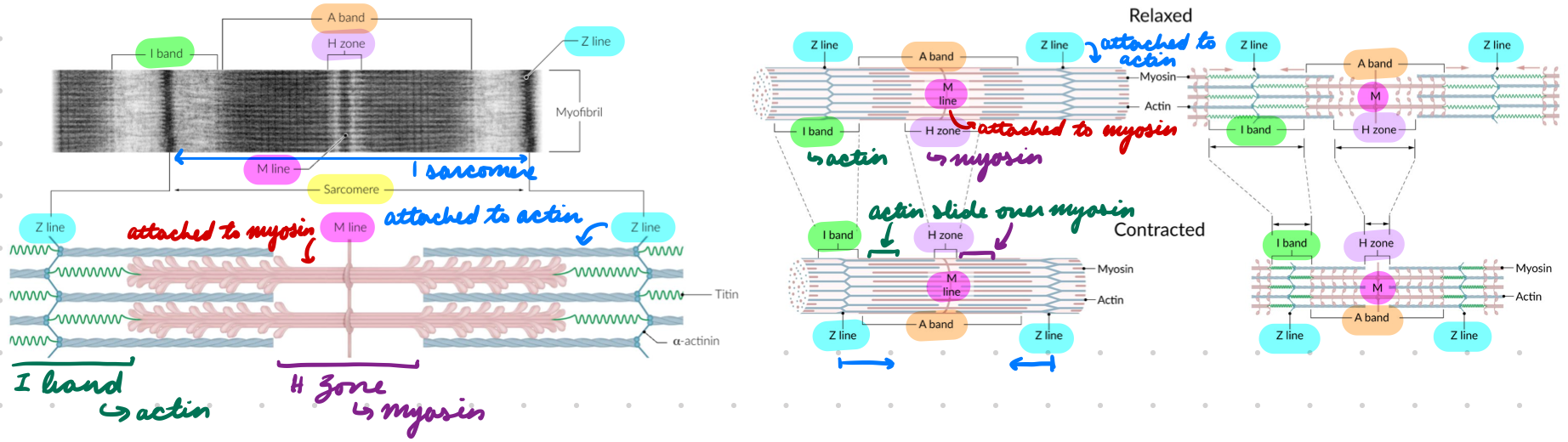
Skeletal Muscle: Sarcomere
Functional unit
Parts:
Z band
M band
I band
A band
Sarcomere: Z Band
Separate sarcomeres (1 sarcomere length)
Attached to actin filaments
Contraction = Decrease distance
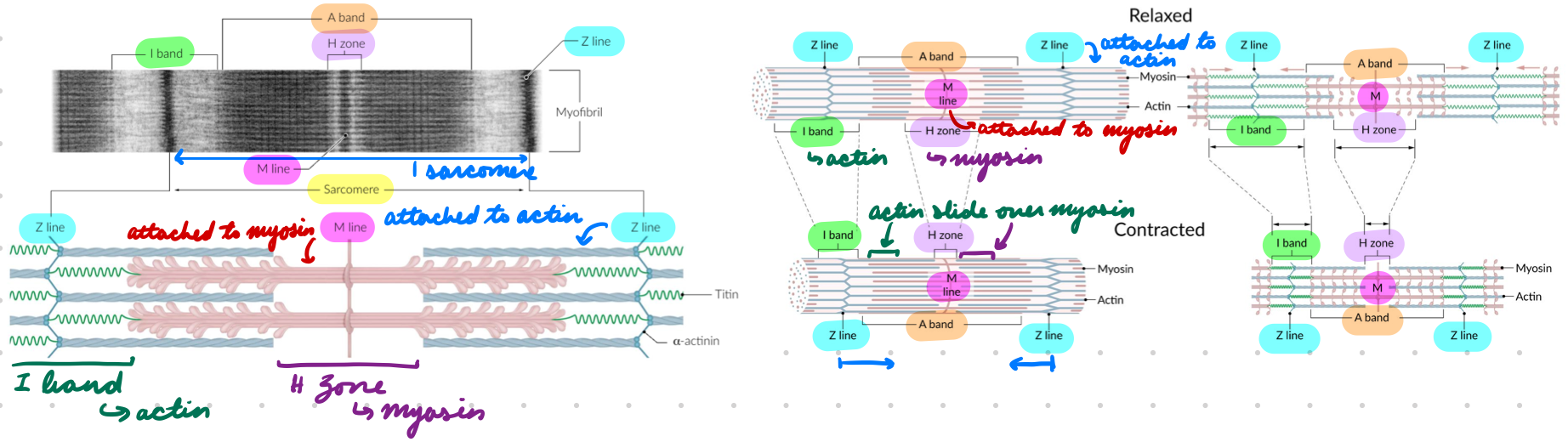
Sarcomere: M Band
Attached to myosin filaments
H zone centre
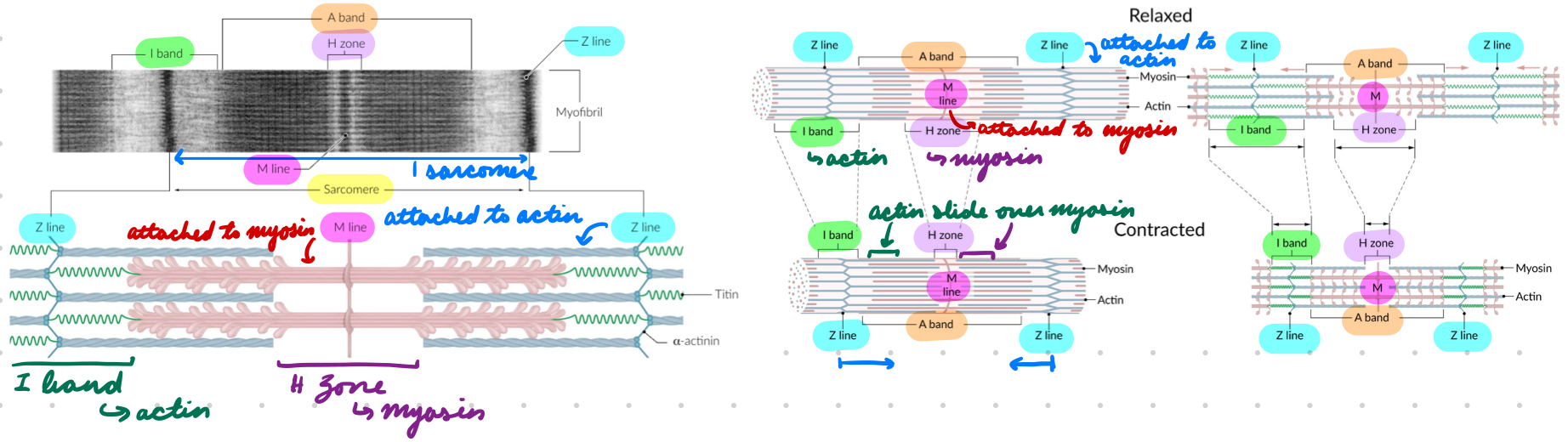
Sarcomere: I Band
Actin filaments
Contraction = Actin slide over myosin = Decrease size
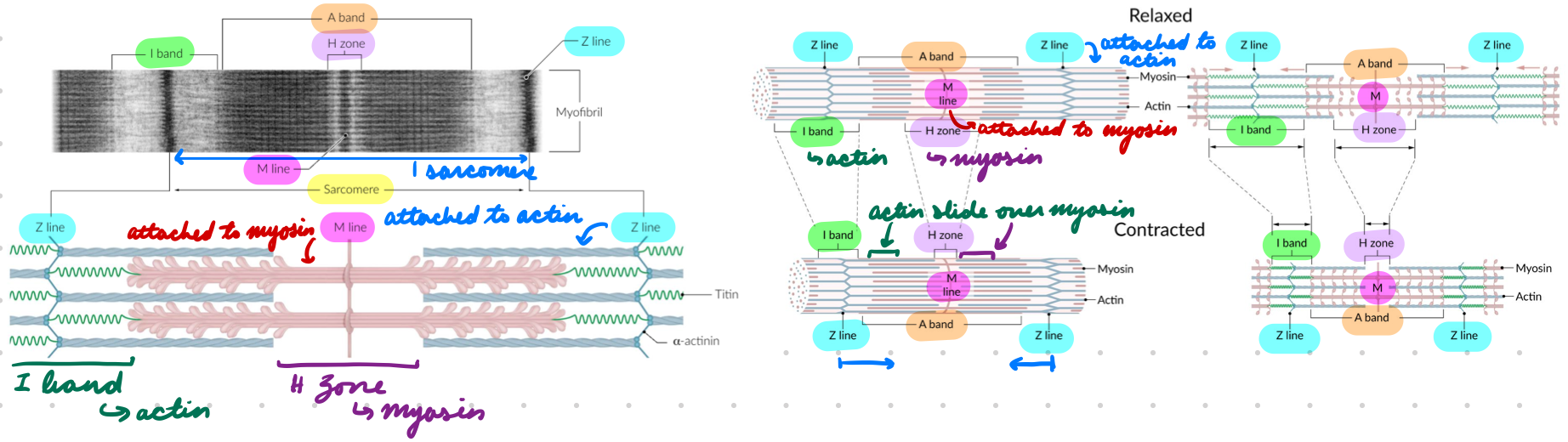
Sarcomere: A Band
3 segments
H Zone:
Centre light segment
Myosin filaments
Contraction = Actin slide over myosin = Decrease size
Dark Segments:
Between H zone + I bands
Overlapping actin + myosin filaments
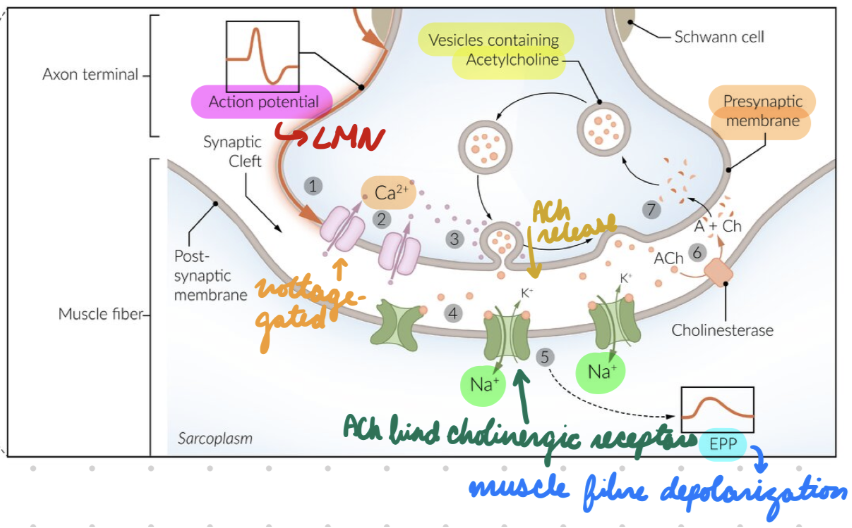
Skeletal Muscle: Excitation-Contraction Coupling
At motor endplate (closest to motor neuron axon)
AP from LMN = Open presynaptic voltage-gated Ca2+ channels = Stimulate ACh release from vesicles into synaptic cleft
ACh bind postsynaptic cholinergic receptors = Muscle fibre depolarize = Stimulate Ca2+ release from SR into sarcoplasm (intracellular)
Skeletal Muscle: Crossbridge Cycle
Somatic control
Crossbridge Formation
Powerstroke
Crossbridge Loosening
Reorientation
Relaxation
Crossbridge Cycle 1: Crossbridge Formation
Intracellular Ca2+ bind troponin C = Conformation change
Tropomyosin uncover myosin binding site on actin = Myosin head (bound to ATP) bind actin at 90º
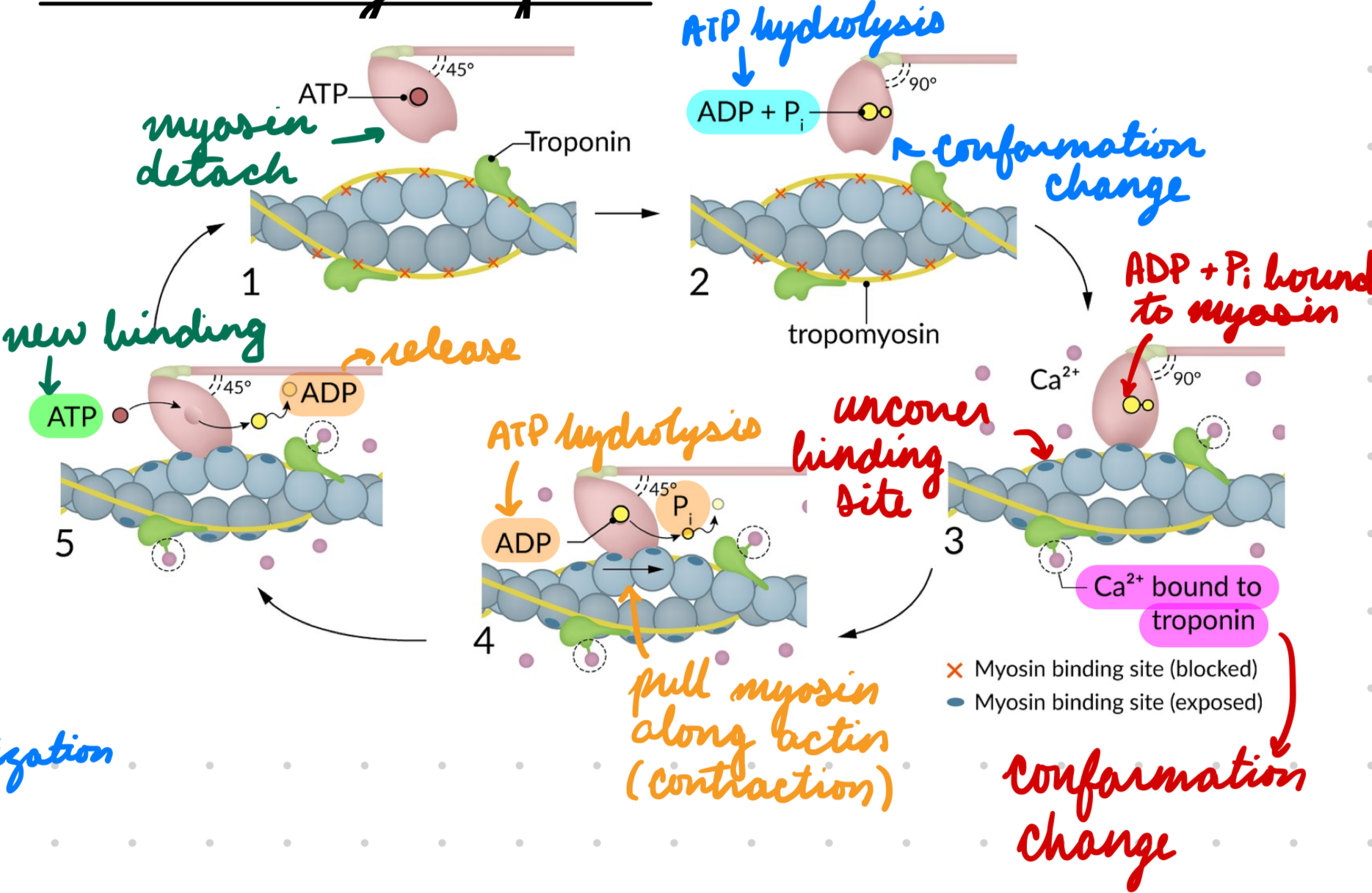
Crossbridge Cycle 2: Powerstroke
ATP hydrolysis = Myosin head release phosphate (Pi) = Myosin head tilts 45º = Pull myosin along actin
Muscle shortens (contracts) = Release ADP
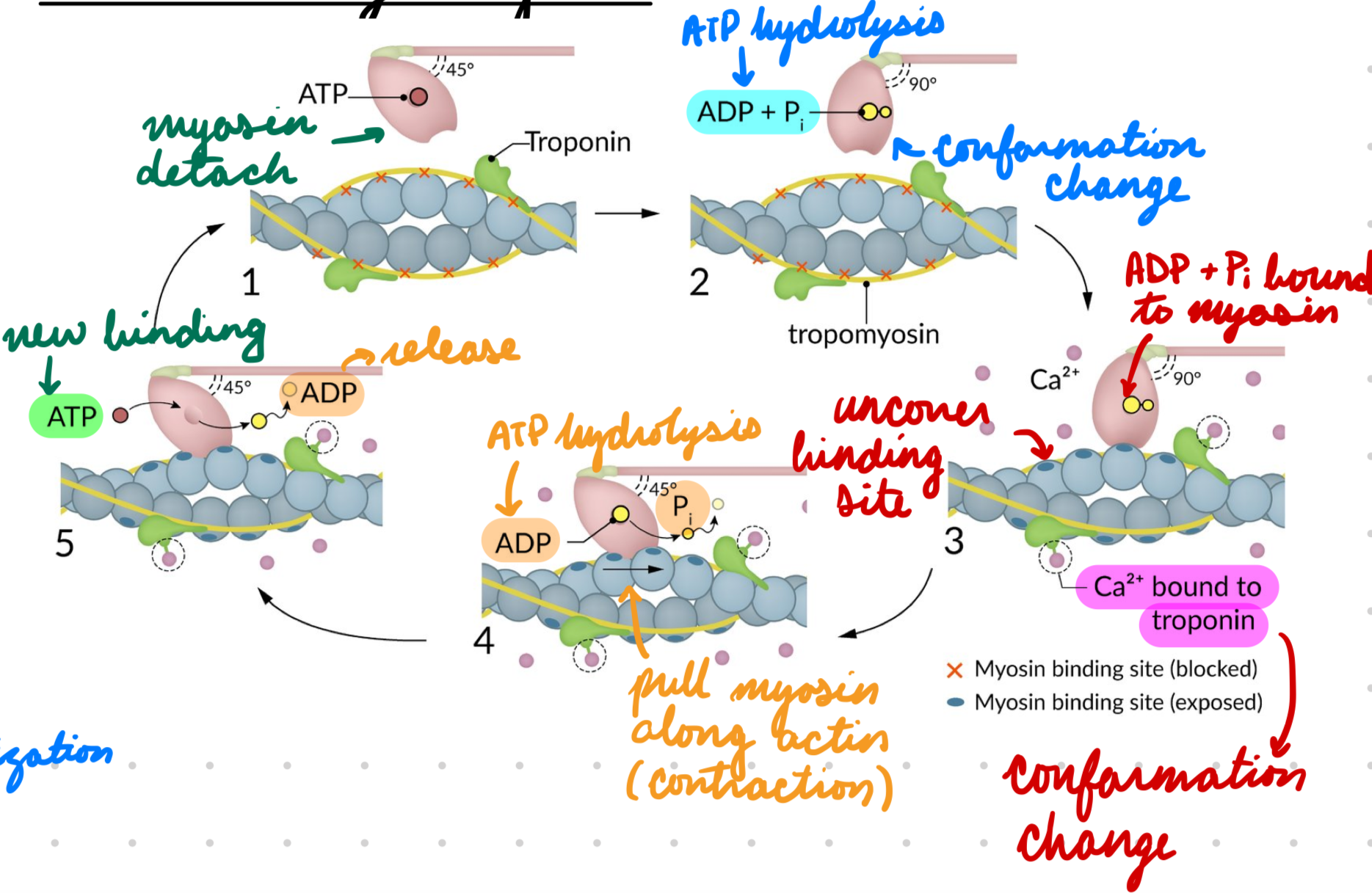
Crossbridge Cycle 3: Crossbridge Loosening
New ATP bind myosin head = Myosin head detaches from actin
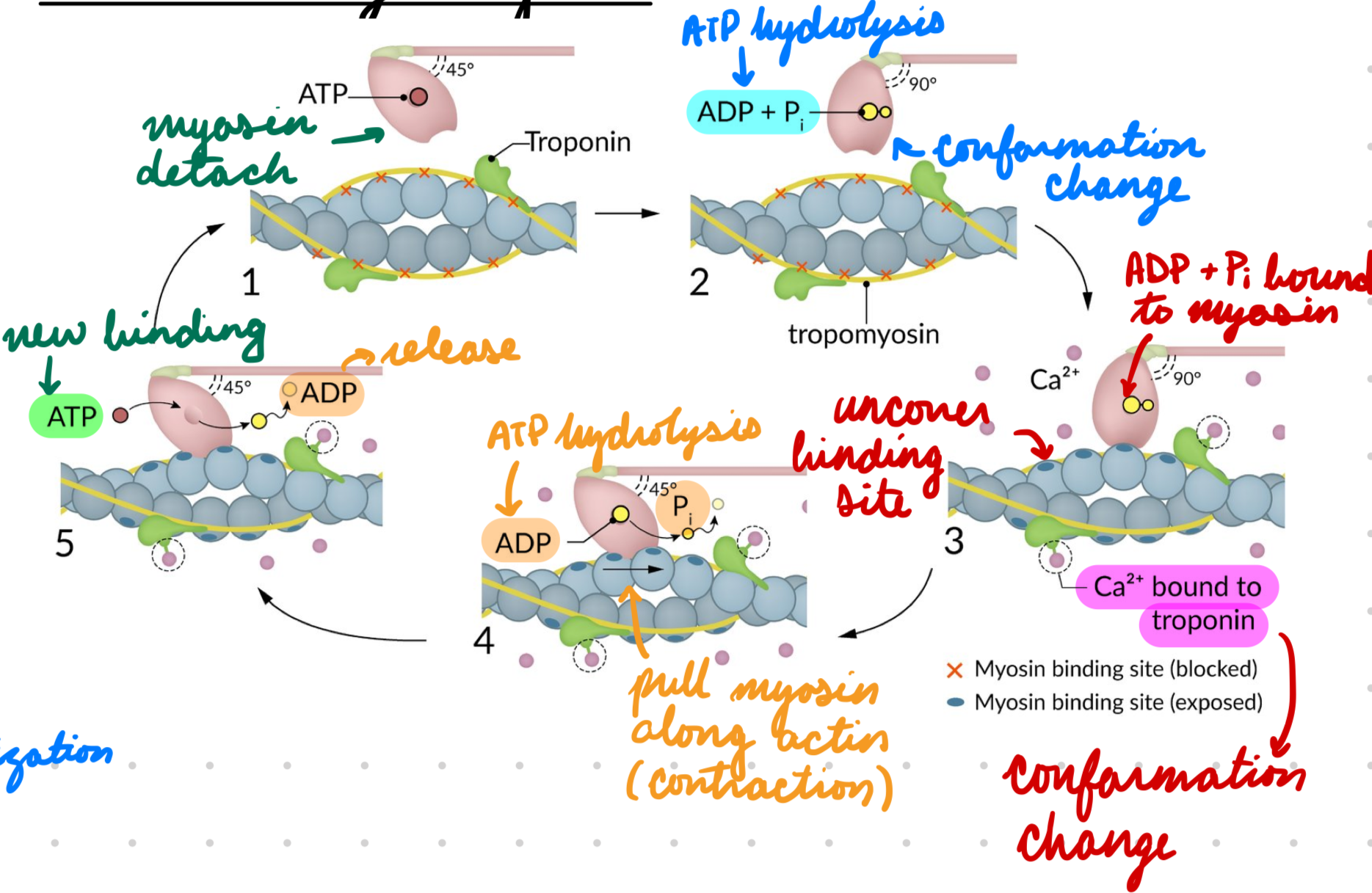
Crossbridge Cycle 4: Reorientation
ATPase on myosin head = ATP hydrolysis → ADP + Pi = Myosin head conformation change
Myosin return to original position = Ready for new actin attachment
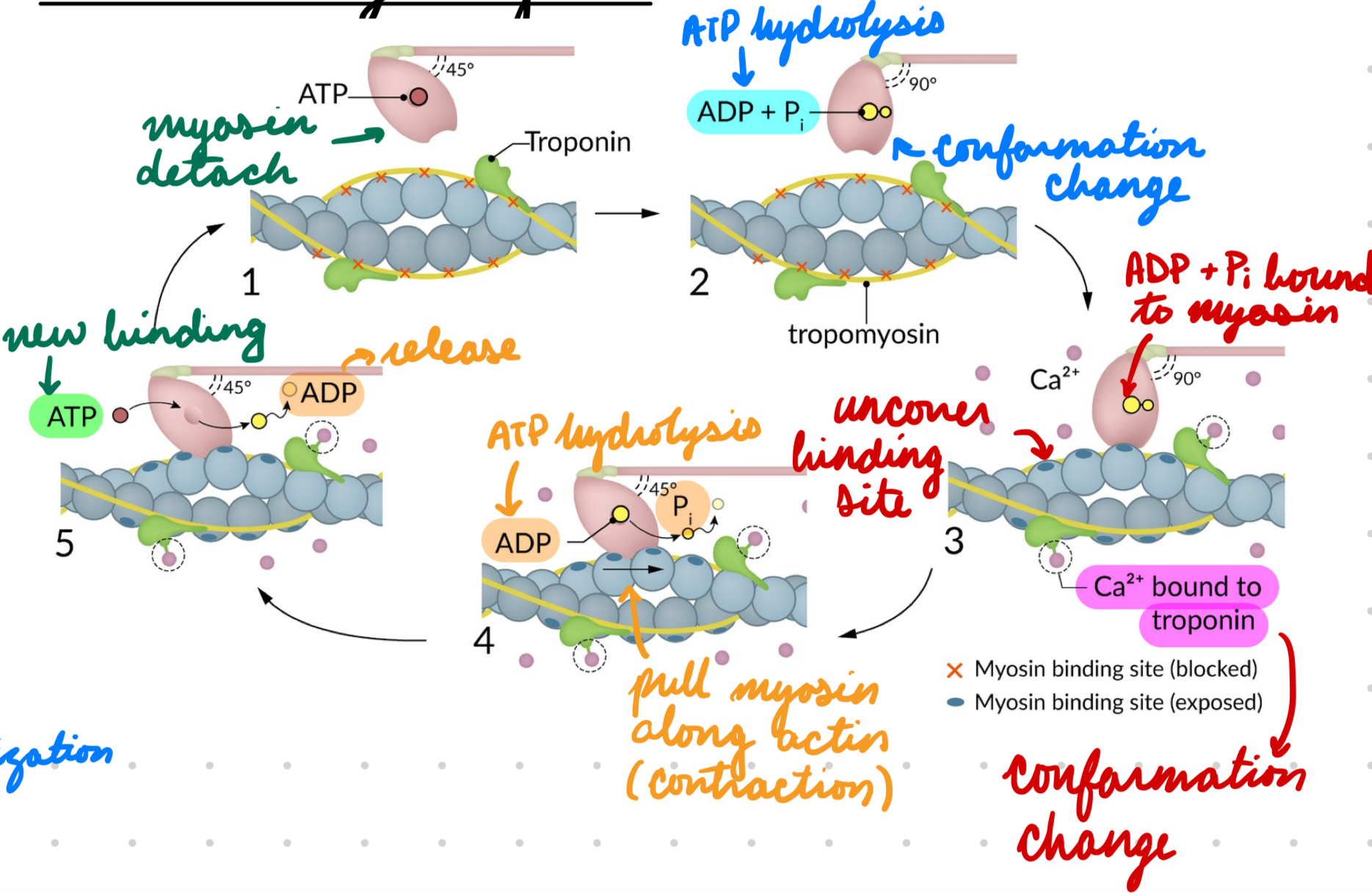
Crossbridge Cycle 5: Relaxation
Ca2+ → SR = Decrease intracellular Ca2+
Tropomyosin cover myosin binding site on actin = Muscle relaxes
Myopathies: Types
Inflammatory myopathy (myositis)
Metabolic myopathy
Congenital structural myopathy
Dystrophy
Inflammatory Myopathy: Description
Acquired autoimmune disorders causing muscle inflammation
Inflammatory Myopathy: Onset
Adult
Dermatomyositis: Children
Inflammatory Myopathy: Progression
Subacute onset
Inflammatory Myopathy: Clinical Presentation
Symmetric proximal muscle weakness
Shoulder
Hip
Skin rashes
Inflammatory Myopathy: Muscle Biopsy Findings
Mononuclear cell infiltration
Dermatomyositis: Perifascicular atrophy
Metabolic Myopathy: Description
Inherited energy metabolism disorders in muscles
Metabolic Myopathy: Onset
Variable (children + adults)
Metabolic Myopathy: Progression
Episodic
Metabolic Myopathy: Clinical Presentation
Exercise intolerance (rhabdomyolysis)
Muscle cramps
Myalgia
Metabolic Myopathy: Muscle Biopsy Findings
Glycogen accumulation
Lipid accumulation
Abnormal mitochondria
Congenital Structural Myopathy: Description
Inherited structural muscle disorders
Congenital Structural Myopathy: Onset
Congenital
Early childhood
Congenital Structural Myopathy: Progression
Static OR slow progression
Congenital Structural Myopathy: Clinical Presentation
Hypotonia + hyporeflexia
Facial weakness
Proximal muscle weakness
Low muscle bulk
Congenital Structural Myopathy: Muscle Biopsy Findings
Structural abnormalities without inflammation + necrosis
Dystrophy: Description
Inherited progressive degenerative muscle disorders
Dystrophy: Onset
Children
Dystrophy: Progression
Fast progression
Dystrophy: Clinical Presentation
Progressive proximal muscle weakness
Dystrophy: Muscle Biopsy Findings
Muscle fibre size variation
Necrosis
Regeneration
Fibrosis
Fat replacement
Protein deficiencies
Progressive Muscular Dystrophy: Description
Progressive degenerative disorders affecting MSK system
Types:
Duchenne muscular dystrophy (DMD)
Becker muscular dystrophy (BMD)
Limb-girdle muscular dystrophy
Facioscapulohumeral dystrophy
Progressive Muscular Dystrophy: Epidemiology
DMD: Affect males only
2-5 years
BMD: Affect males only
> 15 years
Progressive Muscular Dystrophy: Etiology
X-linked recessive chromosomal mutations of dystrophin gene
DMD: Frameshift deletion or nonsense mutation = Short/absent protein
BMD: In-frame deletion = Dysfunctional protein
Progressive Muscular Dystrophy: Pathophysiology
Dystrophin gene mutation = Alter dystrophin protein structure = Impair protien function
Dystrophin Protein: Anchor striated muscle cytoskeleton actin filaments to ECM
Loss of muscle integrity + stability = Muscle cell necrosis = Replace with connective tissue + fatty tissue
Weak muscles + large appearance (pseudohypertrophy)
Progressive Muscular Dystrophy: Clinical Presentation
DMD:
Progressive muscle paresis + atrophy
Start in proximal lower limbs (pelvic girdle)
Progress to upper body + distal limbs
Weak reflexes
Calf pseudohypertrophy
Scoliosis or lumbar lordosis
Difficulty walking + standing
Waddling gait
Trendelenburg sign
Gower sign: Support with hands on thighs + walk up body until standing
Cardioresp:
Dilated cardiomyopathy
Arrhythmias
Resp insufficiency
BMD:
Less severe than DMD
Slower progression
Progressive Muscular Dystrophy: Investigations
Blood tests
DNA test
Muscle biopsy
Progressive Muscular Dystrophy Investigations: Blood Tests
Increased creatine kinase
Normal: Greater in Black pts
Males: 200 U/L
Females: 150 U/L
Increased aldolase (glycolysis enzyme)
Normal: 1-7.5 U/L
Progressive Muscular Dystrophy Investigations: DNA Test
Confirm diagnosis
Dystrophin gene mutation
Progressive Muscular Dystrophy Investigations: Muscle Biopsy
Inconclusive genetic analysis
Muscle fibre diameter changes throughout disease course
Muscle necrosis + replacement with connective/adipose tissue
DMD: No dystrophin
BMD: Decreased dystrophin
Progressive Muscular Dystrophy: Treatment
Nonpharmacological
Pharmacological
Progressive Muscular Dystrophy Treatment: Nonpharmacological
Physiotherapy
Orthopedic assistive devices
Ventilation
Psychological support
Progressive Muscular Dystrophy Treatment: Pharmacological
DMD:
Glucocorticoids (prednisone, deflazacort)
Eteplirsen: Bind exon 51 in dystrophin RNA = Prevent splicing = Produce functional truncated protein
BMD: Glucocorticoids
Progressive Muscular Dystrophy: Complications
Cardiomyopathy
Respiratory failure
Progressive Muscular Dystrophy Complications: Cardiomyopathy
DMD: Usual cause of death (30 years)
BMD: Reduced life expectancy (40-50 years)
Pathophysiology: Commonly dilated
Dystrophin protein dysfunction in cardiac muscle = Myocyte necrosis + replacement with connective/adipose tissue
Ventricular dilation = Decreased contractility + ejection fraction
Progressive Muscular Dystrophy Complications: Respiratory Failure
DMD: Usual cause of death
Pathophysiology:
Dystrophin protein dysfunction in diaphragm = Muscle remodelling + necrosis = Respiratory failure
Ineffective cough
Atelectasis