Midterm 1: Important Info
 Call Kai
 Learn
Learn Practice Test
 Spaced Repetition
 Match
Match Flashcards
 Knowt Play
1/16

There's no tags or description
Looks like no tags are added yet.
Name | Mastery | Learn | Test | Matching | Spaced | Call with Kai |
|---|
No analytics yet
Send a link to your students to track their progress
17 Terms
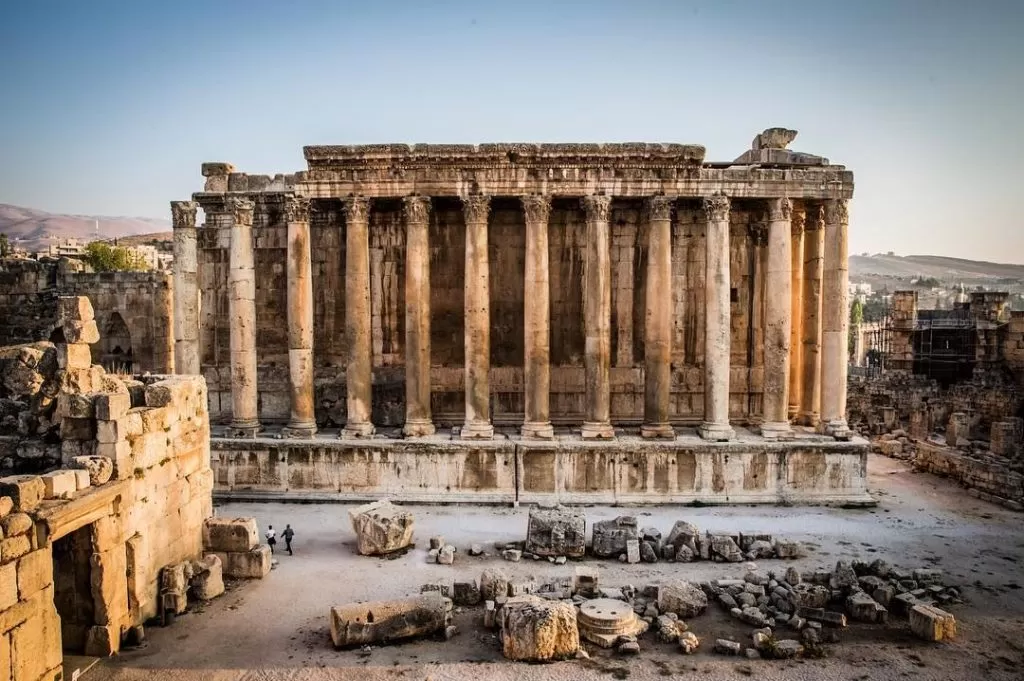
Temple of Jupiter, Capitoline Hill
509 BC. Tuscanic-style temple with terracotta decoration. Symbolizes the merge of Etruscan, Greek, and Roman culture. It belongs to the Monarchy period but was inaugurated in 509 BC, marking the beginning of the Republic
Classical Style
Features: balance, contrapposto, pondus, frontal viewpoint, idealized body, calm expression. Classical art presents the body as controlled, harmonious, and perfected
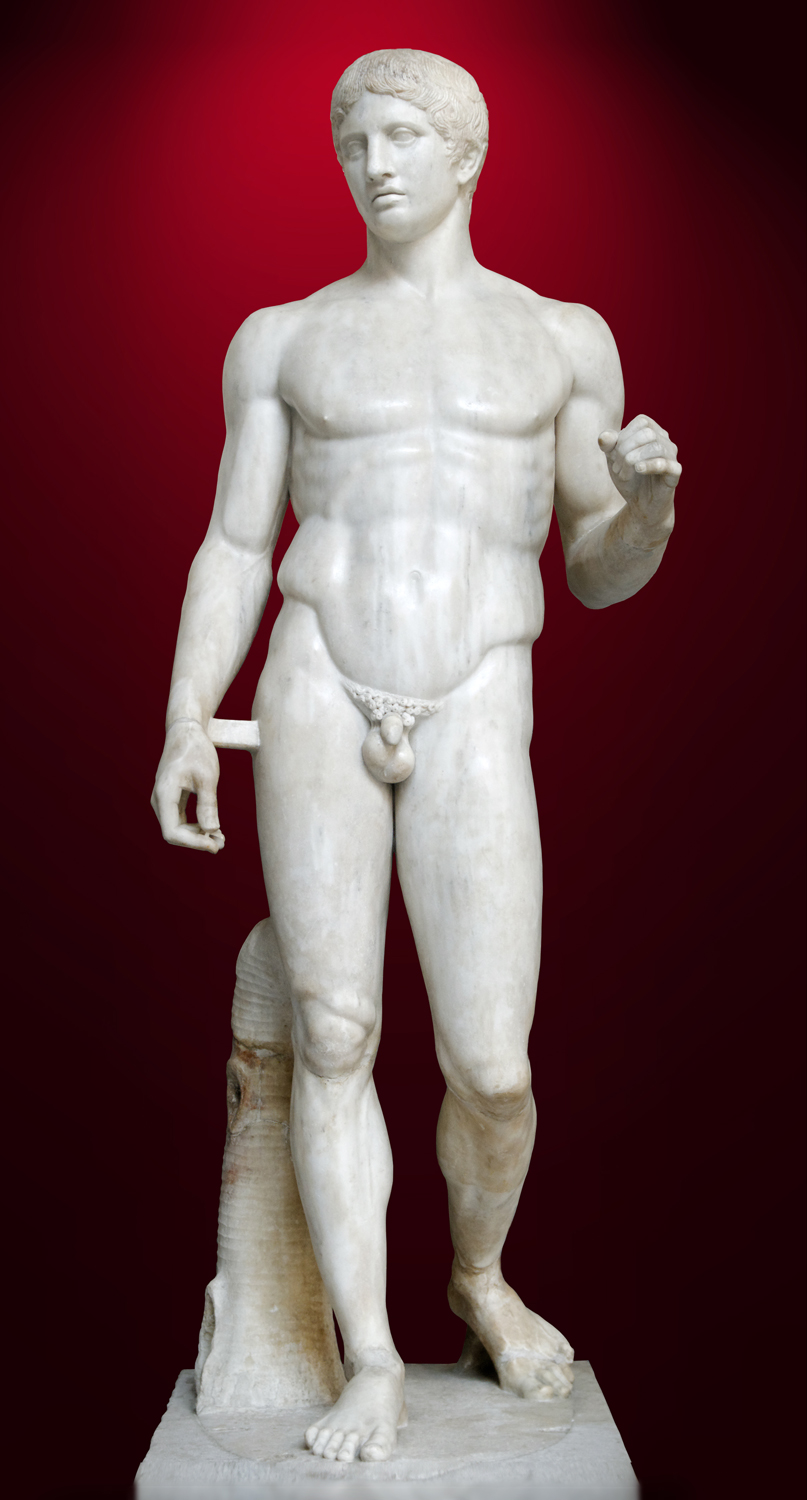
Doryphoros
By Polykleitos, 5th century BC model. Roman copy after Greek bronze original. Shows contrapposto, frontal viewpoint, and vertical balance, or pondus
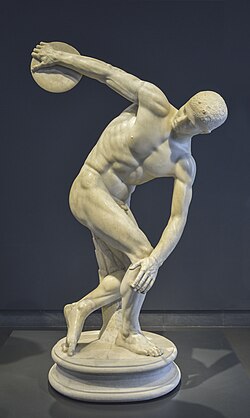
Discobolus
By Myron, mid 5th century BC model. Roman copy after Greek bronze original. Shows an athlete in motion, but the body is still ideal, controlled, and balanced
Mid-Italic Style
Roman and Italic style of the 2nd and 1st centuries BC. Features: verism, realism, descriptive detail, social identity. Used by soldiers, professionals, public figures, and liberti, meaning freed people
Libertine Couple
Late 1st century BC. Tomb relief. Mid-Italic style. Shows freed people Aulus Pinarius Anteros and Oppia Myrsine. Realistic and expressive faces communicate age, social status, and life achievement
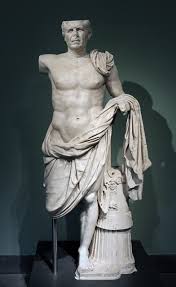
General from Tivoli
75 to 50 BC, Palazzo Massimo. Late Republican portrait. Eclectic style: realistic Mid-Italic head plus idealized Greek or Hellenistic heroic body
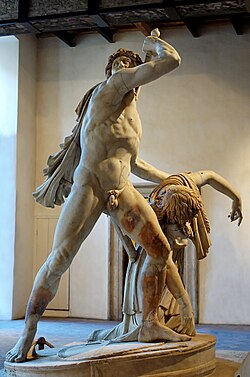
Suiciding Gaul
Hellenistic style. Palazzo Altemps. Roman marble copy after a lost bronze original from Pergamon, mid 3rd century BC, created after King Attalus defeated the Galati. Features: movement, pain, multiple viewpoints, kairos, storytelling, viewer interaction
44 BC
Caesar murdered
31 BC
Actium
27 BC
Augustus becomes princep
9 BC
Ara Pacis inaugurated. Augustus uses art and architecture to create a new political language of peace, order, piety, and dynastic legitimacy
Four Pompeian Styles
2nd century BC to 79 AD
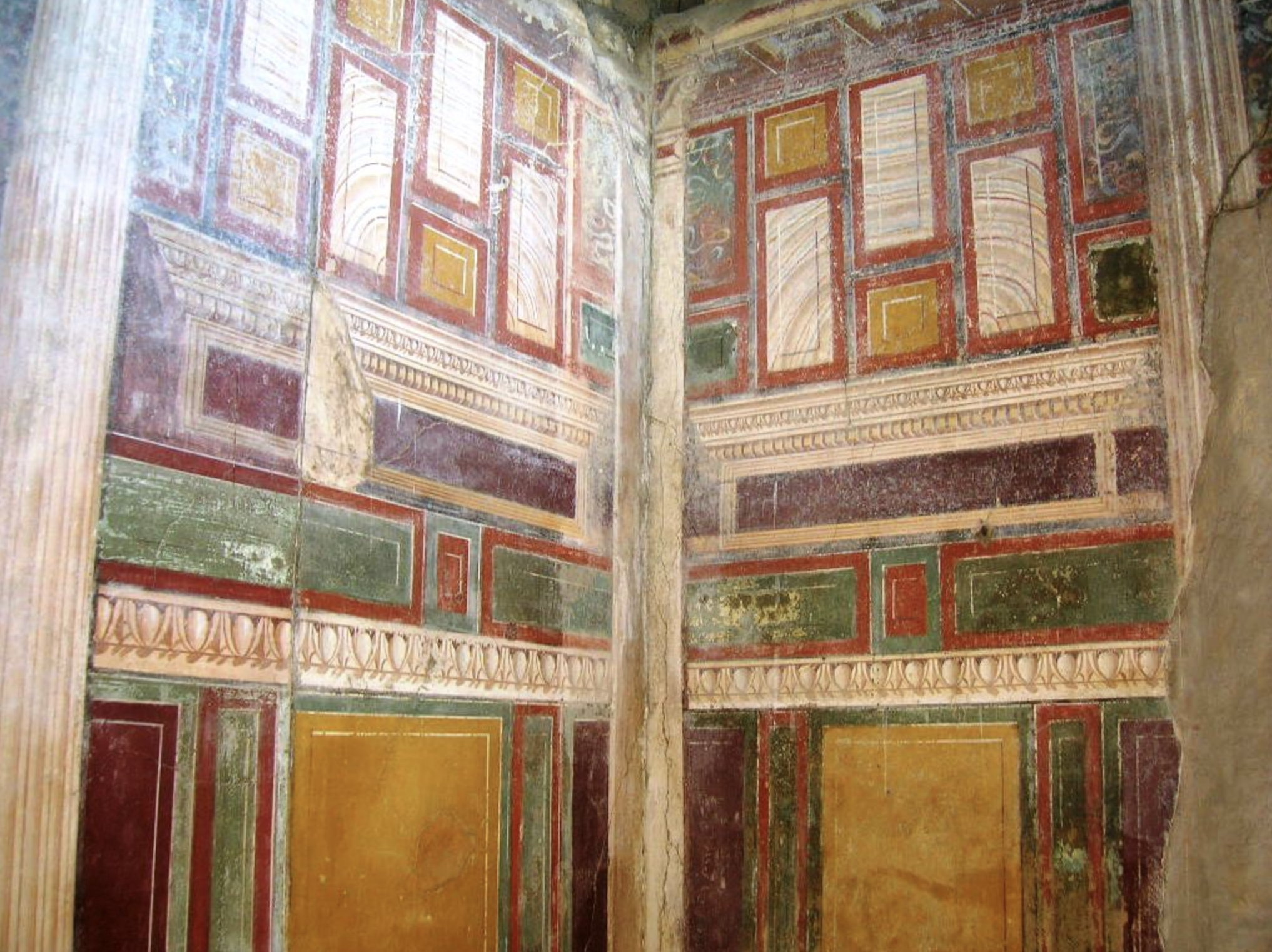
First Pompeian Style
Villa of Ariadne, Stabiae (fake marble)
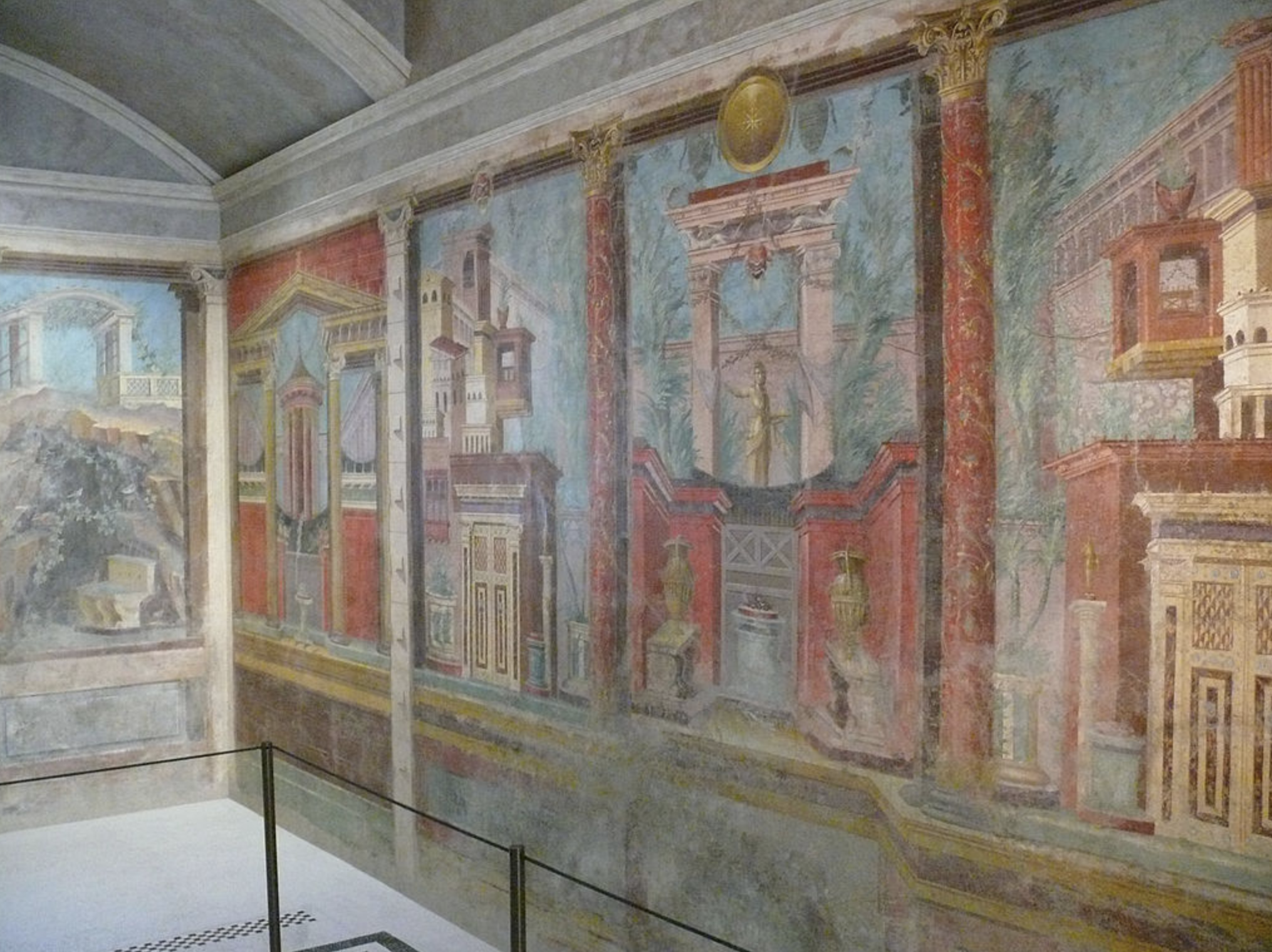
Second Pompeian Style
Villa of Boscoreale (illusionistic architecture)
Third Pompeian Style
Villa of Poppaea in Oplontis (flat wall with delicate decoration)
Fourth Pompeian Style
House of the Vettii, Pompeii (fantasy architecture mixing Second and Third)