U2 ECOLOGY
 Call Kai
 Learn
Learn Practice Test
 Spaced Repetition
 Match
Match Flashcards
 Knowt Play
1/69

There's no tags or description
Looks like no tags are added yet.
Name | Mastery | Learn | Test | Matching | Spaced | Call with Kai |
|---|
No analytics yet
Send a link to your students to track their progress
70 Terms
What is the first law of thermodynamics
Law of conservation of energy
Energy can be transformed but not created or destroyed
What is the second law of thermodynamics
Energy transformations in ecosystems are inherently inefficient
When energy is transformed it must be degraded into a less useful form such as heat
Examples:
Only 10% of energy is transferred to the next trophic level
90% is lost as heat during metabolic process
Organisms break down glucose to release energy but not all is converted into usable energy for cellular activities
Some are lost as heat
Describe photosynthesis and cellular respiration flow diagram
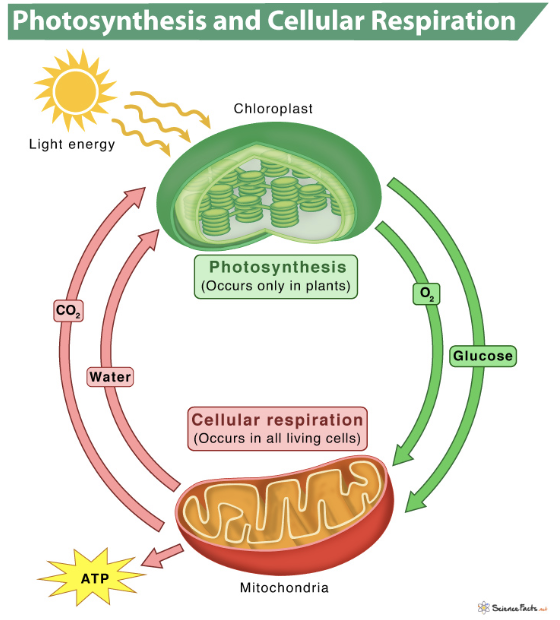
Answer these about photosynthesis and cellular respiration
Where does it occur
Primary energy source
Reactants
Products
Photosynthesis
Occurs in chloroplast
Primary energy is sun
Reactants are CO2 and H20
Products are glucose and oxygen
Cellular respiration
Occurs in cytoplasm and mitochondrion
Primary energy is glucose
Reactants are glucose and oxygen
Products are CO2 and H20
What are the similarities between photosynthesis and aerobic cellular respiration
Involves the electron transport chain
Need for organism’s survival
Involves gas exchange
What is cellular respiration
Organisms break down glucose to release stored chemical energy for cellular activities
Provides energy for growth, repair and maintenance
Essential to sustain life process
What are autotrophs
First tropic level
Primary source of energy and organic matter
Releases oxygen and absorb CO2
Absorbs water and releases into the atmosphere through transportation
Habitat for animals
I.e. Trees, seaweed, purple bacteria
Name all trophic levels
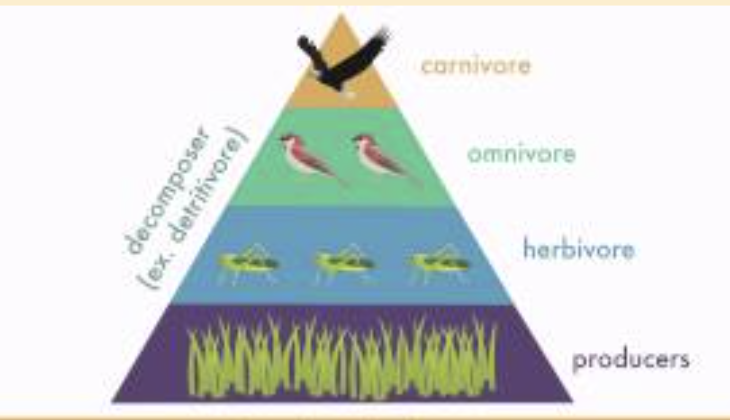
What are included into decomposers
Saprotrophs
Secret enzymes onto dead materials
Break it down then absorb dissolved nutrients
Fungi on a log/Bacteria in soil
Detritivores
They ingest chunks of dead material and digest inside their gut
Earthworms, milipedes
Formula to calculate energy efficiency

What is Net productivity
Amount of biomass remaining after losses from cellular respiration
For producers (plants)
Energy left over after the plant used some of captured energy for its own respiration
For consumers (animals)
Energy left over after animal used to eat and respirate
What is the gross productivity
Total gain in biomass over a specific period
For producers (plants)
Amount of energy captured from sunlight and converted into chemical energy through photosynthesis
In consumers
Total amount of energy obtained from ingestion of food
Net productivity formula
NP = GP-RESPIRATION LOSS
What is bioaccumulation
Build up of non biodegradable pollutants in an organism or trophic level over time
Pollutants absorbed faster than they are metabolised / excreted
E.g. Fish in contaminated waters accumulate mercury in their tissues
What is biomagnification
Non-biodegradable pollutants accumulating
Higher concentrations in predator’s body
Pollutants accumulate in organisms across trophic levels due to inefficient metabolism and excretion
Example:
Plankton absorb pollutants from water → accumulate in their tissue and fish eat plankton → larger predator
HL What are the types of autotrophs
Autotrophs can synthesize their own carbon compounds
Photoautotrophs
Use light energy to drive process of photosynthesis
Plants, algae
Chemoautotrophs
Energy from oxidation of inorganic molecules
Sulfur bacteria in deep sea hydrothermal vents
HL What are the heterotrophs
Cannot synthesize their own carbon compounds from inorganic sources
Herbivores
Deer, rabits - grass
Carnivores
Lions, sharks -eats others
Omnivores
Plants and animals
Detritivores
Dead organic matter
Saprotrophs
Decompose matter by secreting digestive enzymes and absorbing the resulting nutrients
HL Explain what chemoautotrophs are
Use inorganic chemical reactions as an external energy source
H2S, NH3, Fe2+ to produce organic molecules
HL What is gross secondary productivity
GSP = Food eaten - poop
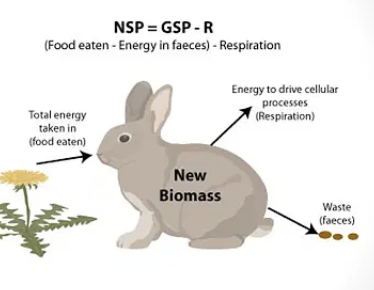
HL Formula for ecological efficiency (slide 128, 2.2)

Explan the variability in ecological efficiency
However it is not a constant and can significantly vary due to:
Ecosystem types
Aquatic: 10%-20%
Terrestrial 5-10%
Trophic levels
Plants → herbivores are higher than transfer between higher levels bc of metabolic processes and heat
HL What is entropy
The measure of amount of disorder or randomness in a system
It increases as biomass passes through ecosystems
HL Explain carbon stores in the lithosphere
Fossil fuels
coal, oil and natural gas
Formed from remains of ancient plants
Stored for hundreds of miliions of years until extracted by humans
Limestone in the form of calcium carbonate
Accumulation of shell,coral, fecal debris or percipitation from seawater
Residence time of hundreds of millions of years
HL Explain coal formation
Partially decomposed plant matter, primarily from ancient forests and swamps
Millions of years of plant debris in wetlands
Burial under sediments → physical and chemical transformations →. peat
Increased temp and pressure = peat into brown → soft → hard coal
HL Oil and natural gas formation
Partially decomposed algae and planktons
Settle on ocean floor → mixed with sediments = organic rich mud
Also buried under temp and pressure = chem change = liquid oil and gaseous hydrocarbons (natural gas)
Migrate through rocks until trapped by impermeable rock layers = reservoir
HL Reef building coals
Corals and shellfish create calcium carbonate skeletons → turns into limestone after long periods
Becomes a significant carbon reservoir
HL Methane formation
Makes up a small part of atmospheric gases but traps heat 28x better than co2
Remains in atmosphere for 10 years until oxidised to co2 and h2o
HL Methanogensis + impacts of methane
Methane (CH4) from organic matter by methanogenic bacteria
Occurs in anaerobic (oxygen free) environments like swamps, rice paddies
Converts dead organic matter into methane gas
Impacts
Produced in cows and sheep’s stomach during digestion
Increased demand of food = more methane
Rice in water flooded fields = more methanogen populations = more production
HL Nitrogen cycle + flow diagram
Atmosphere 78% nitrogen gas → not directly usable by most organisms
Major component of amino acids and backbone of proteins and DNA
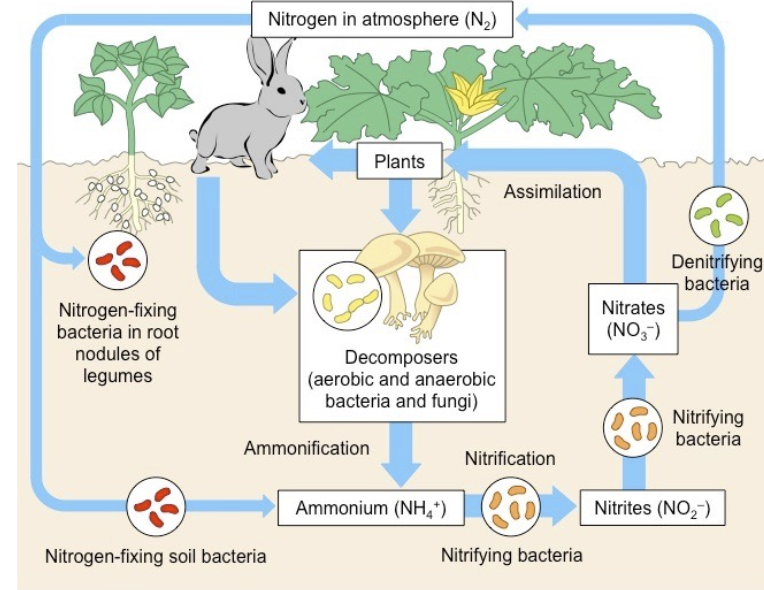
HL Name inorganic and organic nitrogen stores 2 each
Inorganic
Atmosphere as N2 gas
Soil holds it in gas form
Can’t be directly used by plants or animals
Ocean: Decomposing matter → ammonia → NO3 → NO2
Organic
Plants and animals
Stored in proteins
Transferred from producers to consumers through food chain
used to create new tissues and cells
HL Name nitrogen transfers and transformations 2 each
Transfers
Moves through atmosphere, soil, living organisms
Uptake of nitrogen compounds by plant roots
Transformations
Conversion of N2 to NH3
Ammonia + water = NH4+ taken up by plants
HL What are nitrogen fixing bacteria + mutualistic relationship with legume roots
Free living but some forms mutualistic relationship with legume roots
Benefits
Bacteria fix nitrogen → converts nitrogen in a way where the plant can absorb = advantage in nitrogen limited environments
Plant provides glucose + safe home in nodules
HL What is dentrification ( a part of the nitrogen cycle)
Does the opposite
Bacteria in low oxygen conditions convert N2 or water into nitrogen fas → return to atmosphere as part of nitrogen cycle
Bacteria cant use CO2 for respiration so use N2 as alternative
Stealing their nitrogen supply = lose a key nutrient needed for growth = can suffocate roots = can kill plants
HL What are insectivorous plants
In waterlogged , anaerobic soils some plants adapt by capturing insects
E.g. Sundews
Digests insects and use them as nitrogen source
HL Name two human impacts on nitrogen cycle
Aquaculture
Fish farms use fertilizers and antibiotics
Pollutes surrounding water bodies → affects nitrogen cycle
Livestock ranching
Livestock waste releases large amount of ammonia (indirectly causes dentrification
Enters soil and water systems through leaching, groundwater flow and runoff
Extra nitrogen being dumped into the cycle in the wrong place and amount
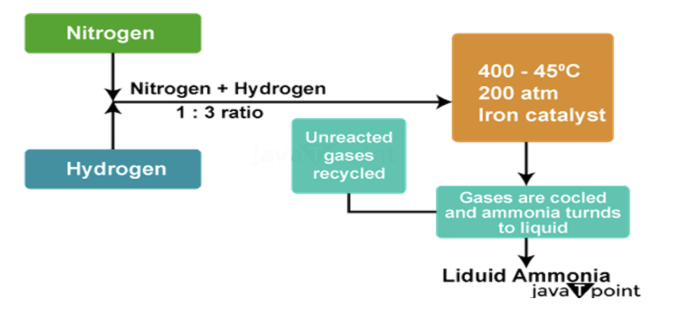
HL What is the haber process
Increased food production by creating ammonia rich fertilizers
Using nitrogen from atmosphere and hydrogen from methane (natural gas) → reacting it at high temp to create ammonia
HL Haber process pros and cons 2 each
Pros
Increase crop yields
Consistency
Econ growth
More jobs in the fertiliser industry
Cons
Increase crop yields
Over reliance = soil nutrient imbalance
Econ growth
Econ benefits not evenly distributed
HL 3 ways to mitigate impacts on nitrogen cycle
Efficient use
Application techniques to minimise runoff to reduce pollution
Prevent nitrogen depletion
Mixed cropping, crop rotation
Reduce nitrogen emissions from industrial emissions
True or false: CO2 is converted into organic compounds like glucose which are used to build plant tissues
True
What is carbon sequestration
The process where carbon accumulates over time through carbon sequestration
Capturing gaseous and atmospheric co2 → storing in solid / liquid form
Healthy carbon sequestering ecosystems support diverse plant and animal species
Carbon sinks vs stores
Stores
Ocean, soil, atmosphere, living organisms
Anything that holds carbon
Sinks
Actively absorbing more carbon than it releases
Trees → absorb more than they respirate
All sinks are stores but other way round doesnt work
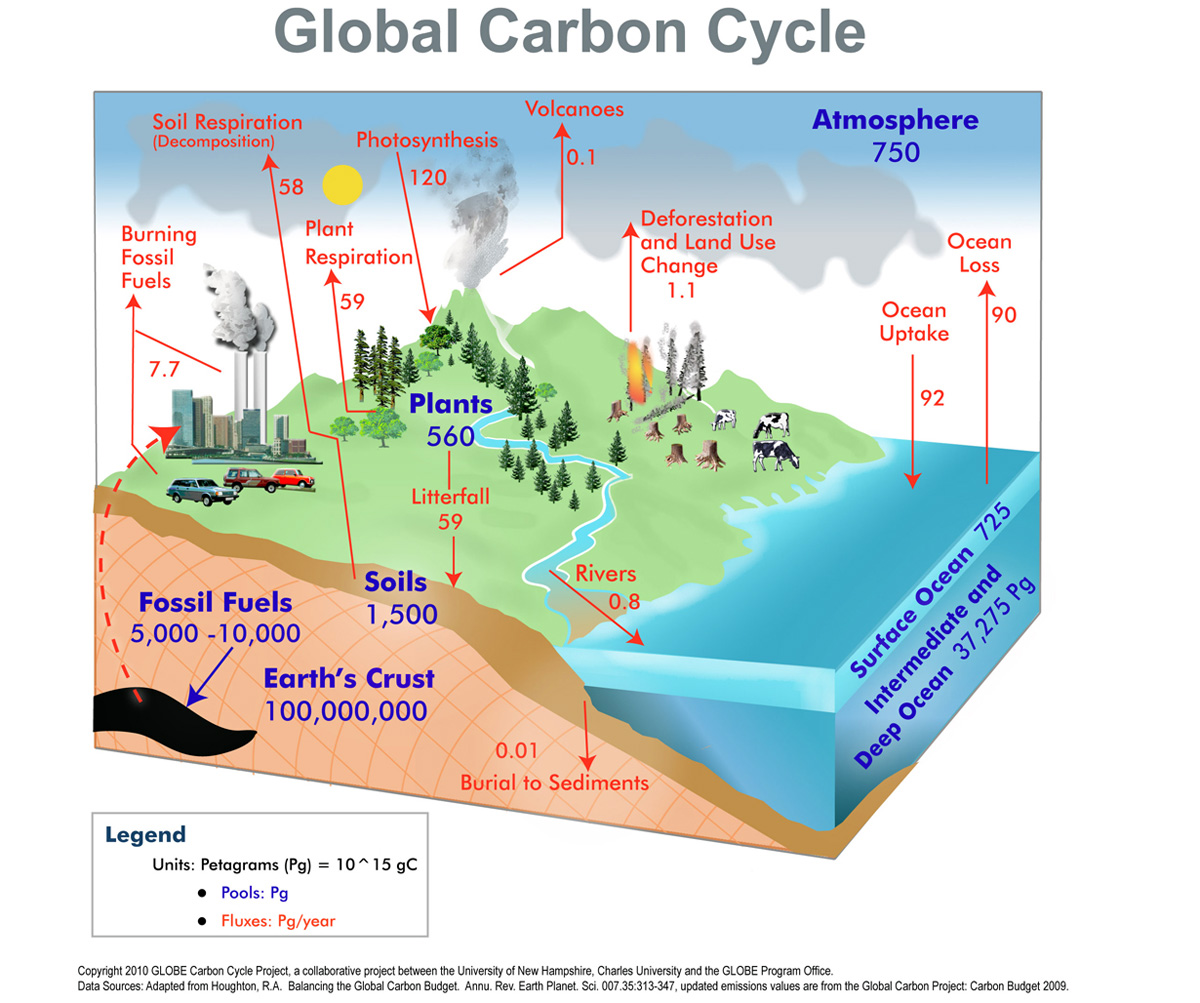
Flow diagram of global carbon cycle
Name 2 organic carbon stores + briefly on how it works
Crude oil and natural gas (fossil fuels)
Formed from remains of plants millions of years ago
Carbon in the form of hydrocarbons → release co2 when burned
Plants
Photosynthesis
Name 2 inorganic carbon stores + briefly on how it works
Atmosphere
CO2
Traps heat cuz its a greenhouse gas
Soil
In form of carbonates
Calcium carbonate
Describe the formation of fossil fuels
Dead plants and microorganisms accumulate in sediment layers
Buried under high temp and pressure
Undergoes chem and physical transformation = transforms into fossil fuels (coal, oil, natural gas)
Describe 2 carbon flows
Photosynthesis
Absorb co2 → convert into organic compounds using energy from sunlight → stores carbon in plant biomass
Defecation
Some carbon is excreted as waste
Process returns carbon to soil → used by decomposers or soil
SLIDE 2.3.8