FLEXIBLE IMPRESSION MATERIALS
 Call Kai
 Learn
Learn Practice Test
 Spaced Repetition
 Match
Match Flashcards
 Knowt Play
1/46

There's no tags or description
Looks like no tags are added yet.
Name | Mastery | Learn | Test | Matching | Spaced | Call with Kai |
|---|
No analytics yet
Send a link to your students to track their progress
47 Terms
what are the types of flexible impression materials
hydrocolloids
elastomers
give examples of hydrocolloids
hydrocolloids
agar
alginate
give examples of elastomers
elastomers
polysulphide
polyether
silicone polymers
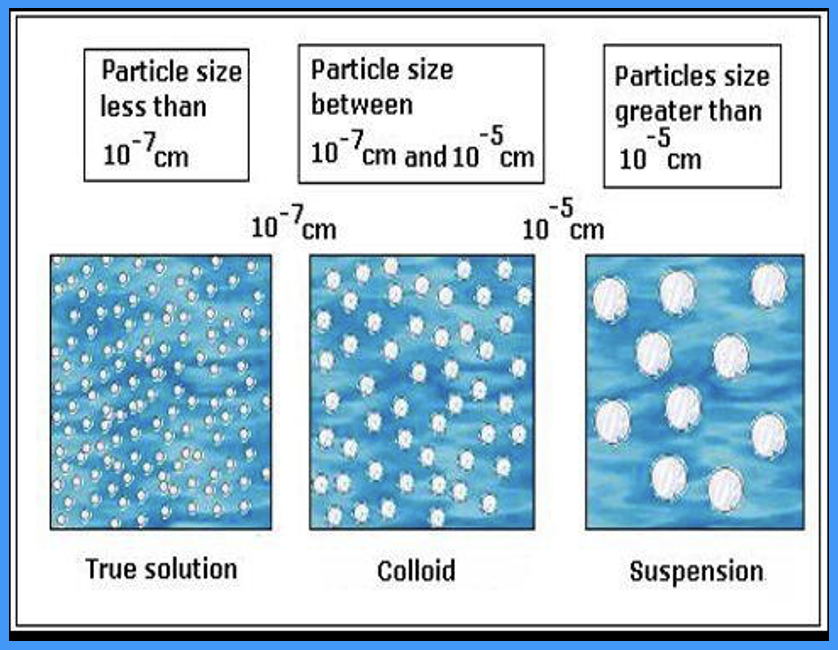
what is a solution
solution: a homogenous mixture consisting of a single phase
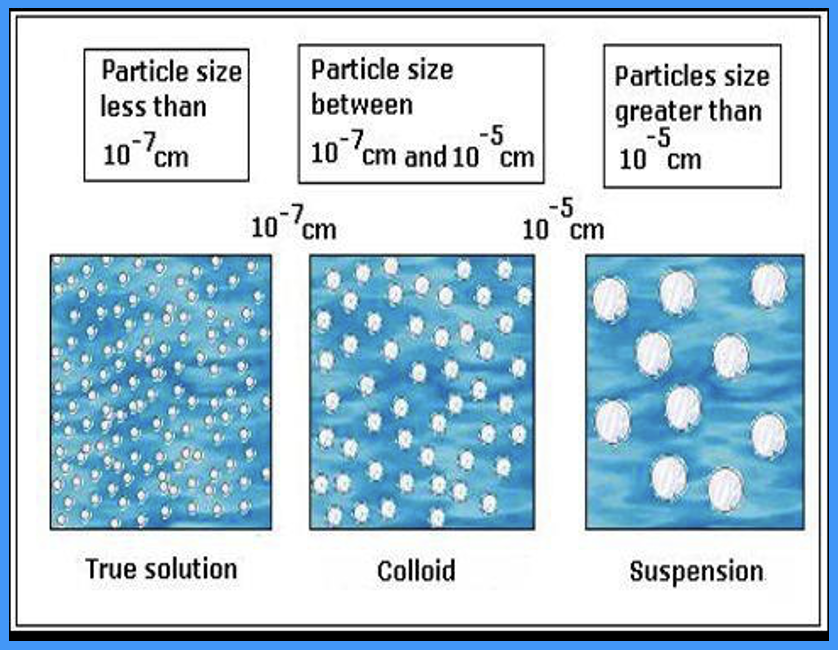
what is a suspension
suspension: a heterogenous mixture of two phases
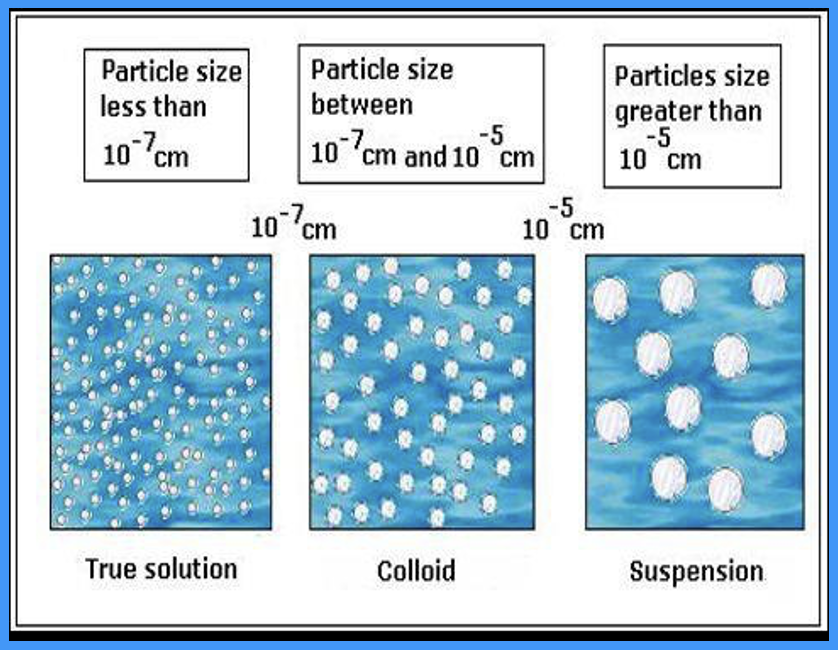
what is a colloid
colloid: a heterogenous mixture of two phases where the two phases are not readily differentiated
e.g. colloidal silica in resin
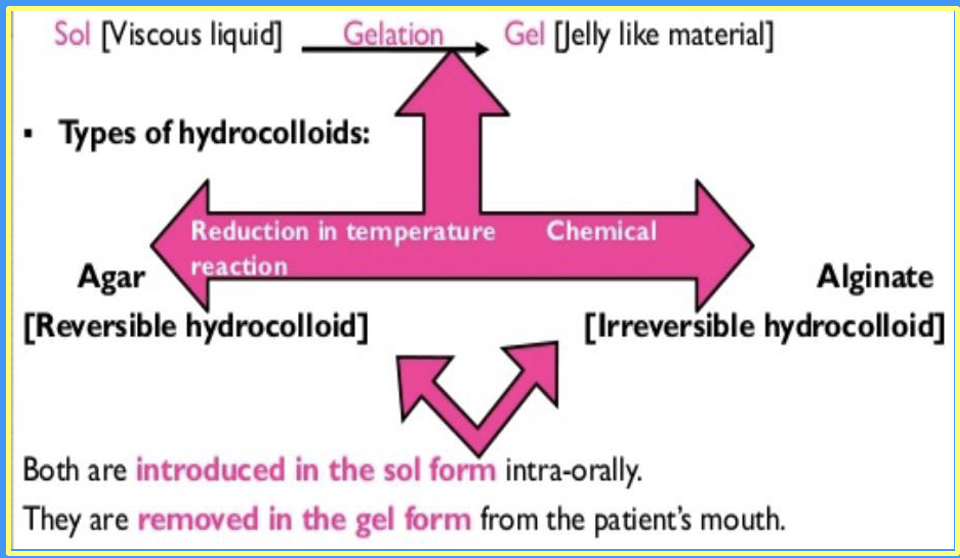
how does agar become alginate
sol form = non-set form
what does an agar impression material consist of
agar (colloid)
borax (strengthen gel)
potassium sulphate
water (dispersion medium)
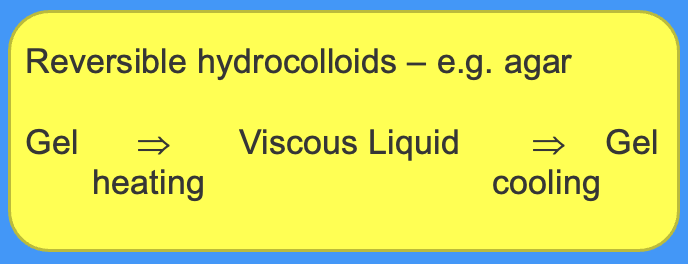
outline how agar is reversible
what is the clinical relevance of agars
used for complex impressions for advanced restorative work
often used in labs to duplicate models because they can be reused many times
how is agar supplied in dentistry
supplied in sealed tubes to prevent evaporation of water
what are properties/ advantages of agar impression materials
good surface detail
can be used on undercuts but liable to tear on deep undercuts
non-toxic and non-irritant
slow setting time
adequate shelf life
can be sterilised by an aqueous solution of hypochlorite
what are the main advantages of agar impression materials
good surface detail
reusable and relatively easily sterilised
what are disadvantages of agar impression materials
need special equipment (water bath)
dimensional instability
poor tear resistance
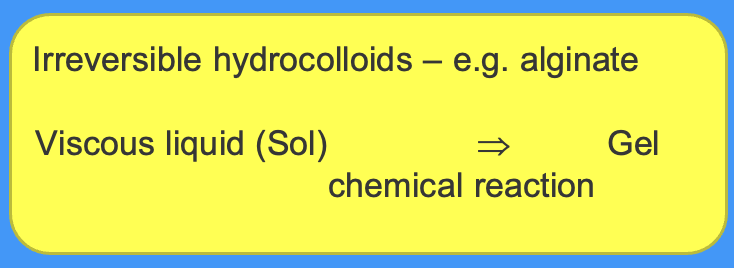
how does alginate become a solid
outline the composition of alginate impression materials
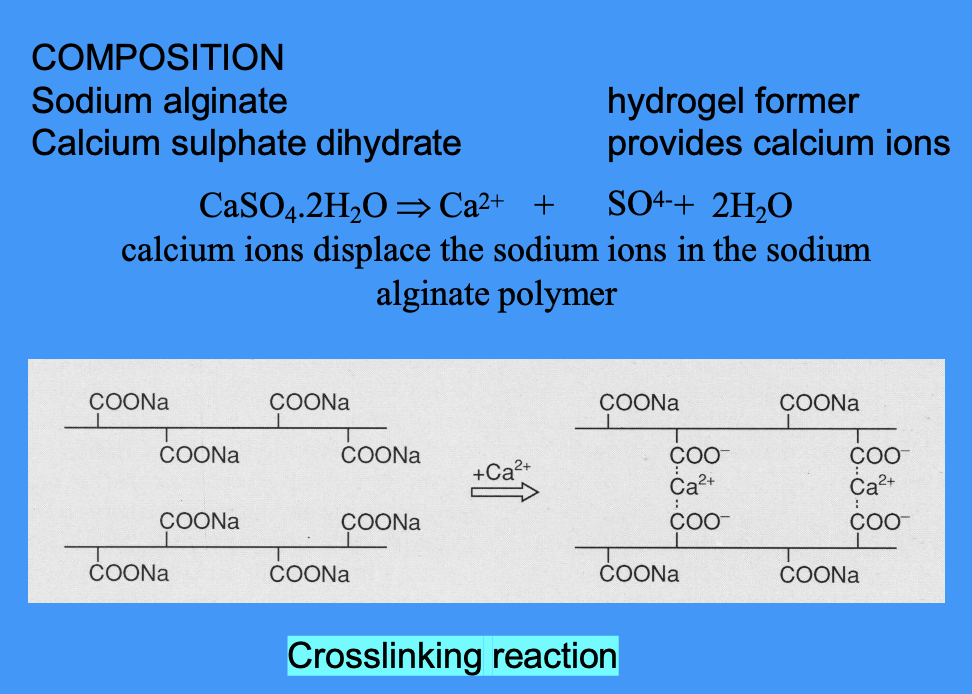
sodium alginate (hydrogel former)
calcium sulphate dihydrate (provides calcium ions)
sodium phosphate (controls working time)
potassium sulphate (enhances setting of model)
fillers (controls consistency)
sodium silicofluoride (controls pH)
diagram of the alginate reaction (what kind of reaction is the alginate reaction)
why are perforated trays needed when using alginate
this enables alginate to be fixed to the tray securely i.e. mechanical retention
needed because alginate has poor dimensional stability
only tray adhesive is required for other impression materials
what are advantages of alginate impression materials
dust free powder
cheap
well controlled working and setting times
hydrophilic
mucostatic technique
what are disadvantages of alginate impression materials
limited shelf life
poor surface reproduction
poor storage stability
imbibition (water absorption)
syneresis (water loss)
low tear strength
excessive permanent deformation/ poor dimensional stability
define imbibition
imbibition: shape change as water is absorbed by solid-colloids causing an increase in volume

define syneresis
syneresis: shape change as loss of a liquid from a gel causing a reduction in volume

what are the types of elastomeric impression materials
polysulphides
polyethers
silicones
condensation cured
addition cured
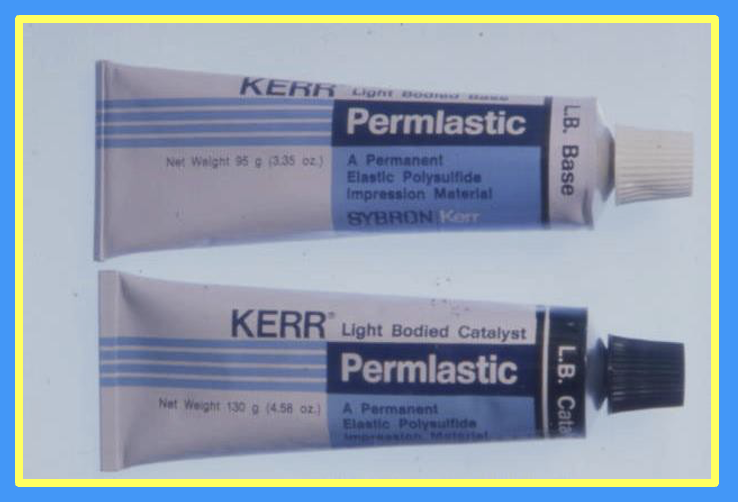
what does a polysulphide impression material consist of
base paste
polysulphide
filler (TiO2)
activator paste
lead dioxide
sulphur
plasticiser (dibutyl phthalate)
is there a byproduct in the polysulphide impression material reaction, if so, what is it
yes
the byproduct is H2O
what are the common applications for polysulphide impression materials
mainly:
crown
bridge work
also used for:
partial dentures
overdentures
implants
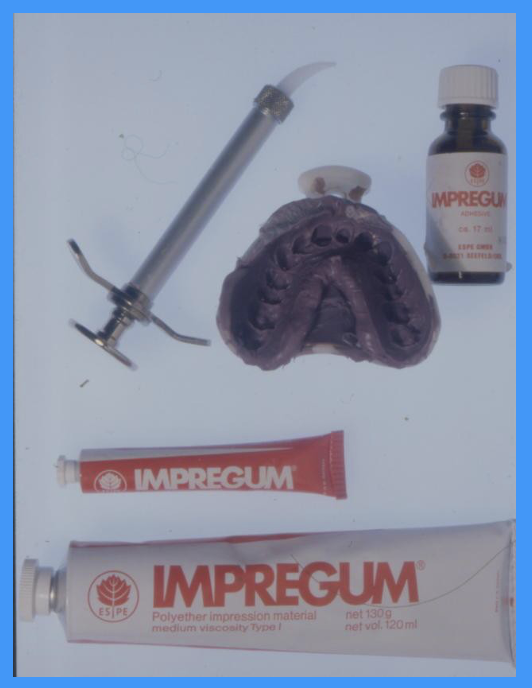
what is a polyether impression material made up of
base paste
polyether
filler (colloidal silica)
activator paste
aromatic sulphonate ester
filler
plasticiser (dibutyl phthalate)
is there a byproduct in a polyether impression material reaction, if so what is it
no there is no byproduct
image of the structure of polyether
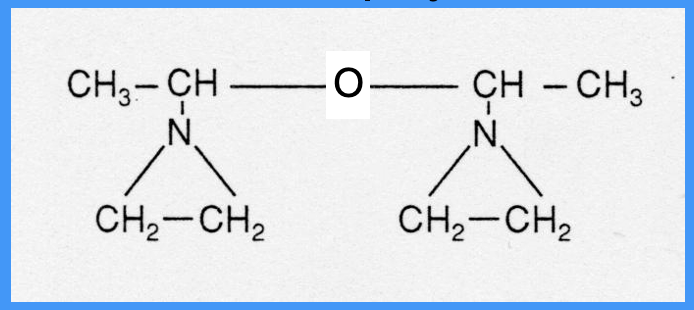
what are the common applications for polyether
crowns
bridge work
partial dentures
implants
overdentures
what does a condensation cured silicone impression material consist of
base paste
silicone polymer
filler (colloidal silica)
oregano-tin compound
activator paste
silicone polymer
filler (colloidal silica)
tetra-ethyl silicate
what does an addition cured silicone impression material consist of
base paste
silicone polymer
filler (colloidal silica)
silanol
activator paste
silicone polymer
filler (colloidal silica)
platinum (Pt) catalyst
what are common applications for silicone impression materials
mainly:
crown
bridge work
also used for:
partial dentures
implants
overdentures
which types of elastomeric impression materials are difficult to mix and why
polysulphides
condensation-cured silicones
» due to different amounts of base and catalyst paste required
(disadvantage)
what makes addition-cured silicones easy to handle
gun delivery system
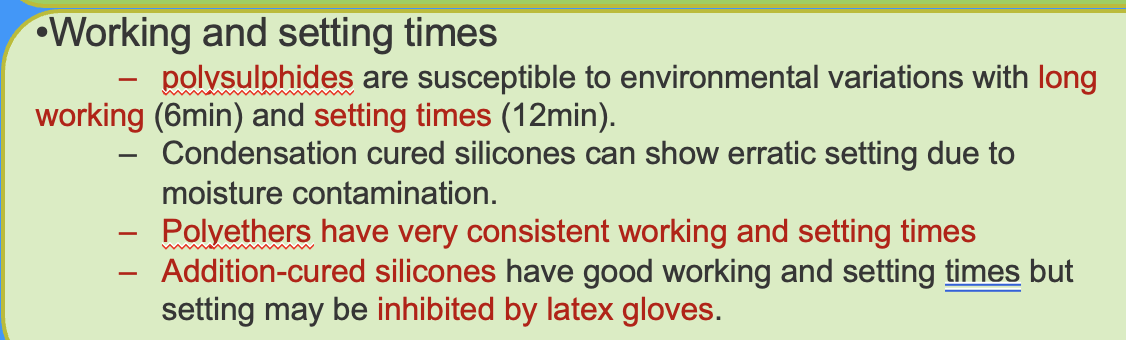
relative working and setting times of elastomeric impression materials
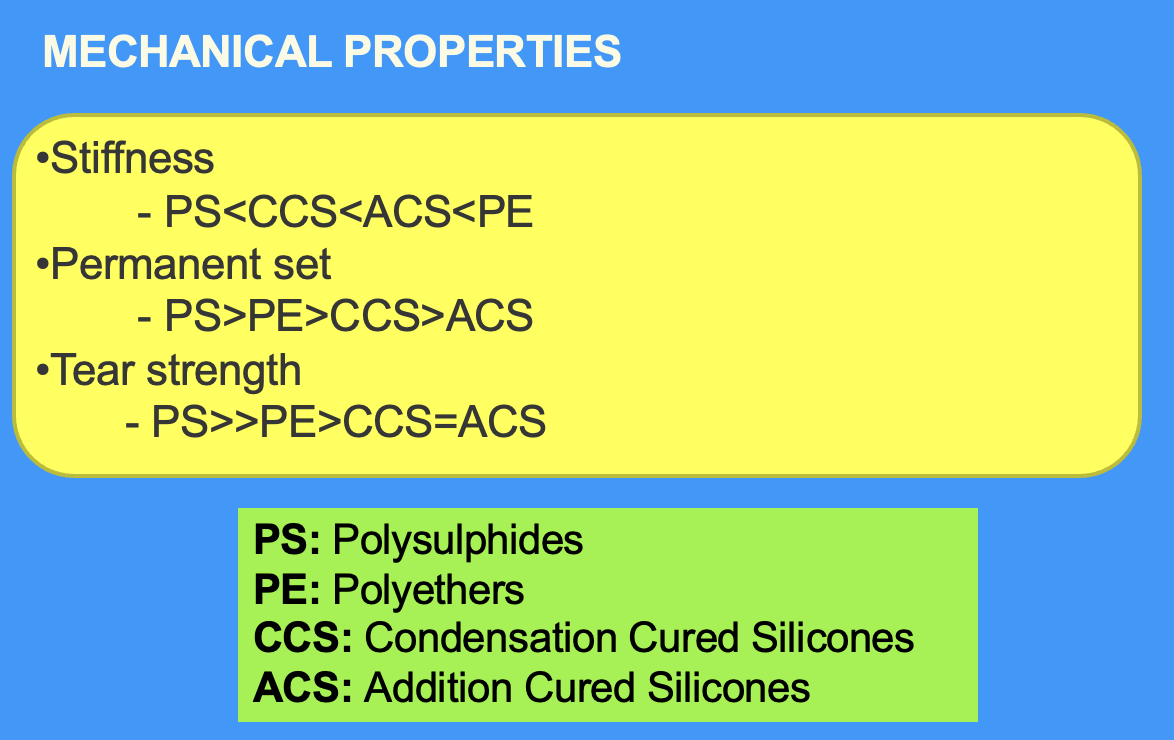
relative mechanical properties of elastomeric impression materials
which elastomeric impression material shows the best surface detail
polyethers are generally best as they are more hydrophilic than the other impression materials
but all show excellent reproduction of surface detail on dry surfaces
what has been added to addition-cured silicones to improve their wettability
surfactants
why may there be poor reproduction of surface detail in an impression
rough or uneven surface
air bubbles
irregular shaped voids
why may an impression have a rough/ uneven surface
incomplete set - premature removal, improper mixing, contamination
rapid set - humidity, temp, wrong mix
why may an impression have air bubbles
rapid set
improper mixing
surface contamination (moisture)
why may an impression have irregular shaped voids
surface contamination (moisture)
premature movement
why may an impression have poor fit
distortion
adhesive failure between tray and impression material
movement of tray during setting
tray not sufficiently rigid
excessive seating pressure
casting too big
inappropriate impression technique
model poured too late (excessive shrinkage on storage)
impression stored under wrong conditions
casting too small
inappropriate impression technique
model poured too early (not enough time for elastic recovery)
impression stored under wrong conditions
what are the consequences of bad impressions
extra chair-side time
repeat visits for patient
patient distress
waste of expensive materials
remake bill from the laboratory
spoil relationship with laboratory
what are advantages of intraoral scanners
patient comfort
dentist auto evaluation
reduced model time
favours clinic-lab communication
what are disadvantages of intraoral scanners
cost investment
training
just surface registration
coating needed - this is when IOS were new so a coating had to be applied in patient’s mouth to improve the scan quality