Sustainable Soil Management - Greenhouse Gas Emissions from Soil
 Call Kai
 Learn
Learn Practice Test
 Spaced Repetition
 Match
Match Flashcards
 Knowt Play
1/19

There's no tags or description
Looks like no tags are added yet.
Name | Mastery | Learn | Test | Matching | Spaced | Call with Kai |
|---|
No analytics yet
Send a link to your students to track their progress
20 Terms
What are the 5 main sources of GHG emissions?
1) Land management (agriculture/forestry)
2) Energy
3) Waste
4) Industry
5) Transportation
What are some examples of soil ecosystem services?
. Food production
. Water purification
. Breakdown of pollutants
. Greenhouse gas regulation.
How does the greenhouse effect work?
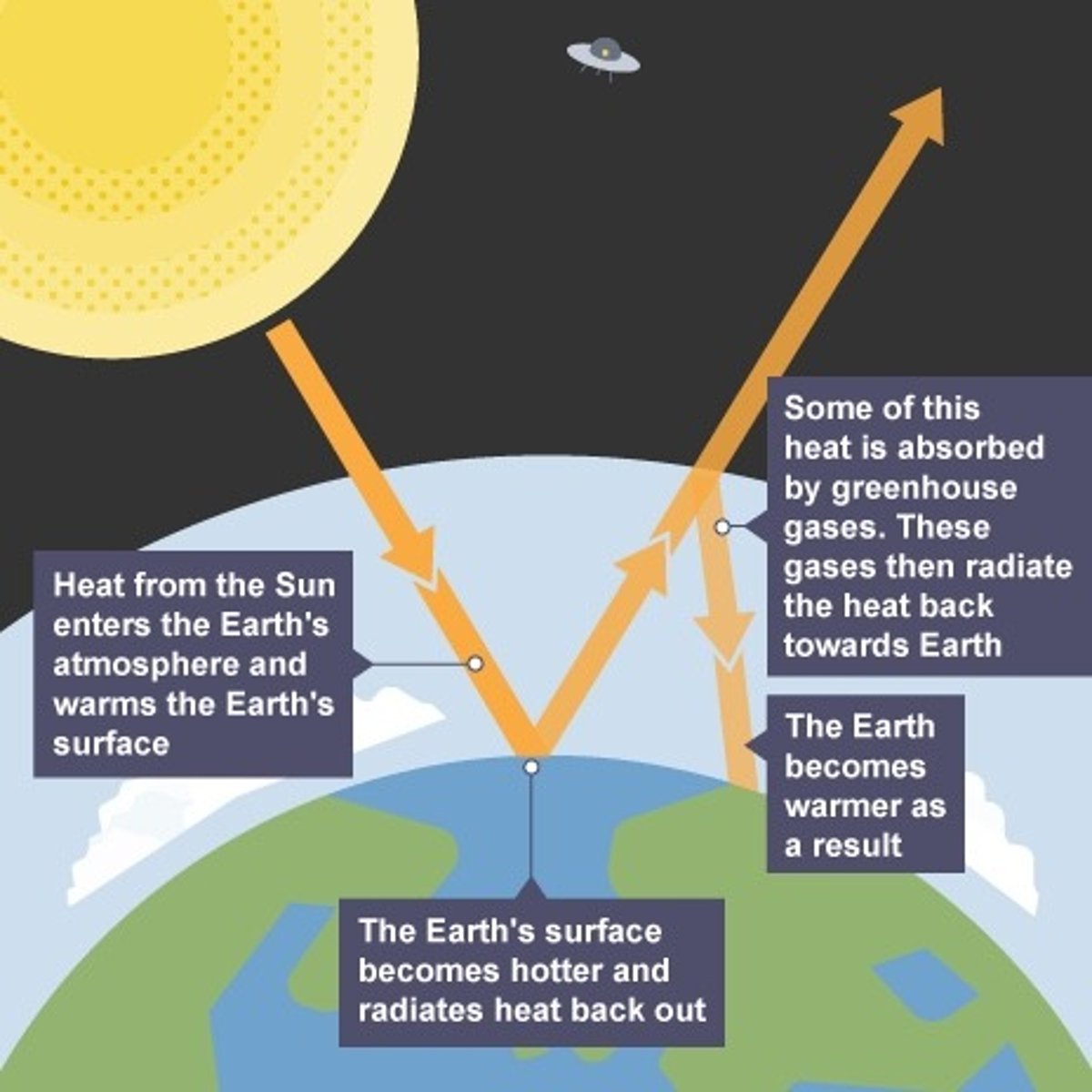
What are the relative emissions of different GHGs?
% = of radiative forcing driven since 1750
. Methane -> 25%
. Nitrous oxide -> 5%
. Carbon dioxide -> 69%
How is carbon dioxide produced in the soil?
1) Autotrophic respiration -> involves root carbohydrates & root exudates that have very low residence time in soil
2) Heterotrophic respiration -> involves carbon compounds with a longer residence time
- months to years for fresh litter
- years to centuries for older organic matter
What are the 2 ways that soil respiration is regulated?
1) Moisture
- low moisture restricts heterotrophic respiration (HR) rates, by reducing solute transport through soils
- high moisture restricts HR by suppressing oxygen supply from the atmosphere
2) Temperature -> increasing temperature increases respiration, until around 35oC, where it shuts down
There are 3 temperature groups of micro-organisms:
. Cryophiles (below 20oC)
. Mesophiles (20-40oC)
. Thermophiles (>40oC)
What is the process that makes methane called? How does it happen?
Methanogenesis
1) Organic matter is decomposed by archaea
2) This produces substrates (e.g. CO2, H2)
3) In the absence of oxygen, methanogenesis occurs and uses up these substrates.
What are the 3 main sources of methane?
1) Rice paddy fields -> frequently flooded during growth, which generates methane-emitting bacteria
2) Manure -> anaerobic decomposition of organic materials contained in the manure
3) Livestock -> cows produce methane through enteric fermentation (digestive process)
What are the main methods of mitigating global methane?
. Targeting fertiliser application
. Management of wetlands -> finding plant species with reduced microbial methane production..
. Use of methanotrophs
What is a methanogen and methanotroph?
Methanogen = any bacteria that reduces carbon dioxide to methane. Active in anoxic conditions.
Methanotroph = a bacteria capable of oxidising (using up) methane into a carbon and energy source. Active in oxic conditions.
What is the symbol for nitrous oxide?
Nˇ2O
What % of global N2O emissions are caused by agricultural soil management?
69%
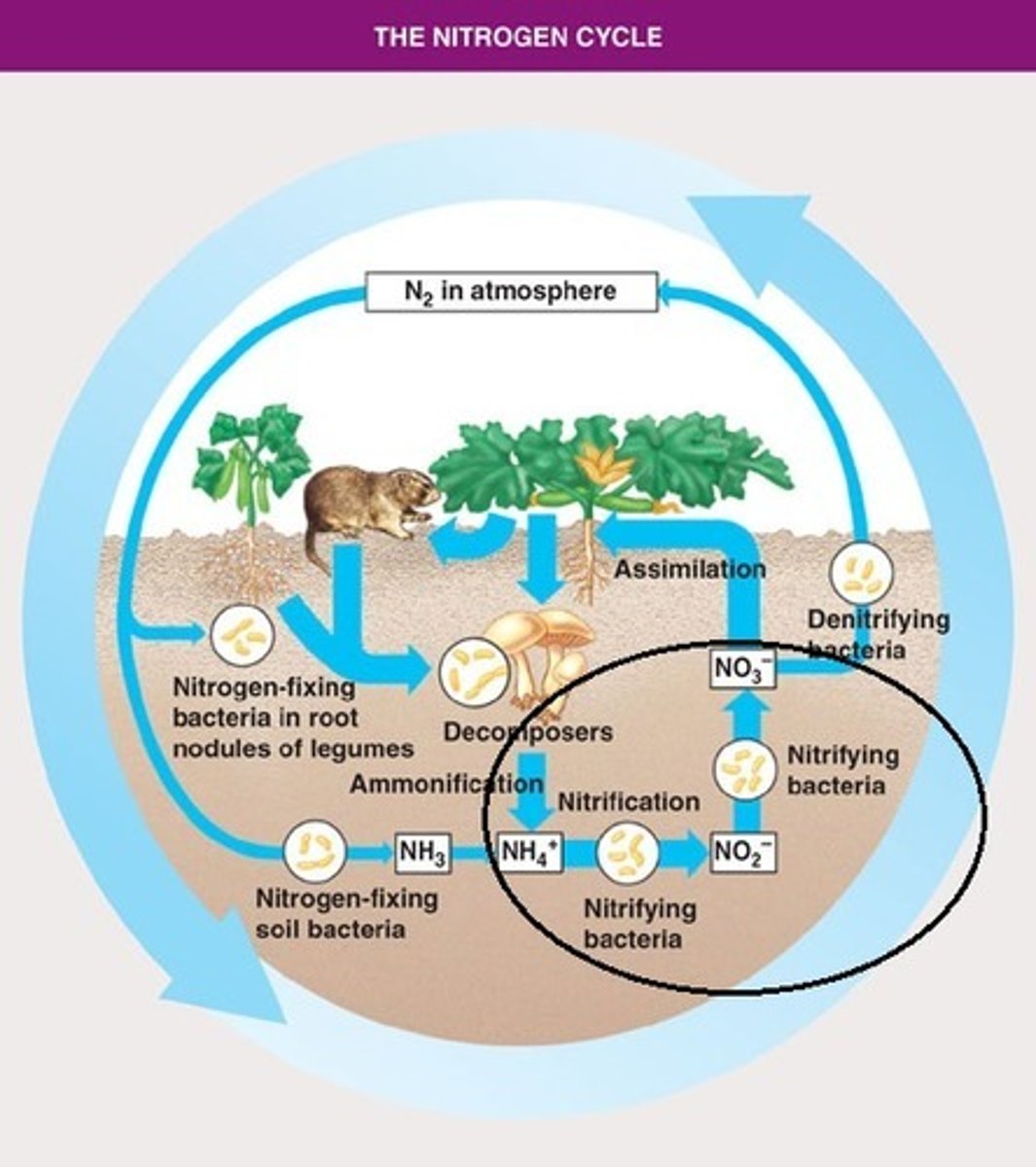
How is nitrous oxide produced (nitrogen cycle)?
Nitrification!
What are the main approaches to mitigating nitrous oxide?
1) Right source/rate of fertiliser
2) Right time -> considering growth patterns (natural changes in nutrient demand during the season)
3) Right place -> for maximum nutrient efficiency, nutrients need to be placed where the plant will have the best access to them (e.g. rooting zone)
How can GHG emissions be quantified?
1) Direct measurements
2) Indirect measurements
3) Model simulations
What are the principles, benefits and limitations of direct GHG measurements?
The static (closed) chamber method. Used for measuring gas exchange between the soil & atmosphere
Benefits:
· Simple set up
· Existence of protocols
· Cheap
Limitations:
· Change in the soil environmental conditions
· Spatial & temporal variability of fluxes
· Low accuracy
What are the principles, benefits and limitations of indirect GHG measurements?
Taking soil samples from the field and measuring parameters such as soil organic carbon, active carbon etc...
Benefits:
· Not hugely sampling intensive
· Potentially quick analysis in the lab
· Can reduce environmental variability, i.e. incubations
Limitations:
· Can be costly depending on the spatial and temporal measurements
· Measurements such as LOI are less accurate
What are the principles, benefits and limitations of using model simulations to measure GHG emissions?
Can be used to conduct regional-scale soil carbon inventories and to assess the impacts of land use change on soil carbon.
Benefits:
· Estimates provided across a large area
· Can include a large amount of data
· Range in complexity
Limitations:
· Predictive errors can be large
. Uncertainties in some mechanisms and climate feedbacks
What is the current UK GHG emissions target?
The government is committed to reaching net zero GG emissions by 2050.
What are some factors that are preventing farmers from taking action to reduce their GHG emissions?
1) Financial barriers / low value from intervention
2) Lack of knowledge
3) Minimal impact (don't believe farmers can do much)