Introduction to Anatomy and Physiology: Key Concepts and Body Systems
 Call Kai
 Learn
Learn Practice Test
 Spaced Repetition
 Match
Match Flashcards
 Knowt Play
1/56

There's no tags or description
Looks like no tags are added yet.
Name | Mastery | Learn | Test | Matching | Spaced | Call with Kai |
|---|
No analytics yet
Send a link to your students to track their progress
57 Terms
What is anatomy?
Anatomy is the study of the structure and organization of living organisms.
What is physiology?
Physiology is the study of the functions and processes of the body's systems.
How do anatomy and physiology relate to each other?
Anatomy provides the structural framework for understanding how physiological processes occur.
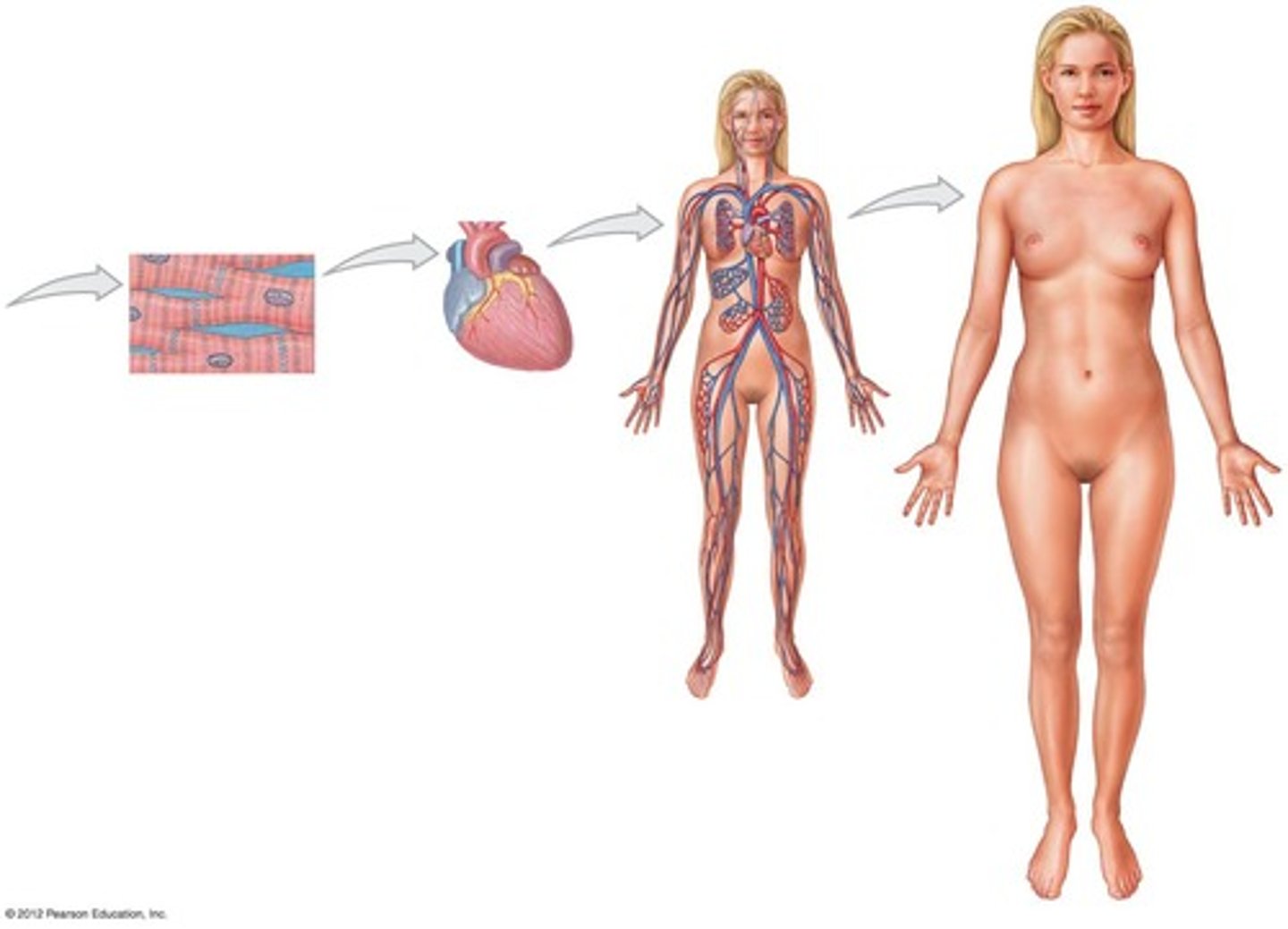
What are the main levels of organization in the human body?
The main levels are chemical, cellular, tissue, organ, organ system, and organism.
Why is the study of anatomy and physiology important?
It is essential for understanding how the body works and for diagnosing and treating medical conditions.
What does gross anatomy examine?
Large, visible structures.
What is surface anatomy?
The examination of general form and superficial markings.
What is regional anatomy?
The focus on anatomical organization of a specific part of the body.
What is systemic anatomy?
The study of the structure of organ systems.
What does developmental anatomy describe?
Changes that occur between conception and physical maturity.
What is embryology?
The study of early developmental processes.
What is clinical anatomy?
Anatomy important in clinical practice, including pathological, radiological, and surgical anatomy.
What is microscopic anatomy?
The examination of structures that cannot be seen without magnification.
What is cytology?
The study of the internal structure of cells.
What is histology?
The examination of tissues.
What is cell physiology?
The study of the function of cells.
What is organ physiology?
The study of the physiology of certain organs.
What is systemic physiology?
Includes all aspects of the functioning of specific organ systems.
What is pathological physiology?
The study of the effects of disease on organ functions or system functions.
What are the levels of organization in the human body?
Chemical, Cellular, Tissue, Organ, Organ System, Organism.
What is the highest level of organization?
The Organism Level, where all organ systems work together.
What are the major organs of the integumentary system?
Skin, hair, sweat glands, nails.
What is the function of the skeletal system?
Support and protection of other tissues, stores calcium and forms blood cells.
What is the primary function of the muscular system?
Provides the means for movement and generates heat.
What are the major organs of the nervous system?
Brain, spinal cord, peripheral nerves, sense organs.
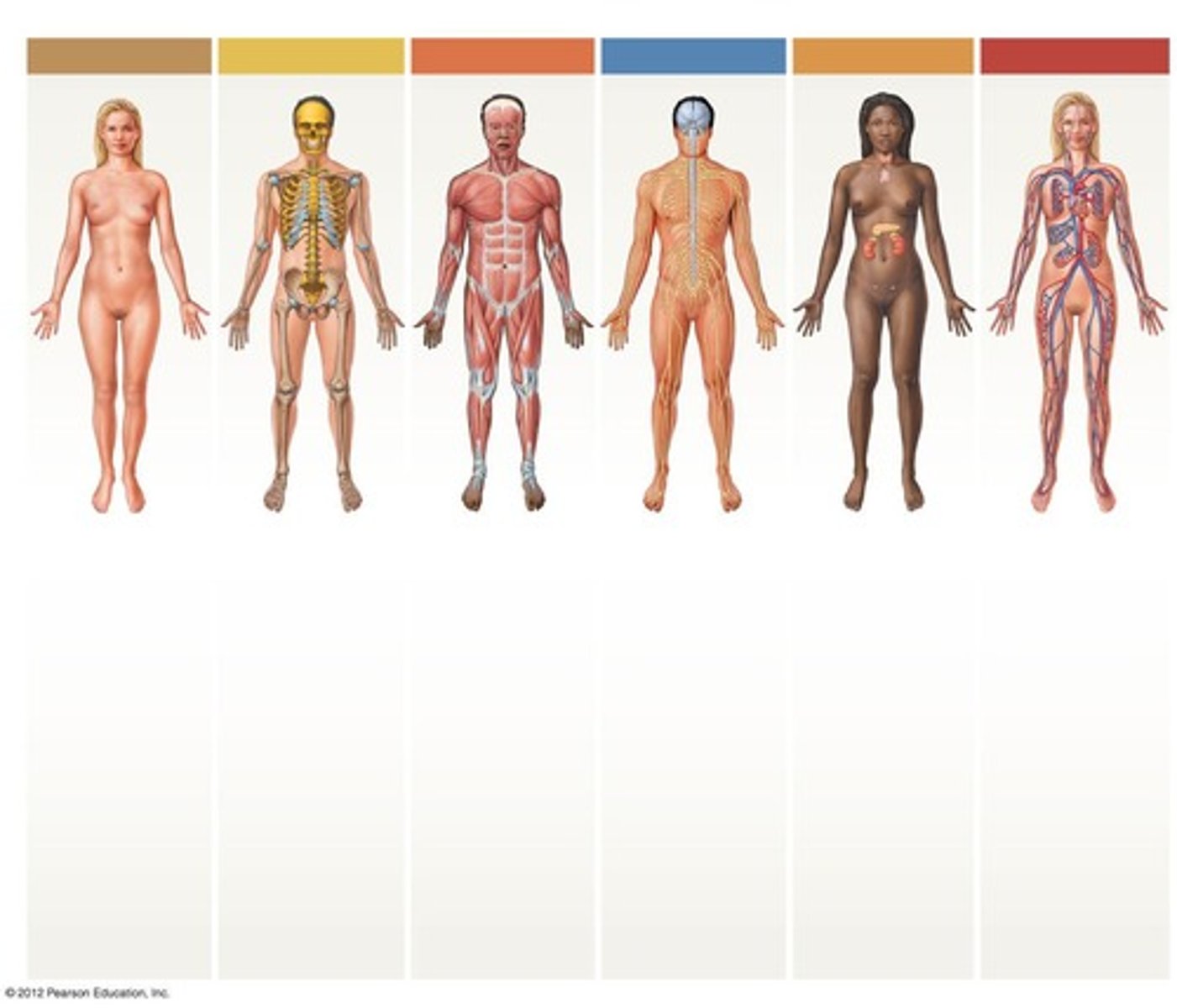
What is the function of the endocrine system?
Directs long-term changes in the activities of other organ systems.
What are the major organs of the cardiovascular system?
Heart, blood, blood vessels.
What is the function of the lymphatic system?
Defends against infection and disease, returns tissue fluids to the bloodstream.
What are the major organs of the respiratory system?
Nasal cavities, sinuses, larynx, trachea, bronchi, lungs, alveoli.
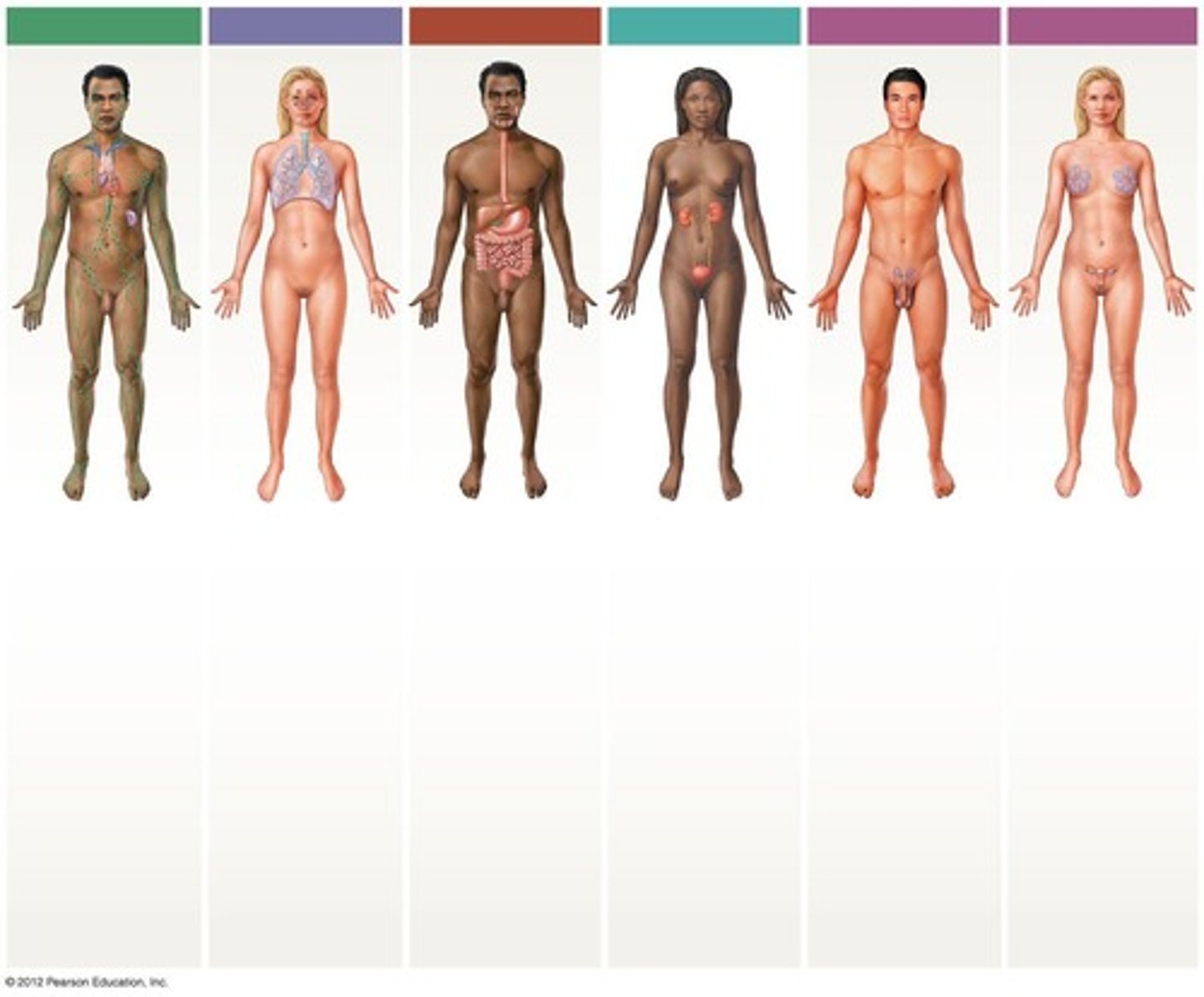
What is the primary function of the urinary system?
Excretes waste products from the blood and controls water balance.
What are the major organs of the male reproductive system?
Testes, epididymides, ductus deferentia, seminal vesicles, prostate gland, penis, scrotum.
What are the major organs of the female reproductive system?
Ovaries, uterine tubes, uterus, vagina, labia, clitoris, mammary glands.
What is homeostasis?
The existence of a stable environment within the body.
What is autoregulation?
Adjustment of activities automatically due to an environmental change.
What is extrinsic regulation?
Regulation initiated by the nervous system or endocrine system.
What is negative feedback?
A mechanism that counteracts an effect to maintain homeostasis.
What is positive feedback?
A mechanism where an initial stimulus produces a response that enhances the original change.
What occurs when organ systems malfunction outside normal homeostatic boundaries?
A state of illness, known as disease, may occur.
What does superficial anatomy involve?
Locating structures on or near the body surface.
What is the standard anatomical position?
Hands at the side with palms forward, and feet together.
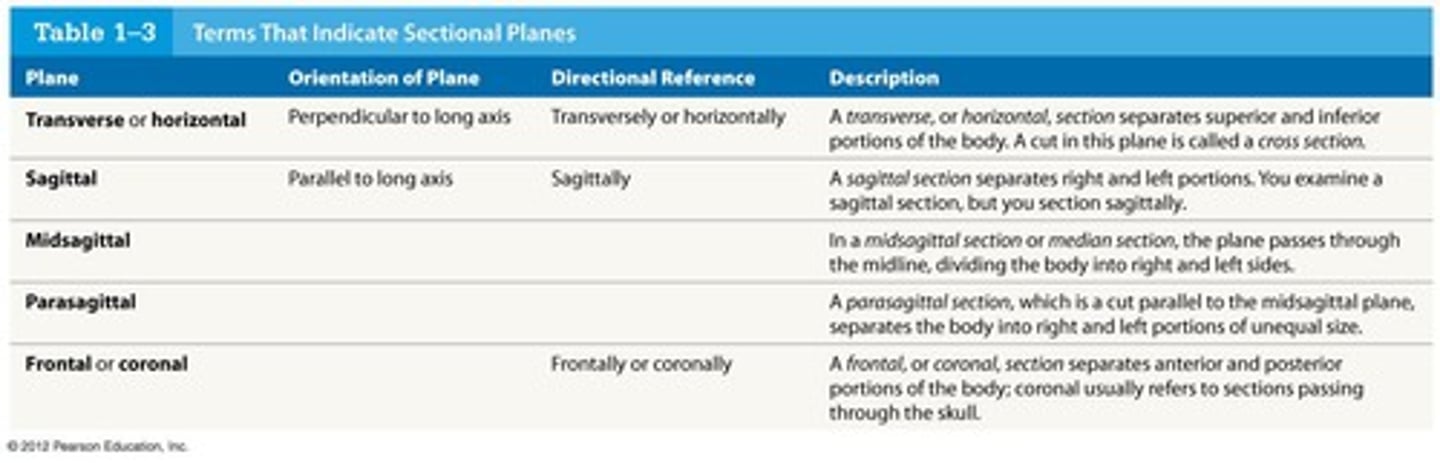
What are the three anatomical planes?
Transverse (horizontal), Frontal (coronal), and Sagittal planes.
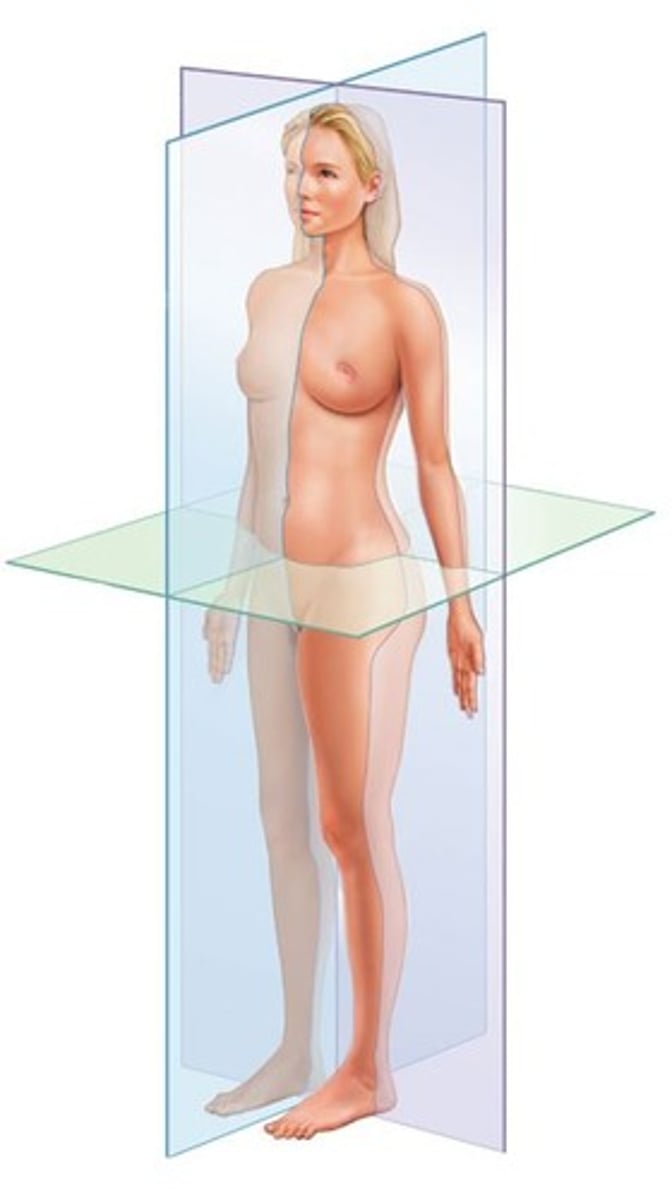
What is a plane in anatomy?
An axis along the body.
What is a section in anatomy?
A single view or slice along a plane, important in imaging techniques.
What does the term 'superior' refer to in anatomical terminology?
A position that is above another part.
What does the term 'inferior' refer to in anatomical terminology?
A position that is below another part.
What does 'medial' mean?
Closer to the midline of the body.
What does 'lateral' mean?
Farther from the midline of the body.
What is the abdominal cavity?
Contains many digestive glands and organs.
What is the thoracic cavity?
Structures deep to the chest wall.
What is the pericardial cavity?
Surrounds the heart.
What are the abdominopelvic quadrants?
Right Upper Quadrant (RUQ), Left Upper Quadrant (LUQ), Left Lower Quadrant (LLQ), Right Lower Quadrant (RLQ).
What are the nine abdominopelvic regions?
Right hypochondriac, Left hypochondriac, Epigastric, Umbilical, Left lumbar, Right lumbar, Hypogastric, Right inguinal, Left inguinal.
What is the function of the diaphragm?
Separates the thoracic cavity from the abdominopelvic cavity.
What does 'proximal' mean?
Closer to the point of attachment of a limb to the body trunk.
What does 'distal' mean?
Farther from the point of attachment of a limb to the body trunk.
What is the role of the ventral body cavity?
Provides protection, allows organ movement, and prevents friction.
What is the mediastinum?
The central compartment of the thoracic cavity, containing the trachea, esophagus, and major vessels.