Nematodes of Cattle
 Call Kai
 Learn
Learn Practice Test
 Spaced Repetition
 Match
Match Flashcards
 Knowt Play
1/35

There's no tags or description
Looks like no tags are added yet.
Name | Mastery | Learn | Test | Matching | Spaced | Call with Kai |
|---|
No analytics yet
Send a link to your students to track their progress
36 Terms
What are the most important worms in temperature areas?
Gut worms
Cooperia oncophora
Ostertagia ostertagi
Lung worms
Dictyocaulus viviparus
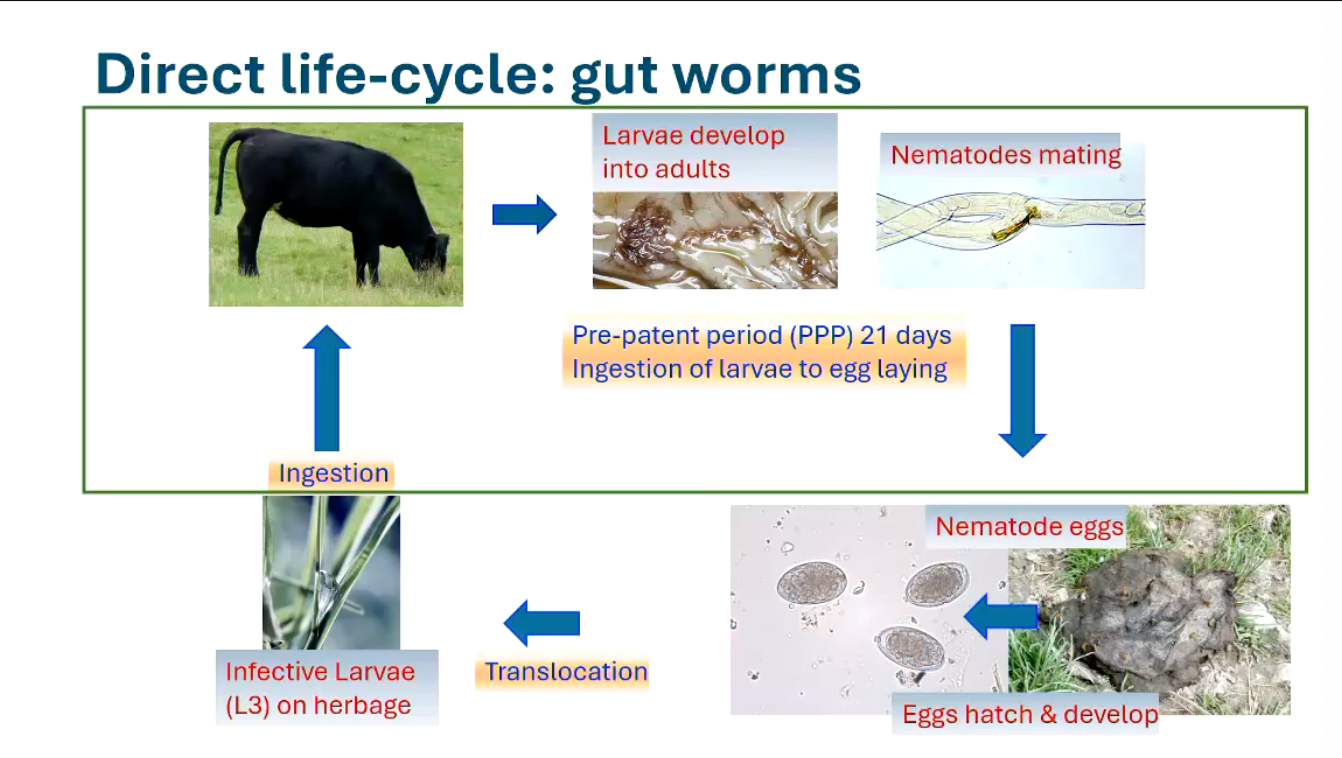
Summarize the lifecycle of gut worms and lungworms.
DIRECT LIFECYCLE
• Parasitic phase
In animal - reasonably constant
• Free-living stages
Environmental influences - very variable
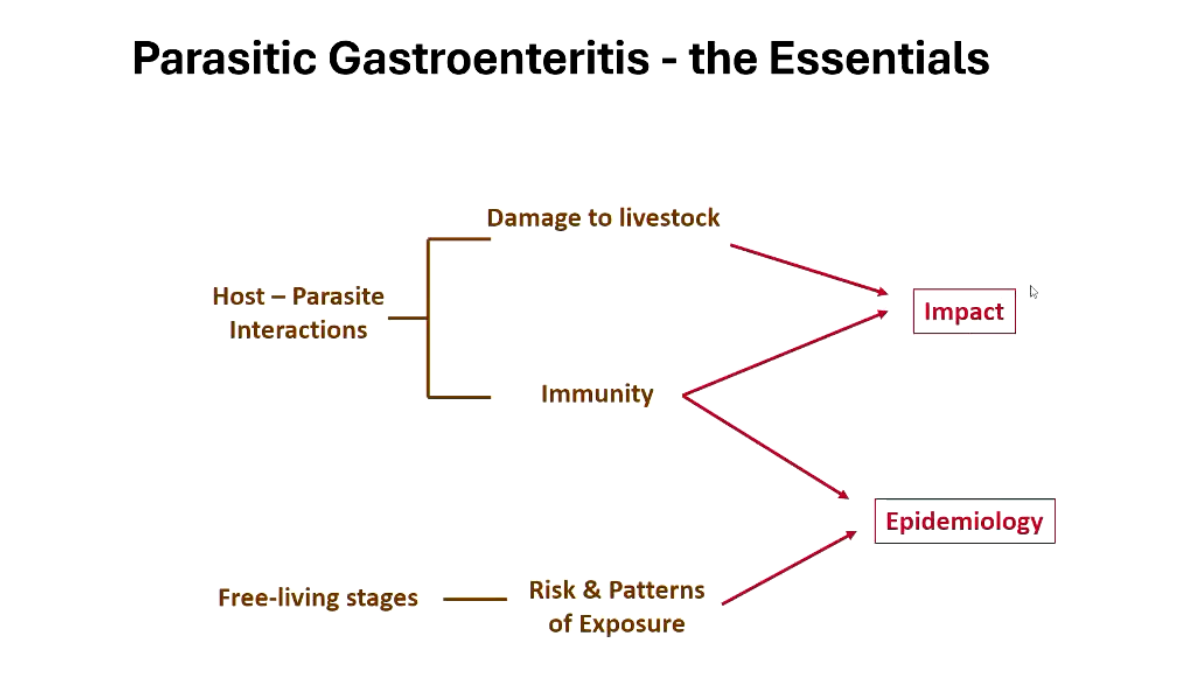
Describe the impact of the host (parasite interactions) and the free-living stages on epidemiology.
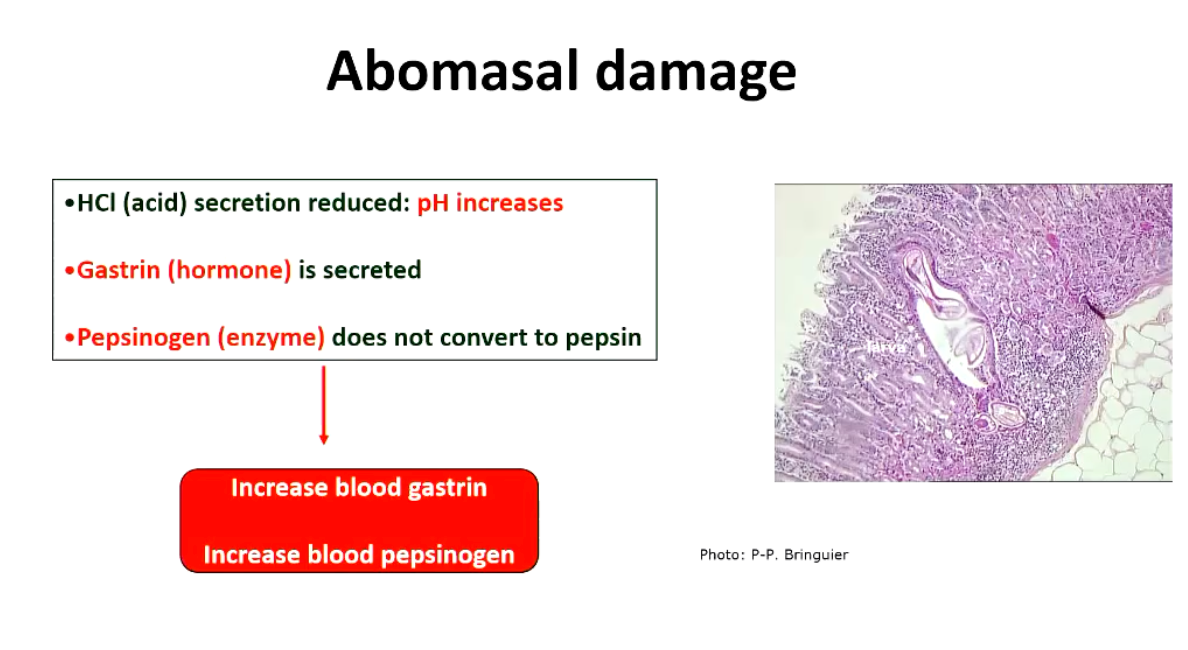
Describe the pathology causes by O. ostertagi.
Leather-like surface of abomasum with nodules
Parasite damages acid secretion cells, gastrin increases in response to parasite, pepsinogen converted to pepsin in presence of acid (DOES NOT convert)
More gastrin → inhibits appetite
Causes animals to eat for decreased amt. of time
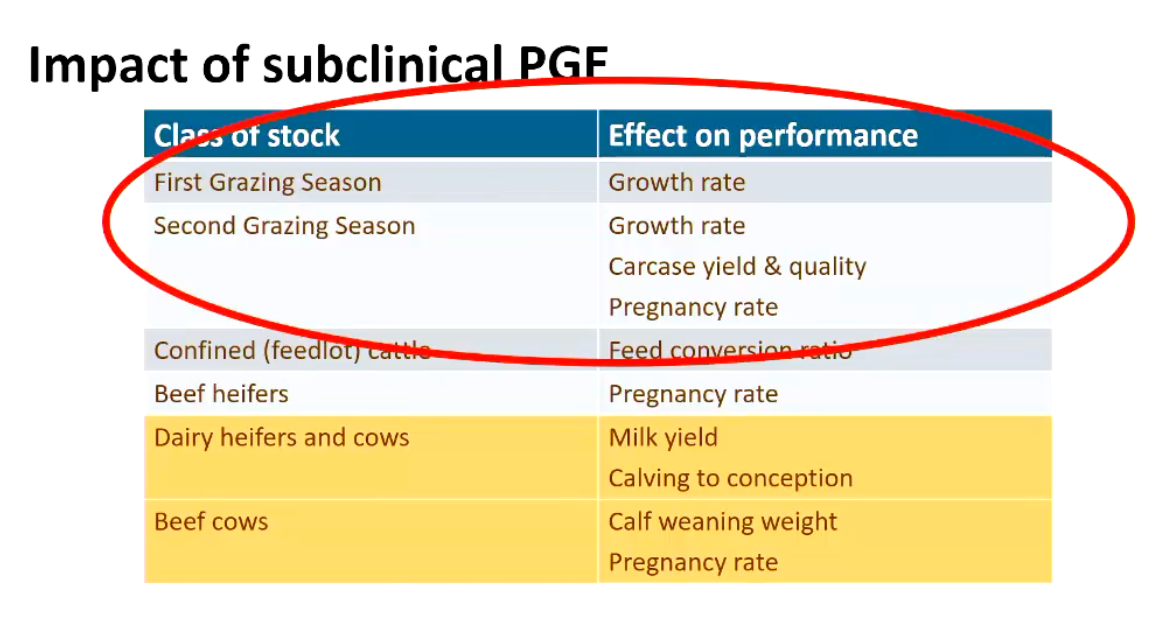
What is the difference between clinical parasitism and subclinical PGE?
Clinical parasitism
Yearlings, autumn, diarrhea, ill thrift
Subclinical PGE
Common cause of poor / uneven growth, due to decreased DMI
What are the impacts of subclinical PGE?
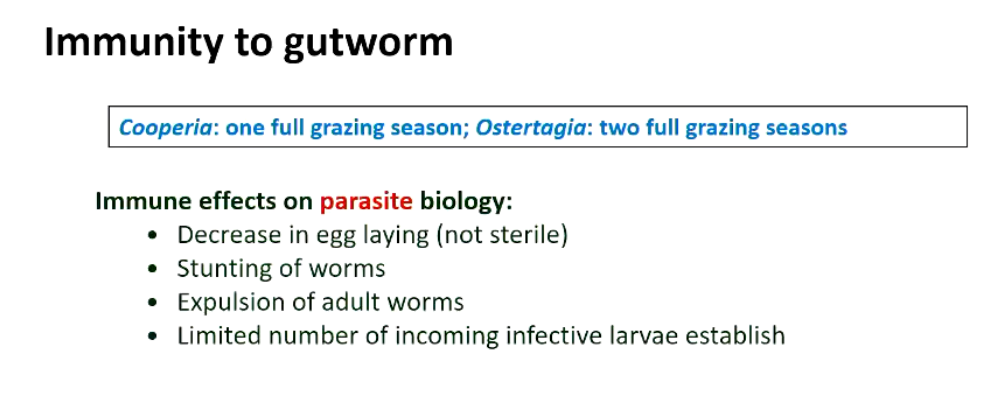
How does immunity to gutworm develop?
Immune animals still have a parasite burden, but depressed, stunted worms, decrease in the eggs produced
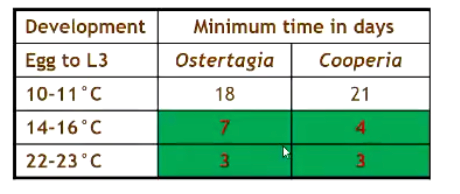
Larval development and dispersion is variable due to what environmental factors?
Temperature and humidity and movement
Low humidity - crusts over fecal material which prevents their escape, often die
If rains - active movement of the larvae which splashes them out in the field
Anything which can move feces: earthworms, flies, footwear, stock movement
How long can PGE larvae survive on pasture?
• Majority of larvae disappear within 12 months
•Some survive to 24 months
•Soil may act as a reservoir
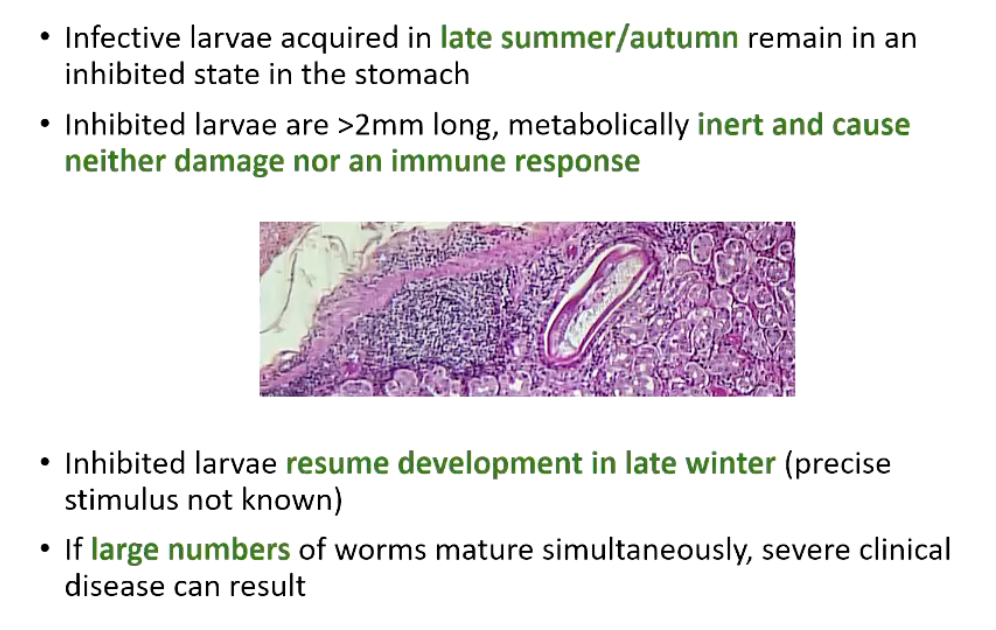
What is the inhibition stage of larvae?
Ostertagiosis Type II
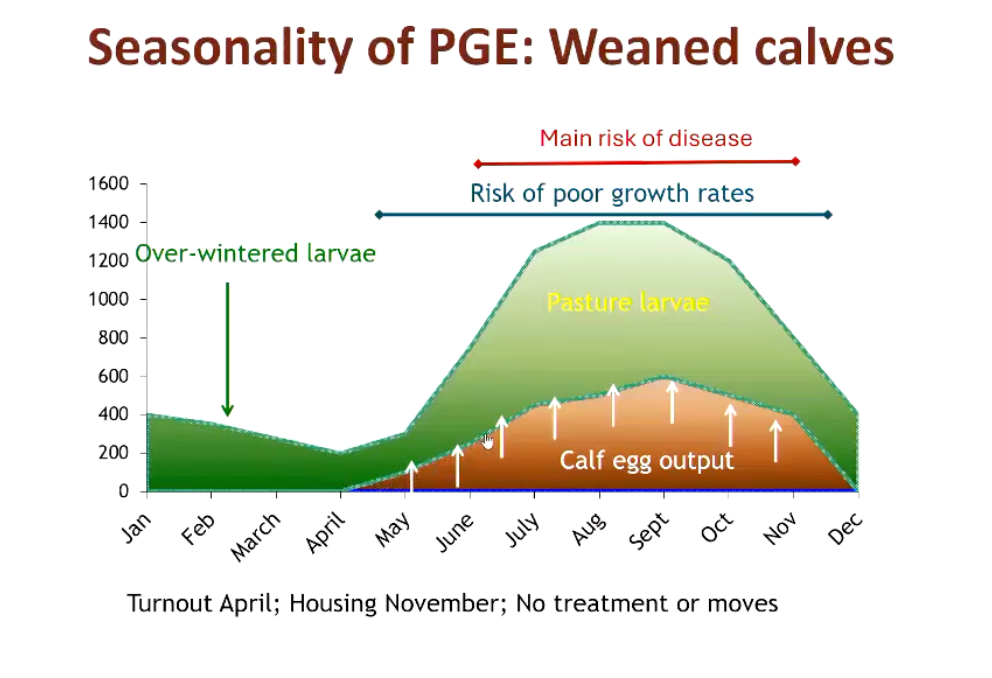
Describe the seasonality of PGE in weaned calves, first grazing DAIRY calves.
Main risk of disease - July onwards
May see weight loss around May
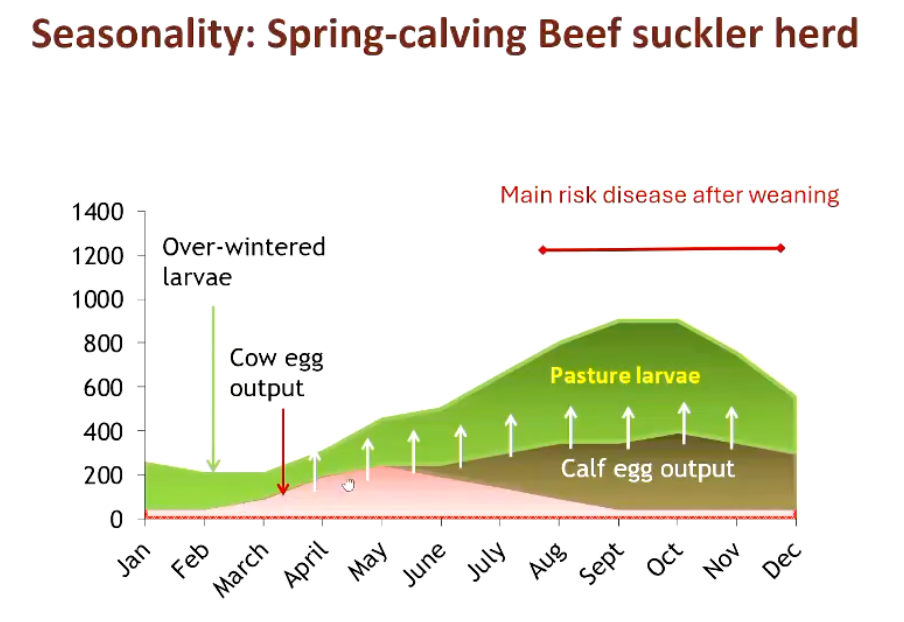
Describe the seasonality of PGE in beef suckler herds.
May to June increase of egg output once they consume more grass (Initially on milk for extended period of time)
Mother shedding eggs but is immune
Disease risk Aug to Dec but calves often do not need treatment due to very low parasite burden
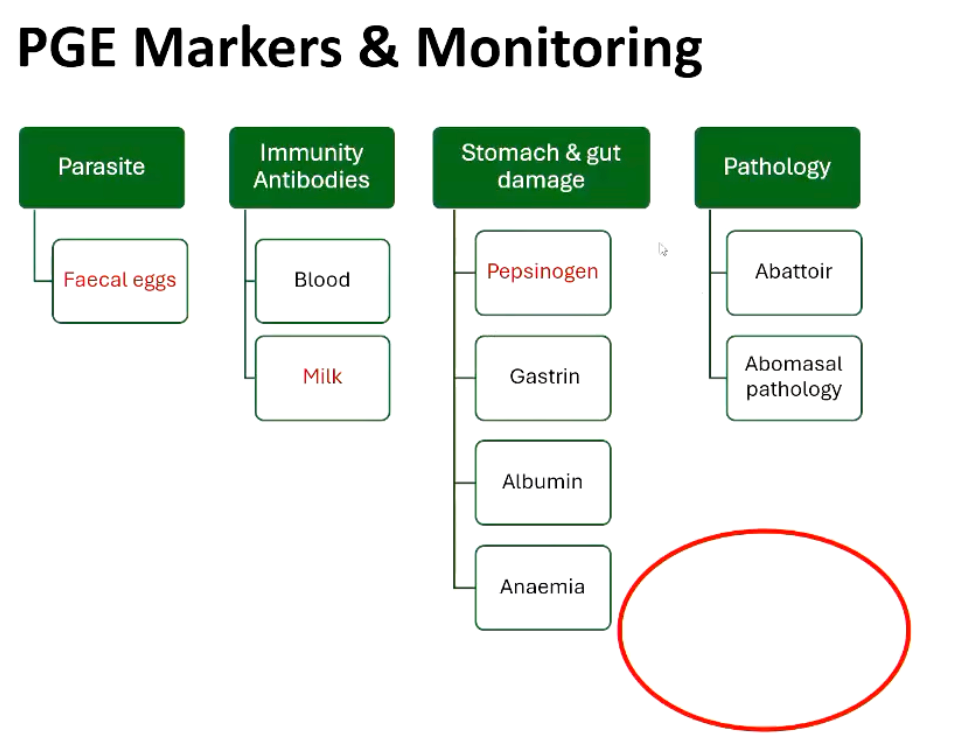
What are the marker and monitoring tools used for PGE?
FEC + Pepsinogen + Performance are main tools
Describe the main features of Faecal Egg Counts.
• Easy and cheap to do in-house
• Consistency and training
• Good indicator of pasture contamination
• Do not correlate to worm burden
• Do not indicate clinical disease
• 'Threshold' for treatment not established
Need to take group FEC
• Use to build information picture
• Start conversation
• Can be used to show wormer efficacy
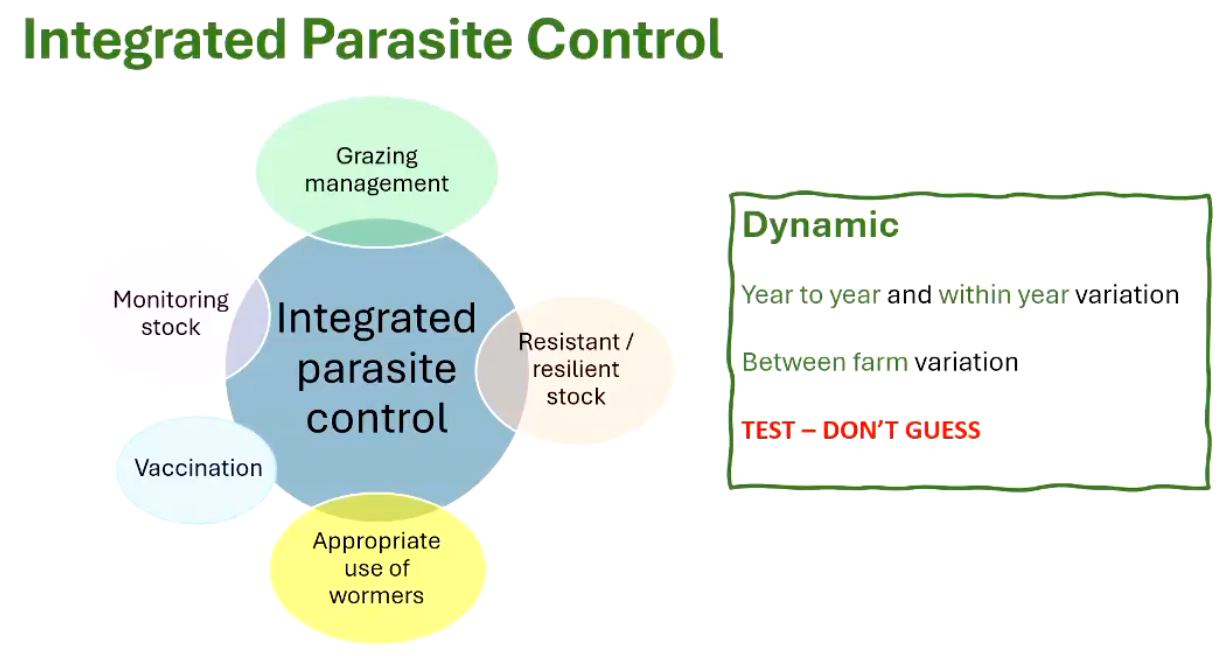
What is integrated parasite control?
Integrated parasite control (or Integrated Parasite Management - IPM) is a sustainable, holistic approach to managing parasites in livestock by combining chemical treatments (anthelmintics) with non-chemical methods like grazing management, breeding for resistance, and regular testing.
What are the objectives of grazing management in regard to parasite control?
Reduce larval challenge
• Newly sown grass fields
• Grass re-growths after silage/hay
• Mixed livestock grazing
• Multispecies swards
• Rotational grazing
• Deferred grazing...............
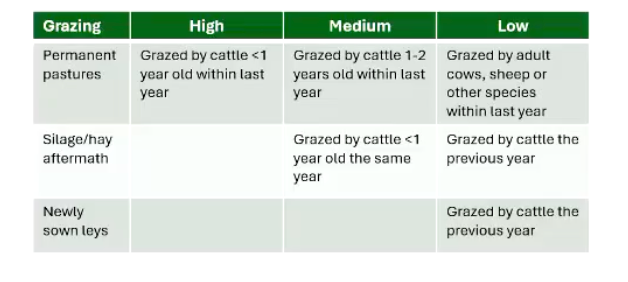
Describe which pastures are high, medium and low risk.
What are the three classes of anthelmintics for cattle?
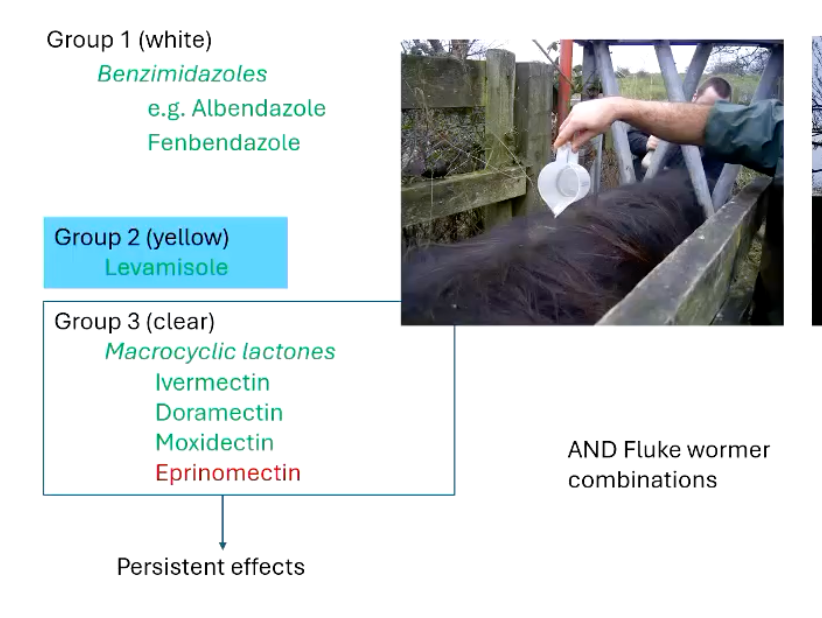
Which bovine anthelmintics are long acting, which are short?
ML - long acting
BZ - short acting, short withdrawl
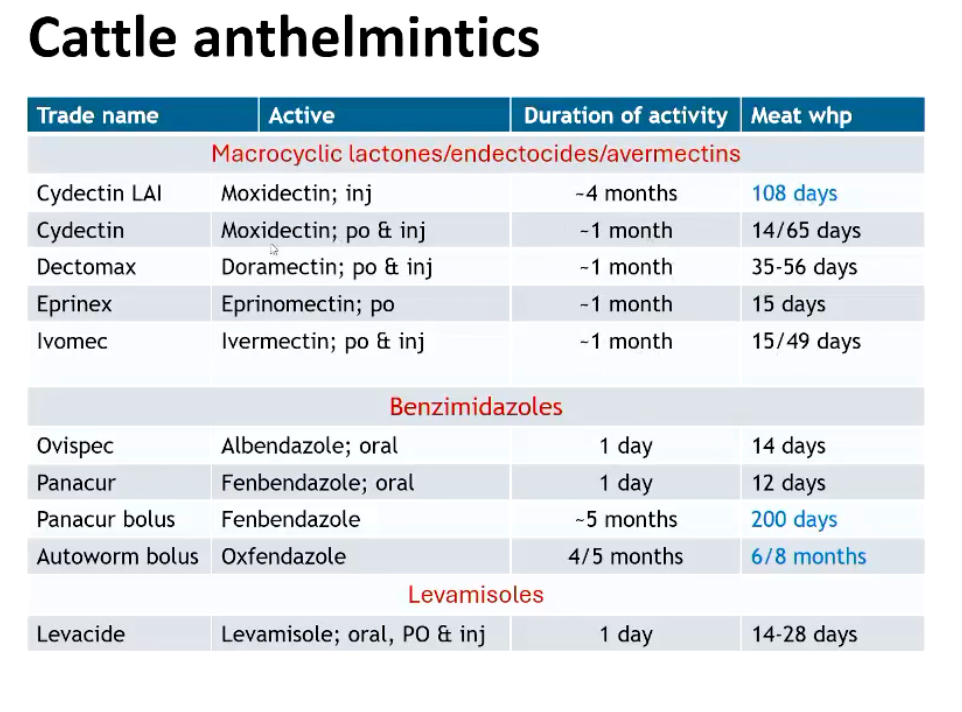
How do you use anthelmintics for strategic control?
• Forward planning
• FGS weaned calves, set-stocked on same pasture
• Commence at/3 weeks after turnout
• Can also help control Parasitic Bronchitis
• Compatible with lungworm vaccination? Check first
• Examples
• Ivermectin 3, 8 & 13 weeks after turnout
• MLs at turnout & 8 weeks later
• Long-acting boluses or injection at turnout
What is one way to perform targeted selective treatments for PGE?
Can reduce anthelmintic usage without significantly affecting performance if lungworm is controlled (vaccination).
Can use targeted DLWG → which worms when animals drop below a certain target
What are the different methods used to treat PGE infection?
• Strategic: to limit worm egg output
• Early season anthelmintics to minimise infection build-up
• Summer treatment for liver fluke
• Tactical/convenience
• Treat in anticipation of decline in performance
• Removal of helminths at key times, e.g. weaning
• Forecast, e.g. nematodirosis, myiasis
• Therapeutic
• Treat at the onset of clinical disease
• PGE, lungworm
• Acute fasciolosis
• Sheep scab
• Fly strike
Why are housing treatments for PGE given to cattle?
• Effective removal of worms acquired during the grazing season
• Allow good performance without impact of parasites
• Avoid risk of ostertagiosis Type II
• Reduce risk of pneumonia
• Means that animals do not contaminate pastures with eggs or larvae after turnout the following year
• Effective removal of cryptic populations of ectoparasites
• Reduce risk of lice or mange over winter
• Risk varies from year to year - consider testing first
Describe the main features of lungworm infection.
Clinical
Subclinical
• One species of cattle lungworm of significance:
Dictyocaulus viviparus
• Clinical: most common in young weaned calves
Respiratory distress, coughing, mortality
In dairy cows, sudden drop in milk yield, depression
• Subclinical: cattle of any age
Poor performance
Carriers important in epidemiology
What are the main sources of infective larvae (lungworm) at turnout?
Over-wintered larvae
Adult carrier animals - inhibited larvae
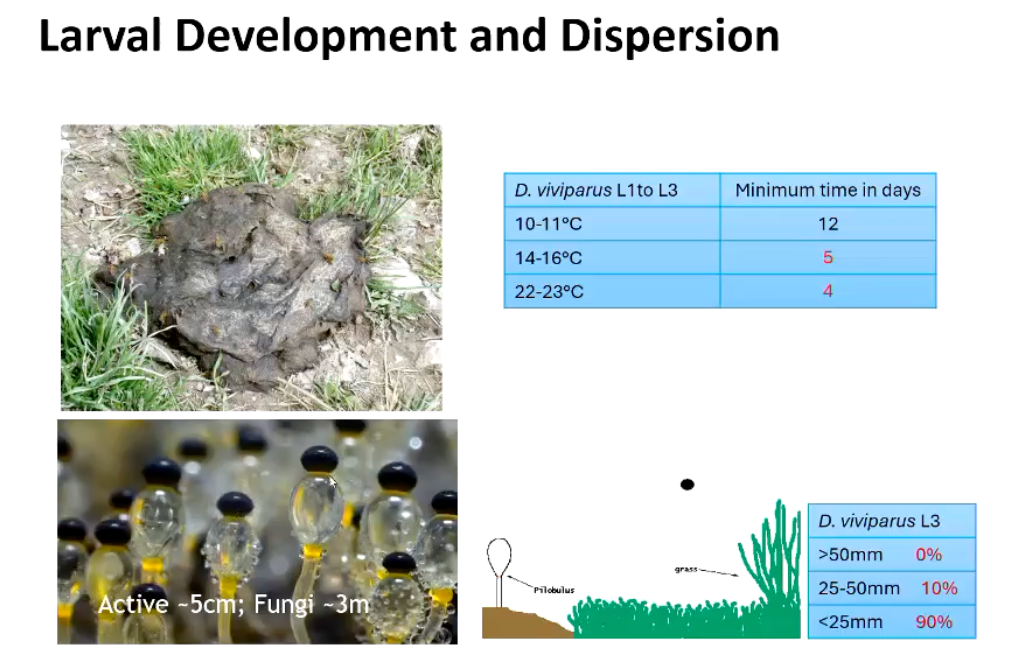
What impacts larvae development and dispersion of lungworm?
Fungus and temperature
What are the main CS associated with clinical dictyocaulosis?
'Classically' in first grazing season (FGS) weaned calves in summer and autumn - coughing
5000 larval dose is lethal to a calf
What pathology is caused by lungworm?
• Clinical parasitic bronchitis (Usually first-season grazing)
Respiratory dysfunction
• Re-infection syndrome
Immunopathology
Respiratory dysfunction
• Sub-clinical infections
Production losses
Carriers
2 Clinical Presentations
Clinical parasitic bronchitis
Re-infection Syndrome
How does acquired immunity to lungworm develop?
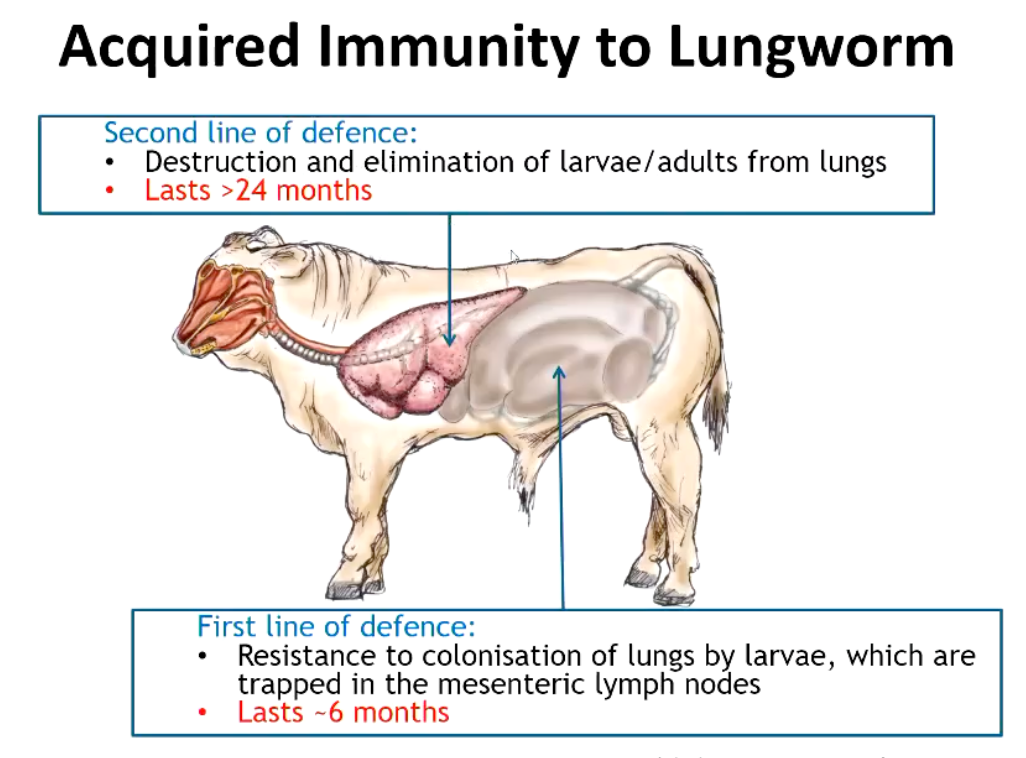
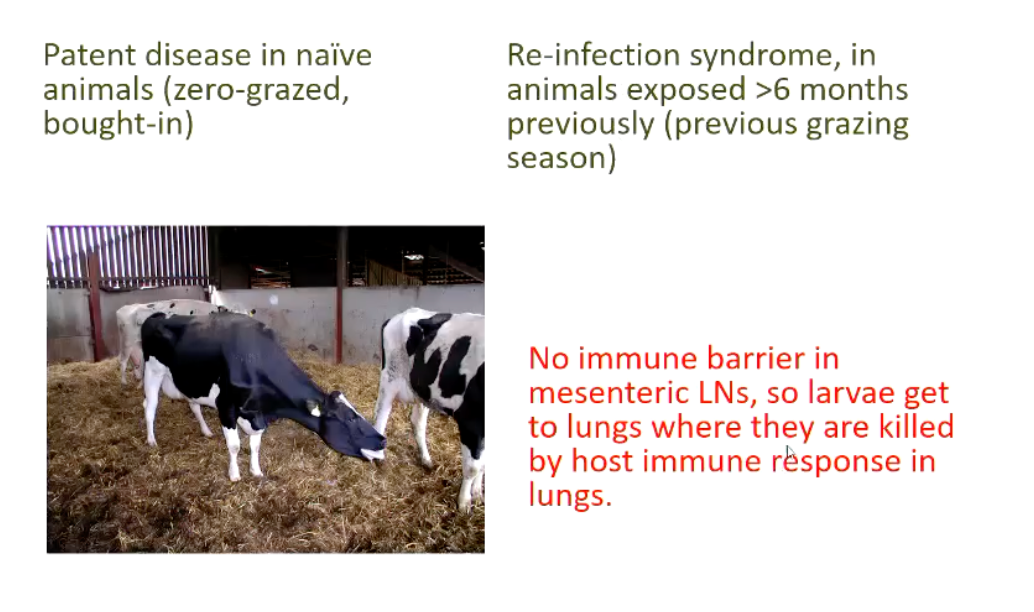
Describe Dictyocaulosis in adult cattle.
Two types
an acute, allergic, and hypersensitivity pneumonia caused by Dictyocaulus viviparus lungworm larvae in immune animals. It occurs when adult cows with partial immunity ingest large numbers of larvae, which are rapidly killed in the lungs, triggering severe inflammation, rapid coughing, and acute drops in milk production.
Key Aspects of Reinfection Syndrome
Mechanism: It is not a classic "worm" infection where parasites mature to produce eggs. Instead, it is an immune-mediated reaction where larvae are rapidly destroyed upon reaching the lungs, causing intense inflammation.
What are the diagnostics used for lungworm?
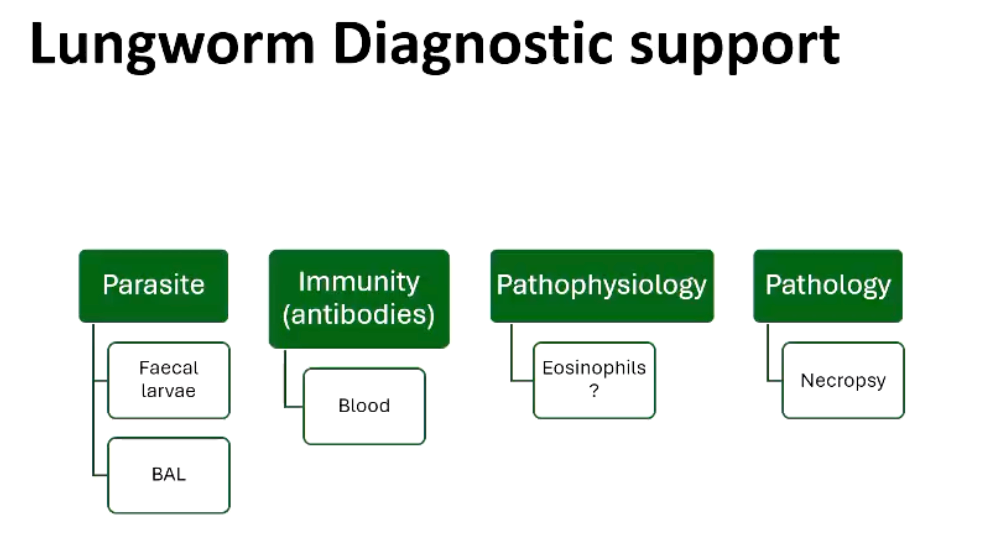
Faecal sample - asap as need to be live for the test - baermann
Blood sample - tests exposure
What are the main tools of control for lungworm?
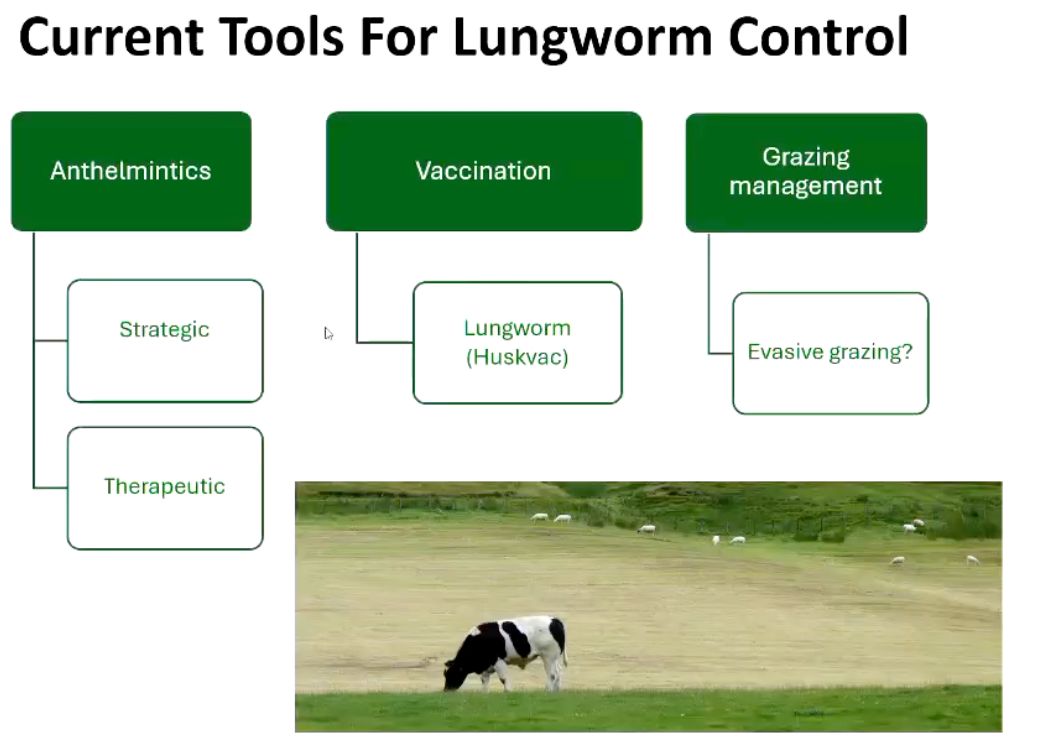
**VACCINE
Describe the vaccine which is available for lungworm?
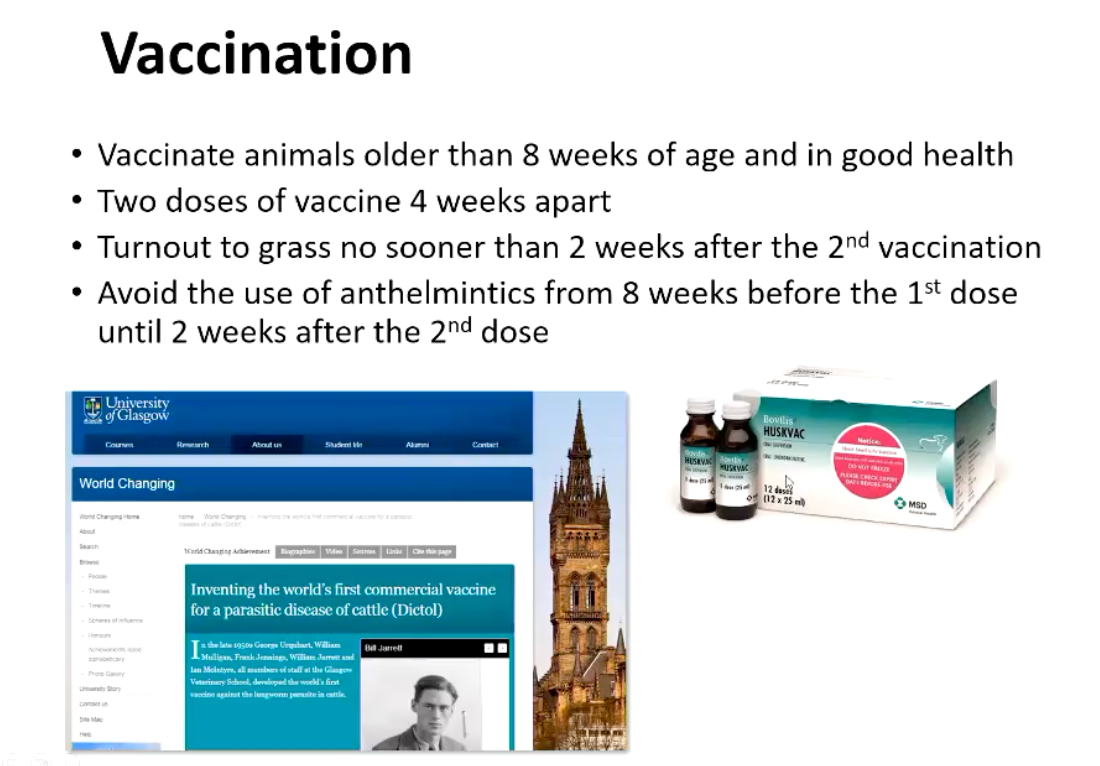
Quite expensive but immunity for life
After the completion of the vaccination course, calves should graze lightly infected pastures in order to naturally boost immunity
A single dose of vaccine can be given prior to turnout in subsequent years, if required
What are the limitations of the vaccine for lungworm?
• Spring-calving herds/animals (age at turnout & vaccine availability)
• Vaccination at pasture?
• Cost
• Handling
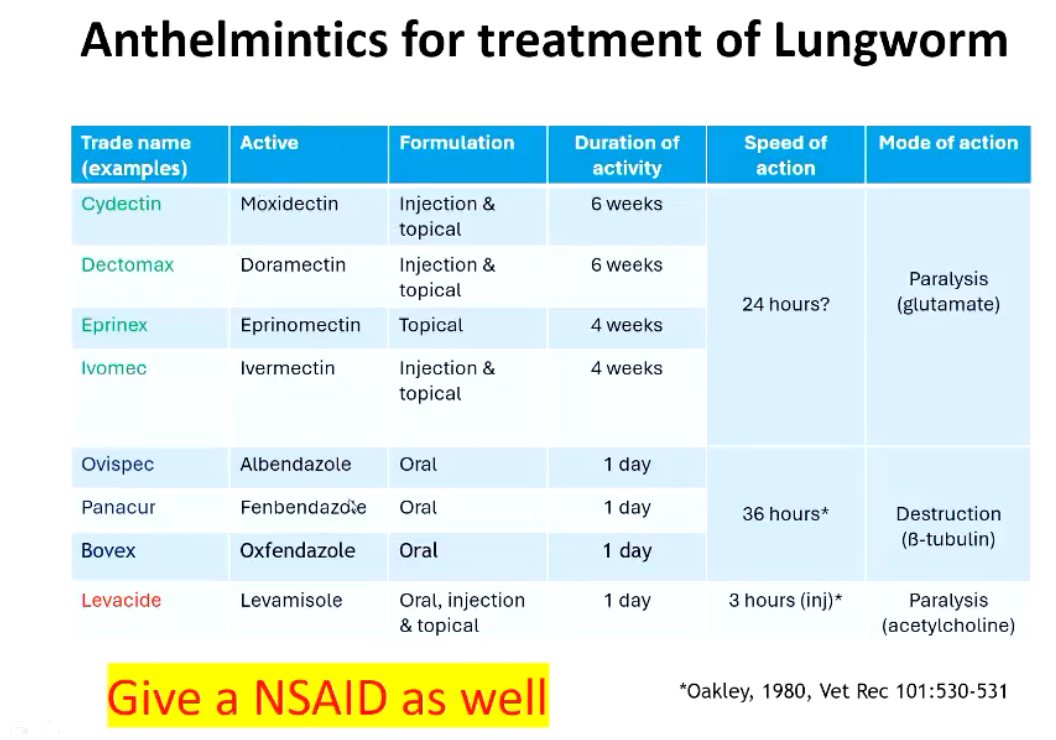
What anthelmintics exist for treatment of Lungworm?
Resistance exists
NSAID to reduce lung inflammation caused by pneumonia
What may cause treatment failure & differential diagnosis of lungworm?
• Individuals
• Secondary infections
• Respiratory failure
• Irreversible lung pathology
• Stress-induced hypoxia
• Re-infection syndrome?
Resistance??
• Group disease at pasture
IBR
Other bacterial/viral respiratory pathogens
• Group disease after housing
BRD complex