Motor Behavior Exam 2
 Call Kai
 Learn
Learn Practice Test
 Spaced Repetition
 Match
Match Flashcards
 Knowt Play
1/23

There's no tags or description
Looks like no tags are added yet.
Name | Mastery | Learn | Test | Matching | Spaced | Call with Kai |
|---|
No analytics yet
Send a link to your students to track their progress
24 Terms
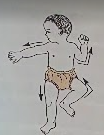
ATNR
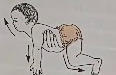
STNR
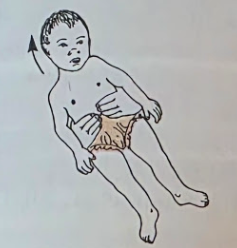
Optical righting reflex
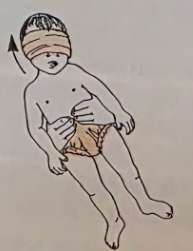
Labyrinthine righting reflex
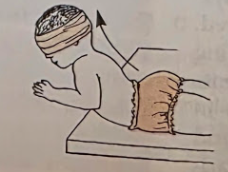
Body-on-head righting reflex
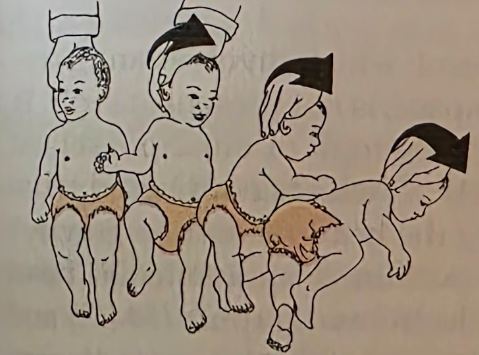
Neck-on-body righting reaction
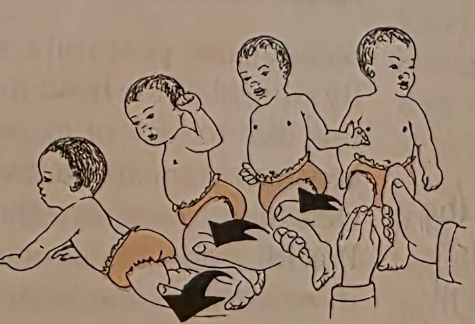
Body-on-body righting reaction
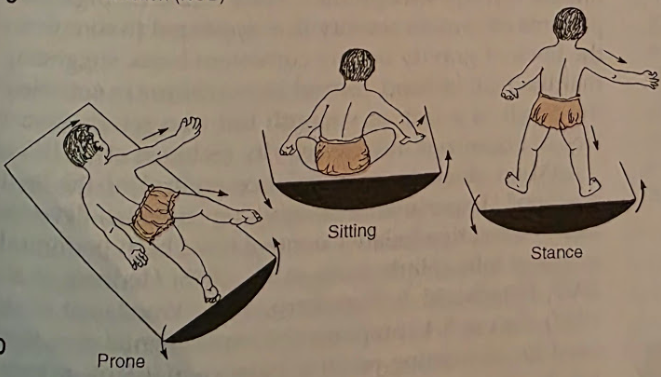
Tilting reactions
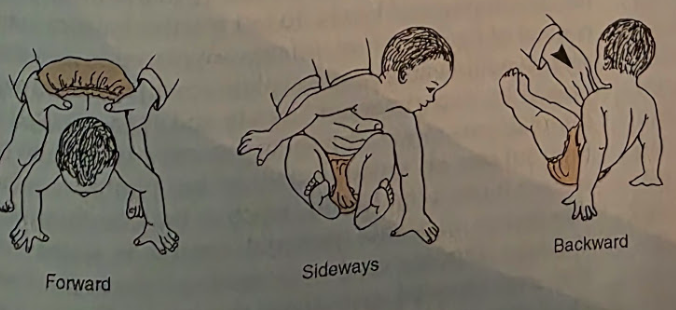
Protective reactions
ATNR reflex
extension in the face arm, flexion in the skull arm when the head is turned
STNR reflex
head flexion causes flexion of the upper extremities and extension of the lower extremities
head extension causes extension in the upper extremities and flexion of the lower extremities
Optical righting reaction
Orients the head to visual vertical
Labyrinthine righting reaction
Orients the head in response to vestibular signals signaling vertical
Body-on-head righting reaction
orients head to vertical via tactile and neck proprioceptive information
Tilting response emergence order by position
prone, supine, sitting, all fours, standing
protective reactions
protects the body from injury resulting from a fall
order of direction in protective reaction emergence
forward, side-ways, backward
Moro response
When the chaotic movements of the head are stabilized in a neonate, movements and behaviors normally seen in more mature infants emerge
What is the typically milestone age for sitting without support
6 months
Which sensory system develops first in infants
visual system
Around what age does visual dominance begin to decline
3 years
when do stepping synergies emerge typically
15 months
when do active hip control and hip synergy emerge
4 years
When does adult-like postural control emerge
around 7 years