Lecture Three
 Call Kai
 Learn
 Practice Test
 Spaced Repetition
 Match
 Flashcards
 Knowt Play
1/10

Earn XP
Description and Tags
11 Terms
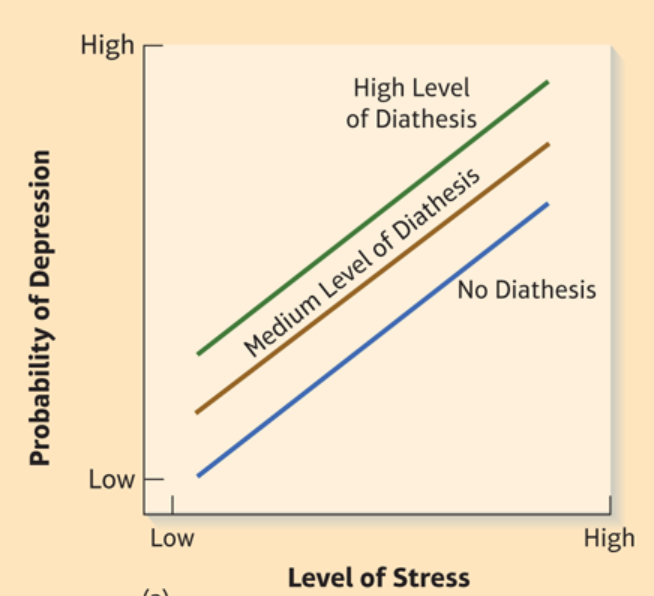
additive model of stress
environmental factors and genetic factors combine to increase risk of developing a mental disorder
if a person has no diathesis (biological vulnerability), with enough stress can still develop psychiatric disorder
disorder more likely if have medium-high diathesis
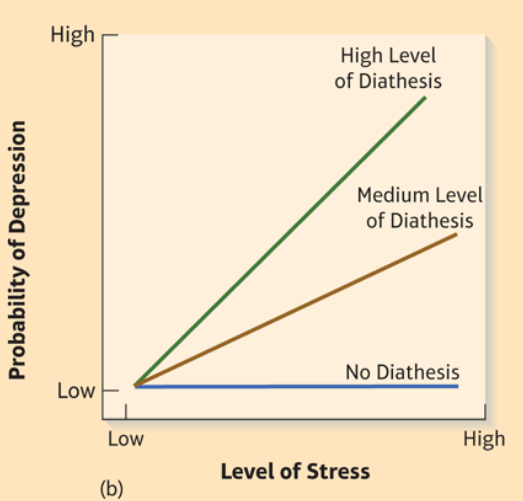
interactive model of stress
if a person has no diathesis, will not develop psychiatric disorder even with high stress
with low stress, disorder will not develop even if high diathesis
it’s the interaction between diathesis and stress→disorder (really depends on the levels of each)
imbalance in neurotransmitters
too much/little release of a neurotransmitter by the presynaptic neuron
in the synapse, the neurotransmitter is deactivated too slowly/quickly (reuptake into the releasing neuron or break down by enzyme)
receptors in the postsynaptic neuron are too sensitive/insensitive
temperament
child’s reactivity and characteristic ways of self-regulation at 2-3 months, thought to be biologically programmed
by age 2-3 months, we reliably show difference in…
fearfulness
irritability/frustration
positive affect
activity level
attentional persistence/effortful control
predict adult personality
cognitive theory
how we interpret what happens and our assumptions about ourselves and the world lead to maladaptive feelings and behaviors
cognitive distortions
thoughts not based in reality, are exaggerated, cause excessive pain
tend to be more frequent and intense in individuals with mental health disorders
three dimensions of cognitive distortions
internal vs. external (it has to do with me vs. it has to do with the outside world)
stable vs. unstable (it’s permanent vs. things can change)
global vs. specific (it’s like this for lots of situations vs. it’s only like this for this situation)
internal, stable, and global tendencies tend to be associated with more anxiety and depression (not good to go too far the other way)
behavioral view
maladaptive feelings and behaviors are learned through paired associations and punishment/reward
psychodynamic
unconscious phenomena (motives, thoughts) lead to maladaptive feelings and behaviors
three components to the mind→id (pleasure, immediate gratification); ego (regulatory, makes sure the id aligns with reality); superego (conscience, aligns the id with the morals of society)
contributions of psychodynamic theory
Importance of talking as a way to start treatment
Psychological factors outside of our conscious awareness do influence our behavior to some degree (e.g., implicit bias test)
Some early childhood experiences do have an important and lasting impact on us (e.g., attachment theory, trauma)
Certain disordered symptoms occur as an attempt to cope with difficult problems
Similar psychological principles apply to both normal and abnormal behavior → reduced stigma
social view
environmental influences, often unpredictable and uncontrollable negative events, can negatively affect us and lead to maladaptive feelings and behaviors