12 Chpater
 Call Kai
 Learn
Learn Practice Test
 Spaced Repetition
 Match
Match Flashcards
 Knowt Play
1/118

There's no tags or description
Looks like no tags are added yet.
Name | Mastery | Learn | Test | Matching | Spaced | Call with Kai |
|---|
No analytics yet
Send a link to your students to track their progress
119 Terms
Characteristics must be measurable in order to be
studied in a scientific way
?
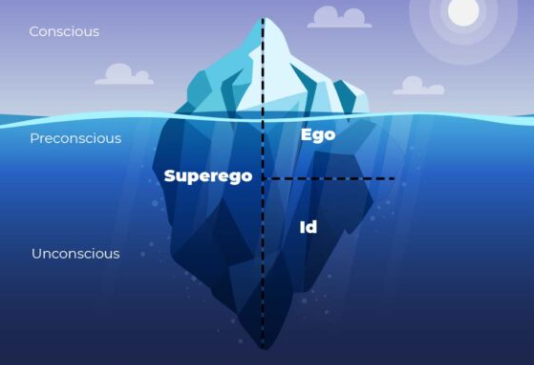
Freud’s model of the mind/personality
unconscious mind
thoughts ad feelings that fall under our threshold of awareness
id
unconscious motives, instinctual drives and needs as a component of personality
our id operates according to the
pleasure principle
pleasure principle
behavior is purely driven on what feels good, with no concern to others
ego
our conscious awareness of reality
ego follows the
reality principle
reality principle
indulging in needs or wants to keep id in check
superego
represents internalized cultural rules and ideals to guide our conciousness
superego operates at our
morel, subconscious, conscious, and preconscious levels
Freud saw humor as a way to
express our unconscious desires in an acceptable way
id operates only in
the unconscious
ego defense mechanisms
how our ego copes with conflict between the unconscious desires of the id and the moral constraints of society
according to anna freud, these ego defense mechanisms only work
unconciously
evidence for repression of memories is
little to none
people with pstd have a tendency to emotionally relieve than
remember traumatic events
?
Allport’s theory of personality
To have a cardinal trait means to have a characteristic that
entirely dominates someone’s personality
In Allport’s framework, most people do not possess
cardinal traits
central traits
general traits we use to describe someone
secondary traits
traits that are only relevant in certain contexts
lexical hypothesis
assumes that any trait is a useful way to characterize an aspect of personality that should become a word
Raymond Cattall reduced Allport’s and Odbert’s 4500 traits to
35 words
Cattell quantified personality by having people
rate themselves on personality traits
Cattall used
factor analysis
factor analysis
taking a larger set of variables and grouping them into a smaller set of constructs based on how well they correlate together
Why was the lexical hypothesis ultimately replaced by models of personality based on factor analysis?
languages have too many interrelated words for describing personality
the five traits help predict
behavior and preformance
personality is not fixed by the end of childhood and continues to
grow across our lifespan (contradictory to freud’s beleifs)
we generally become
more positive and mature as we age
counseling or therapy can help people who suffer from
maladaptive daydreaming or mood disorders
interpersonal relatedness
empathizing social harmony and tradition (cultural context)
people in different countries score vastly different on
traits of extroversion and neuroticism
norms of regions within a country can vary dramatically causing
differing scoring on the big five
people who exhibit high levels of neuroticism, drop fewer clues about who they really are, making it harder to assess
their personalities
behavioral genetics
approach that statistically compares patterns in similarity in the behavioral or personability profiles of people who differ in genetic relatedness
twin studies are an important method for estimating the heritability of
personality traits
Dizygotic twins share only
50 percent of their genes
dizogotic twins are
no more genetically similar than any two biological siblings
a perfect correlation between monozygotic siblings is represented with
correlation coefficient r=1.0
people with high levels of agreeability tend to show
certain brain areas associated with empathy and understanding
conscientiousness
ability or orientation towards goal-related actions
people who score high on conscientiousness
have a larger middle frontal gyrus and dorsolateral prefrontal cortex
personality neuroscientists are trying to correlate weather the Big Five Personality traits
correspond to specific parts of the brain
MRI scans are used to
assess the size of brain regons
Walter Mischel made the
social cognitive approach to personality
social cognitive approach to personality
Mischel pointed out that behaviors can be
context-spesfic
Walter Mischel claimed that people like to make up categories, so we tend to apply blanket labels like “extraversion,” even if those categorized as extraverted
do not resemble one another very much or behave consistently over time
Albert Bandura was apart of
a prominent cognitive revolution in the 1970s
in the 1970s, social learning theory went beyond
traditional learning theory (classical and operant conditioning)
Bandura suspected cognitions play an intermediatory role inbetween
context and behavior
Bandura made the concept of
Reciprocal Determinism
Reciprocal Determinism
cyclical process of personal and environmental factors influencing each other
Reciprocal Determinism says that accordioning to personality
we shape the environments we choose and the impact of those environments around us
Bandura studied aggression and made the
Bobo doll experiement
reciprocal is that preferences lead to choices that in turn
reinforce those preferences
self-efficacy
the belief you can preform the behavior
outcome effacicy
the belief you can do the behavior and achieve the desired outcome
Martin Seligman and Steve Maier made the
learned helplessness experiement
depressive realism
the painful awareness that personal limitations make us have no control on the outcome
sexual selection
evolutionary perspective about men and women having certain traits
women have higher levels of oxytocin
than men
social role theory
the roles we find ourselves in can shape our personality
humanist perspective
empathizes the importance of human’s nature in psychology
Carol Rodgers describes self-actualization in humanist psychology
to be the ultimate human goal
abraham marslow made the
heigharchy of basic human needs
self actualized people report having
peak experiences
?
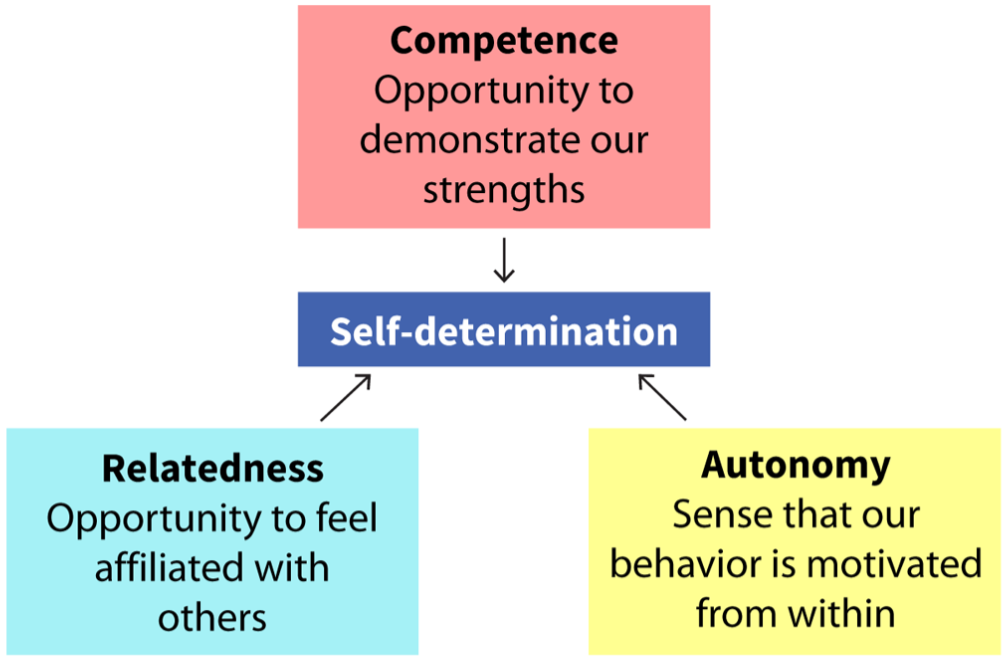
self-determination theory
self-actualization
the realization of one's full potential, creativity, and purpose while accepting themselves
self-concept
broad mental representations of self
the more a self concept is activated
the more likely it becomes schematic to you
sociometer theory
self-esteem is useful to gauge where you stand in society
terror mangagement theory
?
functional equivalence
functional equivalence
personality traits are unique to the person and not the situation
factor anaylsis
self perception occurs when
we evaluate ourselves by observing our current behavior
social comparison occurs when
we compare another person’s situation to our own
working self-concept
one’s sense of self in a spesific context
Outcome efficacy has more to do with whether you believe in the
effectiveness of a certain behavior
Experiencing flow is correlated with
self-actualization
Internal factors are how you interpret the
response from your enviorment
There is evidence to support both sociometer theory and terror management theory yet
no dominant perspective yet exists
physiologists say the superego
doesnt actually exist
Fusi-Form Face Area (FFA)
Part of the human visual system specialized for facial recognition
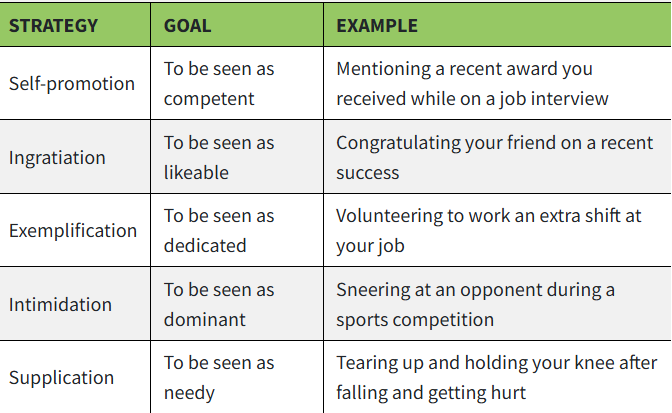
impression management
strategies used to influence others opinions of them
?
Impression management strategies
persona
a false image of ourselves to others to mask characteristics
children make sense of the world by learning
cause and effect
attribution
assignment of a causal explanation for an outcome
the function we use to make attributions happens
rather automatically
we also base attributions on whether it is caused by
events external or internal to the person
fundamental attribution error
attribute the cause of other people’s behavior to their character rather than situational context
we tend to make fundamental attribution errors when
the behavior is surprising or negative
affective forecasting error
peoples inability to correctly predict to how somebody may react emotionally to an event
when describing our own behavior, we tend to be
positively biased
?
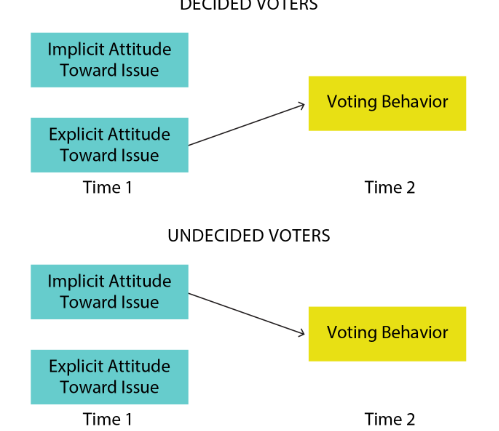
How implicit/explicit attitudes affect voting behavior
Implicit attitudes are
our automatic responses to stimuli learned overtime