Orgo 1 - Addition Reactions
 Call Kai
 Learn
Learn Practice Test
 Spaced Repetition
 Match
Match Flashcards
 Knowt Play
1/37

There's no tags or description
Looks like no tags are added yet.
Name | Mastery | Learn | Test | Matching | Spaced | Call with Kai |
|---|
No analytics yet
Send a link to your students to track their progress
38 Terms
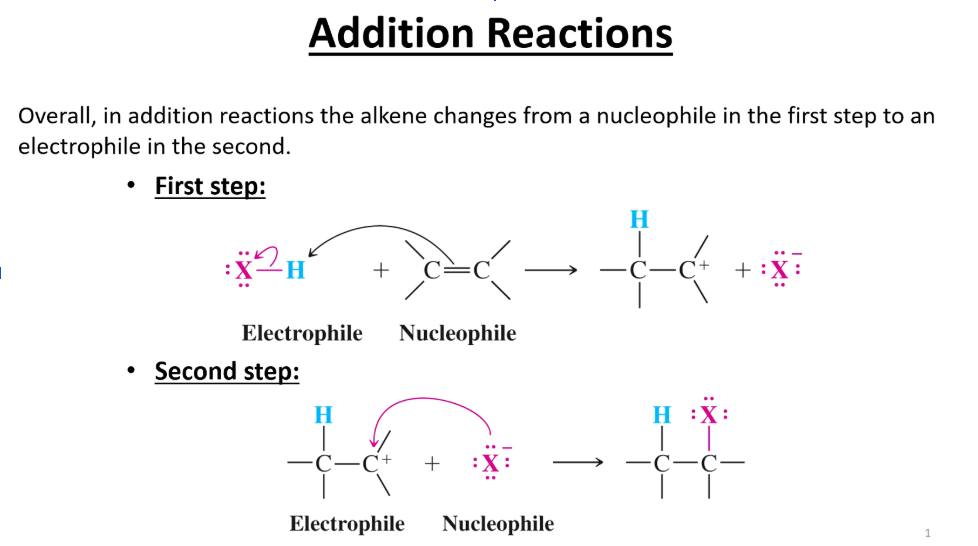
What is the general mechanism for an addition reaction?
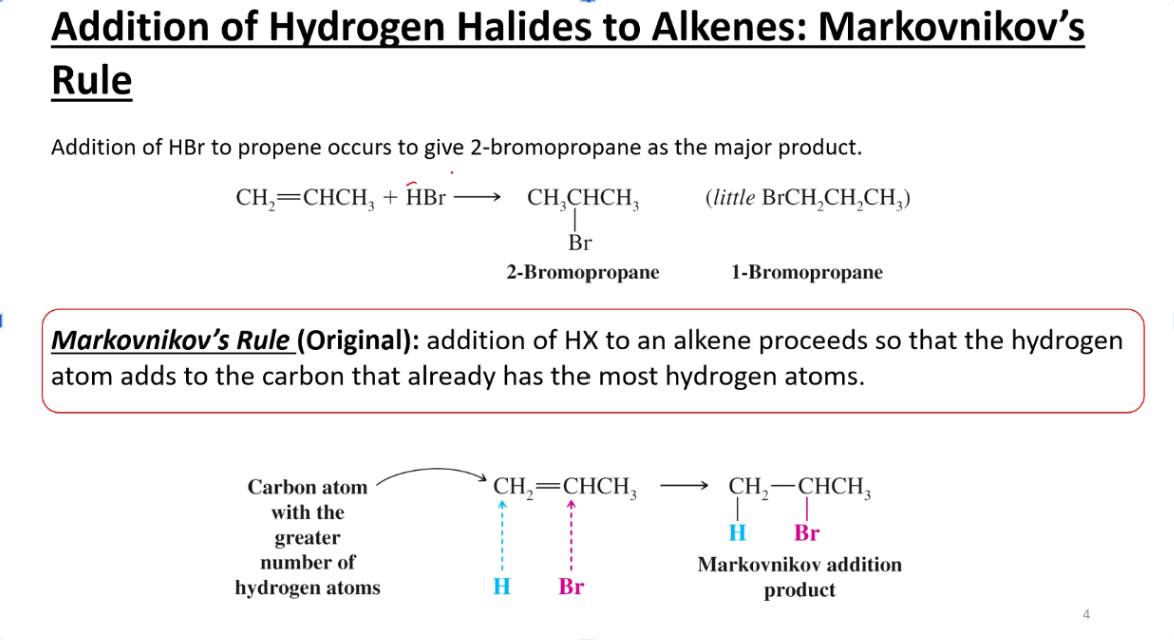
What is Markonikov’s Rule
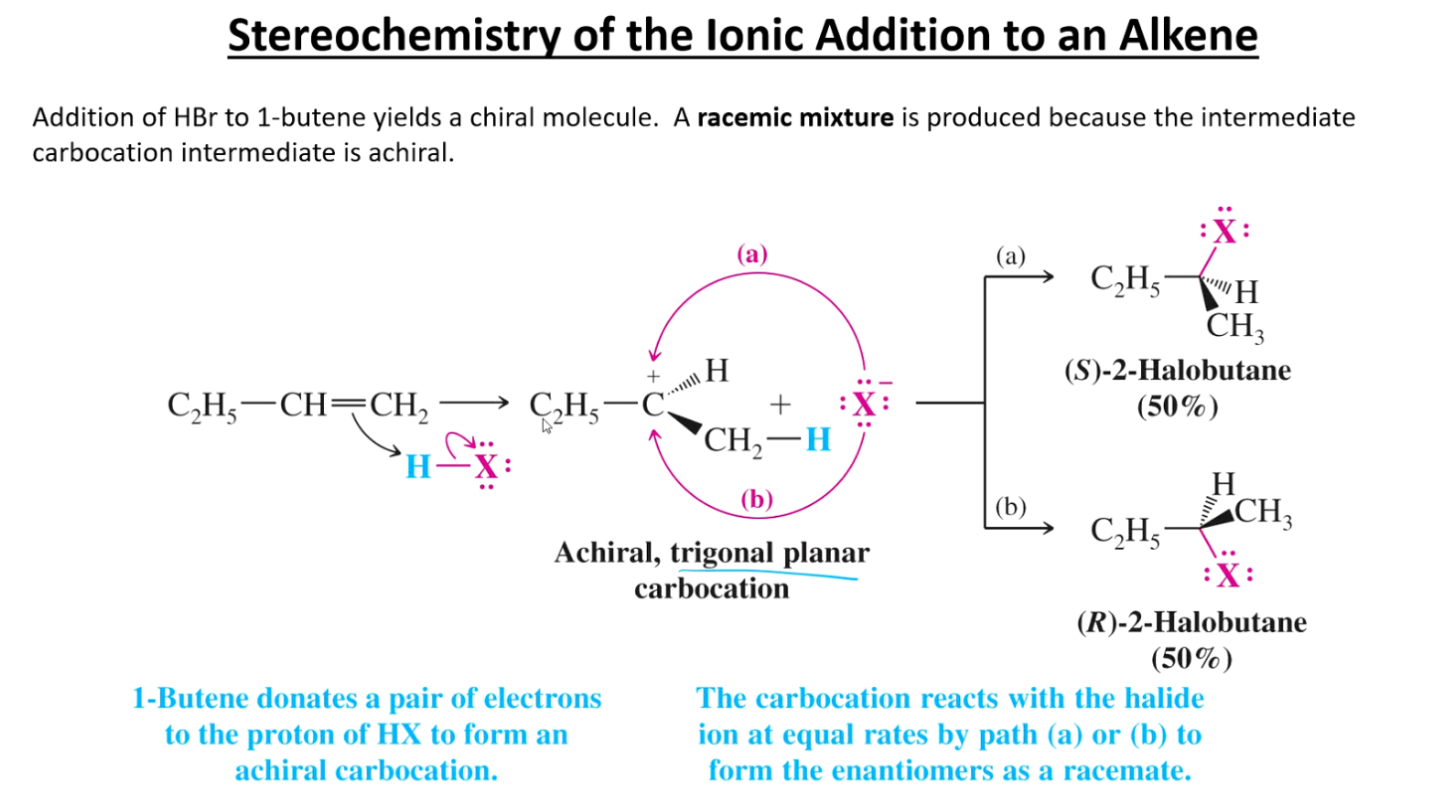
What is the chirality of a standard addition reaction on an alkene?
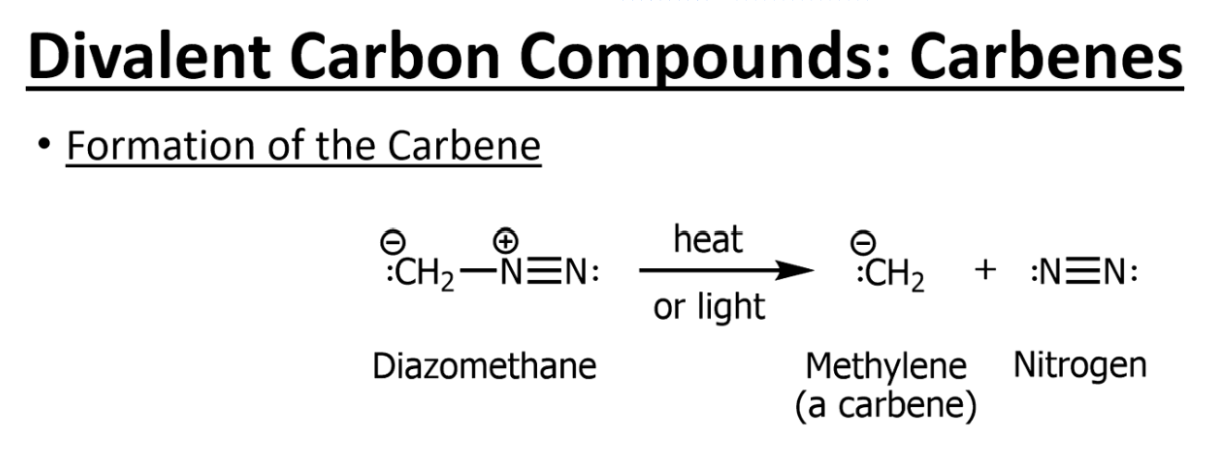
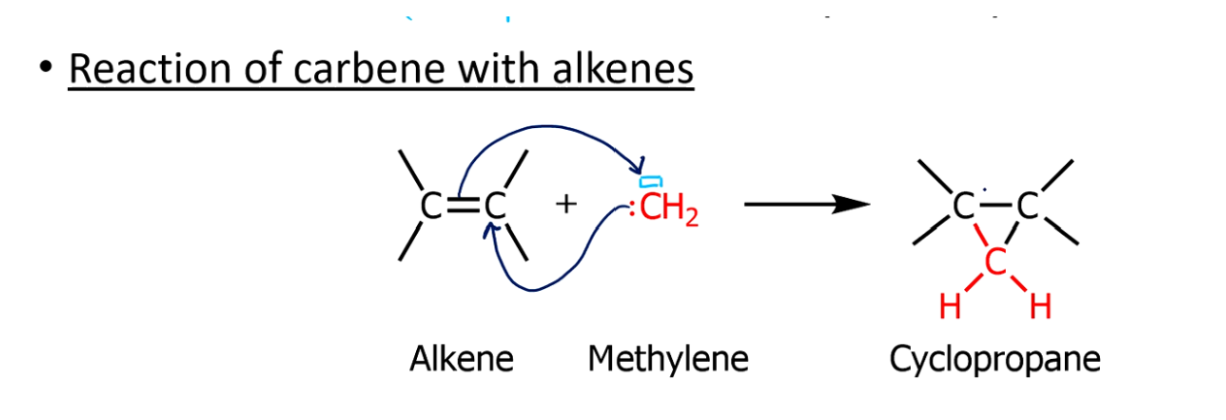
Carbene reaction mechanism, and when they happen
1. Dihalocarbenes from haloforms
Reagents like CHCl₃ + strong base (e.g., OH⁻) generate :CCl₂
This carbene adds to an alkene → dichlorocyclopropane
👉 Key signal: CHCl₃ / base or similar haloform conditions
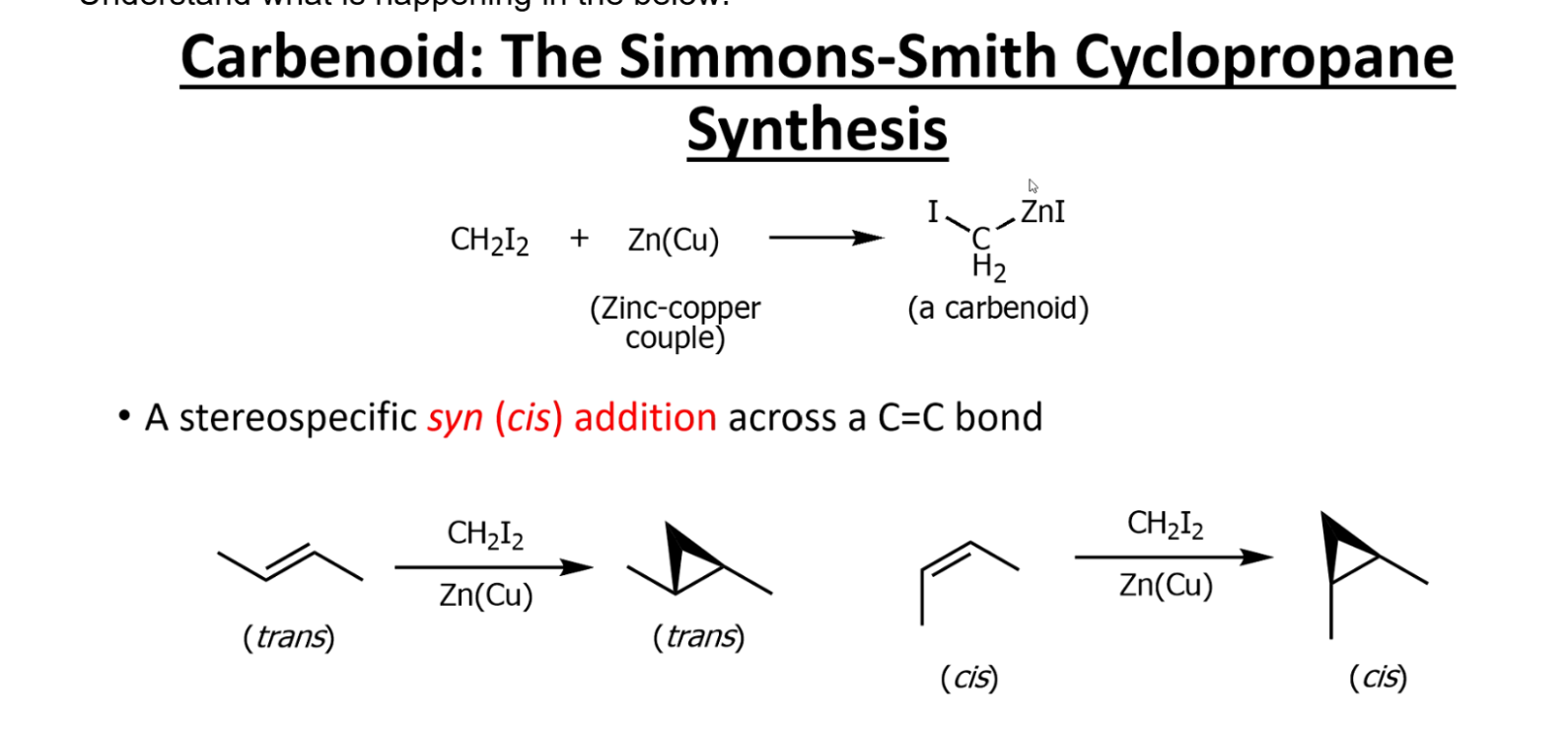
2. Simmons–Smith reaction (carbenoid, not free carbene)
Reagents: CH₂I₂ + Zn(Cu)
Forms a “carbenoid” that behaves like :CH₂
Adds to alkenes → cyclopropane
👉 Key signal: CH₂I₂ + Zn(Cu)
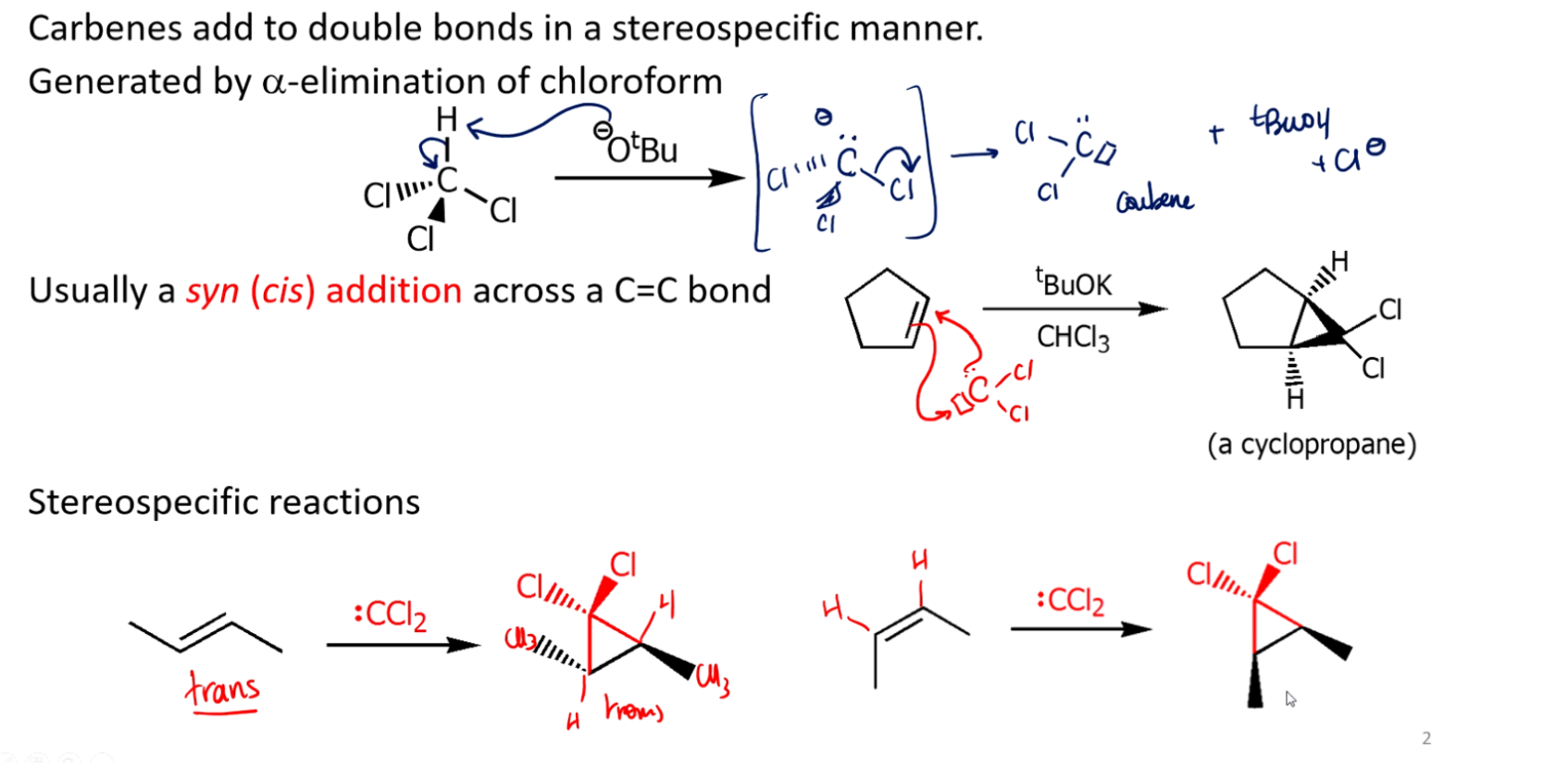
One common mechanism of carbene formation
Mechanism of carbene reaction
Carbenoid (Smith-Simmons)
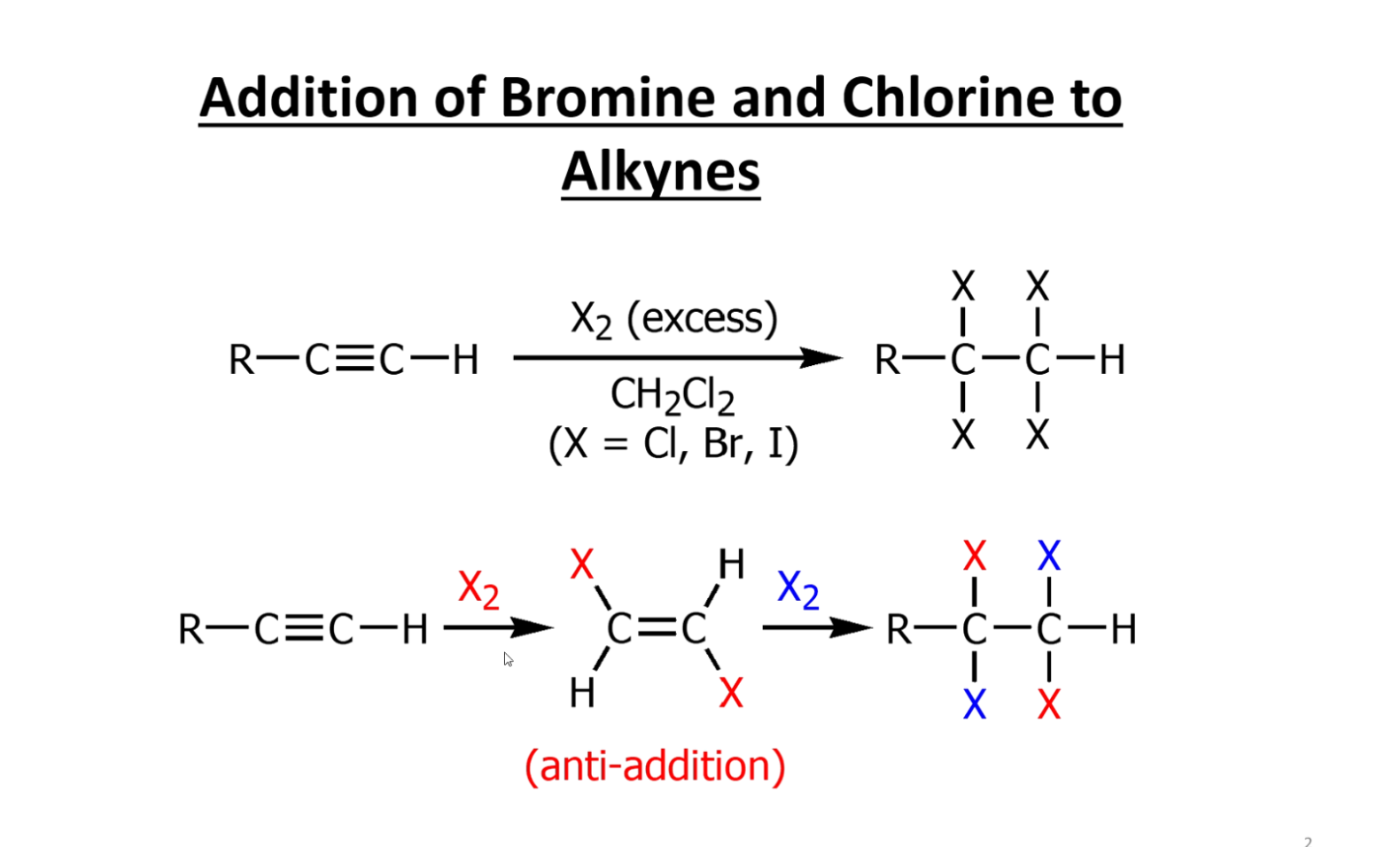
Regular halogenation in alkynes
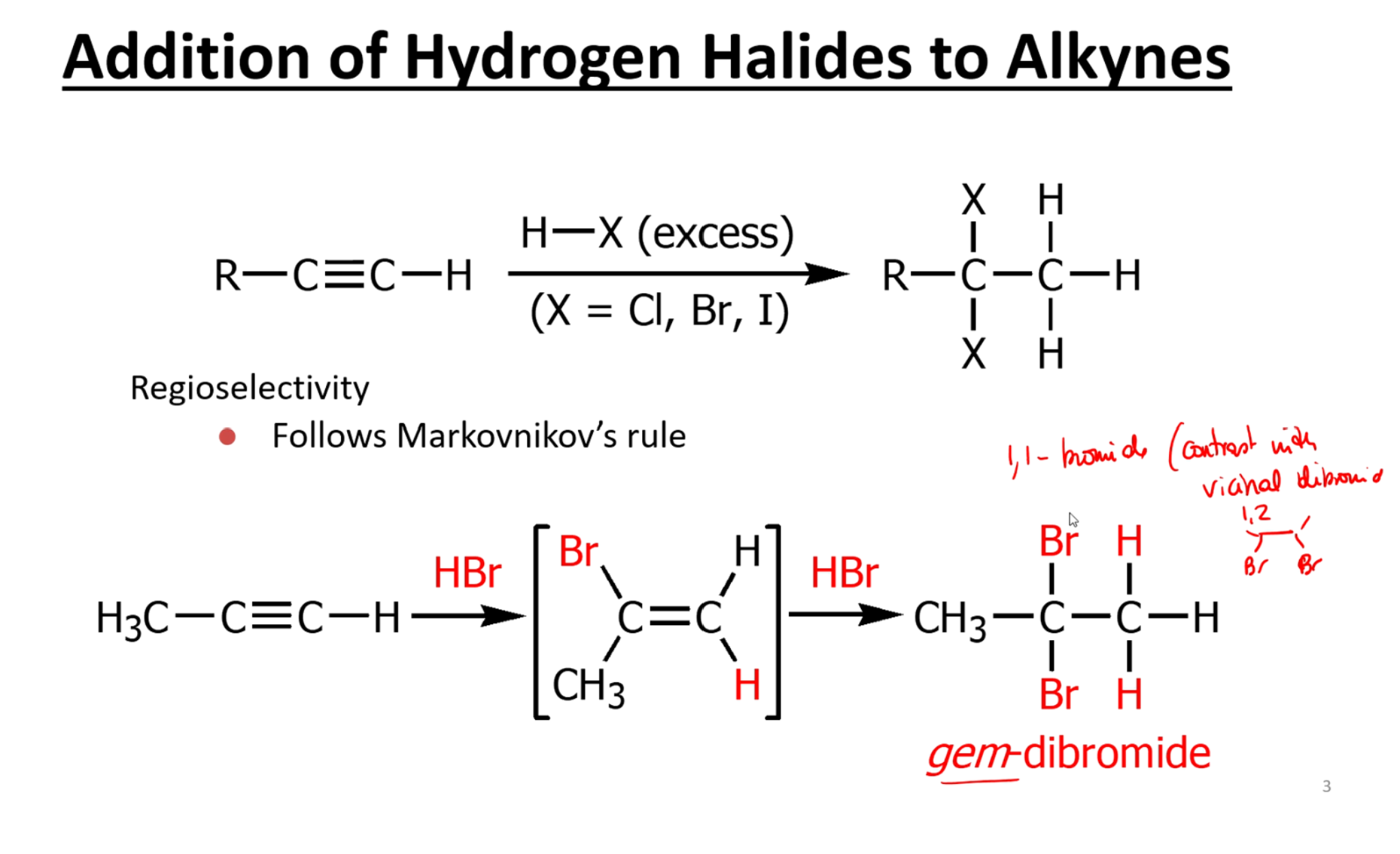
Hydrogen halide addition
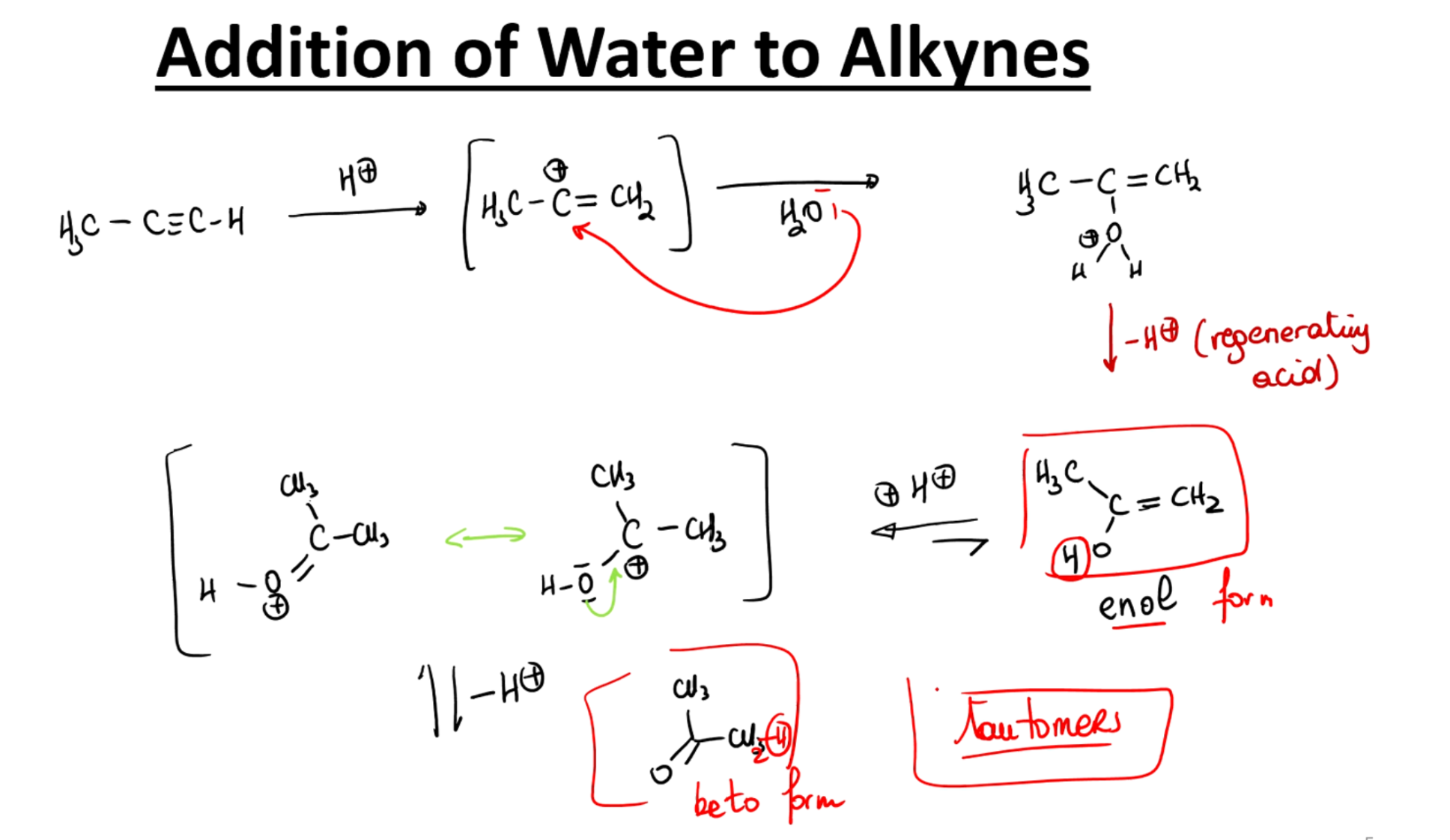
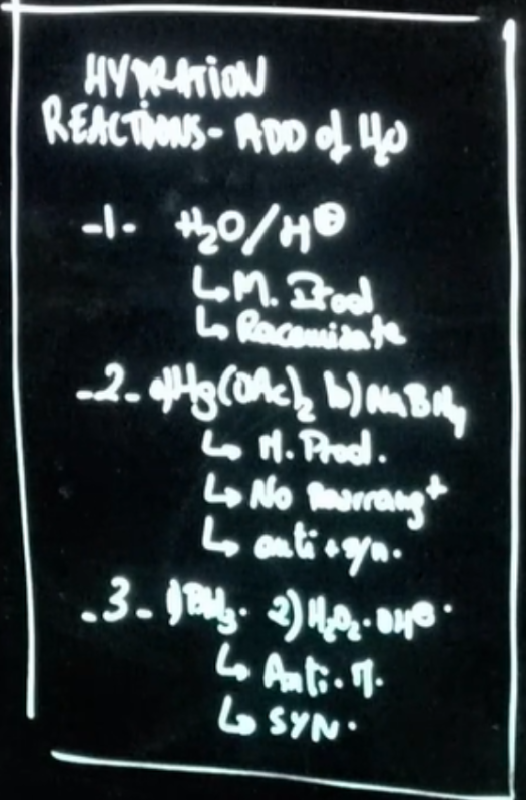
Addition of water to alkynes
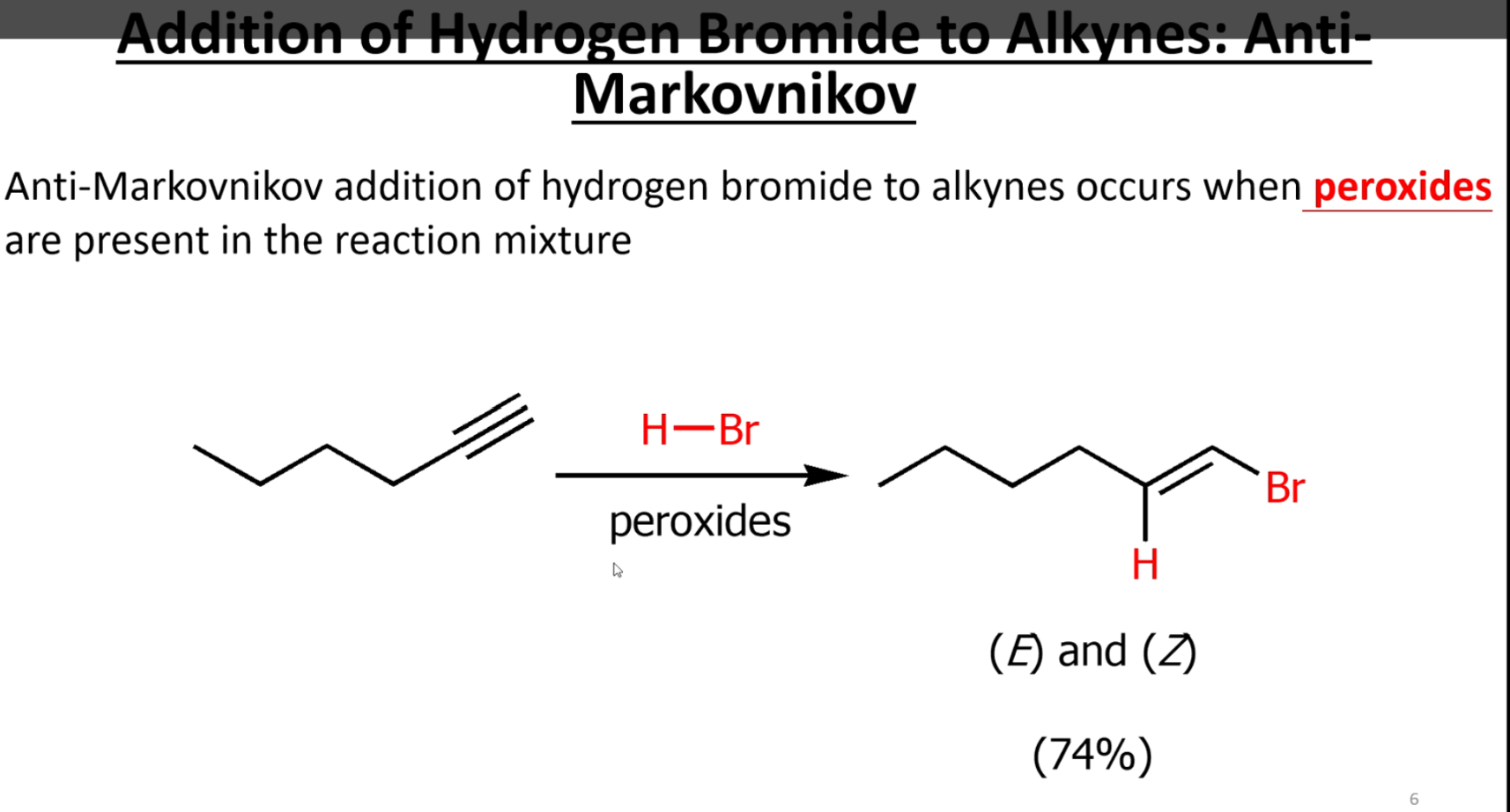
Anti Markovnikov with bromine
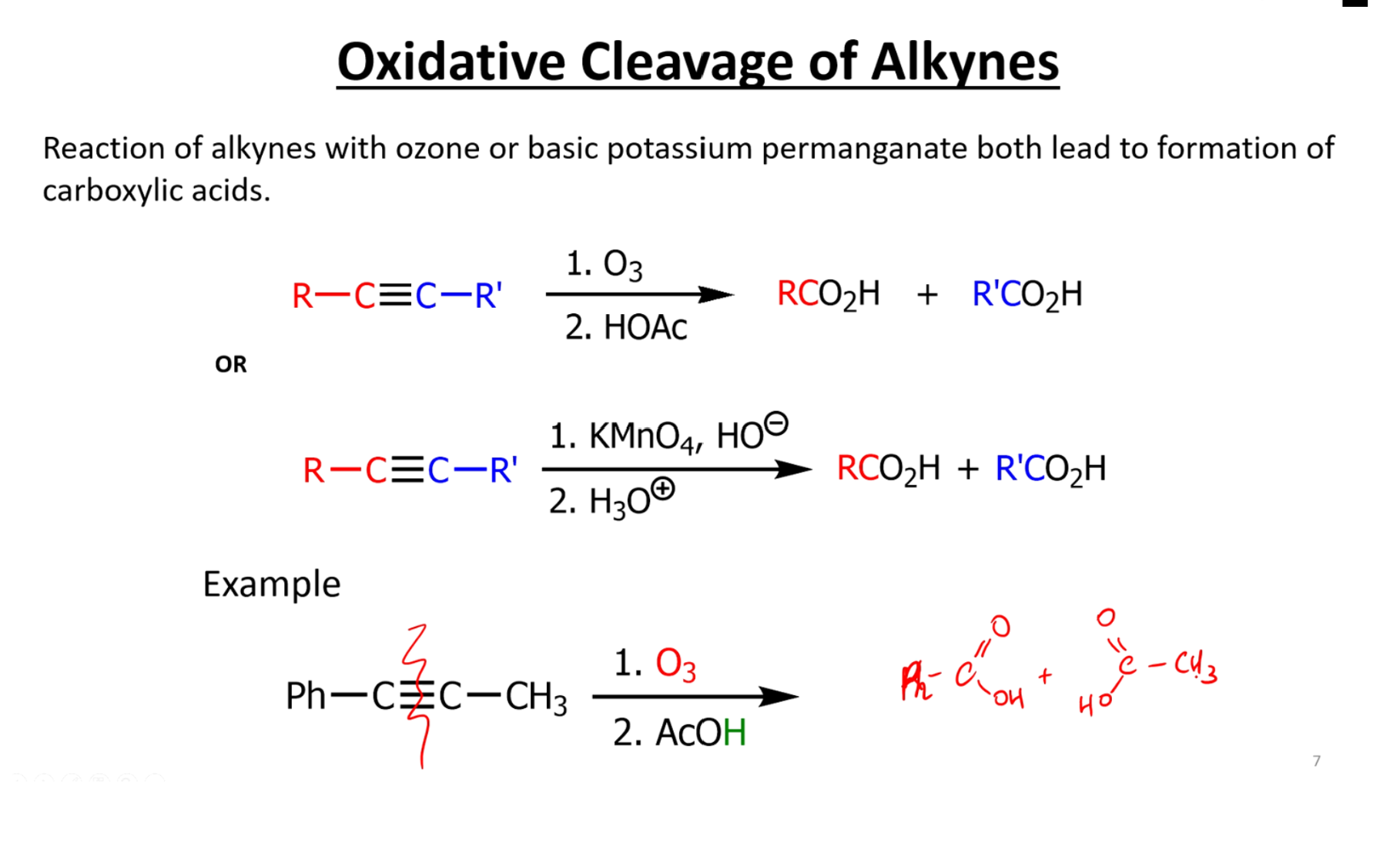
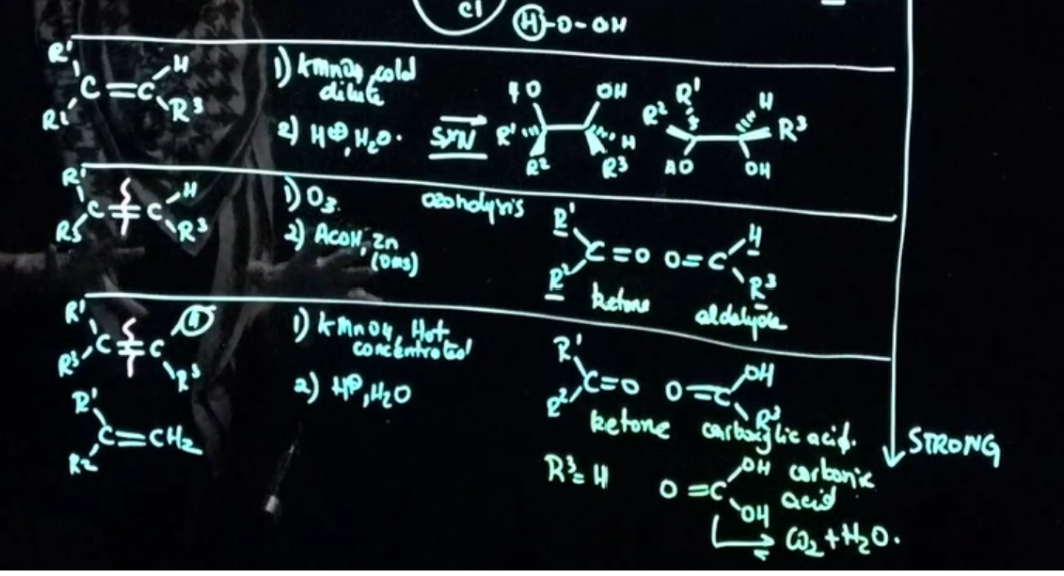
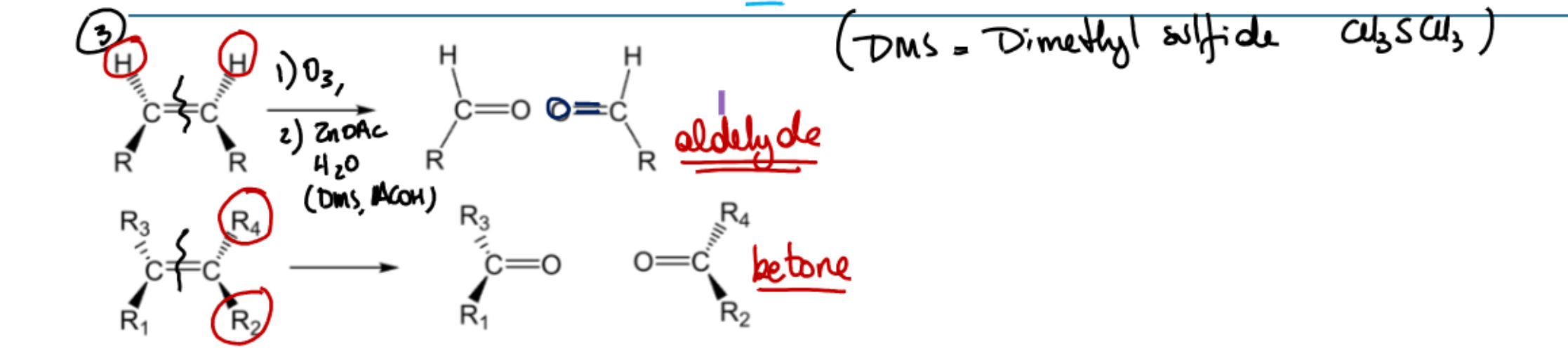
Ozone and potassium permanganate
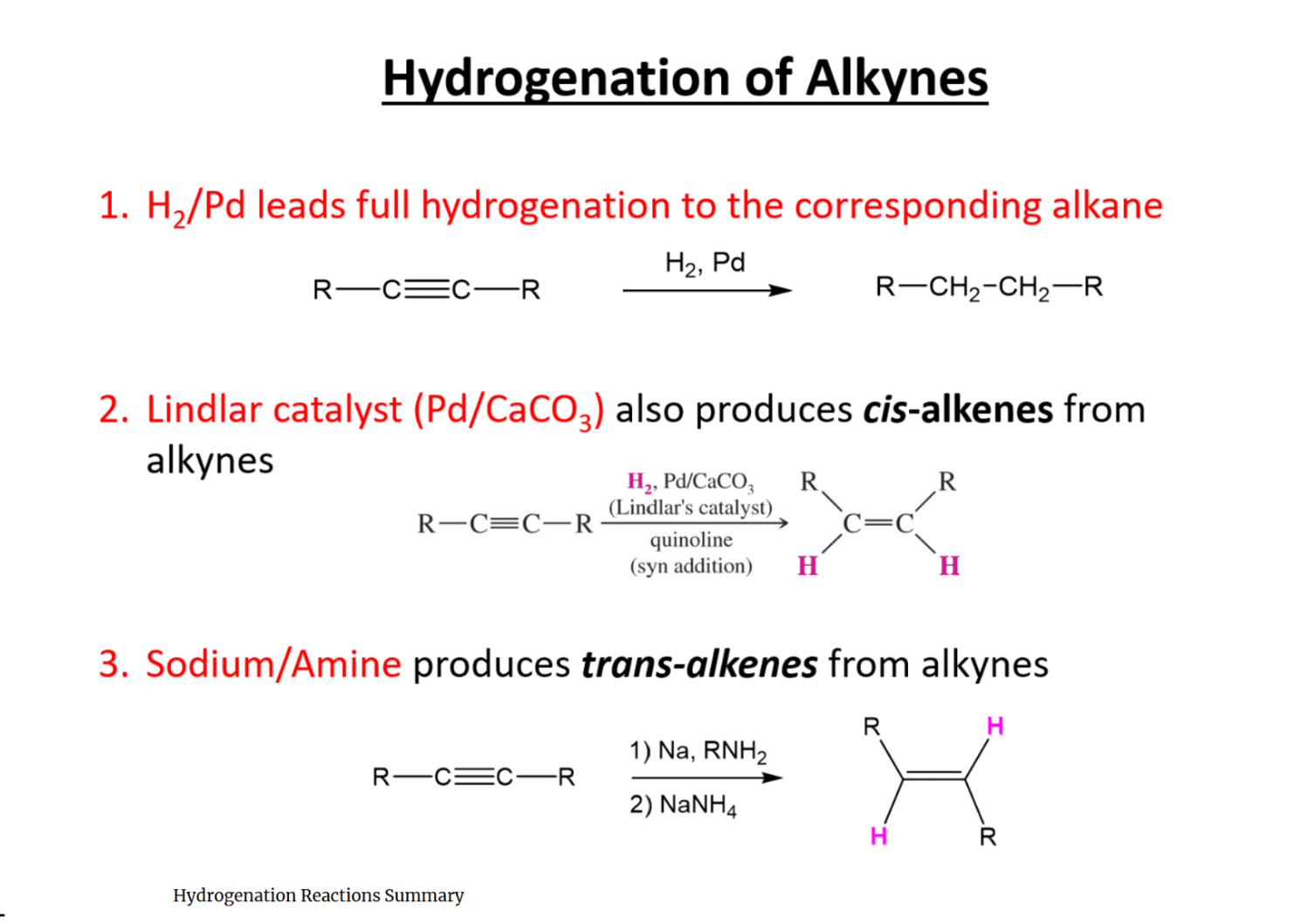
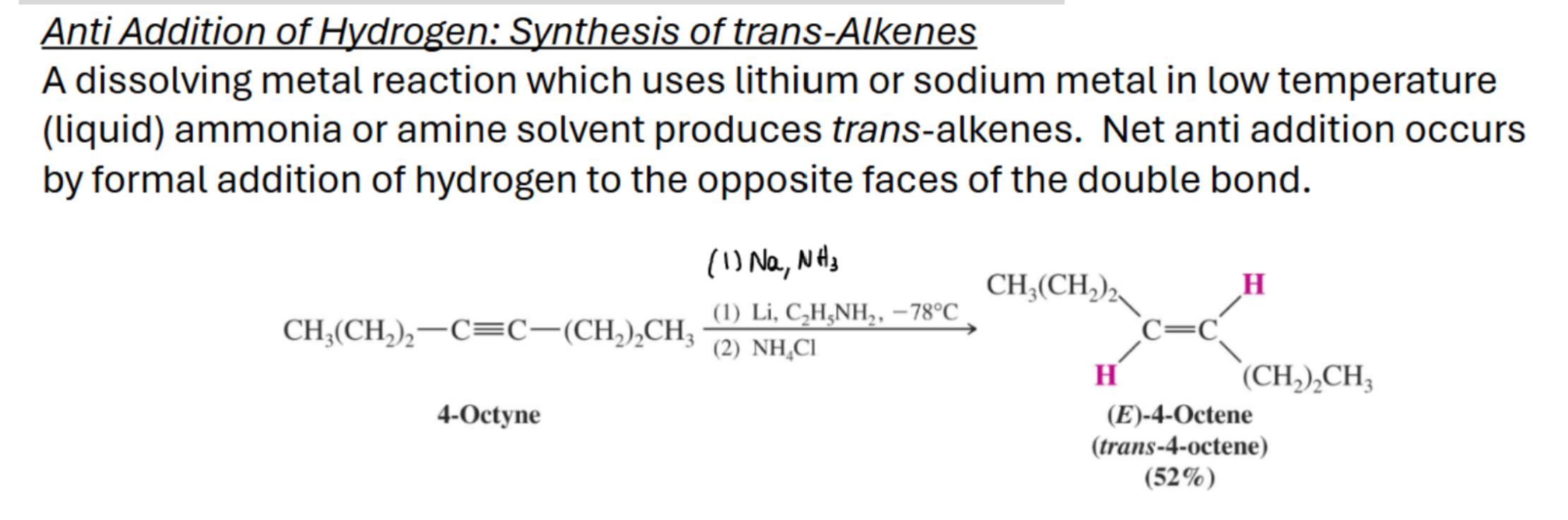
Hydrogenation

Three possibilities for hydrogenation
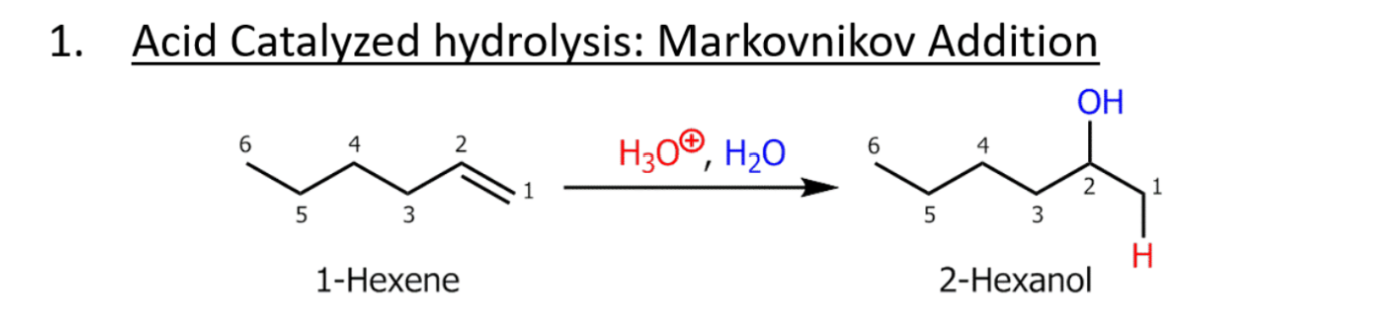
Acid catalyzed hydrolosis
Oxymercuration regiochemistry

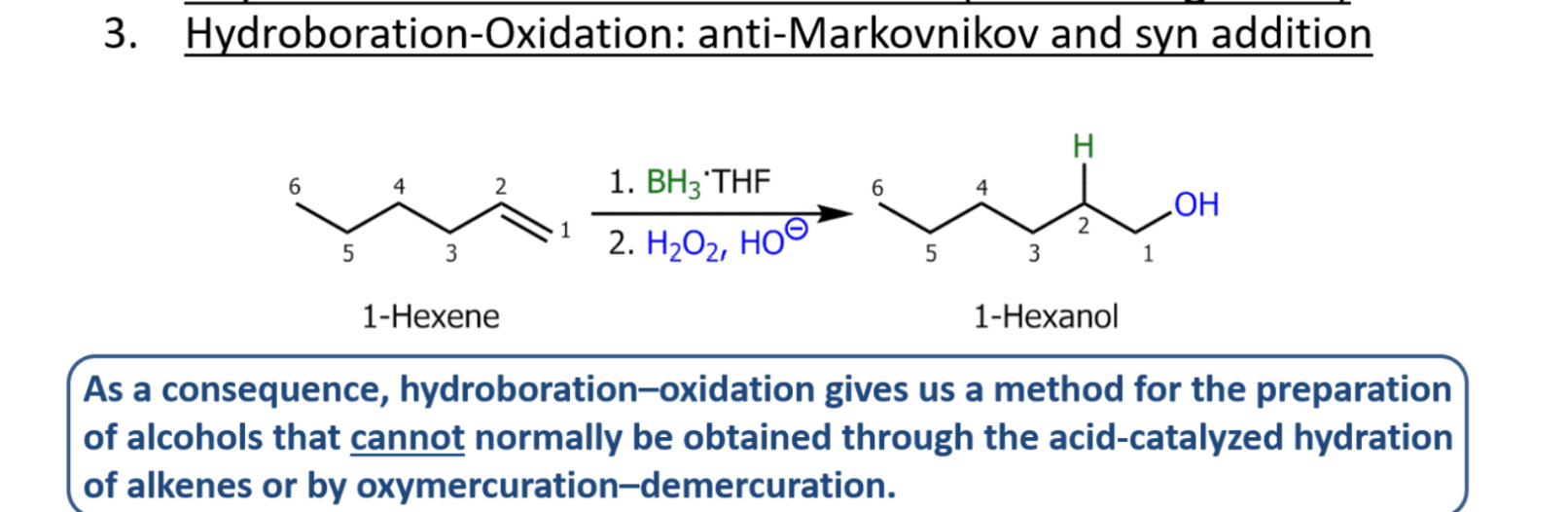
Boron hydration
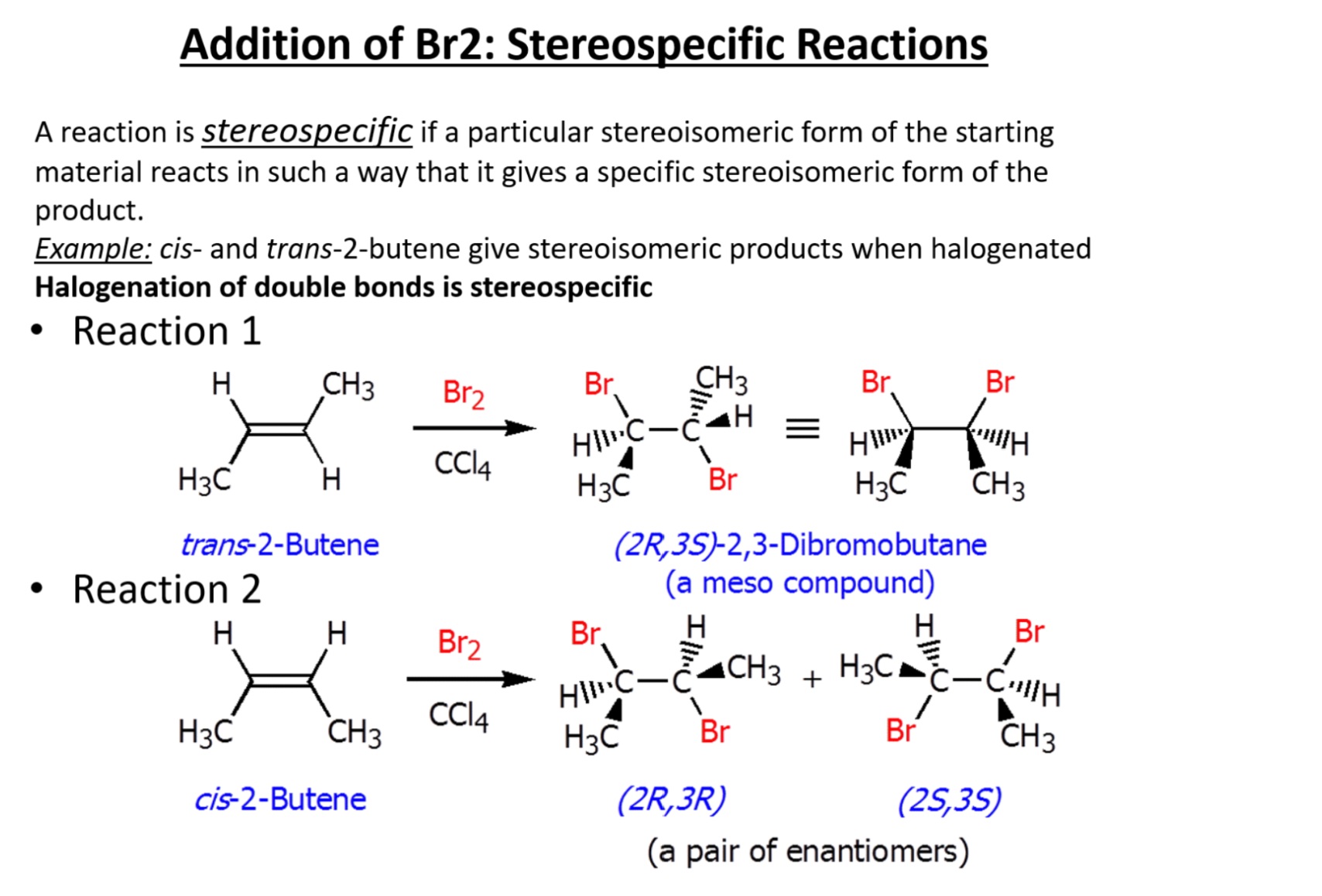
Stereospecific addition of Br2
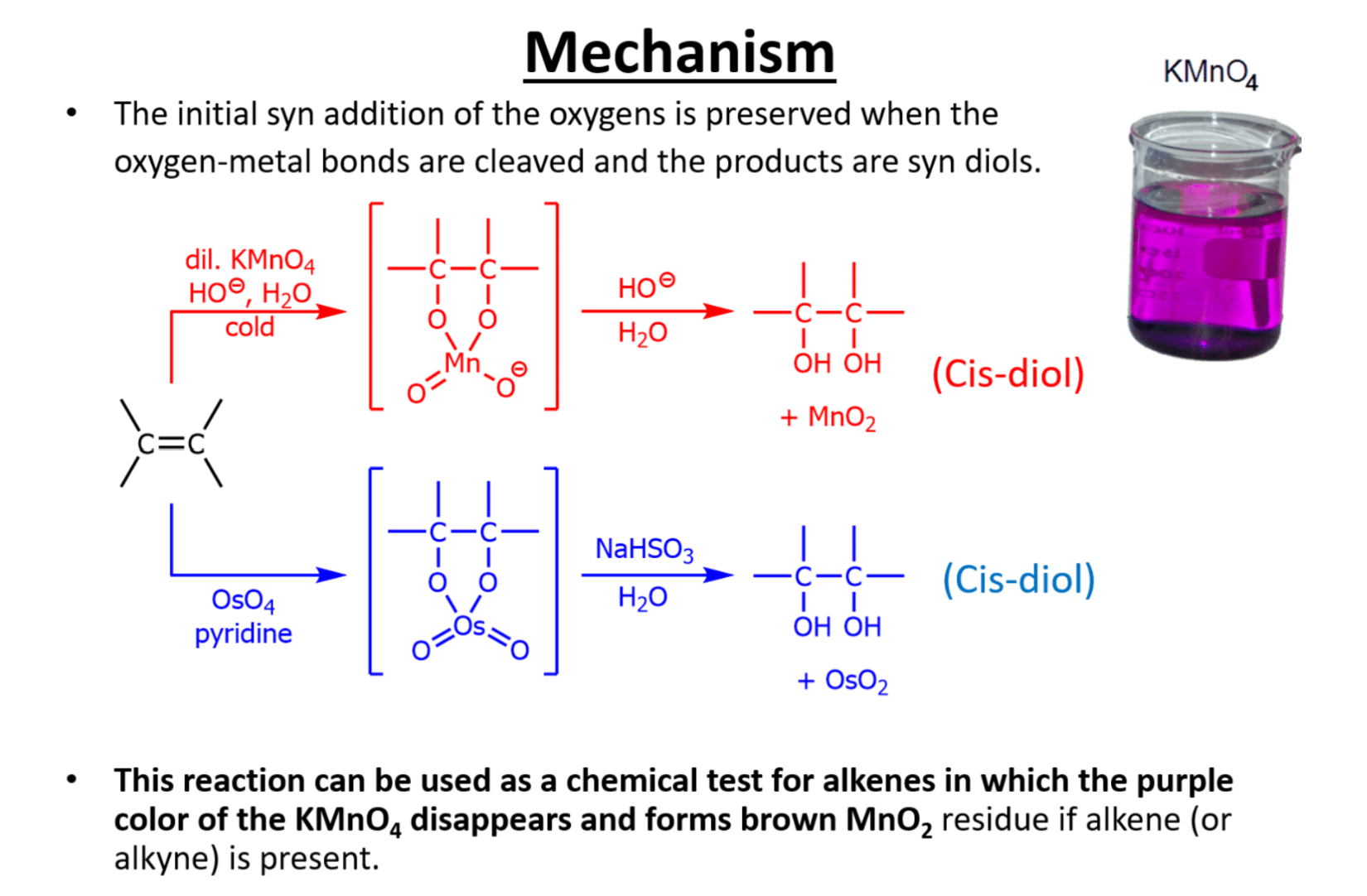
OsO4 and dilute KMnO4
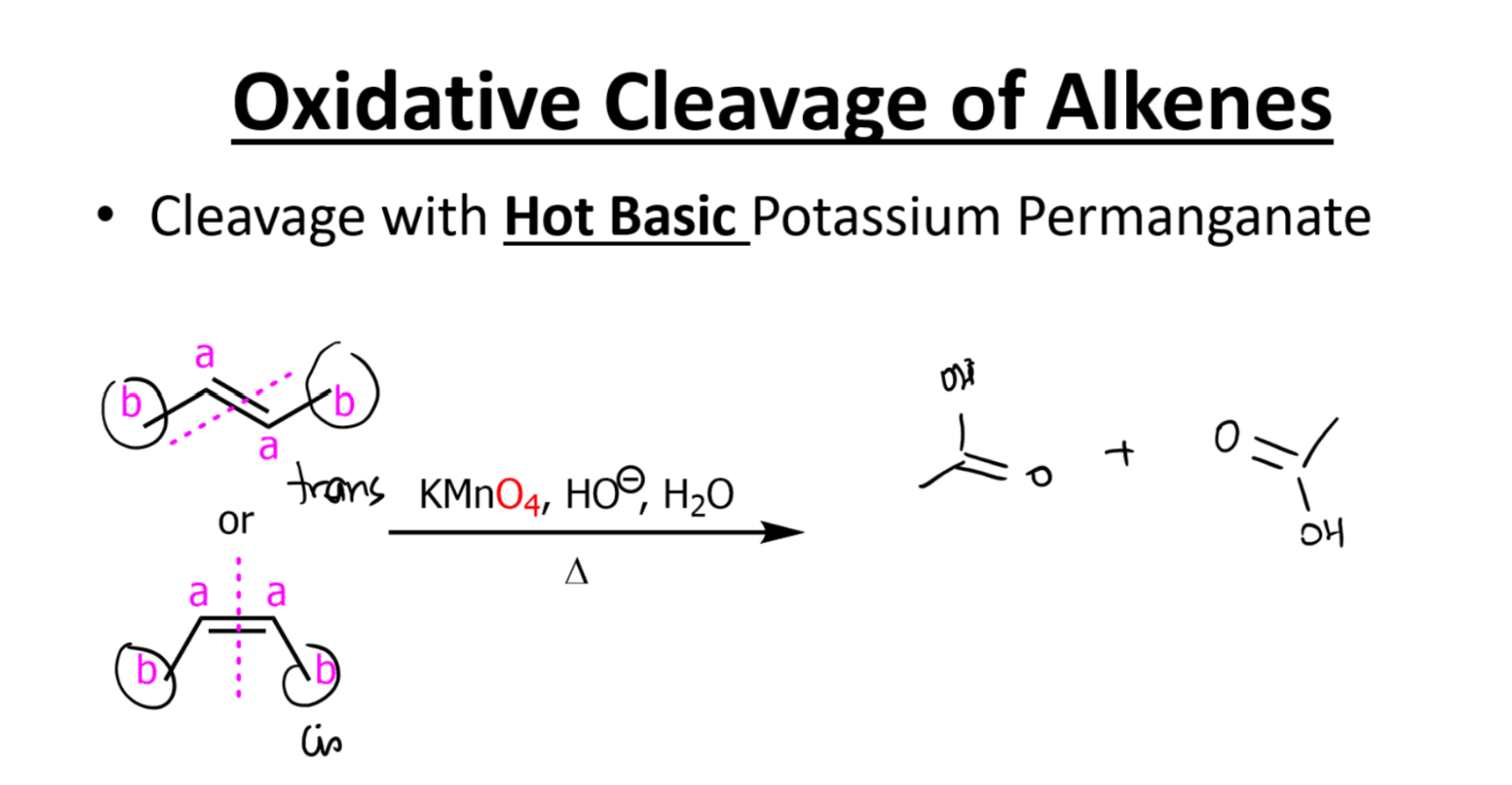
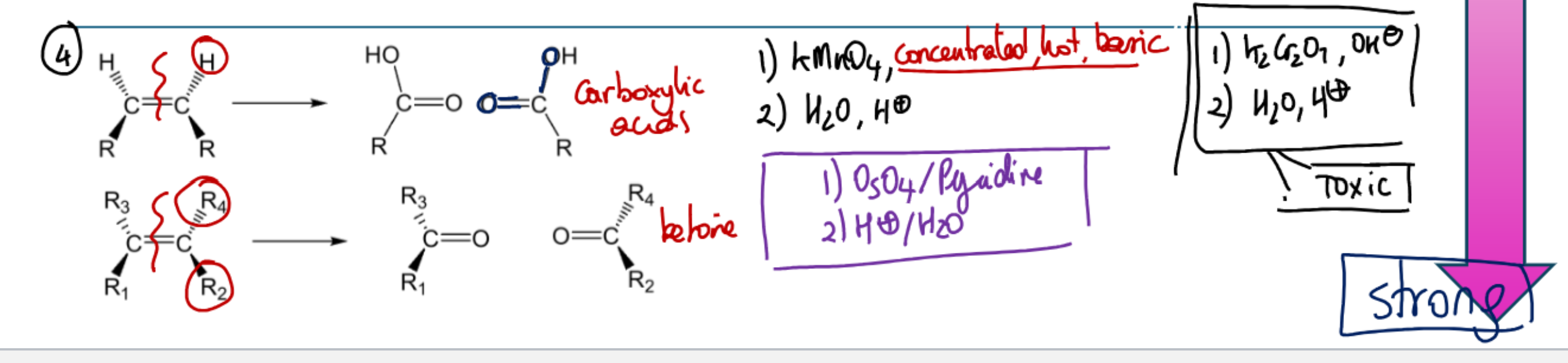
Hot and basic potassium permanganate
**Same as basic conditions, just carboxylic salt if no acid workup
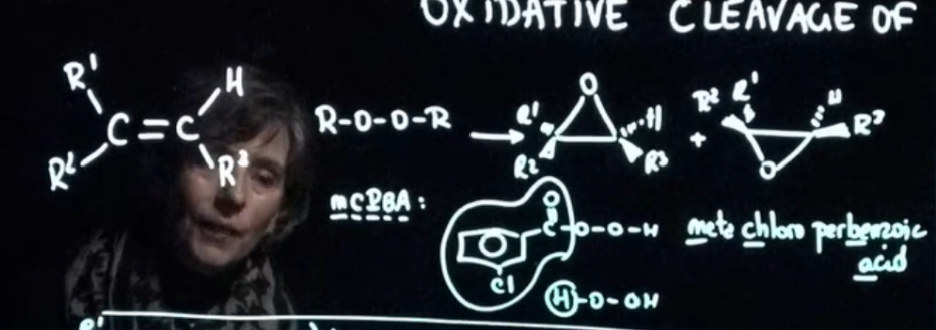
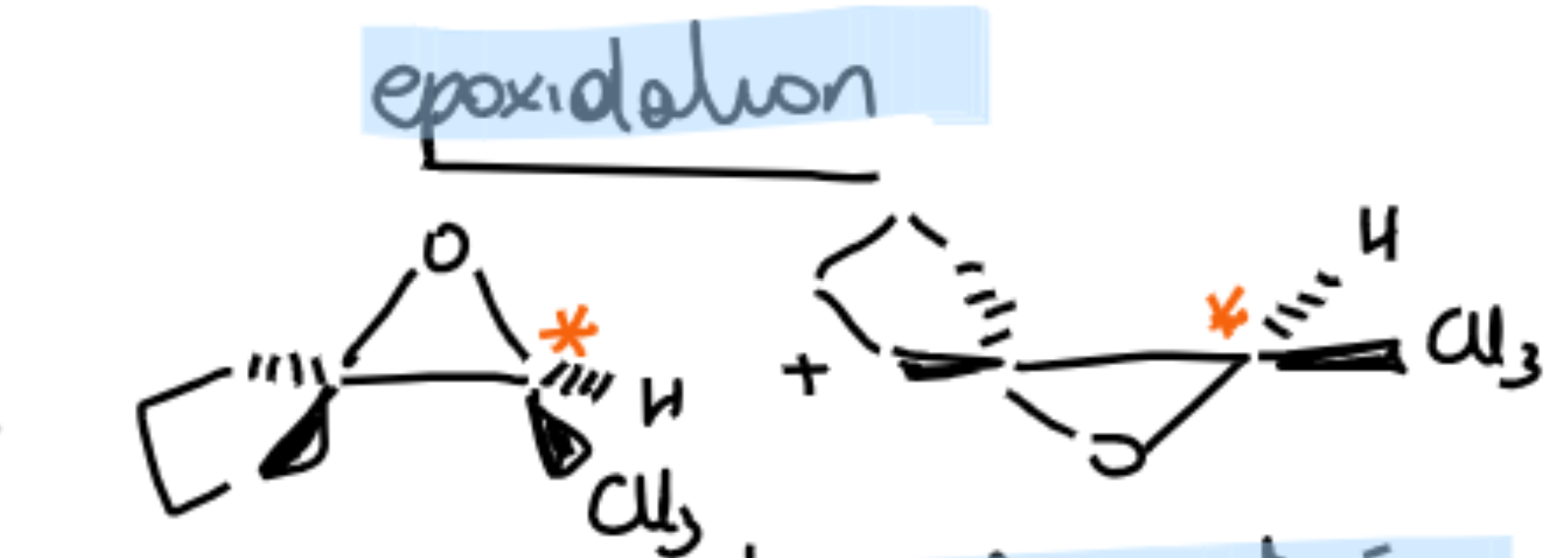
mCBA and epoxide product
Permanagante cold dilute

What is the order of strength for oxidative cleavage reactions
Addition of HX product

Hydration with water and like base

Hydrogenation products

Halogenation products

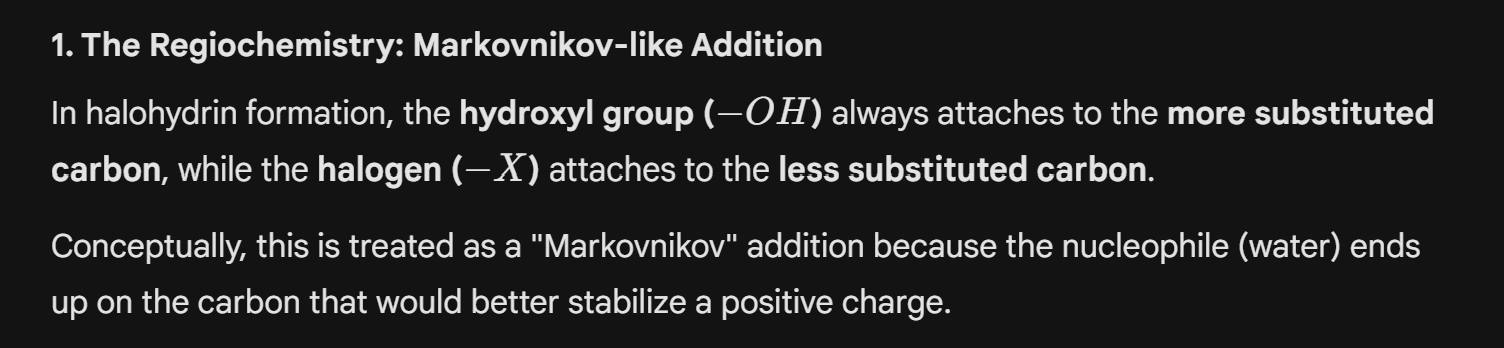
Addition of water and halogen
Water takes up the markonikov addition, halogen the anti

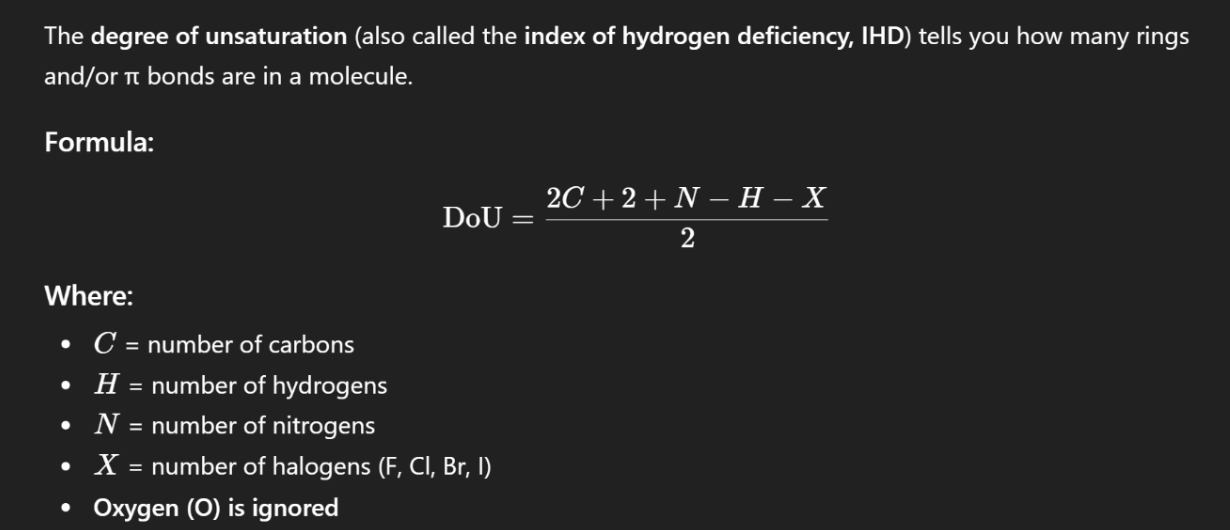
Degree of unsaturation formula
Different outcomes of hydration, summarized
Synthesis of trans alkenes for alkynes
Order of oxidation states (may help you remember products for oxidative cleavage)
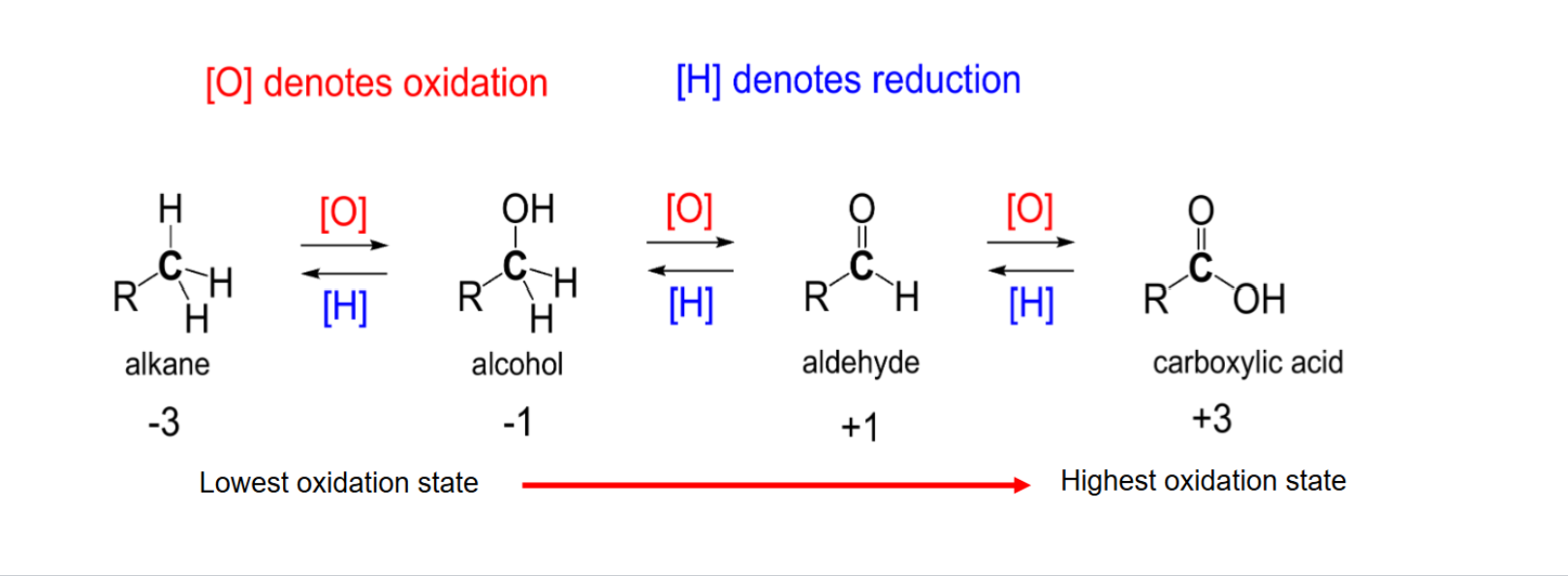
Common solvent for the ozone one? What determines if the products are aldhydes or ketones?
2 H on alkene → aldehydes, all R groups → ketones
What determines what the products will be for the strongest one? What decides carboxylic acid vs ketone?
Where to put wedges for chiralty of epoxidation?
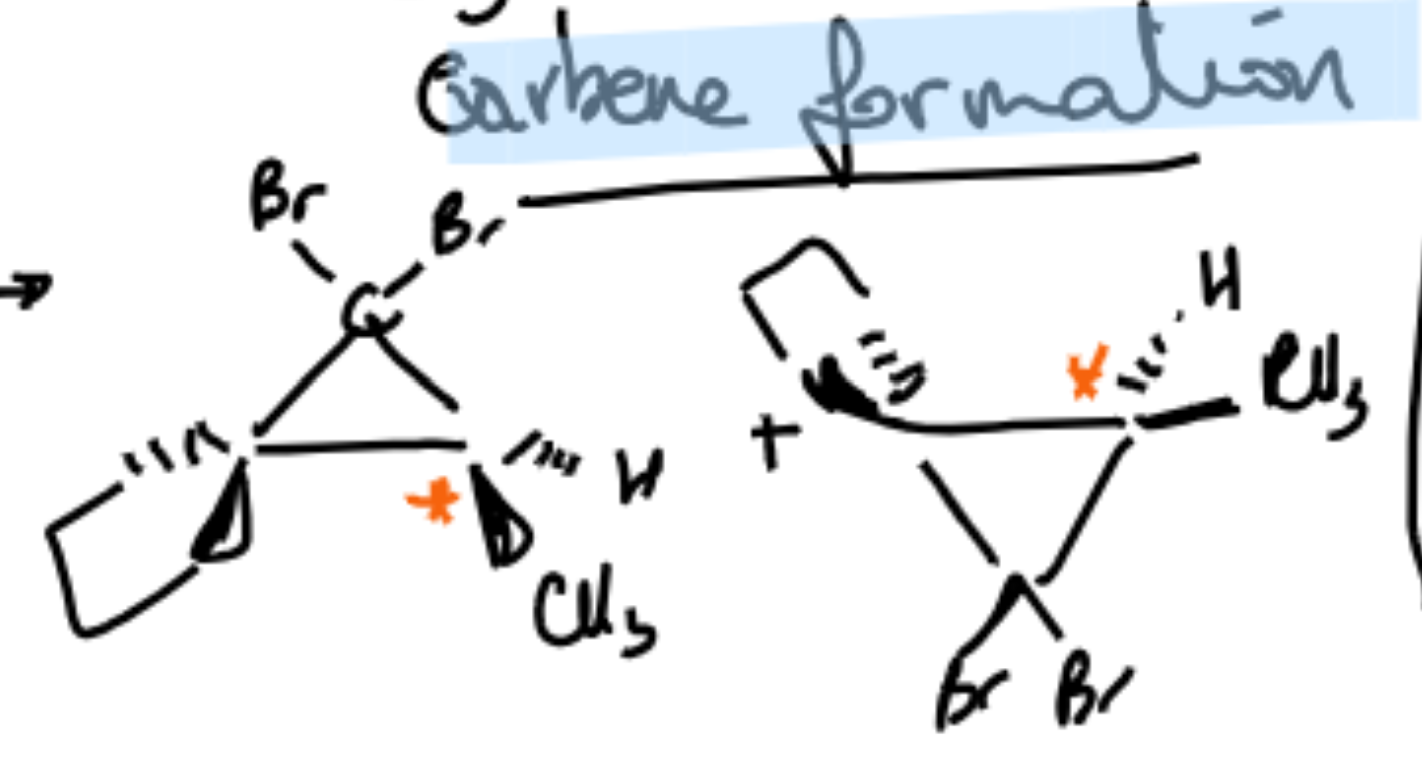
Properly representing carbene reaction chirality on products?
What happens when you add water and a dihalogen to something, but there is only one possible site for markonikov addition?