Lecture 41: Fatty Digestion and Catabolism
 Call Kai
 Learn
Learn Practice Test
 Spaced Repetition
 Match
Match Flashcards
 Knowt Play
1/31

There's no tags or description
Looks like no tags are added yet.
Name | Mastery | Learn | Test | Matching | Spaced | Call with Kai |
|---|
No analytics yet
Send a link to your students to track their progress
32 Terms
Why are lipids good energy sources?
they are the major metabolic energy in humans, they can be metabolized to CO2 and H2O, but oxidative metabolism of fats yields 2x energy as carbohydrates or proteins. They are also stored in an anhydrous state.
Where does digestion take place for lipids?
at the lipid-water interface
What does the rate of lipid digestion depend on?
on the surface area of the interface
How are triacylglycerols degraded? How does pancreatic lipase work?
degraded into free fatty acids and glycerol by lipases. Pancreatic lipase catalyzes the sequential hydrolysis of triacylglycerols at their 1 and 3 positions to generate free fatty acids and 2-monoglyceride.
How does orlistat (Xenical) work?
inhibits pancreatic lipase thereby reducing absorption of fat in the small intestine
How are phospholipids degraded?
degraded by pancreatic phospholipase A2, which cleaves C2 fatty acid to yield lysophospholipids (detergents). They emulsify fat.
How are fats absorbed from food?
bile salts emulsify dietary fats, forming mixed micelles (small intestine)
Intestinal lipases degrade triacylglycerols
Fatty acid products are taken up by the intestinal mucosa and converted into triacylglycerols
Triacylglycerols are incorporated with cholesterol and apolipoproteins into chylomicrons
chylomicrons move through the lympathic system and bloodstream to tissues
lipoprotein lipase (activated by apoC-II) in the capillary converts tracylglycerols to fatty acids and glycerol
Fatty acids are oxidized as fuel or reesterified for storage
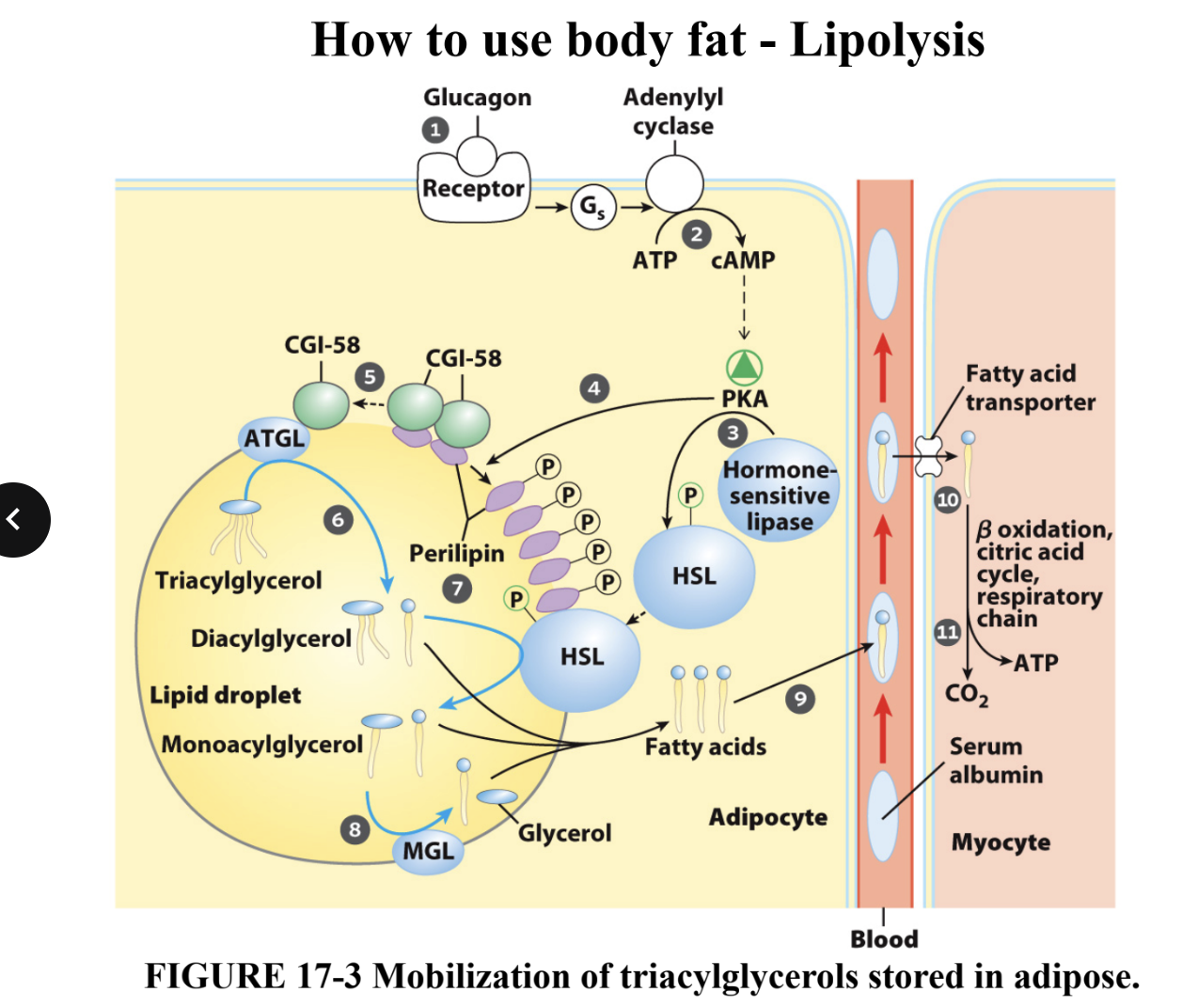
Explain this diagram’s overall goal
This illustrates lipolysis (specifically triacylglycerols stored in an adipocyte being mobilized into free fatty acids, transported through the bloodstream, and then oxidized in a myocyte.)
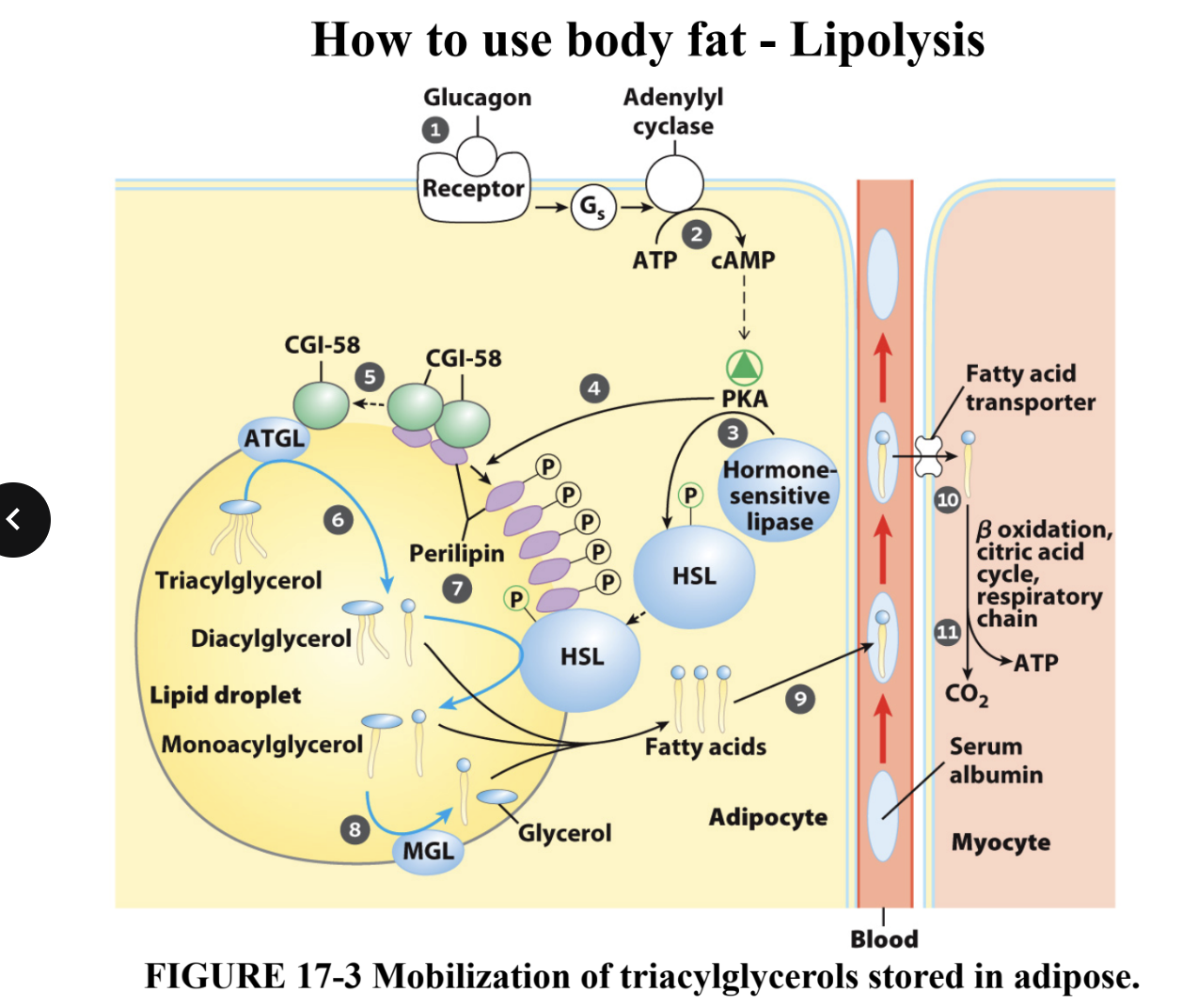
Explain the hormone signaling steps of this diagram (1-4)
glucagon binds to a receptor on the adipocyte membrane
G-protein activates adenylyl cyclase, and converts ATP into cAMP
cAMP activates pKa
pKa phosphorylates hormone-sensitive lipase and perilipin
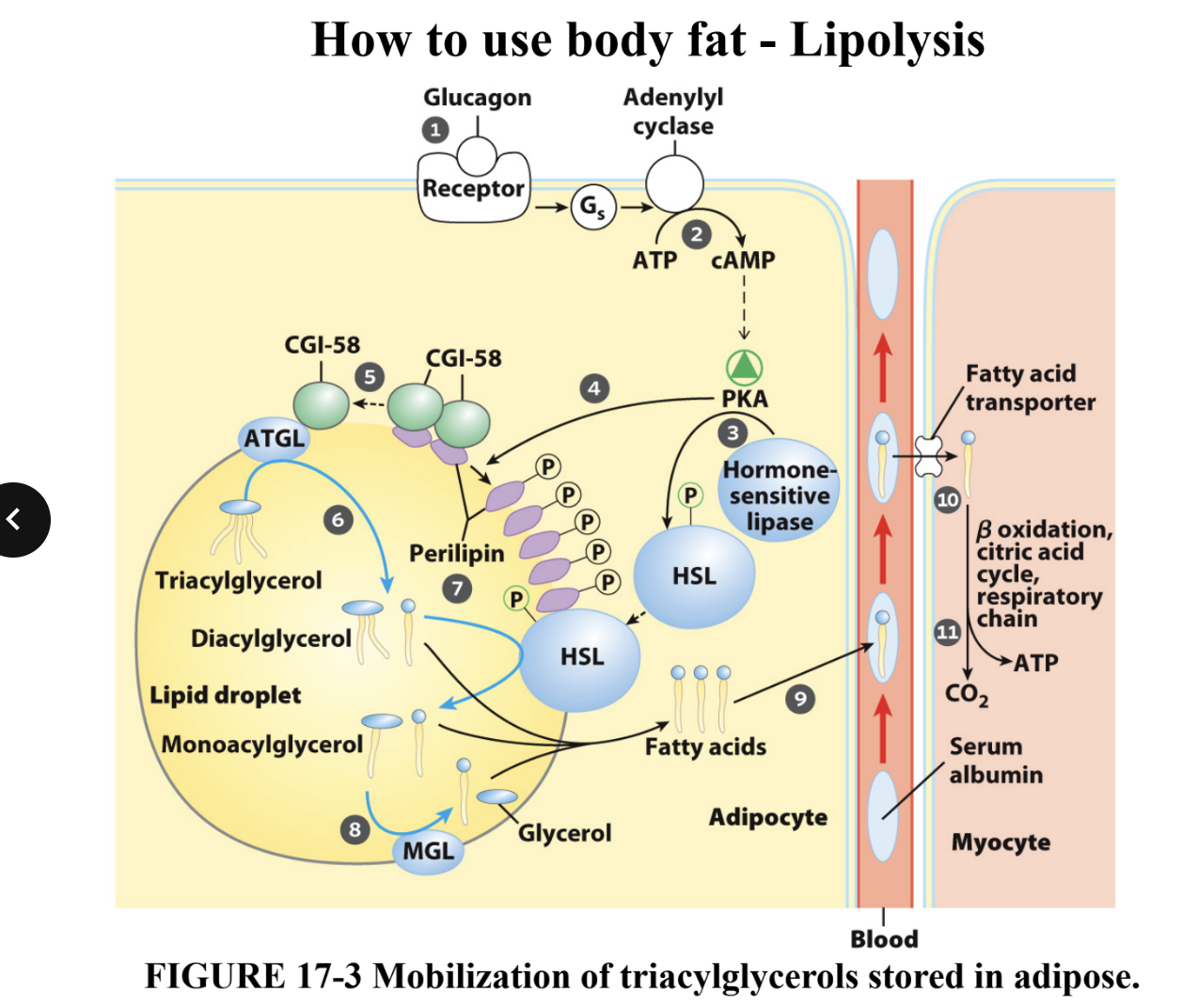
Explain the lipid breakdown steps of this diagram (5-8)
when perilipin is phosphorylated, it changes shape and releases a protein called CGI-58, which activates Adipose Triglyceride Lipase (ATGL)
active ATGL removes the first fatty acid chain from triacylglycerol, and converts it to diacyglycerol
the phosphorylated HSL moves to the lipid droplet and removes the second fatty acid chain converting diacylglycerol into monoacylglyclerol
a third enzyme, Monoalglycerol lipase removes monoacylglycerol, and leaves behind free fatty acids and one glycerol molecule
Explain the transport and energy production of this diagram steps 9-11
free fatty acids exit the adipocyte and enter the bloodstream, where they bind to serum albumin (a transporter)
fatty acids travel to myocytes and enter via fatty acid transporter
inside the myocytes, fatty acids undergo beta-oxidation, go through the TCA cycle, and ETC. ATP is generated and CO2 is released
How is catabolism of free fatty acids activated?
by conversion of a fatty acid to a fatty acyl-CoA by fatty acyl CoA synthetase
What enzyme facilitates transportation of fatty acyl-CoA across the mitochondria inner membranes?
carnitine acyltransferases
How are fatty acids catabolized through fatty acid beta oxidation
sequential removal of 2-carbon units by oxidation at beta-position of the fatty acyl-CoA molecule
Where does the reaction of a fatty acid to a fatty acyl-CoA take place?
in the outer mitochondrial membrane
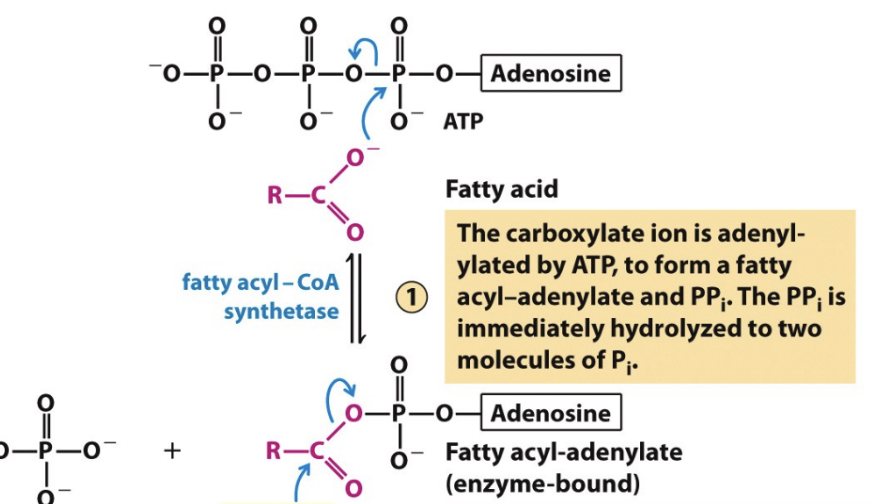
How is a fatty acid converted to an enzyme-bound fatty acyl-adenylate?
ATP adenylates the carboxylate ion to form a fatty acyl-adenylate and PPi. The PPi is hydrolyzed to two molecules of Pi
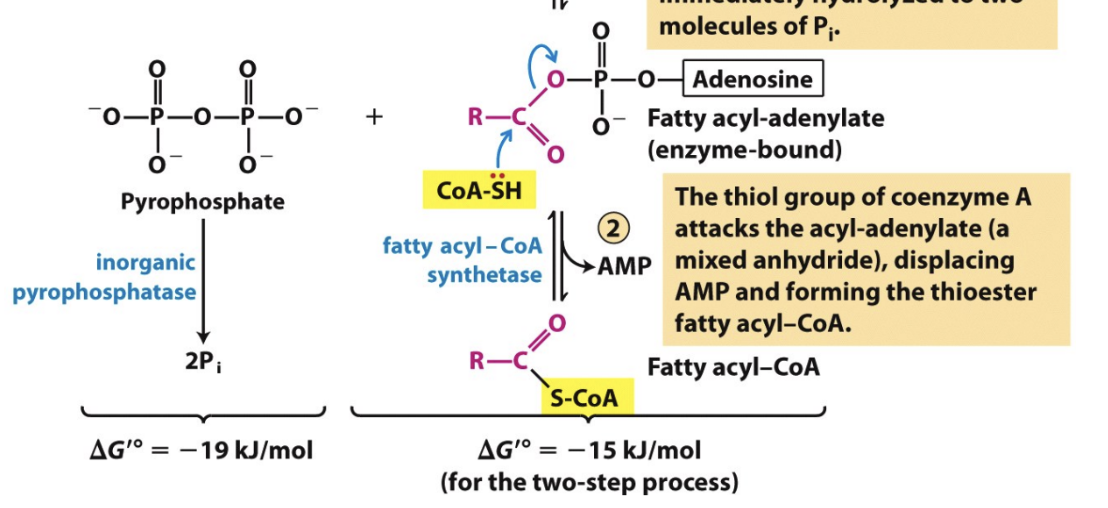
How is enzyme-bound fatty acyl-adenylate converted to fatty acyl-CoA
The thiol group of coenzyme A attacks the acyl-adenylate (a mixed anhydride), displacing AMP and forming the thioester fatty acyl-CoA.
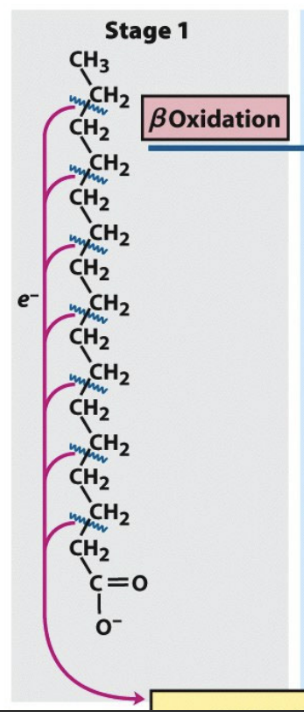
What is stage 1 of fatty acid oxidation?
fatty acid is oxidized to acetyl-CoA (beta-oxidation)
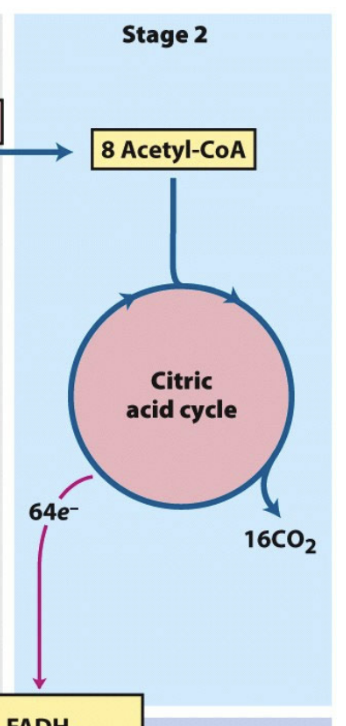
What is stage 2 of fatty acid oxidation?
acetyl groups oxidized to CO2 via the citric acid cycle
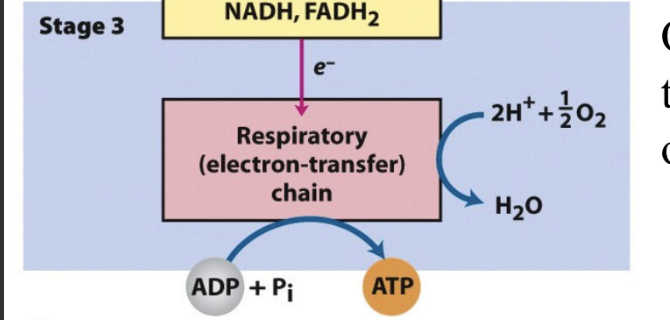
What is stage 3 of fatty acid oxidation?
electrons derived from the oxidations of stages 1 and 2 pass to O2 via the respiratory chain, providing the energy for ATP synthesis by oxidative phosphorylation.
Why is the beta-oxidation pathway called that?
An acetyl residue is removed as acetyl-CoA from the carboxyl end of the fatty acyl chain. six more passes yield 7 more molecules of acetyl-CoA, 8 total molecules of acetyl-CoA are formed
What is ETF?
electrons-transferring flavoprotein. Donates to Q tomake QH2, generates 1.5 ATP per 2e- transfer
How many water molecules, and ATP molecules are generated from palmitoyl-CoA?
yields 23 H2O molecules and 108 ATP
What does the oxidation of a monounsaturated fatty acid require?
enoyl-CoA isomerase to reposition the double bond
What is ketogenesis?
a process where acetyl-CoA is converted to acetoacetate or beta-hydroxybutyrate. These compounds and acetone are “ketone bodies”. beta-hydroxybutyrate is not a ketone.
What do ketone bodies do? what are they not used by?
act as important fuels for heart, skeletal muscle, kidney cortex, and brain during starvation. NOT used by liver
Where are ketone bodies synthesized?
in the mitochondrial matrix of the liver.
Acetone is not metabolized but rather..
“blown off” in lungs
What can high levels of ketone bodies lead to?
blood acidosis
What happens when acetyl-CoA accumulates?
thiolase catalyzes the condensation of two acetyl-CoA molecules to acetoacetyl-CoA and then to HMG-CoA (the parent compound of the three ketone bodies)
Why is oxaloacetate limiting when ketone bodies are converted in the liver and not metabolized? Why are PDH and AKDC shut down?
because of gluconeogensis. mito NADH levels are high from beta-oxidation
What is the major carbon flow for liver oxaloacetate during starvation/diabetes?
oxaloacetate (mito)→ aspartate (malate-Aspartate Shuttle) → oxaloacetate(cyto) → gluconeogenesis