Anatomy of the Peritoneum, Digestive System, and Abdominal Structures
 Call Kai
 Learn
Learn Practice Test
 Spaced Repetition
 Match
Match Flashcards
 Knowt Play
1/68

There's no tags or description
Looks like no tags are added yet.
Name | Mastery | Learn | Test | Matching | Spaced | Call with Kai |
|---|
No analytics yet
Send a link to your students to track their progress
69 Terms
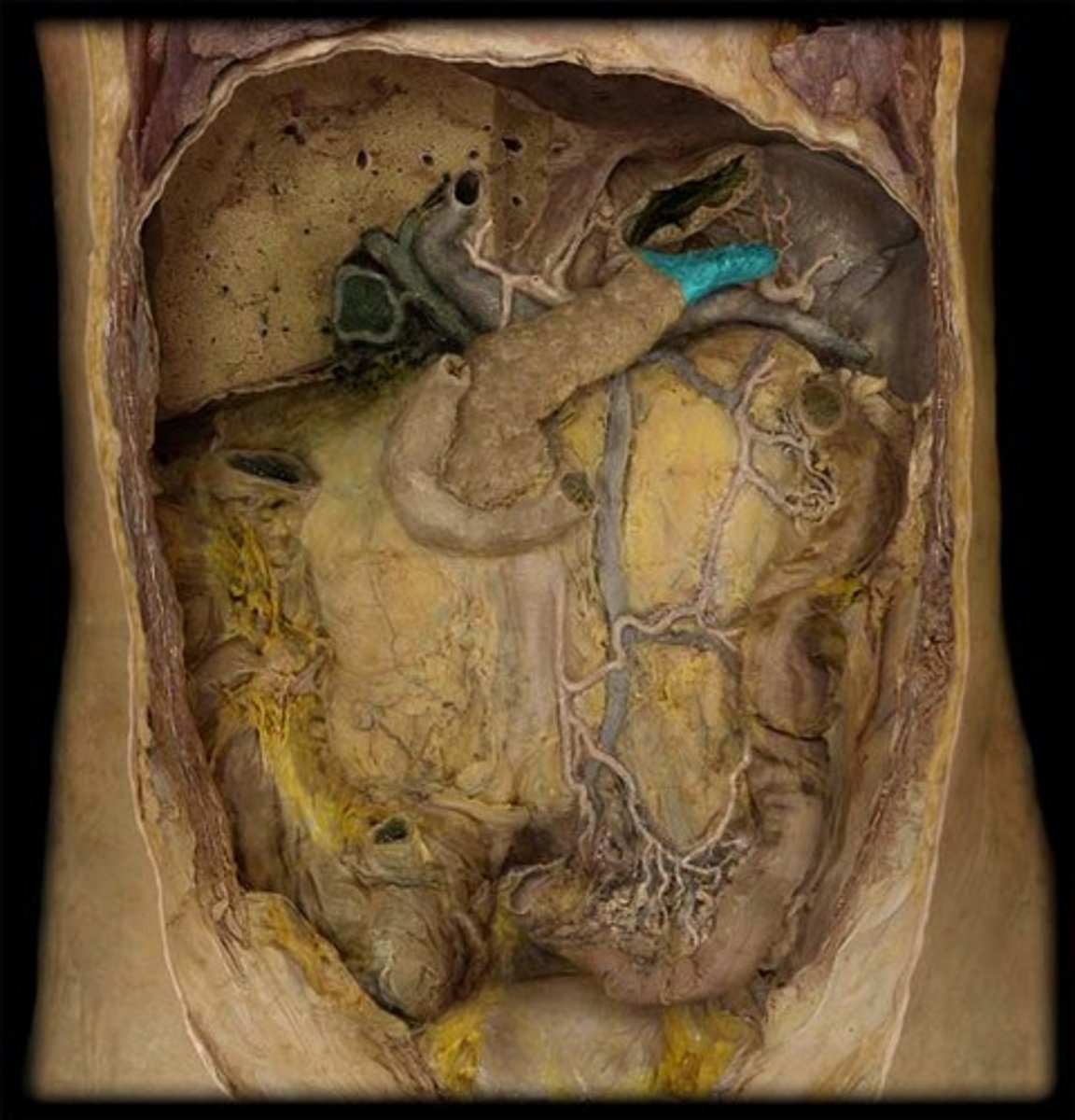
Visceral peritoneum
The inner layer of the peritoneum that covers the abdominal organs.
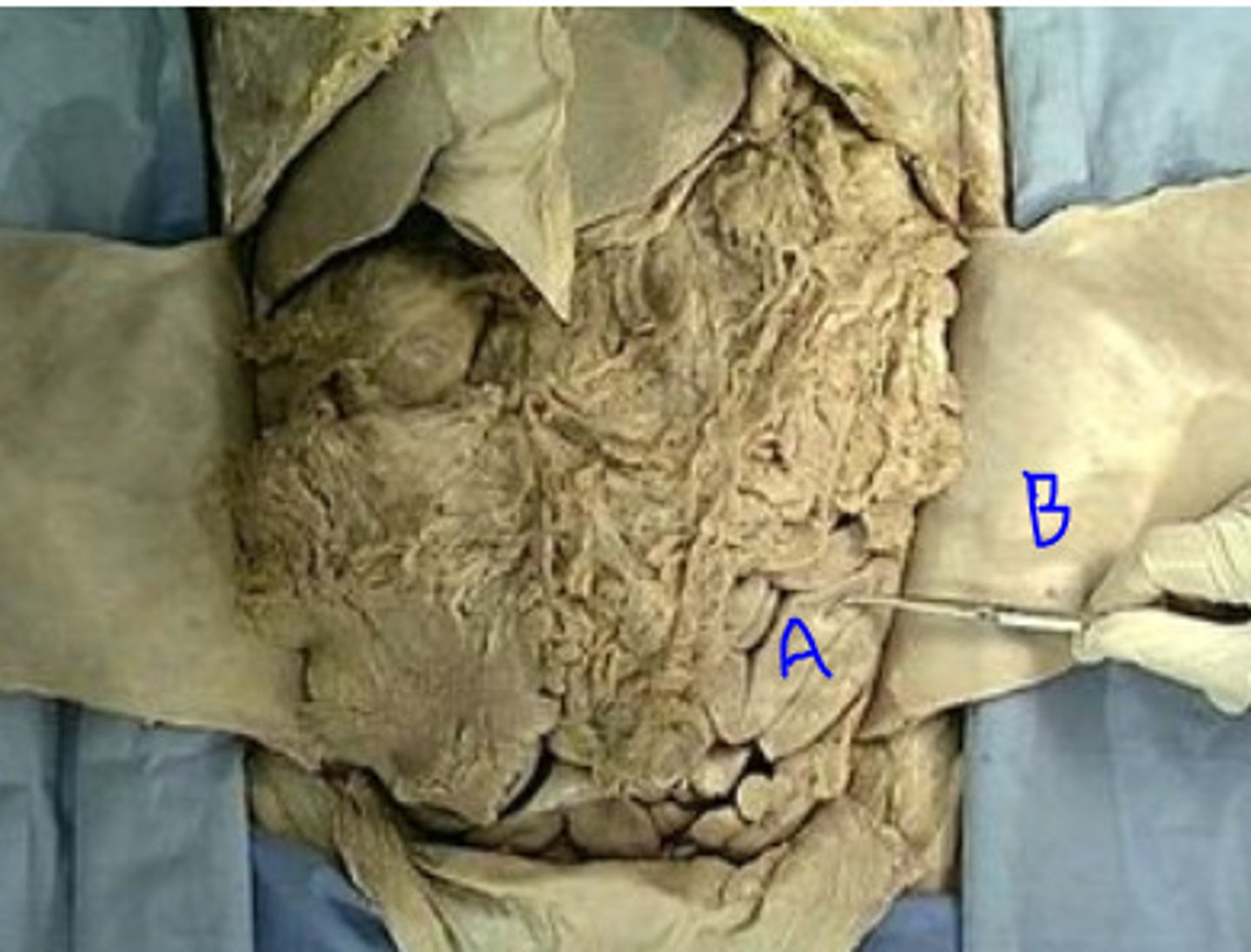
Parietal peritoneum
The outer layer of the peritoneum that lines the abdominal cavity.
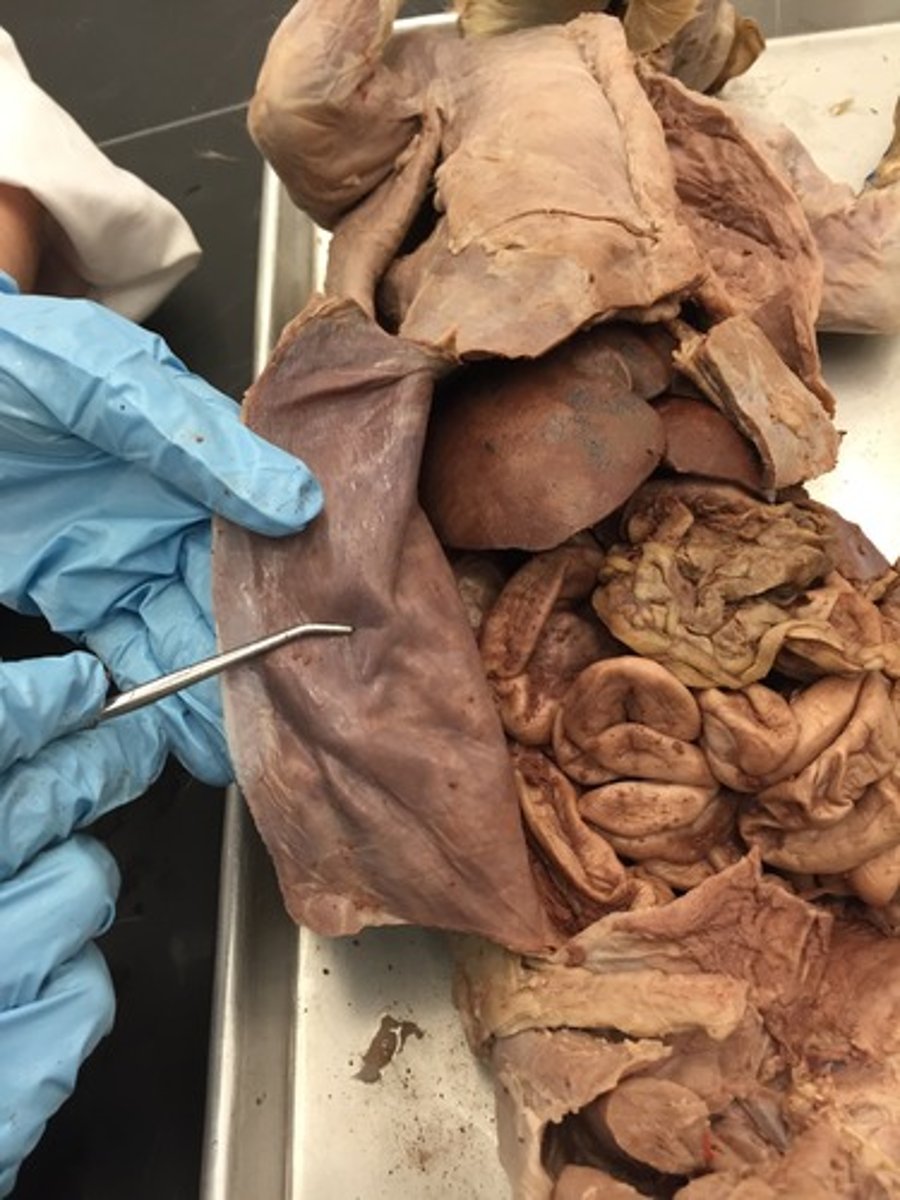
Retroperitoneum
The space behind the peritoneum that contains the kidneys and other structures.
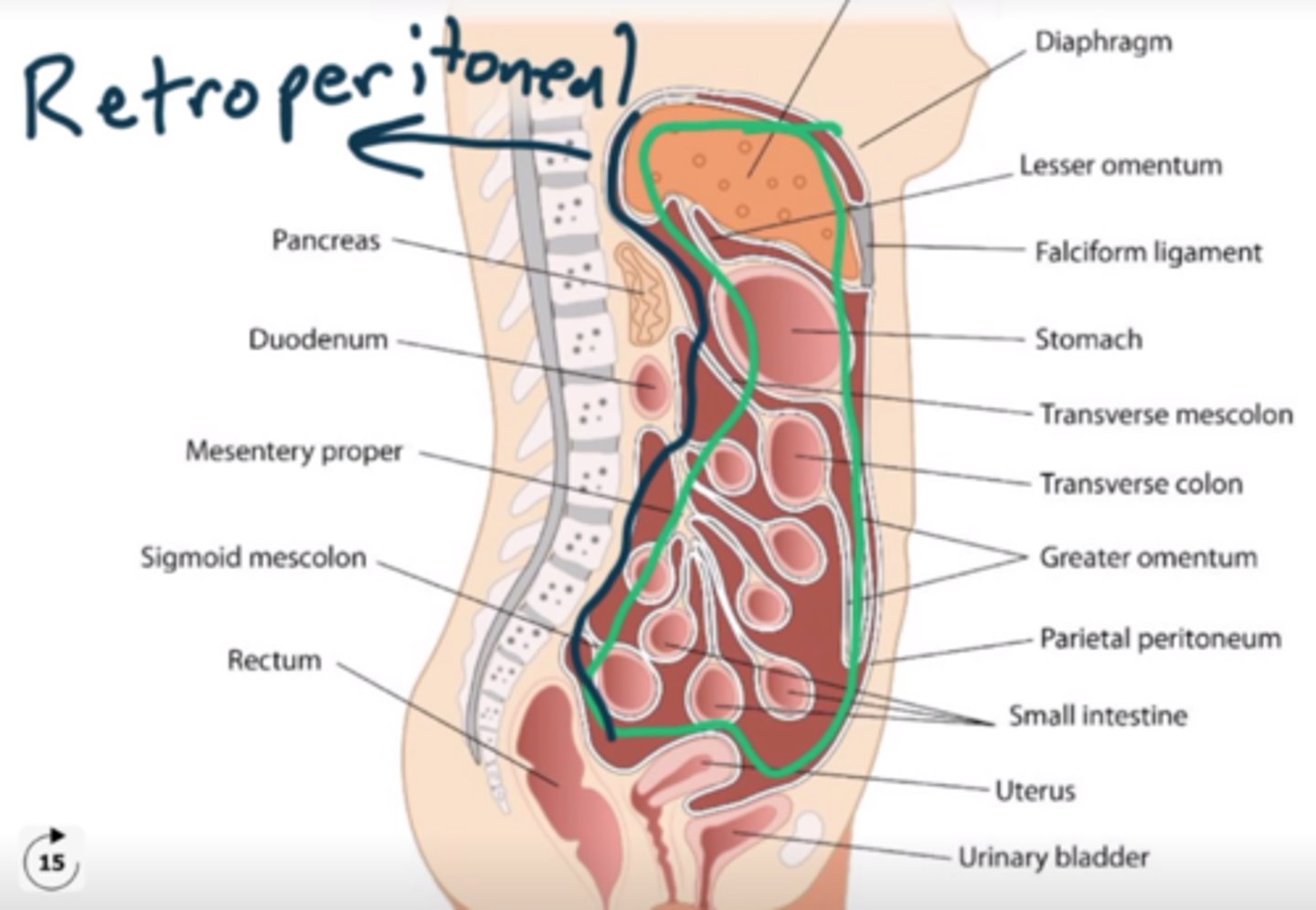
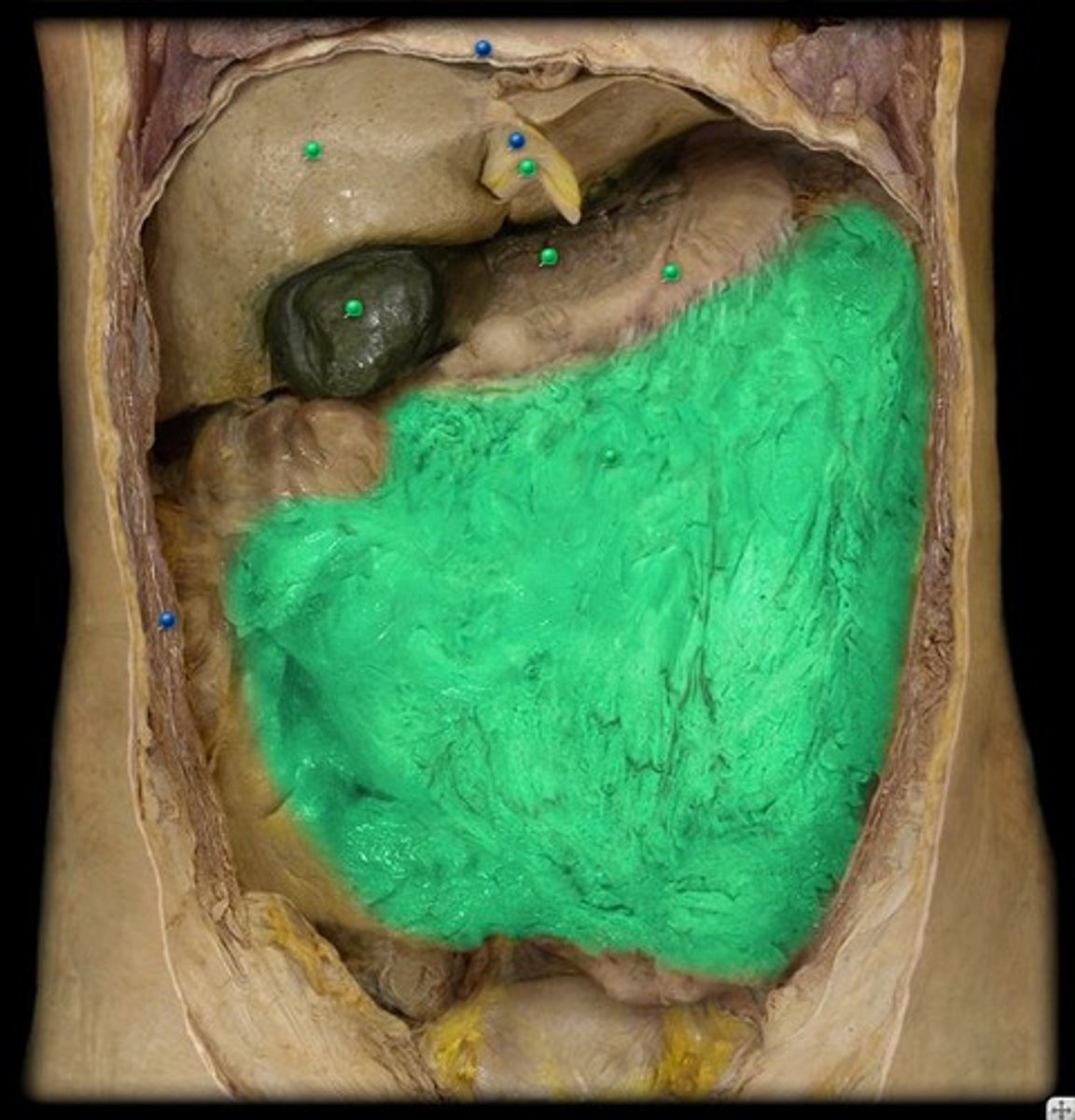
Greater omentum
A large fold of peritoneum that hangs down from the stomach and covers the intestines.
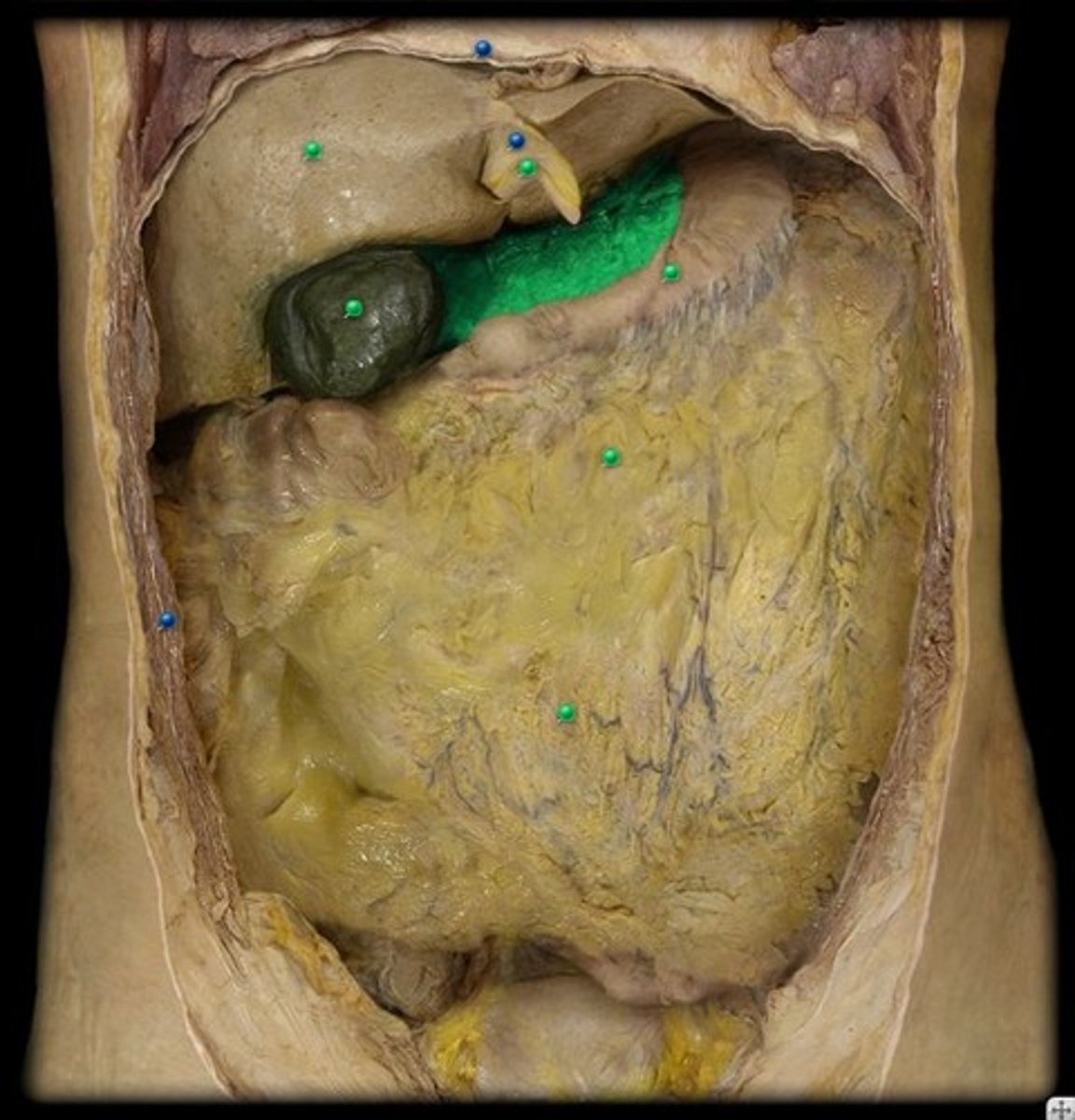
Lesser omentum
A fold of peritoneum that connects the stomach to the liver.
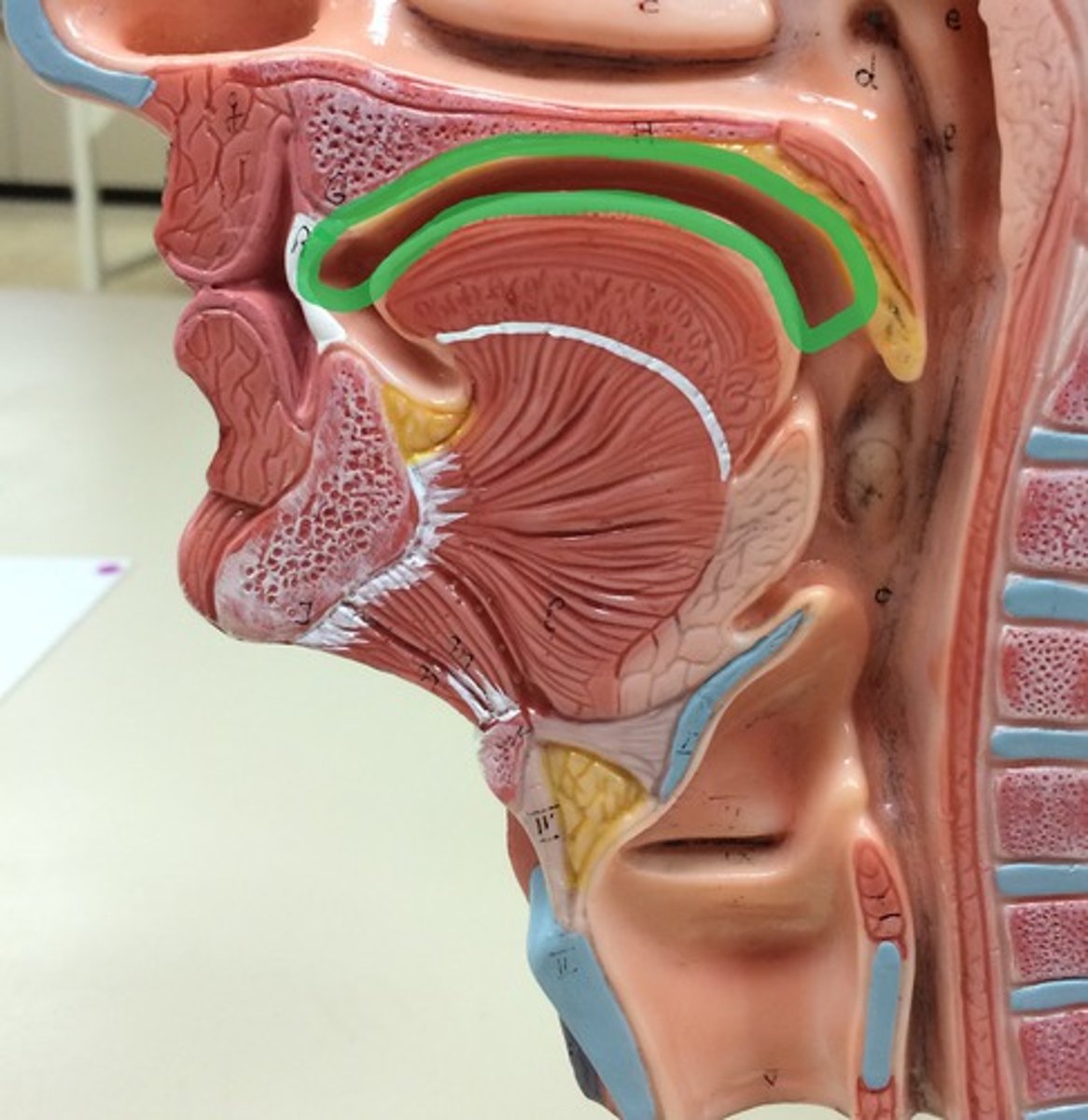
Oral cavity
The space within the mouth that includes the gums, teeth, and tongue.
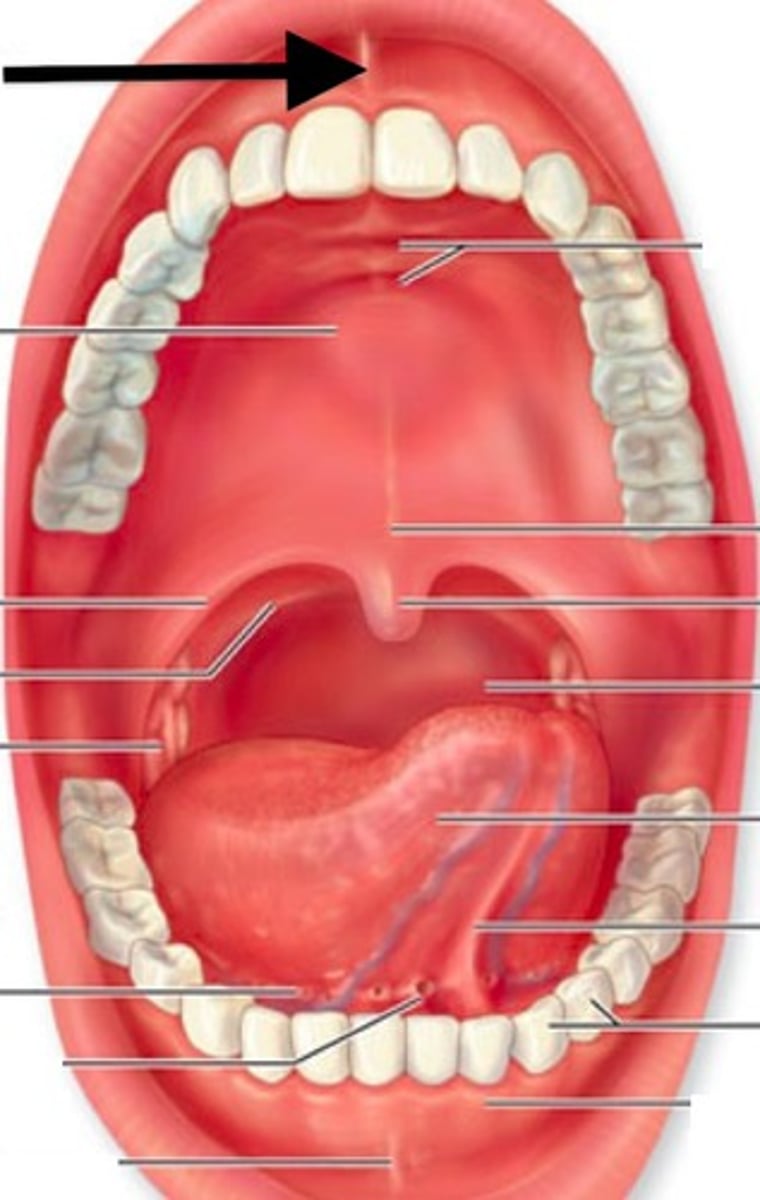
Labial frenulum
The small fold of tissue that connects the inside of the lip to the gums.
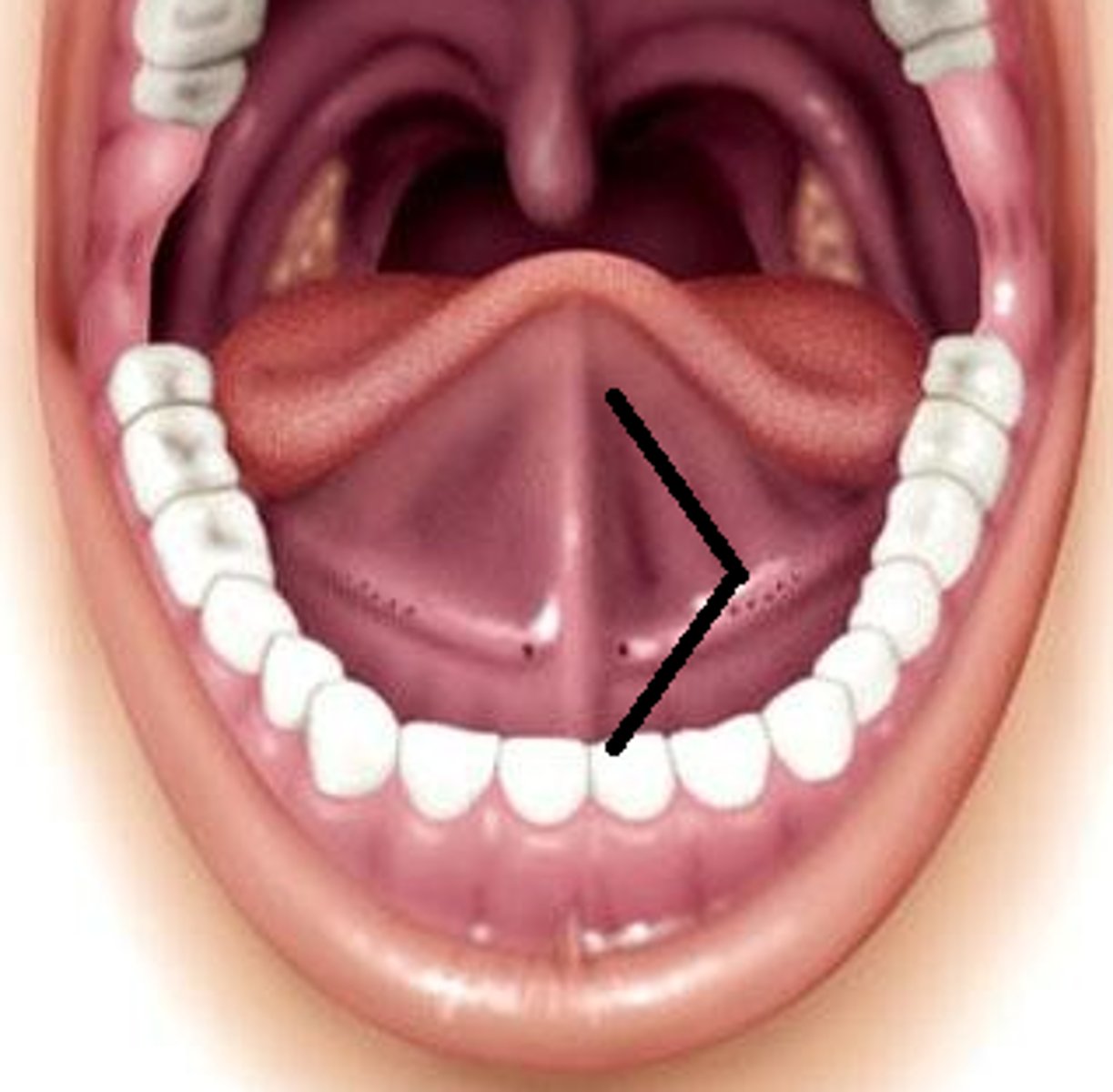
Lingual frenulum
The fold of tissue that connects the tongue to the floor of the mouth.
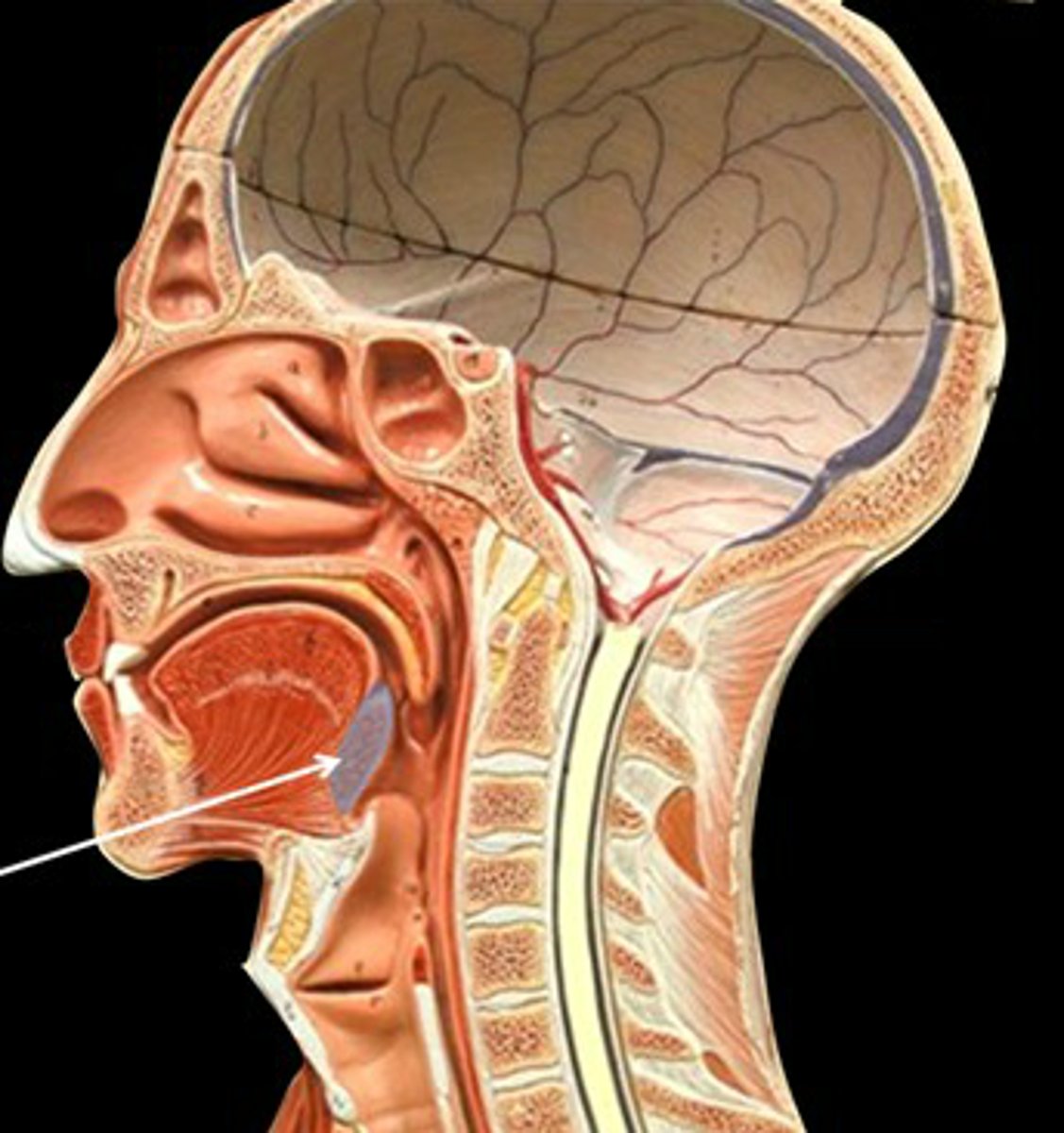
Lingual tonsils
Tonsils located at the base of the tongue.
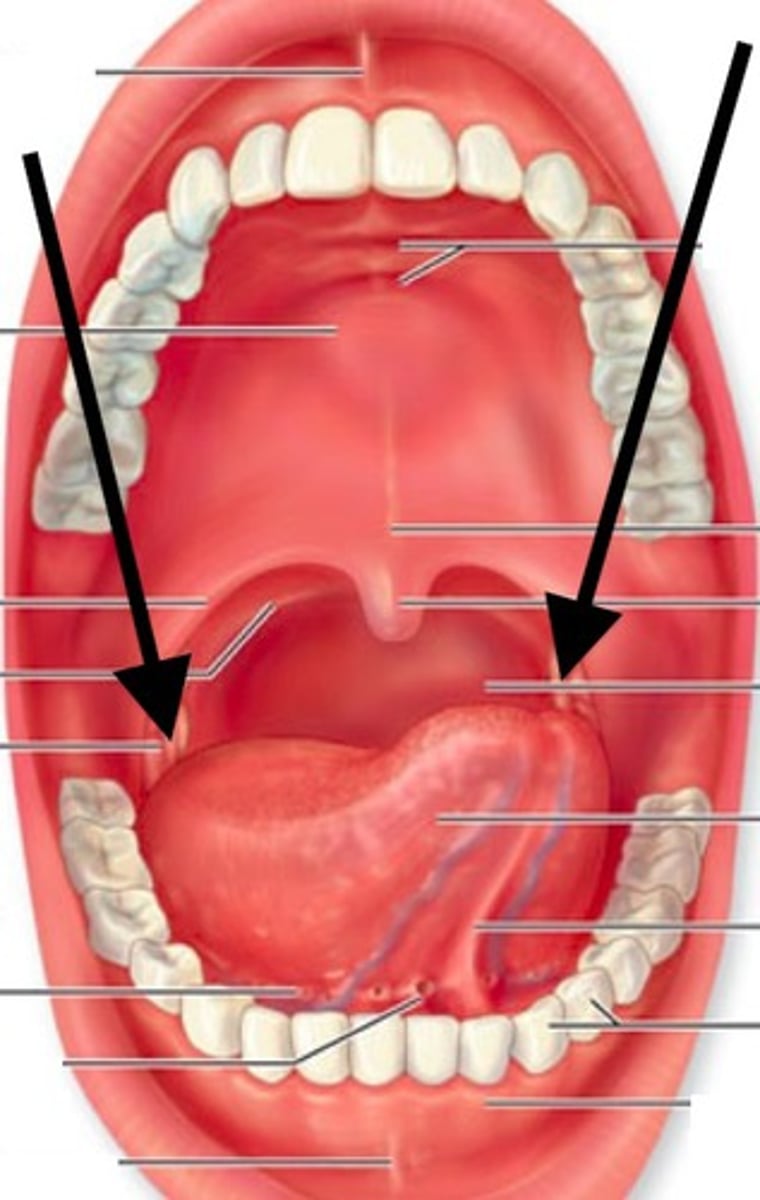
Palatine tonsils
Tonsils located on either side of the throat.
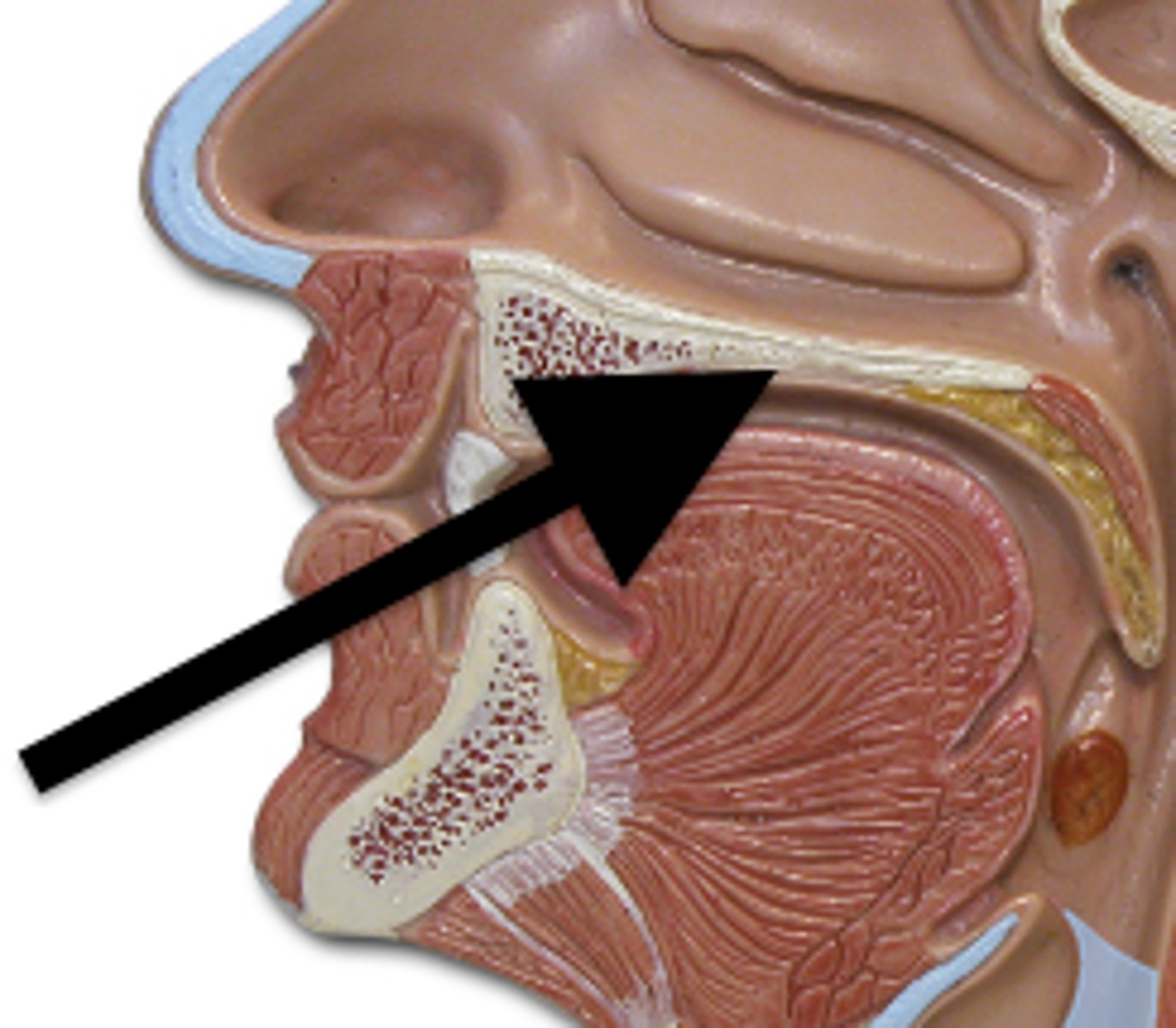
Hard palate
The bony front part of the roof of the mouth.
Soft palate
The soft tissue at the back of the roof of the mouth.
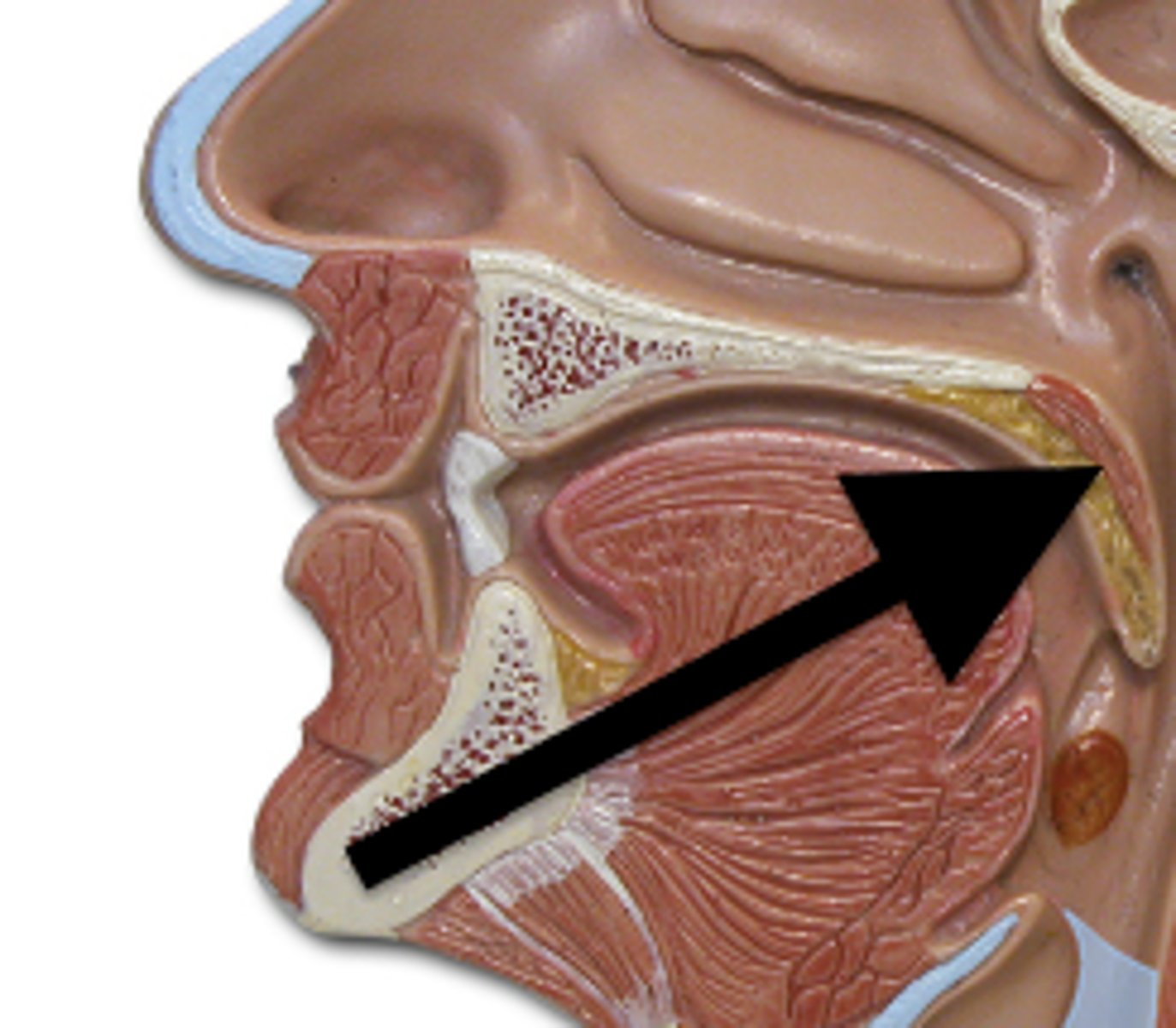
Salivary glands
Glands that produce saliva to aid in digestion.
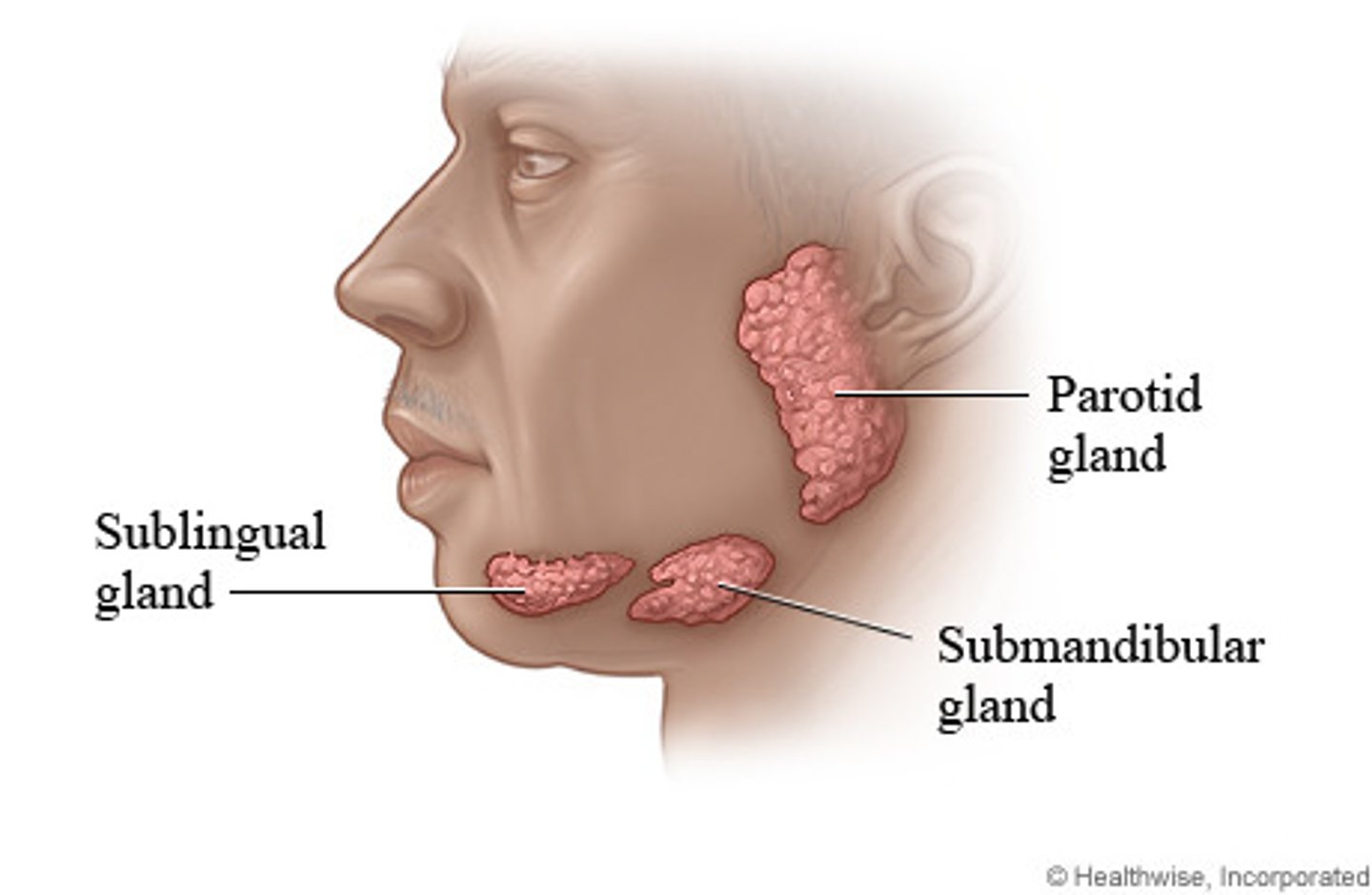
Parotid gland
The largest salivary gland located near the ear.
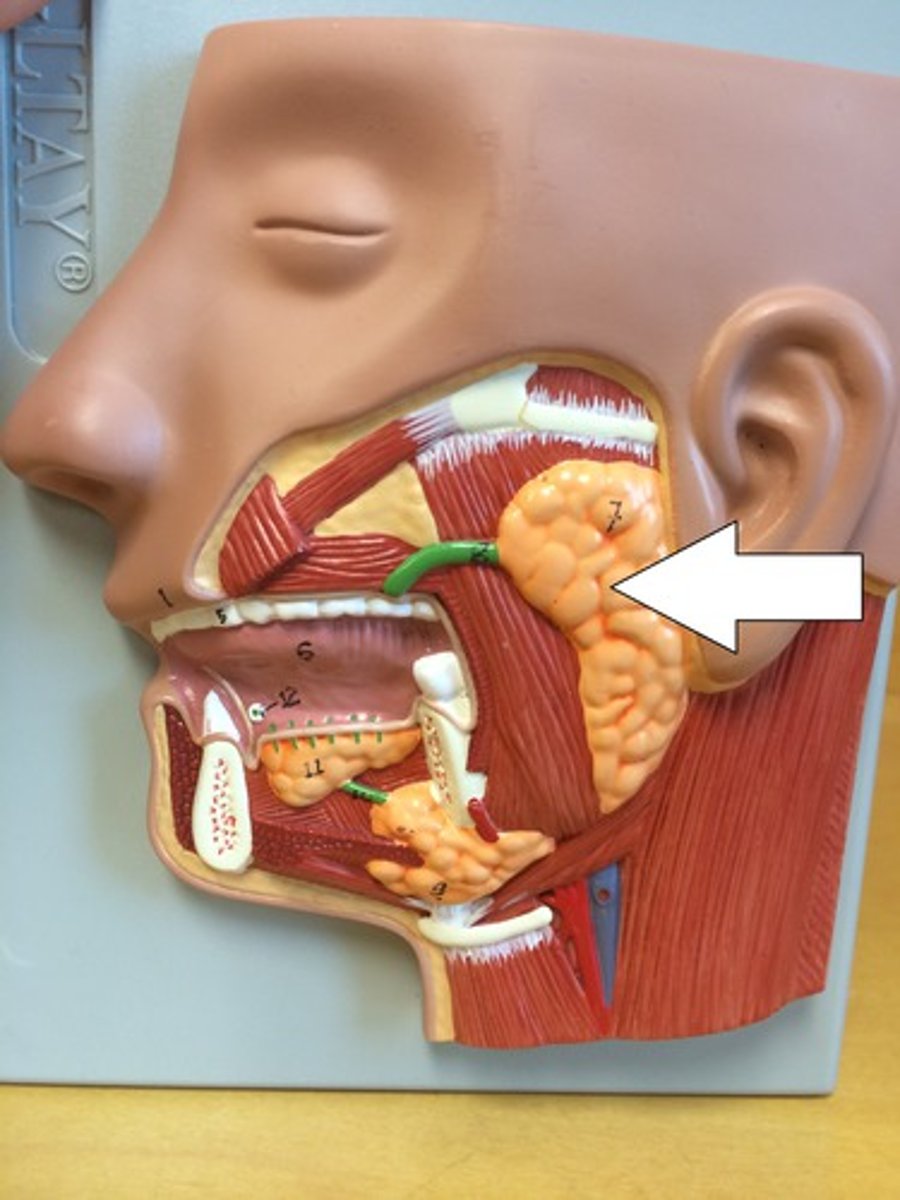
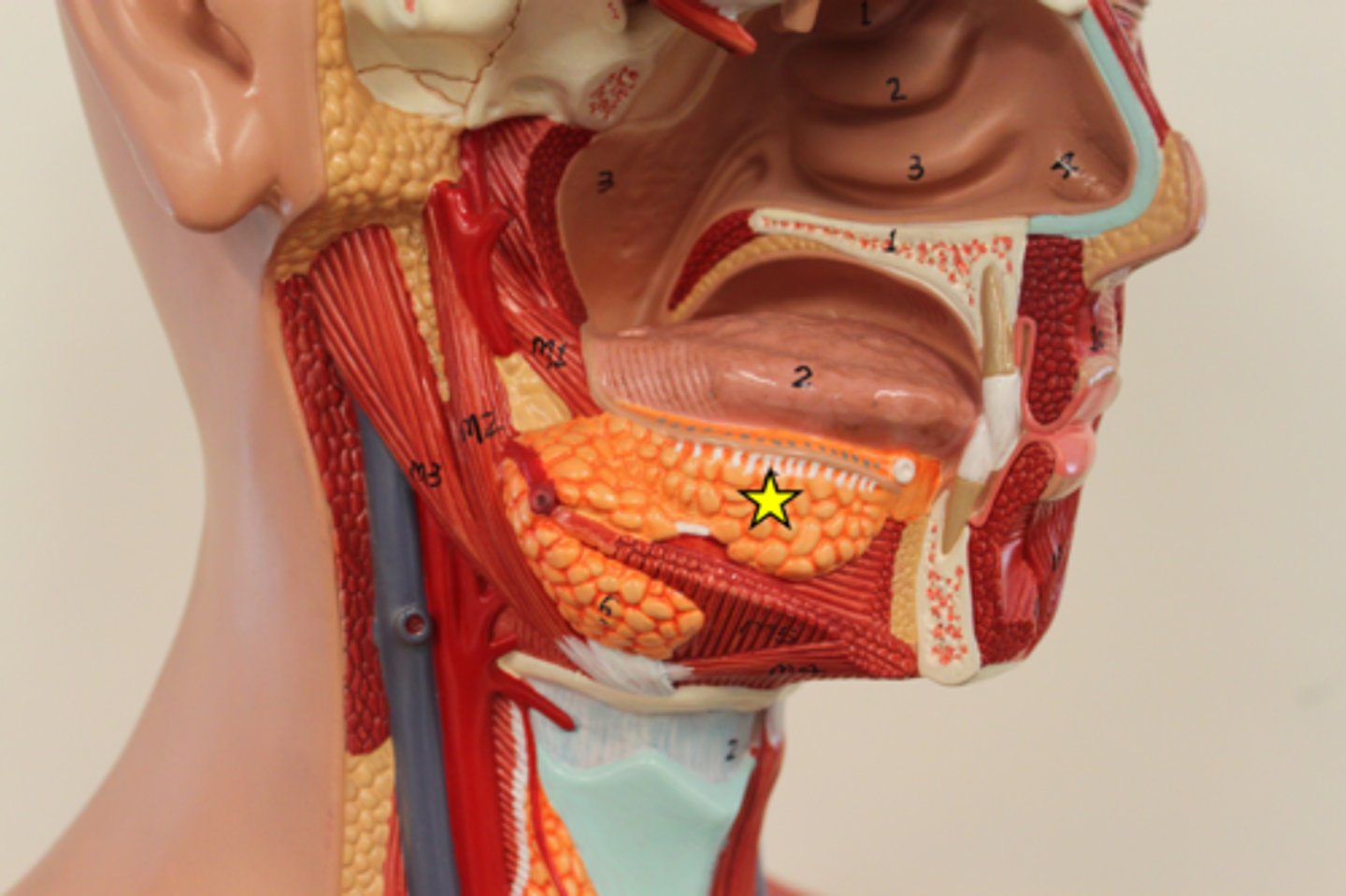
Submandibular gland
A salivary gland located beneath the jaw.
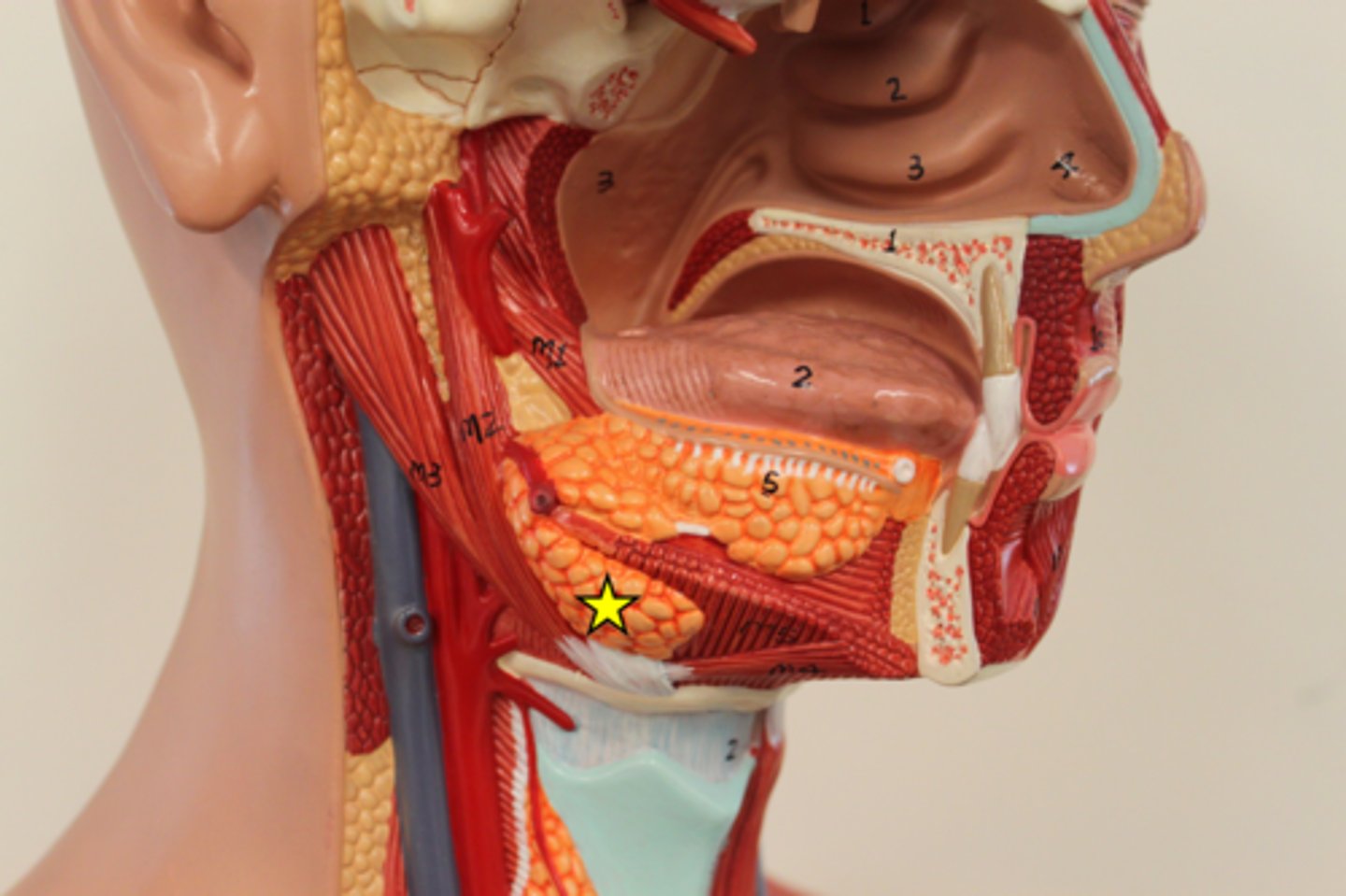
Sublingual gland
A salivary gland located under the tongue.
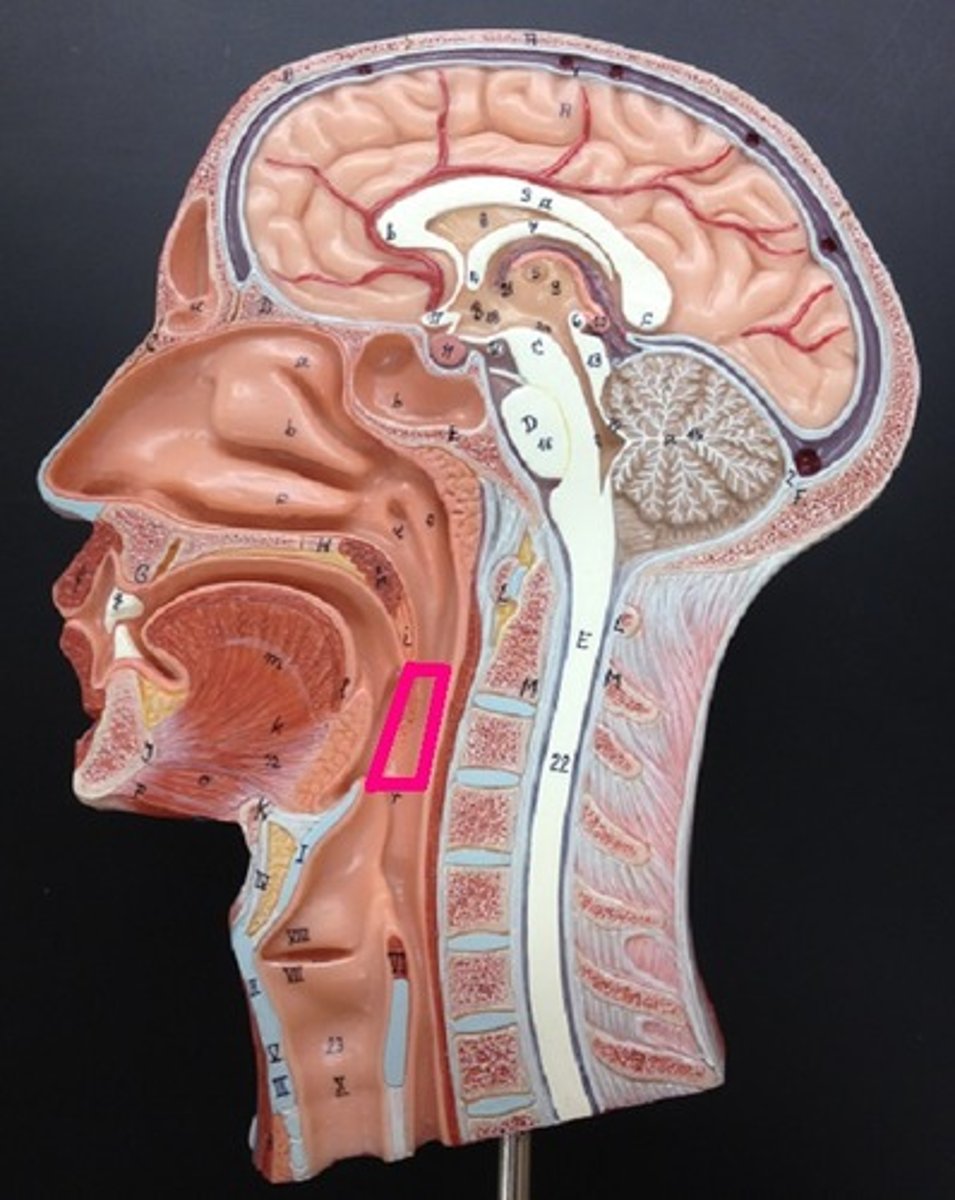
Oropharynx
The part of the pharynx located behind the oral cavity.
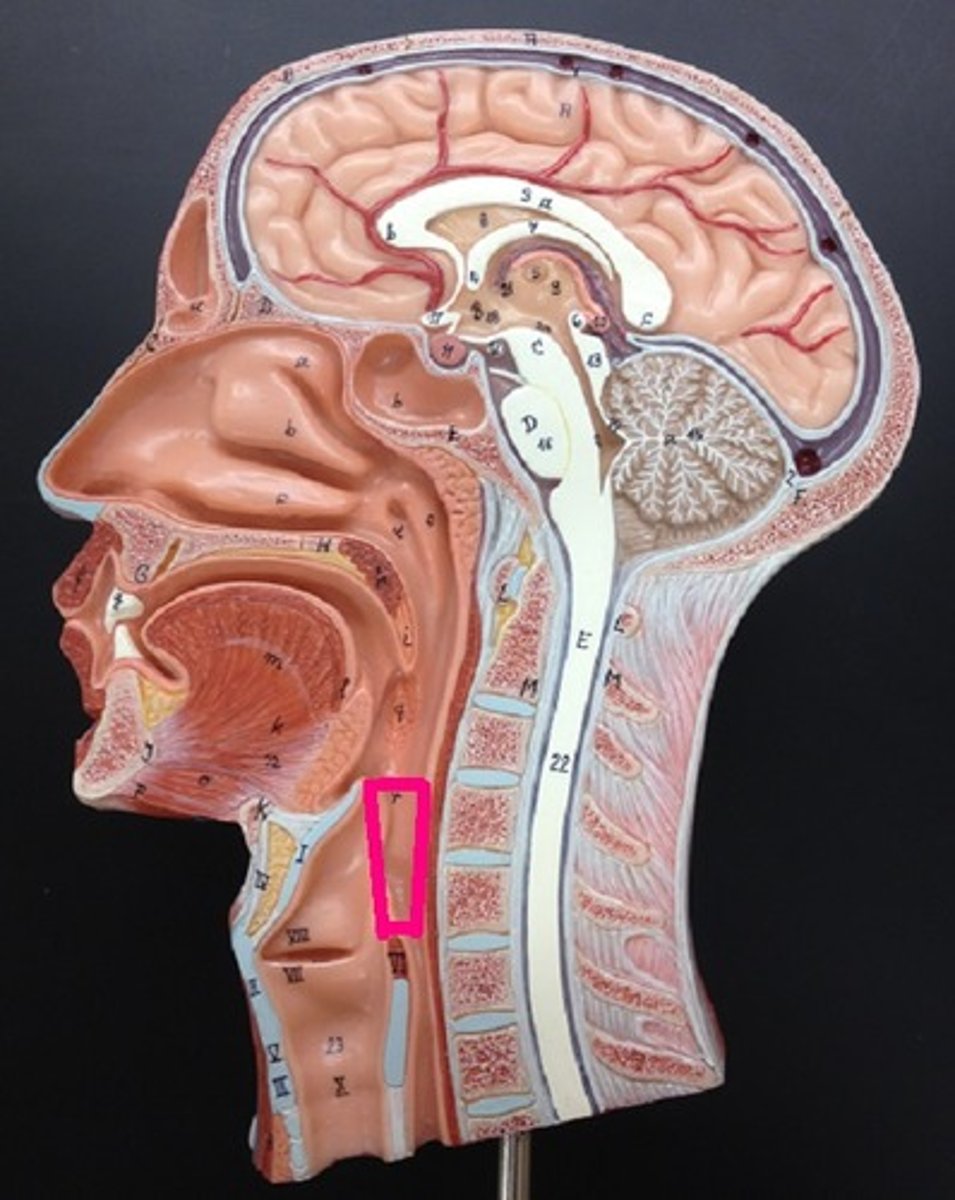
Laryngeal pharynx
The part of the pharynx that is located behind the larynx.
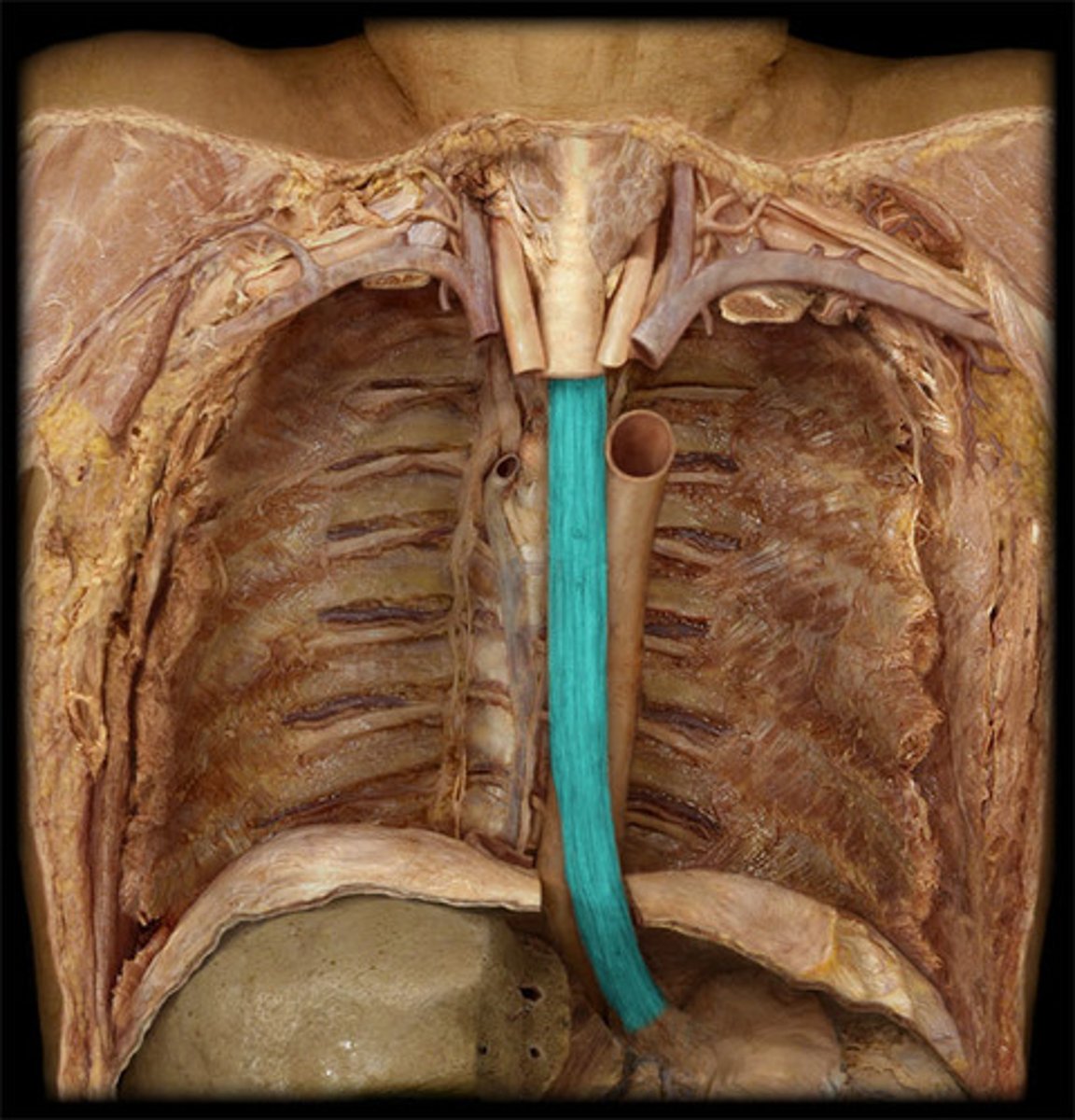
Thoracic esophagus
The portion of the esophagus located in the thoracic cavity.
Abdominal esophagus
The portion of the esophagus located in the abdominal cavity.
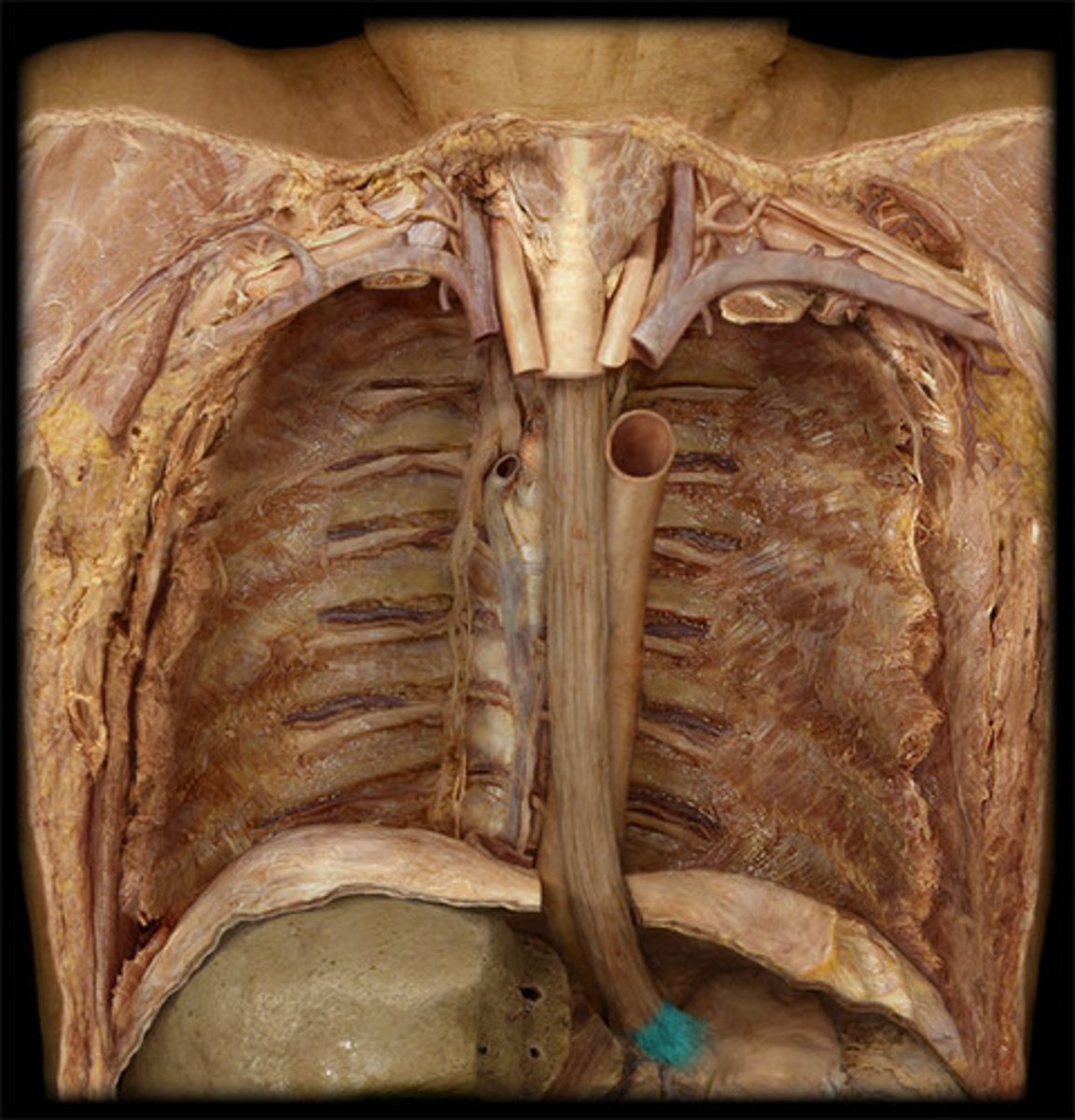
Stomach
A muscular organ that digests food by mixing it with gastric juices.
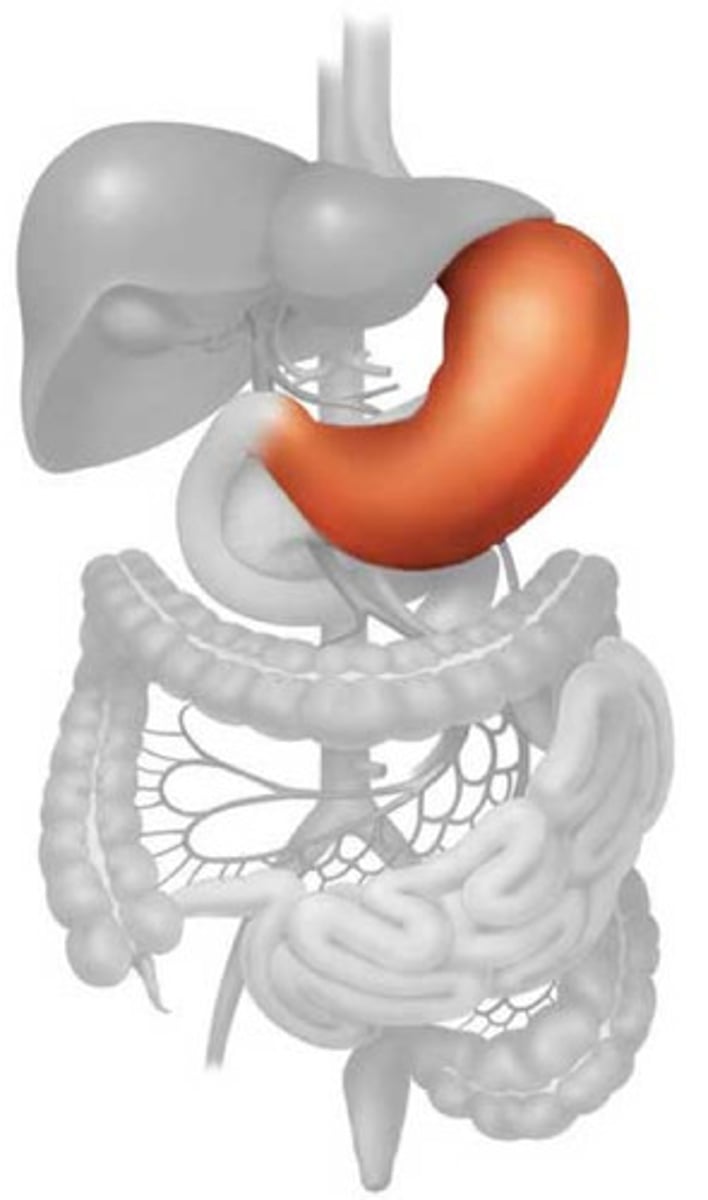
Cardia region
The area of the stomach where the esophagus connects.
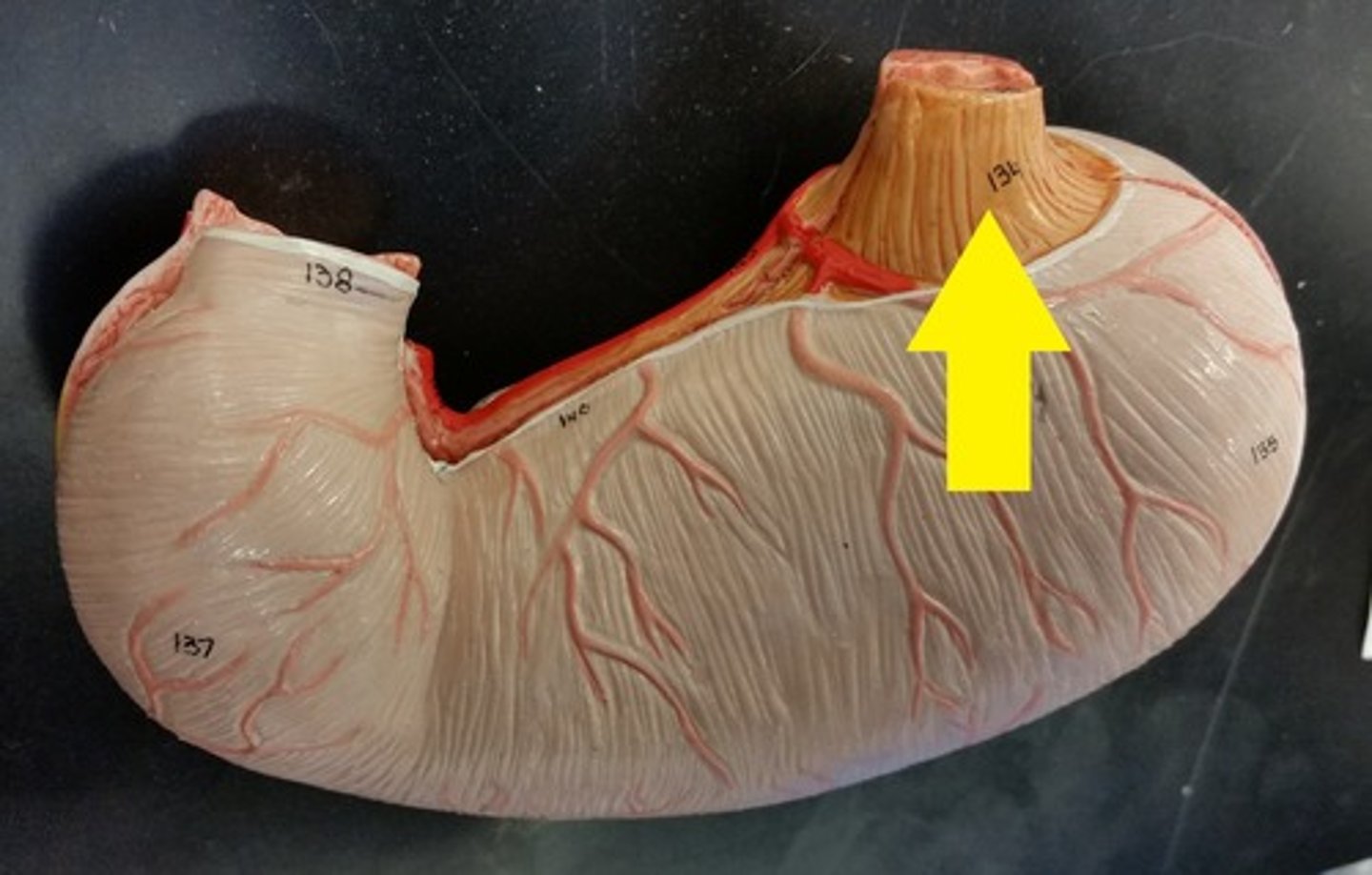
Fundic region
The upper part of the stomach that stores food.
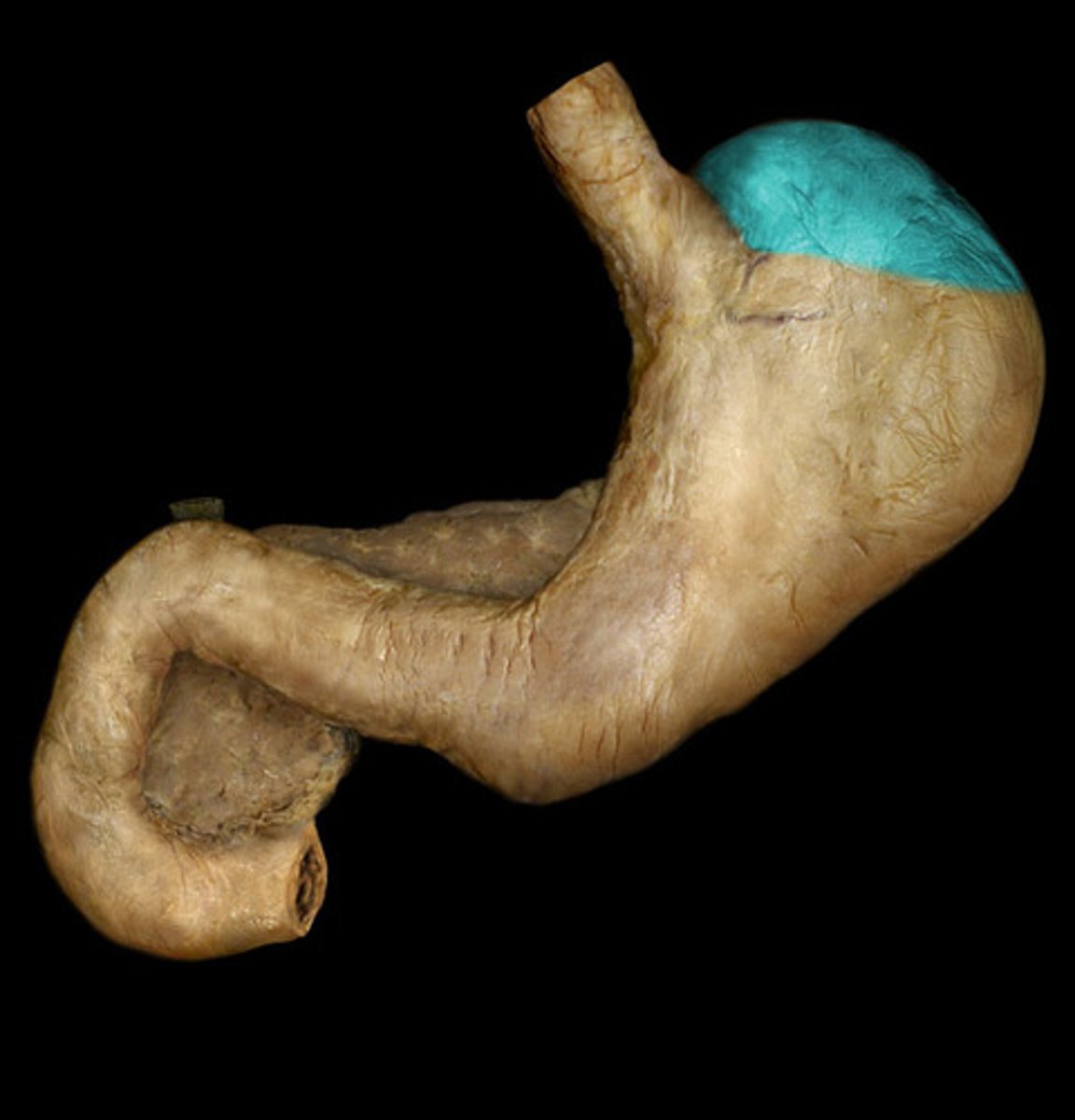
Body of the stomach
The main central region of the stomach.
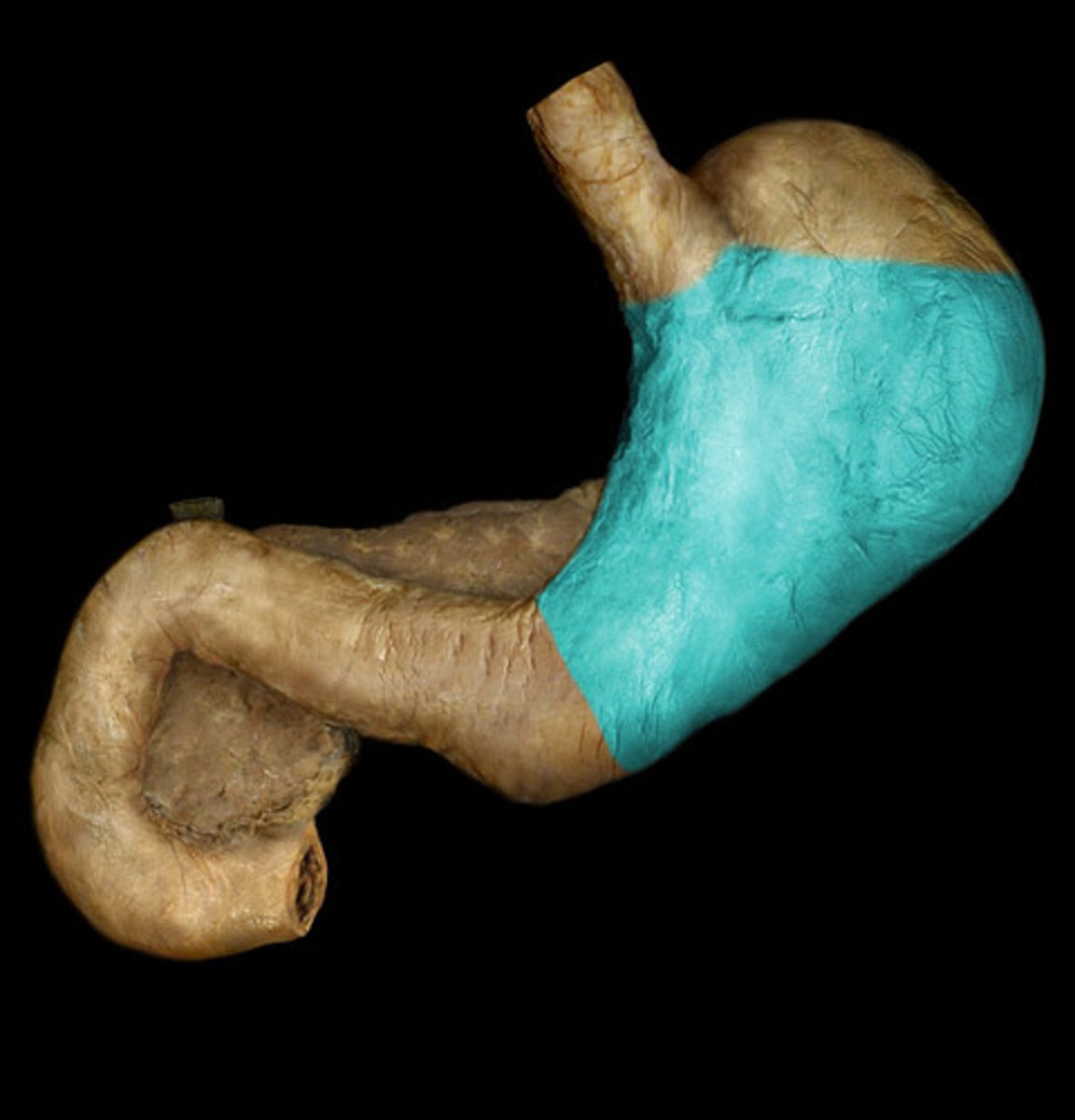
Pyloric region
The lower part of the stomach that connects to the small intestine.
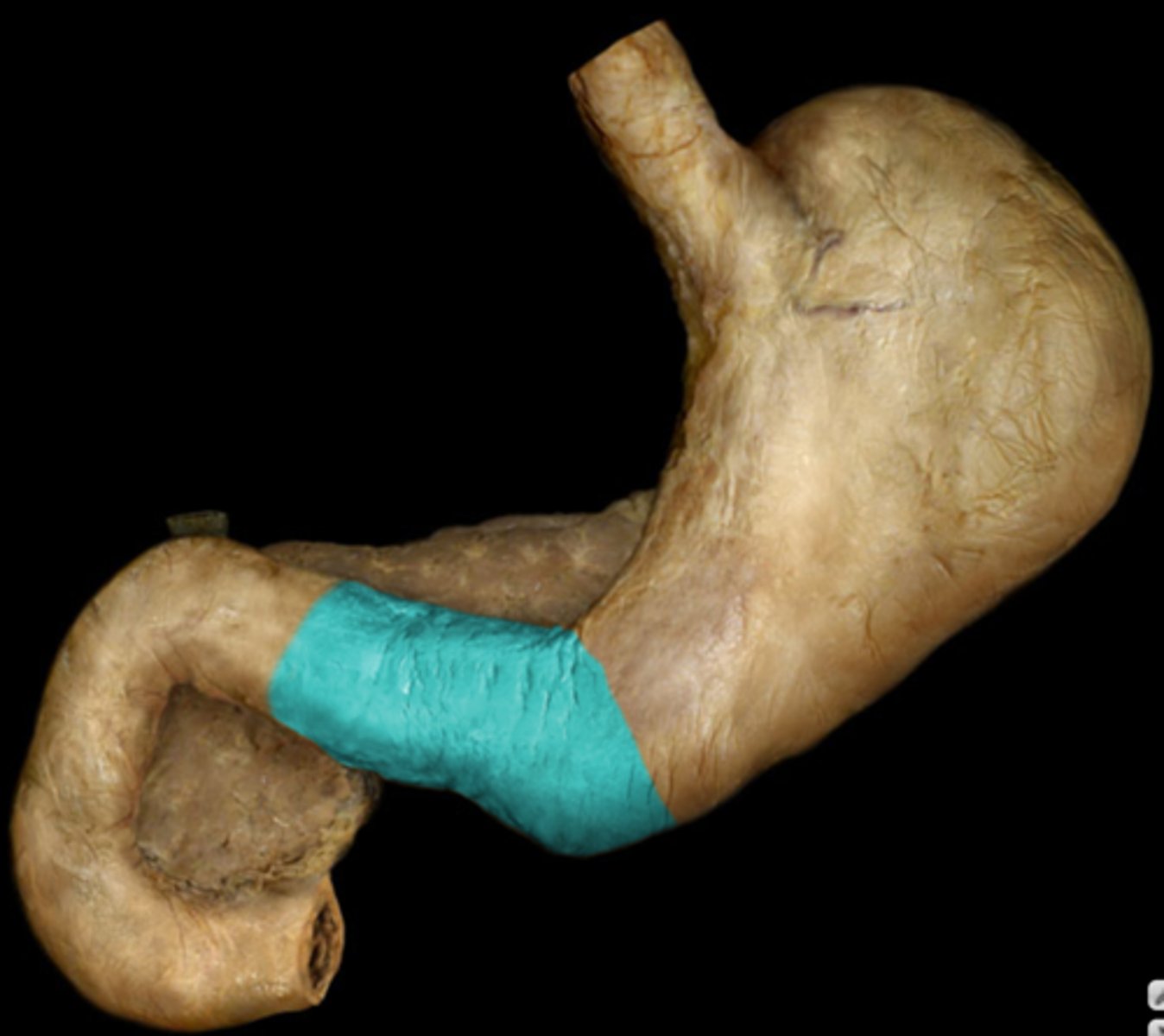
Lesser curvature
The smaller, concave border of the stomach.
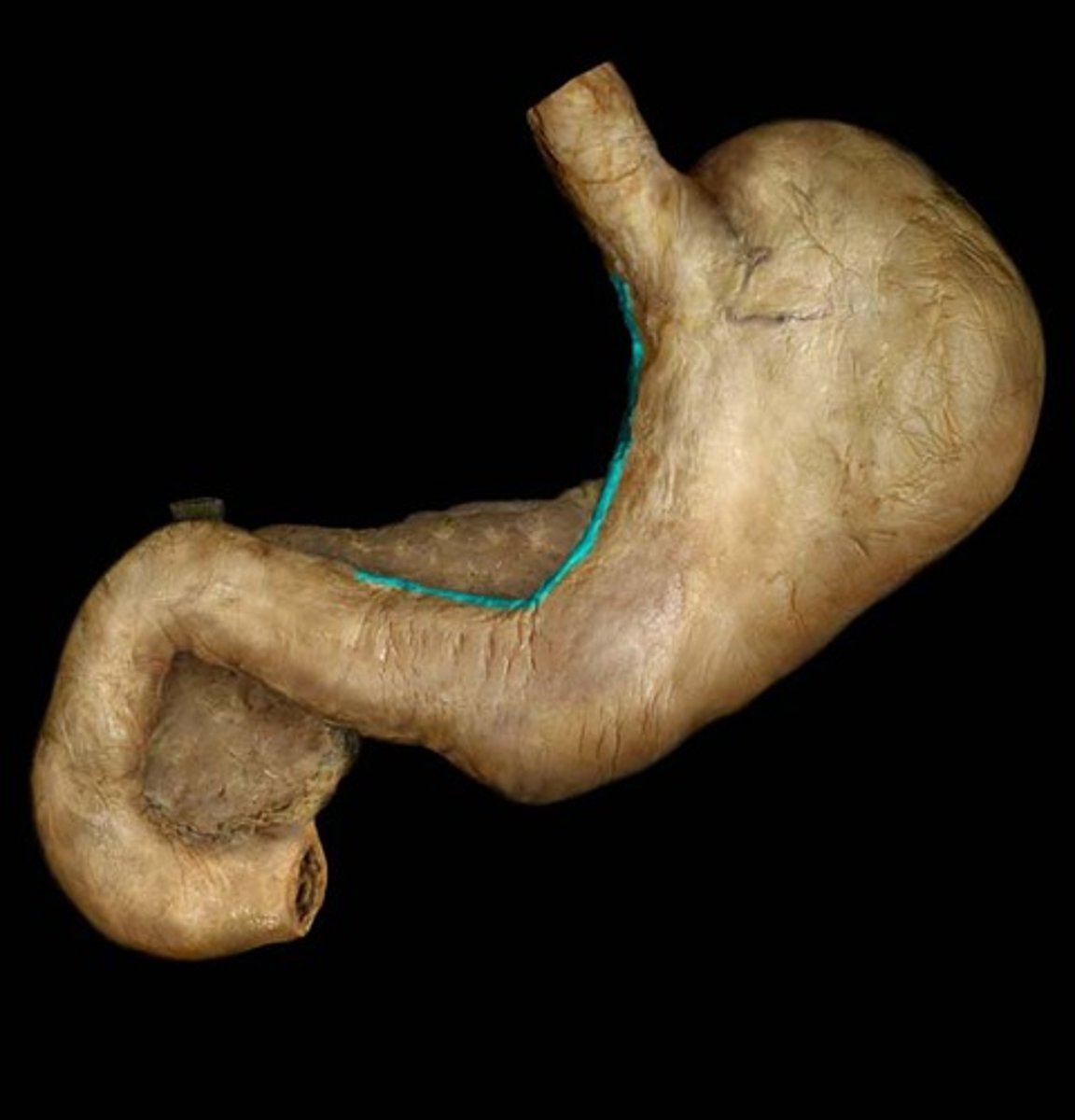
Greater curvature
The larger, convex border of the stomach.
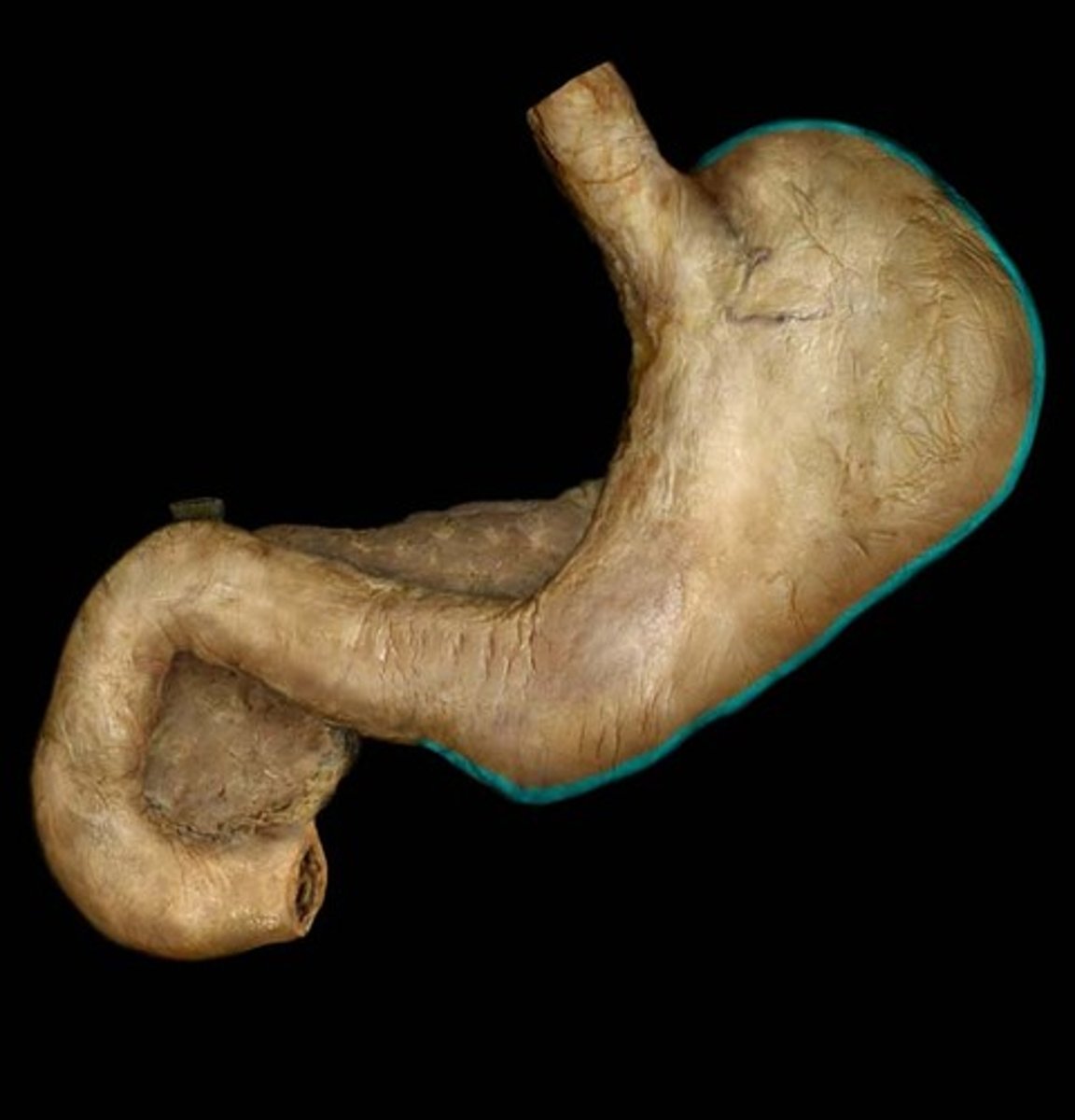
Rugae (gastric folds)
The folds in the stomach lining that allow it to expand.
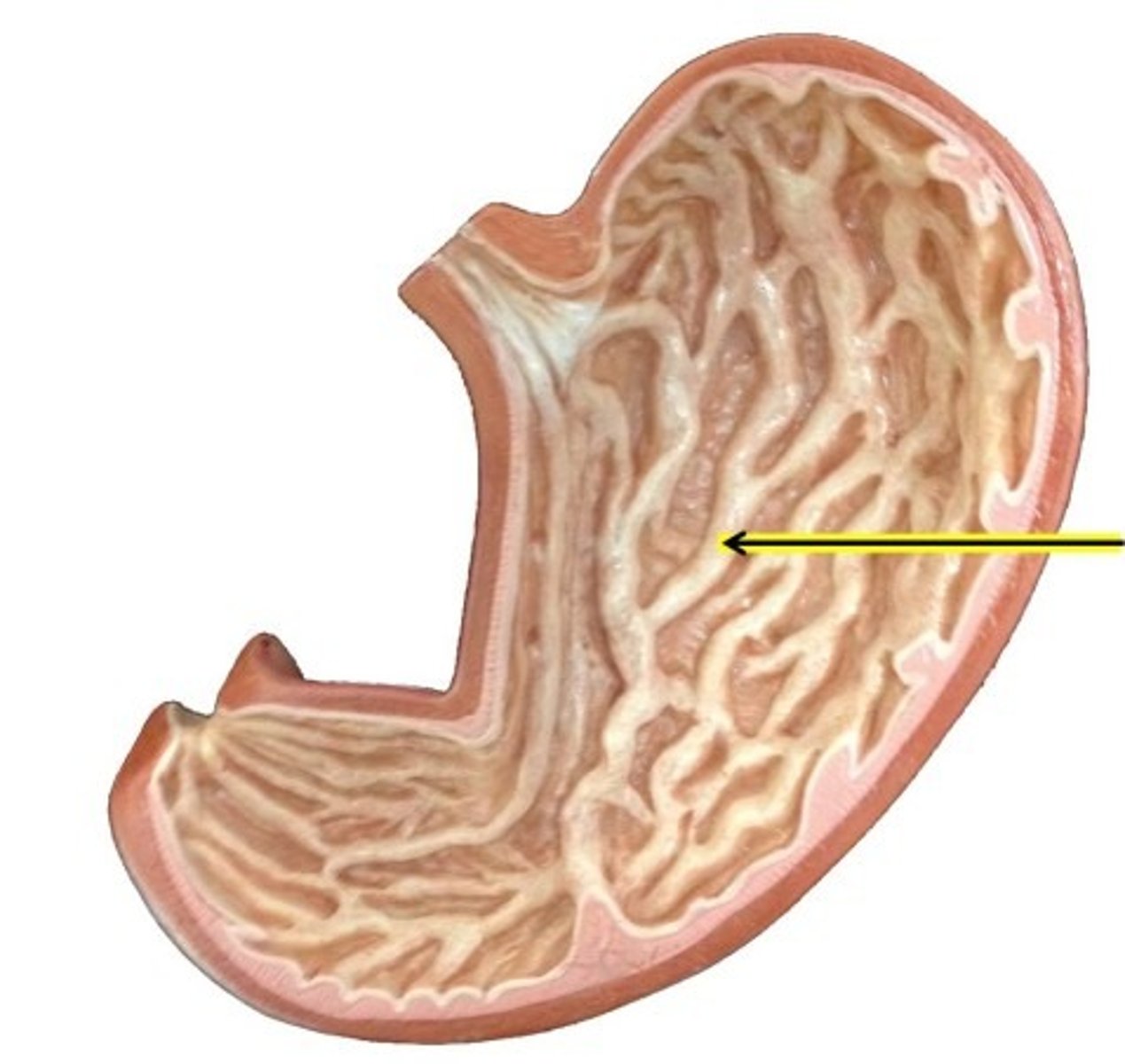
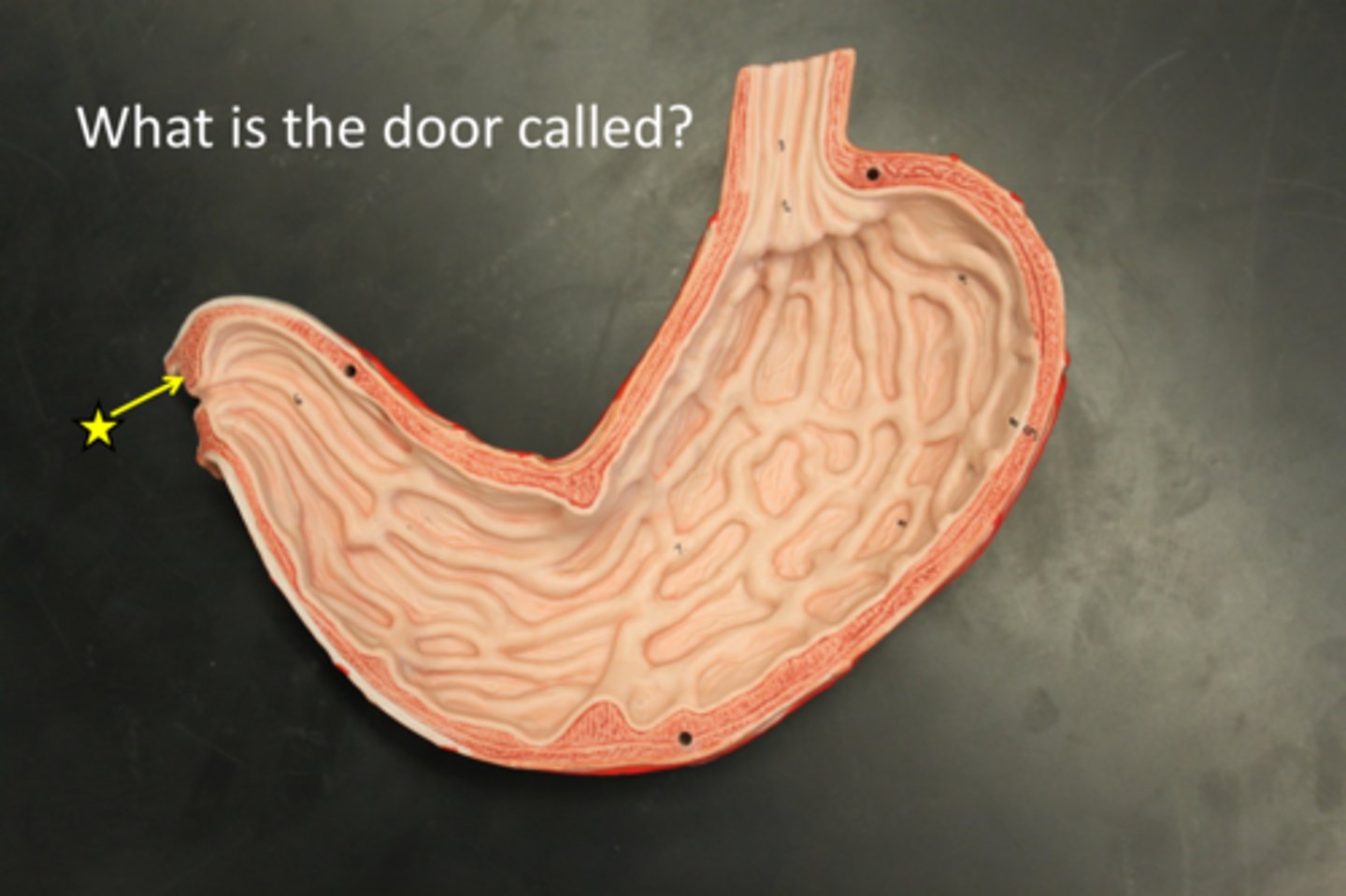
Pyloric sphincter
The muscle that controls the passage of food from the stomach to the small intestine.
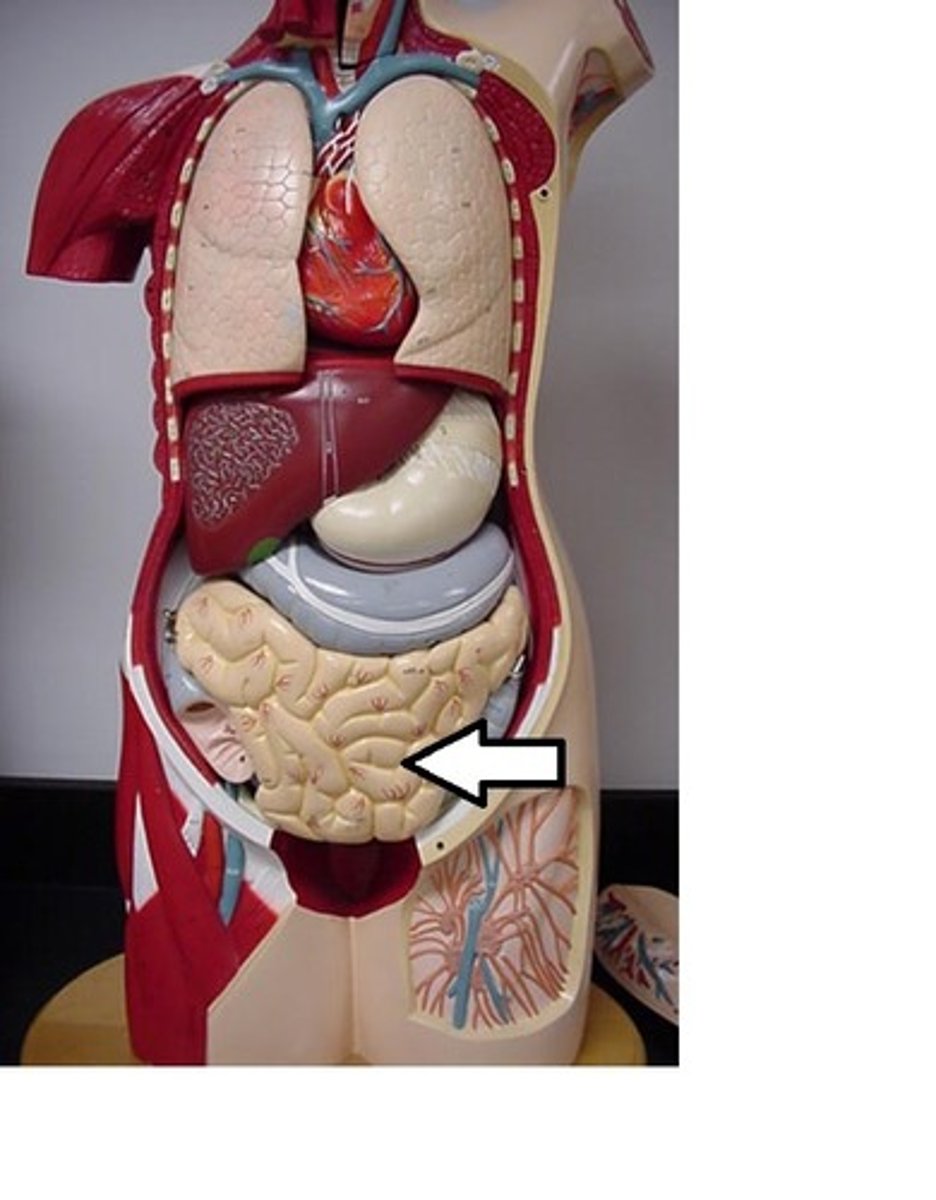
Small intestine
The part of the digestive system where most digestion and absorption occurs.
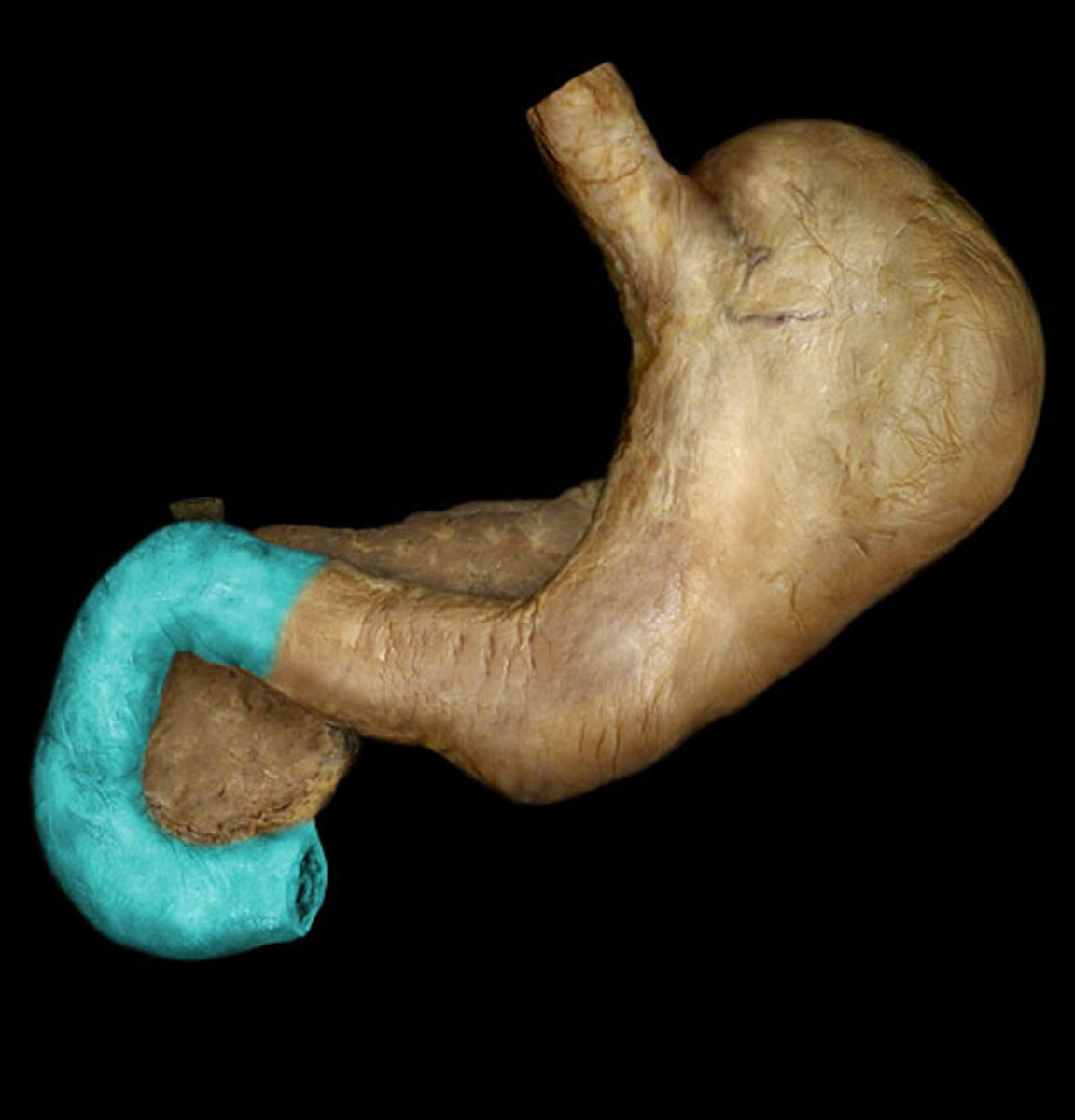
Duodenum
The first section of the small intestine, where most chemical digestion occurs.
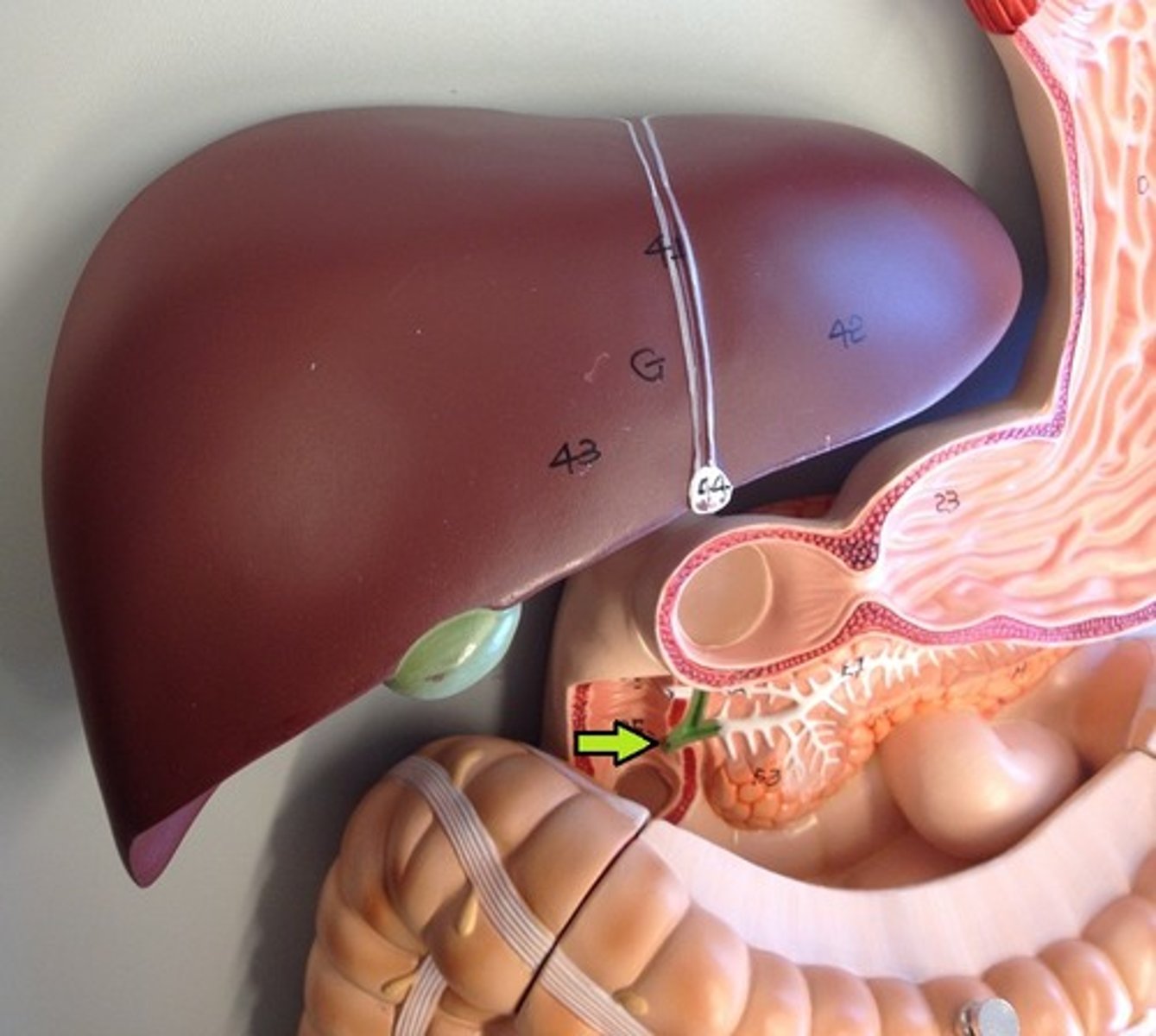
Duodenal papilla
The opening in the duodenum where bile and pancreatic juices enter.
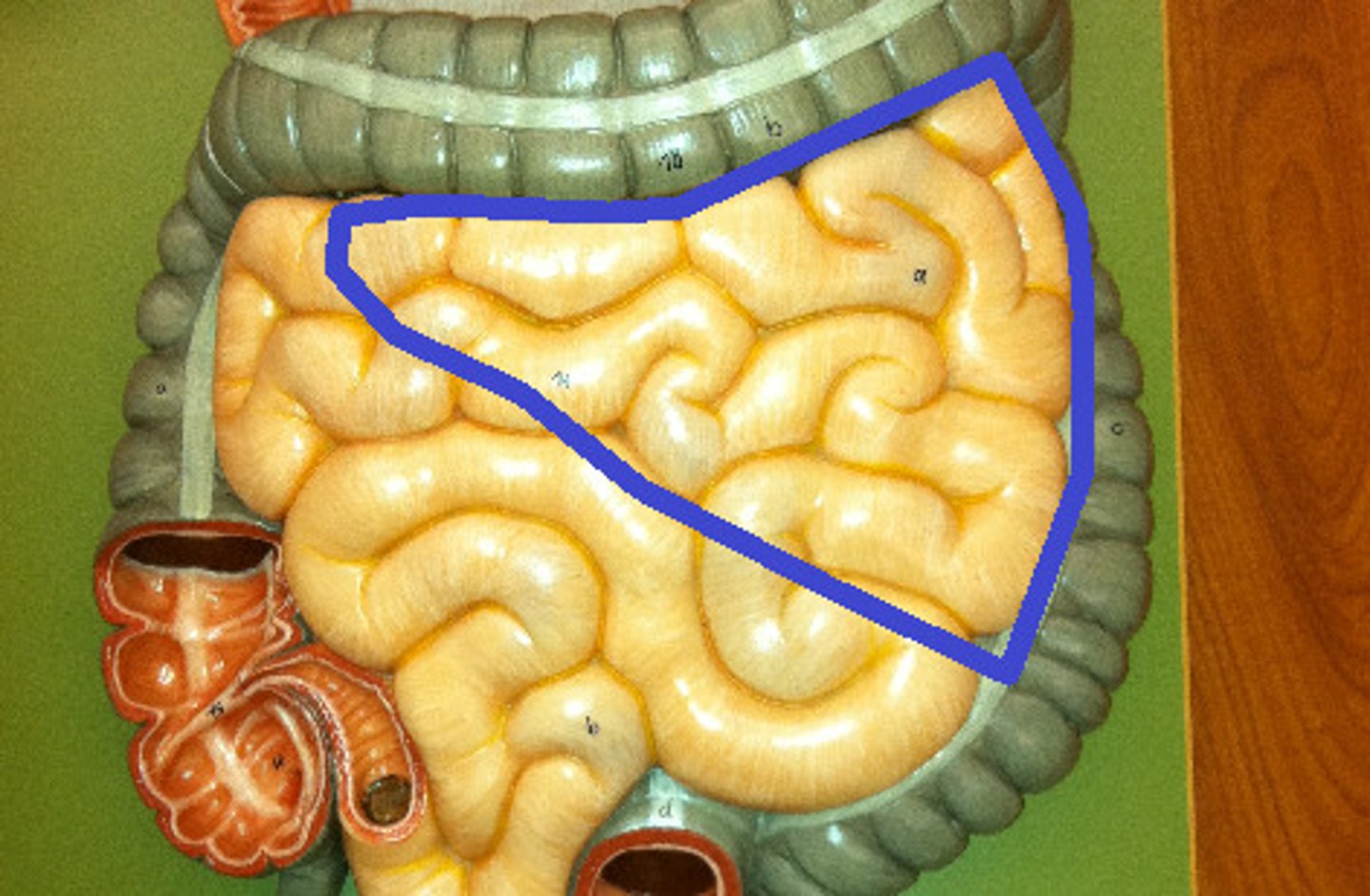
Jejunum
The middle section of the small intestine, primarily involved in absorption.
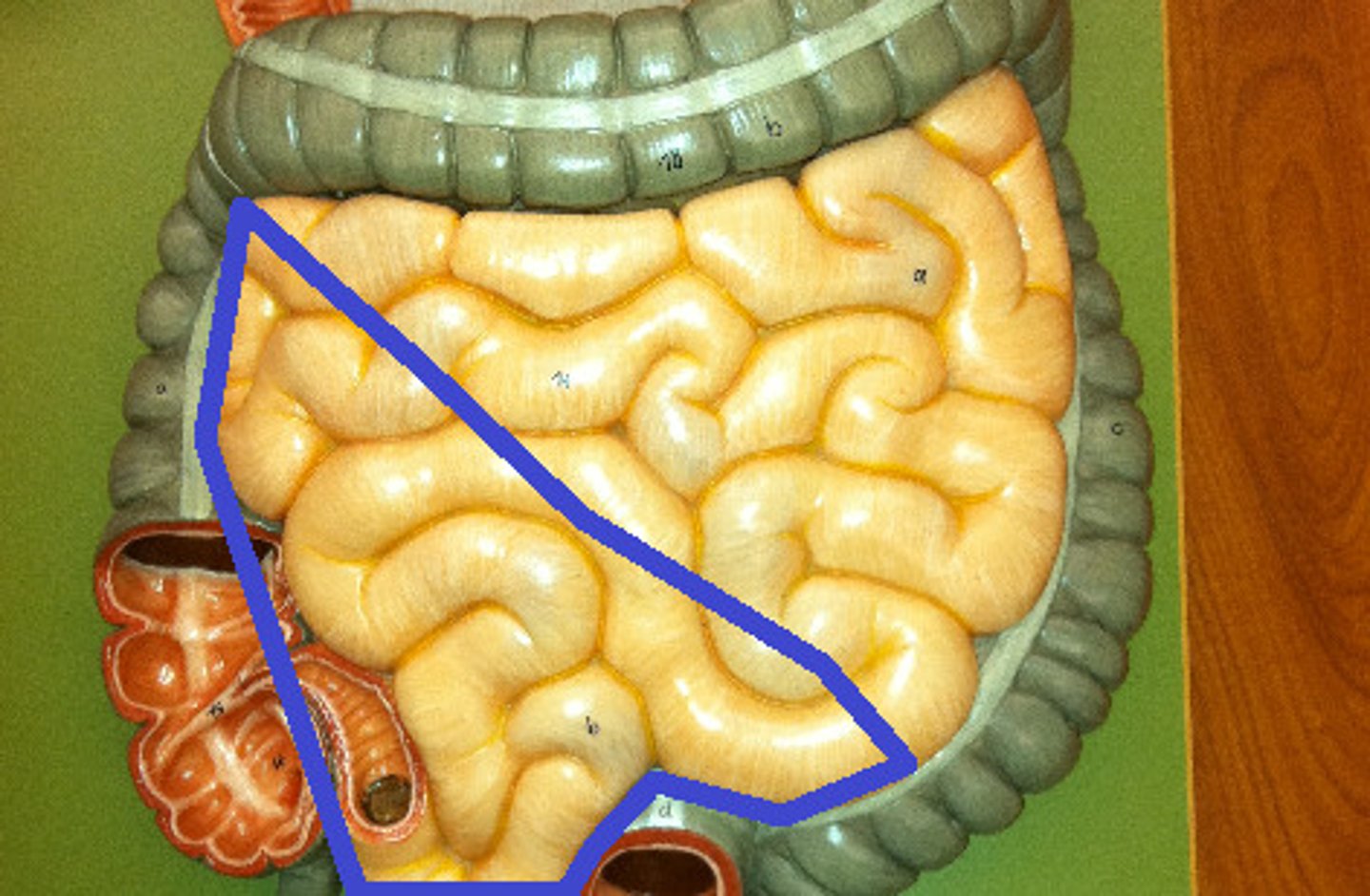
Ileum
The final section of the small intestine, which connects to the large intestine.
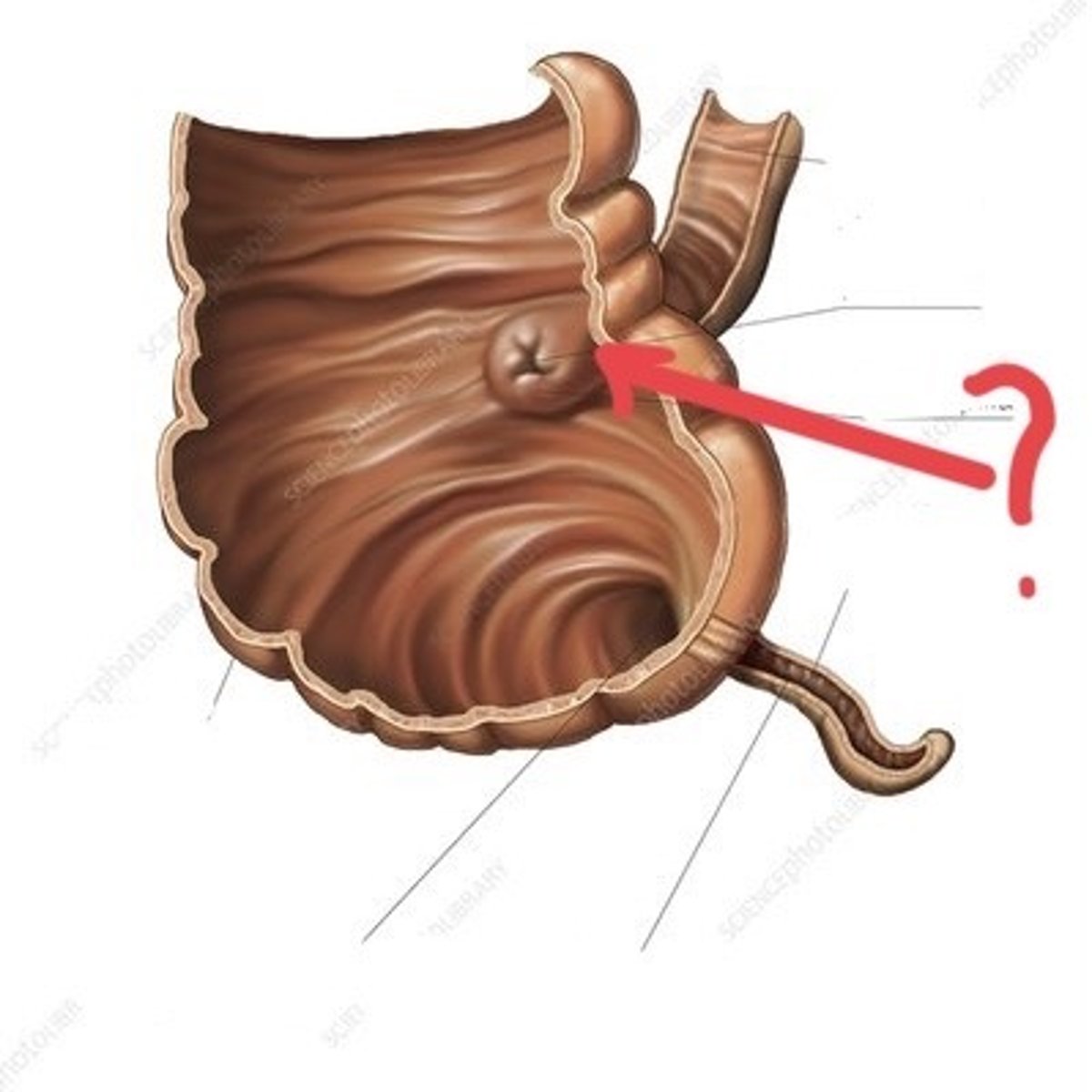
Ileal papilla
The opening where the ileum connects to the cecum.
Mesentery of small intestine
The fold of tissue that attaches the small intestine to the abdominal wall.
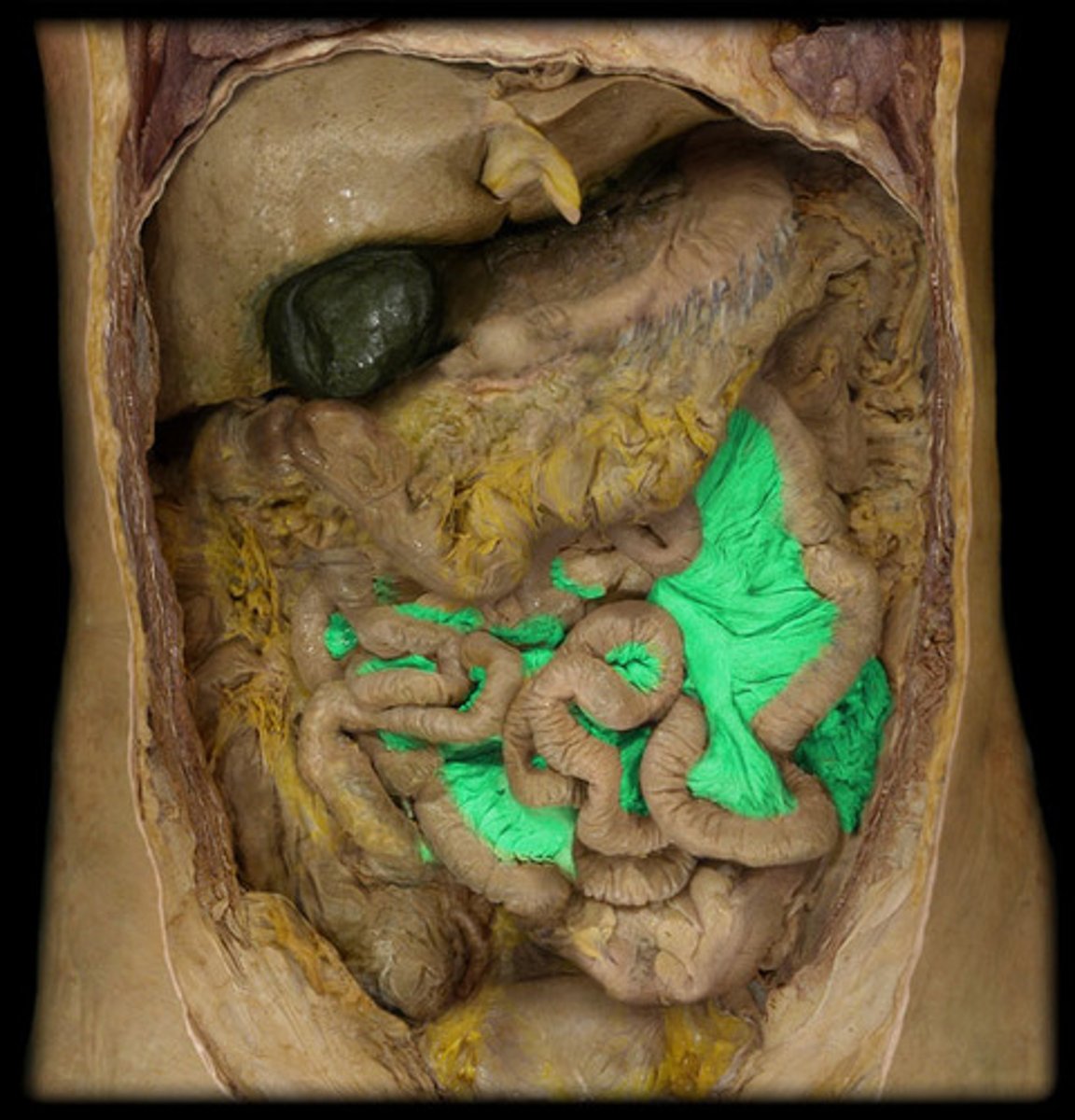
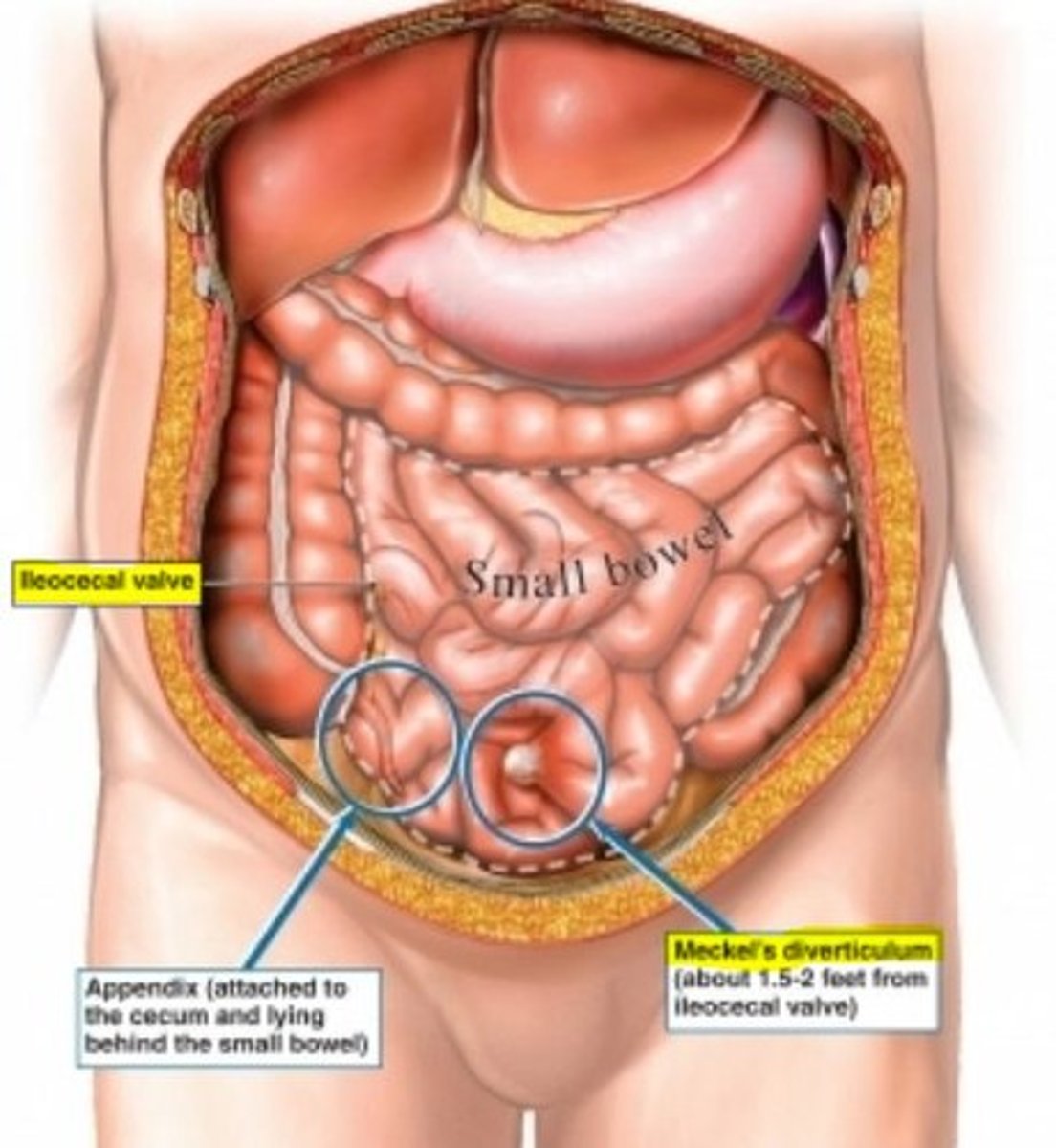
Ileocecal valve / junction
The valve that controls the flow between the ileum and the cecum.
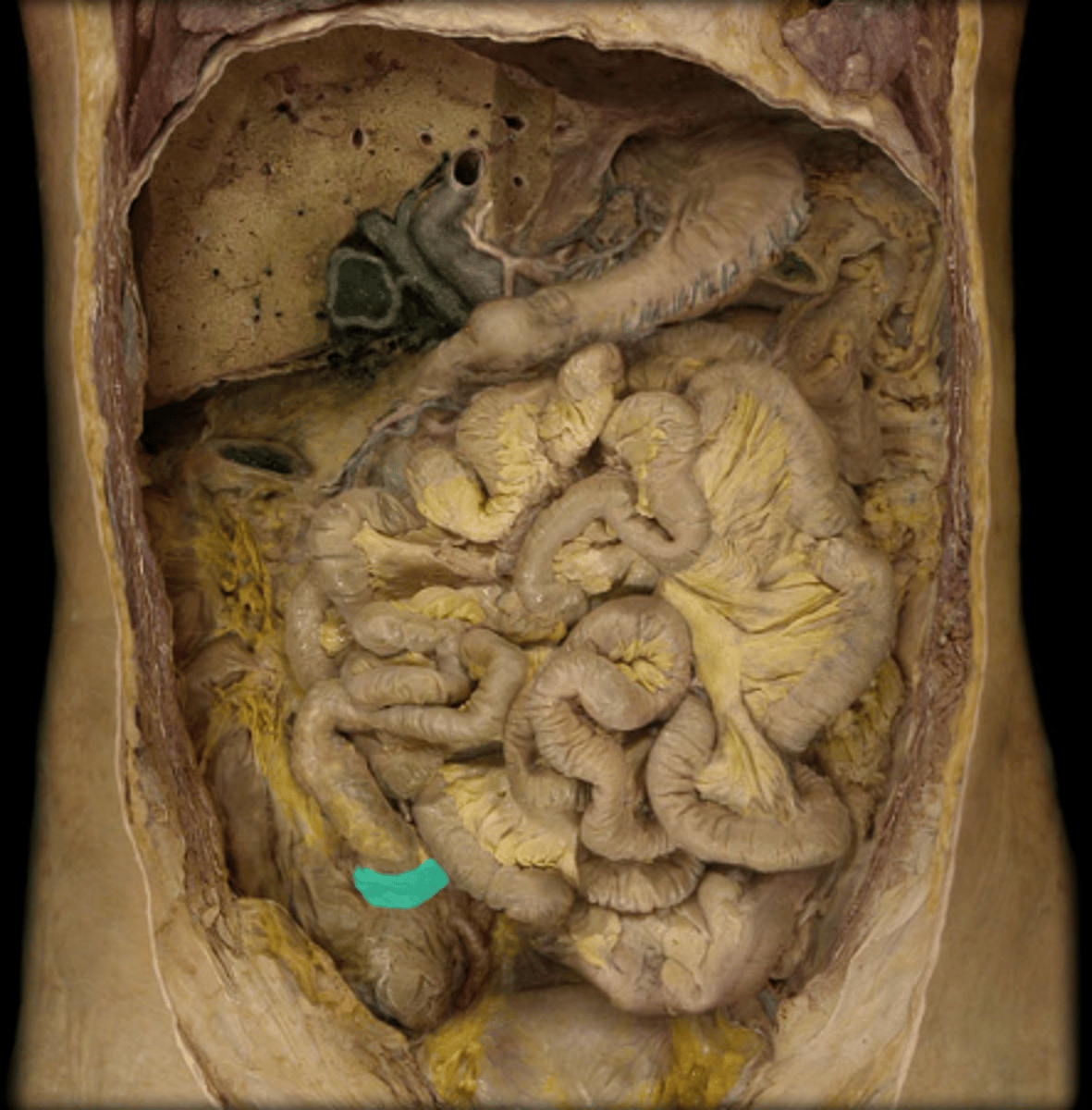
Cecum
The first part of the large intestine, connecting to the ileum.
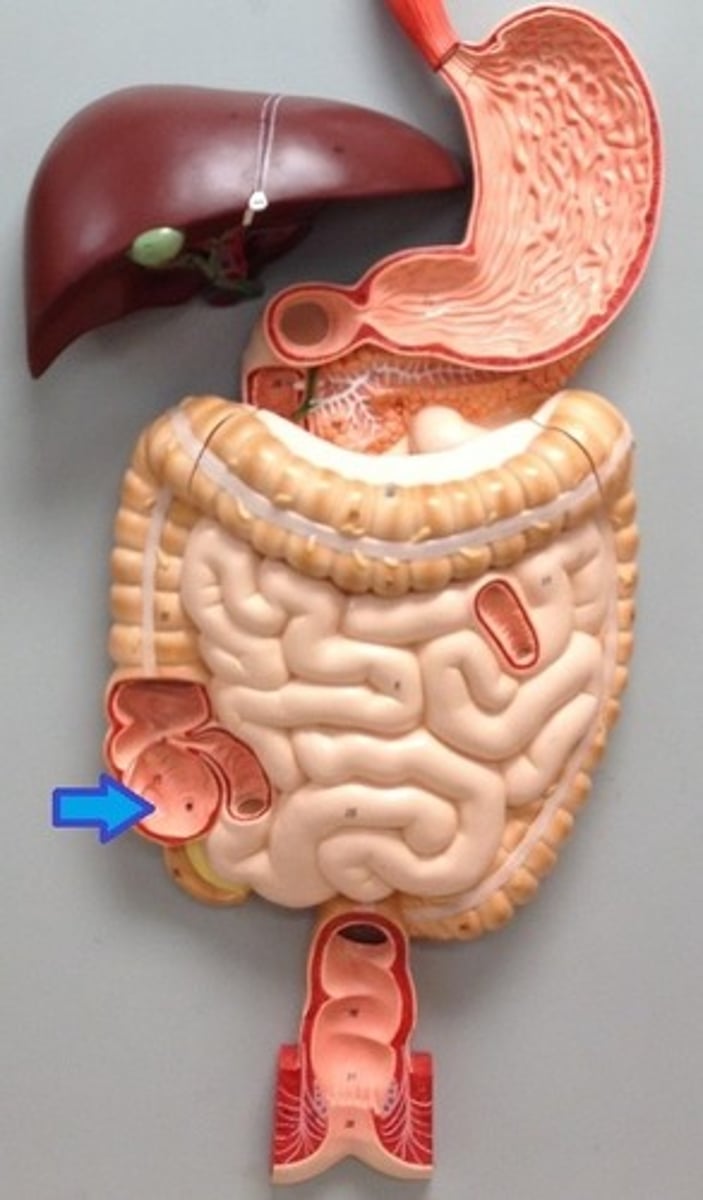
Vermiform appendix
A small, tube-like structure attached to the cecum.
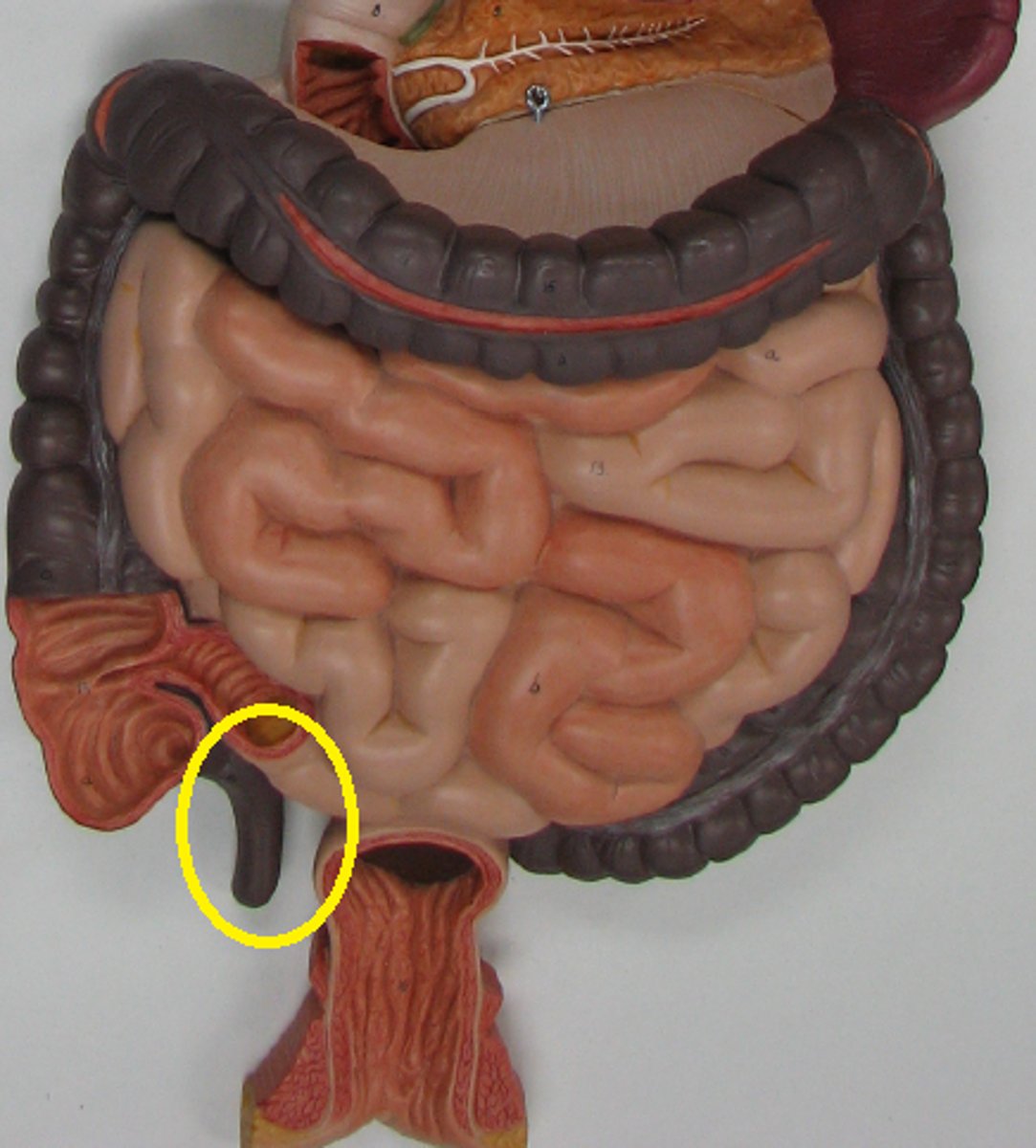
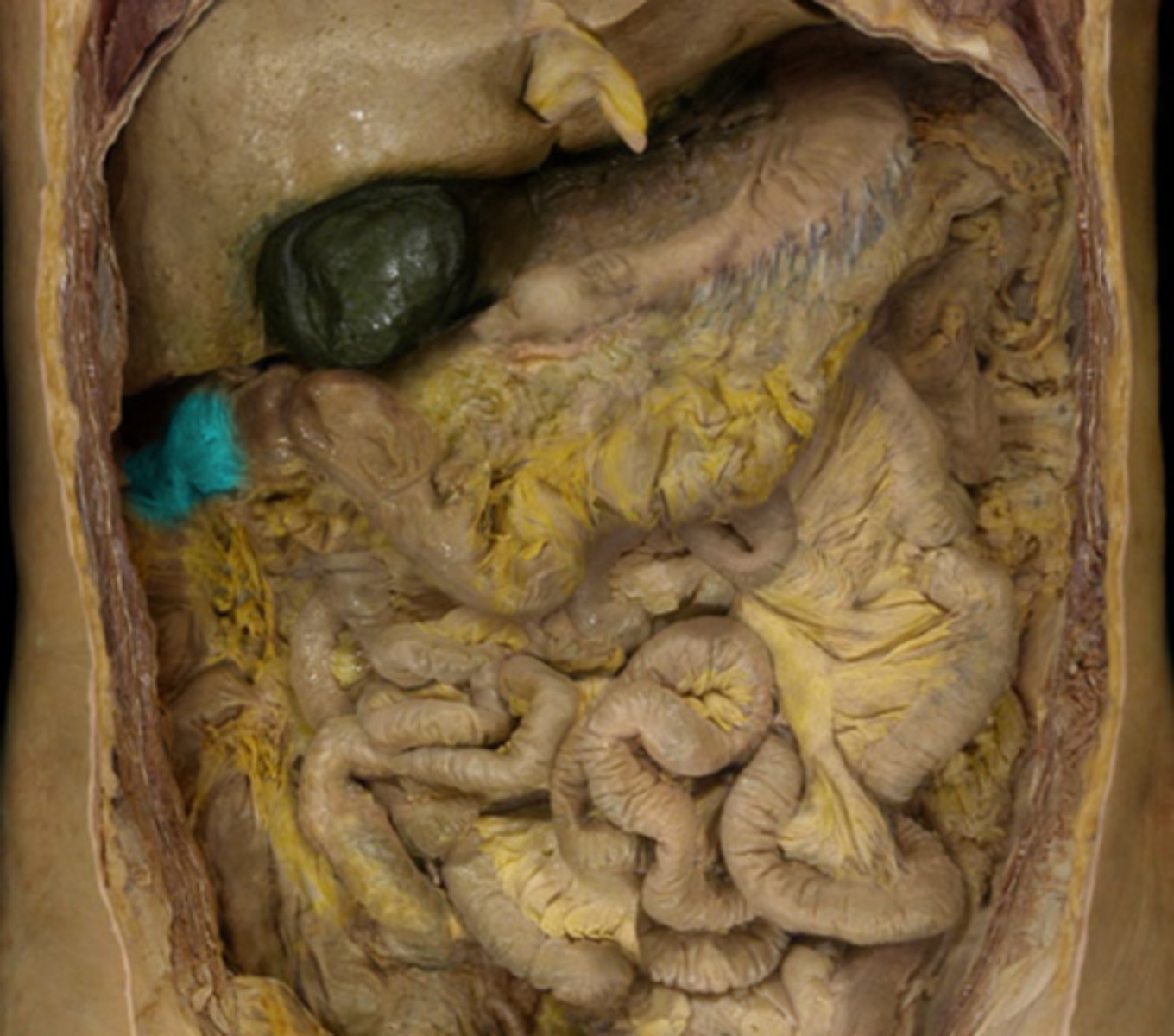
Ascending colon
The part of the large intestine that moves upward on the right side of the abdomen.
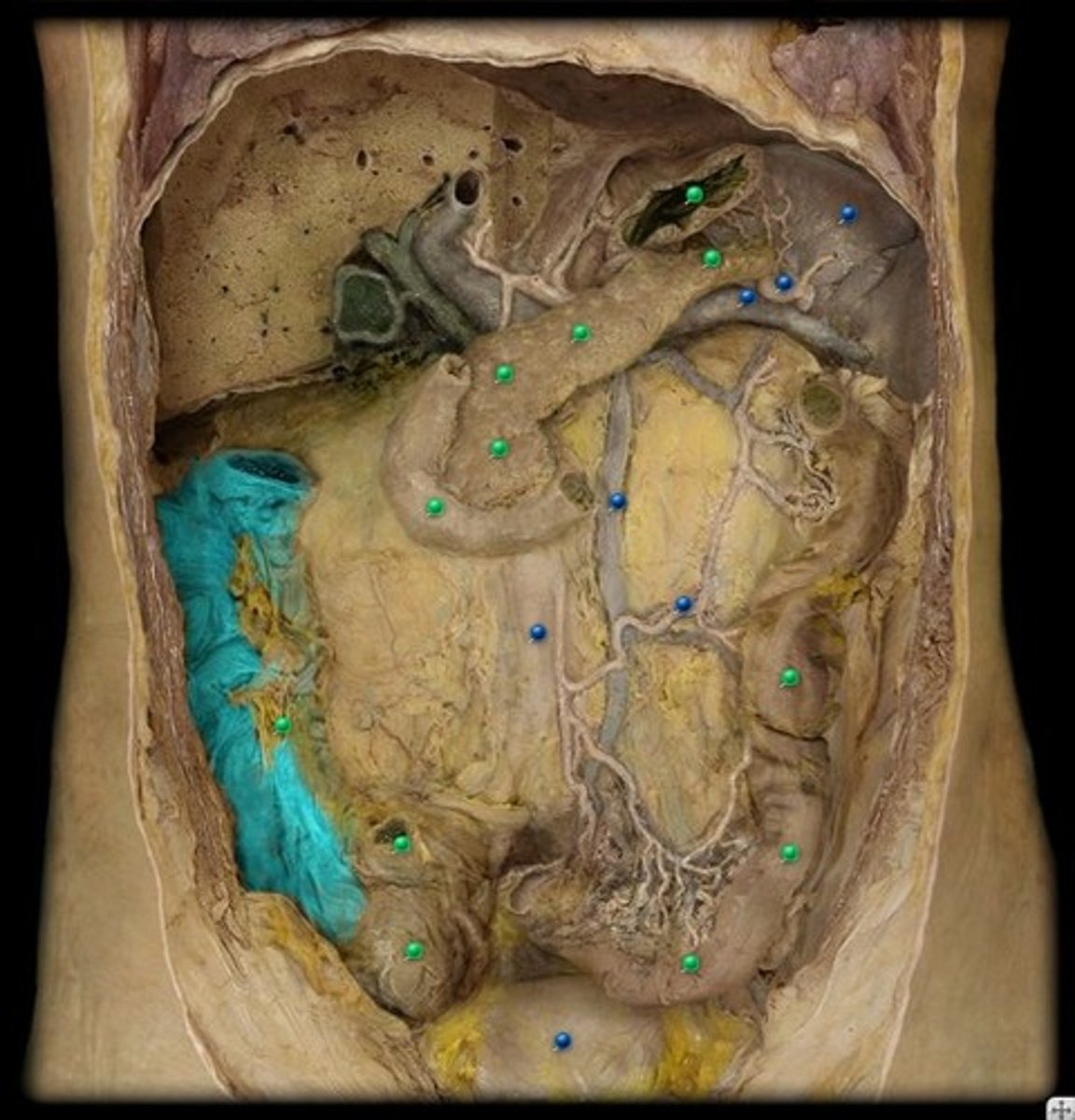
Right colic flexure
The bend in the colon between the ascending and transverse colon.
Taenia coli
Three bands of smooth muscle that run along the length of the colon.
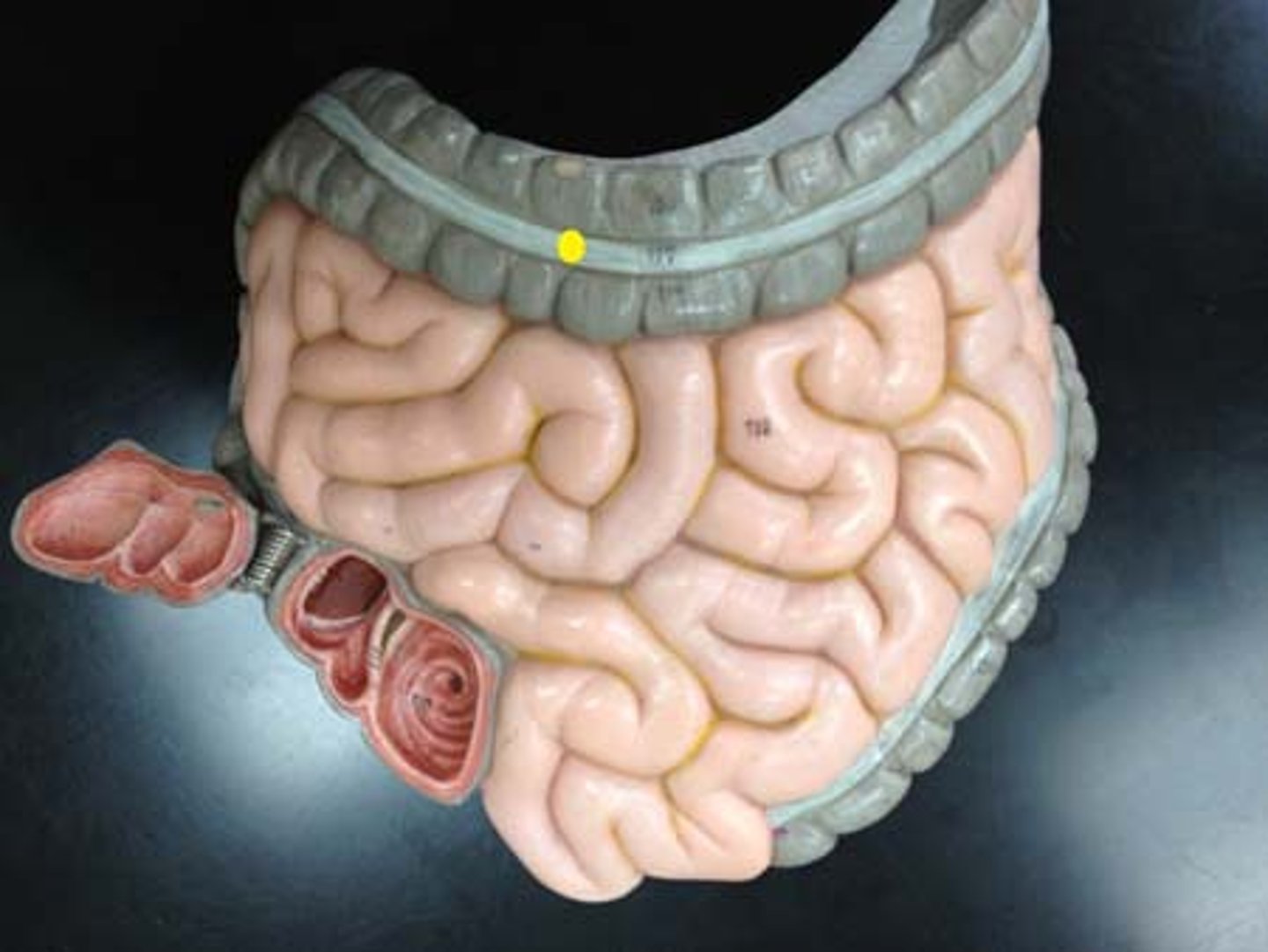
Transverse colon
The part of the large intestine that runs horizontally across the abdomen.
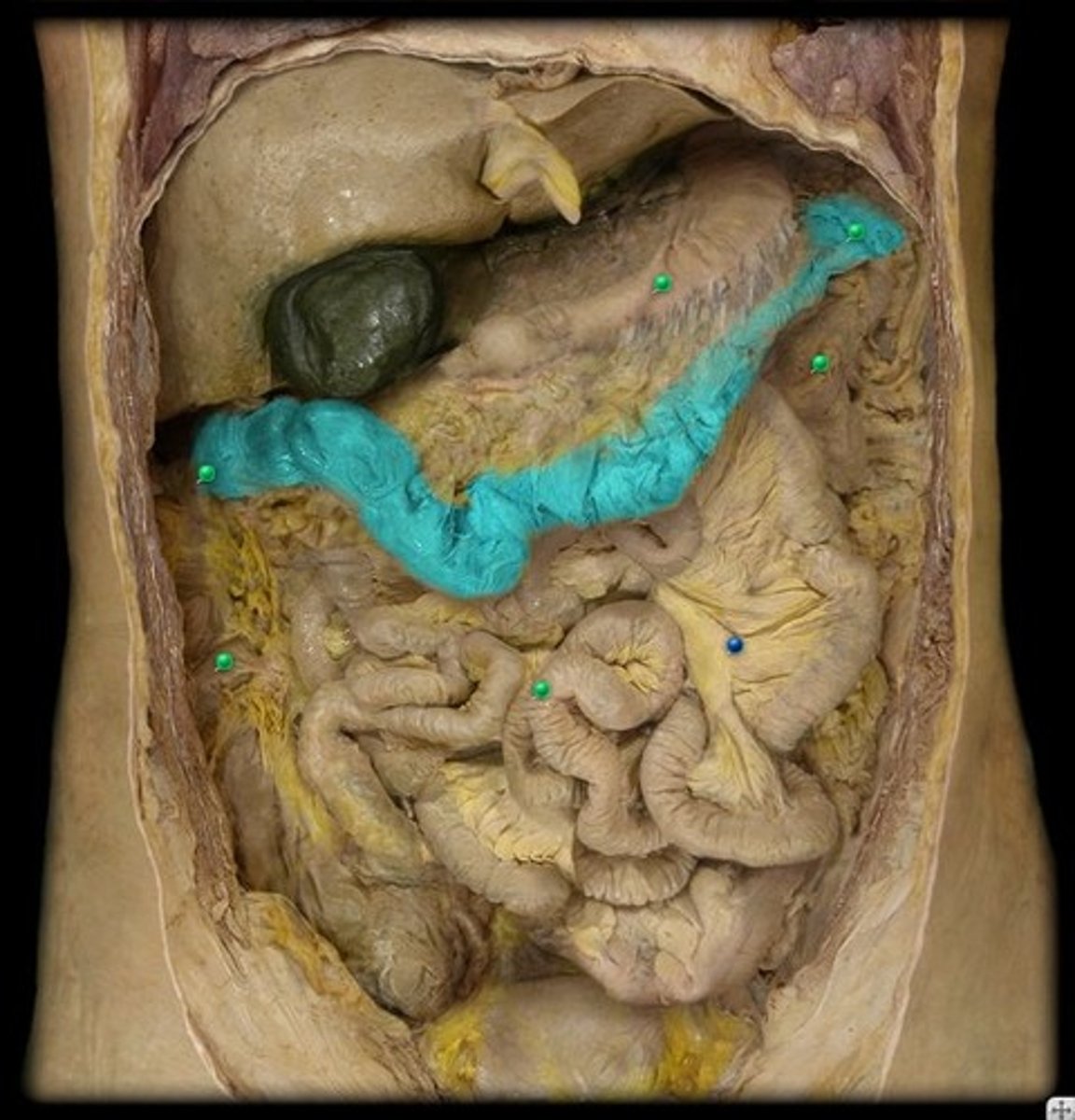
Haustra
Pouches formed by the contraction of the taenia coli in the colon.
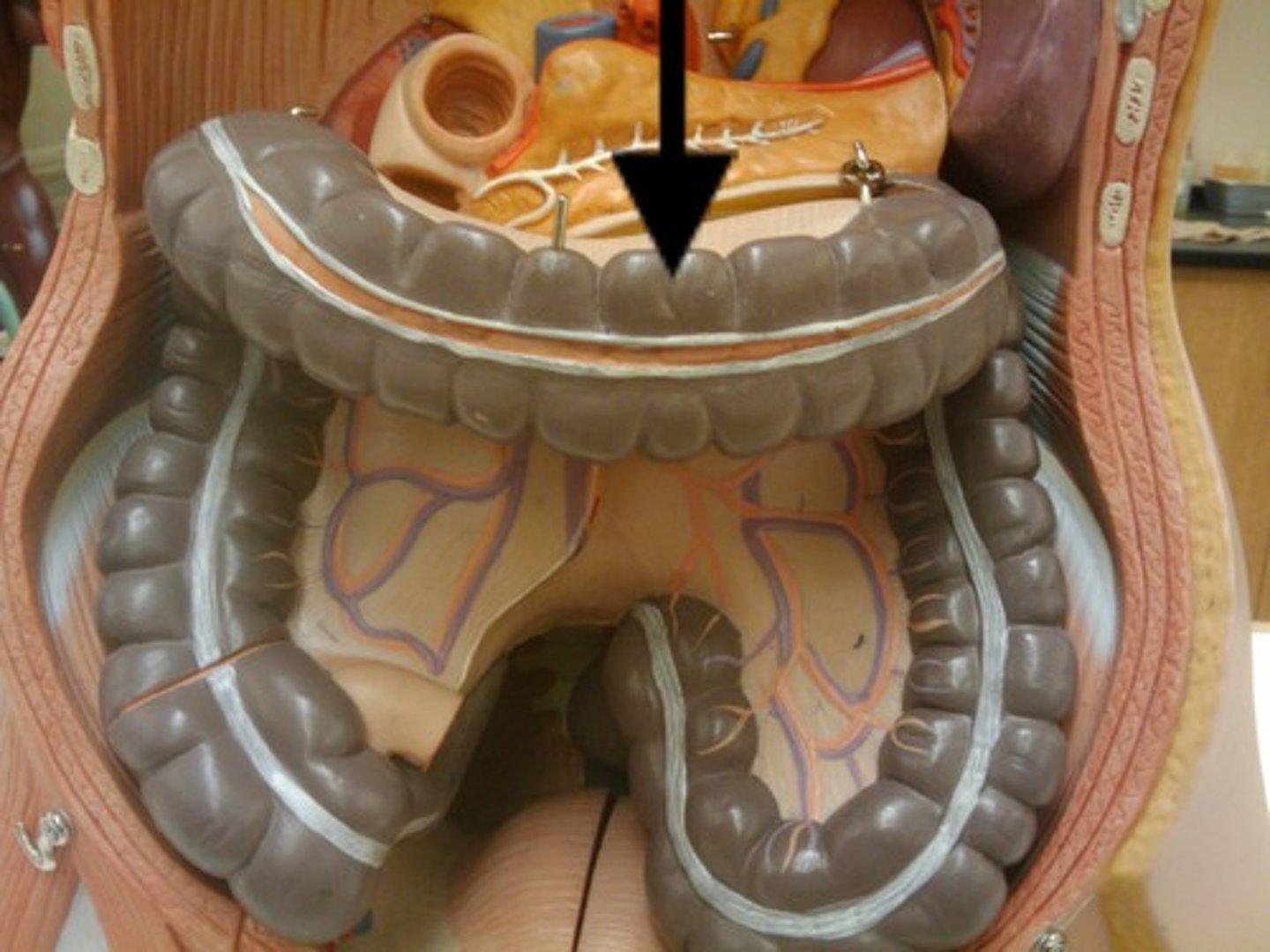
Mesocolon
The fold of peritoneum that attaches the colon to the abdominal wall.
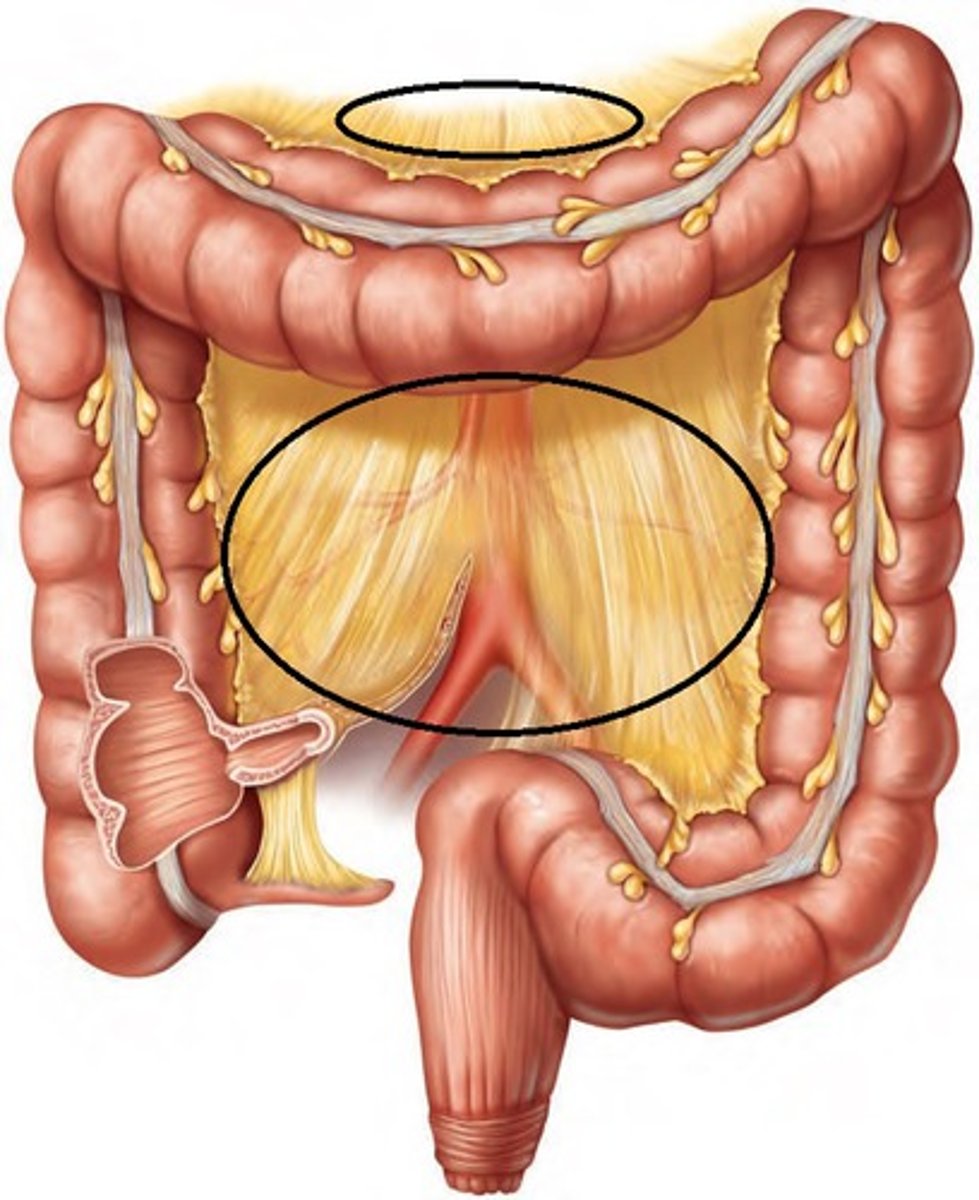
Descending colon
The part of the large intestine that moves downward on the left side of the abdomen.
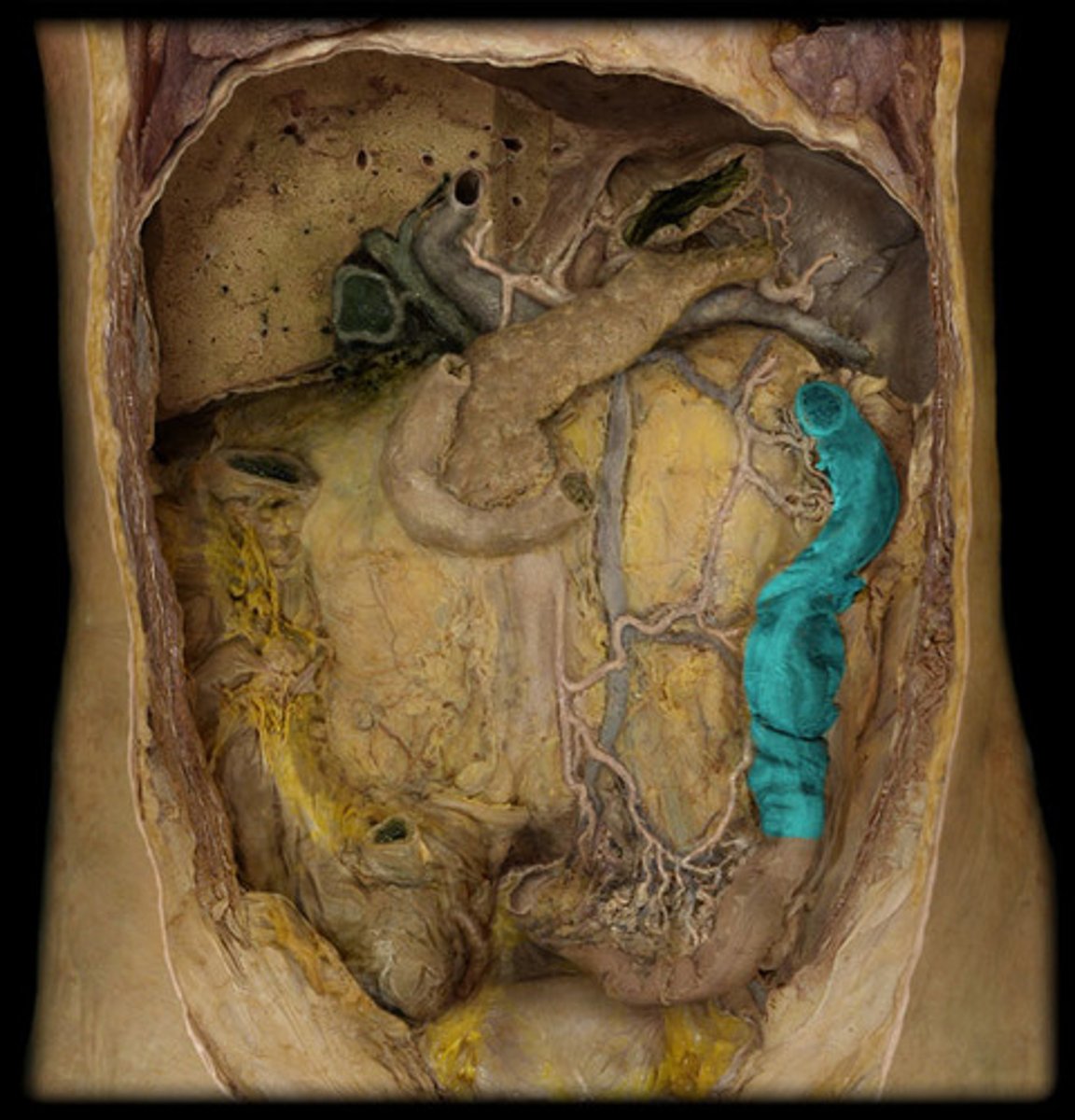
Left colic flexure
The bend in the colon between the transverse and descending colon.
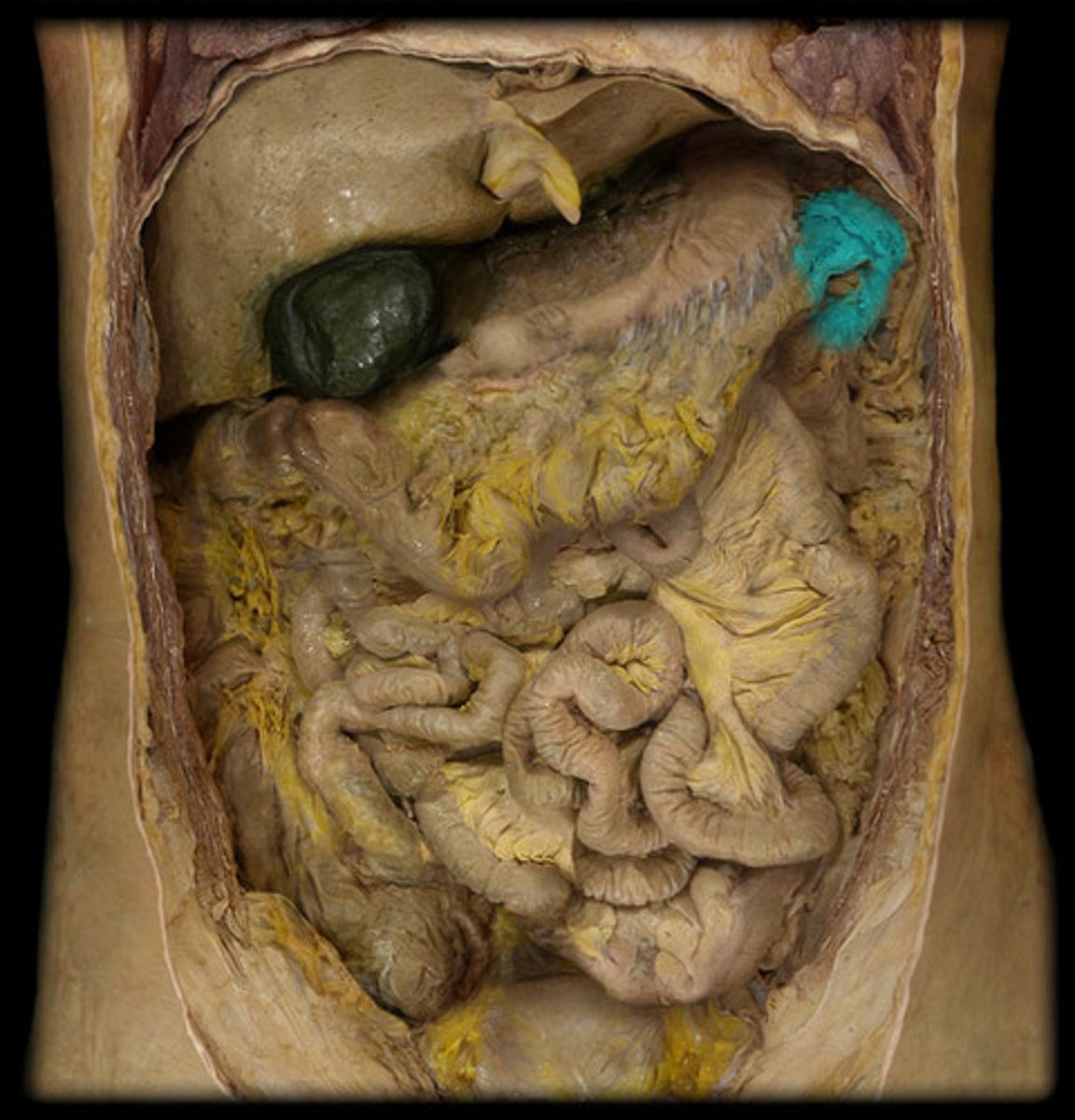
Diverticulum
A small bulge or pouch that forms in the wall of the colon.
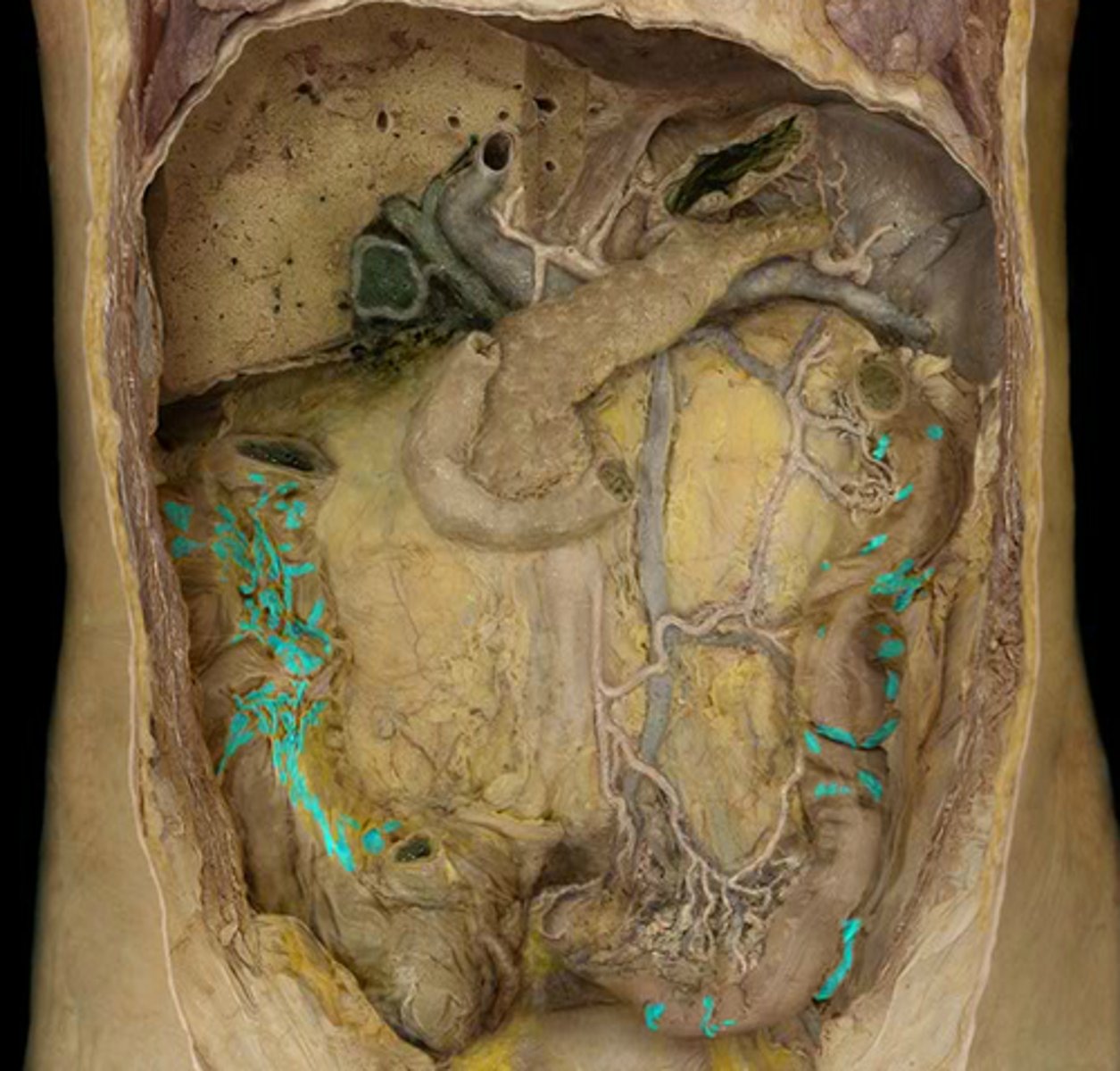
Omental appendices
Small pouches of fat that hang from the colon.
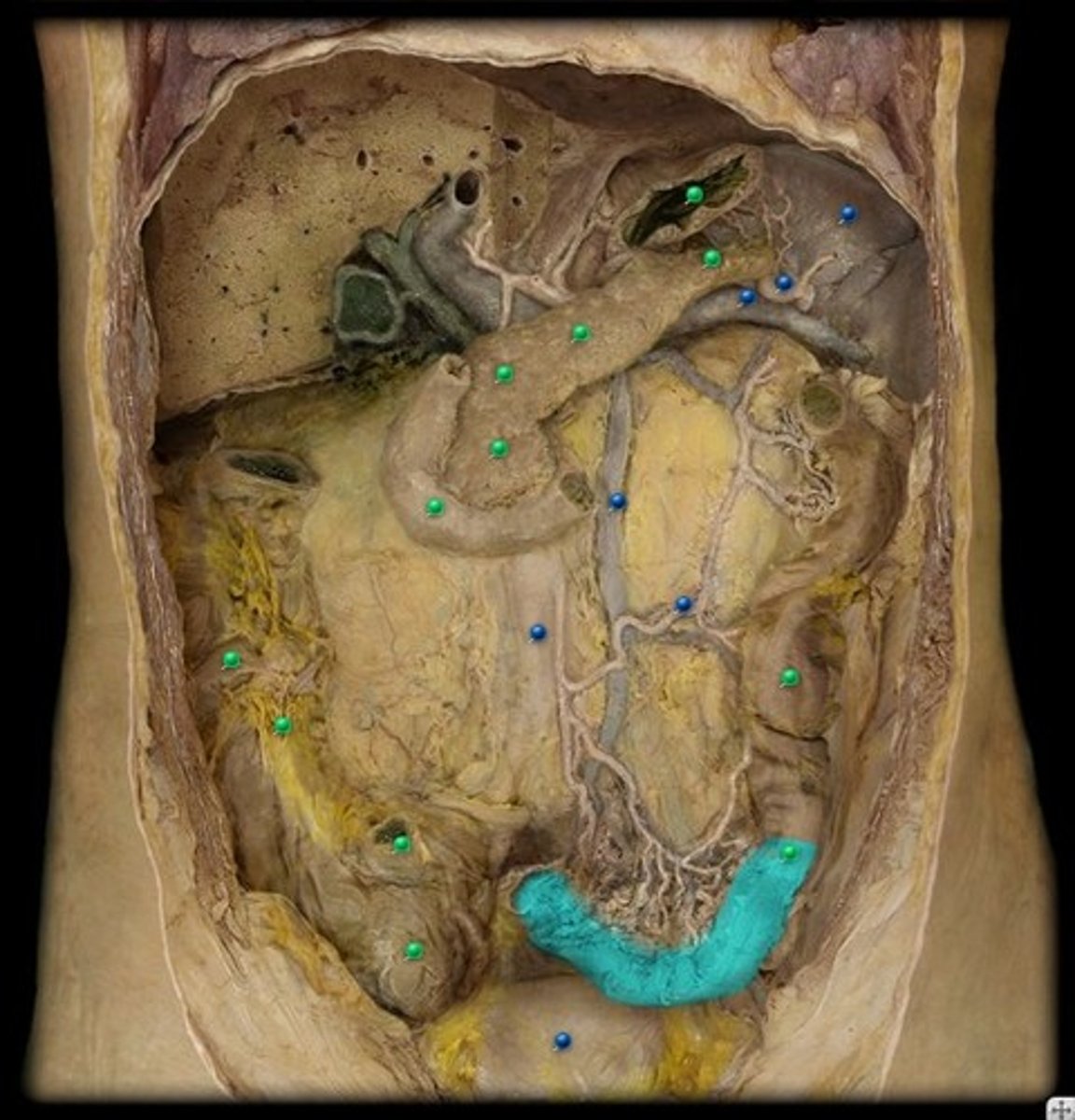
Sigmoid colon
The part of the large intestine that connects to the rectum.
Rectum
The final section of the large intestine, leading to the anus.
Liver
A large organ that processes nutrients and detoxifies harmful substances.
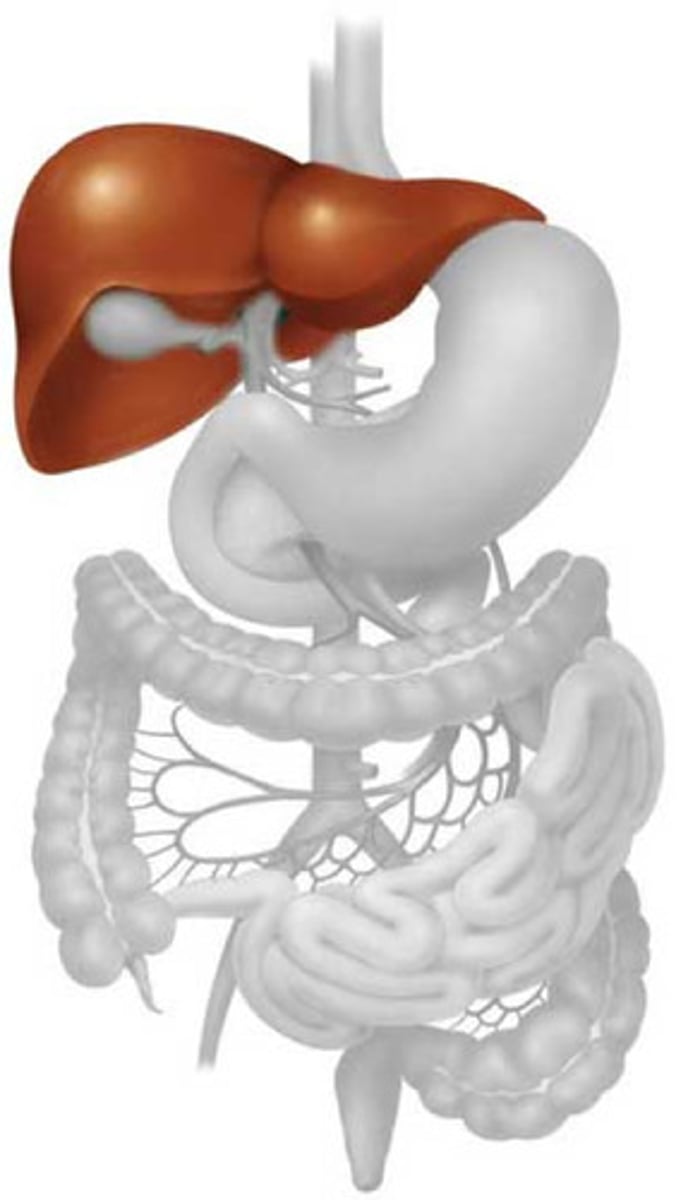
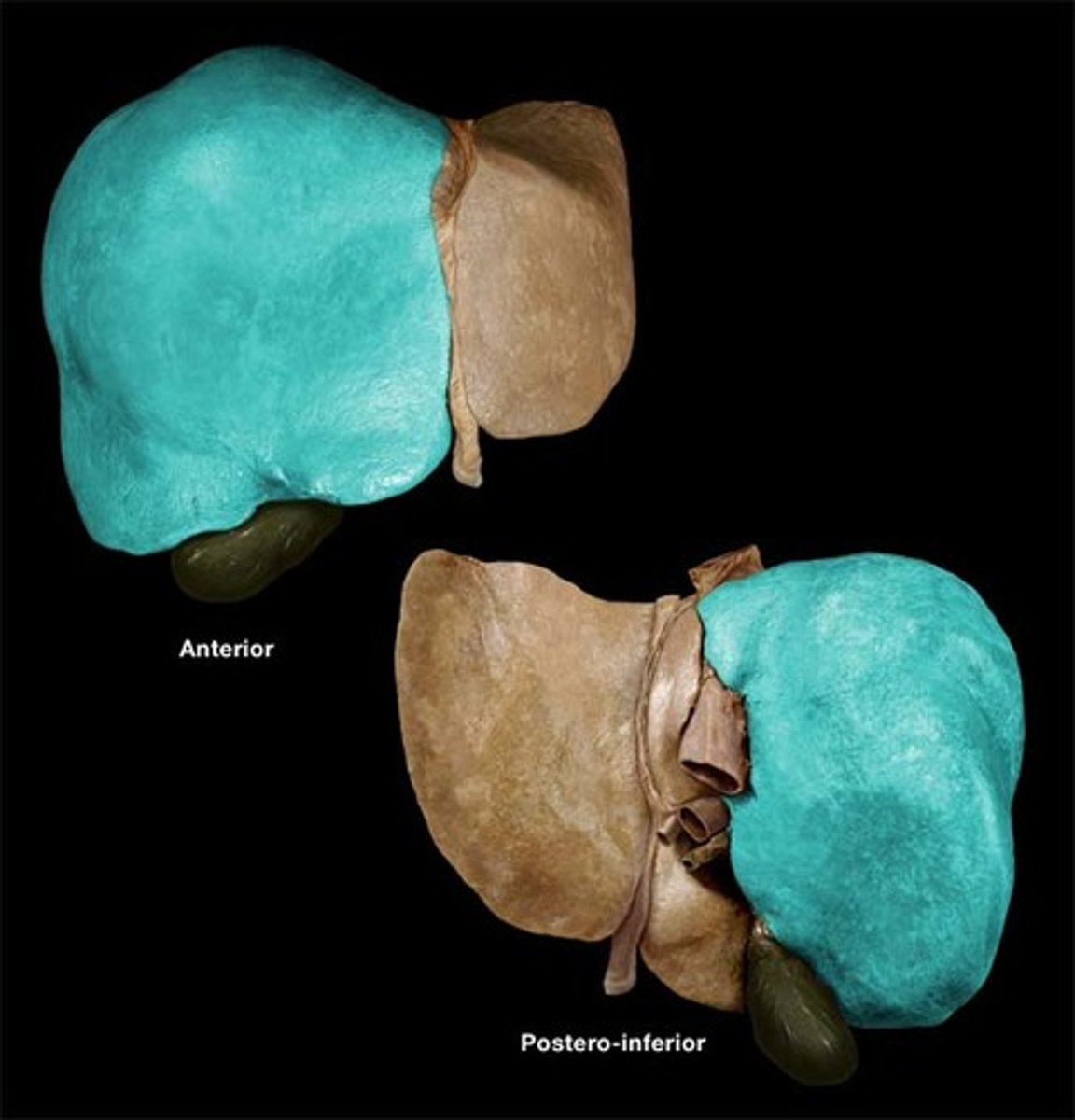
Right lobe
The larger lobe of the liver.
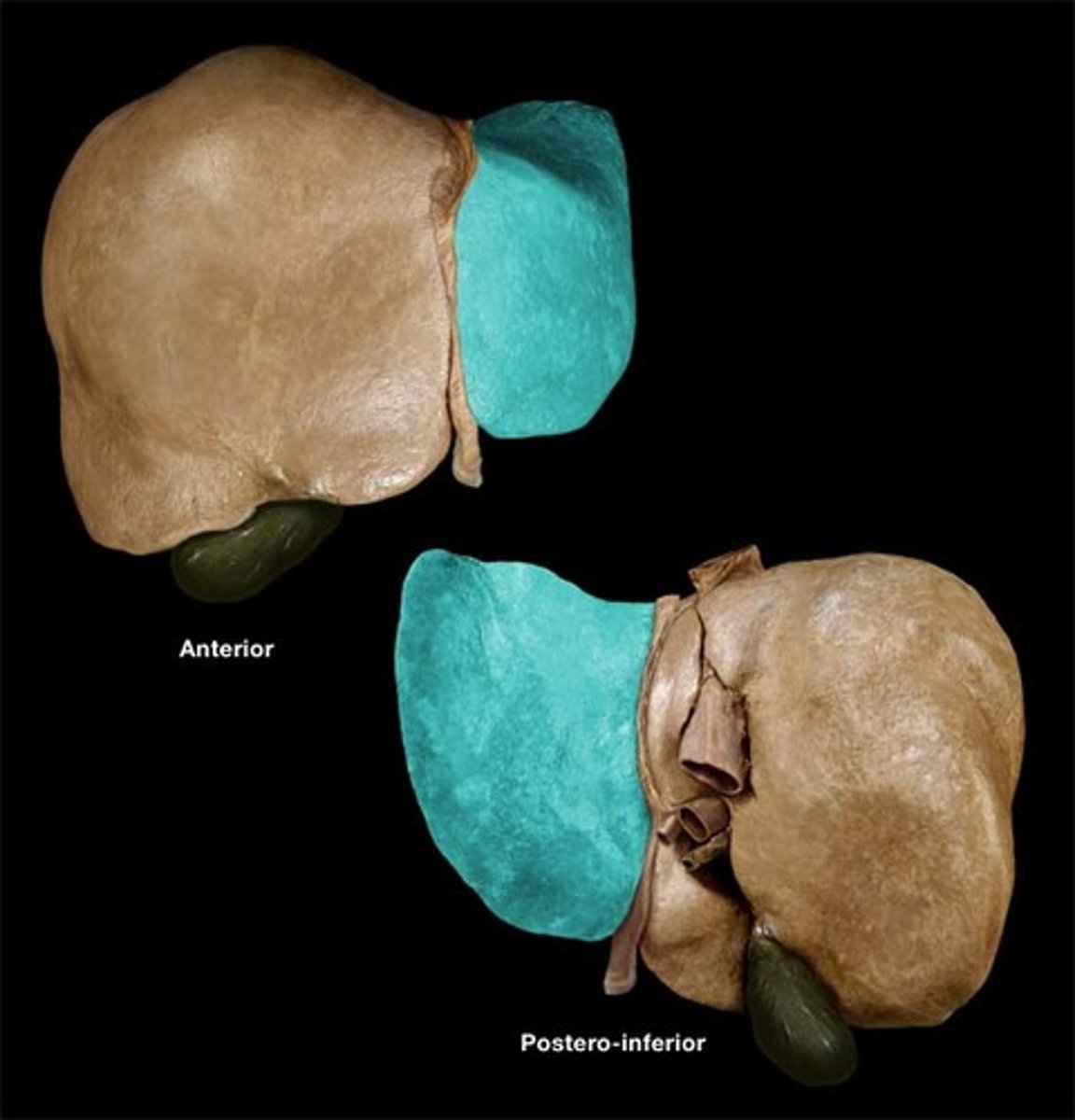
Left lobe
The smaller lobe of the liver.
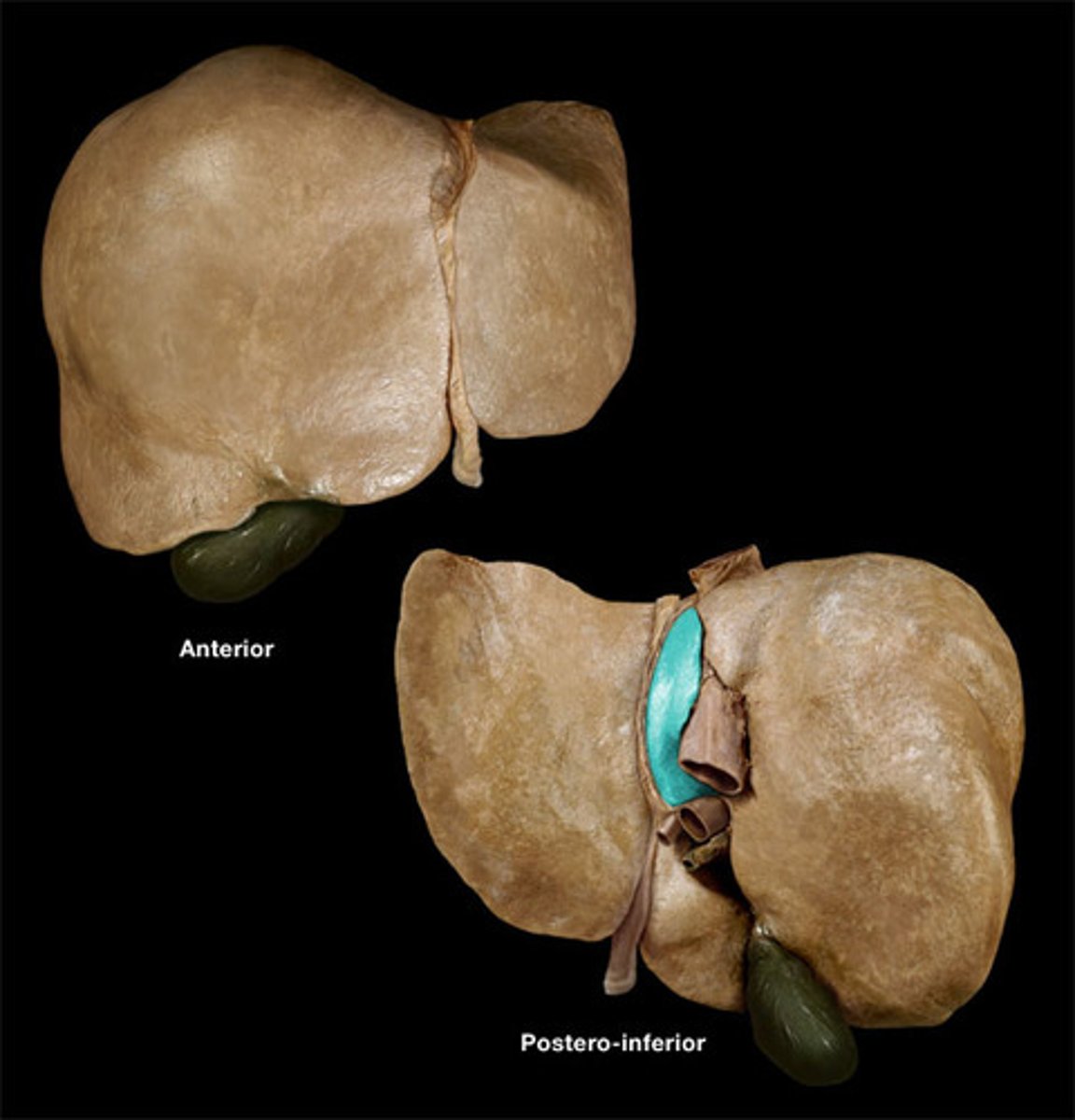
Caudate lobe
A lobe of the liver located near the inferior vena cava.
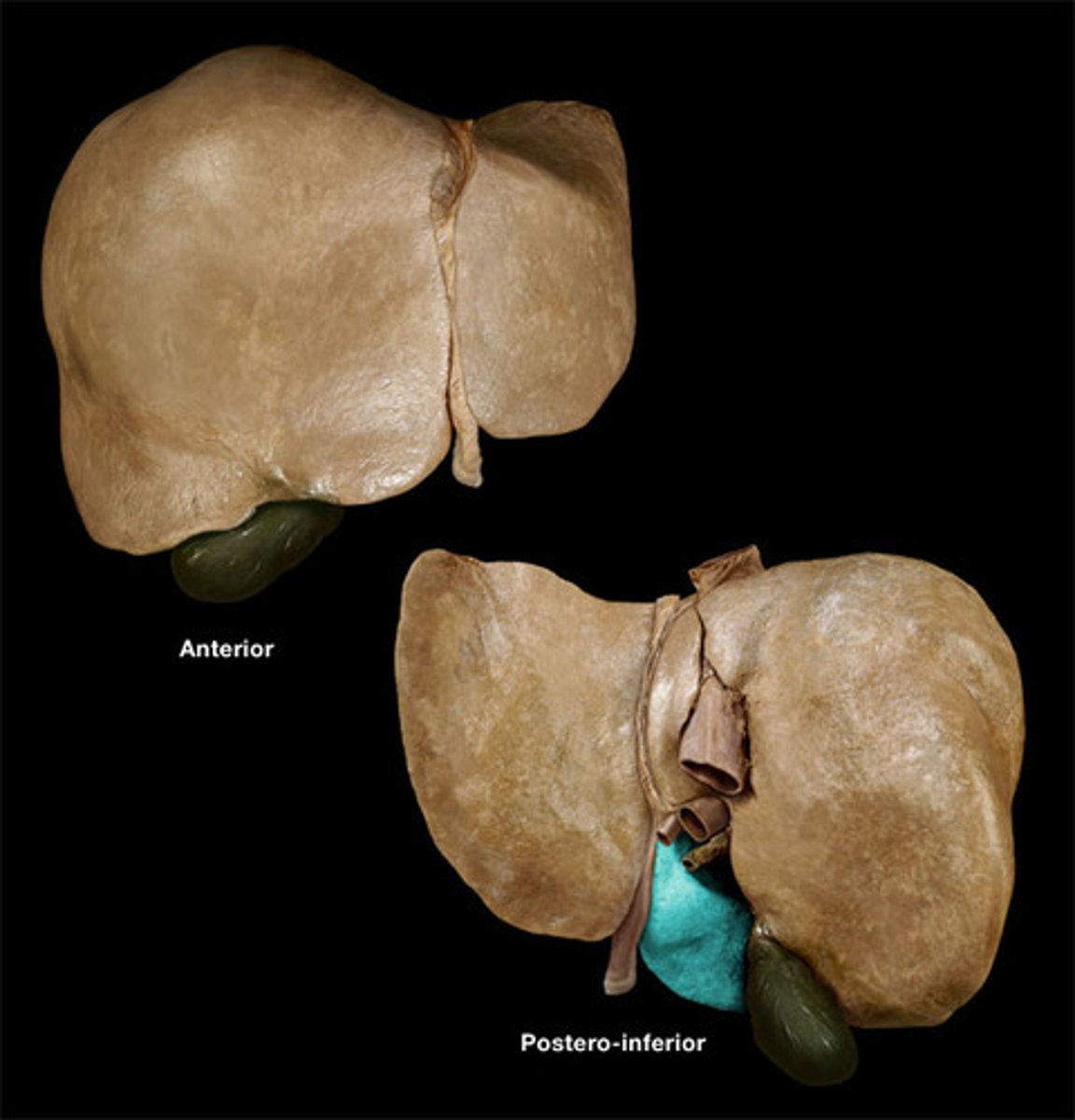
Quadrate lobe
A lobe of the liver located near the gallbladder.
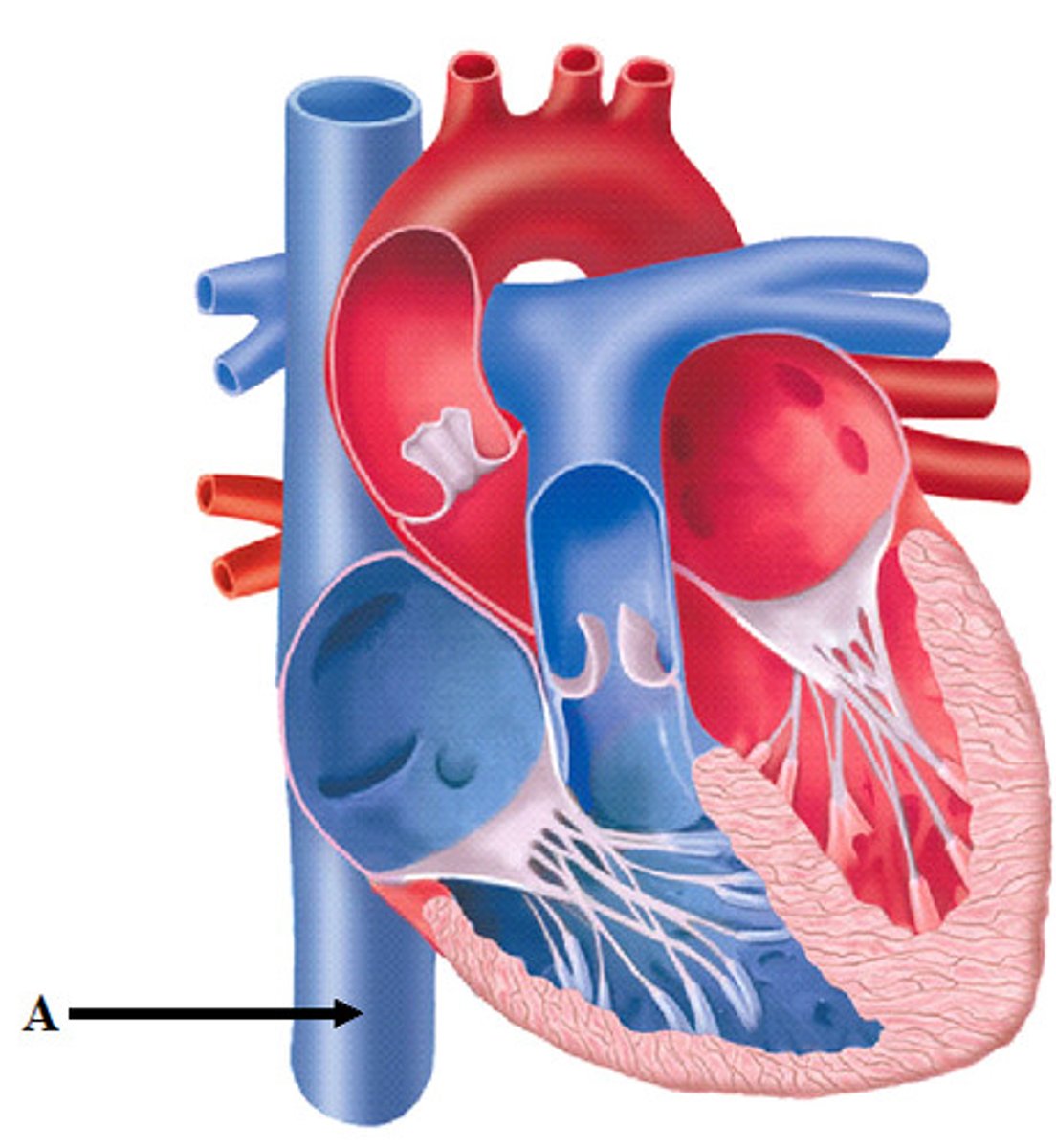
Inferior vena cava
The large vein that carries deoxygenated blood from the lower body to the heart.
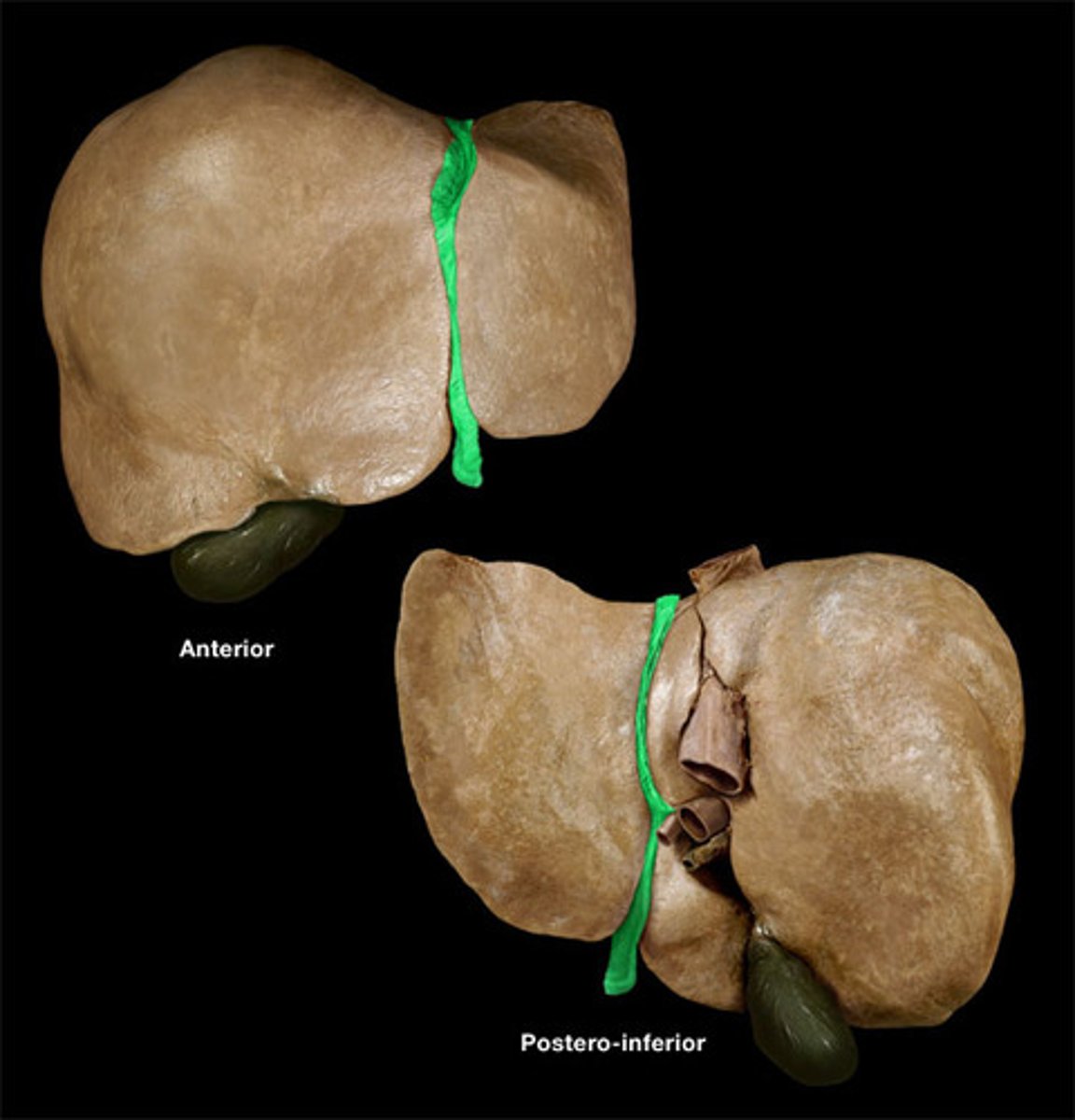
Falciform ligament
The ligament that attaches the liver to the anterior abdominal wall.
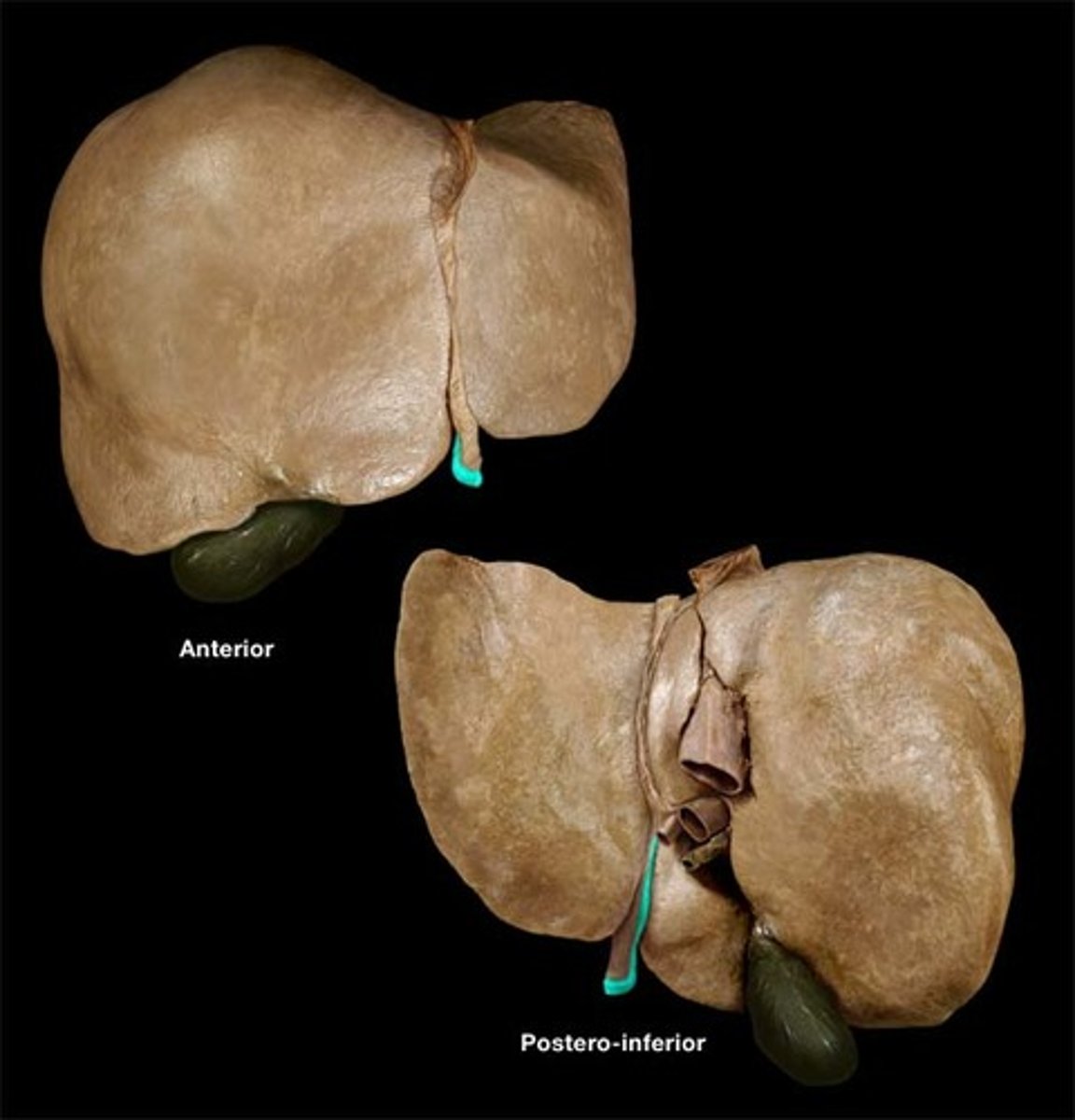
Round ligament
A remnant of the umbilical vein that runs along the falciform ligament.
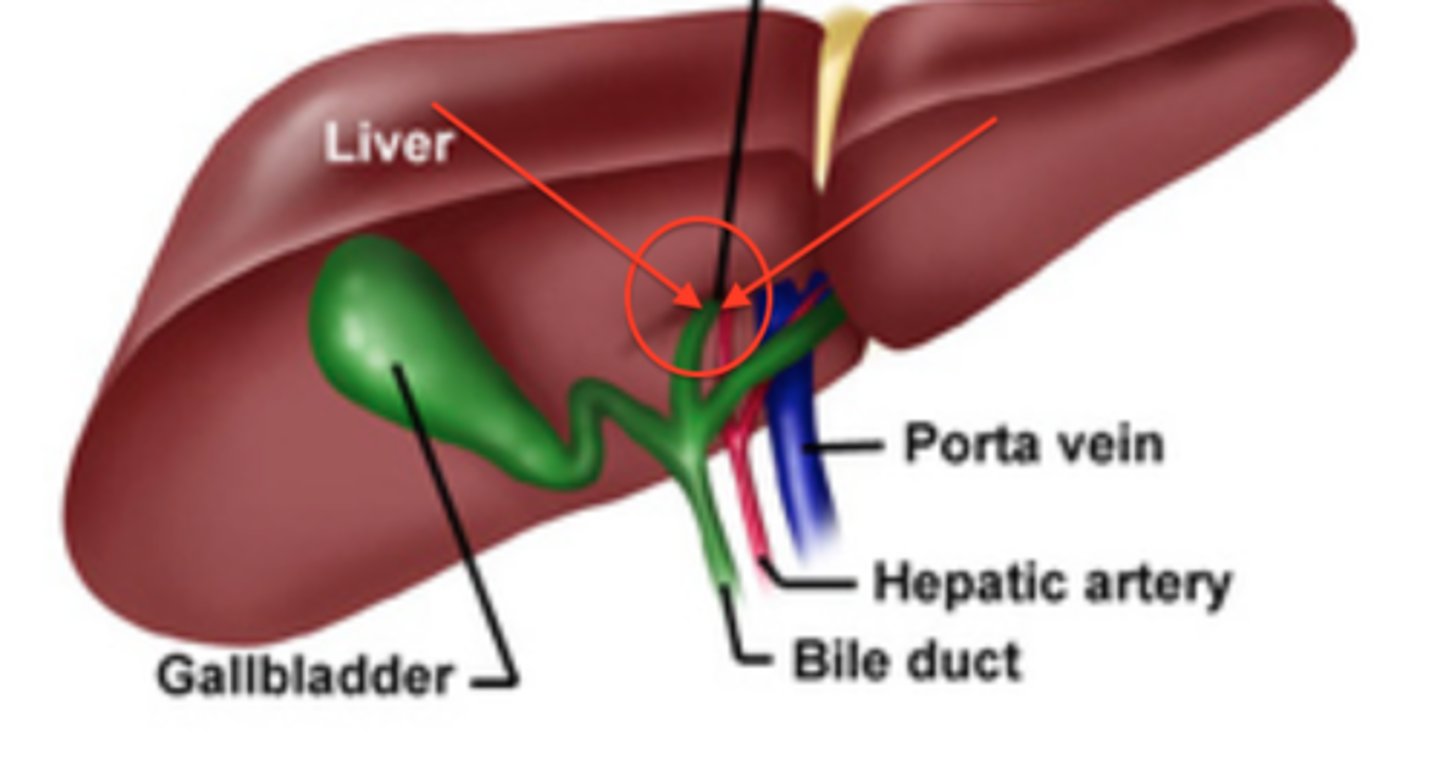
Porta hepatis
The area of the liver where blood vessels and bile ducts enter and exit.
Gallbladder
A small organ that stores bile produced by the liver.
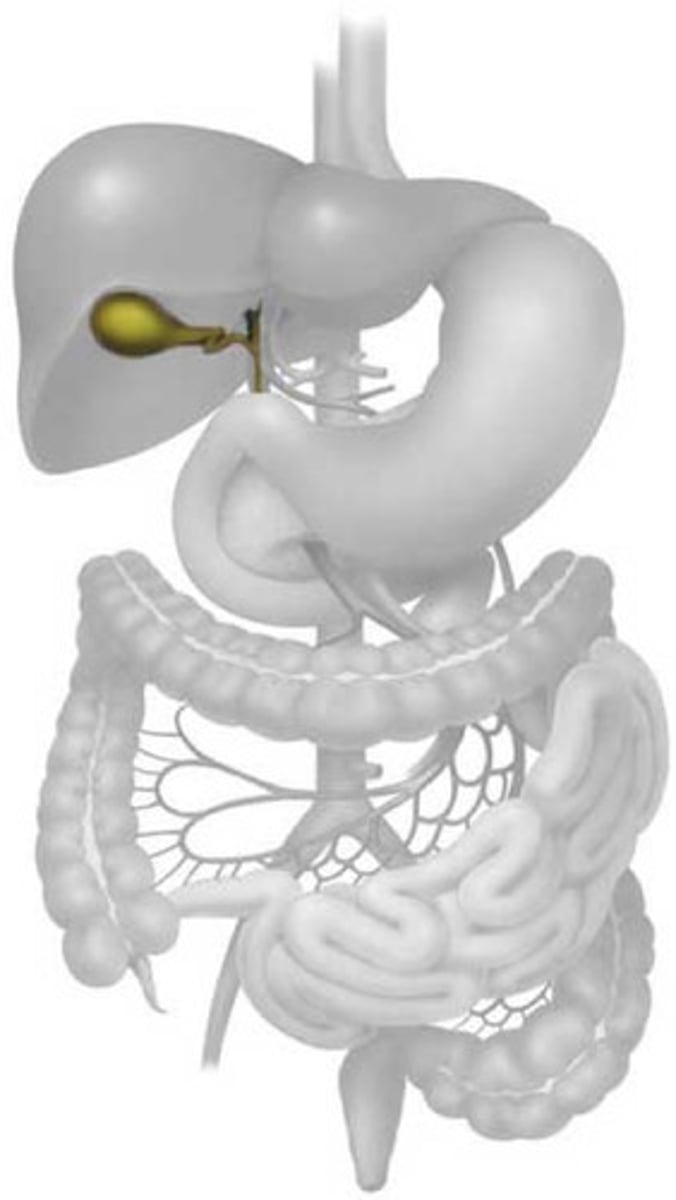
Hepatic ducts
Ducts that carry bile from the liver to the gallbladder.
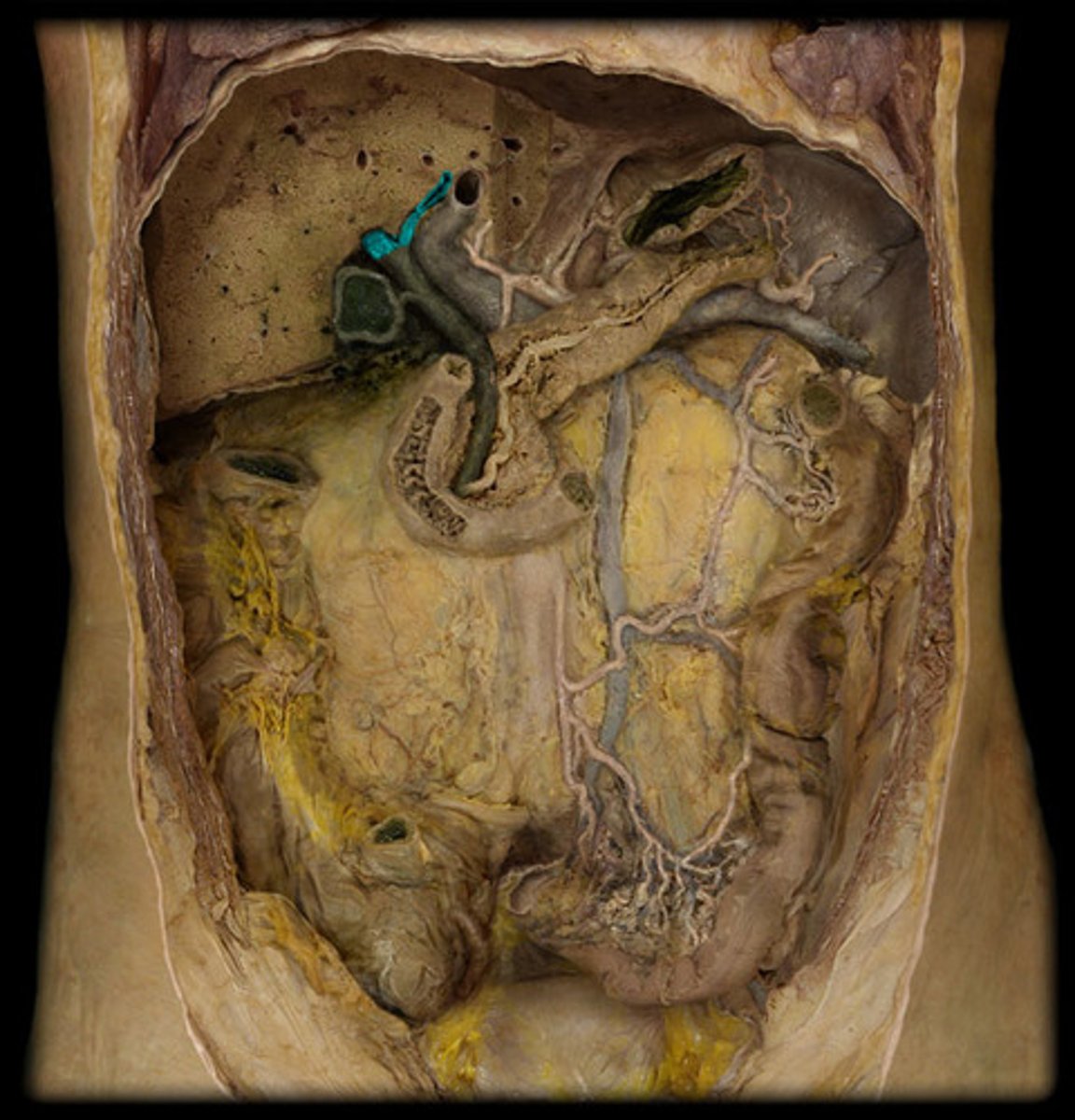
Cystic duct
The duct that connects the gallbladder to the common bile duct.
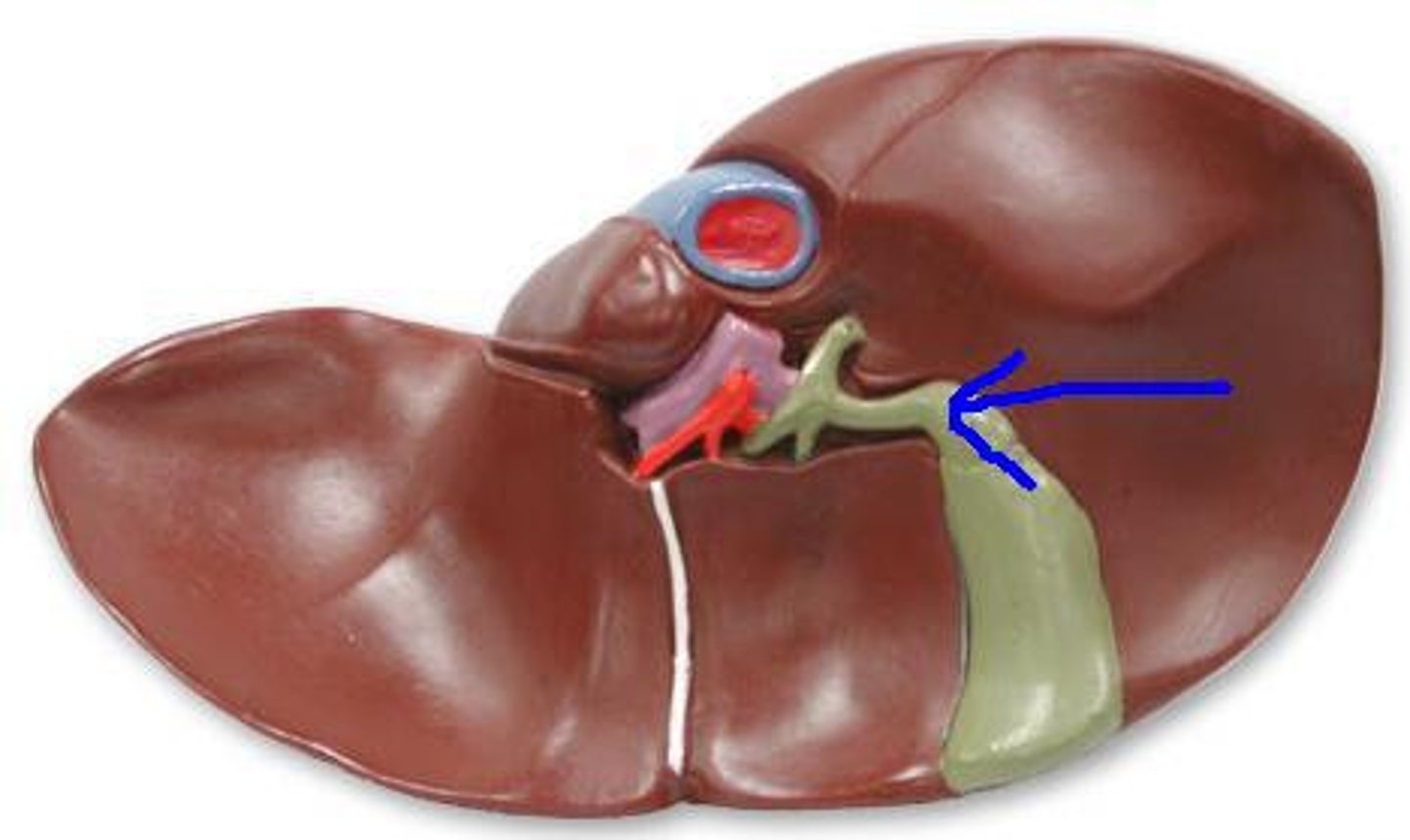
Bile duct
The duct that carries bile from the liver and gallbladder to the duodenum.
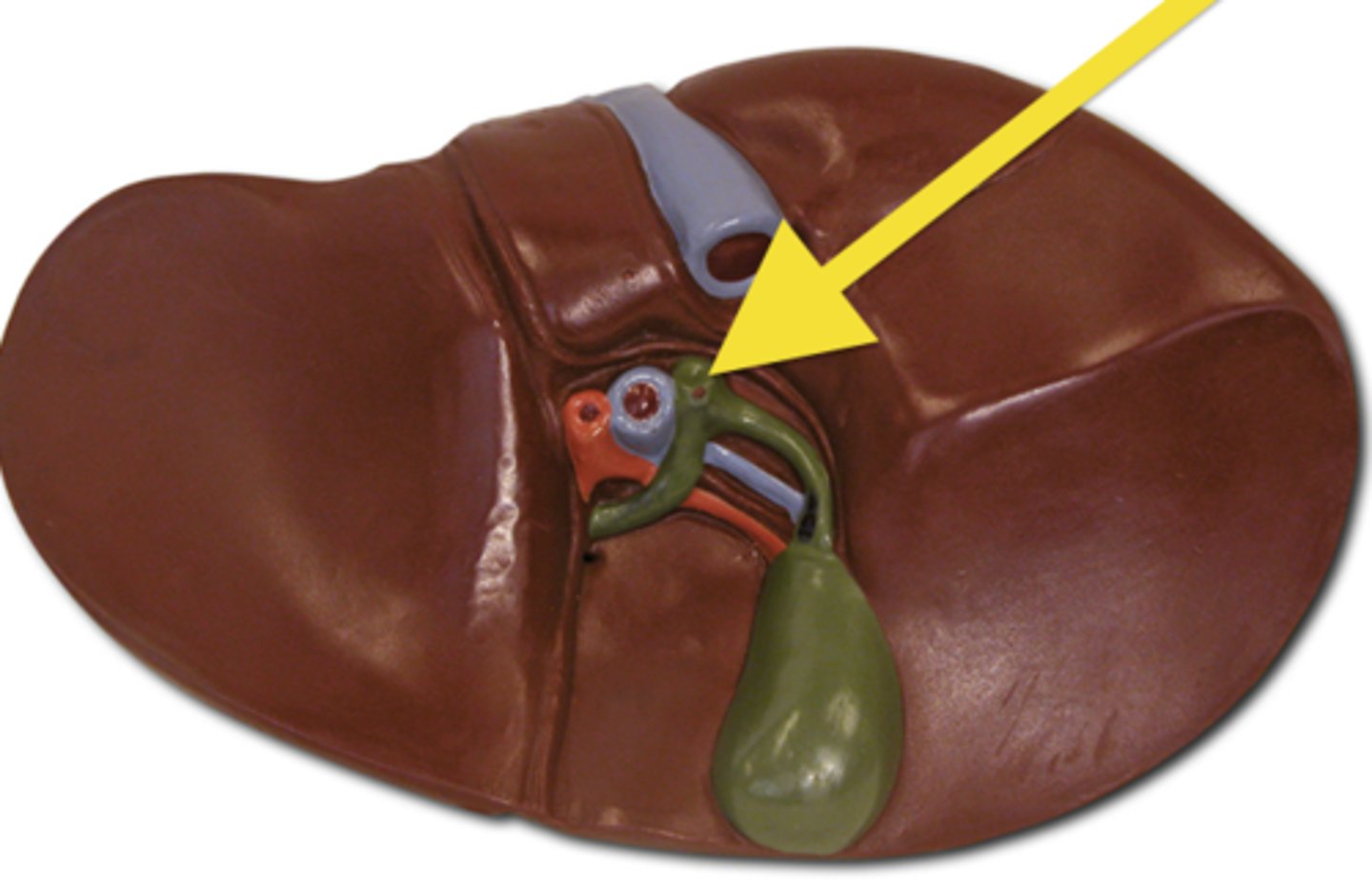
Pancreas
An organ that produces digestive enzymes and hormones like insulin.
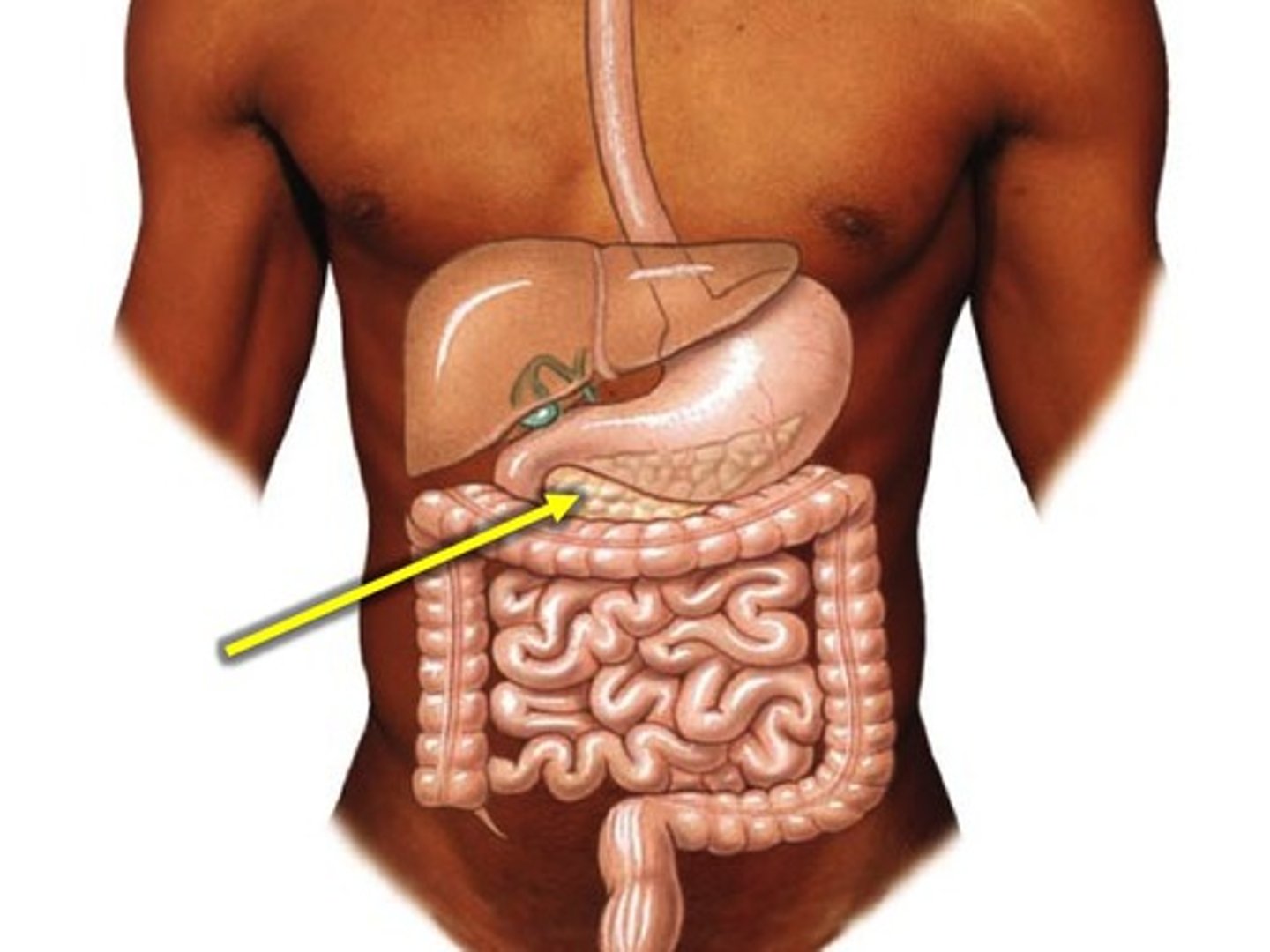
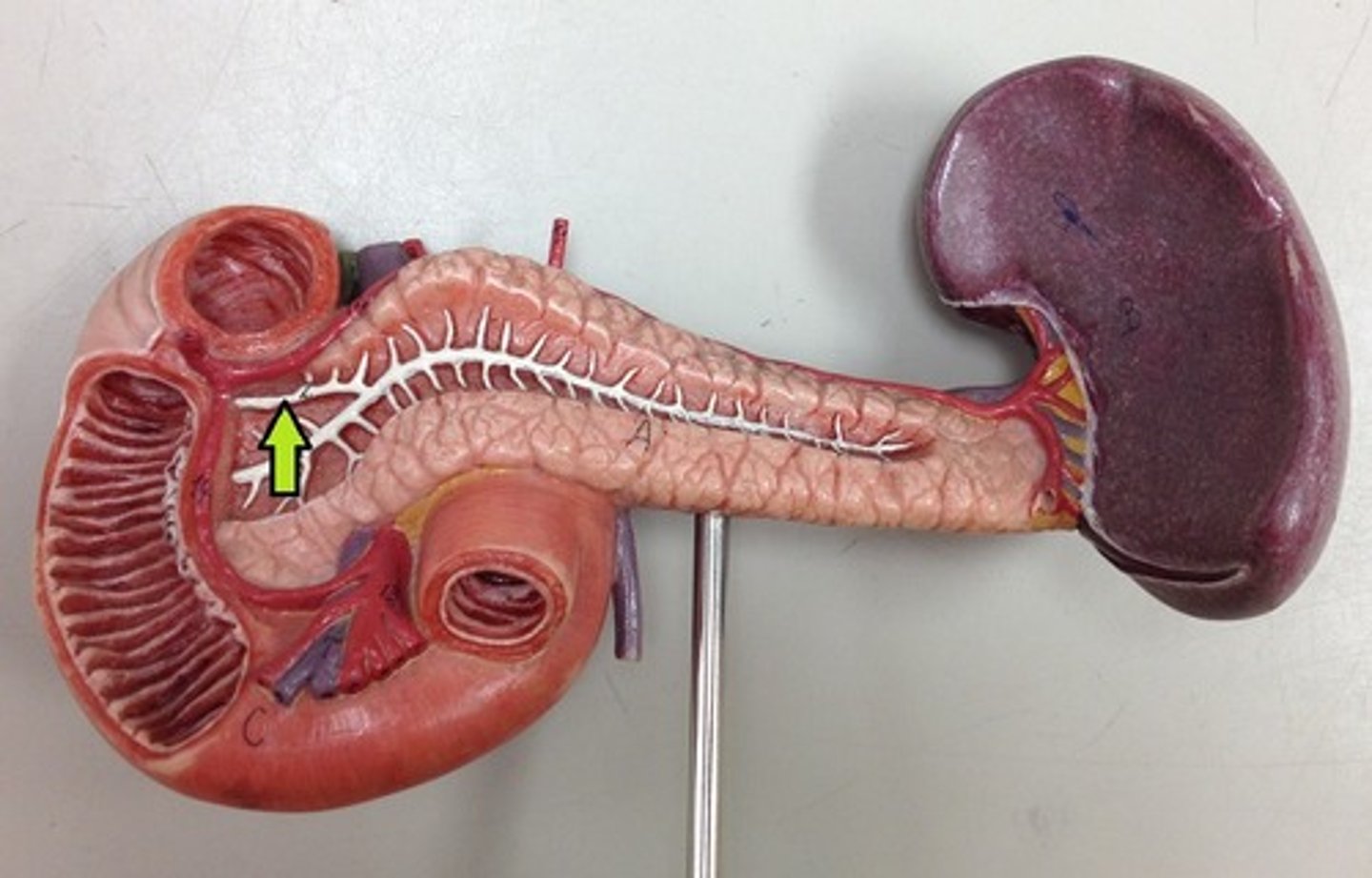
Pancreatic duct
The duct that carries digestive enzymes from the pancreas to the duodenum.
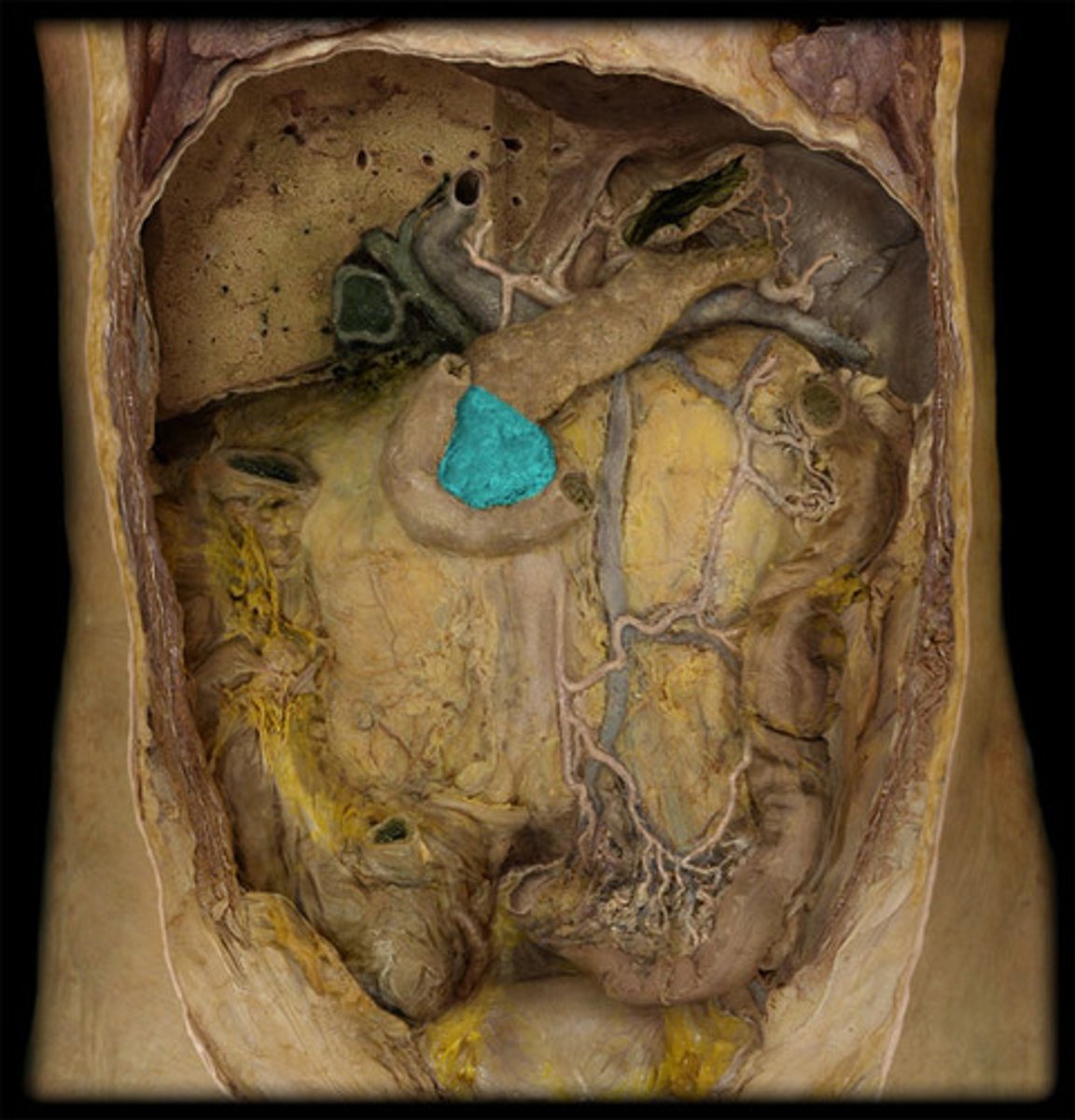
Head (of pancreas)
The wider part of the pancreas that is adjacent to the duodenum.
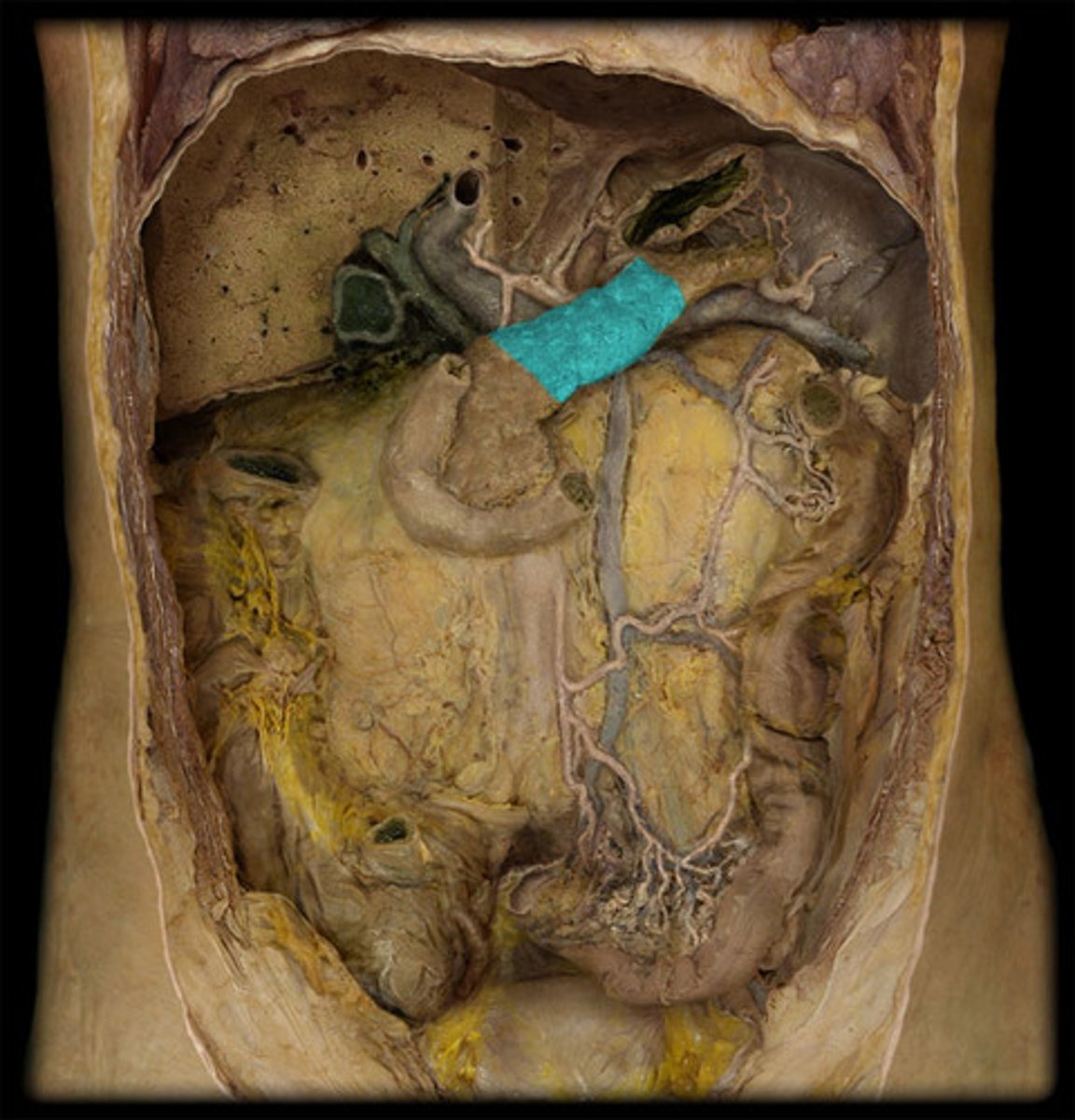
Body (of pancreas)
The central part of the pancreas.
Tail (of pancreas)
The tapered end of the pancreas that extends toward the spleen.