Practical 1
 Call Kai
 Learn
Learn Practice Test
 Spaced Repetition
 Match
Match Flashcards
 Knowt Play
1/301

There's no tags or description
Looks like no tags are added yet.
Name | Mastery | Learn | Test | Matching | Spaced | Call with Kai |
|---|
No analytics yet
Send a link to your students to track their progress
302 Terms
location of nervous tissue
brain, spinal cord, nerves
nucleolus
assembles ribosomes
nuclear membrane
double layer membrane; outer boundary of nucleus
nuclear pore
allows materials to move between nucleus and cytoplasm
centriole
cylindrical organelle that occurs in pairs; involved in the development of spindle fibers
golgi apparatus
final assembly, transport and packaging of materials, mostly for secretion from sell
secretory vesicles
export materials via exocytosis
lysosome
digestion within the cell of large molecules into their simpler components
mitochondrion
site of aerobic steps of cellular respiration, where most ATP is produced
what events happen during interphase
the cell is not dividing, general cell growth, and DNA replication
what events occur during prophase
cell division, nuclear membrane disappears, chromatin condenses into chromosomes, spindle apparatus forms
what events happen in metaphase
chromosomes line up along the metaphase plate
what events happen in anaphase
separation of genetic material and sister chromatids pulled to opposite poles by spindle apparatus
structure of nervous tissue
cell body, dendrites, axon (tail) which is wrapped in myelin sheath
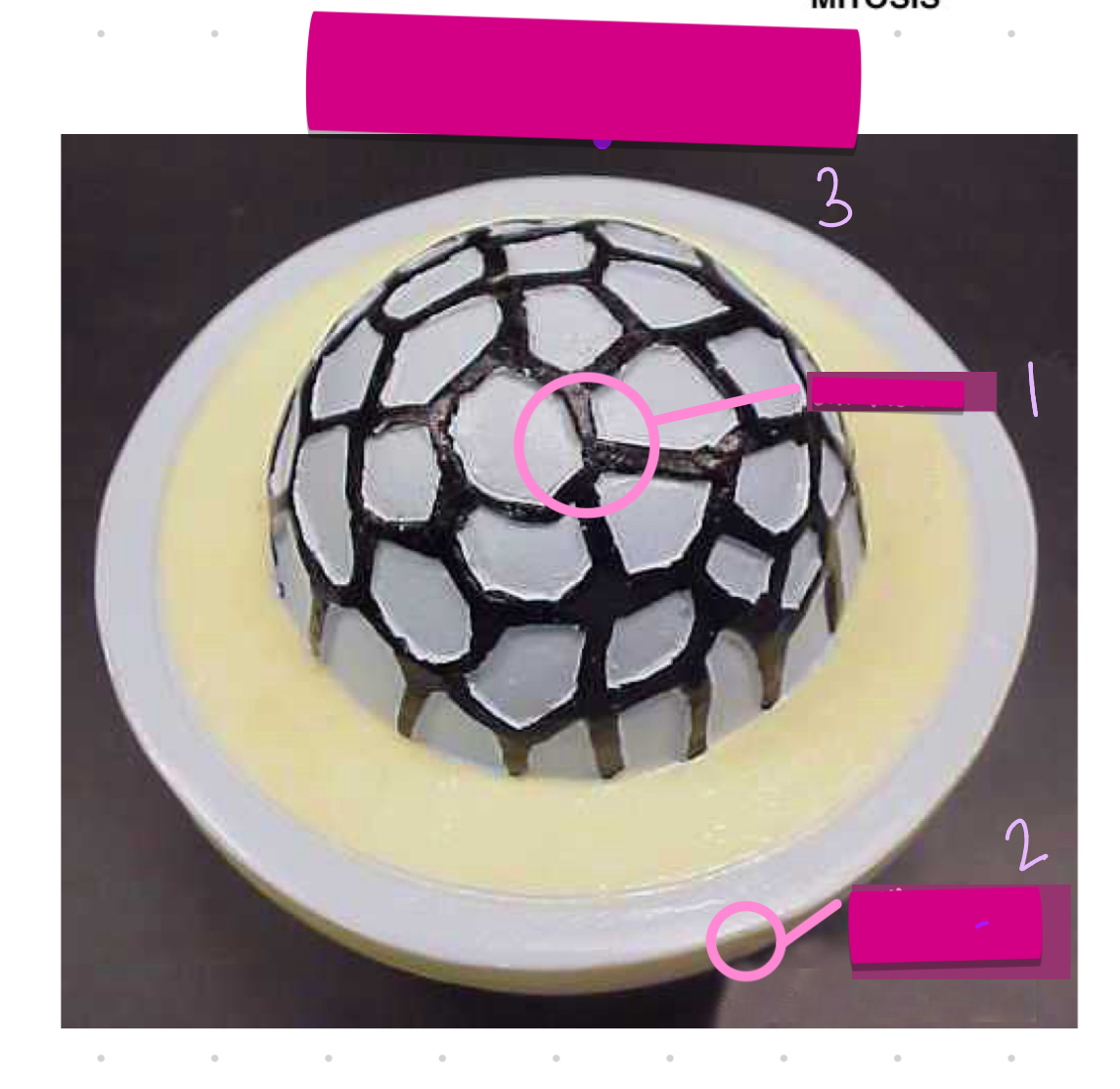
1
chromatin
nucleus
contains chromatic and nucleolus
chromatin
location of DNA (genes); provides genetic regulation of the cell
cell membrane (plama membrane)
regulates passage of materials into and out of the cell; selectively permeable
rough endoplasmic reticulum
synthesis, transport, and packaging of proteins
smooth endoplasmic reticulum
synthesis, transport, and packaging of carbohydrates and lipids
ribosome
site of protein synthesis
centrosome
contains centrioles
peroxisome
detoxify harmful toxins like alcohols and hydrogen peroxide
cytoplasm
all material inside the cell except the nucleus
cytosol
aqueous part of cytoplasm
What is the order of the stages of mitosis
interphase, prophase, metaphase, anaphase and telophase/cyctokinesis
what events occur during telophase
chromosomes reach the opposite poles and clump, events of prophase are reversed, chromosomes convert to chromatin, nucleolus and nuclear membrane reform, spindle apparatus dismantled
what evens occur during cytokinesis
division of the cytoplasm into 2 cells
tissue
groups of cells that are similar and structure and function
tissues are arranged in a pattern that
helps the tissue achieve its function
what are the four types of tissue
epithelium, muscle, connective, and nervous
how do tissues fit into the chemical level of organization
the chemical level of organization contains atoms and molecule which make up every living thing. tissues could not exist without them
how do tissues fit into the organelle level of organization
molecules associate in certain ways to form organelles. these function as the mini organs of cells and are what allow cellular processes to occur. cells could not exist without organelles and therefore tissue could not exist.
how do tissues fit into the cellular level of organization
the cell is the smallest fundamental unit of life. when cells that are similar in structure and function cluster together they form a tissue. tissues are made up of cells.
how do tissues fit into the organ level of organization
An organ is a structure composed of two or more different types of tissues working together to perform a complex task. Organs are made up of tissue and could not exist without them.
how do tissues fit into the organ system level of organization
An organ system consists of multiple organs that cooperate closely to accomplish a common, major bodily purpose. the organ system is made up of organs, which is made up of tissue. many types of tissue help make up an organ system,
how do tissues fit into the organism level of organization
The highest level of organization. All the organ systems function together in harmony to maintain homeostasis and sustain the life of a single, independent living entity—the organism. We could not exist without tissues making up our body to perform various functions.
Epithelial tissue
refers to the sheets of cells that cover exterior surfaces of the body, line internal cavities and passageways, and form certain glands.
Muscle tissue
is excitable, responding to stimulation and contracting to provide movement, and occurs as three major types: skeletal (voluntary) muscle, smooth muscle, and cardiac muscle in the heart.
Nervous tissue
is also excitable, allowing the propagation of electrochemical signals in the form of nerve impulses that communicate between different regions of the body
connective tissue
binds the cells and organs of the body together and functions in the protection, support, and integration of all parts of the body.
Characteristics of epithelial tissue
form continuous sheets (fit like tiles), apical surface, basement membrane, and they can regenerate and repair quickly
apical surface of epithelial tissue
all epithelial cells have a top surface that borders an open space known as lumen
basement membrane
underside of all epithelial cells which anchors them to connective tissue
location of muscle tissue
cardiac muscle, smooth muscle, skeletal muscle
location of epithelial tissue
lining of GI tract organs and other hollow organs, skin surface
location of connective tissue
fat and other soft padding tissue, bone, tendon
4 functions of epithelial tissue
protection, absorption, filtration, secretion
epithelial tissue functions - protection
skin protects from sunlight, bacteria, and physical damage
epithelial tissue functions - absorption
lining of small intestine, absorbing nutrients into blood
epithelial functions - filtration
lining of kidney tubules filtering wastes from blood plasma
epithelial tissue functions - secretion
different glands produce perspiration, oil, digestive enzymes and mucus
how do you classify epithelial tissue
looking at the cell layers and shape
epithelial tissue cell shape - squamous
flattened like fish scales
epithelial tissue cell shape - cuboidal
cubes
epithelial tissue cell shape - columnar
columns
what is the difference between simple and stratified in epithelial tissue cell layers?
simple is one layer and stratified is many layers (named for type of cell at apical surface)
simple squamous epithelium structure
single layer of flattened cells
simple squamous epithelium functions
absorption and filtration
location of simple squamous epithelium
lining of lymphatic and cardiovascular vessels, lining of air sacs in lungs, form serous membranes in body cavity
simple cuboidal epithelium structure
single layer of cube shaped cells
simple cuboidal epithelium function
secretion and transportation in glands, filtration in kidneys, absorption
location of simple cuboidal epithelium
ducts, kidney tubules, secretory portions of small glands
simple columnar epithelium structure
elongated layer of cells with nuclei at same level
functions of simple columnar epithelium
absorption, protection and secretion of mucous and enzymes
location of simple columnar epithelium
linings of entire digestive tract
pseudostratified ciliated columnar epithelium structure
irregularly shaped cells with nuclei at different levels, appear stratified but arent, all cells reach basement membrane
function of pseudostratified ciliated columnar epithelium
secretion of mucous, cilia sweep mucous
location of pseudostratified ciliated columnar epithelium
lining the trachea and most of the upper respiratory tract
stratified squamous epithelium structure
many layers (usually cuboidal or columnar at bottom and squamous at top
function of stratified squamous epithelium
protect against abrasion
location of stratified squamous epithelium
skin, mouth, throat, esophagus, mouth, vagina
what is the most common type of epithelium
stratified squamous epithelium
transtional epithelium structure
many layers, specialized (cells at base are cuboidal or columnar and surface will vary), change between stratified and simple as tissue is stretched
function of transitional epithelium
allows strethcing to change size
location of transitional epithelium
urinary bladder, ureters urethra
what is the most abundant tissue in the body
connective tissue
components of connective tissue include
cells, large amounts of amorphous ground substance, protein fibers
connective tissue contains cells that are dispersed
in a MATRIX (major component of the matrix is a ground substance often criss crossed by protein fibers)
the main function of connective tissue is to
bind structures together
what are the four types of connective tissue
loose, cartilage, bone, blood
types of loose connective tissue
areolar, adipose
types of cartilage
hyaline, elastic, fibrocartilage
types of blood (connective tissue)
red blood cell (erythrocyte), white blood cell (leukocyte) and platelet
structure of areolar tissue
looks like a random web like fashion
areolar tissue fills
the space between muscle fibers, surrounds blood and lymph vessels, and supports organs in the abdominal cavity
function of areolar tissue
wraps and cushions organs
location of areolar tissue
widely distributed under the epithelia of body
structure of adipose tissue
minimal extracellular matrix
function of adipose tissue
provides reserve food fuel, insulation, supports and protects organs
location of adipose tissue
under skin, around kidneys and within abdomen and breasts
define cartilage
a connective tissue consisting of collagenous fibers embedded in a firm matrix of chondroitin sulfates
function of hyaline cartilage
supports, reinforces, cushions, and resists compressive stress
location of hyaline cartilage
ends of long bones, forms costal cartilage of ribs, cartilages of nose, trachea and larynx
function of elastic cartilage
maintains shape of a structure while allowing flexibility
location of elastic cartilage
supports the external ear and epiglottis
function of fibrocartilage
absorb shock and is strong
location of fibrocartilage
intervertebral discs, pubic symphysis, discs of knee joint
function of osseous or compact bone tissue
supports and protects, provides levers for muscles, stores calcium and minerals, red marrow
define red marrow
site of hematopoiesis (production of red and white blood cells and platelets)