3.4.4 Genetic diversity and adaptation
 Call Kai
 Learn
Learn Practice Test
 Spaced Repetition
 Match
Match Flashcards
 Knowt Play
1/9

There's no tags or description
Looks like no tags are added yet.
Name | Mastery | Learn | Test | Matching | Spaced | Call with Kai |
|---|
No analytics yet
Send a link to your students to track their progress
10 Terms
Define genetic diversity. (1 mark)
The number of different alleles of genes in a population.
Describe what alleles are and explain how they arise. (2 marks)
- Alleles are variations of a particular gene (at the same locus) with a different DNA base sequence.
- They arise by mutation.
Define a population. (2 marks)
- A group of organisms of the same species in a particular space at a particular time.
- That can potentially interbreed to produce fertile offspring.
Explain the importance of genetic diversity. (4 marks)
- Enables natural selection to occur.
- In certain environments, a new allele of a gene might benefit its possessor.
- May cause a change in the polypeptide (protein) coded for, which positively changes its properties.
- Gives the possessor a selective advantage, increasing the chances of survival and reproductive success.
Define evolution. (2 marks)
- A change in allele frequency over many generations in a population.
- Occurs through the process of natural selection.
Explain the principles of natural selection in the evolution of populations. (5 marks)
1. Random gene mutations can result in new alleles of a gene.
2. In certain environments, the new allele might benefit its possessor, giving a selective advantage.
3. Organisms with the advantageous allele are more likely to survive and reproduce successfully.
4. The advantageous allele is inherited by members of the next generation.
5. Over many generations, the advantageous allele increases in frequency in the population.
Describe the three types of adaptations. (3 marks)
- Anatomical adaptations are structural or physical features that increase the chance of survival.
- Physiological adaptations are processes or chemical reactions that increase the chance of survival.
- Behavioural adaptations are ways in which an organism acts that increase the chance of survival.
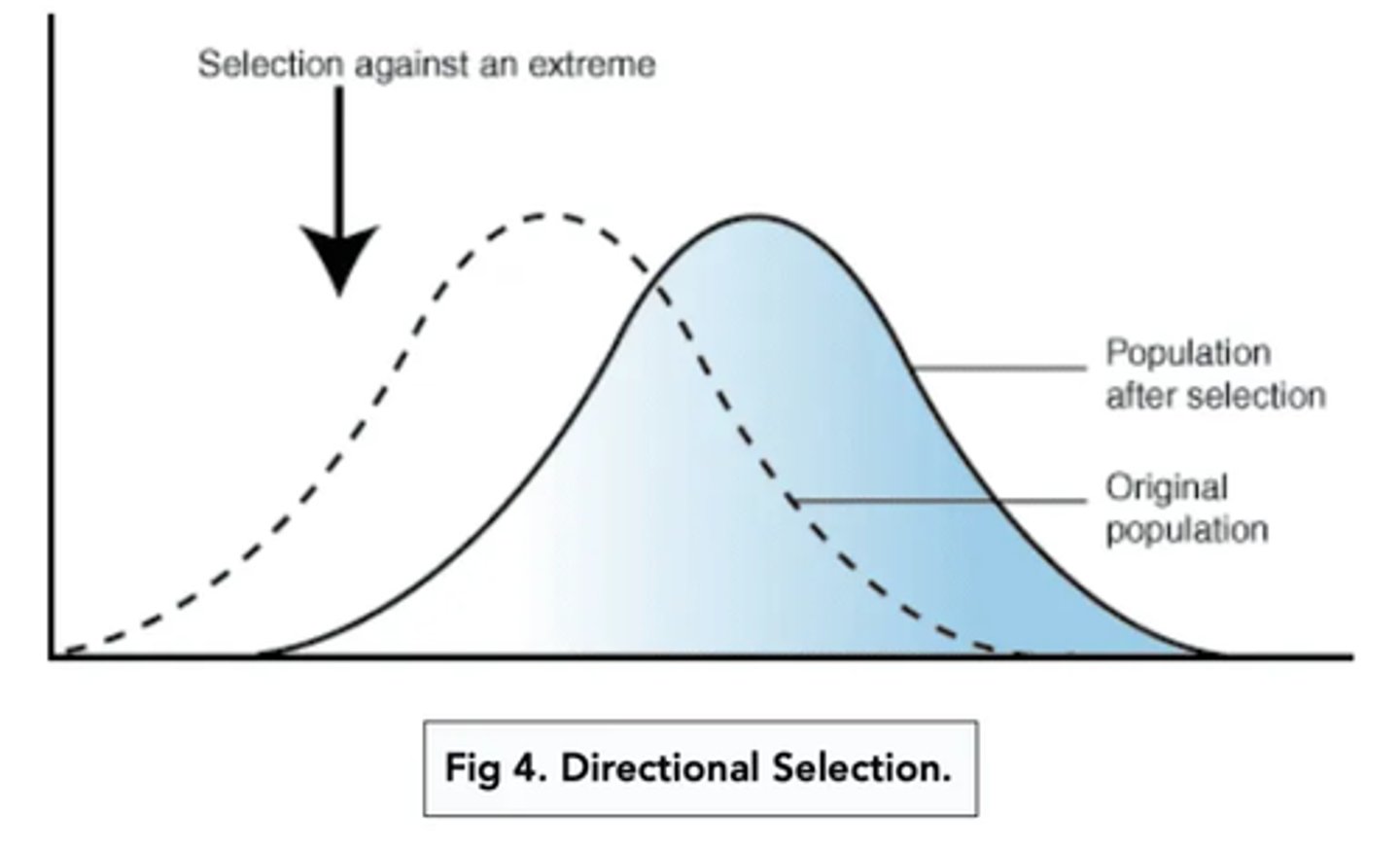
Explain directional selection, with examples. (4 marks)
- Directional selection occurs when organisms with an extreme variation of a trait have a selective advantage, e.g. bacteria with high resistance to an antibiotic.
- Directional selection often happens when there is a change in the environment, and over time the frequency of alleles for the extreme trait increases, shifting the normal distribution curve.
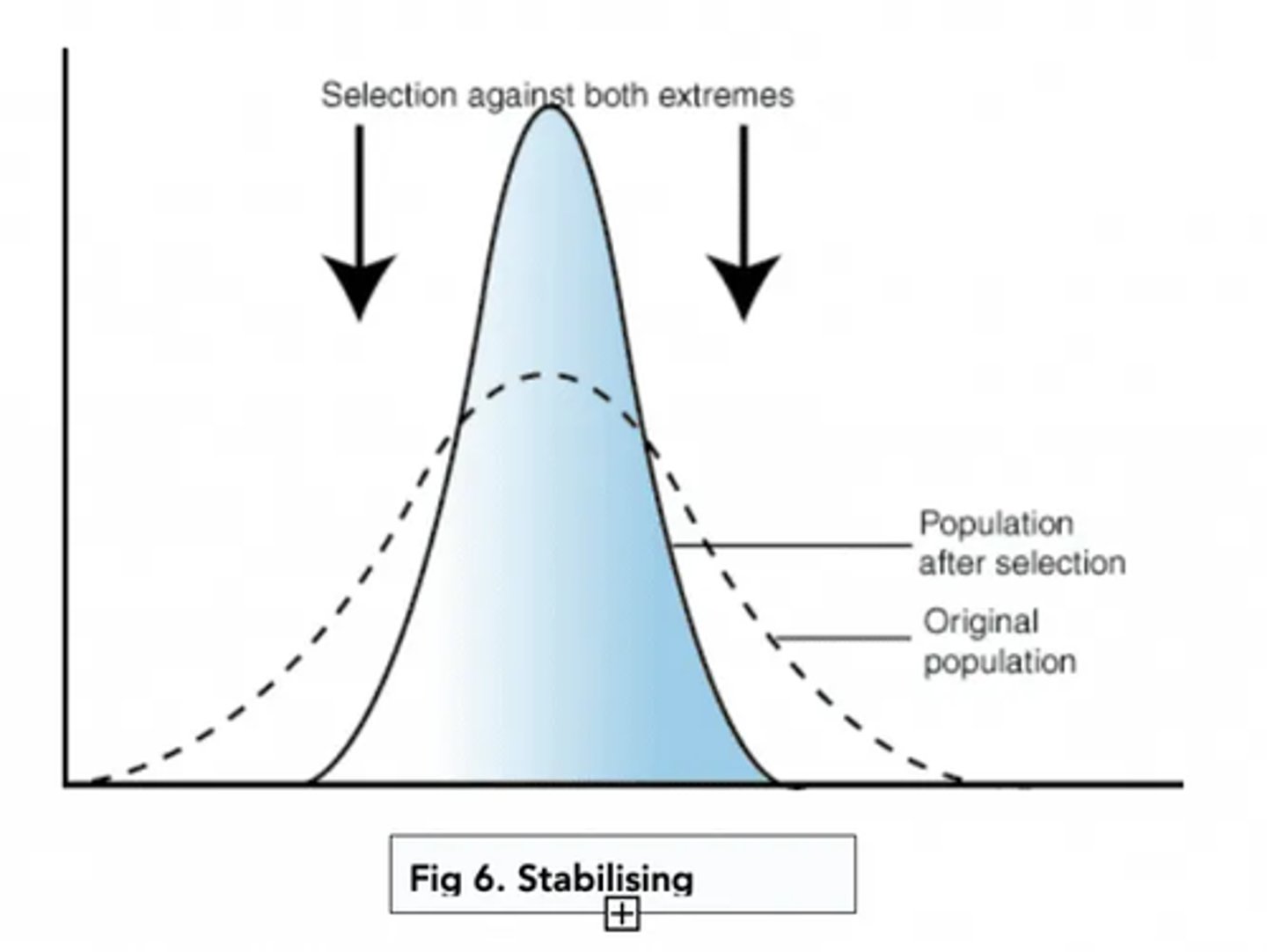
Explain stabilising selection, with examples. (4 marks)
- Stabilising selection occurs when organisms with an average variation of a trait have a selective advantage, e.g. human babies with average birth weight.
- Stabilising selection usually happens in stable environments and increases the frequency of alleles for the average trait, reducing variation around the mean.
Still learning (9)
You've begun learning these terms. Keep up the good work!