cellular respiration
 Call Kai
 Learn
Learn Practice Test
 Spaced Repetition
 Match
Match Flashcards
 Knowt Play
1/11

Earn XP
Description and Tags
bio sac 2
Name | Mastery | Learn | Test | Matching | Spaced | Call with Kai |
|---|
No analytics yet
Send a link to your students to track their progress
12 Terms
Cellular respiration formula
C6H12O6 + 6O2 → 6CO2 + 6H2O + ATP
glycolysis
occurs in cytosol
does not require oxygen
glucose is split into two pyruvate molecules
uses the energy from 2 ATP but produces 4 ATP - net gain of 2 ATP
NAD+ → NADPH, carrying electrons and protons
NADH & FADH2
coenzymes loaded during glycolysis + krebs cycle
NAD+ + H ions and electrons → NADH; loaded in matrix and krebs cycle
FAD + H ions and electrons → FADH2; only loaded in matrix
loaded forms transfer electrons and protons during electron transport chain
aerobic respiration
occurs in cytosol and mitochondria
energy released from glucose is used to turn ADP + Pi into ATP
3 stages; glycolysis, Krebs cycle, electron transport chain
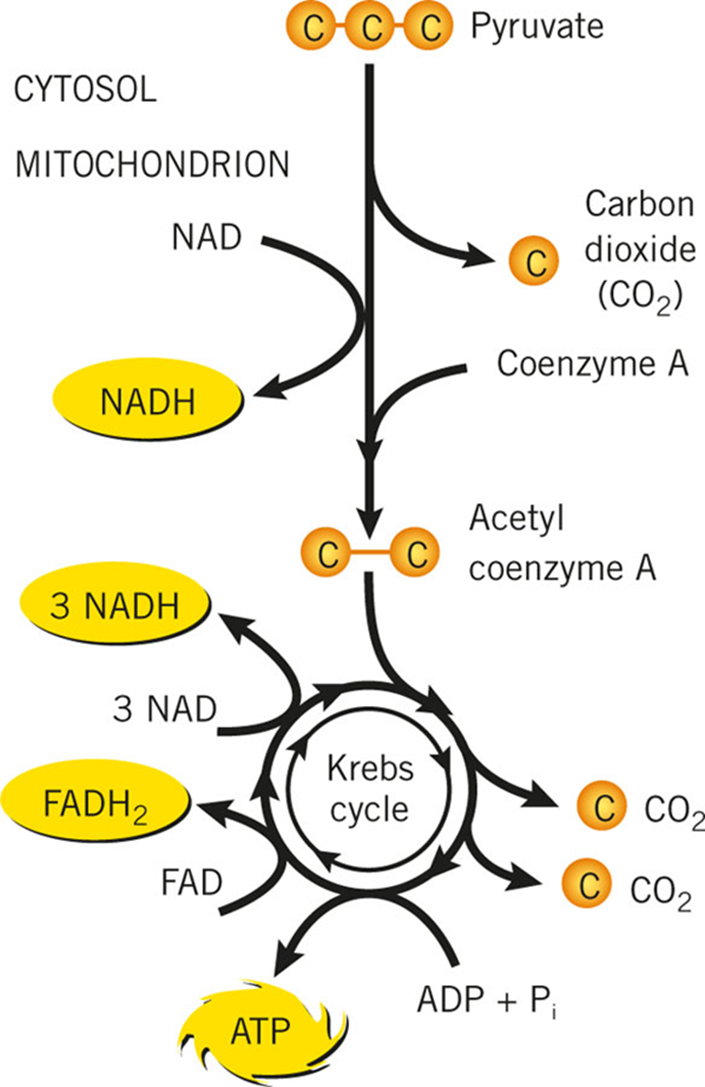
Krebs cycle
occurs in mitochondrial matrix
Acetyl CoA (from pyruvate) → CO2
NAD+ → NADH
FAD → FADH2
2ADP+Pi → 2ATP
electron transport chain
movement of protons (H+) and electrons across the inner mitochondrial membrane to generate ATP
oxygen is required- “acceptor”
oxygen gas combines with protons and electrons to form water; if oxygen wasn’t present the ETC could not be completed due to build-up of H+ ions and electrons
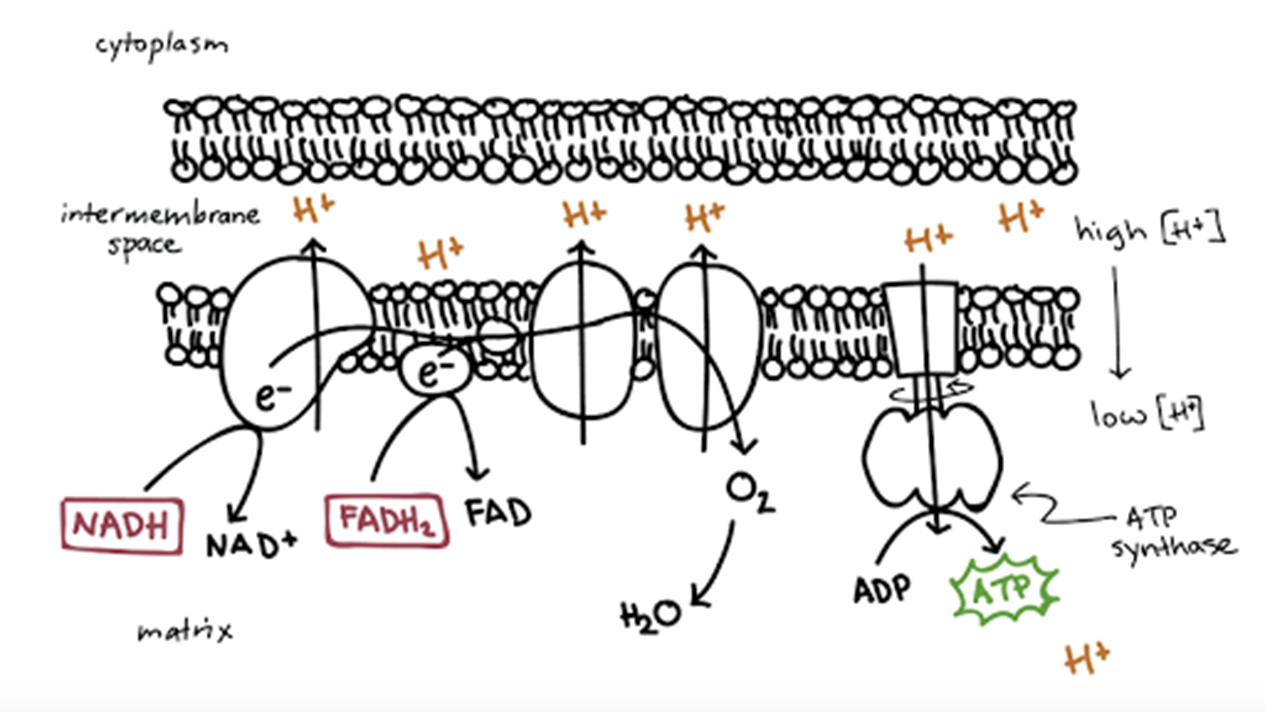
O2 → H2O
26/28 ADP+Pi → 26/28 ATP
NADH → NAD+
FADH2 → FAD
anaerobic fermentation
occurs in cytosol when there is not enough oxygen
→ ETC cannot be completed
→ NADH and FADH2 cannot become NAD+ and FAD, so Krebs cycle cannot occur
lactic acid fermentation (animals)
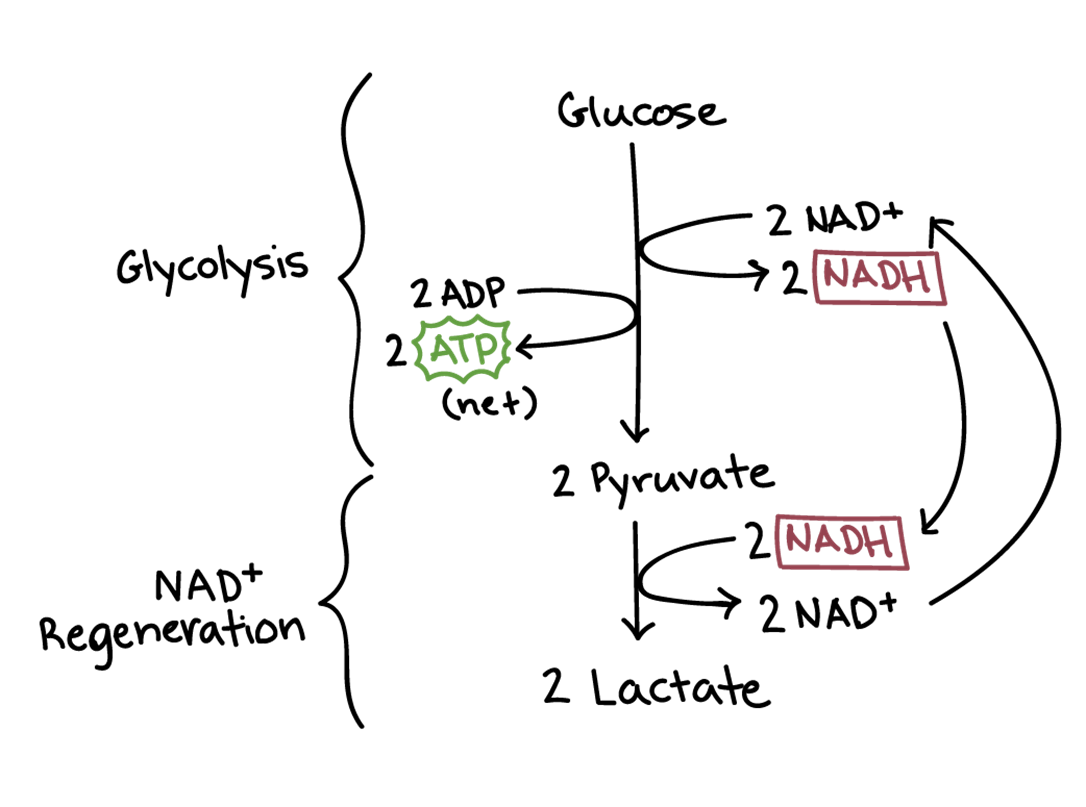
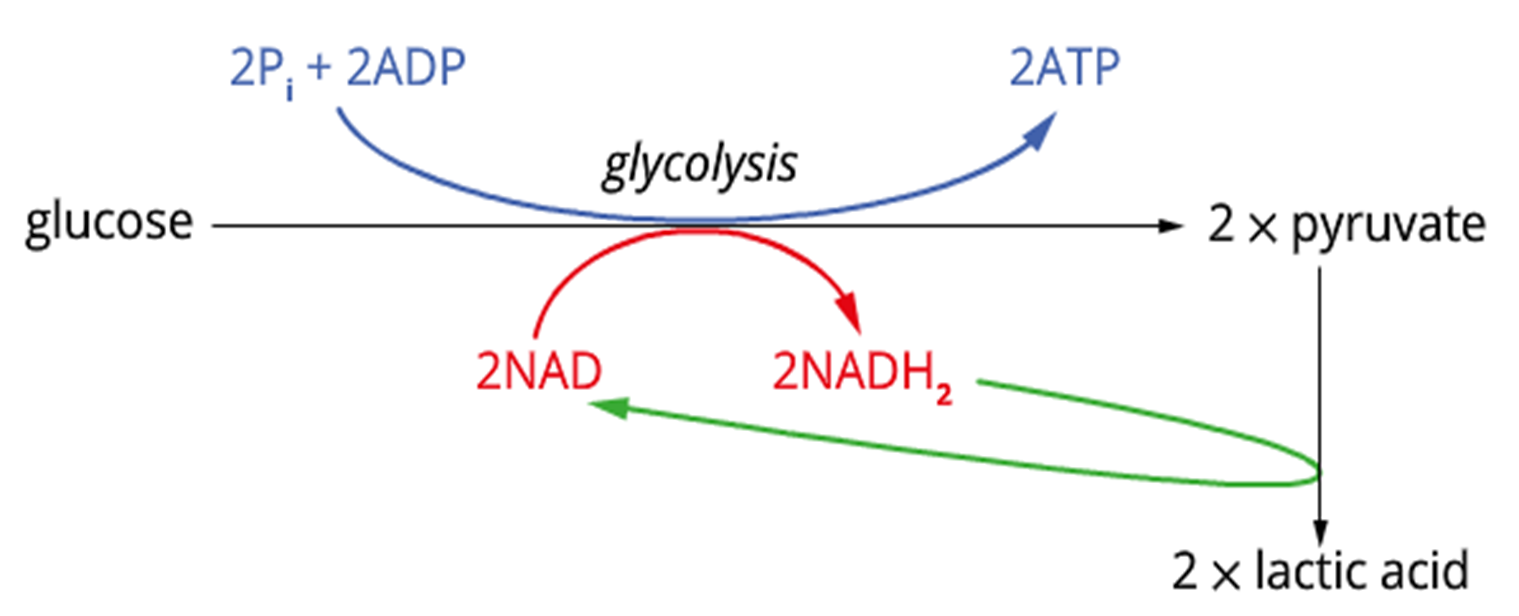
glycolysis occurs, producing 2 ATP (net) and 2 pyruvate
pyruvate is converted into lactic acid using NADH, which becomes NAD+ again
NAD+ can be used for further glycolysis, but lactic acid build-up is toxic
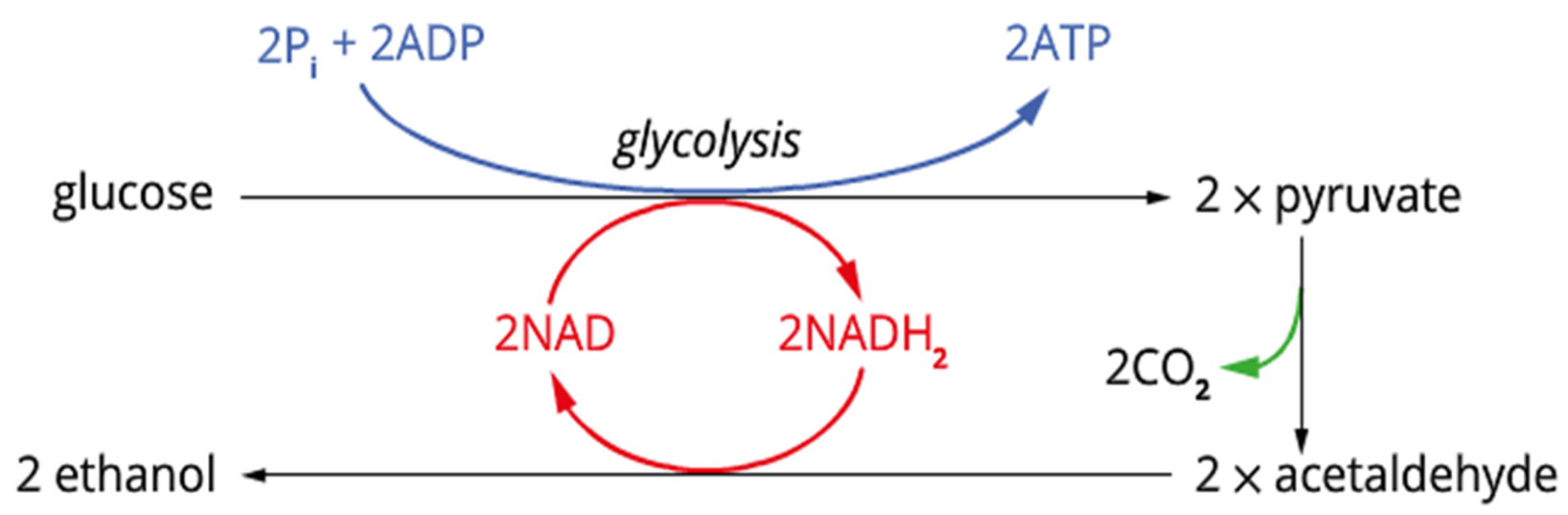
ethanol fermentation (yeast)
glycolysis occurs, producing 2 ATP (net) and 2 pyruvate
pyruvate is converted into ethanol and CO2 using NADH, which becomes NAD+
NAD+ can be used for further glycolysis, but ethanol build-up is toxic
bioethanol production
Breakdown of biomass into glucose by enzymatic hydrolysis
Production of ethanol via fermentation under anaerobic conditions
Bioethanol is dehydrated and purified
bioethanol advantages
•Reduced carbon emissions; decreases enhanced greenhouse effect
•Renewable; provide energy security
•Sourced locally; reduced transport requirements
•Can be used as an input to make biodiesel
bioethanol disadvantages
•Competes with land usage for food production and ecosystems
•More expensive to produce
•Reduced compatibility with existing vehicles compared to fossil fuels