L18. Bone and Soft Tissue Pathology III
 Call Kai
 Learn
Learn Practice Test
 Spaced Repetition
 Match
Match Flashcards
 Knowt Play
1/71

There's no tags or description
Looks like no tags are added yet.
Name | Mastery | Learn | Test | Matching | Spaced | Call with Kai |
|---|
No analytics yet
Send a link to your students to track their progress
72 Terms
Osteoid Osteoma is lesion of --- bone
cortical
Osteiod osteoma is a --- type of tumor
benign
Osteoblastoma is a --- type of tumor
benign
Osteosarcoma is ---
malignant
True / False: bone forming tumors occur in young patients
true - within first 3 decades of life
What population is mainly affected by bone forming tumors?
young males
= first 3 decades of life
Osteoid osteoma occur primarily in --- and ---
tibia and femur
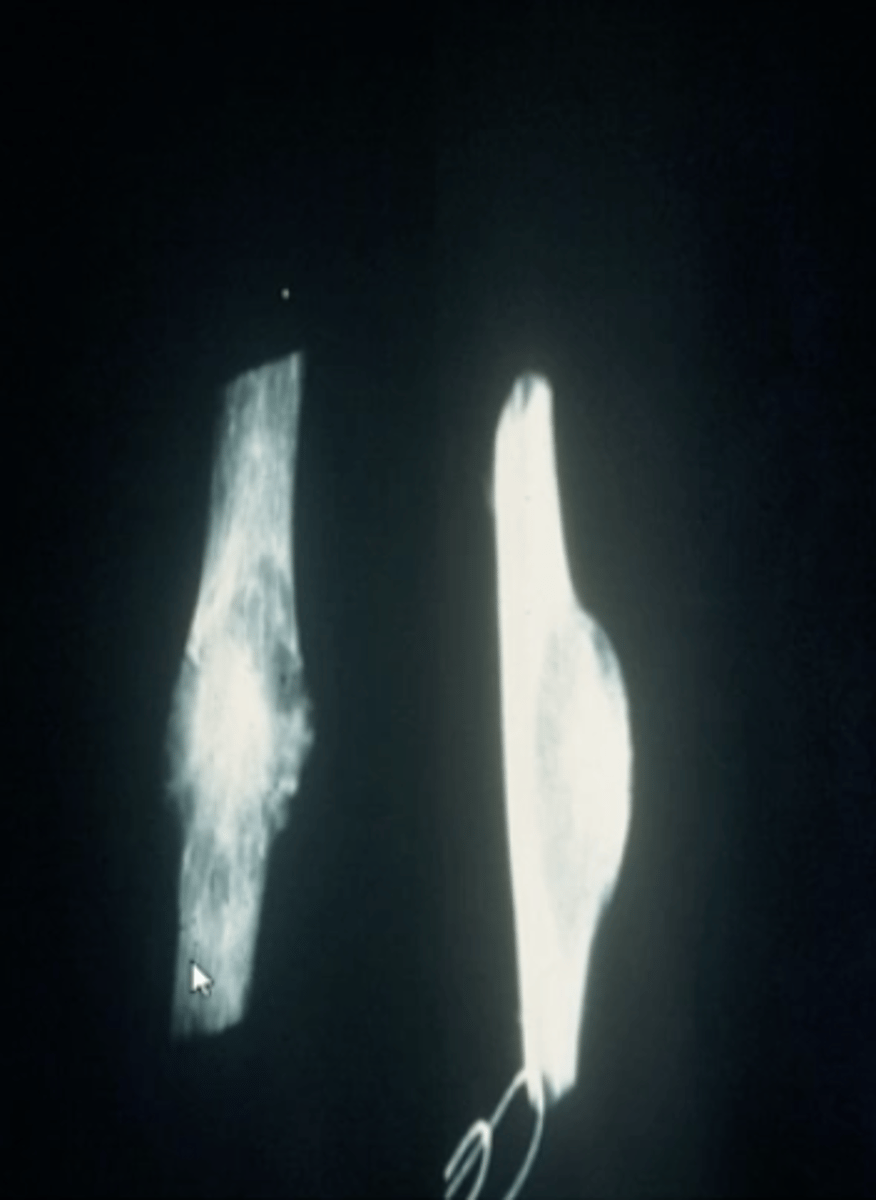
What is the characteristic focus of osteoid osteoma?
Nidus
- radioopaque in the center
- radioluscent in the periphery
Osteosarcoma affects what regions of the body?
metaphysis of long bones
knee (50%)
mandible/maxilla
Osteosarcoma pathogenesis
acquired genetic mutation
mutation in retinoblastoma gene
TP53 mutation = Li Fraumeni
What condition significantly increases the risk of osteosarcoma?
Paget's disease = excessive bone resorption + abnormal bone formation
results in dense thick disorganized bone structure
What hereditary diseases increase risk of osteosarcoma?
somatic mutation in retinoblastoma gene
TP53 mutation = Li Fraumeni
Retinoblastoma gene is a cell cycle ---
regulator
What significantly increases the risk of osteosarcoma? (by 1000x)
somatic mutation in retinoblastoma gene
Li Fraumeni syndrome
TP53 mutation
--- and --- are over-expressed in low grade osteosarcoma
MDM2 and CDK4 (cell cycle regulators)
True / False: if an osteochondroma breaks through the periosteum, it can be a sign of malignant transformation, typically into a chondrosarcoma
true
What is a consideration of malignancy?
tumor destroying underlying tissue
Osteosarcoma is a malignant tumor that produces --
cartilage
Chondroid tumors occur in --- but result in the deposition of ---
form in bone
result in deposition of hyaline cartilage
Osteochondroma
benign bone tumor with a cartilage cap
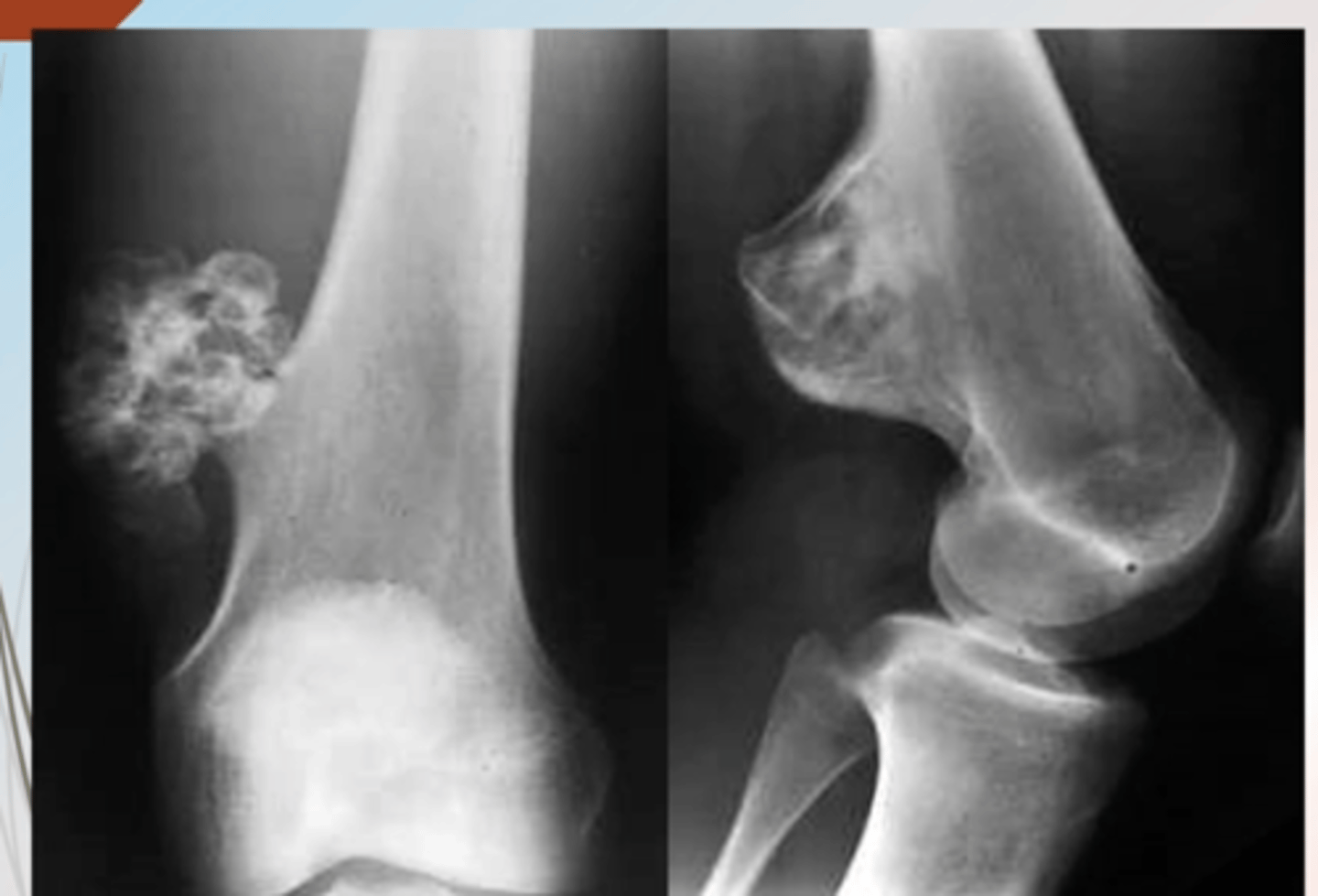
What are the structures present in osteochondroma?
cartilage cap (<2mm) + trabecular bone + medullary cavity
In osteochondroma the cartilage cap is ---
< 2cm (generally a few mm and tend to decrease with age)
Osteochondroma is also called
exostosis
In osteochondroma the cartilage cap resembles the --- of a long bone
end (epiphysis)
Osteochondroma is a --- type of cartilaginous tumor
benign
Osteochondroma is 85% --- meaning that it is the only tumor found in the affected area or body region
solitary =
Which is a cartilage capped bony outgrowth that developed via endochondral ossification but in the wrong direction: osteochondroma or chondroma
osteochondroma
Hereditary multiple osteochondromas (exostoses) are caused by ---
mutations in EXT1 or EXT 2 genes
What does mutations in EXT1 or EXT2 gene cause?
hereditary multiple osteochondroma
Hereditary multiple osteochondroma increases risk of ---
malignant transformation
Chondroma
being tumor composed of hyaline cartilage
Chrondroma is a --- type of cartilaginous tumor
benign
Chondroma is also called ---
enchondroma
Chondroma versus enchondroma
chondroma = surface of bone
enchondorma = inside medullary cavity
Which is inside the medullary cavity (within bone): chondroma or enchondroma?
enchondroma
Chondrosarcoma
malignant tumor of cartilage-producing cells
Ollier syndrome
multiple enchondromas
Maffuci syndrome
multiple enchondroma + soft tissue vascular tumor
Chondroma affects mainly --- and ---
hands and feet
True / False: chondroma present as painless small bumps with no fractures
true
Secondary chondrosarcoma
maligant tumor that rises on pre-existing benign lesion (osteochondroma or chondroma)
chondrosacroma = malignant tumor
What increases risk of secondary chondrosarcoma?
Ollier syndorme or maffuci syndrome = multiple chondromas
The risk for developing secondary chondrosarcoma from multiple osteochondromas is --- %
2%
The risk for developing secondary chondrosarcoma from multiple enchondromas is --- to ---%
2 - 20%
Grade 1 tumors have relatively ---
low cellularity
Tumors vary in cellularity, cytologic atypia, and mitotic activity. They are assigned a grade from
1 - 3
Grade 3 tumors have ---, extreme pleomorphism with bizarre tumor giant cells, mitoses, and necrosis
high cellularity
What tumors rarely metastasize: osteochondromas, chondromas, or chondrosacroma
grade 1 chondrosarcomas rarely metastasize
grade 2 chondrosarcomas spread hematogenously, especially to lungs
Non-ossifying fibroma
Faulty ossification of bone during development
Fibrous dysplasia
gain of function mutation in GNAS-1 gene
----- is composed of curvilinear trabecylae of woven bone surrounded by a moderately cellular fibroblastic proliferation
fibrous dysplasia
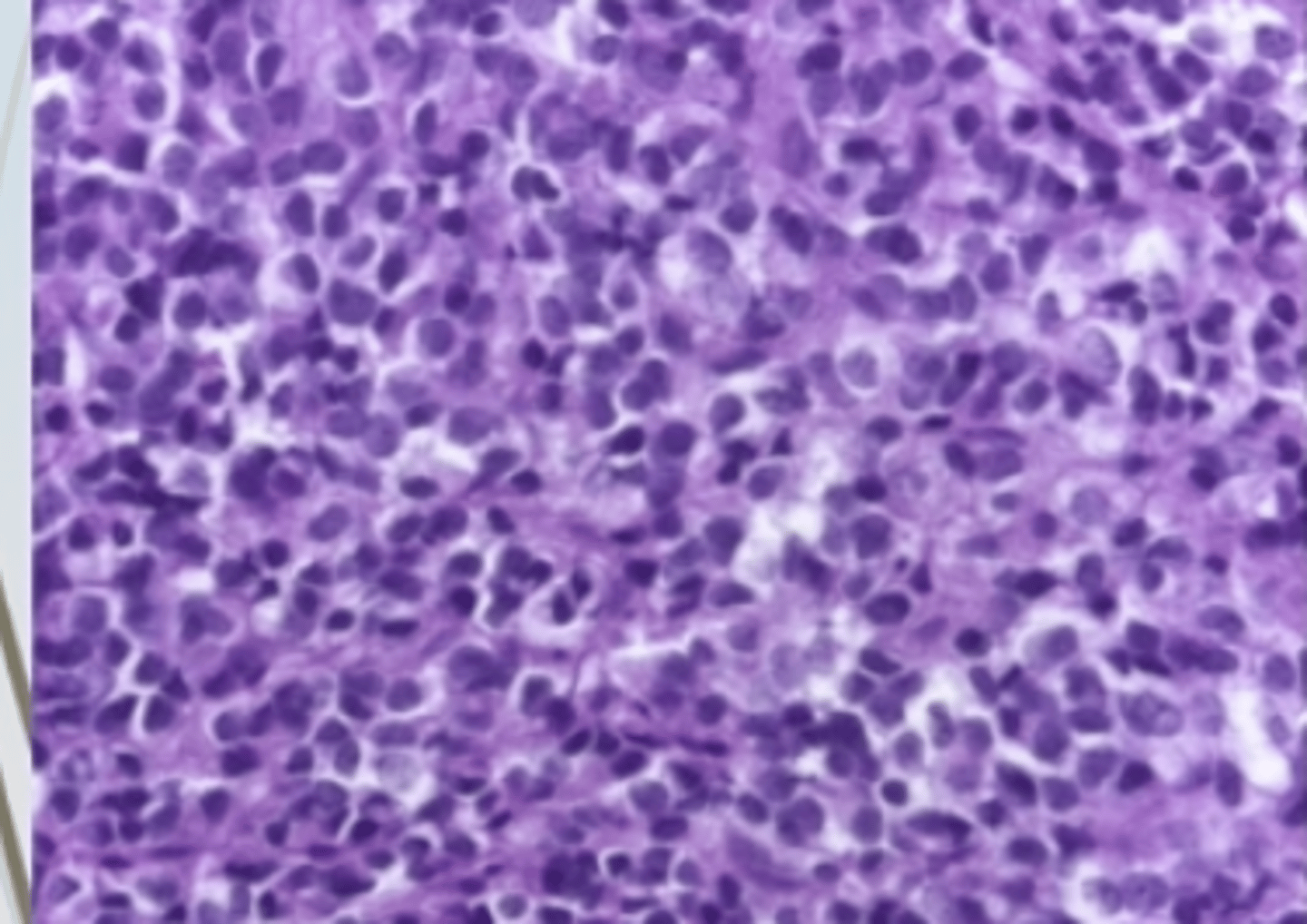
Ewing Sarcoma
rare malignant tumor arising in bone; most often occurring in children
11:22 translocation
Ewing sarcoma is known as a small --- cell tumor
round blue
What tumors are most common in adults:
adenocarcinoma of breast, prostate, lung, kidney
What tumors are most common in children:
neuroblastoma, wilms, rhabdomycosacroma
Metastases to bone most often involve the ---
vertebral column
Soft tissue tumors
-Hodgkin disease
-Non-Hodgkin Lymphoma
-Rhabdomyosarcoma
-Retinoblastoma
Bone tumors and soft tissue tumors are classified as
benign
intermediate
malignant
MDM2 and CDK are diagnostic markers in both --- and ---
osteosarcoma and liposarcoma
Liposarcoma
cancer of fatty tissue
pleomorphic highly atypical cells
Liposarcoma is myxoid translocation of --- and ---
12 and 16
Fibromas
benign tumors of fibrous tissue
Leiomyoma
benign smooth muscle tumor
Leimyosarcoma
malignant smooth muscle tumor
Smooth muscle includes
uterus
retroperitoneum
GI
vessel walls
Rhabdomyoma
benign tumor of skeletal muscle
Rhabdomyosarcoma
malignant tumor of skeletal muscle
What rhabdomyoma is more common in adults?
pleomorphic rhabdomyosarcoma
What rhabdomyoma is more common in children?
embryonal rhabdomyosarcoma
alveolar rhabdomyosarcoma
Intramembranous ossification occurs primarily in which of the following?
A. Femur
B. Humerus
C. Mandible
D. Tibia
C. Mandible
The ---- and --- develop through intramembranous ossification from mesenchymal tissue
mandible and cranial bones