BSC2010 Unit 3 Lecture 6
 Call Kai
 Learn
Learn Practice Test
 Spaced Repetition
 Match
Match Flashcards
 Knowt Play
1/19

There's no tags or description
Looks like no tags are added yet.
Name | Mastery | Learn | Test | Matching | Spaced | Call with Kai |
|---|
No analytics yet
Send a link to your students to track their progress
20 Terms
What is the main reason genome size varies greatly between species?
Differences in amount of non-coding DNA
What percent of human DNA is protein-coding?
3%
Genomes are measured in ___.
base pairs
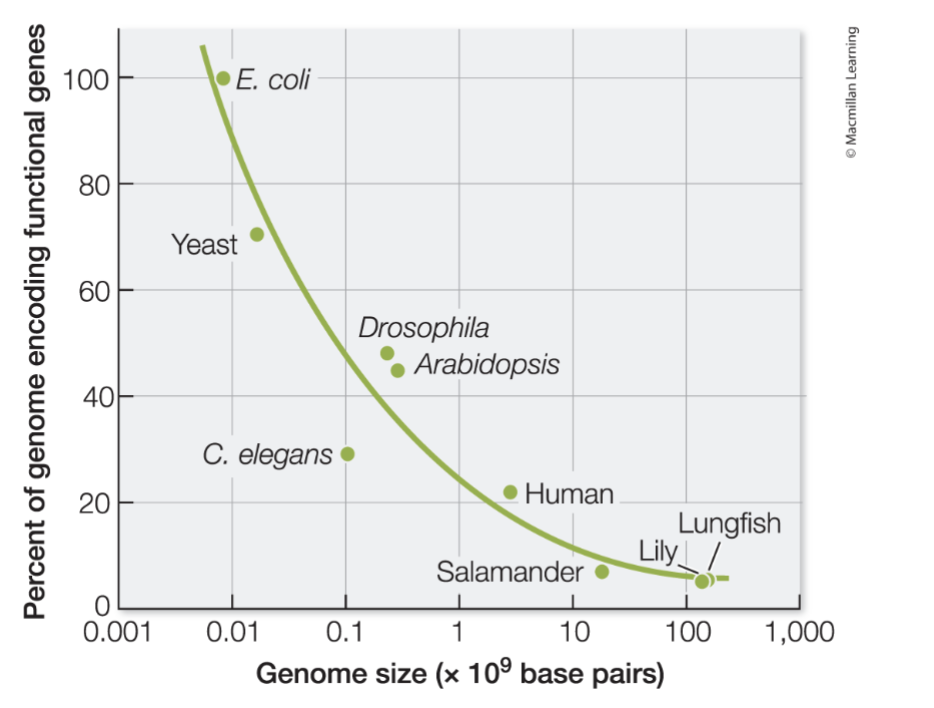
Interpret this graph
Smaller organisms tend to have higher percent of coding DNA, but there are exceptions.
Pseudogene
Noncoding DNA that lost its original function
Functions of noncoding DNA
-Alter expression of surrounding genes
-Occasionally develop novel functions
-Help maintain chromosome structure
-Transposons (jumping genes)
The amount of noncoding DNA may be related to ____.
population size
“Two-fold cost of sex”
-A female only passes 50% of her genes to each offspring (cost of meiosis)
-Dividing offspring into genders reduces a female’s overall reproductive rate (cost of males)
Another disadvantage of sexual reproduction
Recombination can break up adaptive combinations of genes
In a sexually-reproducing population, what do we expect of a single asexual mutant?
Higher fitness → quickly spread
Advantages of sexual reproduction
-Elimination of deleterious mutations through recombination
-Variety of genetic combinations in each generation can be advantageous
-Facilitates repair of damaged DNA
Muller’s ratchet
In a non-recombining genome, deleterious mutations accumulate (“ratchet up”) in each successive generation.
How are deleterious mutations eliminated in asexual species?
Death of the lineage
Does sex directly influence the frequencies of alleles?
No, it generates new combinations of alleles on which natural selection can act.
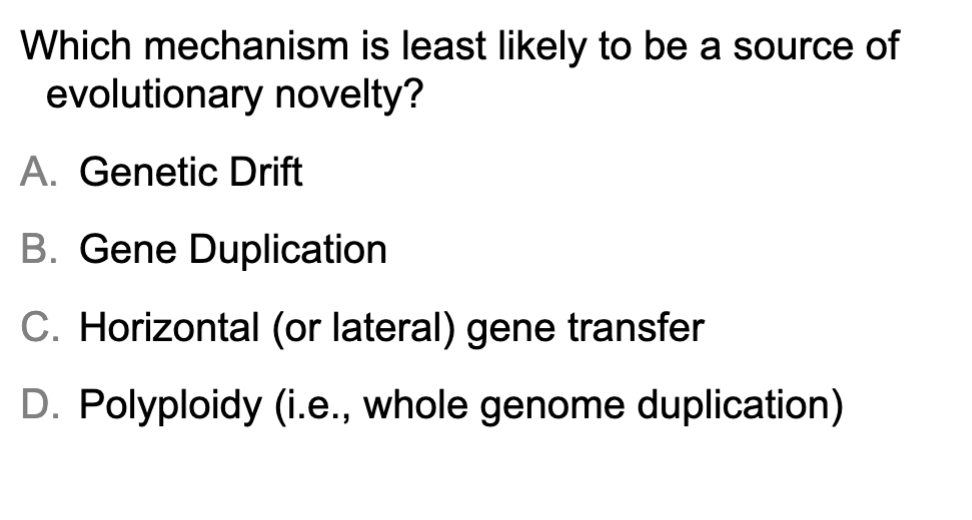
Origins of novel traits
Lateral gene transfer, horizontal gene transfer, gene duplication, polyploidy
Lateral gene transfer
Individual genes, organelles, or genome fragments move horizontally from one lineage to another.
Examples of lateral gene transfer
Antibiotic resistance. wolbachia in insects
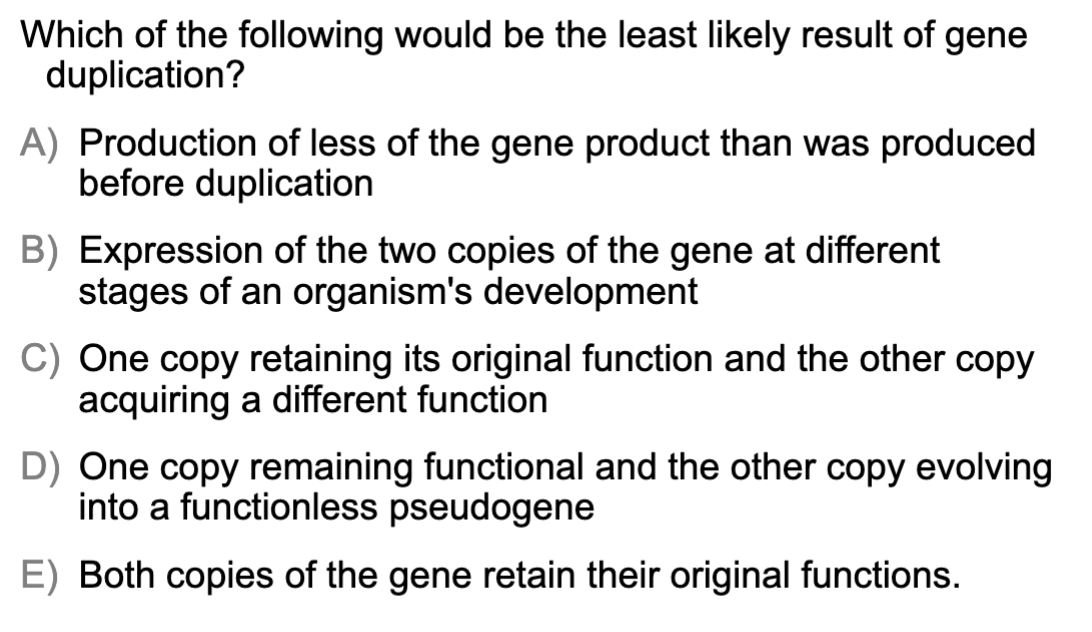
Different fates of gene copies
Both copies retain original function
Each copy may specialize
One copy accumulates deleterious mutations and becomes a functionless pseudogene
One copy retains original function and the other evolves a new function.
A
A