Chemiosmosis & Oxidative Phosphorylation
 Call Kai
 Learn
Learn Practice Test
 Spaced Repetition
 Match
Match Flashcards
 Knowt Play
1/74

There's no tags or description
Looks like no tags are added yet.
Name | Mastery | Learn | Test | Matching | Spaced | Call with Kai |
|---|
No analytics yet
Send a link to your students to track their progress
75 Terms
what is oxidative phosphorylation
using electron transport + proton gradient to make ATP
energy yield (ATP)
1 NADH → 3 ATP
1 FADH₂ → 2 ATP
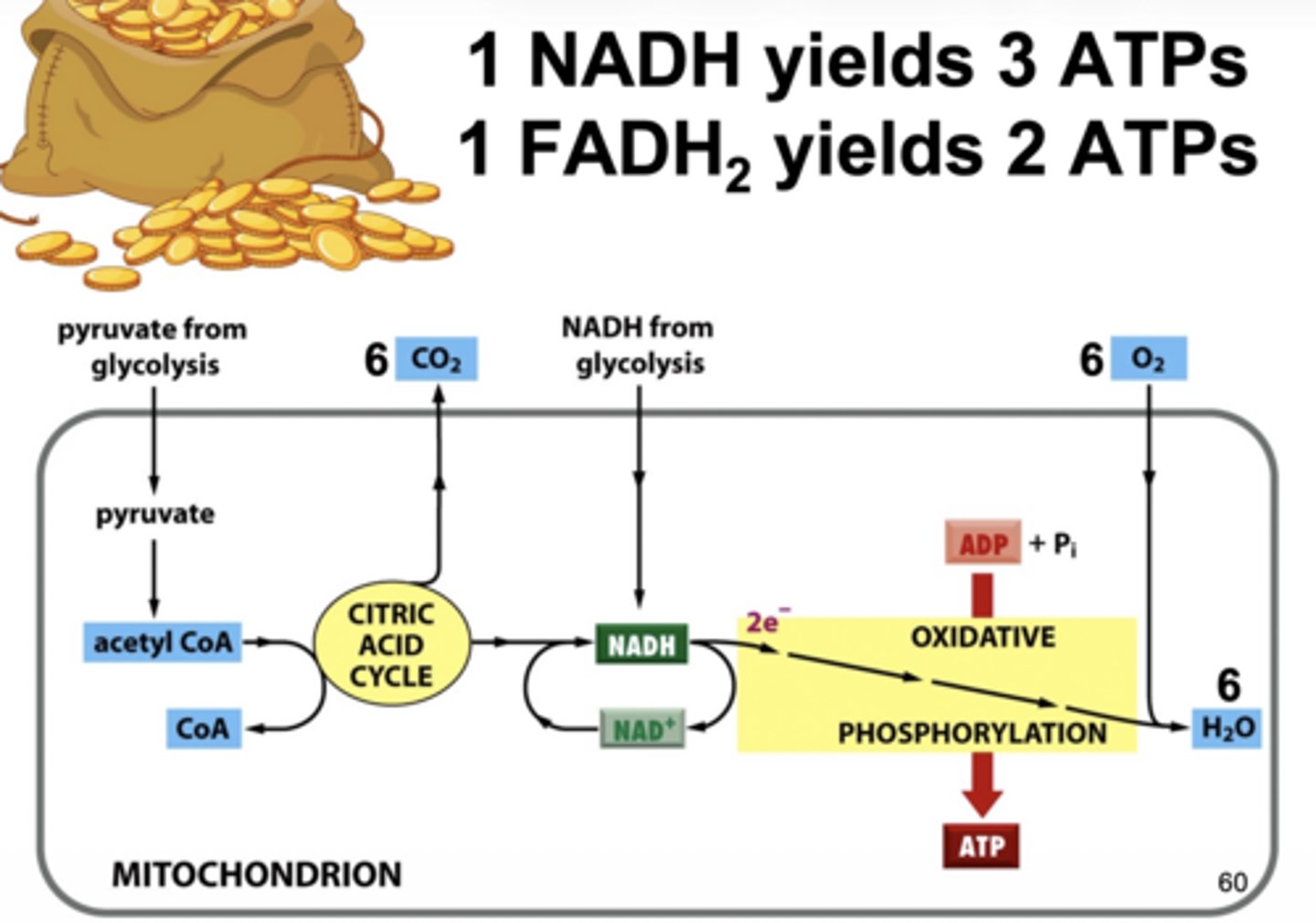
where do electrons go (electron flow)
NADH/FADH₂ → ETC → O₂
**reduced NADH/FADH₂ carry high energy e⁻**
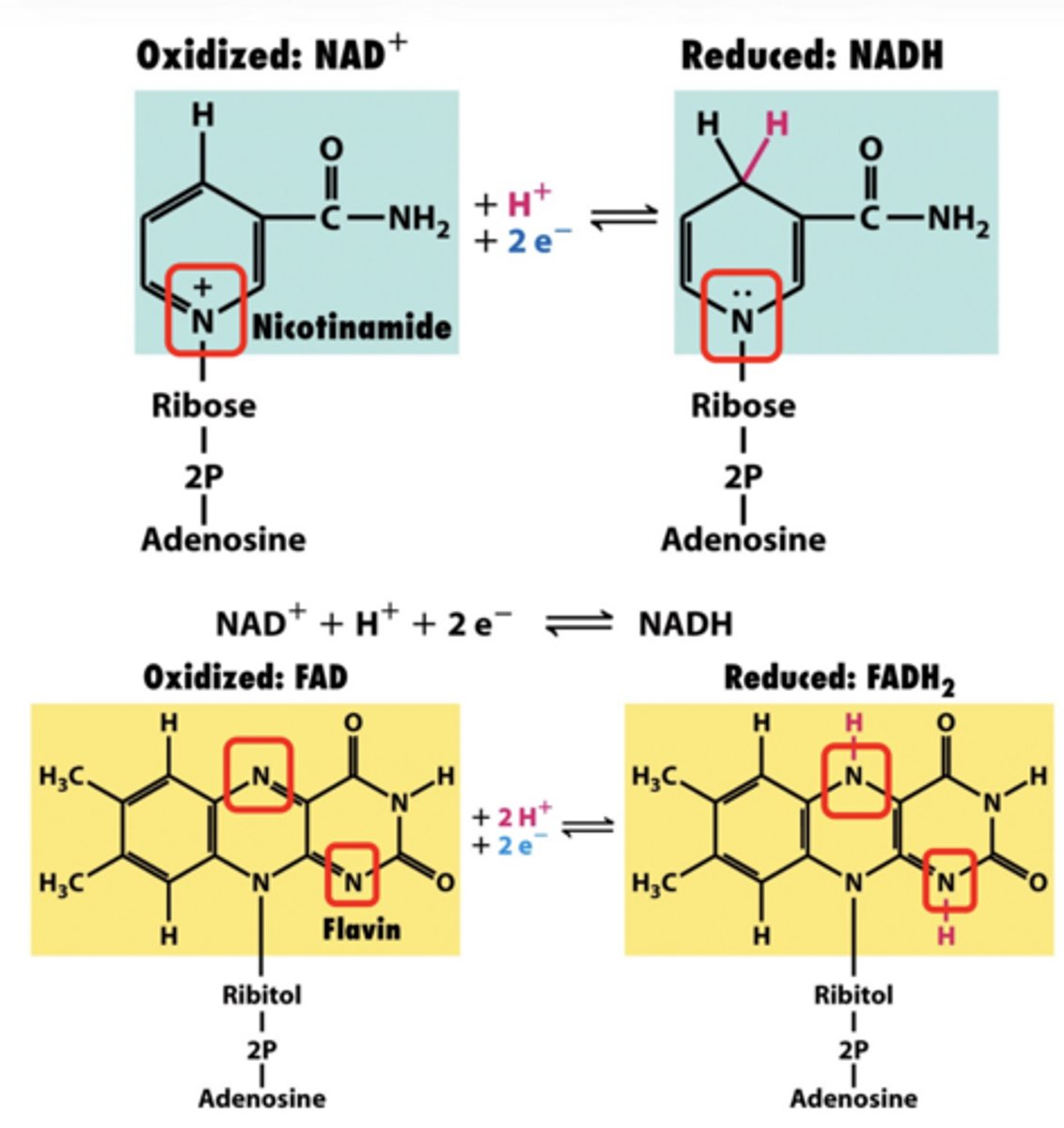
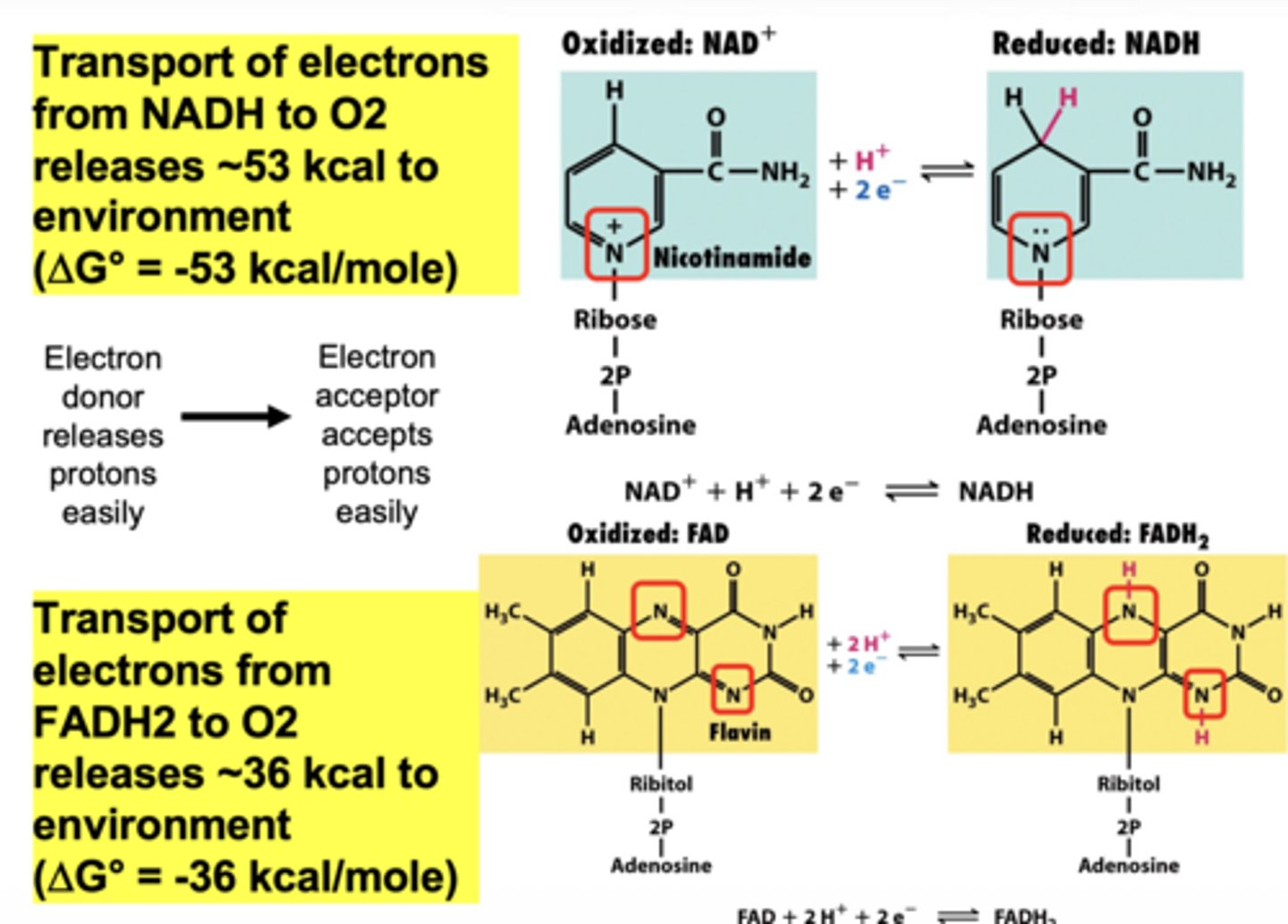
transport of e- from NADH to O2
releases ~53 kcal to env
∆G = 153 kcal/mole
e- donor releases protons easily → e- acceptor accepts protons easily
why is O2 critical
final electron acceptor
forms H₂O
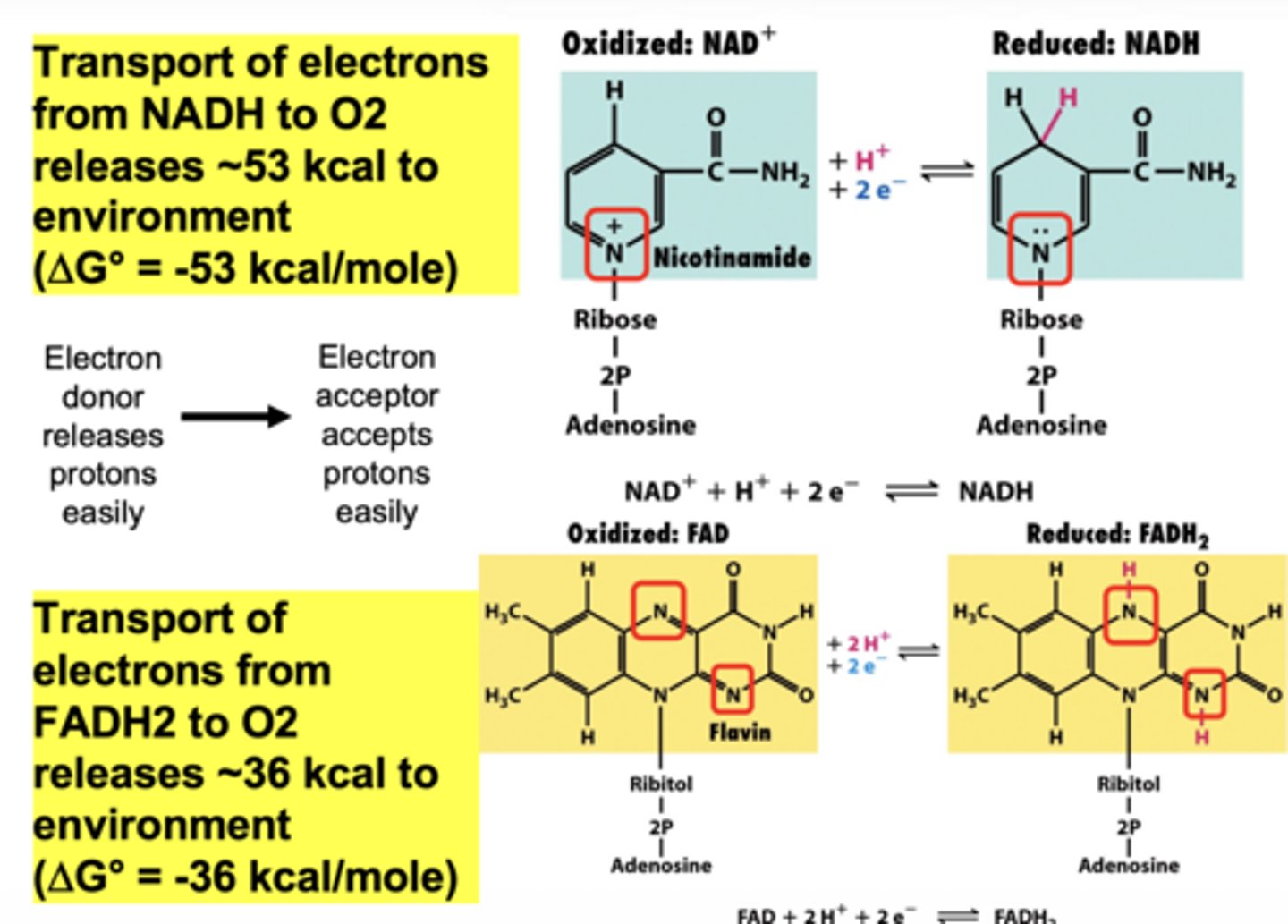
transport of e- from FADH2 to O2
releases ~36 kcal to env
∆G = -36 kcal/mole
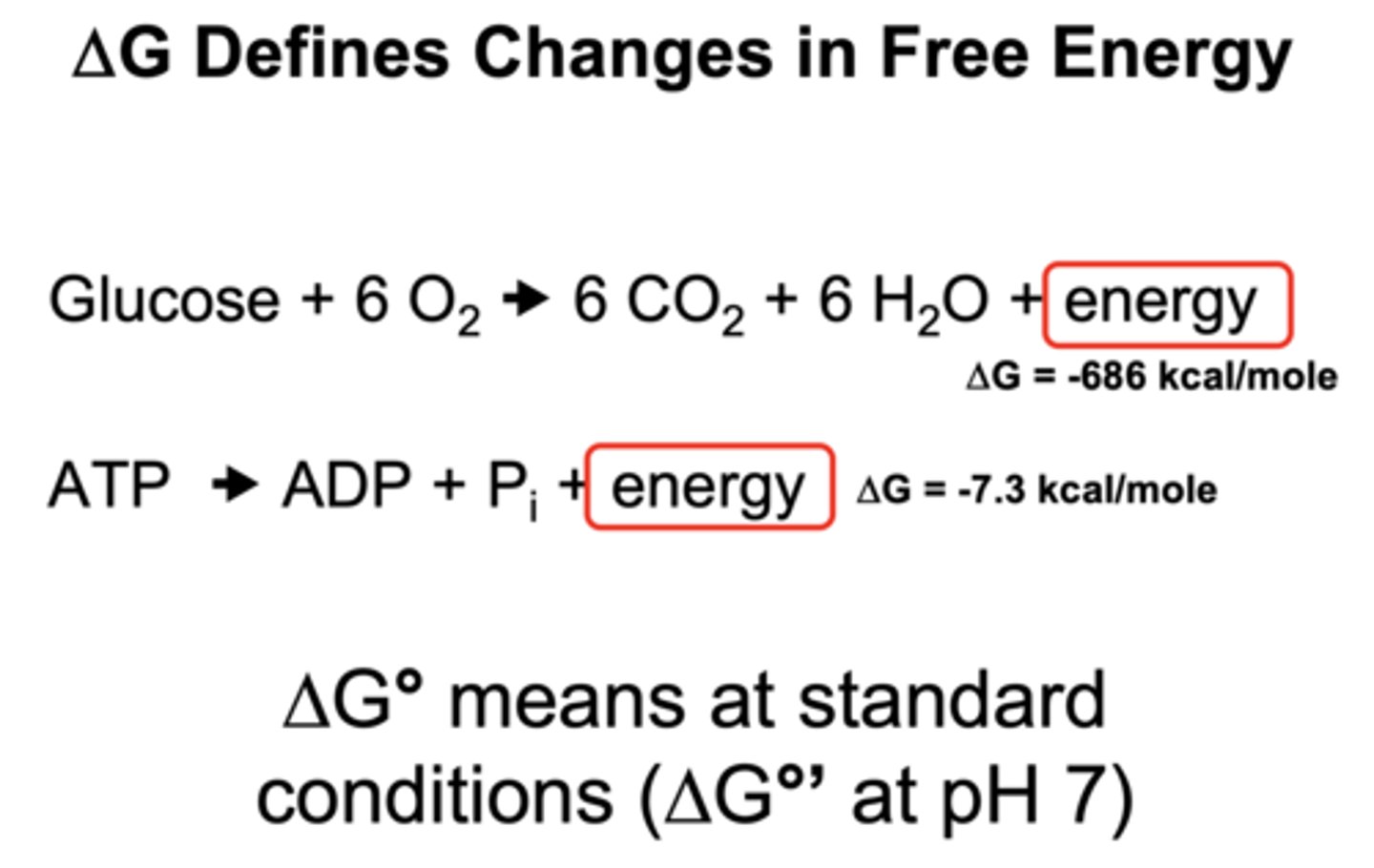
∆G
defines changes in free energy
at pH 7 aka standard conditions
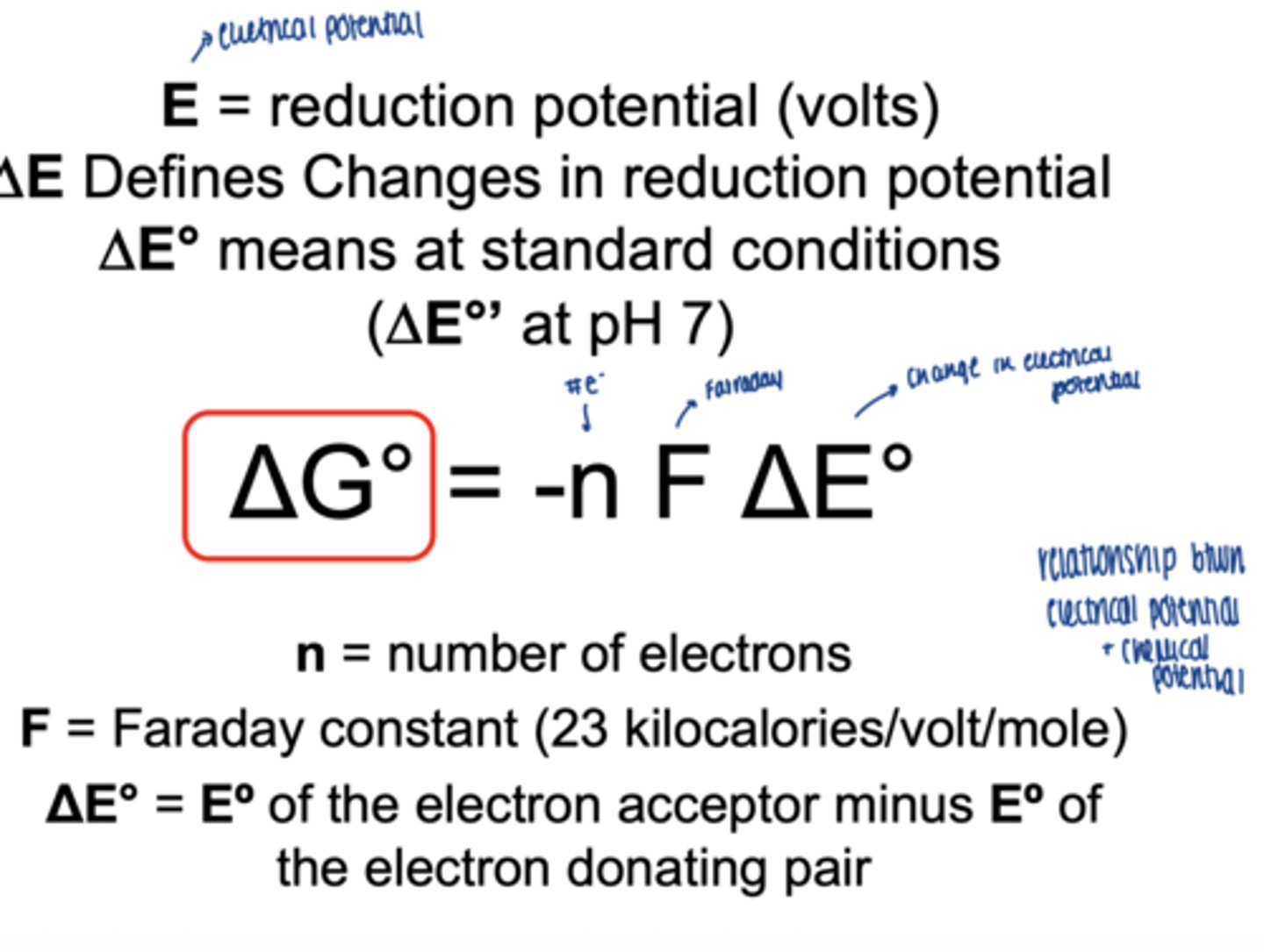
what is E and ∆E
E = reduction potential (volts)
∆E = changes in reduction potential at standard conditions, pH 7
∆G = -nF∆E°
n = # of e
F = faradays constant (23 kilocalories/volt/mole)
∆E° = E° of the electron acceptor minus E° of the electron donating pair
- relating gibbs free energy & electrical potential energy
- spontaneous reactions (-∆G) require a positive cell potential (∆E)
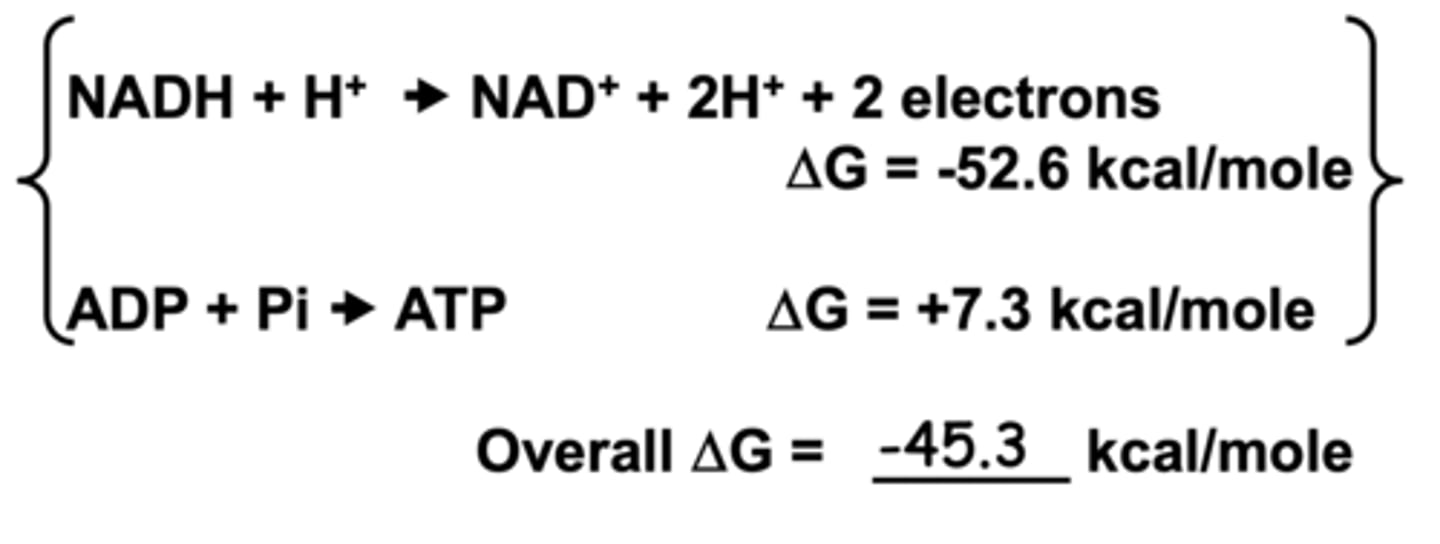
coupled reaction accomplished by _____
chemiosmosis
NADH + H⁺ → NAD⁺ + 2H⁺ + 2 e⁻ ... ∆G = -52.6 kcal/mole = FAVORABLE
ADP + Pi → ATP ... ∆G = +7.3 kcal/mole = NOT FAVORABLE
** highly spontaneous coupled with unfavorable**
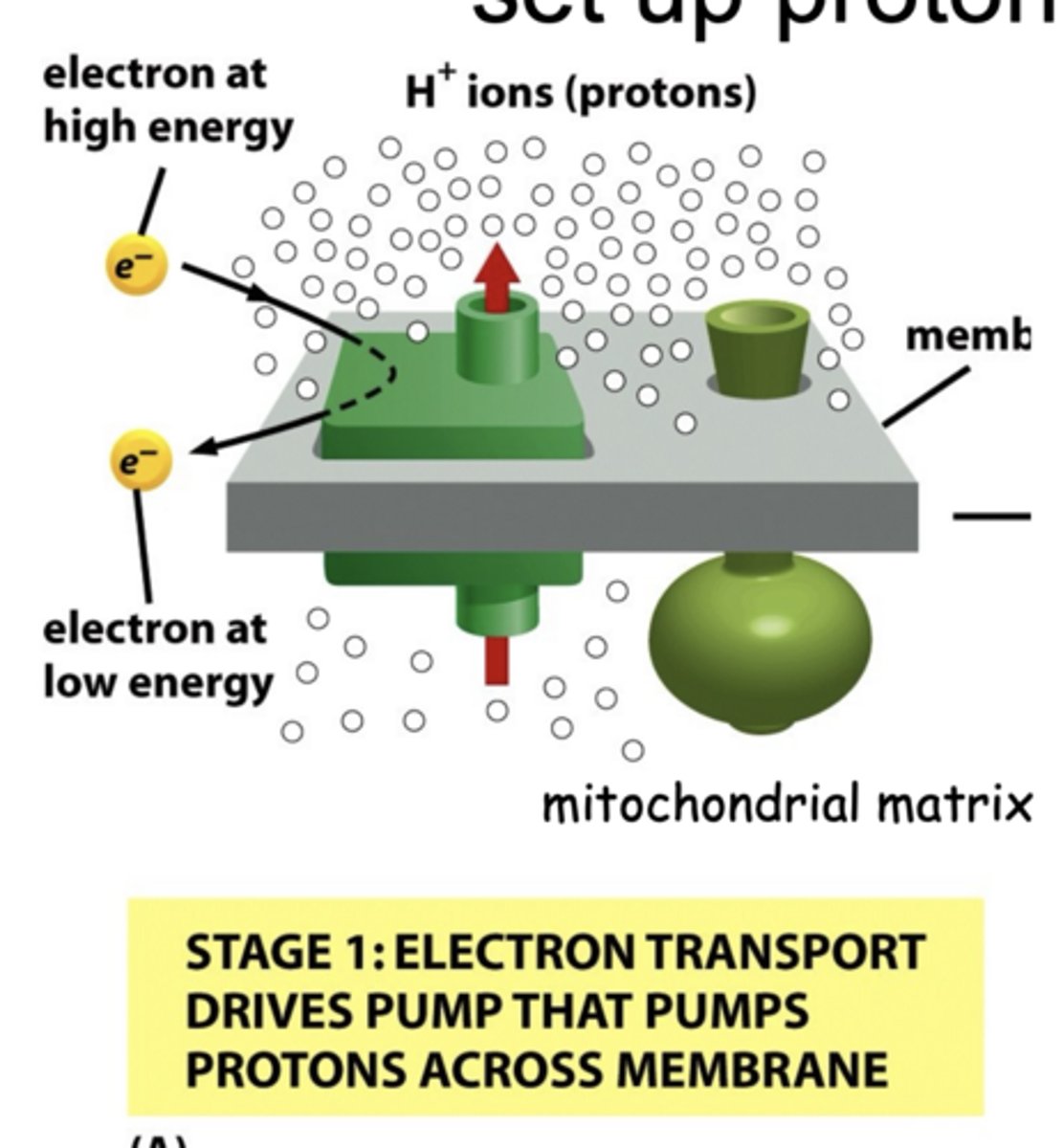
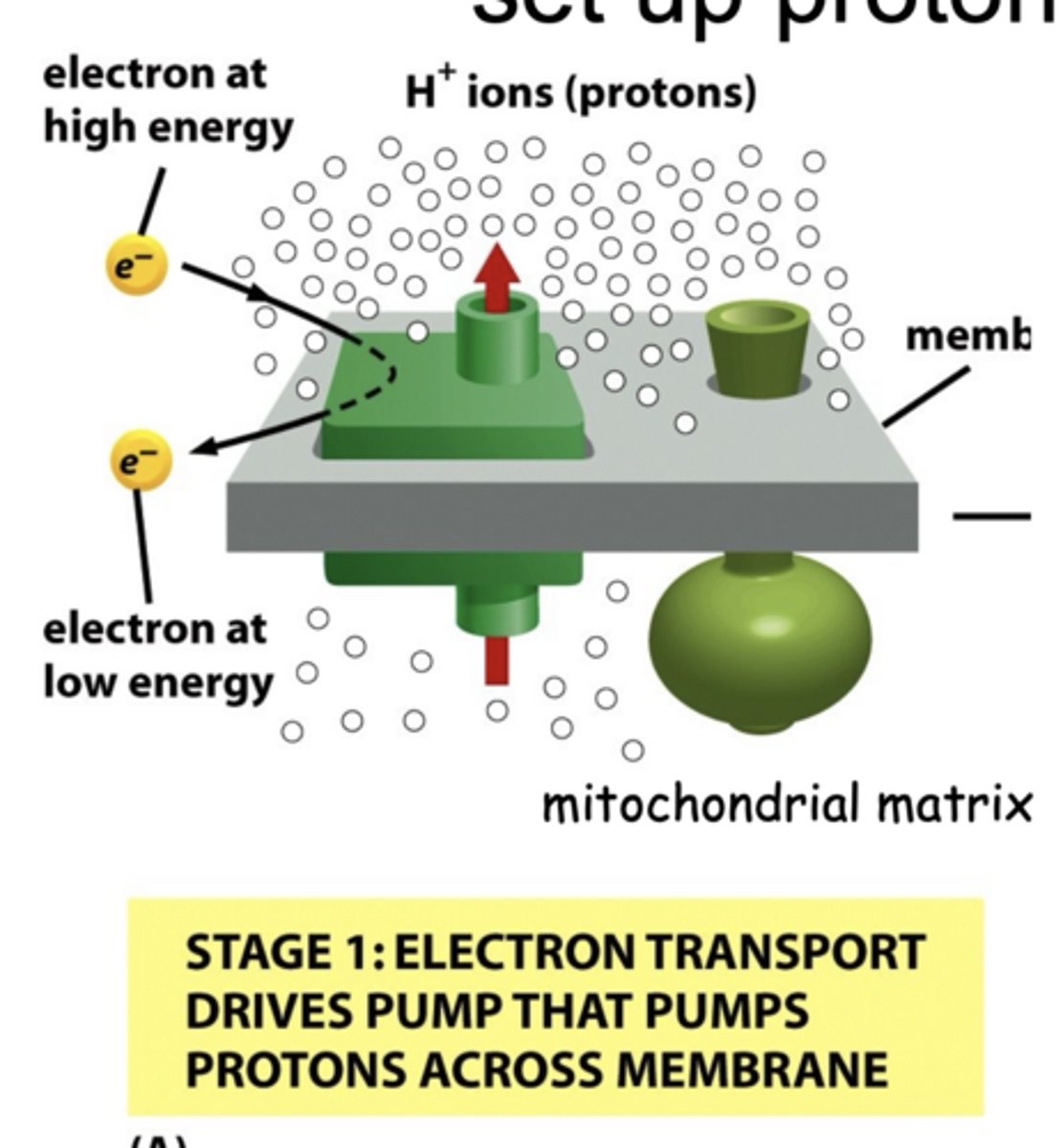
chemiosmosis part 1
set up proton gradient
what drives ATP synthesis
proton gradient
what creates gradient
ETC pumps H⁺ out of mitochondrial matrix
**potential energy in electron carriers (NADH and FADH2s from TCA cycle) used to pump protons out**
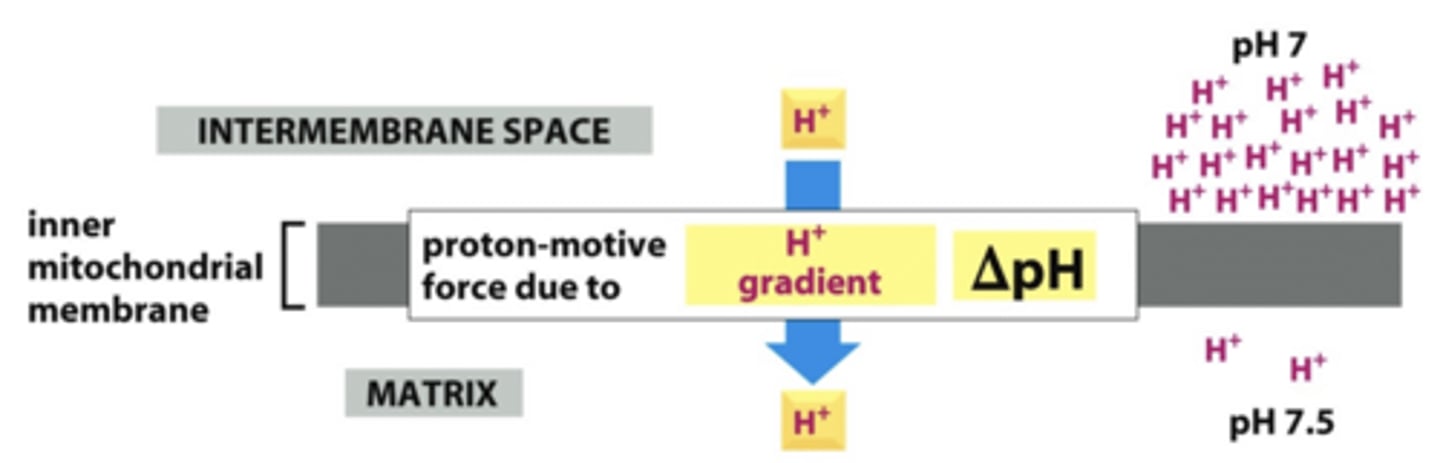
what makes proton-motive force
concentration gradient:
- high [H+] outside
- low [H+] in matrix
electrical gradient (charges):
- +++++ charge outside
- ----- charge inside (fewer H+)
![<p>concentration gradient:</p><p>- high [H+] outside</p><p>- low [H+] in matrix</p><p>electrical gradient (charges):</p><p>- +++++ charge outside</p><p>- ----- charge inside (fewer H+)</p>](https://knowt-user-attachments.s3.amazonaws.com/35fe8656-152c-4c2e-99b7-480ff10a05cf.jpg)
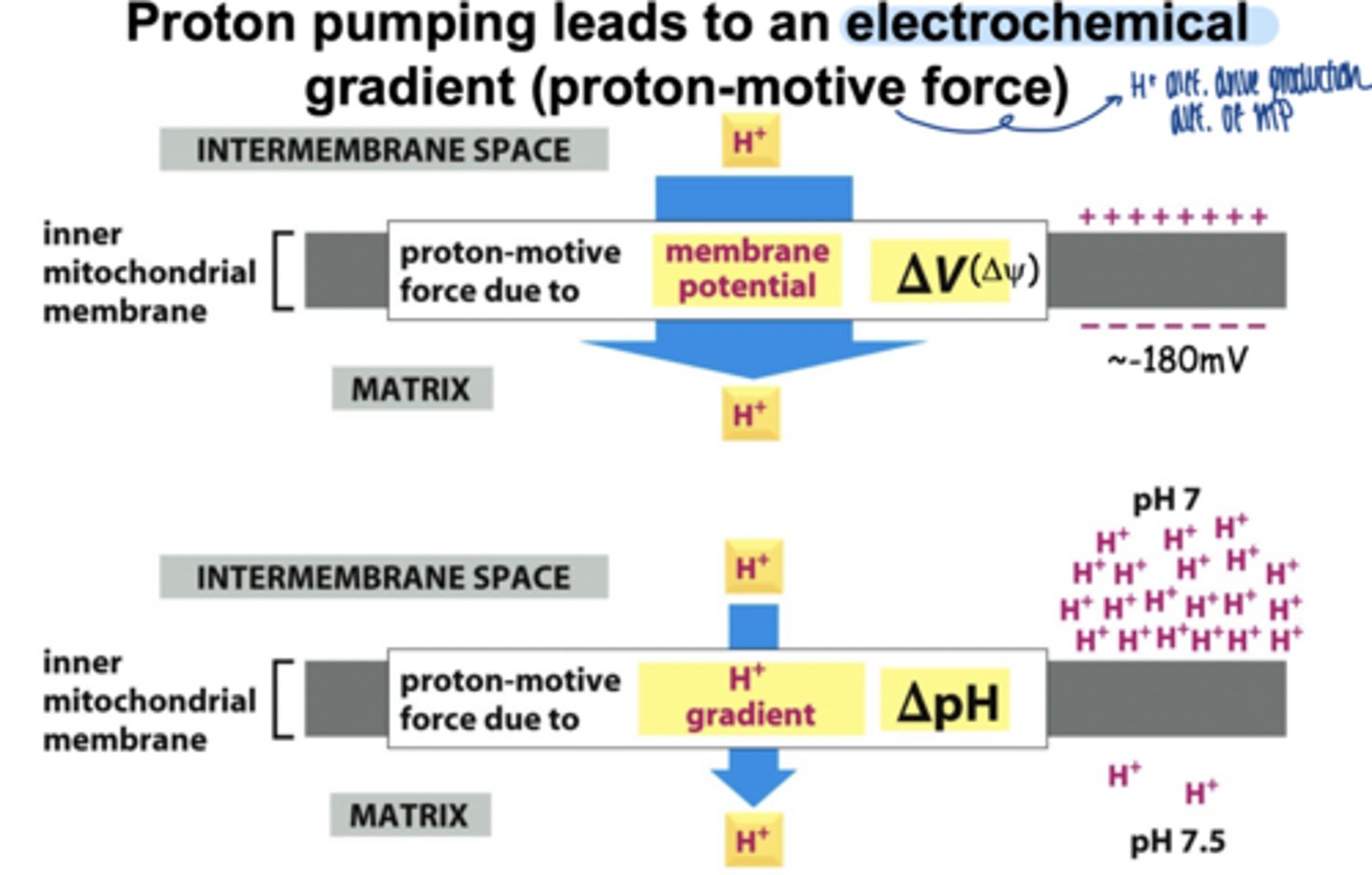
proton pumps lead to a _____ ______, more protons are outside the matrix thus the ____ differs
chemical gradient, pH
proton pumping leads to a ____ difference, more protons are _____ the matrix thus the relative charge differs
charge, outside
~-180 mV
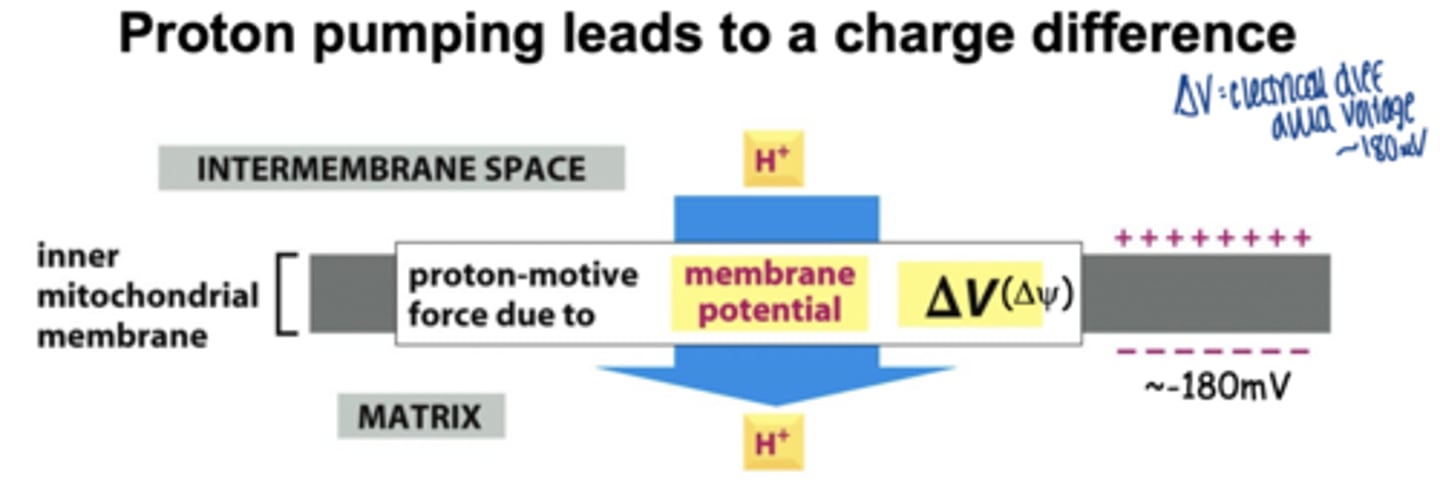
proton pumping leads to an ______ gradient (proton motive force)
electrochemical
**proton motive force due to membrane potential & H+ gradient**
**can be used for work**
chemiosmosis part 2
use proton gradient to make ATP
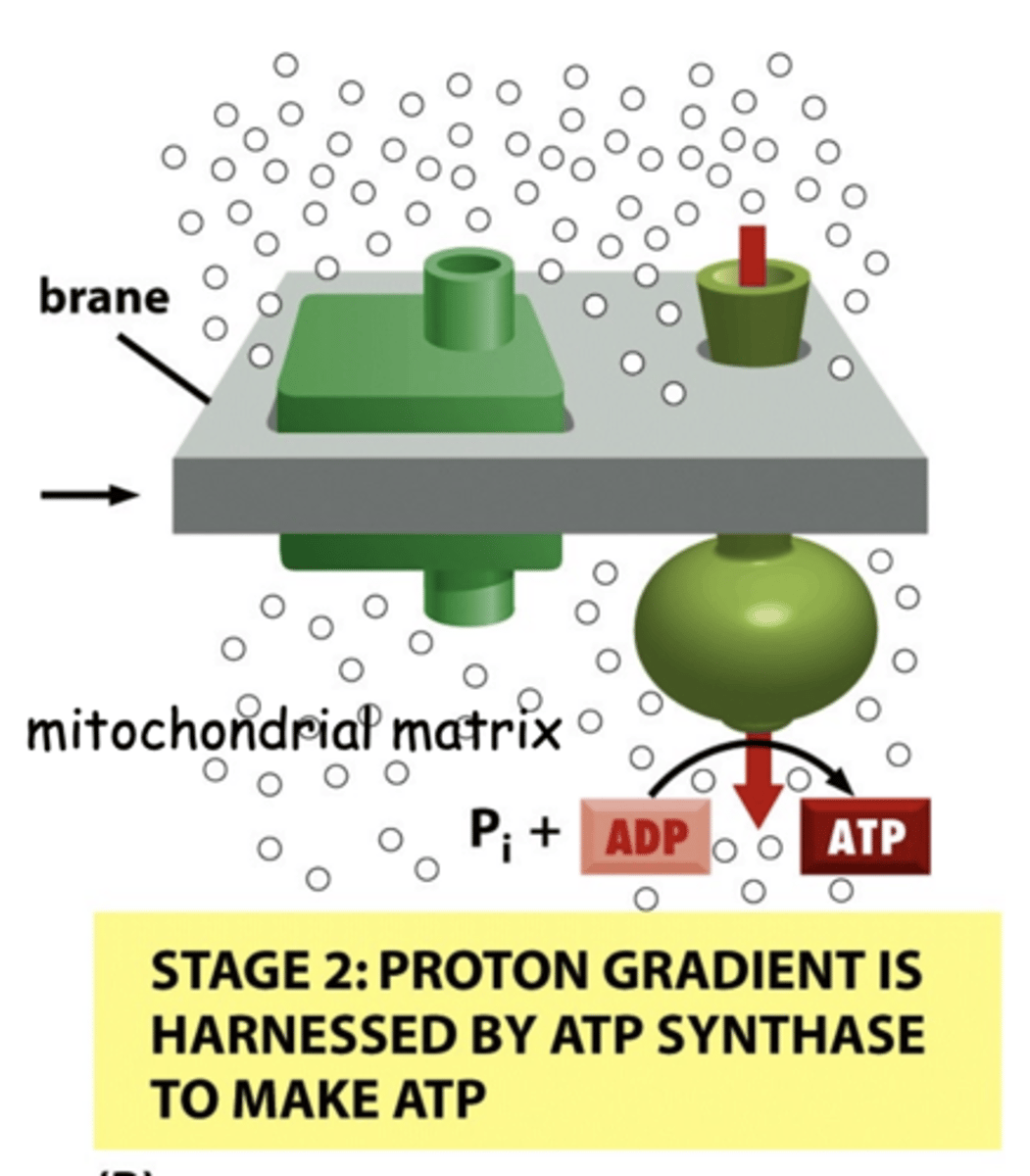
how does ATP synthase work
- protons flow back in
- spins like a turbine
- produces ATP
protons flow ____ concentration and voltage gradient back into ____ ____, with energy captured by ATP synthase
down, mitochondrial matrix
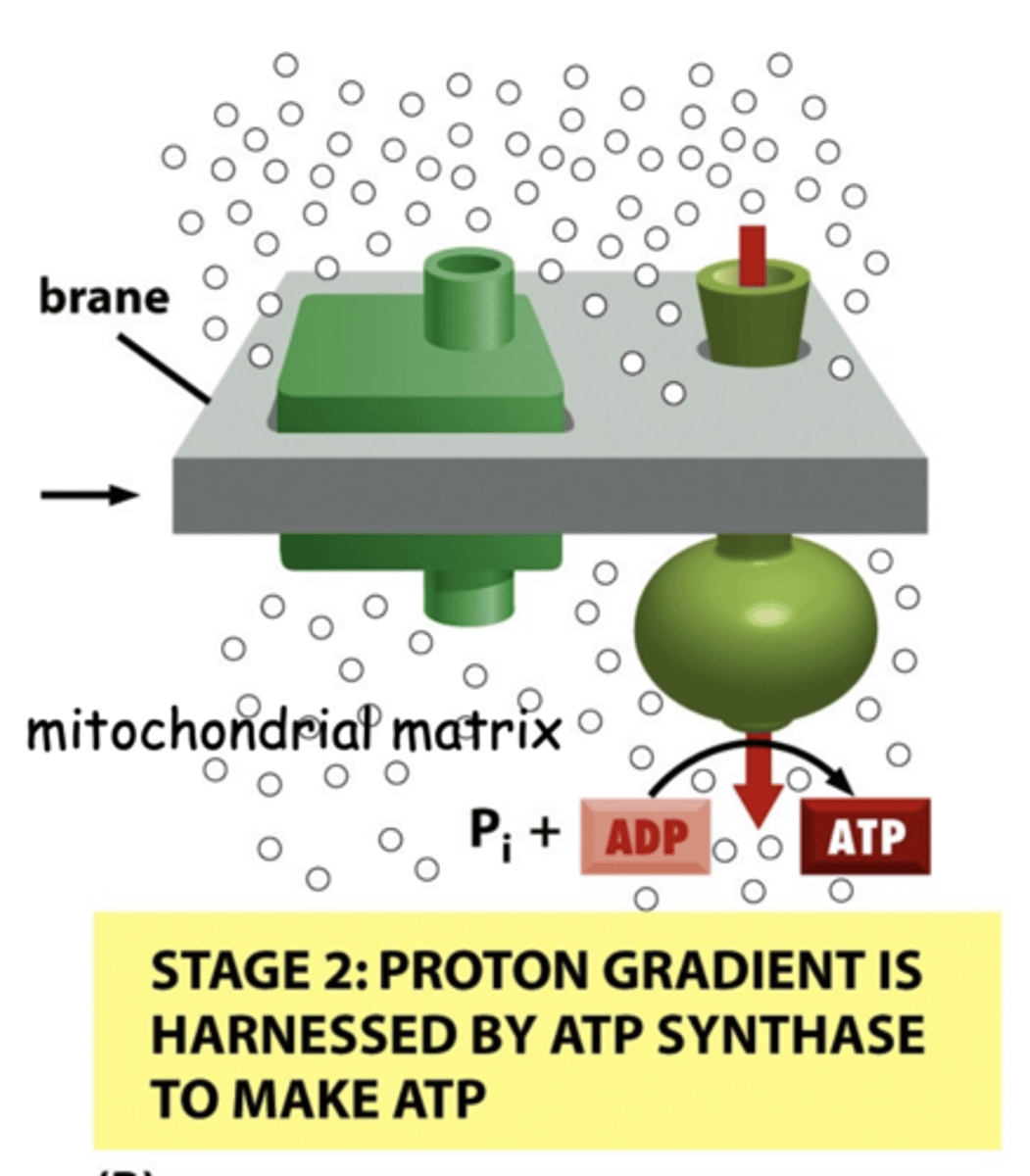
**proton gradient is harnessed by ATP synthase to make ATP**
chemiosmosis harvest energy from ____ and ____
NADH, FADH2
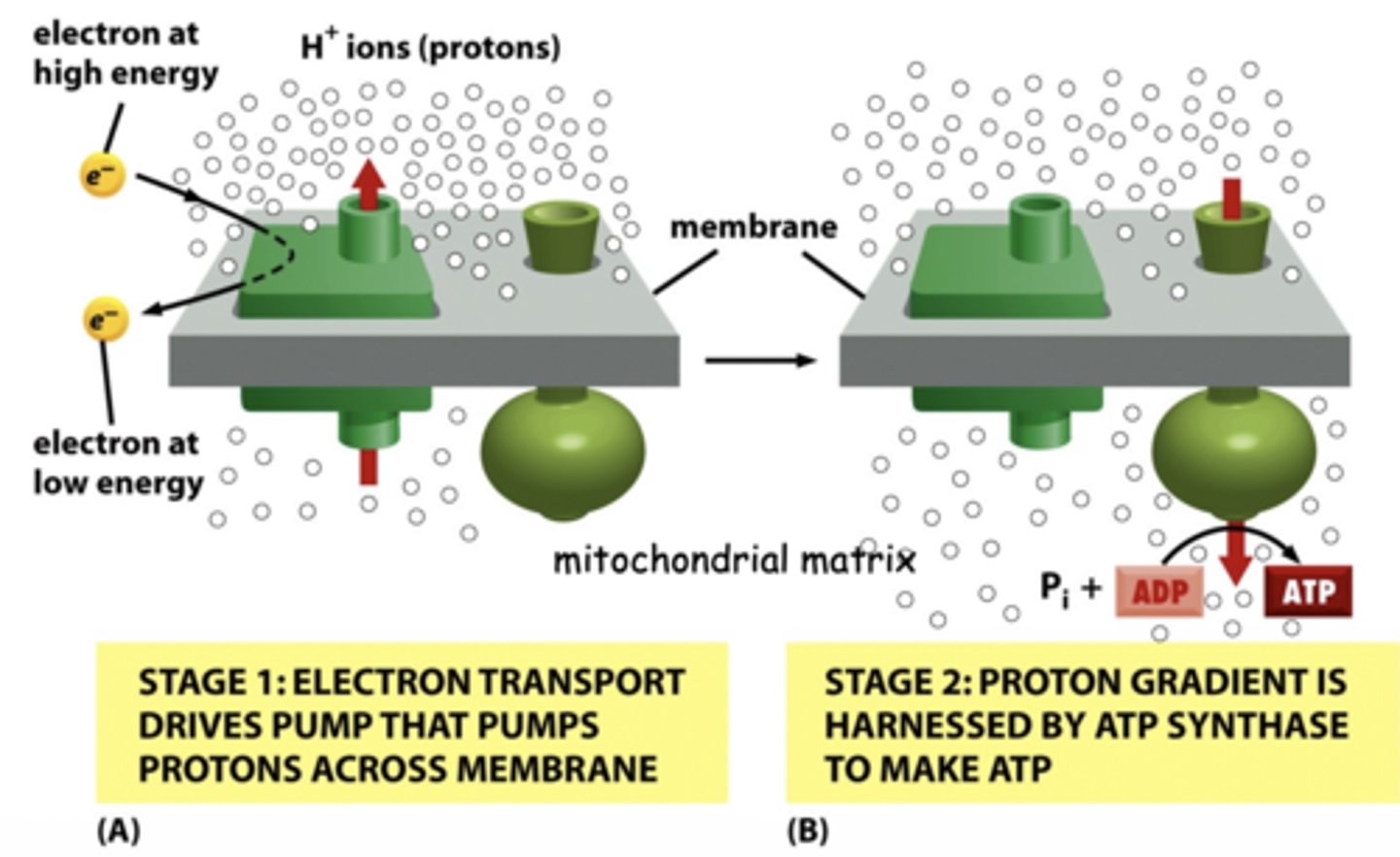
how is electrochemical energy harnessed for ATP synthesis
by 4 membrane bound complexes
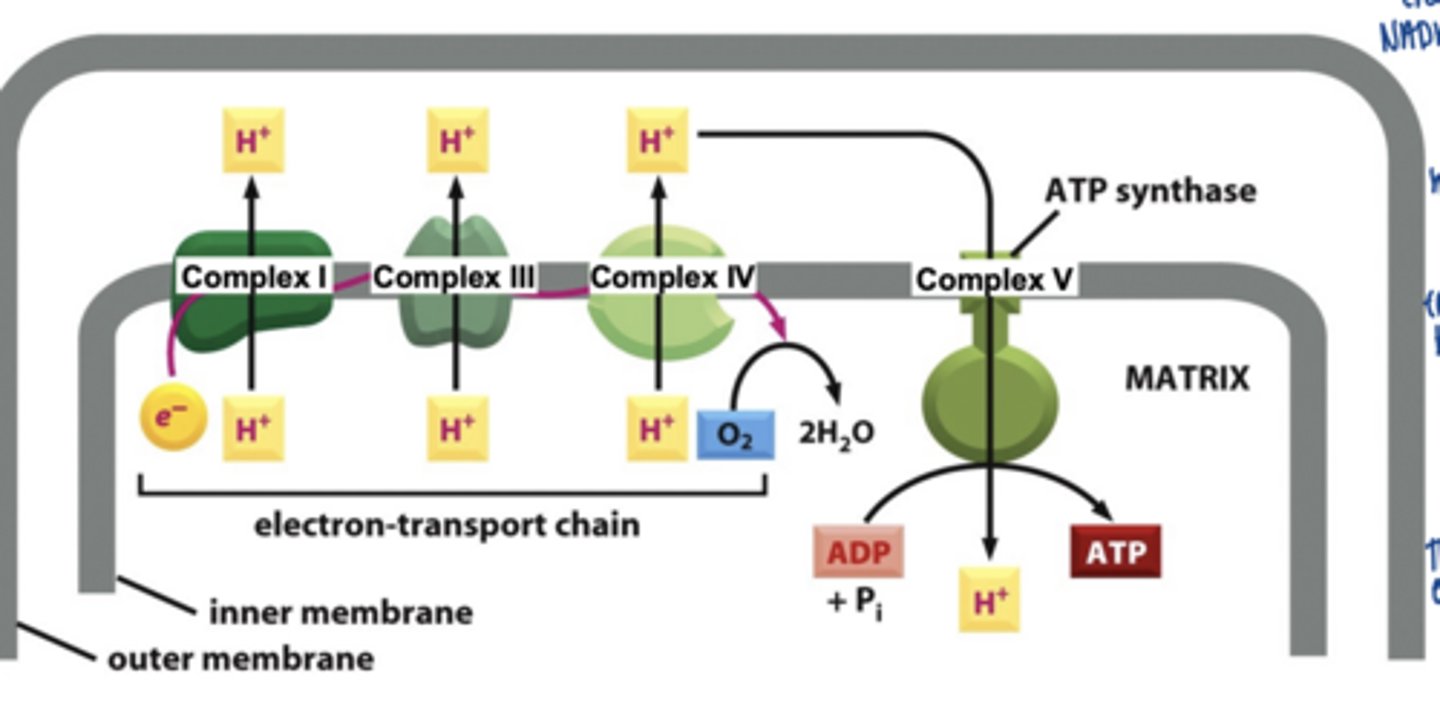
what are the complexes
- complex I (NADH dehydrogenase)
- complex III
- complex IV
- complex V (ATP synthase) → not part of ETC
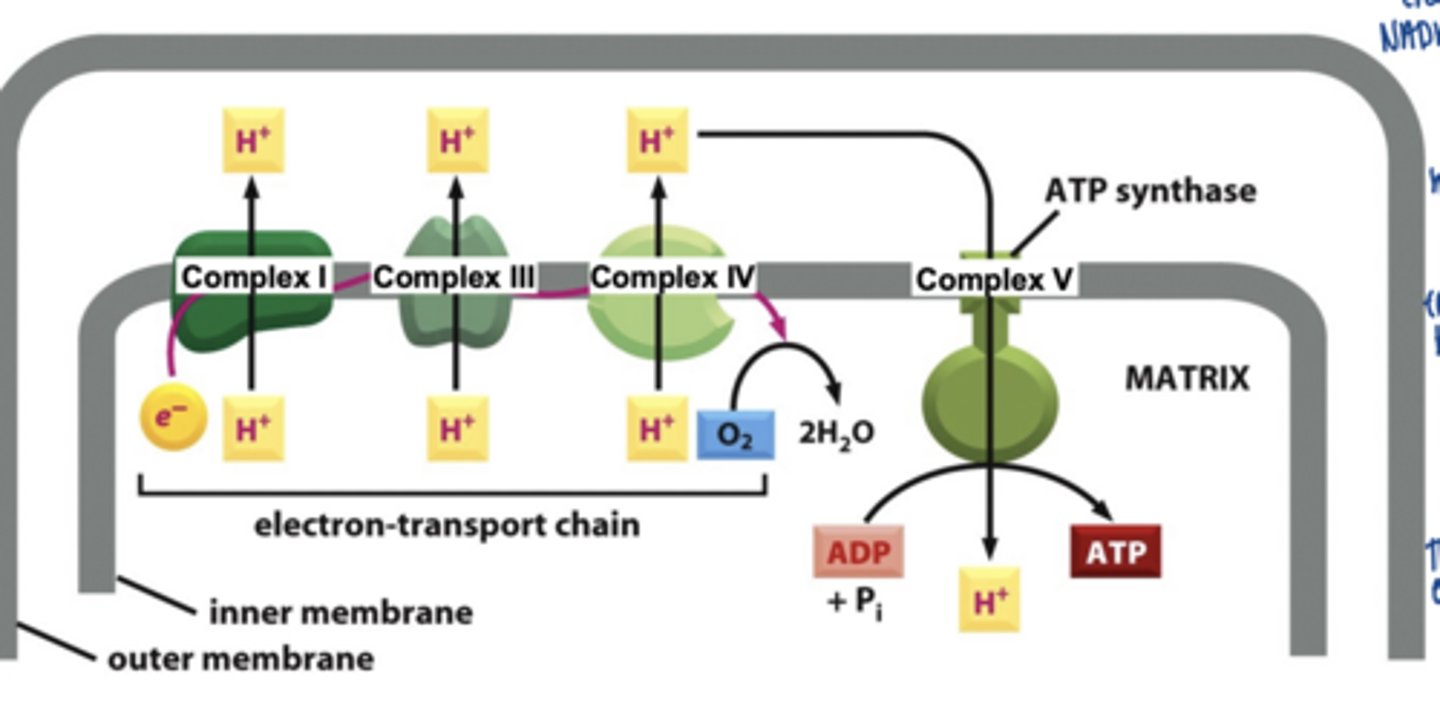
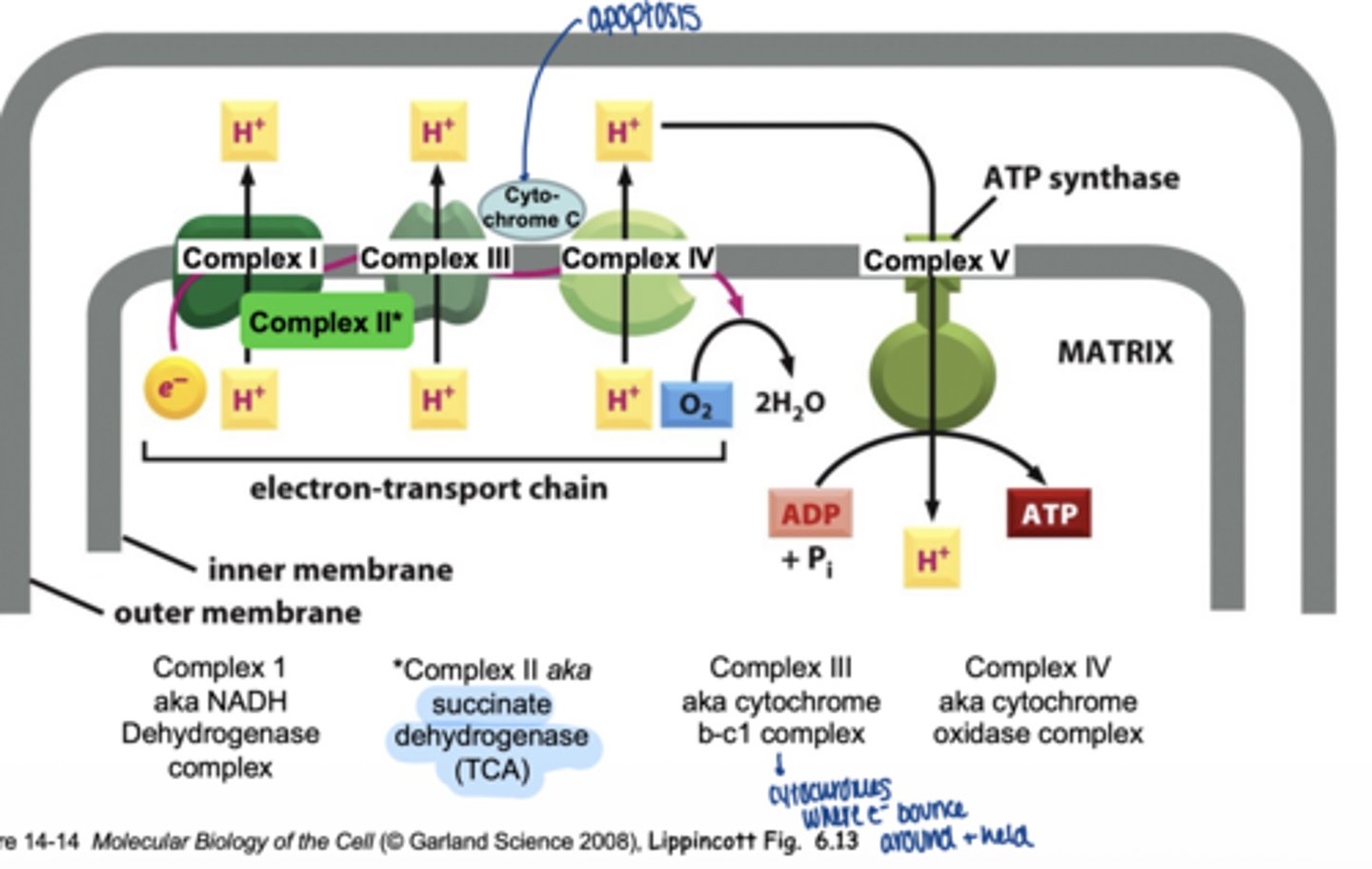
detailed visual of complexes
I = NADH dehydrogenase complex
II = succinate dehydrogenase (TCA)
III = cytochrome b-c1 complex
IV = cytochrome oxidase complex
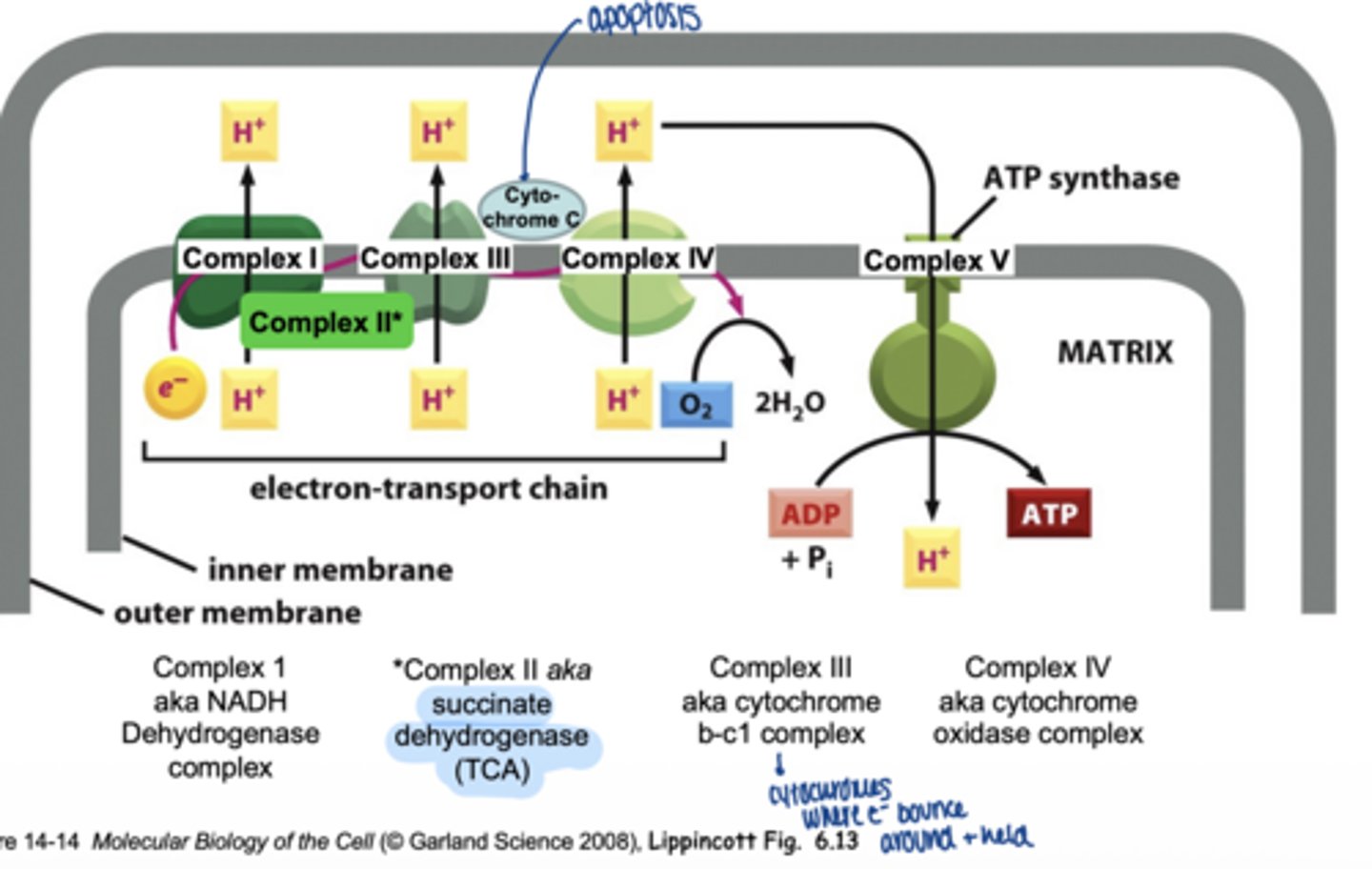
which complexes are part of ETC
- complex I (NADH dehydrogenase)
- complex III
- complex IV
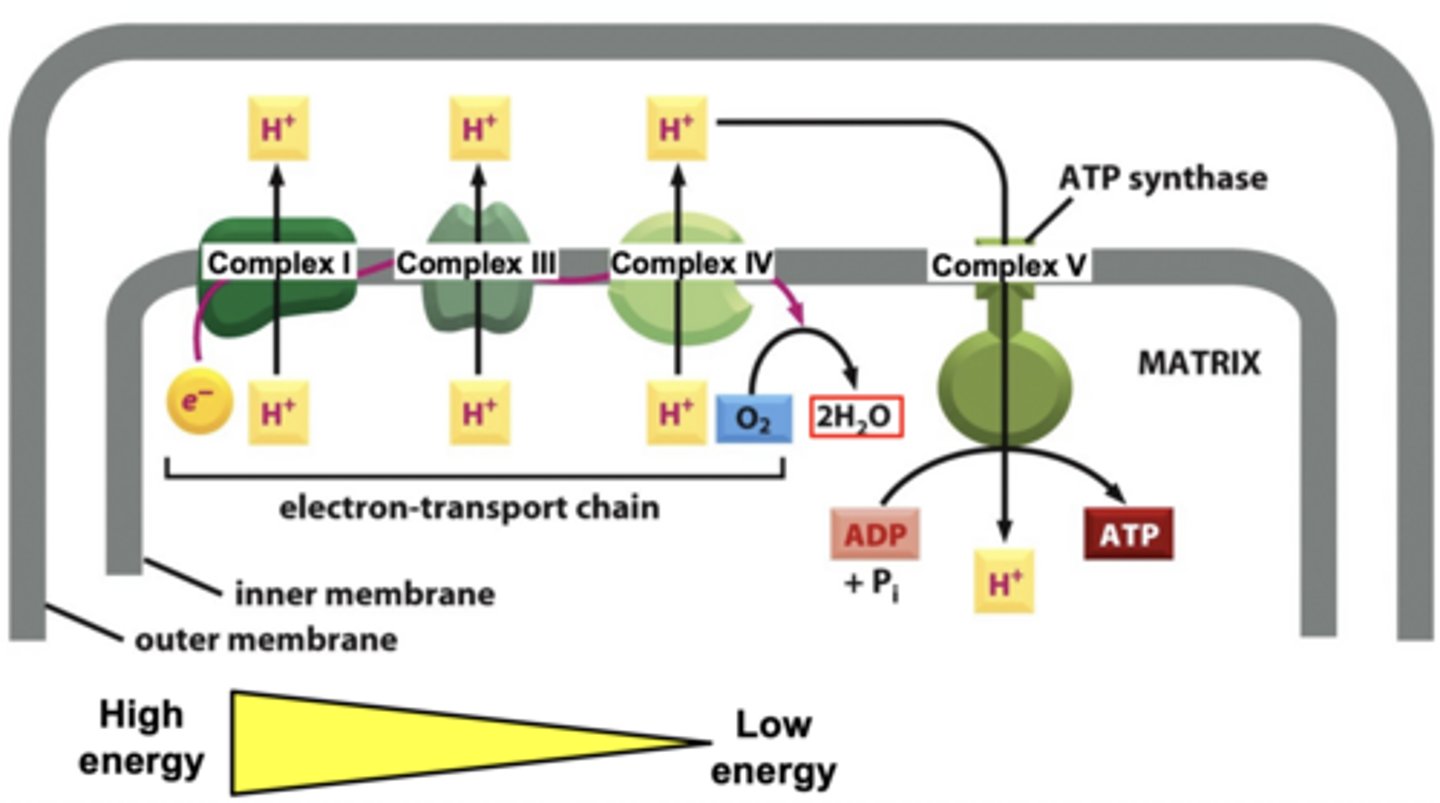
_____ start with high energy, travel along the membrane complexes, fueling the pumps, end at low energy in H2O
electrons
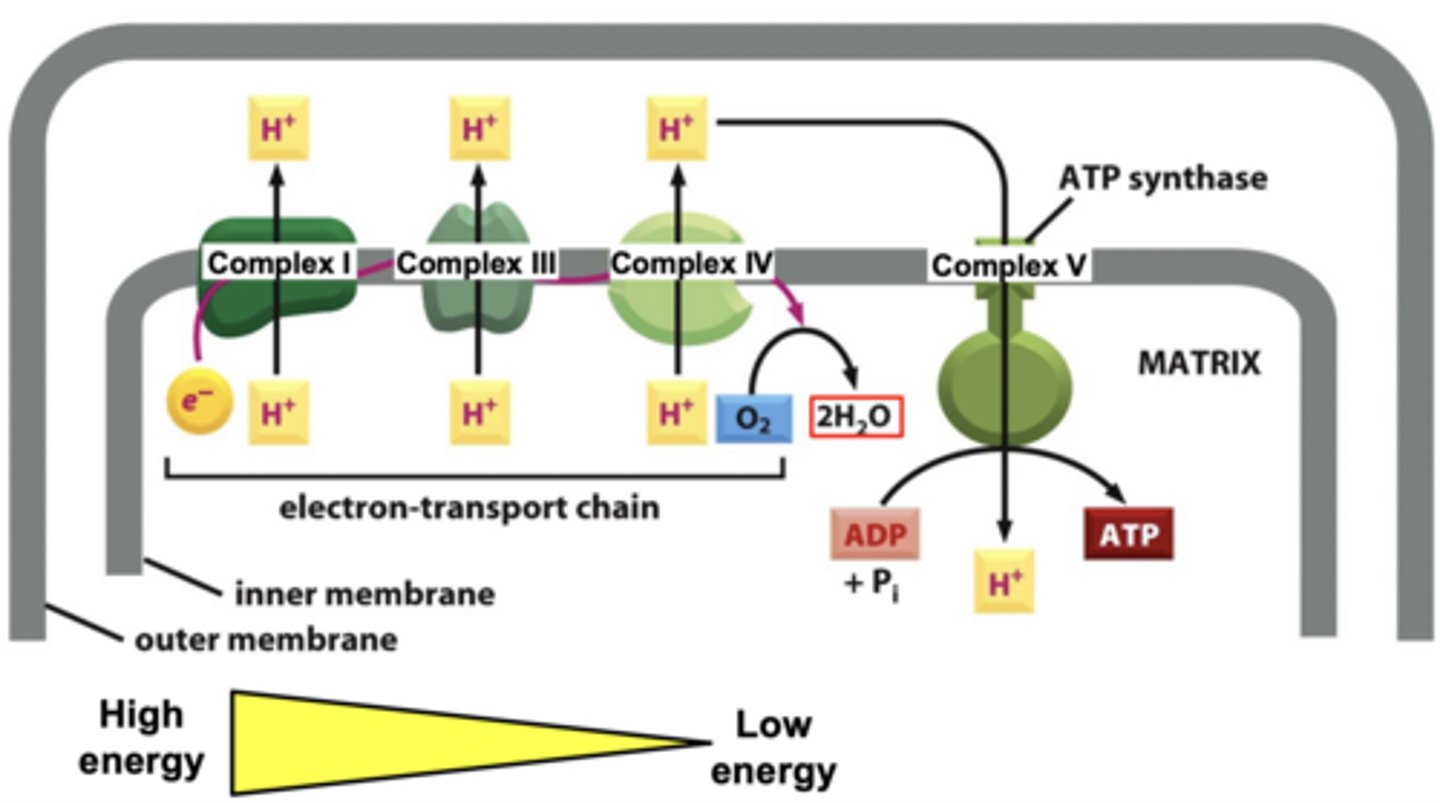
which complexes pump protons
I, III, IV
complex II (Succinate Dehydrogenase) does not → receives e from FADH₂
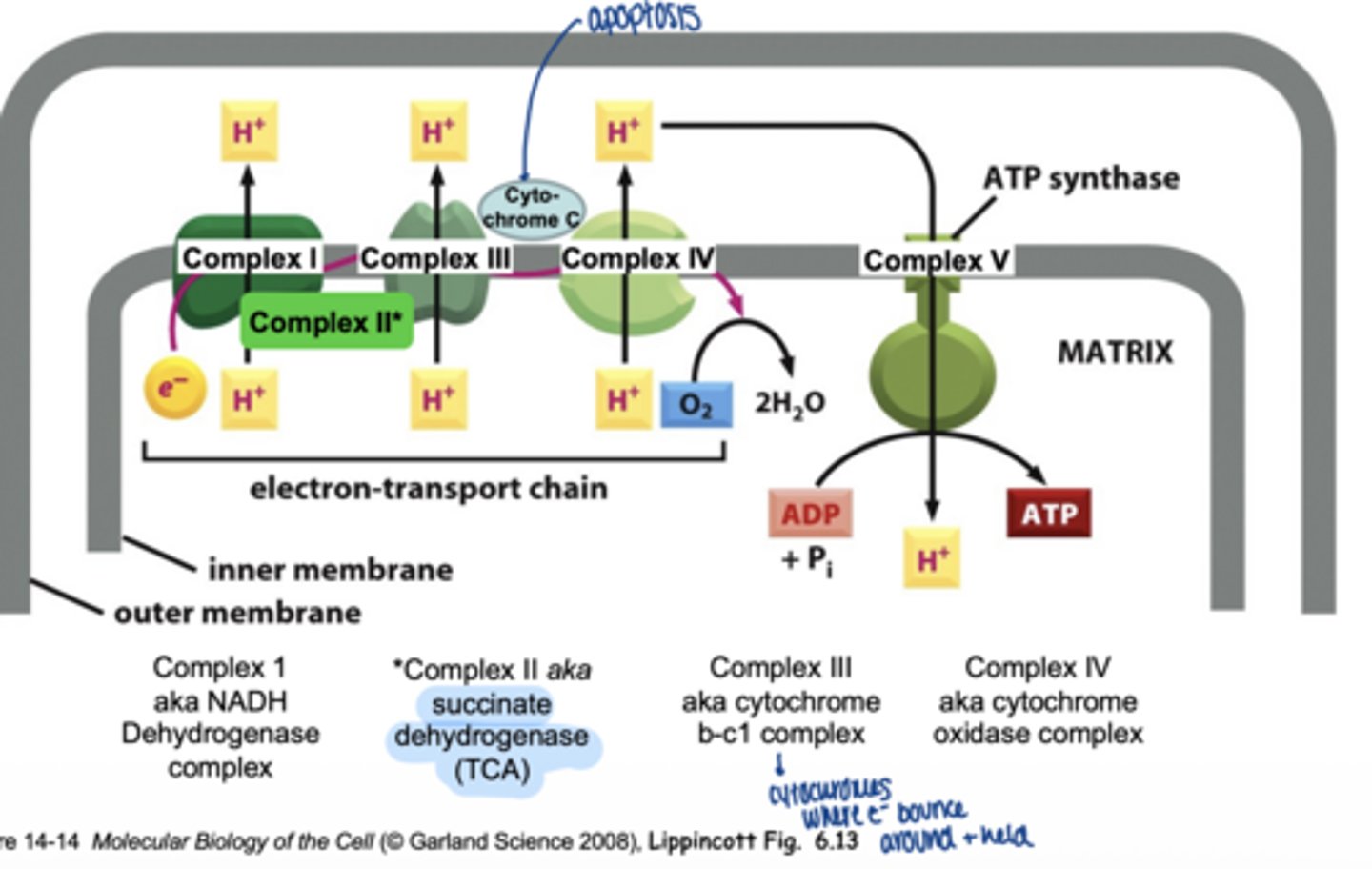
how does electron transfer flow
donors to acceptors
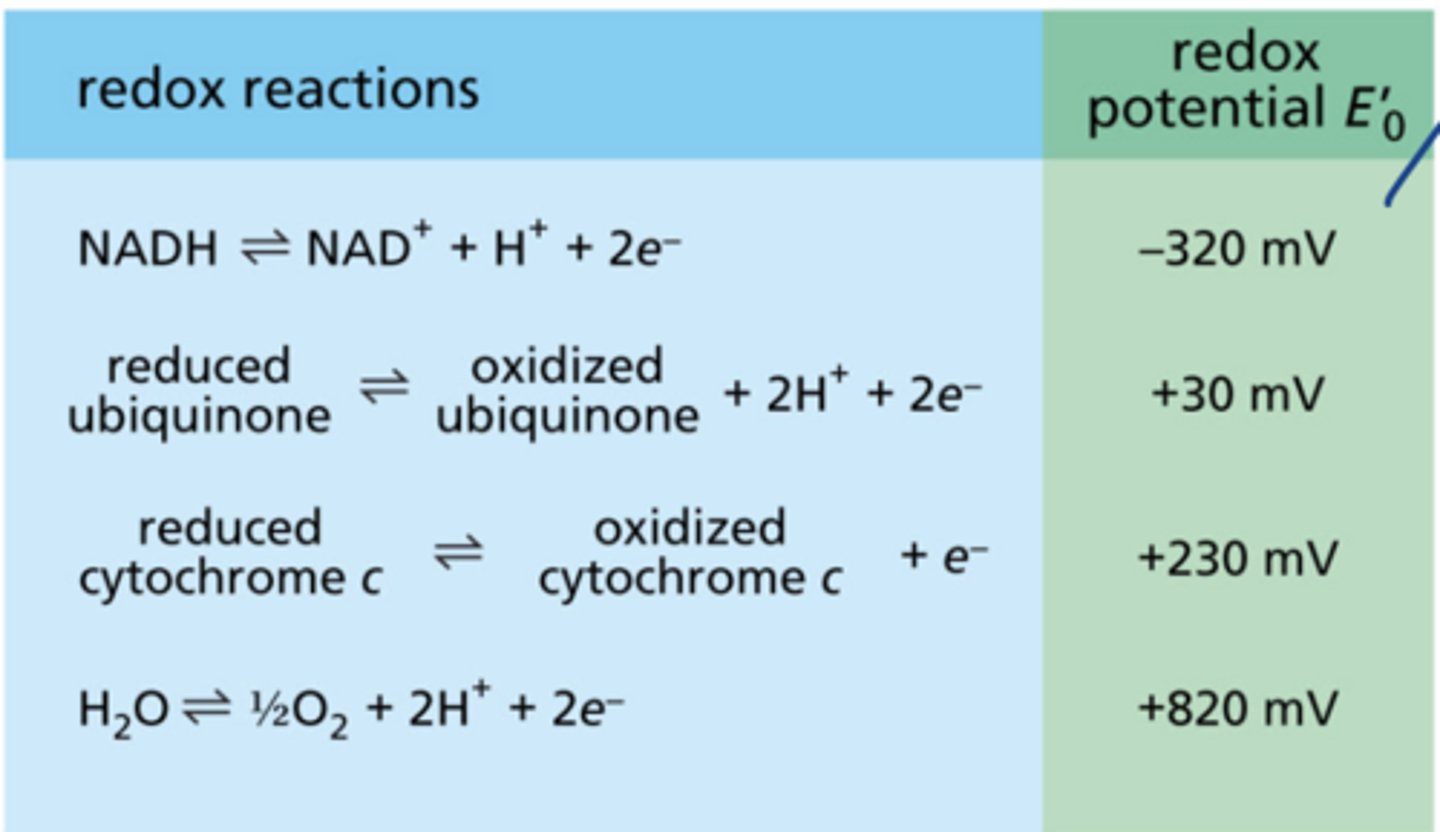
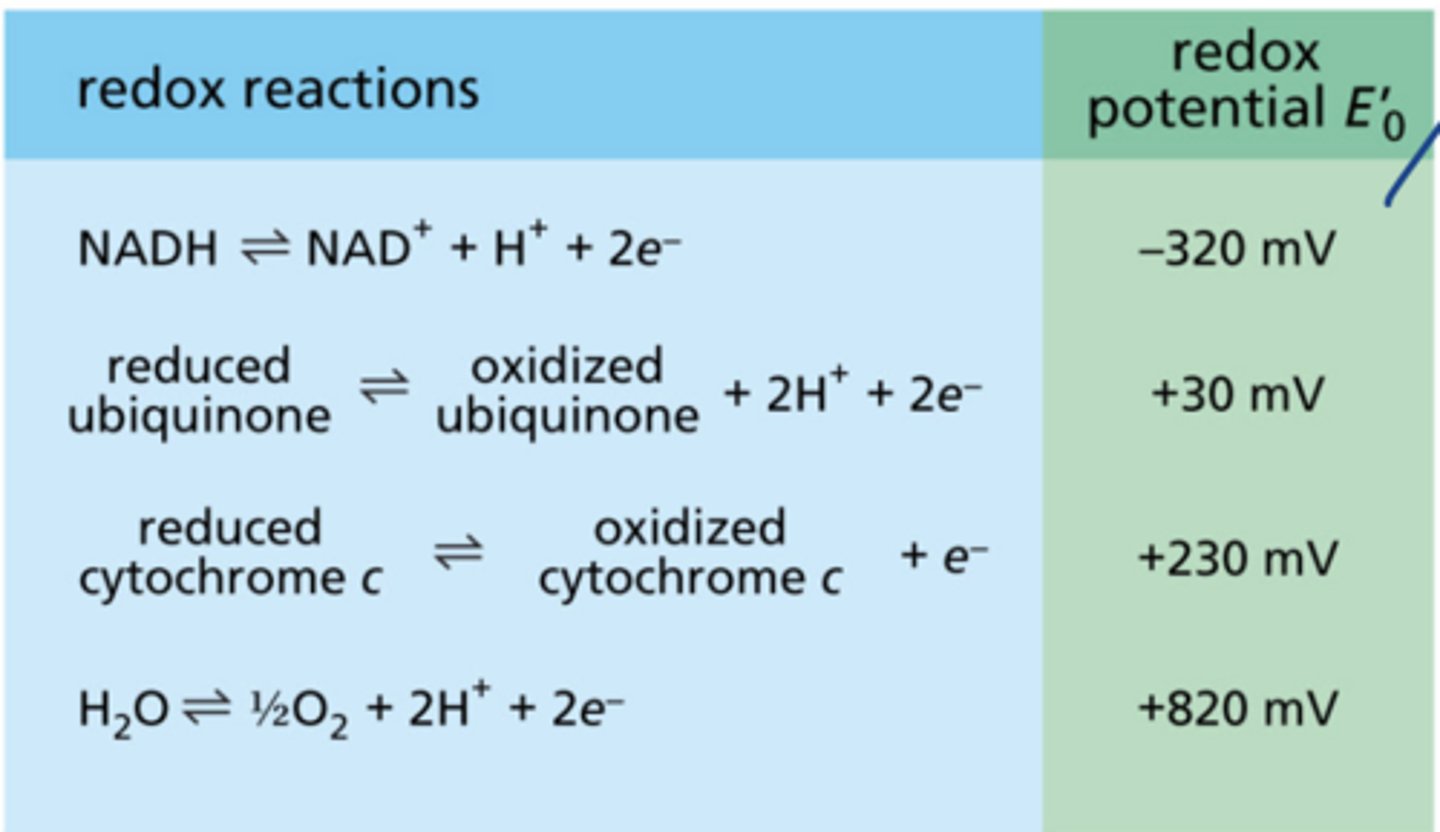
electron donors (reducing agents)
have negative redox potential
readily release electrons (low e- affinity)
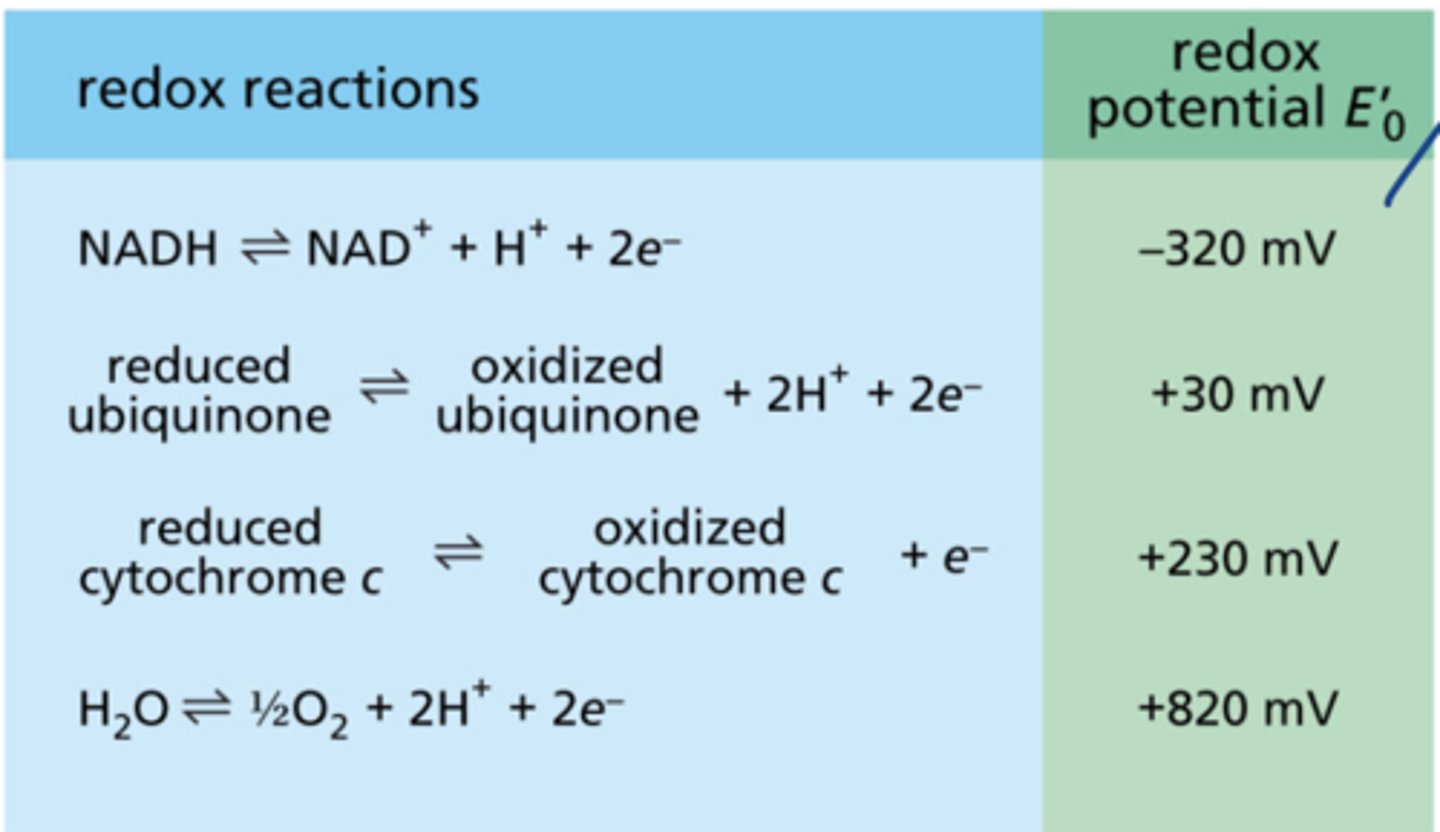
electron acceptors (oxidizing agents)
high redox potential
strongly retain electrons (high e- affinity)
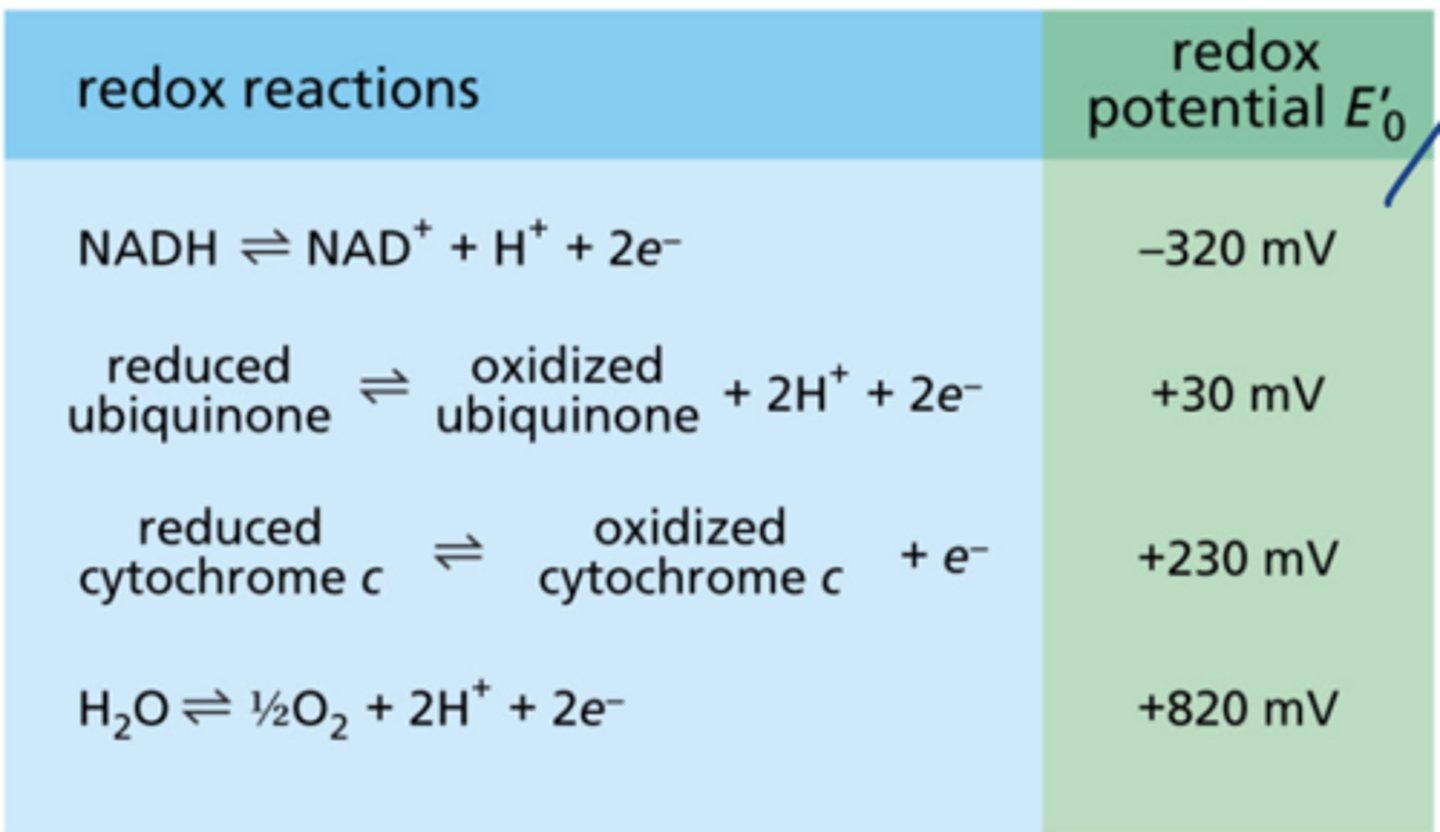
ultimate electron acceptor
oxygen
electron carriers
iron sulfur proteins:
- NADH dehydrogenase in complex I
coenzyme Q:
- ubiquinone, a cholesterol derivative
cytochromes
- with iron containing hemes
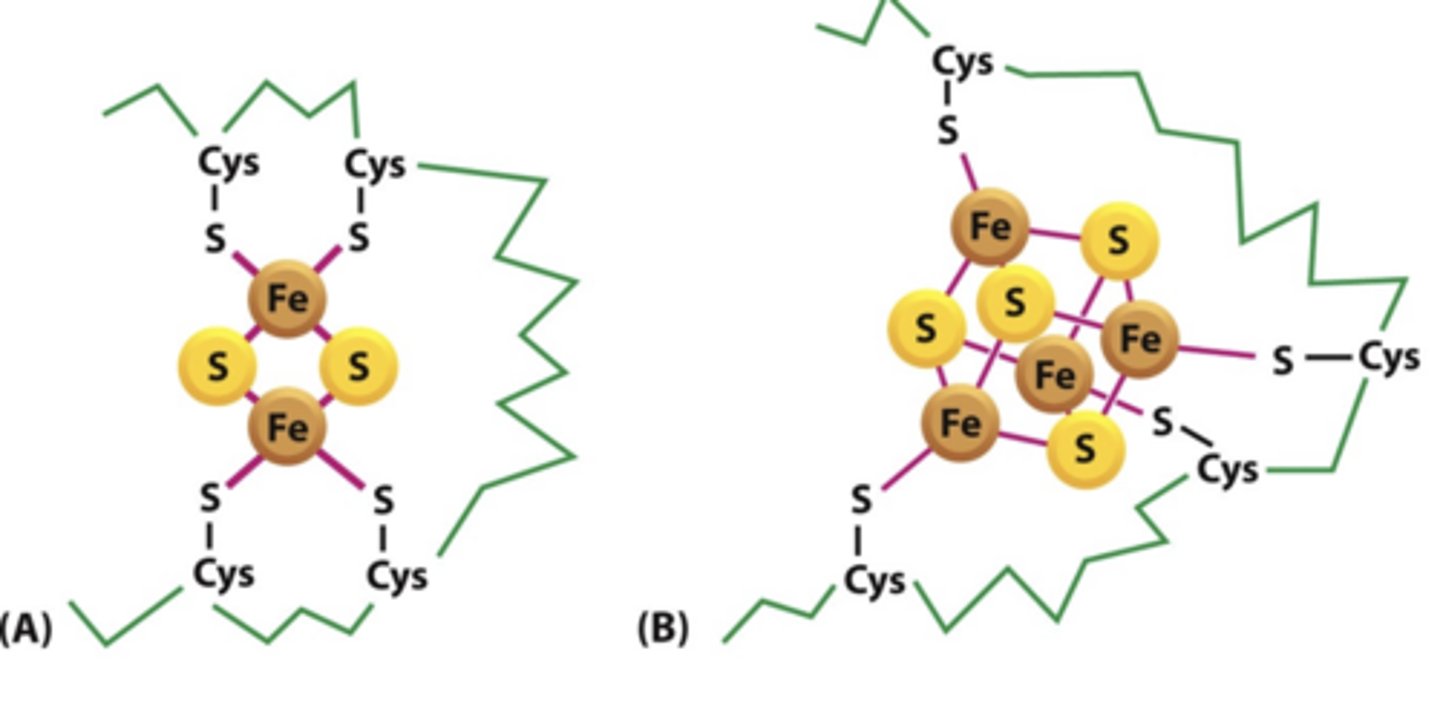
iron- sulfur centers
complex of 2-4 iron atoms + sulfur atoms held in position by cysteine side chains
each can carry one e- at a time
transfer electrons efficiently between redox-active protein complexes (Complexes I, II, and III), powering ATP production
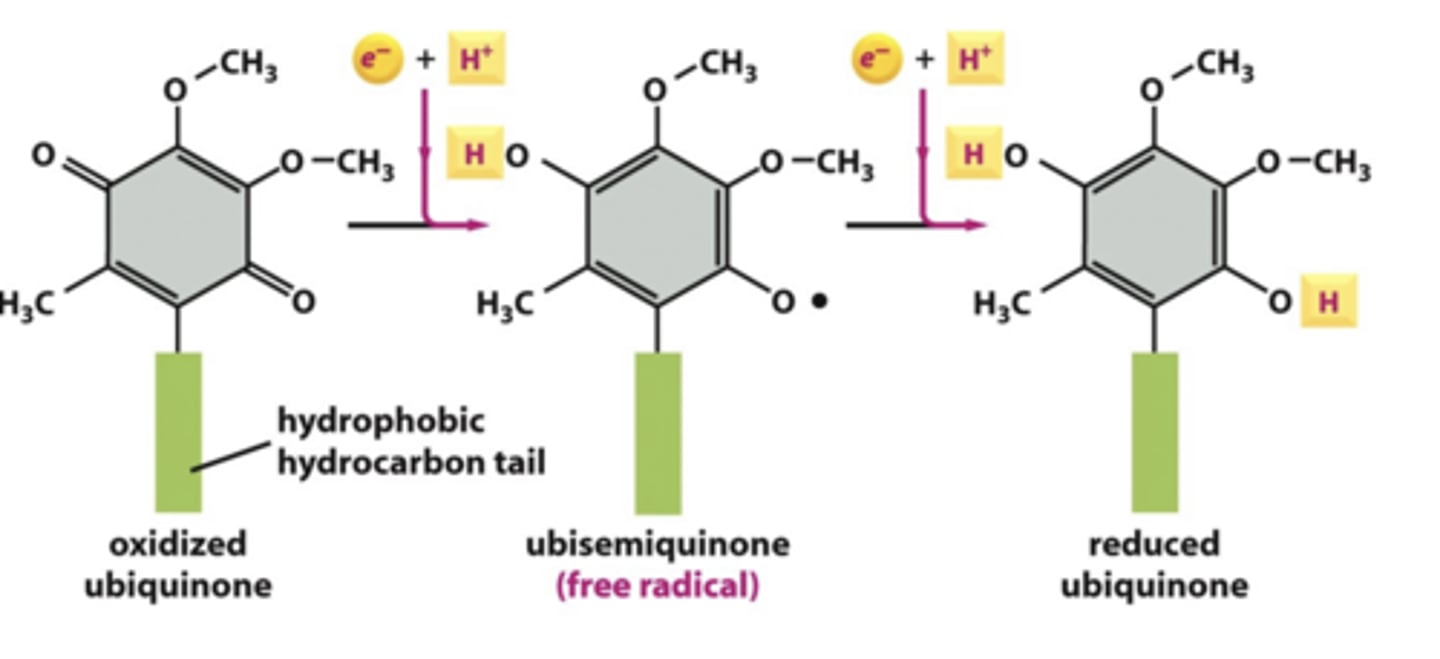
coenzyme Q (ubiquinone)
not a protein
shuttles electrons from Complex I and Complex II to Complex III
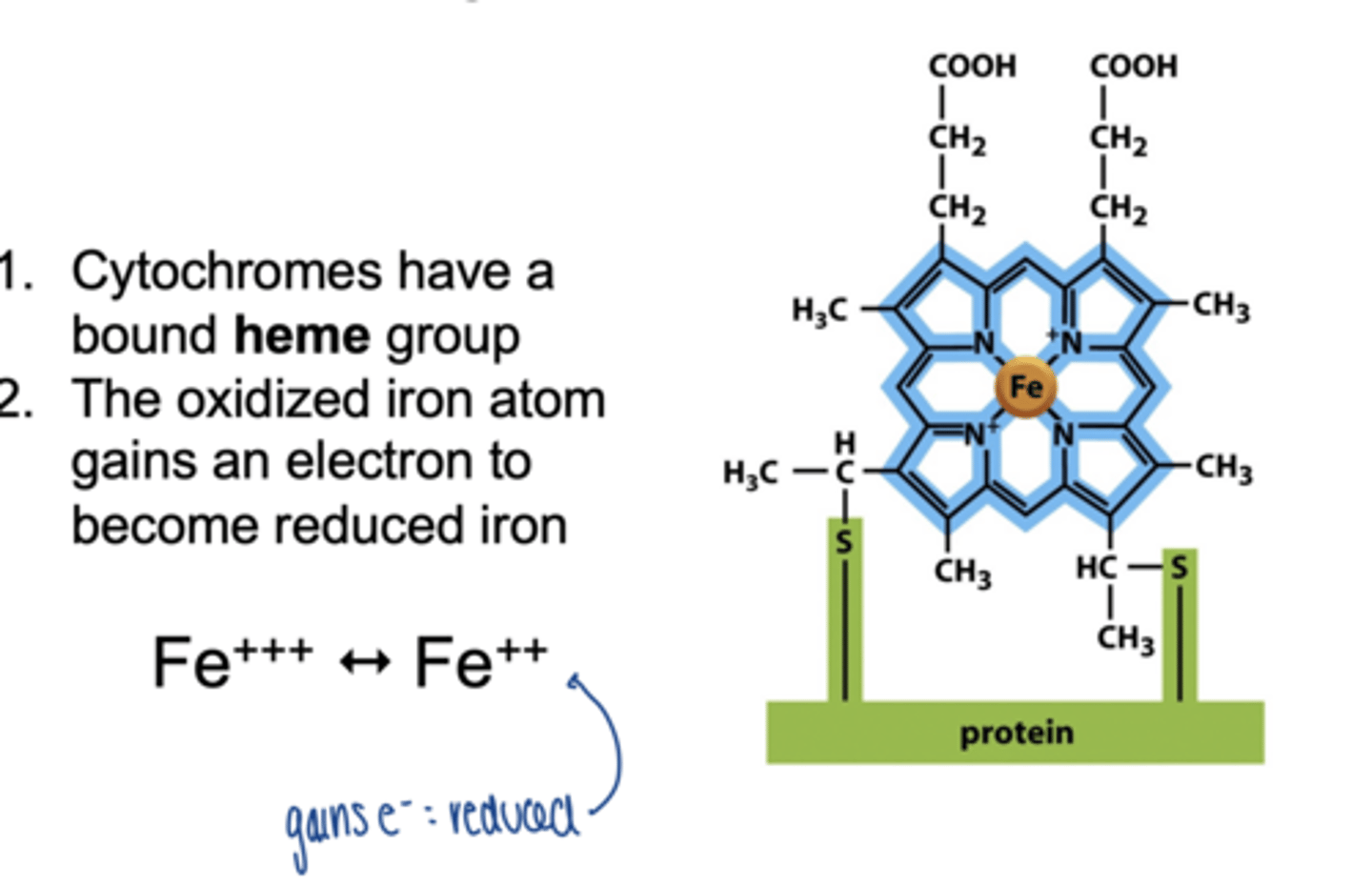
cytochrome
have a bound heme group
oxidized iron atom gains e- to become reduced iron
Fe⁺⁺⁺ → Fe⁺⁺
NADH dehydrogenase (complex I)
- accepts e from NADH
- passes to cofactor Flavin mononucleotide (FMN)
- to iron-sulfur centers to coenzyme Q
protons pumped
succinate dehydrogenase (complex II, TCA step 6)
passes e from FADH₂ to iron-sulfur centers → coenzyme Q
ZERO protons pumped
cytochrome b-c1 complex (complex III)
accepts e from coenzyme Q → passes to hemes → then to cytochrome c
protons PUMPED
cytochrom a + a3 complex (complex IV, cytochrome oxidase complex)
only complex that reacts with O₂ directly
final reduction to water
protons PUMPED
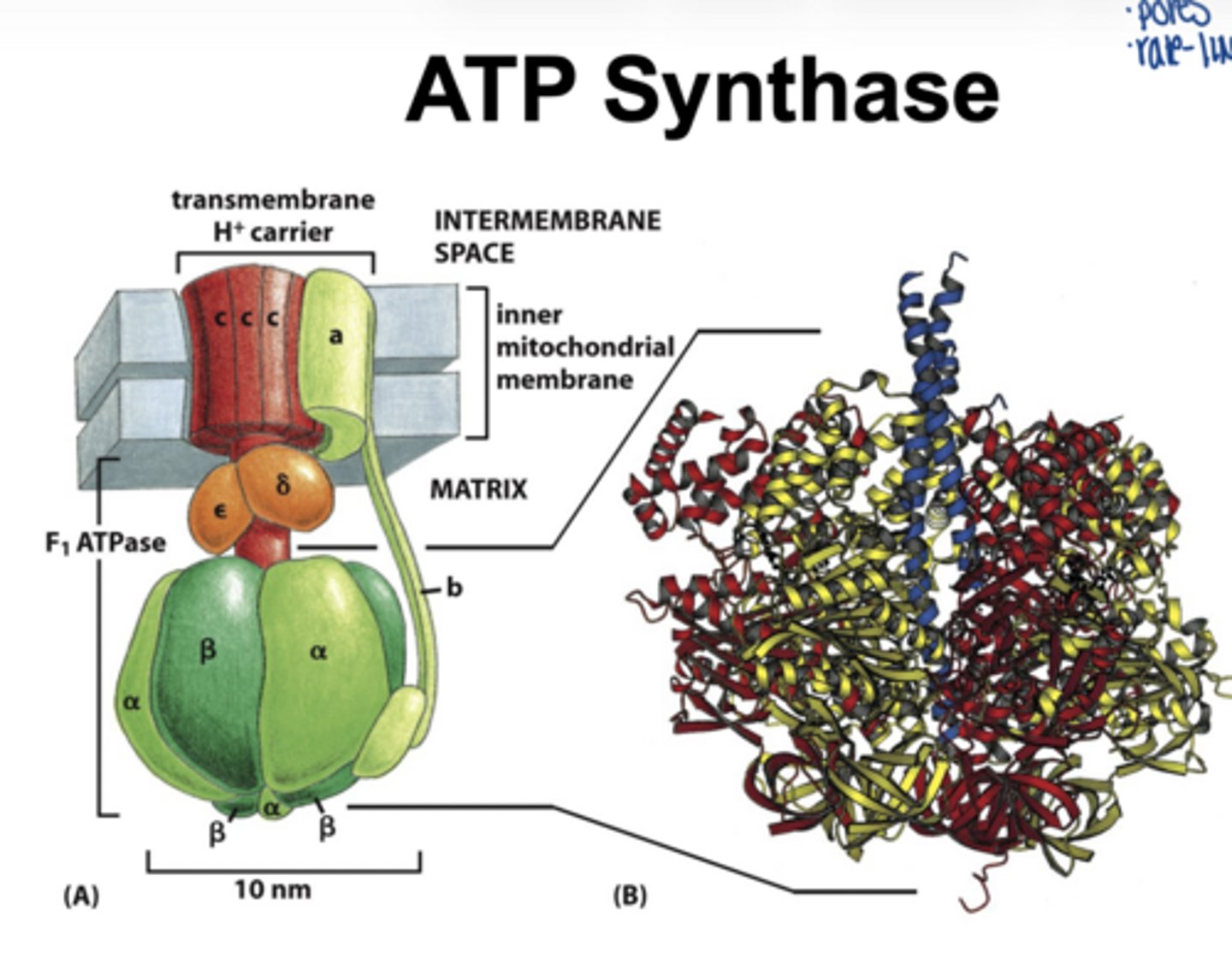
ATP synthase
turbine engine
1 full rotation uses 3-5 protons
1 rotation produces 3 ATPs
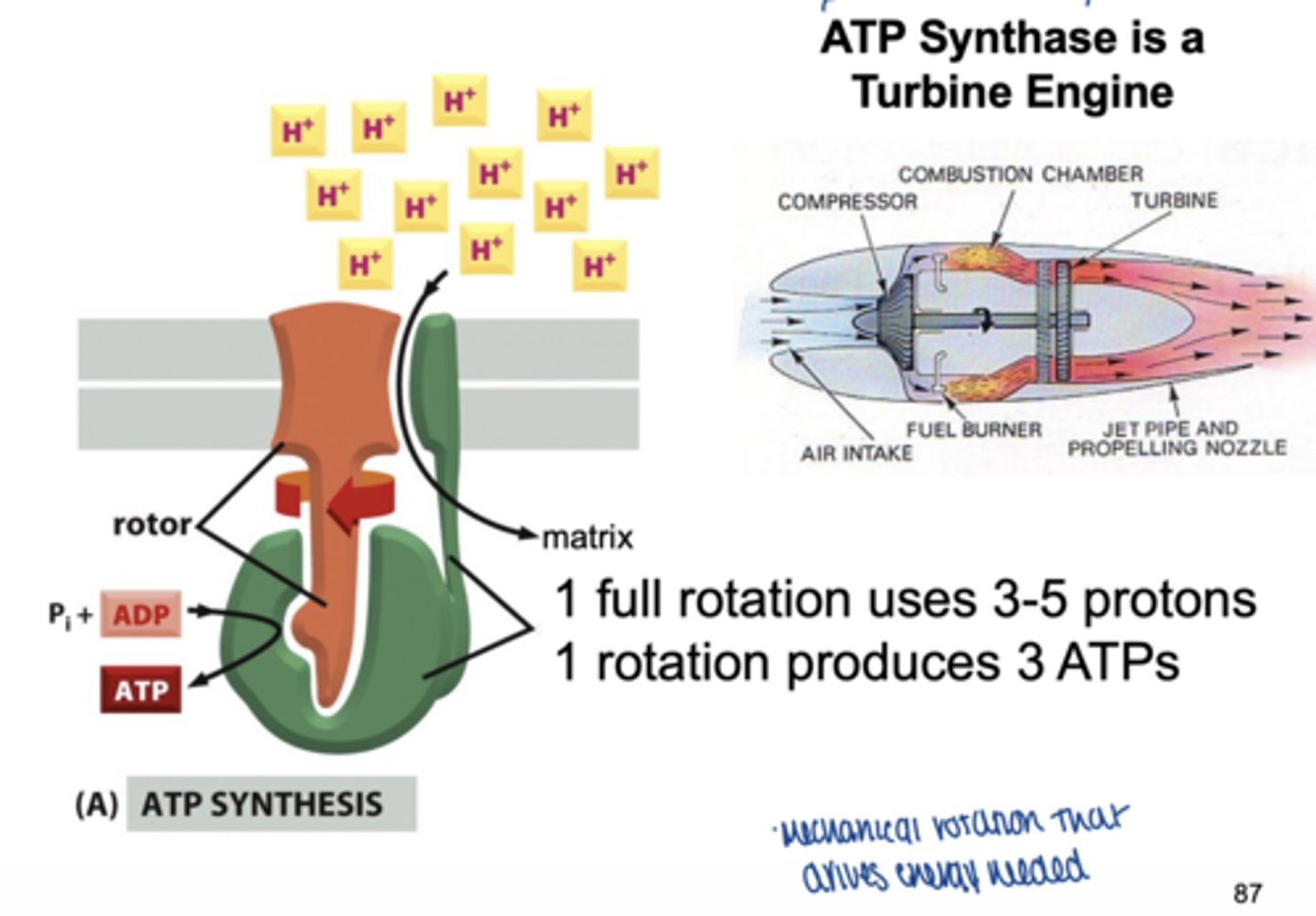
ATP synthase (complex V) is the ___ ___ step for oxidative phosphorylation
rate limiting
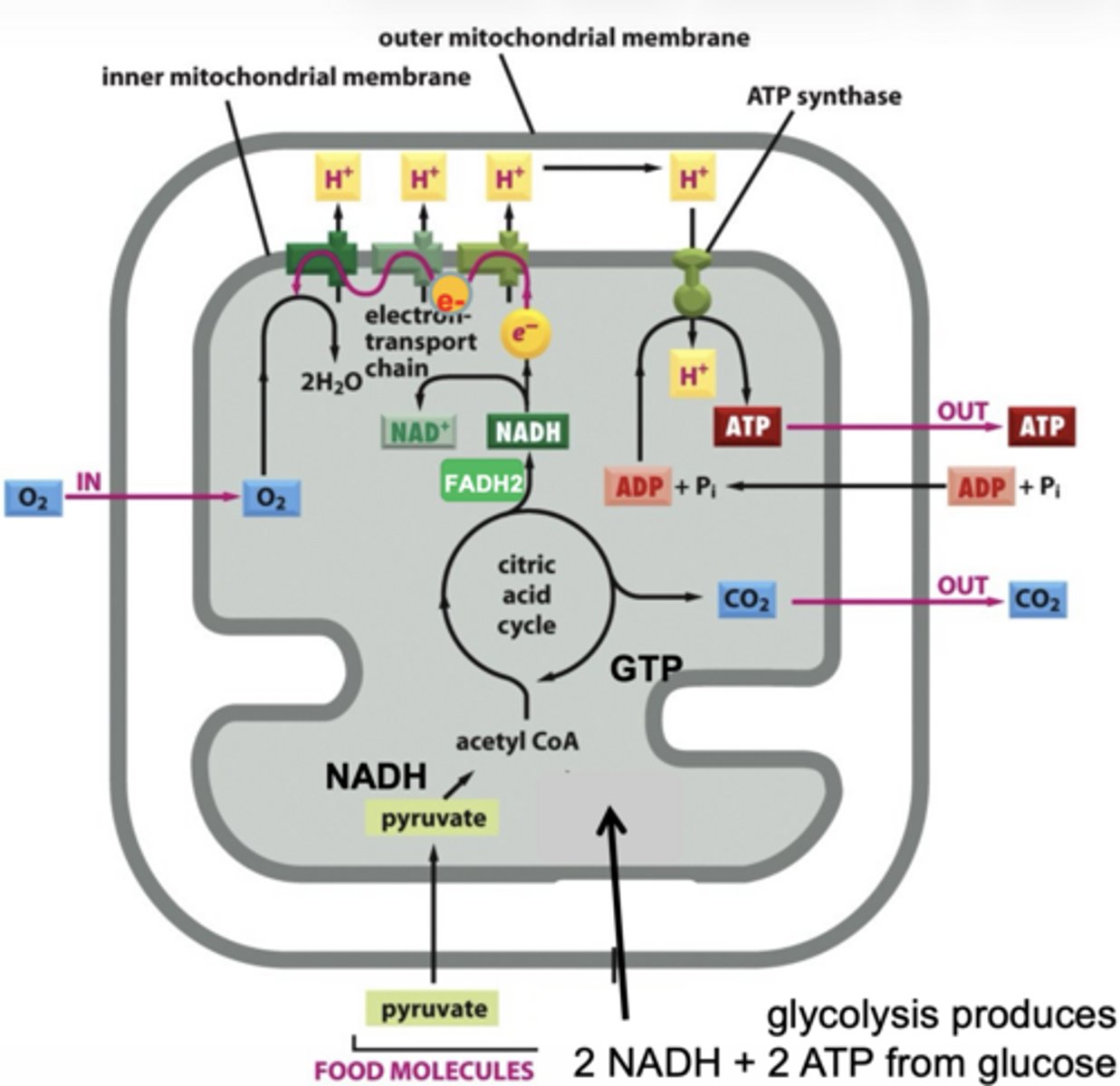
_____ produces, 2 NADPH + 2 ATP from glucose
glycolysis
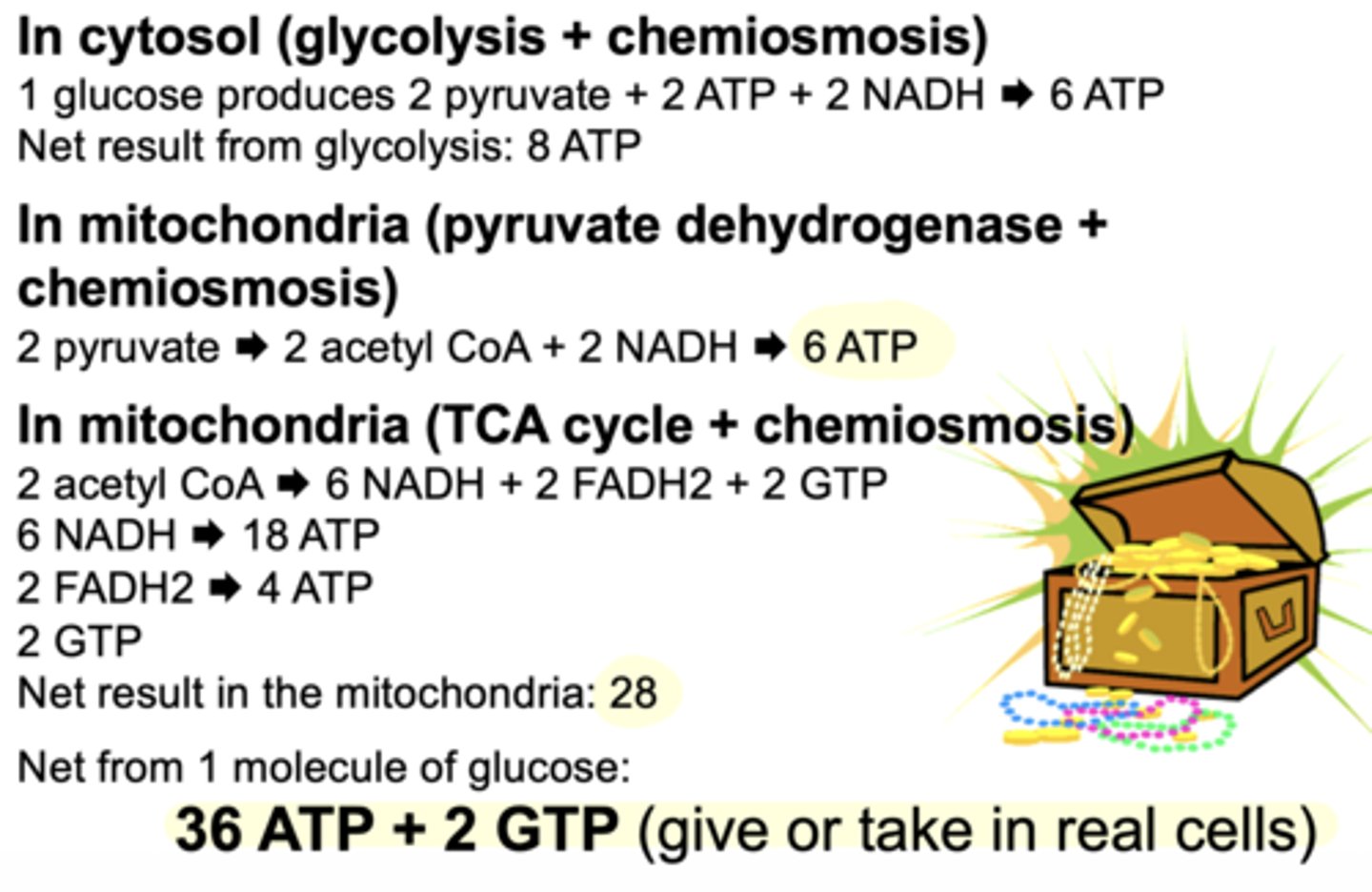
yield from 1 glucose in cytosol
glycolysis + chemiosmosis
2 pyruvate + 2 ATP + 2 NADH → 6 ATP
net result from glycolysis = 8 ATP
yield from 1 glucose in mitochondria
pyruvate dehydrogenase + chemiosmosis
2 pyruvate → 2 acetyl CoA + 2 NADH → 6 ATP
yield from 1 glucose in mitochondria (TCA cycle + chemiosmosis)
2 acetyl CoA → 6 NADPH + 2 FADH₂ + 2 GTP
6 NADH → 18 ATP
2 FADH₂ → 4 ATP
2 GTP
net result in mitochondria: 28
net from 1 molecule of glucose
36 ATP + GTP
how much energy does your heart need
pumps 4-5 L of blood/min
- ~7200 liters/day
consumes 5-6 kg ATP/day
ATP from catabolism of:
- fatty acids
- glucose
- lactic acid
- ketone bodies
blocking the flow of _____ at any point shuts down the electrical circuit, thus halting _____
electrons, chemiosmosis
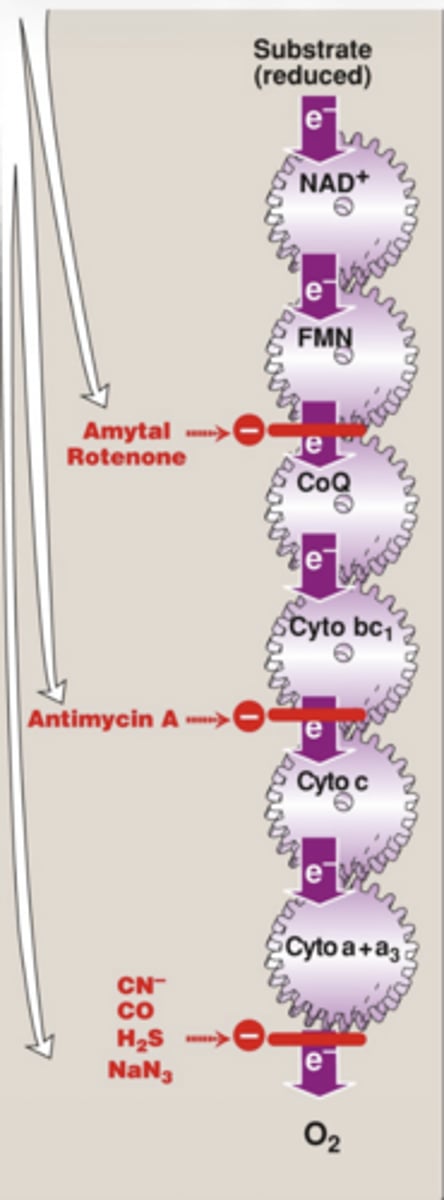
key inhibitors of ETC and proton pumping
rotenone → Complex I
antimycin A → Complex III
cyanide/CO → Complex IV
oligomycin → ATP synthase
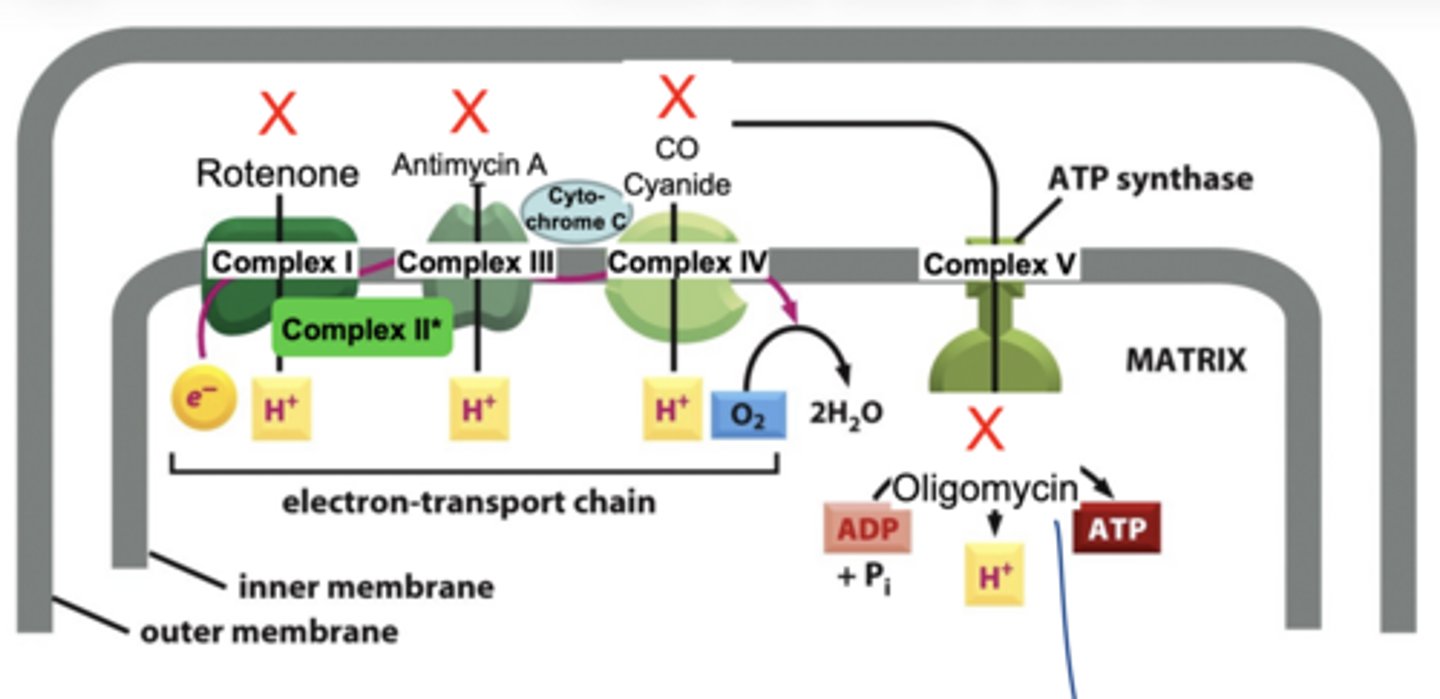
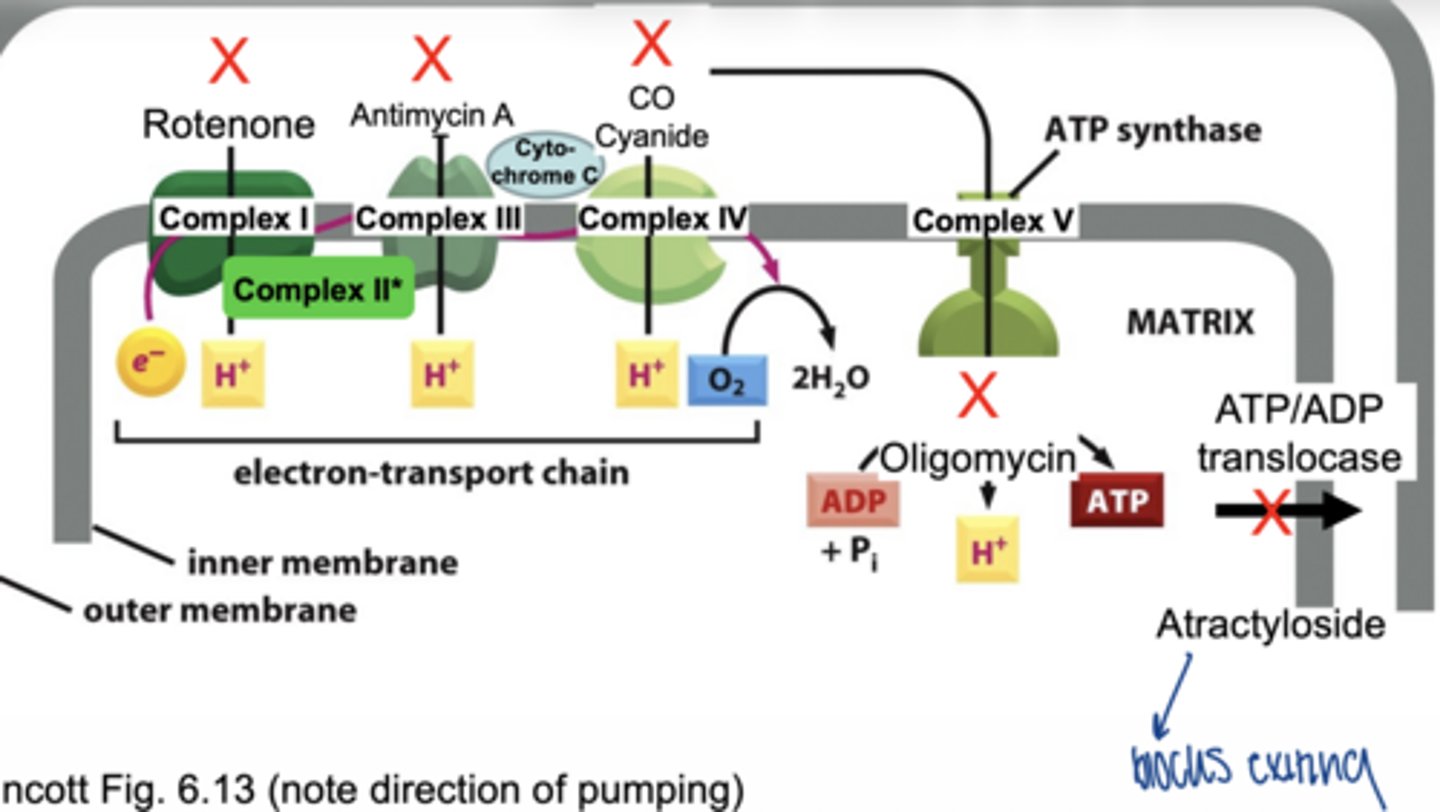
inhibitors of oxidative phosphorylation and ATP export
ATP/ADP translocase
atractyloside (blocks exiting)
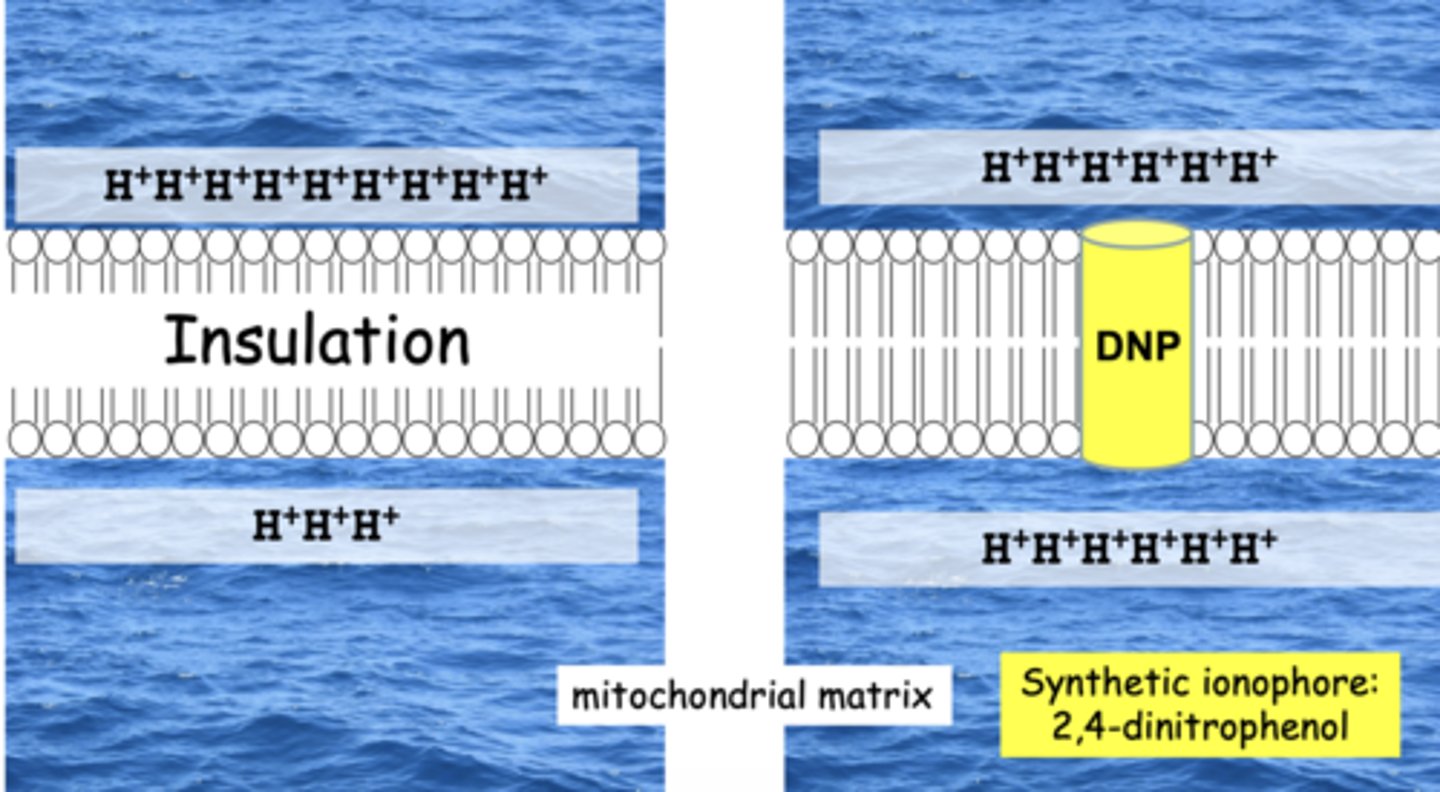
what do uncouplers do
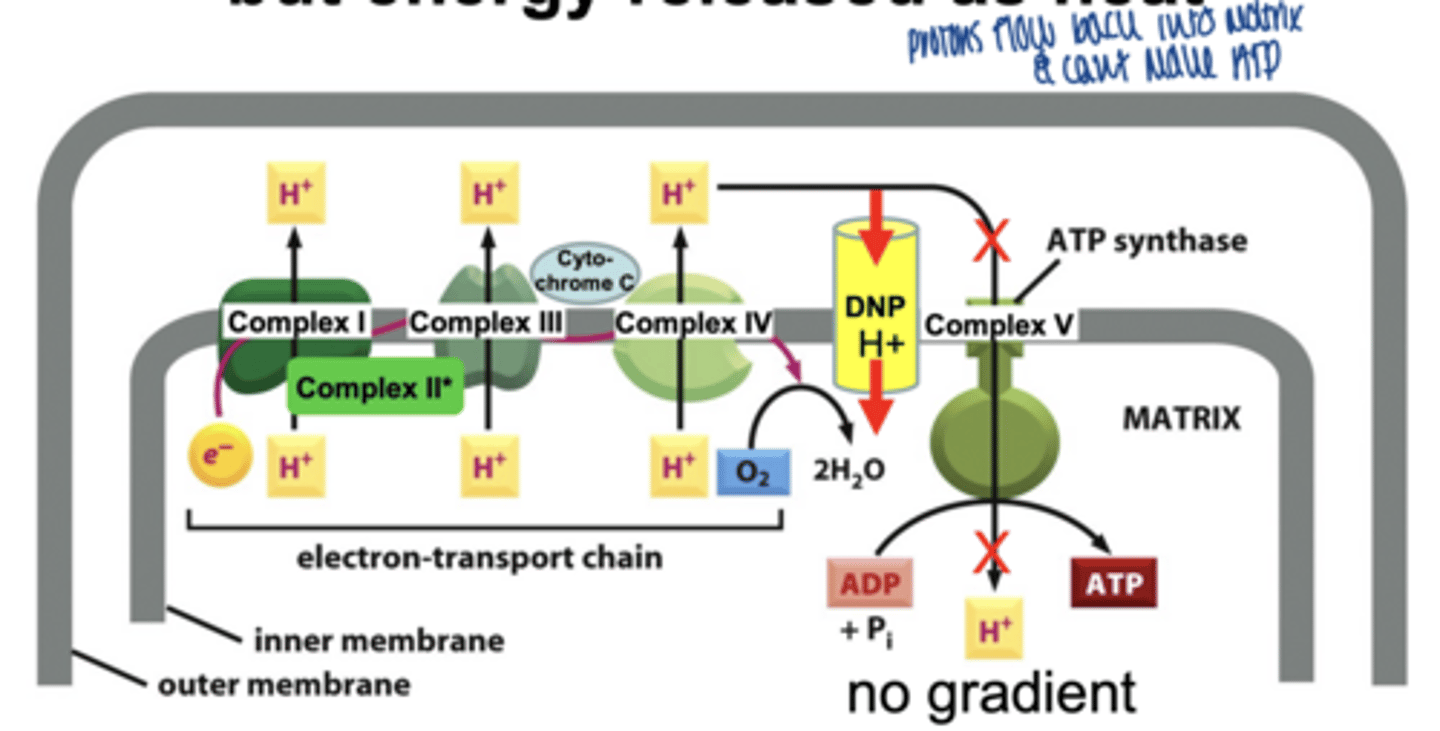
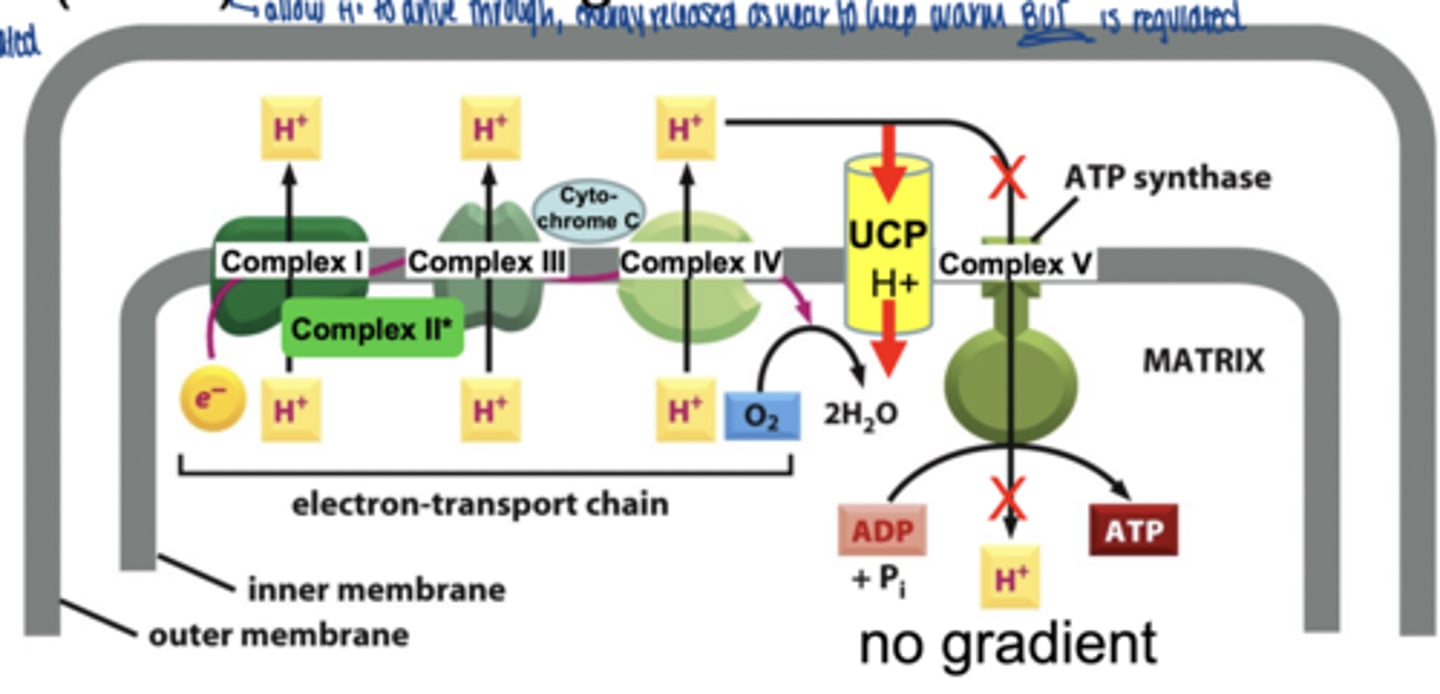
poke holes in inner membrane, disperse the proton gradient & stop ATP synthesis
- destroy proton gradient
- stop ATP produciton
- generate heat
ex. DNP (synthetic ionophore: 2-4 dinitrophenol)
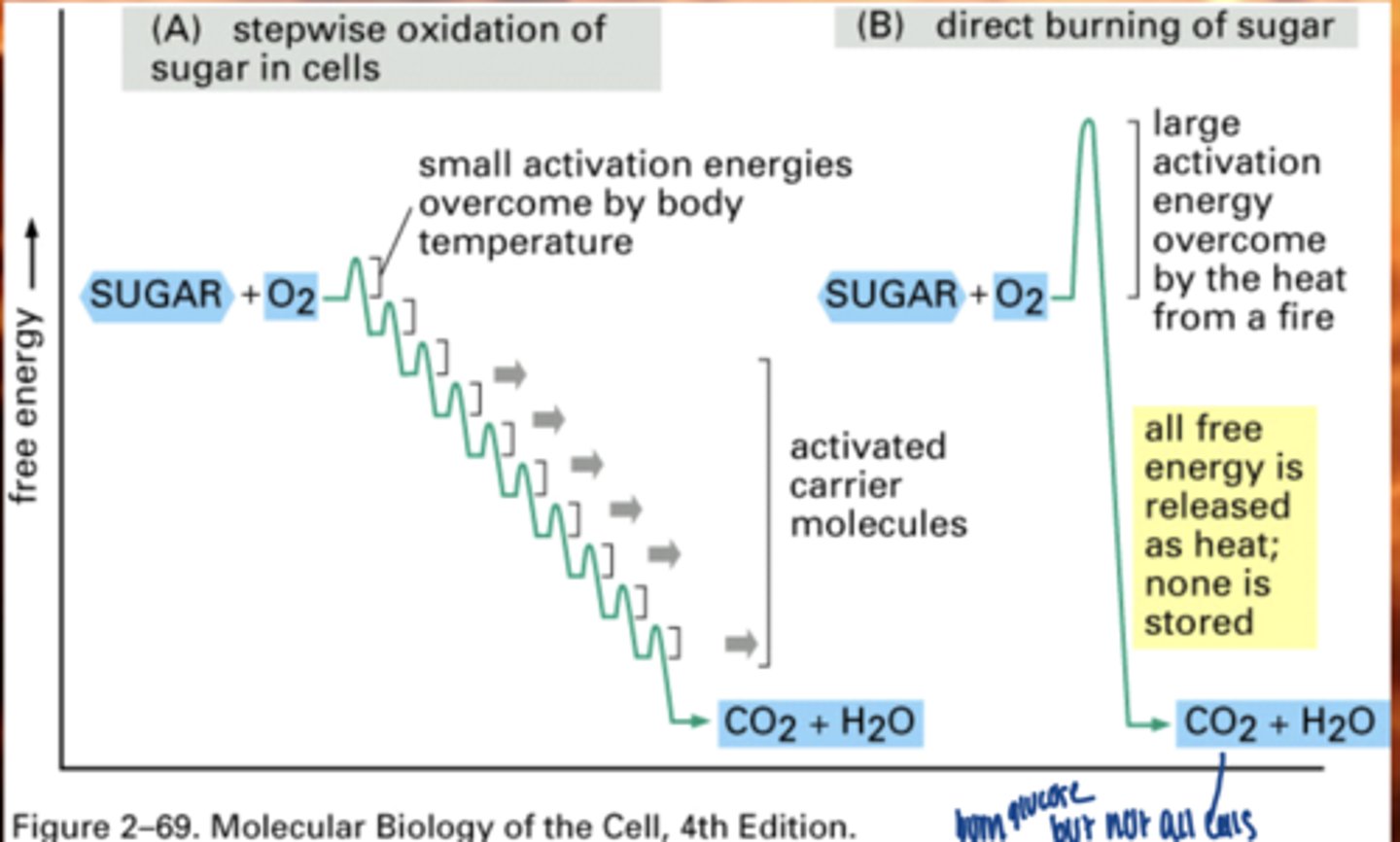
electron transport continues with uncoupling, but energy released as _____ (not ATP)
heat
prevent burning up cell...
brown fat and skeletal muscle posses a special protein known as ____ _____ used to generate heat if needed
uncoupling protein (UCP)
**regulated**
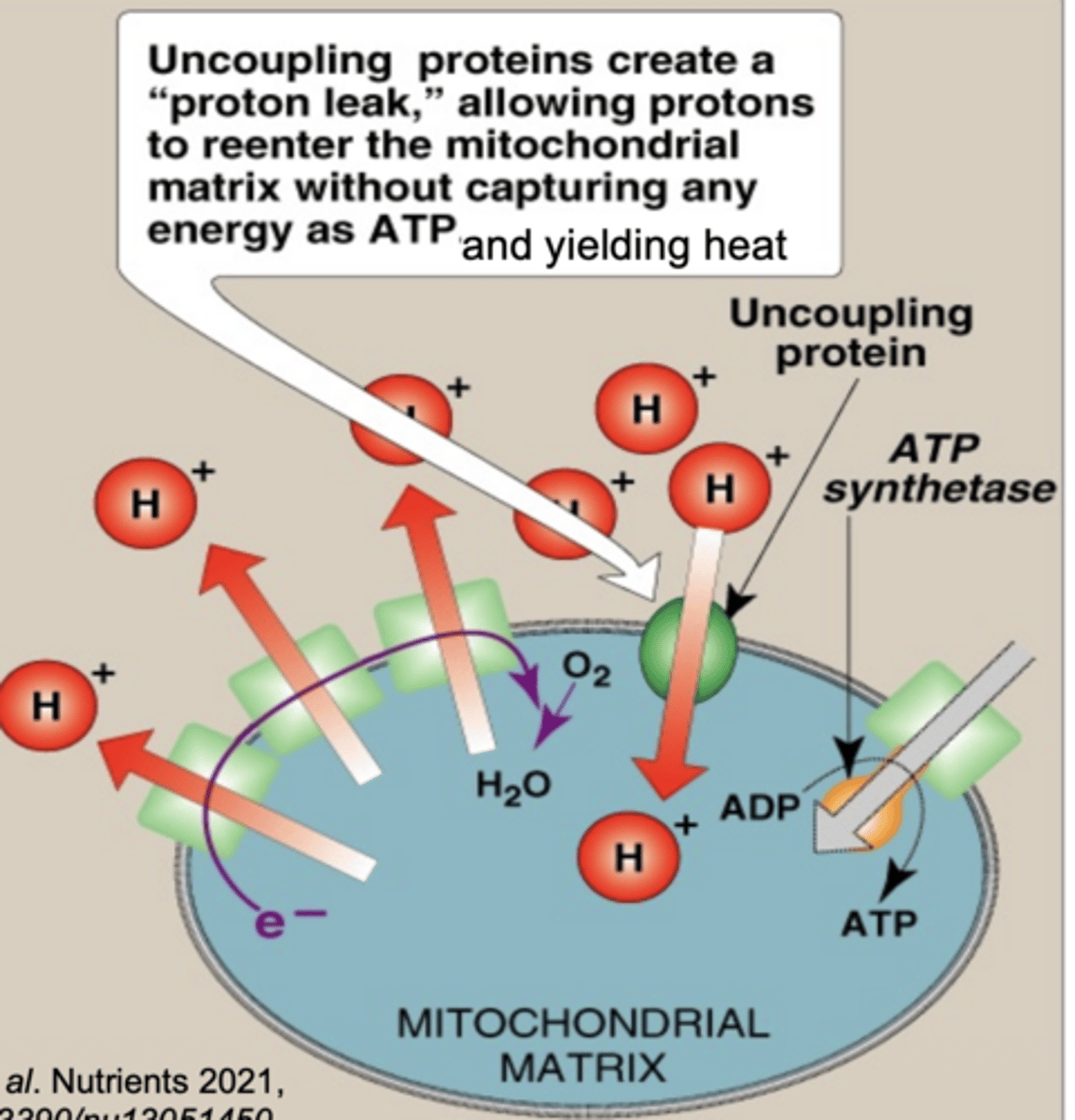
uncoupling proteins UCP
create a "proton leak", allowing protons to reenter the mitochondrial matrix without capturing any energy as ATP & yielding heat
generates heat (thermogenesis)
what happens if ETC stops
NADH accumualtes
no NAD+ → glycolysis stops
no ATP → cell death
summary
- PDH = bridge between glycolysis & TCA
- TCA = makes NADH/FADH₂
- ETC = uses NADH to make ATP
- oxygen = final electron acceptor
- inner membrane = most important site
- high ATP = turns everything OFF
- low ATP = turns everything ON
what is the pH outside relative to matrix
lower
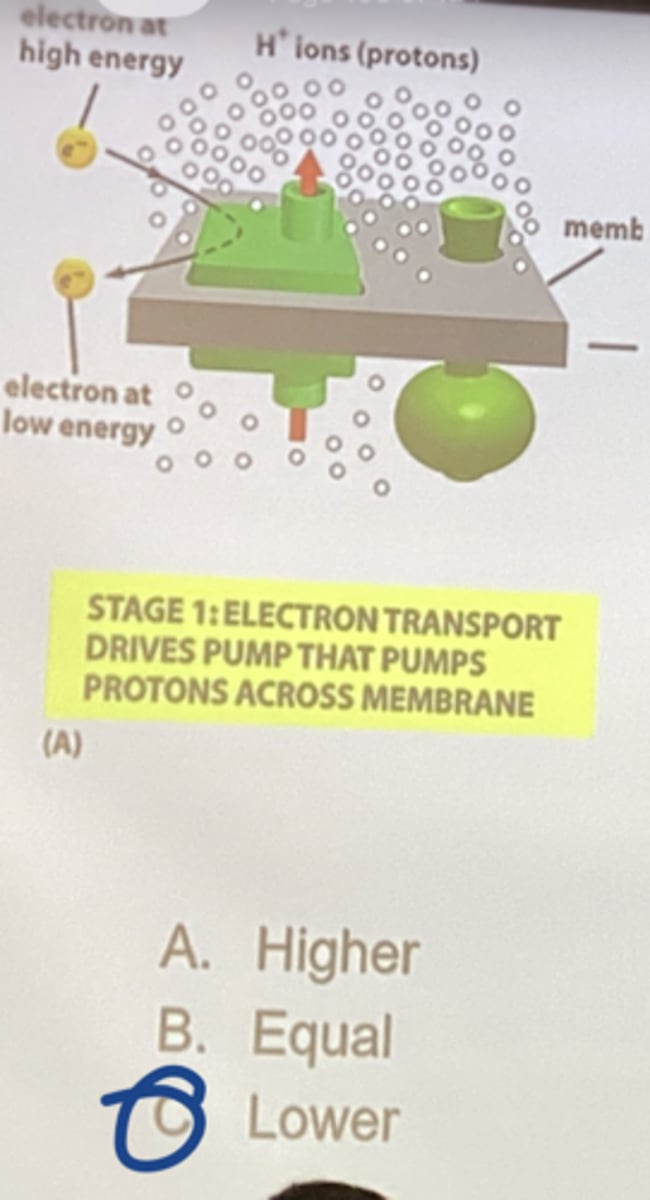
what is the charge outside relative to the matrix
more positive
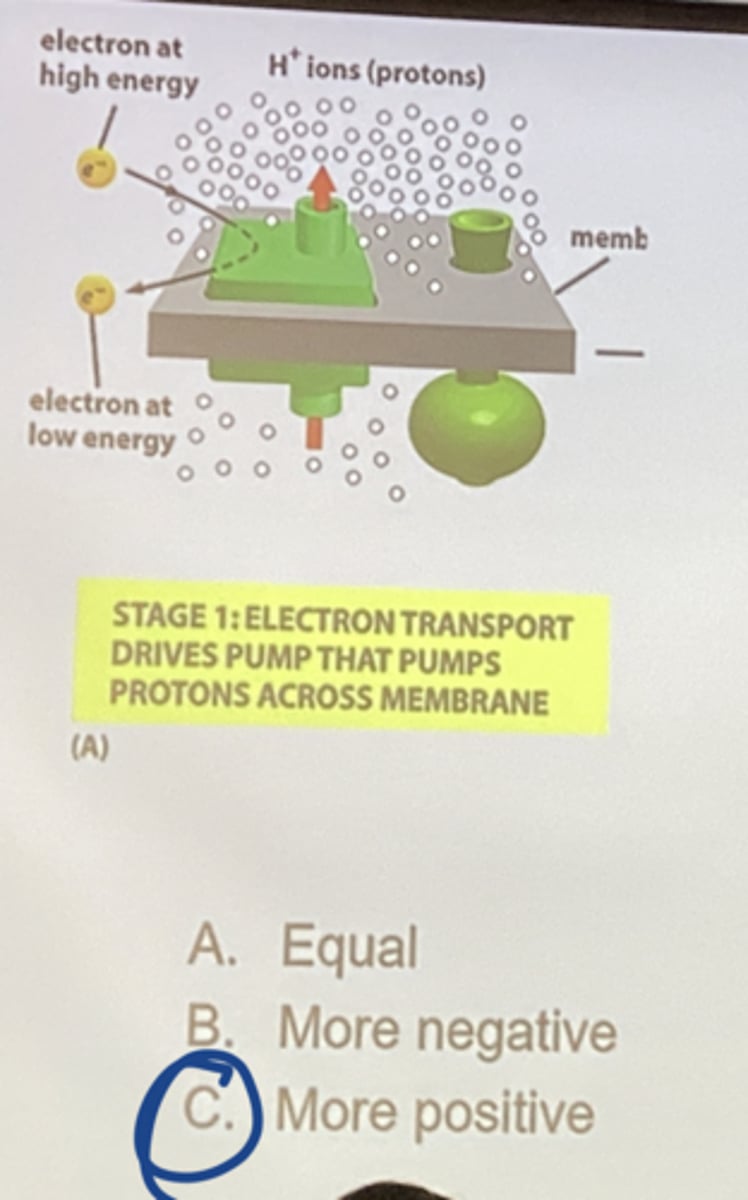
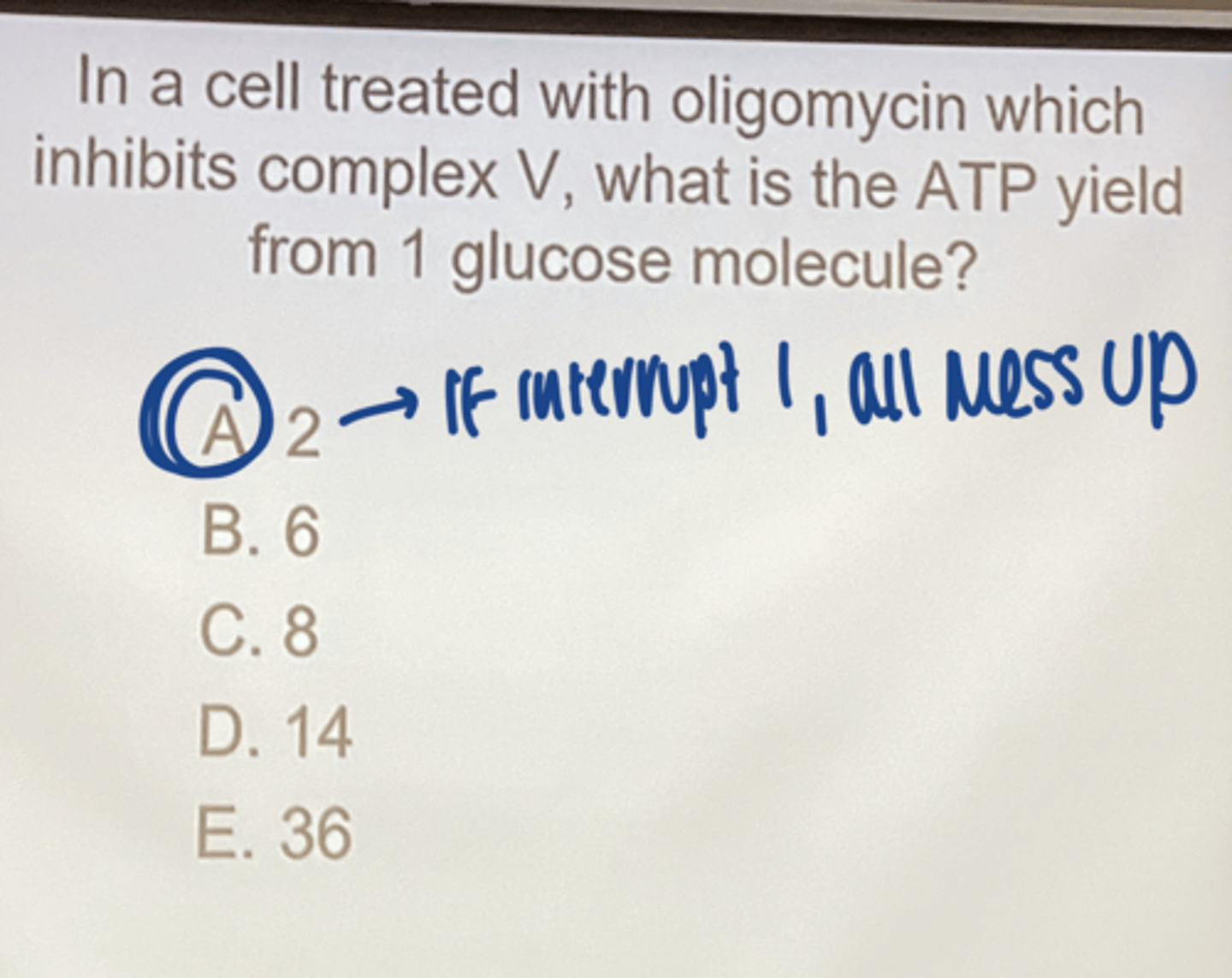
in a cell treated with oligomycin which inhibits complex V, what is the ATP yield from 1 glucose molecule
2
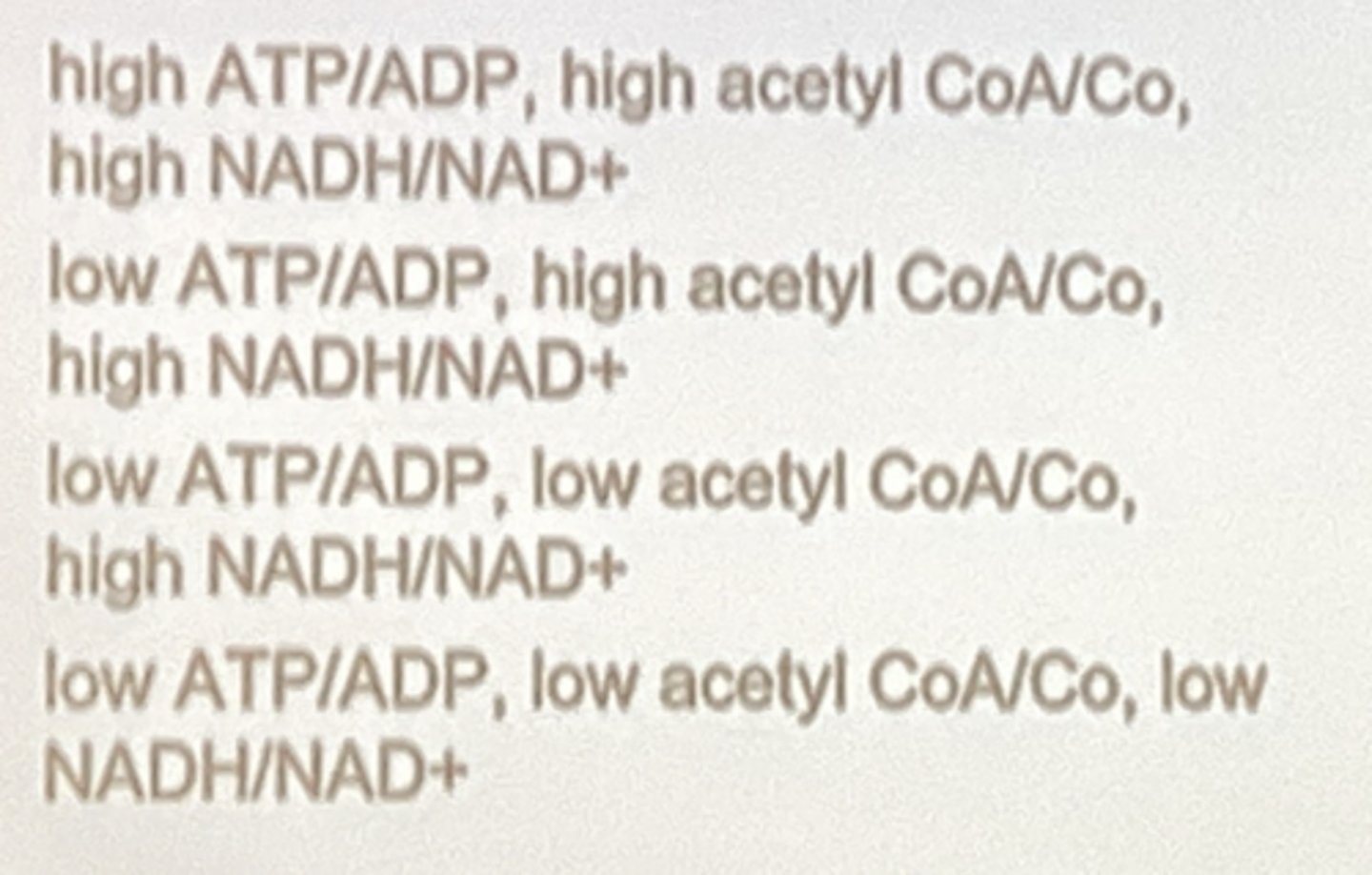
which of the following cellular conditions causes phosphorylation and thus inactivation of pyruvate dehydrogenase
high ATP/ADP
high acetyl CoA/Co
high NADH/NAD+
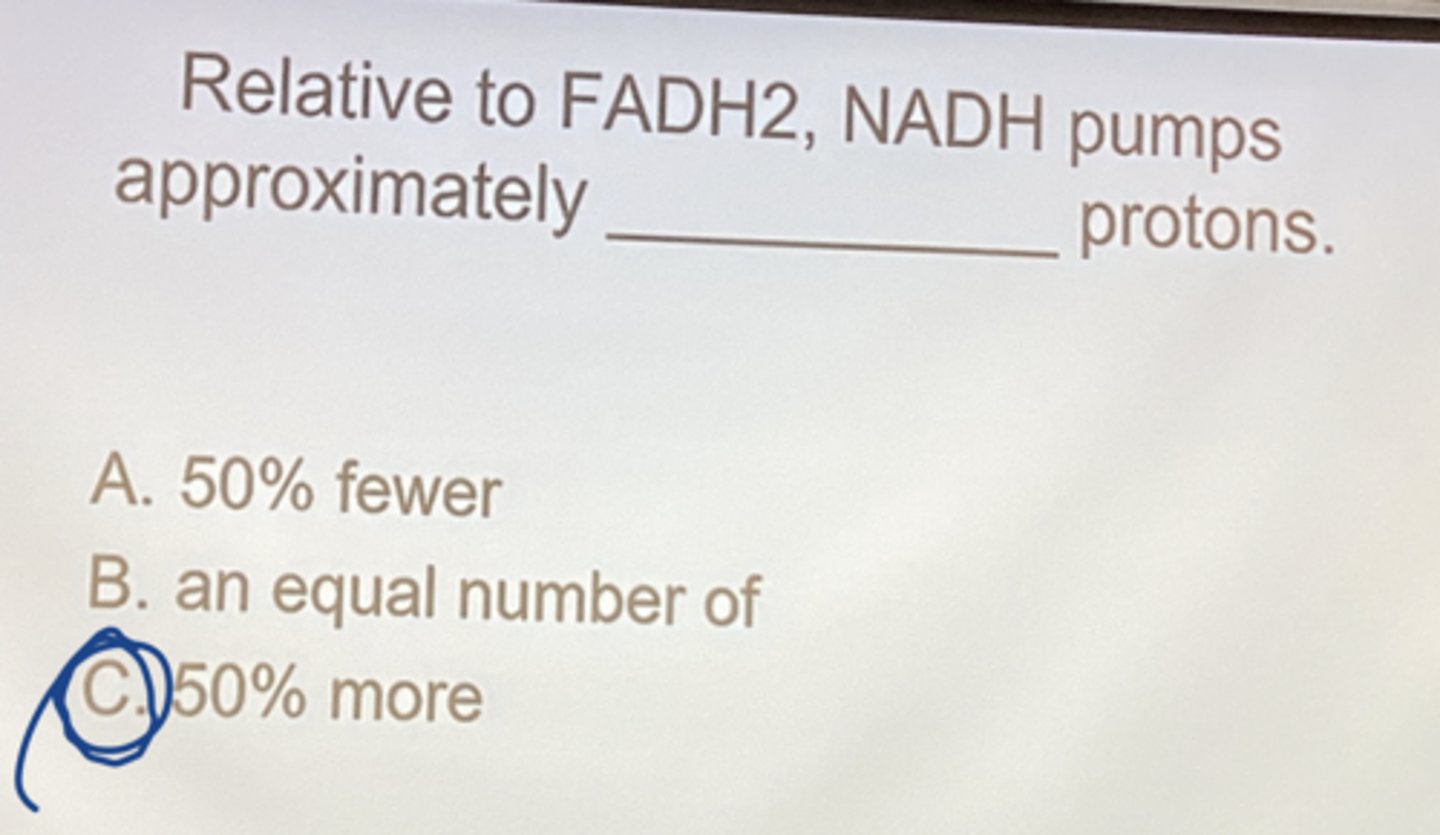
relative to FADH2, NADH pumps approximately ____ protons
50% more
An enzyme that catalyzes a required reaction in the biosynthesis of coenzyme Q (ubiquinone) was recently discovered. A deficiency in this enzyme would most likely result in increased concentration of which of the following in blood?
lactic acid
**anaerobic mechanisms bc not enough ATP**
which of these vitamins is an essential cofactor for both the pyruvate dehydrogenase and a-ketoglutarate dehydrogenase complexes
thiamine
we extract energy from macronutrients primarily from which of the following types of chemical reactions
oxidation of carbon
which of the following catalzyes an irreversible, rate limiting reaction in the TCA/citric acid cycle
isocitrate dehydrogenase
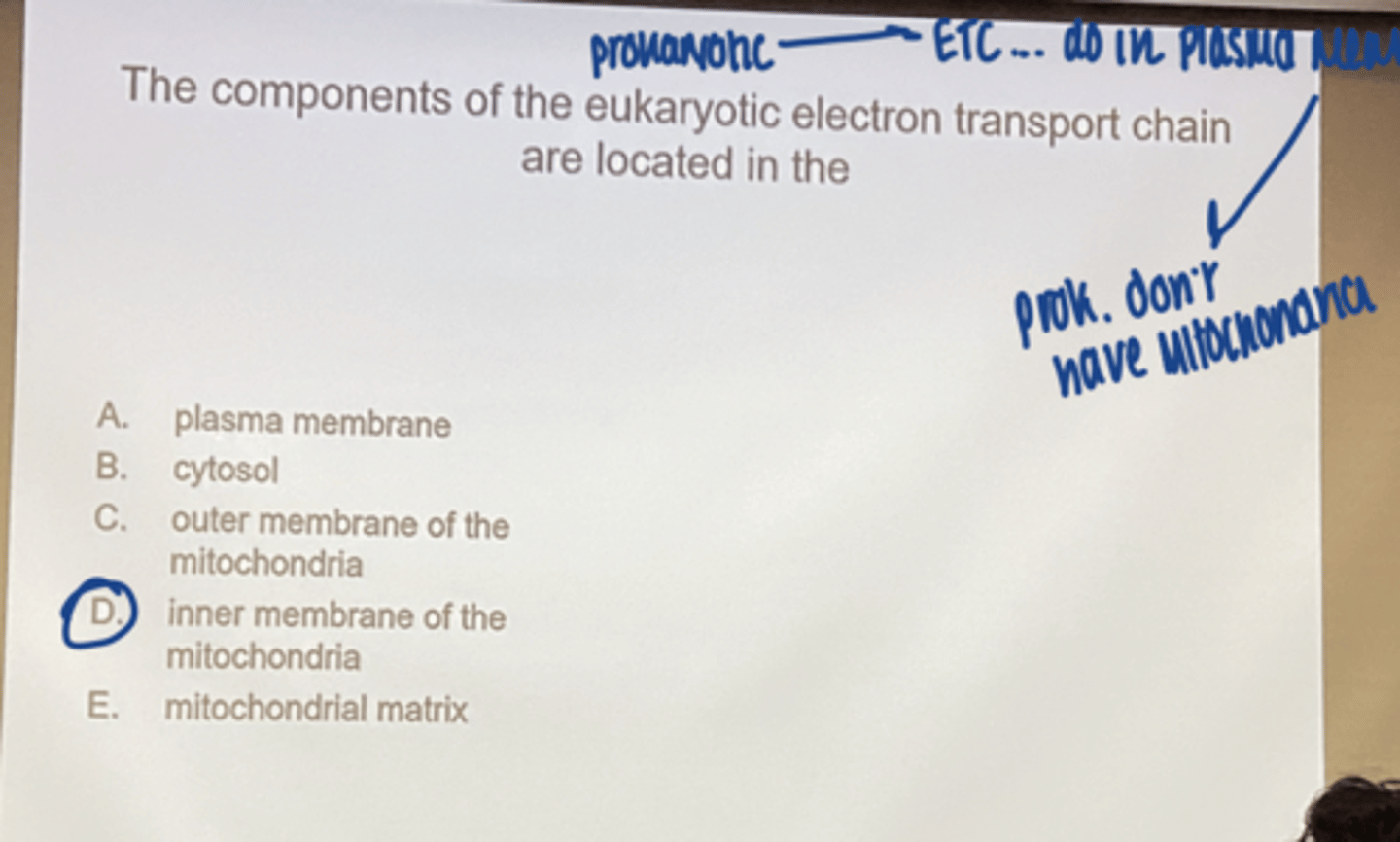
the components of the eukaryotic ETC are located in
inner membrane of mitochondria
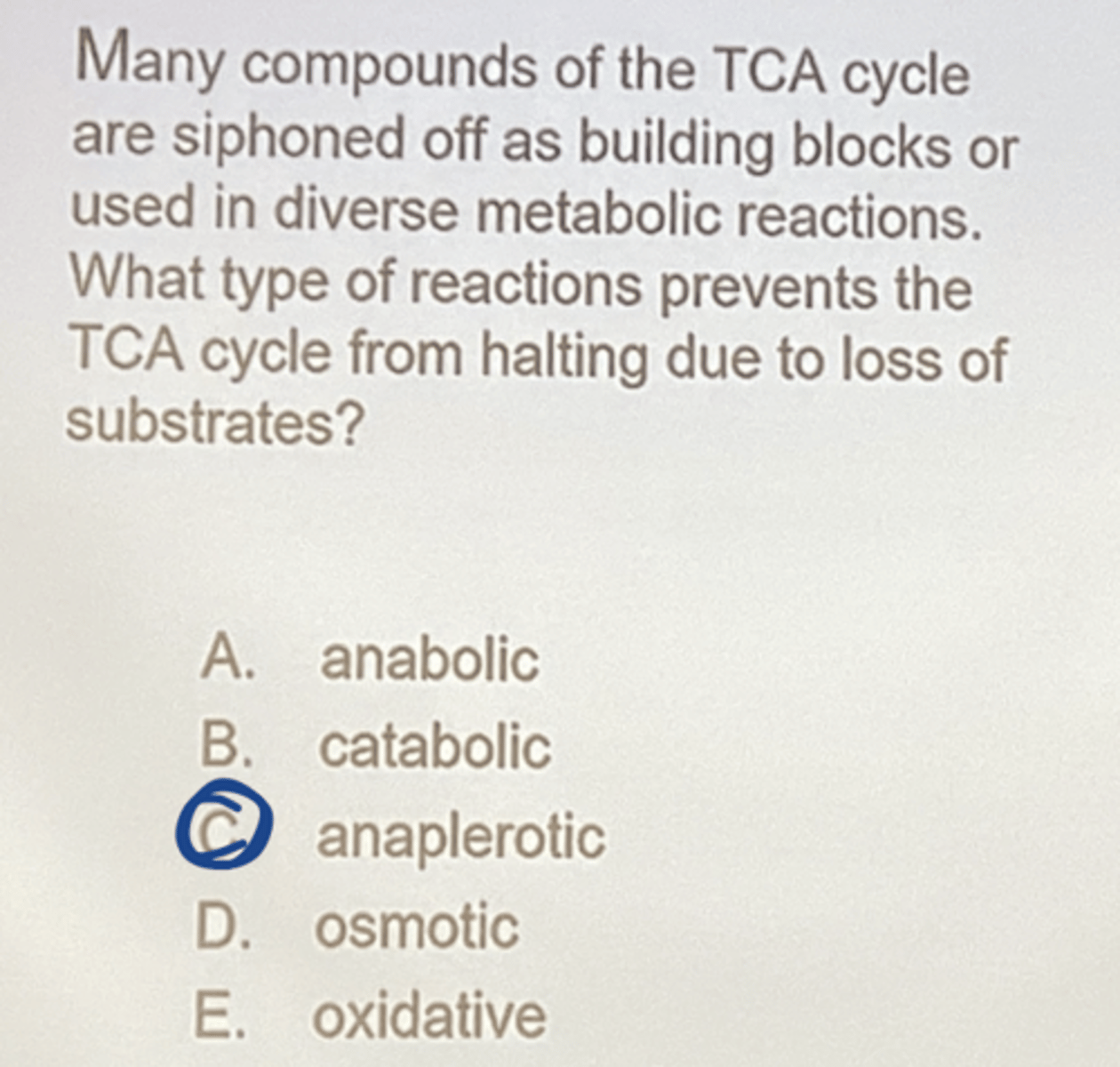
many compounds of the TCA cycle are siphoned off as building blocks or used in diverse metabolic reactions.
what type of reactions prevents the TCA cycle from halting due to loss of substrates
anaplerotic
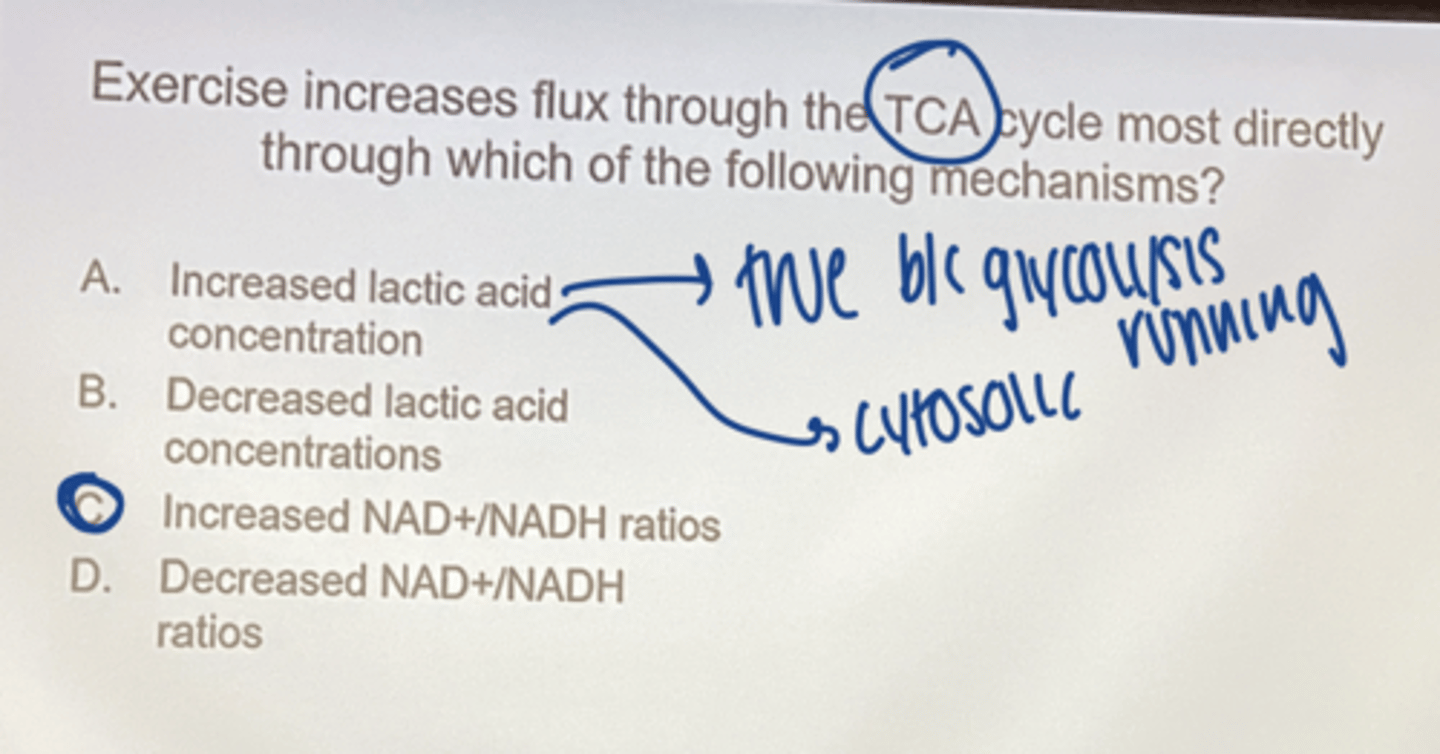
exercise increases flux through the TCA cycle most directly through which of the following mechanisms
increased NAD+/NADH ratios
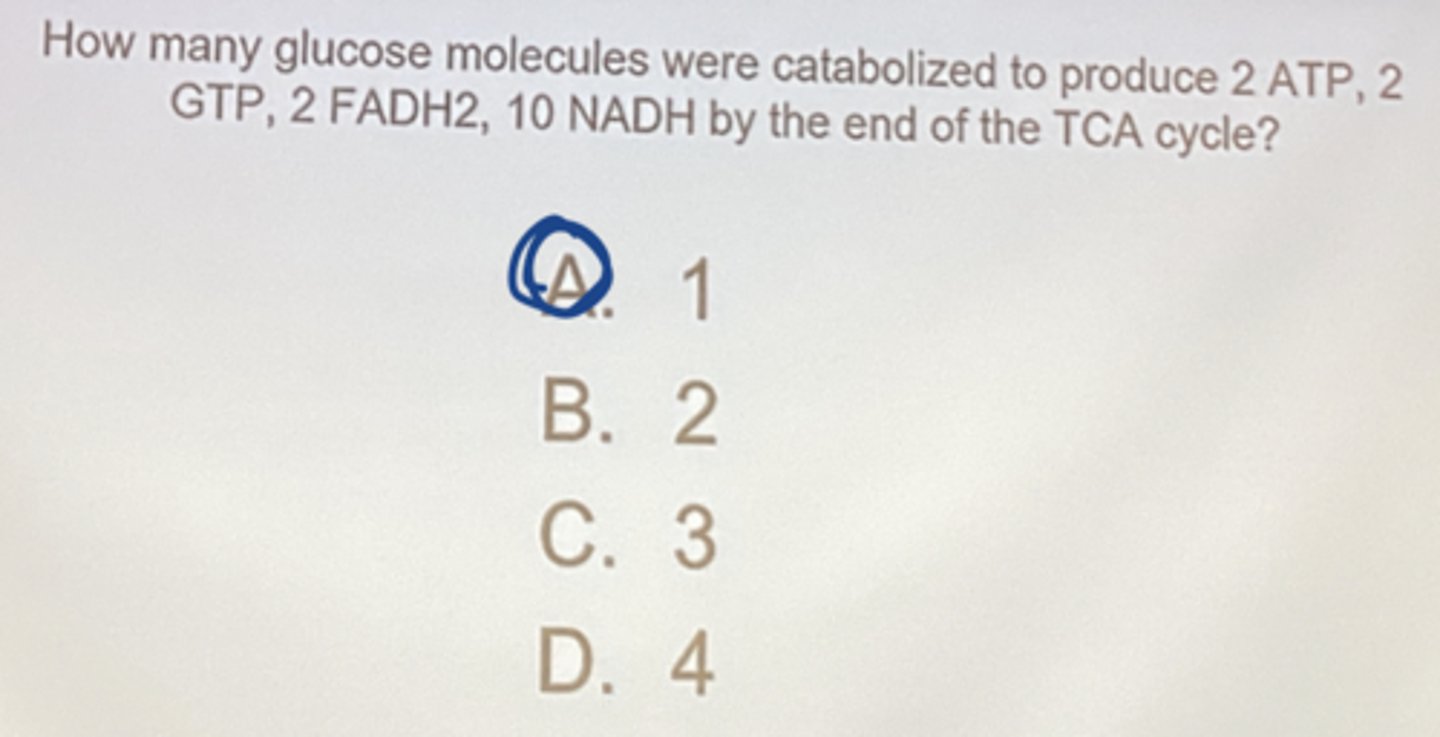
how many glucose molecules were catabolized to produce 2 ATP, 2 GTP, 2 FADH2, 10 NADH, by the end of the TCA cycle
1
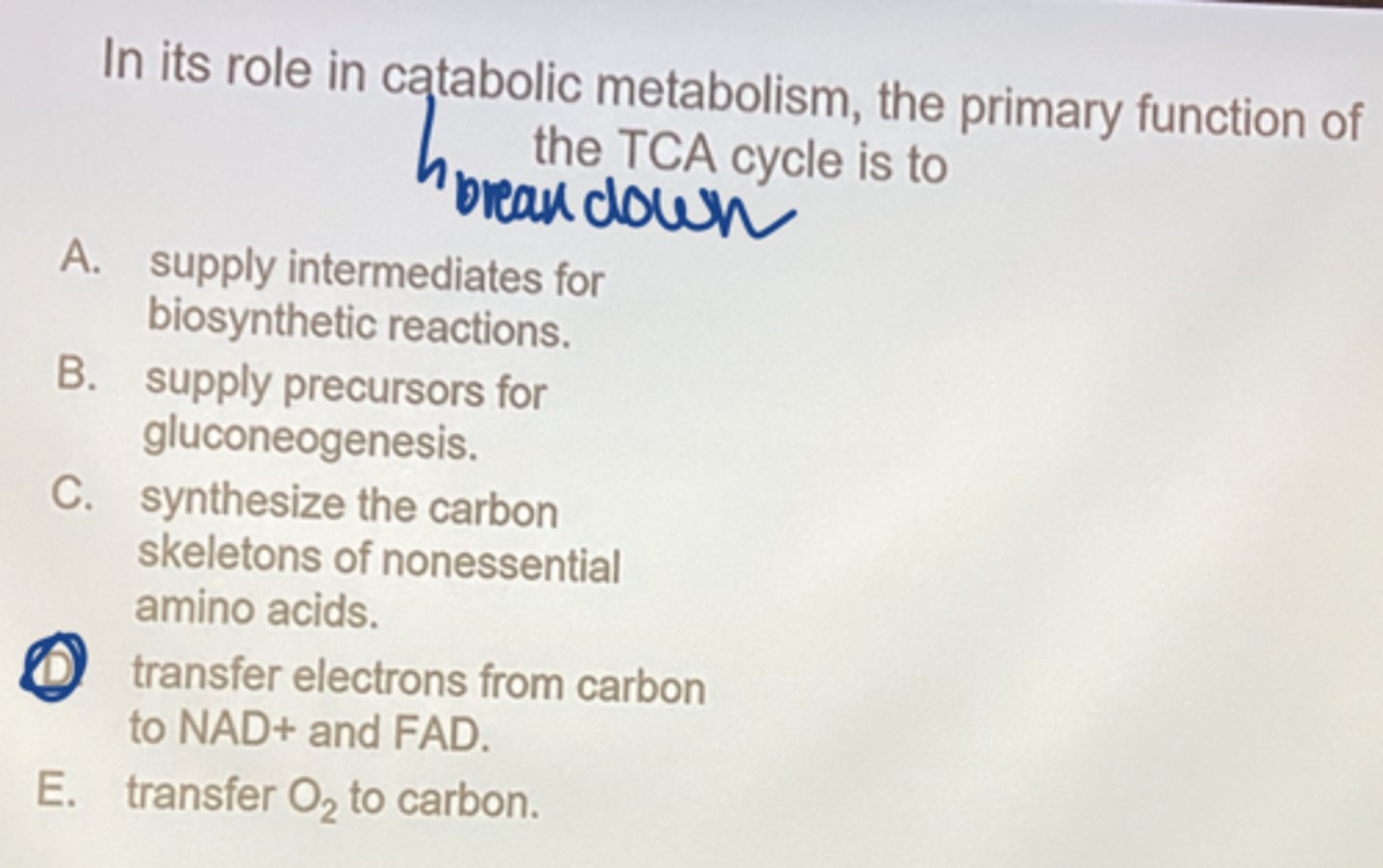
in its role in catabolic metabolism, the primary function of the TCA cycle is to
transfer electrons from carbon to NAD+ and FAD
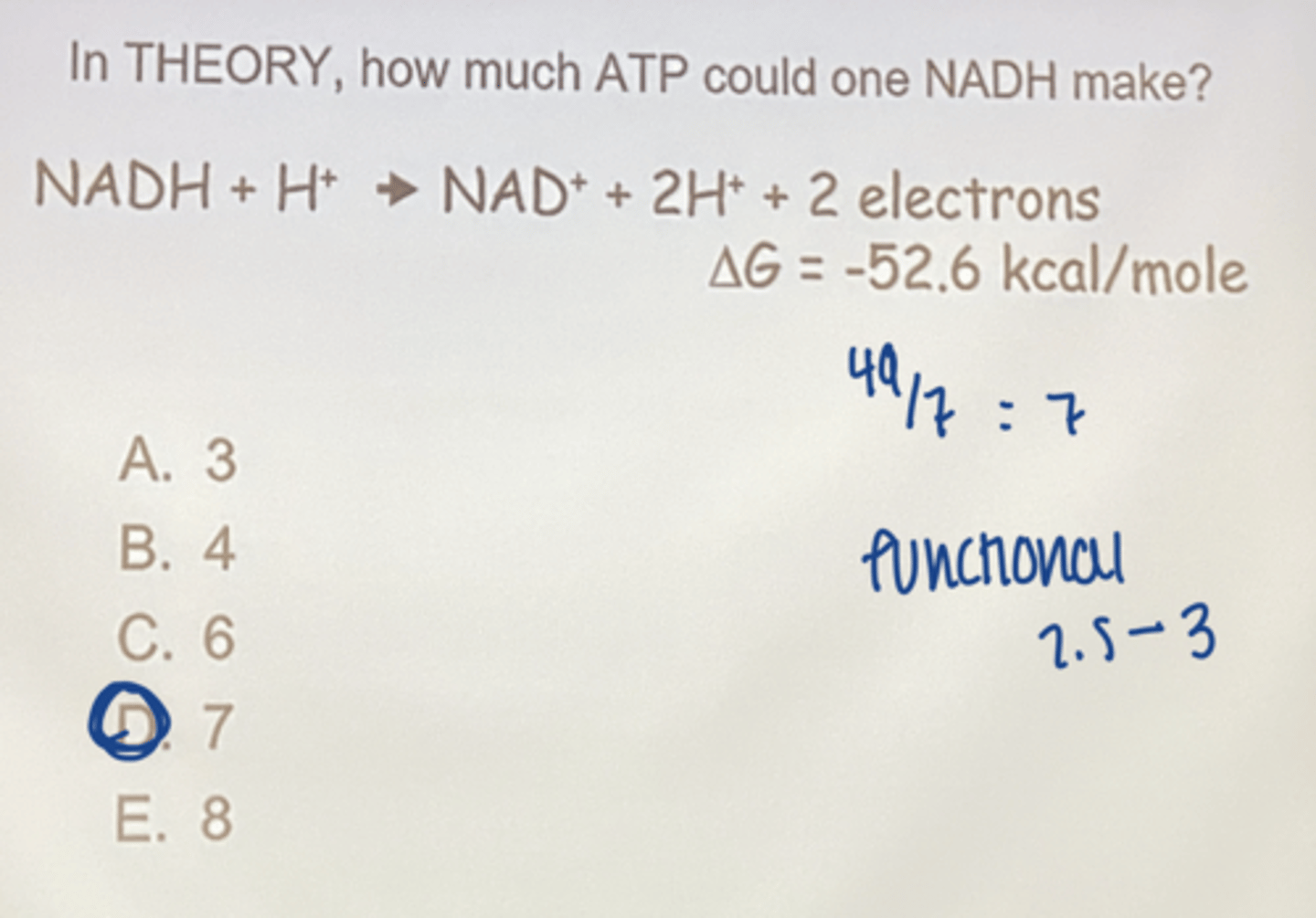
in theory how much ATP could one NADH make
NADH + H+ → NAD+ + 2H+ + 2 electrons
∆G = -52.6 kcal/mole
7
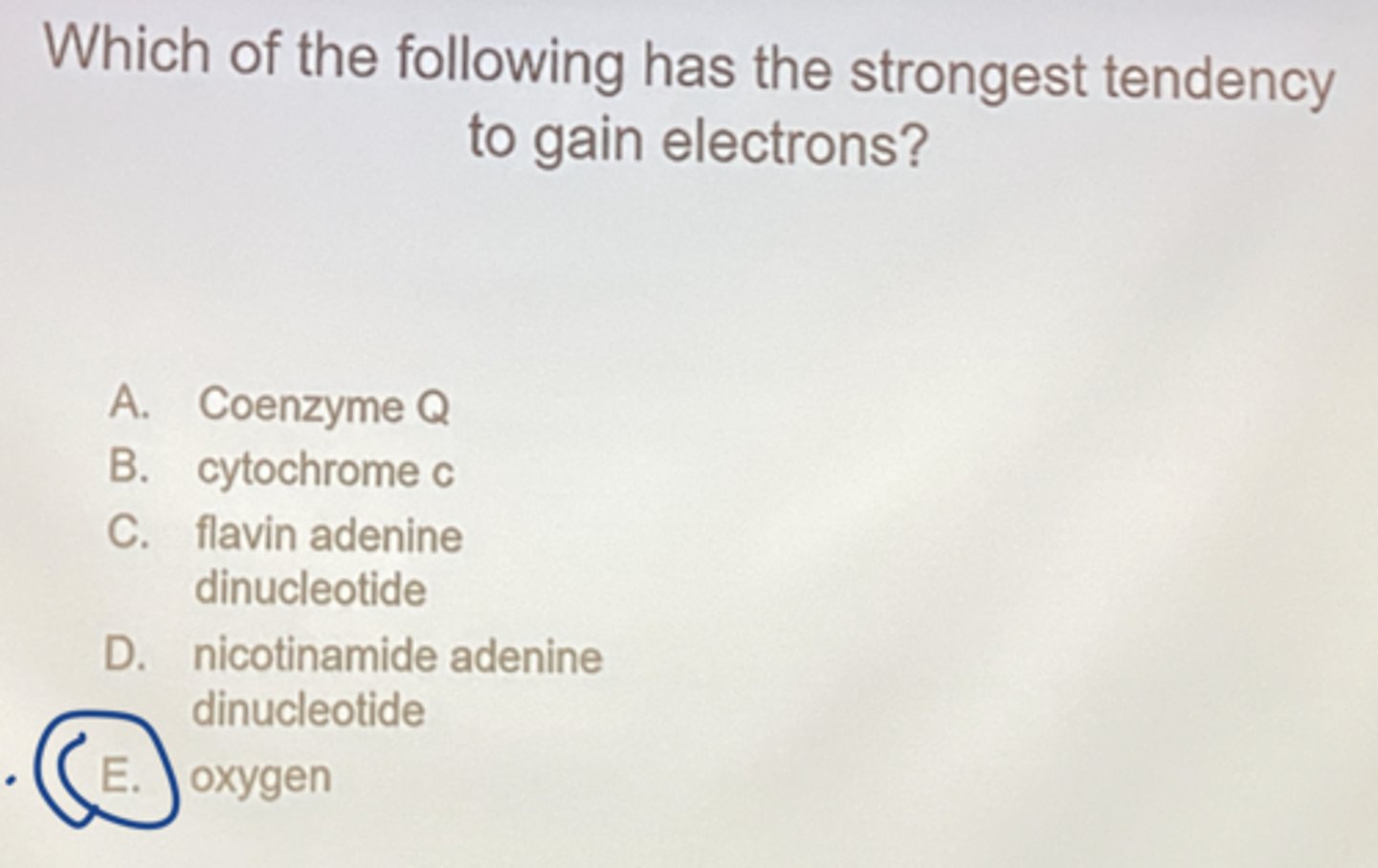
which of the following has the strongest tendency to gain e-
oxygen
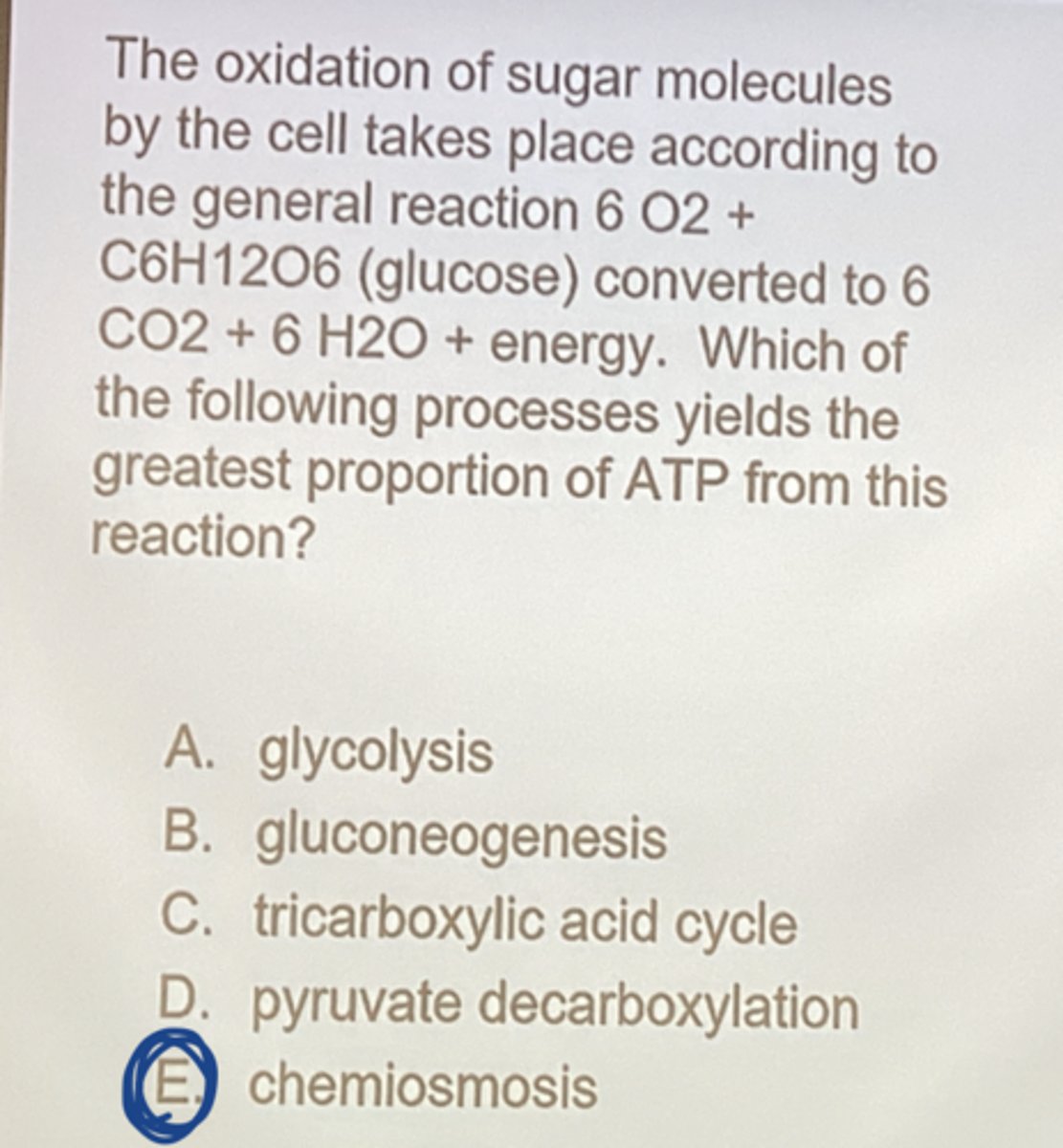
the oxidation of sugar molecuels by the cell takes place according to the general reaction 6 O2 + C6H12O6 (glucose) converted to 6 CO2 + 6 H2O + energy.
Which of the following processes yields the greatest proportion of ATP from this reaction
chemiosmosis
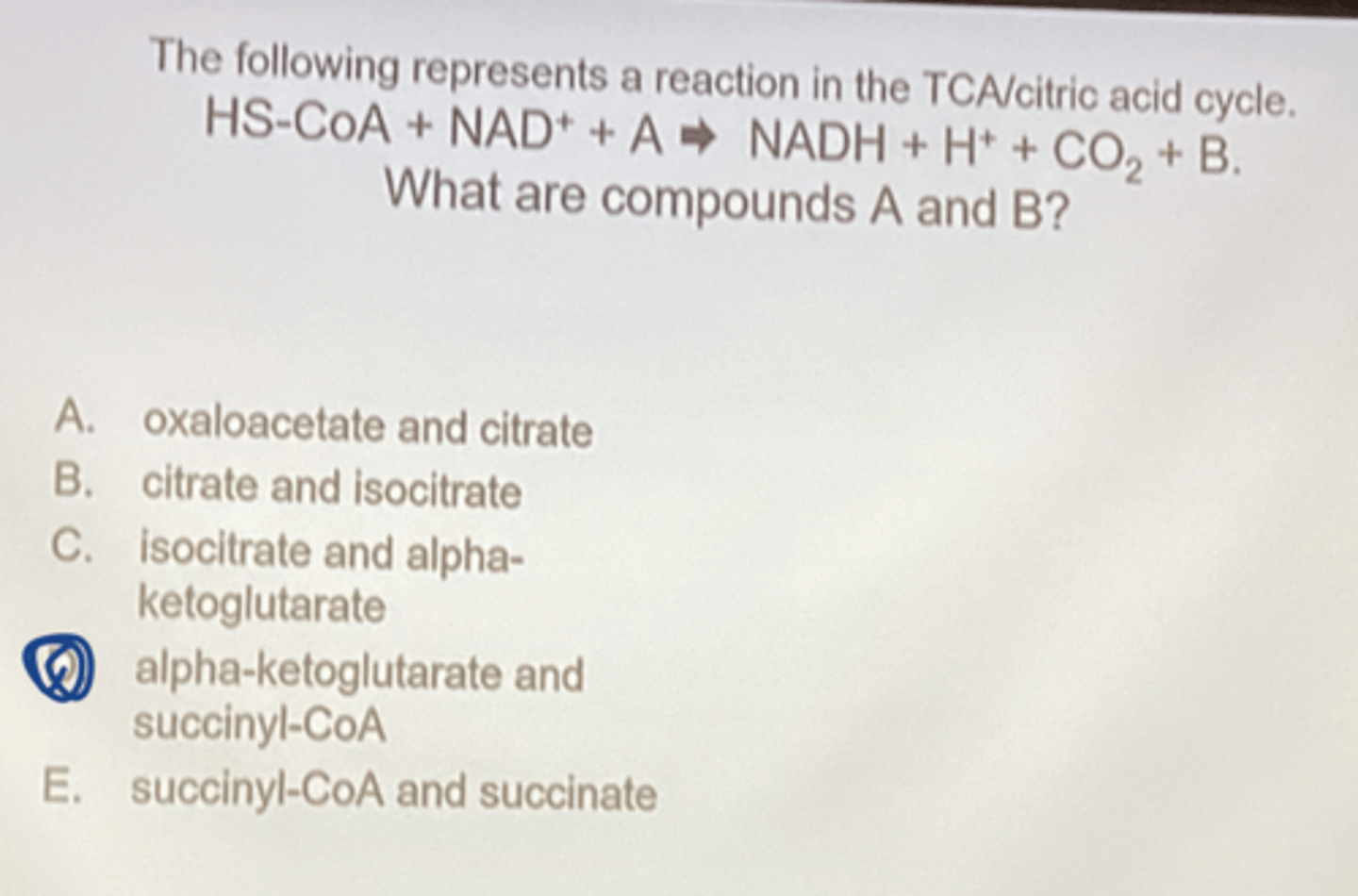
the following represents a reaction in the TCA/citric acid cycle
HS-CoA + NAD⁺ + A → NADH + H⁺ + CO₂ + B
what are compounds A and B
alpha-ketoglutarate AND succinyl-CoA