MAME Exam 3 Review
 Call Kai
 Learn
Learn Practice Test
 Spaced Repetition
 Match
Match Flashcards
 Knowt Play
1/139

Earn XP
Description and Tags
Ch 6 - 8: Quizzes, Discussions, & Homeworks
Name | Mastery | Learn | Test | Matching | Spaced | Call with Kai |
|---|
No analytics yet
Send a link to your students to track their progress
140 Terms
What is the biological pump? (Glossary)
The sinking of organisms & detritus from the surface layer to deep waters & sediments, moving carbon away from the surface.
Eqn 6.3 in the book,
2(H2O) + light —> 4H+ + 4e- + O2
refers to _____________.
Oxygenic photosynthesis
_____ is the molecule that is “split” for electrons during oxygenic photosynthesis.
H2O
Which enzyme is likely the most important enzyme on the planet, being responsible for ~99% of global carbon fixation?
Rubisco
_______ are responsible for approximately 25% of global primary production.
Coccoid cyanobacteria
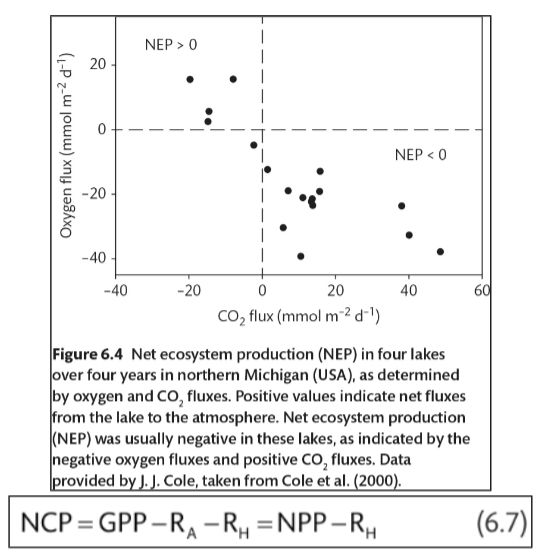
See Figure 6.4 and Eqn 6.7 above. Why is there an apparent inverse correlation between fluxes of carbon dioxide and oxygen in these lakes?
Even during an algal bloom, excess organic matter input from nearby terrestrial sources can fuel high respiration from heterotrophic growth.
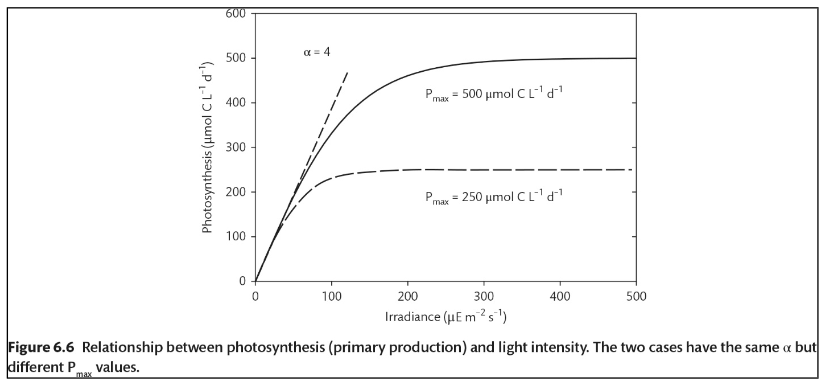
A P. vs. I. curve analysis, as shown in Figure 6.6 below, provides the light-driven rate of photosynthesis (primary production rate), which is indicated by the slope of the line marked by symbol alpha (α). The alpha for both samples is the same, but the maximum value (plateau of each curve) is different for the two samples. Why do the curves plateau?
Photoinhibition limits the photosynthetic capacity of all photolithoautotrophic cells, particularly by causing light damage to the photosynthetic complex.
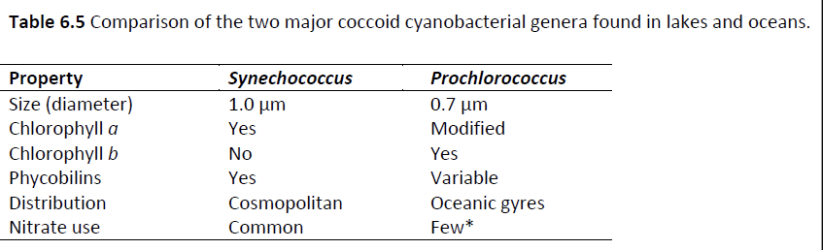
The organisms in the two genera listed in the table below are _____.
Prokaryotes
Phototrophic microbes have a greater diversity of accessory __________ than seen in higher plants on land.
Pigments
There are different ways to estimate the standing stock (biomass) of phytoplankton and/or phytoplantkton activity (primary production rates) in seawater. One of the three shown below only gives information about standing stock, while the others provide information about rates. Which measurement only provides data for estimating biomass?
Chl a concentrations
Based on the introductory material in Ch. 6, and revisiting what you learned in Ch. 1, you should now know the main metabolic strategy of primary producers before cyanobacteria came to be. What was the metabolic strategy of these early primary producers 3,500,000,000 years ago?
Anaerobic anoxygenic photosynthesis
Since the CBB cycle accounts for ~99% of global primary production, you can use that fact to "design" your strategy for finding out if a section of ocean is net autotrophic or net heterotrophic by using "omics" methodologies combined with other methods that we will introduce in Ch 7 and 8.
But if you want to use just nucleic acids methods to get a rough idea of the abundances and activity of photoautotrophs in the ocean, which one is the BEST strategy to get an idea of net autotrophy or net heterotrophy in the ocean at the time you collect the sample?
Collect all RNA, do a metaranscriptomics study to find all the expressed genes, focusing on the Rubisco gene sequence, and plot the relative abundance of the Rubisco transcripts compared to heterotorphy-related enzymes (e.g. chitinases). Plot and summarize data as in Laiolo et al. Figure 2 and Table 5
Coccolithophorids are important contributors to the “hard” part of the biological pump because they produce calcium carbonate (CaCO₃) shells that sink to the deep ocean, whereas other phytoplankton mainly contribute to the “soft” carbon pump by producing organic matter. If ocean acidification reduces coccolithophorid success, what is the most likely consequence for the biological pump and long-term carbon sequestration?
The efficiency of the biological pump would decrease because less inorganic carbon (CaCO₃) would be transported to the deep ocean sediments.
As said by oceanographer A. Bigelow, “all fish is diatoms,” similarly to what was said in a poem by Walt Whitman (who took the line from the Bible, Isaiah 40:6, repeated by Peter, 1 Peter 1:24-25): "All flesh is grass, and all its beauty is like the flower of the field." Even though diatoms are responsible for most of the “spring blooms” in lakes, estuaries, and near shore, the coccoid cyanobacteria (Synechococcus and Prochlorococcus) are responsible for more global primary production than the diatoms. Photosynthetic picoeukaryotes, along with the coccoid cyanobacteria, make up the “picophytoplankton.” Picoeukaryotes are very small eukaryotic algae that also contribute greatly to oceanic primary production (see Fig. 6.12, panel A). Why are picoeukaryotes more successful than diatoms in the oligotrophic open ocean?
Picoeukaryotes have smaller cell sizes and higher surface area–to–volume ratios, giving them an advantage in acquiring scarce nutrients. This is especially important in oligotrophic ecosystems where nutrient concentrations are low.
If stratification limits nutrient upwelling, could this trigger evolutionary adaptations in phytoplankton to use alternative nutrient sources? (Ask your own question)
No, since upwelling events are short-term, and evolutionary adaptations (changes in ability to take up specific nutrients) take longer time scales than transient upwelling time scales. Certainly however stratification will cause changes in the community composition (see Ch 4, "everything everywhere but environment selects..."), since community composition can change rapidly -- over the course of days-weeks.
Phototrophy
the process by which organisms trap light energy (photons) and store it as chemical energy in the form of ATP and/or reducing power in NADPH.
Primary production
That part of assimilated energy which is retained and incorporated into the biomass of organisms, via photosynthetic or otherwise autotrophic production
Light-driven primary production
is a type of primary production where organisms, such as plants and phytoplankton, utilize light energy to synthesize organic compounds from atmospheric or dissolved carbon dioxide, playing a crucial role in ecosystem energy flow.
Photosynthesis
The process by which green plants, algae, and some bacteria convert light energy into chemical energy, producing glucose and oxygen from carbon dioxide and water.
Anaerobic anoxygenic photosynthesis
A type of photosynthesis that does not produce oxygen, as opposed to oxygenic photosynthesis carried out by cyanobacteria, algae, and higher plants.
Oxygenic photosynthesis
The process by which organisms, such as cyanobacteria, algae, and plants, convert light energy into chemical energy while producing oxygen as a byproduct from carbon dioxide and water.
Heterotrophy
Organisms that obtain energy by consuming other organisms, rather than through photosynthesis.
Rhodopsin-based phototrophy
A form of photosynthesis where light is captured by rhodopsin, allowing organisms to generate energy without producing oxygen.
True photolithoautotrophy
A metabolic process where organisms use light energy, inorganic substances, and carbon dioxide to produce organic compounds.
Photoheterotrophy
A metabolism where organisms use light for energy but also require organic compounds from other organisms.
Mixotrophy
A nutritional strategy where organisms utilize both photosynthesis and organic compounds for energy and carbon.
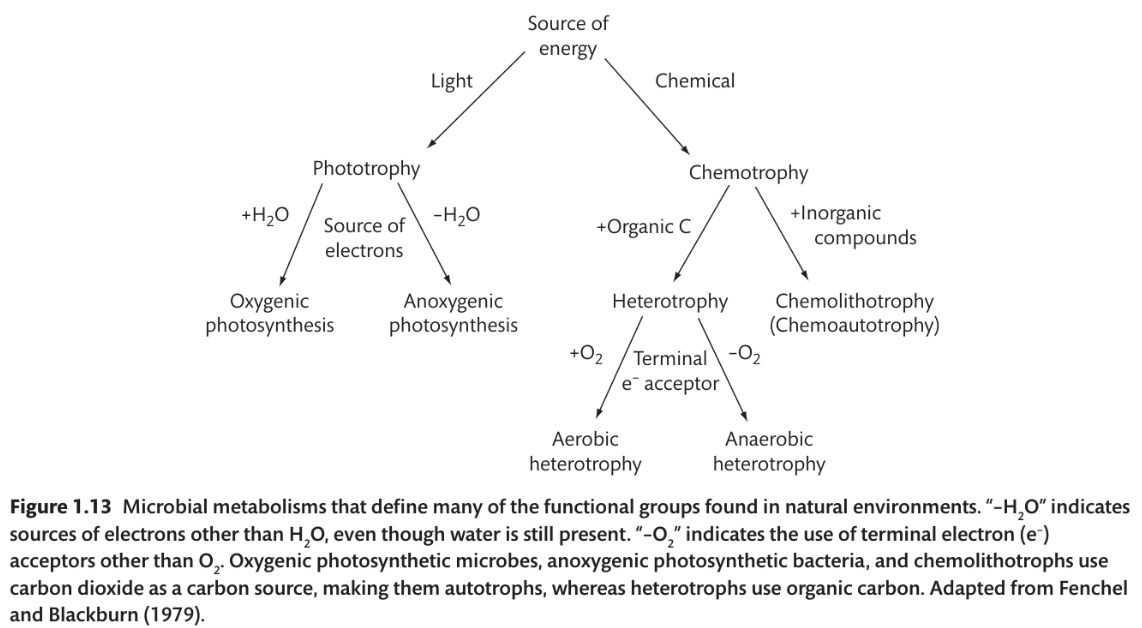
Variety of metabolic strategies depends on
Source of electrons
Source of carbon
Source of energy
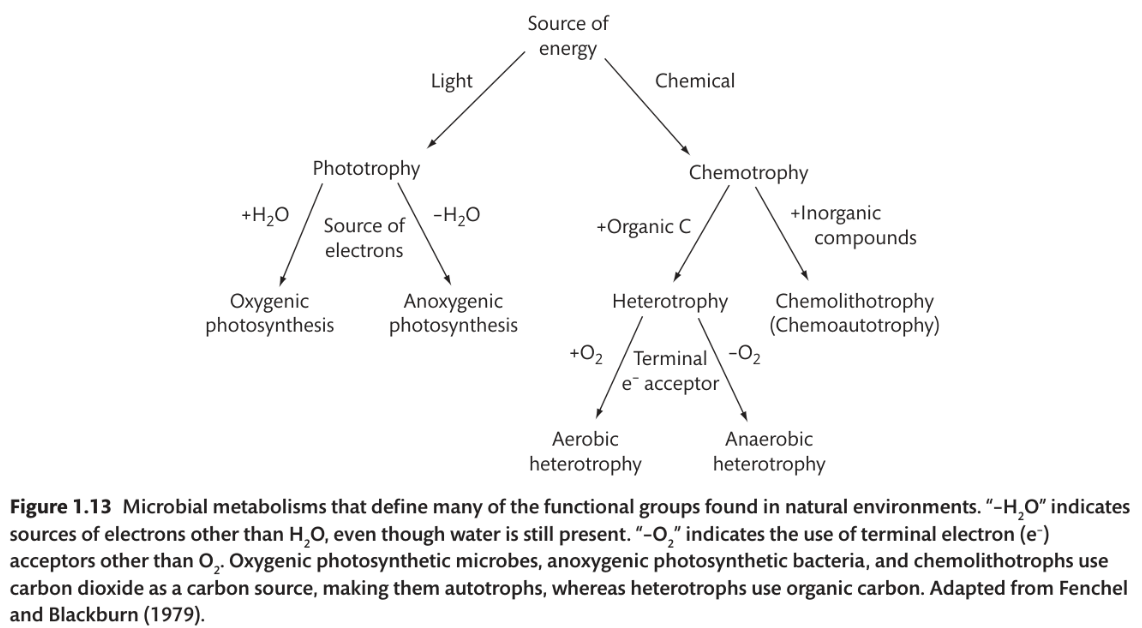
Metabolisms here that are NOT present in macroorganisms
Chemolithoautotrophy
Anoxygenic photosynthesis
anaerobic heterotroph
Full functional description term for the “phytoplankton” and zooxanthellae inside corals =
Photolithoautotroph
Chemolithoautotrophy
A metabolic process where organisms obtain energy by oxidizing inorganic compounds.
Chemosynthesis (1°P)
The process by which certain organisms convert carbon compounds and nutrients into organic matter using energy derived from the oxidation of inorganic substances, rather than from sunlight.
Chemolithoautotrophic bacteria are the base of the food web here, not _____.
phototrophs
Chemoorganotrophs (also simply known as “heterotrophs”) are _____.
Organisms that obtain their energy from the oxidation of organic material use organic carbon for biomass synthesis and energy production.

Eqn 6.1 in the book, refers to ___________.
The hint is that this is the opposite of heterotrophy, and it depends on light.
oxygenic phtosynthesis
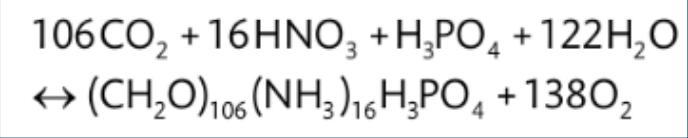
The REVERSE reaction of eqn 2.1 in the book, refers to ________________.
The hint is that this is the opposite of primary production (including light-driven primary production and chemolithoautotrophy).
heterotrophy
H2O is the molecule that is “split” for obtaining electrons during __________.
oxygenic photosynthesis
Phototrophic microbes have a greater diversity of accessory ________ than seen in higher plants on land.
pigments
In today’s environments, the most common physiological basis of primary production is the CBB cycle, which depends on Rubisco, (gene name rbcL), a very important enzyme that can make up ~50% of total cellular protein in photolithoautotrophs. This enzyme is responsible for:
Fixing carbon dioxide
In the euphotic zones of the oceans, changes in concentrations of dissolved oxygen depends on ________ .
All three effects: anaerobic anoxygenic photosynthesis, oxygenic photosynthesis, and respiration.
Using bottles filled with seawater and measuring oxygen production over a period of time helps estimate the rates of primary production in the oceans. To get a good estimate, however, we filled double the number of bottles needed, and covered half of the bottles with black tape. Why?
We want to calculate the gross O2 production rates, so we have to measure the amount of O2 consumed in the dark (respiration) and add that value to the net O2 production values obtained from the light bottles.
A key step in photosynthesis is “_______,” the absorption of light by various pigments in the photoautotroph.
light harvesting
For terrestrial plants and green algae, the light-harvesting pigments are chlorophylls a and b and “accessory pigments.” What is the dominant pigment?
Chlorophyll a
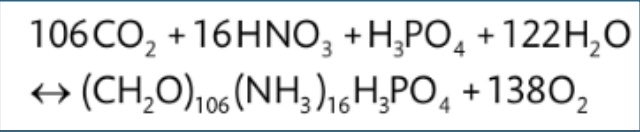
Redfield Biomass Composition
C:N:P (106:16:1)
What can be used to explore how primary production and respiration affect the concentrations of the major nutrients in oxic ecosystems?
Redfield ratio
If algal blooms happen in response to light then why does fertilizer runoff play such a big part in red tide HABs? If light were the limiting factor then why would more fertilizer increase growth?
Blooms can only be sustained as long as inorganic nutrient inputs into the system are constant and high, light availability is good, and predation/viral lysis phytoplankton death does not exceed phyto growth rates.

Due to microbial growth being limited by carbon, nitrogen, and phosphorus, would chemicals containing inorganic forms of carbon, nitrogen, and phosphorus aid microbial growth?
B and D
B. No, addition of NO3, PO4 &, NH4 would only directly enhance growth of
photoautotrophs (cyanobacteria and diatoms, for instance).
D. Basically yes, since enhancement of photoautotroph growth leads to a soon-to-follow increase of heterotrophic microbe growth
The two major groups of Phototrophy:
chlorophyll-based chlorophototrophy and rhodopsin-based retinalophototrophy
Light of different wavelengths penetrates seawater to varying depths: red light is absorbed quickly, while blue-green light penetrates the deepest. How does this influence the ecological niches of cyanobacteria and eukaryotic phytoplankton in the ocean?
Cyanobacteria, such as Prochlorococcus and Synechococcus, thrive in deeper waters because accessory pigments (e.g., phycobiliproteins) allow them to absorb green and blue wavelengths that penetrate further.
Coccoid cyanobacteria such as Prochlorococcus and Synechococcus are far more abundant globally than eukaryotic phytoplankton. Which factor best explains this?
Cyanobacteria have accessory pigments that allow them to utilize blue-green light, enabling them to thrive throughout the deeper photic zone where eukaryotic phytoplankton cannot compete.
What is the trace element that is uniquely important to this centric diatom?
Silicon
What is the trace element that is uniquely important to the coccolithophorids like Emiliana huxleyi?
Calcium carbonate
Major biogenic and trace elements
Fe, Ca, & Si
Important contributors to the “hard” part of the biological pump because they produce calcium carbonate (CaCO₃) shells that sink to the deep ocean.
Coccolithophorids

Eqn 6.15 in the second part of Ch 6 is put there to describe another type of photosynthesis.
If H2A is H2S, and if A is S, what type of photosynthesis is this?
Anoxygenic photosynthesis
Although anoxygenic photosynthesis contributes little to global primary production (____%), it is a significant source of organic carbon in some environments.
What is the percent of global C fixation (fill in the blank)?
1%
Are all algal-blooms toxin-producing?
No, only some types of prokaryotic phytoplankton and some types of eukaryotic phytoplankton produce toxins.
Anoxia
The absence of oxygen in a habitat.
Hypoxia
A condition where there is a deficiency of oxygen in the water, which can be detrimental to aquatic life.
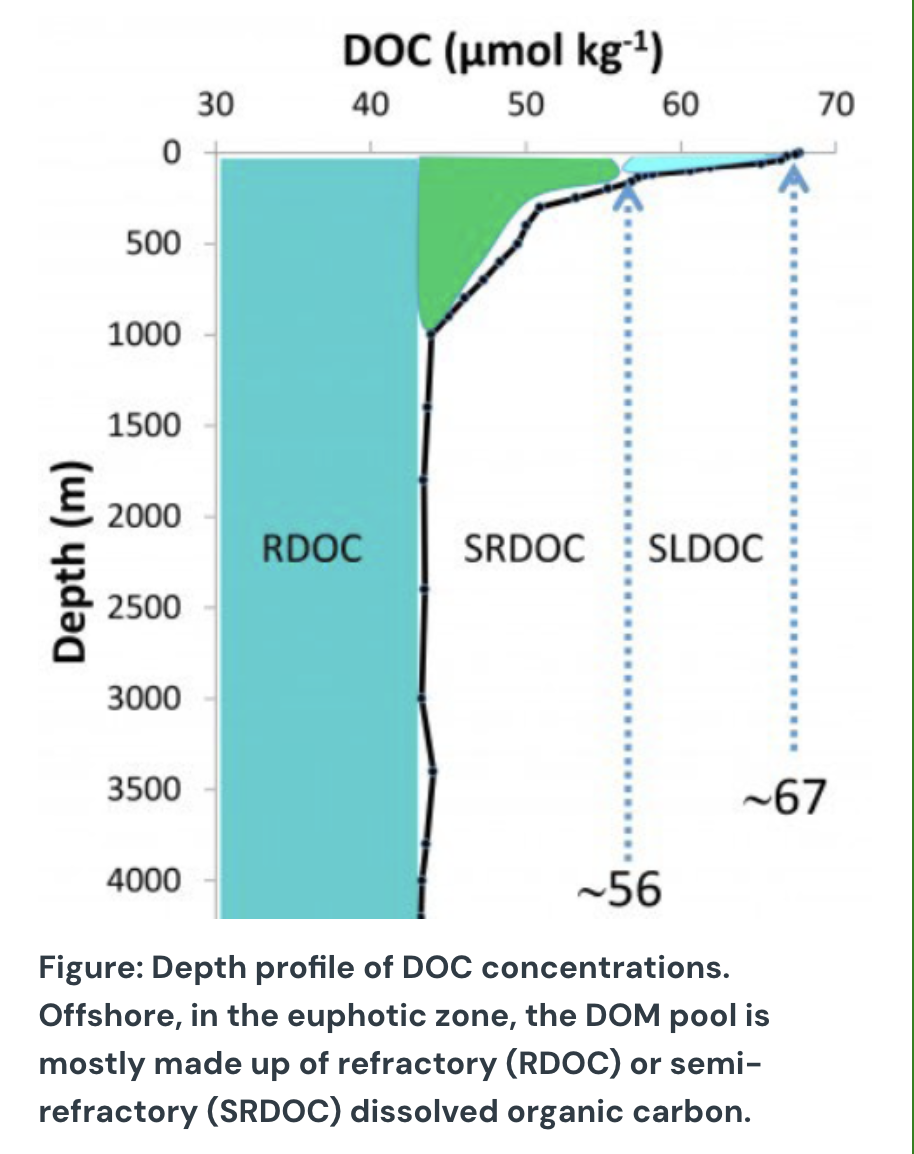
Estuarine waters are typically rich in labile organic matter from terrestrial and phytoplankton sources, while the pool of OM in offshore oceans is mostly made up of refractory material, since offshore, most newly-synthesized labile material is mineralized very quickly (see figure)
Heterotrophic bacteria in both habitats use extracellular enzymes to break down complex organic molecules before uptake. Which of the following best explains how extracellular enzymatic activity in the bacterial communities, and their organic matter degradation rates, would differ (or be the same) between these environments?
Estuarine bacterial communities show higher extracellular enzyme activity and faster degradation rates because they encounter more labile substrates, while offshore bacterial communities have slower degradation rates due to the dominance of refractory carbon.
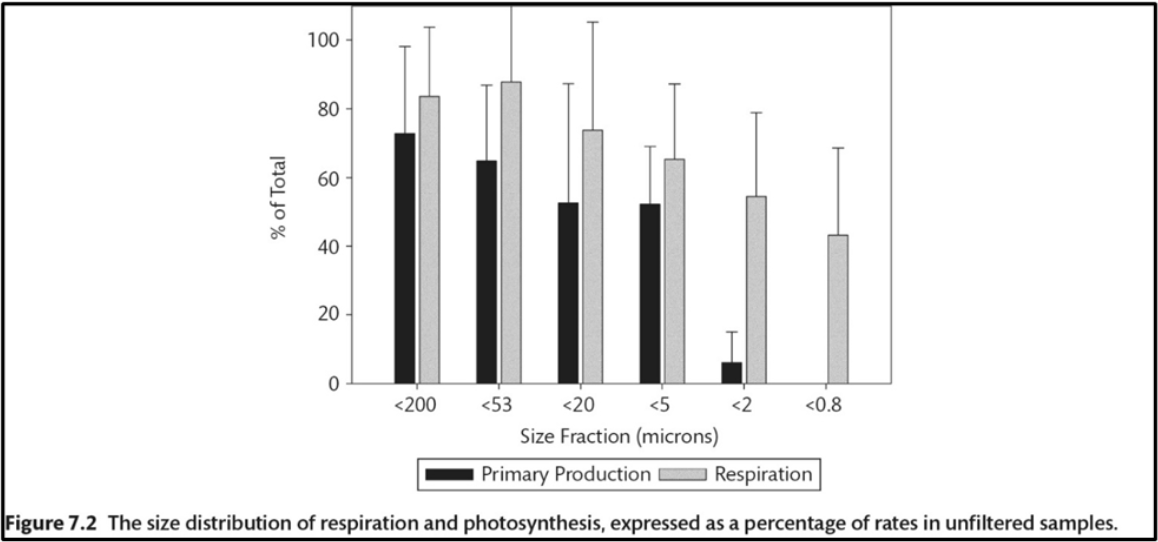
See figure below from the book. This shows the size distribution of respiration and photosynthesis, expressed as a percentage of rates in unfiltered samples. Knowing what you know about distribution of photoautotrophic microbes and size ranges of all types of microbes, then you know that the data are from ______________.
Near-shore environments, where primary production by cyanobacteria and small eukaryotic phytoplankton is low and where diatoms+dinoflagellates are more important to C fixation.
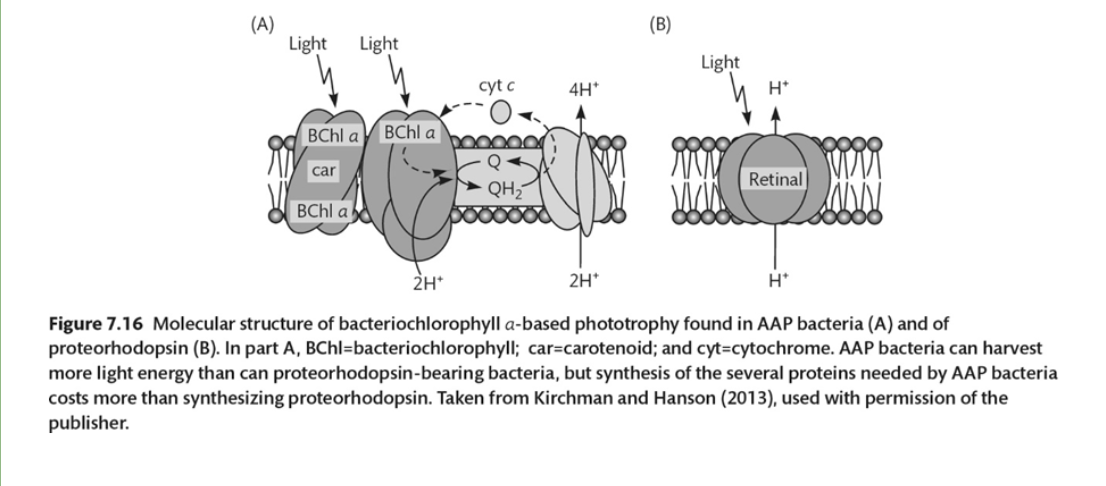
See figure below from the book. AAPB (AAP bacteria) are found in a wide range of aquatic habitats, but not in high abundances, except in estuaries. On the other hand, proteorhodopsin bacteria, such as many in the SAR11 clade, are also ubiquitous and abundant in most waters, including in the oligotrophic oceans. Why the difference, since both types use light for extra energy to support a heterotrophic lifestyle?
The per-cell energy gained by proteorhodopsin-based phototrophy is lower than the energy yield gained from light by the AAPB. However, the amount of energy required to make the proteorhodopsin molecule and the retinal is low, compared to energy needed to put together the transmembrane complex in AAPB.
Biogeochemists and microbial ecologists collected microbial biomass from seawater samples near an oil rig, and extracted both DNA and RNA from the filters. Fortunately, they were able to collect samples from just prior to, and right after, a maajor offshore oil spill, so they went right to work on doing extensive analyses of the DNA and RNA to study microbial community responses to the oil spill. They used both metagenomic and metatranscriptomic analyses. How could comparing these datasets help evaluate functional gene diversity and metabolic redundancy among marine bacteria, and what would be the most informative interpretation?
Metagenomics reveals which metabolic genes are present, showing potential pathways for hydrocarbon degradation, while metatranscriptomics indicates which of those genes are actively expressed, allowing researchers to distinguish between redundant potential functions and actual functional responses after the spill.
What is “mineralization”?
The conversion of organic material back to its inorganic constituents, such as carbon dioxide, ammonium, and phosphate.
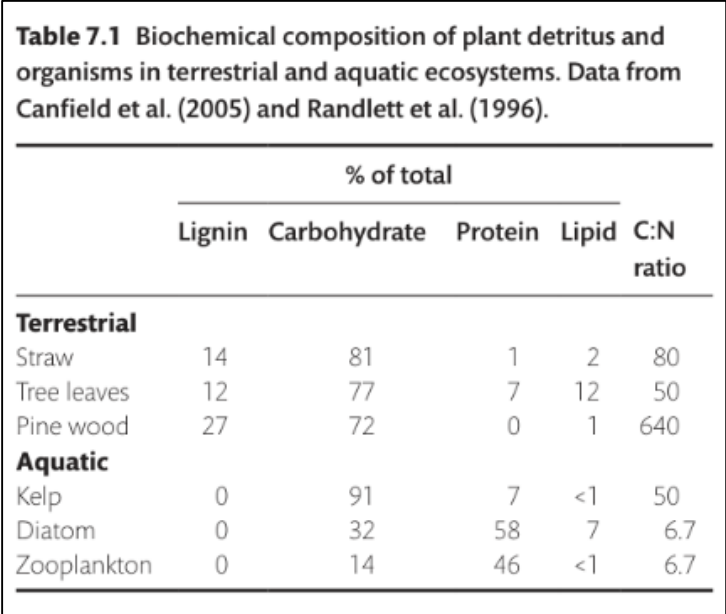
See above Table 7.1 from the book. Why is the C:N ratio in phytoplankton (Aquatic, Diatom line) so much lower than the C:N ratio in terrestrial plants (Terrestrial, straw, tree leaves, pine wood)?
Phytoplankton do not make lignin; hence, their macromolecular compositions are enriched in proteins, as opposed to the carbohydrate-rich composition in terrestrial plant biomass.
______ is the mixture of molecules used mostly by heterotrophic bacteria in the oceans. Although protists can take up some of this, protists cannot effectively compete effectively with heterotrophic bacteria in its uptake.
DOM
Refer below to Figure 7.9. The organism indicated by the circle is __________.
A bacterium or fungus
In the pool of oceanic DOM, an example of a LMW monomer is _____.
Amino acids
In the oceans, the turnover time (rate of degradation) of this type of DOM is the
FASTEST,
Labile
When measuring heterotrophic (secondary) production to understand the role of bacteria in oceanic carbon fluxes, why is it important to size-fractionate microbial communities before conducting these measurements?
Size-fractionation separates bacteria from larger heterotrophs, preventing possible overestimation of bacterial production caused by including non-bacterial respiration and DOC uptake.
_______ is thought to be the “rate limiting step” in degradation pathways. One piece of evidence to support this statement is that concentrations of polymers are higher than the concentrations of monomers in the natural environment.
Hydrolysis
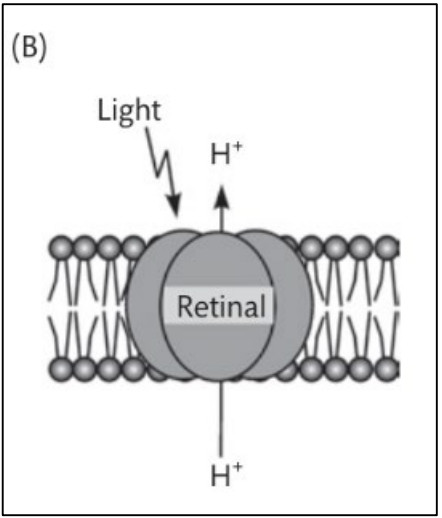
See the figure. Gene encoding a single protein that, along with a retinal molecule, can help heterotrophic bacteria obtain extra energy from light harvesting. The simplified drawing of the transmembrane view of it complexed with retinal is shown in the figure. It is present in many photoheterotrophic bacteria in the SAR11 clade and other groups of bacteria. As the book says, “It may be in as many as half of all bacteria in aquatic environments.” What is this protein?
proteorhodopsin
Why is measuring bacterial production rates (e.g. uptake rates of 3H-labeled thymidine or 3H-labeled leucine) essential for determining whether the microbial loop functions more as a sink or a link in the biological pump?
Because bacterial production indicates how much organic carbon is converted back to CO₂ through respiration versus how much is transferred up the food web, revealing whether carbon is retained in the food web or respired
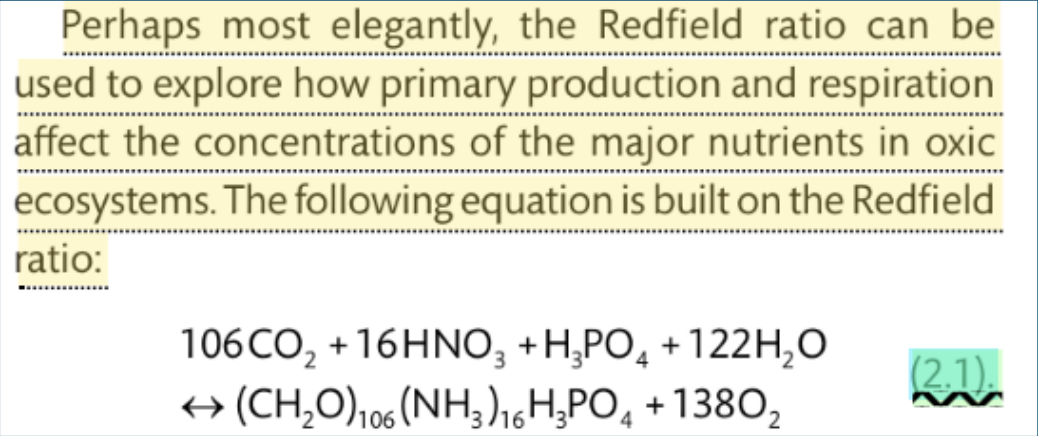
Revisit Eqn 2.2 in the book, where the REVERSE reaction refers to _________.
Mineralization
“Chitinase” is a generic term for a type of enzyme that can __________ chitin.
hydrolyze
An aminopeptidase is a(n) _______
Both Exopeptidase and Ectoenzyme (both 2 & 3)
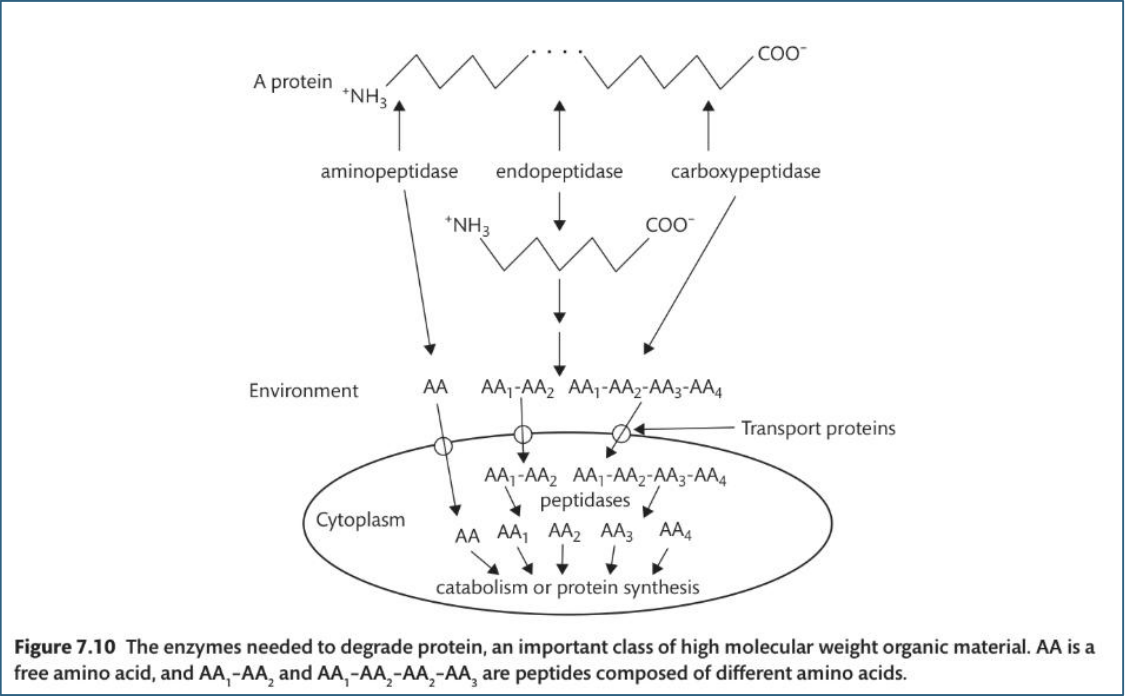
See above Fig. 7.10. The big circle in the drawing is _____________.
A bacterium or fungus
The microbial loop is _____________.
Dissolved organic material (DOM) based pathway consisting of: Primary production —> DOM —> microbes —> grazers
Monomers of proteins are ________.
amino acids
Monomers of nucleic acids are _________.
nucleotides
Monomers of polysaccharides are ___________.
monosaccharides
There are different classes of “bioavailability” of Organic Matter (OM) in ocean water:
Refractory (also known as “recalcitrant”
Semi-Refractory/Semi-Labile Labile
Newly-synthesized (made by phytoplankton) OM is _______________.
Labile
The type of OM needed for heterotrophic bacteria to consume is also important. The class of OM that is easiest to hydrolyze is the _________ type of OM.
Labile
Now, examine the turn-over time of example various types of organic matter from plants (below, Fig 7.13) Of the types of compounds described and shown in this figure, which one is degraded by heterotrophic microbes most quickly?
Starch or Protein
Which one is degraded by heterotrophic microbes most slowly?
Lignin
Primary players in Coastal regions
Diatoms
Labile
easily degraded or use by microbes
Refractory
hard to degrade compounds made by large plants
Detritivore
An organism that feeds on dead organic matter, breaking it down into smaller pieces and recycling nutrients back into the ecosystem.
Biomass
the total quantity or weight of organisms in a given area or volume
The biological carbon pump uses these three processes to transport organic carbon from the upper ocean to deeper waters
sinking, migration, & mixing
Microbial Loop WITH the Viral Shunt is responsible for __________ of Carbon flux in the oceans!!!!!
~25% to >~50%
Biogeochemistry
Understanding how these groups (and individuals) control the flow of energy, of Carbon, and of other elements.
Scientists are able to collect microbial DNA andRNA at a location in the ocean just before andjust after an oil spill. Note, oil spills arecomprised of aromatic hydrocarboncompounds. The scientists use the nucleic acidsto study microbial community responses to theoil spill. How could using one or both of thesedatasets help evaluate functional gene diversityand metabolic redundancy among marinebacteria, and what would be the mostinformative interpretation?
You can examine both metagenomics (DNA) andmetatranscriptomics (RNA) from before and afterthe spill to determine two things: One, you candetermine if the metabolic capability (DNA) waspresent in a variety of taxa in the ocean before thespill. And two, you can determine from the DNA andthe RNA after the spill if bacteria with genesencoding hydrocarbon-degrading enzymes arepresent and actively being expressed after the spill.
Heterotrophic
organisms that obtain organic carbon by consuming other organisms.
Photoheterotrophic
organisms that use light for energy while relying on organic compounds for carbon.
Photoautotrophic
organisms that use light for energy and inorganic compounds, such as carbon dioxide, for carbon.
Diatoms
are a group of microscopic algae characterized by their unique silica cell walls, known as frustules. They play a crucial role in aquatic ecosystems as primary producers and contribute significantly to global carbon cycling.
In aquatic habitats, the biomass of _______ is very low compared to that of bacteria, with a few exceptions. For instance, ______ are only prevalent in certain niche aquatic habitats, such as microbial communities associated with semi-submerged rocks at the shoreline. Fig 1.8 Panel A =aquatic habitats Panel B = soils
Fungi
In heterotrophic metabolism, OM molecules taken up by the cell can be used for both catabolism and/or anabolism. Anabolism is
using aquired OM for new biomass production
In the oceans, heterotrophicbacteria excrete a variety of__________ to start the processof degradation (performhydrolysis) on the variety of high-molecular-weight (HMW) organicmatter, where HMW OM can bepolysaccharides, polypeptides orproteins, lignin, DNA and RNA.
Ectoenzymes