plant cloning
 Call Kai
 Learn
Learn Practice Test
 Spaced Repetition
 Match
Match Flashcards
 Knowt Play
1/15

There's no tags or description
Looks like no tags are added yet.
Name | Mastery | Learn | Test | Matching | Spaced | Call with Kai |
|---|
No analytics yet
Send a link to your students to track their progress
16 Terms
cloning
the production of genetically identical cells or organisms
type of reproduction in cloning
asexual reproduction
type of cell division used in cloning and why?
mitosis
→produces genetically identical cells
→clone cells remain diploid
types of cloning
-natural
-artificial
natural cloning in plants
produce natural clones by vegetative propagation
vegetative propagation (2)
-type of asexual reproduction
-produce clones from non-reproductive tissues e.g. roots, stems, leaves
examples of vegetative propagation
-runners [/stolons] [horizontal stems grow on the surface] [e.g. strawberries]
-bulbs [e.g. onion]
-tubers [underground stems] [e.g. potato]
-rhizomes [horizontal underground stems]
-sucker [shoot grow from the roots or lower stem of a parent plant]
[tubers and bulbs food stores which help plants survive]
![<p>-runners [/stolons] [horizontal stems grow on the surface] [e.g. strawberries]<br>-bulbs [e.g. onion]<br>-tubers [underground stems] [e.g. potato]<br>-rhizomes [horizontal underground stems]</p><p>-sucker [shoot grow from the roots or lower stem of a parent plant]</p><p></p><p>[t<span>ubers and bulbs food stores which help plants survive]</span></p>](https://assets.knowt.com/user-attachments/cba3a7c3-6da4-4116-9930-114f3cec8c67.png)
Difference between runners and rhizomes
-runners are on the surface of the ground whereas rhizomes are underground
simple cloning in plants
take plant cuttings
how to clone plants by taking a cutting
-cut shoot from healthy plant
-cut stem at a slant between nodes
-remove leaves to reduce transpiration
-dip in rooting powder
-place in soil and add water
artificial cloning in plants
tissue cloning/ micropropagation
micropropagation
producing many genetically identical plants through tissue culture
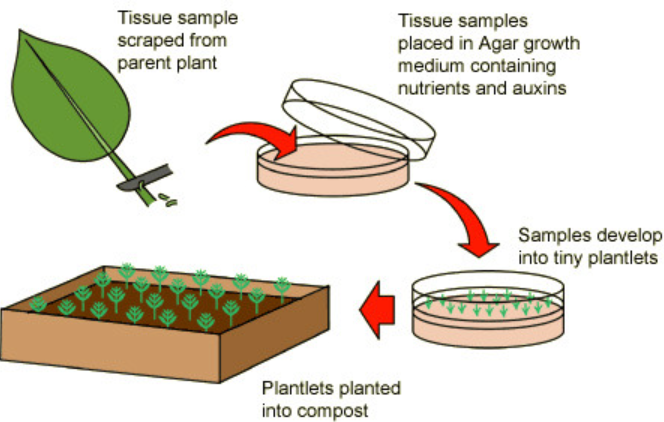
tissue culture process
-cut plant materials into small pieces (explants) → taken from the stem or root tips as they have meristem cells
-sterilise explant to kill microorganisms
-place on agar containing glucose, amino acids and plant growth hormones
-cells divide to produce a callus (mass of undifferentiated cells)
-there’s high auxin and cytokinin concentration for for callus formation
-sub-divide the callus into smaller pieces
-transfer pieces to fresh medium with different hormone concentrations to encourage shoot and root formation
-plantlets develop and are transferred to soil
-they develop into plants that are genetically identical to the parent plant
uses of tissue culture
-produce clones of endangered plant species→ helps preserve biodiversity
-produce clones of genetically modified plants
-produce clones of plants that are resistant to diseases
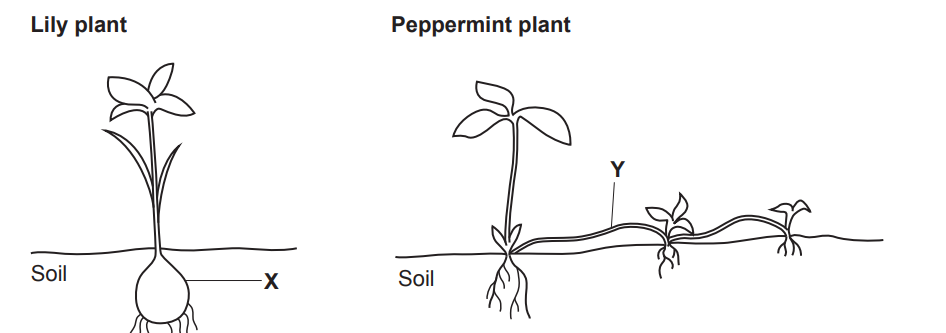
name structure X and outline how a gardener could produce many cloned plants from structure X.
name structure Y
bulb
→ cut bulb and plant it to grow
runner
pros and cons of artificial cloning
PROS
-can be done at any season
-produce uniform crops→ desirable genetic characteristics [name it if mentioned in q] are passed on to clones (e.g. same yield, same size)
-produce clones of endangered plant species→ helps preserve biodiversity
-quicker than growing from seed
-less space required for tissue culture
CONS
-low genetic diversity→ plants are more susceptible to diseases and environmental change
-undesirable genetic characteristics can be passed to clones
-risk of contamination by microorganisms during tissue culture