Phages (Bacteriophages)
 Call Kai
 Learn
Learn Practice Test
 Spaced Repetition
 Match
Match Flashcards
 Knowt Play
1/72

There's no tags or description
Looks like no tags are added yet.
Name | Mastery | Learn | Test | Matching | Spaced | Call with Kai | Chat |
|---|
No analytics yet
Send a link to your students to track their progress
73 Terms
What is Phages?
Viruses that attack bacteria and archaea
No. of phage particles on planet
10^(31)
Genomes in phages consist of
DNA or RNA
Single-stranded (ss) or double-stranded (ds)
Host range of phages (Specialists v.s. Generalist)
Specialists: Species-specific (strain-specific) phages
Generalists: broad host range (salmonella species)
Harmful to humans or not
Harmless to humans → focus on bacteriophages
Where are phages found?
Present whenever bacteria are found
No. of phages v.s. bacteria
Outnumber bacteria by 10-fold
How do phages infect bacteria?
Absorbs into the bacterial cell wall, flagella or pili
Inject their genome into the cytoplasm of the bacterium
3 types of canonical phage infection cycles
Chronic
Lytic
Lysogenic
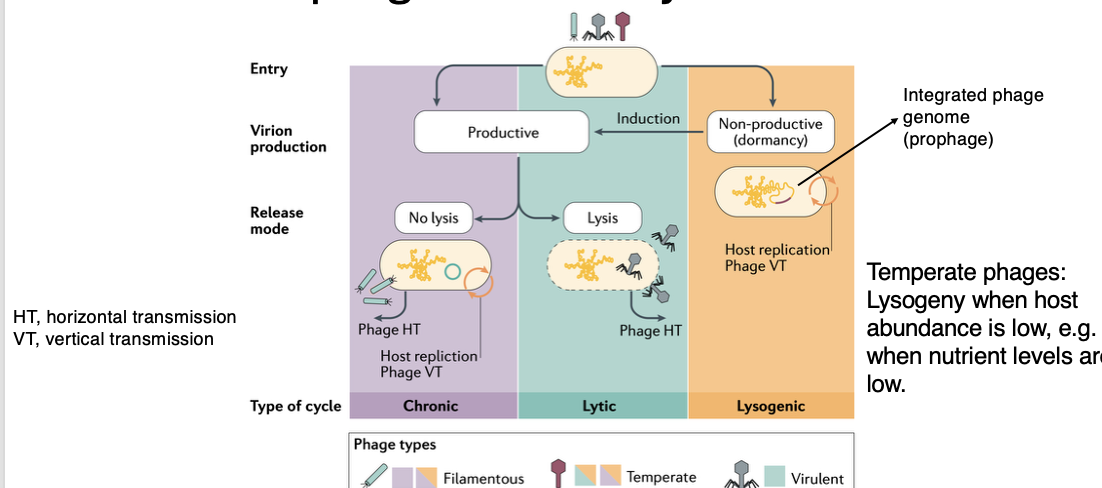
Canonical phage infection cycles: What happen after phage infects bacteria?
Lay dormant - in a non-productive state
Enter productive state - produce progeny/new variants
Canonical phage infection cycles: Usual productive cycle
Upon entry into their host cell,
Phages can enter a productive replication cycle that results in the release of new virions (lysis), either without lysing the host (chronic cycle) or upon host lysis (lytic cycle)
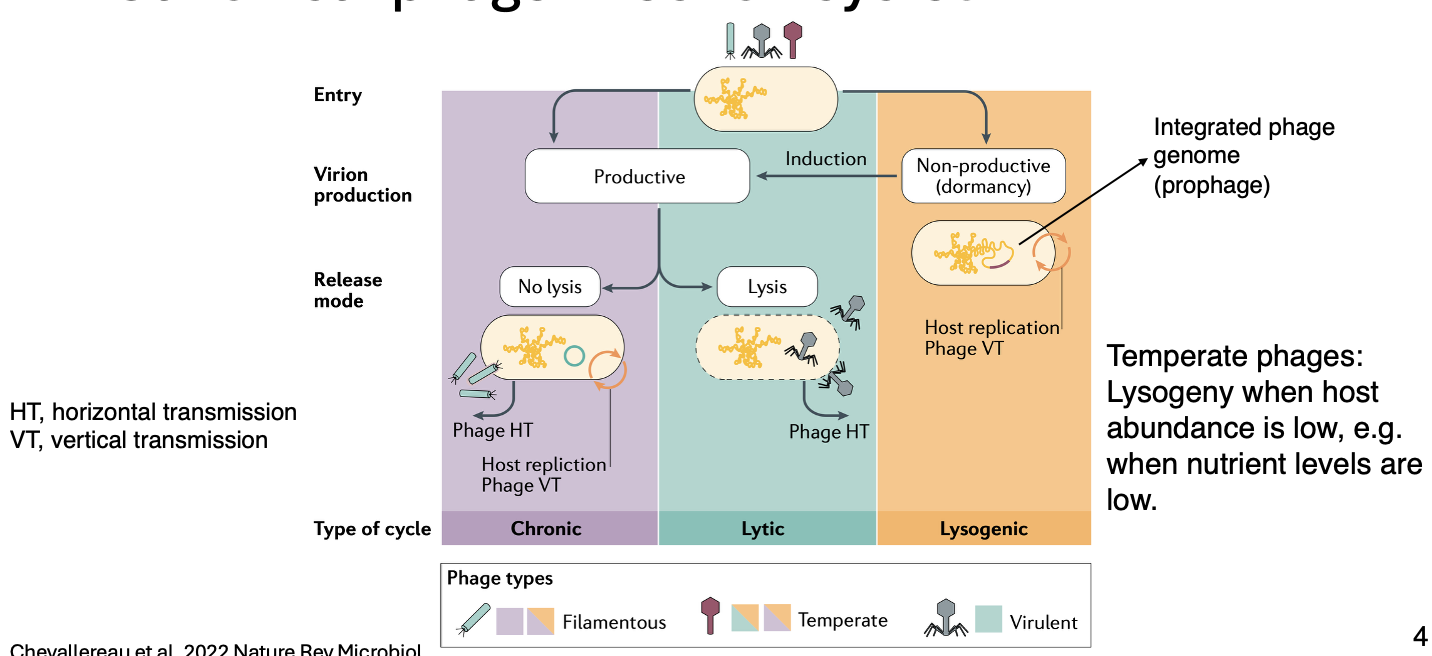
Canonical phage infection cycles: Alternative non-productive cycle (Going dormant)
Phage genome (thick pink line) integrates into + replicated along with the host chromosome (lysogenic cycle)
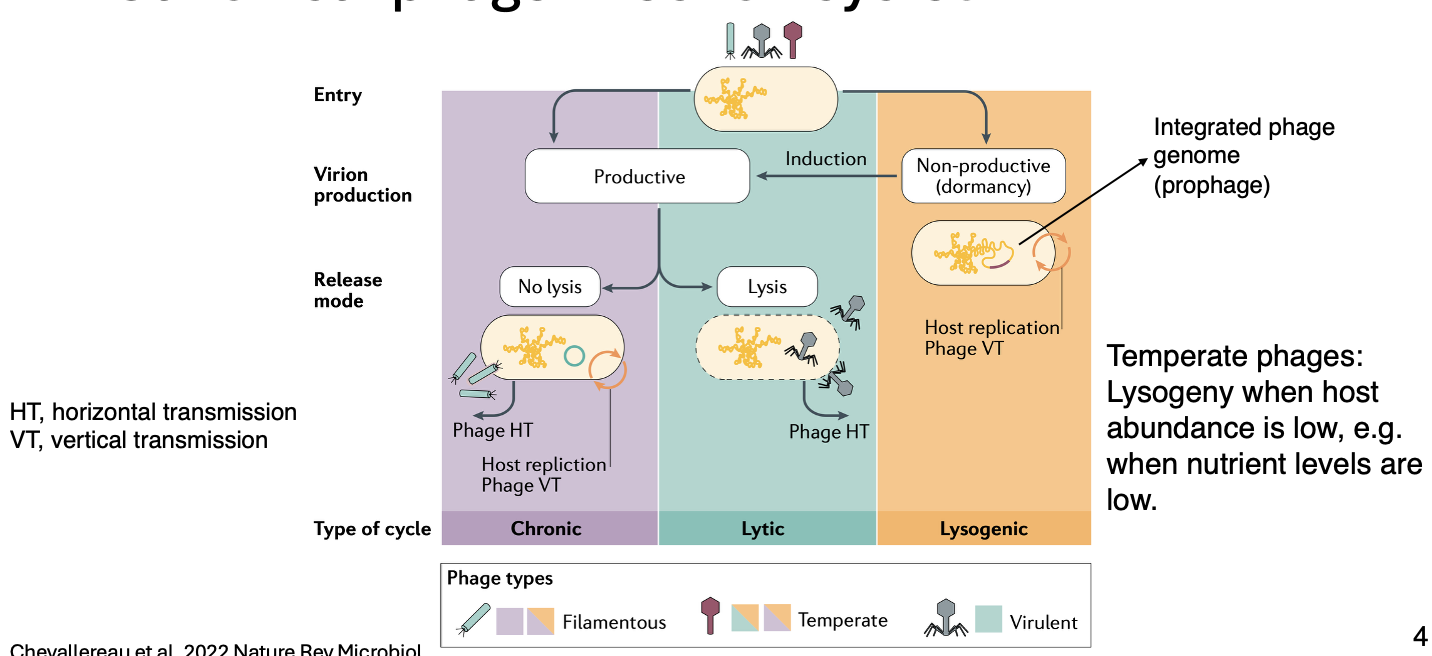
Canonical phage infection cycles: Can phages exit the dormant state (Non-productive cycle)?
Either spontaneously or upon exogenous stimuli,
and switch to one of the productive cycle
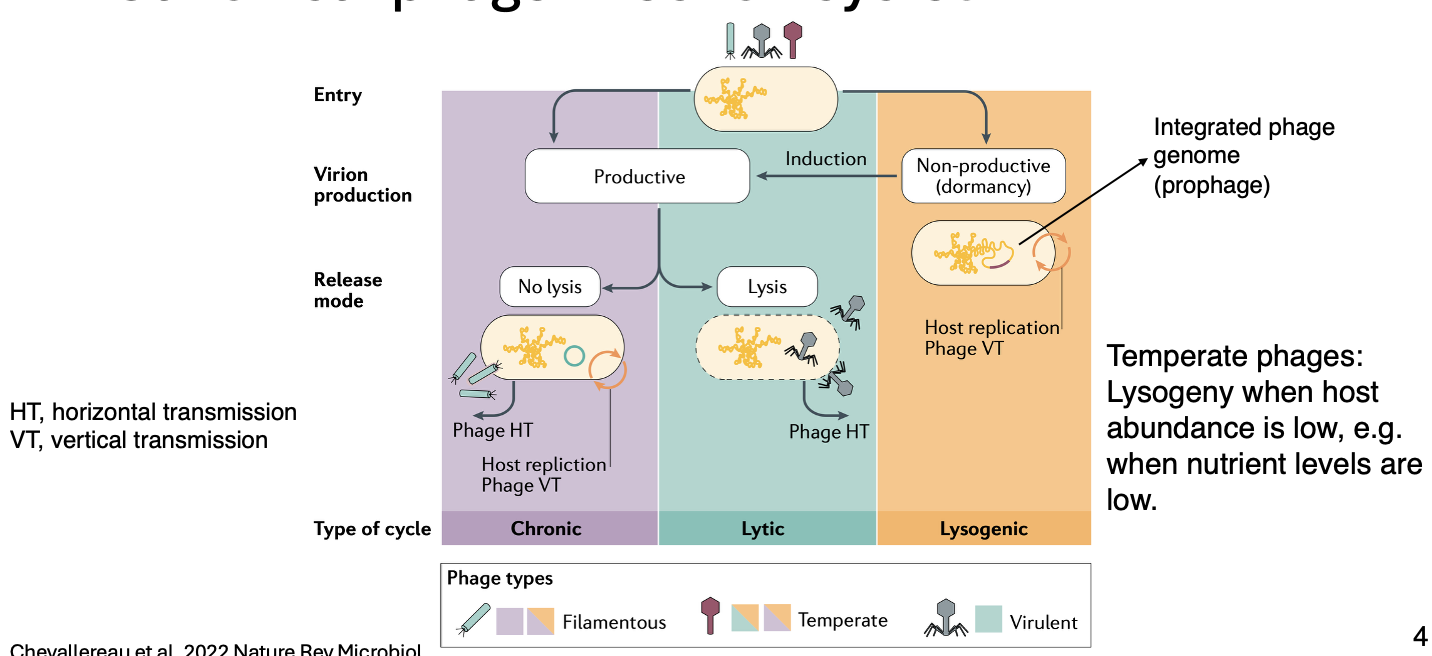
Canonical phage infection cycles: Filamentous phages & cycles
Follow a productive chronic cycle
with some (not all) having the capacity to enter a non-productive lysogenic cycle
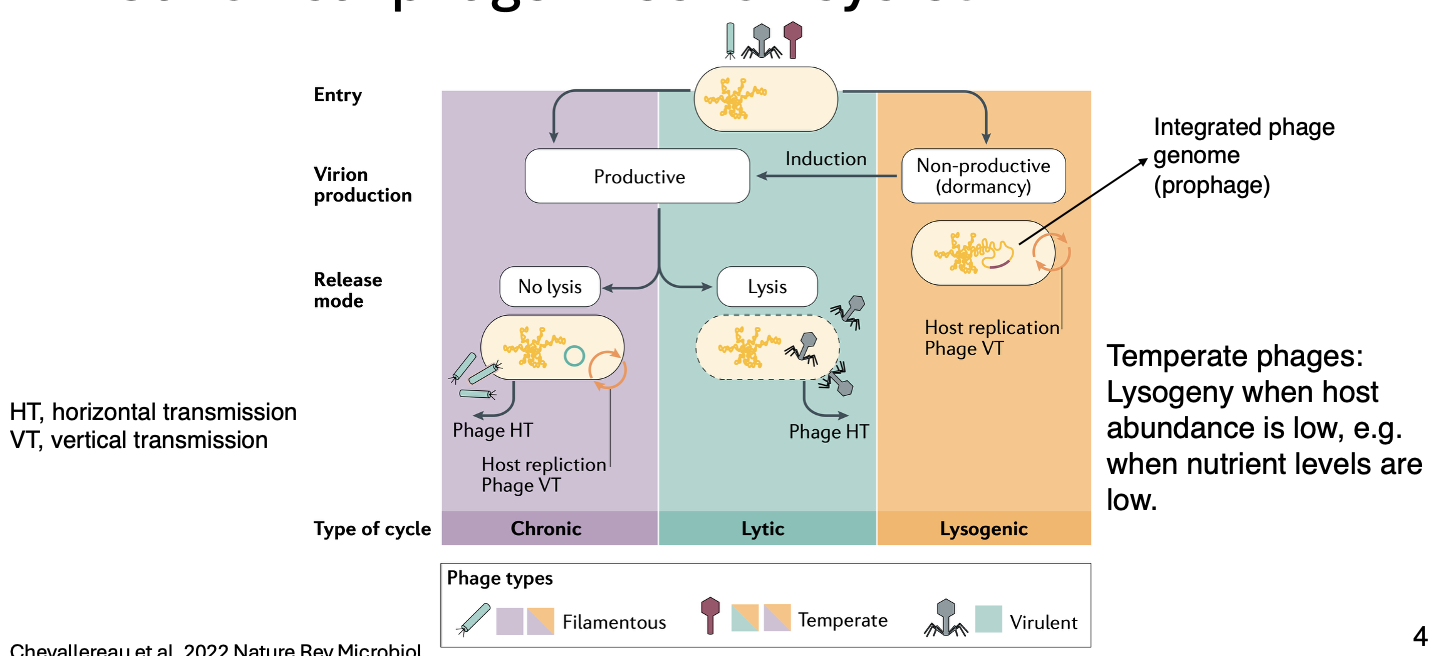
Canonical phage infection cycles: Temperate phages & cycles
(Any cycle: productive & lysogenic)
Characterized by their ability to be lysogenic (under non optimal conditions) and
Upon induction, they can produce new virions through either a chronic or a lytic cycle
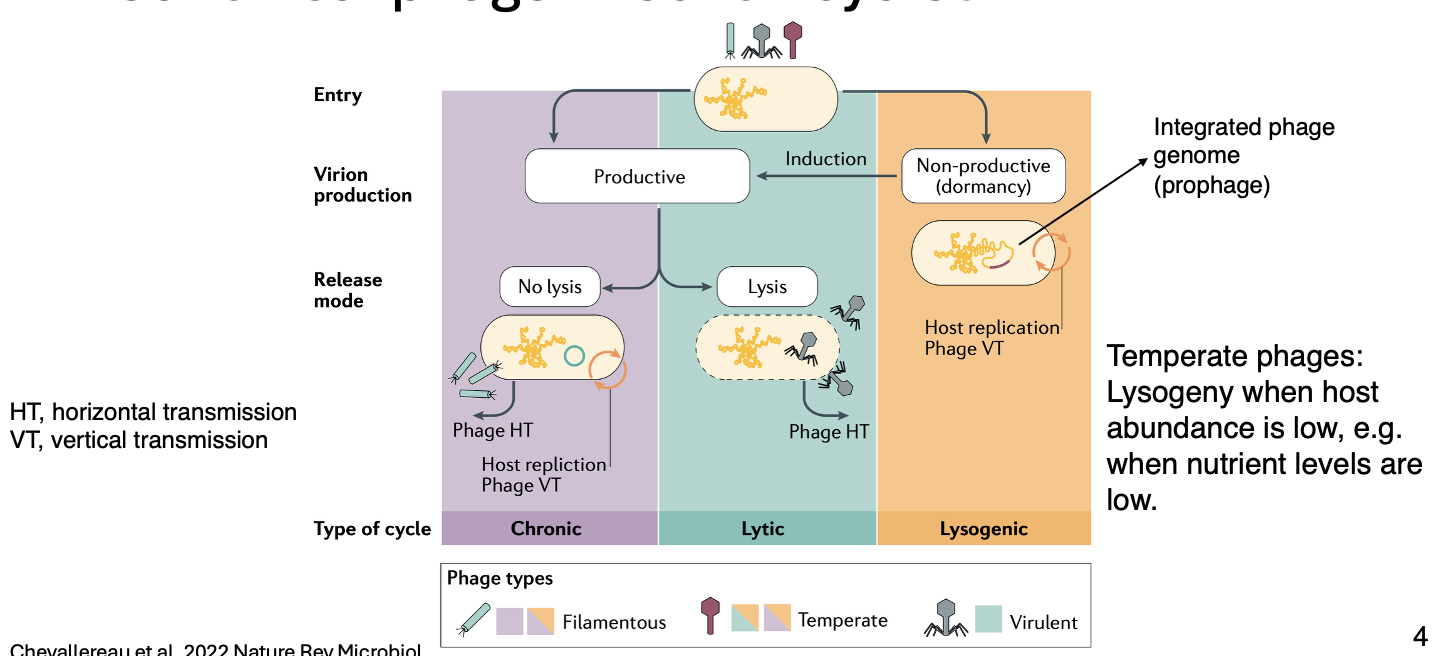
Canonical phage infection cycles: Virulent phages & cycles
Replicate only through a lytic cycle
HT, horizontal transmission (other bacterial cells around infected by progeny released);
VT: vertical transmission (insert its genome into bacterial genomes).
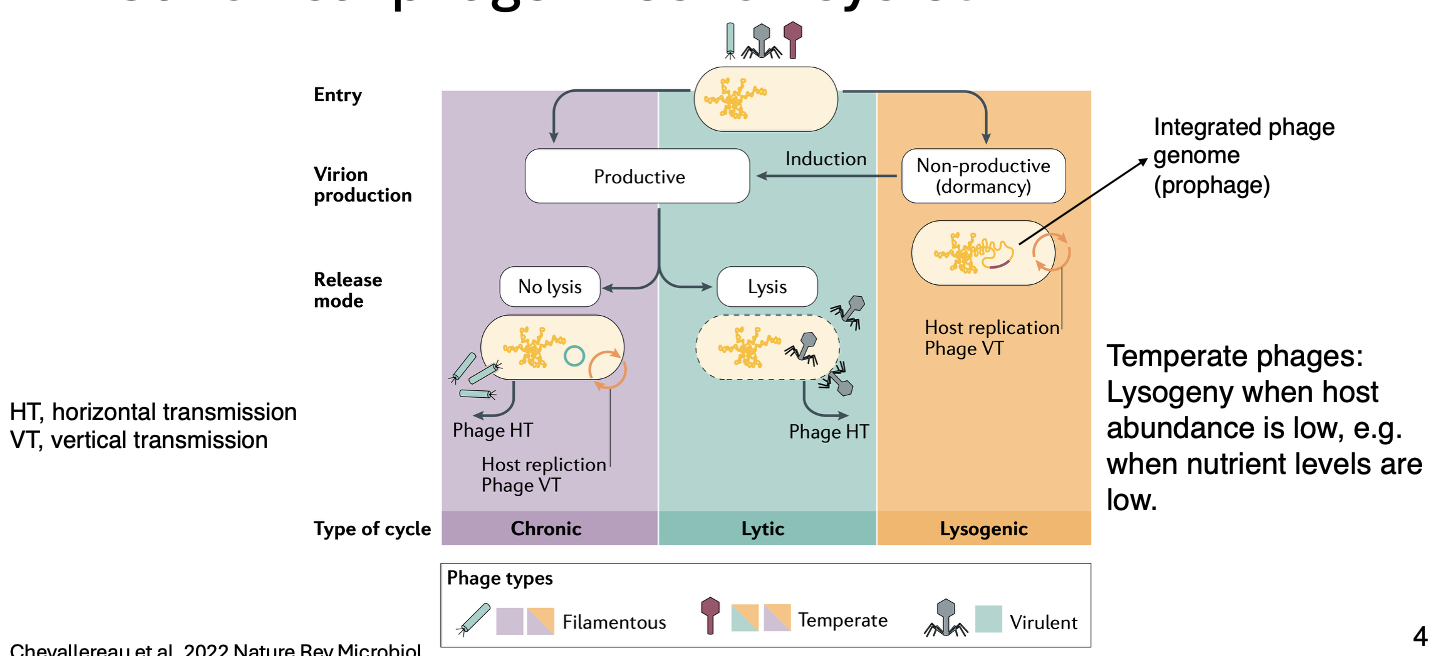
What is Pseudolysgoeny ((double-stranded) dsDNA phage)? [in carrier state]
The stage of stalled phage development of a bacteriophage
→ in unfavorable growth conditions for the host cell, e.g., starvation
An unintegrated phage genome is asymmetrically passed (as not replicated) onto daughter cells [VT]
![<p>The stage of<strong> <u>stalled phage development</u> of a bacteriophage</strong></p><p>→ in <em>unfavorable growth conditions f</em>or the host cell, e.g., starvation</p><p><strong>An </strong><span style="color: red;"><strong>unintegrated phage genome</strong> is asymmetrically passed </span>(as not replicated) onto daughter cells<strong> [VT]</strong></p>](https://assets.knowt.com/user-attachments/61aeacef-a919-4b90-a0b6-93dced3e4c6d.png)
What happens to daughter cells in Pseudolysogeny?
Become resistant (indicated by red crosses) to secondary infections through the inheritance of the phage genome or, as in the case of phage P22, immunity factors
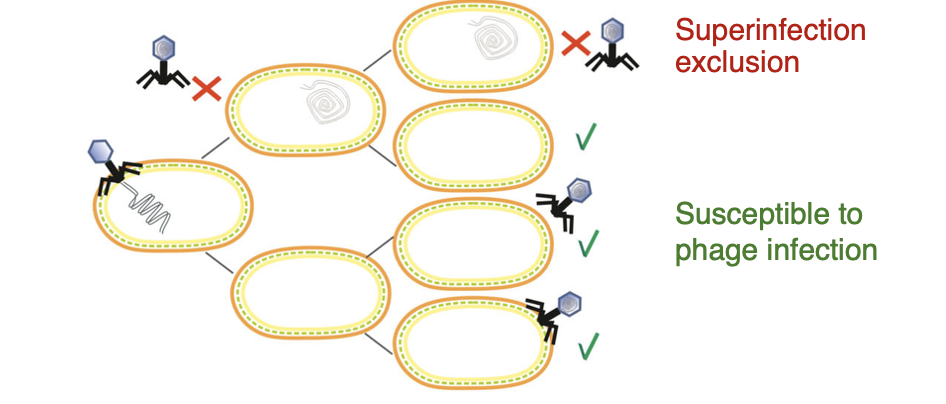
What is Superinfection exclusion in Pseudolysogeny?
A phenomenon where a host cell that is already infected by one virus becomes resistant to subsequent infections by similar viruses
(in intracellular phage particles)
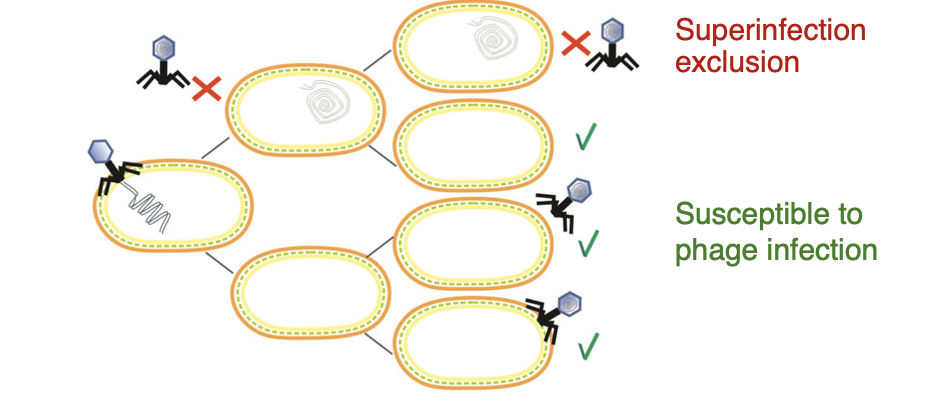
What is phage peristence?
Phages remain within the cell without being released
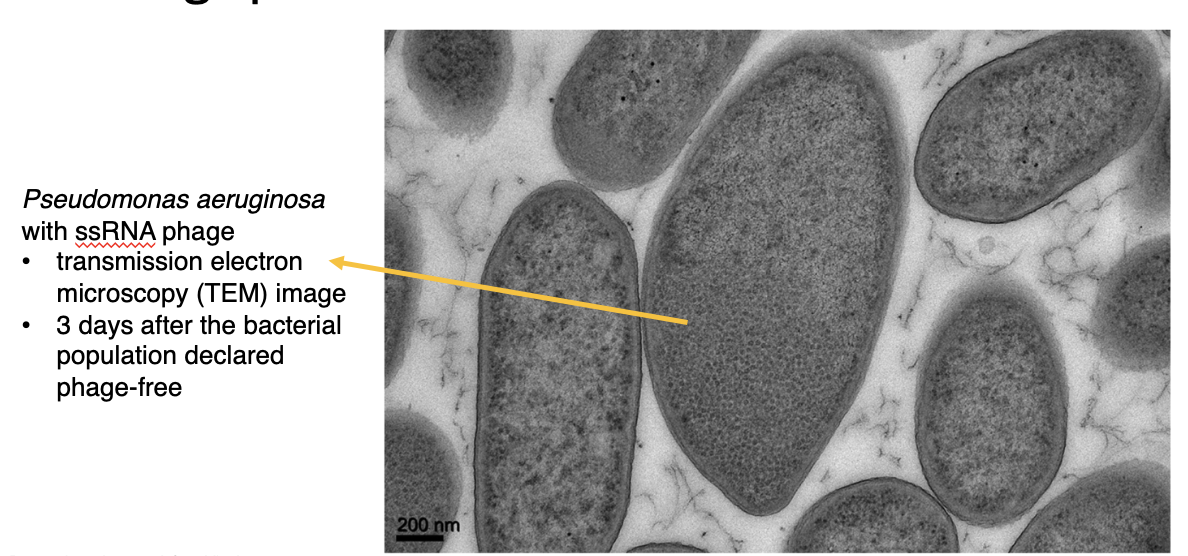
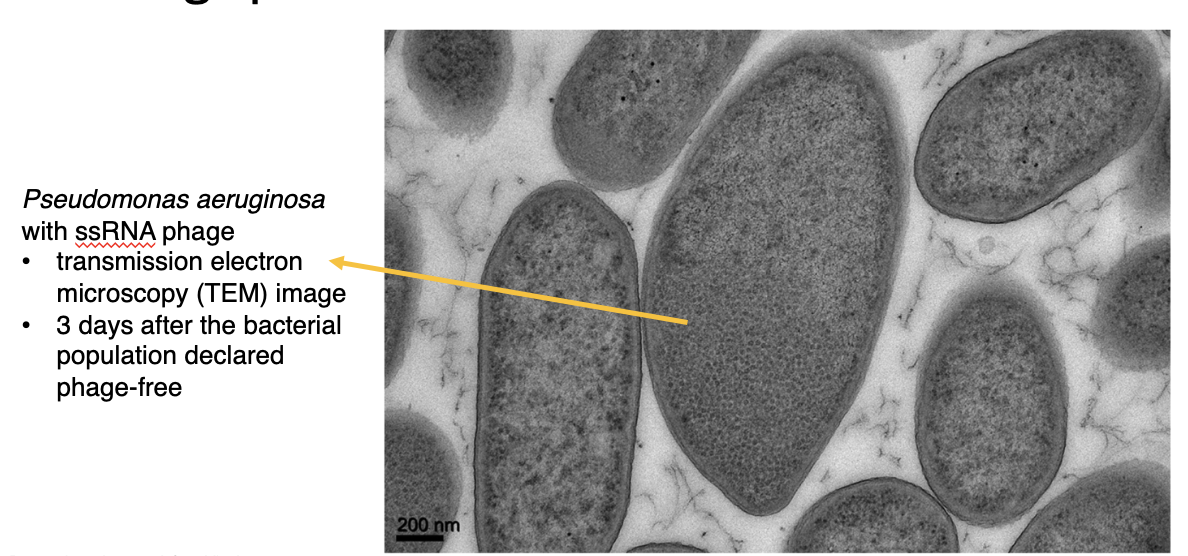
TEM image of Pseudomonas aeruginosa with ssRNA phage
→ 3 days after bacterial population declared phage-free
An enlarged cell packed with viral particles in the center with an intact membrane (showing phage persistence)
Lytic phage infection cycle: Eclipse period
During the early phase of infection:
The host cell contains components of the phage, but no complete particles
(Phage particles produced)
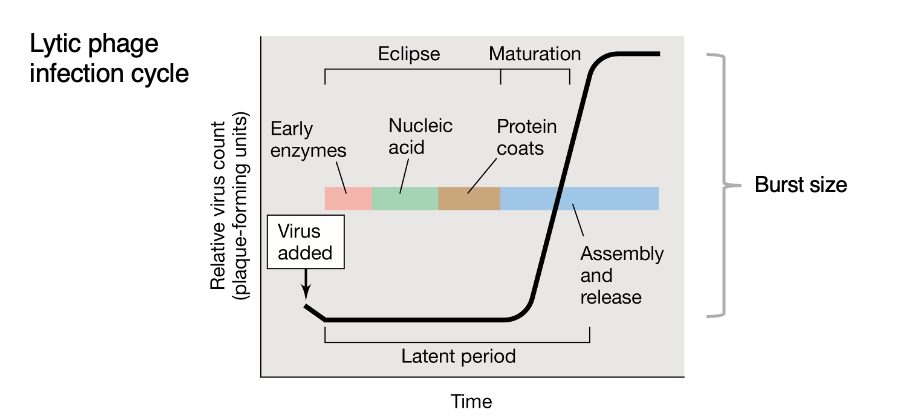
Lytic phage infection cycle: Latent period
Eclipse + Intracellular Accumulation (Maturation)
The time between the attachment of a phage particle to the cell surface and the release of newly synthesized phages
End: Cell burst and phage release
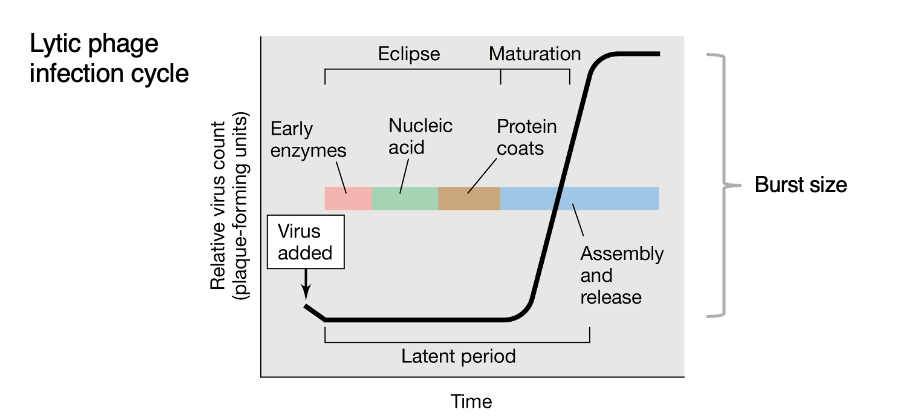
Lytic phage infection cycle: Maturation period
Intracellular Accumulation (Maturation)
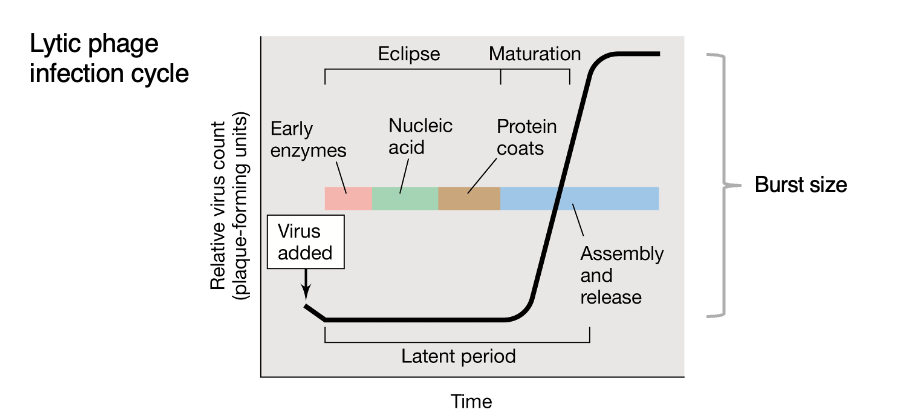
Lytic phage infection cycle: Burst Size
Difference between final full phage production and initial phage production
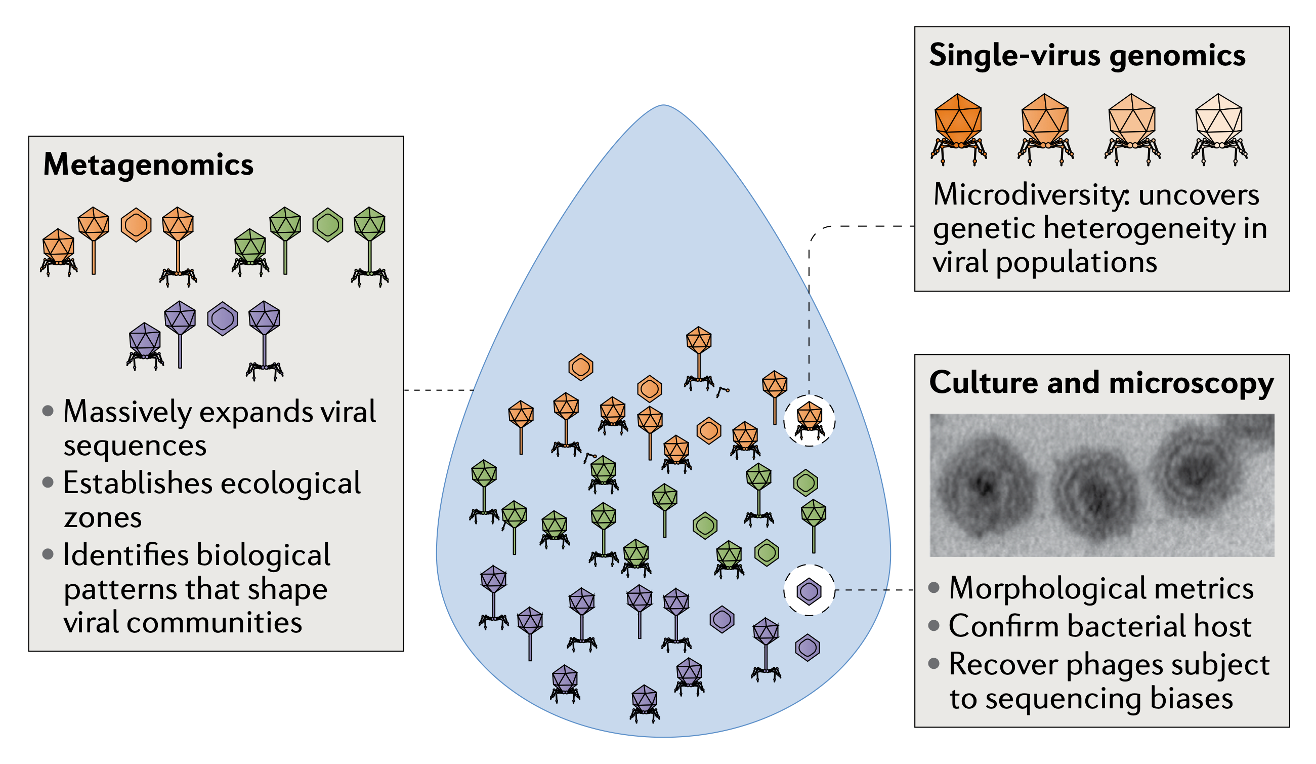
3 Phage characterization techniques
Metagenomics (Meta sequencing) - but could lose info on species-specific gen. diversity
Single-virus genomics- Cleaner way to analyze diversity and gen. interchangeability
Culture and microscopy (lab-based) - Understand and characterise host range of phages
Plaque-forming unit (PFM/ml) equation
Example:
Phage density [PFU/ml] = 192 / (1.00E-03 * 0.01 ml) = 1.92E+07/ml
![<p><span>Example:</span></p><p style="text-align: left;"><span>Phage density [PFU/ml] = 192 / (1.00E-03 * 0.01 ml) = 1.92E+07/ml</span></p>](https://assets.knowt.com/user-attachments/af229884-51cc-433d-b29d-f829d5999408.png)
Phage assay: Plague + PFU meaning
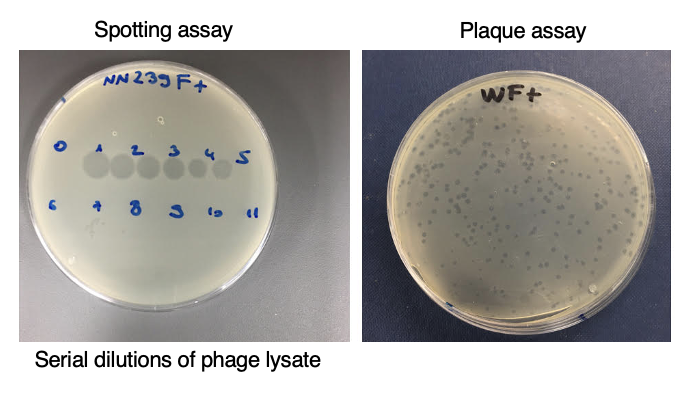
Plague - clear zones on a bacterial lawn (Phage present there)
PFU = plague forming unit
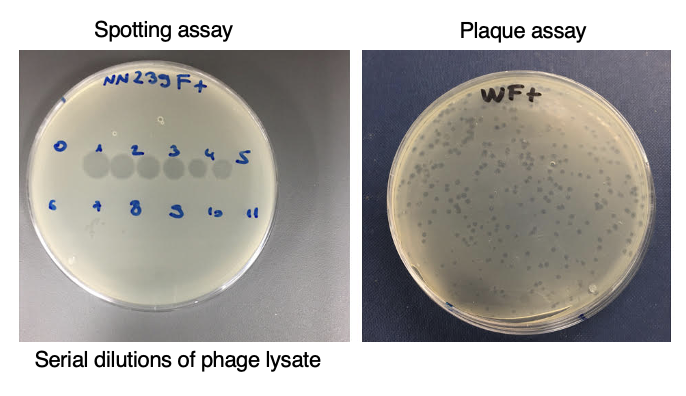
Phage assay: Types?
Spotting assay - Serial dilutions of phage lysate (fewer phage with increasing dilution)
Plague assay - Only single dilution on the lawn - count plaques to determine no. of phages
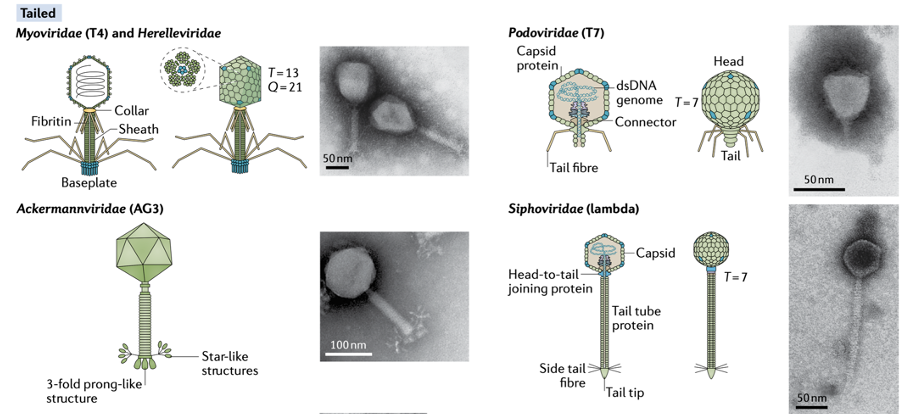
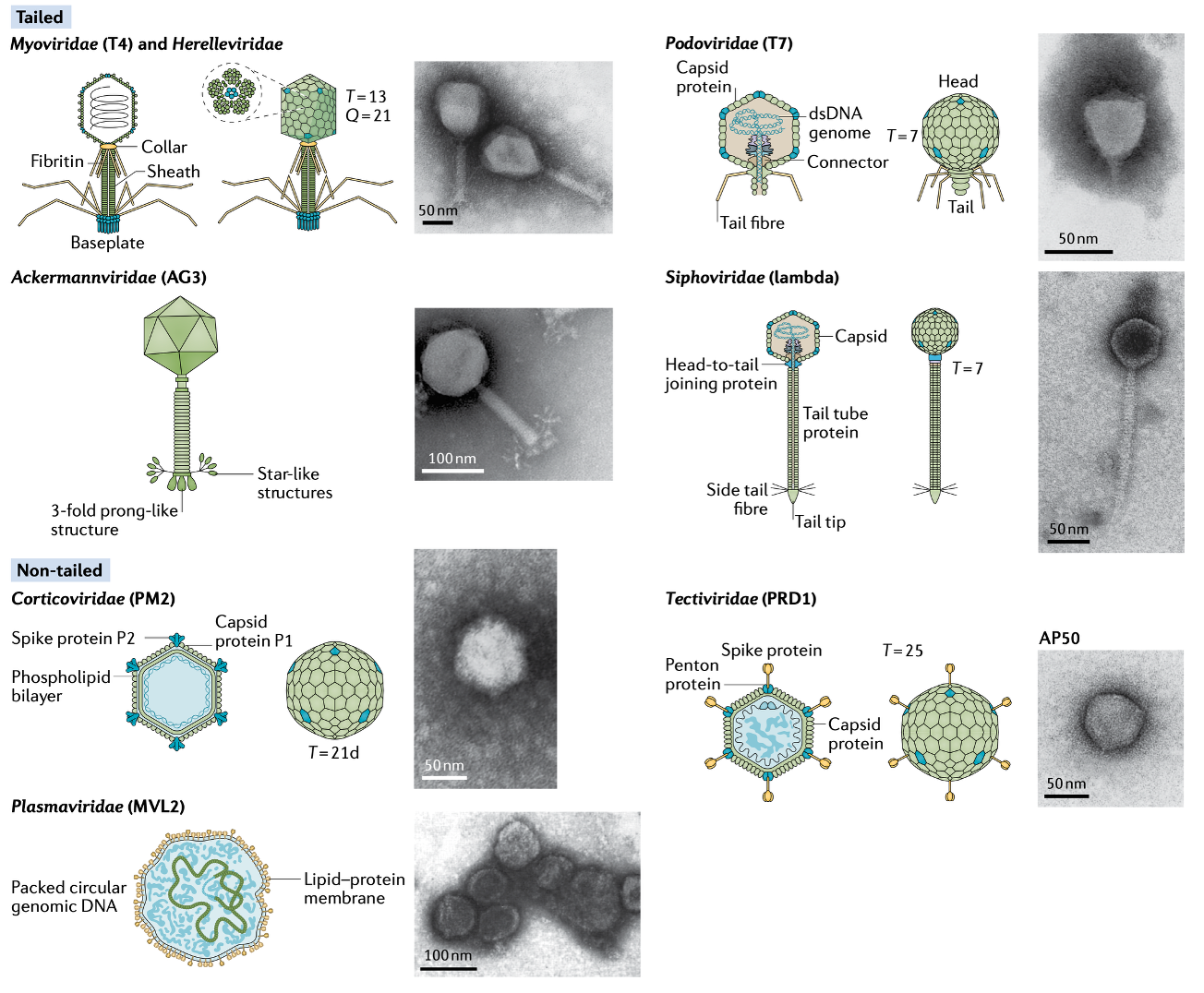
Types of dsDNA phages: Tailed (name just for ref)
Myoviridae (T4) and Herelleviridae
Podoviridae (T7)
Ackermannviridae (AG3)
Siphoviridae (Lambda)
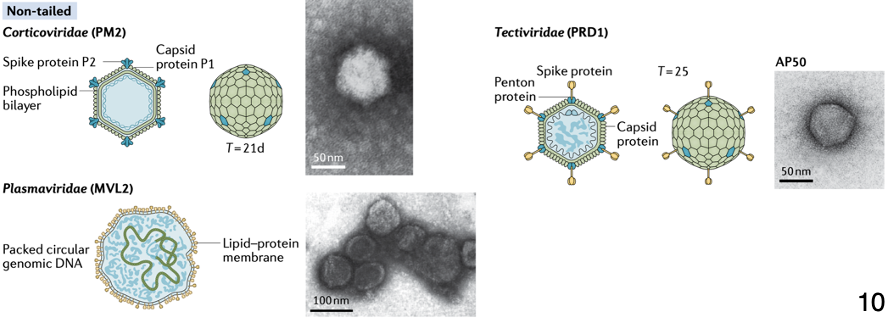
Types of dsDNA phages: Non-tailed (names just for ref.)
Corticoviridae (PM2)
Tectiviridae (PRD1)
Plasmaviridae (MVlL2)
Types of dsDNA phages: Most prevalent dsDNA in human microbiota
Crassviridae - present in 73% of human fecal samples
→ important in gut microbiota
2 types of ssDNA phage
Microviridae (with icosahedral capsids) and Inoviridae (filamentous phages)

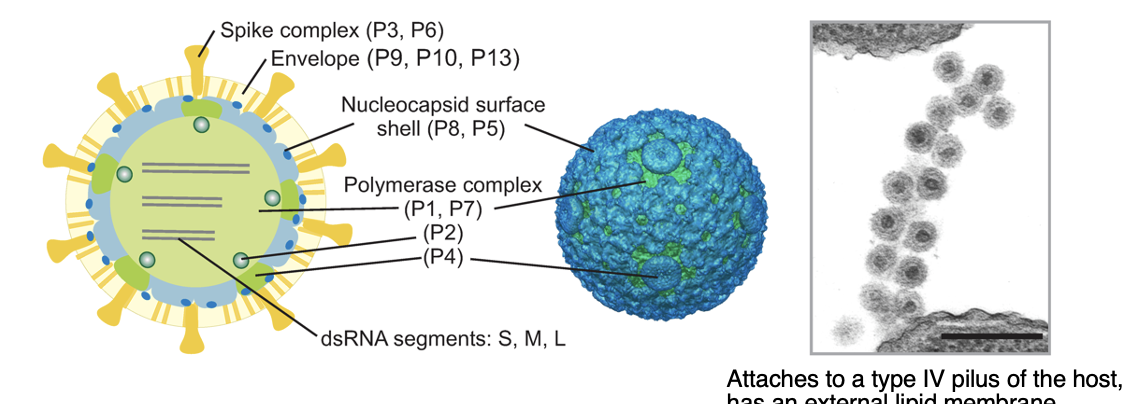
Type of dsRNA phage + how to attach to host?
Cystoviridae
✅ external lipids in membrane
→ Pseudomonas phage phi6 (Spike protein, 3 segments included (not 1 linear))
————————————————————
DON’T BIND TO BACTERIA BODY - attach to appendices (e.g. to type IV pilus of host)
Type of ssRNA Phage (simple)
Class Leviviricetes (ICTV 2023 Release)
→ Escherichia phage MS2
just maturation proteins + coat proteins + ssRNA
[f-pili (appendices) attach to phages]
![<p>Class<em> Leviviricetes</em> (ICTV 2023 Release)</p><p style="text-align: left;"><em>→ Escherichia</em> phage MS2</p><ul><li><p style="text-align: left;">just maturation proteins + coat proteins + ssRNA</p></li></ul><p>[f-pili (appendices) attach to phages]</p>](https://assets.knowt.com/user-attachments/3915c7c5-f69d-4cc7-a051-819c0c22e0a5.png)
What phage genomes do?
Encode as few as three genes and as many as hundreds of genes
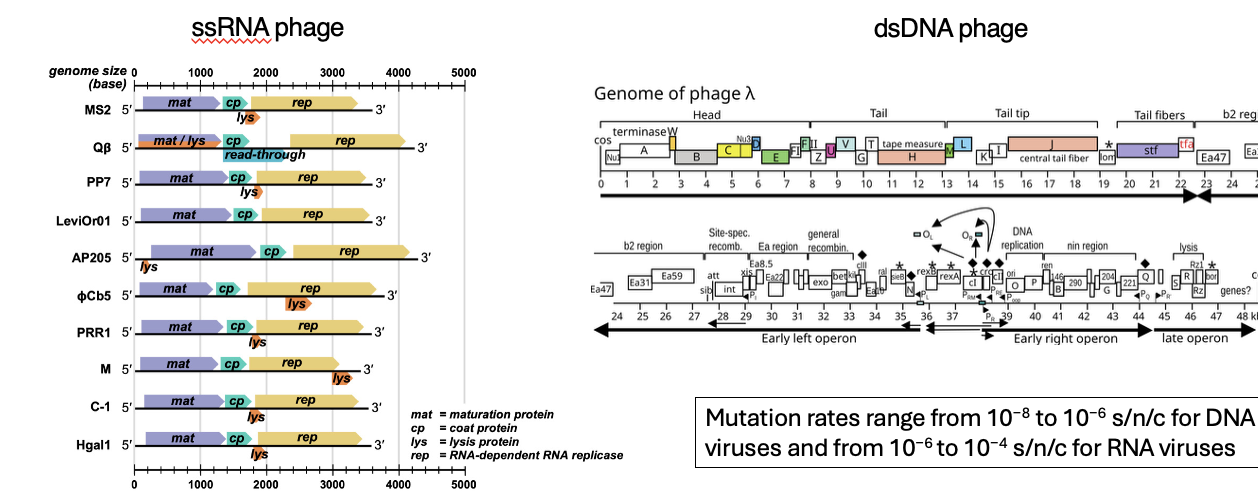
Why do RNA viruses have high mutation rates?
Their RNA-dependent RNA polymerase LACK proofreading activity
Phage diversity: Virus-Host DB - updates till 26/02/2026
VERY diverse
21,579 dsDNA phages
448 ssDNA phages
13 dsRNA phages
27 ssRNA phages
NCBI data = 883 ssRNA phage ref. genomes (11 phages w known host)
Why is research on phages with dsDNA genomes more focused on than RNA?
There are biases in experimental procedures and computational analysis:
Protocols optimized for the isolation and characterization of dsDNA phages
DNA sequencing is cheaper than RNA sequencing
RNA phages have higher genetic diversity than DNA phages - harder to do?
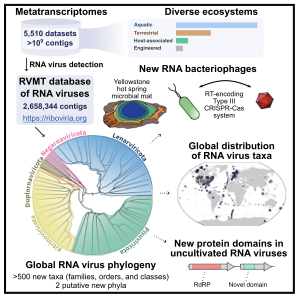
Arms race of: Bacteria-phage (host-parasite) coevolution
Both species must constantly adapt each other (like Red Queen hypothesis)
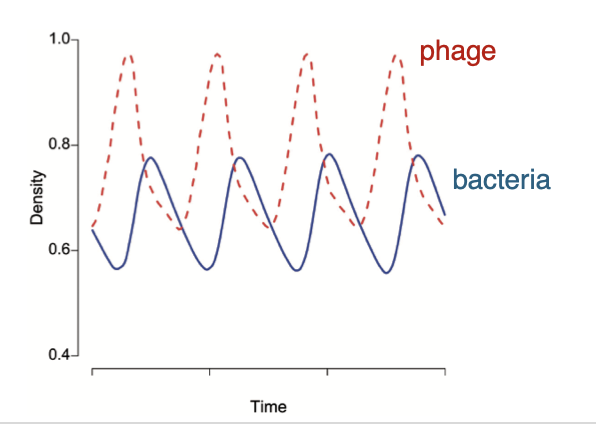
Arms race of Bacteria-phage coevolution: What they evolve? and lead to?
Bacteria evolve resistance to phages
Phages evolve resistance-countering mutations
→ specialize on specific host genotypes
Leads => selection of rare host genotypes that are resistant to the dominant phage population
5 antiphage defense mechanisms and strategies in bacteria
Restriction-modification systems
BREX (Bacteriophage Exclusion)
CRISPR-Cas
Toxin-antitoxin systems
Abortive infection
Antiphage defense mechanisms and strategies in bacteria: Restriction-modification systems usage
Protect bacterial host DNA by methylation
Restriction enzymes degrade foreign (phage) DNA (not methylated)
(by. adding methyl groups (a small chemical group) to specific sites on their own DNA. This methylation acts as a protective marker. When foreign DNA enters the cell, it lacks these methylation markers and is recognized as invader DNA. The system then cuts up the foreign DNA to protect the cell.)
Antiphage defense mechanisms and strategies in bacteria: BREX (Bacteriophage Exclusion) usage
Protect bacterial host DNA by methylation
Other part of system blocks phage replication
Antiphage defense mechanisms and strategies in bacteria: Toxin-antitoxin systems usage
Proteins w diff. enzymatic activity
Range of mechanisms (intrfere w DNA rep. degrade RNA, inhibit cell synthesis) to defend against phages
Antiphage defense mechanisms and strategies in bacteria: Abortive infection usage (based on Toxin antitoxin system)
✅MOST bacterial pop. depends on this
Strategy to contain phage infection, mediated by toxin-antitoxin systems
When bacteria alr infected by phage
Cascade of signals happens
Trigger Abortive infection →bacterial cell destroy itself
✅ Advantageous for population as the infected cell won’t replicate more variants
Antiphage defense mechanisms and strategies in bacteria: Restriction-modification systems v.s. BREX
R-M system (kill):
relies on restriction enzymes to degrade foreign DNA
BREX system (defense):
blocks phage replication through epigenetic modifications and other mechanisms
CRISPR - full name
Clustered Regularly Interspaced Short Palindromic Repeats
Cas - full name
CRISPR-associated proteins
Classes and types of Cas
2 classes: Class 1 and Class 2 and 6 types (I to VI)
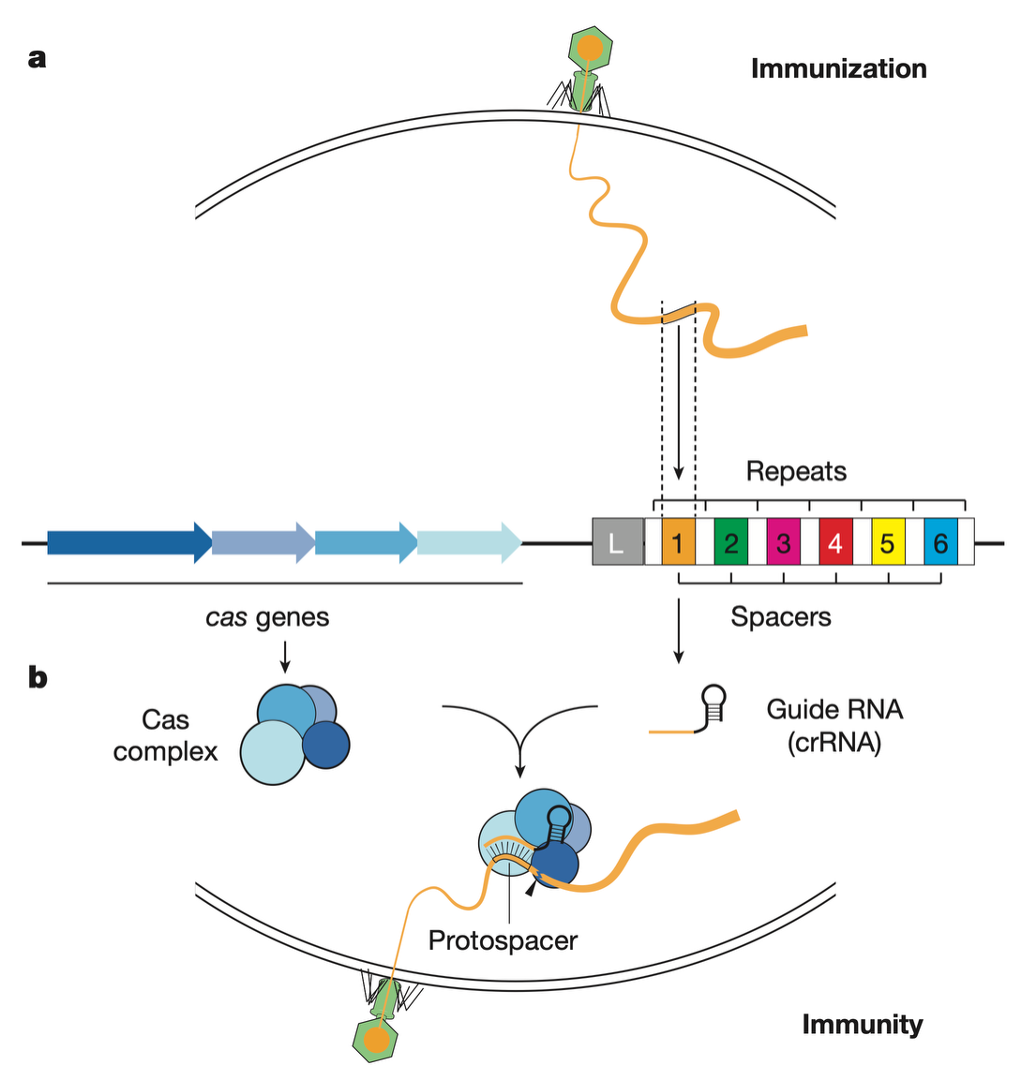
Cas: Identified in where
Identified in at least half of the available bacterial genomes
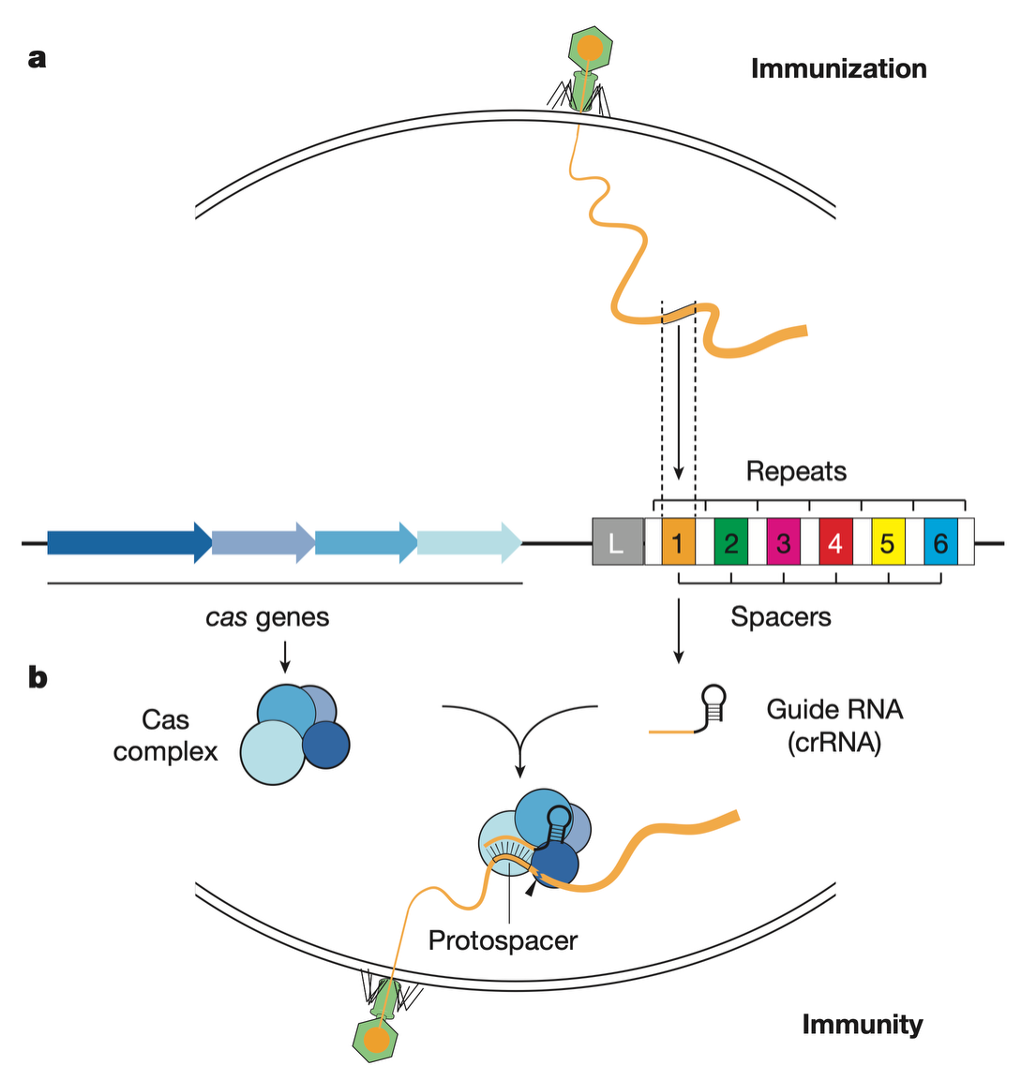
What is a CRISPR loci?
CRISPR loci are a cluster of short DNA repeats (white boxes) separated by equally short spacer sequences of phage and plasmid origin (coloured, numbered boxes).
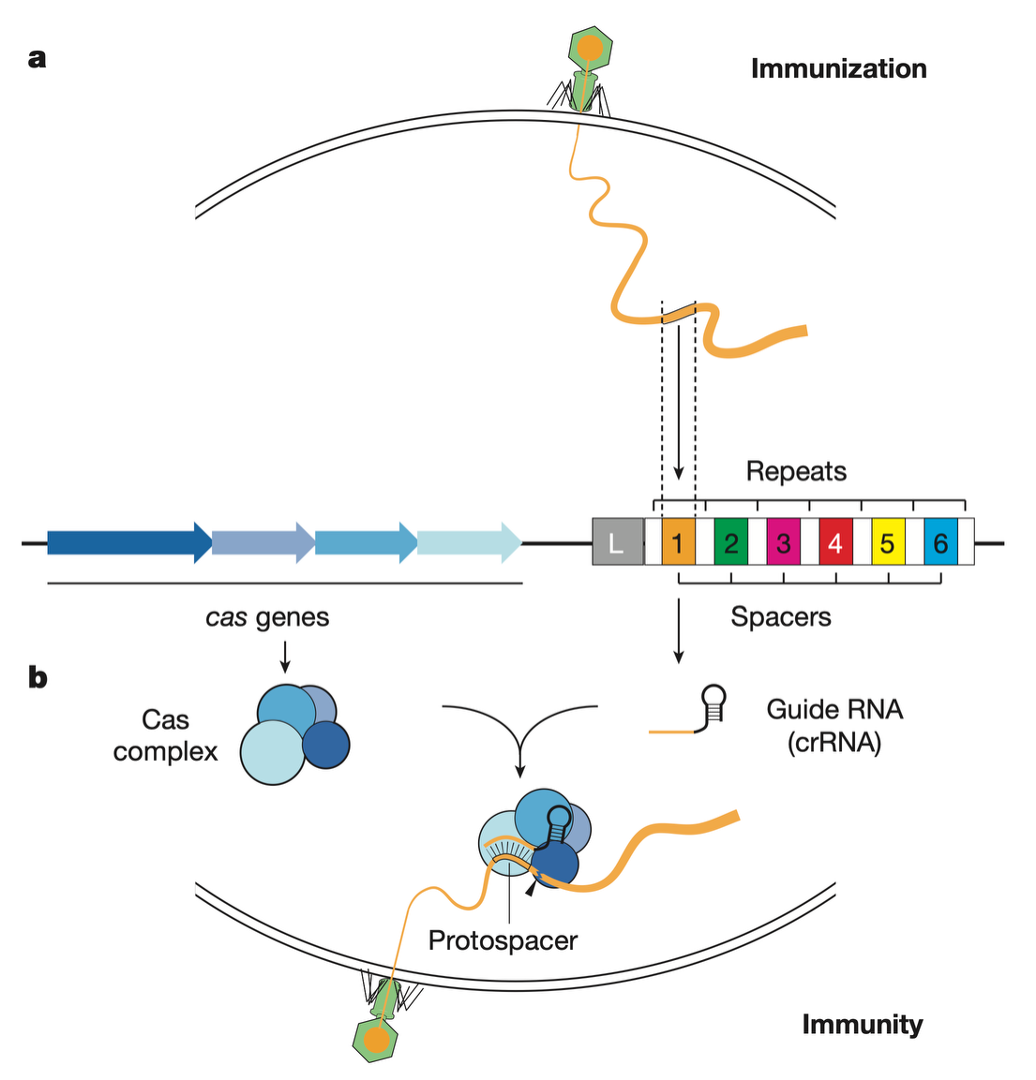
How are CRISPR arrays created?
A small piece of the virus's DNA was captured when bacteria were infected by the virus
The captured DNA is inserted into the bacterium's own DNA
→ creating CRISPR arrays
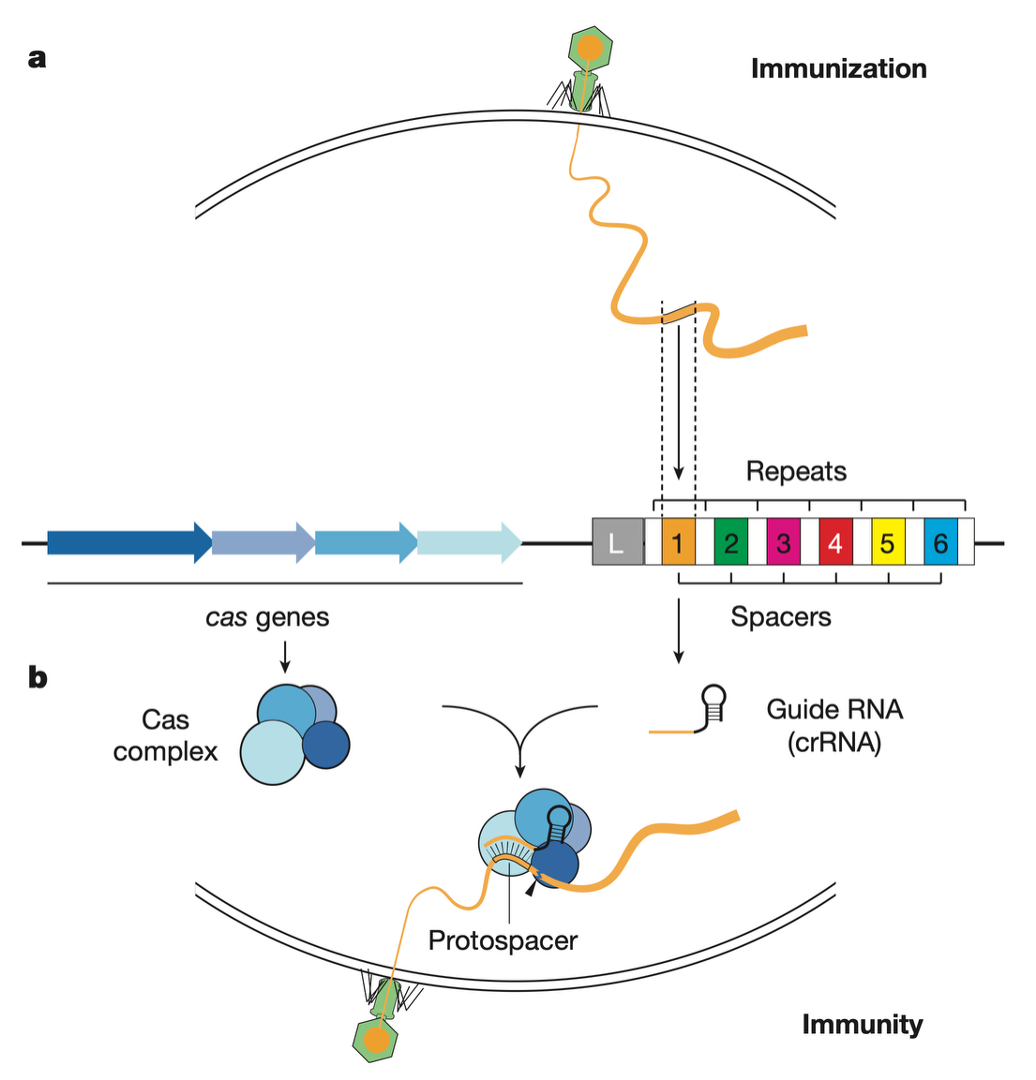
With CRISPR arrays, what happens if the virus attacks again?
Bacterium produces RNA segments from the CRISPR arrays.
RNA segments attach to specific regions of the virus's DNA.
Enzyme used to cut the DNA apart → disabling the virus
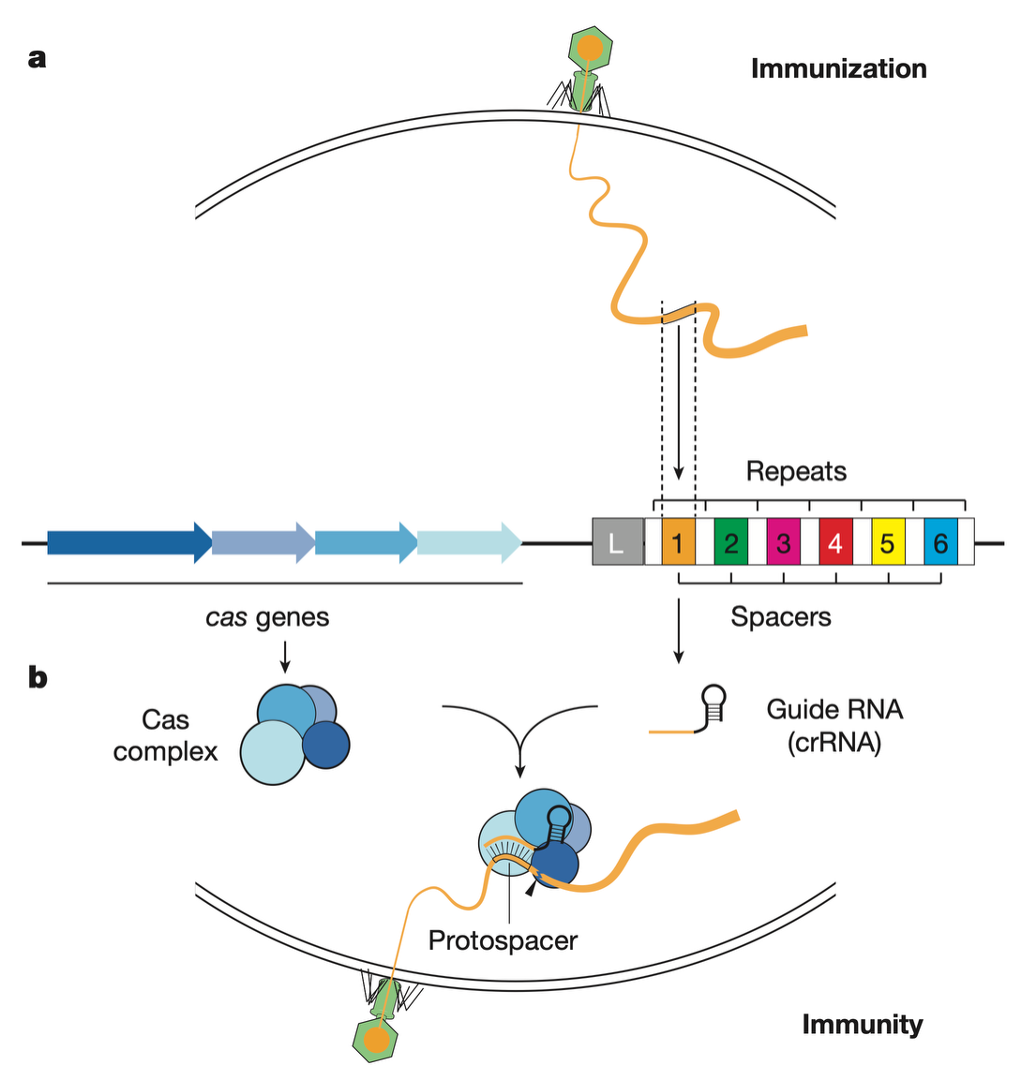
What is the CRISPR array preceded by, and what does the preceder contain?
Preceded by a leader sequence (grey box) containing the promoter for its expression.
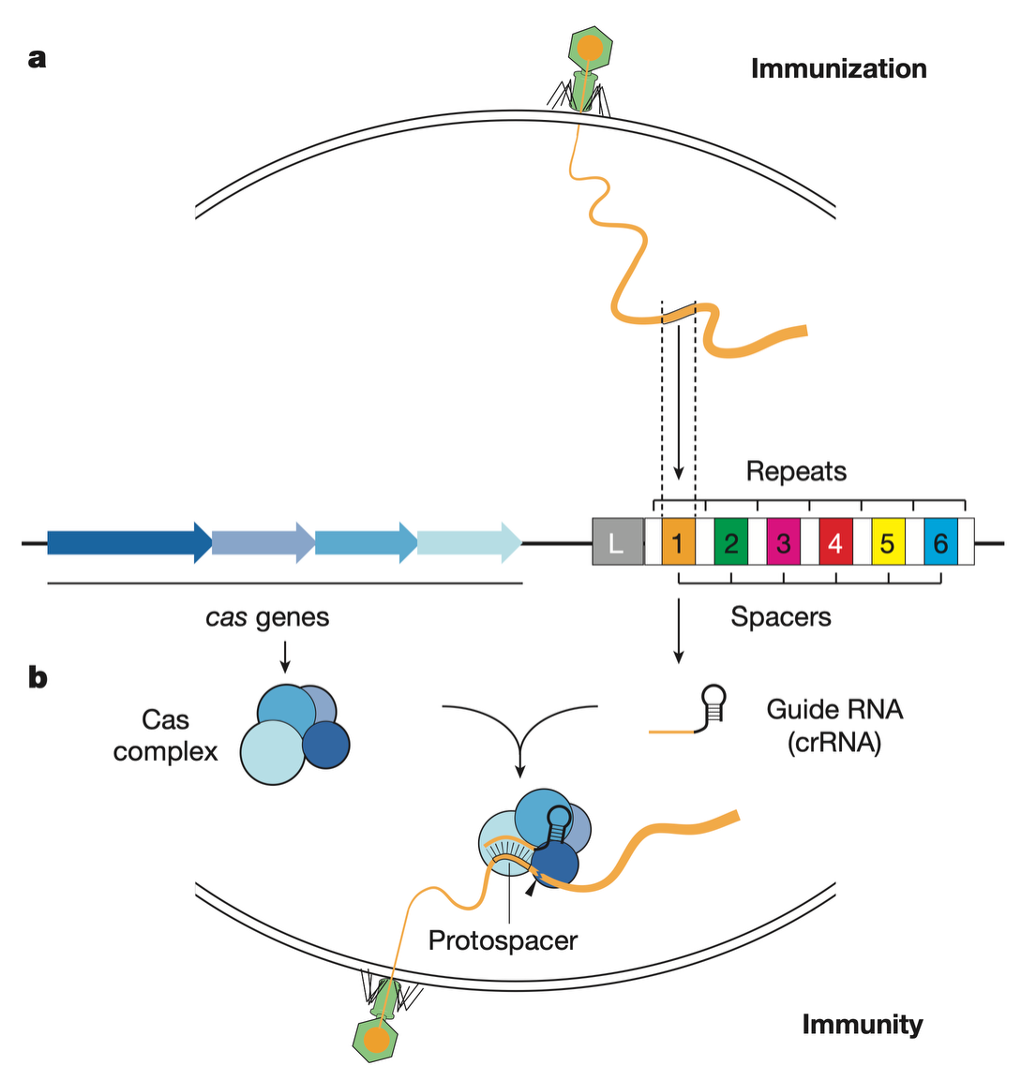
What does the repeat/spacer array contain and do?
This repeat/spacer array is flanked by an operon of CRISPR-associated (cas) genes (blue-tone arrows)
→ encode the machinery for the immunization and immunity stages of the system.
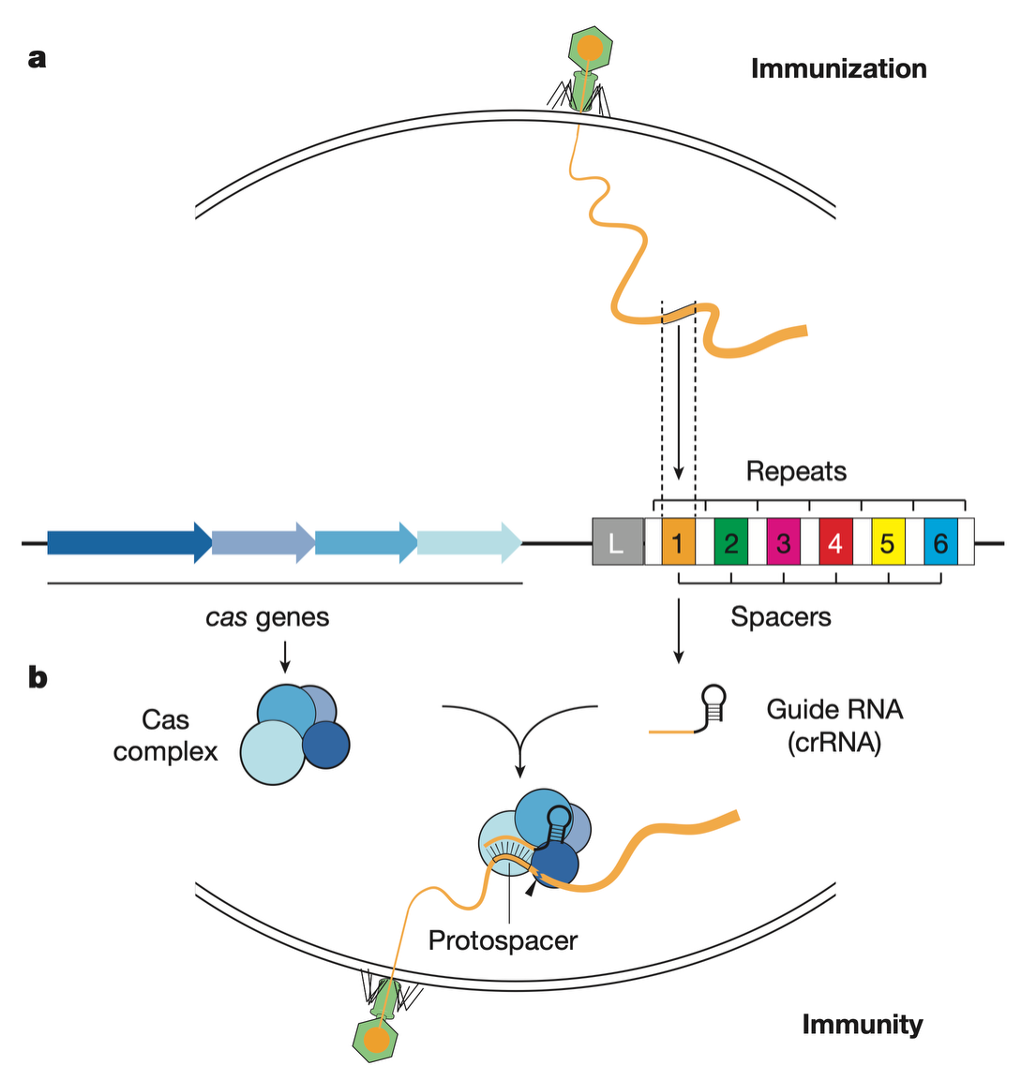
Stages of CRISPR-Cas immunity: Immunization stages
Immunization stage: Bacterial cells haven’t met the phage yet
Spacer sequences are captured upon entry of the foreign DNA into the cell (Genome chopped into small pieces of sequences)
Integrated into the first position of the CRISPR array (incorporated in the CRISPR area of the bacterial genome)
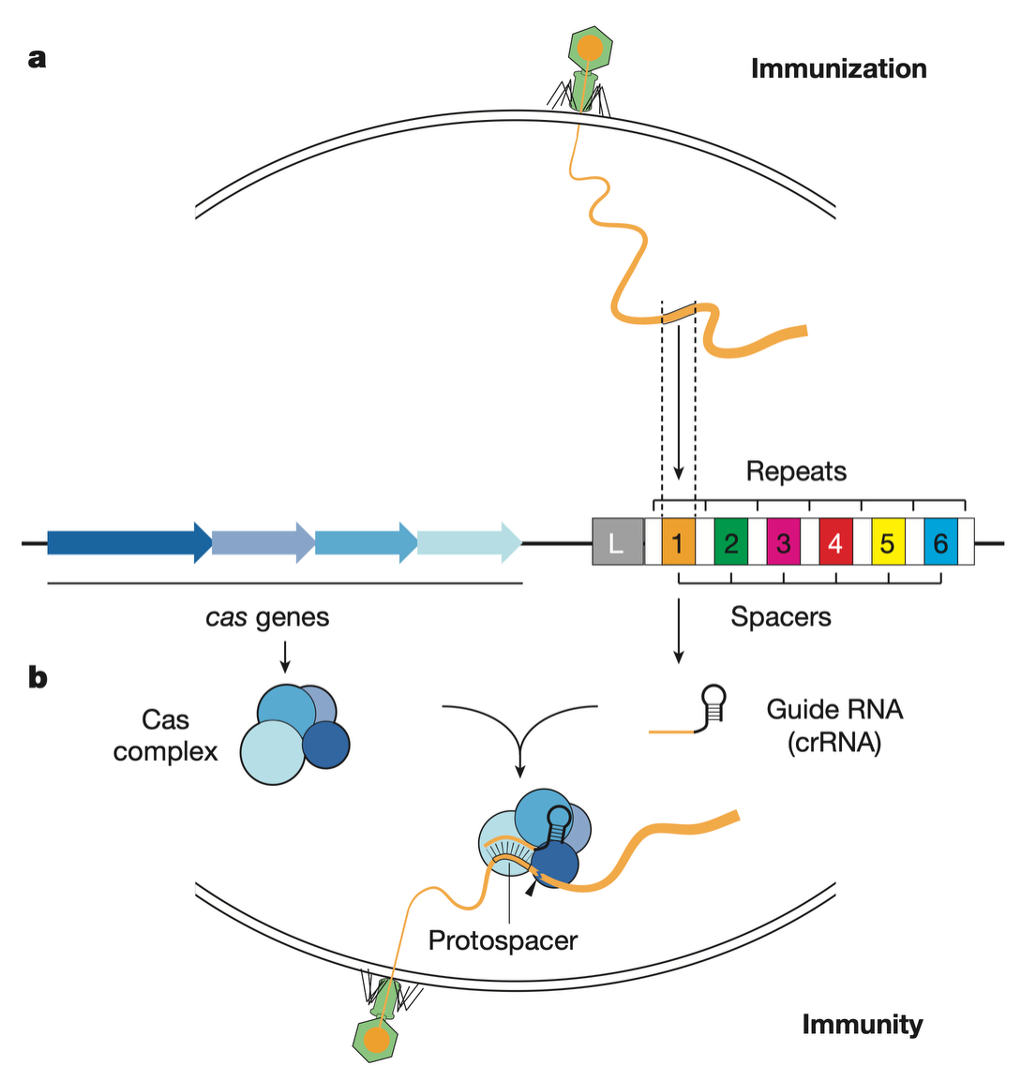
Stages of CRISPR-Cas immunity: Immunity stages
Immunity stage: Spacer is used to target invading DNA that carries a cognate sequence for destruction (killer)
Spacers are transcribed and processed into small CRISPR RNAs (crRNAs) in the ‘crRNA biogenesis’ phase.
CRISPR array induced
small guide RNAs (antisense guides for Cas) produced
RNA-guided nucleases (form a complex)
Locate and cleave the sequence (black arrowhead) in the phage genome (‘targeting’ phase)
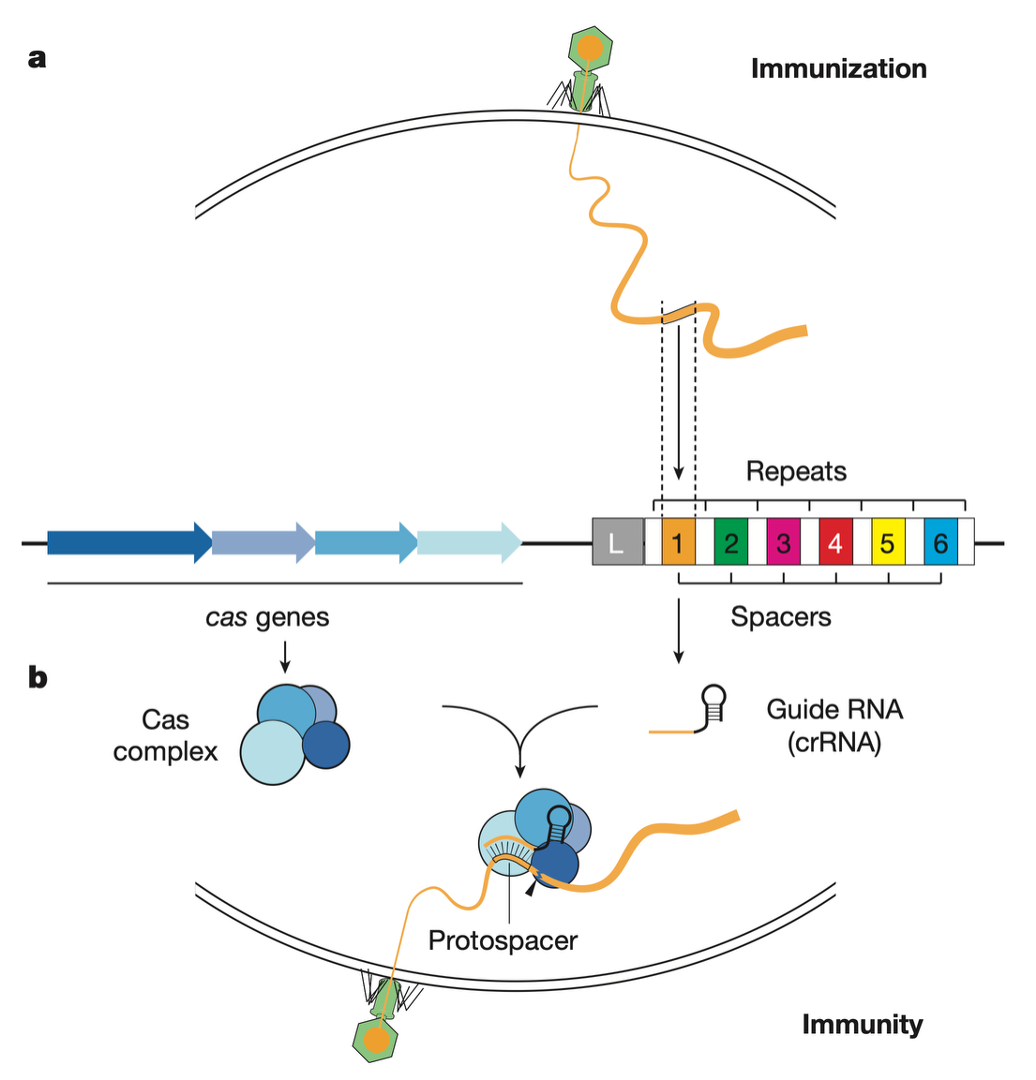
Phage counter-defenses: Binding bacterial immune proteins (How it works)
Using (anti-CRISPR, Anti-restriction proteins, etc.)
for protein-protein interaction
Phage counter-defenses: Post-translational modifications of immune proteins (How it works)
(If Toxin-antitoxin system)
Chemical modification of proteins that are part of the bacterial defense machinery
Phage counter-defenses: Targeting secondary messengers that activate immunity mechanisms (How it works)
Cleave signalling molecules
→ disrupt immunity regulation of bacteria
(Secondary messengers = nonprotein molecules or ions that bind to specific target proteins, and disseminate information received by cellular receptors)
What phage in nature do?
Phages shape the taxonomic and functional composition of microbial communities as well as their stability
VLP = virus-like particle
→ indirectly interfere w nutrient cycling in nature
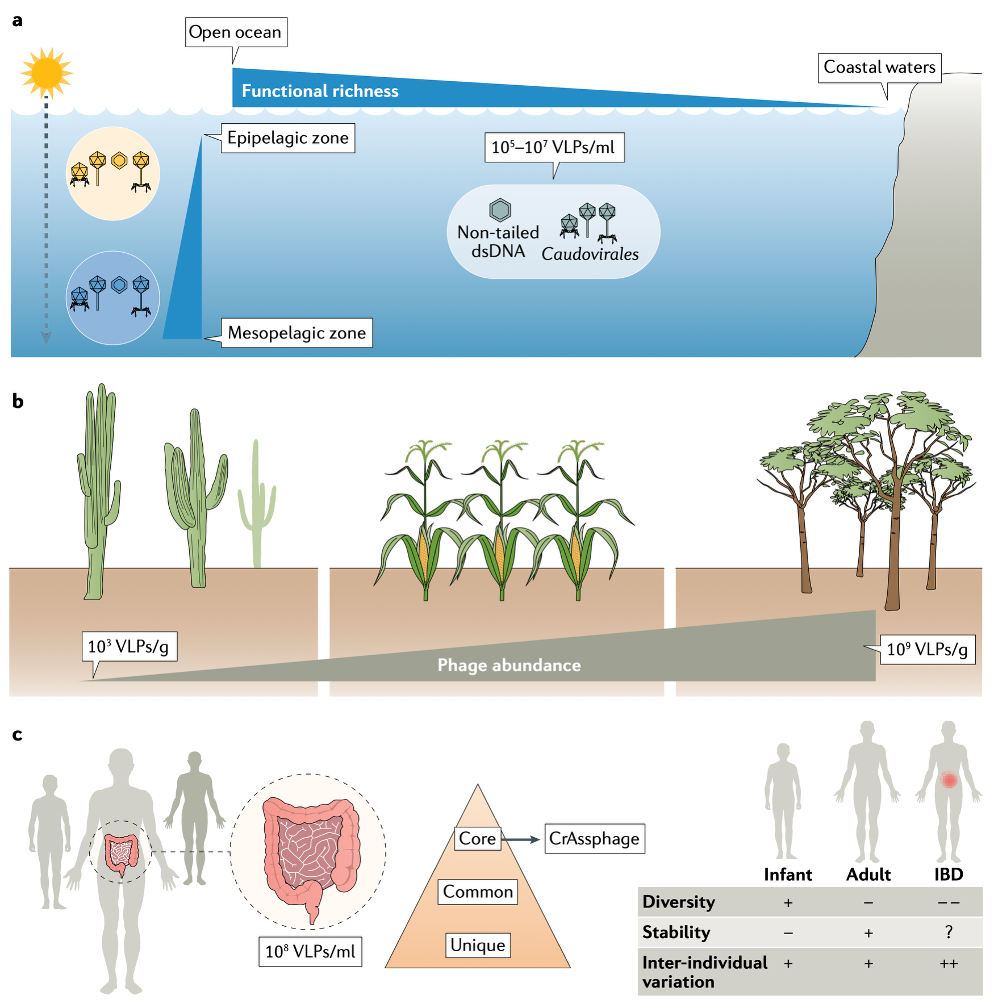
How do phages affect bacterial communities (diversity)?
By integrating in their genomes and replicating within their host
How do phages affect bacterial communities (Abundance)?
Change the abundance of bacteria by inducing bacterial death
How do phages affect bacterial communities (Physiology)?
Modify the physiology of bacteria by modifying host metabolism
How do phages affect bacterial communities (Virulence)?
Change the virulence of bacteria by transferring relevant genes
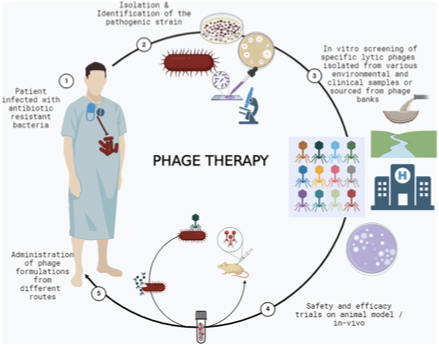
Phages in biomedicine and agriculture: Phage therapy
Used to target and destroy specific bacteria without harming human cells
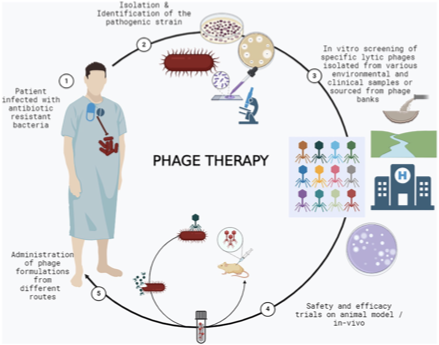
Phages in biomedicine and agriculture: Phage therapy - Combatting antimicrobial resistance (AMR)
Phages offer a promising solution to the growing problem of AMR by providing an alternative to traditional antibiotics.
Phages in biomedicine and agriculture: Biocontrol in agriculture
To control bacterial pathogens in crops, reducing the need for chemical pesticides
Phages in biomedicine and agriculture: Food safety
Applied to food products to eliminate harmful bacteria, ensuring food safety and extending shelf life
What phages used as model system in research?
MS2 - first sequenced genome
Lambda - well-studied for its lysogenic cycle for understanding gene regulation in bacteria
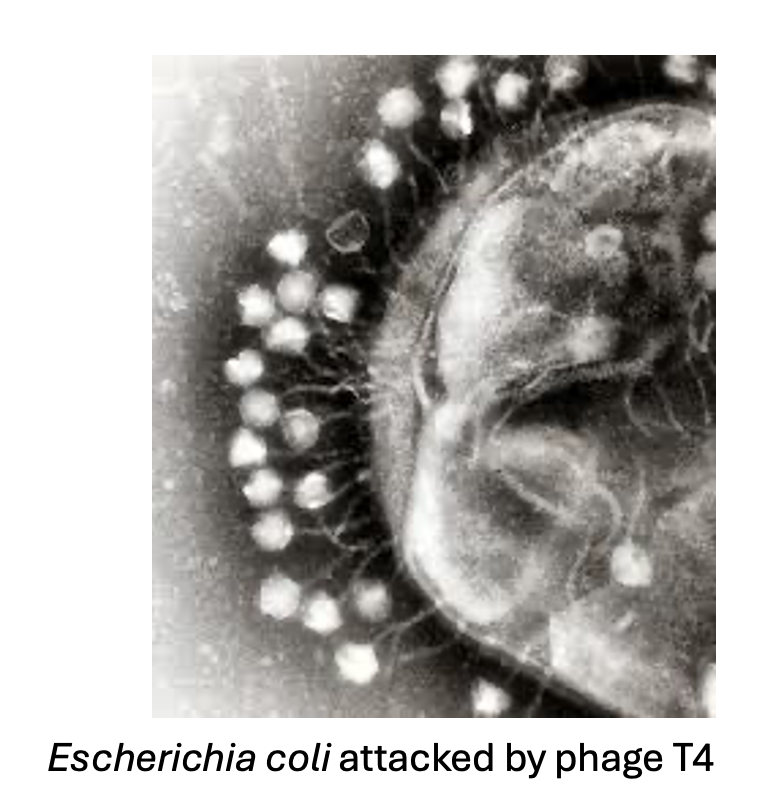
T4 - studying DNA replication mechanisms due to its complex and efficient replication machinery
M13 (a filamentous phage) - studying protein-protein interactions and phage display technology
ΦX174 - understanding viral genome structure
How to identify protein-ligand interaction in research?
Phage display technology: Engineering phage particles to display specific peptides or proteins
Knowledge gap on phage diversity need on
species diversity (genome diversity)
host range
bacterial defense mechanisms against phages
phage counter-defense mechanisms in ssDNA, ssRNA, and dsRNA phages.