Models And Theories
 AP Practice
 Call Kai
1/24

Earn XP
Description and Tags
Name | Mastery | Learn | Test | Matching | Spaced | Call with Kai | Chat |
|---|
No analytics yet
Send a link to your students to track their progress
25 Terms
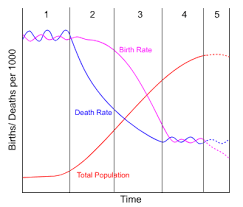
Demographic Transition Model
A process with 4 steps in which every country moves through, once a country enters a new stage it will not go back to a previous stage.
Stage 1
Low Growth (high CBR&CDR, low NIR)
Stage 2
High Growth (high CBR&NIR, low CDR)(happened due to industrial revolution)ex:Cape Verde, Nicaragua
Stage 3
Moderate Growth(decreasing CBR,CDR,NIR)(happens when people decide to start having less kids) ex:Chile,
Stage 4
Low Growth(CBR=CDR, has ZPG) ex: USA, England, Luxemburg
Stage 5
unofficial stage (low CBR, increasing CDR) ex: Russia
Von Thunen Model
Hearth-1826, Germany, by Johann Heinrich Von Thunen
says- What farmers produce varies upon distance from market
-takes into account cost of tranportation (which governs use of land)
-assumes no natural features (land uniformity)
-model places market in middle surrounded by dairy, then forestry (lumber), then grains and field crops, and lastly ranching and livestock
Rostow's Development Model
Hearth-W.W. Rostow, 1950
says- all countries move through 5 steps to development and modernization through selling resources and global participation (productive)
Step 1: Traditional Society:high in agriculture but unproductive and developed
Step 2:Preconditions of Takeoff:development begins with innovative leader who starts to buy technology
Step 3:Takeoff:Same areas start to produce and become productive and bring in $
Step 4:Drive to Maturity: Technology diffuses and workers become more specialized
Step 5:High Mass Consumption: More specialized jobs and become consumers
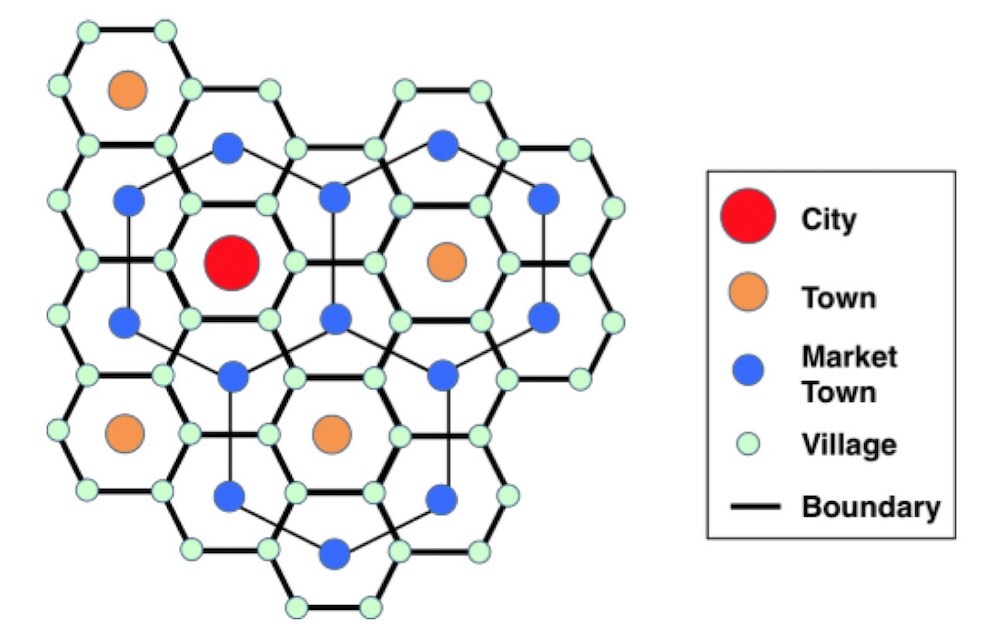
Central Place Theory
Hearth-Walter Christaller
says- where central places in the urban hierarchy would be functionally and spatially distributed (hexagon shaped areas)
-hierarchy: city,town,village, hamlet
-assumes that all land is the same (equal, no valleys mnts)
ex: Iowa
Concentric Zone Model
hearth-1923, E.W. Burgess
says-cities grow outwards from the CBD in rings
1st inner ring-CBD
2nd-Transiton Zone (poorer, immigrants)
3rd-Working Class Homes
4th-Newer spacious homes
5th-commuters
Multiple Nuclei Model
hearth-1945, E.L. Ulman
says-cities are a complex structure w/ more than 1 center
-also says certain things are more attracted to certain areas
ex: airports attract hotels and universities attract pizzerias
Peripheral Model
-good ex for N. America
says- an urban area consists of a central area surrounded by other districts and places and enclosed by a major road
-model points to problems of segregation that characterizes many suburbs
Epidemiological Transition Model
describes the shift in population mortality causes from infectious diseases to chronic, degenerative diseases as societies develop
Malthusian Theory
Created by Thomas Malthus in 1798, the theory argues that populations will grow geometrically (ex. 1,2,4,8), while food production will only increase arithmetically (ex 1,2,3,4). He argues that populations growth will eventually outpace food production.
Malthus’s Populations Checks
Positive Checks: Natural disasters that will increase mortality rate
Preventive Checks: Human-controlled actions that will decrease the birth rate (Abstinence, delaying marriage)
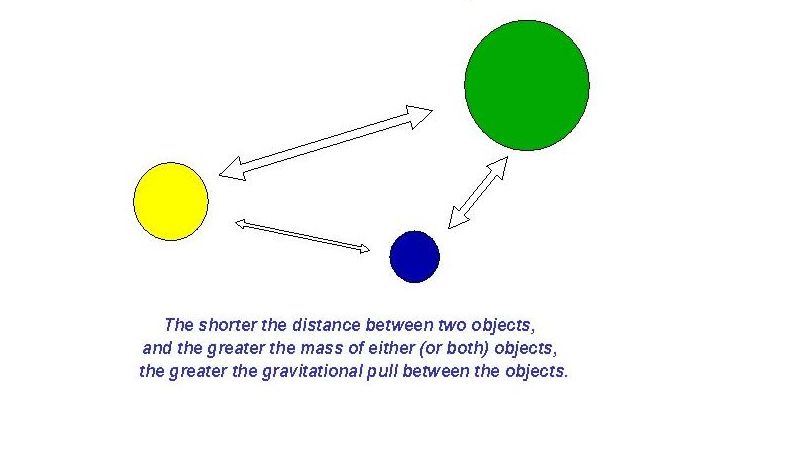
Gravity Model
Predicts the interactions between two places based on the distance between them. Measured with population size and distance between the two places.
Boserup Theory
Population growth drives agricultural development, so we will be able to produce more food as our populations grow
Central Place Theory
a geographical theory that explains the number, size, and location of human settlements in a residential system
Wallerstein’s World Systems Theory
Breaks the world into a three-tier structure, and says that the world’s economy is more like a hierarchical system.
Core countries
Dominate global wealth and technology, including North America and Europe. They focus on high-skill production and exploit peripheral nations for cheap labor and raw materials.
Semi-periphery Countries
Act as an intermediate layer, exhibiting features of both core and periphery. They are partially industrialized but still exploited by the core, acting as a stabilizer in the system
Periphery Countries
Often post-colonial nations lacking strong governments. Their economies focus on exporting raw materials and low-skill labor to the core.
Dependency Theory
Argues that periphery countries are underdeveloped because their wealth was extracted by core countries, making them dependent.
Weber’s Least Cost Theory
Predicts industrial location based on minimizing costs for transportation, labor, and agglomeration.