CNS Lesions, NS Repair and Regeneration
 Call Kai
 Learn
Learn Practice Test
 Spaced Repetition
 Match
Match Flashcards
 Knowt Play
1/19

There's no tags or description
Looks like no tags are added yet.
Name | Mastery | Learn | Test | Matching | Spaced | Call with Kai |
|---|
No analytics yet
Send a link to your students to track their progress
20 Terms
What connective tissue layer surrounds each individual axon in a peripheral nerve?
Endoneurium
What cells clear away debris after a nerve has been injured?
Macrophages
What neurodegenerative condition results from repeated hits/trauma to the head?
Chronic traumatic encephalopathy (CTE)
What is the rate at which peripheral nerves regrow?
One mm per day (or one inch per month)
What is a peripheral nerve injury where the axon is disrupted but the myelin sheath is still in tact?
Axonotmesis
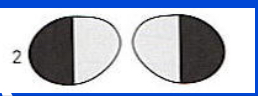
A lesion to WHAT structure causes heteronymous hemianopsia?
Lesion to the optic chiasm
A lesion in WHAT structure results in hemiballismus?
Subthalamic nucleus
What is hemiballismus?
A hyperkinetic involuntary movement disorder characterized by intermittent sudden, violent, involuntary, flinging, or ballistic high amplitude movements involving the ipsilateral arm and leg caused by dysfunction in the central nervous system of the contralateral side
This term describes the rigid extension of the upper and lower extremities seen in someone who is comatose and has a lesion in the brainstem just above the vestibular nuclei:
Decerebrate posturing (or decerebrate rigidity)
Damage to this structure is associated with ataxia
The cerebellum
A lesion to one half of this structure results in brown-sequard syndrome
The spinal cord
What is the term for cavitation of the central nervous system?
Syringomyelia
What is the suspected diagnosis of a patient who presents with drooping eyelids, dysarthria, weakness with sustained activity?
Myasthenia gravis
Your patient understands what you say to her but cannot express herself with speech, indicating a lesion to what area?
Lesion to the left frontal lobe, specifically Broca’s area
A patient reports loss of sensation. Your exam reveals impaired fine touch, proprioception, and vibration bilaterally, but pain and temperature sensation are normal. Name the structures within the spinal cord that are most likely damaged
The dorsal columns of the spinal tract
A stroke impacting the right half of the cerebellum would result in symptoms on which side of the body?
The right side of the body
Occlusion of this artery can result in aphasia:
The left middle cerebral artery
This is the likely location of a stroke that results in pain and sensory loss throughout the body without motor symptoms
The Thalamus
Occlusion of this artery results in sensory and motor deficits in the contralateral foot and leg:
The anterior cerebral artery
This is the most likely location of a stroke with purely motor symptoms in the face, upper, and lower extremeties
The internal capsule