General A&P: Unit 16 - Urinary System
 Call Kai
 Learn
Learn Practice Test
 Spaced Repetition
 Match
Match Flashcards
 Knowt Play
1/31

There's no tags or description
Looks like no tags are added yet.
Name | Mastery | Learn | Test | Matching | Spaced | Call with Kai |
|---|
No analytics yet
Send a link to your students to track their progress
32 Terms
general functions of urinary system
eliminates waste, maintains blood pH, maintains blood volume (bp), and maintains electrolytes
organs of the urinary system
kidneys, ureters, bladder, urethra
location of kidneys
T12-L3
retroperitoneal
lie behind parietal peritoneum of abd. cavity
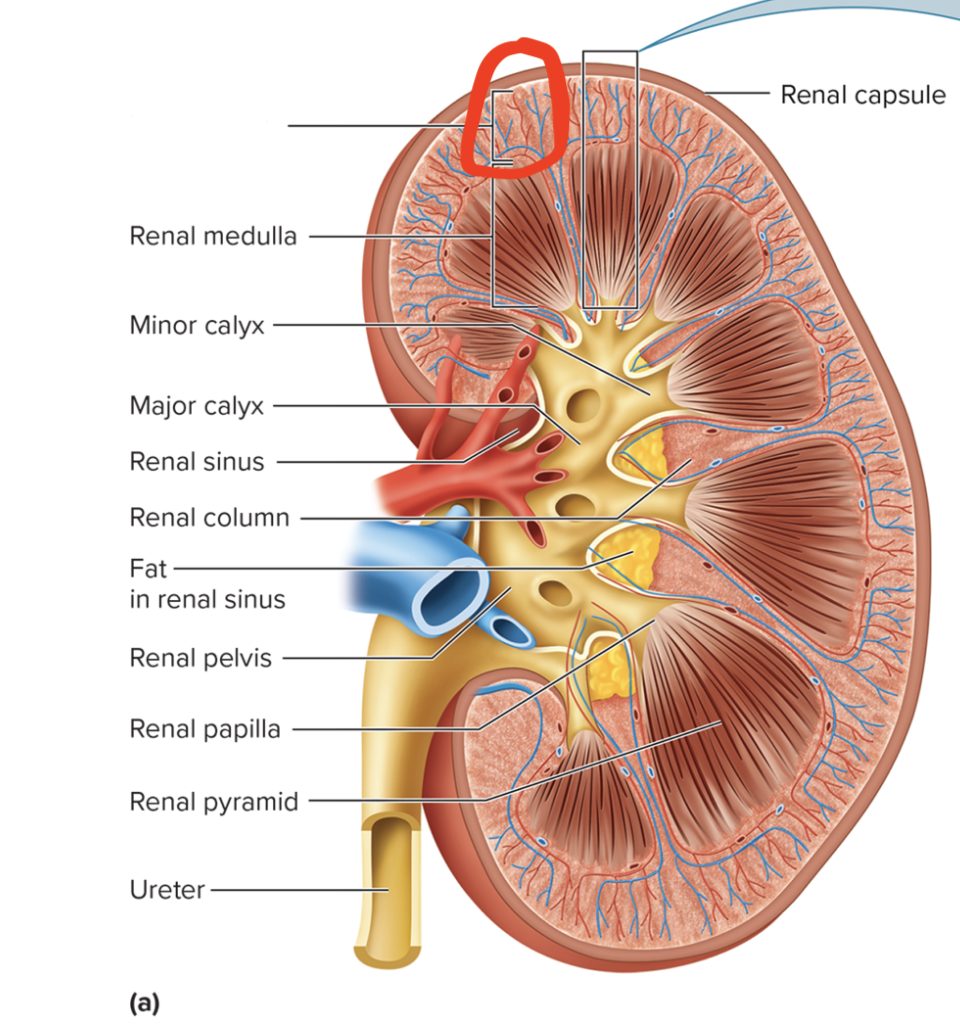
cortex
name this structure
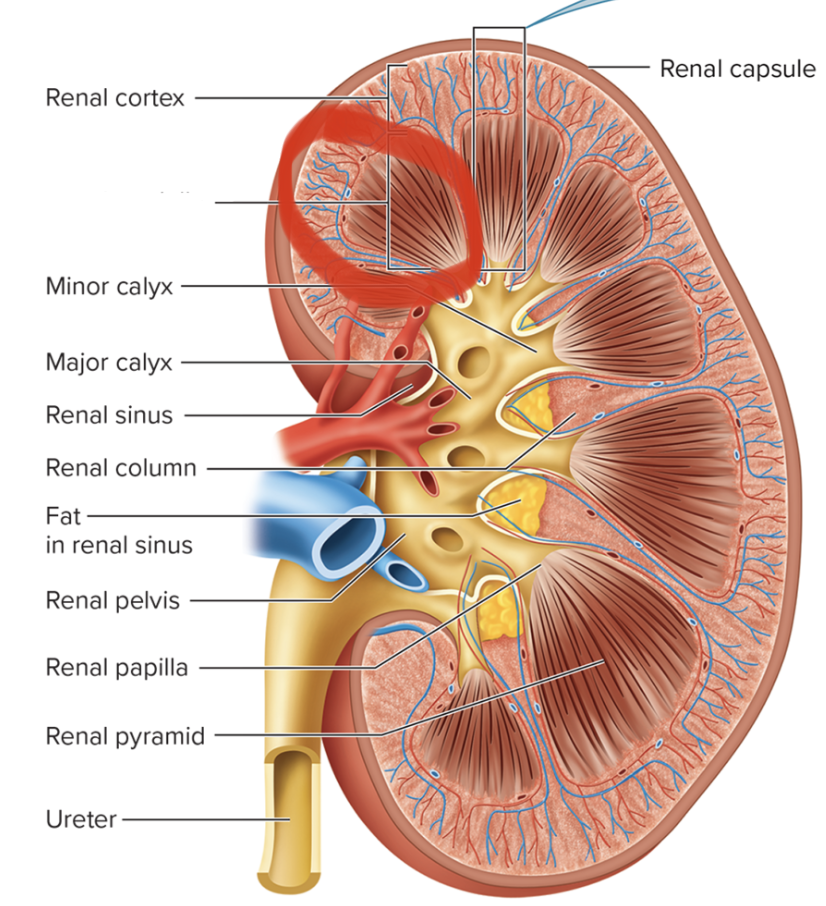
medulla
name this structure
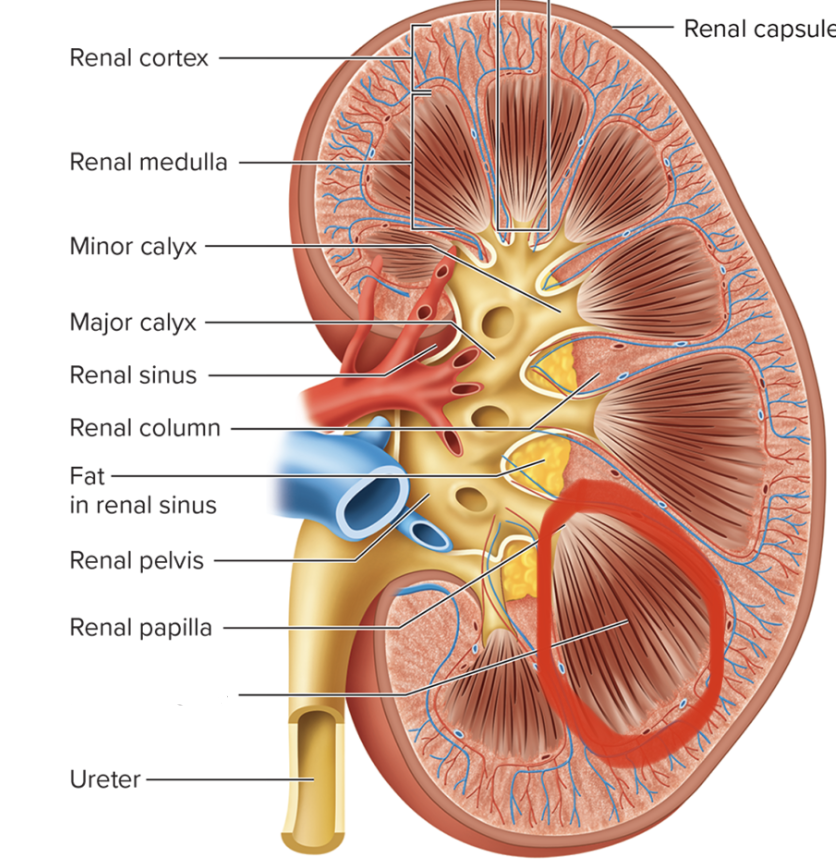
pyramids
name this structure
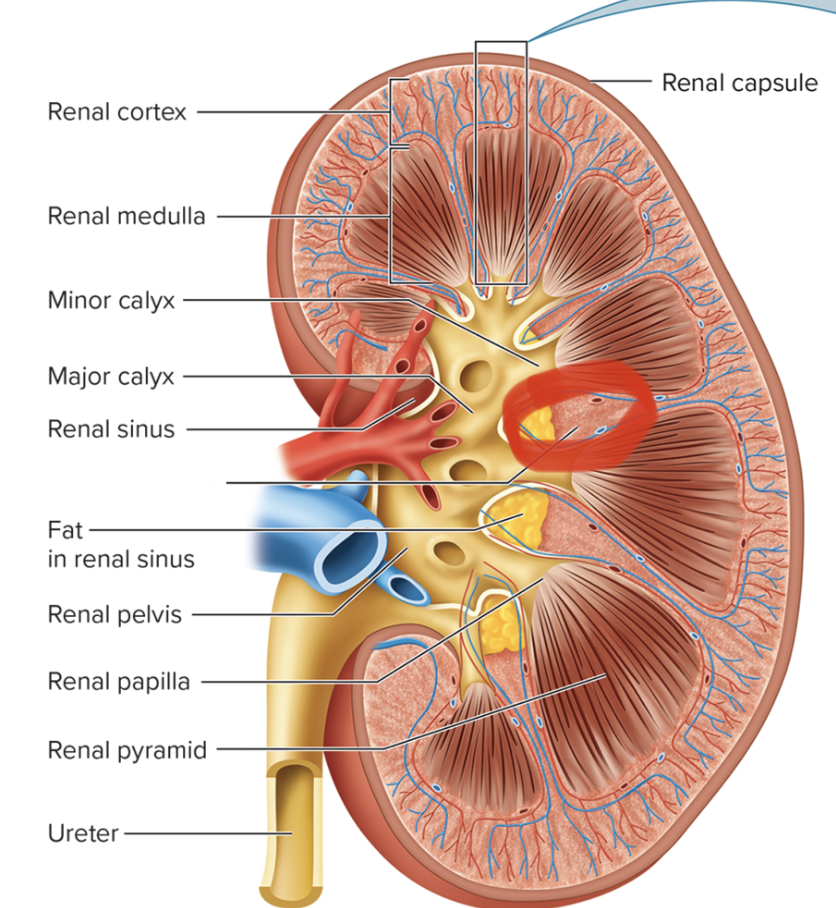
renal columns
name this structure
papillae; extension of cortex
name this structure
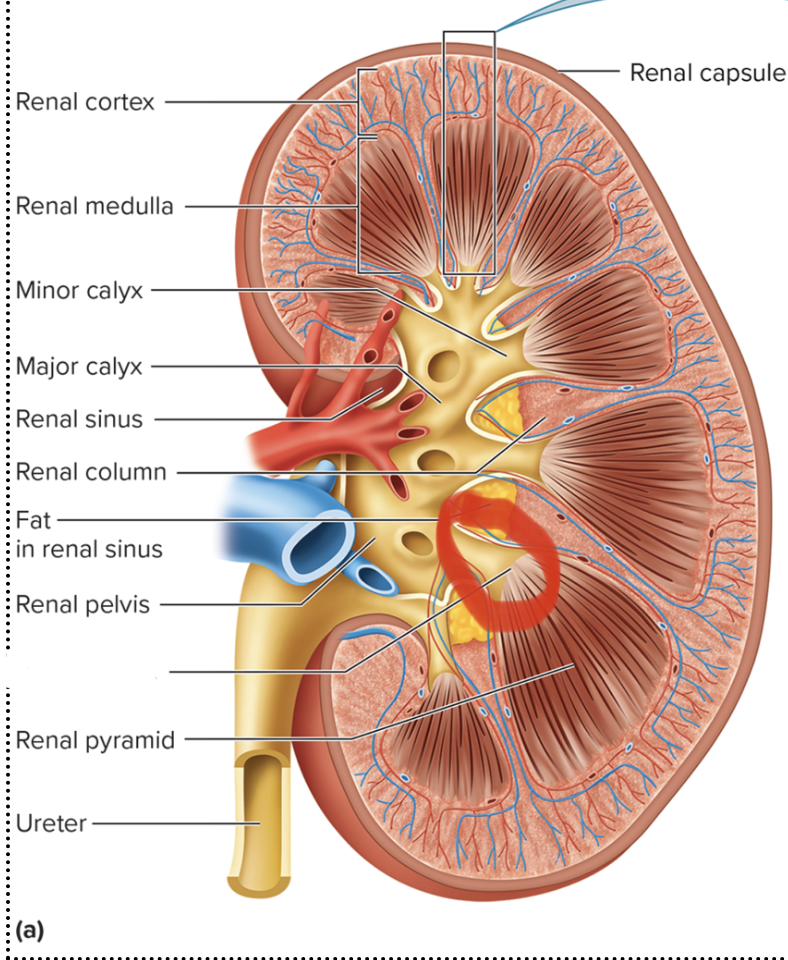
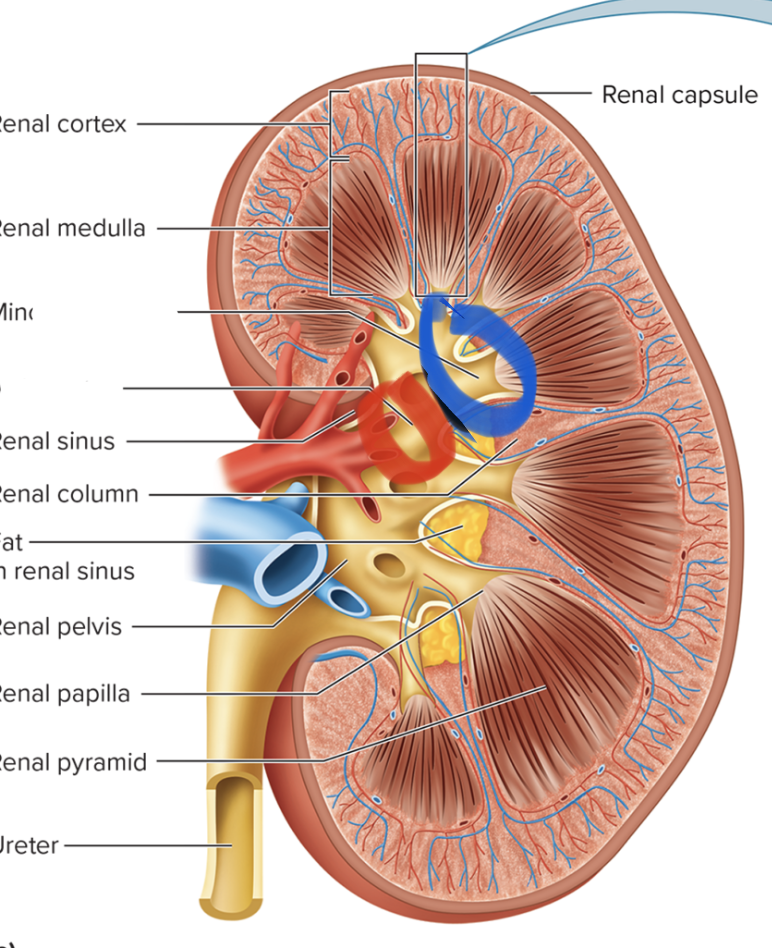
calyces (major and minor)
name this structure(s)
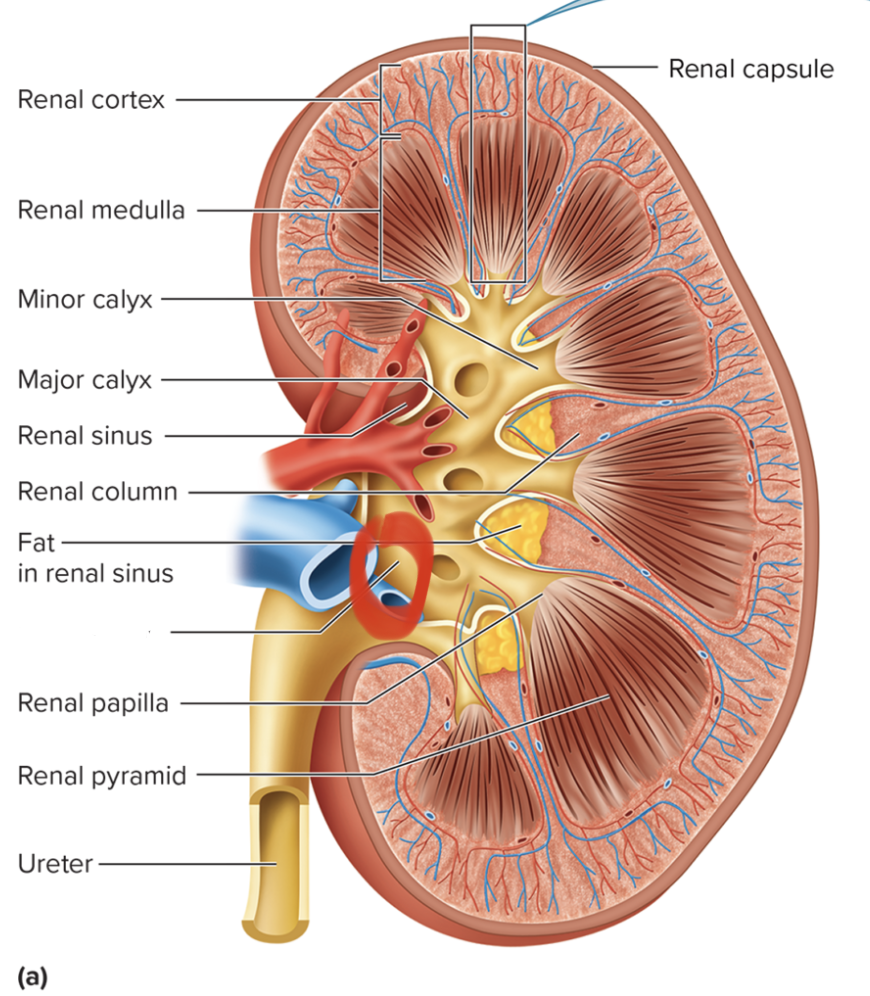
renal pelvis
name this structure
nephron
functional unit of kidney; 1 million per kidney
renal corpuscle - consists of glomerulus and bowman’s capsule
renal tubule - Proximal convoluted tube (PCT), Loop of Henle (ascending/descending limbs), Distal convoluted tubule (DCT)
glomerulus
renal corpuscle - capillary for filtration only
bowman’s capsule
renal corpuscle - collects filtrate
urine
end of collecting duct
filtration
filtering of substances from glomerulus to bowman’s capsule (non-selective)
reabsorption
movement of substances from tubule back to the blood
secretion
movement of substances from blood to tubules
kidney filtration and secretion
removing metabolic wastes (urea, uric acid, creatinine)
kidney control the rate of RBC production (stimulus for release is hypoxia)
release of EPO
kidney regulate blood pressure
release of renin (initiates the renin-angiotensin (II) system which stimulates the release of aldosterone- retain more sodium into blood
kidney regulate calcium reabsorption
in the presence of PTH, kidneys conserve more calcium
kidney regulate blood volume and urine output
through the effects of ADH and aldosterone
composition of urine
water, electrolytes, wastes, simple cuboidal & transitional epith.
abnormal urine concentration
RBCs, WBCs, proteins, glucose, ketones
transport of urine
(collecting duct); minor calyx; major calyx; renal pelvis; ureter; bladder; urethra
ureters
3 layers: mucous coat (inner), muscular (for peristalsis), fibrous (outer)
bladder
male: above prostate gland
female: below uterus
4 layers: mucous coat, submucous coat, muscular coat, serous coat
trigone (bladder)
3 openings; 2 ureters, urethra
urethra
male: prostatic, intermediate (membranous), spongy (penile)
cytitis
inflammation of bladder; more common in women because they have a shorter urethra; the bacteria do not have as far to travel before overgrowing m
micturition
urinate; reflex center is in sacral spinal cord