Head & Neck VI: Pharynx and Face
 Call Kai
 Learn
Learn Practice Test
 Spaced Repetition
 Match
Match Flashcards
 Knowt Play
1/35

There's no tags or description
Looks like no tags are added yet.
Name | Mastery | Learn | Test | Matching | Spaced | Call with Kai |
|---|
No analytics yet
Send a link to your students to track their progress
36 Terms
boundary between nasopharynx and nasal cavity
choanae
what compartment of the pharynx contains the pharyngeal tonsil?
nasopharynx
enlarged pharyngeal tonsils
adenoids
main muscle of nasopharynx compartment + function
salpingopharyngeus muscle: elevates the pharynx during swallowing and opens the auditory tube
What is located anteriorly of the oropharynx? what is located posteriorly?
anteriorly: palatoglossal arch formed by palatoglossus muscle
posteriorly: palatopharyngeal arch formed by the palatopharyngeus muscle
what occupies the tonsillar fossa (recess between palatoglossal and palatopharyngeal arch) in the oropharynx?
palatine tonsil
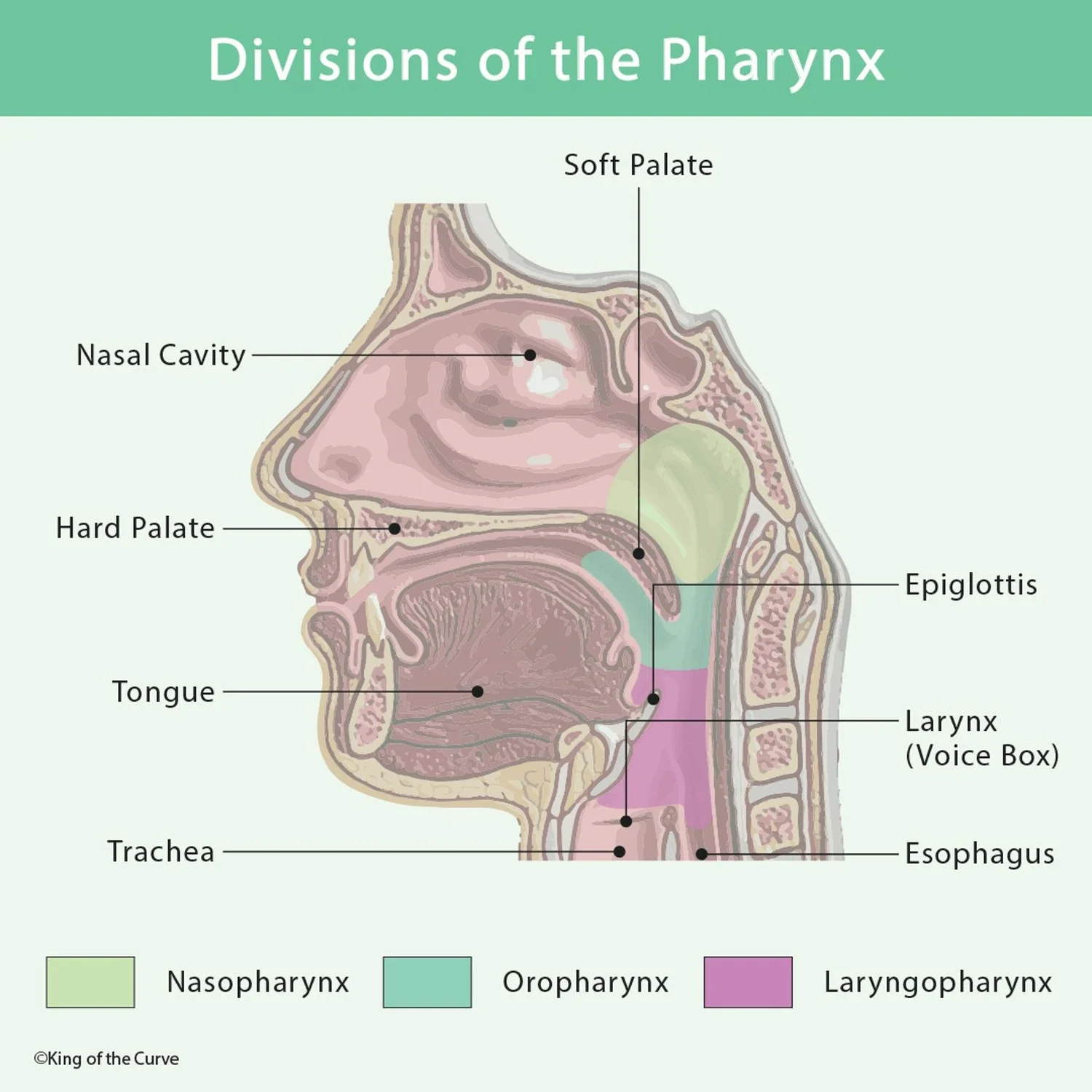
what does the laryngopharynx open into?
arytenoid and cricoid cartilages
piriform recess: function
guide food into the esophagus
what can be damaged around the piriform recesses?
superior and inferior laryngeal vessels & internal and recurrent laryngeal nerves
middle pharyngeal constrictor muscle: origin
hyoid bone
inferior pharyngeal constrictor muscle: origin
thyroid and cricoid cartilages
palatopharyngeous muscle: innervation & actions
innervated by vagus nerve; elevates the pharynx and larynx for swallowing and speaking
salpingopharyngeus muscle: innervation & actions
innervated by vagus nerve; elevates the pharynx and larynx for swallowing and speaking (same as palatopharyngeus muscle)
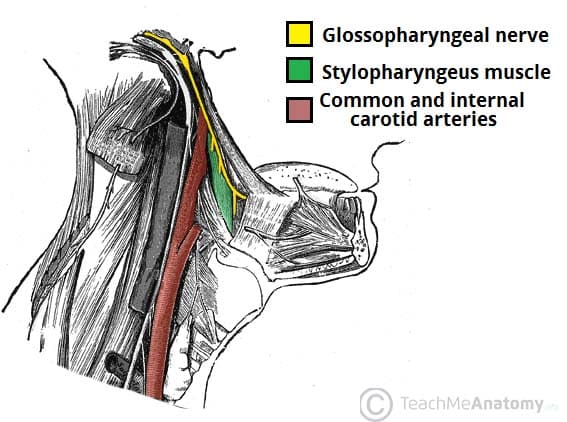
stylopharyngeus muscle: innervation & actions
innervated by motor component of glossopharyngeal nerve; shortens and widens the pharynx during swallowing and speaking
above superior constrictor: structures
pharyngotympanic tube & levator veli palatini muscle
above middle constrictor: structures
stylopharyngeus muscle & glossopharyngeal muscle
above inferior constrictor: structures
internal laryngeal nerve
below inferior constrictor: structures
recurrent laryngeal nerve
motor innervation of pharynx
vagus nerve; but stylopharyngeus innverated by glossopharyngeal nerve
sensory innervation of pharynx
nasopharynx innervated by trigeminal (maxillary) nerve; oropharynx and hypopharynx innervated by glossopharyngeal nerve
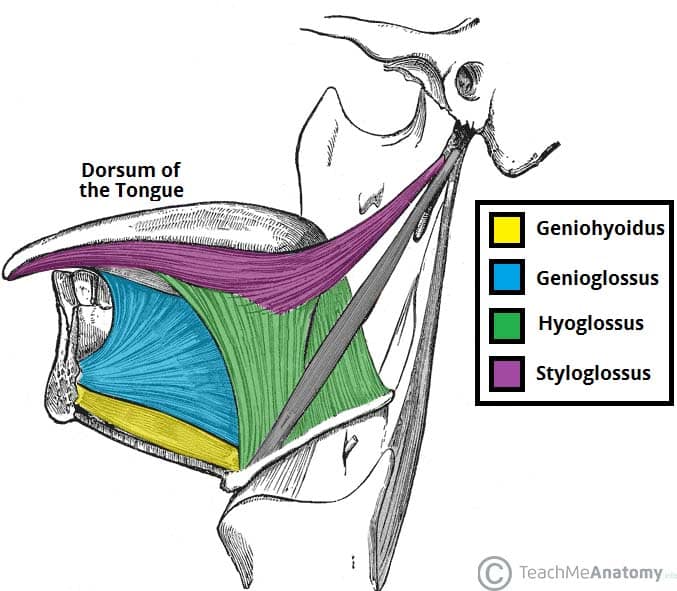
muscles and structures used for voluntary swallowing
palatoglossus muscle, oropharygeal isthmus, oropharynx
what muscles and structures are used for involuntary swallowing?
tensor veli palatini muscle (tensing) & levator veli palatini muscle (raise) raise soft palate, separating nasopharynx from oropharynx. The superior, middle and inferior constrictor muscle also contribute and the cricopharyngeal sphincter relaxes.
orbicularis oculi: parts + functions
orbital part: forceful closure
palpebral part: gentle closure
orbicularis oris: function
mouth movements
zygomaticus major: functions
raises corners of mouth
levator anguli oris (above zygomaticus major): functions
assists zygomaticus major
depressor anguli oris: functions
pulls corners of the mouth down
buccinator: functions
maintains tightness of cheeks and presses them against the teeth during chewing
Bell’s Palsy: cause & symptoms
caused by damage to facial nerve (of temporal bone); causes weakness or paralysis of the muscles of facial expression on ipsilateral side
sensory innervation of supraorbital & supratrochlear nerves
trigeminal (ophthalmic) nerve
sensory innervation of infraorbital nerve
trigeminal (maxillary) nerve
sensory innervation of mental nerve
trigeminal (mandibular) nerve
what arises from parotid gland? what does the parotid gland pierce?
facial nerve; pierces buccinator muscle to empty into oral cavity
masseter muscle: innervation & actions
innervated by trigeminal (mandibular) nerve; elevates the mandible, allowing forceful closure of the mouth
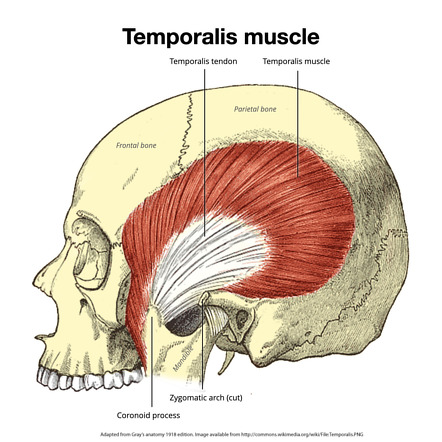
temporalis muscle: innervation and actions
innervated by trigeminal (mandibular) nerve; elevates and retracts mandible
blood supply of face
branches of facial and superficial temporal branches of external carotid artery