3/30 lecture - phospholipids + membranes
 Call Kai
 Learn
Learn Practice Test
 Spaced Repetition
 Match
Match Flashcards
 Knowt Play
1/18

There's no tags or description
Looks like no tags are added yet.
Name | Mastery | Learn | Test | Matching | Spaced | Call with Kai |
|---|
No analytics yet
Send a link to your students to track their progress
19 Terms
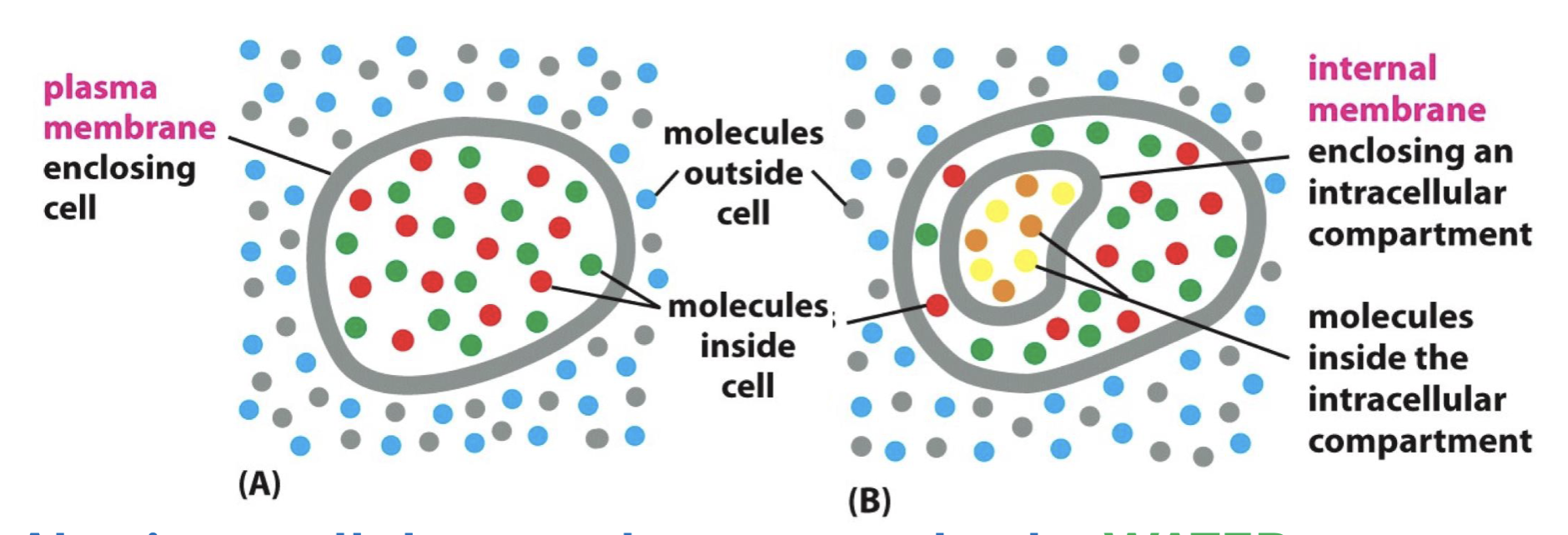
membranes contain + delimit cells
to separate the extracellular env from the intracellular one, membranes need to be WATER IMPERMEABLE
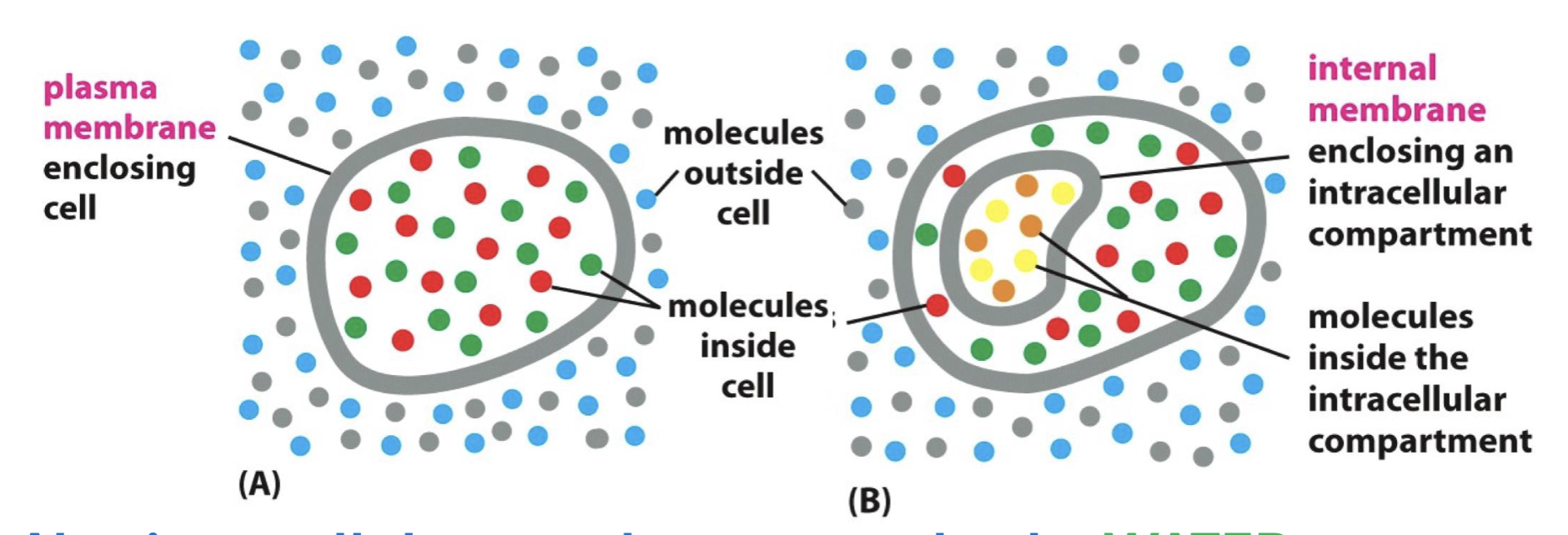
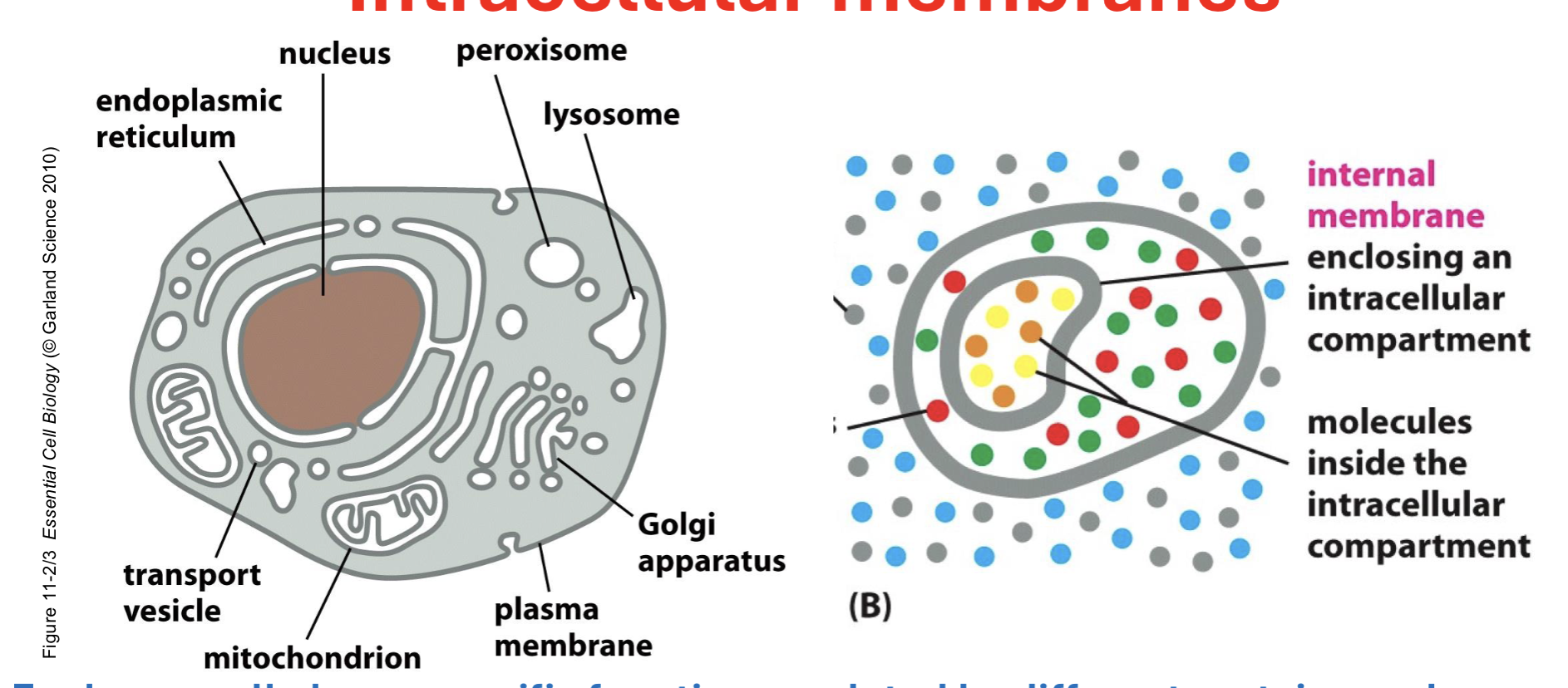
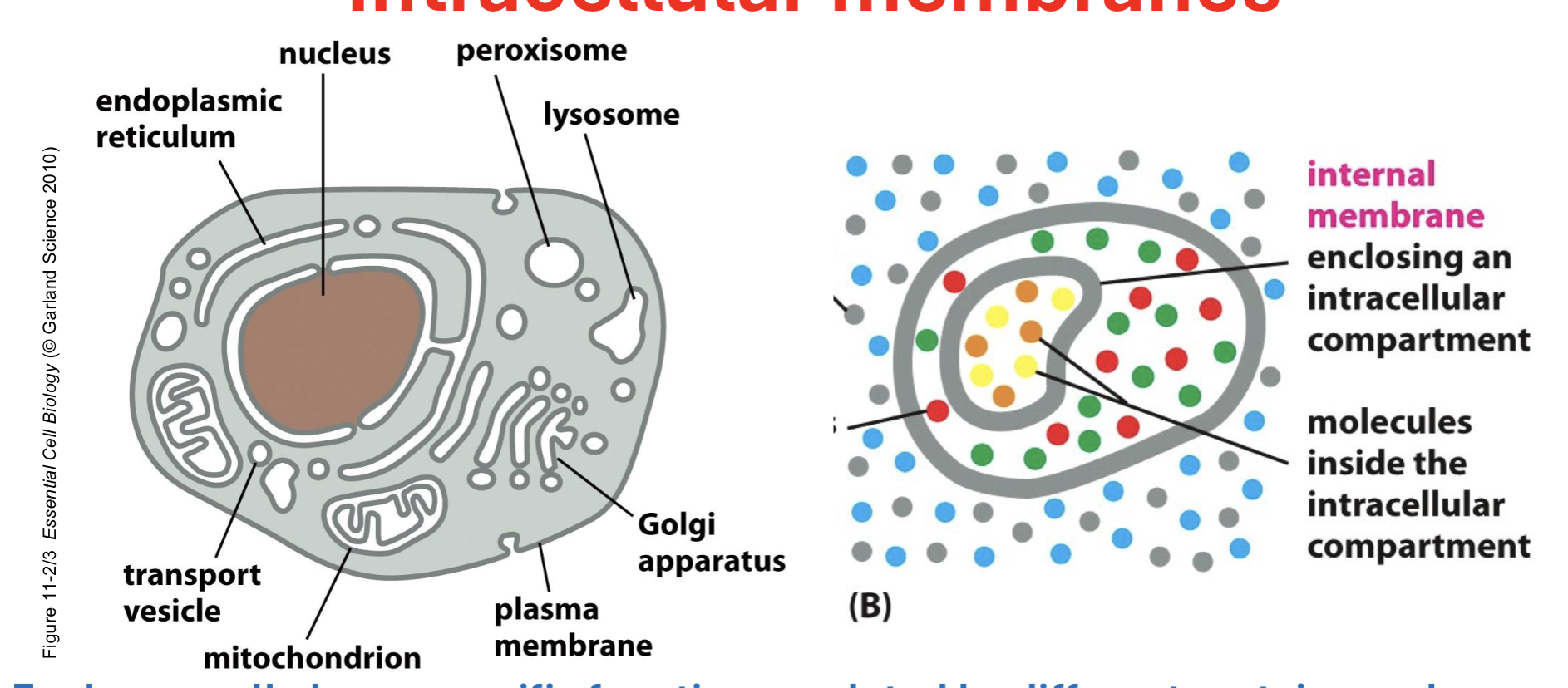
intracellular membranes
water impermeable, each organelle has a specific function regulated by diff proteins + need membranes to separate them from the rest of cell
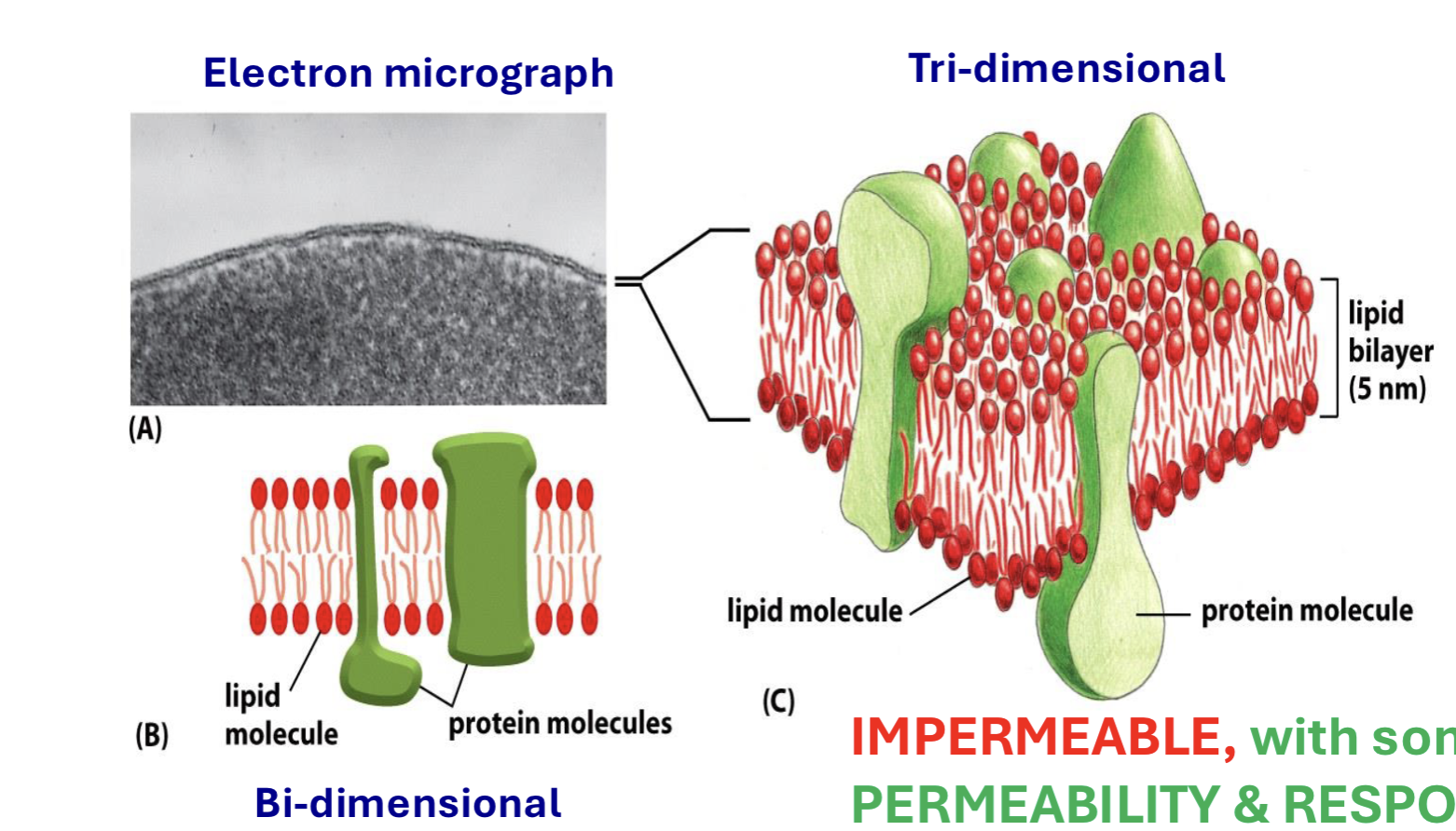
semi-permeable membrane
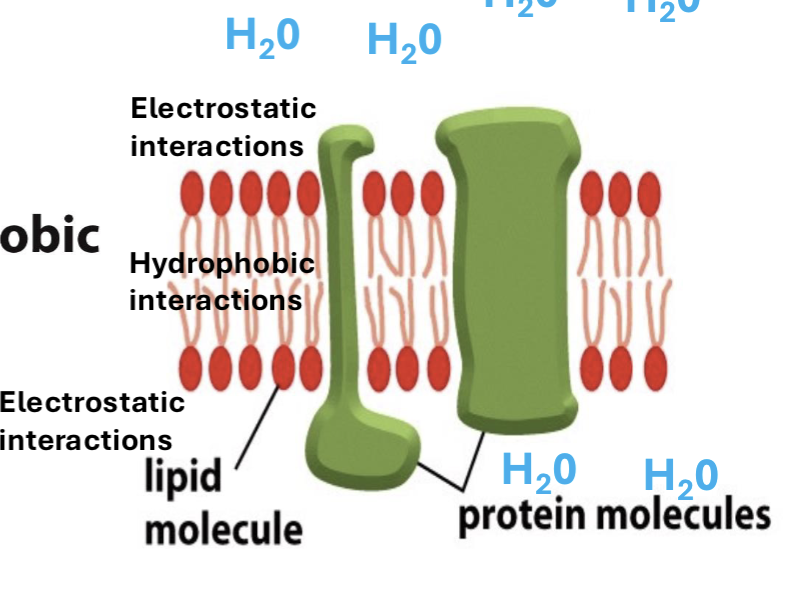
though impermeable to water, membranes can carry out specific functions; made of lipids + proteins
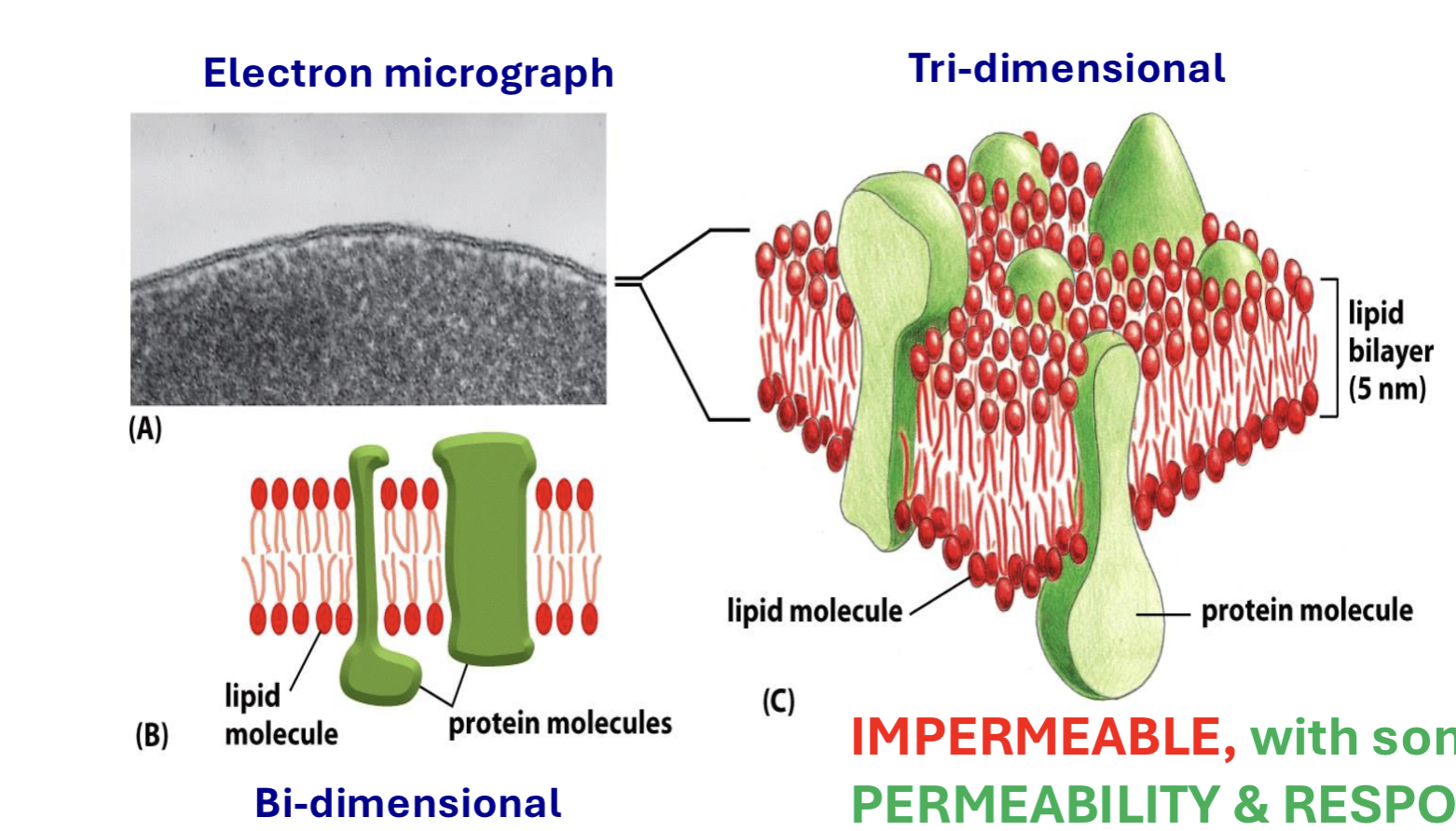
lipids in membrane
water impermeable + separate compartments
proteins in membrane
“embedded", allow the comms between compartments, ex: exchange of molecules
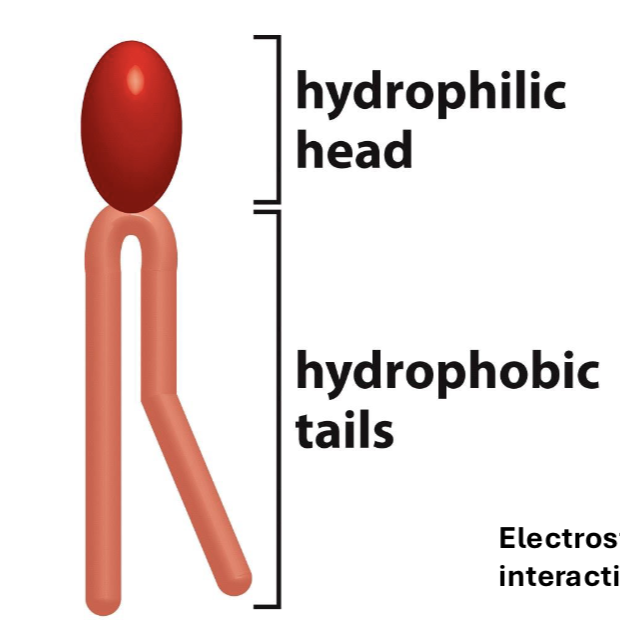
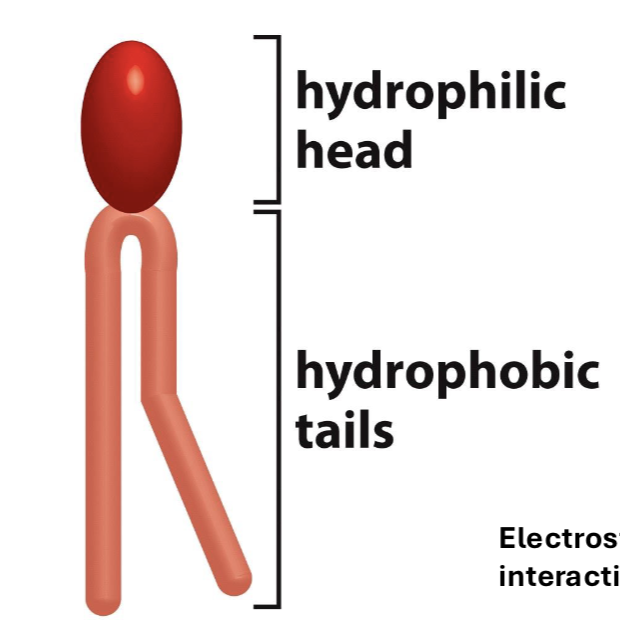
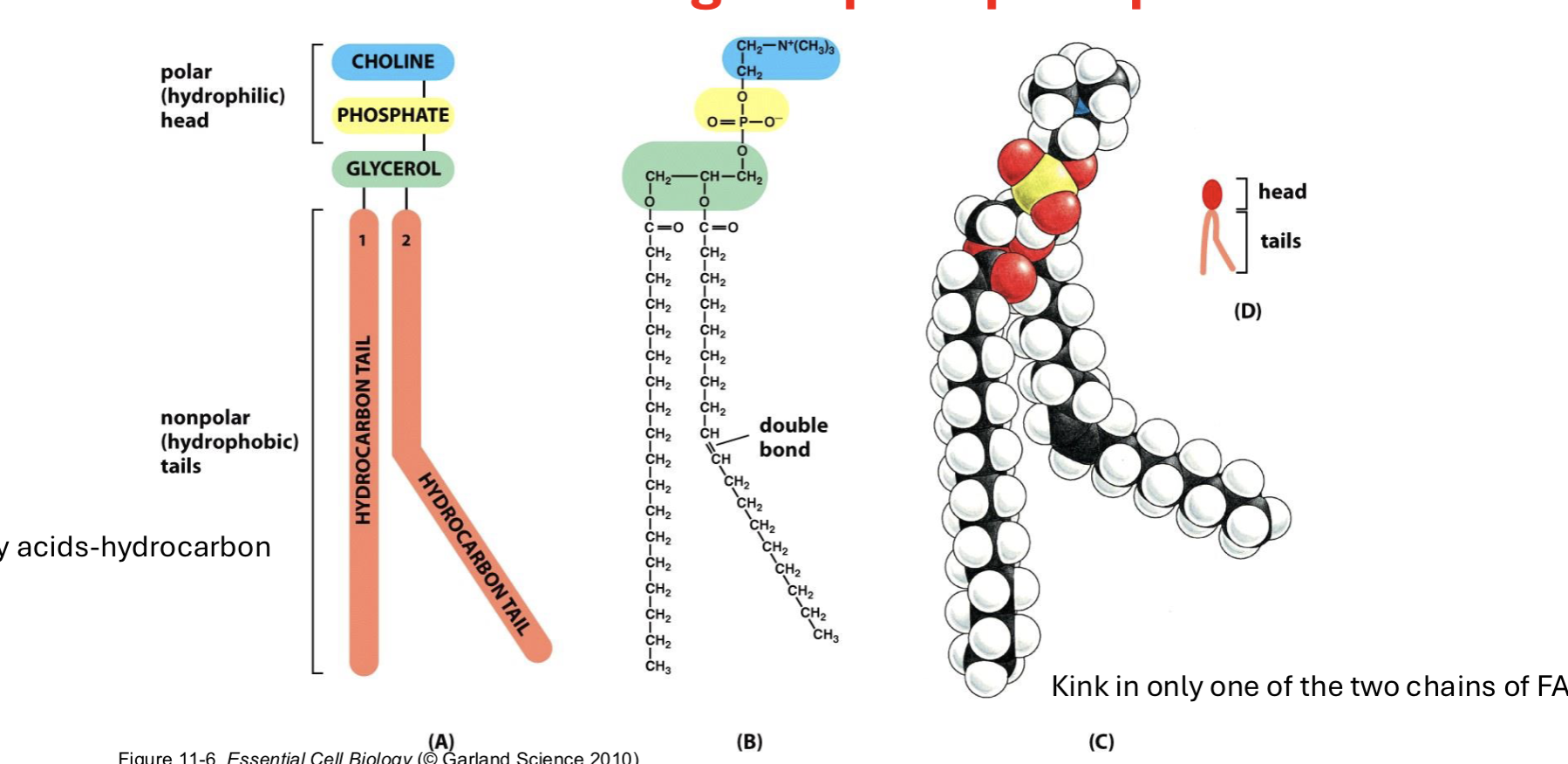
hydrophilic head of fatty acid
makes electrostatic interactions w/ H2O
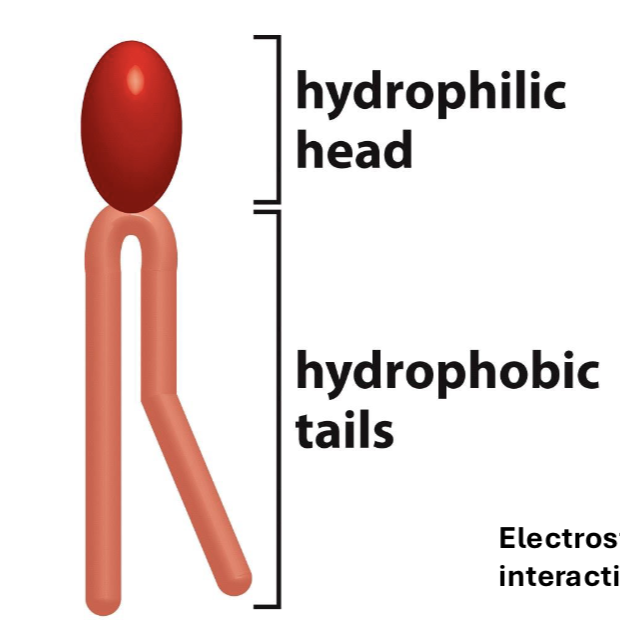
hydrophobic tails
make hydrophobic interactions w/ one another, creating env impermeable to H2O
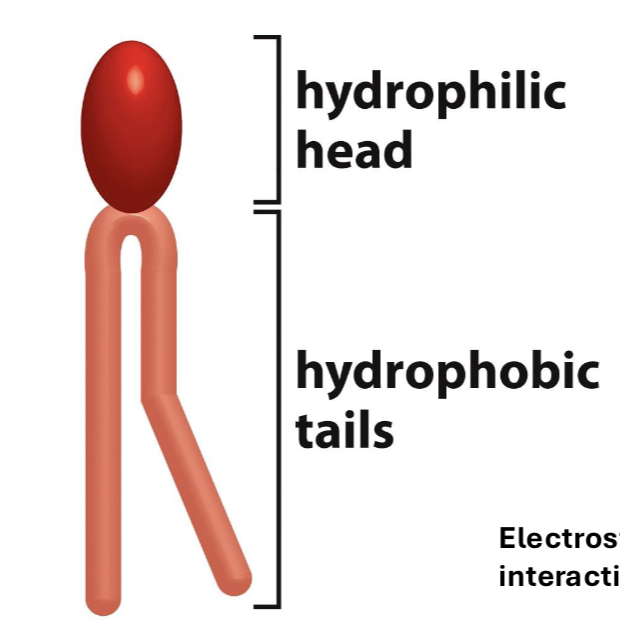
amphiphatic molecule
one side is hydrophilic (polar), the other side is hydrophobic (nonpolar)
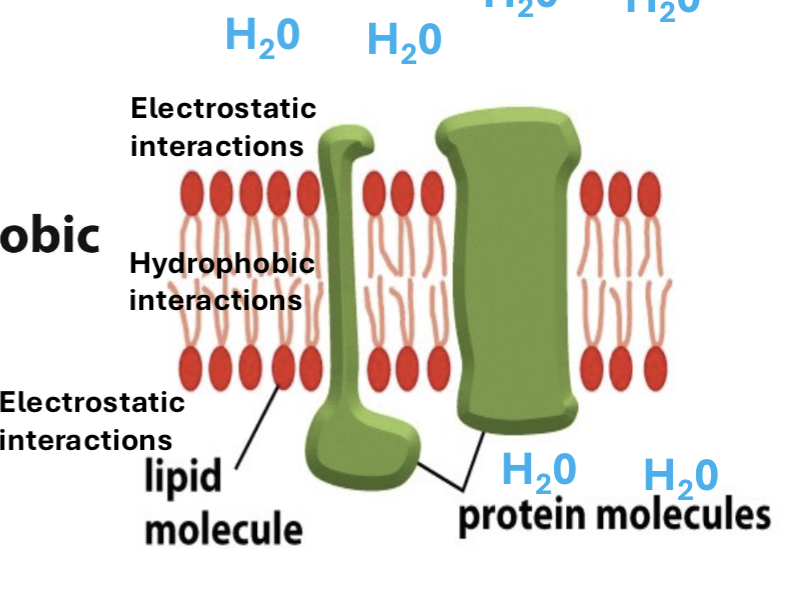
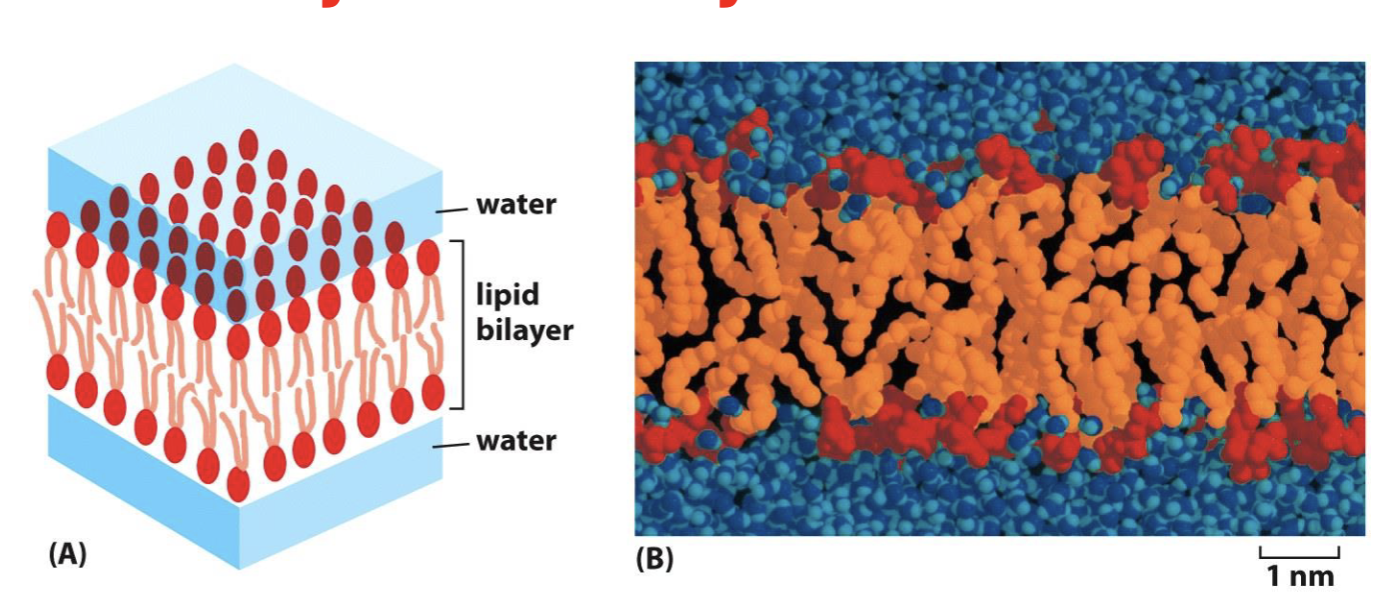
how can amphipatic molecules arrange themselves in H2O env in and out of the cell?
amphipatic molecules spontaneously form a bilayer in water (assemble feet-to-feet)
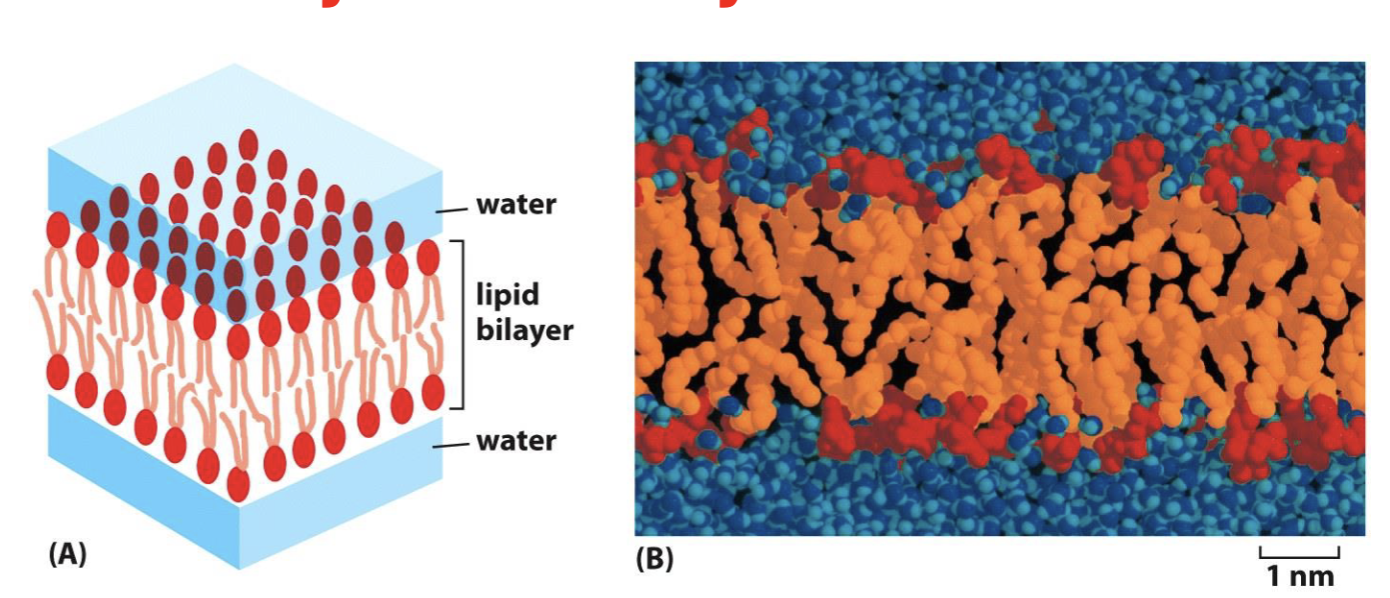
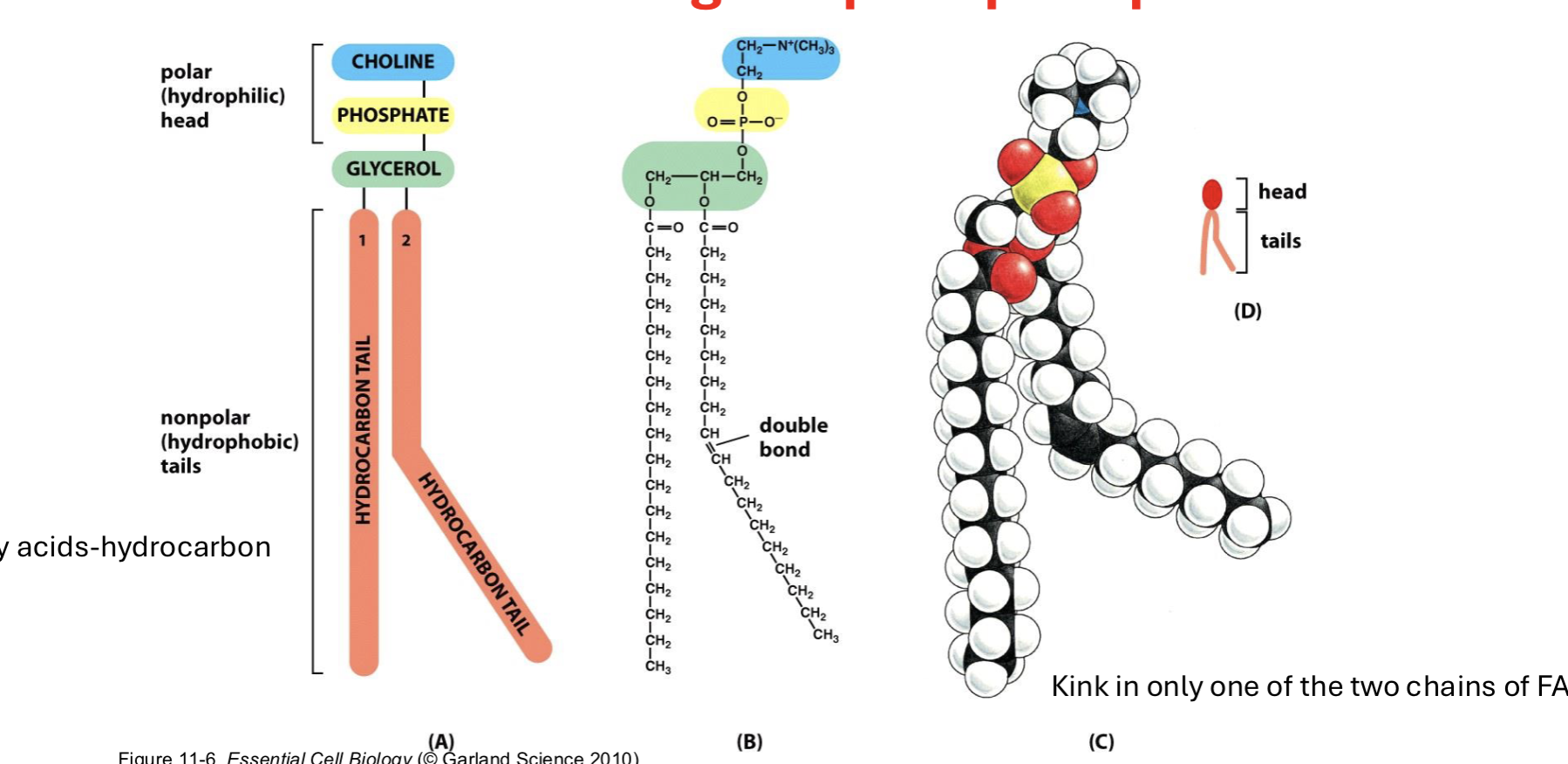
what causes the kink in hydrocarbon tail of phosphatidylcoline?
double bond
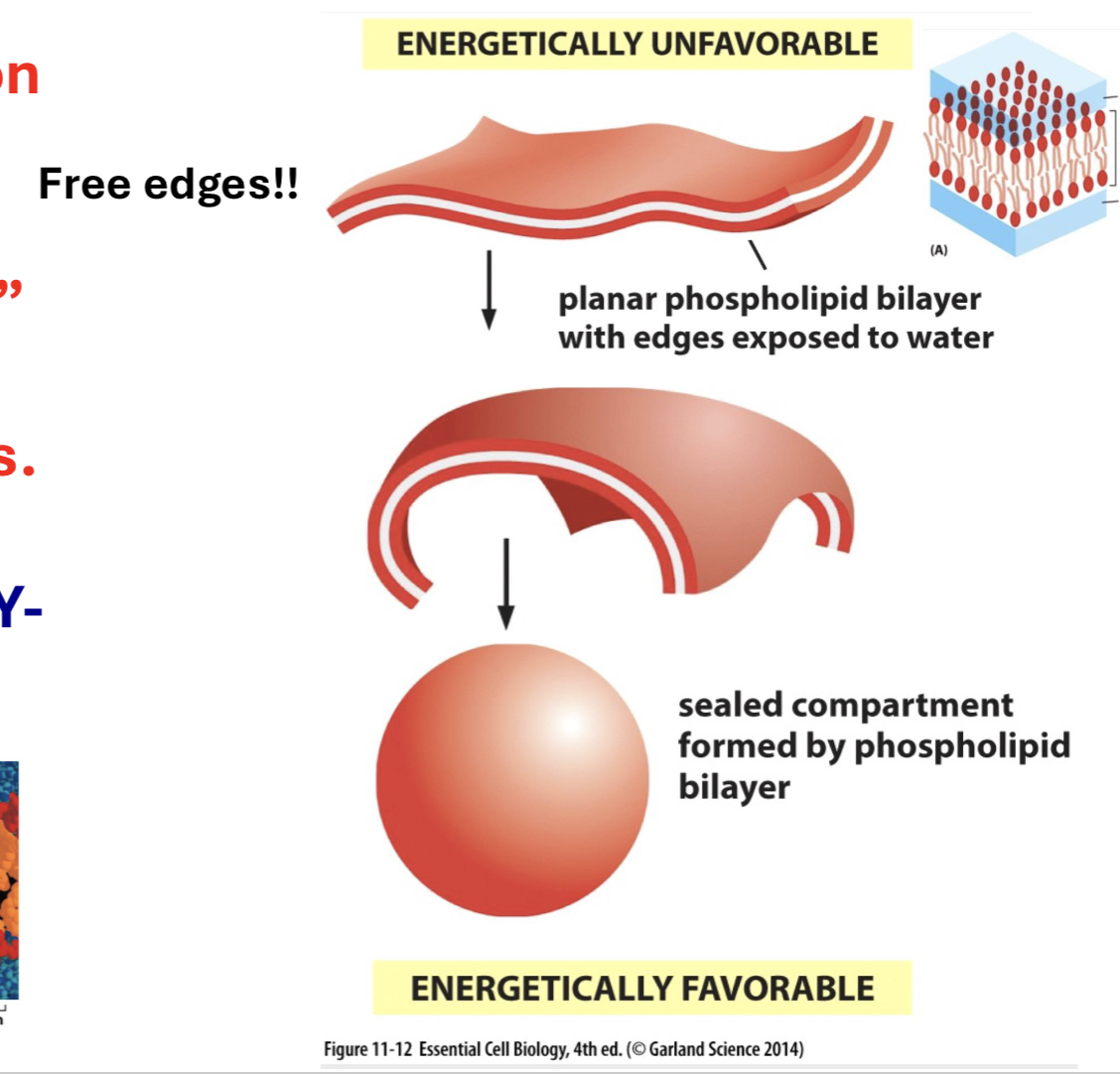
what is the best shape for membranes in order to minimize H2O + lipid interactions?
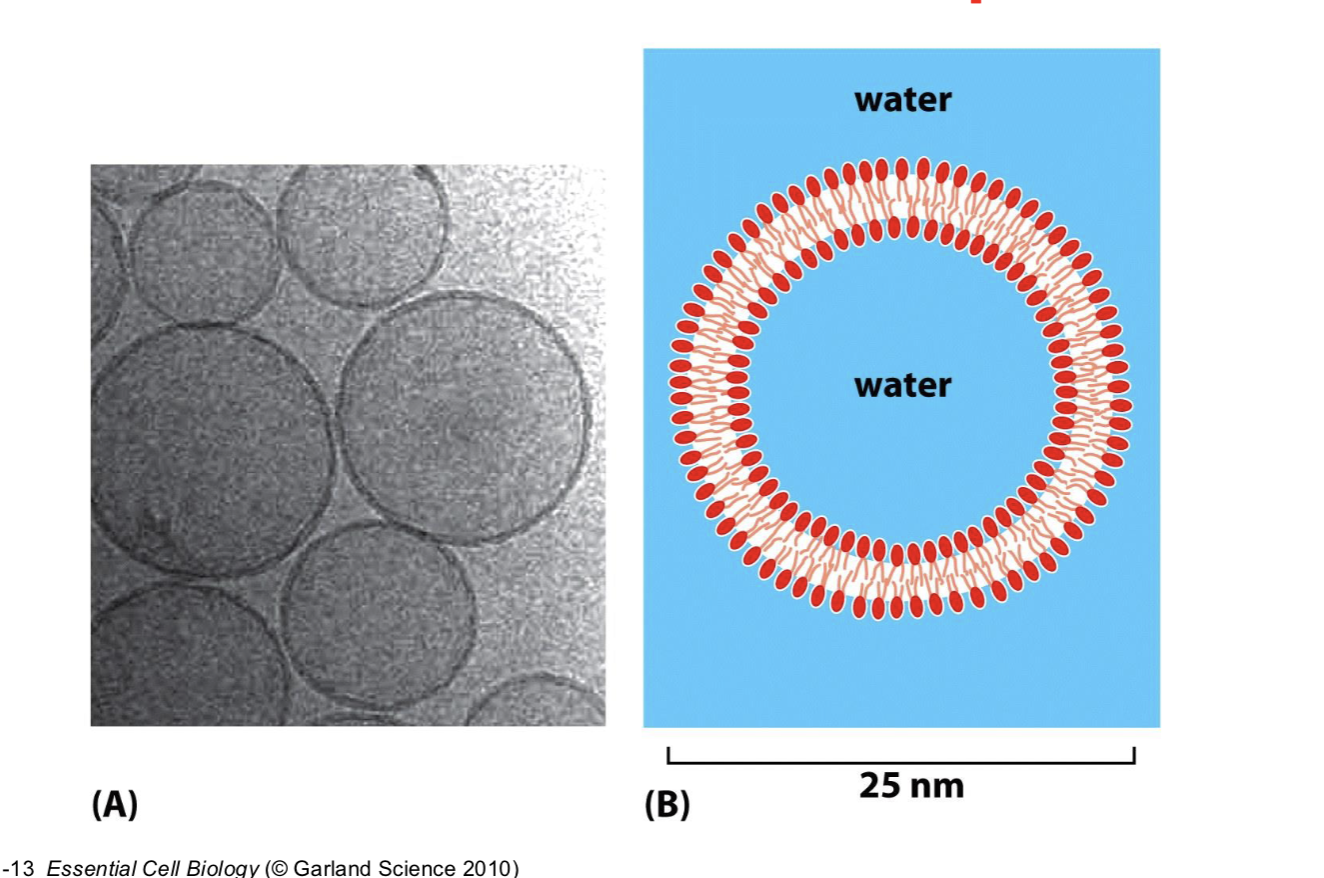
spontaneous sealed compartments formed by phospholipid bilayers (avoid free edges exposed to water) → membrane flexibility
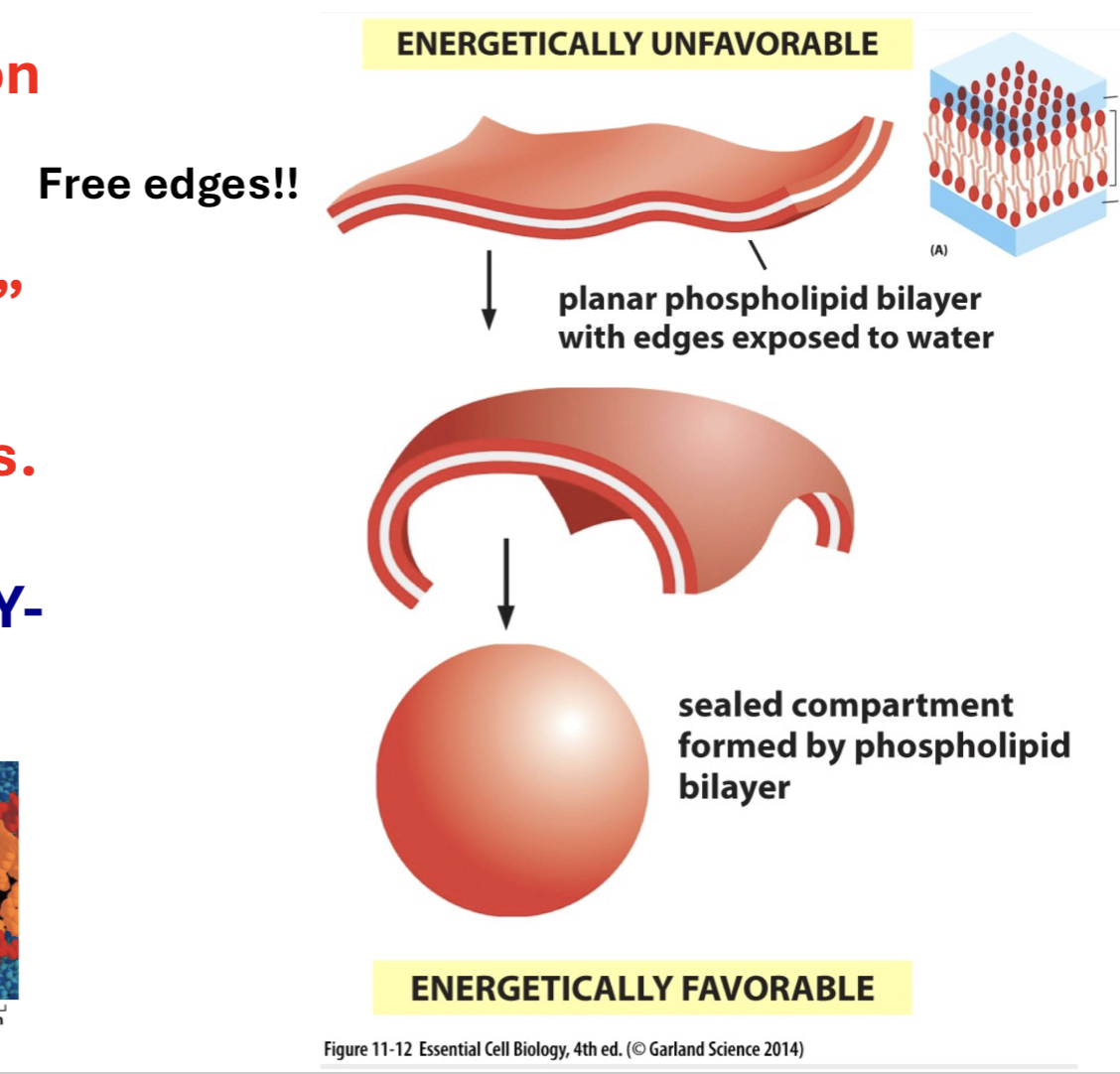
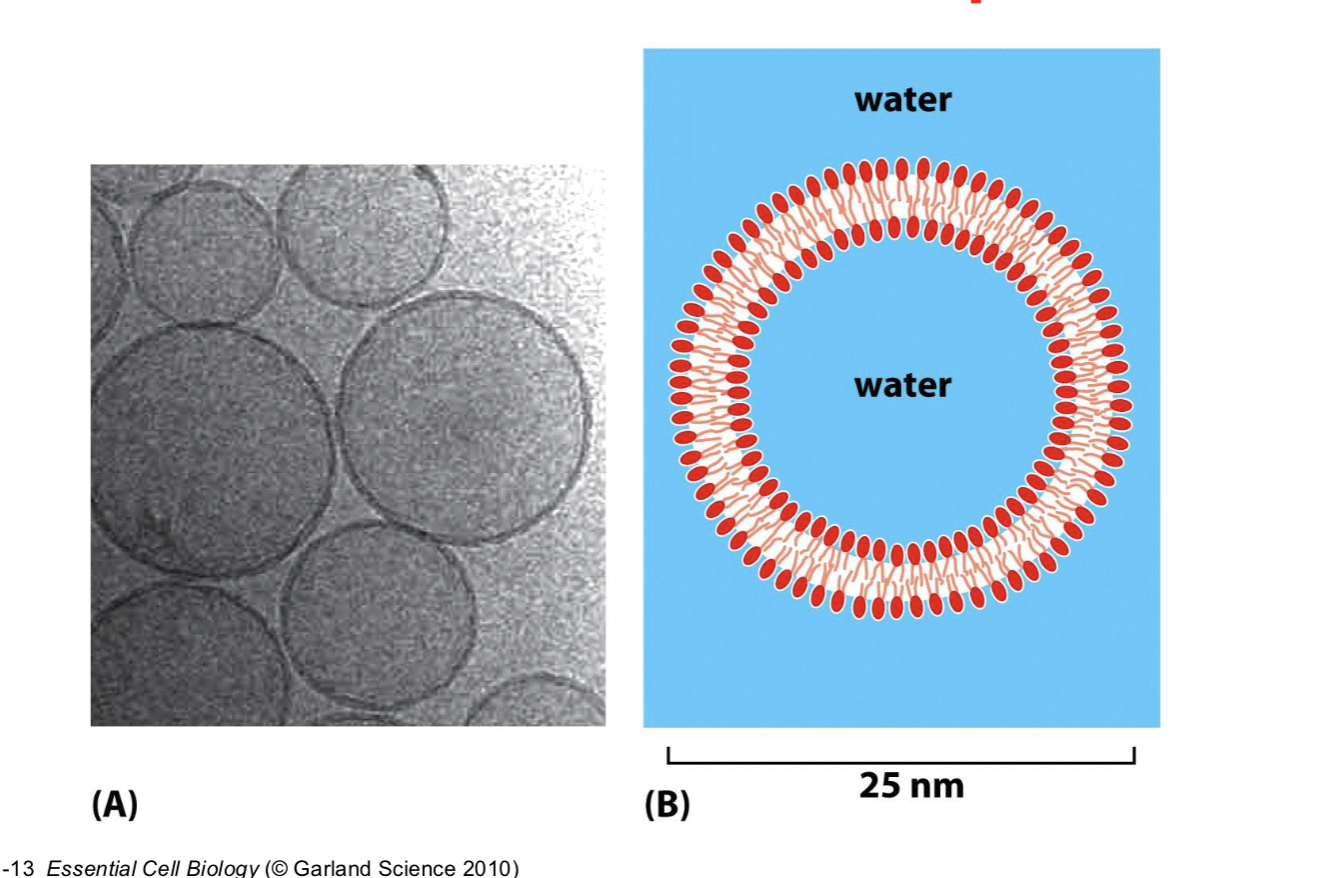
liposomes
pure phospholipids organize in closed structures in water
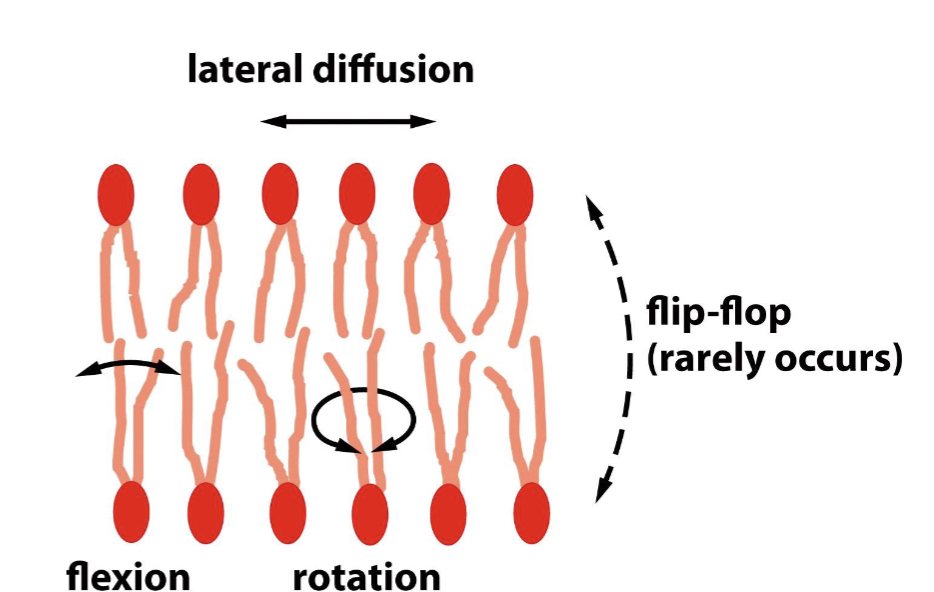
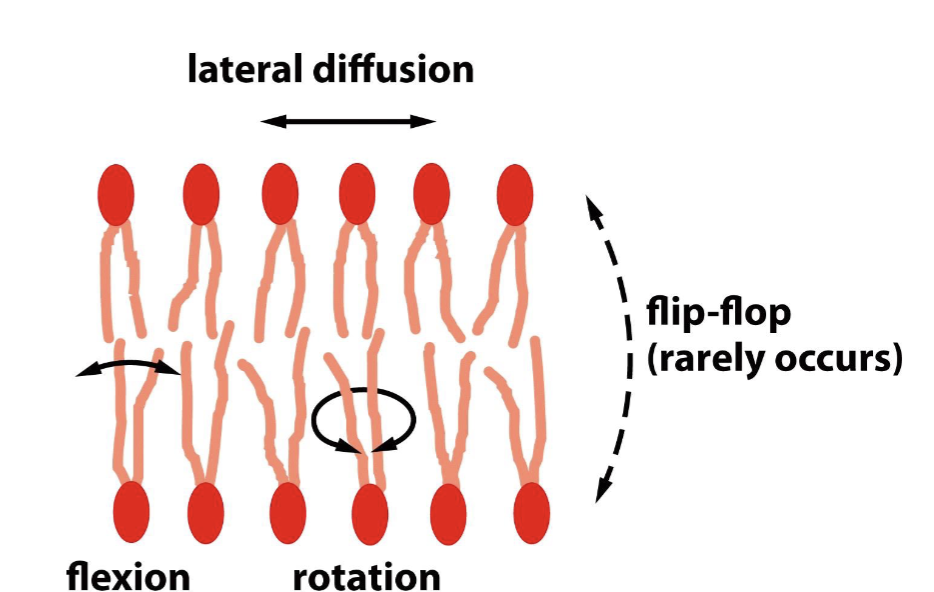
fluidity
ability of lipids within a membrane to rearrange within their own monolayer
kink
unsaturated (fewer hydrogen molecules) chains to reduce hydrophobic interactions
fluidity depends on?
hydrophobic interactions between lipids in one layer:
length of fatty acids in lipids → longer = more hydrophobic interactions = less fluidity
# unsaturated fatty acids/double bonds → higher # double bonds = less hydrophobic interactions = more fluidity
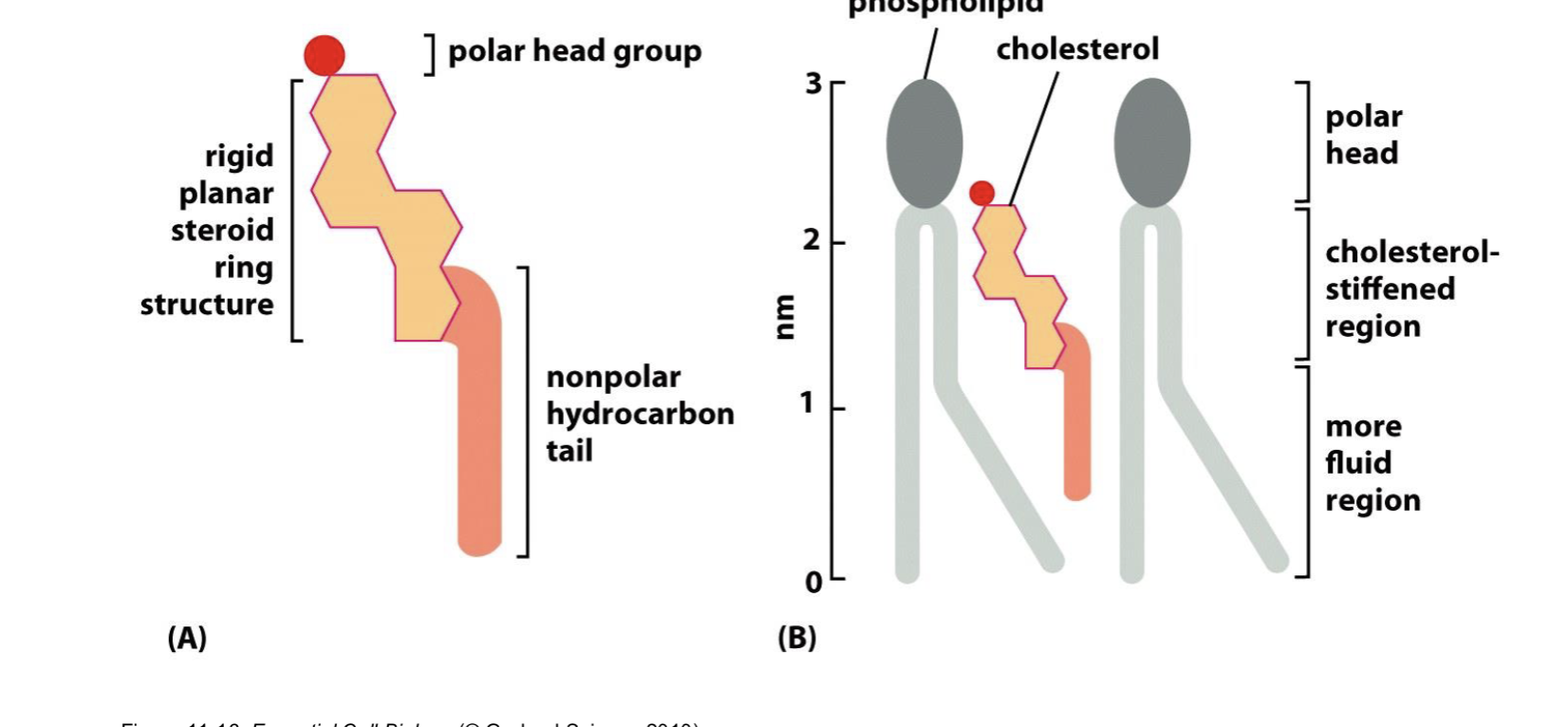
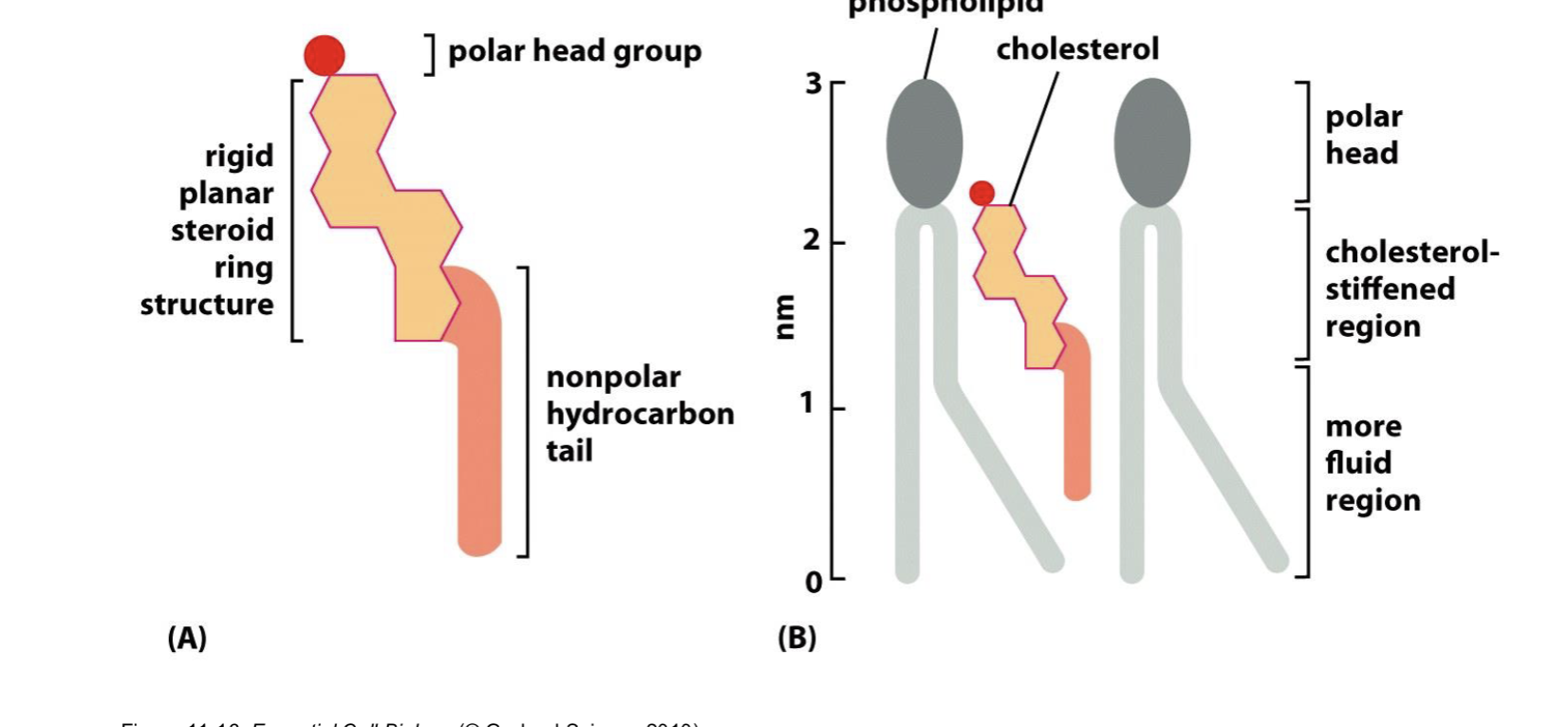
what hemps stiffen the cell membrane in animal cells?
cholesterol
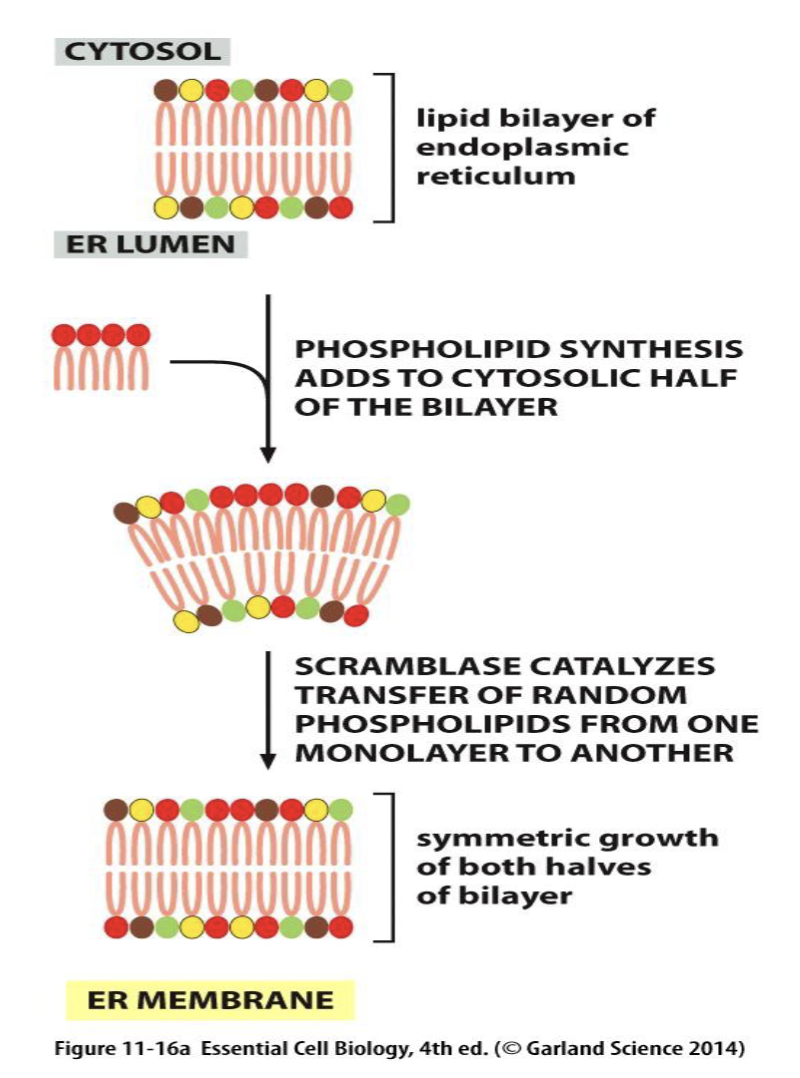
ER membrane synthesis via scramblases
phospholipid synthesis adds to cytosolic half of bilayer
scramblase catalyzes transfer of lipids from one monolayer to the other
symmetric growth of both halves of bilayer
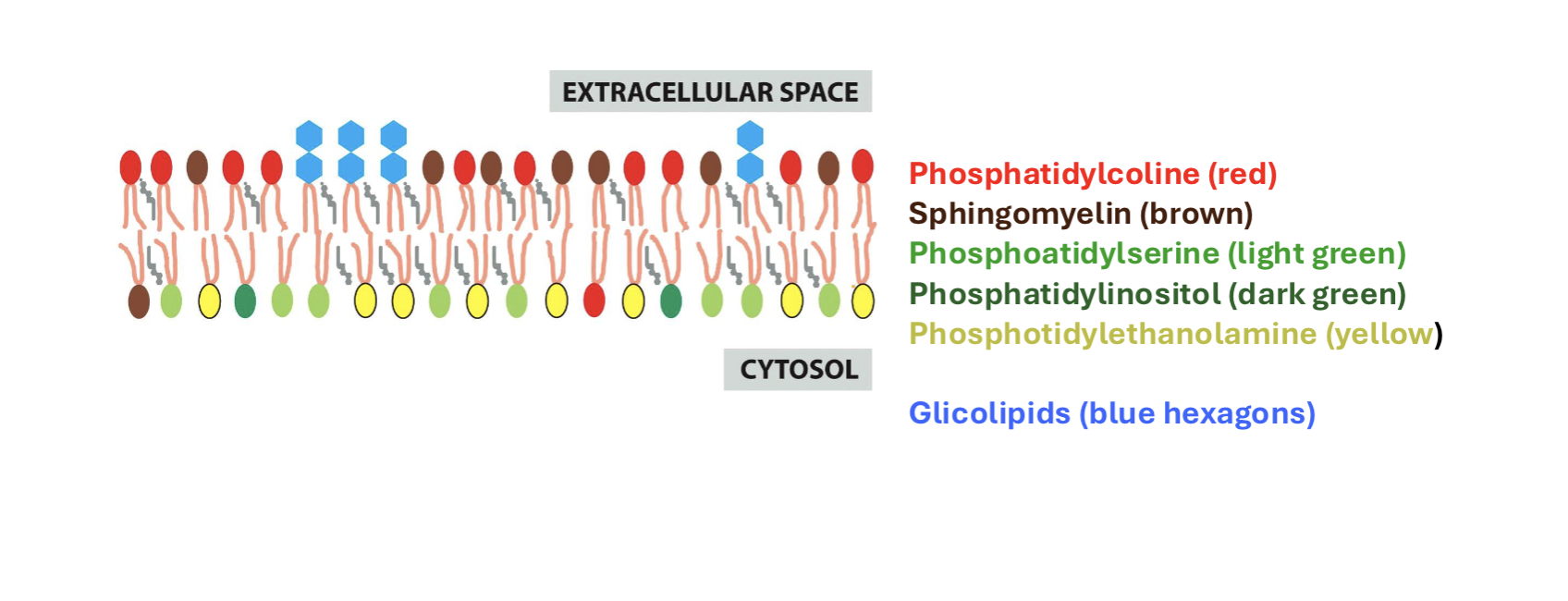
is lipid bilayer asymmetrical?
yes, asymmetrical distribution of phospholipids + glycolipids in the membrane
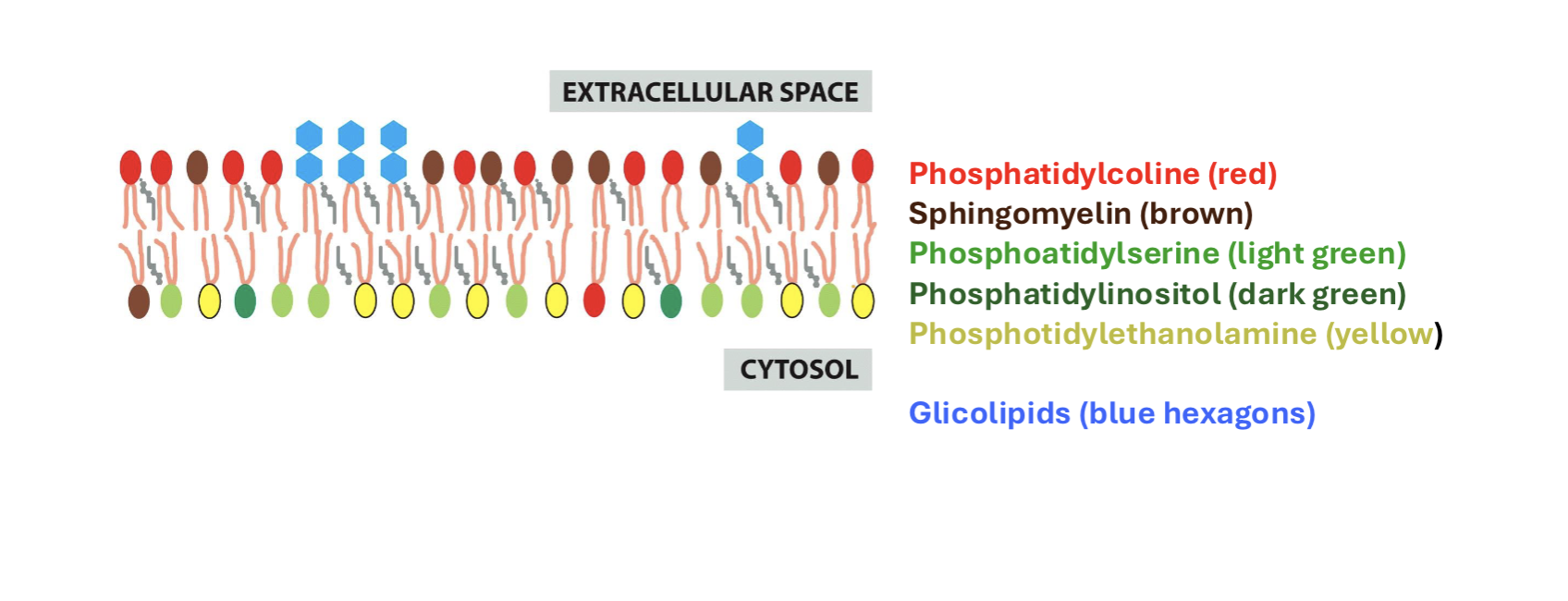
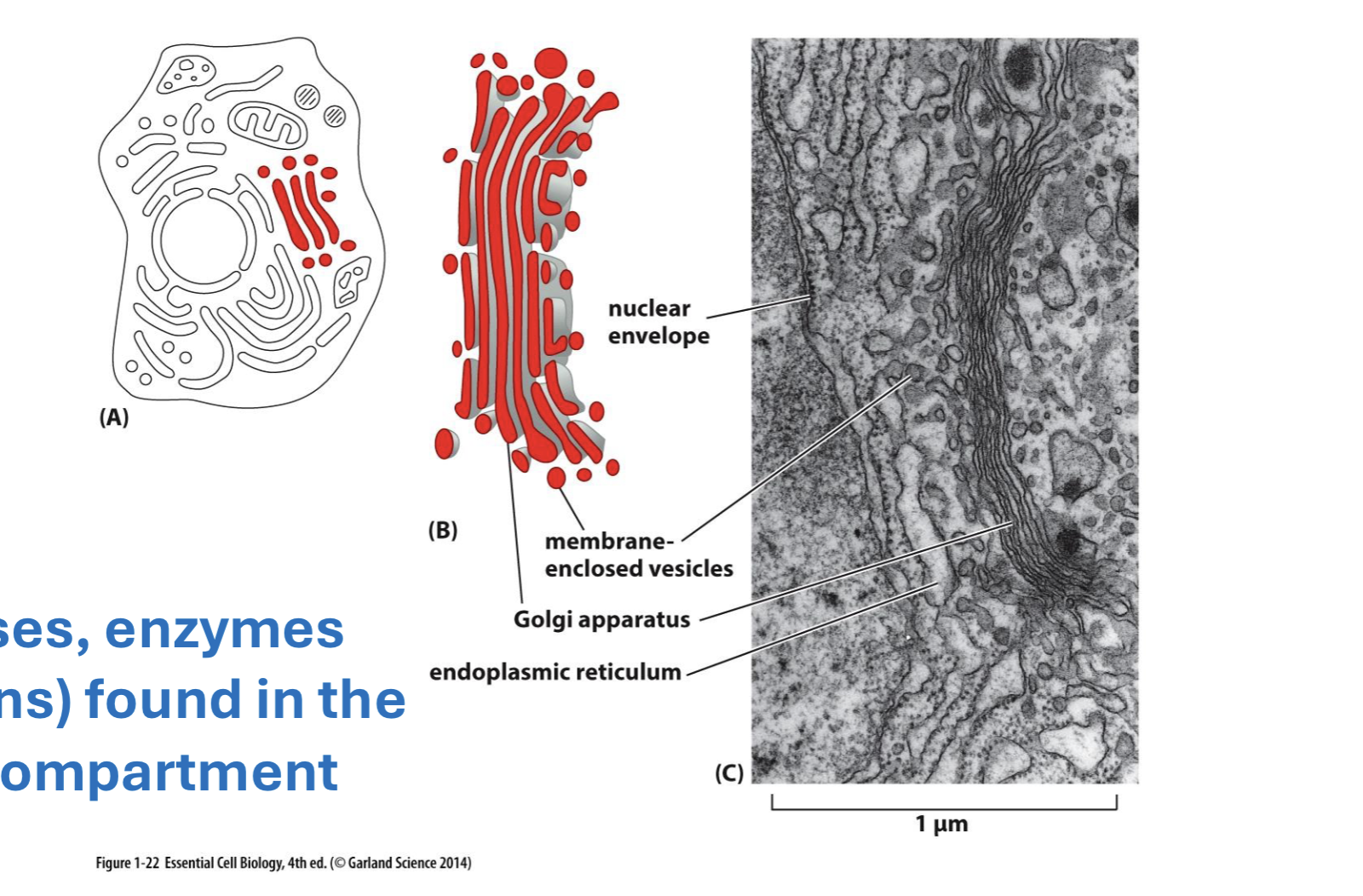
what controls the distribution of phospholipids within the two layers of a membrane?
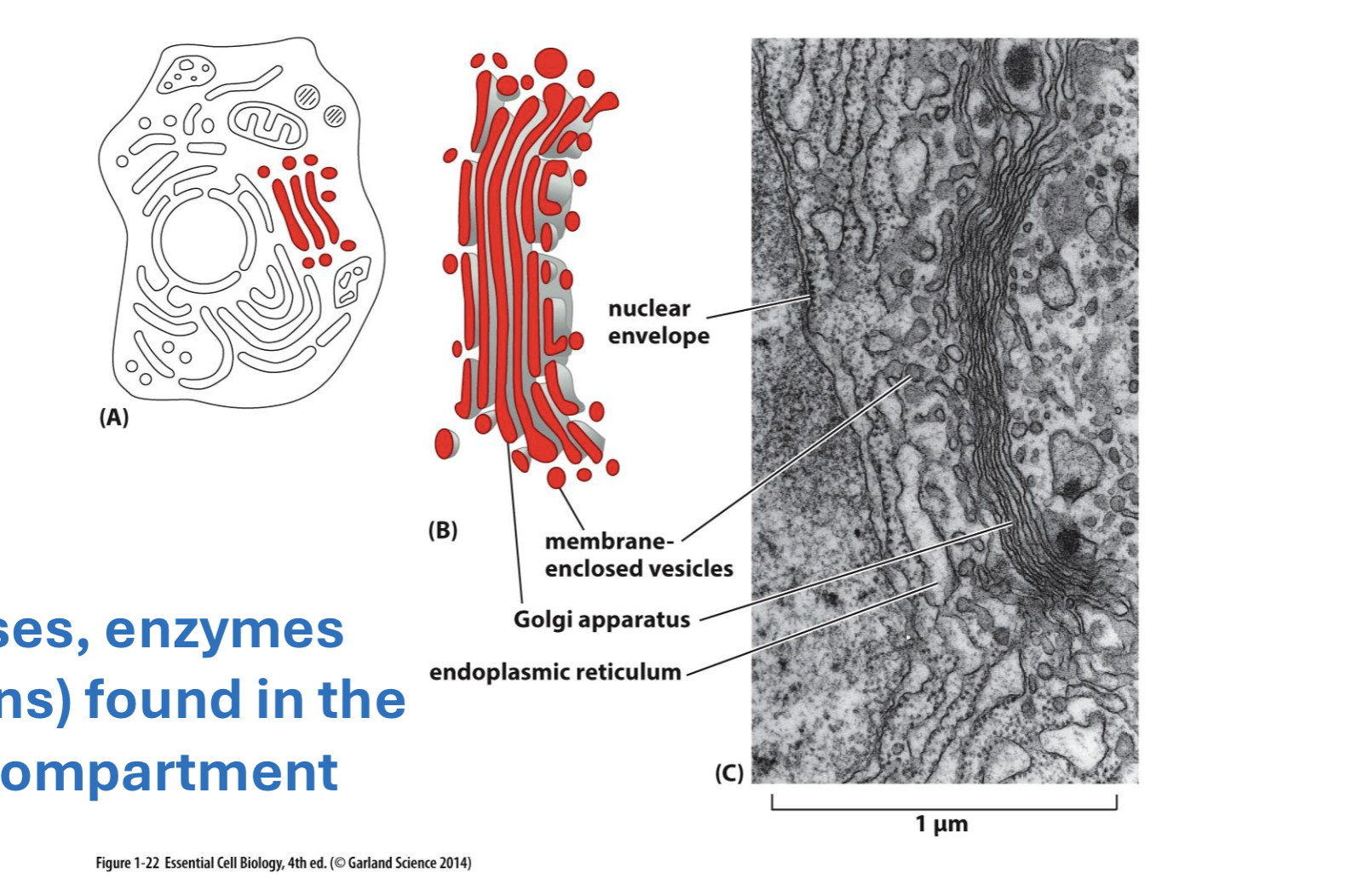
flippases, enzymes (proteins) found in the Golgi compartment reorganize phospholipids across the two sides of membrane from ER → cell membrane