end of my life
 Call Kai
 Learn
Learn Practice Test
 Spaced Repetition
 Match
Match Flashcards
 Knowt Play
1/79

Earn XP
Description and Tags
i want to kms
Name | Mastery | Learn | Test | Matching | Spaced | Call with Kai |
|---|
No analytics yet
Send a link to your students to track their progress
80 Terms
Name the transmembrane proteins involved in focal adhesions.
Integrins
Name two differences between martensitic and austenitic stainless steels.
Martensitic is relatively susceptible to corrosion, Austenitic has enhanced corrosion resistance.
Martensitic is magnetic, Austenitic is non-magnetic
Briefly outline the role the Haber–Weiss reaction plays in implant biocompatibility.
Hydrogen peroxide in the microenvironment reacts with metals (Haber–Weiss reaction) and is decomposed to ROS which initiates chemical degradation of the polymer.
Name the three anti-inflammatory processes of the chronic inflammatory response likely to be initiated by implants.
Foreign body giant cell formation, Granulation tissue formation, Fibrosis
What constituent of metals makes them particularly responsible for hypersensitivity reactions in patients
Metal ions released from solid metals/alloys
Name the effect outlined below: “Seemingly inert materials implanted as large broad smooth surfaces (such as discs and sheets) including relatively pure metals, glasses, and polymers are most carcinogenic. These solid materials lose their carcinogenicity when implanted as powders, porous, or woven forms”
Oppenheimer Effect
Adsorption of Plasma Fibronectin, von Willebrand factor (vWF) and fibrinogen to the surface of implants initiates what reaction?
A thromboinflammatory response and triggers platelet adhesion, activation, and aggregation
When performing multiple in vitro cell cytotoxicity tests on a biomaterial, name 2 variables which should be kept constant.
Number of cells, Duration of test, Cell type, Test sample size
Name two directives which should be followed for the responsible use of animals in testing.
Directive 86/609/EEC & US department of agriculture law 89-544
What gas is used during Gas plasma sterilization?
Peracetic & hydrogen peroxide gas
Define the Work of Adhesion.
A measure of all the van der Waal forces across a surface. Measures strength of adhesion, reflects ease with which cells adhere to a given solid substrate from a given liquid environment.
What type of biomaterials are adhesives?
Polymers
Mechanical failure of implants often results from a combination of what?
Material fatigue, Excessive mechanical overload & improper implant positioning. Corrosion oxidation calcification(?)
Suggest 2 approaches to reducing the complement reaction to implants.
By removing activating groups or coating material with heparin
Burning lip or burning mouth syndrome is associated with which biological reaction to implants?
Dental metal hypersensitivity
Give two explanations for the antibiotic resistance of biofilms.
Mycolic acid produced by some bacteria may inhibit the activities of antibiotics.
An altered chemical microenvironment within the biofilm leading to drug neutralization
The thickness of the biofilm can physically prevent antibiotic reaching cells
Briefly outline how albumin and elastin reduce the risk of adverse coagulation reaction to an implant.
Albumin induces less platelet adhesion, elastin naturally shows minimal platelet adherence and aggregation.
What is the function of the positive and negative controls in cytotoxicity testing?
Negative control - a test substance that is not expected to elicit a (cytotoxic) response (high-density polyethylene material)
Positive control - an item or substance that should elicit the expected response (dilute solutions of toxic chemicals such as phenol)
Give two reasons for explantation of a medical device during the animal testing phase.
Determine rates, modes and mechanisms of failure.
Identify effects of patient and prosthesis factors on the performance of the implant.
Establish factors which promote a successful device.
Develop or redesign for future implants.
Why is the Mouse Local Lymph Node Assay performed?
Test for chemical hypersensitivity. Measures the induction (initial contact) phase of sensitization.
Fill in the space in the statement below. Cell adhesion onto a given solid substrate occurs if the process results in a __________ in the surface free energy.
decrease
List the three classifications of implant polymers.
thermoplastics, thermosets and rubbers
Which degradation process is associated with the equilibrium of dissolution?
corrosion
Briefly explain the link between macrophage activation and the different types of inflammation.
M1 macrophages promote acute and chronic inflammation through pro-inflammatory cytokines.
M2 macrophages reduce inflammation and promote tissue repair/healing.
Name two properties of a biomaterial known to activate the complement pathway.
Surface charge, surface roughness/hydrophobicity
What is a DTH response to biomaterials?
A DTH response is a delayed T-cell mediated immune reaction to a biomaterial, causing inflammation around the implant. (hours-days after exposure to biomaterial)
Name the coagulation pathway activated by biomaterials.
Intrinsic
What are the ‘three Rs’ and what do they relate to?
Animal use for in vivo testing.
Reduction in the number of animals used
Refinement of methods of testing
Replacement of animals for in vitro testing where possible
Which of the following SAL values is better? 10-6 , 10-8 or 10-10? Explain your choice.
10-10. provides greater assurance of sterility than lower values (e.g 10—6 being 1 in a million fail- remain non-sterile)
Define extrapolation. Why is it an inexact methodology?
Concluding something will occur by assuming that existing trends will continue, or results will remain applicable in other scenarios.
Extrapolation is inexact because it predicts values outside the measured data range, assuming existing trends continue unchanged, which may not be true
Name the cell surface proteins involved in binding to extracellular matrix proteins.
Integrins
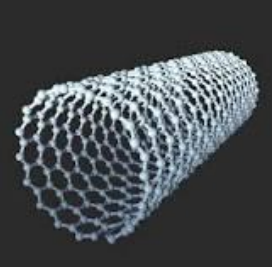
Name the type of nanoobject shown
Nanotube
Fill in the space in the following statement: ____________ is a chemical decomposition process in which water is used to split chemical bonds of substances. It may be catalyzed by acids, bases, enzymes, salts. All of which are abundant in the biological environment.
Hydrolysis
What is the function of blood vessels becoming leaky during inflammation?
Allows immune cells/proteins/fluids to leave bloodstream and move towards site of inflammation.
Name two anti-inflammatory wound healing responses to implants.
Granulation tissue formation, Fibrous capsule formation
What kind of cancer is the Breast Implant Associated ALCL?
A blood cell cancer (lymphoma)
Name two approaches which can be taken to reduce or inhibit blood coagulation by implants.
Coatings: Titanium dioxide (TiO2 ) coatings on metallic surfaces has been shown to reduce haemolytic and thrombolytic effects of implant surfaces.
Implant design: Altering the shape of the device so that it reduces extremes in blood flow can reduce the pressures which may lead to haemolysis.
Managing the effects: Folic acid, iron supplements and Anti-thrombin (clotting) drugs.
What is the problem with correlation in data analysis?
Correlation does not necessarily mean cause and effect- it just demonstrates a relationship between variables.
Name two tests which could be applied to determine hypersensitivity in patients.
Patch test, blood tests for IgE antibodies, Lymphocyte transformation test (LTT)
What is the S9 fraction and why is it used in implant testing?
S9 is a crude extract of liver, which can assess the impact of metabolism on the formation of genotoxins.
Explain why a hydrophilic biomaterial surface can limit the amount of protein which absorbs to its surface.
A hydrophilic surface binds water strongly, forming a hydration layer that reduces protein adsorption onto the biomaterial surface.
A polymer can be linear, 2-dimensional or 3-dimensional. Explain what is meant by these structural types?
Three external dimensions on a nanoscale known as nanoparticles. Nanoparticles are not all spheres but may have the shape of needles, extended rods, spring structures, etc.
Two external dimensions on the nanoscale and a larger third dimension such as nanofibres, nanotubes, nanofilaments or nanorods.
One external dimension on the nanoscale and two other substantially larger dimensions typically include nanofilms, nanolayers or nanocoatings
_________ is the deposition of calcium phosphates on a surface or within a tissue or biomaterial and are generally composed of poorly crystalline hydroxyapatite, the mineral found in bone.
Calcification/biomineralization
What is the role of damage-associated molecular pattern molecules in the body’s response to implantation of a device?
DAMPs signal tissue damage caused by implantation and activate the immune system, triggering inflammation and recruitment of immune cells.
The usual role of Complement is to destroy infecting microbes through the formation of the membrane attack complex (MAC). This is not the main concern for implant scientists. Explain why and what other concerns implant scientists have relating to Complement activation.
Implants are not microbes, so MAC-mediated destruction is less important. Instead, implant scientists are concerned that complement activation can trigger inflammation, recruit immune cells, and contribute to foreign body reactions, fibrosis, and implant failure.
Other than antibiotic use, name two alternative treatments for biofilm formation on implants.
Ultrasound, removal of implant, RAP blocking, Photodynamic Inactivation, Nanoparticles
Changes in blood flow can lead to an increased risk of both hemolysis and blood clotting issues in implant recipients, briefly explain why.
Changes in the blood flow can cause blood material to accumulate and form clots. These may come away from the surface and cause stroke downstream in the brain.
What aspect of biocompatibility would you be testing if you were using the Chandler loop model?
Blood compatibility (haemocompatibility), especially thrombosis and complement/coagulation activation.
Which Irish government body oversees implant animal testing?
HPRA health products regulatory authority
If a sterilization process has a SAL on 10-7 , what does this mean?
One in ten million chance that viable microorganism remains after sterilization, meaning product failed sterilization assurance.
Briefly outline the kinetics of protein absorption to the surface of a biomaterial.
Most protein adsorbs rapidly and then levels off. 99%+ of the absorption of proteins occurs very rapidly, within minutes.
Name 2 factors which can influence the rate of degradation of (bio)resorbable ceramics when placed in a patient.
Local pH conditions, phagocytosis, physical disintegration(chemical attack)
Briefly outline how microbes can enhance the corrosion of dental implants.
Microbes form biofilms on the implant surface and produce acidic metabolites and corrosive substances, which damage the protective oxide layer and accelerate corrosion.
Which cell type is the main driver of the chronic inflammatory response to implants?
Macrophages
Hives, itching, rashes and ‘burning mouth syndrome’ are all associated with which biological reaction to biomaterials?
Hypersensitivity (burning mouth- dental metal HP)
Give 2 reasons why biofilm formation on implants is particularly challenging for patients and doctors.
Biofilms protect microbes from antibiotics and the immune system.
Biofilms can cause persistent infection, often requiring implant removal.
Outline a problem with relying on in vitro testing to determine biocompatibility.
In vitro tests cannot fully replicate the complexity of the living body, so results may not accurately predict in vivo biocompatibility.
Explain how GADD45a can be utilized in biocompatibility testing.
Used as a biomarker of cellular stress and DNA damage to assess whether a biomaterial causes toxic or genotoxic effects.
The Guinea pig maximization test assesses what aspect of implant biocompatibility?
Assesses contact sensitization
Why is it important to test the effect of multiple sterilization cycles on a product?
To ensure that neither the device or the packaging is damaged.
List three properties or characteristics of proteins which are factors in determining if they adsorb to a biomaterial surface
Protein size, charge & hydrophobicity/hydrophilicity
Why is it generally not required to add chromium to titanium for corrosion resistance when manufacturing titanium-based implants?
Titanium naturally forms a stable protective titanium oxide layer (TiO₂), which provides corrosion resistance without needing chromium.
What type of biomaterials are adhesives?
Polymers
What are the two primary degradative processes which concern scientists when placing polymer-based devices in the environment of the human body?
Hydrolysis & Oxidation
What role do reactive oxygen species play in the biological response to biomaterials?
Reactive oxygen species contribute to inflammation and can damage surrounding tissue and biomaterials through oxidative degradation.
Briefly outline the risks posed by implants for the development of tumours in patients.
Implants may cause chronic inflammation or release degradation products that can damage cells or DNA, potentially increasing tumour risk, although this is rare.
Define blood compatibility in relation to implants and name a device which might be of concern regarding blood compatibility.
Blood compatibility is the ability of an implant to function without causing harmful reactions with blood, such as clotting or haemolysis. Vascular stent.
Name three variables which must be kept constant during in vitro cytotoxicity testing.
Number of cells, Duration of test, Cell type, Test sample size
Briefly explain two reasons for device retrieval during in vivo testing of implants.
To assess tissue response and biocompatibility around the implant.
To examine implant degradation, wear, or corrosion after implantation.
The SAL number is associated with which aspect of implant biocompatibility?
Sterility Assurance Level. Sterility effectiveness
Describe what impact integrin expression in a cell might have on biocompatibility.
Integrin expression affects how well cells attach to a biomaterial surface, influencing cell adhesion, signalling, and biocompatibility.
What element would you choose to add (alloy) to iron to reduce the possibility of corrosion occurring?
Chromium
How would you define a nanomaterial?
A nanomaterial is a material with at least one dimension between 1–100 nm.
Dystrophic and metastatic are two types of which process which affect implants?
Calcification
Outline a physical/clinical change in a patient that would indicate to you that the patient was having a complement reaction to an implant? Briefly explain why complement is the cause of the effect on the patient.
Swelling or redness could indicate complement activation because complement proteins promote inflammation and increased blood vessel permeability.
Which biomaterials are most associated with patient hypersensitivity and which type of hypersensitivity is most common in response to these biomaterials?
Metallic biomaterials, especially those containing nickel, are most associated with hypersensitivity. Type IV (delayed-type) hypersensitivity.
Name two ways in which implants can be treated to reduce the possibility of thrombosis.
Heparin coating, Surface modification (Hydrophilic/smooth)
Explain the weakness of running the Ames test without an S9 extract?
The Ames test cannot detect chemicals that become mutagenic only after metabolic activation.
A company wants to perform in vivo testing of a new stent design in a pig model. They wish to test hemolysis in vivo. Suggest a working definition of biocompatibility by which they determine a pass in this test.
The stent is biocompatible if it performs its function without causing significant hemolysis or harmful blood reactions in the pig.
You wish to sterilize a thermoplastic polymer implant. You are provided with two options: steam sterilization and ethylene oxide sterilization. Choose one and explain your decision over the alternative.
Ethylene oxide sterilization. Steam sterilization may deform or damage thermoplastic polymers due to high heat.