Exam 1 - Lecture 2: Types of MM
 Call Kai
 Learn
Learn Practice Test
 Spaced Repetition
 Match
Match Flashcards
 Knowt Play
1/38

There's no tags or description
Looks like no tags are added yet.
Name | Mastery | Learn | Test | Matching | Spaced | Call with Kai |
|---|
No analytics yet
Send a link to your students to track their progress
39 Terms
define systematics
the study of biological diversity that has an emphasis on the reconstruction of phylogeny
define phylogeny
evolutionary history of a particular group of organisms (e.g., what does it mean to be a species is a very complicated topic that can separate based of morphology, interbreeding, etc.)
what is the purpose of systematics?
provides a framework for interpreting biological diversity
why is systematics important?
we have interest in our own personal phylogeny and family trees
the evolution of organisms matters
to understand the trajectory of where were going and where we’ve been (survival of our spp, how will climate change affect our spp, how have spp evolved due to changing climate in the past)
medical purposes (spp. related to us are used to test medicine to see how it will affect us for safety purposes)
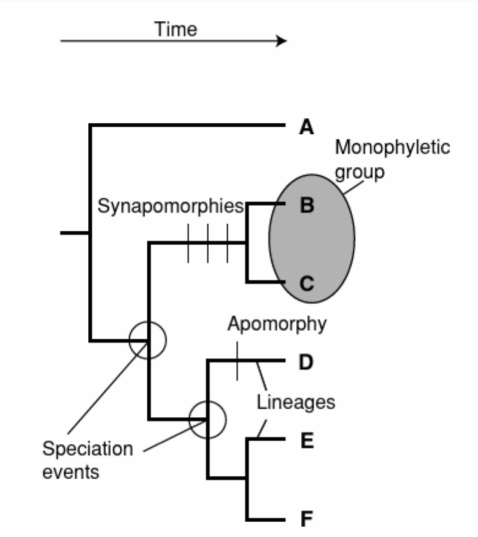
What is A?
How do B and C relate?
define synapomorphy
define branching point
A = the oldest/ancestral group
B and C = sister taxa or monophyletic
synapomorphy = diagnosis clade, shared derived trait
branching point = speciation event
apomorphy = derived character that is unique to a species/lineage and is not shared by others
what is the purpose of taxonomy and classification?
identifies evolutionary relationships b/w and among animals
how do humans classify animals?
according to pattern in diversity, but recently w/ DNA
define taxonomy
formal naming and grouping of species to communicate
what is the importance of common ancestry in taxonomy and classification?
animals that have recent common ancestry share many features in common so they’re grouped together
define phylogeny
shared common evolutionary history, aka related
define phylogenetics
the study of evolutionary relationships
what is the order to taxonomic categories for mammals
Kingdom - Animalia
Phylum - Chordata
Subphylum - Vertebrata
Class - Mammalia
Subclass- Prototheria
Order - Monotremia (egg laying mammals, no MM)
Subclass - Theria
Infraclass - Marsupialia (no MM)
Infraclass - Placentalia (MM here!!)
Orders = 18 total
define placenta
organ that grows when having a baby to provide blood flow and nutrient to the young
describe relatedness of humans to MM like cetaceans
to some degree we share a common ancestor until we get to order bc very different types of animals
define binomial nomenclature
what is the disadvantage of common names?
organism are identified by two names = genus and species
common names are not very precise (ex = spiny lobster means different species in different locations)
define IUCN
International Union for the Conservation of Nature
measures how endangered an animal is based on the number of individuals not so much the extent of their genetic diversity
define K-T extinction event
Cretaceous-Tertiary extinction event occurred 65mya where the dinos and >96% marine life went extinct
define PETM
Paleocene–Eocene Thermal Maximum occurred 55 mya marking the beginning of the rapid expansion of mammals starting w/ Cetaceans
Whales and Sirenians were 50mya
Pinnipeds were 29 mya
Sea otters were 7mya
Polar bears were 0.5mya
What are the 10 families in Order Cetacea
Balenopteridae, Esrichtiidae, Balaenidae, Neobalaenidae, Physeteridae, Ziphiidae, Platanistidae, Delphinidae, Monodontidae, Phocoenidae
What are the 5 families of Order Carnivora
Otariidae, Phocidae, Odobenidae, Mustelidae, Ursidae
What are the 2 families of Order Sirenia
Dugongidae, Trichechidae
what are the marine representatives of the 5 families of Order Carnivora
Otariidae = eared seals, sea lion, fur seals
Phocidae = true seals (“earless” bc lacking pinnid = flap over the ear but still have an ear represented by a hole)
Odobenidae = walrus
Mustelidae = otters (including marine and sea otters)
Ursidae = bears (including polar bear)
what is the Suborder of Order Carnivora?
Pinnipedia
Order Carnivora
Suborder Pinnipedia
what did this group evolve from?
what are the earliest fossils from?
evolved from terrestrial carnivores like lions, tigers, and bears
earliest fossils from early and mid miocene
Order Carnivora
Suborder Pinnipedia
how much does this group contribute to MM make up?
aka
what 3 families does it consist of?
what are 7 traits?
28% or 1/3 => this group has been around for the 2nd longest
“feather-footed”
Otariidae, Phocidae, Odobenidae
1) this group is MOST tide to land for resting and bearing pups
2) better adapted to aquatic lifestyle than bears and otters
3) large body size to compensate for temp. loss
4) fur and blubber
5) flippers (not a paw but it is webbed and has nails)
6) long whiskers, aka vibrissae
7) molt yearly
Order Carnivora
Suborder Pinnipedia
Family Otariidae
aka
how many spp?
what is their mating?
what key feature do they have?
describe vibrissae.
describe skin and fur
what is unique about their flippers?
aka fur seals and sea lions (eared seals)
16 spp.
Polygynous (1 male and multiple female) mating system, pronounced sexual dimorphism
contains pinnae = small external ear flaps
smooth vibrissae
light skin w/ double layer of fur => guardhairs are sparse and underfur is dense and traps air
can rotate hind flippers walk/run on land while in the water the high flippers steer while the front flippers swim
what is the 2 subfamilies of Family Otariidae
Otariinae and Artocephalinae
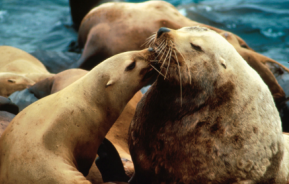
Order Carnivora
Suborder Pinnipedia
Family Otariidae
Subfamily Otariinae
Eumetopia jubatus
aka
fun fact(s)
IUCN
Stellar sea lion
largest Otariid
IUCN = near threatened, endangered in US (bc heavily hunted)
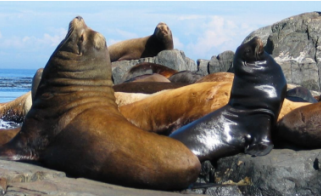
Order Carnivora
Suborder Pinnipedia
Family Otariidae
Subfamily Otariinae
Zalophus californianus
aka
fun fact(s)
IUCN
California sea lion
well known from zoos and circuses
porpoises out of water
IUCN = least concern
Order Carnivora
Suborder Pinnipedia
Family Otariidae
Subfamily Otariinae
Zalophus japonicus
aka
IUCN
Japanese sea lion
IUCN = extinct
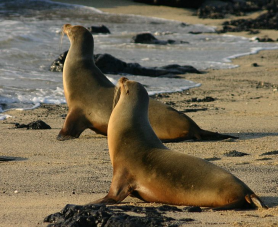
Order Carnivora
Suborder Pinnipedia
Family Otariidae
Subfamily Otariinae
Zalophus wollebaeki
aka
fun fact(s)
IUCN
Galapagos sea lion
breeds exclusively on Galapagos Islands
IUCN = endangered
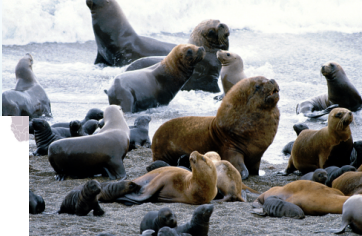
Order Carnivora
Suborder Pinnipedia
Family Otariidae
Subfamily Otariinae
Otaria flavescens
aka
fun fact(s)
IUCN
South American sea lion
STRONG/most pronounced sexual dimorphism
also noted for large male manes and harem-based breeding systems
IUCN = least concern
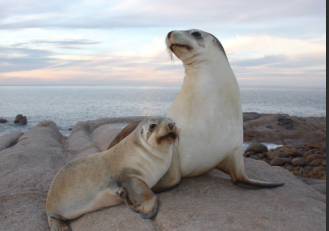
Order Carnivora
Suborder Pinnipedia
Family Otariidae
Subfamily Otariinae
Neophoca cinerea
aka
fun fact(s)
IUCN
Australian sea lion
females produce pup every 17-18 months
undergo embryonic diapause = males mate w/ females immediately after they give birth but bc female body is not ready for another pregnancy, the zygote pauses before it develops into the uterus until her body is ready to be pregnant again
IUCN = endangered (bc heavily hunted)
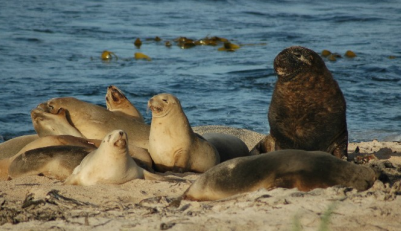
Order Carnivora
Suborder Pinnipedia
Family Otariidae
Subfamily Otariinae
Neophoca cinerea
aka
fun fact(s)
IUCN
New Zealand sea lion (Hooker’s sea lion)
large, heavy body
one of the rarest sea lion (naturally rare)
IUCN = endangered
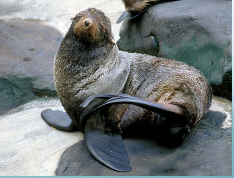
Order Carnivora
Suborder Pinnipedia
Family Otariidae
Subfamily Artocephalinae
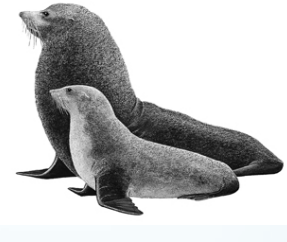
Callorhinus ursinus
aka
fun fact(s)
IUCN
Northern fur seal
extreme sexual dimorphism
longest hind-flippers of otarrids
IUCN = vulnerable
Order Carnivora
Suborder Pinnipedia
Family Otariidae
Subfamily Artocephalinae
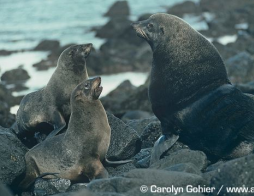
Arctocephalus townsendi
aka
fun fact(s)
IUCN
Guadelupe fur seal
hunted to brink of extinction
IUCN = near threatened
Order Carnivora
Suborder Pinnipedia
Family Otariidae
Subfamily Artocephalinae
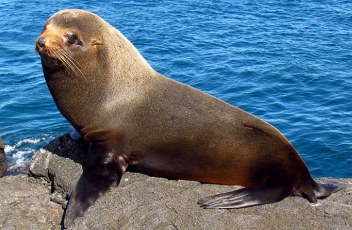
Arctocephalus philippii
aka
fun fact(s)
IUCN
Juan Fernandex fur seal
hunted to brink of extinction
IUCN = near threatened
Order Carnivora
Suborder Pinnipedia
Family Otariidae
Subfamily Artocephalinae
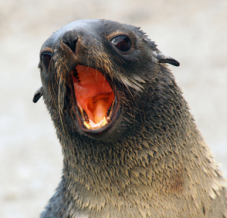
Arctocephalus galapagoensis
aka
fun fact(s)
IUCN
Galapagos fur seal
smallest otariid compact
LEAST sexually dimorphic
IUCN = endangered
Order Carnivora
Suborder Pinnipedia
Family Otariidae
Subfamily Artocephalinae
Arctocephalus australis
aka
fun fact(s)
IUCN
South American fur seal
large eyes
IUCN = LC