Edexcel IGCSE Biology: Excretion, Kidney Function & Urine Composition
 Call Kai
 Learn
Learn Practice Test
 Spaced Repetition
 Match
Match Flashcards
 Knowt Play
1/52

There's no tags or description
Looks like no tags are added yet.
Name | Mastery | Learn | Test | Matching | Spaced | Call with Kai |
|---|
No analytics yet
Send a link to your students to track their progress
53 Terms
What is excretion?
The removal of waste substances of metabolic reactions, toxic materials, and substances in excess of requirements.
What are common waste products in plants?
Oxygen and carbon dioxide.
How do plants excrete gases?
Gases exit through the stomata via diffusion.
What is the net effect of photosynthesis during the day?
More oxygen is produced than used.
What happens during the night regarding gas exchange in plants?
No photosynthesis occurs; oxygen is used in respiration and carbon dioxide is produced.
What metabolic wastes are produced by the human body?
Carbon dioxide, water, and urea.
What are the dangers of waste product accumulation in the body?
Toxicity, osmotic effects, and using up necessary storage.
Which organs are involved in human excretion?
Kidneys, lungs, and skin.
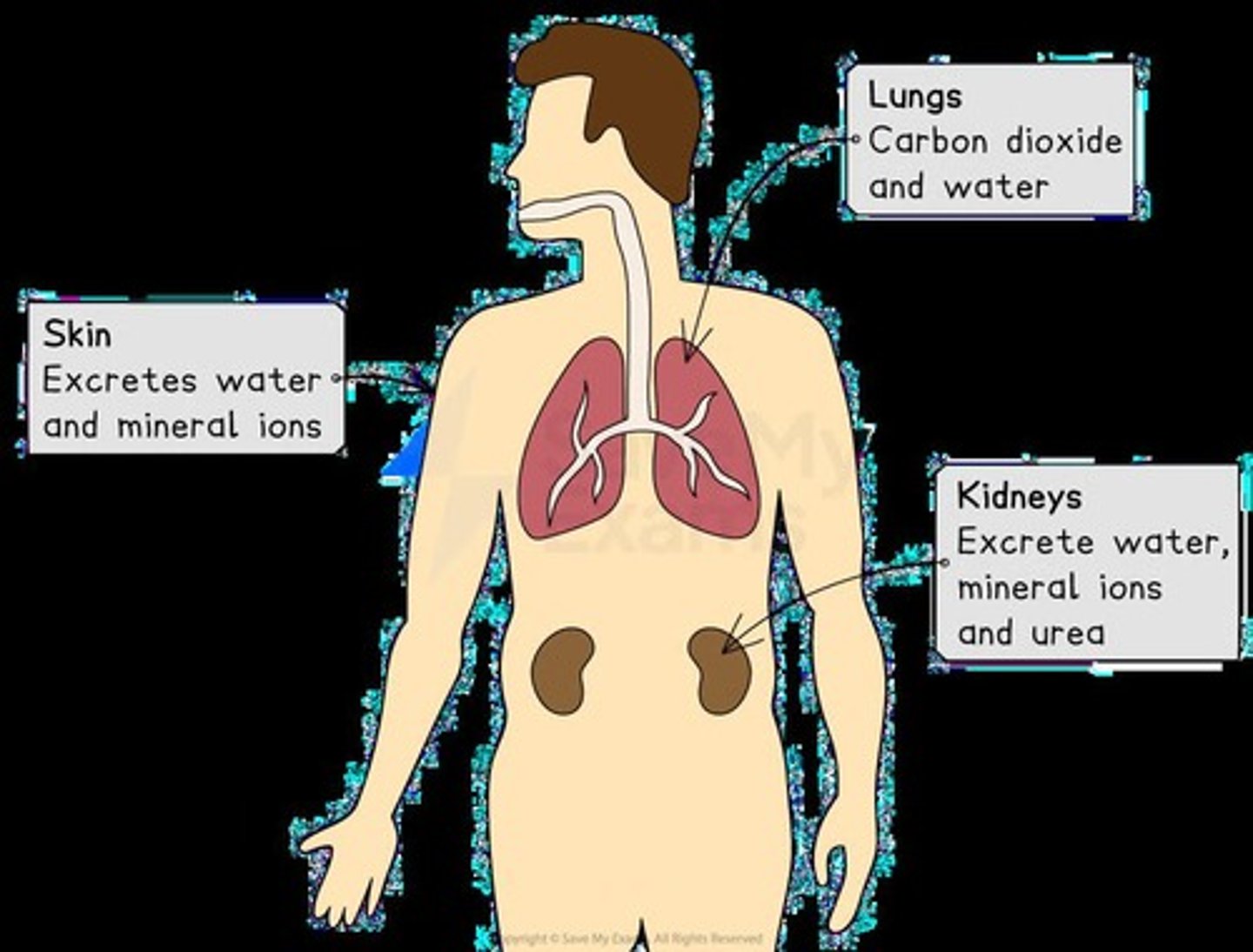
What do the kidneys excrete?
Urea, water, and excess ions.
How do the lungs contribute to excretion?
They excrete carbon dioxide and water during exhalation.
What is osmoregulation?
The process of maintaining water and salt concentrations across membranes within the body.
What can happen if body cells gain too much water?
Cells may swell and burst (lysis).
What can happen if body cells lose too much water?
Cells may become dehydrated and die.
What are the two sources of water in the body?
Water produced from aerobic respiration and water from the diet.
How is urine produced?
The kidneys filter the blood to remove waste products, forming urine.
What is the structure of the urinary system?
It consists of two kidneys, two ureters, a bladder, and a urethra.
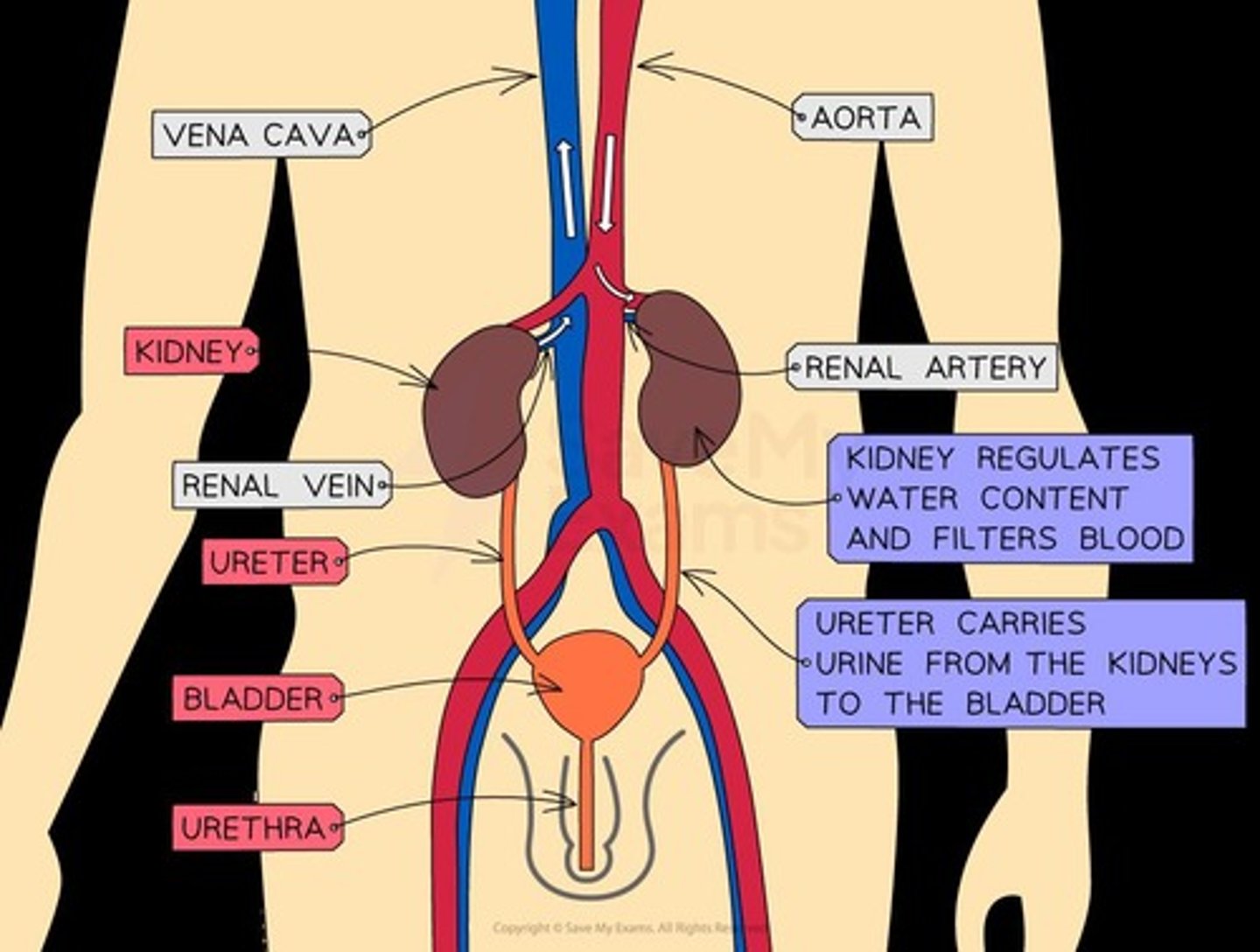
What is the function of the renal arteries?
They carry blood from the aorta to the kidneys for filtration.
What is the function of the renal veins?
They carry filtered blood away from the kidneys to the vena cava.
What are the main parts of a nephron?
Bowman's capsule, proximal convoluted tubule (PCT), loop of Henle, distal convoluted tubule (DCT), and collecting duct.
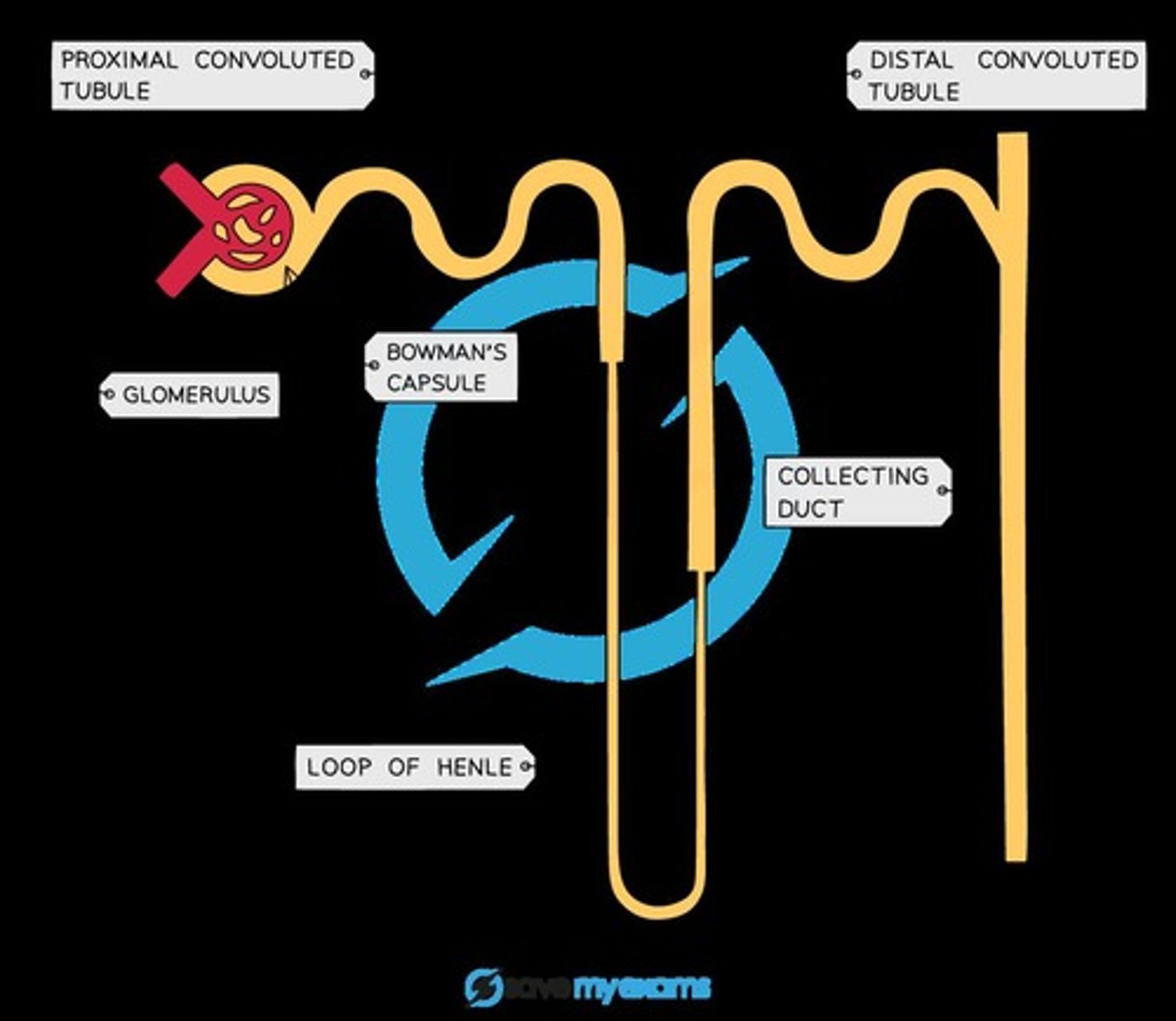
Where are nephrons located in the kidney?
Nephrons are located in both the cortex and medulla of the kidney.
What is the role of Bowman's capsule?
It surrounds the glomerulus and is involved in the filtration of blood.
What is the function of the loop of Henle?
It plays a critical role in the concentration of urine.
What is the renal pelvis?
A funnel-shaped cavity that collects urine from the collecting ducts and passes it into the ureter.
What is a common misconception about excretion?
That feces are excreted waste; feces mainly consist of undigested food.
What is the main role of the bladder?
To store urine until it is excreted from the body.
What is the difference between the ureter and urethra?
The ureter transports urine from the kidney to the bladder, while the urethra carries urine from the bladder to outside the body.
What is the importance of maintaining water levels in the body?
To prevent harmful changes to cells due to osmosis.
What is the effect of excess carbon dioxide in the body?
It can lower the pH of cells, reducing enzyme activity.
What is the primary function of the kidneys?
To filter the blood to remove waste products and form urine.
What are the three main processes in the nephron for urine formation?
Ultrafiltration, selective reabsorption of glucose, and reabsorption of water.
Where does ultrafiltration occur in the nephron?
In the glomerulus.
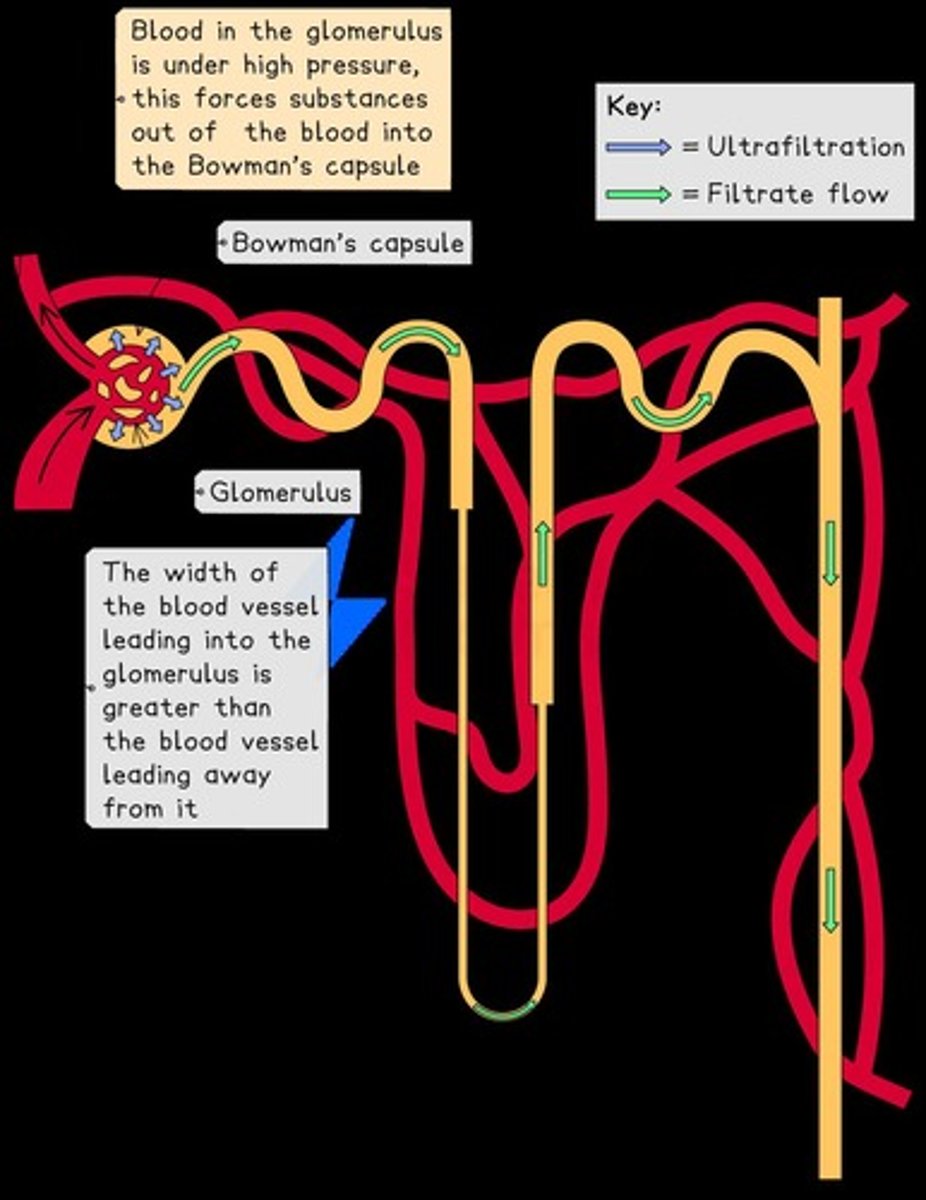
What role does blood pressure play in ultrafiltration?
High pressure forces small molecules like water, glucose, and urea out of the blood into the Bowman's capsule.
What is glomerular filtrate?
The fluid that collects in the Bowman's capsule, containing water, glucose, urea, and ions.
What happens to glucose during selective reabsorption?
All glucose present in the glomerular filtrate is reabsorbed back into the bloodstream in the proximal convoluted tubule (PCT).
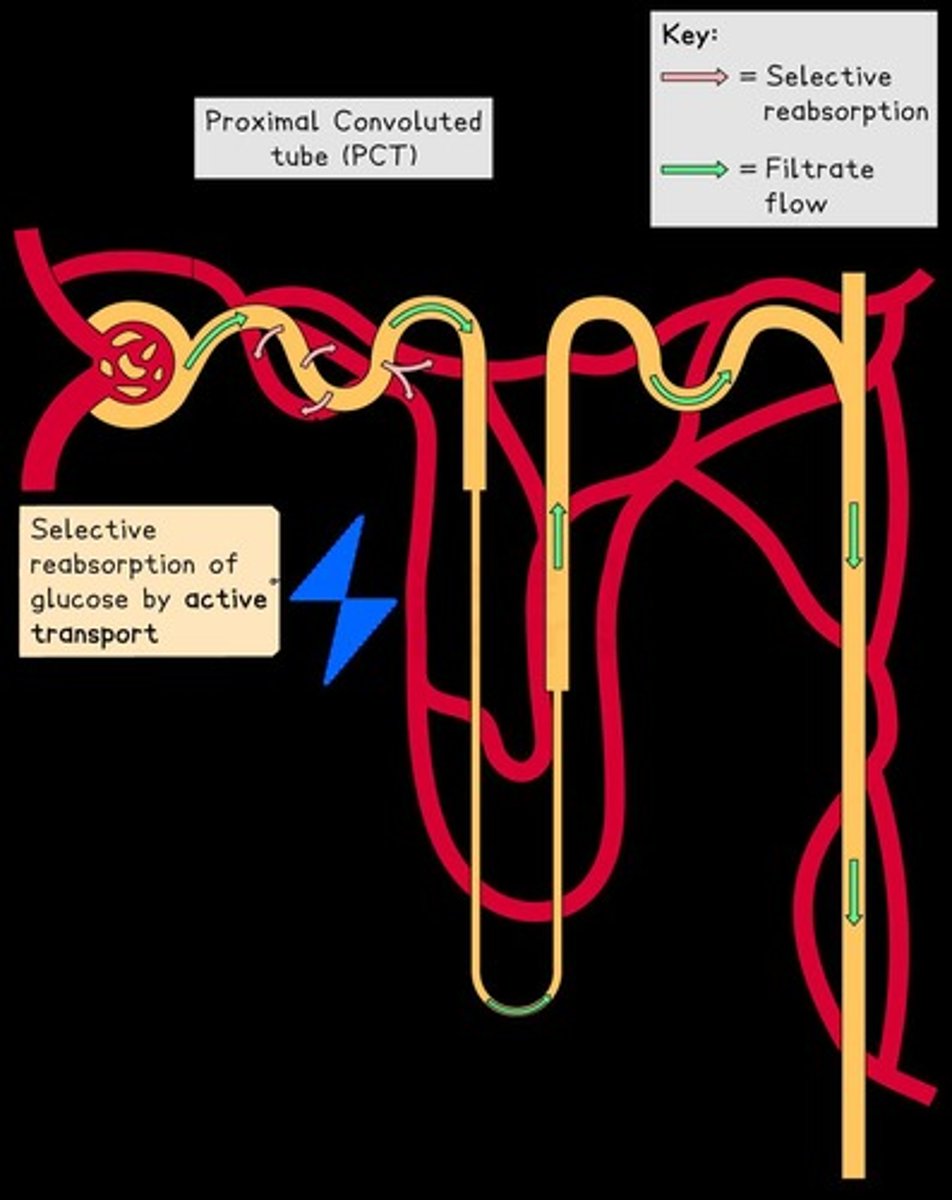
How is glucose reabsorbed in the PCT?
By active transport, which moves glucose against its concentration gradient.
What is the significance of mitochondria in the PCT cells?
They provide the energy (ATP) needed for the active transport of glucose.
What is the final step in urine formation?
Reabsorption of water, which is part of osmoregulation.
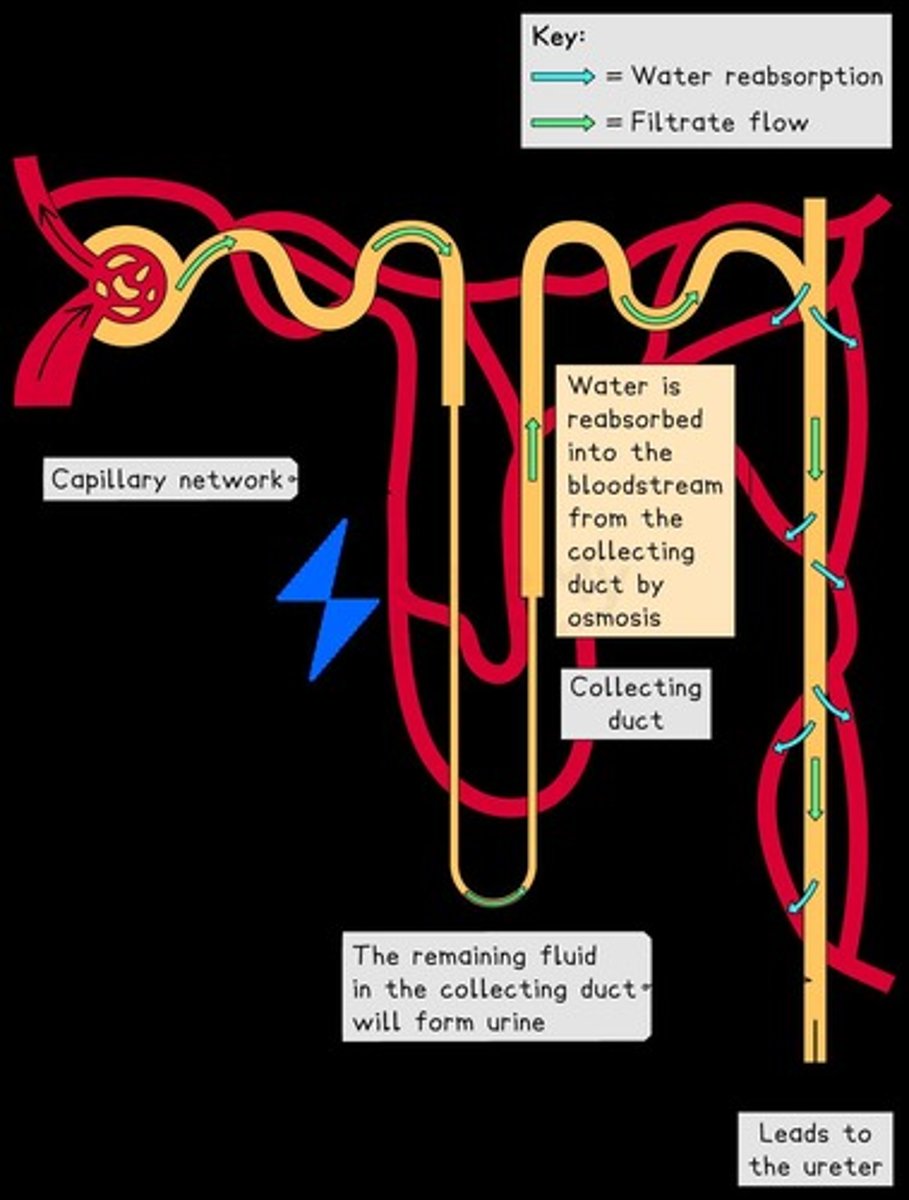
Where does most water reabsorption occur in the nephron?
In the collecting duct.
What hormone regulates water reabsorption in the collecting duct?
Antidiuretic hormone (ADH).
How does ADH affect urine concentration?
More ADH leads to more water reabsorbed, producing concentrated urine; less ADH leads to less water reabsorbed, producing dilute urine.
What triggers the release of ADH?
Changes in blood water levels detected by osmoreceptors in the hypothalamus.
What happens when blood water potential is too high?
Less ADH is released, making collecting ducts less permeable to water and producing dilute urine.
What happens when blood water potential is too low?
More ADH is released, making collecting ducts more permeable to water and producing concentrated urine.
What substances are typically found in urine?
Urea, excess ions, and excess water.
What does the color of urine indicate about its concentration?
Pale yellow indicates dilute urine (more water), while dark yellow/orange indicates concentrated urine (less water).
How does water intake affect urine production?
Increased water intake leads to larger volumes of dilute urine.
How does temperature affect urine concentration?
Higher temperatures lead to more water loss through sweat, resulting in smaller volumes of concentrated urine.
How does exercise impact urine production?
Increased exercise leads to more water loss through sweat, resulting in smaller volumes of concentrated urine.
What should be absent in the urine of a healthy individual?
Glucose and proteins should not be present in the urine.
What could indicate high blood glucose levels in urine?
Presence of glucose in the nephron beyond the PCT may indicate diabetes.
What could cause proteins to appear in urine?
High blood pressure may damage the glomerulus, allowing proteins to pass into the Bowman's capsule.
What is the role of the hypothalamus in osmoregulation?
It detects changes in blood water levels and signals the pituitary gland to release ADH.
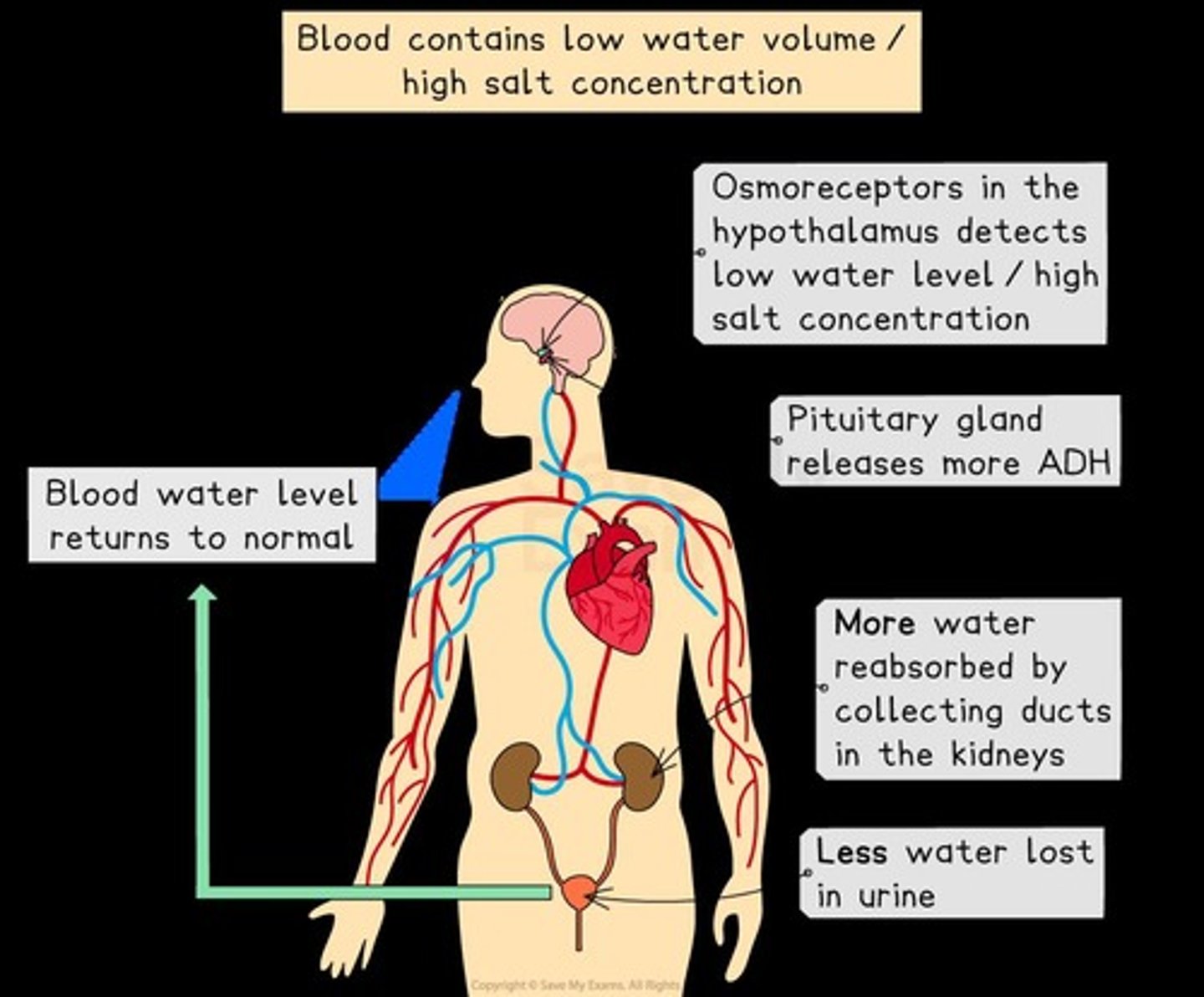
What is the relationship between ADH and the permeability of the collecting duct?
ADH increases the permeability of the collecting duct to water.