EVS AEC - 2
 Call Kai
 Learn
Learn Practice Test
 Spaced Repetition
 Match
Match Flashcards
 Knowt Play
1/301

There's no tags or description
Looks like no tags are added yet.
Name | Mastery | Learn | Test | Matching | Spaced | Call with Kai |
|---|
No analytics yet
Send a link to your students to track their progress
302 Terms
What is biodiversity?
The variety of living organisms (flora and fauna) in an ecosystem.
Who defined 'biodiversity' in 1988?
E.O. Wilson
What are the three types of biodiversity?
Genetic diversity, species diversity, and ecosystem diversity.
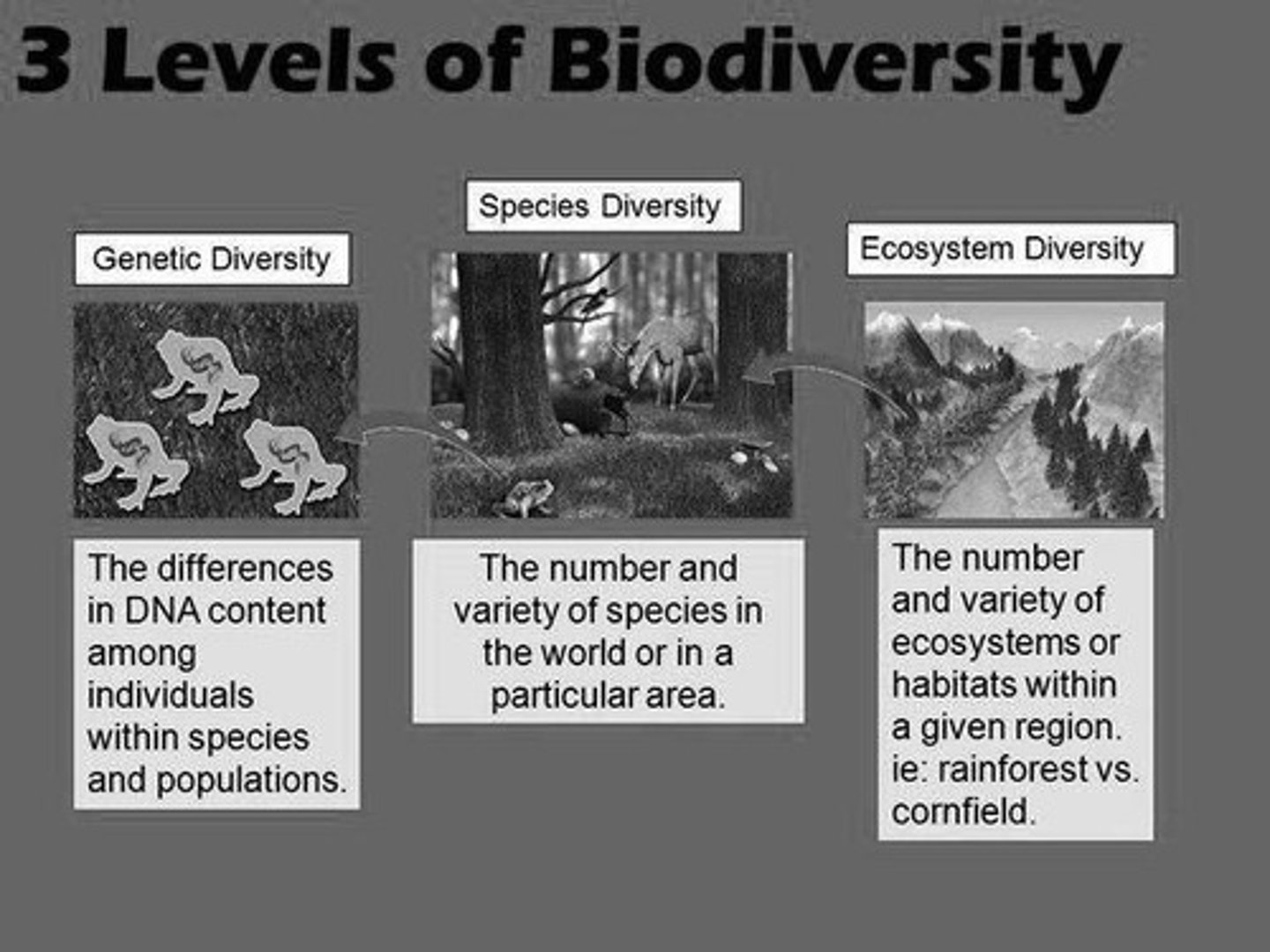
What does genetic diversity refer to?
Variation at the level of individual genes within a species.
Why is genetic diversity important?
It is the raw material for evolution and breeding new crop varieties.
What constitutes species diversity?
The number of species of plants and animals present in a region.
What are 'hotspots' of diversity?
Areas rich in species diversity.
What are 'mega diversity nations'?
Countries with a high proportion of biodiversity hotspots.
How many major eco-regions are there in the world?
Over a thousand, with 200 being the richest and most distinctive.
What is ecosystem diversity?
The variety of different ecosystems on Earth, including their interlinked species.
What are the three perspectives of measuring biodiversity?
Alpha diversity, beta diversity, and gamma diversity.
What does alpha diversity indicate?
Diversity within an ecosystem, combining species richness and evenness.
What does beta diversity indicate?
Diversity between ecosystems, showing changes in species composition.
What is gamma diversity?
The diversity of habitats over a total geographical area.
What is the significance of community diversity?
Higher diversity provides stability and productivity in ecosystems.
What are the major regions of biogeographic classification in India?
Ten major regions based on geography, climate, and vegetation patterns.
What is the impact of biodiversity loss?
It affects ecosystems, human well-being, and the stability of the environment.
What is in-situ conservation?
Conservation of species in their natural habitats.
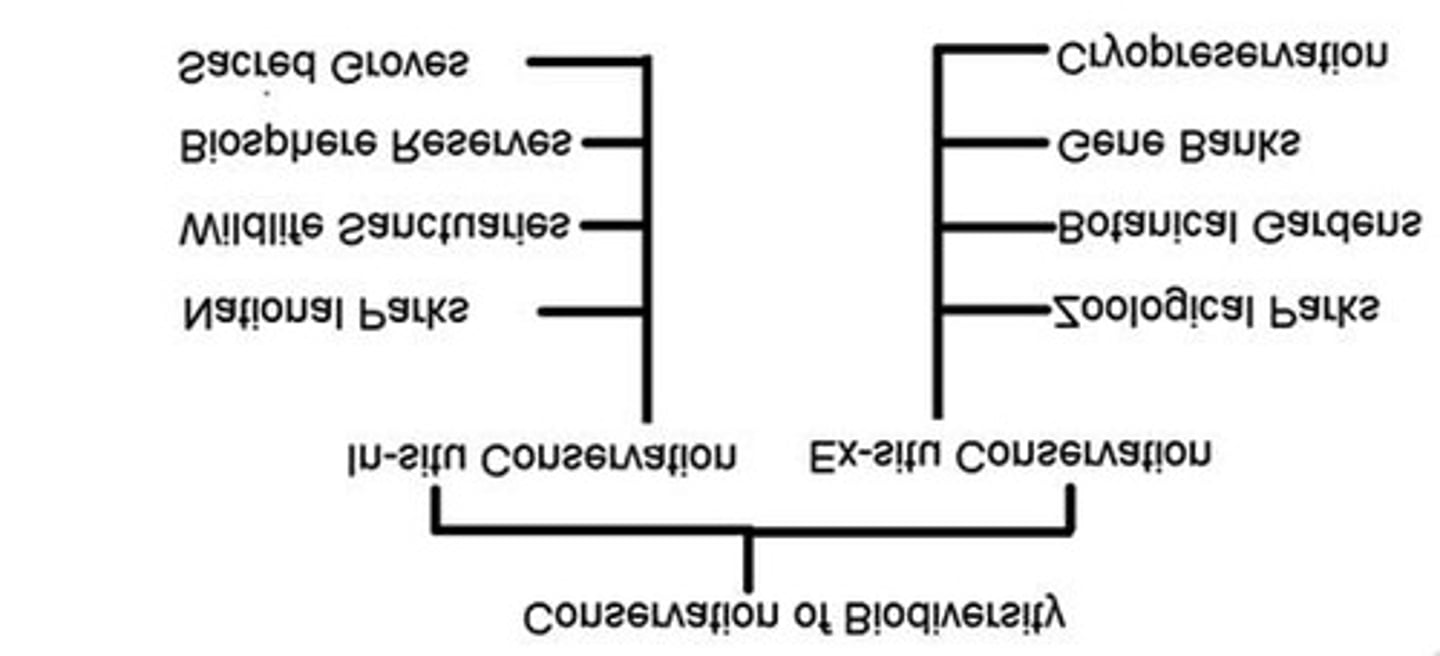
What is ex-situ conservation?
Conservation of species outside their natural habitats.
What role do keystone species play in ecosystems?
They determine the ability of many other species to persist in the community.
What is the estimated number of endemic plants in the world's hotspots?
50,000 endemic plants, comprising 20% of global plant life.
What criteria define a biodiversity hotspot?
Rich endemism and a degree of threat to the area.
What is the significance of tropical forests in terms of species diversity?
They have much greater species richness than mono-culture plantations.
What is the relationship between biodiversity and agricultural ecosystems?
Natural ecosystems provide more diverse products than intensive agroecosystems.
What is the importance of measuring biodiversity?
To assess the health of ecosystems and the impact of human activities.
What are some examples of ecosystems?
Forests, grasslands, deserts, mountains, rivers, lakes, and seas.
What is the role of biodiversity in environmental stability?
It enhances resilience against environmental stresses.
What is the focus of biodiversity conservation?
To protect and sustain the variety of life on Earth.
What are the cold mountainous regions of India?
The Trans-Himalayan region of Ladakh.
Which states are included in the Himalayan ranges and valleys?
Kashmir, Himachal Pradesh, Uttarakhand, Assam, and other northeastern states.
What is the Terai region?
The lowland where the Himalayan rivers flow into the plains.
What are the Gangetic and Brahmaputra plains?
Regions in India known for their fertile land and biodiversity.
Where is the Thar Desert located?
Rajasthan, India.
What regions are part of the semi-arid grassland in India?
Deccan plateau, Gujarat, Maharashtra, Andhra Pradesh, Karnataka, and Tamil Nadu.
What is the significance of the Western Ghats?
A biodiversity hotspot located in Maharashtra, Karnataka, and Kerala.
What are the Andaman and Nicobar Islands known for?
Their unique biodiversity and ecosystems.
What is the aesthetic value of biodiversity?
The enjoyment and appreciation of nature, often linked to eco-tourism.
What is consumptive value in terms of biodiversity?
The importance of biodiversity for global food supply and resources like medicines.
How does biodiversity contribute to medicine?
About 75% of the world's population relies on plants or plant extracts for medicines.
What is productive value in biodiversity?
The commercial usability of organisms and their products.
What are some examples of social value in biodiversity?
Plants and animals considered sacred in various cultures, such as Tulasi and cows.
What does ethical value in biodiversity refer to?
The intrinsic value of knowing that a species exists, regardless of human use.
What are the main threats to biodiversity?
Habitat loss due to human population growth, industrialization, and land use changes.
What is the estimated number of species that could be eliminated by 2050?
Approximately 10 million species.
What human activities contribute to habitat loss?
Deforestation, agricultural expansion, and urbanization.
What is the impact of industrialization on biodiversity?
It leads to habitat destruction and increased extinction rates.
How does overgrazing affect biodiversity?
It degrades grasslands and leads to loss of native species.
What is the effect of monoculture on forests?
It reduces biodiversity by replacing diverse ecosystems with single-species plantations.
What are exotic weeds and their impact on biodiversity?
Non-native plants that invade and outcompete indigenous species.
What is eco-tourism?
Tourism focused on experiencing natural areas, contributing to economic revenue.
What role do wetlands play in biodiversity?
They provide critical habitats for aquatic species and biodiversity.
What is the significance of the Gir National Park?
It is the last bastion of the Asiatic lion in India.
What is the relationship between biodiversity and human health?
Biodiversity contributes to ecosystem services that support human health and well-being.
How does habitat fragmentation affect species?
It isolates populations, making it difficult for them to survive and reproduce.
What is the impact of climate change on biodiversity?
It alters habitats and can lead to shifts in species distribution and extinction.
What is causing the depletion of fish stocks?
Over harvesting of fish by large trawling boats.
What happens to marine turtles caught in fishing nets off the coast of Odisha?
They are massacred.
Which endangered species is being killed off the coast of Gujarat?
The whale shark.
What are the economic benefits driving poaching?
The skin and bones from tigers, ivory from elephants, horns from rhinos, and perfume from musk deer.
What are some animals targeted for poaching due to their body parts?
Tigers, elephants, rhinos, bears, and exotic birds.
What is the impact of human-wildlife conflicts?
They cause immense damage and danger to humans and wildlife.
How many humans were killed by elephants in Sambhalpur, Odisha, in the last 5 years?
195 humans.
What are the main reasons for human-wildlife conflicts?
Shrinking forest cover, human encroachment, and lack of food for animals.
What are endangered species?
Species of plants and animals whose existence is in danger due to human activities.
What are the four categories of endangered species?
Vulnerable, Rare, Intermediate, and Threatened.
What is the term for species on the verge of extinction?
Threatened species.
What is causing habitat loss for many endangered species?
Human activity.
What is the purpose of the Wildlife Protection Act in India?
To protect endangered species by categorizing plants and animals according to their survival threat.
What are endemic species?
Species that are unique to a specific locality or region.
Name an example of an endemic species found only in India.
Indian wild ***.
What is the greatest threat to world biodiversity?
Habitat destruction.
What are fragile habitats?
Habitats vulnerable to greater species extinction, such as coral reefs and mountain tops.
What are the harmful effects of invasive species?
They threaten local species with extinction and disrupt ecosystems.
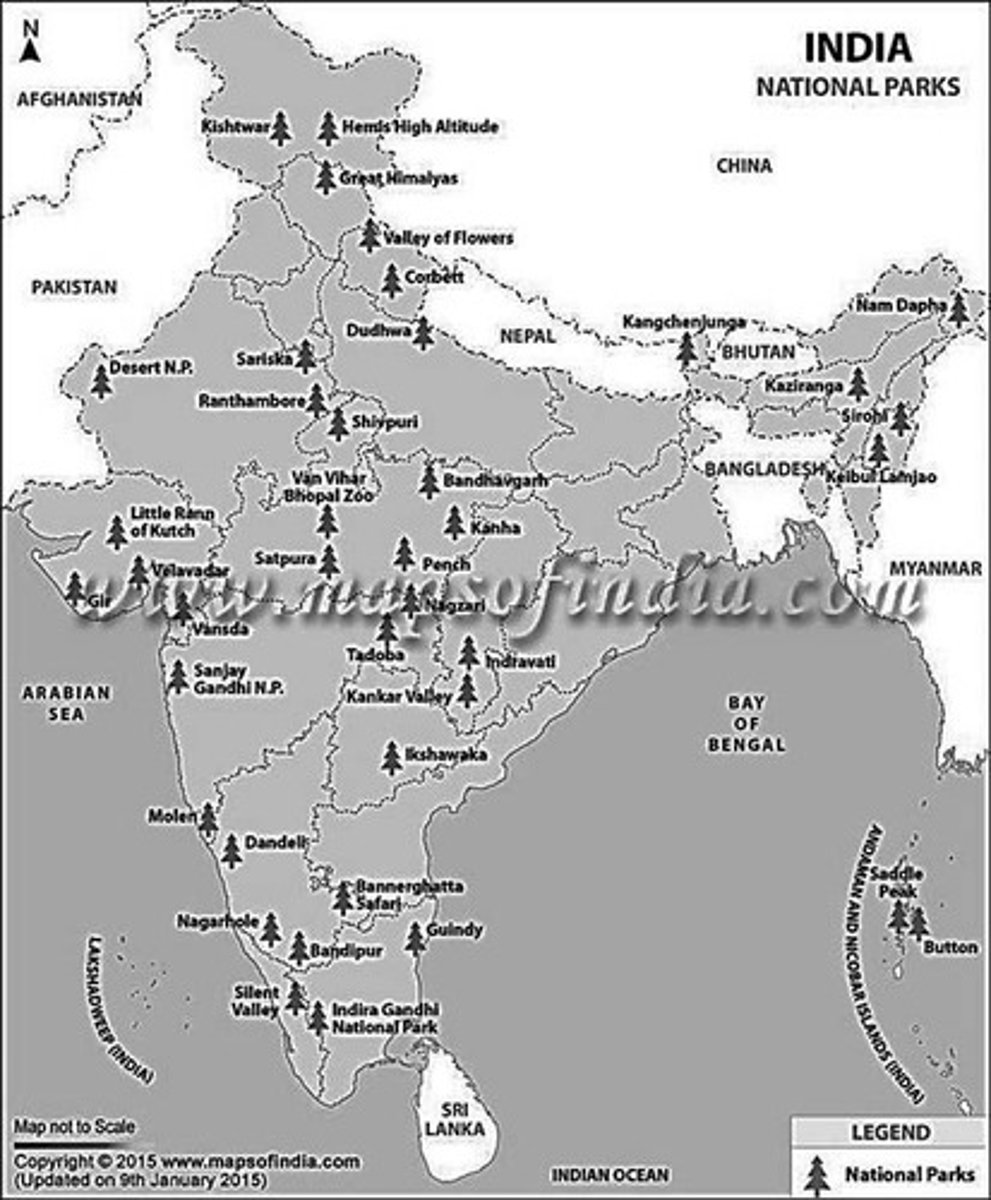
What are some examples of in-situ conservation areas?
Biosphere reserves, national parks, and wildlife sanctuaries.
How many protected areas (PAs) are there in India?
589 PAs, including 89 national parks and 500 wildlife sanctuaries.
What is the role of the IUCN Red Data List?
To assess the conservation status of species and provide information on their extinction risk.
What is one of the major impacts of climate change on biodiversity?
It forces species and ecosystems to migrate towards higher latitudes.
What are some examples of species that are endangered in India?
Tigers, rhinos, elephants, Siberian cranes, and vultures.
What is the impact of over harvesting medicinal plants?
It threatens the survival of those plant species.
What is the largest sanctuary in the Great Himalayan ecosystem?
Great Himalayan National Park, home to the snow leopard.
Which sanctuary is known for the Hangul or Kashmiri stag?
Dachigam Sanctuary.
What animals can be found in Kaziranga National Park?
Elephants, guar, wild boar, swamp deer, and various birds.
What is the purpose of gene banks?
To preserve germplasm for future needs, especially for endangered/extinct species.
What is the role of modern zoos in conservation?
To breed endangered species and prepare for their reintroduction into the wild.
Name one successful breeding program for crocodiles.
Madras Crocodile Trust Bank, which has bred three crocodile species.
What is the significance of the Biological Diversity Act 2002?
To conserve biological diversity and ensure sustainable use of its components.
What are the objectives of the Biological Diversity Act 2002?
To conserve biodiversity, promote sustainable use, and ensure equitable benefit sharing.
What is prohibited under the Biological Diversity Act 2002 regarding Indian genetic material?
Transfer outside the country without specific approval from the Indian Government.
What does the National Biodiversity Authority do?
Regulates biodiversity access and promotes conservation efforts.
What is the role of Biodiversity Management Committees (BMC)?
To manage local biodiversity resources and ensure community involvement.
Why is it important to encourage traditional crop varieties?
To maintain genetic variability and develop disease-resistant new varieties.
What is a challenge faced by farmers regarding traditional varieties?
Farmers often prefer cash crops for quick returns over traditional varieties.
What measures are taken to avoid inbreeding in breeding programs?
Careful management to prevent weak offspring development.
What is the purpose of the provisions in the Biological Diversity Act?
To ensure sustainable use of biological resources and protect indigenous knowledge.
How does the Biological Diversity Act support local communities?
By allowing them to have a say in the use of their resources and knowledge.
What is one of the functions of the National Biodiversity Authority?
To advise the central government on biodiversity conservation matters.
What is the significance of the Biodiversity bill 2000?
It was the first attempt to legally frame biodiversity conservation in India.
What are the benefits of breeding programs in zoos?
They provide animal needs and simulate wild habitats for better adaptation.
What is the aim of the successful breeding programs mentioned in the notes?
To reintroduce species into their wild habitats while addressing threats like poaching.
What is the role of the state biodiversity boards?
To coordinate state-level biodiversity conservation activities.