maths
 Call Kai
 Learn
Learn Practice Test
 Spaced Repetition
 Match
Match Flashcards
 Knowt Play
1/33

There's no tags or description
Looks like no tags are added yet.
Name | Mastery | Learn | Test | Matching | Spaced | Call with Kai |
|---|
No analytics yet
Send a link to your students to track their progress
34 Terms
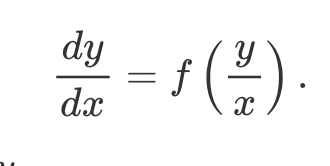
homogenous equation
sub in u=y/x then dy/dx = u + xdu/dx then do separable equations
modulus rule complex numbers
|z1 z2 | = |z1| |z2|
modulus and arg of z10
1) find z
2) put into reiarg form then re(cos(arg) + isin(arg))
3) reduce angle if needed
4) then simplify back to normal
all solutions of z6 = -8i
convert all the way to polar
put n in brackets
then do for n = 0,1,2,3,4,5 number of n depends on power STARTS FROM 0
principal logs
ln(w) = ln|w| + iArg(w)
cos(x)
eix + e-ix / 2
sin(x)
eix - e-ix / 2i
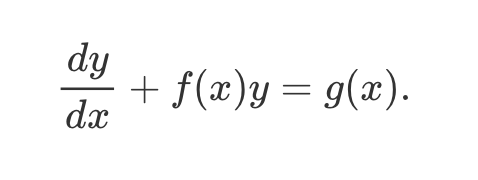
linear equation
make standard equation dy/dx + f(x)y = g(x)
make integrating factor I(x) = exp(integral of the part with y but not y)
then multiply standard equation by I(x) to both sides
whole left hand side becomes d/dx (integrating factor * y)
sec(x)
1/cos(x)
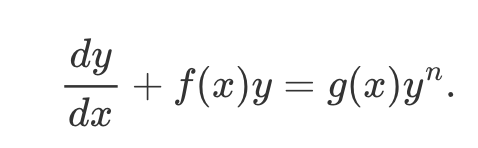
bernoulli equatinos
want to convert to linear
its bernoulli when n ≠ 0 ≠ 1 (power on the y not x)
multiply whole equation by (1-n)y-n
then substitute u = y1-n
homogeneous equation form
linear equation form
bernoulli equation form
e-ln(x)
1 / eln(x) = 1 / x
exact equation form
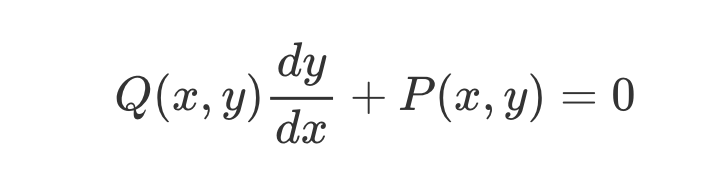
exact equation steps
check if they are exact by checking opposite partial derivatives Q/x P/y
integrate P respect to x
differentiate that respect to y
compare to Q thats you g(y)
write f(x,y) = integrated P + g(y)
set to constant A and solve for y
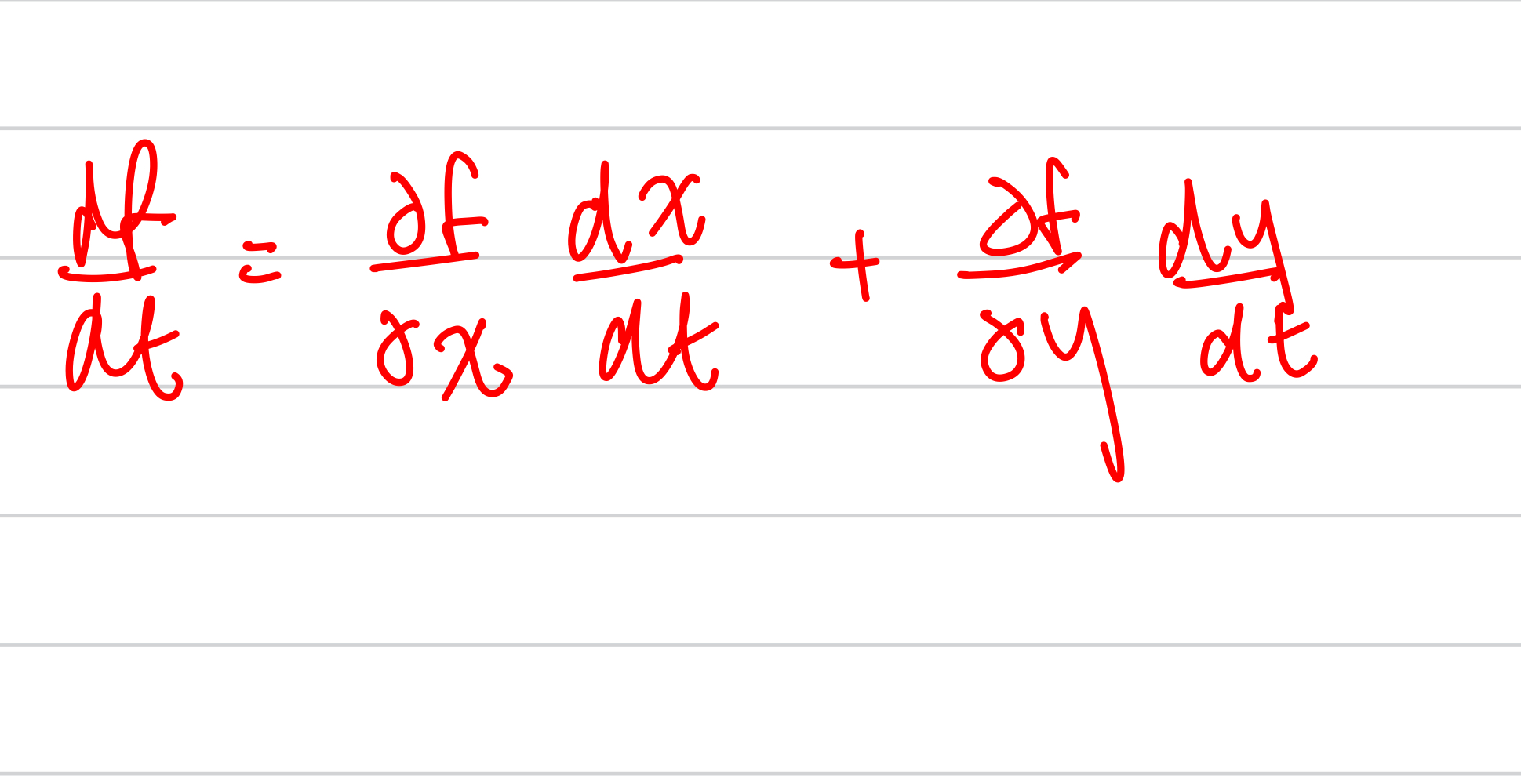
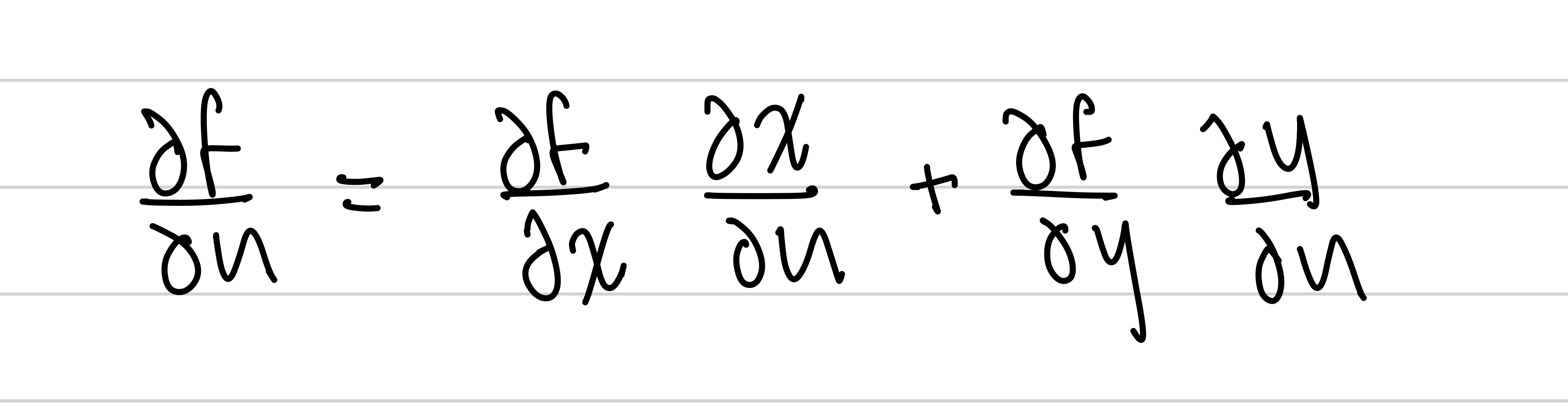
chain rule with parital derivatives
chain rule where f(x(u,v), y(u,v)
directional derivative in direction v
∇ f(p) ⋅ v / |v| = |∇ f (p)| cos(theta)
equation of plane that goes through point normal to vector n
(x - p) dot n = 0
equation of line through in direction v
x = p + tv
normal line to a surface S through point p where grad f is a normal vector to s
x = p + t ∇f(p)
normal line to a plane
x = p + tv
tangent plane to S at p
(x-p) dot (∇f(p)) = 0
so ∇f(p) is a normal vector to the surface
plane equation
(x-p) dot n = 0
critical points
find fx and fy and solve for x and y
those r critical points
find fxx, fyy, fxy
solve for discriminant and compare to formula book
LU decomposition
Lu=b (first)
Ux = u (then use u)
for L put opposite sign of what the row transformation is
at the end the original matrix A = LU
when does a matrix have an LU decomposition/can be factorised for LU
small matrix:
all three principal minors are not zero (eg. determinants of first element, 4 elements, whole thing)
big matrix:
strictly diagonally dominant = the absolute value of diagonal element in each row is greater than absolute value of sum of other elements
if not doesnt mean it doesnt have just a way of checking
PTLU decomp
PA = LU
A = PTLU
do LU decomp
PT means transpose so rows become columns
P is permutation matrix that rearranges rows - identity matrix and then swap the one to where row 2s one is etc.
jacobis method
will converge if matrix of coefficients is strictly diagonally dominant
make strictly diagonally dominant by swapping rows
for second iteration use only the old values from the iteration before
variable on left (k+1) variable on right is k
gauss-seidel
uses newest available value (so in same iteration)
will converge if positive definite or SDD
first equation is LHS (k+1) RHS (k)
next few equations are all (k+1)
when they give u starting conditions put it straight into first equation fro x
positive definite
symmetric so A = AT (transpose)
principal minors all positive
transpose of a matrix
rows become columns
SOR method
rearrange for variable then add eg. (1-w)x + w(rearranged equation)
for y = … y = (1-w)y + w(rearranged eq)
same as gauss seidel immiediately use new updates