PHRM3550 Liver
 Call Kai
 Learn
Learn Practice Test
 Spaced Repetition
 Match
Match Flashcards
 Knowt Play
1/80

There's no tags or description
Looks like no tags are added yet.
Name | Mastery | Learn | Test | Matching | Spaced | Call with Kai |
|---|
No analytics yet
Send a link to your students to track their progress
81 Terms
What are the key partakers that can be used to assess liver disease?
ALT
AST
ratio indicates injury
What is portal hypertension?
alters hepatic blood flow
can be induced by cirrhosis
How does portal pressure work normally?
low pressure venous capillary bed in the parenchyma and functional zones of the kidney
bathes cells in blood and lets it percolate
Mechanism of portal hypertension
elevation in venous bp
results in blood bypassing liver and going back into the systemic circulation
What is caused by portal hypertension?
loss of protective and clearance function
abnormalities in renal salt and water
increase in risk of GI hemorrhage
blood from Gi is filtered less effectively
Symptoms of Liver Failure
yellowing of eyes and skin (jaundice)
itching
fatigue
loss of appetite
GI bleeding
encephalopathy
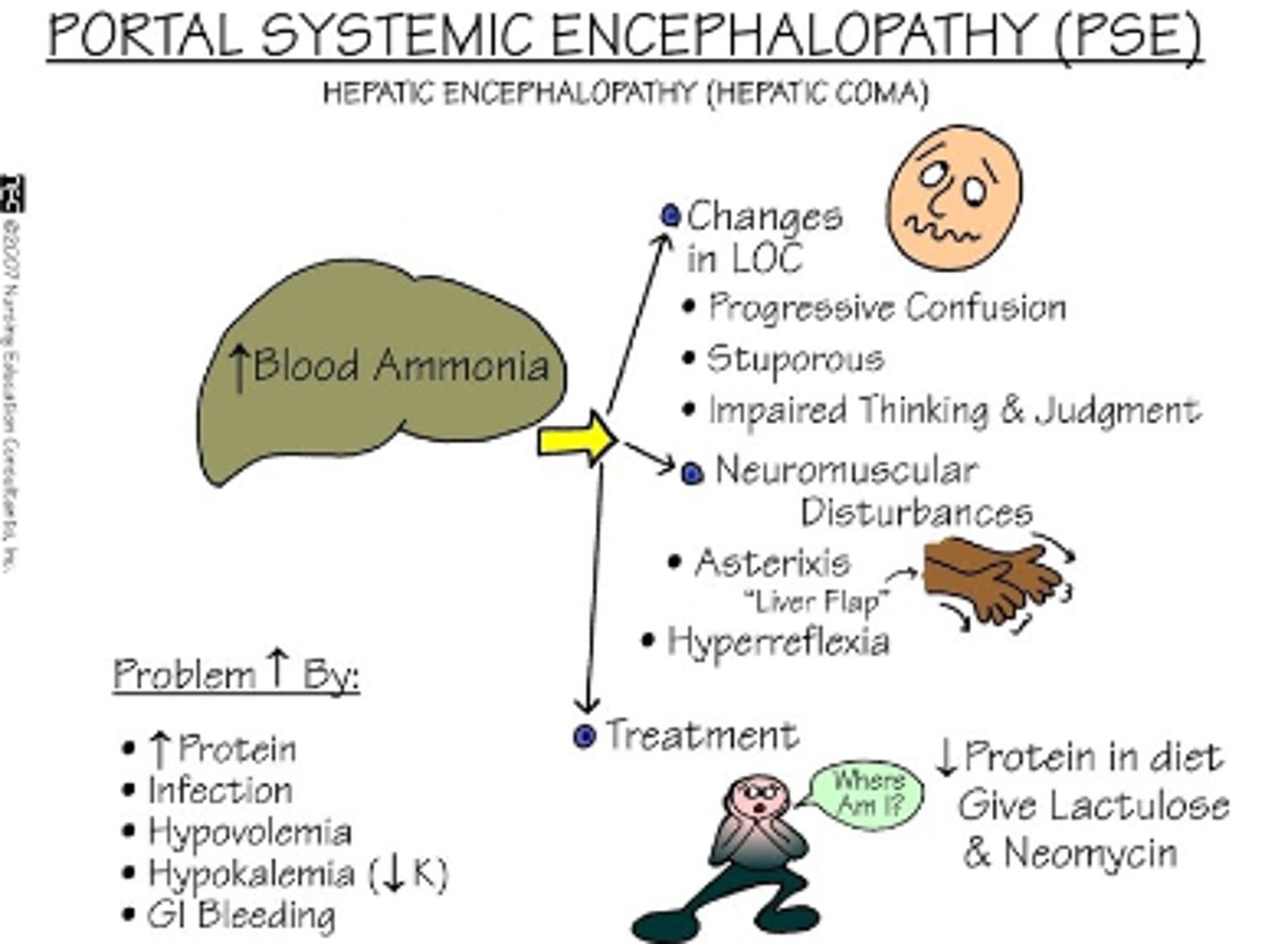
What is encephalopathy?
altered mental status due to liver failure
from failure of liver to clear poisons
malabsorption of vitamins
associated with coagulopathy
What is the manifestation of an issue with diminished energy generation and substrate conversion?
intermediary metabolism of carbohydrates is altered
alteration in lipid metabolism
change in protein metabolism
What is the manifestation of alterations in intermediary metabolism?
hypoglycemia from decrease in liver mass
hyperglycemia from portal-to-systemic shunting and decrease in post-prandial extraction of glucose
What is the manifestation of alterations in lipid metabolism?
fatty liver
dysfunction in lipoprotein function
change in bile flow
What does a dysfunction in lipoprotein function lead to?
deposition of cholesterol and triglyceride
What effect does a change in bile flow have?
from destruction of bile ducts
leads to decrease in lipid clearance
hyperlipidemia and xanthoma's
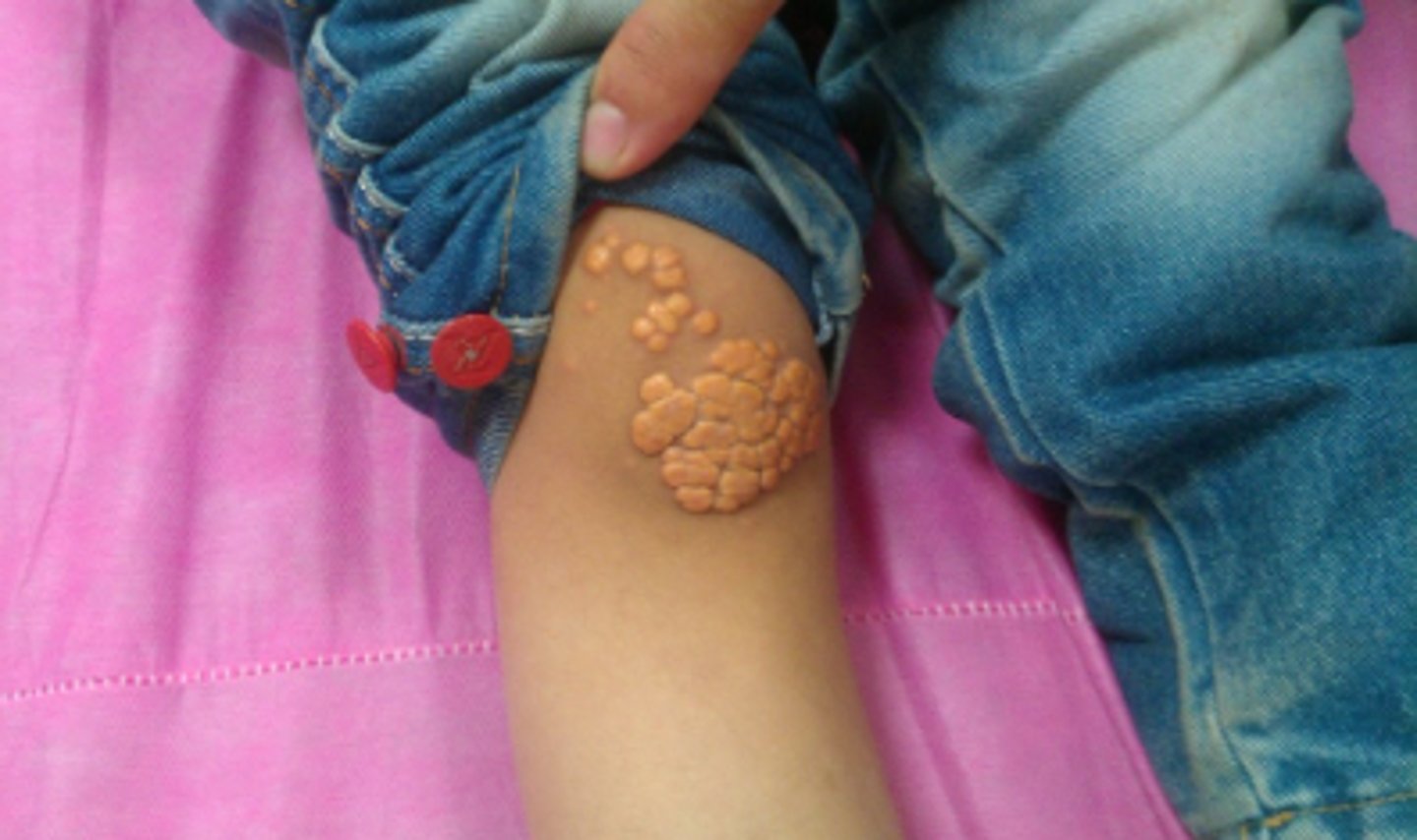
Xanthoma's
collection of cholesterol
can show up on skin
associated with hyperlipidemia
What does a change in protein metabolism cause?
altered mental status from decrease in amino acid metabolism
alteration in protein concentration and oncotic pressure
What does an alteration in protein concentration and oncotic pressure cause?
water retention
induce hepatic encephalopathy
alterations in ammonia
What does loss of solubilization and storage functions cause?
cholestasis
cholesterol issues
hemolysis
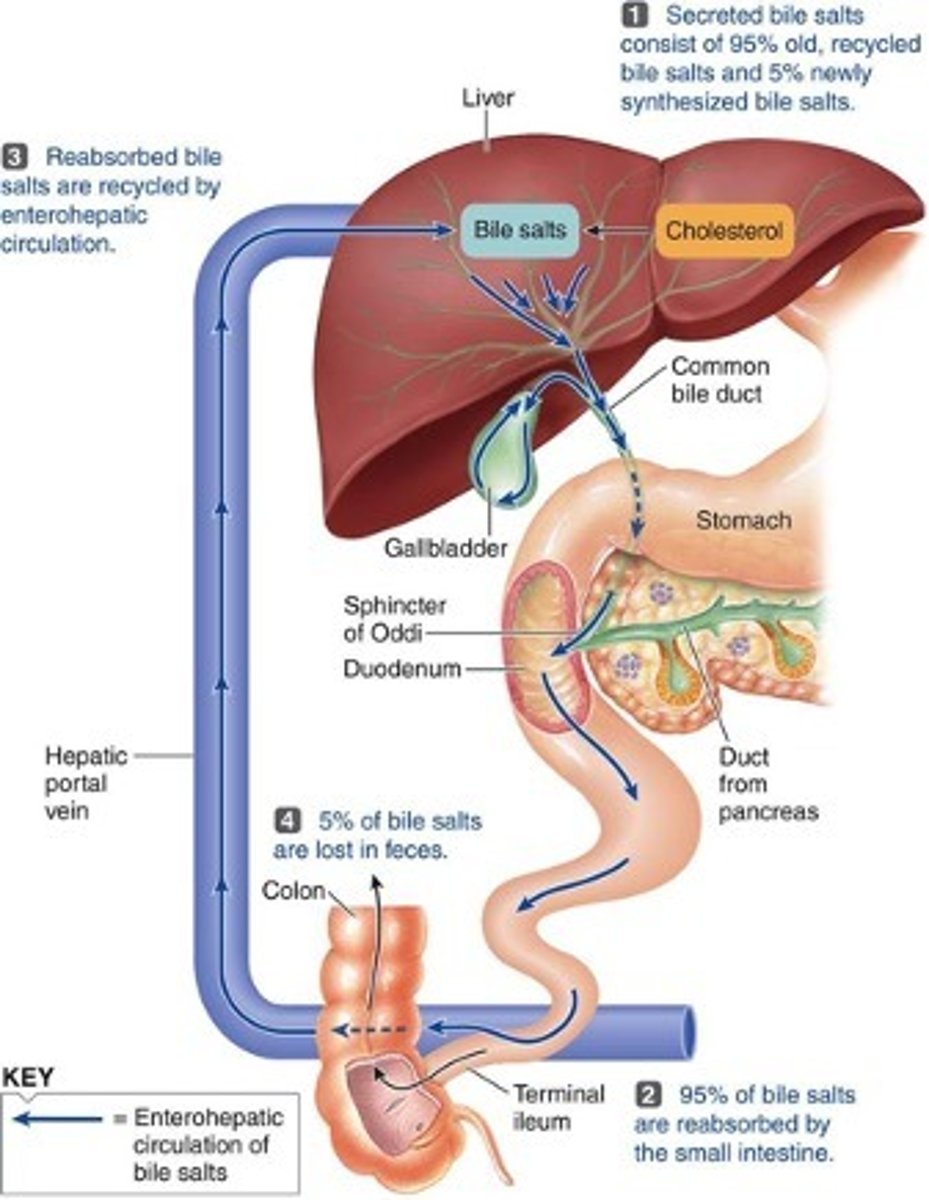
What is disordered secretion?
buildup of cholesterol and failure of bile secretion
Causes of disordered secretion
obstruction from formation of gallstones
leads to cholestasis
What is cholestasis?
condition where bile is blocked and doesnt flow from liver to duodenum
happens with little change in AST/ALT
Manifestations of cholestasis
cant solubilize lipids and fats
malabsorption of cholesterol and other fats
bile salts build up and are toxic
causes gallstones and jaundice
What is jaundice?
aka icterus
accumulation of bilirubin in ECF
What are the symptoms of jaundice?
urine is dark in color
yellowing of body parts like eyes and skin
What does a decrease in bile lead to?
deposition of cholesterol in skin
xanthoma and itching
How does hepatic disease affect the clearance functions?
altered metabolisms of ammonia
altered hormone clearance-> more hormones in body
altered sodium and water balance
cant clear bacteria and endotoxins
How does a liver disease affect clearance of bacteria and endotoxins?
usually cleared by Kupffer cells
can lead to severe systemic infection (sepsis)
How does liver disease affect metabolism of ammonia?
liver cant detoxify ammonia to urea
leads to hepatic encephalopathy
What increases ammonia?
increased protein intake
GI bleeding
systemic inflammation in response to infection
How does liver disease affect sodium and water balance?
often develop concurrent renal issues from difficulty excreting water
leads to hepato-renal failure
What is acute hepatitis?
liver inflammation of an abrupt onset characterized by liver cell death
What are the common causes of acute hepatitis?
viruses
all produce similar illness
isoniazid
ethanol
What is the clinical presentation of hepatitis?
variable
can be asymptomatic
sometimes only verified by clinical tests (AST/ALT)
cholestasis
hepatocyte necrosis
Symptoms of acute hepatitis
fatigue
weight loss
vomiting
right upper quadrant pain
jaundice
fever
splenomegaly
ascites
What causes cholestasis?
caused by obstruction, malignancy, metabolic disorders
What causes viral hepatitis?
Hep A
Hep B
Hep c
Hep D
Hep E
What is Hep A?
directly kills hepatocytes
induces immune response
spread through fecal-oral
usually mild in comparison to other viruses
can cause massive hepatocellular necrosis
What is Hep B?
transmitted by several routes
doesn't kill cells
most cases asymptomatic
How is Hep B transmitted?
sexual contact
contact with infected blood
bodily fluids
What does Hep B do to cells?
doesnt kill
infects
cells die from immune response
What are the symptoms/presentation of Hep B?
mild disease progression
excessive immune response may lead to failure
What is Hep C?
similar to Hep B but much greater proportion of cases progress to chronic hepatitis
How is Hep C transmitted?
blood
bodily fluid
needles
sexual intercourse
How is Hep C worse than Hep B?
causes more life-threatening consequences
higher incidence of end-stage liver disease
most common cause for liver transplantation
What is Hep D?
needs Hep B to work
much worse than Hep B
How does Hep D work?
risk factor for Hep D is Hep B
vaccination against Hep B protects against Hep D
What are the high risk groups for Hep D?
Hep B infected
injection drug users
hemophiliacs
What is Hep E?
unclassified RNA virus
spread via fecal-oral
may be cause of idiopathic hepatitis
What is toxic hepatitis?
acute hepatitis mostly caused by drugs
responsible for most cases of acute
incidence has been rising (acetaminophen most common)
What drugs cause acute toxic liver failure?
bromfenac
acetaminophen
troglitazone sulfate
HMG-CoA reductase (statins)
What are the signs of viral hepatitis?
cryoglobulinemia
What is cryoglobulinemia?
blood contains large amounts of protein called cryoglobulin
proteins become insoluble at low temps
precipitates block vessels and causes splotches
typically with Hep C
How does ethanol cause alcohol hepatitis?
causes indirect and direct injury
gets oxidized to acetaldehyde and then acetate
alters generation of NADH and ATP levels
What does ethanol-induced liver injury lead to?
fatty acid synthesis
fat accumulation
hypoglycemia
What role does acetaldehyde play in alcoholic hepatitis?
from oxidation of ethanol
interacts with enzymes
causes direct toxicity
What is chronic hepatitis?
inflammatory disease of the liver lasting for more than 6 months
What are the characteristics of chronic hepatitis?
cell necrosis
inflammation
persist for at least 6 months
What are the causes of chronic hepatitis?
viral infections
drugs and toxins
genetic
metabolic disorders
autoimmune disorders
What are the symptoms of chronic hepatitis?
fatigue
malaise
low grade fever
mild intermittent jaundice
mild hepatosplenomegaly
cirrhosis
variceal bleeding
coagulopathy
encephalopathy
ascites
What drugs cause chronic hepatitis?
ethanol
isoniazid
acetaminophen
What are the metabolic disorders that cause chronic hepatitis?
alpha 1 anti-trypsin deficiency
Wilsons disease
immune-mediated
What is the pathogenesis of chronic viral hepatitis?
viruses
prolonged exposure to drugs/toxins
immune response is inadequate to clear
person becomes chronic carrier
viral DNA is integrated into genome
What is the most common cause of chronic liver disease in USA?
chronic viral hepatitis
What causes alcoholic chronic hepatitis?
repeated episodes of acute injury
results in necrosis, fibrosis, and regeneration
leads to cirrhosis
What is non-alcoholic fatty liver disease?
caused by obesity
chronic
manifests as hepatics steatosis
What is the most common disease in western and industrialized world?
non-alcoholic fatty liver disease
What risk factors are strongly associated with non-alcoholic fatty liver disease?
obesity
dyslipidemia
insulin resistant type 2 diabetes
What can non-alcoholic fatty liver disease progress to?
cirrhosis
hepatocellular carcinoma
end-stage-liver disease
What are the clinical manifestations of mild chronic hepatitis?
asymptomatic
anorexia
malaise
fatigue
hepatic symptoms
jaundice
palmar erythema
spider telangiectasia
What symptoms are not present in mild chronic hepatitis?
cirrhosis
portal hypertension
What are the clinical manifestations of severe chronic hepatitis?
variable presentation
cirrhosis
variceal bleeding
encephalopathy
coagulopathy
hypersplenism
ascites
What is cirrhosis?
condition in which liver doesnt function properly due to long term damage
irreversible distortion of normal liver architecture and function
usually slowly progressing over years
What are the characteristics of cirrhosis?
hepatic injury
fibrosis
nodular regeneration
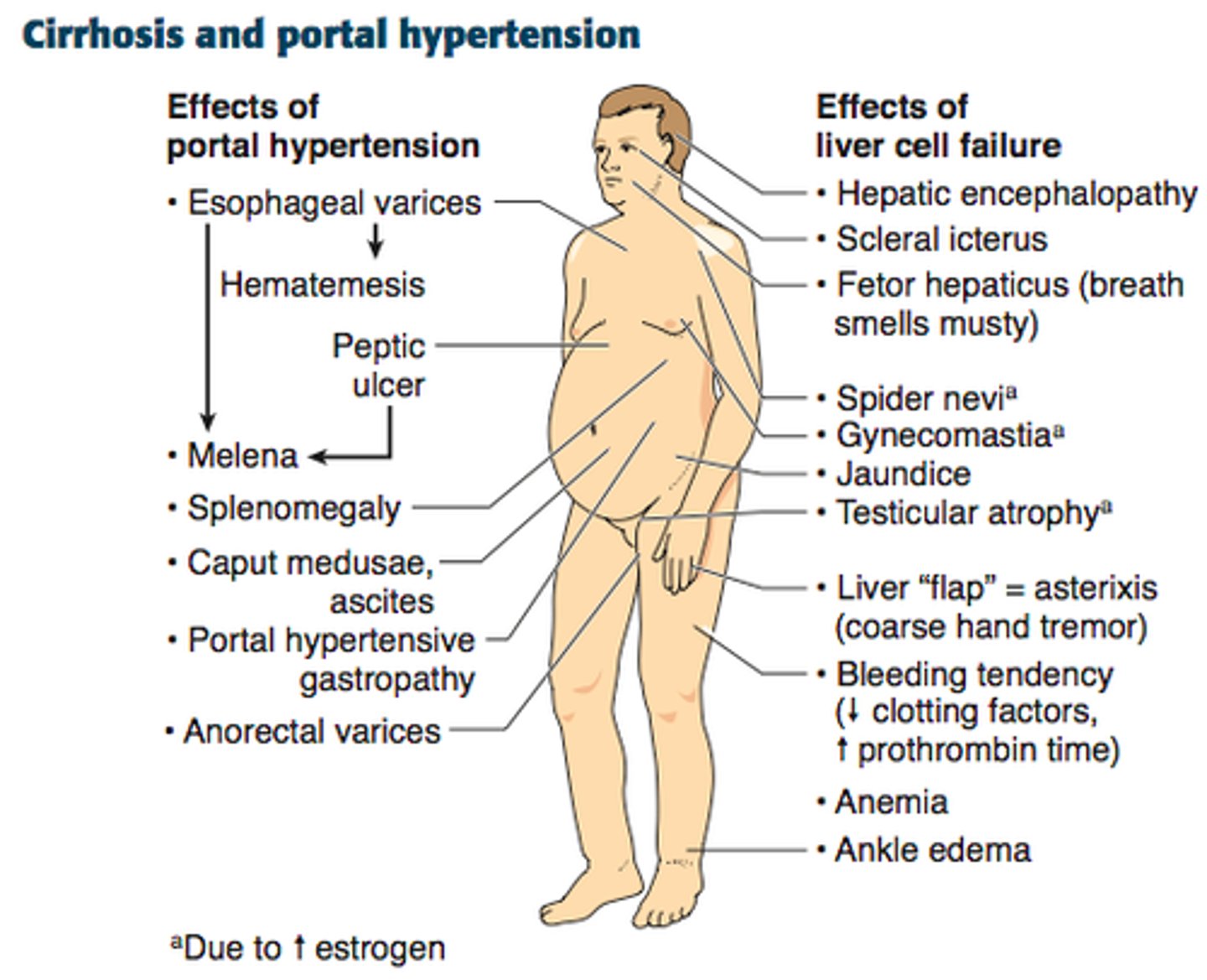
What is the clinical presentation of cirrhosis?
result of hepatocellular dysfunction
portal hypertension
not all pt will develop life-threatening illness
40% diagnosed on autopsy
What is the etiology of cirrhosis?
chronic and progressive
alcohol is most common in US
What causes cirrhosis in other countries?
infectious agents
Hep B
Hep C
chronic biliary obstruction
drugs
What is hepatic fibrosis?
mechanism of cirrhosis
occurs in 3 situations
secondary to inflammation and subsequent activation of immune response
part of wound healing process
What does hepatic fibrosis happen in response to?
agents that induce primary fibrogenesis
Hep B
carbon tetrachloride
What causes alcohol-induced cirrhosis?
chronic alcohol abuse
formation of acetaldehyde that interacts with cellular proteins
What are the clinical manifestations of cirrhosis?
fatigue
loss of vigor
weight loss
GI symptoms like vomiting, jaundice, and tender hepatomegaly
What are the extrahepatic syndromes associated with cirrhosis?
palmar erythema
spider angiomas
parotid and lacrimal enlargement
muscle wasting
gynecomastia
testicular atrophy
menstral irregularities
What is ascites?
fluid in peritoneal cavity leads to an increase in abdominal girth
associated with poor long-term survival in cirrhosis patients
What is the relationship between hepatocellular carcinoma and cirrhosis?
cirrhosis is present in majority of HCC cases
HCC risk increases in cirrhosis pts
Hep B accounts for 50% of all HCC