Bio 201 Exam 1 building Blocks/macromolecules
 Call Kai
 Learn
Learn Practice Test
 Spaced Repetition
 Match
Match Flashcards
 Knowt Play
1/31

There's no tags or description
Looks like no tags are added yet.
Name | Mastery | Learn | Test | Matching | Spaced | Call with Kai |
|---|
No analytics yet
Send a link to your students to track their progress
32 Terms
what are almost all of the molecules in a cell based on?
carbon
carbon forms...
highly stable covalent bonds
methyl composition?
CH3
hydroxyl composition?
OH-
carboxyl composition?
COOH
carbonyl composition?
C=O
phosporyl composition?
(PO3)2-
amino composition?
NH2
composition of macromolecules in cells
30% chemicals
Macromolecules:
1% DNA
6% RNA
15% protein
2% polysaccharide
70% H2O
condensation rxn
macromolecules are made, lose H2O, energetically unfavorable
hydrolysis rxn
macromolecules are broken down, use H2O, energetically favorable
which macromolecules are made/broken down by condensation/hydrolysis?
carbohydrates, proteins, nucleic acids
what is the repeating structure of carbohydrates?
(C1 H2 O1)n
n can be
3, 4, 5, 6
trioses
pentoses
hexoses
carbohydrates properties...
sources of stored energy,
transport chemical energy (energy in covalent bonds),
carbon skeletons for other molecules
what structure do carbohydrates have in aqueous solution?
ring structure
glucose is stored in a cell as...
glycogen in animals
starch in plants
polymerization of sugars:
what bond combines monosaccharides to form disaccharides?
glycosidic bond
disaccharides -> oligosaccharides -> polysaccharides
What are the four groups that form the amino acid backbone? What is the 5th group?
1. central carbon
2. amino group (H3N+)
3. Carboxyl group (COO-)
4. single hydrogen
5. R group (20 different amino acids that make up proteins)
Polymerization of amino acids:
what bond joins together amino acids?
peptide linkages/bonds
polypeptides are read left -> right. Which terminus is on which side?
Left: amino N terminus
Right: carboxyl C terminus
What allows polypeptide chains to twist?
R groups, covalent bonds surrounding the central carbon are flexible
nucleotide consists of (structure)
1. nitrogen containing base
2. five carbon sugar (carbon 1 always connects to the base)
3. one or more phosphate groups
how do nucleic acids carry genetic info?
in the sequence of its nucleotides
How can you distinguish DNA and RNA?
1. Nitrogenous bases:
thymine is only found in DNA. Uracil replaces T in RNA.
2. Sugar groups:
ribose (RNA) v. deoxyribose (DNA)
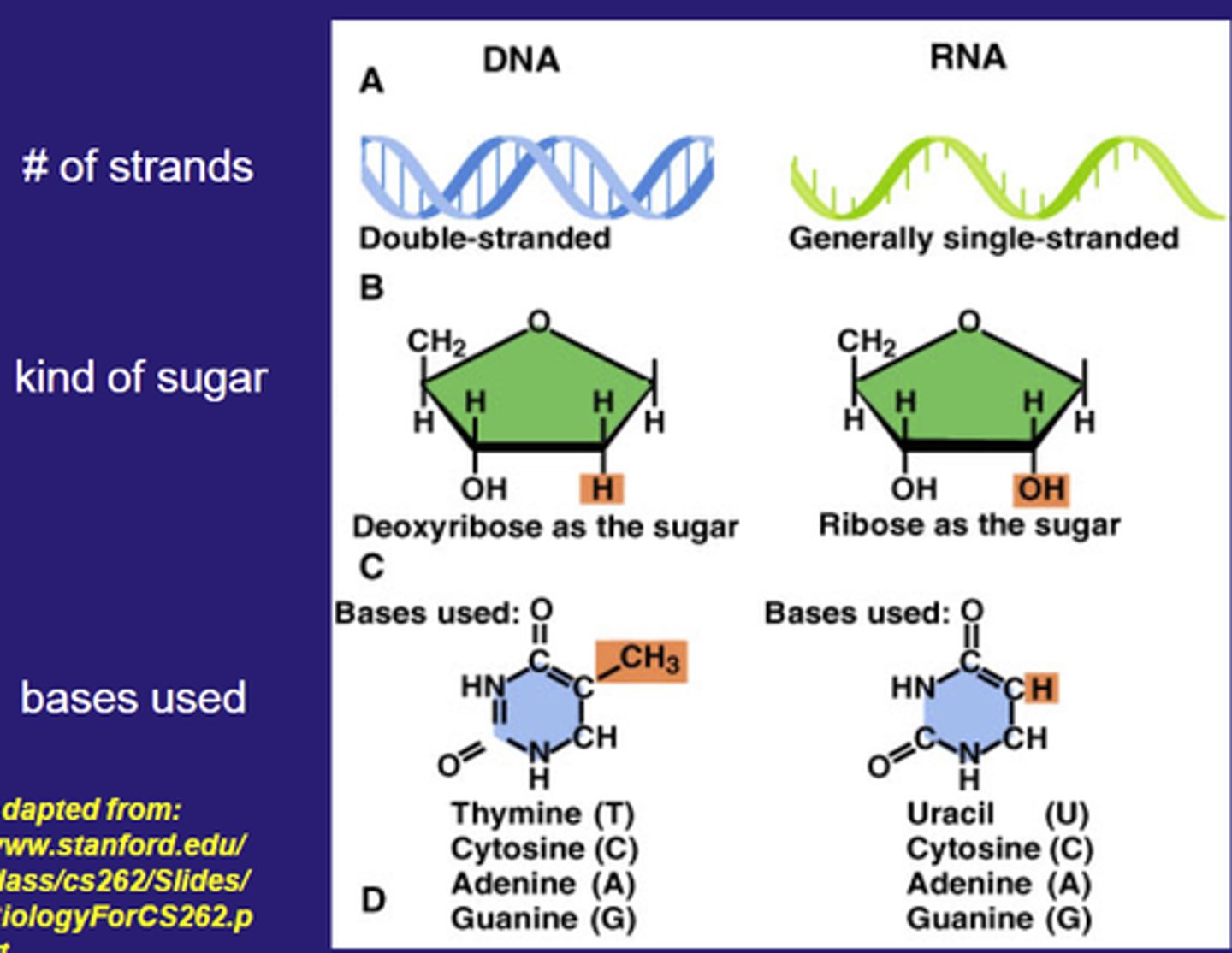
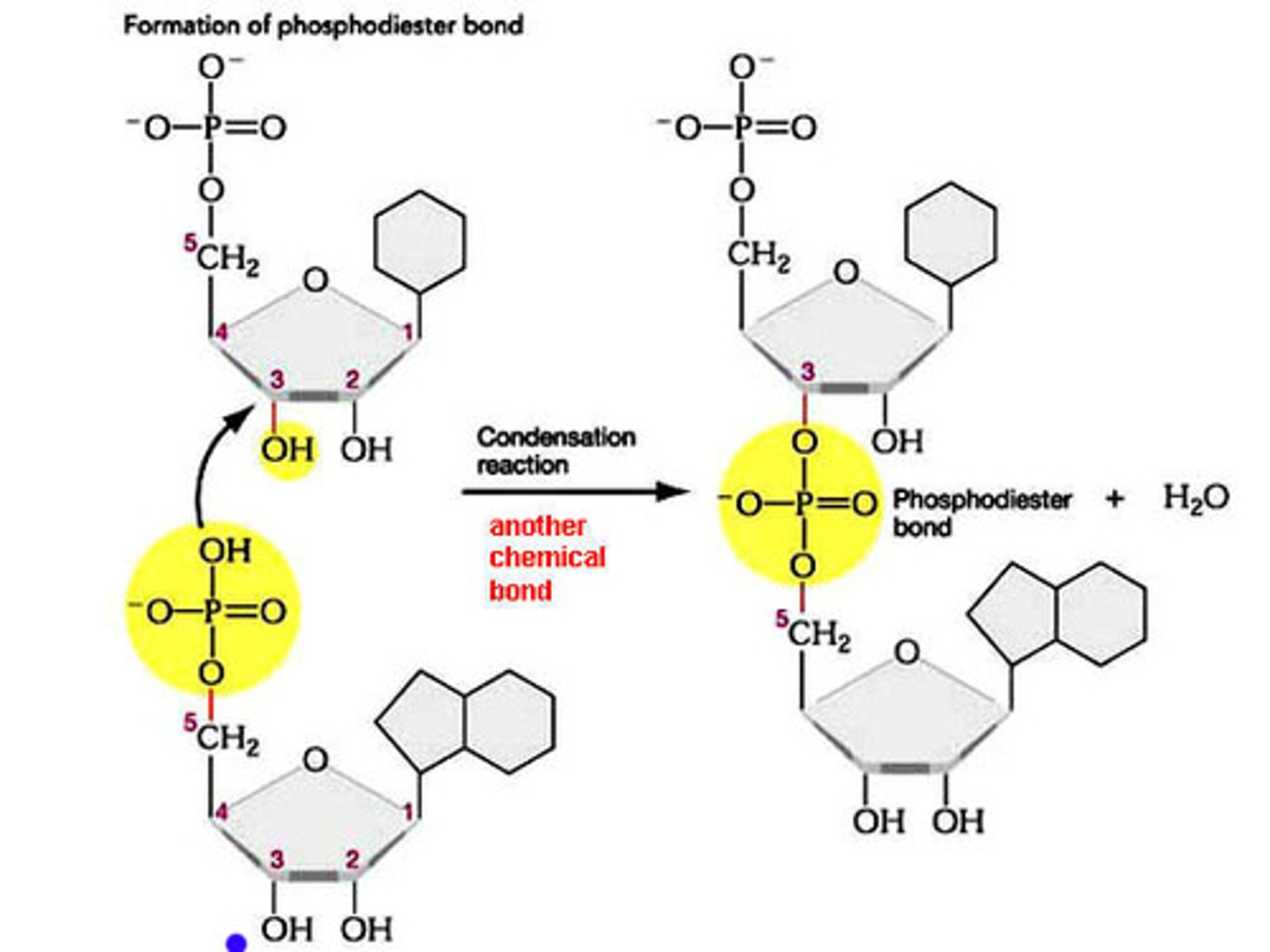
polymerization of nucleotides:
what bonds join nucleotides?
phosphodiester bonds
bonds form between the hydroxyl group on a sugar and a phosphate group attached to another sugar of the next nucleotide
Strands of DNA and RNA have polarity
5' and 3' ends of nucleotide chains
What are the two chemically distinct regions of a lipid?
1. hydrophobic hydrocarbon tail
2. hydrophilic carboxylic acid head (usually covalent attached to head groups)
what are the functions of lipids?
1. make up membranes of the cell (phospholipids)
2. are stored in the cytosol in droplets (triacylglycerols) as an energy reserve
Phospholipids make up biological membranes:
what is the structure of a phospholipid?
2 fatty acid tails attached to a glycerol and hydrophilic head group
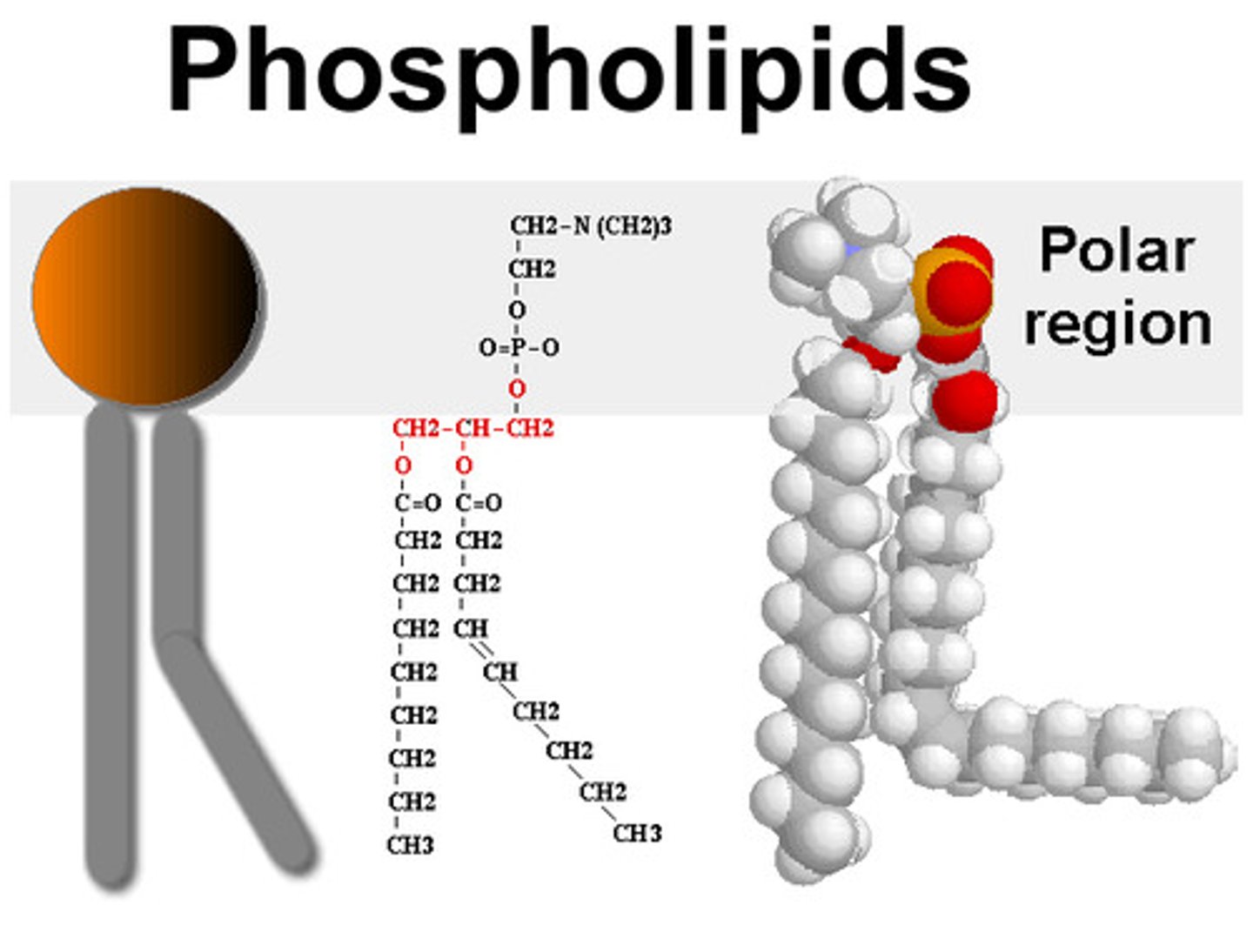
Amphipathic nature promotes the formation of...
a membrane in aqueous solution
"lipids don't form traditional polymers" explain why
there are no covalent bonds between adjacent lipid molecules