NEUR 334: Brainstem III (Reticular Formation)
 Call Kai
 Learn
Learn Practice Test
 Spaced Repetition
 Match
Match Flashcards
 Knowt Play
1/26

There's no tags or description
Looks like no tags are added yet.
Name | Mastery | Learn | Test | Matching | Spaced | Call with Kai |
|---|
No analytics yet
Send a link to your students to track their progress
27 Terms
What is the reticular formation
Its the central core of diffuse nuclei that runs through the entire brainstem
Which structures does the reticular formation join rostrally and caudally
Joins rostrally with some of the nuclei in the diencephalon
Joins caudally with intermediate gray matter of the spinal cord
The reticular formation has rostral and caudal divisions, what does each division consist of
Rostral reticular formation
Mesencephalon
Rostral Pons
Caudal reticular formation
Caudal pons
Medulla
What structure does the rostral reticular fromation work with and what does this maintain
Rostral reticular formation works with diencephalon
Maintains conscious and alert state (awake and alertness)
wakefulness
Pain perception (I “feel pain”) [not the same as NOCICEPTION)
What structure does the caudal reticular formation work with and what does this interaction allow
Works with cranial nerve nuclei and spinal cord
Carry out somatic motor, reflex, and autonomic function
sleep!!
respiration and cardiovascular
Nociception
What are central pattern generators in the caudal reticular formation?
Neural circuits in the caudal pons and medulla that generate automatic, rhythmic motor patterns (chewing, swalloing, respiartion) without constant cortical input
Where is the reticular formation located
Tegmentum of the brainstem
Some of the well characterized nuclear groups in the RF are for neurotransmitters, specifically, which neurotransmitters?
Ach
DA
NE
5-HT
Ha
What are the other nuclei/systems associated with (but not part of) the RF
Periaqueductal gray matter = controlling pain
Chemotactic trigger zone (medulla) = nausea
Some cranial nerve nuclei
In COMAS, what systems are affected
Disruption / lesions of the rostral reticular formation within the ARAS
Bilateral lesions involving
Intralaminar nuclei
cerebral cortical areas
What are the three levels of consciousness?
Alertness = without alertness → coma
Attention = allows person to focus. Damage here → neglect, inattention but not coma
Awareness = 3 with 2 and 1 is FULL conscious experience
What neural strucutres are required for alertness
Reticular formation (ARAS)
Thalamus
Cortex
What additional brain regions is required for attention beyond alertness
Everything needed in alertness
frontoparietal association cortex
Alertnes + frontoparitetal network = attention
What additional processes are required for awareness beyond attention
Everything needed for alertness and attention
Emotional, sensory and motor information
What system in the caudal reticular formation is involved in modulating and inhibiting pain transmission
Widespread neurotransmitter system for Serotonin
How does the caudal reticular formation modulate pain transmission?
Neurons located in the raphe nuclei and periaqueductal grey send thier axons into the spinal cord to regualte activity of the anterolateral system (pain and temperature pathway)
Do non-REM and REM sleep involve the same or different pathways
Different pathways
True or False: Sleep in an active rpocess and is very similar to being “unconscious”
False!
Sleep is an ACTIVE process and is very DIFFERENT to being “unconsious”
Is sleep simply the abscence of wakefulness
No. Sleep is an active,neurologically distinct process involving specific neural circuits.
Wakefulness and sleep are not opposites but coordinated active states.
What additional brain strucutre plays a significant role in sleep
The hypothalamus
Why can excessive sleepiness or drowsiness be clinically signicant
Because drowsiness can result from multiple neuroanatomical disruption, some of which may indicate a meidcal emergency
There are many regions in the medulla that generate rhythms for homeostatic respiration functions, give an example
Prebotzinger complex
pattern generator for inspiration / expiration function
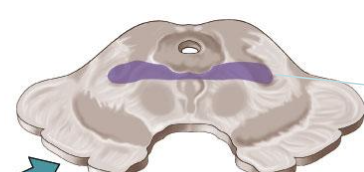
Mesencephalon
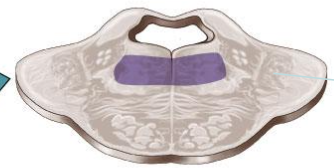
Rostral Pons
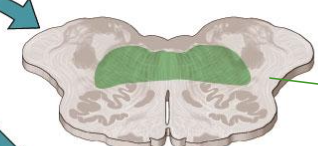
Caudal Pons
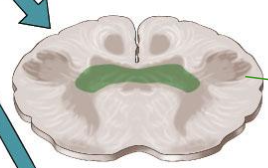
Medulla
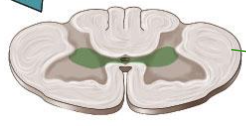
Spinal crod