3.6: Excretory system in animals
 Call Kai
 Learn
Learn Practice Test
 Spaced Repetition
 Match
Match Flashcards
 Knowt Play
1/9

There's no tags or description
Looks like no tags are added yet.
Name | Mastery | Learn | Test | Matching | Spaced | Call with Kai |
|---|
No analytics yet
Send a link to your students to track their progress
10 Terms
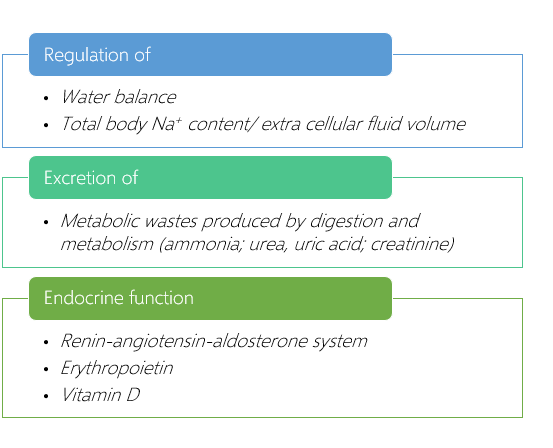
Roles of the excretory system:
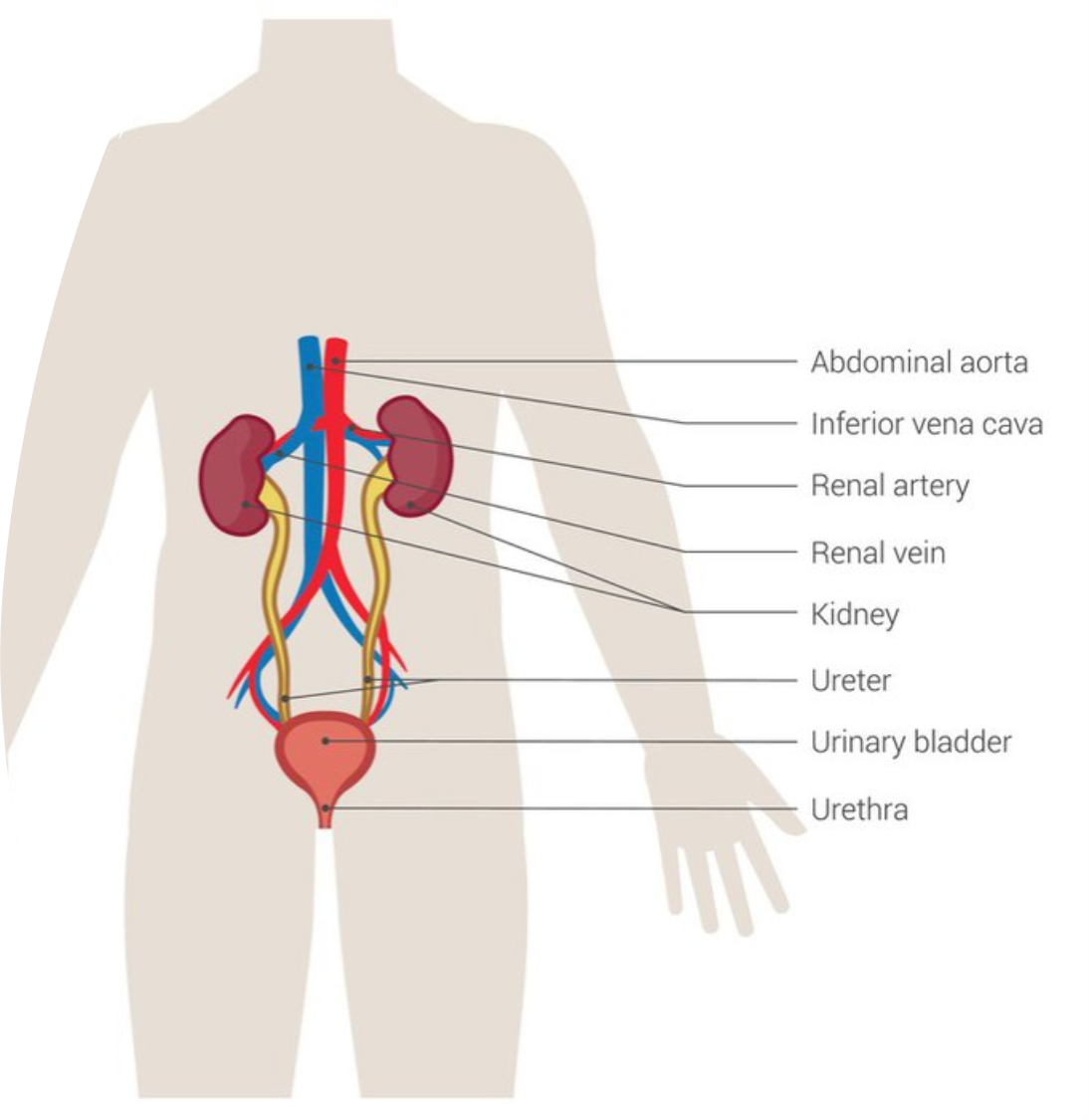
Kidneys
•
•Two bean shaped organs located at the back of the upper abdomen.
•Large blood supply - at rest approximately 25% of total cardiac output.
•Encased in protective layer of fat.
•
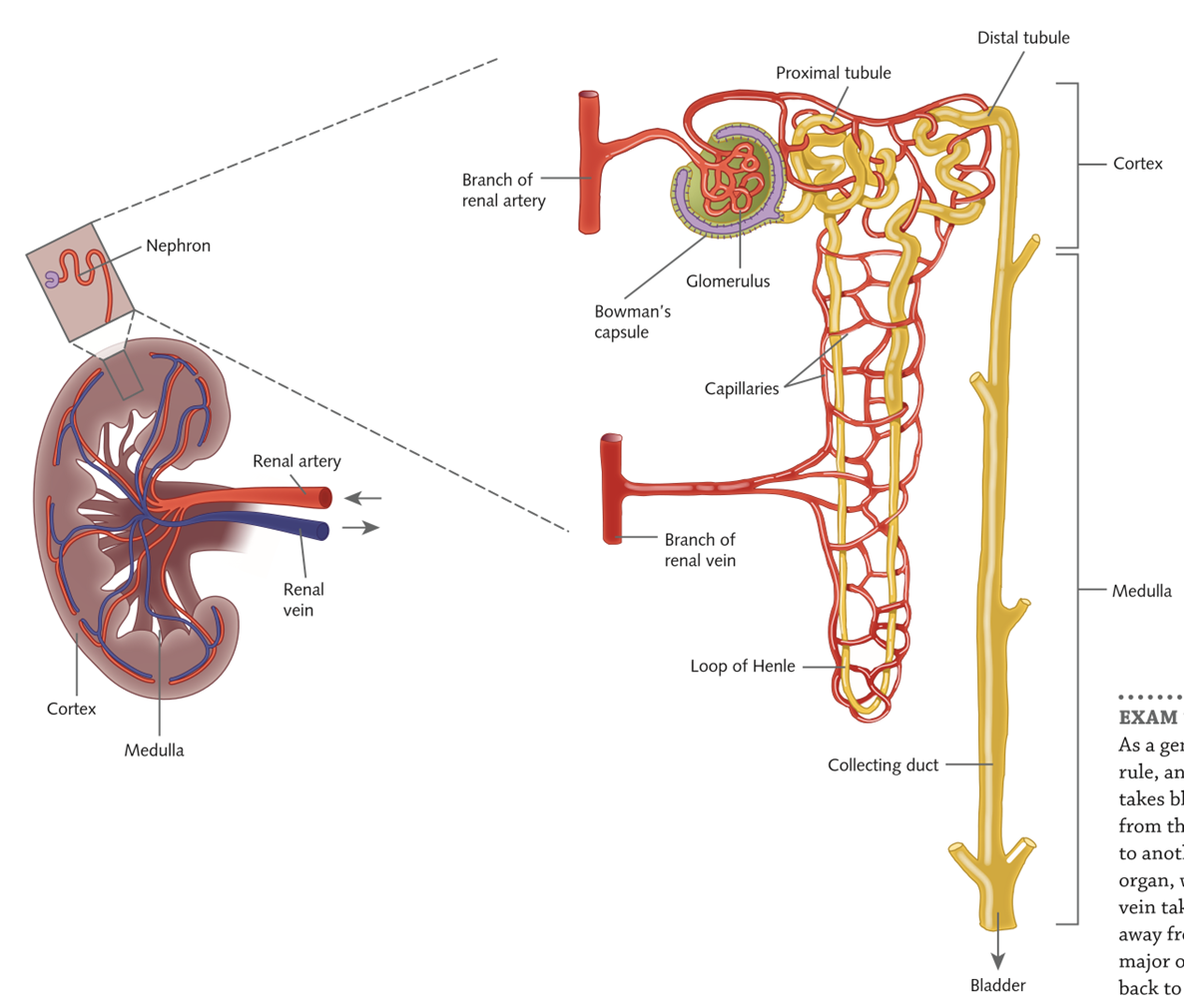
The nephron
•The nephron is the functional unit of the kidney.
•It is the part of the kidney that filters the blood and produces the urine.
•Each kidney has around one million nephrons.
•
•
The glomerulus
•Each nephron contains a ball of capillaries called a glomerulus. This is situated inside the Bowman’s capsule.
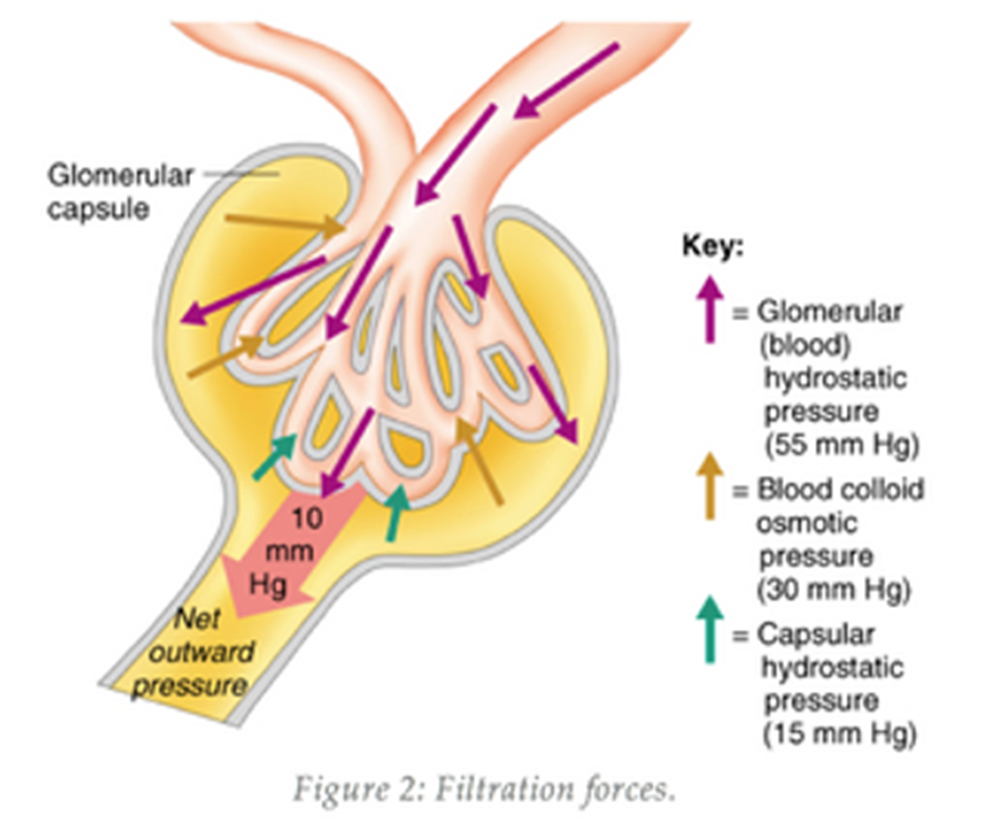
•The blood here is under very high pressure from the renal artery and this pressure forces some of the water and solutes (glucose, amino acids, urea and mineral salts) out of the blood.
Production of urine
•The production of urine involves four processes, each process occurs in a different area in the nephron. The four processes are
•Filtration
•Reabsorption
•Secretion
•Excretion
•
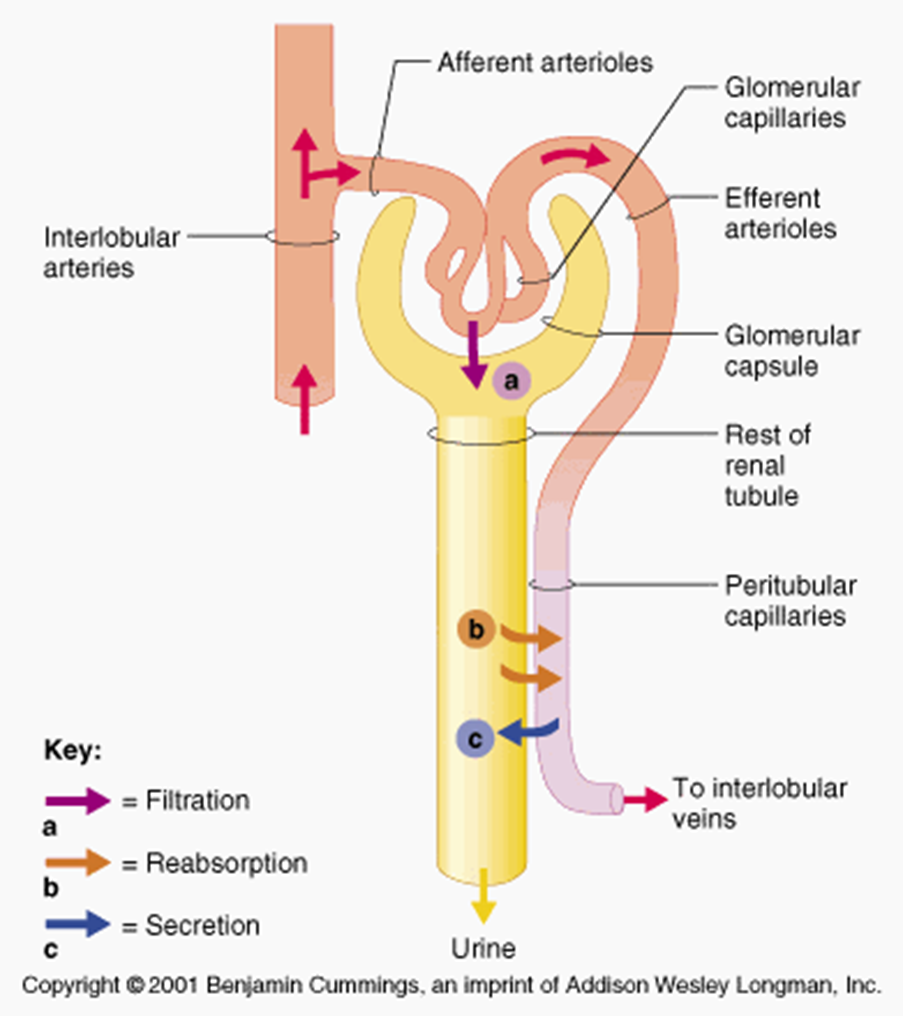
Filtration
•The cells of the glomerulus and the Bowmans capsule act like a sieve, allowing small molecules and ions to pass through to form the glomerular filtrate.
•The filtrate moves into the proximal tubule and then to the loop of Henle and finally to the distal tubule.
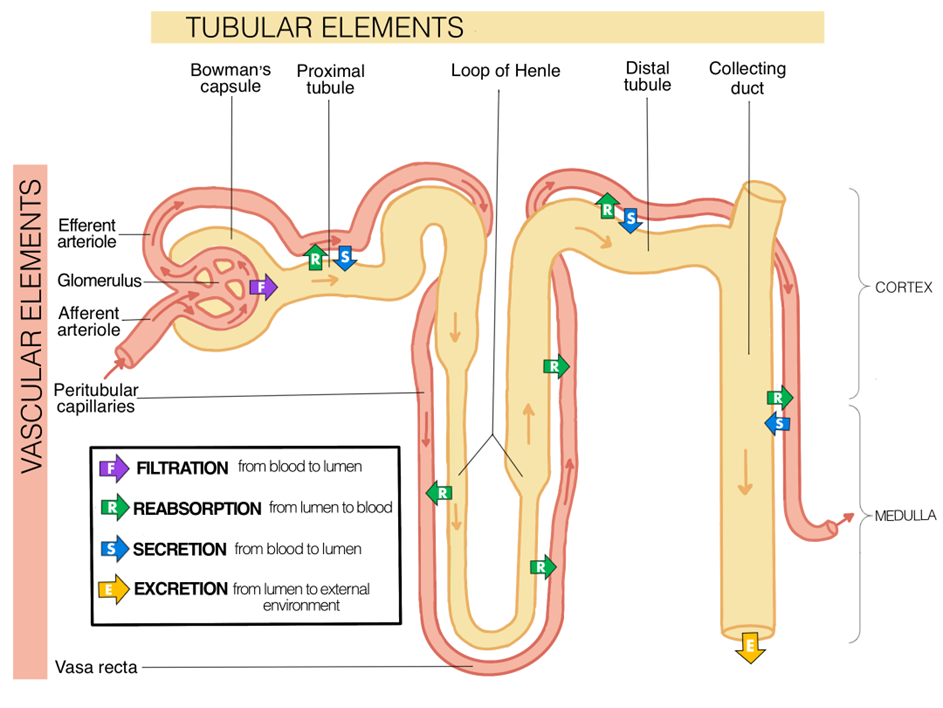
Reabsorption and secretion
•A second capillary network around the tubules help with reabsorption depending on how much is needed by the body to maintain a relatively constant concentration of body fluids.
•Reabsorption is the process of reclaiming valuable substances from the filtrate back into the blood.
•Secretion is the process of extracting substances from the body fluids into the filtrate.
•
•
•
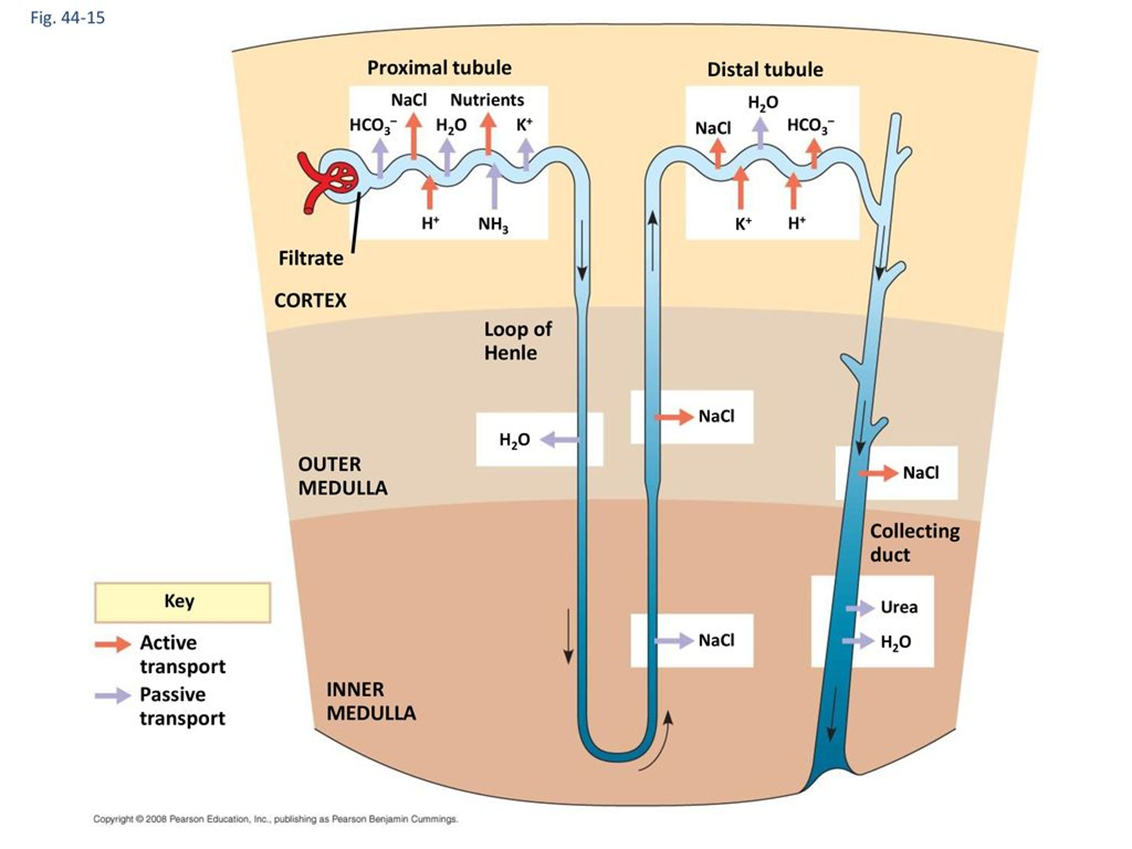
Reabsorption and secretion
•Both passive and active transport process are involved.
Excretion
•On average about 600ml of fluid flows through a kidney every minute.
•Approximately 20% of the fluid, 120ml, is filtered in the nephron, with 119ml being reabsorbed and 1 ml becoming urine.
•Urine is 95% water with the remaining 5% made of dissolved salts urea and a few other substances.
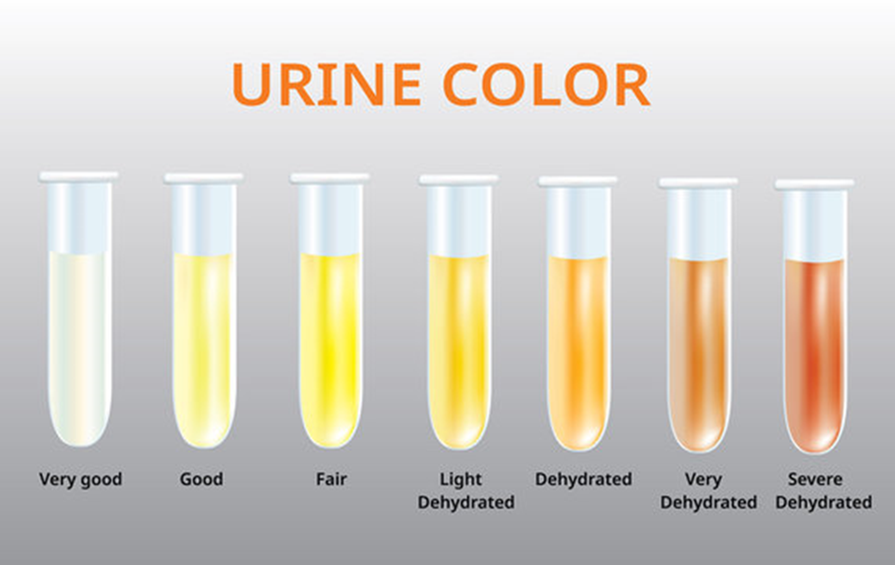
•The body adjusts for excess water intake by decreasing the volume of water reabsorbed and therefore increasing the volume of dilute urine excreted.
•Conversely, it adjusts for increased exercise or decreased water intake by reducing the amount of water reabsorbed, therefore producing a smaller volume of concentrated urine.
•
Urination
•The urine from all the collecting tubules from one kidney collects in the renal pelvis and empties into the ureter.
•The ureters from each kidney carry the urine to be temporarily stored in the bladder.
•At intervals, the muscle sphincters of the bladder relaxes, releasing the urine through the urethra to the outside in the process of urination.
•