Labor Markets and Wages: Microeconomic Principles and Demand-Supply Analysis
 Call Kai
 Learn
Learn Practice Test
 Spaced Repetition
 Match
Match Flashcards
 Knowt Play
1/53

There's no tags or description
Looks like no tags are added yet.
Name | Mastery | Learn | Test | Matching | Spaced | Call with Kai |
|---|
No analytics yet
Send a link to your students to track their progress
54 Terms
What is the primary focus of microeconomic analysis of labor markets?
The wages and number of jobs in a particular occupation.
What does the maximum wage firms are willing to pay depend on?
The Marginal Productivity Theory of Resource Demand.
How is the value of the Marginal Product of Labor (MPL$) defined?
The additional revenue received when a firm adds one more unit of labor.
What happens to the MPL$ as the quantity of labor increases?
The MPL$ decreases due to diminishing returns.
What is the Law of Demand for Labor?
As the wage of labor increases, the quantity of labor demanded will decrease, and vice versa.
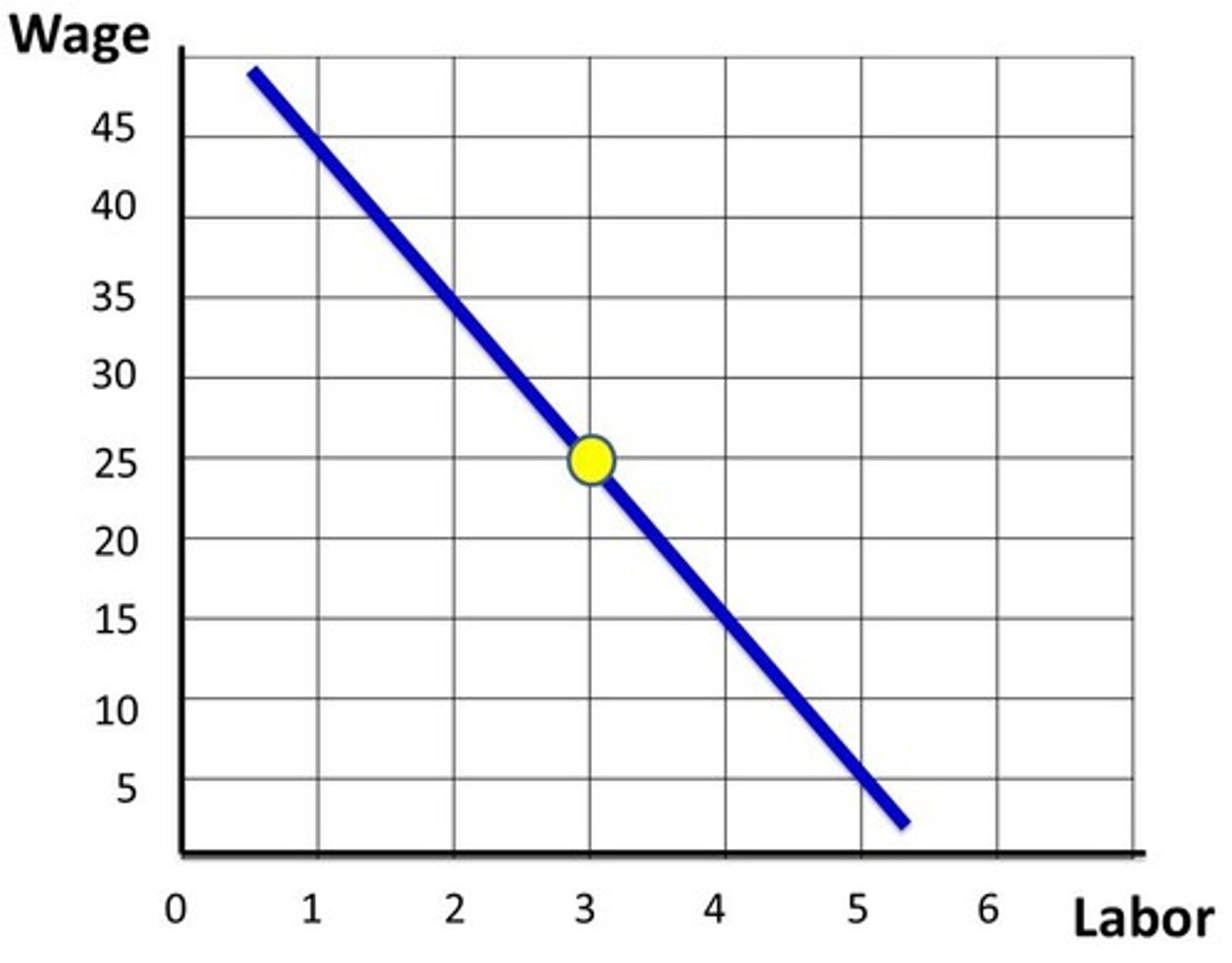
What factors can shift the labor demand curve?
Demand for the firm's output, availability/price of substitute inputs, price of complementary inputs, productivity of labor, and the number of firms hiring.
What is the relationship between the wage and the quantity of labor demanded?
An inverse relationship; as wages increase, fewer workers are demanded.
What is the role of firm and worker behaviors in labor markets?
They provide a deeper explanation of wage and quantity outcomes.
What do taxes, subsidies, and regulations affect in labor markets?
They affect labor market outcomes and the levels of competition.
What is the elasticity of labor demand?
It measures how sensitive the quantity of labor demanded is to changes in wage rates.
What is the elasticity of labor supply?
It measures how sensitive the quantity of labor supplied is to changes in wage rates.
What is derived demand in the context of labor markets?
The demand for labor is derived from the demand for the goods and services that labor helps produce.
What is the significance of the marginal product of labor?
It indicates the additional output generated by employing one more unit of labor.
How does the price of complementary inputs affect labor demand?
If the price of complementary inputs decreases, it can increase the demand for labor.
What is the substitution effect in labor demand?
The incentive to switch to a lower-cost input when a new labor-saving capital is introduced.
What is the output effect in labor demand?
The change in demand for workers after the output market grows or shrinks.
What happens to labor demand if product demand is more elastic?
A decrease in output prices may lead to a significant increase in the quantity demanded, necessitating more workers.
What happens if product demand is more inelastic when using labor-saving capital?
The increase in quantity demanded may not be enough to require more workers.
What is the relationship between total revenue and the marginal product of labor?
Total revenue is derived from the product price multiplied by the marginal product of labor.
What does the labor demand curve illustrate?
It shows how much labor firms are willing and able to employ at various wage levels.
What is the significance of the horizontal summation of individual firm labor demands?
It represents the market labor demand across all firms.
What are the assumptions made in the labor market analysis?
Perfectly competitive resource market and perfectly competitive product market.
What is the maximum wage a firm is willing to pay based on?
The value of the marginal product of that worker.
What happens to firms' hiring decisions when wages decrease?
Firms may find it profitable to hire workers with lower marginal products.
What is the effect of diminishing returns on the marginal product of labor?
It leads to a decrease in the marginal product as more labor is added.
What is the primary goal of analyzing labor markets?
To explain wage and quantity outcomes in different occupations.
What is the marginal product of labor (MPL)?
The additional output produced by one more unit of labor.
What factors determine labor demand?
Demand for the firm's output, availability/price of substitutes, price of complements, productivity, and number of firms hiring.
What does an increase in demand for a firm's output do to labor demand?
It increases the labor demand, leading to a higher maximum wage firms are willing to pay.
What is wage elasticity of labor demand?
It measures how sensitive a firm's hiring decisions are to changes in wages.
What classification indicates inelastic labor demand?
ELD < 1 indicates inelastic labor demand.
What classification indicates elastic labor demand?
ELD > 1 indicates elastic labor demand.
What are some factors that determine wage elasticity of labor demand?
Elasticity of product demand, ease of labor substitutability, labor's share of total operating costs, level of demand, and time.
What is the lowest wage an individual is willing to accept for a job?
It depends on opportunity costs, value of leisure, wages in other occupations, and non-monetary considerations.
What does the law of supply for labor state?
As wages increase, the quantity of labor supplied increases, and vice versa.
What is the labor supply curve?
It shows how much labor individuals are willing and able to offer at various wage levels.
What are the determinants of labor supply?
Opportunity cost of time, wages in other occupations, preference for leisure, non-monetary considerations, training costs, taxes, and number of competing workers.
What is wage elasticity of labor supply?
It measures how sensitive people's work decisions are to changes in wages.
What classification indicates inelastic labor supply?
ELS < 1 indicates inelastic labor supply.
What classification indicates elastic labor supply?
ELS > 1 indicates elastic labor supply.
What factors determine wage elasticity of labor supply?
Ease of meeting employment requirements, degree of labor mobility, and time.
What happens in a competitive labor market when wages are above equilibrium?
It results in a surplus of labor, causing wages to decrease.
What happens in a competitive labor market when wages are below equilibrium?
It results in a shortage of labor, causing wages to increase.
What are compensating differentials?
Wage differences that compensate for non-monetary job characteristics.
How do human capital investments affect wage differentials?
Investments in education and training can lead to higher wages due to increased productivity.
What is the effect of labor unions on wages?
Labor unions typically negotiate for higher wages and better working conditions for their members.
What is piece rate pay?
A compensation scheme where workers are paid a fixed rate for each unit produced.
What is tournament theory in compensation?
A pay-for-performance scheme where employees compete for higher rewards based on their performance.
What are the pros of piece rate pay?
It can incentivize higher productivity and reward efficient workers.
What are the cons of piece rate pay?
It may lead to quality issues if workers focus solely on quantity.
What are the pros of tournament theory?
It can motivate employees to perform better due to competition.
What are the cons of tournament theory?
It may create unhealthy competition and stress among employees.
What is the significance of labor mobility?
Labor mobility can lead to wage differentials based on the availability of skilled workers in different regions.
What is the relationship between labor demand and labor supply in determining wages?
Wages are determined by the intersection of labor demand and labor supply in the market.